
Shamma Al Mazrui World's Youngest UAE Minister Says, In My First Year as a Minister I Took My Job as a Student
New Age Islam News Bureau
01 April 2022
• Women Spearhead Entrepreneurship in Tunisia, the
Land of Jasmine
• Voices of Women Entrepreneurs in a Changing Somalia
• Selangor Police Chief: 456 Female Constables to Be Recruited
This Year to Handle Criminal Cases Related To Women, Kids
• Event at Prince Sultan University Challenges Women
to Build Careers In Data Science
Compiled by New
Age Islam News Bureau
URL: https://www.newageislam.com/islam-women-feminism/shamma-mazrui-uae-minister/d/126705
--------
Shamma Al Mazrui World's Youngest UAE Minister Says,
In My First Year as a Minister I Took My Job as a Student
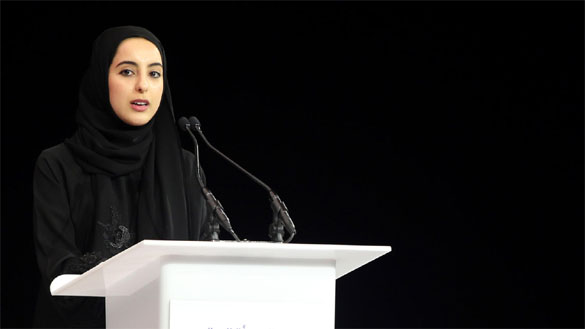
Shamma Al Mazroui,
Minister of State Youth during the Global Women's Summit at the Madinat
Jumeirah in Dubai on Wednesday, February 25, 2016. Photo by Dhes Handumon
-----
By Sherouk Zakaria
30 Mar 2022
Shamma Al Mazrui became the world’s youngest minister
at 22.
Now, at 28, the UAE Minister of State for Youth Al
Mazrui said she treated the public office as an exam she had to study for.
“In my first year as a minister, I took down notes in
25 notebooks! I took my job as a student-teacher relationship. I learned every
day, and until today, I have a passion for learning. As a leader, you should
never stop learning,” Al Mazrui noted.
Sharing her six-year experience as a minister, Al
Mazrui said the UAE leaders and fellow ministers were her “books and teachers.”
“From the biggest decisions in office to the smallest
details in their public life, leaders are the best school I have learned from.”
She was speaking in a rare and inspiring session at
the World Government Summit that brought her together with Sheikha Lubna Al
Qasimi, the first woman to hold a ministerial position in the UAE back in 2004.
Al Mazrui said a key lesson she learned as a public
servant is that leadership is a value, not a professional commitment.
“Leadership is not about the position or title; it is
a choice and decision to genuinely serve the people. Anyone can be a leader in
their schools, houses, communities or societies as long as they are driven by
the pure intention to serve people,” added Al Mazrui.
Listening, she said, was among the first qualities she
developed as a leader. “In my first cabinet meeting, I learned the value of
listening because how can you fulfil people’s needs, improve their lives or
truly serve them without listening?”
She added that empowering youth in the government
reflects the country’s approach to challenge the current reality. “The leaders
believed in me. I might not have had enough expertise or skills, but they saw
the intention to serve people as the core quality of a leader.”
Al Mazrui noted that her appointment reflected the
leadership's belief in the power and energies of youth to build the future.
"After two years and a half in office, 42 young ministers were appointed
across the world to serve different portfolios from youth to foreign
affairs."
She stressed that having a leadership that empowers
women and youth gives the UAE a competitive advantage.
Al Qasimi said her appointment as the first female
minister represented the UAE’s empowerment of women in a new field back then –
politics.
This political empowerment of women in the UAE
positively impacted the rest of the Gulf region, paving the way for more women
in government. "At least one female minister is appointed in the Gulf and
the Middle East every year," noted Al Qasimi, who was also declared the
world's first minister of state for tolerance in 2016.
Today, there are nine female ministers in the UAE’s
cabinet.
“Women in government are a form of soft power who
played a major role in melting down barriers between the UAE and the West,”
said Al Qasimi.
"Women in government is yesterday’s dream coming
true today," she added.
Source: Khaleej Times
https://www.khaleejtimes.com/uae/uae-worlds-youngest-minister-recalls-first-year-in-office
--------
Women Spearhead Entrepreneurship in Tunisia, the Land
of Jasmine
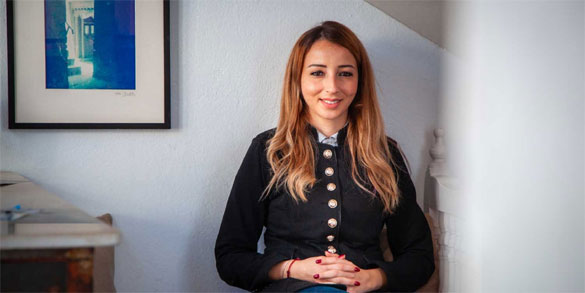
(Photo: African
Development Bank Group)
------
23 MARCH 2022
In Gammarth, shielded from the hubbub of the
surrounding Tunis, the Sadika glass-blowing centre offers its visitors a moment
of serenity. As they cross its inner courtyard, they take one last breath before
being carried away towards a constellation of stars; here, the shop shines with
a thousand lights. The Tunisian sun brings a sparkle to glasses, chandeliers
and vases, and many other works of art.
Handmade by glass-blowers from the Cap Bon region, these
artisanal pieces are picked one by one and with extreme delicacy from a molten
oven. They become the pride and joy of those who wish to bring tradition and
sparkle to their homes. From Tunisian houses to the Vatican and as far as New
York's Rockefeller Center, Sadika is a world leader in design and pâte de
verre, a kiln technique of creating a paste from powdered glass and coloring
agents.
In Tunisia, this glass-blowing center is an
institution. It represents a highly refined art that is passed from one
generation to the next. It is the fruit of one woman's boldness and drive;
since 1984, Sadika Keskes has taken one of the arts of fire, blown glass, to
sublime levels.
Over three decades and against all odds, this artist
has built a universe of grace where the arts and culture go hand in hand.
Sadika made a place for herself in the early 1980s in what is traditionally a
man's trade through perseverance after going to Murano Island, near Venice,
Italy, and learning how to blow glass. And her two daughters, Fatma and Zeineb,
are following in her footsteps. Zeineb now runs the family business with its 30
employees. "That's where I grew up, immersed in it from head to toe. It's
in my DNA," she says with pride.
Although the picture seems idyllic, Zeineb, an architect
by training, has dealt with several threats, exacerbated by the 2011 Jasmine
Revolution and successive crises. But for Zeineb, "it is unimaginable to
see the company disappear". Together with her family, she chose to fight
to save it, with the help of the Tunisian Bank for the Financing of Small and
Medium Enterprises.
For Lebid Zâafrane, CEO of this development bank,
"the goal is not profitability at all costs, but to find a balance. And
the main priority is to help enterprises create value and jobs." This
nuanced approach is the essence of an institution such as the African
Development Bank, which helps bring the Tunisian private sector's contribution
to advancing the country. Through the Fund for African Private Sector
Assistance, the Bank has mobilized nearly $1 million to finance technical
assistance to strengthen the commitment of the Tunisian Bank for the Financing
of Small and Medium Enterprises to companies in difficulty. In turn, the
Tunisian lender has provided support throughout the country to some 50
companies in sectors as varied as industry, education, textiles, and artisan
manufacturing.
In Sadika's case, it helped provide a new impetus to
her business. The process took place in three stages, says Asma Bouzaouache,
technical assistance project manager at the Tunisian Bank for the Financing of
Small and Medium Enterprises. "We carried out strategic and financial
diagnostic assessments and they led to a restructuring plan that we broke down
into operational objectives". The Tunisian Bank for the Financing of Small
and Medium Enterprises also helped the company to internationally patent a
manufacturing process to position itself to make the most of promising new
markets.
A few months after implementing all this, the effects
are being felt. The furnaces have rekindled their flames and the first samples
of a new collection have been shipped throughout Europe and to the United
States. A first firm order from Oslo fills Zeineb with optimism. "Without
this advice, we simply couldn't have survived the pandemic. It was that
important. If not for that, we would have had to dismiss staff."
In Tunisia, employment is a crucial issue. As
everywhere in North Africa, young graduates are faced with unemployment.
Therefore, motivating them to start a business is the common leitmotiv shared
by the two development banks. For Lebid Zâafrane, entrepreneurship is a
"philosophy, a culture" that needs to gently work its way into every
Tunisian heart and mind. "The African Development Bank has helped us a
lot. It has brought us great satisfaction. We share the same DNA, that of
supporting SMEs to grow," stressed the CEO of the Tunisian Bank for the
Financing of Small and Medium Enterprises.
"I absolutely want to pass on to the generations
to come. That is my greatest mission," promised Zeineb. "Before, this
family responsibility made me anxious. I just couldn't see a way to make it
through. But now, there are new opportunities. To tell the truth, we have no
option but to succeed, together."
There is every reason to believe that Zeineb's words
will come to fruition and that the youngest of the family, Aisha, already
bursting with talent at the age of six and a half, will be ready to take over
the reins of an enterprise that is like no other.
Source: All Africa
https://allafrica.com/stories/202203240535.html
--------
Voices of Women Entrepreneurs in a Changing Somalia
23 MARCH 2022
In Somalia, entrepreneurship is a driving force of the
economy. An estimated 76%of all jobs come from entrepreneurial activities - and
except for large businesses, women play a leading role in this area.
In Somaliland, women own more than half of all
household enterprises. In Mogadishu and Bossaso, they own approximately 45% of
established formal businesses.
Many Somali women say they prefer self-employment
citing flexibility, freedom, and independence. However, critical gender gaps in
entrepreneurship remain; women have lower revenues compared to their male
counterparts and are largely excluded from higher-earning segments of value
chains. So, what is holding back women entrepreneurs? To try to answer this
question, we collected stories from entrepreneurs working in the livestock,
dairy, fisheries, retail, and trade sectors in Hobyo, Bossaso, Burao, Hargeisa,
and Mogadishu about the challenges women entrepreneurs face. This research is
part of the recently concluded Somalia Country Economic Memorandum (CEM), which
examined what constraints needed to be overcome to create more and better jobs
for Somali men and women.
Across sectors, three issues, stood out:
Women lack access to capital
"Financial institutions have made borrowing so
restrictive that it's almost impossible for women to borrow. This is because,
[banks] ask for either a guarantor or security in the form of an asset. Both
are not within the reach of women." - Woman working in the fisheries
sector, Hobyo
Many women pointed out that land ownership and
inheritance laws favor men, making it very hard for women to meet the requirements
necessary to secure bank loans. Some people explained that men do not like to
be guarantors for women because they are worried women, who tend to be engaged
in small-scale and low-earning businesses, will default on their loans. Other
women said they did not consider bank loans because of the cost and the short
repayment periods. As a result, most women rely on savings groups or loans from
family and friends when they need money. However, the amounts they save and
borrow are generally small, making it hard to make large investments in their
businesses.
Women's businesses are concentrated in local daily
markets
"Our market is very small and the number of women
selling fish are many. Therefore, our big challenge is on market, and the fact
that we have no capacity to reach neighboring markets where fish is in high
demand." - Woman working in fisheries sector, Hobyo
Across sectors, women talked about the challenges of
operating in constrained local markets. In the dairy and fisheries sectors, for
example, women generally cannot afford refrigerators or refrigerated trucks.
This means they cannot store or transport their products to nearby towns where
they can get better prices and they are therefore stuck selling their products
in the daily local market where there can be problems of over-supply. Recent
research from Ghana finds that this kind of 'over-crowding' leads to lower
demand for female-owned firms and lower profits for women. In the livestock
sector, women entrepreneurs described seasonal challenges. For example, during
the Haj season, when the demand for animals is higher, men with larger
operations tend to sell to traders who export to places like Saudi Arabia. This
drives the price of livestock up, negatively affecting women who operate
smaller businesses, trying to buy livestock for resale in local markets. It was
clear that women who operate in more limited markets are at a disadvantage in
finding buyers and sellers.
Women's businesses are often in suboptimal locations
"Most women-run businesses are small, and most of
them are based in the neighborhoods rather than the main city center. They
therefore have less interaction with suppliers and are often stuck with one
supplier." - Woman business owner, Hargeisa
Across sectors, women described constraints to
business location. A combination of household and childcare responsibilities
often required women to work close to home. In other instances, prohibitive
requirements to pay one or more years rent in advance, and challenges securing
a guarantor made it more difficult for women to rent desirable shop space. As a
result, it was not uncommon for women's businesses to concentrate on the
outskirts away from city centers or near their homes, impacting their ability
to attract and reach clients.
What next?
Under the best of circumstances--much less in times of
crisis such as drought, pandemic, or instability--women entrepreneurs often
need to be creative and innovative just to keep their businesses going. While
more research is needed to figure out how to best support women entrepreneurs
in Somalia, innovations in other countries provide clues to the types of
interventions that might help.
In Nigeria, for example, the Women Entrepreneurship
Finance Initiative is piloting a digital cash flow loan to help women
entrepreneurs overcome collateral constraints. In Ethiopia, micro finance
institutions, as part of the Women Entrepreneurship Development Project, have
used cash-flow lending techniques to reduce collateral requirements for women
seeking loans.
In terms of business location, if the obstacle is
cost, offering subsidies or help with guarantees could help women secure more
optimal business locations. When cost is not the primary obstacle, but rather
household and childcare responsibilities, then childcare interventions might be
more relevant. In Uganda, for example, a study found that bringing a child to
work is associated with a "baby profit gap"-- 45% lower profits for
women.
As we look for solutions tailored to Somalia, the
Africa Gender Innovation Lab is a great place to find other evidence from
across the region on how to close the gender gap in earnings, productivity,
assets, and agency. If projects are going to better support women, they will
need to think about innovative ways of addressing their most pressing
challenges. As one male entrepreneur in Hobyo said, "They [women] can do
well, if given a chance."
This blog is part of a blog series curated by the
World Bank's Somalia Women's Empowerment Platform to highlight evidence and
solutions on women's and girls' empowerment in Somalia. Read more blogs in the
series:
Source: All Africa
https://allafrica.com/stories/202203240158.html
--------
Selangor Police Chief: 456 Female Constables to Be
Recruited This Year to Handle Criminal Cases Related To Women, Kids
31 Mar 2021
DUNGUN, March 31 — The Royal Malaysia Police (PDRM)
aims to recruit 5,027 trainees to participate in basic police constable
training programmes nationwide this year.
Selangor Police chief Datuk Arjunaidi Mohamed said
that, of the total, 4,573 are expected to be male trainees and 454 female
trainees.
“Over the past year, a total of 5,502 constables,
comprising 4,752 men and 750 women, successfully completed basic police
training.
“The recruitment of constables will help to fill the
vacancies for personnel in the PDRM, especially the need for women staff to
handle criminal cases related to women and children,” he said.
He told reporters this after officiating the parade at
the end of basic training for women police constables at the Dungun Police
Training Centre (Pulapol) here today.
Also present were deputy director of Management
(Training) Datuk Nerita Yaacob, Terengganu Police chief Datuk Rohaimi Md Isa
and Pulapol Dungun Commander Supt Lotfi Ameer Muhammad.
During the basic training for women police constables,
all 349 trainees at the Dungun Pulapol were exposed to various modules such as
academics in law and liberal lectures, outdoor training like parades, shooting
and intensive motorcycle riding courses, work procedure modules covering
inquiry administration, roadblocks, traffic control as well as Islamic
spirituality modules and moral education.
Currently, there are 3,112 female senior officers,
12,287 ordinary women personnel and 977 women support members in the PDRM.
Meanwhile, Constable Noor Amirah Ahmad Azmi, who is
the overall best trainee, said her deep interest in the world of policing
prompted her to leave her career as a syariah lawyer in Ipoh, Perak.
“Although I was accredited by the Syariah Law Practice
Certificate from the Perak Islamic Religious Council in 2019, the encouragement
of my 63-year-old father Ahmad Azmi Mat Ali, who is a retired police officer,
strengthened my resolve to pursue basic constable police training last year.
“Furthermore, I believe PDRM will continue to provide
opportunities to develop my talent, experience and knowledge for me to progress
further,” said Noor Amirah, who is a graduate of Universiti Sains Islam
Malaysia’s Bachelor of Law and Syariah. — Bernama
Source: Malay Mail
--------
Event at Prince Sultan University challenges women to
build careers in data science
March 29, 2022
RIYADH: The fifth International Conference of Women in
Data Science concluded at Prince Sultan University in Riyadh on Tuesday.
The two-day event was organized by the university,
which is the first certified WiDS ambassador in Saudi Arabia, as represented by
its Artificial Intelligence and Data Analytics Lab, in collaboration with
Stanford University.
The aim of the conference was to raise awareness of
and inspire interest in data science and related fields at local and global
educational levels. It also aimed to enable the professional participation of
women in data science and the wider disciplines of engineering and computer
science, and encourage the exchange of ideas and collaborative opportunities by
helping women to connect with trailblazing international networks.
The conference featured workshops, discussion panels,
and the presentation of academic papers relating to the event’s core topic: The
future of women in data science education. The participants included industry
leaders, university faculty members and guests from other sectors.
Recent findings and studies relating to data science
in the Middle East were also discussed, along with the possible effects of such
studies in supporting sectors such as health, the economy, cybersecurity and
architecture.
Source: Arab News
https://www.arabnews.com/node/2053121/saudi-arabia
--------
URL: https://www.newageislam.com/islam-women-feminism/shamma-mazrui-uae-minister/d/126705