
Speculation Is Swirling That Saudi Arabia and UAE Are Pressing Pakistan to Normalise Ties With Israel

By FM
Shakil
December 7,
2020
Last month,
Pakistan’s Foreign Ministry rebutted a barrage of reports on social and
mainstream media that suggested Islamabad was poised to restore diplomatic
relations with Israel, a move that would inevitably send shock waves across the
country’s many radical Islamic groups.
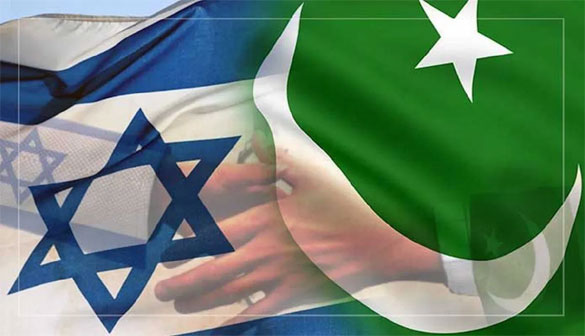
Speculation is swirling that Saudi Arabia and United Arab Emirates are
pressing Pakistan to normalize with Israel. Image: Facebook
------
The Foreign
Office was forced to intervene before the rumors sparked demonstration or
worse, always close to the surface in a nation that frequently rallies to the
anti-Israel, pro-Palestinian cause.
Despite the
official denials, analysts, observers and even some officials reckon there is
at least a shred of truth in the viral speculation considering the shifting
winds in the Middle East and with rising signs Saudi Arabia could soon follow
the United Arab Emirates (UAE) in normalizing ties with Israel.
It would
mark a historic turn if Pakistan and Israel were to follow suit and formally
normalize relations. Pakistan did not recognize Israel as a country when it was
formed in 1948, a year after Pakistan won its independence. Pakistani passports
still carry a stamp that proclaims that this document is valid for all
countries worldwide except Israel.
Yet
observers believe that the winds of change now sweeping over the Arabian
Peninsula, including among Pakistan’s key Middle Eastern allies and traditional
patrons, could next blow through Islamabad.
The United
Arab Emirates (UAE) and Bahrain, they note, have restored diplomatic ties with
Israel after Saudi Arabia reportedly gave its tacit affirmation to go ahead.
Analysts argue Pakistan could be next if Riyadh gives a similar nod.
Any such
move would face political resistance at home. Pakistan Muslim League-Nawaz
(PML-N) senator Musadiq Malik told Asia Times that such a crucial decision can
not be made by a few individuals and that representatives of Palestine would
also need to be consulted.
“A few
people cannot thrust their verdict upon the nation. We have elected
representatives and the parliament that could better determine policy in this
regard,” he added, presumably meaning Prime Minister Imran Khan and his backers
in the army establishment.
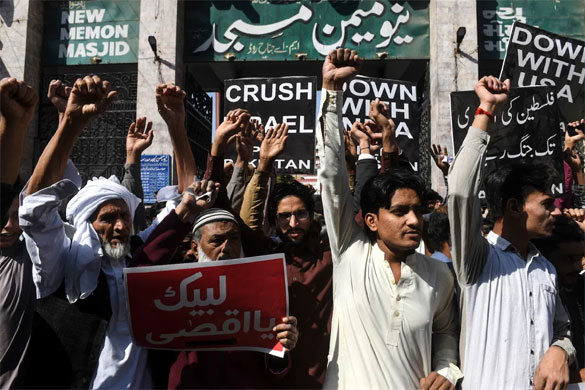
Palestine Foundation of Pakistan shout anti-US and Israeli slogans
during a protest against a US peace plan proposal, in Karachi on January 31,
2020. Photo by Asif HASSAN / AFP
------
Afrasiab
Khattak a politician, intellectual, and Pashtun rights activist told the Asia
Times that since the Pervez Musharraf era (1999 to 2008) there has been a
consistent behind-the-scenes effort to normalize relations with Israel, though
so far without tangible results due to radical religious forces and their
ability to stir street agitation.
“When the
Arab countries have changed their stand on the Arab-Israel conflict and tried
to live in peace with their proverbial foe then what is the point of pursuing
an anti-Israel policy?” he asked.
Days after
the UAE formally revived ties with Tel Aviv, foreign and local media carried
reports suggesting that Saudi Arabia and the UAE were pressing Pakistan from
behind the scenes to be next in recognizing Israel.
“I think
there is a conversation going on in which UAE and MbS would like Pakistan to
take a lead and recognize Israel but don’t think it will happen either in Saudi
Arabia or Pakistan. It’s politically not doable,” Ayesha Siddiqa, a Pakistani
scholar and expert on military affairs told the Asia Times.
The
speculation was reinforced when Prime Minister Khan, in an exclusive interview
with a local TV channel, disclosed that he was “under pressure” from some
“friendly countries” to recognize Israel but that Pakistan would not budge
until the Israel-Palestinian issue was resolved.
Khan did
not disclose the identity of the said “friendly countries”, saying only that
Pakistan maintains good relations with them.
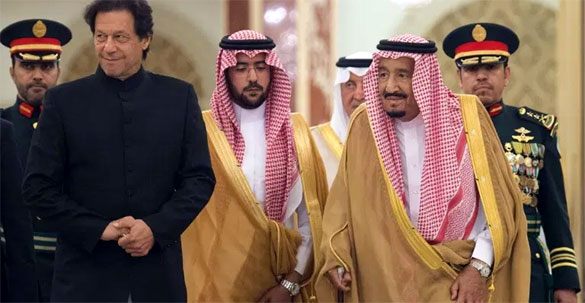
Pakistani Prime Minister Imran Khan meets the king of Saudi Arabia,
Salman bin Abdulaziz Al Saud, at Al-Salam Royal Palace in Jeddah on September
19, 2018. Photo: AFP via Anadolu Agency
------
But when
Israeli media broke the news that Israeli Prime Minister Benjamin Netanyahu and
the head of Israel’s spy agency Mossad Yossi Cohen held a hush-hush meeting
with Saudi Crown Prince Mohammed bin Salman (MBS) in the Saudi city of Neom,
the reports also spotted a Pakistani army business jet operated by the
country’s powerful Inter-Service Intelligence (ISI) spy agency in Amman when
the leaders were meeting at the Red Sea resort.
Siddiqa
tweeted in late-November, “If policy not under consideration then what was Pak
Army aircraft PA-9834 doing in Amman for 2 days & reported by Israeli
media?”
Saudi
Arabia and the UAE certainly have leverage on Islamabad to persuade a change in
Pakistani policy towards Israel. Pakistan relies heavily on both for financial support
to stave off a debt crisis, always near as foreign reserves dwindle and the
economy contracts.
Moreover,
over four million Pakistani expatriates remit roughly $4 billion from Saudi
Arabia and UAE every year, representing nearly half of the country’s $9 billion
in annual remittances.
Still,
Pakistan’s relations with both UAE and Saudi Arabia have been on a downtrend in
recent years, partly due to Riyadh’s tilt towards India on the Kashmir issue
and New Delhi’s growing economic and political engagement with the Arab
nations. Saudis are also concerned about Islamabad’s hobnobbing with Turkey.
In late
August, Pakistan’s Foreign Minister Shah Mehmood Qureshi, frustrated over the
Organization of Islamic Cooperation’s (OIC) indolence on the Kashmir issue, exhorted
the group’s de facto leader Saudi Arabia to “show leadership” on the issue.
It was a
costly statement. Soon thereafter Riyadh required premature payment of US$2
billion of $3 billion worth of outstanding loans and terminated $3.2 billion
worth of oil deliveries granted on deferred payment.
The
subsequent diplomatic visit of Pakistani Army Chief General Qamar Jawed Bajwa
to Riyadh in early August this year to smooth tensions failed to resecure the
financial facilities, as Saudi Crown Prince Mohammed Bin Salman reportedly
refused to meet the army chief.
To be sure,
Pakistan has always maintained covert diplomatic and military connections with
Israel.
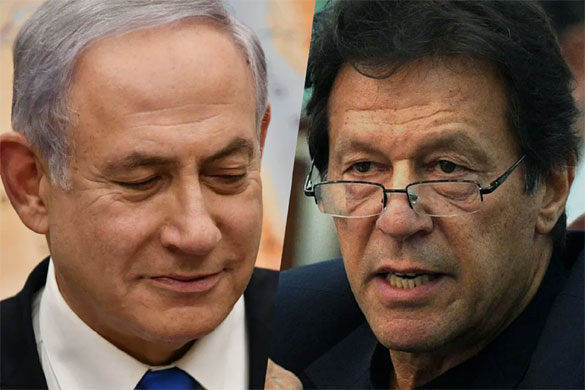
Israeli Prime Minister Benjamin Netanyahu and Pakistani Prime Minister
Imran Khan in a combo photo. Image: Facebook
-----
Indeed,
Pakistan’s secret military cooperation with Israel dates back to 1970 when the
military dictator General Zia-ul-Haq was posted in Jordan as a brigadier
general at a time Pakistan’s army fought in support of Jordan against then Yassar
Arafat-led Palestine in the 1970-71 Black September war.
More than
7,000 Palestinians died in the war and General Zia had become a darling of the
Jewish state, which backed Jordan in the conflict.
Pakistan-Israel
cooperation continued in the 1980s during the Soviet Union’s intervention in
neighbouring Afghanistan. Both countries coordinated their stance on the Afghan
issue and exchanged defence-related information.
Military
dictator General Musharraf was more vocal about his government’s interactions
with Israel. During his tenure, Pakistan
and Israel established their first formal diplomatic contact and used their
diplomatic staff in Ankara and Istanbul to mediate and exchange information on
defense and terrorism-related issues.
In 2009,
Pakistan’s spy agency ISI passed on information to Israel’s Mossad about a plot
to kill Israelis in India. According to an October 2009 US diplomatic cable
published by WikiLeaks, the ISI chief had reportedly contacted Israeli
officials to head off the attacks.
In late
March this year, Musharraf called to establish relations with Israel to
counterbalance India’s overtures to Tel Aviv.
In a press
conference in Dubai in March this year, Musharraf acknowledged that he had
initiated contacts with Israel when he led the country. “The Israeli leadership
was quick to respond to my offer. I believe Israel wanted to create better
relations with Pakistan. They still want it,” he said.
Original
Headline: Why Pakistan will be next to normalize with Israel
Source: The Asia Times
URL: https://newageislam.com/the-war-within-islam/speculation-swirling-that-saudi-arabia/d/123761
New Age Islam, Islam Online, Islamic Website, African Muslim News, Arab World News, South Asia News, Indian Muslim News, World Muslim News, Women in Islam, Islamic Feminism, Arab Women, Women In Arab, Islamophobia in America, Muslim Women in West, Islam Women and Feminism