
Namak Ka Sabaq: Lessons from Salt

By Sumit Paul, New Age Islam
12 June 2026
Seekha hai namak se ye sabaq maine
Raha jaata hai be-naam-o-numood kaise
Nashtar 'Nishapuri'
(I learnt a lesson from salt how to stay without name and display)
I read somewhere that moved me: Salt is so humble that when something goes wrong, it takes the blame, and when everything goes right, it doesn’t take credit. So very true!
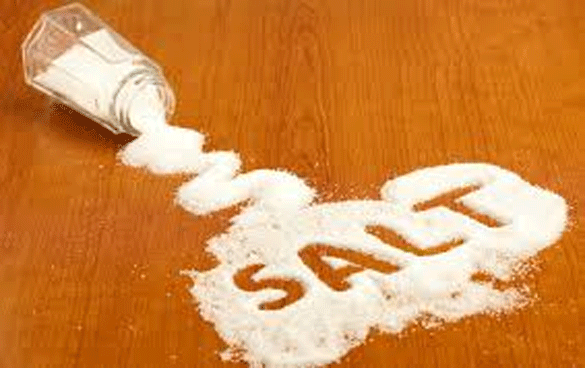
Salt is the epitome of humility, always willing to take the blame and never desiring to take credit. It is true that when something goes wrong, salt is so selfless that it will accept the blame and never question it. But when everything goes right and a dish tastes flavourful, salt is never asking for recognition or any form of praise. Instead, it is content to be the background of the dish, providing the right balance to any meal. Salt is truly one of the most humble ingredients, always willing to take the blame and never seeking any credit. " Fitrat namak ki paayee uss shakhs ne / Rakha khud ko hujoom se alag jis ne " (He got the attribute of salt who alienated himself from the crowd).
The amount of salt in dishes should be right. If there's too much or too little, the dish will not taste good. Like salt, an individual should live with a sense of balance. It's important for one to stay balanced while dealing with challenges or complicated issues, avoiding extremes, just as one needs the right amount of salt in a dish for it to taste good. Wisdom is to balance our time to give proper attention to our health, family, occupation and spiritual needs.
The salt remains hidden though it adds flavour to a dish. People praise a dish by appreciating the quality of its grains, vegetables or spices, but no one says that the salt in this dish is fabulous. Like salt, we should serve without being overly attached to receiving recognition or praise. We can learn self-effacement from the humble salt, " Hum phool hain auron ke liye laye hain khushboo / Apne liye le, de, ke bas ik daagh mila hai " (Like a flower, I've brought fragrance for others; for myself, I've just got a freckle). We find joy in simply doing our best and are happy in appreciating others. By giving, we really do receive food that satiates the heart, soul and mind.
The salt relinquishes its sense of separateness and melts with other ingredients for the taste of the preparation. Similarly, we must let go of our ego to work in harmony with others for the benefit of all.
We should add the salt of unselfishness, balance and cooperation to the preparation of our lives to enhance its flavour.
In one of the most well-known passages in the Bible (Matthew 5:13), Jesus tells his followers, "You are the salt of the earth. But if the salt loses its saltiness, how can it be made salty again? It is no longer good for anything, except to be thrown out and trampled underfoot." In the Bible, salt represents preservation, purity and enduring loyalty. Because salt does not break down or lose its essential nature, ancient cultures used it to seal treaties and friendships. God's unwavering promises to Israel and the Davidic line are frequently referred to as a "covenant of salt."
In Urdu literature, salt - namak or noon; the latter is a Persian word that one comes across even in Bengali as salt is called 'noon' in Bangla and also Labon from Sanskrit Lavan- is a powerful metaphor for loyalty, bitter truth, and the sting of heartbreak.
It's also a quality that's associated with a woman's oomph and sultriness. Don't we say in Urdu, bahut namkeen hai ? Mind you, it's an innocuous compliment and not an erotic insinuation or a carnal suggestion. The same desirable quality of a damsel is in Sanskrit, Hindi and other Indian languages as well. It's called Laavanya (Lavan: Salt in Sanskrit). Sanskrit (erotic or shringaar poetry) literature is full of the adjective Laavanya. Sanskrit poet Jaydeva used this word 27 times in his famous epic Geet Govind (12th century).
…
A regular columnist for New Age Islam, Sumit Paul is a researcher in comparative religions, with special reference to Islam. He has contributed articles to the world's premier publications in several languages including Persian.
URL: https://newageislam.com/spiritual-meditations/leeson-from-salt-/d/140358
New Age Islam, Islam Online, Islamic Website, African Muslim News, Arab World News, South Asia News, Indian Muslim News, World Muslim News, Women in Islam, Islamic Feminism, Arab Women, Women In Arab, Islamophobia in America, Muslim Women in West, Islam Women and Feminism