
Break The Silence: The Ideological Lens We Choose To View The World Through Is Crucial
By
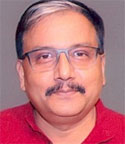
Manoj Kumar Jha
01.10.23
Let us
commence with a dialogue that transpired between Buddha and Anand as they
journeyed through Vaishali, Bihar. Buddha inquired, “Do you know why the
Vajjian dynasty thrives and endures?” Anand responded, “No, my lord, I am not
aware.” Buddha explained, “It is because they engage in free and fearless
discussions among themselves.” We are all familiar with the fate that befell
them once they abandoned this cherished tradition.
File
Photo of Dr Ambedkar
-----
Dialogue,
discussion, and deliberation are not only the lifeblood of academia but also
mould the collective psyche of our societies. This is what defines the essence
of the ‘universe’ within the idea of a ‘university’.
Before
delving into the concerns that have dominated the thoughts of many in our academic
community, we must establish a common starting point. The discipline of social
science must recognise that without safeguarding and fostering the tradition of
critical reflection within its pedagogical sphere, we will remain passive
observers who are unable to contribute to the transformation of our social and
political structures. We must not forget that our civilisational heritage of
dialogue, debate and dissent is impossible to preserve and practise without
confronting socio-economic inequalities. And without this practice, the entire
edifice of social science will fade into oblivion. Today, there is a concerted
effort to question the value of the social sciences in higher education. Let us
recall the moments when different branches of the discipline stood up against
various forms of oppression in solidarity with the oppressed.
But on
reading Howard Zinn, we discover that during the Vietnam War, the social
sciences remained conspicuously silent, while Noam Chomsky, a linguist,
Benjamin Spock, a paediatrician, and William Coffin, a chaplain, were the
intellectuals who vehemently opposed the war and its atrocities. These
individuals became spokespersons for Vietnam while core social science
disciplines sought ‘non-controversial’ topics for their dissertations and
classroom discussions. Why can’t we, as academic activists and teacher
activists, take our classroom and field reflections as acts of praxis, as Paulo
Freire taught us in his book, Pedagogy of Hope? More than ever, the social
sciences need the critical language of resistance and dissent. For this to
occur naturally and seamlessly, the discipline must adopt a political stance.
Before I am
accused of advocating for my colleagues to be politically aligned in the
narrow, popular sense, let me clarify that politics extends beyond occasional
voting or affiliations with political parties. Being political means becoming
part of an ongoing project that seeks to raise our consciousness and re-examine
the world we inhabit. Understanding the political and economic structures of a
society is defined by politics. Every choice we make or refrain from making has
political underpinnings. The books we read, the films we watch, the food we
consume, and the clothes we purchase are all political acts.
Grounded in
the notions of human betterment, good life and happiness for all, social
science research and teaching must reflect the principles of justice and
rights. As such, social science disciplines can ill afford silence and muted
response to the oppressed who yearn for us to speak out through our classrooms,
dissertations, academic writings and media articulations. In the garb of
objectivity and unbiased research, the persona of social work has been
predominantly clinical. In these politically fragile times, as the grammar of
oppression and invisibility persists, how long can we afford to remain
‘apolitical’ and non-critical of the harsh socio-political realities? How long
can we keep regurgitating common sense on the nauseating normalisation of caste
atrocities and the clockwork-like periodicity of communal massacres in India?
Although tomes are routinely published to respond to the demands of academic
careers, in true sense, scant research attention is given to the perspectives
that could provide imaginative and critical framings and explorations within
the social sciences that can provide leads to emancipation and peace.
Recent
events should disrupt not only our personal lives but also the academic rhythms
that dull our senses. Communal or ethnic violence today appears to bear
genocidal intent, and no amount of diversion will absolve us from questions of
credibility.
It is
indeed a collective failure that we have made minimal impact on the lives of
oppressed castes. While we launched Chandrayaan-3 and reached the moon, it is
ironic that as a nation we have not been able to secure a life of dignity for a
significant portion of our population. Daily sewer deaths in our country
disproportionately affect the same caste group. Social scientists often view
these deaths through a clinical and statistical lens. But is it truly that
simple? Understanding the direct correlation between this occupation and the
caste group does not necessitate extraordinary research projects. What is
lacking is a moral-political compass. Do our disciplines engage with such
deaths as a failure of civilisation?
We are not
lacking in emancipatory literature, found often in the form of autobiographies
chronicling the struggles of individuals navigating an unequal social
landscape. Dalit literature, in particular, has a rich legacy. Yet, our social
science disciplinary domain has largely chosen to remain oblivious to its
existence. Even universities that dare to engage have often failed to move
beyond symbolism. A critical analysis rooted in such liberatory literature can
provide us with a lens that is not caste-blind. It should be a priority to
academically engage with socio-cultural contexts where structures dehumanise
certain groups in the name of ‘culture’ and ‘religion’. Let us remind ourselves
that a mandatory reading and analysis of Dr Ambedkar’s”Annihilation of Caste”
would unveil the intricate facets and inherent cruelties of our structures.
These treatises shed light on how our everyday socio-cultural and political
milieu is structured where caste, class, and religion intersect. The rhetoric
of ‘equality for all’ is not an easily attainable fruit. The privileged may
effortlessly reach it, but for the poor and downtrodden, it remains an arduous
endeavour. We should also read Why We Can’t Wait by Martin Luther King, written
in the context of the civil rights movement in the United States of America.
The ideological lens we choose to view the world through is crucial. As Karl
Marx asserted, those who cannot represent themselves must be represented. Are
we willing to make this essential course correction?
How can we
progress? Dr Ambedkar’s vision of India enshrined in the Indian Constitution
and Gandhi’s model of non-violence and coexistence provide two perspectives for
social science pedagogy and curriculum. When India celebrated its Independence,
Gandhi was engaged in peacebuilding in Noakhali amidst riots, negotiating with
both the rioters and the victims. Upon his return, his prayer meetings shifted
from ‘Bhaj Man Pyare Sita Ram’ to ‘Bhaj Man Pyare Ram Raheem’ and ‘Bhaj Man
Pyare Krishna Kareem’. Gurudev Tagore imparted the lesson of tolerance, urging
us to keep our minds open to new ideas and thoughts and to create a society
“where the mind is without fear”.
In these
polarised and tumultuous times, the social sciences cannot afford to remain
detached and complacent with their conventional modes of engagement. Violence,
oppression, and various forms of inequality must be addressed within an
emancipatory framework. The prevailing culture of silence and fear in academia
must be broken and give way to a new posture, one where our academic endeavour
is to question and reshape the structures that perpetuate inequalities and
injustices against the marginalised sections. To achieve this, we must confront
our own privileges and recognise our specific socio-cultural contexts. Without
this self-awareness, we will remain in the cocoon of false comfort to the utter
disappointment of those who implore us to ‘break the cycle of criminal
silence’.
(Excerpts
from a talk delivered in a Refresher Course for university teachers organised
by the Department of Social Work and CPDHE, Delhi University, on September 4)
----
Manoj
Kumar Jha is Member of Parliament (Rajya Sabha) and Professor at University of
Delhi
Source: Break The Silence
URL: https://newageislam.com/spiritual-meditations/silence-ideological-lens-world-crucial/d/130804
New Age Islam, Islam Online, Islamic Website, African Muslim News, Arab World News, South Asia News, Indian Muslim News, World Muslim News, Women in Islam, Islamic Feminism, Arab Women, Women In Arab, Islamophobia in America, Muslim Women in West, Islam Women and Feminism