
PRAHAAR and India’s Shift Toward a Proactive Counter-Terrorism Doctrine
By New Age Islam Special Correspondent
18 May 2026
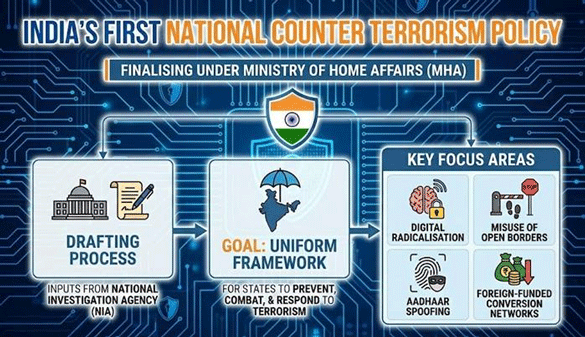
The unveiling of PRAHAAR, India’s first all-encompassing National Counter-Terrorism Policy and Strategy, marks a pivotal moment in the country’s internal security framework. Spearheaded by the Ministry of Home Affairs, the policy aims to transform India’s approach to terrorism from a largely reactive security posture into a proactive, intelligence-driven strategy capable of tackling both traditional terrorism and emerging forms of radicalisation.
Major points:
· PRAHAAR presents both an opportunity and a test. It offers India the chance to modernise its security approach in response to evolving threats. An intelligence-driven, proactive strategy can improve prevention, coordination, and technological readiness. It can help disrupt terror financing, counter online extremism, and strengthen national preparedness.
· However, the policy's long-term legitimacy will depend on how it's implemented. If it remains professional, evidence-based, constitutionally balanced, and socially inclusive, it could strengthen both security and democracy. If it becomes politicised, communalised, or excessively focused on surveillance, it could create alienation and mistrust.
· The fight against terrorism isn't just a military or police matter. It's also an intellectual, ethical, social, and political struggle. Extremist ideologies flourish where fear overcomes reason and hatred overcomes coexistence. India's greatest strength historically has been its diversity and democratic resilience. A successful counter-terrorism policy must therefore protect not only the state but also the pluralistic spirit of the republic itself.
· Ultimately, PRAHAAR reflects India's attempt to enter a new era of security thinking. The shift from reactive responses toward proactive, intelligence-driven prevention mirrors broader global changes in counter-terrorism strategy. The policy recognises that modern terrorism operates through networks, narratives, digital systems, and psychological influence as much as through weapons and explosives.
· If implemented wisely, PRAHAAR could become a framework not just for preventing attacks but also for building a more resilient society capable of resisting radicalisation in all its forms. The challenge will be ensuring that the pursuit of security strengthens democracy rather than weakens it.
The unveiling of PRAHAAR, India’s first all-encompassing National Counter-Terrorism Policy and Strategy, marks a pivotal moment in the country’s internal security framework. Spearheaded by the Ministry of Home Affairs, the policy aims to transform India’s approach to terrorism from a largely reactive security posture into a proactive, intelligence-driven strategy capable of tackling both traditional terrorism and emerging forms of radicalisation. The very name "PRAHAAR", which translates to “strike” or “decisive attack", encapsulates the philosophy driving the initiative. It signals a shift in the Indian state’s approach, moving away from simply responding after attacks occur and instead focusing on detecting, preventing, disrupting, and neutralising threats before they materialise into violence.
For decades, India has grappled with various forms of terrorism, including separatist militancy, cross-border terrorism, ideological extremism, communal violence, Maoist insurgency, and, increasingly, digitally fuelled radicalisation. From the devastating Mumbai attacks in 2008 to recurring incidents in Jammu and Kashmir, India’s security apparatus has often faced criticism for intelligence shortcomings, coordination failures, bureaucratic fragmentation, and slow response times. PRAHAAR emerges from this extensive history of insecurity and institutional learning.
The policy also mirrors broader global trends. Following the September 11 attacks in the United States, many nations shifted towards preventive security doctrines emphasising surveillance, intelligence integration, financial monitoring, border security, and cyber vigilance. India’s new framework appears to draw inspiration from these global counter-terrorism developments, while also striving to adapt them to the unique realities of India.
From Reactive Security to Preventive Intelligence
One of the most crucial aspects of PRAHAAR is its emphasis on intelligence fusion. Traditionally, Indian intelligence agencies have often operated independently. While these agencies collect information, seamless communication between them has not always been the norm. PRAHAAR seeks to establish integrated mechanisms where intelligence from central agencies, state police forces, military units, cyber cells, financial monitoring institutions, and local administrations can be synthesised into a unified security picture.
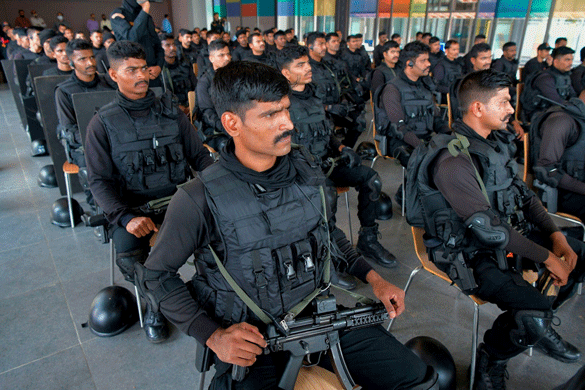
In the context of modern terrorism, fragmented intelligence can have dire consequences. Terror networks frequently operate through decentralised cells, encrypted communication platforms, and informal financial channels. A proactive strategy, therefore, necessitates seamless information sharing. The policy aims to ensure that suspicious activities are identified early and acted upon before violence erupts.
The policy acknowledges the dramatic evolution of terrorism in the digital age. While earlier militant organisations relied heavily on physical recruitment networks, underground meetings, and direct ideological indoctrination, radicalisation today often occurs online. Encrypted messaging apps, social media algorithms, digital propaganda videos, gaming platforms, and AI-generated content have revolutionised extremist mobilisation. Lone wolf attacks inspired through online ecosystems have become increasingly prevalent worldwide. PRAHAAR seems to recognise that future terrorism may not always originate solely from organised militant camps but also from digitally radicalised individuals operating independently.
Understanding Radicalism in Contemporary India
This understanding makes the policy particularly relevant in combating radicalism. Today, radicalisation is no longer confined to religious extremism alone. Political extremism, hyper-nationalist violence, online hate ecosystems, communal vigilantism, and ideological polarisation have all become integrated into the broader landscape of radicalisation. Therefore, a comprehensive national policy cannot solely focus on armed militants but must also examine the social, digital, psychological, and political factors that foster extremist thinking.
The challenge, however, lies in carefully defining radicalism. Democracies must distinguish between violent extremism and legitimate dissent. In a pluralistic society like India, criticism of the government, activism, protest movements, minority assertion, and ideological disagreements are integral to democratic life. A counter-terrorism strategy that fails to uphold this distinction risks undermining civil liberties and democratic principles. Consequently, the success of PRAHAAR will hinge not only on operational effectiveness but also on maintaining constitutional balance.
The Rise of Predictive Security
Another significant component of the policy is likely to be predictive intelligence. Traditional policing often reacts after crimes have been committed. Predictive security models leverage data analysis, behavioural patterns, financial transactions, communication networks, and digital footprints to anticipate threats before they materialise. Artificial intelligence, facial recognition systems, drone surveillance, biometric databases, and data analytics are increasingly becoming integral components of modern counter-terrorism systems globally.
In theory, such systems can significantly enhance national security. Suspicious financial transactions can be detected early, online extremist recruitment networks can be disrupted, cross-border infiltration routes can be monitored more effectively, communication patterns among sleeper cells can be identified, and terror financing networks linked to narcotics, hawala systems, and cryptocurrency transactions can be traced more efficiently.
However, predictive security also raises serious ethical concerns. Surveillance-heavy systems can jeopardise privacy rights if not properly regulated. Minority communities may fear disproportionate targeting, while activists and journalists may be concerned about excessive state monitoring. Democracies worldwide continue to grapple with the delicate balance between security and liberty, and India is no exception.
Countering Terrorism: More Than Just Guns and Explosives
One of PRAHAAR's strengths is its understanding that counter-terrorism can't be limited to just armed responses. While military operations and police actions might take out militants physically, they don't automatically destroy the ideas that fuel extremism. If implemented thoughtfully, the policy's broader focus on deradicalization and proactive engagement could be very important.
Deradicalization is incredibly complicated. Radical ideologies flourish where communities feel alienated, humiliated, economically excluded, politically ignored, misinformed, or insecure about their identity. Often, extremist narratives succeed because they offer emotional certainty, clear-cut morals, and a sense of belonging. Countering these narratives requires more than just policing; it needs education, community involvement, mental health support, interfaith dialogue, and efforts to include people in the economy and society.
India's experience clearly shows this complexity. Different regions have seen different forms of extremism shaped by their own local histories. The militancy in Kashmir has its own political and geopolitical aspects. The Maoist insurgency in central India arose partly from issues of land, displacement of tribal communities, and government neglect. Communal radicalisation often grows through cycles of hatred, misinformation, and revenge. A successful national strategy must avoid a one-size-fits-all approach.
Community Trust and Democratic Legitimacy
In this context, the role of local communities is crucial. Gathering intelligence is most effective when there's local trust between citizens and security forces. Communities that feel respected and protected are more likely to cooperate against violent actors. On the other hand, communities that feel collectively stigmatised might withdraw their cooperation, making it harder to gather intelligence.
This is especially important when it comes to Indian Muslims. Discussions about counter-terrorism in India have often become mixed up with communal politics. If PRAHAAR is implemented through communal profiling instead of evidence-based policing, it could worsen polarisation instead of reducing extremism. Many reform-minded thinkers have argued that the fight against terrorism must not become a fight against entire communities. Extremism must be confronted ideologically, legally, and socially without demonising entire populations.
In fact, moderate Muslim voices, reformist scholars, women activists, educators, and civil society organisations can be crucial allies in counter-radicalisation efforts. Extremist groups often claim religious justification. These claims are best challenged not only through security operations but also through theological critique and social reform. Progressive Islamic scholarship that promotes democracy, pluralism, gender justice, constitutionalism, and peaceful coexistence can effectively weaken extremist propaganda.
Digital Radicalization and Online Extremism
The policy's potential role in countering online radicalism is particularly important. Digital radicalisation relies on emotional manipulation. Algorithms reward outrage and sensationalism. Young people searching for identity, meaning, or belonging can easily encounter extremist narratives online. Conspiracy theories, sectarian propaganda, hate speech, and violent imagery spread quickly across digital platforms.
A modern counter-terrorism policy must, therefore, include cyber-monitoring capabilities along with digital literacy initiatives. Schools, universities, religious institutions, and media organisations all have a role to play in building resilience against extremist propaganda. Young citizens need critical thinking skills to resist manipulation.
Another important aspect of PRAHAAR will likely involve disrupting financial support for terrorism. Terror networks depend on funding. Hawala systems, narcotics trade, fake charities, illegal mining, smuggling, extortion, and cryptocurrency channels are often used to finance violent networks. By targeting these financial ecosystems, governments can weaken terrorist organisations structurally.
International cooperation is also essential. Terrorism today is transnational. Funding networks, propaganda channels, recruitment pipelines, and operational planning frequently cross borders. India's strategy, therefore, requires intelligence partnerships with foreign governments, cover securitisation, and diplomatic engagement on counter-terrorism frameworks.
The Risks of Over-Securitization
However, over-securitisation carries risks. Democracies sometimes become tempted to permanently normalise exceptional powers. Anti-terror laws can be misused against political opponents, journalists, activists, or minority voices. India's experience with the Unlawful Activities (Prevention) Act has already sparked debates about due process, prolonged detention, and misuse.
Therefore, accountability mechanisms are essential. A counter-terrorism policy must include judicial oversight, transparent review systems, human rights safeguards, and independent monitoring. Security without accountability can gradually erode democratic institutions.
Challenges of Implementation
Another challenge involves federal coordination. India's security structure includes both central and state-level responsibilities. Law and order primarily falls under the states, while national security involves central agencies. Coordination problems between these levels have historically affected intelligence sharing and operational efficiency. PRAHAAR's success will depend on whether it can genuinely improve cooperation between state police systems and central intelligence institutions.
Training and modernisation also remain crucial. Many Indian police departments are still struggling with too few officers, outdated technology, inadequate forensics, weak cyber capabilities, and not enough community-based policing. A sophisticated, intelligence-led strategy can’t truly work without upgrading institutions at the most basic level.
The human element of fighting terrorism shouldn’t be overlooked either. Security personnel face immense psychological pressures. The environments they operate in often lead to trauma, burnout, and moral fatigue. Ethical training, mental health support, and professional accountability are therefore crucial parts of a sustainable security system.
Geopolitical and Regional Aspects
This policy could also affect India's standing in the world. Cross-border terrorism remains a major security concern for India, particularly in its relationship with Pakistan. A proactive strategy might involve stronger border monitoring, intelligence-driven operations, diplomatic pressure, and strategic ways to deter threats. However, aggressive language about security could also escalate tensions in the region if not carefully managed.
Public perception is an important consideration. Counter-terrorism policies often receive widespread support because people understandably prioritise safety after violent attacks. Yet, democratic societies need to be wary of politics driven by fear. Fear can sometimes justify excessive surveillance, collective suspicion, or the erosion of civil liberties. Responsible political leadership is therefore essential.
The Role of Media and Education
The media also plays a significant role. Sensationalised reporting on terrorism can unintentionally amplify the messages of extremists. Constantly broadcasting violent images, framing attacks along communal lines and engaging in inflammatory debates can deepen divisions. Ethical journalism should help people understand terrorism thoughtfully rather than emotionally.
Educational institutions could become another important area for achieving PRAHAAR’s long-term goals. Universities and schools aren't just academic spaces; they're also environments where identities and political views are formed. Promoting constitutional values, interfaith understanding, critical thinking, and democratic participation can reduce vulnerability to extremist ideologies.
Greater attention should also be paid to women's involvement in counter-radicalisation efforts. Women are often the first to notice behavioural changes within families and communities. Female educators, counsellors, social workers, and community leaders can make significant contributions to preventive measures. At the same time, extremist movements are increasingly targeting women through online propaganda and ideological recruitment, making strategies that consider gender essential.
Security, Justice, and the Future of Democracy
One of the deeper philosophical questions raised by PRAHAAR concerns what security truly means. Real national security can't be reduced to just military strength or surveillance capabilities. A society becomes truly secure when its people trust its institutions, feel economically included, experience justice, and have hope for the future. Persistent inequality, discrimination, corruption, and communal divisions can create a breeding ground for extremist narratives.
Therefore, counter-terrorism must ultimately be linked to democratic reform and social justice. Security policies alone can't solve ideological crises if the underlying grievances aren't addressed. India's constitutional vision of pluralism, secular democracy, and equal citizenship may itself become one of the strongest long-term defences against radicalisation.
Conclusion
PRAHAAR presents both an opportunity and a test. It offers India the chance to modernise its security approach in response to evolving threats. An intelligence-driven, proactive strategy can improve prevention, coordination, and technological readiness. It can help disrupt terror financing, counter online extremism, and strengthen national preparedness.
However, the policy's long-term legitimacy will depend on how it's implemented. If it remains professional, evidence-based, constitutionally balanced, and socially inclusive, it could strengthen both security and democracy. If it becomes politicised, communalised, or excessively focused on surveillance, it could create alienation and mistrust.
The fight against terrorism isn't just a military or police matter. It's also an intellectual, ethical, social, and political struggle. Extremist ideologies flourish where fear overcomes reason and hatred overcomes coexistence. India's greatest strength historically has been its diversity and democratic resilience. A successful counter-terrorism policy must therefore protect not only the state but also the pluralistic spirit of the republic itself.
Ultimately, PRAHAAR reflects India's attempt to enter a new era of security thinking. The shift from reactive responses toward proactive, intelligence-driven prevention mirrors broader global changes in counter-terrorism strategy. The policy recognises that modern terrorism operates through networks, narratives, digital systems, and psychological influence as much as through weapons and explosives.
If implemented wisely, PRAHAAR could become a framework not just for preventing attacks but also for building a more resilient society capable of resisting radicalisation in all its forms. The challenge will be ensuring that the pursuit of security strengthens democracy rather than weakens it. That balance will determine whether PRAHAAR becomes a truly transformative strategy or just another security slogan in India's long and difficult fight against violence and extremism.
Link for more information:
https://www.orfonline.org/expert-speak/prahaar-india-s-new-counter-terror-policy-in-a-hybrid-threat-era
https://ddnews.gov.in/en/mha-unveils-prahaar-indias-first-national-counter-terror-policy/
https://www.deccanherald.com/opinion/prahaars-playbook-of-zero-tolerance-3910526
Detailed policy report can be downloaded here from the Ministry of Home Affairs:
https://www.mha.gov.in/sites/default/files/PRAHAAREng_23022026.pdf
New Age Islam, Islam Online, Islamic Website, African Muslim News, Arab World News, South Asia News, Indian Muslim News, World Muslim News, Women in Islam, Islamic Feminism, Arab Women, Women In Arab, Islamophobia in America, Muslim Women in West, Islam Women and Feminism