
Role of Madrassa Culture, Rise of The Taliban and Religious Extremism in Pakistan

By
Abdul Haseeb
August 13,
2020
Pakistan
has faced lots of problems during its independence. Four wars, insurgency,
proxy war, and now extremism is becoming a more significant threat for Pakistan
to tackle. External forces are also making footholds and supporting the
insurgents to take stand against the state. During General Zia -ul- Haqq’s era,
there were no actions taken by the government against the extremist group. Shia
community in response to the threat from the Sunni community made Sipahe Sahaba
was created by Sunnis to maintain the balance at the sectarian level. In 1996 a
splinter group of Sipah e Shaba, Lashkar-e- Jhangvi, which was built by
Riaz Basra it is one of the most violent Sunni groups. In the same year,
numerous killings occurred in which both sects targeted religious leaders,
doctors and highly qualified professionals. During the Nawaz Sharif period as
well as Musharraf regime the Sectarian violence was on the peak.
Role of
Madrassa Culture:
Madrassa is
a place where the majority of poor children come to learn Islamic principles
and the Quran. They provide free education to children. The government provides
the Zakat fund to run these institutions. In 1988 there were 2862 Madrassas,
but now it was increased to 11000 in 2005. Foreign countries are also providing
donations to these institutions. Each sect has established its madrassas and
preaching their religious school of thoughts due to which religious intolerance
is becoming one of the factors in Pakistan resulting in sectarianism
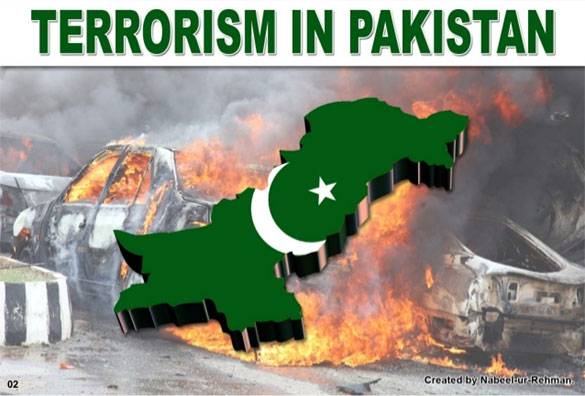
Rise of the
Taliban: America won the war in Afghanistan and is now deciding to withdraw its
forces from Afghanistan. The rise of the Taliban in Afghanistan was one of the
positive signals for madrassas people. Taliban and Al-Qaeda started threatening
the pro-western countries in the Muslims world. Pakistan supported the Afghan
Mujahideen after the Soviet invasion, but the International Community started
pressurizing Pakistan. Pakistan people’s party and Nawaz Sharif government took
some steps to ban the funding of Madrassas and at that time the anti-terrorism
act approved by the Parliament which emphasized to combat sectarianism in
Pakistan.
General
Musharraf Joined the War on Terror:
General
Musharraf joined the war on terror with the US after the 9/11 attack.
Pakistan’s situation was getting worst, and extremism was on its peak. He
started operation against Lal Masjid due to which extremism level further
increased. The Lal masjid religious leader and Taliban were in alliance and
Taliban gave warning that if he took operation against it then Pakistan will
face further problems and it became a reality from July 14th to 30th fifteen
bomb blast occurred mostly in Islamabad. It was due to the cause for launching
an operation against Lal Masjid. Attack on International Islamic University,
Islamabad in 2009 was another example of extremism. Much criticism was faced by
the International community that Pakistan is trying to control extremism from
the last eight years, but it failed to cope up the situation. Many terrorist
activities could be examined after this war on terror because first Pakistan
trained the Mujahedeen against Soviets afterwards, they turned against them. In
Baluchistan, the minority of the Hazara community were targeted. The incident
that happened in Rawalpindi, 2013 that killed the students of Madrassas was one
of the worst examples in the history of Pakistan. In the same year, the Badami
Bagh incident occurs.
Extremism
level from 2015 to 2020:
In 2015 Government
presented the National Action Plan in which action was taken against those
elements who spread the sectarianism. According to the Pakistan Institute of
Peace Studies (PIPS), sectarian violence attack was decreased to 44%. Combined
efforts of clerics, Civil Society and military have decreased the violence of
sectarianism in Pakistan. Peace and Education Foundation organized a workshop
to bring the religious clerics of different sects on one table and promote
Inter Sect Harmony. Many of them declared that the suicide bomb and
sectarianism are contrary to Islam. In March 2019, the Pakistani government
vowed to have operation against the extremist groups operating in Pakistan. The
PM Imran Khan accepted Pakistan’s responsibility in the creation of the
multiple militant groups but said that they no longer serve Pakistan’s
interests and mentioned that steps were taken against these militants for
Pakistan’s stability.
After
studying and analysing the entire factor, It came to know that Pakistan is made
in the name of Islam and Islam teaches us unity, but the individuals have
manipulated the concept of Islam. Zia used religion as a tool only to make its
authority sustained. Sectarianism came in the mid-1980s. The strategies were
made and began to proclaim that who is the Muslim and who is not. They made the
mindset of the people on this type of process. Individuals only made
sectarianism its existence had become in reality when people focused on it, and
they made it real. No patience in the people to hear anything against the
religion, human beings can think and can pass his or her point of view, and the
people must adhere it and try to resolve through definite proof instead of
going to kill that person.
The recent
example of Mashal Khan (Abdul Wali Khan University Mardan) who got lynched that
he committed blasphemy. The reform required in the education system so that
their mindset can be changed. To kill one or another people on behalf of the
sect is a way to remove sectarianism in Pakistan? What happened when Mumtaz
Qadri killed Salman Taseer Governor of Punjab? Does the intolerance end?
Instead of being emotional, try to resolve these things by addressing the root
cause, and Pakistan Government must maintain check and balance on Madrassa’s
fund that which country is sponsoring these institutions and make some strict
policies. Equality must be made so that inferior complexity can be finished.
Pakistan must reform the education system, and policies that were made during
the war on terror must be revised.
Related Articles:
Original Headline: Religious Extremism and its Dynamics in Pakistan
Source: The Modern Diplomacy
URL: https://newageislam.com/radical-islamism-jihad/role-madrassa-culture,-rise-taliban/d/122640