
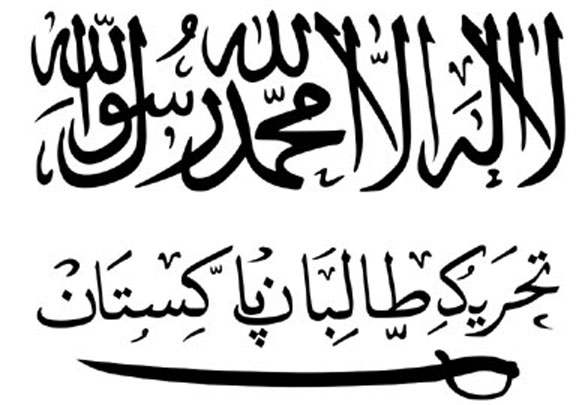
Tahrik-e-Taliban Pakistan (TTP) Gets Strength from Madrasas, Says It Wages Jihad Preached There
TTP Says
It Has Waged Jihad Preached In Madrasas.
Main
Points:
1. 2. Pakistan
considered TTP a strategic asset.
2. Pakistani Ulema
should help the government to combat TTP's ideology.
-----
By
New Age Islam Staff Writer
19 January
2023
Recently,
the Prime Minister of Pakistan said that Pakistan had learnt its lesson and now
wants to have a constructive dialogue on Kashmir and wants peace with India.
This statement has come when it was ditched by its greatest strategic partner
Taliban. The Taliban have sided with TTP instead of siding with Pakistan
government in the confrontation between the two.
All the
extremist organisation which operate in the name of Islam say that they are
waging jihad prescribed by the Quran but supress the fact that jihad can only
be fought under a political authority or government. Armed rebel outfits wage
war against the elected government and call it jihad. That's what Al Qaida,
Boko Haram, ISIS, Taliban and Abu Saiyaf group did and that's what TTP is
doing.
The TTP has
acknowledged that the jihad they are engaged in was preached by Pakistani
madrasas. It is well known that the Pakistani madrasas are out of the control
of the Pakistani government and extremism and sectarian ideology is preached
there. Communal hatred against Shias, Christians, Hindus and other minorities
is instilled in students in these madrasas. The government is also shown in a
bad light in those madrasas.
Though
Paigham-e-Pakistan document against terrorism, extremism and sectarianism has
been signed by more than a thousand clerics, it does not make any difference.
The Ulema do this whenever a government asks them to endorse such a document
because the document does not name a particular extremist organisation as a
terrorist organisation.
In India
too, religious organisations and Ulema often release statement saying they do
not support terrorism but do not say which organisations are terrorist
organisation in their view. They have supported Taliban as freedom fighters and
ISIS as revivers of Khilafat on different occasions. Then who is a
terrorist organisation if not Taliban, TTP and ISIS?
Depending
on only Ulema, therefore, would be naive on the part of the government as the
bread and butter of Ulema as well as their political power comes from religious
organisations including madrasas.
That's why Ulema
oppose any move to modernise madrasas in Pakistan tooth and nail.
Interestingly, Imran Khan tried to do the opposite: it made teaching of the
Quran mandatory in schools. The government will need the guts to crack down on
TTP and other extremist organisations ignoring the fallout if the politicians
of Pakistan really want to save Pakistan from growing religious fanaticism.
Religious
fanaticism only helps religious organisations to get political power. If
Pakistan has really learnt its lesson, it should abandon its India- centric
politics to divulge public attention from the more important challenges like
TTP and Afghan Taliban. Harping on Kashmir issue when Pakistan is facing revolt
in Balochistan and Swat shows that Pakistan has not learnt its lesson.
-----

By
Muhammad Amir Rana
January 15,
2023
The Taliban
regime in Afghanistan has started enforcing Sharia laws based on their own
interpretation of the precepts of Islam. Pakistan is among those Muslim
countries that have distanced themselves from the Afghan Taliban’s conception
and enforcement of Islamic laws. However, the orthodoxy in Taliban ranks poses
a more severe challenge to Pakistan compared to the rest of the Muslim world.
It is not
only a matter of the Taliban regime’s religious dogma and the ideological
hassle it could cause to Pakistani society; the establishment also appears more
concerned about the TTP and other Taliban associates who have challenged its
strategic views. The Taliban and affiliated militant groups are testing the
perception of Pakistan’s strategic community that the Taliban’s association
with madressahs in the country is political capital for the state. The head of
the outlawed TTP, Noor Wali Mehsud, affirmed in a recent video message that his
group was waging a ‘jihad’ that teachers in Pakistani madressahs preached.
The Muslim
countries are rightly worried about the Taliban’s view of Islam as it poses
more of a political challenge than an ideological one. Muslim societies from
Morocco to Indonesia have developed functional compatibility with the modern
values of freedom and human rights. Many Muslim countries and groups, including
the Organisation of Islamic Cooperation, have condemned the Afghan Taliban’s
policies of rolling back the rights of women, including the recent ban on
higher education for them. However, the Taliban leaders insist that their
policies are based on Islamic jurisprudence. Though the OIC has not abandoned
its engagement policy with the Taliban regime, it could rethink its approach if
Kabul continues with its ideological campaign.
True,
Pakistani religious scholars had partnered with the Taliban in the latter’s
conception of the ‘Islamic Emirate’. However, while the Taliban were busy
fighting the war against Kabul and foreign troops, prior to taking over,
Pakistani ulema had revisited their previously held opinion. That revision came
as a wave of religiously motivated violence and hatred undermined the
foundation of society, also forcing the establishment to revisit its
ideologically oriented strategic thinking.
A
declaration by the name of Paigham-i-Pakistan was launched at President House
on Jan 15, 2018, in the presence of national religious and political leaders.
The first part of the document comprised a preamble providing a contextual
analysis of the ideological and political situation. The second part contained
a set of religious decrees, initially signed by 1,829 religious scholars
representing all religious schools of thought in the country. The declaration
categorically condemned terrorism, sectarian hatred, armed sectarian conflict
and the imposition of one’s ideology on others by force.
The
religious scholars, who had signed the declaration, also pledged they would
work for a society based on democracy, liberty, equality, tolerance, harmony,
mutual respect, and justice to achieve a congenial atmosphere for peaceful
coexistence. Describing the context of the declaration, Paigham-i-Pakistan
claims that “maximum legislation”, according to Islamic teachings and
principles, was in place.
Interestingly,
a few heads of banned sectarian and militant organisations also signed the
declaration, including ulema supporting jihad in Afghanistan and India-occupied
Kashmir.
TTP chief
Noor Wali Mehsud’s statement cited earlier refers to Pakistani religious
scholars’ pre-Paigham-i-Pakistan fatwas and the general pro-jihad atmosphere
that persisted in the madressahs. In the video message, he says that the TTP
jihad was launched in the light of the fatwas given by Pakistani ulema, and “if
there is any deficiency, and … omission from us in the implementation of this fatwa,
or if we have changed our jihadi direction, then you guide us and argue, [and]
we are ready to listen to your arguments”. This is a serious issue for the
ulema, as the TTP “consider[s] your silence in our favour [akin to] fighting
side by side with us”.
Interestingly,
just before the video message was released, a group of Pakistani ulema, mainly
from KP, issued another fatwa on the lines of Paigham-i-Pakistan, declaring
that no individual or group of people had the right to declare jihad as this
was the sole prerogative of the state. Trying to counter such arguments, the
TTP has changed the organisation’s structure, converting the militant group
into a ‘wilayah’ (government) and announcing the formation of a parallel
‘governance’ system for the tribal districts. The Taliban and the TTP also
argue that the Darul Uloom Deoband, from where they derive their ideological
and political strength, had driven out the British from the Indian
subcontinent, and the Mujahideen groups had crushed the Soviet Union and forced
Nato forces to leave the country.
The
religious scholars must respond to the TTP challenge. The security
establishment also needs to review the ideological conception on which its
strategic thinking is largely built. That thinking has been in evidence time
and again, despite the huge losses suffered by Pakistan at the hands of the
terrorists. The same thinking, ie the Taliban will eventually cooperate with
Pakistan to defuse the TTP, was a factor behind the talks with the militant
group and it gave the latter a passage to Pakistan. The state institutions have
called on the ulema to help many times. It is obvious now that the approach has
not worked; but even then, a few in the strategic community harp on the same
arguments of historical, ideological, and political linkages with Afghanistan.
As
suggested before, Pakistan needs a new Afghan policy based on cooperation and a
pragmatic paradigm. The religious scholars can help by coming up with
compelling arguments to counter the TTP narratives and deconstruct the
Taliban’s thoughts about their view of Islam.
It will be
a lengthy process. At first, it requires serious scholarship on the part of the
Pakistani ulema, as the issue will not be resolved through issuing fatwas and
declarations alone. The ulema can learn from the experiences of scholars from
across the Muslim world. However, the question is whether or not they are ready
to take the task seriously.
-----
Muhammad
Amir Rana is a security analyst.
Source: Taliban
version of Islam
URL: https://newageislam.com/radical-islamism-jihad/tahrik-taliban-pakistan-ttp-madrasas-jihad/d/128915
New Age Islam, Islam Online, Islamic Website, African Muslim News, Arab World News, South Asia News, Indian Muslim News, World Muslim News, Women in
Islam, Islamic
Feminism, Arab Women, Women In Arab, Islamophobia
in America, Muslim Women
in West, Islam Women
and Feminism