
Pakistan Press On Violence against Women, Israeli-Saudi-Indian Engagement and American Carnage: New Age Islam's Selection, 10 December 2020
By
New Age Islam Edit Desk
10 December
2020

•
Violence against Women: Orange the World
By
Rizwana Naqvi
• Pakistan
and Bangladesh
By Ikram
Sehgal
•
Pakistan-China-Iran Trilateral Cooperation
By
Nawazish Ali
•
Israeli-Saudi-Indian Engagement: Impact on Pak- Saudi Ties?-1
Syed
Qamar Afzal Rizvi
•
Recapturing Pakistan from Its Elites
By Daud
Khan
• The
Strategic Imperative Of Sustainable Peace In Afghanistan
By
Ambassador G Rasool Baluch
• Pak-US
Relations And The Nuclear Factor
By
Durdana Najam
• The
Real American Carnage
By S
Qaisar Shareef
-----
Violence
against Women: Orange the world
By
Rizwana Naqvi
December
10, 2020
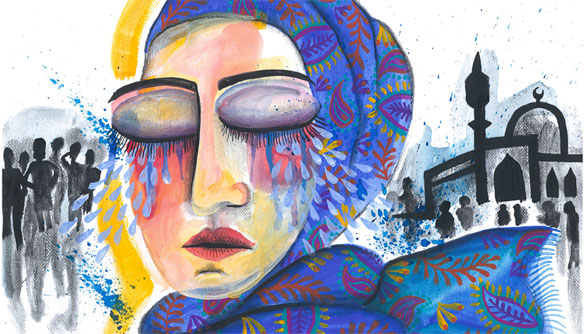
Violence
against women is rampant not only in Pakistan but around the world in various
forms, be it domestic violence and abuse, sexual abuse and harassment, forced
marriage, child marriage, human trafficking, cyber-bullying, acid attacks,
female genital mutilation, etc. In fact, women face physical, psychological,
and sexual violence in every sphere of life, whether they are at the workplace
or on the street or in the market.
The
‘In-Depth Study on All Forms of Violence against Women: Report of the
Secretary-General, 2006’, mandated by General Assembly resolution 58/185,
states that “Violence against women is one of the most pervasive human rights
violations. It devastates lives, fractures communities, and stalls development.
At least one out of every three women around the world has been beaten, coerced
into sex, or otherwise abused in her lifetime – with the abuser usually someone
known to her.”
It is a sad
fact that gender-based violence whether in the home or the community is rooted
in the global culture of gender inequality and discrimination, which not only
violates the fundamental human rights of women and girls but also allows
violence to occur with impunity. It is used as a tool to keep them under
control.
Acceptance
of violence as a social norm is also responsible for increasing incidents of
violence against women. It is said that men who grow up seeing violence being
perpetrated accept it as the norm and often resort to violence. But women now
are not ready to accept it and are beginning to speak up. A scene in a
Pakistani drama Kankar, aired some years back attempted to explain this
possible root cause of marital abuse, where the young wife who is physically
abused by her husband openly tells her mother-in-law that it is her fault as
she silently accepted violence at the hands of her husband.
However, we
need to understand that violence against women is not inevitable, but
preventable. To end this cycle of violence, it is essential to change the
attitudes that perpetuate, rationalise, and normalise violence, and deny women
their right to safe living. Since men are overwhelmingly the perpetrators of
gender-based violence, their attitude needs to be changed.
It is
heartening to know that the world has not accepted the situation and a lot is
being done to raise awareness about violence against women and to mobilise
efforts to end such practices. Women’s rights organisations have been, for
long, raising their voices against women’s rights abuses. Though countries are
taking measures to prevent such crimes, it is a global problem and requires
global action.
And action
is indeed being taken. On the one hand, there are legislations and UN
conventions that call for action to curb violence against women, and on the
other, there are awareness campaigns such as 16 Days of Activism against
Gender-Based Violence that seeks to inspire action to end all forms of violence
against women. The Campaign was launched in 1991 by the Centre for Women’s
Global Leadership (CWGL) at its first Women’s Global Leadership Institute in
1991 and is used as an organising strategy by individuals and organisations
around the world to call for the prevention and elimination of gender-based
violence (GBV).
The
campaign runs between Nov 25 and Dec 10 every year; the dates chosen are
significant as the starting day is the International Day of Elimination of
Violence Against Women, and the concluding day is the International Human
Rights Day. The dates symbolically link violence against women and human rights
and emphasises that such violence is a violation of human rights.
Campaigns
such as this one highlight the issue, and create public awareness about the
need to bring about changes to prevent it from happening at the local,
national, regional, and global levels.
While
Pakistan has made some progress in the right direction as several
women-friendly laws have been passed by parliament that deal with various forms
of gender-based violence including honour killing, rape, sexual harassment,
acid attacks, forced marriage, etc a lot more needs to be done as the laws are
not properly implemented and women are still subjected to discrimination and
violence. The lower status of women in our society is also contributing to
gender-based violence.
In light of
the increasing cases of sexual abuse in the country, and public demand for
legislation, the Cabinet Committee on Disposal of Legislative Cases has
approved two anti-rape ordinances aimed at setting up special courts for sexual
offences against women and children and introducing harsher punishments for
convicts. According to reports, the two ordinances – the Anti-Rape
(Investigation and Trial) Ordinance, 2020 and the Criminal Law (Amendment)
Ordinance, 2020 – provide mechanisms in the investigation and punishment of
rape and sexual abuse against women and children. After final approval from the
cabinet, they will be sent to the president to be promulgated and must be
submitted to parliament for ratification within 90 days after being
promulgated.
We have
hope that something is being done to curb crimes of the worst nature against
women and children. At the same time, care should be taken that the legislation
does not remain on paper but is implemented in letter and spirit. At the same
time, tighter implementation of other pro-women bills is the need of the hour
to enable women the space they deserve in society. However, for results to
show, awareness and a change in attitude is essential.
https://www.thenews.com.pk/print/756235-orange-the-world
------
Pakistan
and Bangladesh
By
Ikram Sehgal
December
10, 2020
Fifty years
should be a sufficiently long time to go beyond the recriminations, hurt and
feeling of revenge that has been part of our history. Fuelled by discrimination
of the worst kind grievous mistakes were made, culminating in the violence of
1971. While both countries have their problems with history writing, it is time
to acknowledge that and to move on. At one time for a 25 year period during the
80’s and into the early 21 st century, the relations were well on the mend. The
publication of the Hamoodur Rahman report, would be by itself a major step in
the rapprochement process.
The
resumption of the 1971 ‘war crimes’ trials, sent a number of people siding with
Pakistan during the crisis to the gallows, this has poisoned the relations
between our countries. The Awami League must critically examine not only their
own conduct as a majority political party but all those of Bengali origin in
then East Pakistan. My book 'Blood over different shades of
green" co-authored by Dr Bettina Robotka did not please some in either
Pakistan or Bangladesh. So be it. However, many more congratulated us for being
brutally frank in stating many facts hitherto conveniently overlooked. With a
Punjabi father and a Bengali mother who could be more objective than me?
Resolution
of the pending problems include the repatriation of stranded Pakistanis or the
full citizenship of them in BD, helping not only in the political rapprochement
but an unfinished business giving relief to the unfortunate residuals of the
events of 50 years ago through no fault of their own. In sharp contrast to her
earlier tenure our relations with BD have turned rather hostile since Prime
Minister Sheikh Hasina's election in 2009. India’s instigation to
conduct the war crime trials brought anger and bitterness into the relations.
Take the
example of the German-French rapprochement. France and Germany are the two
leading European economies today, why? For over a century both countries and
nations regarded each other as archenemies. Part of the rivalry was political,
part was territorial and each war was fought for the land or the ‘honour’, this
badly damaged the economies and cost thousands of people’s lives. Above all the
animosity renewed a yoke to economic programme. The latest quarrel went from
the 19 th century till 1945 when Germany was finally defeated. France became
one of the occupying forces to make sure German militarism would not reappear.
But for a change they avoided a narrative embedded in the Versailles Treaty after
World War 1 and which directly led to World War. This changed dramatically by
the Elysée Treaty signed on 22 January 1963 by France and the Federal Republic
of Germany. Following several decades of rivalries and conflicts, Germany and
France sent a message of reconciliation and laid the groundwork for close
bilateral cooperation to support European integration. The signatories
considered it important that the Treaty not simply be a document between Heads
of State but that it involve citizens so they could learn to get to know one
another, speak to one another and appreciate one another. This Treaty brought
the two peoples much closer together, why should something on these lines be
impossible in our region?
BD has
started to develop strained relation with India over the new citizenship laws,
Indian PM Modi has declared almost 2 million Muslim Bengalis living in Assam,
as "aliens" and threatened their deportation into Bangladesh
During his
visit to Bangladesh in 2002 Gen Musharraf, the first Pakistani army ruler to
visit Bangladesh since the independence of this country in 1971, paid homage at
the National Martyrs' Memorial, near Dhaka, describing the events of
1971 'unfortunate' and the excesses
'regrettable'. Bangladesh welcomed visiting Pakistan President
Pervez Musharraf's statement of regret over 'excesses'
during its liberation war. A few years before that I accompanied the then
Pakistan PM Nawaz Sharif to Dhaka and to the same memorial at Savar.
As we stood
silently commemorating the dead, the GOC of the Infantry Division at Savar came
and saluted me, saying “I am from your unit, Sir!" That gesture was
very telling and very symbolic. During 1971 there were three and a half
underequipped Pakistan Infantry Divisions in then East Pakistan, with only one
depleted armour regiment (detachments detached all over) at Rangpur. Today
there are nine Bangladesh infantry divisions (and a tenth coming up in
Barisal), most with integral medium tank regiments, and an armoured brigade at
Bogra, my mother’s hometown. If Pakistan had this ORBAT in 1971, with Indian
lines of communications and major cities with few miles of the border, can you
imagine what the result would have been? One can fantasize about it but the
Bangladesh ORBAT today 2020 is a reality. Pakistanis should be proud as to what
Bangladesh has achieved economically. Freeing the economy military rulers Gens
Ziaur Rahman and Ershad in their turn “let a hundred flowers bloom”, Shaikh
Hasina has now taken the economy to extraordinary heights in the last decade, a
remarkable achievement. As far back as March 1988, to quote "The
Economies of Togetherness" I had written "Disparate economies
have a natural propensity to blend, particularly in this world of hard economic
choices. Bilateral relationships between nations are apt to be increasingly
bound by commerce, ties which are far more pragmatic and lasting rather than
those based on ideological symmetry. What brings nations together are common
interests, starting with religion, culture language etc but the glue that binds
them together must be economic. Every nation ultimately falls back on its own
national interests but it is trade that gives an opportunity to “give and
take”. To build our relations realistically we must readjust our “demands” to
fit the other’s “supply” potential." Unquote To quote from my 2002
article "Two Countries One Nation", Pakistan and Bangladesh
must have free trade without any tariffs. Pakistan can export to Bangladesh raw
cotton, cotton textiles, fertilizers, Basmati rice, irrigation pumps, railway
wagons, ocean-going vessels, sugar mills, cement plants, fruits etc and a whole
range of consumer items. Bangladesh can export to Pakistan, raw jute, jute
goods, tea, jute machinery spares, jute batching oil, fruit, etc. Exporting to
each other will take the pressure of exporting to other countries, as demand
will exceed supplies, moreover the masses will benefit from having competitive
prices. Direct free trade is the future of these two countries"
Unquote. One of my closest friends, Maj Abdul Mannan, is a tremendous
entrepreneur. His ventures in garments include factories not only in Bangladesh
but far away locations like Cambodia, Madagascar, etc (I was privileged visiting
his factory in Phnom Penh). He has always given preference to buying textiles
from Pakistan. For many years in the past Bangladeshi military officials were
trained in Pakistan. While one believes this was revived by Shaikh Hasina
despite strong Indian objections for the last few years there was a near
complete absence of people-to-people contact. For progress in relations between
the two countries, drastic measures include the Visa system being abolished and
all mutual tariff barriers removed, allowing free movement as was done
pre-1971.
To quote my
article of March 26, 1990, "The AESSA Concept, "The term
Bangladesh literally means land of the Bengalis, Muslims and Hindus included.
Given the
major ports of Calcutta, Chalna and Chittagong, this area by itself can exist
as an effervescent economic region without facing chronic shortages of food and
other necessities. India is aware of an important geo-political home truth,
BD’s pivotal economic location is extraordinary. However, looking at historical
and ethnic realities existing in the area, one finds that there exist many
nation-states, West Bengal, Bangladesh, Gorkhaland, Sikkim, Bhutan, Meghalaya,
Bodoland, Nagaland, Mizoram, Assam, Tripura, etc, all fiercely independent in
their outlook. Even the Hindu Kingdom of Nepal would cease to be endlessly
land-locked by India (geographically and economically). More than anything
else, India’s undue interference has contributed to increasing the poverty and
sufferings of the Bangladeshi people. A possible “Association of Eastern States
of South Asia”, (the AESSA concept) is comprising economic (if not political)
confederation of almost 500 (???) million people.
Instead of
being ruled by remote control from New Delhi, these are effective geographical
and economic units that can have a form of a Common Market without anybody’s
hegemony, Bangladesh will be the dominant economic and sovereign entity in this
region." Unquote.
In July
Prime Minister Imran Khan’s call to his counterpart in Dhaka Shaikh Hasina made
a welcome new beginning. In the follow-up by Pakistan’s High Commissioner in
Dhaka, who by all reports is held in great esteem (coincidentally so is the
present High Commissioner for Bangladesh in Pakistan), called on the Bangladesh
Prime Minister. The "meeting was held in a cordial atmosphere, with
both sides agreeing to further strengthen the existing fraternal
relations". Incidentally extraordinary diplomats give arise to
extraordinary opportunity to solidify mutual relations. BD has started to
develop strained relation with India over the new citizenship laws, Indian PM
Modi has declared almost 2 million Muslim Bengalis living in Assam, etc as
"aliens" and threatened their deportation into Bangladesh.
The sharpening Indo-Chinese problems could be another reason with BD preferring
to be part of Chinese BRI investments rather than standing alone in the fight
with India for water. While BD’s relation with India is BD’s prerogative, and
Pakistan should not get involved in any manner whatsoever, similarly
Pakistan-BD relationship cannot remain hostage to India’s whims and caprices to
foster their ambitions of regional Hindu hegemony.
The
post-Covid world has devastated our economies, we need to find out-of- the box
solutions for recovery. With the global and the regional power balances
changing, new options for openings are available for both Pakistan and BD to
use all the opportunities arising. Re-forging a diplomatic and economic
alliance between our two countries could be a priority
https://dailytimes.com.pk/699680/pakistan-and-bangladesh/
------
Pakistan-China-Iran
Trilateral Cooperation
By
Nawazish Ali
December
10, 2020
“Economy
and environment are the same thing. That is the rule of nature”. (Mollie
Beattie) The significance of financial resources is central to the possibility
of economic collaboration among various countries all around the globe.
However, the commercial linkages in state-to-state relations cannot be entirely
independent of political and strategic environment of the region in particular
and the world in broad-spectrum. Respective national interests may not always
align when more
than one
country are involved and economic cooperation that has the potential to create
a win-win situation for all the parties involved should not be neglected.
China’s
rise, Iran’s attempted economic isolation by the USA and Pakistan’s crucial
geostrategic location are all factors that have the capacity to bring these
three countries in sync. China and Pakistan have a long history of deep
friendship. The evolving China-Pakistan Economic Corridor (CPEC) has further
created prospects for adjacent regional countries to benefit from this
connectivity.
The
challenges to these initiatives are many as the security situation in the
region has always remained worrying. Terrorism, religious extremism, sectarian
clashes and interference of extra-regional actors are only a few challenges
that stand in the way of this nexus. The internal challenges of political
instability and socio-economic factors can also affect this relationship
adversely. However, if the leadership, governments’ policies and public opinion
in these three countries remain steadfast in support of this trilateral
cooperation, there is no doubt, the success of this interconnection would
change the economic and regional balance of Asia forever.
Iran is
pivotal to the realization of China’s trans- continental,
infrastructure-focused One Belt One Road (OBOR) initiative in ways that Saudi
Arabia is not
China’s
economic rise, its status as a permanent member of the United Nations Security
Council (UNSC), its widespread global influence and connectivity initiatives
make it the next world power in making as a rival to the USA. South Asia, East
Asia and the Middle East are regions that occupy Centre stage in world
businesses. Their cultural diversity, natural resources, maritime routes,
geography and conflicts have wide ranging implications even for the day-to-day
affairs of almost all countries worldwide. With such adjacent allies, Pakistan
can surely achieve prominent stature in the regional and global arena.
Pakistan
has been facing challenges to its national security due to the turbulent
situation in Afghanistan since 1979. Iran and China also have serious security
and economic concerns tied up at fag-end of global war on terror. Iran and
Pakistan have not seen eye to eye on the solution to Afghan war in the past as
Iran backed the Northern Alliance after the Taliban seized power in 1996
whereas Pakistan, on the other hand, recognised the Taliban government in
Afghanistan. China has high stakes in Afghanistan as it seeks to link it to its
grand initiative of the Belt and Road (BRI). The Chinese access to Central
Asian states and their oil resources is thwarted by the constant state of
turmoil in Afghanistan not to mention the fear of spillover from northern
Afghanistan into Xinjiang.
The
peaceful Afghanistan is vital and stays a point of unification for these three
countries, if they wish to effectively counter the Indo-US dominance in South
Asia.
They need
to make sure that US withdrawal from Afghanistan should not plunge the AfPak
region into another civil war that would certainly upset the regional peace and
any chances of further trilateral cooperation among these three countries. The
significant role recently played by Pakistan in the Afghan peace process
provides an opening for cooperation by Iran and China as their regional
interests of keeping peace in Afghanistan align perfectly with those of
Pakistan.
Iran and
India enjoy a friendly relationship as the two have shared a cultural and
linguistic affinity for a long time and further warmed up to each other when
they signed a significant defence agreement in the year 2002. Following that,
the two have engaged in several trade contracts, the most prominent of which
has been the Chahbahar Free Trade Agreement. In response to the launch of
Gwadar port, as the sign of friendship between China and Pakistan, India
pledged to assist Iran in expediting construction of Chahbahar port.
Iran is
pivotal to the realization of China’s trans-continental, infrastructure-
focused One Belt One Road (OBOR) initiative in ways that Saudi Arabia is not.
Iran’s oil
and gas reserves, fourth and second largest in the world, spell out a boon for
China’s exponentially rising energy needs. Out of the three markets that Iran’s
massive piped gas reserves can be sold to, the closest and most accessible is China.
Gwadar is a
deep-sea port with harbouring potential manifold that of the size of Chahbahar,
which is only feasible for a transit trade arrangement via Afghanistan.
Iran has
quite tactfully declared Chahbahar a ‘sister port’ to Gwadar and managed to
keep the option for cooperation with China open for all future ventures. Hence,
it is evident from the Iranian stance that it wishes to bring its maximum
resources to the CPEC for all practical purposes. Having stable economic
cooperation with Pakistan, Iran can quite easily extend it further to China.
China and
Iran also reiterated their deep strategic cooperation ahead of the expected
Saudi investment in Pakistan, which means that China does not stand opposed to
either Saudi or the Iranian participation in the upcoming CPEC projects. Rather
it provides China more avenues of participation and cooperation in the Middle
East and Gulf region. China as a persuasive force in the SCO will make it
easier for Pakistan to link energy corridors and, if Iran’s bid to join the SCO
is also accepted, it will be another economic opportunity for the nexus among
these three countries.
China as a
rising economic power is making linkages worldwide and is offering monetary and
commercial opportunities for developing countries with resources to join the
wave of economic harmony. A potent economic force is expected to emerge in the
foreseeable future having an anti-American agenda at heart.
However, it
will take serious concerted efforts from the regional players to resolve mutual
differences and be determined to cooperate on economic fronts with one another
to ensure regional harmony and prosperity. There are many avenues for
cooperation and a huge amount of untapped potential lies in this trilateral
collaboration that needs to be utilized to the maximum. Pakistan’s significant
geographical location stays central to this new emerging bloc.
https://dailytimes.com.pk/699668/pakistan-china-iran-trilateral-cooperation-2/
------
Israeli-Saudi-Indian
Engagement: Impact On Pak- Saudi Ties?-1
Syed
Qamar Afzal Rizvi
December 9,
2020
Much has
been reported in both the local and international Media about the covert and
overt diplomatic interaction between the Israeli-Saudi officials to normalize
the realtions—paving the way for a genuine concern for Pakistan. Needless to
say, despite having had a history of their proverbial relations, the two
brotherly Islamic countries- Pakistan and Saudi Arabia have recently undergone
to experience some asymmetric dynamics/ cross-currents in their relationship.
Though a policy statement given by the Saudi FM Faisal Bin Farhan (on August
20) emphasizing that ‘’no deal with Israel without peace for Palestinians’’ has
somehow dispelled the confusion arising in the mind of Muslim Ummah about
Israel-Saudi rapprochement, a feeling of discomfiture still prevails in
Pakistan regarding Saudi Arabia’s growing ties with both Israel and India-the
two known foes of Islam and Muslims. To win the hearts and minds of the
Pakistanis, Riyadh needs to revive the core of its traditional ties with
Pakistan.
As
manifested by the current deal concluded between the United Arab Emirates and
Israel that today Muslim word faces a challenge of unity among its ranks and
files
History is
witness to the fact that both Saudi Arabia and Pakistan have had long
maintained a strong, strategic relationship. The two brotherly states have
worked within the framework of several bilateral, regional and global forums,
including the Organisation of Islamic Cooperation. The crux of Saudi
Arabia's cooperation remained financial while the nuclear- armed
Pakistan role has been to support on the security front. The former Saudi
intelligence chief Prince Turki bin Faisal once described relations between
Pakistan and Saudi Arabia as “probably one of the closest relationships in the
world between
any two
countries” As the custodian of the Two Holy sites in Mecca and Medina, Saudi
Arabia maintained a legacy of its
sustainable
relations with Pakistan's political and military. In return, Pakistan
has been helping the Saudi government in maintaining iron-clad security of the
two Holy sites for decades. Islamabad has also cooperated closely with Saudi
Arabia to uplift its global image. The Saudis have also been allowed to spread
their extremist Wahhabi version of Islam in Pakistan through a vast network of
mosques and seminaries. During the Cold war period, the relations between the
two states reached its zenith, particularly, the collaboration the two sides
cemented during the Afghan Jihad-1979-89. Though the Iranian revolution
inspired the Shia groups, the Saudi-Pakistani alliance in Afghanistan and
General Zia’s Islamisation policies did play the same role for Sunni groups.
In the post
9/11 phase, the Taliban factor gained pivotal consideration for Riyadh because
of two obvious reasons. Firstly, Iran might have developed its own ties with
the Afghan Taliban; secondly, high-level talks were held with the Taliban in
Qatar, with which Riyadh remains at a standoff. Furthermore, in the post
–Musharraf era, the Iranian and the Chinese factors also remain instrumental in
visualizing the relations between Riyadh and Islamabad as similarly for us the
Pakistanis Saudi ties with Israel and India remain the source of genuine
concerns.
During MBS’
visit to Pakistan in February 2019, the crown prince told Prime Minister Imran
Khan: “Consider me an ambassador of Pakistan in Saudi Arabia. “The fact remains
that Prime Minister Imran Khan hasn’t visited any other country more than Saudi
Arabia, and similarly the crown prince himself visited Pakistan with a large
delegation.” Needless to say, Islamabad-Riyadh always enjoyed historic and
diverse relations despite recurring changes in Pakistan’s political landscape.
And of course, the relationship grew closer amid the crown prince visit to
Pakistan, during which he signed $20 billion in memorandums of understanding,
and was given a no-expense- spared, red-carpet welcome by both Imran Khan and
the chief of army staff.
And yet
undeniably, the relations between Islamabad and Riyadh have largely endured
despite recent hiccups such as when Prime Minister Khan had to cancel his
participation in the Kuala Lumpur summit late last year under Saudi pressure.
That meeting, attended by Turkish President Recep Tayyip Erdogan, and Iranian
President Hassan Rouhani, was seen by Riyadh as a challenge to the OIC, which
is headquartered in Jeddah.
Recently,
Pakistan FM Shah Mehmood Qureshi took a principal stand while reminding our
Saudi brothers that if the KSA will not call the OIC meeting on India’s illegal
revocation of the Kashmir status, Islamabad would fulfil this moral
responsibility. By any diplomatic yardstick, the comments of Pakistan Foreign
Minister should have not been taken out of context. It needs no mentioning that
for decades, the Saudi-Pakistani relations have been strong in multiple
dimensions. Riyadh has been among Pakistan’s strongest supporters on the Kashmir
issue and the two have been allies for decades in the Afghan conflict Saudi
Arabia is also the source of 50 percent of Pakistan’s oil imports and the two
countries have strong defence ties too. Saudi Arabia is also a major source of
financial support for Pakistan. Indeed, rarely has Pakistan paid back these
loans.
Needless to
say, the Saudi -backed UAE -Israel deal– both in form and substance– does not
fulfil the credo of the OIC Charter: ‘’…to adhere our commitment to the
principles of the United Nations Charter, the present Charter and International
Law; o endeavour to work for revitalizing Islam’s pioneering role in the world
while ensuring sustainable development, progress and prosperity for the peoples
of Member States; to enhance and strengthen the bond of unity and solidarity
among the Muslim peoples and Member States; to respect, safeguard and defend
the national sovereignty, independence and territorial integrity of all Member
States…’’ Obviously, the Arabs’ espoused rapprochement with Israel without
settling the question of the simmering Palestinian issue (the right to
self-determination) has not only caused perturbation in Pakistan but also in
the Muslim Ummah. By no means, Pakistan can leave the Palestinian question of
freedom at the helm of the Israeli government.
On the
premise of Pakistan foreign relations with the Muslim states, Pakistan knits
its cordial relations with Turkey, Iran and Malaysia-a factor that might have
been irritating the Saudis. While for we the Pakistanis, Riyadh’s unflinching
tilt –towards both Israel and India –irritates us. But in diplomacy, these
asymmetric challenges are amicably settled. But Saudis must realise that the
Kashmir and the Palestinian issues are the bloodlines of Pakistan’s foreign
policy. By no means, Islamabad can downplay its role in galvanizing these
issues on the global level. Pakistan-China common stand on Kashmir endorses
this objective. The Palestinians rightly argue that normalization with Israel
means– opening the door wide to tamper with the security and capabilities of
our countries and peoples to serve its settlement colonial project,
"the Greater Israel," especially since it has the ability to
do so with its own capabilities or open American support.
As
manifested by the current deal concluded between the United Arab Emirates and
Israel that today Muslim word faces a challenge of unity among its ranks and
files. A general perception anchored in the Muslim world holds that the said
deal could have not been possible without a Saudi-backing. In this regard, both
Riyadh and Islamabad have to save the legacy of their historic relationship.
To be
continued
https://dailytimes.com.pk/699263/israeli-saudi-indian-engagement-impact-on-pak-saudi-ties-1/
------
Recapturing
Pakistan From Its Elites
By
Daud Khan
December
07, 2020
It is a
matter of continuing debate about why Pakistan has been underperforming in
relation to other Asian countries. In our opinion, the key reason is our
inability to implement the reforms and changes needed in the face of a dynamic
and fast evolving national, regional and international context. Reforms and
changes that would take us towards a more market-oriented and internationally
competitive economy; where public resources are spent on ensuring essential
infrastructure and public goods, services such as health and education for all,
and on safety nets to the poor and vulnerable; and where laws and regulations
safeguard basic human and social rights, equitable access to national
resources, and protection for property and investments — both national and
international.
This
inaction is not due to any lack of knowledge about what needs to be done. There
is plenty of regional and international experience stretching back several
decades about what works and what does not. Clearly, not all successful
experiences from other countries are applicable to Pakistan. Experience also
shows that a good reform is not a blueprint set in stone that can be inexorably
rolled out over a number of years. Rather, it is a process requiring constant
oversight, evaluation, updating and frequent mid-course corrections. These
experiences have been studied by Pakistani and international thinkers, and
based on this shelves full of strategies and policies prepared by the best
available experts. These spell out very well the major reforms and investments
needed, along with processes and procedures that would ensure the necessary
oversight and flexibility. Many of these policies, strategies and programmes
have gone through a rigorous consultation process with stakeholders and several
have been “approved” by the different levels of government. Sadly, despite the
fact that we know what to do, very little actually gets done. Our problem is
not of knowledge but of implementation.
So what is
the problem? In our view the inability to move forward has much to do with
“elite capture” — a political economy term used to describe a situation where
rich and powerful elites hold the reins of power and do not allow any change
that would threaten their wealth and control. We have a sugar mafia that keeps
out cheap imports and effectively forces us to produce our own sugar, an
expensive and environmentally harmful crop for Pakistan; a water-tanker mafia
which does not allow improvements in the piped water supply in cities such as
Karachi; and a land mafia that grabs plots set aside for parks, public
amenities or environmental purposes. The list goes on and on. Each situation
creates its own mafia and the result is total inaction on many fronts.
The
situation is currently so bad that we cannot even deal with the most urgent and
glaring of problems. These include closing down or selling off loss-making
state-owned enterprises which are a massive and continuous drain on scarce
public money; getting rid of inefficient subsidies such as the wheat
procurement programme; or improving the quality of projects in our annual
development plans where most investments of public money cater to the needs of
bigwigs or to prop up inefficient government bureaucracies.
This
situation is not unique to Pakistan. Time and time again, countries have ended
up in a situation of economic stagnation and glaring inequality where social
tensions rise rapidly. In many cases these have exploded into protests,
revolutionary movements and civil war. These turbulent movements have often
been marked turning points in history, leading to new developmental pathways.
But such wrenching changes come at a high cost. While movements such as the
French, the Russian and Chinese revolutions did lead to epochal changes, but
only after years of social and political turmoil. More recently the experience
of the Arab Spring shows how the outcome of such movements is not
pre-determined and can lead to disillusionment and anger.
In
Pakistan, we have already seen the consequences of unequal access to resources
and distorted growth. During the 1950s and 1960s we followed a highly skewed
trajectory of growth with certain regions and social classes left behind. All
this was justified with phrases such as “we cannot redistribute poverty”,
“first growth then equity” and “functional inequality”. The consequence was the
growth of Bhutto-ism (I hesitate to call it socialism), the nationalisation and
subsequent mismanagement of banks, industries and schools, and the breakup of
the country. These events set us back a decade if not more.
In electing
PTI, the people of Pakistan voted for change. PTI’s appeal to voters,
especially young ones, was that it would reform a system that was inefficient
and unjust. To a large extent it has lost its way. The realities of managing
power, the difficult compromises made with electables who demanded their pound
of flesh, and the ongoing problems of putting together a competent team
continue to plague the government.
Unfortunately
the alternative is hardly attractive. The new leaders of the PML-N and the PPP
are working very hard to distance themselves from their predecessors and pose
as champions of reform and change. However, during their tenure they did little
to address underlying issues. On the contrary, they and their cronies were
probably major beneficiaries of all that was going on. It is unlikely that the
new generation has changed their colours. For example, recently the government
took some steps to reduce the cost on the exchequer of the Pakistan Steel Mill
which has produced nothing in years yet costs the taxpayer billions. The
government finally decided to lay off about half the workers giving them
generous severance packages. However, instead of endorsing the move, or at
least keeping silent, Bilawal Bhutto termed it economic murder and promised to
return each and every one back to work!!
Is there
hope then? The government is facing multiple crises including galloping food
inflation, rising poverty and a second round of the Covid-19 crisis. Although
sad and unfortunate, these crises have also created political space for some
bold actions. This is similar in some sense to the balance of payments crisis
of a couple of years back when the government was forced to take on the IMF
package, and with it a series of much-needed reforms. Will the PTI government
also take this opportunity? Can it move on at least some of the changes and
reforms that have been banished to the back burner for decades?
https://tribune.com.pk/story/2275047/recapturing-pakistan-from-its-elites
------
The
Strategic imperative of Sustainable Peace in Afghanistan
By
Ambassador G Rasool Baluch
December 8,
2020
The long
awaited maiden visit by Prime Minister Imran Khan to Afghanistan is significant
in terms of timing and outcome. In the past two years Pakistan played the role
of an "Strategic Facilitator" in bringing rapprochement
between Taliban and The U.S .The Taliban ; Once termed as terrorists and a
threat to international peace in general and to the peace and stability of
Afghanistan have emerged as legitimate interlocutors and major stakeholders in
the future dispensation in Afghanistan . While Taliban’s Diplomatic trench was
located in Qatar; from where they launched their diplomatic campaign;
nonetheless it is recognized by all stakeholders that without the strategic
diplomatic support of Pakistan the US – Taliban dialogue was almost impossible
The cardinal positive role played by Pakistan in the current Afghan peace
process has been acknowledged not only by the US ,but the world at large .
The premier
's visit was also significant in terms of optics as well as content.
The Prime Minister was accompanied by his civilian setup which included his
Foreign Minister Shah Mahmood Qureshi and Mr Mohammad Sadiq the former Ambassador
to Afghanistan and now special envoy of the PM on Afghanistan . PM Imran Khan
was not overshadowed by some big Military Brass as was the practice in the past
. In terms of the content the two countries jointly issued a document titled
'Shared vision between Islamic Republic of Afghanistan and Islamic
Republic of Pakistan to support peace and stability in both countries and the
wider region.' As per the document the two sides affirmed that both
countries "should look towards a future relationship built on trust,
aiming to achieve tangible outcomes from that relationship".
Afghanistan
and Pakistan are two intertwined brothers and the two will have to survive the
vicissitudes of the current history as they have done it in the past
Some of the
core elements of the shared vision that officials agreed for Afghanistan and
Pakistan include:
● That
Afghanistan and Pakistan should enjoy a "special
relationship" founded on predictability, transparency, mutual and full
respect for one another's sovereignty, and on expanding and furthering
their mutual interests through state-to-state mechanisms.
● That
Afghanistan's posture of "multi-alignment" with other
countries, pursuing a number of friendly relationships, "presents a
real opportunity for the two countries to exploit and conversely presents no
threat".
● That
neither country's territory should be used for "malicious
purposes" against the other's territory, and that both
countries should work together to "identify and tackle enemies of
peace".
● That
regional connectivity should be broadened and deepened, with an emphasis on
trade, free movement of people, goods and services, opening of trade and
customs posts, and transport and energy infrastructure development, aiming for
regional development dividends greater than what each country might expect to
achieve alone
● That a
safe, time-bound and dignified return of Afghan refugees from Pakistan would
help the two countries address the humanitarian and socio-economic challenges
associated with population displacement.
The
document issued by the Foreign Office also stated that Afghan and Pakistani
representatives agreed that timely progress to meet the 'shared
vision' would require "close coordination, a structured
dialogue, and willingness to take difficult and courageous decisions".
They agreed
to take rapid action on three main strands of activity:
● By
December 15, 2020: Re-energising joint intelligence services-led work on
analysing, mapping and cooperating against "enemies of peace and those
undermining the peace process".
● By
January 1, 2021: A joint proposal for refugees' return; elevating and
intensifying treatment of this issue, to the point where credible and
progressive action can start to be taken.
● By
January 1, 2021: A joint proposal to further regional connectivity, in a way
that strengthens both Afghanistan and Pakistan, as well as the wider region.
● The joint
vision is a very creative document that will require politicalcommitment of all
stakeholders in Pakistan . However , there some pitfalls that need to be
avoided by the two countries which include. In order to achieve the lofty
objectives of the” shared vision” some visible and invisible pitfalls have to
be avoided . The two countries should undertake concert steps so that their
respective territories do not become safe haven for hostile non-state actors
and terrorist outfits. Pakistan will have to engage all Afghan factions and
avoid giving an impression of any preferred group/faction. Pakistan will have
to make sure that the hostile regional countries especially India,who
potentially could play the role of an spoiler are kept under check in Afghanistan
. A well calibrated public diplomacy has to be undertaken to neutralize anti
Pakistan propaganda by hostile elements within Afghanistan.
The future
Sustainable Peace Architecture in Afghanistan has to be development driven and
should contain a major international political and economic stake.
Afghanistan
should be integrated into China’s OBOR Initiative. Pakistan in collaboration
with China should initiate Joint Connectivity projects under OBOR.
Afghanistan
and Pakistan are two intertwined brothers and the two will have to survive the
vicissitudes of the current history as they have done it in the past. Pakistan
in collaboration with Afghanistan and other international stakeholders should
embark on a grand global effort of rebuilding the war ravaged country .
Investing in Peace in Afghanistan today is indeed an investment in sustainable
peace for tomorrow in Afghan , the Region and the world at large.
https://dailytimes.com.pk/698847/the-strategic-imperative-of-sustainable-peace-in-afghanistan/
-----
Pak-US
Relations And The Nuclear Factor
By
Durdana Najam
December
10, 2020
The
foundation for America’s “pivot” to the Asia-Pacific was laid when Richard
Nixon became the president of the United States. It demanded a new beginning in
the US-China relationship for which the US reached out to Pakistan. For the
following two years, Pakistan played the role of a messenger between Nixon and
Chairman Mao. Pakistan facilitated a secret visit of secretary of state Henry
Kissinger to China on July 9, 1971, and was rewarded for this diplomatic
service with a temporary relaxation on arms sales ban, which was imposed in
1965. As a result, Iran and Jordan were given a green signal to assist Pakistan
militarily. It was not until the House Foreign Affairs Committee took notice of
this violation that Nixon announced suspension of all aids and conditioned its
restoration to the resolution of the political issues in East Pakistan. This
did not however stop the Nixon administration from releasing $24 million worth
of military equipment that had been blocked since 1971. The 1967 arms supply
policy was also reinstated.
In the
meantime, prime minister Bhutto, wary of the duplicitous and inconsistent US
role in the 1971 war and India’s direct intervention in the creation of
Bangladesh, had propelled Pakistan on the path of developing nuclear weapons
for national security. Though after Nixon’s resignation in August 1974, his
successor president Ford had lifted the arm sales ban on Pakistan, it did
little to normalise the relations that had become exceedingly sour because of
Bhutto’s refusal to discontinue or suspend Pakistan’s journey to
nuclearisation. The situation aggravated when Kissinger, during his visit to
India in October 1974, described it as the ‘pre-eminent power’ in the region.
President
Jimmy Carter kept the pressure high on Pakistan and to dwarf its image he
marked India as the potential regional power in the revised US-South Asia
foreign policy. To reinforce this policy, Carter made a visit to India on
January 1, 1978, and, unlike his predecessors, did not stop in Pakistan.
General Ziaul Haq, who was also the president of the country, following in the
footsteps of Bhutto, refused to bend to the US threat and accepted sanctions on
economic aid.
While the
US-Pakistan relationship floundered because of nuclear-related issues, the
India-US relationship strengthened for the same reason. Instead of punishing
New Delhi for exploding the nuclear device, the US was providing
enriched-uranium fuel to India for nuclear power reactors at Tarapur, near
Bombay. Matters became worse when an interagency group in the US led by
arms-control expert Gerard Smith told The New York Times that the US had an
option to attack Pakistan’s nuclear facility in Kahuta.
In October
1979, Agha Shahi, Pakistan’s foreign minister, went to the US to try and break
the deadlock. His counterpart, secretary of state Cyrus Roberts Vance laid down
three conditions for the continuation of any talk: First, that Pakistan would
not transfer nuclear technology to other countries. Second, that it will open
its nuclear facilities to international inspection. Third, that it would not
test a nuclear device. Pakistan agreed to comply with only the first condition.
Shahi made it clear that unless India opened its nuclear facilities to
inspection, Pakistan would not comply with the request.
With the
Soviet invasion of Afghanistan in December 1979, the US-Pakistan relations
bounced back to normalisation. Carter called Zia and revisited the 1959
bilateral security agreement to thwart Communist aggression and offered to
bolster Pakistan’s security. Zbigniew Brzezinski, president Jimmy Carter’s
national security adviser, is reported to have said: “Circumstance required the
United States to set aside concerns about Pakistan’s nuclear programme, at
least temporarily.”
The war
began and the US was okay with Pakistan’s assurance that its nuclear programmes
would not embarrass the former. To the experts the assurance was a tacit
agreement that even if Pakistan made the bomb, it would not explode it.
Nevertheless, to assuage congressional pressure to keep a check on Pakistan’s
nuclear-related activities, president Reagan agreed to the Pressler Amendment.
The bill suggested that Pakistan would not be provided any military or
technological equipment unless the American president certified that Pakistan
did not “possess” a nuclear explosive device and that the assistance provided
by the US would “reduce significantly the risk that Pakistan will possess a
nuclear explosive device”. The catch was in the term “possession” that was left
open to wild interpretation and was dependent on the intelligence report, which
at that point of time did not ‘reveal’ that Pakistan’s nuclear-related
activities were progressing because of US assistance. The bill hence favoured
the continuation of military and economic assistance and Pakistan received $4
billion in aid in 1986.
The
assessment began to change as the war drew closer to an end. Pakistan was told
that: “With the departure of the Soviet troops from Afghanistan and the winding
down of the Cold War the policy dynamic on the nuclear issue had changed.” The
apparently toothless bill would soon become Pakistan’s nemesis with sanctions
imposed on it for clandestinely running the nuclear explosive programme.
Since the
amendment came on the heels of the Afghan war’s end, it brought into spotlight
the ‘disposability’ factor that relates to the US behaviour of abandoning
Pakistan after ‘using’ it for achieving its foreign policy objectives. The
duplicity had once again corroborated a general belief that the US uses a
fickle-minded approach in its relations with Pakistan.
For all its
efforts, however, the US could not bring either India or Pakistan to sign the
Non-Proliferation Treaty and could do little to prevent both countries from
testing nuclear devices in May 1998. In a typical reaction, the US condemned
Pakistan but accepted India’s stance as a natural deterrent against China. It
would not be wrong to say that America’s duplicitous and India-centric nuclear
policy in South Asia has plunged the region into an arms race.
https://tribune.com.pk/story/2275333/pak-us-relations-and-the-nuclear-factor
-----
The Real
American Carnage
By S
Qaisar Shareef
December
10, 2020
“The
forgotten men and women of our country will be forgotten no longer. This
American carnage stops right here and stops right now.” With these words on
January 20, 2017, Donald Trump was sworn in as the 45th president of the United
States.
Trump had
come from a business background and had been a reality TV star. His populist
campaign – anti-immigrant, hateful of Muslims and other minorities – attracted
a devoted following among whites. His base soon consisted of people from rural
states, white Christian evangelicals and others who felt left behind in the new
globalized world.
Expectations
were that this ultra-wealthy person, not known for his largesse towards the
less fortunate, will somehow fend for the masses. Four years later, as voters
have pushed him out of office, the country lies in shambles. A global pandemic
has ravaged the country, made worse by Trump’s inept handling. The economy is
hurting badly with over 10 million unemployed. Even as other countries have
started to come out of the health crisis, the US is sinking deeper into it.
About 15
million Americans have been infected, with almost 200,000 getting infected
every day. The number of deaths from Covid-19 is approaching 300,000, the
highest in the world.
To make
matters worse, Trump continues to contest the results of the recently concluded
elections in the face of all facts. More than 50 lawsuits launched by him,
contesting election results, have been dismissed by courts. Yet he continues to
insist the election was rigged.
Using these
claims, he has continued to ask his supporters for donations, raising over $200
million since the election. There is little doubt Trump will be out of office
on January 20 when Joe Biden is sworn in. What remains to be seen is exactly
where Trump will take his supporters on the back of blatant lies about the
authenticity of the election results. Grave harm is being done to the country
and to the norms of democracy. Such blatant lying and indecency has not been
seen from a president in recent times.
Beyond
domestic affairs, Trump's foreign policy ventures are also a disaster. His
policy of maximum pressure on Iran has pushed that country to speed up
production of fissile material, making it much harder for the incoming Biden
administration to curb Iran's nuclear ambitions. The Trump administration has
capitulated to every whim of the right-wing Israeli administration of Benjamin
Netanyahu, making resolution of the Palestinian conflict even harder. Trump’s
diplomacy with North Korea has yielded no results except elevating the stature
of dictator Kim Jong Un.
One of the
major initiatives by the Obama administration to curtail China's economic
influence was to conclude the Trans-Pacific Partnership (TPP). This tediously
negotiated alliance, comprising 40 percent of global GDP, had strategically
excluded China. Trump promptly exited this treaty. Rejoining the TPP now will
be near impossible for the US. In addition, China has concluded a multilateral
treaty of its own with Asian nations called the RCEP, excluding the US of
course.
Donald
Trump will be the first president in a century or more who will leave office
with three million fewer Americans employed than at the beginning of his term.
He added over $7 trillion to the government deficit, with not much to show for
it. Except, the wealthy got much wealthier – by the generous tax cuts given to
the highest earners in 2017, and by the support provided by the Federal Reserve
Bank to the stock market.
Sadly, “the
forgotten men and women” of whom Trump spoke on his first day in office, are
now seeing carnage like never before.
https://www.thenews.com.pk/print/756234-the-real-american-carnage
-----
URL: https://newageislam.com/pakistan-press/pakistan-press-violence-women,-israeli/d/123710
New Age Islam, Islam Online, Islamic Website, African Muslim News, Arab World News, South Asia News, Indian Muslim News, World Muslim News, Women in Islam, Islamic Feminism, Arab Women, Women In Arab, Islamophobia in America, Muslim Women in West, Islam Women and Feminism