
Pakistan Press On Sponsoring Terrorism, Gilgit-Baltistan And Tolerance: New Age Islam's Selection, 18 November 2020
By New Age Islam Edit
Desk
18 November
2020
• Sponsoring Terrorism
By Sikander Ahmed Shah And Uzair J. Kayani
• Gilgit-Baltistan: A Land Of Unknowns
By Amir Hussain
• A World Of Tolerance
By Muhammad Omar Iftikhar
• A Case For Cultural Reconstruction
By Rafia Zakaria
-----
Sponsoring Terrorism
By Sikander Ahmed Shah
And Uzair J. Kayani
18 Nov 2020
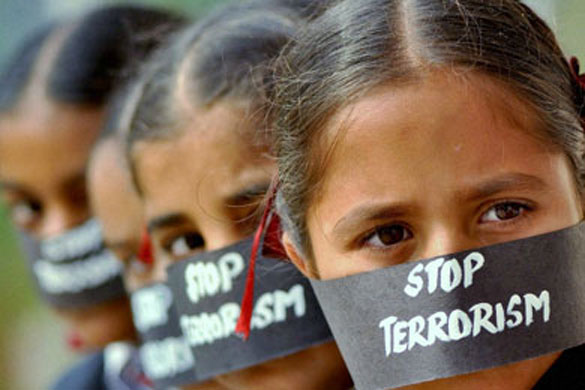
A DOSSIER
released by Pakistan underscores how the Balochistan Liberation Army has been
paid by the Indian government for each suicide attack, IED attack and targeted
killing it has perpetrated in Pakistan. Banned in Pakistan in 2006, when it was
listed as a proscribed organisation under Section 11(b)(1) of the Anti-Terrorism
Act (ATA), 1997, the BLA has also been designated as a terrorist group by the
EU and US.
According
to international law expert Syed Abid Rizvi, there’s a long history of India
financing militancy in Pakistan. It is against this backdrop that India’s
support of BLA and similar militants must be examined. Domestically, the term
‘terrorism’ has been defined in Section 6 (ATA) as the use or threat of action
“designed to coerce and intimidate or overawe the government or the public or a
section of the public or community … or create a sense of fear or insecurity in
society”. Internationally, the term eludes definition, in part due to the difficulty
of differentiating between extremist violence and legitimate freedom struggles.
So the bulk of international law on the subject deals more specifically with
‘terrorist activities’ including hijackings, terrorist financing and bomb
blasts.
For
example, UN Security Council (UNSC) Resolution 1373 criminalised terrorist
financing; prohibited states from providing support (financial or otherwise) to
those involved in terrorist activities; called upon states to hold such
entities accountable under their domestic laws and to assist other states to do
the same; and set up a Counter-Terrorism Committee (CTC) to coordinate
international efforts in stamping out this global menace.
Similarly,
UN General Assembly (UNGA) Resolution 60/288 lays out the UN Global Counter-Terrorism
Strategy; calling upon states to condemn terrorism; to implement all existing
UN resolutions on terrorism; to cooperate with other states; and to “refrain
from organising, instigating, facilitating, participating in, financing,
encouraging or tolerating terrorist activities”. Also, UNSC Resolution 1566
established a working group dealing with terrorism issues. An earlier working
group under UNSC Resolution 1267 was tasked with dealing with terrorist
activities carried out specifically by Al Qaeda or Taliban. The 1566 group,
however, is responsible for “practical measures to be imposed upon individuals,
groups or entities involved in or associated with terrorist activities, other
than those designated by the Al Qaeda/ Taliban Sanctions Committee” which
includes terrorist activities carried out by groups such as BLA.
The
dossier’s contents are a damning indictment of India’s role.
Terrorist
activities are also prohibited under International Humanitarian Law (IHL).
Additional Protocol (AP) I to the Geneva Conventions, 1949, calls for the
protection of civilian objects and prohibits civilian objects from being made
the object of an attack or reprisal, and bans ‘perfidy’ where an armed
combatant feigns civilian or non-combatant status in order to conceal their
combatant status. Moreover, AP II to the Geneva Conventions explicitly
prohibits acts of terrorism against civilians and those no longer participating
in armed hostilities and limits the use of armed force to ‘military
objectives’, explicitly prohibiting the targeting of ‘civilian objects’.
The BLA
attack on PSX was an act of terror under both international and domestic law.
Under the IHL framework of a Non-International Armed Conflict it also
constitutes war crimes: the PSX holds no military/ strategic value; it is an
entirely civilian institution, and by impersonating civilian law-enforcement
personnel for their attack, BLA is guilty of perfidy.
First,
Pakistan must approach the CTC, formed under UNSC Resolution 1373, and
highlight India’s involvement in the activities of extremist and secessionist
groups, eg BLA. Second, it must consider approaching the UN secretary general
under Article 99 of the UN Charter, which empowers the secretary general to
bring to the attention of the UNSC “any matter which … may threaten the
maintenance of international peace and security”. India’s support of extremist
outfits compromises regional peace and security.
Third, the
1566 group is another forum Pakistan should approach, given its focus on
extremist activities carried out by entities other than Al Qaeda or the
Taliban. Fourth, while Pakistan continues to make concerted efforts to
extricate itself from the FATF grey list, it is equally important to highlight
incidents of India’s terrorist financing — such as support for BLA — at the
same forum.
The BLA is
financed by India to destabilise Pakistan. Its attacks speak to the fact of
India’s growing unease at Pakistan’s projected economic uplift through the
deepening of economic ties with China. Pakistan must counter India’s
self-avowed interest in nurturing secessionist and extremist elements. It must
employ all tools available to it under domestic and international law.
------
Sikander Ahmed Shah and Uzair J. Kayaniare
faculty at the Shaikh Ahmad Hassan Law School, Lums.
https://www.dawn.com/news/1591007/sponsoring-terrorism
-----
Gilgit-Baltistan: A Land Of Unknowns
By Amir Hussain
November
18, 2020
It would
have been a chilly Saturday with clouds of victory hovering over the defence
lines of the Gilgit Scouts on November 1, 1947. It was a historic day when a
legion of local military men of Gilgit Scouts revolted against the Dogra ruler
of the princely state of Jammu and Kashmir (J&K).
At the time
of revolt, British military officer William Alexander Brown was the commander
of the Gilgit Scouts who fully supported the local revolt against the Dogra
rule.
If one
reads the historical accounts including Major Brown’s memoir, ‘The Gilgit
Rebellion’, it becomes clear that Operation Datta Khel was secretly planned by
Col Roger Bacon, Major William Brown and Captain Mathieson to oust Ghansara
Singh. Unlike other parts of J&K like Poonch and Srinagar there were no
communal riots in Gilgit Agency and one can hardly find any evidence of popular
uprisings against the regime of Maharaja Hari Singh. There was of course
resentment against the repressive Dogra rule among the local rajas but before
it could transform into a popular movement the Dogra regime in Gilgit was
toppled through military revolt. It took hardly two days for Major William
Brown to hoist the Pakistani flag in Gilgit and on November 16, 1947 Pakistan
sent Sardar Muhammad Alam Khan as its political agent of Gilgit Agency.
Gilgit
passed into the hands of Maharaja Gulab Singh, the first ruler of the state of
J&K after the Treaty of Amritsar in 1846. Col Nathe Shah, who was deployed
in Gilgit on behalf of the Sikh Court in Lahore, retained his position under
Gulab Singh as his subordinate after the defeat of Sikh Empire in the
Anglo-Sikh war of March 1846. The Treaty of Amritsar signed between Maharaja
Gulab Singh and the British Empire gave the maharaja a free hand to annex the
northern parts of his kingdom. This northward expansion of the kingdom was
strategically planned by the British rulers to create a buffer between Russia
and the British Empire as part of the geostrategic politics of the Great Game
era.
British
Indian rulers also facilitated the maharaja of J&K to bring the small
states of Chitral and Yasin under his control in 1877. In 1878, the Mehtar
(ruler) of Chitral accepted the suzerainty of the maharaja of J&K and so
was the case with the principalities of Hunza, Nagar, Punyal and Gupis.
However, the areas of Diamar including the valleys of Darail and Tangir
continued to function as acephalous societies without any external control.
From this
historical standpoint, Gilgit Wazarat remained an integral part of the state of
J&K till November 1, 1947 while the local small states continued to
function as vassal states under the suzerainty of the Dogras of J&K.
The word
liberation is loosely used by many people to describe the Gilgit revolt of
November 1, 1947 but it was a local revolt in the barracks of the Gilgit Scouts
sans a popular political movement. This is not to suggest that the rule of the
maharaja was benevolent. It was rather a carefully executed plan to manage a
seamless transition of rulers within the larger schema of the emerging
hostilities of the cold war safeguarding the Western interests in the region.
The first
priority of outgoing British colonizers was to block Indian physical access to
the USSR and Afghanistan because of India’s inclination towards the Soviet
bloc. This becomes evident from the haste with which Major W A Brown hoisted
the Pakistani flag in Gilgit and persuaded local mutineers to accede to
Pakistan on the very next day of the successful revolt. Lord Mountbatten,
Jawaharlal Nehru and Vallabhbhai Patel seemed to be on the same page in
decoupling Gilgit-Baltistan (GB) from the J&K dispute.
There was
an understanding between the Congress leadership and the British rulers about
the decoupling of GB from the state of J&K but this understanding was
governed by many ifs and buts. It was, therefore, important for the British
rulers to ensure that this decoupling took place during the time of Lord
Mountbatten as the first governor general of India.
From the
beginning there were apprehensions in the minds of political strategists in the
British Empire about the capability of the state of J&K to act as a
colonial outpost on the eastern borders of the Empire. These apprehensions
became more pronounced when the British took over the control of Gilgit Agency
through a 60 years’ lease from the maharaja of J&K in 1935. The British
government and the princely state of J&K continued to work in unison on the
eastern borders where the latter was only a vassal state to protect the
political and economic interests of British Empire.
The state
of J&K was an arbitrary political amalgamation of different cultures and
people, as a geostrategic area to serve the colonial interests of Russian
containment. Despite a hundred years of their political association, the people
of J&K and GB could not develop a common political aspiration. The people
of GB believe that the Dogra raj was a forced occupation over their territory.
Therefore, the ongoing national debate about the change in the political status
of GB must be seen in this larger historical perspective of colonialism and
international politics.
The people
of GB still believe that if Pakistan cannot bring this region under its
constitutional ambit, it should at least grant a special package to ensure the
protection of the political, legal and economic rights of the people. This
should entail representation in the National Assembly and Senate by amending
articles 51, 59, 257 and 258 of the constitution. It should involve dissolving
the GB Council and transferring the functions of the Ministry of GB and Kashmir
Affairs to the local legislative assembly. Thus the proposed framework of the
provisional constitutional province must entail a fully empowered local
legislative assembly with a lean bureaucratic structure, an independent
judiciary, representation in all constitutional bodies and eco-friendly
investment under CPEC projects.
It is time
to have a more inclusive policy towards the people of Gilgit-Baltistan, who
have always remained loyal to the country.
-----
Amir Hussain is a social development and policy
adviser, and a freelance columnist based in Islamabad.
https://www.thenews.com.pk/print/745173-a-land-of-unknowns
------
A World Of Tolerance
By Muhammad Omar
Iftikhar
NOVEMBER
18, 2020
A world
divided by language, culture, and religion must become one when it comes to
protecting life, preserving nature, and promoting mankind. Gone are the days
when the world was not a global village backed by corporate missions and
marketing, but a one where people from various cultures worked peacefully in
countries other than their native land. While the same trend is being pursued
by Asians and Far East Asian communities as they settled abroad for greener
pastures of employment, the welcome they received has faded away to some
extent.
Societies
and communities of one country are a micro-level representation of what is
transpiring at the macro-level, across the world. During the 1990s, following
the Gulf War in the Middle East, many Pakistanis had to return home after
serving in Middle Eastern countries. This conflict bred insecurities in the
minds of the Pakistanis and people from other nationalities living in the
Middle East. Similarly, following the 9/11 attacks in the USA, the authorities
looked upon the US residents of non-American descent as a threat to their
national security. Much of this fear was induced into the Americans by the
media. Otherwise, it was the same Mujahideen that had fought Washington’s war
in Afghanistan against the Russians during the Cold War.
Even if
expats earn a livelihood in countries such as the US, Australia, Canada,
Europe, and the Far East, they will always remain second-grade citizens. A
tolerant society breeds such values in the citizens to accept second-grade
citizens as their own
A tolerant
society is one that does not harbor insecurities or does not breed self-doubt.
Mutual understanding, sharing and caring, and accepting other’s points of view
are imperative to nurture a mindset of tolerance. The lifetime of our Holy
Prophet (Peace Be Upon Him) is evidence of numerous incidents where he could
have exercised retaliation upon those who brought injustice to his family, but
he remained tolerant. He and his companions did stand up and fight against the
forces of injustice, unprovoked aggression, and oppression, but they were
tolerant to others when it came to forgiveness and accepting them as they are.
The first
term of Donald Trump as the President of the United States of America was a
period when tolerance coming out of Washington was at its lowest. In 2017,
while addressing a public gathering, Donald Trump vowed to build a wall at the
Mexico border. Such a moment of intolerance must never dawn upon any nation for
freedom to live and to live peacefully is the right of all nationalities.A wave
of mistrust has evidently enveloped the world under its dark spell during the
last couple of decades. Each country is fighting for the rights of its citizen.
Even if expats earn a livelihood in countries such as the US, Australia,
Canada, Europe, and the Far East, they will always remain second-grade
citizens. A tolerant society breeds such values in the citizens to accept
second-grade citizens as their own. Similarly, in Karachi, communities such as
Bohri, Parsi, Khoja have been living peacefully.The International Day for
Tolerance by the UN celebrated on November 16 is a reminder in this regard for
humankind to accept each other and look above and beyond differences.
The world
needs a lesson in spreading tolerance. It must pursue and accept the power of
acceptance when meeting and greeting people from another land. Take for
instance the example of Karachi. After the independence of Pakistan, Karachi
was a tourist destination that welcomed Americans, Canadians, and Europeans.
They visited Karachi and other parts of Pakistan. Even the American space crew
of Apollo 17 including astronauts Eugene Cernan, Ronald Evans, and Harrison
Schmitt paid a state visit to Karachi. Their motorcade traveled on the streets
of Karachi with people lining up across the street to greet them. Che Ernesto
Guevara, Argentine Marxist revolutionary, visited Karachi in 1959 and met with
Pakistan’s first military dictator, Ayub Khan. Such examples from history are a
humble reminder of how open-minded we were as a society. There was tolerance
and acceptance of the other people no matter what culture or religion they
represented. The seeds that produce tolerance, acceptance, and broad-mindedness
must be sown with humility, trust, and conviction to make tolerance embedded in
our society and lifestyle.
-----
Muhammad Omar Iftikhar is an independent
researcher, author and columnist
https://dailytimes.com.pk/690461/a-world-of-tolerance/
------
A Case For Cultural Reconstruction
By Rafia Zakaria
18 Nov 2020
ON Nov 2,
2020, a small ceremony was held at the consulate general of Pakistan in New
York City. The occasion was an unusual one: a ceremonial handing over of 45
antiquities recovered by the Manhattan District Attorney’s Office. The
artefacts, most of which date from the Gandharan era, were smuggled out of
Pakistan. The Department of Homeland Security — which, in past decades, has
only concerned itself with catching terror suspects it alleged were Pakistani —
had found them. The ceremony marked the official handover of the objects
(valued at approximately $250,000) to Pakistan’s consul general in New York
Ayesha Ali.
In her
remarks, she noted that the repatriation was particularly important because
Pakistan has recently been promoting cultural tourism and that the return of
the objects would assist in attracting more cultural tourists to the country.
Manhattan District Attorney Cyrus R. Vance, Jr, who happens to be a former
diplomat and current prosecutor, responded by saying he would love to visit
Pakistan once the pandemic is finally over.
To actually
attract cultural tourists, Pakistan needs to develop the historical and
archaeological facets of its history. This sort of development has not yet
taken place. The repatriation of these recently looted antiquities would be a
cause for celebration if it were known what would happen to these objects once
they are returned to Pakistan.
Indeed,
wondering what is going to happen to these artefacts from Gandhara raises the
question of what Pakistan is doing with the antiquities that are already
present in the country. After all, Pakistan has hardly any museum dedicated to
its own history, let alone the history of the Buddhist era and the Gandhara
civilisation that predated the advent of Islam.
This truth
has a direct impact on the ability of Pakistanis to truly understand the role
of the land they walk and breathe and live on.
One of the
reasons for this paucity of museum heritage dedicated to national history is
because no government has been able to solve the conflict between religious
obscurantism and historical reconstruction. The narrow-minded antipathy towards
everything and anything that existed in the region prior to the coming of Islam
has meant the active destruction of objects that are thousands of years old and
represent important bits of the past not just of Pakistani but also of human
history.
This truth
has a direct impact on both the possibility of cultural tourism in the country
and the ability of Pakistanis to truly understand the role of the land they
walk and breathe and live on in the larger panorama of human civilisation. In a
tragic self-perpetuating cycle, the lack of historical consciousness means that
there is no national plan to construct museums that provide venues for this
history to be understood, and the inability to understand this history in turn
means no one cares if such a venue is created. Instead, ancient objects are
left to be bought and displayed in the homes of the ultra wealthy and well
connected, or smuggled outside the country, or blown up by dynamite.
As vaccines
for the novel coronavirus are developed, the world will inevitably experience a
resurgence of cultural tourism. All those who have been cooped up at home will
turn back to the world with even more zeal and enthusiasm.
If Pakistan
is pursuing the goal of attracting cultural tourists with any seriousness, it
must be able to offer a historical and cultural story that is cohesive and not
stymied by extremism. The development of a museum, and of ground-breaking
exhibits that are properly curated can become the basis of such a story. The
world is not interested in the hang-ups of a country that is uncomfortable with
its own history; it is even less interested in one that is afraid of or
instrumental in erasing portions of that history.
Situated as
it is on the Indus River, a fertile area rich with ancient heritage, Pakistan
has all the potential to model itself as the cradle of the world’s oldest
civilisations. It is tragic that the insecurities of obscurantists have made
this story alien to its own citizens. The repatriation of antiquities, a
movement that is gaining traction in recent years, is crucial if the
deleterious effects of Western conquest are to be corrected. Pakistan’s
distorted history is in no small way an effect of the divisions sown by the
British that led to a fanaticism which threatens to erase everything that does
not connect to its Islamic heritage. Erasing the destruction wrought by
colonialism involves making the population secure enough in its identity that
it does not feel threatened by the existence of a story that began and ended
before the story of Pakistan’s creation and even before the arrival of Muslims
on South Asian shores.
In the
particular case of these antiquities that have been returned to Pakistan by the
Americans, several questions remain. The government could announce where these
antiquities will be kept, if Pakistani citizens will be able to see them and
also whether they will be part of some larger project of cultural and
historical reconstruction. As a matter of fact, it would be useful to know
where the thousands of other objects from the Gandhara region are being stored
and kept.
The consulate
general in New York has done a commendable job in pursuing and then receiving
the antiquities that have been returned. It is now the government at home that
must reveal its plans, including those for attracting to Pakistan interested
persons who want to learn more about the Gandhara civilisation. The rich
history and archaeological wealth of Pakistan is an asset, but it is one that
loses its value if it is not contextualised and presented as a narrative driven
by historical truths.
----
Rafia Zakaria is an attorney teaching
constitutional law and political philosophy.
https://www.dawn.com/news/1591008/a-case-for-cultural-reconstruction
-----
URL: https://newageislam.com/pakistan-press/pakistan-press-sponsoring-terrorism,-gilgit/d/123498
New
Age Islam, Islam Online, Islamic Website, African Muslim News, Arab World News, South Asia News, Indian Muslim News, World Muslim News, Women in Islam, Islamic Feminism, Arab Women, Women In Arab, Islamophobia in America, Muslim Women in West, Islam Women and Feminism