
Pakistan Press on Criminalising Poverty in Pakistan and Biden's Presidency: New Age Islam's Selection, 9 November 2020
By New Age Islam Edit
Desk
9 November
2020
• Criminalising Poverty In Pakistan
By Madeeha Ansari
• Wonderful Multan
By Kamal Siddiqi
• Five Takeaways For Pakistan Under Biden’s
Presidency
By Kamran Yousaf
• Post-Trump US Foreign Policy
By Maleeha Lodhi
-----
Criminalising Poverty In Pakistan
By Madeeha Ansari
09 Nov 2020
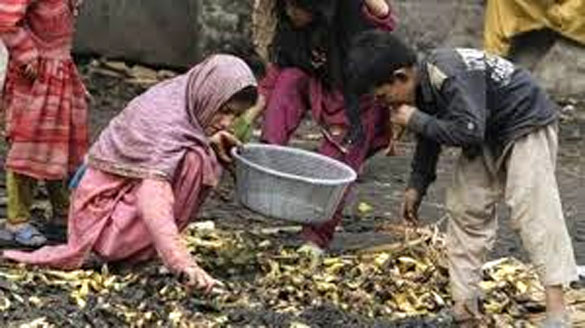
Six
out of the top ten major cities in Pakistan have double-digit poverty figures.
-----
A NEPALESE
colleague once shared the impact of a well-intentioned government
rehabilitation programme for street-connected children. The plan was to take
them off the streets and provide protection facilities where basic needs would
be addressed — and local NGOs like his were approached for support.
What ended
up happening was a crisis of trust. Children would wait, he said, for staff who
gave them up to the authorities with “blades hidden in their teeth”, to evade
capture.
Nor would
they stay in the facilities once enrolled. Children used to independence, even
when ostensibly provided with food and shelter, would not be convinced they
belonged there. A lot of it was to do with the stigma they had faced, being
labelled as lazy, criminal, a public nuisance. But it was also based on the
fact that initially top-down policies didn’t adequately consult the real stakeholders.
In
Pakistan, there are two trends of concern when it comes to street-connected
children. On one hand there is danger of the same story of good intentions
being repeated without adequate consultation with children and their families.
Secondly, there is a move towards criminalising children for being on the
streets, echoed in both public conversation and policy domains. ‘Criminalise
child beggary’ is a refrain. What this will effectively mean without addressing
the roots of the issues that push children onto the streets is that households
and children in extreme urban poverty will be subject to both harassment and
criminalisation, for being poor.
Children on
the streets do not have just one story.
With a
government that has demonstrated a commitment to protecting street children, we
would do well to look at what has and hasn’t worked elsewhere, so that
resources are used most effectively. One big first step for the government and
the public is to re-examine the lens and language with which we approach
children on the streets, and challenge the stereotypes that may misguide our
efforts.
For
instance, the dominant public narrative is that street children are victims
controlled by invisible gangs or ‘mafias’. While this may be true in some
cases, street children do not have a single story. They come from diverse
backgrounds, including migrant, displaced or Afghan refugee communities. Some
may be unaccompanied without access to shelter, but the majority have families
to return to and support. In our work, we often come across children who work
around school timings to earn. These multiple identities are important to
acknowledge, so we can build human stories and understand what greater
structural or policy factors drive children to the streets — and how to support
them to choose different paths.
At the
public level, the language that treats street children as a ‘menace’ creates
stigma translating into a less than empathetic approach. ‘Why don’t you work?’
is often a question asked while brushing children off. There is increasing
concern expressed on social media that the phenomenon of street children is
rising. ‘This is easy money’ is a common response. The truth is, there is no
‘easy money’ unless you’re rich. In a Covid-19 economy with skyrocketing prices
and rising unemployment, more and more households are being pushed into making
difficult choices.
At the
government level, the drive to rid the streets of this ‘menace’ can translate
into policies focusing on physical removal of children from the streets, which
in the long run may not be sustainable. In Punjab, there has been a wide-scale
anti-beggary crackdown, with over 700 children being removed in rescue
operations in a single month. While the effort to take positive action is
commendable, it won’t address those root causes. In addition, it is a question
of human rights for children and their families to be consulted in decisions
concerning them. In particular, any enrolment in residential facilities has to
be voluntary, now or later.
Worryingly,
with the new criminalisation drives, FIRs are being registered against parents.
The experience of being taken from the streets by police can in itself be
traumatic for street-connected children, as traditionally they are wary of law
enforcement agencies. Many belong to informal settlements under threat by the
authorities, and those without identification documents are particularly
vulnerable. If we add to this the threat of parents being taken to jail, it
will deepen the mistrust that children and communities have in the system.
This is not
a defence of child labour, or ‘child beggary’. It is simply an appeal to look
deeper at our own assumptions. To design responses that account for the nature
and scale of the challenges, it will take this: counting the uncounted; seeing
the ‘invisible’; and listening to the voices of the unheard. If we really do
care, we should be willing to reach out to children and their communities, and
engage them in ways that acknowledge their agency and human dignity.
-----
Madeeha Ansari is founder of Cities for
Children, a non-profit that focuses on street-connected children.
https://www.dawn.com/news/1589390/criminalising-poverty
-----
Wonderful Multan
By Kamal Siddiqi
November
08, 2020
It is
always a treat to travel across Pakistan, especially as winter months approach
and we can travel to all those places which are otherwise too warm to enjoy.
One must do this overland as it is only then we can fully appreciate the beauty
and diversity of our country and the hard work and effort put in by people in
different parts to better themselves and their surroundings.
Amongst the
cities I visited this month include the City of Saints, Multan. I consider
Multan to be mid-way between Karachi and Lahore and a convenient stop if one is
travelling overland. But one cannot do justice to such a city with an overnight
stay — there is much to offer and much to observe.
The last
time I visited Multan was five years ago. Even then I was impressed with the
dynamics of the city. It was said that much of the development work then had
been carried out at the behest of prime minister Yousaf Raza Gillani who served
in this capacity from 2008 to 2012. One could see the new network of
infrastructure which included roads and flyovers, a functional and modern
airport terminal, the mushrooming businesses and overall economic activity.
Brand names were coming to Multan. But there was also investment in health and
education.
At that
time, my friend and fellow journalist Jamshed Rizwani took me not only to the
different shrines that the city is blessed with but also to a pictorial museum
of sorts where the history of the city is catalogued. I was impressed by the
architecture and preservations of many buildings including the Children’s
Hospital and the former municipal committee head office.
This time
round, the city showed me much more. Driving from Karachi, Multan is now served
by an excellent motorway that connects it to Sukkur on one end and to Lahore,
Islamabad and beyond on the other. When one enters the city (there are at least
four entry points — many of them named with much thought like the Shah Shams
Tabrez interchange and the Shah Rukn-e-Alam interchange), the first thing to
note is the city roads are in very good condition and traffic is moving.
Jamshed credits this to the Commissioner Multan and other district management
officials.
Whoever has
made this happen, I can only appreciate their work. Gone are the heaps of
garbage and the encroachments one would see in some parts of the city. It has
been over eight years since Gillani was PM, but what we see is that the city
continues to progress and develop by leaps and bounds.
But most
impressive for me was the Multan Metrobus System, similar to the one seen in
Lahore and Islamabad. It has helped ease congestion and made life easier for
people in this city as the bus route snakes through one end of the city to
another.
Despite its
dry and dusty weather, efforts have been made to plant trees and make the city
greener. One of the best places to visit would be the Bahauddin Zakariyya
University which is located at one end of the city and its sprawling and green
campus only makes one wonder where we went wrong with Karachi University.
In fact,
one wonders in many ways about Karachi and about Sindh as compared to Multan.
Four hours from Multan is Sukkur and further down is Hyderabad. Both cities,
though with their own advantages to offer, do not compare to the infrastructure
and facilities that Multan has to offer.
What is
ironic is that Gillani was a PPP prime minister. And yet he achieved so much in
such little time. But to be honest to him and others that came after him to
public office, many others also played their part.
Multan has
a functional healthcare system. But it also has the Mukhtar Sheikh Hospital
which is touted as the Aga Khan Hospital of South Punjab. There are other such
similar initiatives in the private and public sector. It has three hotels of
good standing — Hyderabad and Sukkur have none. The list goes on.
All this
makes one wonder where Sindh has gone wrong. It is easy to point fingers,
harder to think critically. Why has Punjab done so well and why is Sindh
lacking?
https://tribune.com.pk/story/2271544/wonderful-multan
-----
Five Takeaways For Pakistan Under Biden’s
Presidency
By Kamran Yousaf
November
08, 2020
Former US
vice-president and Democrat candidate Joe Biden is on course to win the hotly
contested presidential election as these line are being written. He has broken
all records of bagging votes in the US election history. Biden is no novice to
US politics. He has been around since 1972. He has served the US Senate for
many decades and remained chairman of the powerful Senate Foreign Relations
Committee. Biden served as deputy to president Barrack Obama for eight long
years. He also has connections with Pakistan. In 2008, when the Obama
administration tabled a Kerry-Lugar Bill that sought to triple non-military aid
to Pakistan, Biden was co-author of the legislation. There are at least five
major takeaways for Pakistan under the Biden’s presidency.
1. As chairman
of the Foreign Relations Committee, he has visited the region quite often,
knowing Pakistan and geostrategic complexities quite well. This can work both
as an advantage and disadvantage to Pakistan. Democrats traditionally have been
strong advocates of democracy, human rights and freedom of expression. Under
Biden, there will certainly be more emphasis on these issues. The other factor
that can play a major role in shaping Biden’s policy towards Pakistan and South
Asia is that he is well versed with the region and has even known Pakistani
politicians. Unlike Trump, Biden’s presidency would certainly bring the State
Department and other institutions into the limelight when it comes to policy on
South Asia.
2.
President Trump and Biden may not have much difference in terms of their policy
on Afghanistan. But if we go into details, Biden will — unlike Trump — seek an
orderly withdrawal from Afghanistan. He will not hasten the troop pullout,
something Pakistan and other regional players have advised against. Any hasty
withdrawal may potentially trigger another wave of civil war in Afghanistan.
Biden in all probability will resist such a scenario.
3. Since
his deputy Kamala Harris has already spoken against Modi government’s
anti-Muslim policies and human rights violations in Kashmir, the US under Biden
will be more critical of Indian policies on Kashmir. However, it will not go to
the extent of antagonising New Delhi as it will need Indian support to contain
China. Biden, knowing the dynamics of Indo-Pak ties well, may encourage both
sides from behind the scenes to re-engage.
4. There is
a bipartisan consensus in the US on China. However, Biden may lower the
rhetoric and be more predictable. He will rally around the US allies against
China. Pakistan is a strategic partner of China and hence has to deal with the
fallout of Biden’s China policy. But any lowering of tensions between the
superpower and the emerging global power will positively impact Pakistan.
5. Biden is
keen to revive the Iranian nuclear deal, which Trump scrapped after coming into
power. The revival of the deal makes matters easier for Pakistan as increased
tensions between Iran and the US only compounded Pakistan’s regional problems.
Similarly, Biden will likely reset ties with Gulf countries including Saudi
Arabia. Observers believe that Saudi rulers won’t enjoy the same freedom as
they did during Trump’s tenure. This may also impact Pakistan.
But before
Biden gets down to scramble through all these intricate foreign policy issues,
his first job surely is to put things in order at home. Dealing with Covid-19
and avoiding a potential fallout of Trump not conceding defeat will be his top
priority. The relationship between Pakistan and the US, nevertheless, remains
transactional. Afghanistan will remain the centre stage of their engagement.
The challenge for Pakistan is to create other avenues that allow the US to see
its relationship beyond the security prism.
https://tribune.com.pk/story/2271539/five-takeaways-for-pakistan-under-bidens-presidency
------
Post-Trump US Foreign Policy
By Maleeha Lodhi
09 Nov 2020
NEVER have
Americans seen an election in their recent history quite like the 2020
presidential contest. Never has the world watched with such concern the
political tensions, bitter rhetoric and legal fights that marked the turbulent
run-up to the election. The close race kept people on edge for days following
the election as votes were counted in the crucial battlefield states.
The
American people chose Joe Biden to lead their country in what has been
described as ‘an election of a lifetime’ which will have “decade-defining
consequences”. This has come as a relief to many people in America and beyond.
For the international community the overarching question is how the new
occupant of the White House will change American foreign policy in the
post-Trump era.
To begin
with, Biden will be preoccupied with managing domestic challenges with the
pandemic still wreaking havoc across the country, polarisation undermining
national cohesion and racial tensions waiting to be seriously addressed.
Uniting a deeply divided country will undoubtedly be his first order of
business. As he reiterated after the election: “I will govern as an American
president. There will be no red states and blue states. Just the United States
of America.”
The outcome
of the Congressional election too will present a challenge as the Senate is
likely to remain in Republican control. This will pose formidable problems of
divided government and legislative gridlock. Biden will be obliged to deal with
an unfriendly Senate which will make governance difficult while his pledge to
heal a divided nation will require vigorous efforts. As an op-ed writer
asserted in the New York Times, the election will not resolve “America’s
deepest problems” — social crisis, breakdown of political culture, and feelings
of exclusion. That Trump got more popular votes now than in 2016 indicates how
widespread support remains for ‘Trumpism’. If Trump continues to play an active
political role this could further complicate Biden’s task. Domestic troubles
then will warrant his sustained attention.
Biden will
depart in fundamental ways from Trump’s erratic and unpredictable policies.
But as a
course correction is also needed in America’s relations with the world this
will not wait for the domestic agenda to be tackled. Some argue that this is
where Biden may have a less constrained hand. What then is a Biden presidency
likely to do? The selection of his foreign policy team will be an early pointer
to the foreign policy he will pursue.
As someone
with rich experience in foreign policy — having long served as chairman of the
Senate Foreign Relations committee and as vice president — Biden is expected to
follow a more traditional approach fundamentally different from Trump’s
unpredictable and whimsical policies pursued at great detriment to America’s
global standing. In contrast to Trump’s intensely unilateral ‘America First’
policy, Biden, known as a liberal internationalist, would seek to restore his
country’s multilateralist credentials. During the campaign he declared that the
‘America First’ policy had resulted in ‘America Alone’ and he would seek to
‘restore America’s leadership’.
In broad
brush terms a Biden administration is likely to see: the revival of a more stable
foreign policy, renewal of commitment to multilateralism, reaffirmation of
relations with allies, reversal of Trump’s abandonment of the Iran nuclear
deal, re-engagement with key international institutions, return to the Paris
climate agreement and recommitment to alliances especially Nato.
A key
priority for Biden will also be to mend America’s damaged international
reputation evidenced in several surveys. A recent Pew Research survey found
that America’s global image had plunged to an all-time low. It showed that
several countries among Washington’s allies have an unfavourable view of the US
especially of Trump. Clearly four years of Trump’s disruptive impact on the
world and the blows delivered to an already fraying rules-based international
order have dented America’s standing, eroded its influence and diminished its
soft power. Biden will try to reverse that.
On
Afghanistan and the US commitment to withdraw its remaining forces, Biden’s
policy will not differ much from Trump’s. He has long been a critic of
America’s prolonged military engagement and as vice president had opposed the
military surge President Barack Obama ordered in 2009. Asked in an interview
earlier this year what he would do if the Taliban ended up in power he said: [I
have] “zero responsibility. The responsibility I have is to protect America’s
national interest and not put our women and men in harm’s way to try to solve
every single problem in the world by use of force.”
A
significant departure from Trump’s policy would be re-entering the Iran nuclear
deal. Biden has repeatedly asserted he would re-commit to JCPOA if Iran
complied and seek to strengthen it with partners. He believes this would help
to re-establish US credibility. In the Middle East, it remains an open question
how Biden’s frequent criticism of Saudi Arabia would translate into policy. His
support for Israel will continue to be firm, in line with long-standing US
policy.
The biggest
foreign policy challenge will remain America’s relations with China — this
century’s most consequential bilateral relationship with far-reaching global
impact — which Trump pushed into a state of intense hostility by his
confrontational approach. Given the anti-China mood and bipartisan consensus in
the US, Biden will likely adopt a tough line. But while continuing to engage in
strategic competition — and containment — Biden will be less combative and
abrasive than Trump and look for areas of cooperation on global issues such as
climate change. For its part, China will want to stabilise relations by
reaching out to President-elect Biden. China’s vice foreign minister recently
expressed the hope that the new administration would work with China and “meet
it halfway to focus on cooperation and manage differences”.
Predictability
and stability in US foreign policy would be the most important change from the
Trump years. But it is the home front where bitter discord and divisions have
made the country virtually ungovernable that will receive the greatest
attention from the next president. A Financial Times editorial put it
succinctly: “No postwar president has taken over a more beleaguered nation.”
-----
Maleeha Lodhiis a former ambassador to the US,
UK and UN.
https://www.dawn.com/news/1589392/post-trump-us-foreign-policy
----
URL: https://newageislam.com/pakistan-press/pakistan-press-criminalising-poverty-pakistan/d/123411
New Age Islam, Islam Online, Islamic
Website, African Muslim News, Arab World News, South Asia News, Indian Muslim News, World Muslim News, Women in Islam, Islamic Feminism, Arab Women, Women In Arab, Islamophobia in America, Muslim Women in West, Islam Women and Feminism