
The Attack on Bacha Khan University Cannot Be Viewed In Isolation: New Age Islam’s Selection, 21 January 2016
 New Age Islam Edit Bureau
21 January 2016
• The Attack On Bacha Khan University Cannot Be Viewed In Isolation
By Zoha Waseem
• The Evolution of Terror
By Chris Cork
• Finding Ourselves Playing the Mediator
By Talat Masood
------
The Attack on Bacha Khan University Cannot Be Viewed In Isolation
By Zoha Waseem
January 20, 2016
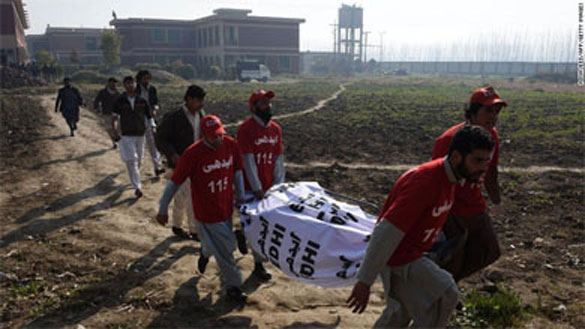 Militants attack Pakistan University
-------------
Just weeks ago, the army, Rangers and police began releasing statistics pertaining to last year’s successes in the military and paramilitary operations in northern Pakistan and Karachi. Reminders were issued that these operations will continue till their ‘logical conclusion’. We said we were winning and that terrorism will be defeated this year. We started comparing the army chief to Sun Tzu, “who advances without coveting fame and retreats without fearing disgrace, whose only thought is to protect his country and do good service for his sovereign, [and] is the jewel of the Kingdom”.
We welcomed traders’ sentiments in favour of the operations, rejoiced at foreign investments and projects, and chose to question little of the lack of transparency behind the apex committees. We even warmed up to the news of ‘elite’ operations in Punjab. We celebrated our establishment’s supposedly neutral stance in the Tehran-Riyadh affair. And we predicted the outcomes of the ongoing peace talks with our neighbour, where many of our own Taliban are known to have found shelter, on the run from military onslaughts. We even downplayed reports of Islamic State cells and said ‘good riddance’ to fighters exporting themselves to Afghanistan or the Middle East. It was fine, we believed, as long as they were off our territory.
Then, Charsadda happened. The attack on Bacha Khan University cannot be viewed in isolation. It was an eerie reminder of Peshawar, coming just a month after the latter’s one-year anniversary. A day earlier, a suicide bomber had slayed 11 security officials and civilians near a security check post in Jamrud, an hour’s drive from Charsadda. On January 18, six soldiers of the Frontier Corps were killed on the outskirts of Quetta. According to reports, all three attacks have been claimed by factions or members of the Pakistani Taliban, with the one in Charsadda being claimed by Umar Mansoor, the mastermind of the APS attack. A few days back, we saw school closures in Peshawar due to security threats.
The terrorists continue reminding us of their presence and existence — as well as of their ability to hit multiple hard and soft targets in Pakistan within a span of days, using different modus operandi. That’s how the political economy of terrorism often works: not through large-scale devastations that cause the collapse of state systems and institutions, but through calculated violence that prolongs the conflict and is enough to spread fear, keeping the criminal syndicates interested and the war economy running. Why do you think groups would choose to continue employing tactics of terrorism over the last several decades if it was simply a failed strategy?
The two concepts of militarism and militarisation require some deeper thinking in Pakistan now. According to one professor and researcher, militarism is “a set of beliefs, values, and assumptions that stress the use of force and threat of violence as the most appropriate and efficacious means to solve problems. It emphasises the exercise of military power, hardware, organisation, operations, and technology as its primary problem-solving tools”. To be fair, in the post-9/11 environment, militarism has been the standard way of thinking for most states dealing with the menace of terrorism. Militarisation is, basically, the implementation of militarism. Interestingly, it now appears to be the practice equally favoured by our enemies, the local and international terrorist organisations. But to what end?
By no means should we undermine the sacrifices of our security forces or the efforts of our soldiers, commandos or police officers battling the monsters their predecessors once nurtured. But we must call into question the selective implementation of our counterterrorism policy — the National Action Plan (NAP) — and its militarisation, which is a stark reminder of our tendency to look at militancy primarily through a security lens.
Following the APS attack, our militarised responses have included the establishment of military courts and anti-terrorism courts, removal of the moratorium on death penalty, formation of an antiterrorism force to be trained by military experts, and the escalation of internal security operations. But we have fallen short on the implementation of those aspects that can truly bring long-term successes to complement our military efforts: making Nacta functional, countering hate speech and terrorist propaganda, regulating madrasas, dismantling terrorists’ communication networks, and reforming the criminal justice system (including the police), amongst other points of the NAP.
There is no predicting what the logical conclusions to our war on terror will be and when they will be reached, but certain trends are likely to continue and these should make us rethink our militarised responses. More weapons will be purchased and defence agreements will be drafted; the fortification of cities will continue and private security companies will boom; special troops will be deployed to safeguard economic projects; the Karachi operation will escalate and real estate will benefit; ATCs will be established and APCs will be ordered; army men will be recruited into the police and there may be more seminars on police reforms but to no avail. There will be more debates on the non-militaristic aspects of the NAP that refer to countering extremist ideologies and radicalisation, but the short-sighted realists will argue that these are not the need of the hour. So, war will be glorified, soldiers will be martyred, our societies will be securitised, our thinking militarised, and we will wait for something like Charsadda to happen again.
Zoha Waseem is a PhD candidate at the Department of War Studies, King’s College London
Source: com.pk/story/1031272/then-charsadda-happened/
-----
The Evolution of Terror
By Chris Cork
January 20, 2016
The writer is editorial consultant at The Express Tribune, news junkie, bibliophile, cat lover and occasional cyclist
As these words are written yet another attack on a large educational institution in Pakistan is under way. Terrorists have got inside the Bacha Khan University at Charsadda, about 40km from Peshawar. Explosions have been reported. So has sustained gunfire. The TV channels are giving blanket coverage but offering few insights and the casualty figures fluctuate between a low of 15 and a high of 70 depending on where you switch channel-wise.
As the tragedy unfolds so will the anguished analysis, the questioning as to how this could happen again after the Army Public School attack of 13 months ago. Who is to blame? Why do they do this to our children/women/teachers? There will be condemnation at the highest level, promises of enquiries, visits to express condolences and then, as ever, it will be back to business as usual. Until the next time — because this really is the New Normal.
It is not just the New Normal in Pakistan, it is not-so-newly normal in Jakarta, in Paris, in Ankara, Madrid, small-town America, sub-Saharan Africa and virtually anywhere else on the globe (South America excepted but it is only a matter of time) you will find that warfare has evolved. It is smaller, can come in penny-packets, have low casualty rates coupled with high impact, cheaper to wage, both more and less sophisticated at the same time and everywhere transcends the traditional boundaries of state.
Wars are rarely between nations in the 21st century. The massive bloody contests of the 20th century are very much of the past and unlikely, though not impossible; to ever happen in the same way again. Likewise nuclear war. Humankind got close to wiping itself out in the ’50s and ’60s of the last century but drew back. Vietnam was probably the last gasp of what may be termed conventional warfare, and even that lay on the cusp of conflict development.
Today war is much more diffuse and it is called terrorism. Terrorism is not the junior partner in terms of conflict; it is now the dominant partner. Something close to conventional warfare is in train in Syria, but even that is made up of a series of interlinked actions by groups that are described as terrorists by all of the combatants whether they are or not.
This is a type of warfare for which conventional armies are poorly trained and equipped. Armies tend to be large and cumbersome entities that are deployed relatively slowly and only after much political debate. The armies of terror are lithe, slim, and flexible and can be deployed within minutes of a decision being taken, in some cases, hours or days at most. They may be made up of a few dozens or less as in the recent shooting in America that saw just two active killers (their support mechanisms still unclear) or half a dozen as in Jakarta. The effect of their actions is wholly disproportionate to the numbers that carry out these attacks — which do not need to be successful in terms of mass casualties and usually end with all the attackers dead or in custody.
Their success lies in the sense of fear they imbue within the host populations, a fear that is compounded by the knowledge that the armies of terror hide in plain sight. They live among the populations they seek to slaughter. They have sympathisers everywhere, fellow travellers and funders, providers of safe houses and purveyors of guns the better to do the deed.
None of the wars currently being fought are likely to be ended with a formal ceasefire followed by a peace treaty, and some of them have the capacity to endure for centuries if not millennia. War is going to be an enduring feature of the lives of everybody reading this column, and all of us potentially are casualties — wrong place, wrong time — with spike-points like Bacha Khan along the way. It may be that methods of counter-terror will themselves evolve and there are some forces that have become better at it, but the trick that nobody has yet perfected is the crafting of the countervailing narrative, and until it is the terrorist has us all by the throat.
Source: tribune.com.pk/story/1031273/the-evolution-of-terror/
-----
Finding Ourselves Playing the Mediator
By Talat Masood
January 19, 2016
The current toxic rivalry between Saudi Arabia and Iran is another manifestation of the deep decay that has set in the Muslim world. The two countries are locked in a power struggle and are primarily using the classic sectarian divide to strengthen their respective positions. The 34-country Saudi-led alliance formed with the avowed purpose of fighting the most brutal of insurgent groups, the Islamic State, is also supposed to serve the more important role of acting as a bulwark against Iran’s expansionist designs. Pakistan, caught by surprise when this alliance was announced, flip-flopped, but with its top leadership having leanings towards Saudi Arabia, joined the coalition. When parliament and the media started questioning the wisdom of the decision, Islamabad and the GHQ seemed to have backtracked and taken a more prudent position of playing the role of a conciliator rather than remaining partisan. Whether Pakistan will succeed in bringing the two sides to reassess their policies of confrontation will very much depend on the leaders of Iran and Saudi Arabia. But surely, this is an option worth pursuing in our own interest as well as that of the Muslim world.
Pakistan Urges Riyadh, Tehran to Re-Engage
The sharp political and ideological division between Iran and Saudi Arabia has foreign backers, with the US and other Western countries generally supporting the Saudis in their opposition to President Assad and Russia leaning towards Iran and supporting the Syrian leader. The polarisation among Muslim countries has strengthened the hold of major foreign powers and made the Muslim world more subservient to their policies.
Tensions in the Middle East have been a boon for the defence industry of the US as well as for other major arms producers. In contrast, with depleting oil reserves and increasing defence expenditures, the squeeze on the economies of Saudi Arabia and Iran will have to be absorbed by the people of the two countries.
Israel is another beneficiary of this intra-Muslim conflict. Regrettably, not only has the world’s attention digressed from the plight of Palestinians, the common hatred for Iran and for Syria’s Assad has brought old foes, Saudi Arabia and Israel, closer to each other.
With the shackle of sanctions removed, Iran will be able to develop close relations with the US and the West. The sanctions had prevented the West from investing in and exploiting the Iranian market, which has huge potential. Interestingly, Iran is a more natural partner for the West. It has an educated population, a 5,000-year-old civilisation, a relatively stable society and a semi-democratic government, all of which make it an attractive market for the West. In anticipation of the lifting of sanctions, Western firms and entrepreneurs have been visiting Iran to explore the market and establish contacts. The release of Iran’s frozen $100 billion assets by the US government and lifting of the trade embargo after Tehran meticulously complied with its nuclear obligations is making the Saudi and Israeli governments uneasy. The violent protests in Iran that followed the execution of Sheikh Nimr al-Nimr, a prominent cleric, further vitiated the atmosphere.
How Can Pakistan Be an Effective Mediator between Saudi Arabia and Iran
Leaders of Muslim countries need critical introspection of their internal and external policies. Most of them are pursuing policies that perpetuate their grip on power without any consideration for their adverse consequences on their peoples and the stability of the region. Unfortunately, not a single Arab Middle Eastern country is democratic. Bashar al Assad was ‘elected’ president in 2000 as successor to his father, Hafez al Assad, who had ruled Syria with an iron grip for 30 years until he died. No wonder then, that the IS found Syria an easy prey to make inroads into and a convenient launching pad for its attacks on adjoining countries. It is ironic that the alliance formed to bring down Assad constitutes countries that suffer from similar weaknesses and are ruled mostly by monarchies or dictators, accused of mistreating minorities and running roughshod over their political opponents. The plight of Shias, Kurds, Christians and dissidents in these countries is a manifestation of their insular policies. This makes these dictatorial regimes more dependent on outside powers, which in turn exploit them to advance their regional agendas. Unless this vicious cycle is broken, there will be no peace within these countries and among them.
Iran also needs to curb its ambition to dominate the region. The alliance of 34 countries that Saudi Arabia has forged is essentially a reflection of the insecurity that generally prevails among Arab kingdoms against an expansionist neighbour. Most of the Gulf States view Iran as a hegemon that has created proxies to undermine insecure regimes. Just as Iran has wisely opened a new chapter with the West, it should similarly review its policies towards its neighbours. Similarly, Saudi Arabia has to reconsider its policy of aggressive intervention in neighbouring countries. Its military intervention in Yemen or even in Syria has only complicated matters.
Pakistan’s interests remain intertwined with both Saudi Arabia and Iran. The option of joining the Saudi coalition without conditions could lead to some unintended consequences. Pakistan has a significant Shia population and will not like to be caught in a pincer if the two Muslim countries were to expand their conflict.
Pakistan To Name Focal Person For Resolving Saudi-Iran Conflict
On the positive side, if peace were to prevail, with lifting of UN and US sanctions, several opportunities open up for Pakistan. Iran has offered to provide 1,000MW of electricity to us and in due course is willing to export 3,000MW. If the tariff structure is mutually agreed upon and security aspects are streamlined, the project could be undertaken, which will be beneficial to both countries. Similarly, the construction of the Iran-Gwadar portion of the much-needed gas pipeline could also commence, as the design and other prerequisites have been largely completed. Only the equipment remains to be procured to finalise the project.
Pakistan has taken a laudable step of making a genuine effort at reducing tensions among opposing regional powers. This is in sharp contrast to its past ventures when it blindly plunged as a pawn in the power struggle of super and regional players, subordinating its national interests for short-term gains. Let us hope it succeeds in its efforts.
Source: tribune.com.pk/story/1030514/finding-ourselves-playing-the-mediator/
URL: https://newageislam.com/pakistan-press/the-attack-bacha-khan-university/d/106062