
Goodbye, Nawaz By Cyril Almeida: New Age Islam's Selection, 31 July 2017
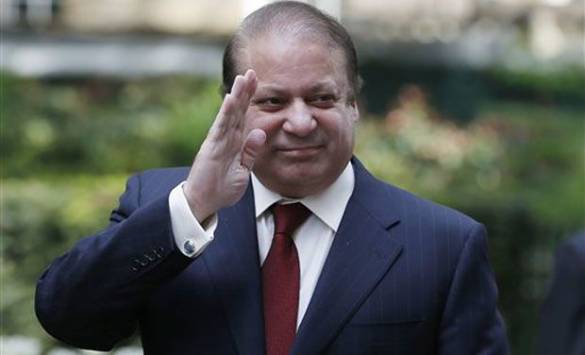
PM Nawaz says “goodbye” to IMF
---------
New Age Islam Edit Bureau
31 July 2017
• Goodbye, Nawaz
By Cyril Almeida
• Rape and power
By Fifi Haroon
• History repeated, not made
By Marvi Sirmed
• Terror in the heart of Lahore
By Mashaal Gauhar
• The power of conviction
By Andleeb Abbas
• Abdicating authority of Parliament
By Zaheer Bhatti
• Need for a new beginning
By Muhammad Amir Rana
• A haunted history
By Ghazi Salahuddin
• Of Iqama, tax evasions and disqualification
By Dr Ikramul Haq
• A most harmful loyalty
By Dr Naazir Mahmood
Compiled by New Age Islam Edit Bureau
----
Goodbye, Nawaz
By Cyril Almeida
30-Jul-17
THE ducks were in a row. They’ve been dragged, kicked, shot and used to beat Nawaz over the head. It has not been pretty. Hell, it couldn’t have been uglier.
So, now what?
Attack the court, blame the boys, curse fate and the stars, it doesn’t really matter. Nawaz is gone and he isn’t coming back. There’s no precedent for unwinding a Supreme Court judgement during a democratic spell and there won’t be.
Nawaz is gone.
The judgement itself is confounding, appalling in argument and scope. It is, quite nakedly, a decision in search of a reason. Why did it happen? Eventually we’ll figure it out. This isn’t a place known for keeping its secrets long.
How did it happen? The Sharifs’ bumbling defence made it possible, giving the court the weapons it needed to bring the hammer down.
But the verdict is a bulls eye and the verdict will stick because it is one thing above all else: popular. Popular with the people.
And there lies the vulnerability of Nawaz.
A judgement knocking out a prime minister who was popular enough to be the favourite for re-election is more popular with the people than the prime minster who has been ousted.
How that has come to be is worth examining because there are lessons in it for the practice of politics here.
A judgement knocking out a PM who was popular enough to be the favourite for re-election is more popular with the people than the PM who has been ousted.
Hating politicians is as old as politics. In Pakistan, there’s an added edge: the urban, middle-class, educated cohort that sneers at all things politics and wears its dislike of politicians with pride.
If it weren’t for the scum, the self-serving, corrupt politicians, hoodwinking the poor and the helpless, Pakistan would be a decent place to live in with good jobs and fair opportunity – the logic is as self-evident as the conviction real.
No politician can really hope to fight that. It is the natural support base of the anti-democrats and the best a politician can hope for is his fate to never be in their hands.
But as the beast was fed, as the anger of that cohort was stoked and manipulated in the wake of Panama, Nawaz made the mistake of ignoring it.
A segment of the population that was never going to love Nawaz or any politician of his ilk, its billowing rage ought to have had alarms ringing in the PML-N.
But Nawaz didn’t pay attention and soon enough he was reduced to a public caricature: corrupt, dynastic and out of touch.
From there, he was one big, fat, easy target.
Maybe the court would have done him in anyway. Maybe the boys’ disdain had made a third exit inevitable.
But it’s a heck of a lot easier to plunge the knife in when a particular swath of the population is whipped up into a frenzy — the urban, middle-class, educated, TV-watching, social-media-consuming cohort.
From a politician’s perspective, it can seem terribly unfair. Nawaz, after all, had protected his base impressively enough to have installed himself as the favourite for consecutive terms.
Why should he, or any other politician, have to pander to another group outside his base that at best will tolerate him and at worst will regard him with unbridled hate?
But they already know the answer: the urban, middle-class, educated cohort is a potential ally of other institutions. The rage of those people can become the institutional platform for terrible things to happen to you, the politician.
Keeping that cohort onside may be the difference between continuity and decapitation. So could Nawaz have done anything differently?
The hindsight game is easy, but there were some possibilities.
A shake-up of his team, a reshuffle of the cabinet, a nod to the governance priorities of the angry cohort — things to slow down the caricature of the corrupt, dynastic, out-of-touch leader ballooning out of control.
Because Nawaz didn’t do any of that or anything at all, we have to ask: are his politics anachronistic? Is he frozen in time?
On those parallel tracks that politicians here must try and survive, the record suggests he is. Megawatts and roads appeal to the N-League base, but leave the other cohort cold.
The metro bus could have bridged the gap, but it was successfully mired in corruption allegations and lost much of its sheen.
The familiar faces that he surrounded himself with made the base comfortable, but angered the other cohort because they symbolise the past.
Maryam could have been the bridge to the other side, but the succession was approached like a coronation. To win the other cohort’s grudging respect, she needed to look like she was working her way to the top — instead a palace-bred princess appeared.
And then there was the disregard for institutions, democratic and in the executive, and the centralisation of power. It didn’t bother the N-League’s base, but for the angry cohort it symbolised corruption at the heart of the Sharif empire.
Why must everyone be their slave, why can’t they just let people work honourably and with dignity?
The more Nawaz was Nawaz, the more he thought he was doing right by his base, the angrier it made the group whose anger he did not understand and could not afford.
Busy practising an anachronistic politics, the caricature of a corrupt, dynastic, out-of-touch ruler grew and grew until it was too late.
Now, the country has a judgement that is more popular than a prime minister who may have been popular enough to win re-election.
Nawaz is gone, but the others should pay heed: practice a modern politics or suffer the same fate as the mightiest who has fallen.
Source: dawn.com/news/1348460/goodbye-nawaz
-----
Rape and Power
By Fifi Haroon
July 30, 2017
In all the hoopla about a sitting prime minister’s disqualification there are some stories that may lie forgotten by the wayside. This is one story that shouldn’t be. Rape is not only about sex; it is ultimately about power. And when a self-proclaimed authority, such as a village council or a hastily set up family jirga, has the power to order the rape of a defenceless 16-year-old girl in full view of her family and village, then we have to look in the mirror. How exactly do family members agree to partake in this public spectacle? The whole affair is particularly preposterous in a society where any form of extra or pre-marital sex, even when consented to by both parties, is not only considered morally reprehensible but an actual crime.
The rapes were committed within an extended family. The first was surreptitious; the second was ordered, enforced and watched. According to the police report, a 12-year-old girl was raped while working in the fields just south of Multan. Following that, members of the victim’s family reportedly gathered together (by some accounts) or met the village council (by other accounts) and the brother of the first girl was afforded the opportunity to rape the sister of the accused as revenge.
“Another tribe court (Panchayat) in South Punjab Multan and another girl was raped. We are still in 2002,” tweeted the activist Mukhtar Mai, who took her rapists from the same district to trial 15 years ago but later saw five of them acquitted by a superior court.
Why you may well ask was the 16-year-old girl chosen to pay for the crime her brother allegedly committed? Notwithstanding the illegality of a vigilante court apparatus, why wasn’t it the perpetrator of the crime that was tried or sentenced? Speaking to Reuters over telephone, Mai denounced the whole sordid affair. “If there were any justice in the Panchayat, they should have shot the rapist. Why punish an innocent girl instead?” While one may argue with the meting out of such punishments by a kangaroo court, Mukhtar Mai’s final question must be answered. Why indeed punish someone who didn’t commit the crime?
Is it because women, especially young girls, have little to no agency or individual rights in many parts of Pakistani society? Their barter for crimes committed by male relatives is proof of their commodification as ‘property’. Women are the repositories of honour, their bodies the designated battleground for multiple familial or tribal disputes for which they are repeatedly used to settle scores. If they are not killed for ‘honour’, they are exchanged for honour.
The DSP on the case told a local newspaper that the second victim’s mother, Kaneez Mai, had offered either of her two married daughters on the condition that no legal action be taken against her son. But the Panchayat demanded that she offer the youngest. If true, how chilling is it that a mother would offer her daughters to be raped in return for her son’s freedom? When honour resides in womenfolk it is only through direct damage to them that it is vindicated. Meanwhile, the perpetrators get off scot-free.
In many parts of Pakistan, women have no real decision-making power over their lives. They are sometimes sold off in marriage to much older men or, in any case, married off without their consent. The cultural practice of Badla-E-Sulh, Vani Or Swara, recently highlighted in the TV drama ‘Sammi’, allows for young girls, often children, to be married into another tribe as punishment for a crime committed by a male relative. Article 310A of the Pakistan Penal Code says that compelling a woman to enter into a marriage “or otherwise” to settle criminal or civil disputes is punishable by law by imprisonment and a fine of Rs500, 000.
In 2016, the Punjab Protection of Women against Violence Act criminalised most forms of violence against women – including domestic, psychological and sexual violence – instituted a hotline for reporting abuse and ordered the establishment of women’s shelters where, incidentally, the Multan rapes were reported by the mothers of the two girls. There are, however, huge gaps between law and implementation. Incursions against women occur daily. But after the initial social media outrage and the “taking notice” by the prime and chief ministers, most cases drop out of the public’s favour. Laws are passed and headlines are made, but the political will for implementation is weak.
A few weeks ago, the UN Human Rights Committee asked the Pakistani government what steps it had taken to regulate parallel ‘justice’ systems. The government fobbed off the reply, claiming it “could not exercise jurisdiction in criminal matters” and that the sole authority in that respect rested with the national courts. “Pakistan has learnt nothing from Mukhtar Mai’s gang rape,” observes Oscar-winning filmmaker Sharmeen Obaid-Chinoy, “Had we sent her rapists to jail and made an example out of them, had we as a country resolutely condemned the rape then perhaps the two girls would have been spared.”
In actuality, rape statistics are increasing and the stigma around reporting means the figure is probably much larger. In 2016, the HRCP documented at least 2,446 cases of VAW in the country, including 958 rapes and numerous women who were stripped in public. In 2014, a report by War against Rape (WAR) estimated that of the 383 sexual assault cases reported in hospitals across Karachi, FIRs were registered only against 27.67 percent of the cases. According to the data privately collected by WAR, primarily through medical examinations in hospitals, it was estimated that at least four women were raped every day in Pakistan during 2014.
For every Mukhtar Mai and Kainat Soomro – who have both pursued justice in the courts – there are many more who are not given the support to speak up. The psychological damage done by remaining silent is toxic. The HRCP reports that almost 800 rape survivors had either attempted to take their lives or had committed suicide. On Friday the chief justice of Pakistan took suo motu notice of the Multan double rape case. And Punjab Chief Minister Shahbaz Sharif reacted strongly by suspending all police officers at the local police station. However, we have all seen such theatrics before with no tangible results. Over 20 people have been arrested but the main culprits are still at large. This is not the first time a jirga has ordered a rape.
Amnesty’s Pakistan Campaigner Nadia Rahman Khan summed it up in the following words: “By allowing these councils to operate, the authorities are complicit in the crimes they order. It is not enough to arrest people after horrific attacks that take place. The authorities have a duty to protect women, prevent further such attacks, and end the fear and stigma that victims suffer”.
Source: thenews.com.pk/print/219942-Culture-Pop-Rape-and-power
----
History Repeated, Not Made
By Marvi Sirmed
30-Jul-17
The protracted judicial drama against former Prime Minister Nawaz Sharif and his family ended with a verdict disqualifying him. The apex court also ‘directed’ National Accountability Bureau (NAB) to prepare and file references against Sharif and his family members to be tried before the accountability court on all the counts that the report of Joint Investigation Team (JIT) and petitions by Imran Khan, Sirajul Haq and Sheikh Rasheed had framed.
Ever since the Panama Papers came to light and Imran Khan termed it ‘godsend’ to bring down the Sharif government, Pakistan Muslim League-N (PML-N) has won almost every local and provincial/national by-elections. Even a vacant seat in Senate that was previously held by a member of PPP who recently defected to PTI, went to PML-N. So the only gauge of ‘popularity’ is talking heads (including ‘defence analysts’) and program anchorpersons on the idiot box alongside the social media noise, all of which appeared to be supporting the de-seating of Nawaz Sharif.
From the kind of remarks the honourable judges gave during the proceedings post and pre-JIT report; the kind of ‘notices’ they were taking against anyone who appeared even remotely critical to the process; the visibly biased proceedings of the JIT and umpteen TV programs eulogising judges, it was quite clear what the verdict would be.
A few days ago, this scribe happened to be in a get together of a bunch of politicians and TV anchorpersons. They were talking about how Supreme Court will not make a decision ‘against the aspirations of the people. It was being said that the court knew what will follow in case Nawaz is not disqualified. I asked them what exactly will be the outcome. “Of course a public uprising against the court, social media onslaught and dozens of TV programs against the judges”, I was told. It was the shocking admission of the entire case being a political witch-hunt, not that one needed this subtle admission to make the same conclusion.
From the kind of remarks the honourable judges gave during the proceedings post and pre-JIT report, the kind of ‘notices’ they were taking against anyone who appeared even remotely critical of the process, the visibly biased proceedings of the JIT and umpteen TV programs eulogising judges — it was quite clear what the verdict would be
The verdict itself reeks of stinky politics that has surrounded the accountability discourse throughout the history of this country. The way the case started in April 2016 and took different turns throughout its theatrical proceedings, it cannot be considered as a drive against corruption and for accountability. There were indeed some people who only supported this hunt because they genuinely wanted to end the culture of impunity and carry out a process of accountability. They probably wanted to make it a starting point to bring the political class under the folds of accountability. But they failed to realise that instead of going after all corrupt elements, the so-called accountability process will only target Nawaz Sharif and his family.
It all appeared to be a get-Nawaz campaign, and even that would have been acceptable had it followed due process of law. No one is saying here that popular vote should be made a hiding ground for culprits of corruption and wrongdoings. But going after individuals selectively will not eliminate a systemic problem like corruption. Without even touching the post-colonial state fraught with undemocratic and colonial structures and systems that safeguard corrupt practices, we cannot fight corruption.
Moreover, how Nawaz Sharif still represented the ‘most powerful’ is beyond the comprehension of a person with even a basic sense of history of democracy and civil-military relations in this country. This was not the first time that the prima facie ‘most powerful’ class – the politicians – was made ‘accountable’. It was not centuries ago that PPP Co-chairman Asif Ali Zardari was incarcerated for eleven years for corruption and graft. Not too long ago, two major political parties were putting each other down to attain power and got intermittently deposed for corruption, literally every two years.
The self-righteous military dictators – all four of them – started anti corruption campaigns but used them only to eliminate the politicians they didn’t like. All this while keeping the most corrupt of the politicians on their side. This time again, it was carried out through a populist judiciary in partnership with puppet politicians who were surrounded by the most corrupt.
Despite this disturbing history, one had hopes that this time the process might actually generate an irreversible process of overhauling the entire structure of the state by targeting every single element within it that stimulates corrupt practices and emboldens the corrupt by safeguarding their impunity. Instead of this expected and greatly hoped path, the honourable court decided to take a course that would most certainly prove killer for everything good that might have happened in democratic system. The impossibly lowering of the threshold for the disqualification of the PM (non-disclosure of an undrawn asset) coupled with the infamous Article 62 that was invoked by the recent verdict are two most important factors that would now determine the future of every single democratic dispensation in this country.
The verdict has strengthened the view that white collar financial crimes are impossible to probe and prove in courts of law, and that such perceived culprits can only be fixed through judicial witch-hunt.
Source: dailytimes.com.pk/opinion/30-Jul-17/history-repeated-not-made
----
Terror in the Heart of Lahore
By Mashaal Gauhar
30-Jul-17
Though army counter-terrorism operations Zarb-e-Azb and more recently Radd-ul-Fassad have significantly weakened the TTP, the recent attack in Lahore shows that the group is still capable of causing serious harm through the proliferation of offshoots and splinter groups
With over 26 people dead and 30 injured, Lahore’s recent suicide attack is the latest in a long list of militant assaults on the capital of Punjab. In February, a suicide blast near Punjab Assembly left 13 people dead and 70 others wounded. Last year’s terrorist attack in Gulshan-e-Iqbal Park killed 72 people and left hundreds injured.
What is new about this attack is that investigators have concluded that it was carried out by the Taliban Special Group (TSG), a newly formed wing of the Tehreek-e-Taliban Pakistan (TTP) comprising highly trained suicide attackers.
With a mission to destabilise the state and implement their own brand of shariah law, TTP attacks have a discernible pattern of focusing on security forces, educational institutions, minorities and sacred places of worship. This latest assault is believed to have targeted the police. Of the 26 killed in the attack, nine were policemen.
Though army counter-terrorism operations Zarb-e-Azb and more recently Radd-ul-Fassad have significantly weakened the TTP, the recent attack in Lahore shows that the group is still capable of causing serious harm through the proliferation of offshoots and splinter groups.
The TTP’s systematic use of suicidal warfare has proven particularly problematic. Inexpensive and requiring low levels of technology, human bombs are the preferred weapon of choice for groups like the TTP. “It is an alternative technology — the systematic mechanisation of human beings — that confers upon militant groups many of the same capabilities of the sophisticated weapon systems of advanced states,” explains Jeffrey William Lewis and academic author of The Business of Martyrdom, A History of Suicide Bombing.
Strong military action is critical but cannot be the only solution. The formation of the new TSG wing indicates that insurgent groups can find ready adherents among the socially and economically marginalised segments of the society. This disturbing new development underscores the need to ensure that strong military action is supported by a long-term strategy centred on economic and social uplift to effectively eliminate the TTP and its affiliated groups.
Resources must be directed towards striking at the recruitment capabilities of these groups including a crackdown on militant propaganda, dismantling centres for radicalisation and closing down sources of terrorist financing. Additionally, the government must strengthen its institutions such as the police force and criminal justice system. It is hoped that the National Action Plan proposed by the government to root out terrorism can make progress towards achieving these goals.
Lahore’s magical past is beautifully rendered in the Sanskrit epic The Ramayana, which details how Prince Lava, son of Lord Rama and his beloved wife Sita, founded the city of Lahore. Indeed, the word ‘Lahore’ is derived from his name
Suicidal warfare exacts a profound psychological toll on society. The damage on Pakistan’s society is all too evident: intolerance and violent prejudice in the name of religion abounds. Pakistan’s media must take a stand against hardline voices claiming to speak on behalf of Islam. The taking of an innocent life is among the gravest of sins and can never be justified. Any attempt to do so represents a violation of the very essence of the religion.
Government, media and civil society must ensure that militant organisations purportedly acting in the name of Islam are exposed for the ruthless mercenaries that they are. The tolerance and diversity that once flourished must be reclaimed as part of Pakistan’s identity. A city where Hindu, Sikh and Muslim empires flourished for centuries, Lahore’s rich heritage cultural heritage is a symbol of this diversity. Representing the second most populous city in the country after Karachi, Lahore is recognised as one of the oldest living cities in the world. Its primordial past can be seen and felt across the city from the pre-enlightenment statue of ‘Fasting Buddha’ in Lahore’s National Museum to the ancient Old City.
Lahore’s magical past is beautifully rendered in the Sanskrit epic The Ramayana which details how Prince Lava, son of Lord Rama and his beloved wife Sita, founded the city of Lahore. Hence the word ‘Lahore’ is derived from his name. Today, the temple at Lahore Fort stands as an enduring tribute to Prince Lava. Home to Pakistan’s great mystics like Madho Lal Hussain and Bulleh Shah, Lahore traditions of poetry and art continues to flourish. Though battered by this recent assault, Lahore’s spirit remains unassailable
Source: dailytimes.com.pk/opinion/30-Jul-17/terror-in-the-heart-of-lahore
-----
The Power of Conviction
By Andleeb Abbas
July 30, 2017
The famous quote by Hellen Keller “While they were saying among themselves it cannot be done, it was done,” perfectly represents the feelings of the majority opinions of analysts and public during the nine months court case of the Panama Papers. Despite overwhelming evidence on lifestyle and assets beyond accounting there was a general understanding that in this country justice is delayed, dodged, diverted by the rich and powerful. This belief was based on a 70-year-old experience of many similar cases on the power holders being dismissed or quashed. Thus the disqualification of Prime Minister Nawaz Sharif has created shockwaves not only in the country but all around the world.
The legal angle of this case can be debated and discussed for years to come. The politics behind it will be a matter of discourse forever. Opinions and analysis will change. Strategies and policies will vary. But what was and will not change is the belief and conviction of Imran Khan who spent 21 years of his life telling people it can and will be done, that truth will prevail, that all it takes is more effort, that persistence pays off, that change is inevitable.
The Panama Papers case may change Pakistan’s political history but more important it will change the approach of the people who had started believing that change especially in the upper echelons is just an empty slogan. The 70-year consistent pattern of hoping and then being disappointed had created a mindset of cynicism where any chances of accountability and justice were written off. Thus, this result will not only set legal precedents but will also set social and mental precedents that are key to making a society believe in themselves and their power to reform and progress. Let us see how those behaviours and beliefs had deliberately been entrenched by our leaders and will be substantially challenged by this judgment:
1. If you are a politician you are a VIP: Holding a public office was all about pomp and show. Big black cars, protocols, roads cordoned off, security bowing and saluting, had become a norm where it was understood that with the office these are the perks that are legally yours. The 126-day sit-in was again instrumental in creating that education in people that we as citizens have a right to question this social atrocity. It was only when the video of an ordinary citizen asking an MPA and an ex-minister to leave the plane as they had delayed the flight became viral that the VIP culture has now become a matter of avoidance than a matter of pride for politicians.
2. Government resources are for the government: For years the belief that budgets and resources were rituals that could be passed without more than a ceremonial protest had been entrenched. The fact that taxes were being imposed on political convenience was also considered a public office prerogative. It was only when the opposition made a legal and media strategy to challenge it that the media discussed it and people started questioning this allocation. An example of this awareness was when Maryam Nawaz was appointed as the chairperson of the Rs100 billion youth loan scheme. A young lawyer legally challenged her merit and credentials for this post. When her degrees became a court and media topic, she had to resign. Again this encouraged a new wave of challenging allocations. Cases on Orange train, domestic labour abuse, unmerited promotions in the National Accountability Bureau, etc, are examples of this change.
3. Government servants are servants of the government: It was understood that institutions working in the government sector were only answerable to the government. The mindset of public servants was that rather than the public their job was to please their masters. They would pay homage to their master’s families and would be rewarded with posts and international transfers. However, this norm has also been challenged. Muhammad Ali Nekokara who refused to use force on public during the Islamabad sit-in was threatened and discharged from his post as a penalty. He did not give in and fought his case for almost two years in the court and was recently restored to his office. Similarly, the recent Securities and Exchange Commission of Pakistan mishap where the chairman harassed his officers into tampering with the record backfired when an officer, Maheen Fatima, had the courage to tell the truth to the Federal Investigation Agency about this incident.
It just takes one man’s unyielding conviction and self-belief and one small incident to set the process of change. In the 1960s, America was an oppressed country where blacks were treated worse than dogs. It was Martin Luther King who said “I would rather be a man of conviction than a man of conformity,” who encouraged one ordinary black woman, Rosa Parks, to refuse to give up her seat to a white man that set up the civil rights movement that changed America forever.
In winning the World Cup in 1992, building two world class cancer hospitals, establishing an international university, it has been the power of Imran Khan’s conviction that has made financially, legally impossible things to become possible. Panama Leaks judgment is another example of his unique unflappable unyielding, stubborn and obstinate faith and conviction in the potential of this country that has renewed hope in the process of transforming Pakistan.
Source: tribune.com.pk/story/1469719/the-power-of-conviction/
----
Abdicating Authority of Parliament
By Zaheer Bhatti
July 30, 2017
AFTER hearing part of the long awaited Supreme Court judgment against the Sharif family; outlawing the Prime Minister and consigning the rest to the NAB Courts for criminal proceedings, I was beginning to harbour illusions of the beginning of the end of dynastic rule in Pakistan paving the way for genuine democracy in the country. I discovered to my dismay though that the Judgment disqualifying Mian Mohammed Nawaz Sharif was only based on his failure to declare holding nominal title of FZE a firm owned by his son without realizing receivable remuneration and thus having violated Article 62(1)F of the Constitution, but not a word on Panama Leaks alleged corruption, money laundering and misstatements about money trail of the London properties, the actual prayer of the petition against the Sharif family over which the Apex Court had formed a JIT for assisting in the probe. This has strengthened PML(N) apprehensions of a politically motivated premeditated verdict.
Only if the political spectrum in Pakistan had genuinely believed in supremacy of Parliament, operated transparently through the prime institution, and not weakened it by using it only as subterfuge succumbing to deals, NROs and a tainted Charter of Democracy with the sole objective of taking turns to continue in power, Pakistan would have acquitted itself much better both internally and against external challenges. As a consequence of the politicians abdicating their authority to the Judiciary, it is feared that it might take the convoluted judicial system several more months to arrive at a considered and transparent judgment impacting the future course of politics and administration in Pakistan, which has already consumed well over a year of this nation’s precious time at a highly critical juncture of its turbulent history.
Pakistan’s judicial history does not auger too well for the future. Justice Munir inventing the Law of Necessity became the fore-runner in legitimising an illegal regime to start with, and Justice Anwar-ul-Haq’s casting vote in favour of hanging Zulfikar Ali Bhutto rather than giving the benefit of doubt in the 2-2 split verdict to the accused who at worst could have been held guilty of abetment to murder of a person he is alleged to have wanted eliminated but is still alive and kicking. These are glaring examples of manipulation and expediency which have rendered the Colonial System of justice suspect and impracticable in the Islamic Polity of Pakistan. The same is feared now in the current infamy of Panama Leaks, in which the dice appears to have been loaded only against the family of Nawaz Sharif ignoring the 400 others named in the first tranche of Panama Leaks besides another 400 in the second, about which this scribe raised question soon after the Leak together with asking how a relatively unknown Pakistani iournalist came to be associated with the Worldwide Leaks Establishment. I had suspected the possibility of Pakistan’s adversaries applying another spanner in the economically strident Pakistani wheel of the China- Pakistan Economic Corridor; no wonder it turns out that USAID and an American Billionaire George Soros were behind Panama Leaks Funding.
I am not for a moment advocating innocence of the Sharif Family but only partially subscribing to their view that an international conspiracy had been hatched which is against Pakistan and not the Sharifs alone, although I have no doubt in my mind that corruption being at the root of Pakistan’s woes, unless the Supreme Court intervention in Panama Leaks carries it to its logical conclusion by taking swift suo moto notice against all others and across the board, the whole exercise will become counter-productive to national development and will keep Pakistan in a limbo and political turmoil, which is the enemy intent. In my view, Pakistan would have fared much better had everyone in the foray not lost track of external machinations and confronted the challenge in unison, foresight, poise, dignity and maturity.
Only if for a start the Supreme Court had not allowed this case to become a free-for-all affair and firmly disallowed any comment on the Court proceedings over the media and outside the Court premises, itself avoided judgmental remarks during proceedings speaking only through its verdict, and also taken suo moto notice on the hundreds of other names revealed. Only if the present day Pakistani media which appears to be starved for hard news, resisted manufacturing it to fill their airtime appetite, disallowed pedestrian newcomers asking silly questions and armchair analysts making adversarial comments, their seniors refrained from opinionating and mud-slinging clearly sounding partisan, holding Court and passing judgment outside the Court transgressing into the domain of the judiciary.
Only if politicians on both sides of the divide; the petitioners and the defendants alongside the media seeking to bring pressure upon the Judiciary had not held tutorials for the Apex Court on how to go about the case as if the Bench were dumb, and refrained from using foul and un-parliamentary language against each other, maligning national institutions and making a mockery of the country’s image in the outside world. Only if the Prime Minister had ensured implementing the civilian part of the National Action Plan and ensured backing of cleansing operations by the Rangers across the Country and ruthlessly proceeded against the corrupt instead of holding applying spanners in Army Operations.
And only if the Prime Minister and his team claiming people’s support translated the ethos of the nation by refraining from hobnobbing with Modi and strongly condemned and exposed Indian interference in Pakistan and its atrocities against Kashmiris in Indian-held territory to the world, and braced themselves for the people’s verdict by delivering to the people at micro level, solved the energy crisis, buckled up against external borrowings and refused IMF conditions to raise prices by withdrawing subsidies impacting the common man, and worked the magic of beefing up national riches in line with their own and prevented devaluation of the Pakistani Rupee as committed by taking a leaf out of Shaukat Aziz’s manoeuvres to maintain Dollar parity.
The only way democracy could be strengthened was for the rulers to have worked through Parliament and sought a vote of confidence from it or for the Opposition to carry a No-confidence Motion against the sitting Prime Minister to send him home, or resigned en-block to force an early election rather than abdicating their authority to the Judiciary and then crying wolf.
Source: akobserver.net/abdicating-authority-parliament/
----
Need For a New Beginning
By Muhammad Amir Rana
30-Jul-17
IT appears as though the symptom of externalisation is gradually taking over the thinking pattern of most people living in this country. While regional strategic and internal security challenges and threats are generally externalised, many also see an external conspiracy in the current political crisis and the Supreme Court’s disqualification of Mian Nawaz Sharif.
Some commentators have even pointed to certain Gulf countries that were mentioned in the Panama case and were reportedly not very happy with the Pakistani government’s stance of impartiality in the ongoing crisis in the Middle East. The mind’s association with externalisation is like opium addiction: it makes it fly high to things that are far removed from reality.
An interesting disclosure came from the former interior minister, a day before the disqualification verdict. In his presser the other day, Chaudhry Nisar Ali Khan claimed the country was being encircled and that only he, Mr Sharif and two army men knew this. In this backdrop, he advised Mian Nawaz Sharif to accept the Panama case verdict humbly. Interestingly, he had reacted otherwise when the Justice Qazi Faez Isa commission report, probing last year’s Quetta blast that claimed the lives of several lawyers, criticised his performance as interior minister.
Without reassessing internal security challenges, external challenges cannot be countered.
He did not elaborate on what exactly he was referring to, but one can guess that his words were somehow related to issues of security since he — as interior minister at the time — was in charge of internal security. His stress on ‘encirclement’ can also be interpreted as the compounding of challenges for Pakistan on the eve of the United States’ review of its policy towards Afghanistan and Pakistan, and its growing strategic ties with India.
Yet, this is not a secret as debate on these issues is already going on in policy and opinion circles. The turmoil in Afghanistan, unrest in India-held Kashmir, the growing Middle East crisis and India’s opposition to the China-Pakistan Economic Corridor are among the factors that have largely shaped external views of the country. These factors are connected to each other and they also have an impact on the economy and the internal security environment.
Whatever Chaudhry Nisar may have been referring to, one thing is certain: a protracted political crisis will only add to our external and internal challenges. At the same time, without reassessing internal security challenges and re-evaluating past responses, external challenges — including ‘conspiracies’ — cannot be countered. The new cabinet must rethink the approaches and policies of the past few years. Internal security challenges are hardly connected to political activism. Political actors have a right to activate their support base on national issues. Freedom of speech and political activism in cyber and virtual spaces does not harm national security. Rather such debates can counter extremism and strengthen democratic processes.
A review of the internal security situation suggests that the frequency of medium- to large-scale terrorist attacks has not changed much, compared to the previous year. Ambiguities continue over the status of some banned militant groups, and this is also a cause of fissures between the civil and military leaderships. Many groups that have been tagged as ‘proxies’ not only continue to cause diplomatic problems but have also, gradually, taken control of the state narrative to emerge as a new far right that is both interfering in ‘strategic affairs’ and, alarmingly, causing space for mainstream politics to shrink.
The pace and success of the implementation of measures under the National Action Plan are far from satisfactory. It appears that the government has been investing a great deal on monitoring the implementation of the plan, rather than directly investing in counterterrorism initiatives. A major hurdle in the way of the effective implementation of NAP has been the lack of a centralised mechanism; the plan, importantly, lacks parliamentary oversight. On the other hand, while security institutions have made a few adjustments in their operational strategies, they have failed to completely transform their approach to counterterrorism.
Sectarian violence is and will remain a threat so long as sectarian extremist groups remain active in Pakistan — the discourse of hatred in the country continues to be sectarian often through sectarian streams of madrasas. The government’s approach in dealing with such extremists has been oriented around counterterrorism, without addressing the causes that promote this particular mindset.
Secondly, intolerance against religious minorities is still a major issue in the country. It is of concern that the government has not taken any concrete measures to stop persecution on the basis of religion. The government is not implementing its own laws to curb hate speech or the targeting of religious minorities that are also being subjected to violence. These points in NAP have hardly received any attention from the government.
Unfortunately, the government has given very little priority to parliament. Except for approval of NAP and the occasional discussion on the security situation in the aftermath of major terrorist incidents, the institution has not put in efforts to shape internal security policies. Though a new cabinet will have only a few months to function, it can draw the contours of the security policy with the guidance of parliament, while civilian law-enforcement agencies should be the first line of defence against any extremist threat. The Constitution is the guiding principle of any dialogue on tensions within the country.
While parliament’s role in security policy formulation and in countering extremism is vital, it is also essential for enriching democracy and the country’s political culture. An active parliament and a fine balance between parliamentary, policy and executive functions could foil all conspiracies and help in the development of effective responses to internal and external threats.
It remains to be seen, however, whether the next cabinet crafts new paths or remains a captive of old habits.
Source: dawn.com/news/1348459/need-for-a-new-beginning
----
A Haunted History
By Ghazi Salahuddin
July 30, 2017
If you had not already taken sides and been emotionally involved in the entire affair, it would be difficult for you to make sense of Friday’s Supreme Court judgment. And while the deafening commotion of the moment will distract your thoughts, here is a perfect frame of reference for the impending observance of 70 years of our existence.
Ah, but we have consistently sought to hide from our history, shrouding it with slogans and nice-sounding shibboleths. For that matter, we are not concerned about having two histories – one that began on August 14, 1947 and the other that commenced in December 1971.
Irrespective of where we begin, the story of our prime ministers has an eerie pattern. None has been able to complete his or her complete constitutional tenure. Counting from 1947, Nawaz Sharif, with his three incarnations, is the 15th prime minister in this sequence.
All these departures have underlying similarities but have, of course, been scripted separately by authors who are not always attributed on the title page. In the present case, the sense of drama was built up with an unprecedented literary flourish even though the ending has come with the whimper of a petty crime.
Yes, the initial verdict of April 20 had included a reference to the ‘Godfather’ quotation – ‘behind every great fortune there is a crime’ – and on the way to Friday’s ouster of Nawaz Sharif, there was a fearsome citing of the Sicilian mafia. These vivid intonations appeared to be in sync with the awesome plot of the Panama leaks.
But the five-judge bench of Supreme Court, headed by Justice Asif Saeed Khosa, has disqualified Nawaz Sharif from his post as the prime minister – not on corruption charges that would relate to the Panama leaks but on the basis of the discovery of a company of which Nawaz Sharif was chairman with a salary that he had not drawn.
This was a late discovery in the proceedings, made by the Joint Investigation Team (JIT) constituted by the Supreme Court bench. Since Nawaz Sharif had not disclosed this information in his nomination papers for the 2013 general elections, he was deemed not to be ‘sadiq aur ameen’ under Article 62 of the constitution. As for the Panama leaks, the Supreme Court has directed NAB to file corruption references against a number of individuals, including Nawaz Sharif’s children.
Apart from questions that arise from the verdict and the manner in which it has been interpreted, we have to attend to the political ramifications of the removal of Nawaz Sharif. The most significant immediate impact is the vindication of the campaign that has so doggedly been pursued by Imran Khan. PTI supporters are understandably in a jubilant and upbeat mood.
Thankfully, Imran Khan was sober and restrained in his initial reaction. He said: “Today is the beginning of a new Pakistan and more big fish will be caught soon”. This, to be sure, is the big question: is this a new beginning? Will the process of accountability move forward in a judicious manner? And if this is a new beginning, where are we headed? After all, it is the national sense of direction that ultimately matters, regardless of the tensions that are embedded in the present political situation. We can expect a lot of sound and fury in the opposition’s thanksgiving rally today while the PML-N workers muse on the setback they have suffered. Their leaders are in a defiant mood, asserting the supremacy of the PML-N’s popular following. They have serious reservations about the verdict and some prominent legal experts have endorsed this view. A review petition is in the offing.
Nawaz Sharif’s ouster, incidentally, is not the end of the Sharifs’ rule. Shahbaz Sharif, Nawaz’s younger brother who has created the image of a dynamic administrator as the chief minister of Punjab, is expected to be the next prime minister after an interim arrangement. So there will be a sense of continuity during the next 10 months, until next year’s general elections.
This also means that the opposition would not be able to draw an early electoral benefit from the victory that it is celebrating today. A lot will depend on how the PML-N – which is still under the leadership of Nawaz Sharif – is able to mobilise its formidable base in Punjab. Meanwhile, there are other cases pending in the Supreme Court that may have serious consequences.
However, in the midst of all this turmoil and political discord, it is becoming difficult to look at the larger picture to visualise a future that is being shaped by a number of bewildering domestic, regional and global developments. We are aware of the whispers that are made to emphasise the conspiratorial aspects of the removal of yet another elected prime minister. It would be instructive to also look at our judicial history and revisit some crucial verdicts of our superior courts that changed the course of our political history. There is also a profound juxtaposition of the short lives of our prime ministers and the longevity of the military rulers. How would you, then, apportion the responsibility of leading Pakistan to its present position?
Going forward, 70 years after the birth of a nation that was truncated in its youth, it is the future of democracy that we should all be worried about. It is not easy to see whether Friday’s verdict has strengthened democracy or made it more vulnerable. In this discussion, we have never been short of antagonists who potentially refuse to accept the logic for the creation of Pakistan.
As an aside, I need to mention that on Thursday I attended a provincial consultation in Karachi on the implementation of the 18th Amendment that celebrates the principles of federalism and division of powers. A number of prominent legislators attended the event to share their views. The general sense was that attempts were being made to subvert this constitutional measure to improve the quality of democracy in the country.
One irony here is that despite introducing about 100 changes in the constitution, parliament in 2010 was not able to do away with the legacy of Ziaul Haq, such as Articles 62 and Article 63, because of opposition from the PML-N and some religious parties. In the larger context, constitutions have not worked well in Pakistan.
Perhaps we are not willing to realise that democracy and federalism are secular ideas, and religion and the state need to remain separate. This is the fundamental crisis of our identity and it is likely to remain this way even after the departure of Nawaz Sharif.
Source: thenews.com.pk/print/219943-A-haunted-history
----
Of Iqama, Tax Evasions And Disqualification
By Dr Ikramul Haq
30-Jul-17
Life-time disqualification of Nawaz Sharif by five-member bench of Supreme Court unanimously has proved the point that process of real accountability has started. In Pakistan, the rich and mighty — greedy politicians, unscrupulous businessmen and dishonest civil-military bureaucrats — keep on singing the mantra of ‘patriotism’ (sic) but shamelessly indulge in rent-seeking and tax evasion. The recent reports of acquiring work permits (Iqamas) by sitting Prime Minister, ministers and many other politicians, who did not hesitate to tell lies for obtaining the same, have once again exposed the culture of deceit and cheat, now considered ‘acceptable’ and ‘normal’ in our milieu. Regrettably, the obtainers of these iqamas have been even justifying non-disclosure of their emoluments from abroad in tax returns. Apathy towards such wrongdoings and its support by a section of media in the name of “saving democracy” testifies to the moral degradation that is totally lamentable.
Large-scale tax evasion and the existence of an outsized black economy while resulting in colossal loss of revenue to the State, tends to reduce the built-in elasticity of a fiscal system to the extent that tax evaded income is spent on goods and services that help to generate inflationary pressures and raise prices of real property. This is the story of Pakistan since 1977. The money-hungry and morally-decadent ruling elites of Pakistan have proved to be totally incompetent to meet the grave challenge of curbing terrorism, money laundering, and ever-growing black money. The reason is simple — corrupt police and politicians protect criminals for self-aggrandisement. The enormous amount of money (largely from illegitimate sources) has been a lethal weapon in the hands of mafias who managed to control of economy as well as the government. The judgement of Supreme Court delivered on July 28, 2017 is a beginning to change this scenario.
According to a conservative estimate, Rs 1600 billion is generated every year in Pakistan by the parallel economy (informal but not illegal). Add to this, black money generated through smuggling in goods and narcotics, arms trade and proceeds of other organised crimes, the quantum of which is not less than Rs 900 billion. This amount to a whooping Rs 2500 billion (see details in Pakistan: drug-trap to Debt-trap). When the presence of black money is so glaring, then why its criminal accumulation and generation is not revealed and the offenders punished, is a question which has been baffling the minds of honest citizens. They ask, whether it is on account of lack of political will, or rampant corruption, or collusion of tax dodgers and the tax administrators at defrauding the revenue, or the political system or the ineffectiveness and defectiveness of laws, or the pervasive stubborn indifference of the citizens towards their duties?
Tax evaders and money launderers in Pakistan hardly need any international channel for whitening their ill-gotten wealth. All support from the State is available. The State Bank and tax authorities do not pose any question about the ‘source’ if anybody brings money (earned from rent-seeking, or any illicit activity or even one’s own untaxed money and hires services of local money exchangers to depict it as remittance) in Pakistan through normal banking channels. Tax evaders, drug-arms-human traffickers, rent-seekers and terrorist outfits remit billions of rupees into the country every year using this facility.
Section 111(4) of the Income Tax Ordinance 2001 facilitates criminals and the corrupt to white their ill-gotten money through banking channels. This concession, aimed at bringing much-needed foreign exchange has succeeded immensely — in 2016-17 foreign remittances crossed US$ 20 billion mark despite declining trend after crisis in Saudi Arabia and other countries of Middle East. According to studies, about 60 percent are genuine as these are by workers and expats while the rest are attributed to Pakistani criminal syndicates and tax dodgers. They launder dirty money through State patronage by exploiting sections 5 and 9 of Protection of Economic Reforms Act, 1992 and make neat money by investing in real estate and stock market, two very lucrative avenues in Pakistan.
It is no secret that many public office holders and government servants have been transferring huge amounts of money abroad but no effort has ever been made by the National Accountability Bureau (NAB) to invoke the mutual legal assistance provision and then to proceed towards confiscation and retrieval of the money
The rich and mighty Pakistanis have transferred billions abroad the proof of which is available — investment of billions of dollars in UAE properties, offshore companies as revealed in Panama Papers and Swiss accounts, just to mention a few. There has been no political will to take action against those who remitted funds abroad without disclosing the sources and filing tax returns in Pakistan. Record of other countries on this front is noteworthy. Nigeria got back $700 million of its plundered wealth back from Switzerland and Philippines recovered its $684 million looted by Ferdinand Marcos. Peru recovered nearly over $180 million stolen by its former spy chief Vladimiro Montesinos from several jurisdictions, including Switzerland, Cayman Islands and the United States. Mexico witnessed the repatriation of $74 million of the $110 million stolen by its ruler Raul Salinas, the governments of Mali and Argentina also received $2.5 million and $4.5 million respectively from Switzerland.
It is no secret that many public office holders and government servants have been transferring huge amounts of money abroad but no effort has ever been made by National Accountability Bureau (NAB) to invoke mutual legal assistance provision and then to proceed for confiscation and retrieval of the money. Obviously, when state institutions become captive in the hands of mafias, one cannot expect anything from watchdogs like NAB, FIA, FBR, SECP, SBP etc.
The Supreme Court of Pakistan finally demonstrated that it was not to stay calm anymore on what has been happening even after revelations of tax evasion in Panama Papers. Before the pronouncement of judgement, there were many pessimists, rather sceptics, who claimed nothing would happen to the three-time elected mighty Punjabi leader. Their assertion was based either on well-known conspiracy theories or oft-repeated phrase, Yeh Pakistan hai jahaan pesay ka raaj hai. (This is Pakistan where money rules). Time proved they were wrong.
Source: dailytimes.com.pk/opinion/30-Jul-17/of-iqama-tax-evasions-and-disqualification
-----
A Most Harmful Loyalty
By Dr Naazir Mahmood
July 30, 2017
Being an interior minister in any government is not an easy task – that is, if you take it seriously. Thursday’s press conference by Chaudhry Nisar Ali Khan showed how seriously he took his job. He was more interested in settling scores with the party he claimed to have been loyal with for over 35 years. His body language betrayed his willingness to part ways with a prime minister in trouble. A prime minister who kept the interior minister in his job in the face of severe criticism by opposition parties.
If there is one individual who can be thought responsible for the sordid affair between the PML-N and the PPP today, as the wailing and weeping of Dr Asim serves to highlight further, it is Nisar. He was the one who advocated for Gen Musharraf to be made army chief back in the day, and again it was he who insisted that the general be allowed to leave the country in 2016. And was it not Nisar who was eagerly insistent on Raheel Sharif being given an extension? Now, Nisar has delivered the unkindest cut with his presser, on the man who has been most kind to him and perhaps will remain so.
As interior minister, Nisar’s performance was never impressive – not even at par with Ishaq Dar, Saad Rafiq, or Khawja Asif. Though the performance of almost all ministers in the Nawaz government has been lacklustre, the interior ministry under Nisar surpassed all levels of incompetence. Repeatedly, he showed his inability to provide any meaningful leadership to his ministry. Apart from addressing press conferences at all odd moments and blurting out hackneyed phrases, he never showed any commitment to ensuring a secure law-and-situation in the country – the primary responsibility of an interior minister. If just loyalty is his forte, he may get some points but that too with some reservations.
Remember the sit-ins by all and sundry in Islamabad? An almost defenceless ‘red zone’ where marauders roamed freely, not for hours and days but weeks. The Constitution Avenue that presented a sorry picture of a stinky filth dump. The Pakistan Television Station – the most important building in the situation of mass demonstrations – almost lay open for all intruders, and the interior minister wanted to score points for his loyalty. A one-man army of Sikandar, the hooligan, held Islamabad hostage for an entire day and night, and it took a PPP leader Zamarud Khan to overpower him.
The interior minister was nowhere to be seen when sectarian leaders of all colours and shades invaded Aabpara after Friday prayers every now and then, and spewed venom against other sects. He was not troubled when the Lal Masjid Brigade kept announcing open rebellion against the government. But the interior minister could not control his emotions of sorrow when notorious terrorists were killed in drone attacks. He prided himself being a ‘fundamentalist Muslim’ against any liberal and secular ideology which he always mocked and decried without even understanding what liberalism and secularism stand for.
The civil society which he equated with non-government organisations (NGOs) was an anathema to him. He made sure that the registrations and operations of NGOs become as difficult as possible. Tightening the noose against the civil society was his forte and he was never found troubled by the murders of civil society activists. His tears were waiting to roll down his cheeks when a sectarian outfit was exposed to be terrorist in nature. His famous meetings with the leaders of sectarian organisations are fresh in memory, with his beaming face and all-embracing open arms.
His special targets were NGOs and INGOs that worked in advocacy and awareness-raising. If you worked for an entity that promotes human rights and religious tolerance, you were in for a thorough drubbing by officials. If you worked for peace among the nations of South Asia, especially with India you were a suspect and your integrity was under question. You raise your voice against nuclear weapons or even highlight the angers of building nuclear reactors, you could be held for working against the development agenda. In the most trying times, the interior minister disappeared and then emerged with a bang and armed with his usual rigmarole.
Just look at the National Action Plan against terrorism and its recommendations; hardly any drew attention from the interior minister. Hate speeches blared from loudspeakers across the country with no major action taken against the violators.
Printing of hate material and distribution continued in broad daylight, even in big cities, and the ministry was oblivious of this. Religious minorities were being targeted with impunity and no crackdown was initiated by the interior ministry. And he wanted us to believe that he did his job with honesty and diligence; even a PML-N supporter would have doubts about that.
Finally, his overzealous tirades against bloggers and social media activists unleashed a frenzy of religious intolerance across the country. The lynching of Mashal Khan is just one case, there were many cases of lynching and attempted murders in the name of religion, sect, and blasphemy which can be attributed to the national paranoia created by the interior minister’s crusade against the bloggers and those active on social media. All this is enough for a clear indictment of the interior minister whose claim to fame may be his loyalty – but loyalty that did more harm to Nawaz Sharif and his government than perhaps all his other ministers put together.
Source: thenews.com.pk/print/219946-A-most-harmful-loyalty
----
URL:https://www.newageislam.com/pakistan-press/goodbye-nawaz-cyril-almeida-new/d/112023