
Islamophobia in Australia: When the Jihadist Come Marching Home Again

By Casey
Abel, New Age Islam
18 February
2023
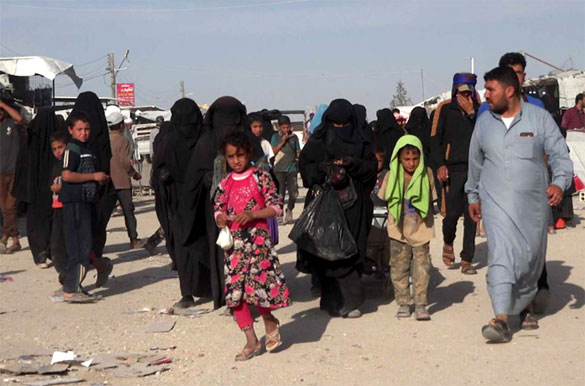
Late last year, the Albanese government began
repatriating Australian citizens from Syrian refugee camps back to Australia.
Much to chagrin of the Australian media and some sects of the public. This
strange circumstance has seen public figures calling for Australian women and to be abandoned in the Middle
East. Why? Because
they are the wives and children of men who chose to fight for Islamic State.
They have
been marked with the title of ‘terrorists’. Would the public still be outraged
if these women and children were not Muslims? Australian soldiers murdered
civilians, including disabled people and children, in Afghanistan and weren’t marked
as ‘terrorists’. Their families certainly faced no repercussions. Is this
public reaction another example of Islamophobia raising its ugly head?
The 9/11
Terror Attacks are often credited for creating a negative perception of Islam
in the West. But for Australian’s, this is a gross simplification and erasure
of the origins of our Islamophobia¬¬¬– that social prejudice which vilifies
adherents of the Muslim faith. Islamophobia permeates Australian society, as
shown by a cursory glance at the nation’s historical record. Since arriving in
Australia, Islamic peoples have suffered prejudicial violence and systemic
marginalisation.
Australians
Were Murdering Muslims before Federation
In 1838,
the British Empire began importing Islamic cameleers from across the Middle
East to map the Australian interior, and to transport goods between rural
settlements. Despite their ethnic diversity they were referred to collectively
as “Afghans” and “Asiatics”. Period newspapers reveal the Australian
white-settler considered ‘Afghans’ to be “half civilised aliens” and “an intolerable nuisance”. Their neighbourhoods were ridiculed as “festering…breeding ground”, and their religious customs looked upon as “abominable practices” and “disgusting habits”.
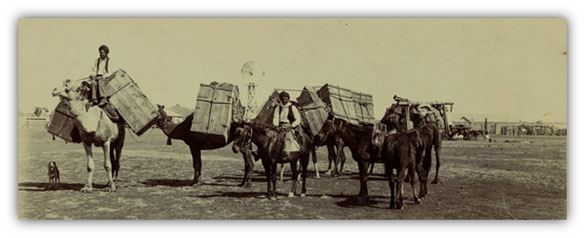
Afghan’ cameleers outside Cloncurry, Qld, in 1905: Courtesy of the State Library of Queensland
-----
The newspapers show the process of ‘‘othering’ in action. Like all social prejudices, Islamophobia seeks to “other’ groups of people, making them appear as being different from, and therefore undesirable to the dominant social group. This inevitably leads to violence and political systemic oppression. Consider the 1894 shooting-murder of an Afghan cameleer in Western Australia.
The
cameleer had been washing his feet, an Islamic custom, in preparation to join his
friends in prayer. When a local miner approached and pushed him into a water tank, and then shot him with a revolver. He turned
and shot the next nearest man in the stomach before being subdued. The public
outcry over this cultural conflict took the form of a petition, with 150
signatures, to have the culprit released from police custody. Which he was.
The Road
to a White Australia Is Best Ridden On A Camel
The
Australian colonies were rife with Islamophobia, and New South Wales presents a
pre-federation example of apartheid-esque legislations being put to parliament.
That same year of 1894, saw the NSW Legislative Assembly debate the “Use of Camels Regulation Bill”. In writing, it excluded camels
from being within two miles of all public towns. The ‘logic’ being that the
“Afghans” would remain with their camels on the periphery of society.
That
pastoralists were reliant on camels led the bill to be described as
“grotesquely absurd”. As a journalist from the Barrier Miner wrote, “It was not the camels that were
objected to, but the attendant Afghans. …Nobody could deny that the bill was a
subterfuge to get at the Afghan drivers.” The Australian Star went further
stating, “We don't want the Afghan, but we must have his camel.” permeated the colonies and public cries for restrictive immigration
legislation increased in the countdown to federation in 1901.
No sooner
were the colonies federated and
the White Australia legislations were put to print. “Afghans” (among all other
non-whites) were barred from entering the country without express permission.
This coincided with the rise of the steam-train so that within a decade the
outback camel caravans vanished completely. Leaving thousands of cameleers
unemployed and desperate for work in country that did not want them.
Islamophobia
Caused Aussie Muslims to Fight for Turkey In WW1
Despite
being lost to popular memory, the first few decades of the federated Australian
Commonwealth were defined by an intense struggle to remain a white and
Christian nation. In his book Best We Forget: The War for
White Australia, 1914–18,,
historian Peter Cochrane details how in the decade prior to the First World
War, successive Australian governments obsessed over preserving ‘White
Australia’ from an ‘awakening Asia’. When War was declared, it was considered
an opportunity to display the strength of the racial-British-Australian. After
the war, Prime Minister Billy Hughes proudly said in parliament:
we hold firmly to that great principle of White Australia… we believe in
our race and in ourselves, and in our capacity to… hold this vast continent in
trust for those of our race who come after us.
Discrimination
against Australian Muslims increased during the war, especially after Britain
invaded the Islamic Ottoman Empire. The social prejudices prevalent in
Australia motivated many social minorities to enlist in attempt to achieve
greater social privileges: the reverse is also true.
Mullah Abdullah and Gool Badsha Mahomed were both
ex-cameleers living in Broken Hill, New South Wales. Abdullah was an Islamic priest who worked as
a butcher after cameleering. He regularly endured religious discrimination by
police for his practicing halal butchery and became disillusioned. He found
companionship in Mahomed, an ex-Turkish soldier turned ice-cream vendor. Fed up
with living in a country that despised them, the pair decided to join the war effort
on the side of Turkey.
On the 1st
of January, 1915, Mahomed raised a homemade Turkish flag on his ice-cream cart and parked it
near a railway line. Armed with rifles the pair waited and ambushed a passenger train carrying 1200 people. After the train left, the
men retreated to the hills and fought a fatal stand against police. In all they
killed four civilians and wounded seven including a police officer. This tragic
battle exemplifies what social ostracization and isolation can lead people to
do. There is a lesson here we still have not learnt.
We Eased
Immigration Restrictions and Started Firebombing Mosques
While the
Australian public made social progress in the mid-half of the twentieth
century, the prejudice did not vanish – the minorities did. Like all others,
the “Afghans” were pushed to the periphery of society where they remained for
want of peace. Psychology recognises prejudice is an inter-generational phenomena inherited from parent to child. This
principle of longevity became abundantly clear during the Iraq War of 1990-91.
When Australian troops deployed to Iraq, the accompanying news media
coverage vilified Islam and Muslims indiscriminately. “Care needed when talking
(and writing) about terrorism” wrote Australian activist Denis Freney in 1991, as
Muslim communities across
Australia,, reported mass increases of verbal
assaults, physical violence, and vandalism. Islamophobia became so chronic in
the wake of the Iraq war, that 1991 was the first recorded year where angered
citizens targeting Mosques with Molotov
cocktails.
Have We
Tried Revoking Their Citizenship And Abandoning Them In The Middle East?
Since the
9/11 attacks in 2001, the firebombing of Mosques has continued, Australian soldiers
have committed war crimes against Afghan civilians, and a generation of
Australian Muslims have grown up feeling “targeted and besieged… [and]
exclusively viewed through the prism of counter-terrorism laws”.. For the Australian Multicultural project to
be successful, the nation must reckon with its prejudicial past. That means
recognizing that to some extent we are a racist country struggling with a
tribalist mind-set.
This brings
us back to the present. The men who left Australia to fight for Islamic State
after 2013 became terrorists when they did so. Still they remain Australian
citizens. As do the Wives and children who went with them, forcibly or
otherwise. The easiest option is to abandon our fellow citizens in the Middle
East. But to do so would be to continue the historical narrative of prejudicial
violence laid out in this article. Do we want this narrative to continue or
end?
If we want
an end to violence then we must achieve three distinct tasks. We must
acknowledge and tackle the racism entrenched in our social psyche. We must be
inclusive of all groups in our communities. And we must focus our judicial
systems on de-radicalising, rehabilitating, and re-integrating, (broadly all
criminals but especially) those of us who have fallen victim to radicalisation.
To bring
the Australian hatred of Muslims to an end is neither naive nor unrealistic. The Danish have made strides in de-radicalising returned ISIS
fighters, and the Norwegian prisons rehabilitation
programs put the rest of the world to shame. The knowledge to make a better
Australia is out there. As a nation we must ask ourselves, do we have the
courage to choose Reflection over Revenge? Do we have the grit to roll up our selves and
do the work that needs to be done?
----
Casey
Abel is a Residential Youth Worker and Educator living in Brisbane Australia.
He has studied a 'Bachelor of Learning Studies' with majors in Education,
Pschology and History at Griffith University. Through his studies Casey has
developed and explored his passions for Australian history and human rights
adovcacy."
URL: https://newageislam.com/muslims-islamophobia/islamophobia-australia-jihadist-marching-/d/129133
New
Age Islam, Islam Online, Islamic
Website, African
Muslim News, Arab
World News, South
Asia News, Indian
Muslim News, World
Muslim News, Women
in Islam, Islamic
Feminism, Arab
Women, Women
In Arab, Islamophobia
in America, Muslim
Women in West, Islam
Women and Feminism