
Middle East Press On: Trump's War, Turkey's Cybersecurity and Economy, Israeli, Palestinian Children's Day, Britain, US Israeli War on Iran, UAE Embassy, New Age Islam's Selection, 06 April 2026

By New Age Islam Edit Desk
06 April 2026
Major casualty in Trump’s war is Trump himself
How will 5G reshape Türkiye’s cybersecurity and economy?
Israeli harassment a daily reality for Christians
Palestinian Children’s Day: Stolen Childhood, Unbroken Will
‘This Is Not Our War’: Can Britain Claim Neutrality in the US-Israeli War on Iran?
Damascus Erupts – What the UAE Embassy Storming Reveals
Disaster Waiting to Unfold – The Iran Rescue that Shattered the Ground War Illusion
-----
Major casualty in Trump’s war is Trump himself
BY HAKKI ÖCAL
APR 06, 2026
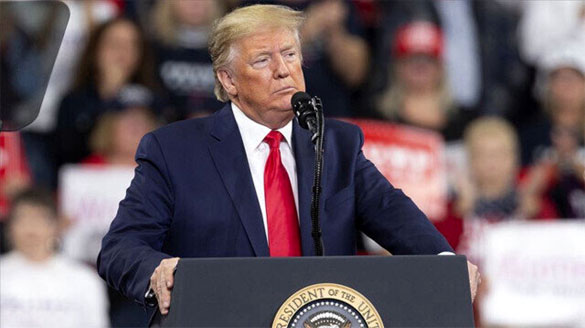
Do American presidents lie? Or we should ask: Should they?
Michael Blake, a professor of philosophy at the University of Washington, answers, “Yes, they all do!” And he asks it this way: “The question is why and when American presidents lie?”
The Washington Post published a database of U.S. President Donald Trump’s lies and deceptions during his first term. The tally was about 30,000. As the paper reported, all American presidents, from Washington to Trump, engaged in frequent deception of the people. Some presidents and many other statesmen had to resort to it as a patriotic duty, like deceiving the enemy in a conflict, while others did it so skillfully and so frequently because their characters tended toward manipulation and deception. For no particular political reason, they habitually resorted to fraud and hypocrisy
You can read the philosophers' and psychologists' analysis of the attitude and behavior of these habitual liars. Especially, learning about the compulsion Trump has for deception and manipulation that much and that often is very instructive. When you learn that Immanuel Kant, a German philosopher and a central thinker of the Enlightenment, had argued that lying even to a murderer at the door “from Benevolent Motives” was wrong. If you ask Trump, he will probably say, “Yes, you can and should lie to save a life!” Better yet, you must lie if your own tail is in the line.
Because, unlike you and me and Kant, Trump and his ilk believe morality is not derived from reason. He and his secretary of war do not feel truthfulness is an absolute duty of human beings. For these two and some others in his administration, lying is not wrong; it does not undermine trust. The man, who is ruling 350 million people, believes that lying is universal and everyone lies like him.
Kant used to argue that if a murderer asks where your friend is, you must not lie, even to save your friend. Because you are responsible only for your own moral actions, which were telling the truth, not for the consequences caused by others, like the murderer’s actions! Many people strongly disagree with Kant here; lying to save a life is morally justified or even required.
Trump does not even need a moral justification to lie.
Lies told to save whom?
Iran was not a threat to any nation, and it would be convinced not to support Hezbollah and Hamas if Israel implemented the United Nations General Assembly resolution demanding withdrawal from the occupied Palestinian territories.
Trump lied that Iran has been killing “thousands of innocent people for the last 47 years!” Where were those thousands of people? “47 years” must be the time passed since the U.S. Embassy occupation in Tehran by the Iranian students who detained more than 50 American diplomats as hostages for 444 days. But Iranians had not killed any innocent or guilty people, not since the 1979 embassy occupation or the 1949 Palestine occupation.
Iran labeled the popular resistance movements like Hezbollah and Hamas as its allies, which are called "proxies" by many others. Lebanese Hezbollah consisted of Shiite adherents and willingly acted as Iran’s proxy, but not Hamas. If they had accepted Iranian military assistance, that was because of necessity. The Palestinian people could not receive humanitarian assistance from the Muslim countries, let alone military supplies, and Iran could supply them through Lebanon.
But Trump shamelessly altered the history, saying Iran was about to have a nuclear arsenal in no time and it was threatening the U.S. and its allies. Iran had not posed a threat to its neighbors, let alone to the U.S. In the third week of the Israeli-American war on Iran, Trump, seeking madly a way to end the war and get out of the mess Israeli Prime Minister Benjamin Netanyahu dragged him into, changed his narrative, stating the U.S. doesn’t “have to be there ... But we’re there to help our allies.” He had not consulted European or Asian allies, not even the Gulf countries where he had bases. Not only were they not consulted, but almost all the European and Asian allies have spoken out against the war.
Now the whole world, especially 73% of the American voters, knows that Netanyahu sold Trump on this war: not that Iran was a threat, but Netanyahu needed a new military conflict to be used as an excuse not to go to court, which is waiting to condemn him to 10 years in jail for corruption charges. Netanyahu fouled Trump, claiming that because of its "unprecedented weakness," a joint U.S. and Israeli assault could inflict regime change in Iran. At the start of the war, Trump urged the Iranian people to rise and overthrow the regime after Netanyahu did the same in his own message. Now that the liar tries to mess with Americans’ heads, saying that he never sought regime change in Iran.
David Rothkopf, an American foreign policy and national security analyst, finds Trump, “a man with the emotional maturity of a three-year-old and the foresight of a newt,” not only ruined the U.S. economy, endangered its own oil and gas production for many years to come, but also put the European and Asian allies in great danger.
The Hormuz Straight was open and functioning perfectly before Trump was on Iran, but now it is closed, and he is asking NATO and the Europeans to join his war to reopen it. For a week, he lied to the world that the U.S. air power was able to “obliterate” Iran’s entire military power; but losing America’s most modern air-fighters one after another, his administration of the war represented a significant defeat for the U.S.
The previous Sunday night on Air Force One, he lied to the American media again, saying that Iran had agreed to his 15-point demand during “negotiations.” Last Sunday, he said there were no negotiations because Netanyahu had one of the most prominent Iranian negotiators killed!
That is because Netanyahu needs that aimless war to go on indefinitely. If it ends, he will start another war (probably, he will end the so-called ceasefire in Gaza) and drag Trump by his nose into it.
Professor Jeffrey Sachs, in one of his TV interviews, said, “Iran is a victim of illegal war.” I respectfully disagree, professor. The major casualty in this war is Trump himself! Is he a “collateral damage” or an incidental contingency? I am not sure. But he is definitely a pathological liar, like that lawyer in Jim Carrey’s movie. Still, we cannot find a way to make him inexplicably stop lying for 24 whole hours.
https://www.dailysabah.com/opinion/columns/major-casualty-in-trumps-war-is-trump-himself
-----
How will 5G reshape Türkiye’s cybersecurity and economy?
BY MERVE AYŞE KIZILASLAN
APR 05, 2026
On April 1, 2026, Türkiye officially entered the 5G era. Following a process coordinated by the Ministry of Transport and Infrastructure and the Information and Communication Technologies Authority (BTK), mobile operators such as Turkcell, Türk Telekom and Vodafone began rolling out next-generation connectivity services nationwide.
Türkiye’s transition to 5G signals a structural shift as the country repositions itself within an emerging techno-polar world, promising faster data speeds, lower latency and expanded network capacity.
Yet the significance of 5G extends far beyond technological progress. Türkiye’s transition comes at a time when regional instability, particularly the ongoing U.S.-Israel-Iran war, demonstrates that conflicts are no longer fought solely with missiles and conventional military force, but also through cyber operations, data manipulation and digital disruption.
Reflecting this transformation, on March 31, 2026, President Recep Tayyip Erdoğan stressed at the “Strong Türkiye in Communication with 5G” ceremony in Ankara that cybersecurity and digital infrastructure have become central to the country’s national power in an era defined by hybrid threats.
Moreover, referring to ongoing tensions in the region, President Erdoğan’s statement on recent wars and conflicts in Lebanon, Gaza and Iran demonstrates that cybersecurity has become a critical component of contemporary security dynamics. This highlights a central reality of the 21st century in which power is no longer determined solely by territory or military capability, but increasingly by control over data and digital networks. Undoubtedly, these developments highlight a structural transformation in international security.
Consequently, for Türkiye, 5G is not merely a faster internet connection. It constitutes a defensive necessity in an environment where "high-volume, low-impact" cyber operations can undermine public confidence and disrupt critical state infrastructure.
Cyber Homeland Doctrine
Türkiye’s journey toward 5G is closely linked to the concept of Cyber Homeland, which frames cyberspace as an extension of national sovereignty. At its core, this approach assumes that if a state is unable to secure its digital borders and the data flowing within them as effectively as it secures its physical airspace, it faces strategic vulnerabilities that may affect its sovereignty.
In this sense, Türkiye’s cybersecurity objectives evolve beyond a technical matter into a strategic state priority.
This policy has been accompanied by significant institutional and infrastructural investments. The establishment of the Cybersecurity Directorate under the Presidency on Jan. 8, 2025, marked an important step toward strengthening coordination among state institutions, developing early warning mechanisms, and integrating cybersecurity into the national strategy.
At the same time, Türkiye’s digital capacity has expanded rapidly. The country’s fiber-optic network has grown from approximately 81,000 kilometers in 2002 to nearly 657,000 kilometers (408,240 miles) by 2025, providing the physical infrastructure necessary for next-generation connectivity.
As technological capacity increasingly shapes both economic competitiveness and national security, the expansion of 5G infrastructure also carries significant economic implications.
Projections suggest that 5G integration could contribute up to $100 billion to Türkiye’s economy by 2030, accelerating productivity gains across sectors ranging from health care and logistics to agriculture and advanced manufacturing.
However, the 5G initiative is not limited to economic gains. In a data-driven global economy, the ability to securely process, store and transmit information shapes national competitiveness and strategic positioning. As connectivity expands, so does the importance of protecting digital infrastructure against disruption, espionage and manipulation.
In this sense, Türkiye’s transition to 5G should be seen not simply as a technological upgrade, but as a strategic investment shaping the country’s future capacity in both economic and security domains.
Compared to previous mobile technologies, 5G offers significantly higher data speeds and near-instant transmission capacity, allowing complex digital systems to operate simultaneously and in coordination.
Such connectivity is essential for artificial intelligence (AI) applications, smart manufacturing, autonomous mobility, digital public services and emerging defense technologies. As data becomes central to decision-making, communication infrastructure increasingly supports the technological systems that drive economic productivity, institutional efficiency and operational capability.
For Türkiye, the transition to 5G represents an opportunity to strengthen its position within the emerging technological ecosystem. Most critically, aside from supporting innovation, investments in digital infrastructure contribute to national resilience that is rapidly shaping international security dynamics.
Resilience in digital age
Resilience has become one of the defining elements of power in today’s security conditions. As contemporary conflicts increasingly aim to disrupt the societal systems that sustain governance and economic activity, communication networks, public services, financial systems, and critical infrastructure have become primary targets.
In such contexts, the ability to maintain coordination, ensure institutional continuity and prevent disruptions in the flow of information becomes a strategic advantage in itself.
Recent conflicts show this shift clearly. The war in Ukraine showed that attacks on digital infrastructure can create significant pressure even without large-scale physical destruction. Repeated attacks on energy grids, communication systems, and logistical systems have shown how modern conflicts seek to weaken societal coordination and disrupt institutional functionality.
Yet Ukraine was able to sustain governance, maintain communication between public institutions and citizens, and continue providing essential services through digital tools. Platforms enabling real-time information sharing, civilian reporting and online public services, particularly the Diia e-government application, helped preserve coordination even under sustained pressure on physical infrastructure.
Cyber operations, disinformation campaigns and disruptions to communication systems increasingly aim to slow decision-making processes, create uncertainty and weaken public confidence.
What the Ukraine case demonstrated is that resilience today is not only about military strength but also about a society's ability to continue functioning despite disruption. When communication systems remain operational, institutions can coordinate more effectively, citizens can access information more reliably, and crisis response mechanisms can adapt more quickly, especially amid conflicts and wartime conditions.
5G for national security
In this context, the strategic significance of 5G in Türkiye should be understood within a broader transformation in how power is defined in the international system, as well as in how states develop the technical capacity to manage and mitigate emerging digital vulnerabilities, particularly during wars, crises and hybrid conflict environments.
Technological capacity plays an expanding role in geopolitical competition, as competition among states expands beyond traditional military and economic indicators toward control over digital infrastructure, data ecosystems, and technological standards. In this environment, connectivity has become a core component of strategic autonomy.
The debate surrounding 5G reflects this structural transformation. Telecommunications networks are now key actors in geopolitical competition, as states seek to secure communication systems while minimizing vulnerabilities associated with technological dependence. Infrastructure choices increasingly influence supply chains, innovation capacity and long-term economic positioning, and even global alliances.
As advanced technologies such as AI, cloud computing and data-intensive applications continue to expand, secure connectivity has become a strategic resource. Countries capable of developing resilient digital infrastructures are better positioned to adapt to rapid technological change while maintaining flexibility.
Consequently, for Türkiye, the transition to 5G represents more than a technological advancement. It offers an opportunity to strengthen its position within an emerging technopolar international system in which data capacity, innovation capability and secure infrastructure increasingly shape global developments.
Beyond faster connectivity, 5G enables ultra-low latency communication, real-time data processing and the simultaneous connection of a significantly higher number of devices. These technical capabilities support critical sectors, including AI applications, autonomous systems, smart infrastructure and secure communication networks.
In security terms, 5G enhances crisis response capacity, strengthens institutional coordination and improves the resilience of communication systems during conflicts and hybrid threat environments
By investing in robust digital infrastructure and reducing structural vulnerabilities, Türkiye, under its Cyber Homeland doctrine, seeks to enhance both economic competitiveness and strategic autonomy, positioning itself as an active shaper of emerging technological hierarchies within the global system, increasingly described as the technopolar order.
https://www.dailysabah.com/opinion/op-ed/how-will-5g-reshape-turkiyes-cybersecurity-and-economy
------
Israeli harassment a daily reality for Christians
DAOUD KUTTAB
April 05, 2026
While many Western world leaders appeared to wake up to Israeli harassment of Christians following last month’s entry ban on the Latin patriarch of Jerusalem and three priests attempting to hold Palm Sunday prayers in the Church of the Holy Sepulcher, attacks on and harassment of Christian religious figures and laity in Israel and East Jerusalem have long preceded that incident.
The Israeli-registered nongovernmental organization the Rossing Center for Education and Dialogue documented 155 cases of attacks against Christians in 2025, a 40 percent increase on the previous year. The incidents, which occurred mostly in Jerusalem and saw little accountability for Israeli perpetrators, included 61 physical attacks, 52 attacks on church property, 28 cases of harassment and 14 defacements of Christian signs.
Christians, many of them Arab, form a small but enduring minority and their fate is deeply tied to the health of Israeli society, the fairness of its institutions and the prospect for a just peace in a volatile region.
In Israel proper, Christians number roughly 184,000, about 1.9 percent of the population, with nearly four out of every five identifying as Arab. In Jerusalem, the picture is even more complex — as of 2022, the city housed about 597,000 Jews and 384,700 Arabs, including about 13,000 Christian Arabs, making the Arab share a substantial portion of the city’s tapestry.
The Christian presence remains deeply interwoven with the broader Arab community, a reminder that faith and citizenship coexist within the same urban canvas.
Perhaps the most urgent human story lies in education. The Christian schools of Jerusalem, many of them historic pillars of the city’s education landscape, now face an existential policy shift. Last month, the Israeli Ministry of Education issued a directive that, from September, only teachers who reside in Jerusalem and hold Israeli teaching certificates can work in the city.
As a result, Palestinian teachers from the West Bank who had long been able to teach in Jerusalem under a “green card” arrangement will be barred from these schools. The potential impact is staggering. More than 200 teachers could lose their jobs, threatening decades of institutional memory and the continuity necessary to sustain a pastoral and academically rigorous curriculum. This is not about mere employment statistics — it is about the future of a generation’s access to education in a language and tradition that many Christians regard as a living, intergenerational bridge to their past and their aspirations for the future.
Against this backdrop, the need for accountability and humane policy becomes urgent. The patterns of harassment, the rise in crime against Arab citizens and the precarious future of Christian schooling demand a principled response from policymakers and society at large. Protecting and empowering minority rights must become a core national obligation.
This means robust enforcement against hate crimes, transparent investigations and accountability for any perpetrators who target clergy, congregations or Christian-owned institutions. It means making reporting accessible and safe, removing barriers that discourage victims from coming forward and ensuring that authorities respond with seriousness and speed.
It means safeguarding educational continuity by honoring professional standards while recognizing the legitimate contributions of teachers from diverse backgrounds who meet rigorous criteria. And it means fostering an inclusive civic space, where debates respect religious pluralism and where policies that embed faith in public life are balanced by unwavering protections for freedom of worship and expression for all communities.
The current year has added a troubling layer to this reality. The West Bank is experiencing a sharp escalation in violence linked to settlement activity and broader conflict. For Christian communities living in or near these flashpoints, the impact is not abstract. Security concerns, disruptions to daily life and the constant pressure of near-daily alerts reshape where people live, worship and educate their children.
Perhaps the most obvious case of repeated attacks is in the Palestinian Christian village of Taybeh, which is part of the greater Ramallah governorate. Jewish settlers repeatedly attack homes, destroy property and try to set fire to homes and churches. The situation became so dire that church leaders last year made an urgent call for diplomats to visit and see for themselves. In July, a large number of diplomats, including the pro-Israeli US ambassador, made a solidarity visit to Taybeh and spoke out against the lack of accountability for settlers attacking the peaceful village.
Within Israel’s Arab communities, crime — often tied to organized networks and inter-family feuds — has claimed many lives, including among Christians. The toll is a stark reminder that security, agency and dignity are precarious, even for those who hold Israeli citizenship and long for integration into the country’s broader civic life.
The Rossing Center’s research found that younger, more religious Israeli Jews are more likely to carry out attacks on Christians and churches.
Beyond the violence, the daily reality for Christians in Jerusalem and across Israel is tempered by a broader political and social shift: a consolidation of religious-nationalist themes within public life. A series of policy debates and proposals this year has embedded a particular religious-nationalist narrative deeper into state institutions and public discourse. The consequences are felt not only in how laws are written but in how communities perceive their safety and belonging within the state’s promise of equality.
The international and regional community — the voices that often shape, monitor and critique policy — has an essential role to play, as we saw in the case of the ban on the Latin patriarch.
Advocating for reforms rooted in rights, rather than measures that deepen segregation or exclude qualified educators, can help restore balance to a fragile system in which coexistence, rather than polarization, offers the best hope for a peaceful future.
The Christian communities of Israel and East Jerusalem are not relics of a bygone era but living witnesses to a shared past and a fragile, hopeful future. The cases documented in the Rossing Center’s 2025 report show a mosaic of demographic shifts, violence and threats to educational continuity. These violations of basic rights demand a sustained commitment to protection, dignity and opportunity for all residents.
https://www.arabnews.com/node/2638888
----
Palestinian Children’s Day: Stolen Childhood, Unbroken Will
April 6, 2026
On April 5
Palestinians mark Palestinian Children’s Day, a day that has grown increasingly urgent with each passing year.
The day is not a ceremonial occasion, nor a symbolic gesture. It is a political and human reality shaped by occupation, and, in the current moment, by genocide in Gaza.
To speak of Palestinian childhood today is to speak of a condition defined by violence, disruption, and systematic targeting. Yet it is also to speak of persistence—of a generation that continues to assert its right to exist, to learn, and to remain.
What is Palestinian Children’s Day?
The Palestinian Children’s Day emerged in the 1990s through Palestinian institutions and civil society organizations seeking to document violations against children living under Israeli occupation.
While not officially recognized by the United Nations, it has become widely observed across Palestine and among international solidarity networks.
The day serves as an annual moment of reckoning. It centers not abstract notions of childhood, but the lived experiences of Palestinian children under military occupation, blockade, and displacement.
Over time, it has also evolved into a platform for legal and political advocacy, grounded in international law and human rights frameworks.
Death, Injury, and Arrest
The scale of violence against Palestinian children since October 2023 has been unprecedented.
According to UNICEF, the Palestinian Health Ministry, and other organizations, more than 21,000 Palestinian children have been killed in Gaza, with over 44,000 injured.
The above figures are not incidental. They indicate that children are central victims of the genocide, bearing the consequences of sustained bombardment, siege, and infrastructural collapse.
Beyond those killed or wounded, countless children have been displaced multiple times, often separated from family members, and forced to survive in conditions lacking food, water, and medical care. The destruction of homes and neighborhoods has rendered entire childhoods unmoored from any sense of stability.
In the occupied West Bank, the Israeli violence takes a different, though equally systematic, form. Palestinian prisoner institutions report that approximately 350 children are currently held in Israeli prisons. Since the beginning of the war, more than 1,700 children have been arrested in the occupied West Bank alone.
These arrests are rarely spontaneous. They are carried out through coordinated night raids, often involving forced entry into homes, the use of explosives, and the presence of heavily armed soldiers. Children are taken from their families, handcuffed, and transported through military checkpoints, where many are subjected to physical and psychological abuse.
Inside detention, Palestinian institutions describe a system characterized by enforced disappearance, denial of visits, and severe restrictions on communication.
This is not an incidental pattern of abuse, but part of a structural system of repression.
A System, Not an Exception
The targeting of Palestinian children cannot be understood as a series of isolated incidents. Palestinian institutions have consistently emphasized that the detention of children is a longstanding, systematic policy.
Over the years, tens of thousands of Palestinian children have been subjected to arrest and military prosecution. Unlike Israeli children, who are tried under civilian law, Palestinian minors are prosecuted in military courts, where due process protections are severely limited.
This dual legal system reflects a broader framework in which Palestinian childhood itself is treated as a site of control. The aim is not only punitive, but preventative: to discipline and contain an entire generation.
Perception and Dehumanization
This reality is reinforced by a political and ideological discourse among Israeli officials and public figures that has, at times, explicitly dehumanized Palestinians, including children.
Statements by Israeli leaders and public figures over the years have framed Palestinians collectively as a threat, blurring distinctions between children and adults, civilians and combatants.
Such rhetoric contributes to an environment in which the killing, detention, or mistreatment of children is normalized or justified within a broader security narrative.
The result is not only physical harm, but the erosion of the basic moral and legal distinctions that are meant to protect children in times of conflict.
Where Is International Law?
Under international law, children are entitled to special protection.
The Convention on the Rights of the Child and the Fourth Geneva Convention establish clear obligations to protect children from violence, arbitrary detention, and collective punishment.
Yet the gap between legal principle and political reality remains vast.
International organizations have documented violations extensively. UN reports have verified thousands of grave violations against Palestinian children, including killing, maiming, detention, and attacks on schools and hospitals. However, these findings have rarely translated into meaningful accountability.
For Palestinian children, international protection exists largely on paper.
Education Under Siege
If imprisonment represents one form of disruption, the destruction of education represents another—one that extends far beyond the present moment.
In Gaza, the education system has effectively collapsed. The majority of schools have been destroyed, damaged, or repurposed as shelters for displaced families. For many children, formal education has ceased entirely.
In the West Bank, education continues under constant interruption. Children navigate checkpoints, delays, and the threat of violence simply to reach school. Some wait for hours each day for gates to open, while others are forced to take longer, more dangerous routes.
Yet they persist.
This persistence underscores a central truth: for Palestinians, education is not merely a social good. It is a form of continuity—a refusal to allow war and occupation to define the limits of their future.
Resilience and the Refusal to Disappear
Even amid the devastation of Gaza, children continue to assert their presence in ways that challenge the logic of destruction.
Images and videos show children reciting poetry, performing traditional dabka dances, and engaging in creative expression amid ruins and displacement camps. These acts are not incidental. They are expressions of identity, continuity, and collective memory.
In the West Bank, children standing at checkpoints with schoolbags in hand embody a quieter, but equally powerful, form of resistance. Their insistence on reaching school, despite obstacles and risk, reflects a broader culture of steadfastness.
This is not resilience in the abstract. It is a daily practice.
On Palestinian Children’s Day, the contradiction is unmistakable. Palestinian children are subjected to one of the most severe systems of violence and control in the world, marked by genocide, imprisonment, and systemic deprivation.
Yet they remain.
They learn. They create. They endure.
And in doing so, they assert a future that no system of oppression has yet been able to erase.
https://www.palestinechronicle.com/international-day-of-the-palestinian-child-stolen-childhood-unbroken-will/
------
‘This Is Not Our War’: Can Britain Claim Neutrality in the US-Israeli War on Iran?
April 5, 2026
What Has Keir Starmer Actually Said—and How Consistently?
British Prime Minister Keir Starmer has, on multiple occasions since late March and early April 2026, insisted that Britain will not be drawn into the escalating US confrontation with Iran.
His most widely cited formulation—“this is not our war”—was not an isolated remark, but part of a broader and repeated effort to frame the United Kingdom as politically and militarily separate from the conflict.
In several public statements, Starmer emphasized that Britain would not participate in offensive military operations and would avoid direct confrontation.
The messaging has been consistent: the UK seeks to position itself as a non-belligerent actor, limiting its role to diplomacy, de-escalation, and narrowly defined defensive coordination.
Yet this position sits alongside confirmed reports that the United States has been granted access to British-controlled military facilities, including RAF Fairford and Diego Garcia.
British officials have characterized this access as limited and “defensive,” but have not denied that these bases form part of the operational infrastructure supporting US military activity.
The legal question, therefore, is not simply what Britain says, but whether its actions are consistent with the status it claims.
What Does International Law Require of Neutral States?
The legal framework governing neutrality is rooted in the Hague Convention V, which remains a foundational reference point in the law of armed conflict.
Its provisions are unambiguous. Article 2 states:
“Belligerents are forbidden to move troops or convoys of either munitions of war or supplies across the territory of a neutral Power.”
Article 5 reinforces this obligation:
“A neutral Power must not allow any of the acts referred to in Articles 2 to 4 to occur on its territory.”
These provisions establish a clear legal principle: neutrality is not merely a political posture, but a status defined by conduct. A neutral state must not allow its territory to be used, directly or indirectly, as a platform for military operations.
This framework is echoed in later developments of international law, including the Geneva Conventions, which presuppose a distinction between neutral and participating states, and the prohibition on the use of force enshrined in Article 2(4) of the United Nations Charter.
Taken together, these legal instruments do not redefine neutrality—they reinforce its central requirement: territorial non-involvement in war.
Can Britain Allow Base Access and Still Be Neutral?
This is the central issue.
If US forces are permitted to operate from British-controlled bases, whether for strikes, logistical coordination, or surveillance, then Britain is enabling the projection of military force from its territory.
Under the Hague framework, such conduct falls squarely within the category of activities that neutral states are required to prevent.
The argument that such operations are “defensive” does not, in itself, resolve the legal question. The Hague Regulations do not distinguish between offensive and defensive uses of neutral territory; rather, they prohibit the use of that territory for war-related operations altogether.
Accordingly, if British territory is being used to support US military action, the legal conclusion is difficult to avoid: Britain is not acting as a neutral state within the meaning of classical international law.
Does This Make Britain a Party to the Conflict?
The answer here is less straightforward, and it is precisely where contemporary legal debate becomes more cautious.
International law does not offer a single, codified threshold at which a state becomes a formal party to an armed conflict. Instead, it distinguishes between direct participation—such as conducting strikes or deploying armed forces—and forms of indirect support, which remain legally contested.
The British government’s position relies on this distinction. By avoiding direct military engagement and framing its role as limited to defensive facilitation, it seeks to remain outside formal belligerent status.
However, this narrower interpretation sits uneasily with the logic of the Hague system. Historically, neutrality was not preserved through semantic distinctions about the nature of support. The decisive factor was whether a state allowed its territory to be used for military purposes.
From that perspective, the gap between “not fighting” and “not involved” becomes legally significant.
How Is This Viewed from Outside the UK?
From the standpoint of states opposing US military action, the distinction advanced by London carries little weight.
Previous criticisms by Russian officials, including Andrey Kelin, have also pointed in this direction.
In remarks reported by Caliber.Az on April 4, 2026, citing Russian media, Kelin accused London of aligning with what he described as anti-Iran “hawks” in Washington, arguing that British policy had contributed to the escalation rather than containing it.
While he did not address the legal question of neutrality directly, the thrust of his argument reflects a broader concern: that political alignment with military escalation can undermine a state’s claim to remain outside a conflict.
Iranian perspectives follow a similar line of reasoning. From this vantage point, a state that provides territorial access, logistical support, or operational infrastructure is not neutral in any meaningful sense. Whether or not it deploys its own forces becomes secondary to the fact that it enables the use of force by others.
This interpretation aligns more closely with the classical understanding of neutrality than with the narrower formulations often adopted in contemporary political discourse.
Why Does the Distinction Still Matter?
The distinction between neutrality and participation is not merely theoretical. It has practical and legal consequences.
A neutral state is entitled to certain protections under international law, including immunity from attack. A state that is considered to be participating in a conflict, even indirectly, may be treated differently by other parties.
For this reason, governments have a strong incentive to maintain the language of non-involvement, even where their actions suggest a more complex reality. The terminology of “defensive support” or “limited facilitation” reflects not only legal caution, but also political necessity.
At the same time, modern warfare—characterized by long-range strikes, integrated logistics, and shared infrastructure—has blurred the line between direct and indirect participation. The use of territory for operational purposes can be as consequential as the deployment of troops.
‘This is Not Our War’ Revisited
The United Kingdom has not declared war on Iran, nor has it publicly acknowledged direct participation in military operations. On this narrow basis, the government maintains that “this is not our war.” However, international law does not assess neutrality solely by reference to formal declarations or the absence of direct combat.
Under the framework established by the Hague Convention V, neutrality is defined by conduct, and specifically by the obligation not to allow one’s territory to be used for military operations by belligerent parties.
If British-controlled bases are being used to support US military action—whether characterized as offensive or defensive—then Britain is not fulfilling the conditions required of a neutral state.
The absence of a clear, modern legal threshold for co-belligerency allows the UK to argue that it has not crossed into formal participation in the conflict. That ambiguity constitutes the strongest legal defense available to the British government. Yet it does not resolve the more fundamental issue.
A state cannot, in any meaningful legal sense, claim neutrality while enabling the projection of force from its territory.
Britain may not meet the narrowest definition of a belligerent, but its actions place it outside the category of neutral powers as traditionally understood in international law.
The question, therefore, is not whether Britain is formally at war, but whether its conduct is consistent with its claim. On that question, the legal framework leaves little room for ambiguity.
https://www.palestinechronicle.com/this-is-not-our-war-can-britain-claim-neutrality-in-the-us-iran-conflict/
------
Damascus Erupts – What the UAE Embassy Storming Reveals
April 5, 2026
Key Takeaways
Protesters attempted to storm the UAE embassy after days of pro-Palestine demonstrations in Damascus.
Anger fueled by Gaza, Al-Aqsa, Israeli escalation, and rejection of normalization policies.
Incident reflects broad popular sentiment, not isolated factions or organized militant groups.
How Did Protests Turn into an Embassy Confrontation?
The events in Damascus unfolded over several days, building gradually before reaching a decisive moment.
Reporting from Al-Araby Al-Jadeed, alongside field observations cited by Reuters, confirms that protests intensified in central Damascus, particularly around Umayyad Square, where demonstrators gathered in large numbers as part of a broader pro-Palestinian mobilization.
By Friday, the situation had escalated. Protesters moved toward the UAE embassy, with some breaking away from the main demonstration and advancing directly toward the compound.
Chants heard during the protest included references to the embassy as “the Zionist embassy,” reflecting the political framing adopted by demonstrators.
Protesters attempted to storm the embassy, tore down the Emirati flag, and targeted the building, while Syrian internal security forces intervened to prevent full entry into the compound.
By the following day, the UAE officially condemned what it described as “riots, acts of vandalism, and assaults” against its diplomatic mission and the residence of its head of mission.
What took place, therefore, was not an isolated act—it was a documented escalation from protest to direct confrontation.
Why Is Anger Rising in Syria?
The protests were driven first and foremost by Palestine.
Demonstrations across Damascus were driven by mounting anger over Israel’s ongoing genocide in Gaza, alongside escalating measures in Jerusalem, including repeated closures and restrictions imposed on Al-Aqsa Mosque.
Protesters were also responding to Israeli political moves to expand punitive measures against Palestinian prisoners, including advancing legislation that would allow the execution of detainees accused of resistance activities.
These developments are not viewed in isolation. For many in Syria, they form part of a broader pattern that includes continuous Israeli airstrikes on Syrian territory, territorial violations, and a regional order increasingly shaped by normalization agreements seen as enabling Israeli expansion rather than restraining it.
But the issue runs deeper than immediate triggers.
For many Syrians, Gaza and Jerusalem are not distant causes—they are central to the political identity of the region. The repeated Israeli incursions into Syrian territory further reinforced this connection, collapsing the distinction between local and regional struggles.
At the same time, the protests reflected internal frustration.
Calls emerged demanding a stronger response from the Syrian leadership to Israeli actions. This was not merely symbolic solidarity—it was a demand for political positioning, for Syria to reassert itself within the broader confrontation.
This convergence—Palestine, sovereignty, and political frustration—explains why the protests did not dissipate, but instead escalated.
Why Was the UAE Targeted?
The targeting of the UAE embassy is central to understanding the meaning of the events.
The UAE is widely seen across the Arab world as a central driver of normalization with Israel, not a passive participant. Its role in the Abraham Accords and its close alignment with US regional policy have positioned it as a key actor advancing a political order that openly accommodates Israeli expansion.
For many, the UAE is not merely aligned—it is actively complicit in enabling and legitimizing policies that target Palestinian rights and reshape the region in Israel’s favor.
Unlike other Arab governments that are often seen as reluctant or constrained, the UAE is viewed by many as an active and enthusiastic participant in reshaping the region in coordination with Israel and the United States.
This perception is not limited to Palestine.
It extends to the UAE’s involvement in Yemen, Sudan, and its positioning within regional conflicts involving Iran. Taken together, these roles contribute to an image of the UAE as a driver—not just a supporter—of a regional order that the majority of Arabs and Muslims reject.
In that context, the embassy becomes more than a diplomatic mission. It becomes a symbol. When protesters referred to it as a “Zionist embassy,” they were expressing a political interpretation widely shared among those in the streets.
Why Are These Events Important?
The storming of the UAE embassy challenges a dominant narrative about Syria.
Since the rise of Ahmad al-Sharaa following the overthrow of Bashar al-Assad in December 2024, Syria has been widely portrayed as entering a new phase—one defined by diplomatic re-engagement, Western outreach, and a shift away from regional confrontation.
Al-Sharaa, the former rebel commander who led the campaign that toppled Assad, has moved quickly to reposition Syria internationally, engaging with the United States, European leaders, and regional powers while seeking sanctions relief and economic investment.
To do so, he appears to be forging a new political alignment—closer to the United States and Gulf states, and by extension to Israel—marking a clear departure from Syria’s traditional alliances. But whether this repositioning can be sustained remains an open question.
The scale and intensity of the protests indicate that the Palestinian cause remains deeply embedded in Syrian public consciousness. The rapid escalation—from mosque gatherings to embassy confrontation—demonstrates that Syria is not detached from regional dynamics, but actively responding to them.
This matters because it reshapes how Syria is understood.
It is no longer just a country dealing with internal reconstruction. It is once again a political space where regional struggles are reflected, contested, and acted upon.
How Did Officials React?
The official response was immediate and coordinated.
The UAE condemned the attack in strong terms, calling for Syria to protect diplomatic missions and hold those responsible accountable.
Regional allies, including Gulf states, issued similar condemnations, emphasizing the need to safeguard diplomatic premises.
Syrian authorities also responded, condemning the attack and affirming their commitment to protecting diplomatic missions, while signaling efforts to contain the fallout.
Who Were the Protesters—and Why Does It Matter?
One of the most important aspects of the incident is the nature of the protesters themselves.
Those who moved toward the embassy were not an isolated group. They emerged from a much larger protest movement concentrated in central Damascus, particularly around Umayyad Square, where pro-Palestinian demonstrations had been gathering in the hours leading up to the incident before some participants broke away and moved toward the UAE embassy.
There is no indication from reporting that they were militants or organized paramilitary actors.
This matters because it points to something more significant: a popular mood.
The embassy was not targeted by a fringe group operating in isolation. It was reached by protesters who were part of a wider wave of mobilization, rooted in public anger and political frustration.
This creates a serious dilemma for the Syrian leadership.
Any heavy-handed response risks alienating a population that is already mobilized and politically engaged. At the same time, failing to contain such incidents threatens something far more immediate for the leadership: its emerging alignment with the United States and Gulf states, and the financial backing tied to it.
What Does This Moment Really Mean?
What happened in Damascus is not a one-day story, but a signal.
A signal that Syria is not silent, not detached, and not removed from the central conflict shaping the region. A signal that Palestine continues to mobilize not just rhetoric, but action. And a signal that the western-centered political order many thought was being consolidated through normalization remains deeply contested.
https://www.palestinechronicle.com/damascus-erupts-what-the-uae-embassy-storming-reveals/
------
Disaster Waiting to Unfold – The Iran Rescue that Shattered the Ground War Illusion
April 5, 2026
From Downing to Rescue: What Happened
The competing narratives surrounding the US rescue mission must be grounded in the events that unfolded in the days leading up to Sunday, April 5.
In early April, Iranian air defenses shot down a US F-15E fighter jet over Iranian territory (one of several shot down on that same day), a development that immediately contradicted repeated US claims that Iranian defenses had been neutralized. The downing of the aircraft was not a minor incident—it represented a direct challenge to Washington’s assertion of air superiority.
US officials acknowledged the loss and confirmed that one crew member had been located, while the second remained missing. In response, Washington launched a large-scale search-and-rescue operation involving dozens of aircraft, special forces, and surveillance systems operating over central Iran.
By Sunday, April 5, the operation reached its decisive phase. The United States announced that the missing crew member had been retrieved. President Donald Trump declared on Truth Social, “WE GOT HIM!” describing the mission as “one of the most daring” operations in US military history.
But this narrative was immediately contested.
Iran’s Version: A Failed Operation Under Fire
Iranian military officials offered a sharply different account, one that framed the rescue attempt not as a success but as a failed incursion into contested airspace.
According to Tasnim and Press TV, a spokesperson for the Khatam al-Anbiya Central Headquarters said Iranian forces detected and engaged US aircraft attempting to extract the downed pilot south of Isfahan. The response, he said, involved coordinated operations by the Islamic Revolutionary Guard Corps (IRGC), the army, and auxiliary units.
“The enemy’s operation ended in failure,” the spokesperson stated, emphasizing that Iranian forces not only disrupted the mission but inflicted losses on the incoming aircraft.
Iranian reports described the destruction of multiple US platforms, including helicopters and transport aircraft, during the engagement. The IRGC also announced that an MQ-9 drone had been shot down over Isfahan, adding to a growing tally of aerial assets brought down in recent days.
This narrative builds on a broader pattern that Iranian officials have consistently emphasized: that US forces are operating under sustained threat inside Iranian airspace, and that attempts to project power deep into the country carry escalating risks.
Iranian media also highlighted the role of local mobilization in the aftermath of the downing. Reports described residents and tribal fighters in mountainous regions participating in efforts to locate the pilot, while US helicopters searching the terrain reportedly came under fire.
This dimension is central to Iran’s message. It portrays a society not only resisting but also actively participating in the confrontation, reinforcing the image of a unified internal front rather than a fragmented state under pressure.
Washington’s Version: A High-Risk Success
The US narrative, while celebratory, reveals a far more complex operation than the rhetoric suggests.
According to US officials cited by Reuters, CBS News, and other outlets, the rescue involved dozens of aircraft and special operations forces working to locate and extract the missing crew member using a tracking beacon. The pilot, they said, was injured but stabilized after recovery.
However, even within this account, the operation unfolded under significant pressure.
US officials acknowledged that aircraft involved in the mission came under fire. Reports indicated that at least one helicopter was damaged, while an A-10 aircraft was hit during the operation, forcing the pilot to eject before being recovered. Additional reports indicated that US forces had to destroy or abandon aircraft during the mission due to damage or technical issues.
These details stand in contrast to the image of uncontested dominance.
They point instead to a contested environment in which US forces were operating under active threat while attempting to carry out the rescue.
From Strategic Ambition to Tactical Survival
Beyond the immediate contradictions, the episode reveals a deeper transformation in the framing of the war.
At the outset, US officials spoke in expansive terms—defeating Iran, reshaping the regional order, and imposing a new political reality. Claims of “total control of the skies” were central to that narrative.
Yet the events surrounding the downing of the F-15 and the subsequent rescue mission tell a different story.
The most prominent achievement now being presented is the retrieval of a single pilot from hostile territory after a high-risk operation that involved losses, damage, and sustained engagement with Iranian forces.
This is not a minor shift in emphasis. It reflects a narrowing of objectives from strategic transformation to tactical containment. The war is no longer being framed in terms of decisive outcomes, but in terms of managing incidents and extracting personnel from contested zones.
The symbolism of this shift is difficult to ignore. A military campaign that began with promises of overwhelming superiority is now defined, at least in this moment, by the recovery of one individual under fire.
Hormuz and the Limits of Power
The rescue operation took place against the backdrop of a broader strategic reality that continues to shape the conflict.
The Strait of Hormuz remains heavily disrupted, with global shipping affected and energy markets under sustained pressure. Iran has demonstrated the ability to influence access to one of the world’s most critical maritime chokepoints, maintaining leverage that extends far beyond the immediate battlefield.
At the same time, Iranian forces continue to deploy missile and drone capabilities across multiple fronts, reinforcing the perception that the country retains both operational capacity and strategic depth despite ongoing attacks.
These developments challenge the narrative of US control. They suggest that the conflict has not produced the decisive outcomes that were initially promised, and that Iran remains capable of shaping events in ways that extend beyond isolated incidents.
The Politics of ‘We Got Him’
Trump’s statement—“WE GOT HIM!”—is more than a declaration of success. It is a political framing of the entire episode.
By focusing on the recovery of the pilot, the narrative shifts attention away from the circumstances that made the rescue necessary: the downing of a US warplane, the persistence of Iranian air defenses, and the contested nature of the operational environment.
The emphasis on a single moment of success obscures a broader set of questions.
If US forces had established the level of control that was repeatedly claimed, why was such a high-risk operation required? Why were aircraft damaged, pilots forced to eject, and assets destroyed or abandoned during the mission?
These questions are not addressed by celebratory statements. They point instead to the underlying contradictions in the US narrative.
The Real Question: What Would an Invasion Look Like?
What happened over Isfahan on April 5 is not a side episode—it is a compressed version of the war itself.
To retrieve a single downed pilot, the United States deployed dozens of aircraft, special forces, intelligence coordination, and regional support. The mission unfolded under fire, with helicopters damaged, aircraft hit, and assets destroyed or abandoned to avoid capture. This is the operational reality behind the claim “WE GOT HIM.”
If this is what it takes to briefly enter Iranian airspace, locate one individual, and extract him under pressure, then a ground invasion becomes something entirely different. An invasion cannot rely on speed or withdrawal. It requires sustained presence—fixed bases, extended supply lines, and troops exposed to continuous engagement across difficult terrain.
What was temporary in the rescue becomes permanent in a war. Every vulnerability—aircraft under fire, contested airspace, reliance on rapid extraction—would expand across weeks and months. The scale would not increase gradually, but exponentially.
This is the meaning of the operation. Not strength, not control—exposure. A system pushed to its limits just to retrieve one man. And if this is the price of one pilot, then an invasion of Iran is not a plan—it is a disaster waiting to unfold.
https://www.palestinechronicle.com/disaster-waiting-to-unfold-the-iran-rescue-that-shattered-the-ground-war-illusion/
-----
New Age Islam, Islam Online, Islamic Website, African Muslim News, Arab World News, South Asia News, Indian Muslim News, World Muslim News, Women in Islam, Islamic Feminism, Arab Women, Women In Arab, Islamophobia in America, Muslim Women in West, Islam Women and Feminism