
Middle East Press On: Tehran, Trump, Netanyahu, Israel Good Neighbour, West Bank, Iran, Islamic Revolution, Peaceful Settlement on Iran, Israel's Road to Destruction, New Age Islam's Selection, 10 February 2026
By New Age Islam Edit Desk
10 February 2026
Tehran must be confronted: Trump, Netanyahu should lead the West's moral stand
How Candace Owens strengthened my resolve to stand with Israel
Is it possible to teach Israel to be a good neighbour – or else?
Power grabs, demolitions, illegal settlements: What lies behind Israeli decisions on occupied West Bank?
No one welcomes the occupation of Iran, but the fall of the regime is another matter
Islamic Revolution: 47 years of history, achievement, and permanent siege
The urgent need for a peaceful settlement on Iran
Could Israel Collapse Before 2048? Retired General Warns of ‘Road to Destruction’
------
Tehran must be confronted: Trump, Netanyahu should lead the West's moral stand
By JPOST EDITORIAL
FEBRUARY 10, 2026
The world stands at a perilous crossroads. As Prime Minister Benjamin Netanyahu prepares to visit US President Donald Trump – a meeting certain to focus on Iran – there is a moral imperative for Western leaders to confront Tehran not with well-worn diplomatic formulas or another round of negotiations but with a strategy designed to hasten the downfall of a regime that has repeatedly proven itself unworthy of engagement.

Too often, Tehran has bought time with talks while inflicting brutality on its own people and terror across the Mideast. Once again, Iran’s clerical regime has answered dissent with bloodshed on an unprecedented scale.
Since late December, nationwide protests have erupted amid economic collapse and political stagnation. According to emerging tallies, the regime’s crackdown has killed tens of thousands of people, with figures of 30,000-36,500 fatalities reported.
These figures do not even reflect the wider history of repression. In the earlier “Woman, Life, Freedom” movement, which began in 2021 after the death of Mahsa Amini in the custody of Iran’s morality police, hundreds were killed, and thousands more were wounded or detained as Iranians rose up against compulsory hijab laws and deep-seated gender oppression.
Iranians have endured systematic violence, arbitrary killings, torture, mass arrests, and executions – not as isolated episodes but as state policy. Human Rights Watch and United Nations investigations have documented crimes against humanity, including murder, torture, rape, and persecution, tied directly to regime directives rather than rogue elements.
Today’s crackdown is far larger and more ferocious, with thousands of confirmed deaths, all amid an enforced internet blackout. These are not the actions of a regime seeking reform; they are the actions of a regime desperate to survive and willing to murder its own citizens wholesale rather than relinquish control.
And, while Tehran murders its citizens, it also projects terror externally. Its IRGC and allied militias destabilize Iraq, Syria, Lebanon, and Yemen, and its support for proxy terror networks has made the Mideast less secure, not more. The regime’s nuclear ambitions – undeterred by decades of negotiations – remain a grave threat to the West. These are matters not solely of geopolitics but of security and conscience.
Historically, Western engagement with Iran has oscillated between appeasement and cautious pressure. The Obama-era nuclear deal temporarily curtailed Iran but failed to address human rights abuses or regional militancy. Successive administrations have cycled through sanctions and diplomatic overtures, but the fundamental character of Iran has never changed. Today’s regime remains theocratic, repressive, and expansionist.
Netanyahu’s appeal to Trump should resonate in terms of moral clarity
In Washington, Netanyahu’s appeal to Trump should resonate not just in terms of strategic deterrence but moral clarity: A regime that kills its people cannot be trusted in negotiations that involve nuclear thresholds, regional security, or international norms. It is not enough to urge Iran to “come back to the table.” Millions have already paid with their lives while the table waits.
This is not a call for unchecked military adventurism but for a recalibration of Western policy that aligns with the values it claims to uphold. The US possesses unparalleled influence – economic, diplomatic, and, when necessary, military – to challenge regimes that undermine the fundamentals of human rights and security. Tehran’s clerical rulers must not again be allowed to use negotiations as cover for repression.
Netanyahu has long called for confronting the Iranian threat head-on; the West can and should do more than talk. It should marshal every appropriate means: intensified sanctions targeting the regime’s security apparatus, support for independent Iranian civil society and communications access, international referral of human rights abuses to appropriate legal forums, and, where necessary, coordinated pressure that deprives Tehran of the capability to harm its neighbours or itself.
In the visit to Washington, Netanyahu and Trump have an opportunity not just to posture but to lead. Let that leadership be defined by steadfast support for the Iranians’ cry for freedom and justice, not by another round of appeasing talks that allow tyranny to persist.
The Iranian regime’s brutality is not a distant abstraction; it is a humanitarian and security catastrophe that demands action, not more talks that buy time for killers to plan the next massacre.
https://www.jpost.com/opinion/article-886136
------
How Candace Owens strengthened my resolve to stand with Israel
By LAURIE CARDOZA MOORE
FEBRUARY 9, 2026
I want to take this opportunity to personally thank everyone who has reached out and sent messages of support in recent days, as my ministry, organization, and family have come under relentless online attacks by Candace Owens and her army of goons, groypers, and grifters.
I founded Proclaiming Justice to the Nations (PJTN) 25 years ago from my rural Tennessee kitchen as a born-again, Evangelical Christian homeschooling mother of five, motivated by one objective: to stand with God’s Chosen People in the face of rising global genocidal antisemitism.
By the grace of the Almighty, our movement has grown exponentially, reaching billions through our award-winning television program Focus on Israel, documentary films, and educational work.
I have never wavered from our core mission for a second, and I will not cower in the face of ad hominem attacks by Candace or death threats from the many Communists, Islamists, Hitler enthusiasts, and flat earthers who still tune in to her show.
Ironically, I want to thank Candace personally for this incredible Balaam moment. While she intended to curse me for standing with Israel, her tirades have turned into a blessing as PJTN has strengthened and our support base has greatly increased.
Strengthening our mission amid attacks
There has been so much interest and traffic to PJTN.org that it crashed – but rest assured, we are back and we aren’t going anywhere.
Once again, the words of Balaam come to mind: “How goodly are thy tents, O Jacob, and thy tabernacles, O Israel!” (Numbers 24:5).
Let us not forget God’s own words to Abraham, the very first Jew: “I will bless those who bless you, and whoever curses you I will curse; and all peoples on earth will be blessed through you” (Genesis 12:3).
Once a self-proclaimed Christian Zionist, who came to celebrate the opening of the Jerusalem Embassy alongside the late Charlie Kirk, Candace has sadly become a voice of Jew-hatred and a thorn in the side of Charlie’s beloved widow and organization.
Once a self-professed Evangelical Christian, Candace has chosen to join the Catholic Church and to resuscitate every medieval antisemitic trope, doctrine, and conspiracy theory, in direct contradiction with the 1965 Nostra Aetate declaration of Pope Paul VI.
Once a self-avowed Conservative American Patriot, Candace now works to destroy and weaken the movement from within, serving the interests of our adversaries, both political and foreign.
Her attempts to blame the tragic murder of Charlie Kirk (and everything else) on the Jews is nothing short of a medieval blood libel, which has led her down a rabbit hole of attacking everyone and anyone who ever had contact with Israel and Turning Point.
I am proud to have been included in this illustrious list, and I wear it as a badge of pride.
Let’s be clear. Since 2024 I have publicly and privately called on individuals and organizations to boycott the likes of Candace, Carlson, and Fuentes, always from a biblical, moral, and Christian perspective, quoting scripture, book, and verse.
After their vile attacks against Jews and the Jewish state, I do not believe that any of these so-called Christians should receive any platform within polite civil society.
My position on this was never secret. It was always public and remains unchanged.
For the sake of our great Nation, I pray that all of the American Christian Conservative movement rejects those on the Woke Right who put everything other than America First.
And as a believer, I pray that as Christians we ideologically reject those cheerleading for Hamas – and instead begin to learn the Humash (Bible).
Connecting with the Jewish roots of our faith is not a sin. Standing with Israel and our Jewish brethren is not a sin – it is a God-given commandment.
https://www.jpost.com/opinion/article-886056
------
Is it possible to teach Israel to be a good neighbour – or else?
BY HAKKI ÖCAL
FEB 09, 2026
Iwould like to see the American-Persian peace, or nuclear, talks to take place in Istanbul, but Oman is not a neocon puppet on strings like some of its neighbours. I am saying this because I am not sure if it could guide Iranians by the values we have to observe when it comes to the U.S., after all.
Jared Kushner sat on the Muscat peace table, as stiff as a ramrod, next to Trump’s advisers, Steve Witkoff, who essentially represents the neocon cabal at the U.S. defense and diplomatic structures, must have thrown one or two monkey wrenches into the works. Iranian Foreign Minister Abbas Araghchi had only Jared the Ramrod against the Israeli team, disguised as Americans. U.S. Central Command (CENTCOM) chief Brad Cooper also joined the U.S. team in Muscat.
Iranians did not like the presence of CENTCOM or any regional military officials during the ongoing indirect talks in Oman, “(Any) presence of regional military officials in the talks can jeopardize the process of indirect nuclear talks between Iran and the United States,” an Iranian diplomat was quoted by news agencies. So, Araghchi struggled not only against the Trump team and neocon goons but also against the mullahs who have been on a course to becoming a nuclear power.
Former President Mahmoud Ahmadinejad, with his idiosyncratic Shiite Messianism, had galvanized the West so strongly that all the advocates of the “Greater Israel” have been using the option of intervention against “a nuclear Iran.” Even if Iran proves that it is using its nuclear power to bake nan-e barbari (a type of Iranian yeast-leavened flatbread), the neocons and the globalists are determined to repeat what U.S. President Donald Trump had powerfully rebuked as the “destructive globalism that has fueled endless conflict and chaos around the world” in September 2025.
Can Trump win that fight against forces that aim to replace and erase nations? The globalists’ aim is not to provide freedom and basic human rights to the people in the Middle East; it has never been. Trump knows better than anyone else that those globalists are his adversaries as well as the Iranians. They don’t want to leave one atom of enriched uranium in the hands of mullahs because they could use it to build nuclear weapons to be used against Israel, but any nuclear power in the Middle East would argue as Trump said three years ago: “The true good of the nation, can only be pursued by those who love it, by citizens who are rooted in its history, who are nourished by its culture, committed to its values, attached to his people.”
Yes, no sane person can defend Ahmadinejad’s policies. You cannot pitch a line to Greater Israel because the end-time prophecy requires it for peace in the Middle East. Neocons cannot legitimize their must-have stalking-horse, a “unified and united Kurdistan," created by dismembering Iran, Iraq, Syria and Türkiye, by using the messianic biblical prophecies. After all, they are civilized, educated Western intellectuals. They simply use Iranian mullahs’ messianic shenanigans to disguise their own messianic nonsense.
In short, no, sir, we are not buying it anymore. We know that the U.S. has been meddling in Iran’s internal affairs because of its oil. In 1953, the CIA, with help from the United Kingdom, staged a coup that ousted Iran’s first democratically elected prime minister, Mohammad Mosaddegh, after he tried to nationalize the country’s oil industry. The coup brought back power to a Western-backed monarch, Shah Mohammad Reza Pahlavi. In 1972, when then-President Richard Nixon visited Tehran, Iran’s rulers had flourished and ordinary Iranians had suffered under a corrupt elite and an increasingly dictatorial ruler. To make a long story short, America could not prevent the civil unrest that led to the 1979 Islamic Revolution and again to the nationalization of oil. And Pahlavi took refuge in the U.S.
Then-President Barack Obama brought Iran to the 2015 nuclear deal that would limit Iran’s nuclear activities in exchange for an easing of sanctions. But the Washington’s deep state made Trump withdraw from the deal in 2018 and restore the sanctions against Iran. Now, Trump, once again, insists that he can bring Iran back to a nuclear deal, and the deep state waits to see. They will find a way to make either the mullahs or Trump kick the table and set the fire to the whole region.
Russia has said that it hopes the talks between Iran and the U.S. would yield results and lead to de-escalation. President Recep Tayyip Erdoğan hailed the U.S.-Iran talks, stressing it is essential to avoid new wars in the region, and said that Ankara does not want it either. The Israeli media, on behalf of Zionism and Israeli Prime Minister Benjamin Netanyahu, push Trump to choose between a deal with Iran and Israel’s strategic interests. The Zionists know that peace in the region is against Israel’s strategic interests. They say, Trump is risking a pact that may stabilize Tehran while alienating Israel! Israel’s so-called moderate newspaper, the Jerusalem Post, advises Trump to walk away from the negotiating table because Iran is at its weakest.
If only they knew that just being a good neighbor in the Middle East would make Israel safe, and only then the biblical prophecy that “all sons (let’s add all daughters) of men (let’s add women, too) shall live in peace” could be realized. How can we teach Israel to be a good neighbor? Because the alternative is not so bright for Zionists (Jew or otherwise).
https://www.dailysabah.com/opinion/columns/is-it-possible-to-teach-israel-to-be-a-good-neighbor-or-else
-----
Power grabs, demolitions, illegal settlements: What lies behind Israeli decisions on occupied West Bank?
February 9, 2026
An analytical paper issued by the Israeli anti-settlement group Peace Now has explained the details and objectives behind recent decisions by Israel’s Security Cabinet on the occupied West Bank, Anadolu reports.
In its paper released late Sunday, the Israeli movement said the decisions include “a series of measures that will allow Israelis to purchase land in the territories almost without limitation and without government oversight.”
These measures “will give a small number of settlers the power to determine political facts on the ground without government intervention, and will open the door to an industry of forged real-estate transactions,” it added.
Peace Now noted that the Security Cabinet also decided to strip the Palestinian Authority of its powers in Areas A and B, as well as in the West Bank city of Hebron.
The movement described the Israeli decisions as “steps toward the annexation of Areas A and B, highlighting that they “constitute a direct violation of the international agreements to which Israel is committed.”
Anadolu publishes below the Peace Now paper on the new Cabinet decisions:
A. Land – Opening the West Bank as a “real estate market” for illegal settlers and creating broad potential for corruption
1. Allowing direct land purchases by illegal settlers
The Cabinet decided to repeal the law applicable in the West Bank from the Jordanian period, under which only residents of the West Bank or companies registered there are permitted to purchase land. Repealing the prohibition will allow settlers to purchase land directly from Palestinians without the need to register a company. About a year ago, a bill in this spirit was introduced in the Knesset in an attempt to promote the change that the Cabinet has now decided upon
2. Cancellation of the requirement for a transaction permit to purchase land
The Cabinet also decided to repeal the law requiring the receipt of a transaction permit prior to completing any real-estate purchase. The transaction permit is intended to be an important stage in the purchasing process to prevent forgeries and to curb settlers’ real-estate initiatives that contradict government policy. Land purchases by Israelis in the West Bank are a dubious business. In a situation of a national conflict over land, selling land to the enemy is considered treason, and the Palestinian Authority has a law prohibiting the sale of land to Israelis, punishable by death. Therefore, almost all sales transactions are conducted clandestinely, exploiting vulnerabilities of the seller, and in very many cases involve forgery and fraud.
At the transaction-permit stage, the Officer in charge of land registration conducts a comprehensive review of the documents and the land’s legal status to ensure there is no suspicion of forgery. Beyond that, every transaction permit requires approval by the Minister of Defense in order to prevent a situation in which settlers determine Israel’s settlement and security policy by purchasing property in sensitive locations. The government is now seeking to abolish all of these oversight mechanisms.
3. Opening land registries in the Occupied Territories for public review
Currently, land ownership registries in the West Bank are classified. The reasons for this confidentiality include preventing forgery and fraud in real-estate transactions, protecting abandoned property of Palestinians who left the West Bank over the years, protecting the privacy of transaction parties, and protecting the lives of Palestinians who sold land to Israelis. This confidentiality greatly interferes with settlers who wish to take control of land—whether legally or through forgery and fraud—for the purpose of establishing settlements. In the past, settlers pressured governments to open the registries to public inspection, and the Regavim right-wing movement even filed a petition to the High Court of Justice on the matter, which was rejected.
Because the West Bank is governed under a military regime and is not part of Israel, changes to the laws applicable in the West Bank are not within the Knesset’s authority. Military legislation is enacted through orders issued by the commander of the Central Command, who receives instructions from the political echelon. The Cabinet’s decision is, in effect, an instruction to the commander of the Central Command to sign orders repealing the relevant laws and enabling the flourishing of real-estate opportunities for settlers and profit-driven forgers.
4. Land purchases by the state
The Cabinet’s decision also includes the renewal of a mechanism for land purchases by the Custodian of Government Property in the West Bank (the equivalent of the Israel Land Authority in the West Bank). In the past, during the 1970s and 1980s, there was a government mechanism (operating secretly) for purchasing land from Palestinians in the territories. As far as Peace Now is aware, the purchases themselves were carried out by Heimanuta, a subsidiary of the Jewish National Fund (KKL), at the request of the Custodian of Government Property. The Cabinet has now decided to revive this government mechanism, which will operate to purchase land from Palestinians.
B. Enforcement powers in Areas A and B
5. Israeli enforcement and oversight actions in areas administered by the Palestinian Authority (Areas A and B)
The Cabinet decided that Israeli enforcement bodies of the Civil Administration will begin operating also in areas that, according to the international agreements signed by Israel, are under the authority and administration of the Palestinian Authority. This means that Israel will carry out demolitions and prevent Palestinian development not only in Area C but also within areas under the PA’s jurisdiction, in the entire West Bank.
Under the Interim Agreement (Oslo II) signed between Israel and the Palestinians in 1995, the West Bank was temporarily divided into Areas A and B (about 40% of the West Bank), which were transferred to Palestinian control and administration, and Area C (about 60% of the West Bank), which includes the settlements and their surroundings and remains under Israeli control until the signing of a permanent status agreement, which according to the agreement was supposed to be signed by May 1999. The government is now seeking to ignore its international commitments and begin administrative operations inside areas of the Palestinian Authority (militarily, Israel has operated in PA areas since the early 2000s).
According to details published about the Cabinet decision, enforcement bodies will operate in Areas A and B in the fields of heritage and archaeological sites, environmental hazards, and water offenses. That is, Israeli enforcement authorities will be able to demolish Palestinian construction in Areas A and B if, in their opinion, it harms heritage or archaeology, or if it harms the environment or water resources.
These are definitions with very broad interpretive potential, and it is unclear what will be included within them. Environmental hazards could include landfills and waste-burning sites, polluting factories, or even small businesses or homes that could be deemed environmental hazards, for example if their sewage is not connected to a wastewater treatment system. Similarly, in the water sector, this could refer to water drilling that did not receive approval from the Joint Water Committee, but it may also affect other water facilities involving water or sewage transport.
In the field of heritage and archaeology as well, the potential for harm to Palestinian development and property is very great. In practice, the entire West Bank is full of antiquity sites, especially in inhabited areas that often preserve ancient settlements. There is significant potential for Israeli intervention in Palestinian construction in many areas. It should be recalled that last week the Knesset approved, in first reading, a bill intended, among other things, to allow Israeli oversight activity in the field of archaeology in Areas A and B. The Cabinet is now advancing this without the need for Knesset legislation.
It should also be recalled that about a year and a half ago, the government assumed enforcement powers in parts of Area B defined as an “Agreed-Upon Reserve,” which led to the halting of Palestinian development and construction projects and to demolitions in areas that, according to the agreements, are under the Palestinian Authority’s jurisdiction.
C. Stripping Palestinian powers in Hebron and at Rachel’s Tomb in Bethlehem
6. Taking planning and building authority from the Hebron Municipality
The Cabinet decided that the Civil Administration will assume planning and building authority at the Cave of the Patriarchs (Ibrahimi Mosque) and in the settlement area within the city of Hebron. According to the international agreements signed by Israel (the Hebron Protocol of January 1997), planning and construction authority in Hebron lies with the Palestinian municipality of Hebron. The government now seeks to allow the expansion of settlements and changes at the Cave of the Patriarchs without municipal approval. This will enable Israel to develop the Hebron settlement, build additional settlements in the city, and unilaterally carry out changes at a site sacred to Muslims.
It should be noted that in the past, Israel has already assumed authority in specific cases for renovation work at the Cave of the Patriarchs, the old central bus station compound, and other locations. This time, however, it is a sweeping transfer of powers.
7. Establishment of an administration to manage Rachel’s Tomb
Alongside the assumption of authority in Hebron, the Cabinet also decided to establish an administration to manage the Rachel’s Tomb site located in Bethlehem. The new administration will allow the government to transfer budgets for the development of the site and the yeshiva operating adjacent to it. This is a move similar to what was done about a decade ago in Hebron, when the government established the Hebron Municipal Committee, which has authority to manage municipal affairs for Israelis only and is funded by the Ministry of the Interior at approximately 5 million NIS per year.
https://www.middleeastmonitor.com/20260209-power-grabs-demolitions-illegal-settlements-what-lies-behind-israeli-decisions-on-occupied-west-bank/
------
No one welcomes the occupation of Iran, but the fall of the regime is another matter
February 9, 2026
by Karam Nama
Anyone in this region who has experienced occupation firsthand cannot welcome the occupation of Iran. The memory of Iraq alone is enough to make talk of foreign tanks crossing the border a recurring nightmare. The occupation of Iraq and the destruction of its state were not a passing incident in the region’s history, but an open wound in the contemporary world’s memory, and a political and moral scandal in the record of the powers that claimed to have come to liberate the Iraqis, only to unleash chaos. This should have taught the region’s governments, especially the Arab governments that contributed to the 2003 aggression through silence, facilitation or collusion, an unforgettable lesson.
The people were not involved; there were no Arab streets applauding the occupation. Instead, regimes were calculating their profits and losses behind closed doors, leaving the people to foot the bill alone.
Therefore, it is futile to search for an Arab ‘public opinion’ that welcomes the occupation of Iran, even if Tehran’s regime is a political opponent or declared enemy. Occupation is one thing and the fall of the regime is quite another.
The United States is no longer in a position to repeat the Iraq adventure, politically, morally or militarily. US President Donald Trump described the occupation of Iraq as ‘the biggest mistake’ and ‘a war built on lies’, admitting belatedly that the venture brought nothing but costly failure.
This realisation is no longer limited to traditional opponents of the war; it has also become part of the narrative of the US establishment, which is now seeking alternative ways to manage its conflicts other than direct occupation. Therefore, there are currently no serious US claims about the intention to occupy Iran, nor is there an international environment that would allow such a project to be realised.
The world has changed, as has the United States, and the region scarred by the Iraq war will not easily accept being drawn into a similar conflict.
It is precisely here that we must distinguish between the regime falling from within and the country being occupied from outside.
What has been happening in Iran for years is not a ‘conspiracy’ orchestrated in faraway intelligence rooms, but rather an accumulated social and political movement for which tens of thousands of people have paid the price in the form of death, detention and persecution. Iranians themselves are demanding the fall of the regime, taking to the streets and facing bullets, prisons and revolutionary courts. Repeated protests, from the ‘Green Movement’ to fuel uprisings and the wave of anger sparked by the killing of Mahsa Amini, reveal that the regime can no longer reproduce its former legitimacy. The ‘Islamic Revolution’ born in 1979 has become a closed theocratic authority that thrives on repression at home and adventurism abroad.
Today, many Western analyses argue that the Tehran regime is experiencing a ‘structural crisis of legitimacy’, and that its traditional intimidation tactics are less effective against a new generation unafraid of the streets or prison.
Senior Iranian officials have never hidden their ambition for regional hegemony. From the slogan of ‘exporting the revolution’ to explicit talk of controlling ‘four Arab capitals’, official rhetoric has boasted of what it considers ‘strategic achievements’ in Baghdad, Damascus, Beirut and Sana’a. This was not just rhetoric, but a comprehensive policy based on building networks of militias and cross-border loyalties that combined arms, ideology, and economics.
In his analysis of Qassem Soleimani and Iran’s regional strategy, Ali Soufan — executive director of the Qatar International Academy for Security Studies — describes how Tehran succeeded in ‘combining militia power with official state power’ to create a model of influence extending from Lebanon to Iraq and Yemen. This model has transformed Arab capitals into arenas of direct or indirect influence.
Today, no one on the Arab street sees a repressive theocratic regime that sends militias to Arab capitals as a model of liberation or a ‘stronghold of resistance’. In fact, many in the West are now saying that the Iranian regime has lost its ‘most dangerous weapon’: the ability to intimidate at home and abroad. They argue that the regime is experiencing a strategic crisis that goes beyond sanctions to the core of its political structure.
Therefore, we can conclude that rejecting occupation does not mean defending the regime, and rejecting US policies does not mean accepting Tehran’s policies. Like the Iranian people, the Arab peoples want something much simpler: a normal state, neither revolutionary nor theocratic, that is not run from embassies or Revolutionary Guard chambers.
If the Tehran regime falls as a result of internal dynamics, this will primarily be an opportunity for Iranians to regain the normal lives that were confiscated in the name of revolution, religion, and national security. It would provide an opportunity for an economy suffocated by sanctions and proxy wars, as well as for young people who want to live in the 21st century rather than in a propaganda discourse frozen in 1979. At the same time, it would be an opportunity for the peoples of the region to rebuild their balances away from the logic of axes and militias. While not all crises would be resolved by the fall of the Iranian regime, one of the biggest sources of tension and sectarian division would lose its ideological and military backing.
It is important to put the comparison in context:
This regime opened the gates of hell on the country, destroying its institutions, displacing its scientific elite and squandering its wealth. The fall of the Tehran regime, if it occurs organically, will be an entirely different matter. Iranians will govern themselves, not through an authority imposed from outside nor through political engineering by foreign armies.
It would be a moment of restoration, not replacement; a moment to correct the historical course that has been deviating since 1979, not a moment to reproduce the catastrophe that occurred in Baghdad. The difference between these two scenarios is the difference between a country being reshaped by an invading force and a country being reclaimed by its own people. This alone would make the fall of the Tehran regime, if it were to be decided by the Iranians, a new beginning for the entire region, rather than a repetition of past mistakes.
https://www.middleeastmonitor.com/20260209-no-one-welcomes-the-occupation-of-iran-but-the-fall-of-the-regime-is-another-matter/
------
Islamic Revolution: 47 years of history, achievement, and permanent siege
February 9, 2026
by Sayid Marcos Tenorio
Forty-seven years after 1979, the Islamic Revolution of Iran remains one of the most explosive and most defamed events in contemporary history. It was not merely the overthrow of a corrupt monarchy. It was the rupture of a people with an imperialist system that treated Iran as a strategic colony.
For this reason, the Islamic Revolution does not belong to the past. It continues today, waged through sanctions, sabotage, psychological warfare, and permanent attempts at “regime change”.
To understand this continuity, it is necessary to go back to 1953. The Anglo-American coup against President Mohammad Mossadegh destroyed a democratic and nationalist experiment in order to reinstall the Shah Pahlavi as guardian of Western interests in the Persian Gulf.
Iran was turned into a US military base, a captive market for the West, and a laboratory of political repression through SAVAK, the political police trained by the CIA and “Israel”. This was the cradle of the authoritarianism that the Revolution demolished.
In this context, Imam Khomeini emerges. His opposition was not moralistic, but structurally anti-colonial. He denounced the “White Revolution” as subordinate modernisation, rejected the capitulation law that rendered foreign military personnel untouchable before Iranian justice, and condemned the Shah’s alliance with “Israel”.
Imprisoned and exiled, he became the voice of a silenced nation, a voice that crossed borders through cassette tapes, sermons, and pamphlets, creating a political consciousness impossible to suffocate.
The return of Imam Khomeini on 1 February 1979 was a global political earthquake. More than 6 million Iranians took to the streets, forming a human corridor over 30 kilometres long, from the airport to the Beheshte Zahra cemetery. There was no chaos. There was popular organisation and collective dignity, with the people demonstrating that they did not need Western tutelage to be politically mature.
At the martyrs’ cemetery, Khomeini decreed the end of the puppet regime and instituted a government based on popular sovereignty. Something was born there that the West would never accept: an independent state that combined faith, social justice, and resistance to imperialism.
Since then, revolutionary Iran has built achievements that the hegemonic media tries to erase. It has developed its own science and technology, an autonomous defence industry, advanced medicine, aerospace capability, energy, and a multipolar foreign policy.
It forged a regional architecture of resistance against occupations and wars of aggression. It did all this under a brutal sanctions regime designed not to “negotiate”, but to suffocate the people and break their political will.
But the current siege is above all psychological. The so-called “colour revolutions” do not begin in the streets; they begin on social networks, in front NGOs and think tanks that manufacture narratives to turn terrorism into “protest” and imperial repression into “defence of democracy”.
At the end of December 2025 and the beginning of January 2026, Iran faced a new hybrid offensive. What began as a legitimate demonstration by merchants was quickly converted into urban terrorism, with armed attacks, arson against schools and mosques, sabotage of public services, and the murder of civilians and police officers.
Degenerate figures linked to the former regime, such as Reza Pahlavi, and figures like Donald Trump and Benjamin Netanyahu, acted as open instigators, promising sanctions and external support.
The character of this operation, architected by foreign intelligence agencies, became blatant. The objective was coordinated armed violence, information warfare, fabrication of victim numbers, and attempts to blame the Iranian state itself.
The pattern of this hybrid war is well known. When Iran resists, the West responds with direct repression. When that fails, it launches psychological warfare. When this fails, it imposes sanctions. And when sanctions do not bring down the regime, it again attempts a “colour revolution”.
The objective was at no point human rights or freedoms. It was always regime change and the restoration of an order submissive to imperialism.
That is why the Islamic Revolution continues to be demonised. It challenges three pillars of the imperial system: US military hegemony, the regional supremacy of “Israel”, and the economic dependency of the Global South. By articulating faith, sovereignty, and resistance, Iran created an alternative model that inspires peoples and alarms empires.
At 47 years old, the Revolution is not a relic; it is a trench and a living example. It has survived the war imposed by Iraq, decades of sanctions, sabotage, targeted assassinations, and incessant campaigns of defamation. The Islamic Revolution stands because it is rooted in the memory and will of its people.
Today, as the West tries to strangle Iran through economic and narrative means, the lesson remains strong: no empire can indefinitely subjugate a nation that has decided to be free. The history of 1979 was not an accident. It was the expression of a collective will that still pulses and serves as a beacon for peoples who resist for sovereignty.
To understand the 47 years of the Islamic Revolution is to understand the struggle between sovereignty and domination, between truth and propaganda, between resistance and empire. And in this battle, Iran continues to be one of the great arenas of dispute of the 21st century, not as a passive victim, but as a historical subject in combat.
https://www.middleeastmonitor.com/20260209-islamic-revolution-47-years-of-history-achievement-and-permanent-siege/
------
The urgent need for a peaceful settlement on Iran
CHRIS DOYLE
February 09, 2026
The first round of the latest series of talks between the US and Iran appears to have progressed in Oman. Further negotiations are slated for this week. Hope lingers.
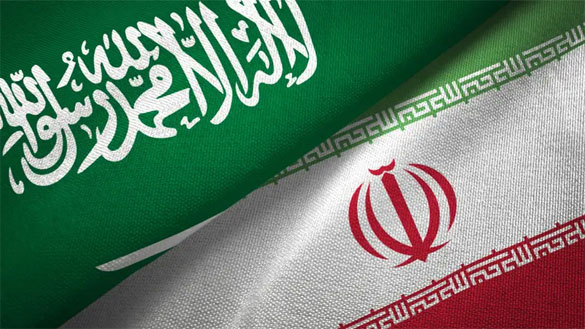
The prize is huge. An Iran that no longer pursues a nuclear path would be a major victory for nuclear disarmament at a time when Russia and the US no longer have any nuclear arms treaties binding them.
Failure looks as if it would trigger war in the form of US military strikes. President Donald Trump has the military capabilities assembled in the region.
War is always risky. War never has many certainties. Trump knows full well that kicking off a war is far easier than ending one. War may happen soon by design but also as a result of a flashpoint, a misunderstanding between sides where trust is extinct.
What would be bombed? What would be the objective and would it be in any way achievable? It is unlikely Trump would sanction strikes to achieve regime change, as he knows this does not tend to happen. But an epidemic of wishful thinking still infects the thinking of too many external fly-by-night observers.
Degrading Iran’s capabilities is conceivable — for example, a decapitation strike. But this is not simple and, as with any strikes, civilian casualties could mount up. And how long would the strikes last — days, weeks or months?
The Iranian leadership has some unsavoury options in a full-blown war scenario. Ballistic missiles may still be dispatched toward Israel. Blocking the Strait of Hormuz, even partially, is another possibility, causing an immediate and damaging hit to the global economy. One can only guess at the sleeper cells Iran might unleash if the regime’s survival is threatened. To counter that, proponents of military action may argue that many of the worst-case scenarios did not materialize in last year’s 12-day war. This time around, however, the Iranian leadership may see it as a fight to the death.
All this is happening in the wake of arguably the largest protests in recent Iranian history and the subsequent brutal crackdown, which killed thousands. A war will not reincarnate the thousands killed in the protests. For those Iranians dreaming of regime change, bombing from on high has a patchy record of success. Many envisage a large portion of Iranians closing ranks in the face of any US or US-Israeli strikes on Iran. It risks a “blitz” effect, whereby Iranians may tap into patriotic, nationalistic feelings. Many Iranians want to be able to handle their domestic challenges internally.
Let’s face reality. There are zero easy fixes for all the issues involving Iran. Every option has risks. Regime collapse could see the end of the Iranian state, with an enduring breakdown of law and order leading to a huge refugee crisis and interethnic strife. With Iran’s population of nearly 100 million and numerous identity groups, this would make the Iraq and Syria crises look like minor squabbles.
Collapse could see some form of military takeover, with the removal of the theocratic classes from power. A deal could ensure regime survival, even its prolongation, which would not be attractive to those that oppose it.
What about a deal? Time will be pressing. Trump is clearly not going to wait months, maybe not even weeks. He is pressuring other states to end their business dealings with Iran, threatening a 25 percent tariff on those that continue such trade. One risk is that a deal is done too hastily and is not properly worked out, left riddled with holes and gaps. A weak deal could be one of the worst outcomes. The Iranian negotiators could have alternative careers as poker players.
What might a deal include? It could be narrow or broad; partial or full. In public, both sides proclaim their red lines. Iranian officials claim that any deal will only focus on the nuclear issue. The Trump administration insists Iran’s ballistic missile program and regional conduct are also on the table. One assumes a major freeze on its nuclear program leading to its dismantling is a core part of any draft, with sanctions relief included.
But is a broader deal possible? The Iranian leadership has relied on its allies across the region, from Hezbollah to Hamas and the Houthis, as a deterrent to military strikes and a means to disrupt whole swathes of the Middle East. Lebanon, Syria, Iraq, Palestine and Yemen would benefit massively from less Iranian interference. It costs the Iranian regime too, as sustaining these groups is a drain on its depleted financial resources.
Perhaps the greatest unknown is, as ever, the array of ambitions among the Iranian leadership, often stubborn to extreme, unwilling to be seen to cave in to external bullying. All should be wary of running the clock down on a negotiated path forward.
If “sense” and “sanity” made decisions, an Iran deal would have been signed ages ago. Trump craves a deal. The Middle East wants to see a nuclear-free Iran playing a responsible role in the region, not an inflammatory one. Iranians crave sanctions relief, for their economy to lift off and for the horrors of war to be avoided.
https://www.arabnews.com/node/2632361
------
Could Israel Collapse Before 2048? Retired General Warns of ‘Road to Destruction’
February 9, 2026
Warning Published in Israeli Press
Retired Israeli Maj. Gen. Itzhak Brik issued a stark warning to his countrymen that Israel could collapse before reaching its centennial in 2048, writing in the Israeli newspaper Maariv that the country is “on the road to destruction, and there is only one way to save it.”
“When I try to look ahead,” Brik wrote, “I find myself asking: will the State of Israel reach the age of 100?”
His article framed the question not as rhetorical but as a realistic strategic concern. According to Brik, the crisis facing Israel is not limited to security threats, but stems from cumulative internal deterioration across political, social and institutional levels.
He described Israel as a society “torn from within,” pointing to widening hostility “between right and left, and between Jews and Arabs,” a fracture he said now shapes daily life, political discourse and military cohesion.
Leadership and Political Priorities
Brik sharply criticized the political leadership, arguing that state institutions have increasingly become subordinate to political survival rather than national strategy.
Referring to Prime Minister Benjamin Netanyahu’s government, he wrote that Israel is led by a leadership that “prioritizes political survival over the public interest,” describing it as “myopic and directionless.”
He warned that such governance undermines long-term planning, particularly in a country facing ongoing security confrontations and economic pressures.
“The challenges we face — restoring security in the north and the south, rebuilding the economy and repairing international relations — require energy that exists only among those who still have decades of life ahead of them,” Brik wrote, urging generational political change.
His argument suggests not only dissatisfaction with policy outcomes but concern over the decision-making structure itself, which he sees as reactive rather than strategic.
Social Fragmentation and Public Confidence
Brik emphasized that the most dangerous threat to Israel may not be external conflict but internal fragmentation. The deep polarization between social groups, he argued, has eroded the shared identity that historically sustained the state during wars and crises.
He linked this fragmentation to a measurable decline in confidence in the country’s future. Data released by Israel’s Central Bureau of Statistics showed emigration rose 39 percent in 2024 compared with the previous year.
For Brik, the increase reflects more than economic migration. It indicates, he suggested, that a growing number of Israelis are no longer certain about long-term stability and security.
The phenomenon, he wrote, weakens national resilience — a concept he repeatedly described as central to Israel’s survival doctrine.
International Standing
Brik also warned of mounting diplomatic isolation. He wrote that Israel is increasingly perceived internationally as a state that “provokes revulsion and rejection,” adding that global opinion affects economic relations, military alliances and deterrence.
The general argued that deteriorating international legitimacy feeds internal instability: economic pressure rises, foreign investment becomes uncertain and diplomatic manoeuvrability narrows.
He said the erosion is visible across multiple sectors — security readiness, economy, education, infrastructure and public services — creating a systemic rather than localized crisis.
Brik’s latest remarks follow earlier public statements in which he linked internal decline to the prolonged Gaza war. In interviews and commentary, he said Israel lost “national and social resilience” during the conflict and suffered massive economic damage.
Reports from Israeli institutions have also pointed to growing psychological strain among soldiers and civilians, adding pressure to an already polarized society.
Brik’s comments also come as Israel continues its genocide in Gaza, a campaign that has killed more than 72,000 Palestinians and wounded over 171,000, according to Gaza’s Health Ministry.
The scale of mass killing, destruction and displacement has fuelled sustained global protests, legal scrutiny and diplomatic pressure, contributing to the international isolation Brik described as one of the factors threatening Israel’s long-term stability.
https://www.palestinechronicle.com/could-israel-collapse-before-2048-retired-general-warns-of-road-to-destruction/
------
New Age Islam, Islam Online, Islamic Website, African Muslim News, Arab World News, South Asia News, Indian Muslim News, World Muslim News, Women in Islam, Islamic Feminism, Arab Women, Women In Arab, Islamophobia in America, Muslim Women in West, Islam Women and Feminism