
Middle East Press On: Israel’s Turn, Territorial Expansion in Lebanon, Ceasefire, Gaza Genocide, Iran War, Europe, Terror Out of Zion, New Age Islam's Selection, 02 June 2026

By New Age Islam Edit Desk
02 June 2026
Now, it is Israel’s turn to be remade
Is Israel opening a new chapter of territorial expansion in Lebanon?
Ceasefire rejection reveals Lebanese state’s paralysis
EXPLAINER: Why Israel Is Escalating in Lebanon — and Why It Cannot Win
The Gaza Genocide beneath the Shadows of the Iran War: The Limits of Power
Blueprint of Failure: On Iran, Gaza, and How Europe Plotted Its Own Irrelevance
The Gaza Genocide and the ‘Terror Out of Zion’ that Never Ends
------
Now, it is Israel’s turn to be remade
BY HAKKI ÖCAL
JUN 01, 2026
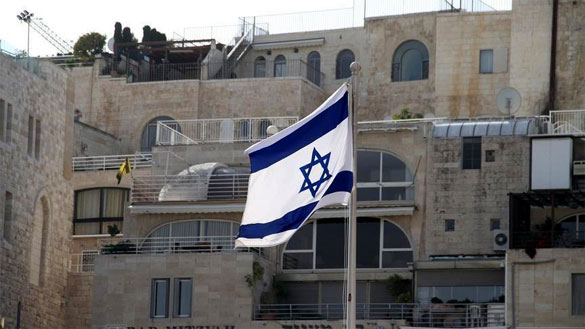
Israel is going down, and it is dragging the U.S. along with it. They don't even need the whole brigade of Zionism that created Israel instead of the two-community, bi-zonal federation of democracy; Itamar Ben-Gvir, Israeli minister of national security, seems capable of single-handedly condemning both Israel and the U.S. into the dustbin of history.
Imagine a nation in which the president calls its people animals, beasts and monsters. The actual term is a Biblical mythological beast, “Behemoth,” a huge primordial beast described in the Hebrew Bible often compared by more modern readers to the hippopotamus.
Isaac Herzog is a strange person to be a president, as he starts political storms entirely willingly. Last month, he agreed to become the head of the “Jewish Agency for Israel,” which is the principal organization that turned the simple “Jewish homeland” next to its centuries-old neighbors in Palestine into a monster Zionist “Behemoth” in the first place. And this month, Herzog warned the Israeli people of a growing process of “brutalization,” and some groups within Israeli society are becoming “Behemoths." This, of course, prompted a sharp condemnation from Ben-Gvir, who accused the president of insulting citizens of Israel and all Jewish people.
Almost a year ago, I humbly wrote here that U.S. President Donald Trump should be careful about Israeli Prime Minister Benjamin Netanyahu and his accomplices committing war crimes and genocide in Gaza. Back then, Ben-Gvir and Finance Minister Bezalel Smotrich were trying what is called “West-Shariazing Gaza,” that is, reoccupying Gaza and allowing occupation, settlements and partial annexations as they did in the West Bank.
What Trump could do then was to save Israel from itself. But Trump, for some strange reasons, allowed the implementation of the Zionist occupation plan of Gaza in a vile scam of a "reconstruction effort" as a permanent and global institution. He did not prepare to implement the 1947 United Nations Partition Plan for the two-community, bi-zonal federation of democracy. He bragged about officially launching an international body to rewrite the rules of international diplomacy and “good governance” worldwide. He forgot all about his Board of Peace, and instead, on the coattails of Netanyahu, joined Israel’s war against Iran to disrupt the non-existent nuclear ambition of Iran. By doing so, Trump caused Iran to close the Hormuz Straight, and he brought the U.S. and the global world economies into a near standstill.
If we knew what those reasons were for him to be dragged by a hook in his nose into that calamitous Iran war, we could have weighed his situation better. Instead of undoing the unclear deal with Iran, the Joint Comprehensive Plan of Action (JCPOA), Trump could have had the support of the five permanent members of the U.N. Security Council, plus Germany, together with the European Union, to check Netanyahu’s assertions that Iran would have a nuclear bomb capable enough to destroy the U.S. and wipe Israel from the face of the earth.
Now, to get a similar deal with Iran, he kisses the hands of the Iranian regime.
If Trump really wanted to control all the hostilities between Israel and all the Middle Eastern nations, a situation better than the Abraham Accords of his son-in-law Jared Kushner could penned, all he needed to do was ask Israel to end the Zionist Plan to gulp down and devour Palestine and make the neocons in Washington give up their Greater Israel scheme as a way to redraw the entire Middle East map.
Which brings us to the original 1947 U.N. Partition Plan of Palestine.
Daily Sabah columnist Ihsan Aktaş rightly pointed out that even the idea of Türkiye acting as guarantor or contributing troops in Trump’s Board of Peace plan makes Israel extremely uneasy. Perhaps that is the main reason Trump is forgetting his so-ambitious peace plan.
So, Trump cannot ask Israel or American neocons to stop Israel from ending the Zionist colonialism in Palestine or to annul the Greater Israel scheme. Trump could not save Israel from certain destruction. Now is the time to save the U.S. from Israel.
It cannot be achieved by Trump or by a bunch of Republican lapdogs. It needs the whole American nation. It needs thousands of people in Ireland who elected as their president Catherine Connolly, who has called for the world to respect Palestine’s right to decide its own leadership, saying no foreign power has the authority to dictate who represents the Palestinian people. It needs the Scottish Parliament, which elected John Swinney as prime minister, who extended a hand to Gaza for medical treatment, voicing solidarity with Gaza and reiterating Scotland’s support for a two-state solution.
Whatever the name they find for the two-community, bizonal federation of democracy in those lands, now more nations support the idea that the time has come to recreate Israel, or Palestine. Trump may or may not lose the presidency altogether or only the support of the U.S. Congress, but the midterm elections might give the people of America the chance to take the lead in this effort.
When people stop believing in the system, as is happening in Israel, the system is already dead. Netanyahu, the crook, clings to a six-seat majority of genocidal maniacs for dear life. He and the president of 10 million Israeli calls Netanyahu’s administration “a growing process of brutalization.”
Shira Efron, the Israel policy chair and a senior fellow at RAND Corporation, wrote in The New York Times that Israel’s isolation is deepening fast. The Washington Post’s Max Boot finds that Netanyahu, trying to remake the Middle East, damaged Israel’s security.
Roman citizens who once saw military service as the highest honor, by the fifth century, were cutting off their own thumbs to avoid conscription. They weren't cowards. They just didn't believe the institution was worth dying for anymore. Thousands of young Israelis are migrating to their grandparents’ home country to avoid occupation, dispossession and settlement service.
The Behemoth is not a mythological beast described in the Hebrew Bible anymore. It is, as Noam Chomsky says, “I am Jewish, and I say this with all my courage: Israel must be abolished. This colonial structure has no moral future.”
https://www.dailysabah.com/opinion/columns/now-it-is-israels-turn-to-be-remade
-----
Is Israel opening a new chapter of territorial expansion in Lebanon?
HANI HAZAIMEH
June 01, 2026
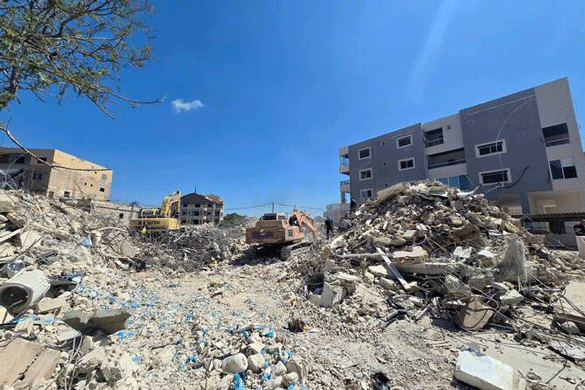
The reported advance of Israeli forces deep into southern Lebanon, reaching areas near Nabatiyeh after crossing the Litani River, is not merely another military development in an already volatile region. It represents a dangerous turning point that demands serious attention from Arab capitals, the UN and the international community.
The significance of this development lies not only in the military dimension. Israel has already crossed the Litani, a line that for decades was considered a major strategic threshold in the Lebanese arena. The issue today is how far this advance will continue and what political objectives lie behind it.
For months, Israel has attempted to justify its military operations in Lebanon under the banner of protecting its northern settlements and neutralizing threats posed by Hezbollah. However, as military operations expand deeper into Lebanese territory, those justifications become increasingly difficult to accept.
Military campaigns are usually measured by their objectives. When forces move beyond border zones and continue advancing into sovereign territory, questions inevitably arise about whether security concerns remain the primary objective or whether broader ambitions are driving events on the ground.
What is happening today raises legitimate fears that Israel is seeking to impose a new reality in southern Lebanon through force. The pattern has become familiar across the region. Military action is followed by the creation of new facts on the ground, which are later transformed into political realities that become increasingly difficult to reverse.
This concern is not based on speculation. It is rooted in decades of Israeli policies that have consistently relied on military superiority to reshape realities in occupied territories. From the continued expansion of settlements in Palestinian lands to military incursions into neighboring countries, Israel has repeatedly demonstrated a willingness to challenge international norms whenever it calculates that the political cost will be manageable.
The danger is that Lebanon may now be facing a similar scenario.
There is growing concern among regional observers that Israel’s current leadership, emboldened by unprecedented military and political support and encouraged by the absence of meaningful international accountability, is pursuing a broader strategic vision that extends beyond immediate security considerations.
This is why the developments in southern Lebanon cannot be viewed in isolation.
The region is already witnessing one of the most dangerous periods in its modern history. Gaza remains devastated by war. Tensions involving Iran continue to threaten wider confrontation. Syria remains vulnerable to repeated violations of its sovereignty. Against this backdrop, Israeli military advances deeper into Lebanon risk opening another front whose consequences could extend across the entire Middle East.
More importantly, the continued silence of the international community sends a deeply troubling message. It creates the impression that Israel is effectively operating above international law, free to redraw security boundaries and alter realities on the ground without facing meaningful consequences.
The UN cannot continue merely issuing statements of concern while violations of Lebanese sovereignty intensify. International resolutions cannot remain selective instruments applied to some countries while ignored when Israel is involved.
The Arab world also faces a critical test.
Lebanon’s sovereignty is not solely a Lebanese matter. It is directly connected to the broader question of Arab national security. Allowing deeper Israeli incursions without a unified Arab political response risks encouraging further expansionist behavior and reinforcing the belief within Israeli decision-making circles that military force remains the most effective tool for achieving political objectives.
The concern today is not only about tanks advancing toward Nabatiyeh. The concern is about the political thinking that may be driving those tanks.
Many in the region increasingly believe that Israel’s current trajectory is no longer confined to deterrence or border security. Rather, it reflects a growing tendency toward imposing strategic realities through military power, exploiting regional fragmentation and international paralysis.
If that assessment proves correct, then the issue extends far beyond southern Lebanon.
It becomes a challenge to the very principle of state sovereignty in the Middle East.
The international community must act before new realities become entrenched. Arab states must move beyond expressions of concern and engage in serious diplomatic efforts to halt further escalation. The cost of inaction today may be measured not only in lost territory or increased instability, but in the normalization of a dangerous precedent whereby military power becomes a legitimate instrument for advancing territorial ambitions.
What is unfolding in Lebanon should not be viewed as another episode in a recurring cycle of violence. It may well be the beginning of a much larger and more dangerous phase — one in which Israel’s expansionist ambitions are tested against the willingness of the region and the world to defend the sovereignty of states and the principles of international law.
https://www.arabnews.com/node/2645653
------
Ceasefire rejection reveals Lebanese state’s paralysis
EYAD ABU SHAKRA
June 01, 2026
Israel this week rejected Lebanon’s request for a ceasefire during the direct negotiations now underway in Washington.
With this position, Israel clearly has no fear whatsoever of provoking American anger. That is because the nature of US-Israeli relations differs fundamentally from Washington’s ties with any other “allied” state. Consequently, only the most naive observers — or those inclined toward denial — can still believe that Washington is a neutral sponsor of the current negotiating process.
At the same time, the negotiations are unfolding against the backdrop of two major developments.
First, the expansion of Israeli military operations — in both destruction and displacement — under the pretext of uprooting Hezbollah’s infrastructure, together with the political turmoil, sectarian incitement, and economic devastation these operations are inflicting on Lebanon internally. This is precisely what the Israeli right seeks as part of its partitionist and fragmentation project for the Arab East.
Second, the reshaping of the strategic relationship between the US and Israel amid rapid shifts in Washington’s international and regional relations, as well as in Israeli military doctrine.
Yesterday, this publication’s sister paper Asharq Al-Awsat published a contribution from its correspondent in Palestine quoting retired Maj. Gen. Amos Yadlin as saying that there is a “deepening crisis in American public opinion toward Israel.” The former Israeli Air Force senior officer added: “One immediately senses the emergence of an anti-Israel front that brings together the progressive left in the Democratic Party and the isolationist camp within the Republican Party. The younger the demographic groups, the wider this phenomenon spreads, extending even to some moderates in both parties. This trend is becoming more acute in light of the unprecedented security cooperation between the two countries in the war against Iran, and Israel’s major and influential contribution to the joint military operations.”
Yadlin — together with Avner Golov, founder and director of the organization Mind Israel — believes that despite the high regard for the Israeli military because of its “partnership” in the war alongside US forces against Iran, an anti-Israel front is nevertheless taking shape within both American parties, outside the security establishment and President Donald Trump’s inner circle. This front portrays Israel as having “dragged” the US leader into a regional conflict in pursuit of its ambitions through military force. Therefore, the two men argue that Israel must offer Washington “not merely another relationship based primarily on security interests or historical commitments, but a partnership that provides direct strategic value to the shared interests of both countries.”
Accordingly, Yadlin and Golov call on Israel to strengthen a new model for its relationship with Washington — one “not limited to receiving aid, but encompassing partnership” — particularly in the fields of technology, artificial intelligence, quantum computing, semiconductors, energy, and biomaterials.
Important in this context is the enormous growth in American acquisitions, as well as joint development and manufacturing programs between giant US corporations and Israeli startup companies excelling in various AI-based surveillance and sensing applications. By way of example alone, it is enough to point to Apple’s investments in Israel, where the company maintains in the city of Herzliya its second-largest research and manufacturing facilities in the world.
Conversely, while continuing the discussion of Tel Aviv’s relationship with Washington, an Israeli researcher critical of his government’s policies pointed out yesterday that Israeli authorities are uneasy about being “excluded” from the talks Washington is conducting with Tehran. As a result, Israel is attempting to influence those talks “from the outside.” The researcher then listed several reasons for this unease.
First, Israel fears that any agreement between Washington and Tehran may stop at securing a ceasefire and reopening the Strait of Hormuz without resolving what remains the top priority for Tel Aviv: Iran’s nuclear program and its stockpile of enriched uranium.
Second, Israeli Prime Minister Benjamin Netanyahu doubts the sincerity of Washington’s repeated assurances that no agreement on the nuclear issue will be reached without eliminating any threat posed by Tehran. Here, Israel believes the goal should be the destruction of the nuclear facilities and the transfer of enriched materials outside Iran’s borders. Yet there remains a wide gap between what Israel seeks and what is actually being proposed. Netanyahu, therefore, fears that Israeli elections may arrive before that gap is bridged.
Third, regarding Lebanon, it is clear that Israel, in order to strengthen and entrench its political position, continues to “create an occupation reality” on the ground that it can exploit should it be forced to accept a deal. Otherwise, it will continue sabotaging every opportunity for an understanding.
Fourth, and related to the above, Israel fears that any Iranian agreement with Washington could lead to the release of frozen Iranian funds estimated at around $25 billion. Its concerns are heightened by the possibility that the released funds could reach Tehran’s allies and “proxies” in the region — especially since Iranian negotiators insist that their talks include a ceasefire in Lebanon and preventing Israel from striking Hezbollah, which would further strengthen the party’s already close relationship with Tehran.
Meanwhile, Lebanon’s social, economic, and political crises continue to deepen. In the face of Israel’s insistence on displacement and occupation, and Hezbollah’s reliance on its regional alliances, official paralysis, popular division, and the scramble by power-hungry politicians for foreign backing are becoming ever more evident.
https://www.arabnews.com/node/2645661
------
EXPLAINER: Why Israel Is Escalating in Lebanon — and Why It Cannot Win
June 2, 2026
The war in Lebanon is moving quickly, and the daily flow of military statements, threats, ceasefire claims and diplomatic maneuvers has made the story increasingly difficult to follow.
At the center of the crisis is a simple but dangerous reality:
Israel is trying to expand its military pressure in southern Lebanon while also threatening Beirut’s southern suburb, Dahiya.
Hezbollah is responding with a growing war of attrition, using drones, rockets and ambush-style operations to prevent Israeli forces from establishing secure positions.
Iran, meanwhile, is now openly linking Lebanon to its broader negotiations with the United States.
This is no longer merely a border confrontation. It has become one of the most sensitive fronts in the wider regional war.
Why is Israel escalating attacks in South Lebanon and threatening Dahiya?
Israel is escalating because it has failed to achieve the kind of military control in southern Lebanon that it had hoped to impose.
Despite months of airstrikes, ground incursions and attempts to reach strategic points such as the Shaqif Castle area, Israeli occupation forces have not been able to operate freely or consolidate control. Hezbollah has continued to strike troop gatherings, armored vehicles, command positions and military infrastructure.
This has created a dilemma for Netanyahu.
If Israel stops without achieving visible gains, it appears defeated. If it escalates, it risks provoking a much wider confrontation involving Hezbollah, Iran and possibly other fronts.
Threatening Dahiya is part of this pressure strategy: Israel is attempting to use the threat of massive destruction in Beirut’s southern suburb to force Hezbollah into accepting limits on its operations.
But this threat has also triggered a much larger response from Iran, which has now warned that any Israeli attack on Beirut or Dahiya could lead to direct Iranian military action against Israeli targets.
What is Hezbollah doing that is making Israel’s advance so difficult?
Hezbollah is not relying only on rocket fire. Its most important battlefield tool in recent days appears to be its use of explosive drones, particularly Ababil-type attack drones and other loitering munitions.
These drones are being used against Israeli troop gatherings, armored vehicles, communications equipment and military positions. Their impact is significant because they allow Hezbollah to hit moving or exposed targets even when Israeli occupation forces believe they are operating under cover or at a distance.
Israel has already acknowledged casualties from Hezbollah drone attacks, including the killing of officers and soldiers and the wounding of senior battlefield commanders. Israeli military reporting has also admitted that these drones have become a real challenge and that deeper ground maneuvers have not prevented Hezbollah from launching them.
This is one reason Israel’s advance is so slow and costly. It may be able to reach certain positions, but holding them securely is another matter. Hezbollah’s strategy is to make every Israeli position unstable, every route vulnerable, and every tactical gain expensive.
Is Netanyahu’s domestic crisis part of this escalation?
Yes. Netanyahu is facing a deep political and strategic crisis.
He has been unable to secure a decisive victory in Gaza. He has failed to return stability to northern settlements. He has not eliminated Hezbollah’s ability to strike. He has not forced Iran to retreat. And he remains dependent on continued US support while facing growing criticism over the cost and direction of the wars.
This creates a strong incentive for Netanyahu to keep escalating on one front or another.
But the problem is that none of these fronts is being resolved. The northern settlements remain insecure. Hezbollah continues to operate. Gaza remains under attack but far from being subdued or politically managed. Iran remains in a position to pressure the US and Israel through multiple fronts.
This is why the slogan of “total victory” is increasingly disconnected from battlefield reality.
Is this really about Iran?
Yes, but not in a simple way.
Iran is not merely ‘supporting Hezbollah’ from the background. Tehran is now insisting that Lebanon is part of the wider ceasefire and negotiation framework with Washington.
Iran’s position is that any violation in Lebanon or Gaza is not a separate issue, but part of the same regional war. This directly challenges the Israeli and American attempt to separate the fronts: Gaza as one issue, Lebanon as another, Iran as another, Yemen is another, and so on ..
Tehran is saying the opposite: these fronts are connected.
This matters because Iran has reportedly suspended talks and exchanges of draft texts with the United States due to continuing Israeli attacks in Lebanon. Iranian officials have also warned that if Israel attacks Beirut or Dahiya, northern areas could become a direct target for Iranian armed forces.
In other words, Iran is using diplomacy and military deterrence at the same time. It is telling Washington that it cannot negotiate peace with Tehran while allowing Netanyahu to escalate in Lebanon.
Why does Netanyahu want to separate the fronts?
Because separating the fronts gives Israel more room to maneuver.
If Gaza, Lebanon and Iran are treated as separate conflicts, Israel can escalate in one arena while deescalating in another. It can bomb Lebanon while negotiating indirectly with Iran. It can violate ceasefire understandings in Gaza and Lebanon while insisting each front has its own rules.
Iran and Hezbollah are trying to deny Israel that flexibility.
Their position is that Lebanon is not an isolated battlefield. It is part of the same regional confrontation created by Israel’s genocide in Gaza, its attacks on Lebanon, and US military and political backing.
This is why Iran’s statements are so important. Tehran is not just issuing threats; it is redefining the rules of the confrontation.
Is Netanyahu failing in Lebanon anyway?
Militarily, Israel still has enormous destructive power. It can bomb villages, destroy infrastructure, displace civilians and inflict heavy damage across southern Lebanon.
But destruction is not the same as strategic success.
The central question is whether Israel can impose a new military reality on Gaza, secure northern settlements, neutralize Hezbollah’s capacity to strike, and force Lebanon into accepting Israeli terms. So far, that has not happened.
Hezbollah continues to strike Israeli forces around Shaqif, Dabbine, Qantara, Zawtar al-Sharqiya, Kiryat Shmona and other areas. Israeli soldiers and officers continue to be killed or wounded. Northern settlements remain vulnerable. Israel is still unable to present a stable postwar arrangement.
This is why Netanyahu is stuck. He cannot easily withdraw without appearing defeated, but he also cannot easily escalate without risking a wider regional war.
Why does Trump not simply force Netanyahu to stop?
According to the current political pattern, Trump appears to be trying to contain the crisis, but not decisively enough to force Netanyahu into a full retreat.
Trump has claimed that he held productive contacts with Netanyahu and that Israel would not send forces into Beirut. He also claimed that Hezbollah agreed to stop fire if Israel did the same. But almost immediately, Netanyahu vowed to escalate further, and Hezbollah officials made clear that they rejected partial arrangements that do not include a full ceasefire, withdrawal and return of displaced civilians.
The deeper problem is political.
Netanyahu has strong allies inside the US political system, especially among Republicans, pro-Israel lobbying networks, media allies and sections of the national security establishment. Any serious attempt by Trump to force Israel to stop could trigger significant political pushback.
So Trump is trying to do two things at once: preserve negotiations with Iran while avoiding a direct political confrontation with Netanyahu and his allies.
That may not be sustainable.
Who has more cards at this stage?
Despite Israel’s ability to inflict massive destruction on civilians and infrastructure, Iran and Hezbollah currently hold significant strategic cards.
Iran’s cards are regional and geopolitical. Tehran can link the Lebanon front to negotiations with Washington. It can threaten Hormuz. It can reference Bab al-Mandab. It can suspend talks. It can pressure the United States by making clear that Israeli actions in Lebanon could collapse broader diplomatic arrangements.
Iran does not need to launch a full regional war to create pressure. Its strength lies in its ability to make Washington fear that Israel’s actions could ignite one.
Hezbollah’s cards are battlefield cards. It does not need to defeat the Israeli army in a conventional war. It needs to prevent Israel from feeling secure in southern Lebanon. It needs to make every advance costly, every position vulnerable, and every claim of victory questionable.
Its drones, rockets, artillery, and repeated strikes on troop concentrations are designed to produce exactly that result.
This is why Israel’s military superiority does not automatically translate into strategic success.
What is likely to happen next?
Based on the current variables, Israel may eventually find itself forced to accept some form of ceasefire in Lebanon.
But the key question will be the terms.
Netanyahu will likely try to preserve whatever military gains Israel has made in southern Lebanon, especially around strategic areas such as Shaqif and other positions near the border. Hezbollah will reject any arrangement that allows Israel to maintain an occupation or create a permanent buffer zone inside Lebanon.
This is where the confrontation may become even more complicated.
Israel and the United States may try to create new variables: by pressuring Lebanon internally, pushing formulas that divide Lebanese political actors, or attempting to separate Hezbollah from Iran’s broader negotiating position. At the same time, Washington may try to pressure Tehran to delink Lebanon from the US-Iran track.
But Iran’s current message is the opposite: Lebanon is part of the whole equation.
https://www.palestinechronicle.com/explainer-why-israel-is-escalating-in-lebanon-and-why-it-cannot-win/
------
The Gaza Genocide beneath the Shadows of the Iran War: The Limits of Power
June 2, 2026
By Richard Falk
Regional Linkages
Although the Gaza ordeal continues in the form of daily Israeli violations of the ceasefire, ongoing disruptions of humanitarian relief, and the deadly effects of prolonged hunger and a variety of long-unmet health challenges, it has moved toward the outer limits of global concern. And although added concerns arising from related genocidal spillovers to the West Bank and southern Lebanon are receiving some attention, the main focus of public and governmental concern has shifted to Iran for understandable reasons. The war of aggression launched on February 28 by the United States against Iran became a joint US/Israel joint military operation a few days later. This second Iran War was justified by alleged proliferation concerns combined with claims of lending decisive support to a regime-changing protest movement in Iran.
This second unprovoked attack on Iran within a time frame of less than a year, as did the first one, proceeded on these false and unacceptable premises, and yet has received little pushback from within the US Congress, although it is constitutionally unlawful and adds to the affordability crisis afflicting the majority of Americans. The United Nations unsurprisingly remained on the sidelines of public debate, and even Russia and China seemed reluctant to challenge Trump’s geopolitical militarism directly, given the escalation dangers and fears of his irrational petulance.
As long as the outcome of the Iran War remains dangerously unresolved, it is likely to dominate not only the news cycle but the fears and hopes of the political imagination worldwide. From its start more than two months ago, the war has already brought widespread devastation and displacement to the Iranian people, and forebodings of worse to come. The outset of the Iran War exhibited a shocking series of miscalculations from its start. These included the deliberate assassination of Iran’s Supreme Leader, Ayatollah Ali Khamenei, and the bombing of a girls’ elementary school in Minab, killing hundreds, mainly children. Not only were these combat tactics seen as evil, but they were entirely dysfunctional, creating a unifying nationalist unity in Iran that included many who were critics of the harsh internal practices of the theocratic government. It is hard to gauge the range of effects of such behavior from outside, but it might help to imagine that even a Western secular society would be horrified by a non-Western adversary that targeted religious leaders in an act of political violence, much less the start of a war.
What such atrocities confirmed is that the United States, and certainly Israel, are not interested in genuine peace negotiations, but in obtaining a victory that achieves victory by either political surrender or genocidal assault. As with the Palestinians, the Iranians, whatever their differences with the government in Tehran and the costs of sustaining their struggle, seem determined to resist rather than give in to genocidal threats and tactics directed at an entirely vulnerable society. Iranians of all persuasions also have enough historical awareness of the 1953 coup against Iran’s democratically elected government to be distrustful of all claims of good intentions emanating from Washington.
With this background in mind, it is not too soon to consider the Gaza Genocide in retrospect, while at the same time being fully aware that the people of Gaza are continuing to suffer severely from the continuing realities of Israel’s genocide and US material complicity by way of diplomacy, funding, weaponry, and intelligence sharing. A reason for this linkage between Gaza and Iran is to assess the connections between these two seemingly disparate undertakings. A primary contention is that Israel is not only a strategic ally, but is bearing the burdens of inter-civilizational struggle that was anticipated by Samuel Huntington as a sequel to the Cold War in the form of ‘a clash of civilizations’, with geopolitical faultlines in the Middle East. This perspective took on a more plausible form after the 9/11 attacks on US symbolic targets in the World Trade Center and the Pentagon, and the responses of the US by declaring a worldwide war on terror that purported to engage all governments in the cause or be deemed enemies of the West, and incidentally, of ‘civilization.’
This contextualized the Zionist vision in its broader international setting, creating an arrangement that served the interests of Israel with those of the West as seeking to retain global dominance in a post-colonial world order. In effect, Israel was given a free hand with the Palestinians in exchange for doing the dirty work for the West in upholding its regional interests. The refusal to accept the outcome of the 1978-79 revolutionary movement in Iran represented the convergence of these diverse objectives as it both opposed Zionist aims and resisted Western regional encroachments, while resisting counter-revolutionary efforts to destabilize the new governing theocracy in Iran. The election of the extremist Israel coalition of Netanyahu’s Likud Party and the ultra-right religious parties at the start of 2023, given a pretext for a military response by the October 7 attack, also gave rise to a renewed preoccupation with Iran as the centerpiece of what was dubbed ‘the axis of resistance.’
Geopolitics by Design and Genocide in Practice
International law has been defied and the UN has been sidelined when it comes to genocide prevention. The UN would be better off accepting a condition of helplessness when requested to restrain geopolitical actors, those Member states usually identified with the five permanent members of the Security Council. By lending support to Trump’s diplomacy, the UN has demeaned itself further by a formal show of support for an approach that shamelessly throws symbolic weight behind the perpetrator of genocide while disregarding the rights and grievances of the victims. In UNSC Resolution 2803 endorsed unanimously on November 17, 2025, the opening paragraph exhibits its retrospective acceptance of the Gaza genocide:
Welcoming the Comprehensive Plan to End the Gaza Conflict of 29 September 2025 (“Comprehensive Plan”)(annex 1 to this resolution), and applauding the states that have signed, accepted, or endorsed it, and further welcoming the historic Trump Declaration for Enduring Peace and Prosperity of 13 October 2025 and the constructive role played by the United States of America, the State of Qatar, the Arab Republic of Egypt, and the Republic of Türkiye, in having facilitated the ceasefire in the Gaza Strip.
In the substance of the resolution, it not only supports Israel’s role in shaping the future of Gaza in collaboration with the US, but calls on the International Monetary Fund and World Bank to facilitate the reconstruction of Gaza from its present wasteland realities that subject the surviving Palestinian population to intolerable and punitive conditions of livelihood. This graceful performance at the UN was given a further boost by the Secretary General voicing his support for 2803 despite its implications from the perspective of the UN Charter and international law.
Undoubtedly, in part, the US and Israel chose this time of a Gaza ceasefire façade to attack Iran to divert attention from the ongoing Gaza ordeal, not expecting that it would bring harm and suffering to people near and far, including the United States. The Iranian government did not, as was wrongly expected, crumble in the face of this second aggressive, devastating military attack in less than a year, and seems to have emerged more unified internally and more feared and respected regionally. In the lead-up to the war, Netanyahu apparently convinced Trump that the theocratic regime in Tehran would immediately collapse, paving the way for a quick takeover by opposition forces that would be grateful for a military attack on their country. This makes some sense of the early invitations by Trump directed at the Iranian people ‘to take back your country’ and establish a new non-Islamic government with friendly relations with the West, including Israel.
Yet these quickly turned out to be false hopes. Rather than crumbling, Iran steadfastly absorbed the first round of attacks, countering with its own missiles that inflicted unexpected damage to US military assets throughout the Gulf, and also drawing upon its best strategic option at its disposal by blockading the Strait of Hormuz. It is illuminating to contrast these defensive tactics relied upon by Iran with the US commencement of the war and Trump’s later litany of genocidal threats, accompanied by Israel’s opposition to any ceasefire until ‘the job’ of destruction was completed.
Several genocidal threats by Trump and this Israeli resolve to proceed with the war have failed to produce Iran’s acquiescence. Additionally, regional tensions rose from the disruption of energy and fertilizer supply chains, imperiling global energy and food security. There is growing commentary and deepening anxieties about how long the aggressors can abide a diplomatic stalemate. The unpalatable options for the West are either to accept most of Iran’s war-ending proposals or, once more, seek Iran’s surrender by climbing even higher on the escalation ladder. At such heights, the prospects of threatening or even using a nuclear weapon are among the few remaining military options for Israel and the US, likely under current discussion in ‘situation rooms’ where war strategies are weighed and decided upon by security officials. It is highly relevant that these two countries share militarist mentalities and scorn the claimed Iranian commitments to resist even at the terrible cost of collective martyrdom. Iran, although open to genuine diplomacy, seems determined to refuse to back down in the face of geopolitical bullying or ceasefire facades that keep the conflict at knife-edge.
Is there a way out? Trump might settle for ‘defeat with honor,’ giving in without seeming to do so, but Israeli zealots are less easily appeased and seek nothing less than the destruction of Iran as a viable state so as to complete the non-Palestinian portion of their diabolical security plan by extinguishing once and for all meaningful resistance to their national expansionism and regional hegemony. Such speculation shifts concern back from Iran to Israel. Would Israel heed even a command to desist coming from the White House? Would Trump be prepared to finally disappoint Israeli donors to regain a scintilla of domestic credibility? Trump only needs to deliver a discreet order to cease and desist to Tel Aviv as far as Iran is concerned.
Iran has exhibited to date more responsible statecraft than have the aggressors. It has put forward a phased plan to resolve the crisis based on an initial agreement to open Hormuz to all shipping for an end (not a ceasefire) to the war, reinforced by guarantees that war would not be later resumed, followed at an unspecified time by renewed negotiation of an agreement about the production of enriched uranium. Accepting even such a reasonable process would almost certainly be opposed by Israel, perhaps not openly, and by the most activist elements in the Iranian diaspora that want the war to end only after the leaders in Iran disappear or agree to democratizing reforms that many Iranians living in exile believe will forge a path for regime change, culminating in the return to power of the Pahlavi Dynasty and the return of Iran to a Western geopolitical identity.
Concluding Remarks
As matters stand, the current crisis is multidimensional. It is a rarely given opportunity for the political realists in Washington who shape US foreign policy to endorse a war prevention strategy. Such a posture would create the opportunity to bring stability to the Middle East. Most important of all it might lead to a geopolitical compact among the US, China, and Russia to work cooperatively in win/win modes rather than persist in the catastrophe-prone lose/lose modes that have risen to dangerous heights not experienced since the worst breakdowns of the Cold War.
Thinking constructively, if an acceptable off-ramp is soon found for both sides in relation to Iran, it might encourage a positive recalibration of relations with Israel and Palestine in both the US and Europe. And given time, it might awaken even Israeli hardliners to the realities of the future that increasingly pose a stark choice between continuing lose/lose dynamics or beginning a belated search for a win/win outcome.
This latter greatly preferred options requires a long deferred recognition that neither party has any prospect of achieving a true win/lose outcome in its favor, regardless of what state propaganda and an obedient media claim. This latter assessment applies principally to Israel as Palestinian leaders of long been receptive to a true compromise as distinguished from an Israeli victory disguised by the breadcrumb diplomacy of a demilitarized mini-state. Israel has, for at least half a century, manipulated this Palestinian receptivity for accommodation. This was especially evident during the 1990s when the Oslo Diplomacy was a source of false hopes for Palestine and of accelerated settlement expansion by Israel that not only was expansionist but was a dagger aimed at killing prospects for viable Palestinian statehood. To this day, an international consensus supportive of a zombie two-state solution continues to be affirmed despite steps taken by Israel to make sure it can never happen. For decades the leadership of Israel has used salami tactics of taking what it could get at a give stage without getting go of its ultimate the outcome commitment to a single Israeli state from the river to the sea in which Jewish primacy is given deep roots in Israel’s Basic Law.
Such is my reading of the central challenges of conflict resolution in the Middle East after this preliminary viewing of the Gaza Genocide in retrospect. It is worth reiterating that reading is mindful of the reality that Israel has yet to forego its genocidal approach to the challenges of a continuing Palestinian presence, itself viewed as a form of resistance to Zionist maximalism, which by all appearances yearns for a second Nakba of large-scale and permanent Palestinian expulsion. It is also sensitive to the weakening of European support for Israel, a dimension of the Trump antagonism toward maintaining the collective unity of the Atlantic Alliance that unified the Western liberal democracies during the world wars and the Cold War of the last century in their successful struggles against fascism and communism. But now, for Trump, they have outlived their utility in his transactional worldview.
Finally, it should not be forgotten that the Palestinians have won the Legitimacy War that determines control of the high ground of international law and morality. This symbolic victory has proved more decisive in most colonial wars since 1945 than the battlefield results measured by deaths and devastation. Military superiority failed to control the outcome in India, Indochina, Algeria, South Africa, and elsewhere. These examples suggest that even if it takes decades of further Palestinian struggle and suffering to achieve a political victory, the flow of history is on the side of Palestine. It should not be forgotten that civil society activism and solidarity initiatives are stimulated more by law-grounded considerations of legitimacy than academic debates and state propaganda.
https://www.palestinechronicle.com/the-gaza-genocide-beneath-the-shadows-of-the-iran-war-the-limits-of-power-2/
-------
Blueprint of Failure: On Iran, Gaza, and How Europe Plotted Its Own Irrelevance
June 1, 2026
By Romana Rubeo
In the theater of modern geopolitics, Europe has long sought to cast itself as a “normative power”—a champion of the rules-based international order. However, the lack of actions undertaken during the Israeli genocide in Gaza and the events following the US-Israeli war on Iran on February 28, 2026, have stripped away this facade.
As the US and Israel engaged in an unprovoked military aggression against Iran outside the bounds of international law, the European response was not one of strategic autonomy, but of paralysis.
At this crucial appointment with history, Europe presents itself covered in shame, offering the world an undignified show of servility and inadequacy.
The Paradigm of Submission: Beyond the Trump Era
One might have expected that the friction of the last decade would have forged a more independent European foreign policy. Yet, the forma mentis (mindset) of the European leadership remains incapable of producing substantial change.
On February 28, 2026, the United States and Israel launched the so-called Operation Epic Fury, a massive joint military campaign against the Islamic Republic of Iran. The operation began with nearly 900 strikes in the first twelve hours, targeting military infrastructure, nuclear facilities, and the upper echelons of Iranian leadership.
The most significant outcome of the initial wave was the assassination of Supreme Leader Ali Khamenei in Tehran, alongside scores of senior officials. The strikes sparked an immediate regional escalation, including the closure of the Strait of Hormuz and wide-scale Iranian retaliatory missile strikes across the Middle East.
The illegality of Operation Epic Fury has been a subject of intense condemnation among international law experts. The consensus among many respected jurists—including those from the American Society of International Law and UN Secretary-General António Guterres—is that the attacks constitute a violation of the UN Charter.
Over 100 international law experts wrote in a letter on April 13 that “the initiation of the campaign was a clear violation of the United Nations Charter, and the conduct of United States forces since, as well as statements made by senior government officials, raise serious concerns about violations of international human rights law and international humanitarian law, including potential war crimes.”
According to the experts, there are concerns about the jus ad bellum, meaning the decision to go to war, and the jus in bellum, as in the conduct of the hostilities itself, which raises doubts regarding blatant violations of international and humanitarian law. For instance, a strike on the school of Minab, near Bandar Abbas, in the first hours of the war, killed over 120 students, along with their teachers.
Although European leaders partially recognized that the aggression initiated on February 28 ignored the UN Security Council, the reaction was disappointing nonetheless: a disjointed mix of tactical support, mild legal hand-wringing, and internal division.
Germany and the United Kingdom adopted a posture that prioritized the ‘special relationship’ with Washington over the letter of international law.
German Chancellor Friedrich Merz notably avoided “lecturing” the US, describing Iran as a “major security threat” whose nuclear ambitions necessitated a firm response. While Prime Minister Keir Starmer initially restricted the use of the Diego Garcia base, he quickly pivoted to allow US forces to use it for “defensive operations” to degrade missile sites, essentially providing the logistical backbone for the campaign.
France attempted to walk its usual diplomatic tightrope. French President Emmanuel Macron condemned the strikes as being “outside international law” and called for emergency UN Security Council discussions. However, Paris condemned Iranian retaliation and rushed to deploy the Charles de Gaulle aircraft carrier to the region, effectively ensuring that French strategic interests remained protected under the umbrella of the US-led operation.
The only European country to stand out and take a firm, principled stand against the legality of the attacks was Spain. Prime Minister Pedro Sánchez was the most vocal critic, unequivocally condemning the “unilateral military action” as a violation of the international order. Madrid, however, as often happened during the last two years, remained the singular voice that refused to be “complicit in something (…) contrary to our values,” standing alone in its refusal to allow its soil to be used for an unprovoked war.
This is a pitiless mirror of the irrelevance to which the Old Continent has relegated itself in the new world balances. Europe remains deaf to every attempt to carve out the space and margins necessary to survive in an increasingly multipolar world, choosing, once again, to remain anchored to a psychological and political dependency on the Washington-Tel Aviv axis, effectively subordinating its own sovereign interests to a fading unipolarity.
The ‘Chief of All Cowards’: The Callimard Indictment
In the face of blatant violations of international law, the EU’s primary contribution was the total folly of further sanctions on Iran—the victim of the aggression—rather than the aggressors.
The moral failure of the European position is clearly not limited to Iran. A pivotal moment in this display of servility, for example, was reached a few weeks following the beginning of the US-Israeli aggression, when Germany and Italy led a coalition of member states to block a proposal that would have suspended the EU-Israel Association Agreement.
Despite clear documentation of breaches of the agreement’s human rights conditions—and the fact that the military operations bypassed any UN mandate—the EU’s ‘pragmatic’ core chose to maintain preferential trade and diplomatic ties with the aggressors. This decision effectively silenced the legal and humanitarian concerns raised by countries like Spain, Ireland, and Slovenia, who argued that by refusing to trigger the agreement’s human rights clause, Europe was signaling that its “values” were secondary to its strategic alignment with Washington.
By blocking this suspension, the EU did more than just maintain the status quo; it effectively immunized the Israeli genocide from any meaningful European economic or diplomatic consequences, leaving Spain as the solitary major power willing to translate its “no to war” rhetoric into concrete action.
On that occasion, Agnes Callimard, Secretary General of Amnesty International – using an unprecedented bold language – captured the zeitgeist of this failure when she labeled the European leadership as the “chief of all cowards.”
In this landscape of moral desertion, once again, only the flicker of dignity from Pedro Sánchez and a few other willing actors prevented a total eclipse of European conscience. By advocating for a firmer stance, Spain highlighted the vacuum left by its neighbors.
Strategic Suicidalism: Ukraine, Russian Gas, and the Loss of Autonomy
The inability of the European Union to act on Gaza and Iran is a symptom of a larger disease: the inability to define its own strategic interest. We see the blueprint of this failure in the ongoing conflict in Ukraine and the energy crisis. For decades, European industry relied on stable Russian energy. While the military operation in Ukraine necessitated a shift, the EU’s total transition to expensive American LNG was not a strategic pivot, but a transfer of dependency.
By cutting itself off from the East without building an independent bridge to the Global South, the EU has effectively marginalized itself. It has chosen a path that leads to deindustrialization and economic subservience, proving that it is no longer capable of thinking in terms of its own survival.
The economic outlook for the EU, already precarious following the forced transition away from Russian gas, is now descending into a state of terminal decline as the conflict in the Middle East chokes the world’s most critical maritime artery. If the initial pivot to American LNG was a slow-motion tightening of the belt, the closure of the Strait of Hormuz represents a sudden and violent strangulation of the European continent’s entire industrial base.
The Strait of Hormuz functions as the absolute life-support system of global energy, and with the Iranian military declaring it a closed military zone in the wake of the assassination of Ayatollah Khamenei, the EU is facing a supply shock that makes the 1973 oil crisis look like a minor market correction.
This situation is particularly catastrophic because of Europe’s recent “pragmatic” shift toward Qatari Liquefied Natural Gas. After 2022, Germany and other industrial hubs signed massive, long-term deals with Qatar to replace the Russian pipeline infrastructure they dismantled. Now, those shipments are physically trapped behind a blockade with no viable pipeline alternative and no bypass capable of handling the necessary volumes.
The sheer scale of this energy crisis is hard to overstate. Within days of the strait’s closure, oil prices have reached astronomical records, and natural gas futures have reached levels where industrial production is no longer a viable business model. This isn’t just a temporary dip in output; it is the beginning of a systematic deindustrialization.
Fr instance, the German ‘Mittelstand’, the small and medium-sized manufacturers that form the backbone of the European economy, cannot survive energy costs that are ten times higher than those of their American or Chinese rivals. This ensures a permanent exodus of capital as factories flee to regions with more stable and affordable power.
Furthermore, the crisis is rapidly bleeding into the agricultural sector. Because natural gas is the essential feedstock for nitrogen-based fertilizers, the severing of the Qatari supply line has halted European fertilizer production. This guarantees that the energy crisis will inevitably evolve into a food security crisis, with the price of basic staples skyrocketing beyond the reach of many citizens.
Ultimately, Europe is discovering that its “strategic partnership” with Washington provides no safety net. While the US is a net energy exporter that can prioritize its own domestic prices, Europe remains entirely dependent and diplomatically exposed. By aligning with the military campaign that triggered this blockade, the EU has essentially participated in the destruction of its own security.
Unlike China, which maintained diplomatic bridges to Tehran to protect its flow of resources, the EU has cornered itself into a geopolitical dead end—doubling down on its posture by extending and expanding sanctions on Iran even amid the crisis—proving that it is a passenger in a vehicle driven by interests that are fundamentally indifferent to its economic survival.
The Colonial Essence and the Inability to Reinvent
But why is Europe unable to take the ‘step forward’? The reason is inextricably linked to the fact that many of the open wounds in the Middle East—specifically the tragedy of Palestine—were originally carved by European hands. The current “aggression” and the regional instability are not isolated modern phenomena; they are the terminal stages of a crisis initiated by the British and French empires.
From the Balfour Declaration to the Sykes-Picot Agreement, Europe functioned as the primary architect of the region’s fragmentation. By drawing arbitrary lines in the sand and issuing conflicting promises to local populations, European powers established a framework of perpetual conflict designed to maintain colonial influence over the ‘periphery’.
Therefore, when Europe today remains silent or subservient to US-Israeli military policy, it is not just failing to act; it is effectively protecting a status quo that it created. To take a step forward would require Europe to acknowledge that its foundational role in the Middle East was one of extraction and destabilization—a confession the current leadership is psychologically unprepared to make.
A colonial mind perceives the world only in terms of hierarchies and vertical power structures; it cannot conceive of a horizontal, multipolar world of equals because its very identity was historically predicated on the management and subjugation of the Global South.
Europe is not doing it because it cannot do it. It is not merely a matter of lacking the right leaders, but a matter of a structural forma mentis tied to an imperial world that no longer exists. The Old Continent is unable to reinvent itself on the basis of a new world order because it cannot even imagine a world where its role might be less central, yet more relevant through its independence.
By clinging to the coattails of the US-Israeli military strategy, Europe is attempting to maintain a vestige of that old hierarchy. However, in doing so, it ensures its own decline. It is choosing to be the loyal clerk of a crumbling empire rather than the architect of a new, sovereign future.
At its appointment with history, Europe presents itself covered in shame—the “chief of all cowards” precisely because it lacks the courage to dismantle the colonial legacy that still dictates its every move. Until it sheds this skin, it will remain an irrelevant spectator in a world that has finally decided to move on without its permission.
https://www.palestinechronicle.com/blueprint-of-failure-on-iran-gaza-and-how-europe-plotted-its-own-irrelevance-2/
-------
The Gaza Genocide and the ‘Terror Out of Zion’ that Never Ends
June 1, 2026
By Jeremy Salt
In 1963, J. Bowyer Bell published Terror Out of Zion, subtitled “a study of the violent and deadly shock troops of Israeli independence 1929-1949.” In fact, these “shock troops” were not troops at all but terrorists of the Irgun and LEHI/the Stern Gang.
“Revolutionaries,” Bowyer Bell calls them, but a revolution is born of a people oppressed in their own land, not of recently arrived foreign settlers bent on stealing someone else’s.
The Jews of Palestine were not oppressed. They had lived amicably with their Christian and Muslim neighbors for centuries. Each respected the other’s faith. All Muslim rulers since the 7th century had safeguarded the rights of the Christian and Jewish ‘people of the book.’ This was true down to and through Ottoman times. Pogroms, anti-Jewish hatred, and finally modern ‘anti-semitism’ were products of European culture.
This long peace was violently disrupted during Crusader rule. The Crusaders sacked cities and massacred Jews as well as Muslims, who had joined forces in the attempt to fight off these intruders.
Peace returned but was disrupted again when Zionist settlers began arriving in the late 19th century. They were secular with little but contempt for the pious Jews living in Palestine. If they were oppressed, it was not in Palestine but in the lands from which they came.
By the 1940s, the Zionists had taken up arms against their imperial sponsor, Britain. This was not a struggle for independence but a conflict between the British and the settler colonists it had sponsored in the belief that they would further imperial interests across the region. They used each other up and finally fell out.
At the same time, the ‘terror out of Zion’ was extended to the ultimate targets of the European Jewish settlers, the Palestinians. Once the British went, they would have to go as well.
If in the early 1930s the Zionists preached havlaga (‘restraint’), it was only because they were still too weak to challenge the British or the Palestinians. In fact, the British controlled the Palestinians for them, killing thousands in what deserves the title of the first intifada, the 1936-39 revolt.
By the 1940s, having sucked the British dry, the Zionists turned to the US as a replacement sponsor. As an increasing number of Americans are now realizing, they have been sucked dry, too.
In Palestine, provocation was the first weapon of the Zionists, especially at the wall around the Haram al Sharif in Jerusalem. Inevitable retaliation in the form of mob violence would allow them to push their claims and their ‘rights’ still further.
Bowyer Bell traces the rise of the ‘revisionist’ settlers and their terrorist attacks on Palestinian villages and towns by armed groups in the late 1930s. They included the ‘night raids’ organized and led by the British Christian Zionist fanatic, Orde Wingate, and the barrel bombs rolled off the back of trucks and killed indiscriminately in Arab markets.
By the 1940s, the Zionists were biting the British hand that had fed them so liberally since 1917. Irgun attacks culminated in the destruction of the King David Hotel in 1946 by bombs packed into milk churns. The hotel housed the head offices of the British army and the mandatory secretariat. 91 people (including 17 Jews) were massacred, British officials and clerical staff, soldiers, and Palestinian hotel staff among them.
The Zionist proclamation of independence two years later was no more a genuine proclamation of independence than the white settler ‘unilateral declaration of independence’ (UDI) was in Rhodesia (Zimbabwe) in the 1960s. Independence is the sole right of an indigenous people. Settlers have no such right. In both cases, the settler minority’s ‘independence’ was based on the subjugation of the indigenous people.
While UDI eventually collapsed under the weight of international sanctions, Zionist settler colonialism, thanks to ‘western’ support, went from strength to strength.
The senior figures in Zionist settlement knew well beforehand what had to be done in Palestine. There could be no Jewish state in a land in which, as late as 1946-7, European settlers still constituted only 30 percent of the population, even after more than half a century of accelerated ‘immigration.’
The Palestinians had to go. This was the central problem to be solved and as the Palestinians would not go voluntarily, they would have to be driven out through massacres and terror. This was what the Zionist ‘war of independence’ was all about.
There was no Palestinian army to defeat in 1948. There were Fawzi al Kawukji’s volunteer bands crossing from Syria and small contingents sent in from other Arab states but the combined Arab forces were outnumbered and outgunned by the settler militias. Furthermore, the Palestinian fighters who would have been in the forefront of resistance in 1948 had been decapitated by the British in the 1936-39 uprising.
While disarming the Palestinians, the British had allowed the Zionists to build ‘self-defense’ units into an embryonic army. By 1948, it was numerous and comparatively well-armed compared to Palestinian villagers who were mostly fighting with hunting rifles: 140 in western Galilee, three in the eastern Galilee village of Tabigha, 30 in the ‘Akka garrison, with the same sparse means of defense typical of villages across Palestine.
Military units dispatched by Arab governments were few in number and poorly armed because Britain, supporting false Zionist ‘independence’ and hostile to real Palestinian and Arab independence, controlled the supply of arms to Arab armies and kept it to a trickle.
With weapons smuggled in from outside, the Zionists were confident of victory. “They (the Palestinians) are inform of purpose .. we can handle them easily, ” the mayor of Tel Aviv told the American intelligence agent Kermit Roosevelt Jnr.
The terrorist campaign against the Palestinian civilian population foreshadowed the rise of a terrorist ‘state.’ Menahim Begin, the mastermind of the King David Hotel bombing, also planned one of the worst of many massacres of Palestinian civilians in 1948, at Deir Yassin. Just as the Zionists are boasting now, Begin boasted then that without this massacre, there would have been no Israel.
Despite this background, in 1978 he was awarded the Nobel Peace Prize for the cold ‘peace’ he, Anwar Sadat, and the US concocted at the expense of the Palestinians.
In 1982, Begin proved his terrorist credentials again by ordering the onslaught on Lebanon’s civilian population. The massacres of close to 20,000 people culminated in the Israeli-fomented slaughter of 2,000- 3,000 Palestinians at Sabra and Shatila by Israel’s Lebanese Iron Guard.
In sheltering Israel over all these murderous decades, ‘western’ governments seem to have taken leave of their senses.
They have abandoned morality and any shred of commitment to international law. They are allowing a terrorist ‘state’ built on conquest, theft and ever-escalating violence to pull down the whole structure of ‘civilization’ they take pride in having built up.
The early Zionists knew from the beginning that the Palestinians would not give up their land. It would have to be taken from them by force. Terror and massacres were the only way, and they are the means that have been used until the present day.
Although nothing seems left to be ‘cleared’ after nearly three years of obliteration, Israel is still clearing what is left of Gaza. In Lebanon, it is destroying scores of villages, Christian as well as Muslim. Mosques, cemeteries, tombs and relics going back hundreds of years have been razed to the ground. White phosphorus bombs have been dropped on villages and farmland.
This is not just a war on humanity and civilization or a short-term war measured in months or years but a permanent war, as the ‘defense’ minister Moshe Dayan made clear decades ago. It is also a biblical war, waged with genocidal intent to wipe every scintilla of the enemy off the face of the earth so there is nothing left to remember.
Israel has now ordered the full ‘evacuation’ of hundreds of villages south of the Zahrani River, which is further north of the Litani. ‘Evacuations’ is the media repetition of a lie. This is forced depopulation – ethnic cleansing by any description.
Gaza is the template for Lebanon and both will be the template for somewhere else. Just like Gaza, Lebanese civilians will refuse to leave their homes at the risk of being murdered. There is no intervention at the international level to stop this latest war crime being committed.
Thousands of civilians have already been killed in Beirut, the Beka’a valley and south Lebanon, with missile attacks killing more every day. Drones are deliberately targeting civilians and even children.
There is no event in Middle Eastern history to compare with the destruction by this self-declared Jewish state. There is scarcely a comparable event for outright savagery, sadism and cruelty in European history, yet the UK, European and other governments continue to support the genocidal state and punish its opponents.
In the UK and elsewhere, it is resistance to terrorism that is the crime and not the terrorism itself. Opponents of genocide can be jailed in the UK for up to 14 years for supporting Palestine Action, which is falsely designated as a ‘terrorist organization’ even as the government continues to give aid and succor to a terrorist state.
There is a sickness abroad for which the only cure is confrontation with Israel at the economic and political level and if necessary, at the military level. If a UN-authorized multinational force could be sent to Lebanon in the 1980s to position itself between warring factions, it could certainly be sent to Gaza (or Lebanon again) for the far more urgent task of stopping genocide and indeed should have been sent long ago.
It is not just the current Israeli regime but every regime formed in occupied Palestine since 1948. The backbiting amongst Israeli factions is meaningless outside their own circles, against the enormous damage all these factions have caused to the Palestinians and others living around Palestine.
Neither is it just the politicians. It is the Israeli people, with polls showing that more than 80 percent support the Gaza genocide and more than 90 percent the war on Iran. In their videos, social media posts, and panel shows, they celebrate death and mock rape as long as the victim is Palestinian.
Collectively, as a people, there is clearly something very seriously wrong with Jewish Israelis. They were not born like this. They were made like this. They are the product of state and religious indoctrination since childhood based on lies, contempt, hatred and fear.
More than 50 percent support the ‘war’ on Hizbullah, i.e. the ethnic cleansing of southern Lebanon and the murder of thousands of its people. The number supporting this ‘war’ would be even higher were it not for the casualties inflicted on the invading forces by Hizbullah.
And here are other salient facts. The map of a theoretically Jewish Palestine presented by the Zionist delegation to the 1919 Paris ‘peace’ talks included all of Lebanon south of Sidon and all of the Golan Heights down to Quneitra, thus including the water tables feeding the flow into the rivers and streams of Syria, Lebanon, Palestine and Jordan.
Israel seized the Golan Heights in 1967, partly withdrew in 1974 after totally destroying the Syrian city of Quneitra, which it occupied again following the overthrow of the Syrian government in 2024.
It has now reoccupied all the Golan Heights and thus regained full control over all its vital water resources. It is now claiming authority over Lebanese territory, not just south of the Litani River but almost as far north as Sidon, thus moving closer to the fulfillment of the 1919 plan for a Jewish Palestine. Having wreaked havoc on the coastal city of Tyre, equally ancient Phoenician Sidon is likely to be next.
Over the decades, the Nakba has metastasized well beyond the borders of Palestine. Israel has gone way too far to be able to turn back even if it wanted to turn back, and it doesn’t. It has burnt all the bridges behind it. It is now on a barbaric rampage worse than ever before.
The governments that are complicit in Israel’s crimes could have prevented all of this in 1949 when Israel refused to abide by the UN charter it had just sworn to respect as a condition of membership.
They are now refusing to stand up to the ‘terror out of Zion’ even after the abduction, rape, torture and humiliation of their own citizens. Israel is not going to stop. It will have to be stopped, and that is the lesson these governments have yet to learn.
https://www.palestinechronicle.com/the-gaza-genocide-and-the-terror-out-of-zion-that-never-ends/
------
New Age Islam, Islam Online, Islamic Website, African Muslim News, Arab World News, South Asia News, Indian Muslim News, World Muslim News, Women in Islam, Islamic Feminism, Arab Women, Women In Arab, Islamophobia in America, Muslim Women in West, Islam Women and Feminism