
Middle East Press On: Iran's Defence, Turkey, Palestine, America, Us-Israel Bomb, Sudan's Al-Shifa, Trumps's Iran War, Syria, East Suez, West Hormuz, New Age Islam's Selection, 03 April 2026
By New Age Islam Edit Desk
03 April 2026
Backbone of Iran’s defence: Inside Iran’s missile inventory
Made in Türkiye: Lessons from the Roketsan Strategic Summit
Preparing for the post-Iran war era
A Question of Violence: Palestine in American Academia After October 7
US-Israel Bomb Iran’s Pasteur Institute—Sudan’s Al-Shifa Shadows Reawaken
‘Macron – Whose Wife Treats Him Extremely Badly’: Trump’s Iran War Unraveling
A New Resistance Front: How Does Syria Factor into the Regional War?
Iran: East of Suez, West of Hormuz? The Question That Will Define the Next Era
----
Backbone of Iran’s defense: Inside Iran’s missile inventory
BY AHMET ALEMDAR
APR 03, 2026
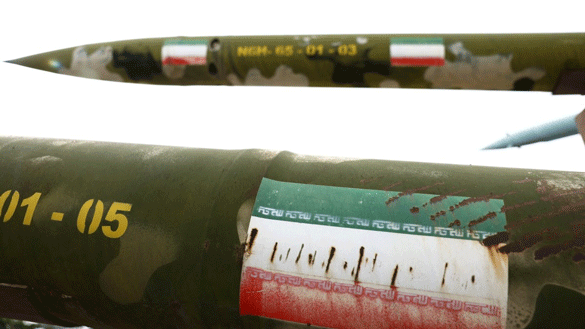
Regional and global developments have recently presented Iran with various challenges. The war, which began with a coordinated attack on Iran by the U.S. and Israel, is now sending a message to the world’s modern armies about both defensive and offensive capabilities. In maintaining its defense and deterrence against two major military powers, Iran’s missile systems, which have also drawn public attention, play a significant role. Their destructive impact on targets, effects on societal psychology and methods of use have contributed to the prolonged nature of the conflict. The continuation of the U.S.-Israel-led war, along with the costs already incurred and those that may arise globally, is driving economic uncertainty.
In the ongoing conflict between the U.S.-Israel axis and Iran, just as in the 12-day war of June 2025, Iran’s dominance in its airspace was significantly shattered by sudden, large-scale air operations. It was believed that the assassination of Iranian Supreme Leader Ayatollah Ali Khamenei and senior commanders would disrupt Iran’s military doctrine and break its resistance. However, despite the losses in its command structure, Iran appears determined to compensate for the shortcomings of its modern air force with its massive arsenal of ballistic/cruise missiles and unmanned aerial vehicles (UAVs). From the very beginning, Iran has positioned its arsenal not as an offensive weapon but as a strategic deterrent and a guarantee of the regime’s survival. For this reason, it responds to different scenarios with different preparations. Iran’s inventory includes weapon systems with various capabilities and operational concepts.
Diversity in missile inventory
According to 2022 data, with over 3,000 ballistic missiles, excluding cruise missiles, Iran possesses the largest and most diverse missile inventory in the Middle East. Over the past decade, it has made significant advancements in the precision and accuracy of its missiles. Iran’s primary objective is to build the most extensive and effective arsenal of missile systems in the Middle East, encompassing various operational principles such as ground-to-ground, air-to-ground and anti-ship missiles. The key highlights in warfare can be briefly summarized as follows:
While ballistic missiles serve as a significant force multiplier, they possess varying ranges and warhead capabilities. Medium-range ballistic missiles (MRBMs) can be highly destructive due to their 2,000-kilometer (1,245-mile) range and high warhead-carrying capacity. Missiles such as the Khorramshahr, Ghadr (developed from the Shabab), Emad (a modified version of the Ghadr), and Sajjil fall into this category and, with ranges of 1,500-2,000 kilometers, possess the capability to directly strike Israel and U.S. bases in the Gulf.
The strategic importance of solid-fuel systems, particularly the Sajjil, is significant; they can be operated without the lengthy pre-launch preparations required by liquid-fueled missiles. This significantly reduces the risk of missile launchers being detected and struck on the ground by U.S.-Israeli sensors prior to launch (pre-emptive strike). Additionally, there is the Fattah hypersonic missile family, which is frequently featured in the public eye. It has been reported that the Fattah has a range of 1,400 kilometers and can travel at speeds of up to 15 Mach (15 times the speed of sound). Its high speed and maneuverability make it more difficult for air defense systems to intercept.
Another key component of Iran’s missile inventory consists of tactical and short-range ballistic missiles (TBM/SRBM). Iran’s other missile systems, Zolfaghar (700 kilometers), Dezful (1,000 kilometers), Haj Qasem Soleimani (1,400 kilometers) and Kheibar Shekan (1,450 kilometers), utilize the fundamental design principles of the Fateh family of missiles but have different ranges. Field data indicates that hit rates have improved significantly. It was observed that missiles of this class were extensively used in attacks targeting U.S. assets in the Gulf. The greatest operational advantage of these systems is their ability to utilize commercial-grade carrier vehicles, such as 6x6 and 8x8 tactical wheeled launchers (TELs). Since the launchers for these missiles are mobile, deployment for firing and withdrawal after firing are rapid. This makes it possible for them to evade preemptive strikes.
Additionally, it is known that Iran uses not only military-based vehicles but also civilian-looking trucks and trailers as missile launchers (TELs). This situation complicates detection, tracking, and engagement processes for the U.S. and Israel amid tens of thousands of civilian vehicles spread across a vast geography. For this reason, statements have emerged from the U.S. and Israel regarding the accidental striking of civilian trucks.
Another significant strength of Iran lies in its diverse range of kamikaze UAV systems. Contrary to public perception, not all UAVs in the Shahed series are identical. While some systems are equipped with jet engines, others use piston engines. The payload capacities of their warheads also vary. However, the strategic importance of these systems generally lies in their “cost and quantity” advantage. Despite their relatively low cruising speeds and self-defense limitations, their low production and operational costs make them significant. They are notably used to engage and even destroy U.S. radars in the region. Additionally, they create a saturation effect against air defense missile systems, thereby creating space for the primary strike elements, the missiles.
Considering the locations targeted by Iran, Gulf countries (200-500 kilometers) can be engaged using kamikaze UAVs alongside tactical and short-range ballistic missiles. Targets in Israel, however, are observed to be struck by medium-range and even hypersonic ballistic missiles. Additionally, kamikaze UAV systems are used to tie down air defense missile systems. The warheads of the missiles vary depending on the intended effect and the type of target.
For example, the Khorramshar-4 medium-range ballistic missile can carry three different warheads. One of these warheads can fragment in the terminal phase, causing widespread destruction over a large area with numerous relatively small bombs. Some missiles, rockets and UAVs are operated as decoys to saturate air defense systems and allow the main missiles to reach their targets.
It appears that Iran is prepared for the aforementioned protracted war. Even as missile launch pads and other targets continue to be struck from day one, Iran is still able to operate its missile and kamikaze UAV inventory at a level capable of inflicting damage. The decline in missile and UAV usage during the first week of the war was interpreted as a sign that Iran’s capabilities were nearing depletion. At this stage, as the first month of the war ended, Iran continues to carry out destructive attacks.
Economic imbalance
In Iran, despite the assassination of its leaders, the approach throughout the process has been one of "strategic attrition" from the very beginning, a rigid strategy followed within the command structure rather than an emotional reaction.
The solutions used to intercept ballistic missiles, rockets or UAVs targeting Israel by Iran or Hezbollah come at a high cost. Among these, ballistic missile defense systems such as Terminal High Altitude Area Defense (THAAD), the Arrow series, Patriot (PAC-3), ship-based SM missiles, and other air defense missile systems like David’s Sling and Iron Dome are expensive both to procure and operate. To counter a threat worth thousands of dollars, they use missiles costing millions of dollars. This creates a serious economic imbalance.
Additionally, the ability of the parties to sustain this is crucial. The hundreds of interceptor missiles used against Iran’s attacks in March 2026 exceeded the annual production capacity of the manufacturers (such as Lockheed Martin). Even if production is increased due to the Russia-Ukraine war, manufacturing certain systems remains both costly and time-consuming.
As an example, the U.S. AN/FPS-132 Block 5 early warning radar stationed in Qatar, which is one of the most advanced air defense radars (estimated cost: $1 billion), was rendered inoperable by an Iranian kamikaze UAV attack. While the U.S. suffered a loss of $1 billion, from Iran’s perspective, it was merely a UAV costing $30,000-$40,000. It is reported that reproducing the radar in question will take five to 10 years. Furthermore, the loss of the radar’s functionality has caused serious damage to the U.S.’ dominance in the regional airspace and the air defense umbrella it has established. As sustainability becomes a risk for both sides, more intensive diplomatic efforts will be observed.
https://www.dailysabah.com/opinion/op-ed/backbone-of-irans-defense-inside-irans-missile-inventory
------
Made in Türkiye: Lessons from the Roketsan Strategic Summit
BY DENIZ İSTIKBAL
APR 03, 2026
Modern warfare accelerated with the steam engine and came of age through industrial firepower. By the post-World War II era, air and space technologies had redefined military power, pushing nations like Türkiye into alliances such as NATO in 1952. Yet dependence came at a cost. When sanctions followed the 1974 Cyprus Peace Operation, Türkiye was forced to confront a hard truth: true security required a domestic defense industry. Efforts to nationalize land, naval and air systems began to bear fruit in the early 2000s.
In the first quarter of the 21st century, the sector grew rapidly compared to its global competitors and entered the top 10 with an export capacity of $10 billion. With platforms such as the Altay tank, the Atak helicopter, the TCG Anadolu warship, unmanned aerial vehicles (UAVs), unmanned combat aerial vehicles (UCAVs), Kızılelma and others, the Turkish Defense Industry has transformed into a new-generation production model. Major contributions to this growth have come from companies such as Aselsan, Havelsan, STM, MKE and Baykar Technology.
Among the key providers of the modern technological capacity achieved by the Turkish defense industry, Roketsan holds a particularly important position.
The company ranks as the 71st largest defense firm in the world, rising nine places compared to the previous year. Roketsan focuses on high-technology and research and development-driven missile and air defense systems. Established in 1988, the company was designed as a joint venture of other defense industry firms. Since its founding, it has produced modern weapons in line with the needs of the Turkish Armed Forces (TSK).
Strategic Partnership Summit
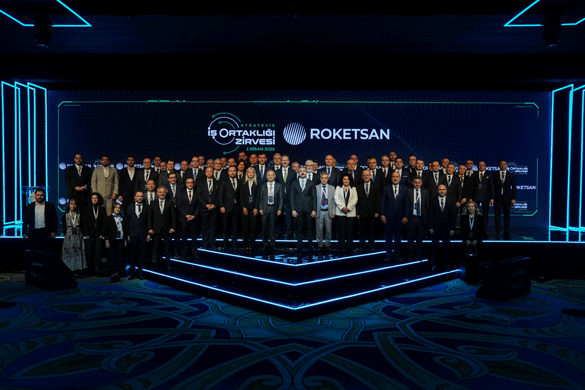
The Roketsan Strategic Partnership Summit held on April 1 has significant importance within the company’s corporate vision. It was organized with the participation of more than 100 partner companies collaborating with Roketsan. Key topics discussed included joint production processes, digitalization, sustainability, risk management, innovation, supply chains and national capabilities.
Representatives from many countries also attended the summit. During the event, it was emphasized that Roketsan has surpassed the $1 billion threshold, while its annual product delivery capacity growth was also a major point of discussion. Particularly in the 2020-2025 period, Roketsan’s growth rate has significantly diverged from both the national economy and other companies. Utilizing 92% domestic resources, the company aims to expand its activities across a wide range of areas, from supply chains to next-generation technologies.
Among the key points highlighted at the summit were long-range systems, which are considered a necessity of modern warfare and represent an outcome of the company’s strategic focus. The transformation of existing capacity toward a space-centered structure and the development of infrastructure for long-range systems will be carried out in cooperation with more than 100 private sector partners. Initiatives to be implemented with a national vision can be regarded as one of the most significant outcomes of the summit.
Place in industry
The missile systems developed by Roketsan have been exported to various countries, and weapons tested in the field have both enhanced the striking power of the TSK and increased its deterrence capability. Operating across a wide range of areas, including space projects, air defense systems, land systems, naval systems, precision-guided systems, ballistic protection systems and subsystems, Roketsan stands at the center of global competition.
In the field of air defense systems, Roketsan designs and produces missiles and firing equipment. The company produces artillery rockets, multiple launch rocket systems and rockets for various platforms. The new-generation heavy-class torpedo and the anti-ship missile Atmaca are being delivered to the TAF by Roketsan.
The company, which is also responsible for the development and mass production of precision-guided missiles, focuses on medium and long-range ballistic missiles as well. The changing nature of conflicts and rapid advancements in missile technologies have highlighted Türkiye’s need for such capabilities. Therefore, deliveries of the Tayfun ballistic missile and the Som cruise missile are continuing at a rapid pace. Tayfun’s high cruising speed, which reduces its vulnerability to air defense systems, represents advanced technology by contemporary standards.
As Türkiye’s longest-range ballistic missile, Tayfun is capable of striking strategic targets such as air defense systems, armored and unarmored military assets, command and control centers, critical infrastructure, and even aircraft hangars.
The Som missile, on the other hand, provides a highly destructive capability against mobile land and naval targets in high-intensity conflict environments. With a range of 250 kilometers (155 miles) and the ability to carry various types of warheads, Som can also be deployed on unmanned aerial platforms. Its effectiveness against surface targets, bunkers, and air defense batteries highlights the advanced technological capabilities developed by Roketsan.
Shaping the future
It can be said that Roketsan is shaping the future, as it is expected to place greater emphasis on areas such as the use of space, shortening production and delivery times, extending the range of rocket and missile technologies, as well as communication, reconnaissance-surveillance, positioning and process management.
As part of the National Space Program, the firm focuses on achieving independent access to space through national capabilities. The company is expected to launch micro-satellites into space starting from the final months of 2026, and it is also anticipated to contribute to civilian aviation technologies.
With 2030 set as a strategic target, the company aims to become a global actor, especially in air defense systems. Having already exported to more than 50 countries, the company seeks to expand its export destinations from Latin America to Asia through increased capacity. It has also implemented joint production models with countries such as Hong Kong, Saudi Arabia, Indonesia and Azerbaijan, highlighting its emergence as a new-generation enterprise. With a projected revenue of $2 billion and a business volume of $10 billion, Roketsan is positioning itself among the largest companies in its region and representing an important outcome of the “Made in Türkiye” brand.
In conclusion, Roketsan has become a decisive, closely watched and innovative player in the Turkish defense industry on the global stage. The atmosphere at the April 1 summit reflects the company’s current capacity and the strong image it has built. At a time when new goals must be assessed in light of past achievements, Roketsan’s progress stands out as a model for other companies.
https://www.dailysabah.com/opinion/op-ed/made-in-turkiye-lessons-from-the-roketsan-strategic-summit
------
Preparing for the post-Iran war era
HANI HAZAIMEH
April 02, 2026
The Middle East stands at a dangerous inflection point. The confrontation involving Iran, Israel and the US is not merely another episode in a long cycle of regional tensions — it is a strategic stress test that has exposed vulnerabilities, recalibrated deterrence and forced all actors to confront an uncomfortable reality: the regional order is fragile and its future will not wait for indecision.
Crucially, the conflict has also underscored that the Iranian agenda — rooted in regional expansion, proxy warfare and strategic penetration into Arab arenas — is no less dangerous to Arab security and stability than the Israeli one. Both trajectories, though different in method, ultimately converge in undermining Arab sovereignty, eroding state institutions and fragmenting the region into competing spheres of influence.
What distinguishes this moment is not simply the scale of confrontation but the exposure of strategic ceilings. For years, Israel has cultivated an image of overwhelming military superiority, projecting an aura of deterrence that discouraged direct confrontation. Yet the dynamics of the Iran war have complicated that narrative.
The assumption of invincibility has been shaken because the conflict has revealed the structural limits of all actors’ power. Geography remains a decisive constraint. A state with limited territorial depth and high population density cannot sustain prolonged, multifront warfare without facing severe economic, military and societal strain.
At the same time, Iran’s regional approach has also been laid bare. Its reliance on asymmetric warfare, proxy militias and indirect escalation has allowed it to extend influence across multiple Arab theaters without engaging in full-scale conventional war. Yet this model, while tactically effective, carries long-term strategic risks. It destabilizes fragile states, fuels sectarian divisions and creates permanent zones of tension that ultimately threaten the broader regional order, including Iran’s own strategic environment.
At the center of Israel’s current trajectory stands Benjamin Netanyahu, a warmonger whose political survival has long been intertwined with a doctrine of perpetual crisis. Netanyahu has mastered the politics of fear, repeatedly framing Israel as a nation under existential threat and positioning himself as its indispensable guardian. But the post-Iran war landscape may prove less forgiving.
Domestically, Netanyahu faces mounting pressure. The Israeli public, already fatigued by years of political paralysis and repeated elections, is increasingly divided over the cost of continuous confrontation. Economic strain, security anxieties and growing distrust in political leadership are converging in ways that could reshape the country’s internal political map. In such a climate, the temptation to open new fronts — whether in Gaza or Lebanon — becomes not merely a military calculation but a political survival tactic. War, in this context, is no longer solely about national security; it becomes a tool for extending political longevity.
Yet this approach is inherently unsustainable. Escalation for political survival deepens instability, invites retaliation and accelerates the erosion of deterrence rather than reinforcing it. It also risks miscalculation in an increasingly interconnected conflict environment, where local escalations can rapidly expand into regional confrontations. Israeli society must confront a fundamental question: Can lasting security be achieved under leadership that depends on perpetual crisis to maintain relevance?
If Israelis genuinely seek peace — and there are clear segments within society that do — the path forward lies not in further militarization but in political recalibration. Leadership that prioritizes diplomacy over domination and coexistence over coercion is not a sign of weakness but a prerequisite for sustainable security. The continuation of settlement expansion, periodic military campaigns and the marginalization of political solutions will only entrench cycles of violence rather than resolve them.
For the Arab world, the implications of this war are even more profound. The conflict has once again demonstrated that regional security cannot only be outsourced to external powers, nor can it be managed through fragmented national strategies. The absence of a unified Arab security framework has created strategic vacuums that external actors — both regional and international — have repeatedly exploited.
This is where the concept of a joint Arab defense architecture becomes critical. Whether under the framework of a revitalized Peninsula Shield or a broader “Arab Shield,” the need for structured, institutionalized military cooperation is no longer theoretical — it is urgent. Such a framework, bringing together key states like the Gulf countries, Jordan and a stabilizing Syria, could fundamentally reshape the region’s security equation.
However, the effectiveness of such an alliance will depend on more than military coordination. It will require political alignment, intelligence integration and economic interdependence. A credible deterrence posture is built not only on capabilities but on cohesion and clarity of purpose. Without these elements, any alliance risks remaining symbolic rather than operational.
Equally important is the need to redefine the concept of security itself. Security is no longer limited to territorial defense; it encompasses economic resilience, energy security, cyber capabilities and social stability. The Arab region must adopt a comprehensive security doctrine that addresses both traditional and nontraditional threats, including the destabilizing effects of proxy conflicts and ideological polarization.
The post-Iran war era will not be defined solely by battlefield outcomes but by strategic adaptation. For Israel, this means confronting the internal contradictions of its leadership and reassessing its reliance on force as a primary instrument of policy. For Iran, it requires reconsidering the long-term costs of expansion through proxies and the sustainability of its regional posture. For Arab states, it demands a transition from reactive policies to proactive, coordinated strategies.
The cost of inaction is already visible — in the devastation of Gaza, the fragility of Lebanon and the broader erosion of regional stability. These are not isolated crises; they are interconnected symptoms of an unbalanced regional order.
https://www.arabnews.com/node/2638540
-----
A Question of Violence: Palestine in American Academia After October 7
April 3, 2026
By Omar Zahzah
Another name has joined the ever-growing roster of academics facing repression over Palestine: Idris Robinson. On March 24, 2026, Robinson filed suit against his employer, Texas State University, which is seeking to fire Robinson from his position as Assistant Professor of Philosophy on May 31, 2026, for a talk he gave about Palestine during an off-campus event in the Summer of 2024.
The suit names Texas State University President Kelly Damphouse, Provost Pranesh Aswath, Senior Vice-Provost Vedaraman Sriraman, Thillainatarajan Sivakumaran, inaugural Vice President of TXST Global, and the Regents of Texas State University. Damphouse also initiated the illegal firing of TSU History Professor Tom Alter in November 2025 for an off-campus talk Alter gave at a Revolutionary Socialism conference.
On June 29th, 2024, Robinson delivered a talk entitled “Strategic Lessons from the Palestinian Resistance” in Asheville, North Carolina, as part of an anarchist book fair. A fight broke out during Robinson’s presentation when it was discovered that Zionists were in attendance and filming the proceedings; Robinson was escorted out of the room and gave follow-up commentary in a Q & A session the next day.
As reported in the Guardian, on June 5, 2025, David Moritz, one of the Zionists who had surreptitiously filmed Robinson’s talk, made an Instagram post targeting Robinson and blaming him for the fight that broke out in June 2024: “This professor praises violence and incited a mob attack in Asheville,” Moritz wrote in the first slide.
The next day, despite a stellar teaching record, Robinson received an email from senior vice-provost Sriraman informing him that he was being placed on academic leave “following the receipt and internal assessment of multiple complaints and allegations regarding an incident that occurred in the summer of 2024,” and on July 8, 2025, administration notified him that his contract would be terminated in May 2026. Robinson appealed the decision, and Texas State University denied his appeal, despite being unable to substantiate its decision nor clarify exactly what rules or laws Robinson had allegedly violated, per the Guardian.
For his part, Moritz made his goal manifestly clear. He concluded his Instagram post with the following sentiments and call to action:
This isn’t academic freedom
This is incitement to violence
This is glorification of terrorism
And it happened under the name of a US university
Texas State University must act
Idris Robinson must be investigated and removed
Promoters of violence do not belong in the classroom
Terror apologists do not belong in the classroom
Violence should not be taught as a ‘how-to’ University subject
Take Action
Contact Texas State University
Tell them: Fire Idris Robinson
First and foremost, Dr. Robinson’s case must be championed by all proponents of academic freedom. But in addition to the particulars of the transgression, the sequence of events that includes Texas State University’s violation of Robinson’s rights for speaking on Palestine is significant for how familiar it is. Individual Zionist trolls like Moritz and organizations like Canary Mission, Stopantisemitism.org or Documenting Jew Hatred on Campus that are dedicated to doxing and harassing supporters of Palestinian freedom and liberation have largely been able to count on reflexive institutional legitimization of their defamatory profiling.
Manufactured outrage campaigns that cast students and faculty outspoken about Palestine as “violent,” “extremists,” or even “terrorists” or “terrorist supporters” whose rights need to be instantaneously abrogated for the sake of campus safety and institutional prestige have an ominous purchase in the cynical economy of the corporate university.
The question of violence provides a productive frame to this conversation for several reasons. In the first place, it helps attune us to the dynamics of inversion at play. Students peacefully protesting genocide and faculty who support them are automatically constructed as threats, and often in ways meant to legitimize the literal violence of the state—from police assaults across multiple campuses to rooftop snipers and ICE kidnappings—being visited upon them. This is an institutional extension of the longstanding cultural dehumanization of Palestinians, Arabs and Muslims more broadly, which incentivizes repression and violence against them, as revealed by the recently uncovered assassination plot against Palestinian activist Nerdeen Kiswani—a plot that was actively stoked by vigilante groups such as Betar USA and politicians alike.
Secondly, it can remind us of the university as a crucial site of violence in its own right. A decolonial approach to the university means attending to how slavery and settler colonialism are not isolated episodes from the past, but systemic structures of violence that made possible and continue to shape the material gains and ideological limits of campuses in settler colonies such as the US.
The relevance to Palestine is patently clear: as scholars Eman Ghanayem and Theresa Rocha Beardall brilliantly state in their analysis of “interconnected settler colonialism” between the US and Israel, “The University is a Colony”. Honing in on Cornell, Ghanayem and Beardall explore how the university is an ideal site for assessing the material and ideological overlaps between US and Israeli projects of settler colonial violence and dispossession, and how this affinity manifested in response to righteous student opposition to institutional investment in Israel’s genocide from 2023-2024:
Our assertion that the university is a colony might appear figurative or far-reaching to some. However, we must not let the symbolic quality of the statement overshadow how literal colonialism can be, and has been, in the history of land grabs, segregation, repression, and investments in war technology. In response to these settler colonial university legacies, student encampments and “liberated zones” rose from campus grounds in 2023/24, reactivating the awe-inspiring power of the people to bend the world toward liberation by putting their bodies, voices, and futures on the line… At the same time, we also witnessed how university administrations wielded empty language and the power of state violence to dismantle student encampments and suppress their critical awareness and analysis… As other settler colonies have done and continue to do, universities responded as they always have, by defending their right to protect and punish, especially on issues concerning Palestine and the plight of its people.
Administrators threatened, attacked, and pressed charges against their students, unleashing police officers in full gear and militant formation on them. Students were beaten and bruised, rounded up, and taken to jail, their clothes and hijabs ripped, and their belongings destroyed. Through each of these moments, the university’s origins as an epicenter of aggression was broadcast around the world.
Our current moment in which universities uncritically defer to bad-faith complaints against outspoken faculty by repressing them for anti-colonial speech—and legitimizing misrepresentations of these precarious subjects as ultimate threats to boot—did not occur in a vacuum. The current criminalization of Palestine in academe did not begin under the latest Trump administration, but Joe Biden, who enabled Israel’s latest, escalated genocide in Gaza every step of the way, including by laundering debunked Israeli atrocity propaganda meant to manufacture consent for the genocide. Unfettered support for Palestinian death and dispossession has long been a bipartisan consensus within the US political establishment.
Fully appreciating the tenor of the current academic status quo requires appreciation of how the American academy was instrumentalized in key ways from the Cold War through the War on Terror. McCarthyist sentiment cast academics as crypto-Communists and potential saboteurs, even as intellectual advancement was seen as a key element to countering Soviet ascendance in the years to come.
As Joseph Massad convincingly argues, following 9/11, and with the subsequent rise and normalization of police militarization and surveillance, Israel/Palestine operated as a foundation for elites to mount a broader assault upon academic freedom and faculty governance—a way, ultimately, to roll back the curricular and epistemological advancements of various anti-war and liberation movements that had treated the campus as an arena of struggle.
Even as academic and political elites have finally lost a hegemonic consensus upon the unimpeachability of Israel and Zionism in spaces conventionally associated with erudition and prestige, the post October 7, 2023 crackdown upon students and faculty builds upon a decades-long process of reshaping the university in a way most directly aligned with the dictates of the geo-imperial status quo, which has also entailed reversing counter-hegemonic contestations of normative educational policy as reflected in initiatives such as ethnic studies.
In a climate whose current conditions were cumulatively abetted through years of Orientalist dehumanization of Palestinians, and in a moment where Israel’s genocide in Gaza has expanded to a vicious US/Israeli war on Iran and Israel’s US-abetted ethnic cleansing in Lebanon (much of which, it must be said, is made possible by the products of reactionary and vehemently anti-intellectual technofascists,) we can be sure that the repression will continue, and be legitimized by recasting the victims and opponents of violence as its perpetrators.
We must not back down in our support of all impacted by such repressive campaigns, nor in the ongoing project of dismantling settler-colonial and imperial apologia that traffics in such inversions to protect the integrity of state-sanctioned extermination and conquest of the many for the privilege and profit of the few.
https://www.palestinechronicle.com/a-question-of-violence-palestine-in-american-academia-after-october-7/
------
US-Israel Bomb Iran’s Pasteur Institute—Sudan’s Al-Shifa Shadows Reawaken
April 2, 2026
One of the “long-standing pillars” of global health in the region has just been bombed in the ongoing US-Israeli aggression on Iran.
The Iranian Pasteur Institute, a historic research and public health center founded in 1920, was struck in an attack near Karaj, west of Tehran.
Iranian Health Ministry spokesman Hossein Kermanpour described the strike as a “direct assault on international health security,” warning that a century-old institution central to disease control and vaccine development had been targeted.
The institute is not a marginal facility. It has played a critical role in infectious disease research, vaccine production, and regional health cooperation for decades, and is part of the international Pasteur network. Its significance extends beyond Iran’s borders, positioning it as a key node in global public health.
Same Pattern
At first glance, this may appear as one of many incidents in a widening war—one of hundreds of civilian infrastructures destroyed or damaged in the course of escalating US-Israeli attacks on Iran.
But the story takes on a more complex meaning when placed within a broader pattern—not only across the Middle East today, but historically.
The actors are familiar: the United States and Israel.
The targets are also familiar: civilian infrastructure that sustains life, particularly healthcare facilities that serve millions directly or through research, treatment, and medicine production.
Gaza immediately comes to mind.
Since October 2023, the destruction of Gaza’s healthcare system has been extensively documented by international organizations, including the World Health Organization, which reported in May 2025 that it had recorded 697 attacks on healthcare facilities in the enclave.
At that time, only 19 of Gaza’s 36 hospitals remained operational, while at least 94 percent had been damaged or destroyed. The WHO described the scale of destruction in stark terms: “The destruction is systematic.”
Since then, the situation in Gaza became even worse, as Israeli attacks intensified with great ferocity and determination to destroy whatever remained of Gaza’s health care system.
Lebanon, too, forms part of this expanding geography.
Amnesty International warned in March 2026 that Israeli forces were attacking healthcare workers and facilities while making allegations about military use of medical infrastructure “without providing any evidence.”
The organization stated clearly: “Throwing out accusations … without providing any evidence does not justify treating hospitals, medical facilities, or medical transport as battlefields.”
That same month, reporting citing the World Health Organization indicated that nine paramedics had been killed in multiple attacks in southern Lebanon, while dozens of healthcare centers were forced to shut down.
Yet a particular historical case must not be ignored: the American bombing of Sudan’s pharmaceutical infrastructure in 1998.
Sudan Revisited
On August 20 of that year, under the administration of US President Bill Clinton, the United States destroyed the Al-Shifa pharmaceutical factory in Khartoum as part of its ‘response’ to the East Africa embassy bombings. Washington claimed the facility was linked to chemical weapons production and to al-Qaeda.
However, those claims were never substantiated.
The 9/11 Commission later revealed internal uncertainty within US institutions themselves. Then–National Security Council official Mary McCarthy warned that the United States would need “much better intelligence on this facility,” while Attorney General Janet Reno acknowledged that the “premise kept shifting.”
What was not in dispute, however, was the role of Al-Shifa within Sudan’s healthcare system.
The factory employed more than 300 workers and produced medicines for malaria, tuberculosis, diabetes, hypertension, and other essential treatments. It was widely described as Sudan’s largest pharmaceutical plant, supplying between 50 and 60 percent of the country’s medicines.
Its destruction had immediate and long-term consequences for a country already struggling with poverty, disease, and sanctions, severely disrupting access to basic pharmaceuticals.
The comparison with the Iranian case is not incidental.
In both instances, a health-related facility is transformed into a military target:
In both, the destruction is immediate.
In both, the consequences fall not on military actors, but on civilian populations dependent on fragile health systems.
Strategic Destruction
Even the political context invites comparison.
The 1998 strike took place as Clinton was engulfed in the Monica Lewinsky scandal, raising questions at the time about the timing of the operation.
Today, US President Donald Trump is similarly navigating mounting political pressures at home, even as Washington escalates its military posture abroad.
Therefore, these events cannot be dismissed as isolated incidents. They point instead to a recurring pattern in which healthcare infrastructure is repeatedly drawn into the logic of war—reclassified, justified, and ultimately destroyed.
The long-term effects are not limited to immediate casualties. They include the erosion of public health systems, the collapse of essential services, and the kind of social destabilization that can persist for years, if not decades.
If there is a lesson to be drawn from Sudan, Gaza, Lebanon, and now Iran, it is this: When medical institutions are targeted, the damage is not collateral—it is strategic.
What is being destroyed is not only buildings, but the very systems that sustain life: medicine, care, recovery, survival.
From the bombing of Sudan’s Al-Shifa factory to the dismantling of Gaza’s hospitals and the targeting of healthcare in Lebanon, the pattern is unmistakable.
Societies are not only attacked—they are weakened, or at least meant to be weakened – from within, stripped of their ability to heal, to endure, to rebuild.
Within that context, the strike on Iran’s Pasteur Institute is not an exception: It is the continuation of a method.
https://www.palestinechronicle.com/us-israel-bomb-irans-pasteur-institute-sudans-al-shifa-shadows-reawaken/
------
‘Macron – Whose Wife Treats Him Extremely Badly’: Trump’s Iran War Unraveling
April 2, 2026
By Ramzy Baroud
“I call up France, Macron – whose wife treats him extremely badly. Still recovering from the right to the jaw.”
It is not the first time that Donald Trump has resorted to this kind of language. But the timing, as always, is everything.
His remarks about Emmanuel Macron, delivered during a private lunch in Washington, were crude and personal, yet also deeply political.
Macron’s response—measured but unmistakable—was to dismiss them as “neither elegant nor up to standard,” adding that they did not merit a reply.
But to treat this as merely another episode of improvised rhetoric is to miss its significance.
Trump’s attack on Macron did not emerge in a vacuum. It came as part of a broader complaint, one that placed France—and by extension other NATO allies—at the center of a narrative of absence.
“We didn’t need them, but I asked anyway,” Trump said, before mocking Macron’s supposed refusal to provide immediate military support in the Gulf.
France, in this framing, is no longer an ally acting according to its own calculations. It becomes something else: an explanation.
This, too, is not new. Trump has long directed extraordinary time and energy toward attacking individuals, often in language that is not only unfit for a president, but for any public figure claiming seriousness or dignity.
At various moments, this behavior was dismissed as style, as bluntness, or even as political theater. Critics pointed to belligerence, bullying, harassment. All true, of course—but not sufficient.
Because there is more to the story.
Another defining aspect of Trump’s political conduct is his relationship with truth. In US media, this is often softened as “contradiction.” But contradictions and lies are not the same. Contradictions can be strategic, even deliberate, aimed at confusing opponents.
What has emerged instead is something far less controlled.
Over time, a different kind of political literacy developed around Trump. His words were not taken at face value, but interpreted. When he lashed out, it was often read as a sign of weakness or insecurity. When he contradicted himself, it was not always confusion—but sometimes fear, or inexperience, or both.
In the early stages of the war with Iran, this unpredictability appeared to work in his favor. Negotiations were opened and undermined. Deadlines were set and broken. Strikes were launched in moments that suggested surprise, even deception. Iran, at least initially, was forced to react.
But that phase is now over.
Trump’s Wednesday speech was meant to restore clarity. Instead, it exposed the problem. He claimed that the war was “nearing completion,” suggesting that it could end within “two to three weeks.” At the same time, he pointed to the extensive destruction of Iran’s military capabilities, presenting the campaign as already successful.
Yet in the same breath, he warned of further escalation, including possible strikes on Iran’s critical infrastructure. The contradiction was not subtle. A war cannot be both nearing its end and preparing to expand.
Even before the speech concluded, events on the ground were moving in a different direction. Iran intensified its operations, expanding both the scope and coordination of its strikes. The conflict was not narrowing. It was widening—geographically, militarily, and politically.
It is here that France becomes central to the story.
If the war is not unfolding as promised, then the narrative must adjust. And in that adjustment, allies take on a new function. France’s hesitation—real or exaggerated—becomes evidence. Its refusal becomes an explanation of why the war is being lost – or won. Its absence fills the gap between what was declared and what is actually happening.
This is not simply rhetoric. It is a method.
Trump’s remarks about Macron were not incidental. They were corrective. They attempted to redistribute responsibility at a moment when the war itself was becoming harder to justify on its own terms. If victory has already been achieved, why does the war continue? If the war must continue, can victory really be claimed?
With his approval ratings declining and public support for the war weakening, Trump has increasing incentive to redirect attention. France, in this context, is a relatively safe target—an ally, but one that can be criticized without immediate political cost at home. By contrast, acknowledging strategic failure or miscalculation would carry far greater consequences.
Thus, the focus shifts. Not to Iran’s expanding capabilities, nor to the unresolved objectives of the war, but to the supposed shortcomings of allies.
This is how narratives are preserved under pressure.
Trump’s language, then, must be read not simply for what it says, but for what it does. It does not describe reality; it reorganizes it. It does not resolve contradictions; it moves them elsewhere.
Over time, this pattern has become increasingly visible. The insults, the contradictions, the shifting targets—all point to a presidency that governs through reaction rather than strategy. Each new statement attempts to impose coherence on events that resist it.
In the case of Iran, this effort is becoming more difficult to sustain. The war was framed as decisive, controlled, and necessary. It is now unfolding in ways that challenge each of those assumptions. The gap between rhetoric and reality is no longer subtle. It is structural.
Future historians are unlikely to write this history based on Trump’s own words. Not because those words are unimportant, but because they cannot be taken at face value. Instead, they will read them against events, against patterns, against the broader trajectory of a political moment defined by volatility.
What they will find is not simply a record of insults or contradictions, but a deeper logic: a presidency attempting to rewrite its own circumstances in real time.
In that effort, even allies are recast as obstacles, and mockery becomes a political weapon.
The attack on Macron is not an insult—it is a confession. Trump is not managing a war; he is managing its failure. What cannot be won on the battlefield is now being displaced onto allies, rewritten in real time, and stripped of any remaining coherence.
https://www.palestinechronicle.com/macron-whose-wife-treats-him-extremely-badly-trumps-iran-war-unraveling/
------
A New Resistance Front: How Does Syria Factor into the Regional War?
April 2, 2026
By Robert Inlakesh
A new Syrian resistance group has emerged and is the only organization in the country currently carrying out offensive actions against both Israeli and US targets. This development comes as Israel uses the newly occupied territories in its ground assault on Lebanon, a move that could easily rope Tel Aviv into a new quagmire.
While a US allied leader now technically controls Damascus, the reality on the ground in Syria is that there is no functional State. This being the case, the outbreak of chaos is simply one miscalculation away.
In stark contrast to the regimented and tightly controlled Syria that existed under the rule of Bashar Al-Assad and his father Hafez al-Assad, the country today is divided between countless powers throughout the country, with the President functioning as less of a strongman and more of a symbolic figure that covers the explosive charges ready to detonate. Nowhere was this on clearer display than in the July 2025 clashes in southern Syria’s Sweida Province.
President Ahmed al-Shara’a, also known as Abu Mohammed al-Jolani, has allied himself with his Western backers and even gone as far as signing onto a normalization mechanism with Israel. Short of full normalization of ties with Tel Aviv, the “joint fusion mechanism” that was agreed upon by Syrian and Israeli officials seeks to “facilitate immediate and ongoing coordination on their intelligence sharing, military de-escalation, diplomatic engagement, and commercial opportunities under the supervision of the United States.”
Knowing this, it would therefore appear strange that the Israelis still persist with not only bombing Syrian civilian infrastructure across the country, but also Syria’s new military forces. Understanding why will help in unlocking what appears on the surface to be a difficult puzzle to solve.
The Syrian leadership is Hayat Tahrir al-Sham (HTS), infamous for being a rebrand of al-Nusra Front (Al-Qaeda in Syria). Although it is presented as if it were a real government, the group never had any experience in governance. Instead, they knew only how to rule over smaller militia factions and worked as the de facto leadership in Idlib, despite there having been a “Syrian Salvation Government” (SSG) who were technically in control of the territory.
Prior to the fall of Bashar al-Assad’s leadership in December of 2024, HTS had consented to the SSG’s existence in order to give the veneer of a professionally organized opposition. In reality, HTS held all the power cards, even running its own secret prisons, while leaving the administrative details to be hashed out by the professionals.
All of this is of great importance because Bashar al-Assad’s entire system was not overthrown in some kind of war of liberation; instead, it collapsed without any real fight. Therefore, when Ahmed al-Shara’a entered Damascus and declared himself leader, he was in a very difficult position.
Under the supervision of his foreign backers, chiefly the United States, the new Syrian leadership focused on symbolism rather than fundamentally changing the way the country functioned. Therefore, Damascus opened itself up to Washington and became a playground for Western and Israeli intelligence agents, as the new President attempted to impress Washington.
Meanwhile, many of the most corrupt elements belonging to the former regime, were permitted to continue on as if it was business as usual, all as the Syrian Arab Army (SAA) and former intelligence and police services were disbanded. What replaced the former security apparatus were simply militants belonging to the alphabet soup of Al-Qaeda affiliates that had been operating previously out of Idlib.
This being the case, the words of Ahmed al-Shara’a often have little to no bearing on what actually transpires on the ground. Meaning that corruption is rampant, every corner of the nation is filled with different armed forces who have their own territory when push comes to shove. In essence, all of Syria became a big Idlib.
Syria is no longer subjected to sanctions, has gained access to its most fertile agricultural lands, is no longer internationally isolated, while ruling over its own oil and gas fields. Despite all of this, the country’s economy is still in the toilet, and the long-promised prosperity has been reduced to vague future visions. This isn’t to say it’s impossible for things to change, but as it stands, this is Syria today.
Because of the state of Syria’s affairs, cross-border smuggling has exploded and this has evidently benefited Lebanese Hezbollah next door. Two sources familiar with the matter informed Palestine Chronicle that the quantity of weapons flowing through the Syrian-Lebanese border had even increased since the fall of Bashar al-Assad.
According to reports, the US has been applying pressure on Damascus to attack Lebanon in order to help Israel weaken Hezbollah in the Bekaa Valley region. In response, President al-Shara’a broke his silence this Tuesday and declared that Syria will not attack Lebanon, an announcement that came following a threat earlier that day from an Iraqi Popular Mobilization Units (PMU) spokesperson, threatening to attack if Damascus orders such a move.
This affirmed previous suspicions that such an equation could arise, whereby a Syrian invasion of Lebanon would trigger an Iraqi invasion. The PMU, when fully mobilized, can muster a force of around 250,000 fighters, a much more formidable force than what currently constitutes the Syrian Army.
Another possible equation that could be set is a Syria-Israel clash. Not only could armed resistance groups, aligned with the Iranian-led Axis of Resistance, end up creating such a reality, but others could also be roped in.
Israel’s recent bombing of Syrian military positions, coupled with Israeli Security Minister Itamar Ben Gvir’s calls to assassinate the Syrian President, both occurred following an alleged military buildup near the Sweida Province.
It is likely that Damascus was eyeing the opportunity presenting itself to finally deal with the Druze Separatist movement in the southern province. Led by one of the Druze minority group’s spiritual leaders, Hikmat al-Hijri, a unified command calling itself the “National Guard” formed in order to operate a semi-autonomous zone in Sweida.
The National Guard began receiving direct military, financial and logistical support from Israel, who have long sought to establish a Druze rump State in southern Syria, a goal that enables an even greater land grab, as well as opening up “David’s Corridor” spanning over to the Iraqi-Syrian border.
In the eyes of Syria’s leadership, the Druze issue is of great importance to solve for a range of reasons. One of which is that there is an enormous amount of sectarian tension, which various groups who form the new Syrian security apparatus, along with the Bedouin tribal forces, seek to punish following the bloodshed that began last July. It will also mean that technically, Syria will be one step closer to having one central government rule the entire country, which is a symbolic victory for Ahmed al-Shara’a.
However, the Israelis appear to have pre-empted such an offensive and committed a number of airstrikes as a warning to the Syrian leadership. There is clear anxiety over such a battle unfolding, because if it occurs, the Israeli military will be forced to intervene in order to save its Druze separatist allies.
As mentioned above, if things spiral out of control, the President himself cannot necessarily do much about it. That means that Syrian forces will likely begin to directly come into contact with the Israelis on the ground, something that could easily spiral.
Most of the fighters who have, for now, aligned themselves with the Syrian government are no fans of Israel, to say the least. This was on full display last December during the military parades conducted by Syria’s new armed forces, who openly chanted for Gaza, threatened Tel Aviv, and some even burned Israeli flags.
The alternative scenario for the Israelis in Syria may end up being worse, meaning that if they were to assassinate al-Shara’a, a power struggle would likely end up playing out on the streets of the Capital and throughout the country. So many different actors will seek to claim power.
Syria’s predicament has turned out to be less favourable to Tel Aviv, not because it poses an immediate strategic threat, but because almost anything is possible there. During the regional war between the Israeli-US alliance and the Iranian-led Axis of Resistance, one wrong misstep could prove fatal and open up yet another front, which will not only drain their resources but also weaken their ability to fight Hezbollah.
https://www.palestinechronicle.com/a-new-resistance-front-how-does-syria-factor-into-the-regional-war/
------
Iran: East of Suez, West of Hormuz? The Question That Will Define the Next Era
April 2, 2026
By Jeremy Salt
In February 1960, the British Prime Minister, Harold MacMillan, made an historic speech in the South African parliament. “The wind of change is blowing through the continent,” he said. “Whether we like it or not, the growth of national conscience is a fact.” He did not say it outright, but apartheid was unacceptable to the British government, which had in fact accepted it since it was officially declared in 1948. In the future, the UK would not stand in the way of independence movements.
Of course, it did, and he was only talking about the African continent anyway and not the Middle East, where, in 1956, the US had humiliated the UK by forcing it to end the ‘tripartite aggression’ launched against Egypt in collaboration with France and Israel only ten days earlier.
In 1946, the UK had declared its intention to withdraw from Palestine, not out of the goodness of its heart but because it could no longer afford to stay there. It was pulling out of India and other colonial possessions for the same reason.
World War Two had left it virtually bankrupt and dependent on US financial aid. Empire was a luxury it could no longer afford.
In 1960, the devaluation of the pound was the trigger for the declaration by then Prime Minister Harold Wilson and defence minister Denis Healey that British troops would be withdrawn from bases ‘east of Aden,’ which had been in British hands since 1839. Basically, they were referring to the bases in Malaya (Malaysia) and Singapore, but those in the Persian Gulf were also included.
In time ‘east of Aden’ was taken to mean the closure of all military bases ‘east of Suez.’
However, while the British lion had lost its teeth, it had not lost its appetite and was never going to accept the loss of status as a great power.
As Anthony Eden, the prime minister at the time of the Suez war, had remarked, he would rather go to war than allow Britain to be reduced to the level of second-rate countries like Portugal or the Netherlands. He did go to war, and was humiliated.
In fact, the British never withdrew ‘east of Suez’ and never intended to. It dominated the Persian Gulf in the 19th century, occupying Aden in 1839 and maintaining its grip through subsidized tribal shaikhs who headed the ‘Trucial States’. In 1971 Britain relinquished its control of foreign policy and these states became independent, if only in name, as the UAE (United Arab Emirates).
Oman, Kuwait, and Bahrain remained outside this arrangement but remain tied militarily either to the US or the UK. The UK had a naval base in Bahrain from 1935. In 1971, it was taken over by the US, but in 2014, the UK established a permanent naval base ‘east of Suez’ at Mina (port) Salman in Bahrain. In 2024, it opened an air base at Al Minhad, close to Dubai in the UAE.
The US and the UK share a military base on the island of Diego Garcia in the Indian Ocean Chagos Islands. From 1968-1973, the inhabitants of the entire Chagos archipelago were forcefully removed so these two governments could use their homes as a launching pad for war.
In the Mediterranean, ‘east of Suez’ never applied to Cyprus, snitched from the Ottoman government in 1878 in return for a pledge to defend the Ottomans in the event of an attack by Russia and maintained as a military base ever since. In 1914, the Ottoman Empire was attacked by Russia, but by then Britain was its ally. It ruled Cyprus until its independence in 1960.
In the past two years, the RAF base at Akrotiri in Greek Cyprus has been used for regular surveillance flights over Gaza to help Israel. Israeli troops were training in Cyprus several years ago because its mountainous terrain is similar to that of southern Lebanon.
Where all of this dovetails into the war on Iran is that the Iranian government has demanded a full US withdrawal from the Persian Gulf as one of its conditions for ending the war. This would have to imply a UK withdrawal as well. What Iran wants is an end to the entire western military presence, and a withdrawal ‘west of Hormuz’ that would be the parallel to the withdrawal ‘east of Suez.’
In fact, the UK never fully withdrew ‘east of Suez’ and it is even less likely that the US would agree to Iran’s demand that it withdraw ‘west of Hormuz.’ Empires don’t go down without a fight. Withdrawal ‘west of Hormuz’ would not be existential for the US as a country, but it would be for the collective ‘west.’
For half a millennium, every ‘western’ empire has had its turn in raping the east through war, intimidation and economic exploitation. Britain, France, Spain, Italy, Portugal and the Netherlands all jumped in for their chop over the past five hundred years before being forced to retreat and settle for comfortable late empire retirement.
Now the US seems close to the end of its run, which is why, of all the demands made by Iran, withdrawal ‘west of Hormuz’ is non-negotiable for the US. Retreat would be the acceptance of defeat.
It would push an already tottering American empire off its plinth. Furthermore, the last gasp on the deathbed of ‘western’ global domination would almost be audible. No one would be left with the will or the power to pick up the fallen American banner.
Yet this demand is non-negotiable for Iran as well. Nearly 50 years have passed and it cannot live any longer at the point of the ‘western’ sword.
This epochal moment in history compares with Suez and no doubt many other occasions in history as the long run of the powerful approaches its end.
In the past several weeks, Trump has offered terms that are not subject to negotiations because they are an ultimatum. ‘Accept these terms or we will obliterate you.’ This is a scarcely veiled variation of the Mafia ‘offer you can’t refuse’ and what puzzles Trump is that Iran is not accepting.
Having started this war, Trump, behind the bluster, seems to want to get out of it, but does not know how. A large part of his problem is that Israel wants the war to continue, with the full support of the US, because without it, Israel cannot continue the fight. Its strong advantage is the Zionist billionaires who fund Trump and a Congress bribed and bought out long ago by the Israel lobby.
There seems no negotiated way out but sooner or later, under the accumulating pressure, something has to give way.
The wild card in the pack, of course, is Israel. It does not want the war to end, not just until the Islamic government is destroyed but until Iran is either broken up into ethno-national statelets or returned to the slave status that lasted until 1979.
This goes beyond what the US thinks is feasible, at least what sound military and strategic minds think is feasible. The truth seems to be dawning on Trump, but he is impaled on Israel’s hook and Israel is not going to let him wriggle off it. This is his own fault. He made his own pact with the devil long ago and now the billionaire Zionists who funded him all the way into the White House are calling in the debt.
The Islamic Republic of Iran was never an existential threat to Israel. Its opposition was based on principled legal and moral support for the Palestinians. Had the Palestinians ever been offered a judicious settlement, and had they accepted it, Iran would have accepted it, too, but such an offer was never made.
Israel was never going to share what it had stolen. It always wanted more. Its road to ‘peace’ was genocidal force against the Palestinians and anyone who would dare stand against it.
That policy has now completely unravelled. Its own military-strategic decline began long ago. Over-extended militarily at several levels, it has now finally started a war that has bounced back in its own large-scale destruction.
Both Yemen and Hezbollah have joined the war. The destruction of scores of Merkava tanks in southern Lebanon is unprecedented. Israel’s own chief of staff says the military is exhausted and suffering a manpower shortage so acute it is at risk of “collapsing in on itself.”
This is a scare attack designed to bring into the army those avoiding military service. At the same time, there is no doubt that the military is overstretched. The ‘existential threat’ Israel has always used as a pretext for its wars is now real, but brought on by Israel itself.
Trump’s public standing in the US is fast heading to rock bottom. Narcissistic, blaming everyone else for his own folly, turning on European allies who are rapidly turning against him, can Trump somehow resist being pulled deeper into the vortex by Israel, and if he can, what will Israel do then?
Or is he still fully onside with Israel, with his talk of negotiations and maybe ‘walking away’ from the Strait of Hormuz a ruse giving him time to marshal US forces ahead of a land attack on Iran intended to seize strategic territory?
Will ‘west of Hormuz’ share historical space with ‘east of Suez’ as a defining act that changed the balance of global power? The answers to these and other questions should not be long in coming.
https://www.palestinechronicle.com/iran-east-of-suez-west-of-hormuz-the-question-that-will-define-the-next-era/
----
New Age Islam, Islam Online, Islamic Website, African Muslim News, Arab World News, South Asia News, Indian Muslim News, World Muslim News, Women in Islam, Islamic Feminism, Arab Women, Women In Arab, Islamophobia in America, Muslim Women in West, Islam Women and Feminism