
Young Minds Need Truth about Jihad to Prevent another Jake Bilardi
By Angela Shanahan
March 14, 2015
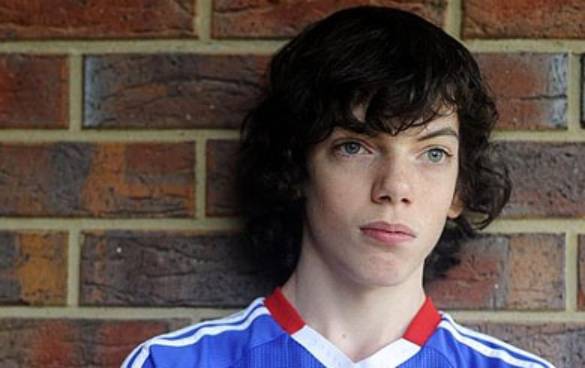
Jake Bilardi. Source: News Limited
-------------
WHEN I first saw Melbourne teenager Jake Bilardi’s pinched, beardless young face looking out from newspaper photographs this week, my reaction was, “Oh, the poor kid.” Others, perhaps, thought, “Why bother? Let him stay there.” Both are understandable reactions.
Since then we have learned that the young Bilardi has died as a suicide bomber. Yet many of us, particularly parents of adolescent boys, see in Bilardi a symbol not of an ideological problem but a youth problem.
The Australian Federal Police are finding much younger “cleanskins”, previously unsuspected boys such as Bilardi, ready to go off to Syria.
Why do Australian adolescents want to throw away their lives in this seemingly mad way?
Michael Carr-Gregg, who specialises in adolescent psychology, and Patrick McGorry, a distinguished psychiatrist and former Australian of the Year, were not surprised by the 18-year-old’s actions. If you understand the psychology of adolescence, what Bilardi did was perfectly normal for his age. The reason is physiological. Adolescent brains are immature. It varies from person to person, but on average they do not reach maturity until about 25.
The frontal lobes have not developed to the point where they can always think through their actions to the logical consequences. They are also programmed to take risks, which stimulates the dopamine system, so these kids make great cannon fodder.
On top of all that, they are desperately seeking identity and they are very good at constructing their own world — secret, private and outside the adult establishment.
As Abu Zaid, one of the committee of the Hume Islamic Youth Centre in Melbourne where Bilardi went for lectures, said: “They stick to themselves a lot of the time. Their mindset comes out completely wrong from the reality.”
There is a world of difference between someone caught up in fundamentalist Islam, after going through the mill of unemployment, drug use, crime, then choosing to join Islamic State, and someone who is a bright but lonely maths nerd with an interest in current affairs.
Obviously there are several different phenomena at play here. Remember, about one in four Australian adolescents has a mental health issue.
But what about the role of the pull factor, propaganda? Abu Zaid also blamed the “Western media’s portrayal of radical Islam”, which “sparks the curiosity” that leads kids into a world that is partly of their own making.
He has a point. Perhaps he was talking about photos such as the one that has done the media rounds this week, of Bilardi sitting between two fellow jihadists with a gun between his legs.
There is also a view that jihadism is a reaction to cultural alienation, not such a popular line after Martin Place. However, alienation and the search for identity are crucial to understanding adolescent motivation. Adolescents are trying to become an effective part of the world and part of that is rejecting the status quo and the orthodoxy of suburban Australia, not embracing it.
Idealism at this age was also present in the underage recruits who signed up for World War I and the Spanish Civil War.
But a lot of young people in the modern world feel helpless to instigate action. There is no more fascism and no more communism; there is little religion to make sense of the world. So they are looking for an alternative. They see violent jihad through an adolescent mind. They assume it is misrepresented by the establishment, which makes it even more attractive. Then there is the appeal of action.
So how to save these kids? How to restrain them? Carr-Gregg likens trying to find adolescent lone wolves as “spearing jelly with a fork”. Tony Abbott has said we need to spend money more effectively. Ian Hickie, former head of Beyondblue, agrees.
“We need to respond in a much more sophisticated way,” Hickie tells Inquirer. “You have to do things like legislation and stopping kids at airports, but a much more accurate portrayal of Islamic jihadism is necessary. The communist world became much less attractive when those who had first-hand knowledge told the truth.
“Adolescents need real and accurate information about how it really is in Syria, by direct communication. To deglamorise it, to make it ordinary.”
Legislation or saying “don’t do it” isn’t going to work and seems authoritarian; they may do the opposite.” For example, Hickie emphasises that cannabis use is declining not because of government programs but because of word of mouth.
“For personal or social reasons, adolescents will be vulnerable to recruitment unless they understand the ordinariness, the dehumanisation,” Hickie says.
Youth groups, parents, political leaders all have to make it clear they are against it, too, but should the Prime Minister talk about a “death cult”, or is that too glamorous?
“Perhaps getting tied up in demonising an issue, as distinct from revealing its true nature, as in the beheading pictures, could be counterproductive.”
Hickie emphasises what is needed to counter the propaganda: “For young people the person to person is what really matters. We saw that in the HIV-AIDS campaign. Demonising … doesn’t appeal to the young. Remember, wanting to participate in the world is an admirable quality …” Even if you want to participate with an army of demons? If you think about, it makes sense — from an adolescent point of view.
Source: http://www.theaustralian.com.au/opinion/columnists/young-minds-need-truth-about-jihad-to-prevent-another-jake-bilardi/story-fn562txd-1227261847123
URL: https://newageislam.com/islam-terrorism-jihad/young-minds-need-truth-jihad/d/101976