
To Instill A Sense Of Patriotism Uttarakhand Madrasas To Include Operation Sindoor In Syllabus
New Age Islam News Bureau
21 May 2025
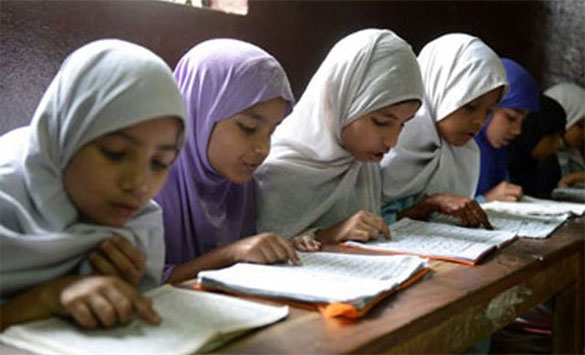
Muslim girls in Madrasa
--------
· To Instill A Sense Of Patriotism Uttarakhand Madrasas To Include Operation Sindoor In Syllabus
· Nobody Has Right Over Government Land Even Under Waqf By User Principle, Centre To Supreme Court
· New Boko Haram ‘Shekau’ Emerges, Issues Threats Against Defence Chief, Muslim Clerics, Others
· “Sharia Is More Sacred And Valuable To Us Than Anything Else,” IEA Justice Minister
· NSS Urges Action On British Imam Omar Abdallah Mansuur Who Preached Death For ‘Blasphemers’
-----
India
· Street Dancer Heckled For Singing ‘Allah Ke Bande’ At Tripura Temple, CPI(M) Seeks Action
· 'Unlike Temples, Mosques Don't Get Chadava', Survive On Financial Assistance From Waqfs: Kapil Sibbal
· New law designed to rob Muslims of religious rights over waqf: Kapil Sibal
· Waqf religious aspects left untouched: Centre
· Supreme Court told Waqf Amendments discriminate against Muslims, undermine secularism
· Muslim Artisans In Agra Unite To Craft Stone Portrait Of PM Modi As Tribute To Operation Sindoor
· Mass Demolitions In Gujarat Capital Displace Thousands; Muslim Bodies Condemn ‘Inhumane’ Action
· Innocents died, attackers still at large: Mufti slams BJP, questions Operation Sindoor's impact on civilians
-----
Africa
· The shifting front of militant Islamist Violence in the Sahel
· DSS Intercepts Three Wanted Kidnappers At Abuja Hajj Camp
· Ugandan lawmakers bring back military courts' ability to try civilians
· Khartoum accuses UAE of direct involvement in drone strikes on Port Sudan
· Most Northerners Voted Tinubu As Religious Obligation – Baba-Ahmed
------
South Asia
· Editor’s Council Concerned Over A Clause Of Anti-Terror Ordinance
· Reopening WB’s office in Afghanistan helps restore donors’ confidence
· Islamic Emirate Promotes Self-Sufficiency in Medicine at Pharmaceutical Ceremony
· US Secretary of State: Afghan Refugee transfers delayed, not canceled
· UN: Afghanistan unprepared for return of refugees
-----
Europe
· Anti-Islam activist Tommy Robinson to be released early after sentence reduction
· 'Diddy wore Muslim mask and watched': Stripper details alleged sexual encounters with Combs and ex-girlfriend Cassie
· Eurasian Development Bank to give significant support to Azerbaijan’s investment agenda -
· UK steps up action against Israel over Gaza offensive
· Italy's Meloni ready to help if Vatican agrees to Trump's war mediation plan
----
Mideast
· Israeli Politician, Yair Golan, Slammed For Saying Country Should Not ‘Kill Babies For A Hobby’
· UK Halts Trade Talks With Israel, Summons Envoy Over Gaza
· European nations increase pressure on Israel to stop broad Gaza offensive
· Iran does not need anyone's permission to enrich uranium
· How President Trump’s Middle East Tour Signaled A Bold Reset In US Foreign Policy
· Israel recalls senior Gaza hostage negotiators, leaves team in Doha
· Zionist settlers storm Al-Aqsa Mosque
· Abbas to discuss weapons in Lebanon’s Palestinian camps during Beirut visit: delegation member
· US asking countries for ‘voluntary’ Palestinian relocation: Rubio
· Lebanon pushes for local elections despite Israeli attacks
-----
Arab World
· Saudi Arabia, France To Drive Innovation In Music, Museums
· Belgian cyclist completes epic 9-country journey to perform Hajj in Mecca
· Saudi Arabia to establish 7 new bee breeding stations
· Saudi authorities launch campaign on safe use of home medical devices
· Saudi Signage and Labelling Expo opens with focus on innovation
· British pilgrims sailing from London to Saudi Arabia for Hajj
· Saudi King praises outcomes of Trump’s visit
-----
Southeast Asia
· Muslims Urged To Hold Solat Hajat, Recite Qunut Nazilah For Palestinians
· US targets Malaysia, neighbours as cheap solar panels spark tariff battle
· Singapore court jails man for helping friend abduct debtor over S$25,000 dispute
------
North America
· Judge Warns US Deportations To South Sudan May Breach Court Order
· Trump Unveils Plans For 'Golden Dome' Defence System
· Biden’s wife should be charged with ‘elder abuse’ – senior DOJ official
Compiled by New Age Islam News Bureau
-----
To Instill A Sense Of Patriotism Uttarakhand Madrasas To Include Operation Sindoor In Syllabus
May 21, 2025
Muslim girls in Madrasa
----------
The Uttarakhand Madarsa Board has decided to introduce ‘Operation Sindoor’ in its curriculum across the state, a move that will see students learning about the recent military operation.
The announcement was made by Mufti Shamoon Qasmi, President of the Uttarakhand Madrasa Education Council, who stated that the step is aimed at instilling a sense of patriotism among students. Uttarakhand has 451 madrasas, with a student population of nearly 50,000.
This decision came after Qasmi met Defence Minister Rajnath Singh in Delhi on Tuesday, accompanied by a delegation of educationists, intellectuals, and Sufi scholars.
During the meeting, he congratulated the Defence Minister on the success of Operation Sindoor under the leadership of Prime Minister Narendra Modi and Singh, and hailed the Indian armed forces for giving a heavy blow to terrorist camps in Pakistan.
He further praised the Indian Army’s bravery and highlighted Uttarakhand’s legacy of valour, describing it as the “land of heroes”.
Qasmi added that the courage demonstrated by the armed forces has earned admiration from people across the country and that madrasa students, too, should learn about this national pride.
“We implemented the NCERT curriculum in madrasas across the country, connecting children with mainstream education. This reform has brought high-quality education to these institutions… We want to share the successful story of the ‘Operation Sindoor’ with our children so that future generations understand how our soldiers executed it with strength, bravery, and courage, ensuring no civilian casualties,” he told IANS.
He noted that a meeting of the curriculum committee will be convened shortly to finalise the inclusion of a chapter on Operation Sindoor in the syllabus.
Uttarakhand Waqf Board President Shadab Shams lauded the initiative, telling IANS, “This is Devbhoomi Uttarakhand, a land also known as Sainya Dham (land of soldiers). If children studying in modern madrasas here do not learn about Operation Sindoor, then where else will they learn it?”
“Uttarakhand is a state where nearly every household has contributed a soldier to the armed forces. The governor is a retired Lieutenant General, the chief minister is a soldier’s son, and the people here are deeply patriotic. If children from such a state are not taught about Operation Sindoor, then who will be?” he said.
Shams emphasised that teaching students about the military’s heroic battles and the sacrifices made by soldiers is vital in nurturing faith and love for the nation.
“I request Chief Minister Pushkar Singh Dhami, who himself comes from a military family, to implement all these things in the NCERT syllabus as soon as possible, implement Operation Sindoor, so that the children of modern madrasas can also read these lines, read their stories, read about their valour and feel themselves in this,” he mentioned.
Shams concluded by saying, “I believe that youth and children should also get an opportunity to read these lines, read about their stories, read about their valour and feel themselves in this.” –IANS
Source: muslimmirror.com
Please click the following URL to read the text of the original Story
https://muslimmirror.com/uttarakhand-madrasas-to-include-operation-sindoor-in-syllabus/
----------
Nobody has right over government land even under waqf by user principle, Centre to Supreme Court
21.05.25
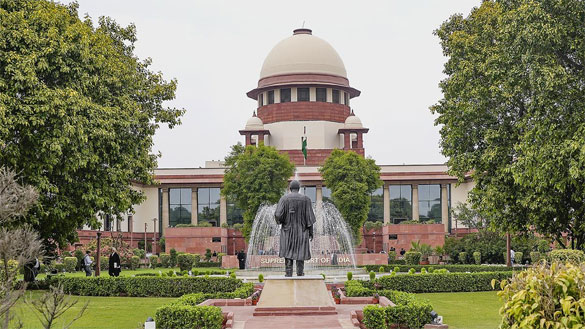
Supreme Court of India.
PTI picture.
-----------
The Centre on Wednesday told the Supreme Court that nobody can claim right over government land and it is legally empowered to reclaim properties which are declared waqf by using the waqf by user principle.
Waqf by user refers to a concept where a property is recognised as waqf based on its long-term use for religious or charitable purposes, even without formal documentation.
Responding to the submissions challenging the constitutional validity of the Waqf (Amendment) Act, 2025, Solicitor General Tushar Mehta commenced advancing his arguments on behalf of the Centre before a bench comprising Chief Justice B R Gavai and Justice Augustine George Masih.
“Nobody has the right over government land,” the top law officer said.
“There is a Supreme Court judgment which says the government can save the property if it belongs to the government and has been declared as waqf,” he said.
At the outset, the law officer said no affected parties have moved the court and “it is nobody's case that Parliament does not have the competence to pass this legislation.” He referred to the report of the joint parliamentary committee and the fact that many state governments and state waqf boards were consulted before the Act came into being.
The bench sought response from the Centre on the pleas of the petitioners that an officer above the rank of the district collector can decide the claim over waqf properties on the grounds that they are of government. “This is not just misleading but a false argument,” the law officer said. The hearing in the case is underway.
The Centre, in its written note, strongly defended the Act, saying waqf by its very nature is a “secular concept” and can't be stayed as there is a “presumption of constitutionality” in its favour.
It addressed the issues the court had previously raised and said the law only sought to regulate secular aspects of waqf administration while safeguarding religious freedom. He said there was no “grave national urgency” calling for its stay.
“It is a settled position in law that constitutional courts would not stay a statutory provision, either directly or indirectly, and will decide the matter finally. There is a presumption of constitutionality that applies to laws made by Parliament,” the note said.
The bench, on Tuesday, underscored the "presumption of constitutionality in favour of the law and said petitioners challenging the waqf law needed a "strong and glaring" case for interim relief.
"There is a presumption of constitutionality in favour of every statute. For interim relief, you have to make out a very strong and glaring case. Otherwise, presumption of constitutionality will be there," the CJI said when senior advocate Kapil Sibal, leading the charge against the legislation, began his submissions.
The Centre had urged the bench to confine the hearing on pleas to three issues.
One of the issues is the power to denotify properties declared as waqf by courts, waqf by user or waqf by deed.
The second issue relates to the composition of state waqf boards and the Central Waqf Council, where they contend only Muslims should operate except ex-officio members whereas the last one is over the provision stipulating a waqf property won't be treated as a waqf when the collector conducts an inquiry to ascertain if the property is government land.
The Centre notified the Waqf (Amendment) Act, 2025 last month after it got President Droupadi Murmu's assent on April 5.
The bill was cleared by Lok Sabha with the support of 288 members while 232 MPs were against it. The Rajya Sabha saw 128 members voting in its favour and 95 against it.
Source: telegraphindia.com
Please click the following URL to read the text of the original Story
https://www.telegraphindia.com/india/nobody-has-right-over-government-land-even-under-waqf-by-user-principle-centre-to-supreme-court/cid/2100984
----------
New Boko Haram ‘Shekau’ Emerges, Issues Threats Against Defence Chief, Muslim Clerics, Others
May 21, 2025
By George Oshogwe Ogbolu
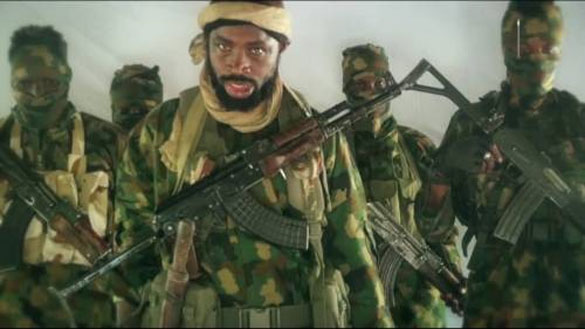
A man claiming to be the new leader of Boko Haram, adopting the infamous name “Shekau,” has released a disturbing video threatening Nigeria’s Chief of Defence Staff, General Christopher Musa, along with Muslim clerics, military personnel, and communities supporting the government’s anti-terror operations.
The threats appear to be a direct response to General Musa’s recent vow—delivered in Hausa—that insurgents would either surrender or be crushed by Nigerian troops.
In the video, translated from Hausa by PRNigeria, the insurgent declared: “This message is for General Christopher Musa. Repent and stop your mission. Like those before you—Buratai, Attahiru, Lagbaja—you will not succeed. You will regret your efforts against us. There will be no peace until democracy ends.”
He warned that all uniformed military personnel, regardless of religion, were legitimate targets for the group.
“Every soldier defending democracy is our enemy. Even if you’re Muslim, wearing that uniform makes you one of them, and we will fight you.”
Attempting to demoralize and recruit from within the Nigerian military ranks, the insurgent described the armed forces as a “thankless job” and urged soldiers to defect: “Leave that job. You can barely feed your families with it. Come and follow us.”
Muslim clerics who oppose Boko Haram’s extremist views were also targeted as he said: “Scholars misleading the people, calling us unbelievers—be warned. If you don’t support us, that’s fine. But defame us, and we will deal with you.”
He extended the threats to civilians and traders who support the military: “Anyone aiding the military against us will be killed. You are unbelievers for supporting democracy.”
Rising Concern Over Boko Haram Propaganda
The video, which security experts view as a strategic act of psychological warfare, comes amid intensified military offensives in Nigeria’s North-East. Analysts say such broadcasts aim to undermine public morale, threaten cohesion within the armed forces, and disrupt community cooperation with security agencies.
“This is classic propaganda,” said a military source familiar with counterterrorism operations. “They want to sow fear and doubt in communities and within our ranks.”
The Nigerian Armed Forces have not yet officially responded to the video. However, past military leaderships have maintained that Boko Haram’s media antics reflect desperation, not strength.
General Musa had earlier emphasized the military’s commitment to ending insurgency, stating: “These terrorists will either surrender or be eliminated. There is no middle ground.”
Source: naijanews.com
Please click the following URL to read the text of the original Story
https://www.naijanews.com/2025/05/21/new-boko-haram-shekau-emerges-issues-threats-against-defence-chief-muslim-clerics-others/
---------
“Sharia Is More Sacred And Valuable To Us Than Anything Else,” IEA Justice Minister
May 21, 2025
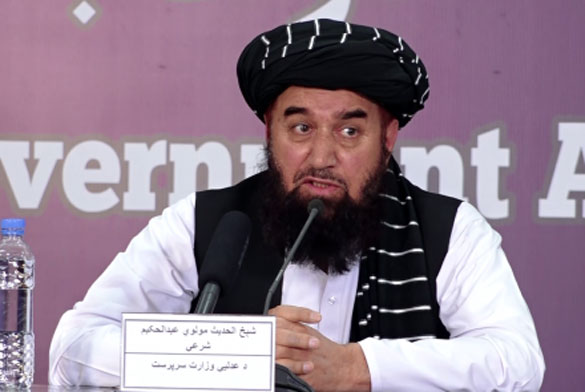
KABUL, Mawlavi Abdul Hakim Sharaei, the Minister of Justice of the Islamic Emirate, said Tuesday that Sharia is more sacred and valuable to the IEA than anything else.
Addressing the 13th St. Petersburg International Legal Forum, hosted by the Russian Federation, the Justice Minister underscored that Islamic Sharia law is the supreme and most sacred foundation for Afghanistan’s legal system, according to a statement from the ministry.
“All laws and judicial decisions under the Islamic Emirate are derived from Islamic jurisprudence, particularly the Hanafi school of thought,” he said, adding that the Islamic Emirate is prepared to engage in legal cooperation with any country or organization that respects our Islamic values, national sovereignty, territorial integrity, and the independence of the current system.
Minister Sharaei added that the Islamic Emirate has turned the detention centers into rehabilitation, education, and religious guidance centers in the country.
He also emphasized that reducing crime requires both punitive measures and public awareness, advocating for coordinated efforts at national and international levels. The St. Petersburg forum serves as a platform for international dialogue on legal cooperation and the development of judicial systems and hosts justice ministers, legal experts, and judicial officials from over 80 countries from May 19 to 21, 2025.
Source: thekabultimes.com
Please click the following URL to read the text of the original Story
https://thekabultimes.com/sharia-is-more-sacred-and-valuable-to-us-than-anything-else-justice-minister/
----------
NSS Urges Action On British Imam Omar Abdallah Mansuur Who Preached Death For ‘Blasphemers’
20 May 2025

The National Secular Society has called for police action against a British imam who accused a man of 'blasphemy' and implied he should be killed.
In one video shared on social media, imam Omar Abdallah Mansuur accused another moderate imam of insulting Muhammad and said "his punishment is the death penalty*".
In the video seen by the NSS, Mansuur displayed the man's picture and said: "When he repents, he will be put to death in the manner Muslims are killed.
"If he refuses to repent he will be caught, killed and then thrown away in a hole like a dog".
The broadcast was made to tens of thousands of followers. Mansuur has made several similar videos targeting the same imam.
Mansuur is employed by St Thomas' Hospital in London, where he works in procurement. Some of his videos were filmed at the hospital and show him wearing an NHS uniform and lanyard.
The NHS trust that runs the hospital said Mansuur has since been removed from duties "pending an investigation into allegations about his behaviour."
Victim: "Fatwa" left me "living in fear"
Mansuur began making videos accusing the imam of blasphemy in 2022.
A complaint was made to Metropolitan Police, and a referral was also made to West Yorkshire police.
The moderate imam told the Metropolitan Police: "Mr Mansuur... issued a "fatwa" against me that my punishment for insulting the Prophet is death.
"Threats of death, violence, intimidation and harassment against me have increased and intensified in the last month which has left me living in fear".
He was told by police to "avoid mosques and areas with large groups of people".
He now lives in hiding in Europe and has been warned by police that it is too dangerous for him to visit the UK.
The Metropolitan Police said it had referred his complaint to police in the country in which he is hiding.
Yair Cohen, a lawyer representing the victim has called for "immediate and decisive action" to protect his client.
He said: "Police forces seem able to swiftly arrest people for far less serious social media activity".
Mansuur: Atheists and apostates should be 'killed like bacteria'
Mansuur has published several other videos accusing members of the Somali community of blasphemy and implying they should be killed.
In another video seen by the NSS, Mansuur compared killing atheists and those who leave Islam to killing bacteria. He said: "It is considered a good action to kill bacteria since it is harmful and bad for the health of the people.
"So we say to the atheists or the apostates that once you leave Islam you are like the bacteria. It is just and right that you should be killed".
In another video, Mansuur says girls as young as 11 can be married off by their parents without their consent as long as they are virgins.
Mansuur has denied issuing death threats, saying he merely stated the Islamic punishment for blasphemy.
In recent years there have been several high profile cases of threats made towards individuals accused of insulting Islam.
They include a teacher at Batley Grammar School, who wasforced to leave the school and go into hiding after showing a picture of Muhammad in a Religious Education class following death threats.
In the past decade in France, school teacher Samuel Paty and staff at Charlie Hebdo magazine were murdered following allegations of insulting Islam. In 2022, British writer Salman Rushdie was nearly murdered in the USA over his book The Satanic Verses which offended some Muslims. And this year, Salwan Momika was shot dead in Sweden after burning a Quran in a public protest.
NSS: Extremists pushing death penalties for blasphemy "pose a serious threat to people's lives and to our democratic rights"
NSS head of campaigns Megan Manson said: "It's appalling that here in the UK, Islamists are calling for the death of supposed blasphemers or those who leave Islam.
"We're also extremely concerned by the apparent lack of action by authorities on this case.
"As we know from the cases of Charlie Hebdo, Samuel Paty, and Salman Rushdie, extremists who promote Islamic penalties for supposed blasphemy pose a serious threat to people's lives and to our democratic rights.
"The police and counter extremism authorities must take this threat seriously. And people who incite murder against those who they see as offending their religion must face justice."
*Mansuur's broadcasts are made in Somali. Translations have been provided to the NSS.
Source: secularism.org.uk
Please click the following URL to read the text of the original Story
https://www.secularism.org.uk/news/2025/05/nss-urges-action-on-imam-who-preached-death-for-blasphemers
----------
India
Street dancer heckled for singing ‘Allah ke bande’ at Tripura temple, CPI(M) seeks action
ByPriyanka Deb Barman
May 21, 2025
AGARTALA: A street dancer was allegedly heckled for singing Kailash Kher’s “Allah ke bande” at the famous Tripurasundari temple in Tripura’s Gomati district, sparking political outrage.
The opposition CPI(M) on Tuesday launched a sharp attack on the ruling Bharatiya Janata Party, demanding swift action from the state government and accusing it of fostering an atmosphere of intolerance.
The video of the incident that went viral on social media on Sunday shows the street dancer, Shanu Malakar, is purportedly being threatened by another person (not seen in the video) and questioned him for his choice of song on the temple premises, saying that praise of Allah could not be done at a temple.
In the video, Malakar is seen replying that he does street dance performances to raise funds for donations to the poor.
In reference to the video, CPIM politburo member and leader of opposition Jitendra Chaudhury said, “A youth, Sanu Malakar, a local singer who also earns money through his street dance performances and displaying physical acrobatics, was seen, in a social media video, singing the song which is devotional as well to appeal for humanity. A person threatened him in front of a huge gathering and questioned him why he uttered Allah. I appeal to the state government and the police to step in at the earliest.”
He further said that the person who threatened Malakar did so by declaring that this is “Hindustan", claiming that those who worship Allah or follow that faith are “jihadis", and asserting that such songs have no place on Indian soil.
Asserting that every Indian has constitutionally approved right to express their opinions through devotional songs of any religion, be it Hindu, Muslim, Christian or Buddhist, Chaudhury said the state government and police didn't take any action against the perpetrators till now.
“We often see that several people were arrested with different charges after the Pahalgam terror attack, and harassing them for 10-12 days... Why has no arrest been made here?” Chaudhury asked.
Reacting to the incident, BJP state spokesperson Nabendu Bhattacharya said, “It's natural that neither Azaan can be performed in temples nor Durga Puja can be performed in mosques.”
A senior police officer stated, “We have seen the video as well, but so far, no one has come forward to lodge a complaint.”
Last year, the Gomati district magistrate served a notice prohibiting shooting of any such dance, music videos, reels and posting on social media after netizens raise objections against objectionable dance performances by social media influencers in Tripurasundari temple.
Source: hindustantimes.com
Please click the following URL to read the text of the original Story
https://www.hindustantimes.com/india-news/street-dancer-heckled-for-singing-allah-ke-bande-at-tripura-temple-cpi-m-seeks-action-101747806745930.html
--------
'Unlike Temples, Mosques Don't Get Chadava', Survive On Financial Assistance From Waqfs: Kapil Sibbal
May 21, 2025
NEW DELHI: Kapil Sibal told the Supreme Court that mosques survived on financial assistance from waqfs as they do not receive any 'chadava' (monetary donation from devotees) like temples, which have corpuses of thousands of crores of rupees.
"Waqfs are endowments to Allah. Once a waqf, always a waqf. It is these waqfs from whose income mosques are maintained. The state being secular cannot give financial assistance for maintenance of private properties like waqfs which help maintain various institutions like mosques, burial grounds etc.," he said.
Chief Justice B R Gavai said, "I recently visited a dargah and found people making 'chadava'." Sibal said 'chadava' may be a practice in dargahs but not in mosques.
Source: indiatimes.com
Please click the following URL to read the text of the original Story
https://timesofindia.indiatimes.com/india/unlike-temples-mosques-dont-get-chadava/articleshow/121301114.cms
--------
New law designed to rob Muslims of religious rights over waqf: Kapil Sibal
May 21, 2025
NEW DELHI: Urging Supreme Court to stay the Waqf Amendment Act, 2025, the Muslim side claimed that the Union govt intended to expropriate waqf properties by de-recognising unregistered properties, including 'waqf by user', and by taking out ancient monuments such as Taj Mahal and Jama Masjid in Sambhal from the ambit of waqf.
Leading a battery of senior advocates for the Muslim side, Kapil Sibal told a bench of CJI B R Gavai and Justice Augustine G Masih that the 2025 law was "framed and designed for wholesale capture of waqf properties through a legislative fiat, in a process that is non-judicial and purely executive".
When the CJI said courts prima facie presume a law enacted by Parliament to be valid, Sibal said Waqf Amendment Act was discriminatory as it had singled out the Muslim community by mandating that a waqif has to be a practising Muslim for five years to be entitled to donate his properties for waqf. "Has any other religious denomination been mandated by law to ask the same question to anyone making an endowment for charitable purposes?" he asked.
Sibal said while laws governing waqfs mandated that only Muslims could be members of Central Waqf Council and state Auqaf Boards, the new law allowed govt to nominate persons who could be non-Muslims and even form the majority in the council and boards, thus taking away the right of Muslims to manage their religious bodies.
"No religious endowment of Hindus, Sikhs or Christians allows a non-believer in that religious faith to be a member of their endowment administrative body," Sibal said, adding that these provisions in Waqf Amendment Act completely violated Muslims' right to religious activities guaranteed under Articles 25 and 26 of Constitution.
He said singling out Muslim community was violative of Article 15, which mandates that no citizen is to be discriminated against on the ground of religion. Since the law was ex facie unconstitutional, its operation needed to be stayed till the SC tested its constitutional validity, he added.
Sibal said both the Ancient Monuments Preservation Act of 1904 and its updated version of 1958 provided that any govt takeover of an ancient monument, which is a waqf property, for its preservation would not change its character or hamper Islamic religious rituals there. But the present law completely barred ancient monuments from being counted as waqf property, he added.
Sibal said if there was a dispute over waqf land, or it was claimed to be govt land, then a govt-appointed officer would decide the dispute and on the basis of his recommendation, the state would carry out necessary corrections in revenue records. "The govt's own officer deciding disputes over govt land without any prescribed procedure, without any judicial adjudication, is akin to becoming judge in its own cause," he said.
Sibal and senior advocate Rajeev Dhavan referred to the Ayodhya judgment of 2019 as 'Babri Masjid case' and said in that judgment, the SC had protected the character of ancient monuments as mandated by the Places of Worship Act, 1991. The Waqf Amendment Act could not override the 1991 Act or the SC's five-judge bench judgment, they said.
Senior advocate A M Singhvi said the govt's prejudicial argument that there had been a huge increment in waqf properties since the 2013 amendment was fallacious as waqf properties were always there and their registration on the govt portal had increased over the years. Responding to the CJI's remarks on prima facie presumption of constitutionality of the Waqf Amendment Act, Singhvi said the SC had stayed the three farm laws enacted by Parliament in 2019.
Source: indiatimes.com
Please click the following URL to read the text of the original Story
https://timesofindia.indiatimes.com/india/new-law-designed-to-rob-muslims-of-religious-rights-over-waqf-kapil-sibal/articleshow/121301110.cms
---------
Waqf religious aspects left untouched: Centre
May 21, 2025
NEW DELHI: Opposing any stay on fully operationalising the Waqf Amendment Act, 2025, the Centre, in its written submissions before Supreme Court, said Tuesday that the legislation did not impinge upon any religious aspect of waqf and merely attempted to regulate its secular activities relating to management of waqf properties.
The submissions, which will be formulated into arguments by solicitor general Tushar Mehta, said the challenge to the validity of the new law was because the petitioners had confused the creation of waqf and property regulations associated with waqf with religious rights under Articles 25 and 26 of the Constitution.
It said since the fundamental purpose of the Waqf Act was to confer statutory validity upon dedications while imposing certain duties and responsibilities, it was always open to Parliament to alter the framework which conferred statutory validity to such dedications.
"The Waqf Act, including the amendments, do not touch any religious aspects of waqf, such as functions of the 'sajjadanashin' or any other essential religious practices of Muslims in general," the Centre said.
‘Property dedicated to Allah, waqf purely religious in nature’
The enactment merely seeks to efficiently regulate the secular aspects of waqf, grounded in property management and regulation, which is intrinsically public in nature, affecting the rights of the public at large, Centre said. While senior advocates Kapil Sibal, A M Singhvi, Rajeev Dhavan, C U Singh and Huzefa Ahmadi, for the Muslim side, argued on Tuesday that waqf was purely religious in nature since the property was dedicated to Allah, Centre said, “Waqf, by its very nature, is a secular concept. This is so since waqf merely means dedication of property.” “The word ‘waqf ’ is derived from the Arabic word which means ‘to hold’.
In case of religious waqf, a part of the activities being carried out by the individual waqf may be religious in nature, while other secular aspects of ‘administration of property’ in ‘accordance with law’ remain.” Centre’s submissions also appeared to counter Sibal’s argument that adjudication of disputes over waqf property, especially when it was to be determined whether the property was govt land, was entirely in the hands of the govt officer, resulting in the govt being the judge in its own cause. Centre said every order passed under Waqf Amendment Act, 2025, “is subject to judicial review before the specialised waqf tribunal under Section 83(2)”. “Thus, contrary to the submissions of the petitioners, no grave national urgency arises which warrants a stay of the enactment, as every situation which may arise during operationalisation of the enactment can be tackled judicially in the appropriate forum,” it said.
Source: indiatimes.com
Please click the following URL to read the text of the original Story
https://timesofindia.indiatimes.com/india/waqf-religious-aspects-left-untouched-centre/articleshow/121300809.cms
---------
Supreme Court told Waqf Amendments discriminate against Muslims, undermine secularism
Parmod Kumar |
May 20, 2025
The Waqf (Amendment) Act, 2025 came under intense scrutiny in the Supreme Court on Tuesday, with senior lawyers arguing that the law unfairly targets the Muslim community, imposes discriminatory conditions on Islamic endowments, and threatens the secular character of the Constitution.
A bench comprising Chief Justice BR Gavai and Justice Augustine George Masih heard more than four hours of submissions from senior advocates Kapil Sibal, Rajeev Dhavan, Abhishek Manu Singhvi, CU Singh, and Huzefa Ahmadi.
The petitioners contended that the 2025 amendment violates Articles 15, 25, 26, and 29 of the Constitution and pointed out that no similar provisions exist in the laws governing religious endowments of other faiths such as the Tamil Nadu Hindu Religious and Charitable Endowments Act, the Andhra Pradesh Charitable and Hindu Religious Institutions and Endowments Act, or the Uttar Pradesh Shri Kashi Vishwanath Temple Act, 1983.
Opening the arguments, Kapil Sibal argued that the amended Act empowers the Central Government to indirectly appoint non-Muslims to the Central Waqf Council, altering the representative character of institutions meant to regulate Muslim religious properties. While State Waqf Boards remain under state jurisdiction, Sibal noted that the Council could now have a non-Muslim majority.
“There would be only eight Muslim members, while the rest may be non-Muslims nominated by the government. Hindu, Sikh, and Christian endowments are regulated solely by members of their own faith. Why this differential treatment?” Sibal asked.
He further criticized the amendment’s inquiry mechanism, highlighting that government officers are now empowered to determine Waqf status—acting as judge in their own cause. A waqif, he pointed out, can only challenge the officer’s decision after the same proceedings have concluded.
Chief Justice Gavai observed that the amended law now imposes harsher consequences for failing to register Waqf properties.
“Earlier, only the mutawalli was penalized for non-registration. Now, the entire Waqf property is affected. This is a drastic change,” he noted.
Senior Advocate Huzefa Ahmadi denounced the removal of the concept of “waqf by user” as a regressive step, arguing that it threatens centuries-old mosques, graveyards, and Islamic charitable institutions that were never formally documented but are historically and religiously acknowledged.
“By sleight of hand, such waqfs now vanish,” Ahmadi warned, describing the move as both retrospective and disruptive to the community’s heritage.
Abhishek Manu Singhvi questioned why Muslims alone are required to produce proof of religious use over five or ten years when making an endowment—an obligation not placed on other faiths.
“Endowments exist in every religion. Why this selective religious regulation? This contravenes Article 15,” Singhvi said.
Rajeev Dhavan echoed these concerns, asserting that the law violates Articles 25, 26, and 29 of the Constitution. “This destroys the secular edifice Your Lordships have built over decades. Secularism is not a slogan—it is a constitutional guarantee,” Dhavan said.
Appearing for the Union Government, Solicitor General Tushar Mehta requested the court to limit the interim hearing to three issues already flagged by the bench: the inclusion of non-Muslims in Waqf Boards and Councils, the removal of ‘waqf by user’, and the identification and de-notification of government land as waqf.
“Petitioners’ written submissions go far beyond this. My affidavit responds only to these three issues. Let us stay within that scope,” Mehta urged.
The petitioners objected to this narrowing of the debate. Sibal insisted that the entire law merits judicial scrutiny and said the court “cannot slice the Constitution in bits.”
The petitions have been filed by Congress MP Mohammad Jawed, AIMIM MP Asaduddin Owaisi, Maulana Arshad Madani (Jamiat Ulema-i-Hind), the All-India Muslim Personal Law Board (AIMPLB), Samastha Kerala Jamiatul Ulama, the Social Democratic Party of India (SDPI), and the Association for Protection of Civil Rights (APCR). They argue that the amendments amount to targeted interference in Muslim religious affairs and violate constitutional guarantees.
Six BJP-ruled states—Haryana, Maharashtra, Madhya Pradesh, Rajasthan, Chhattisgarh, and Assam—have filed intervention applications supporting the law, asserting that the amendments are necessary to curb fraudulent encroachments on public and private lands wrongly claimed as waqf.
Defending the amendment, the Centre has argued that the 2013 amendments to the Waqf Act led to a multifold increase in recorded waqf land and that the 2025 amendment introduces transparent and formal mechanisms to govern waqf dedications.
The hearing will continue on Wednesday, May 22, when the Centre and states supporting the law are expected to present their arguments against any interim relief.
Source: thestatesman.com
Please click the following URL to read the text of the original Story
https://www.thestatesman.com/india/supreme-court-told-waqf-amendments-discriminate-against-muslims-undermine-secularism-1503435063.html
--------
Muslim Artisans In Agra Unite To Craft Stone Portrait Of PM Modi As Tribute To Operation Sindoor
May 20, 2025
Six Muslim artisans in Uttar Pradesh's Agra have come together to create a stone portrait of Prime Minister Narendra Modi as a tribute to his leadership during Operation Sindoor, symbolising their solidarity with the nation.
“We, the artists, are creating a portrait of Prime Minister Modi as a tribute to his hard work and dedication during Operation Sindoor. The artwork is being crafted using natural stones, and all six of us, are from the Muslim community. We are working together on this project,” handicraft businessman Adnan Sheikh told PTI.
He said that they want to send a message that in difficult times, Muslims in India always stand united with the country and want to give a strong response to Pakistan.
“Through this gesture, we want to convey that in times of national crisis, the Muslim community stands firmly with India. We hope to personally present this portrait to Prime Minister Modi,” Adnan Sheikh added.
Defence minister Rajnath Singh on Friday revealed that the name “Operation Sindoor” was suggested by Prime Minister Narendra Modi and praised the Indian Air Force personnel for successfully completing the mission in just 23 minutes.
Under this operation, the Indian armed forces carried out precision strikes on specific terror bases in Pakistan and PoK, which were used to plan and launch attacks against India.
Terror headquarters of the banned Jaish-e-Mohammed, Lashkar-e-Taiba, and Hizbul Mujahideen were targeted, with the Indian Air Force conducting night raids on nine hideouts in Pakistan and Pakistan-occupied-Kashmir, officials confirmed on Wednesday.
Among the precise targets hit were the Markaz Subhan Allah at Bahawalpur, Sarjal at Tehra Kalan, Markaz Abbas in Kotli, and Syedna Bilal camp in Muzaffarabad, all linked to the banned Jaish-e-Mohammed.
Other targets included the Markaz Taiba at Murdike, Markaz Ahle Hadith at Barnala, and Shwawai Nalla camp at Muzaffarabad, all associated with the banned Lashkar-e-Taiba.
Additionally, Makaz Raheel Shahid in Kotli and Mehmoona Joya in Sialkot, belonging to Hizbul Mujahideen, were also hit.
Of the nine targets, four were located in Pakistan and five in Pakistan-occupied-Kashmir.
Source: hindustantimes.com
Please click the following URL to read the text of the original Story
https://www.hindustantimes.com/india-news/muslim-artists-in-agra-unite-to-craft-stone-portrait-of-pm-modi-as-tribute-to-operation-sindoor-video-101747744130563.html
---------
Mass demolitions in Gujarat capital displace thousands; Muslim bodies condemn ‘inhumane’ action
May 20, 2025
Thousands of Muslim families in Ahmedabad’s Chandola Talab area were left scrambling to save their belongings on Tuesday as the Ahmedabad Municipal Corporation (AMC) launched a large-scale demolition drive, targeting over 7,000 structures—most of them homes belonging to Muslims.
The action, which has drawn sharp criticism from human rights groups and minority organizations, has rendered thousands homeless.
Authorities linked the demolition to “national security” concerns following the April 26 Pahalgam attack, alleging the area was illegally occupied by undocumented Bangladeshi immigrants.
Since the incident, over 6,500 people—mainly Muslims—have been detained for citizenship verification. However, activists say the vast majority are Indian citizens, many of whom possess valid documents like Aadhaar and voter ID cards.
The demolition resumed after the Gujarat High Court upheld an earlier drive on April 29, ruling that structures on Chandola Lake land were unauthorized. On April 28, more than 4,000 shanties in Siyasatnagar and Bengali Vaas were razed, displacing thousands, mostly poor migrants from Rajasthan, Madhya Pradesh, and Bengal who work as laborers and ragpickers.
Community leaders say the government is targeting Muslims under the guise of legal and security concerns. Mujahid Nafees, convener of the Minority Coordination Committee, called the action “completely inhumane,” accusing the administration of using the Pahalgam attack to justify mass evictions. “People have lived here for over 40 years,” he said.
Wasif Hussain of Jamaat-e-Islami Hind Gujarat echoed the sentiment, criticizing the government for demolishing homes without providing alternative shelter. “Elderly people and children are being thrown out in extreme heat with no place to go,” he said. Activists are now demanding immediate rehabilitation for all affected families. — With Agencies Inputs
Source: muslimmirror.com
Please click the following URL to read the text of the original Story
https://muslimmirror.com/mass-demolitions-in-gujarat-capital-displace-thousands-muslim-bodies-condemn-inhumane-action/
---------
Innocents died, attackers still at large: Mufti slams BJP, questions Operation Sindoor's impact on civilians
Muzaffar Raina
21.05.25
Former chief minister Mehbooba Mufti on Tuesday launched a full-throttle attack on the BJP-led central government, questioning the achievements of Operation Sindoor and alleging that more innocent lives were lost while the militants involved in the Pahalgam carnage were still at large.
Mehbooba recently picked up a fight with chief minister Omar Abdullah over his call to revive the contentious Tulbul Navigation Project, which involves regulating the Jhelum’s waters before it flows into Pakistan, following it up with another offensive against the government’s decision to engage 4,000 ex-servicemen to secure vital installations amid rising unemployment here.
Mehbooba has now launched another attack on the Centre’s decision to clash with Pakistan over the Pahalgam killings. She was addressing the media after visiting border areas to assess the damage caused to lives and property during the hostilities.
Mehbooba said war was the solution “to nothing” as she regretted the losses of civilians, particularly children, on both sides. She said those advocating war should be sent to the borders in Jammu and Kashmir, along with their wives and children, to taste the brutalities of war.
She was asked how Operation Sindoor benefited the country.
“I do not know how it benefited. I can tell of losses. Our homes were destroyed, our children were killed, parents dug out graves for their children in their courtyards, a mother of two little kids — the wife of a Sardarji — was hit by a shell, ripping it apart,” she said.
“This is what I saw. I do not know what more was achieved. This is because militants, whom you call terrorists, who are involved (in the Pahalgam attack) have not been apprehended so far, there are no reports of them.”
Mehbooba questioned the claims that militants were killed on the other side during the operation, referring to external affairs minister S. Jaishankar saying he had forewarned Pakistan about the imminent attack.
“It means if you had warned (before the start of the operation), telling them that we are targeting terrorist camps, they must have had the opportunity to escape. For me, it is zero/zero (gain for India and Pakistan).”
She ridiculed the BJP’s reported allegations that leader of Opposition Rahul Gandhi had marked himself out as “pro-Pakistani” by asking whether India lost jets
because the Centre decided to inform Pakistan in advance about the operation.
“Unfortunately, whenever you raise a question, you are immediately labelled anti-national. India is a great country, India is a nation. BJP is not the nation, posing questions to the BJP or its government, I do not think it is anti-national or pro-Pakistani,” she said.
Source: telegraphindia.com
Please click the following URL to read the text of the original Story
https://www.telegraphindia.com/india/innocents-died-attackers-still-at-large-mehbooba-mufti-slams-bjp-questions-operation-sindoors-impact-on-civilians-prnt/cid/2100900
----------
Africa
The shifting front of militant Islamist Violence in the Sahel
20th May 2025
Militant Islamist violence in the Sahel continues to shift southward and westward, putting ever more pressure on population centers in Mali, Burkina Faso, and Niger—as well as on their coastal West African neighbors.
The Sahel has held the designation of the most lethal theater of militant Islamist violence in Africa for 4 years in a row. The Sahel accounted for 55 percent of all such fatalities, costing the lives of 10,400 people out of a total of 18,900 deaths continentally. An estimated 67 percent of all non-combatants killed by militant Islamist groups in Africa are in the Sahel.
Three Sahelian countries—Mali, Burkina Faso, and Niger—are the focal point of militant Islamist violence in the region. This violence has widened in scale and scope in recent years. Fatalities linked to these groups are more than two and half times the levels seen in 2020 when the first military coup in Mali occurred. Subsequent coups in Burkina Faso and Niger have also been followed by deteriorating security. Militant Islamist groups control more territory and transportation arteries in the three countries than at any point since the insurgencies began more than a decade ago. These figures are likely an undercount as the military juntas in all three countries have systematically intimidated journalists for reporting on military setbacks.
The widening security threat in the Sahelian countries is resulting in growing pressure on the neighboring coastal West African countries of Benin, Togo, Ghana, Côte d’Ivoire, Guinea, Senegal, and Mauritania.
Militant Islamist violence in the Sahel is not uniform but marked by concurrent patterns of expansion, plateau, and modest reductions. The divergent trends merit deeper analysis to better understand the focal points, actors, and objectives of the different extremist groups driving this violence.
Multiple Groups, Multiple Agendas
The threat from militant Islamist groups in the Sahel is multidimensional with distinct groups each operating with their own unique leadership, organizational structure, objectives, fundraising, recruitment, and tactics. In 2017, several of these militant groups with affiliations to al Qaeda joined a coalition called Jama’at Nusrat al Islam wal Muslimeen (JNIM) to coordinate their activities and shield the composite entities from scrutiny.
JNIM’s most active group is the Maçina Liberation Front (FLM) led by the charismatic Fulani preacher Amadou Koufa. As it has consolidated its grip on territory around its stronghold in central Mali, the FLM has used this base as a launching pad to expand into southern Mali and Burkina Faso. This includes a high-profile attack on a gendarmerie base in the capital city of Bamako in September 2024, in which dozens of soldiers were killed and the presidential plane set on fire.
Other JNIM contingents, like Ansaroul Islam and Katiba Hanifa, have sustained their activities in northern and eastern Burkina Faso, consolidating their positions there and expanding further south into the border areas of Togo and Benin.
Militant Islamist groups first gained a foothold in the Sahel in northern Mali two decades ago with the emergence of fighters from al Qaeda in the Islamic Maghreb (AQIM), who had been operating in Algeria. Building on this growing influence, a Tuareg leader from Kidal, Iyad ag Aghali, founded Ansar Dine in 2011. Ansar Dine subsequently became a founding member of JNIM, with ag Ghali recognized as its official emir.
Another AQIM offshoot led by Abu al Bara al Sahrawi rebranded itself as the Islamic State in the Greater Sahara (ISGS) in 2015, pledging allegiance to the Islamic State. Building on its de facto territorial control in the northern Malian region of Ménaka (which was consolidated after the withdrawal of the United Nations Multidimensional Integrated Stabilization Mission in Mali (MINUSMA) in December 2023), ISGS has increased its violent attacks in western Niger where fatalities have jumped 66 percent (to 1,318 deaths) over the last year. ISGS militants have also maintained their pressure around the northern Malian city of Gao and the Oudalan and Séno Provinces of northern Burkina Faso where they have at times clashed with JNIM-affiliated militants. The concentration of ISGS activities in this area suggests a carving out of territory by ISGS from JNIM, with ISGS operating as the main actor in Ménaka and western Niger.
Sifting through these competing actors and areas of influence, three broad patterns of militant Islamist violence in the Sahel emerge:
Zones of rising militant Islamist group violence
Zones of militant Islamist group entrenchment
Threats to the border areas of coastal West African countries
Zones of Rising Militant Islamist Violence
Zones of rising militant Islamist violence account for 42 percent of the fatalities observed in the Sahel over the past year. Three distinct areas stand out.
FLM remains most deeply entrenched in Central Mali and the neighboring region of Boucle du Mouhoun in northwest Burkina Faso. FLM has mobilized recruitment by exploiting economic and political tensions between pastoralist and farming communities in central Mali. FLM targets Fulani youth by presenting itself as sympathetic to the pastoralists’ grievances.
As FLM militants have pushed into Burkina Faso, they have engaged in livestock theft, the burning of villages, and destruction of bridges, further impoverishing and displacing communities that have resisted their presence. This is part of a trend in which the FLM has established itself through violence and, in the process, gained control of greater swathes of territory, transportation arteries, and economic activity.
The central Malian regions of Segou and Mopti saw more violent events (605) and fatalities (1,557) than in any previous year.
The 38-percent increase in fatalities registered in the Boucle du Mouhoun Region of Burkina Faso (resulting in 1,199 deaths) reflected the largest year-on-year increase of any region in the country. In the year prior to Burkina Faso’s two military coups in 2022, Boucle du Mouhoun reported 58 fatalities.
Considering Boucle du Mouhoun, Mopti, and Segou, there has been a 165-percent increase in fatalities (from 1,038 to 2,756) linked to militant Islamist groups from 2021 to 2024.
Roughly 1 out of every 3 fatalities linked to militant Islamist groups in Mali and Burkina Faso took place in either Boucle du Mouhoun, Mopti, or Segou in 2024.
As FLM expands southward from Central Mali and Boucle du Mouhoun into southwest Burkina Faso, it poses a growing threat to Bobo Dioulasso—Burkina Faso’s second largest city (with a population of 1.2 million) and economic hub in the subregion. Taking territory surrounding Bobo Dioulasso would enable FLM to link up its core contingent of forces with FLM-affiliated fighters already established in Burkina Faso’s southwest near the border with Côte d’Ivoire. This would also place FLM in a position to push westward toward Bamako and the border with Guinea.
Vanguard FLM Force on the Ivorian Border
An offshoot group of FLM-linked militants has entrenched itself around the Dida Forest in southwestern Burkina Faso’s Cascades Region since 2019. These militants have struggled to establish a foothold in northern Côte d’Ivoire, but they have tapped into smuggling and trafficking networks as well as artisanal mining sites in the area. Led by a commander using the nom de guerre “Hamza,” this militant Islamist group has recruited from marginalized populations, intermixed with criminal actors, and established ongoing revenue streams that have made the violent extremists more self-reliant.
Southern Mali
FLM is also using its base in central Mali and Boucle du Mouhoun to stage more attacks into southern Mali. FLM’s expansion into this region represents an alarming development given that 60 percent of Malian citizens reside in southern Mali. The region is also the agricultural heart of the country, where cotton cultivation provides livelihoods for over 4 million people, roughly 20 percent of the population. Southern Mali is also the area in which most industrial scale mining occurs, making it strategically important to the country’s economy. Gold dominates Mali’s mining sector, representing more than 90 percent of the country’s mineral production. Deposits of diamonds, rock salt, phosphates, semi-precious stones, bauxite, iron ore, and manganese are also mined in this region. Taken together, Mali’s top two exports, gold and cotton, make up around 80 percent of export earnings in Mali’s economy. The deteriorating security situation in southern Mali, therefore, portends mounting disruptions for the country.
Bamako suffered a major attack in September 2024 when FLM forces hit a gendarmerie school, resulting in the loss of dozens of soldiers. The past year saw nearly triple the number of violent events occurring within 150 km of Bamako compared to 4 years ago.
No other zone in the Sahel recorded a sharper increase in militant Islamist group activity than southern Mali in the past year, with fatalities linked to violent events jumping by 87 percent (from 168 to 314).
Western Niger
The geographically strategic location of western Niger—abutting both central Mali and eastern Burkina Faso—makes it a highly influential zone of control for militant Islamist groups. Since the July 2023 military coup in Niamey, violent events and associated fatalities have dramatically increased in this zone as both JNIM and ISGS carve out their areas of influence in Niger.
JNIM affiliates Ansaroul Islam and Katiba Hanifa have targeted the commercial corridors facilitating trade between Ouagadougou and Niamey. Building on its base in Mali’s Ménaka Region, ISGS has also rapidly expanded its control of territory in western Niger since the coup. ISGS has mounted increasingly lethal attacks in the Tillaberi Region. This has enabled ISGS to severely disrupt northbound transportation between Niamey and Gao in Mali.
ISGS and Ansaroul Islam are both also targeting different sections of the primary westbound artery from Niamey to Djibo in Burkina Faso. Meanwhile, a recently emerged shadowy JNIM group referred to as Katiba Hanifa disrupts a major commercial transit route that connects Niamey to Ouagadougou through the eastern city of Fada N’Gourma. These developments present a growing security and economic threat to Niamey as it finds itself increasingly encircled by the two extremist factions.
ISGS has also entrenched itself in areas of northern Burkina Faso in Oudalan and Seno Provinces where the borders of Burkina Faso, Mali, and Niger meet. The collective effect of these escalations is a steadily deteriorating security situation in western Niger.
Fatalities linked to militant Islamist violence in western Niger have increased 66 percent from 793 in 2023 to 1,318 in 2024. These fatalities represent a marked increase in lethality as the number of violent events increased only marginally from 230 to 243 over the same period.
Niger’s Tillaberi Region, which borders both Burkina Faso and Mali, recorded 92 percent of the fatalities (1,212) linked to militant Islamist groups (primarily ISGS and Ansaroul Islam) in western Niger in 2024.
Long focused on Ménaka in northern Mali, ISGS is now linked to roughly the same number of violent events in western Niger (145) as in northern Mali (149). By stretching its influence southward both west and east of Niamey, ISGS militants may be seeking to encircle the Nigerien capital while also gaining control over supply routes to northwest Nigeria.
JNIM (likely Ansaroul Islam), meanwhile, has been expanding its violent activity in western and southwestern Niger. It was linked to 598 fatalities in 2024, a 237-percent increase over the previous year.
Roughly 90 percent of these JNIM-linked attacks in western Niger were concentrated in two areas: the region bordering eastern Burkina Faso and the border areas of northern Benin. The latter attacks are likely linked to Katiba Hanifa.
Areas of Militant Islamist Group Entrenchment—Northern Mali and Northern Burkina Faso
Several regions of the Sahel saw either plateauing figures of militant Islamist group violence or modest abatements. For example, northern Mali and northern Burkina Faso, excluding Boucle du Mouhoun, saw slight declines in the number of violent events and fatalities from the record levels of violence experienced in 2023. Rather than an improving security situation, however, these plateaus appear to reflect the entrenchment of control over these northern territories where JNIM (likely Ansar Dine and Ansaroul Islam) and ISGS have long maintained a presence. These zones of entrenchment account for 48 percent of the fatalities in the Sahel, underscoring the sustainment of a high degree of militant Islamist violent activity.
In northern Mali, where Ansar Dine has been operating for two decades, militants closely linked to Iyad ag Aghali are able to control main thoroughfares and road arteries. Deadly attacks are so common that civilians are forced to rely on military escort, though these convoys are routinely ambushed by militants. The sparsely populated countryside and challenging terrain offer safe haven to the militants who have besieged dozens of urban centers.
In northern Burkina Faso, JNIM-affiliated Ansaroul Islam led by Jafar Dicko has entrenched itself around the city of Djibo. This area of Burkina Faso, comprising the Nord, Sahel, and Centre-Nord Regions, suffered more than 25 percent (2,674) of all fatalities in the Sahel theatre.
Northern Burkina Faso has also seen multiple incidents in which militants have killed hundreds of civilians and soldiers in single attacks over the past year. In June 2024, likely Ansaroul Islam militants killed more than 100 soldiers in an attack on a military base in Mansila in the Sahel Region of northeastern Burkina Faso. In Centre-Nord Region, militants attacked Barsalogho residents who were digging defensive trenches under the supervision of soldiers and Volunteers for the Defense of the Homeland (VDP) militiamen. Some 400 civilians were believed to be killed in this August 2024 attack. In the same month, suspected Ansaroul Islam militants ambushed a food supply convoy under security force escort in Est Region and killed roughly 150 soldiers and allied militiamen as well as dozens of civilians. These events are among the worst single-day fatality events ever recorded in Burkina Faso’s history.
From its base in northern Burkina Faso, Ansaroul Islam has been able to expand south and east, linking up with Katiba Hanifa in southeastern Burkina Faso while also placing growing pressure on Ouagadougou.
In the tri-border zone between Mali, Burkina Faso, and Niger contested by Ansaroul Islam and ISGS, civilians and security forces have come under persistent attack. Attacks on Médecins Sans Frontières (MSF) health workers have led the humanitarian organization to suspend its activities in multiple locations in this region including Djibo in northern Burkina Faso and Ménaka in northern Mali. In Ménaka, ISGS has effectively besieged several municipalities to assert its de facto control over the territory. This has resulted in a 28-percent increase in the number of displaced persons in the region and an 85-percent increase in the number of refugees fleeing Ménaka for Niger over the last year.
Blockades by ISGS, FLM, Ansaroul Islam, and Ansar Dine around Kidal and Timbuktu have pushed regions of northern Mali and northern Burkina Faso into emergency levels of food insecurity, causing millions to suffer acute hunger. Throughout the region, dozens of municipalities remain under siege, making it difficult for food and other necessities to reach a growing population of forcibly displaced persons.
In short, even in parts of the Sahel where the recorded events of violence have plateaued or decreased in aggregate, high levels of instability persist.
Threats to Coastal West Africa
The continued expansion of militant Islamist violence in Mali, Burkina Faso, and Niger has resulted in an increased number of attacks along and beyond the borders of coastal West African countries, from Mauritania to Nigeria. Most attention has focused on Benin and Togo, which have respectively suffered 153 and 96 militant Islamist group-linked fatalities in 2024. However, there have also been dozens of violent extremist attacks in southern Mali within 50 km of the borders of Mauritania, Senegal, and Guinea. Until recently, these border zones reported little to no activity.
Fatalities linked to militant Islamist group violence within 50 km of or over the borders of coastal West Africa increased 27 percent from 1,601 to 2,036 between 2023 and 2024. This is even though violent events in the same zone dropped slightly from 455 to 449 over the same period.
The most notable increase occurred in Mali, where the number of fatalities linked to militant Islamist groups within 50 km of the border with Mauritania, Senegal, and Guinea shot up from 23 in 2023 to 125 in 2024.
Meanwhile in southwestern Burkina Faso, JNIM-affiliated militants sustained their threat on the border of northern Côte d’Ivoire. Fatalities linked to these groups increased 27 percent from 267 to 361 in 2024.
Southeastern Burkina Faso
Pressure on coastal West African countries has been particularly pronounced in the borderlands and jointly protected areas like the WAP parklands, which includes territory from Benin, Burkina Faso, and Niger and is near Togo, Ghana, and Nigeria. The parks’ transboundary location amplifies the complexity this security challenge poses for regional cooperation.
JNIM-affiliate Katiba Hanifa has established itself in southeastern Burkina Faso since 2018. The militants use safe havens in the WAP parklands to infiltrate Benin and Togo while simultaneously expanding west in Burkina Faso along the border with Togo and Ghana.
Katiba Hanifa targets some of the major commercial transit corridors for the region, seeking to exploit and cut off trade flow from coastal ports in Cotonou and Lomé. In 2024, militants heavily targeted both road networks and key border crossings, like Gaya in Niger. This poses a serious threat to Niamey. The Cotonou corridor handles more than 50 percent of Niger’s trade, with an additional 20 percent of Niger’s imports passing through Burkina Faso along routes that Katiba Hanifa has similarly targeted.
In addition to disrupting trade and tapping into the adjacent smuggling and trafficking networks, the militant Islamists have sought to exploit artisanal gold mining sites around the W-Arly-Pendari (WAP) reserve. The parklands are also an important area for pastoralists moving their herds to markets in coastal West Africa or seeking pasture on which to graze their livestock. Katiba Hanifa militants regularly extort livestock herders who move through and around the parklands, adding another important revenue stream to their activities.
As Katiba Hanifa expands westward from its base in southeast Burkina Faso it poses a growing threat to the northern borders of Ghana. Should Katiba Hanifa be able to expand westward across southern Burkina Faso, JNIM-affiliated militants would effectively surround Ouagadougou.
Fatalities linked to militant Islamist groups (likely Katiba Hanifa) in Burkina Faso’s Est Region—which includes the WAP complex and borders Niger, Benin, and Togo—nearly tripled in the last 2 years to 1,472 deaths.
In the Centre-Est Region of Burkina Faso, bordering Togo and Ghana, there was a 266-percent increase in fatalities (to 612 deaths) in the same time span.
The continued southward and westward push of militant Islamist groups is heightening the pressure on the borders of all the coastal West African countries. This will require the redoubling of proactive security and governance outreach measures in the northern regions of these countries to mitigate this threat and hold the line.
Written by the Africa Center for Strategic Studies and republished with permission. The original article can be found here.
Source: defenceweb.co.za
Please click the following URL to read the text of the original Story
https://www.defenceweb.co.za/african-news/the-shifting-front-of-militant-islamist-violence-in-the-sahel/
----------
DSS Intercepts Three Wanted Kidnappers At Abuja Hajj Camp
May 20, 2025
By Enioluwa Adeniyi
The Department of State Services (DSS) has successfully intercepted three wanted kidnappers at the Hajj camp in Abuja.
A reliable source who spoke with The Guardian on the development disclosed that the suspects were apprehended on Monday during the screening process of pilgrims, who were preparing to be airlifted to Saudi Arabia for the Hajj pilgrimage.
Naija News reports that the suspects’ names have yet to be revealed.
According to the source, the trio had been declared wanted after their alleged involvement in banditry and kidnapping activities. The suspects had reportedly been evading capture since security agencies launched a manhunt for them.
“I can confirm operatives arrested three suspects,” the DSS source revealed.
The arrests come on the heels of a similar operation by the DSS, where they detained a suspected mastermind of kidnapping operations, Sani Galadi, at the Sultan Abubakar International Airport in Sokoto.
Galadi had been preparing to board a flight to Saudi Arabia for the 2025 Hajj pilgrimage.
Reports from Naija News indicate that Galadi was apprehended during a routine screening process at the Hajj terminal before his departure.
The suspect is currently under investigation, and authorities have stated that he will face charges in court following the completion of his interrogation.
Source: naijanews.com
Please click the following URL to read the text of the original Story
https://www.naijanews.com/2025/05/20/breaking-dss-intercepts-three-wanted-kidnappers-at-abuja-hajj-camp/
-----------
Ugandan lawmakers bring back military courts' ability to try civilians
May 21, 2025
Ugandan lawmakers on Tuesday passed a government-backed bill to authorize civilian trials in military courts, defying widespread criticism by opposition figures and others who called it a backward gesture.
The contentious legislation was introduced earlier this year after the Supreme Court ruled that civilians can’t be court-martialed, questioning the competence of untrained military officers to dispense justice.
The bill states that civilians can be court-martialed if their alleged offenses are “in support of or in association with persons subject to military law.” It also says that presiding officers must be qualified in law.
But opposition figures, rights activists and others insist such legislation is an anti-democratic effort as the east African country heads into elections scheduled for 2026.
Human rights organisation Amnesty International has warned that military courts could help "entrench repression ahead of the 2026 elections."
Some members of the opposition walked out of the parliamentary chamber before the bill was passed, protesting what they said was an illegality.
The legislation is an attempt to “unconstitutionally grant judicial powers reserved for superior courts to subordinate military courts that have specialized jurisdiction to handle only military disciplinary offenses,” the Uganda-based rights group Chapter Four said in a statement.
President Yoweri Museveni, an authoritarian leader who has held power in the east African country since 1986, is expected to sign the bill within days.
The president and his son, army commander Gen. Muhoozi Kainerugaba, had condemned the Supreme Court's decision to effectively disband court-martials. Days after that ruling, government officials launched the process of introducing legislation to keep military courts active.
Museveni said in a statement following the court’s decision that “the country is not governed by the judges.” He is expected to run again in polls set for January 2026.
Many Ugandans expect an unpredictable political transition because the 80-year-old Museveni has no obvious successor within the ranks of the ruling National Resistance Movement party.
Some observers fear that in future he may step aside in favor of Kainerugaba in a bloodless coup. Kainerugaba has asserted his wish to succeed his father as president.
Source: africanews.com
Please click the following URL to read the text of the original Story
https://www.africanews.com/2025/05/20/ugandan-lawmakers-bring-back-military-courts-ability-to-try-civilians/
--------
Khartoum accuses UAE of direct involvement in drone strikes on Port Sudan
May 20, 2025
Sudan has accused the United Arab Emirates of carrying out a drone attack on the war-time administrative capital of Port Sudan earlier this month.
Speaking in New York on Monday, Khartoum's ambassador to the United Nations, Al-Harith Idriss, alleged the operation was launched from a UAE military base with support from Emirati naval vessels in the Red Sea.
It is the first time that Sudan has accused the Gulf state of direct military intervention in its civil war against the paramilitary Rapid Support Forces (RSF).
Idriss also claimed that the 4 May strike on Port Sudan was revenge for an army attack a day earlier on an alleged Emirati warplane in the RSF-controlled city of Nyala.
Khartoum recently cut diplomatic ties with the UAE, accusing it of arming and funding the rebel group in the deadly war, which is in its third year.
The UAE has denied the accusation and did not immediately comment on this latest statement.
Up until now, Port Sudan has been seen as a safe haven for government officials, diplomats, and humanitarian organisations.
But since the start of the month, it has been hit with a volley of drone strikes, largely against army facilities, the main airport, and fuel depots.
The Sudanese government is now calling on the United Nations, the African Union, and the Arab League to investigate the incident and hold accountable those responsible.
The war between the army and the RSF was triggered by a dispute over a transition to civilian rule.
It has devastated Sudan, pushing more than 13 million people out of their homes and spreading famine and disease.
Tens of thousands of Sudanese have died in the fighting.
Source: africanews.com
Please click the following URL to read the text of the original Story
https://www.africanews.com/2025/05/20/khartoum-accuses-uae-of-direct-involvement-in-drone-strikes-on-port-sudan/
----------
Most Northerners Voted Tinubu As Religious Obligation – Baba-Ahmed
May 20, 2025
By Udeze Ekene
Former Special Adviser to President Bola Tinubu on Political Affairs, Hakeem Baba-Ahmed, has said Northerners must take responsibility for the poor governance of the current administration.
Baba-Ahmed said most Muslims and Northerners voted for Tinubu not based on competence or based on belief in his capacity to lead the country, but because of the Muslim-Mulsim ticket.
Naija News reports that Tinubu’s former Political Affairs Special Adviser stated this in his column on Tuesday.
According to him, most Muslims and Northerners took it that voting for Tinubu was a religious obligation.
His write-up, he said, was an engagement he had with his graduate students on Governance and Public Policy.
He stated that the conversation resulted from question from his students on why he worked for President Tinubu, knowing he would not deliver good governance.
“I explained that it would have been irresponsible to refuse to be part of a rebuilding process after so much damage had been done to the nation, damage I had previously criticized. Many northern voters now behave as if the Tinubu administration descended upon Nigeria from the sky and that working in or for it is a mortal sin.
“I highlighted the prominent roles of influential northern governors in pushing through a southern candidacy, many of whom anchored the successful Tinubu campaign, while others now occupy front seats in his administration. This was after a northern presidency had achieved the worst record in leadership credentials,” he said.
The former spokesman of the Northern Elders Forum (NEF) argued that the North should be ashamed of voting Tinubu on the condition of region and religion.
“I reinforced this point to a crowd made up substantially of northerners and Muslims: the majority of Tinubu’s votes came from northerners and Muslims who believed that voting for him was a religious obligation. If anyone should be held responsible for Tinubu’s victory, it should be those who elevated region and religion as the prime determinants of their choices during the last election,” he stated.
Source: naijanews.com
Please click the following URL to read the text of the original Story
https://www.naijanews.com/2025/05/20/most-northerners-voted-tinubu-as-religious-obligation-baba-ahmed/
---------
South Asia
Editor’s Council concerned over a clause of anti-terror ordinance
May 21, 2025
The Editors' Council has expressed concern over a newly added clause to the Anti-Terrorism (Amendment) Ordinance 2025, saying that it may significantly limit freedom of the press.
A gazette on the ordinance was issued by the interim government on May 11, and the ban on the Awami League's activities followed on May 12.
According to the gazette, a new clause has been introduced under subsection 1 of clause (kha) of section 20 of the 2009 Act.
The clause reads, "Any publication or printing of a press statement by the said entity or in support of it, or any kind of campaign through media, online, social media or any other means, or organisation of rallies, meetings, press conferences or public speeches shall be prohibited."
In a statement issued yesterday on behalf of the Editors' Council, its President Mahfuz Anam and General Secretary Dewan Hanif Mahmud said the application of such a clause could confine the space for public expression and press freedom in the country.
"The addition of a provision that creates scope for potential misuse is not expected from the interim government," the statement read.
The council demanded that the clause be suspended and reconsidered.
Source: thedailystar.net
Please click the following URL to read the text of the original Story
https://www.thedailystar.net/news/bangladesh/news/editors-council-concerned-over-clause-anti-terror-ordinance-3899276
--------
Reopening WB’s office in Afghanistan helps restore donors’ confidence
May 21, 2025
Since 2021 and following the political challenge, some international organizations, notably the World Bank (WB), have suspended their financial operations and development projects in the country. But after a peaceful power takeover of the country by the Islamic Emirate and the restoration of full security in the country, most international aid organizations returned and reopened their offices in Kabul and other provinces of the country. The World Bank was yet to return, waiting for a good interaction and full assurance by the authorities of the Islamic Emirate to reopen its office in the country’s capital, Kabul.
This time, as a result of months-long consultations between the Islamic Emirate’s Ministry of Finance and representatives of the World Bank, the revival of economic relations and the continuation of debt repayments are highly expected, as the major international entity has ultimately reopened its office in Afghanistan.
The initiation was made by the country’s Ministry of Finance holding consultation with the World Bank officials assuring them of security and support in case of reopening the office.
Following negotiations between the country’s Ministry of Finance and representatives of the World Bank, the organization opened its office in Kabul which is the result of another effort of the Islamic Emirate’s authorities that helps resume repaying its debts to Afghan companies as the bank is expected to owe $50 million to logistics and construction companies in the country in three phases.
As report suggests the debt repayments by the World Bank will pave the way for the resumption of development projects, job creation, and economic growth in the country and help other financial institutions pursued to resume their activities in Afghanistan.
The bank’s debts repayment to companies that implemented projects over the past many years but were unable to receive their dues, is a positive step and helps restore donor confidence.
Source: thekabultimes.com
Please click the following URL to read the text of the original Story
https://thekabultimes.com/reopening-wbs-office-in-afghanistan-helps-restore-donors-confidence/
----------
Islamic Emirate Promotes Self-Sufficiency in Medicine at Pharmaceutical Ceremony
2025-05-20
KABUL(BNA): Mullah Abdul Ghani Baradar Akhund, the Deputy Prime Minister for Economic Affairs, emphasized Afghanistan’s drive for self-sufficiency in medicine during a recent ceremony honoring local pharmaceutical factories.
The event, organized by the Ministry of Public Health, highlighted the importance of quality medicine in ensuring a healthy society.
Deputy PM Mullah Baradar Akhund stated that the production of high-quality medicines not only serves public health but also significantly reduces the nation’s reliance on imported drugs. He noted that only three factories currently hold GMP (Good Manufacturing Practice) certificates, which signify adherence to international quality standards. This achievement, he said, reflects the commitment and hard work of the factory officials.
The Deputy Prime Minister also pointed out the economic drawbacks of relying on imported medicines, which can be costly and contribute to currency outflow. He urged domestic pharmaceutical companies to focus on improving both the quality and quantity of their products.
In a message to local and foreign investors, deputy PM assured that economic processes within the Emirate would become more efficient and streamlined. He encouraged investments in the health sector, along with other areas, to bolster the nation’s economy.
Finally, he called on all departments to prioritize domestic medical products in compliance with directives from the leadership, reinforcing the commitment to support homegrown industries.
The ceremony concluded with the awarding of GMP certificates to Snow Pharma, Milli Shifa, and TGL, marking a significant milestone for Afghanistan’s pharmaceutical industry and paving the way for international exports.
Source: bakhtarnews.af
Please click the following URL to read the text of the original Story
https://www.bakhtarnews.af/en/islamic-emirate-promotes-self-sufficiency-in-medicine-at-pharmaceutical-ceremony/
----------
US Secretary of State: Afghan Refugee transfers delayed, not canceled
By Fidel Rahmati
May 21, 2025
Secretary Marco Rubio confirmed that Afghan refugee transfers to the U.S. are delayed due to security checks, not canceled.
U.S. Secretary of State Marco Rubio confirmed on Tuesday, May 20, that the transfer of eligible Afghan individuals to the United States has not been canceled. During a Senate Foreign Relations Committee hearing, he stated that updates on the resettlement process would be shared soon. Rubio explained that the current delay is due to extensive background checks necessary to ensure national security and the integrity of the refugee program.
Rubio elaborated that authorities are still determining which Afghan individuals will be allowed entry into the U.S., based on detailed background investigations. He acknowledged that some of the existing vetting procedures had raised concerns and were now being reviewed. This reassessment aims to ensure a balanced approach that prioritizes both safety and the country’s humanitarian responsibilities.
The delays have had serious implications for nearly 1,660 Afghan refugees, including unaccompanied children and individuals at risk of Taliban retaliation due to their affiliations with the former U.S.-backed Afghan government. These individuals were previously cleared for relocation but have seen their flights canceled, leaving them in a state of uncertainty and vulnerability.
These disruptions were partly influenced by national security concerns, particularly following criminal incidents involving some Afghan evacuees. One such case involved an Afghan national who had entered the U.S. through the Special Immigrant Visa (SIV) program and was later arrested for planning a terrorist act. Such events have intensified scrutiny of the vetting process and led to calls for stricter background checks.
Lawmakers, including Senator Chuck Grassley, have criticized the Department of Homeland Security for what they view as inadequate screening of Afghan refugees during the chaotic evacuation from Afghanistan. Grassley has pressed the FBI for details on how they are addressing potential security threats and emphasized the need for greater transparency and accountability throughout the resettlement process.
The current situation highlights the delicate balance between fulfilling humanitarian commitments and ensuring national security. While it is essential to assist those who have supported U.S. missions abroad, the government must also guarantee that its vetting procedures are robust and trustworthy. Strengthening these processes will help rebuild confidence in the refugee program and safeguard American citizens.
Source: khaama.com
Please click the following URL to read the text of the original Story
https://www.khaama.com/us-secretary-of-state-afghan-refugee-transfers-delayed-not-canceled/
----------
UN: Afghanistan unprepared for return of refugees
By Fidel Rahmati
May 21, 2025
The UN has warned that Afghanistan is unprepared to accommodate returning migrants, citing ongoing crises and a shortage of aid.
The United Nations High Commissioner for Refugees (UNHCR) has expressed grave concern over Afghanistan’s worsening humanitarian situation, highlighting the country’s inability to accommodate the growing number of returning migrants. The UN agency reports that over 3 million Afghan refugees have returned from neighboring countries, including Pakistan and Iran, in recent years, exacerbating the strain on Afghanistan’s already limited resources.
Compounding the crisis is a significant decline in international aid. The UNHCR has noted a “worrying” reduction in global support, with only 25% of the $216 million needed for this year’s humanitarian efforts secured so far. This shortfall threatens the agency’s capacity to provide essential services to vulnerable populations.
The UNHCR is urgently requesting $71 million to assist returning refugees, emphasizing the necessity for continued political and financial backing from the international community. The agency warns that without sustained support, the situation could deteriorate further, leading to increased displacement and hardship for Afghanistan citizens.
In light of these challenges, the UNHCR has called on neighboring countries to treat Afghan returnees with dignity and to facilitate safe, voluntary, and dignified repatriations. The agency stresses the importance of ensuring that returnees are not subjected to further hardship or persecution upon their return.
The humanitarian crisis in Afghanistan is further exacerbated by ongoing conflict, economic instability, and natural disasters. The UN reports that nearly half of Afghanistan’s population requires humanitarian assistance, with food insecurity and malnutrition rates remaining alarmingly high. These conditions underscore the urgent need for increased international aid and support for the Afghanistan people.
The situation in Afghanistan remains dire, with millions of citizens facing severe hardships due to a combination of factors, including conflict, economic instability, and natural disasters. The international community’s response has been insufficient, and without immediate and substantial support, the humanitarian crisis is likely to worsen.
It is imperative that global actors prioritize humanitarian assistance to Afghanistan, ensuring that aid reaches those most in need and that returnees are treated with dignity and respect. Only through coordinated and sustained efforts can the international community help alleviate the suffering of the people and support the country’s path toward stability and recovery.
Source: khaama.com
Please click the following URL to read the text of the original Story
https://www.khaama.com/un-afghanistan-unprepared-for-return-of-refugees/
---------
Europe
Anti-Islam activist Tommy Robinson to be released early after sentence reduction
May 20, 2025
Tommy Robinson, the British anti-Islam activist whose real name is Stephen Yaxley-Lennon, is set to be released from prison within a week after a court on Tuesday agreed to reduce his 18-month sentence for contempt of court, Reuters reported.
In October, Tommy Robinson, also known as Stephen Yaxley-Lennon, was jailed after admitting to violating an injunction that prohibited him from repeating false allegations about a Syrian refugee who had won a libel case against him.
Britain's solicitor general initiated legal action against Yaxley-Lennon over remarks made in online interviews and a documentary called ‘Silenced,’ which was viewed millions of times and screened in London’s Trafalgar Square in July.
The judge who sentenced Yaxley-Lennon said that four months of his 18-month sentence, half of which was to be served in jail, could be reduced if he took steps to remove ‘Silenced’ from his social media and other online platforms.
Judge observes “absence of contrition or remorse” from Yaxley-Lennon
The judge also observed that there was an “absence of contrition or remorse” from Yaxley-Lennon, but also added, “He has given an assurance that he will comply with the injunction in the future, that he has no intention of breaching it again, and that he is aware of the consequences of what would happen if he breached the injunction again.”
Yaxley-Lennon's lawyer, Alex Di Francesco, informed London's High Court that the documentary ‘Silenced’ had been removed from all accounts under Yaxley-Lennon's control. Additionally, requests had been made to take down interviews in which Yaxley-Lennon repeated the libelous claims.
Judge Jeremy Johnson ruled that Yaxley-Lennon had effectively “purged” his contempt, resulting in his release date being moved up from July 26 to May 26.
Yaxley-Lennon, who counts US billionaire Elon Musk among his supporters, has been accused by some media outlets and politicians of stoking tensions that led to several days of rioting across Britain in late July and August of last year, following the murder of three young girls at a dance workshop in Southport.
In January, Yaxley-Lennon's social media account stated that Musk was covering part of his legal expenses, although Musk has not publicly confirmed this claim.
Source: hindustantimes.com
Please click the following URL to read the text of the original Story
https://www.hindustantimes.com/world-news/antiislam-activist-tommy-robinson-to-leave-jail-early-after-sentence-reduction-101747737091069.html
-------
'Diddy wore Muslim mask and watched': Stripper details alleged sexual encounters with Combs and ex-girlfriend Cassie
May 21, 2025
Sean “Diddy” Combs' victims seem to finally get the justice as every new evidence pushes him a few inches closer to jail. In the ongoing trial, Prosecutors on Tuesday called four witnesses to the stand to paint a wider portrait of Diddy’s alleged abusive behavior and his complex relationship with his ex-girlfriend Cassie.
One of the witnesses was Sharay "The Punisher" Hayes, a male stripper, who claimed that he was hired by Diddy and Cassie for like 8 to 12 times. He eventually discovered the man was Combs when he went to meet them at the Essex House Hotel in Manhattan that had a sign welcoming "Mr. Sean Combs."
Hayes said that in his recently published book "In Search of Freezer Meat", there are accounts involving Sean "Diddy" Combs and Cassie Ventura, New York Post reported.
Hayes revealed that approximately "six-and-a-half" pages of his book discuss sexual encounters involving Combs and Ventura, referring to them as a "married wealthy couple." He acknowledged embellishing Ventura's portrayal in the text.
"It's real genuine medical advice but it's framed as me telling personal stories," Hayes explained to the jury. "When I was going through the issue, it was hard for me to find a relatable source to help me with the problem, so I decided to write a book. I use personal stories where I try to make light of the issues and comical references that could possibly be relatable."
Hayes disclosed experiencing performance anxiety and erectile difficulties during encounters with Combs and Ventura.
Giving insight details about their hotel room scene, Hayes said that for the first time he was hired to enact a sexy scene for the couple, he didn't recognize the music mogul because of a Muslim face covering.
Hayes said he was hired in the fall of 2012 by someone who called themselves Janet and was told to come to Trump Tower, thinking he was going to be a striptease for a group of women but later he realised it was to be a "sexy scene" with baby oil. The stripper also revealed that he was instructed to not look at her husband when he came out to watch.
"She handed me a stack of money," Hayes said, adding it was $800.
Hayes and Ventura started putting baby oil on themselves when a naked man came into the dimly lit room."I could not see his face," Hayes said. "He had what the Muslim women wear, where their face is completely covered and you could only see his eyes." Hayes didn't specify further about what the head garb was.
Hayes said the man was carrying a bottle of Astroglide personal lubricant and he masturbated and then left the room.
Ventura also left the room after handing Hayes another $1,200, he testified.
"Me, personally, a sexual scenario with a woman's partner present actively giving directions was not the norm for me, so it created some discomfort that could affect my performance," Hayes stated during his testimony.
Source: indiatimes.com
Please click the following URL to read the text of the original Story
https://timesofindia.indiatimes.com/world/us/diddy-wore-muslim-mask-and-watched-stripper-details-alleged-sexual-encounters-with-combs-and-ex-girlfriend-cassie/articleshow/121306825.cms
--------
Eurasian Development Bank to give significant support to Azerbaijan’s investment agenda - Nikolai Podguzov (Exclusive interview)
20 May 2025
ALGIERS, Algeria, May 20. The Eurasian Development Bank (EDB) will give a significant support to Azerbaijan’s investment agenda, Chairman of the EDB Management Board Nikolai Podguzov said in an exclusive interview with Trend on the sidelines of the Islamic Development Bank Group’s (IsDB) Annual Meetings in Algiers.
He pointed out that Azerbaijan is very important for the Eurasian region.
“The country has a big infrastructure development agenda. Recently, I met with ministers of finance, economy, members of government in Baku, and discussed a lot of potential projects. Azerbaijan is going to diversify its economy from oil and gas. I know about huge plans of Azerbaijani government to develop Baku as one of the probably most beautiful cities in the Caucasus. We discussed a lot of potential
infrastructure projects with the minister of digital development and transport of Azerbaijan.
Definitely, Islamic finance could support this investment agenda and being able to implement projects in Islamic finance way, I think we will give significant support to Azerbaijan in its investment agenda,” he said.
Priorities of cooperation with the IsDB
Podguzov pointed out that the Islamic Development Bank is a big partner of Eurasian Development Bank.
“For Eurasian Development Bank, as an international financial organization which operates in Central Asia, it is very important to have a partner with whom we can develop Islamic finance in the region. And Islamic Development Bank is such a partner. We are setting up Islamic finance window in Eurasian Development Bank with the help of Islamic Development Bank. Here I'm taking part at the main event, being invited by President of Islamic Development Bank. I talked today about potential collaboration between banks, institutes, Islamic finance institutes and postal services to provide better access of population to Islamic finance products. I talked about artificial intelligence and AI instruments which will help to provide better quality of Islamic finance products. I think that these topics are of great demand for the population in Central Asia,” he explained.
Podguzov noted that another potential field of cooperation is to bring together economic interests of Central Asian countries as well as GCC countries, to develop cooperation between the countries of Central Asia and South Africa.
EDB support to Central Asia in developing Islamic finance
As for the support of the Eurasian Development Bank to Central Asian Countries in harmonizing the Islamic finance regulations across the region, Podguzov pointed out that everything comes from potential demand.
“The demand for investments is huge in Central Asia, as we are developing infrastructure, connectivity, improving food security, security of the region and developing energy sustainable infrastructure in the region. It requires a lot of investments and the potential demand for Islamic finance investments could be as high as $10 billion within next few years. That is why it is important to develop proper instruments.
Kazakhstan, where the headquarters of Eurasian Development Bank is located, is a member of Islamic Development Bank and the government is very interested in developing Islamic finance in the country. With the help of Eurasian Development Bank, as well as the Islamic Development Bank, we'll be able to introduce Islamic finance products for companies and population in Kazakhstan,” he said.
Issuing Sukuk bonds in Central Asia
Podguzov expressed hope that the EDB will play an important part in developing Islamic finance bond market.
“We're going to print Sukuk bond as soon as this year. So that is probably our agenda in Central Asia, but with the support of Islamic Development Bank.
Sukuk is quite a new product in terms of finance projects. We are not able to print Sukuk bond without having a strong pipeline of Islamic finance projects. So, first of all, we are elaborating a methodology which could set up specific project finance in Islamic way. We need to accumulate project pipeline in the region and then having the accumulated this pipeline, we will be able to print Sukuk bonds. We are now working on both directions and hopefully, the debut pilot deal of 10-15 million dollars Sukuk bond will be issued this year,” he concluded.
Source: trend.az
Please click the following URL to read the text of the original Story
https://en.trend.az/business/4046350.html
--------
UK steps up action against Israel over Gaza offensive
21 May 2025
The UK has suspended talks on a trade deal with Israel, summoned the country's ambassador and imposed fresh sanctions on West Bank settlers, as Foreign Secretary David Lammy called the military escalation in Gaza "morally unjustifiable".
The move follows warnings of starvation in Gaza after Israel launched a new military operation over the weekend.
There were fiery exchanges in Parliament with Conservative shadow foreign secretary Dame Priti Patel, who suggested the actions would be welcomed by Hamas, but also angry calls for the government to go further.
In response, Israel's foreign spokesman said external pressure would "not divert Israel from its path in defending its existence".
Global experts have warned of a looming famine because the Israeli government has blockaded supplies of food, fuel and medicine to Gaza for the last 11 weeks.
Officials say the sheer scale of the humanitarian crisis after two months of blockade played a part in the latest announcements, as did growing pressure from MPs and the public.
Ministers were also responding to the lack of any clear path towards a ceasefire and a sense of frustration from the White House, with President Donald Trump sidestepping the country on his Middle East tour last week and Vice-President JD Vance postponing a trip there this week.
The Israeli government has already been warned it must end its "egregious" military expansion and "immediately allow humanitarian aid to enter Gaza" in a joint statement from the leaders of the UK, Canada and France on Monday.
Israel said it had allowed five lorries carrying humanitarian aid into the territory but the UN's humanitarian chief said this was a "drop in the ocean of what is urgently needed".
Later on Tuesday, the UN confirmed that, although permission had now been given to send about 100 aid trucks into Gaza, no aid had yet been distributed.
Prime Minister Sir Keir Starmer called the current situation "intolerable", saying "humanitarian aid needs to get in at pace".
In the House of Commons, there were shouts of "shame" from MPs as Lammy set out how an Israeli minister had said their latest operations would be "cleansing Gaza", "destroying what's left" and relocating Palestinians "to third countries".
"We must call this what it is," he told MPs. "It is extremism, it is dangerous, it is repellent, it is monstrous, and I condemn it in the strongest possible terms."
Lammy said Israel had suffered "a heinous attack" on 7 October 2023 and the UK had always backed the country's right to defend itself.
However, the foreign secretary said the Israeli government had set out on a "morally unjustifiable" and "utterly counterproductive" path that would not bring hostages safely home.
Instead, he accused the government led by Benjamin Netanyahu of "isolating Israel from its friends and partners around the world", as he announced negotiations on a free trade deal had been suspended.
The Middle East minister, Hamish Falconer, told Israeli Ambassador Tzipi Hotovely that the UK would not "stand by" as Israel increased military operations in Gaza.
"Today I summoned Israel's ambassador to the FCDO," Falconer said in a post on X.
"I made clear the UK's opposition to expanded military operations in Gaza and rising violence and intimidation by Israeli settlers against Palestinian communities in the West Bank."
"The UK will not stand by as this happens," he added.
Condemning settler violence, Lammy also set out sanctions, including asset freezes and travel bans, against three individuals and four companies who were "carrying out heinous abuses of human rights".
Dame Priti said: "Strong words will do little to resolve the real challenges that are taking place and the suffering we are seeing taking place day in, day out."
She added that it "should be the cause of concern" that the UK government's actions had been "supported by Hamas, a terrorist organisation".
Following the statement there were calls for the foreign secretary to go further, including from Labour backbenchers, who raised the possibility of a breach of international law.
Abtisam Mohamed, the Labour MP for Sheffield Central, said Netanyahu had made an "explicit admission that Israeli officials intend to carry out ethnic cleansing".
Lammy said the suspension of some arms sales to Israel had ensured "none of us are complicit in any acts that breach international humanitarian law" but he had announced further measures because the war was still continuing.
Dr Rosena Allin-Khan, the Labour MP for Tooting, said the "weaponisation of food" was "morally reprehensible" and called for an arms embargo to be imposed, as well as sanctions on Israeli officials.
Lammy gave an "absolute commitment" that the UK government would take further action "if needed over the coming days and weeks".
He also responded to calls to officially recognise the state of Palestine by confirming he was "in close dialogue" with both France and Saudi Arabia about recognition.
Diplomats told the BBC they would still prefer to use recognition of Palestine as a spur to further action, perhaps as part of a wider peace settlement, rather than a symbolic expression of anger against Israel and support for Palestinians.
Israeli foreign spokesman Oren Marmorstein responded defiantly to Lammy's statement on X, saying the decisions on sanctions were "unjustified".
"External pressure will not divert Israel from its path in defending its existence and security against enemies who seek its destruction," he said.
Marmorstein also suggested the UK government had not been advancing negotiations on a trade deal "at all" before the announcement in the Commons.
"If, due to anti-Israel obsession and domestic political considerations, the British government is willing to harm the British economy - that is its own prerogative," he added.
Meanwhile, the EU - Israel's biggest trading partner - is to review its trade agreement with the country in light of its actions in Gaza.
Source: bbc.com
Please click the following URL to read the text of the original Story
https://www.bbc.com/news/articles/cy4kkl555w8o
---------
Italy's Meloni ready to help if Vatican agrees to Trump's war mediation plan
21 May 2025
Italy has backed President Donald Trump's suggestion the Vatican might mediate talks on negotiating a ceasefire in Ukraine, while he appears keen to step back from the process himself.
Prime Minister Giorgia Meloni's office said Italy was ready to "facilitate contacts and work towards peace" in Ukraine and it "viewed positively" what it said was the Pope's willingness to host the talks at the Vatican.
In fact there's no firm agreement yet on further discussions: last Friday's meeting between Russian and Ukrainian officials in Istanbul brought additional demands from Moscow, not progress.
Pope Leo said last week the Vatican was "always ready" to bring enemies together and he would "make every effort" for peace to prevail.
But the Holy See says the idea of hosting, or even mediating, talks – which Trump suggested was an option - is more a hope for now than any concrete plan.
If direct engagement does continue, Ukraine seems open to the notion of the Vatican as host.
Volodymyr Zelensky posted on X on Tuesday that he had talked to Giorgia Meloni, including about "possible platforms for talks with the Russians".
The Italian prime minister had, he said, "as always, cool ideas", although he has raised Turkey and Switzerland as alternative venues too.
The Kremlin might prefer to stay in Turkey. It talks about a process called "Istanbul Plus", styling any talks as a follow-up on the deal initially discussed in Turkey shortly after the full-scale invasion.
Those terms, which included Ukraine drastically reducing its own military, would represent capitulation for Kyiv now.
But Russia has added more: the "plus" part means recognition of its annexation of four partially occupied regions of Ukraine as well as Crimea.
The actual venue matters little to the Kremlin: all it wants is for the discussion to be on Vladimir Putin's terms.
The prospect of meaningful progress, bluntly, looks slim.
But might the Vatican lend some extra moral authority in the push for some kind of compromise?
The Catholic Church has a history of helping to mediate conflicts and it has already been involved in talks to free prisoners and return Ukrainian children abducted by Russia.
Its real input there isn't clear, though, as others have fulfilled the same role.
On the other hand, the Vatican – especially any involvement of the new Pope – would introduce a different tone to proceedings.
Its quiet style couldn't be further from Donald Trump's capitalised social media posts and his brutal public showdown with Zelensky in the Oval Office. And the setting already seems to have worked wonders on the men's relationship.
It was at Pope Francis' funeral that they were snapped deep in conversation, heads close, inside St Peter's Basilica.
The Vatican prides itself on its diplomacy: that's why, when others severed ties with Moscow after it began bombing Ukraine, the Catholic Church sent a cardinal envoy to talk to the Kremlin. It made no impact.
Pope Francis, like Donald Trump, always avoided openly identifying Russia as the aggressor. Vatican sources say that was to keep the door for dialogue ajar, even when it seemed hopeless.
But Francis upset Ukrainians more by suggesting that Russia had been "provoked" by Nato into its invasion. He then agreed it might be wise for Kyiv to "raise the white flag" and surrender.
For Kyiv, Pope Leo might be a preferable potential peace-broker. He is on record as bishop denouncing Russia's invasion as an imperialist war and condemning crimes against humanity being committed by Putin's troops.
That's unlikely to faze the Kremlin, if the Vatican were ever to host talks.
"Putin can explain his position to the Pope, he believes it's just. In his mind, it's Ukraine that's not serious about peace talks," argued Tatiana Stanovaya, from the Carnegie Russia Eurasia Centre.
"I don't believe for one second that the Pope could affect Putin's understanding in any way."
At this point, Russia is under no major pressure to give ground: all Donald Trump's talk of punishing Putin for his intransigence has turned into talk of trade with Russia. Offering incentives, not threating sanctions.
It's true that Moscow wanted a lot more.
"They want Zelensky removed and for the US and EU to stop military aid, but on this, the US has been on Ukraine's side – from the Russian perspective," Tatiana Stanovaya says.
So Russia is prepared to play the long game - which doesn't involve compromise.
"If the Pope could help pressure Ukraine, Putin wouldn't have a problem [with his involvement]," she says.
That seems to be the real issue here. It runs far deeper than whether the two sides eat meze or antipasti between hypothetical rounds of fresh talks.
Source: bbc.com
Please click the following URL to read the text of the original Story
https://www.bbc.com/news/articles/cd7ggg9j1v0o
----------
Mideast
Israeli Politician, Yair Golan, Slammed For Saying Country Should Not ‘Kill Babies For A Hobby’
May 20, 2025
JERUSALEM: Israeli government and opposition leaders condemned on Tuesday a left-wing politician, Yair Golan, after he said in a radio interview that “a sane country... does not kill babies for a hobby.”
“Israel is on the path to becoming a pariah state among the nations — like the South Africa of old — if it does not return to behaving like a sane country,” said Golan, chairman of Israel’s Democrats party.
“A sane country does not wage war against civilians, does not kill babies for a hobby, and does not set goals involving the expulsion of populations,” he told Israel’s Kan public radio.
Prime Minister Benjamin Netanyahu accused Golan, a former major general in the military, of “wild incitement” against Israeli troops and of “echoing the most despicable anti-Semitic blood libels against the (Israeli army) and the State of Israel.”
Golan also drew condemnation from government critics, with opposition leader Yair Lapid saying in a post on X: “Our fighters are heroes and are defending our lives. The statement that they kill children as a hobby is incorrect and is a gift to our enemies.”
Education Minister Yoav Kisch, of Netanyahu’s party, called for an incitement investigation into Golan, whose party is a coalition of several left-wing factions.
“Golan is not a member of Knesset and does not have immunity. I expect the attorney general to immediately open an investigation against him for incitement,” Kisch said on X.
Foreign Minister Gideon Saar also took to X, saying Golan’s comments would “undoubtedly serve as fuel for the fire of global antisemitism — at a time when Israel is fighting for its survival against a coalition determined to destroy it.”
Military chief Eyal Zamir in a statement condemned remarks that cast doubt on the “morality” of the army’s actions and of its troops.
Responding to criticism, Golan said on X that he was trying to sound the alarm on the direction he believed Israel was headed.
The government’s war plans are “the realization of the fantasies of (Itamar) Ben Gvir and (Bezalel) Smotrich,” Golan said, referring to two far-right ministers.
“If we allow them to realize them, we will become a pariah state,” the left-wing politician said.
During a press conference, Golan said his criticism “was in no way directed at the army.”
“My criticism is aimed at the government, not the army, which is my home and in my heart,” he told journalists.
“A government that says we can abandon hostages and starve children is a government that speaks like a spokesperson for Hamas,” he added.
Golan, a vocal opponent of Netanyahu’s government and its policies, has been a controversial figure since a 2016 speech in which he appeared to draw parallels between Israeli society and the rise of fascism in Europe in the 1930s.
In November 2024, he accused Netanyahu of putting his own political interests before the country’s following a decision to dismiss defense minister Yoav Gallant.
Source: arabnews.com
Please click the following URL to read the text of the original Story
https://www.arabnews.com/node/2601502/middle-east
--------
UK halts trade talks with Israel, summons envoy over Gaza
May 20, 2025
LONDON: Britain suspended free-trade negotiations with Israel on Tuesday and summoned its ambassador to the foreign ministry in its toughest stance yet against Israel’s conduct in the war in Gaza.
Foreign Secretary David Lammy accused Israeli Prime Minister Benjamin Netanyahu’s government of “egregious actions and rhetoric” over its expansion of military operations in the Palestinian territory.
During an impassioned speech to Britain’s parliament, Lammy also said the UK government was imposing new sanctions on individuals and organizations involved in settlements in the West Bank.
“The world is judging, history will judge them. Blocking aid, expanding the war, dismissing the concerns of your friends and partners. This is indefensible and it must stop,” he said.
Lammy said Britain “cannot stand by in the face of this new deterioration” in Gaza and was pausing negotiations with Israel on a new free-trade agreement.
He said Britain would be “reviewing cooperation” with Israel under its so-called 2030 roadmap for UK-Israel relations.
“Netanyahu government’s actions have made this necessary,” Lammy said.
Israel’s government responded by saying “external pressure will not divert Israel from its path in defending its existence and security against enemies who seek its destruction.”
“If, due to anti-Israel obsession and domestic political considerations, the British government is willing to harm the British economy — that is its own prerogative,” Israeli foreign ministry spokesman Oren Marmorstein said in a statement.
Lammy said the Israeli government’s plan to displace the Gaza population and its limiting of aid to civilians “facing starvation, homelessness and trauma” meant the conflict was “entering a dark new phase.”
Middle East Minister Hamish Falconer said Israeli Ambassador Tzipi Hotovely was being summoned to the Foreign and Commonwealth Development Office in protest against “the wholly disproportionate escalation of military activity in Gaza.”
He added that Israel’s weeks-long blockade on aid entering the strip, which was marginally lifted on Monday, had been “cruel and indefensible.”
The UK government announced financial restrictions and travel bans, targeting prominent settler leader Daniella Weiss and two other individuals, as well as two illegal outposts and two organizations accused of backing violence against Palestinian communities.
Lammy said Israel suffered a “heinous attack” at the hands of Palestinian Hamas militants on October 7, 2023 and the UK government had backed Israel’s right to defend itself.
He repeated calls that Hamas must release all remaining Israeli hostages seized that day “immediately and unconditionally.” He also reiterated that Hamas “cannot continue to run Gaza.”
Britain and Israel opened negotiations on a free-trade agreement in 2022.
According to the British government, Israel was the country’s 44th-largest trading partner last year, with the two countries exchanging 5.8 billion pounds ($7.8 billion) in goods and services.
Source: arabnews.com
Please click the following URL to read the text of the original Story
https://www.arabnews.com/node/2601452/middle-east
----------
European nations increase pressure on Israel to stop broad Gaza offensive
May 20, 2025
GAZA CITY: European countries ramped up pressure on Israel to abandon its intensified campaign in Gaza and let more aid into the war-ravaged territory, where rescuers said fresh attacks killed dozens of people on Tuesday.
An AFP journalist saw some trucks entering the Kerem Shalom crossing into Gaza from the Israeli side on Tuesday, a day after the UN said it had been cleared to send aid for the first time since Israel imposed a total blockade on March 2, sparking severe shortages of food and medicine.
The dire humanitarian situation in the Strip has prompted an international outcry, with the European Union saying it would review its trade cooperation deal with Israel over alleged human rights abuses following a foreign ministers’ meeting on Tuesday.
The bloc’s top diplomat Kaja Kallas said “a strong majority” of its 27 member states backed the move, adding “the countries see that the situation in Gaza is untenable... and what we want is to unblock the humanitarian aid.”
Sweden said it would press the EU to level sanctions against Israeli ministers.
“Since we do not see a clear improvement for the civilians in Gaza, we need to raise the tone further,” said Foreign Minister Maria Malmer Stenergard.
And Britain suspended free-trade negotiations with Israel, summoned the Israeli ambassador and said it was imposing sanctions on settlers in the occupied West Bank in its toughest actions so far against Israel’s conduct of the war.
“Blocking aid, expanding the war, dismissing the concerns of your friends and partners. This is indefensible and it must stop,” Foreign Secretary David Lammy said in an impassioned speech to parliament.
Responding to Britain’s moves, Israeli foreign ministry spokesman Oren Marmorstein said “external pressure will not divert Israel from its path in defending its existence and security.”
COGAT, the Israeli defense ministry body that oversees civil affairs in the Palestinian territories, said “93 UN trucks carrying humanitarian aid, including flour for bakeries, food for babies, medical equipment, and pharmaceutical drugs were transferred” to Gaza on Tuesday.
The spokesman for UN chief Antonio Guterres confirmed dozens of trucks were allowed in, but spoke of difficulties receiving the deliveries.
“Today, one of our teams waited several hours for the Israeli green light to... collect the nutrition supplies. Unfortunately, they were not able to bring those supplies into our warehouse,” Stephane Dujarric said.
UN humanitarian chief Tom Fletcher said that the nine trucks cleared to enter on Monday were “a drop in the ocean of what is urgently needed.”
He told the BBC on Tuesday that 14,000 babies could die in the next 48 hours if aid did not reach them in time.
US Secretary of State Marco Rubio, replying to a Democrat’s comment during a Senate Foreign Relations Committee meeting, said he understood “that it’s not in sufficient amounts, but we were pleased to see that decision was made” to restart aid shipments.
The Israeli army stepped up its offensive at the weekend, vowing to defeat Gaza’s rulers Hamas, whose October 7, 2023 attack on Israel triggered the war.
Strikes overnight and early Tuesday left “44 dead, mostly children and women, as well as dozens of wounded,” civil defense spokesman Mahmud Bassal told AFP.
Bassal said 15 people were killed when a petrol station was hit near the Nuseirat refugee camp, and eight others were killed in a strike on a school sheltering displaced Palestinians in Gaza City to the north.
The Israeli military told AFP it had “struck a Hamas terrorist who was operating from within a command and control center” inside the school compound. There was no comment on the other incidents.
At the bombarded petrol station, Nuseirat resident Mahmoud Al-Louh carried a cloth bag of body parts to a vehicle.
“They are civilians, children who were sleeping. What was their fault?” he told AFP.
In a statement on Tuesday, the military said it had carried out strikes on more than “100 terror targets” in Gaza over the past day.
On Monday, Prime Minister Benjamin Netanyahu said Israel would “take control of all the territory of the Strip” with its new campaign.
Israel resumed operations across Gaza on March 18, bringing an end to a two-month ceasefire amid deadlock over how to proceed.
Negotiators from Israel and Hamas began a new round of indirect talks in Doha over the weekend, just as the intensified campaign was getting underway.
Qatar, which has been involved in mediation efforts throughout the war, said Tuesday that Israel’s “irresponsible, aggressive behavior” had undermined the chances of a ceasefire.
Hours later, Netanyahu’s office accused Hamas of refusing to accept a deal, saying Israel was recalling its senior negotiators but leaving the “working levels” of its team in Doha.
A source close to Hamas alleged that Israel’s delegation “has not held any real negotiations since last Sunday,” blaming “Netanyahu’s systematic policy of obstruction.”
The Hamas attack in October 2023 resulted in the deaths of 1,218 people on the Israeli side, mostly civilians, according to an AFP tally based on official figures.
Militants also took 251 hostages, 57 of whom remain in Gaza including 34 the military says are dead.
Gaza’s health ministry said Tuesday at least 3,427 people have been killed since Israel resumed strikes on March 18, taking the war’s overall toll to 53,573.
Source: arabnews.com
Please click the following URL to read the text of the original Story
https://www.arabnews.com/node/2601516/middle-east
----------
Iran does not need anyone's permission to enrich uranium
May 20, 2025
Tehran and Washington have participated in four rounds of indirect talks since early April. The discussions aim to limit Iran’s nuclear program in exchange for the termination of sanctions, mirroring a deal the two sides signed alongside five other countries in 2015, and saw Donald Trump withdraw from in 2018.
In his first term, Trump aimed to add restrictions to Iran's military and foreign policy in addition to its nuclear program, demands he now appears to have dropped. However, he is still fixated on Iran's uranium enrichment, an issue Tehran clarified is a nonstarter since the new negotiations began. During an interview last week, Washington’s lead negotiator and special presidential envoy, Steve Witkoff, said the U.S. “cannot allow even 1% of an enrichment capability” to exist in Iran.
“To say that ‘we will not allow Iran to enrich uranium’ is a huge mistake,” Ayatollah Khamenei stated in Tehran on Tuesday, after warning Americans to stop saying “nonsense”. “No one is waiting for permission from anyone. The Islamic Republic has its own policies, its own methods, and it pursues its own agenda,” he added.
The Tehran Times understands that Witkoff’s recent statements in the media, coupled with similar pronouncements from other American officials, have fueled skepticism among Iranians regarding the U.S.'s genuine intentions. Ayatollah Khamenei publicly spoke of that skepticism during his Tuesday address. “During Martyr Raeisi's term, there were indirect negotiations, but they yielded no results,” Ayatollah Khamenei noted, adding, “Now, we don’t think they’ll lead to a result either, and we don't know what will happen."
The Leader said he will expound on why Washington is so vigorously demanding an end to Iran’s uranium enrichment on another occasion.
Shortly after the American official made the remarks in an ABC interview, Iranian Foreign Minister Seyyed Abbas Araghchi took to X to make it clear that Iran will continue uranium enrichment “with or without” an agreement with the United States. “If the U.S. is interested in ensuring that Iran will not have nuclear weapons, a deal is within reach, and we are ready for a serious conversation to achieve a solution that will forever ensure that outcome. Enrichment in Iran, however, will continue with or without a deal.”
A fifth round of talks remains unscheduled. Araghchi has said that a date and location have been offered, but Tehran has yet to deliver a confirmation. It is unclear whether Iran has shelved the decision due to Witkoff’s latest remarks.
Source: tehrantimes.com
Please click the following URL to read the text of the original Story
https://www.tehrantimes.com/news/513334/Iran-does-not-need-anyone-s-permission-to-enrich-uranium
-----------
How President Trump’s Middle East tour signaled a bold reset in US foreign policy
JONATHAN GORNALL
May 20, 2025
LONDON: Standing ovations and scenes of jubilation are not normally witnessed at investment forums. But there was nothing normal about the speech President Donald Trump delivered at the US-Saudi Investment Forum in Riyadh last week.
Speaking at the beginning of a four-day tour of the region, Trump’s geopolitical surprises came thick and fast.
“After discussing the situation in Syria with the (Saudi) crown prince,” he said, “I will be ordering the cessation of sanctions against Syria in order to give them a chance at greatness.”
The last few words were almost drowned out by the wave of applause, which was followed by a standing ovation led by Crown Prince Mohammed bin Salman.
Although the announcement came as a big surprise to most, including seasoned analysts and even some in Trump’s inner circle, it was not entirely unexpected.
In December, for the first time in a decade, US officials had flown to Damascus, where they met with Ahmad Al-Sharaa, the commander of Hay’at Tahrir Al-Sham, which just two weeks earlier had led the dramatic overthrow of the Bashar Assad regime after 14 years of civil war.
As a result of that meeting, after which the US delegation said it had found Al-Sharaa to be wholly “pragmatic,” the US removed the longstanding $10 million bounty on his head. A month later, Al-Sharaa was appointed president of Syria.
The day after last week’s investment forum in Riyadh, Trump sat down for a face-to-face meeting with Al-Sharaa that produced what might well prove to be one of the most historic photographs in the region’s recent history: the Saudi crown prince, flanked by Trump and Al-Sharaa, standing in front of the flags of the US, Saudi Arabia, and Syria.
The photograph sent a clear message: For the US, and for a region all too often subject to the whims of its largesse and military approbation, all bets were off.
The day before, Trump had more surprises for his delighted audience at the King Abdulaziz International Conference Center.
“I have never believed in having permanent enemies,” the president said, and “I am willing to end past conflicts and forge new partnerships for a better and more stable world, even if our differences may be very profound, which obviously they are in the case of Iran.”
He praised local leadership for “transcending the ancient conflicts and tired divisions of the past” and criticized “Western interventionists … giving you lectures on how to live or how to govern your own affairs.”
In a message that will have echoed loudly in Kabul, Baghdad, and even Tehran, he added: “In the end, the so-called ‘nation-builders’ wrecked far more nations than they built — and the interventionists were intervening in complex societies that they did not even understand themselves.”
Responding to Trump’s announcements, Sir John Jenkins, a seasoned diplomat who served as British ambassador to Saudi Arabia, Iraq, and Syria, and as consul-general in Jerusalem, told Arab News: “I think this could be a real turning point.
“Post-Arab Spring demographics — lots of young people wanting a better life and better governance but not wanting to get there through ideology or revolution — and Mohammed bin Salman, Trump, and Syria have all come together at a singular time.”
Trump’s speech last week in Riyadh, he said, “was extraordinary, an intellectually coherent argument, and he means it.
“If you can form a cohesive bloc of Sunni states — the Kingdom of Saudi Arabia, the rest of the GCC, Jordan, Syria and Egypt — which all aim in different ways to increase prosperity and stability instead of the opposite, then you potentially have a bloc that can manage regional stability and contain Iran in a way we haven’t had for decades. And that gives the US the ability to pivot.”
But a lot could still go wrong. “Iran, which is already trying hard to undermine Syria, will continue to play games,” said Jenkins.
“And then there’s Israel itself: Does it want strong and stable Sunni neighbors or not? It should do, but I’m not sure Bezalel Smotrich (Israel’s far-right finance minister, who this month vowed that Gaza would be ‘entirely destroyed’) and Itamar Ben-Gvir (the minister of national security who is pressing for Israel to seize and occupy Gaza) think so. That’s a headache for Israel’s Prime Minister (Benjamin) Netanyahu.
“But if you hook all this up to a possible US-Iran deal, which will give Iran incentives not to have sanctions come crashing back down, then there’s something there.”
For Al-Sharaa, even six months ago, the dramatic turnaround in his personal circumstances would have seemed fantastic, and as such is symptomatic of the tectonic upheavals presaged by Trump’s visit to the region.
Almost exactly 12 years ago, on May 16, 2013, the then-leader of the Al-Qaeda-affiliated Nusra Front, judged responsible for “multiple suicide attacks throughout Syria” targeting the Assad regime, had been designated as a terrorist by the US Department of State.
Now, as the very public beneficiary of the praise and support of Trump and the Saudi crown prince, Al-Sharaa’s metamorphosis into the symbol of hope for the Syrian people is emblematic of America’s dramatic new approach to the region.
In Doha, the president chose the occasion of a visit to a US military base to make nice with Iran, a country whose negotiators have been quietly meeting in Oman with Steve Witkoff, Trump’s special envoy, to discuss a nuclear deal.
“I want them to succeed,” said Trump, who in 2018 unilaterally withdrew the US from the original deal, fashioned by President Barack Obama and European allies, and reimposed economic sanctions. Now, he said in Doha last week, “I want them to end up being a great country.”
Iran, he added, “cannot have a nuclear weapon.” But, in a snub to Israel, which has reportedly not only sought US permission to attack Iranian enrichment facilities, but has even asked America to take part, he added: “We are not going to make any nuclear dust in Iran. I think we’re getting close to maybe doing a deal without having to do this.”
In fact, Trump’s entire trip appeared to be designed as a snub to Israel, which did not feature on the itinerary.
A week ahead of the trip, Trump had announced a unilateral ceasefire deal with the Houthis in Yemen, who had sided with Hamas after Israel mounted its retaliatory war in Gaza in October 2023.
Under the deal, brokered by Oman and with no Israeli involvement, the US said it would halt its strikes in Yemen in exchange for the Houthis agreeing to stop targeting vessels in the Red Sea.
On May 12, the day before Trump arrived in Saudi Arabia, Hamas released Edan Alexander, the last surviving US citizen held hostage in Gaza, in a deal that came out of direct talks with no Israeli involvement.
In a post on Truth Social, Trump celebrated “a step taken in good faith towards the United States and the efforts of the mediators — Qatar and Egypt — to put an end to this very brutal war.”
Trump, said Ahron Bregman, a former Israeli soldier and a senior teaching fellow in King’s College London’s Institute of Middle Eastern Studies, “threw Netanyahu, in fact Israel, under the bus.
“He totally surprised Netanyahu with a series of Middle Eastern diplomatic initiatives, which, at least from an Israeli perspective, hurt — indeed, humiliate — Israel,” he told Arab News.
“In the past, if one wished to get access to the White House, a good way to do so was to turn to Israel, asking them to open doors in Washington. Not any longer. Netanyahu, hurt and humiliated by Trump, seems to have lost his magic touch.
“Trump despises losers, and he probably regards Netanyahu as a loser, given the Gaza mess and Netanyahu’s failure to achieve Israel’s declared aims.”
It is, Bregman said, Trump’s famously transactional approach to politics that is shifting the dial so dramatically in the Middle East.
“Trump looks at international relations and diplomacy through financial lenses, as business enterprises. For Trump, money talks and the money is not to be found in Israel, which sucks $3 billion dollars a year from the US, but in the Gulf states.
“Trump is serious about America First, and Israel doesn’t serve this aim; the Gulf states do. For now, at least, the center of gravity has moved to the Gulf states, and the Israeli status in the Middle East has weakened dramatically.”
For Ibrahim Al-Marashi, associate professor at California State University, San Marcos, the events of the past week stand in sharp contrast to those during Trump’s first presidency.
“During the first Trump administration, World War Three almost broke out, with aircraft carriers from my native San Diego deployed continuously to the Gulf to deter Iran, the (Houthi) strike on Saudi Aramco, and the assassination of Iranian Gen. Qassem Soleimani in Baghdad at the beginning of 2020,” he told Arab News.
“Five years later, the Trump administration seems to be repeating the Nixon-Kissinger realist doctrine: ‘America has no permanent friends or enemies, only interests.’ In that regard, his administration might forge relations with Iran as Nixon did with China.”
Kelly Petillo, program manager for the Middle East and North Africa at the European Council on Foreign Relations, likewise views last week’s events as the beginning of “a new phase of US-Gulf relations.”
Among the remarkable developments is “Israel’s relative sidelining and the fact that Israel does not have the privileged relationship with Trump it thought it had,” she told Arab News. “The US agenda now is wider than unconditional support to Israel, and alignment with GCC partners is also key.
“Saudi Arabia, Qatar, and the UAE have clearly become of key strategic importance to the US, with new deals on the horizon and the promise of expanding these relations. The announcements of more commercial ties have been accompanied with political declarations too, which overall represented positive developments for the region.”
Ultimately, said Caroline Rose, a director at the New Lines Institute, “Trump’s visit to the GCC highlighted two of his foreign policy priorities in the Middle East.
“Firstly, he sought to obtain a series of transactional, bilateral cooperation agreements in sectors such as defense, investment and trade,” she told Arab News.
“The second objective was to use the trip as a mechanism that could change conditions for ongoing diplomatic negotiations directly with Iran, between Hamas and Israel, and even Ukraine and Russia.”
It was, of course, no accident that Trump chose the Middle East as the destination for the first formal overseas trip of his second presidency.
“The Trump administration sought to court Gulf states closely to signal to other partners in the region, such as Israel, as well as the EU, that it can develop alternative partnerships to achieve what it wants in peace negotiations.”
Although a strategy to move forward with specific peace negotiations was “notably absent during his trip,” it was clear that “this trip was designed to lay the groundwork for potential momentum and to change some of the power dynamics with traditional US partners abroad, sowing the seeds of goodwill that could alter negotiations in the Trump administration’s favor.”
Source: arabnews.com
Please click the following URL to read the text of the original Story
https://www.arabnews.com/node/2601521/middle-east
---------
Israel recalls senior Gaza hostage negotiators, leaves team in Doha
May 20, 2025
JERUSALEM: Israel said Tuesday that it was recalling its senior Gaza hostage negotiators from Doha “for consultation,” days after launching an intensified campaign in the Palestinian territory.
The indirect talks in Qatar, which has played a mediating role throughout the war, began over the weekend, just as Israel’s new offensive was getting underway.
“After about a week of intensive contacts in Doha, the senior negotiation team will return to Israel for consultation, while working levels will remain in Doha for the time being,” read a statement from Prime Minister Benjamin Netanyahu’s office, accusing Hamas of refusing to accept a deal.
A source close to Hamas, however, said on Tuesday that Israel’s delegation “has not held any real negotiations since last Sunday,” blaming “Netanyahu’s systematic policy of obstruction.”
Earlier in the day, Qatar had said Israel’s “irresponsible, aggressive behavior” with the expanded campaign had undermined the chances of a ceasefire.
Following Netanyahu’s announcement, the main group representing the families of hostages still being held in Gaza said it was “profoundly alarmed and devastated” at the decision to recall the negotiators, warning their loved ones’ lives were in danger.
Militants took 251 hostages during the October 7, 2023 attack on Israel that sparked the war, 57 of whom remain in Gaza including 34 the military says are dead.
Source: arabnews.com
Please click the following URL to read the text of the original Story
https://www.arabnews.com/node/2601517/middle-east
--------
Zionist settlers storm Al-Aqsa Mosque
20 May 2025
Zionist settlers stormed the courtyards of Al-Aqsa Mosque in occupied Quds on Tuesday.
The Palestine Today News Agency, citing sources, reported that dozens of settlers stormed Al-Aqsa Mosque in groups, conducted provocative tours of its courtyards, and performed Talmudic rituals under the protection of Zionist enemy forces.
Source: .saba.ye
Please click the following URL to read the text of the original Story
https://www.saba.ye/en/news3484840.htm
---------
Abbas to discuss weapons in Lebanon’s Palestinian camps during Beirut visit: delegation member
May 20, 2025
RAMALLAH: A member of Mahmoud Abbas’ delegation to Beirut told AFP on Tuesday that the Palestinian president will discuss the issue of weapons in Lebanon’s Palestinian refugee camps during his three-day visit to the country.
“The issue of Palestinian weapons in the camps will be one of the topics on the agenda for discussion between President Abbas, the Lebanese President and the Lebanese government,” said Ahmad Majdalani, a member of the Palestine Liberation Organization’s executive committee who is accompanying Abbas on the visit.
Source: arabnews.com
Please click the following URL to read the text of the original Story
https://www.arabnews.com/node/2601496/middle-east
--------
US asking countries for ‘voluntary’ Palestinian relocation: Rubio
May 20, 2025
WASHINGTON: The United States has reached out to countries about accepting “voluntary” relocations of Palestinians fleeing Israel’s offensive in Gaza, Secretary of State Marco Rubio said Tuesday.
Israel has again warned the population of Gaza — nearly entirely displaced since the war broke out over the October 7, 2023 attack on Israel by Hamas — to move ahead of a new offensive, which comes after it has blockaded food and supplies for more than two months.
President Donald Trump has repeatedly mused about displacing Gaza’s two million people to make way for reconstruction.
Responding to a question in testimony to the Senate Foreign Relations Committee, Rubio said: “There’s no deportation.”
“What we have talked to some nations about is, if someone voluntarily and willingly says, I want to go somewhere else for some period of time because I’m sick, because my children need to go to school, or what have you, are there countries in the region willing to accept them for some period of time?” Rubio said.
“Those will be voluntary decisions by individuals,” he said.
Democratic Senator Jeff Merkely replied, if “there is no clean water, there is no food, and bombing is all around you, is that really a voluntary decision?“
Rubio did not say which countries had been approached but denied that Libya was among them.
NBC News, quoting anonymous sources, recently reported that Trump’s administration is working on a plan to relocate permanently up to one million Palestinians from the Gaza Strip to Libya.
Source: arabnews.com
Please click the following URL to read the text of the original Story
https://www.arabnews.com/node/2601491/middle-east
-----------
Lebanon pushes for local elections despite Israeli attacks
NAJIA HOUSSARI
May 20, 2025
BEIRUT: The Lebanese government still faces one final — and perhaps the most security sensitive — electoral challenge: the elections in the South and Nabatieh governorates.
These elections, scheduled for their fourth phase this coming Saturday, will be held during ongoing Israeli incursions south and north of the Litani River.
Interior Minister Ahmad Hajjar, in the southern city of Sidon on Tuesday, affirmed that “the government is mindful of the potential for Israeli violations and assaults during the municipal elections scheduled for Saturday. However, the decision remains clear and resolute regarding the continuation of the electoral process regardless of the circumstances.”
The minister emphasized to Mansour Daou, the governor of South Lebanon, and representatives of the security, military, and judicial agencies in the South, “the state’s commitment to ensuring that the elections are conducted with integrity and safety,” underscoring their significance as part of the reconstruction process for the people of the South.
In the lead-up to the elections, an Israeli military drone targeted a motorcycle on the road between Mansouri and Majdalzoun in the Tyre district, resulting in reports from the Ministry of Health indicating that “nine individuals were injured, including two children, with three of the injured in critical condition.”
Another Israeli drone launched a bomb at fishermen off the coast of Ras Al-Naqoura.
Attention in the south is focused on two issues: observing the extent to which people will participate in the elections, particularly those whose homes were destroyed and displaced to other villages; and monitoring Hezbollah’s ability to maintain its popularity in the south, where the devastation and rubble are still visible to the public. To date, no reconstruction has occurred in any facilities either north or south of the Litani River, because Israel has turned the border area into a devastated and desolate zone, maintaining its occupation of five strategic hills and daily thwarting any attempts to establish readymade rooms for logistical purposes to assist the affected population.
The latest data from the Lebanese Ministry of Health, as of May 12, indicates that since the ceasefire between Israel and Hezbollah took effect on Nov. 27, “Israel has killed 156 individuals and injured 376 others, with a total of 3,138 air and maritime violations recorded.”
According to the Israeli army, “by the end of April, around 140 Hezbollah members had been eliminated, with the vast majority of assassinations (more than 50 percent) taking place south of the Litani River. Assassinations north of the Litani River and in the Bekaa region accounted for 48 percent of the operations; 33.3 percent north of the Litani River and 14.7 percent in the Bekaa.”
The Israeli army claimed that “the majority of the assassinated members belonged to Hezbollah’s Aziz, Nasr and Badr units.” In a new study, the Israeli Alma Center stated: “Those individuals were involved in the rehabilitation of infrastructure on the ground.”
Source: arabnews.com
Please click the following URL to read the text of the original Story
https://www.arabnews.com/node/2601490/middle-east
---------
Arab World
Saudi Arabia, France to drive innovation in music, museums
AFSHAN AZIZ
May 20, 2025
JEDDAH: Saudi Arabia’s Museums Commission has signed an executive program with the Cite de la Musique — Philharmonie de Paris to enhance cooperation in the fields of museums and music.
The agreement, which align with the Kingdom’s cultural ambitions under Vision 2030, aims to strengthen cultural ties and foster joint initiatives between the two countries.
It was signed by Museums Commission acting CEO Ibrahim Alsanousi and Philharmonie de Paris CEO Olivier Mantei.
Key areas of cooperation are artifact loans, shared collections, and the exchange of historical musical instruments with the Tariq Abdulhakim Museum in Jeddah.
The program also covers collaborative traveling exhibitions and cultural events.
Mona Khazindar, adviser to the Ministry of Culture, told Arab News: “This partnership is the Kingdom’s commitment to fostering international cultural collaboration and enriching our national institutions through global expertise.
“It directly supports the objectives of Vision 2030 by enhancing the cultural ecosystem, promoting artistic education, and ensuring that our museums become vibrant centers of learning and creativity.
Khazindar added: “The Museums Commission’s strategy emphasizes innovation, inclusivity, and the preservation of our cultural heritage, and this collaboration will play a pivotal role in realizing that vision — especially through initiatives that engage youth and families in meaningful cultural experiences.”
The program includes the development of training and educational initiatives for children and families, such as workshops and interactive installations adapted from the Philharmonie’s programs for young audiences.
It also facilitates the exchange of expertise through researcher visits, seminars, and collaborative academic publications related to both permanent and temporary exhibitions.
Alsanousi emphasized the importance of the agreement, calling it a significant milestone in strengthening cultural ties between Saudi Arabia and France.
He said: “Music plays a vital role in cultural identity, and this partnership will support the transformation of the Tariq Abdulhakim Museum into an interactive and inspiring hub for musical education and engagement.”
Mantei praised Saudi Arabia’s cultural vision and affirmed that the partnership reflects a spirit of constructive cultural exchange.
He also highlighted the agreement as a foundation for future projects that promote artistic and societal dialogue between the two countries.
Tayeb Altayeb, acting director of the Tariq Abdulhakim Museum, said: “This is a transformative step in the development of the Tariq Abdulhakim Museum. It allows us to bring world-class musical artifacts and educational experiences to our audiences while honoring the legacy of one of the Kingdom’s most iconic musical pioneers.
“Through this, the museum will evolve into an interactive cultural hub that not only preserves Saudi Arabia’s rich musical heritage but also inspires future generations to explore and engage with music as a vital part of our national identity.”
Source: arabnews.com
Please click the following URL to read the text of the original Story
https://www.arabnews.com/node/2601464/saudi-arabia
---------
Belgian cyclist completes epic 9-country journey to perform Hajj in Mecca
May 21, 2025
Cairo: After nearly three months of cycling thousands of kilometers, 26-year-old Belgian Anas Al Razqi has reached Saudi Arabia to fulfill his lifelong dream of performing the Islamic pilgrimage, Hajj.
Starting his journey at the beginning of Ramadan in March, Al Razqi pedaled through nine countries — including Germany, Austria, Italy, Bosnia and Herzegovina — facing diverse weather conditions and occasional loneliness.
“This is a dream. I didn’t believe I would be in Mecca,” Al Razqi told Saudi TV channel Al Ekhbariya after arriving at the Halat Ammar border crossing near Jordan. “I feel blessed to have arrived in the kingdom.”
Al Razqi said the sincere prayers and warm smiles of those he met along the way gave him strength.
“They kept me going,” he told Saudi news portal Sabq.
Crossing into Saudi Arabia was a surreal moment. “It’s hard to describe,” he said.
“I felt I was approaching a dream I’ve cherished for years. Now, I just want to reach the closest point to the Kaaba and see it for the first time.”
Source: gulfnews.com
Please click the following URL to read the text of the original Story
https://gulfnews.com/world/gulf/saudi/belgian-cyclist-completes-epic-9-country-journey-to-perform-hajj-in-mecca-1.500134301
--------
Saudi Arabia to establish 7 new bee breeding stations
May 21, 2025
RIYADH: The Ministry of Environment, Water and Agriculture has announced the establishment of seven queen bee breeding and nucleus colony production stations in regions selected for their suitability: Jazan, Asir, Madinah, Makkah, Hail, Tabuk, and Najran.
Construction is expected to be completed this year, with operations beginning in 2026. The facilities will add to the four existing stations in Abha, Baha, Qassim, and Riyadh, according to the Saudi Press Agency.
The ministry said the projects will aim to preserve and strengthen the local bee strain and reduce reliance on imported colonies, as the Kingdom currently imports about 1.3 million nucleus colonies annually.
The stations will implement programs, including training in queen rearing and artificial insemination, along with promoting practical breeding techniques.
The initiative also includes guidance on advanced beekeeping methods and measures to limit the spread of diseases and pests associated with imported bees. Research will be conducted to support the maintenance and development of local strains.
The ministry said that the projects involve selective breeding based on research and may be offered for investment through beekeepers’ cooperatives or the private sector. Efforts will also be made to support and market the stations’ output.
In line with World Bee Day on May 20, the ministry has called for improving the knowledge and practices of beekeepers to help protect bee populations from disease, pests, pesticides, and environmental stressors.
It also referred to the launch of initiatives to encourage modern beekeeping, increase production efficiency, and support those working in the sector.
There are 25,644 licensed beekeepers in Saudi Arabia, producing 5,832 tonnes of honey from 1 million beehives. The Kingdom’s varied vegetation supports the production of about 20 types of honey, including sidr, talh, and samar.
Source: arabnews.com
Please click the following URL to read the text of the original Story
https://www.arabnews.com/node/2601527/saudi-arabia
---------
Saudi authorities launch campaign on safe use of home medical devices
May 21, 2025
RIYADH: The Saudi Food and Drug Authority has launched a digital awareness campaign to educate the public on the safe and proper use of medical devices and supplies intended for home use.
The authority aims to reach diverse community segments, providing essential awareness messages and practical guidance to enhance health safety in the home, the Saudi Press Agency reported.
It highlighted the importance of purchasing home medical devices from licensed suppliers that offer warranties and after-sales services, including necessary maintenance.
The authority also urged the need to verify that the device has the required licenses and a valid marketing authorization certificate.
Given the wide range of available options and specifications, the authority advised consulting a qualified healthcare professional to select the most appropriate device for an individual’s condition.
It also highlighted the importance of reviewing usage and care instructions, and obtaining any necessary training before purchase.
General safety guidelines include ensuring instructions are available in both Arabic and English, retaining the purchase receipt, keeping devices out of reach of children and pets to prevent tampering, and following recommended calibration and maintenance schedules.
The authority called on the public to report any issues or incidents related to home medical devices or supplies through the National Center for Medical Devices Reporting at ade.sfda.gov.sa/Home/NcmdrReport or by calling the unified number 19999.
Source: arabnews.com
Please click the following URL to read the text of the original Story
https://www.arabnews.com/node/2601526/saudi-arabia
---------
Saudi Signage and Labelling Expo opens with focus on innovation
RASHID HASSAN
May 20, 2025
RIYADH: The Saudi Signage and Labelling Expo, the Middle East’s leading event for the digital, print, graphic and imaging sectors, opened on Tuesday at Riyadh International Convention and Exhibition Center, spotlighting innovation and new solutions in the signage and labeling sectors.
Held in conjunction with the inaugural Saudi Paper and Packaging Expo, it will run until May 22 and is expected to attract thousands of visitors from the retail, real estate, tourism, entertainment and hospitality sectors, fuelling demand for signage, labelling, paper and packaging solutions.
“The events arrive at a time of continued industry growth driven by infrastructure investments, a growing retail sector and a demand for modern, sustainable product solutions in the Kingdom. We look forward to cooperation with local partners,” Ashraf Bastawesy, executive manager at CMYK digital print solutions, told Arab News.
“Specializing in digital printing and signage, we have displayed our big machines here demonstrating our technology and innovation in the sector. From our experiences last year, and operations in Saudi Arabia, I am very much optimistic about this expo. Saudi market is growing now and we have many opportunities in digital printing and signage and labelling,” he added.
Commenting on diversity in product sectors, he said the expo this year is bigger and better, and that his company is happy to be here.
Bringing more than 150 top-tier brands from more than 15 countries, including Belgium, China, France, Turkiye, Italy and India, the exhibition presents over 2,500 products.
Visitors over the three days canill explore a diverse range of products and solutions in signage, printing, labelling, packaging automation, paper recycling and waste equipment as well as paper machinery and equipment to address evolving market demands.
Among the major features at this year’s expo are the live car wrapping and real-time printing demonstrations, offering attendees a chance to see industry skills and product capabilities first hand.
Some of the key brands presenting live demos of their solutions, latest machinery, materials and wrapping techniques include CMYK, Digital Star Machinery and Equipments, Euro Media, WellCare Trading, City Sign Trading Services and Al Rish Al Khaleeji.
Visitors will be able to watch live product demonstrations from exhibitors including Gulf Sparrows, a leading distributor of signage, advertising and LED solutions; Desert Sign Arabia, a leading distributor of a wide range of advertising, sign and graphics supplies, equipment and machinery; and Alnab Almoudei Trading, a leading supplier for advertising materials, display stands.
These demos offer a close-up view of new technologies in action, including printing hardware, digital signage, packaging and labelling systems.
Elsewhere on the exhibition floor, Label It, developed in collaboration with Lawazen Trading Group, will challenge participants to test their speed and accuracy in a high-pressure labelling showdown.
This interactive challenge invites visitors to race against time to match product labels to their correct containers. Winners stand a chance to earn gift vouchers worth SR500 ($133) and the title of labelling champion.
“We are proud to return with the second edition of Saudi Signage and Labelling Expo. This year promises three engaging days where we look forward to welcoming buyers who are ready to explore new ideas, opportunities and partnerships,” said Muhammed Kazi, senior vice president at DMG Events.
Abdul Wahab Al Marzouq, general manager of Kuwait-based K4 General Trading & Contracting Co. told Arab News: “We were here at the inaugural signage expo last year, this year we have doubled the size for commitment towards the signage and labelling, we are optimistic about the growing market in view of the transformation under Saudi Vision 2030. We are expanding our business in Saudi Arabia and this is a good opportunity to work with local companies.
“Our expectation is that we will be more engaged with Saudi companies to do mega projects here. We are here to show our capacity and capability on the projects that we have done in the region,” he added.
As a response to the Kingdom’s evolving demand for signage and packaging industries, the events come at a time when the country’s signage market is projected to reach $492 million by 2027, driven by increased adoption in the retail, hospitality, transport, healthcare and corporate sectors. At the same time, the paper and paperboard packaging market is estimated to hit $2.84 billion by 2029.
Source: arabnews.com
Please click the following URL to read the text of the original Story
https://www.arabnews.com/node/2601504/saudi-arabia
----------
British pilgrims sailing from London to Saudi Arabia for Hajj
SALEH FAREED
May 20, 2025
JEDDAH: A group of British adventurers are taking part in an extraordinary sailboat journey from the UK to Makkah to perform Hajj.
The group of five from London, aged between 27 and 47, set off on the inspiring 7,400 km adventure from the English Channel on April 1 and expect to reach Saudi Arabia later this week.
Sailors Abdul Wahid, Tauseef Ahmed, Jody McIntyre, Dobbir Uddin and Taher Akhtar have made several stops across Europe and North Africa, sharing the highs and lows of sea life with their growing community of followers on social media.
Experiencing moments of faith, joy and frustration, and facing winds and storms in their sails, the 55-day adventure is also raising funds for orphan care charity Global Helping Hands.
The group recently docked in Ismailia city in northeastern Egypt, and plan on making their way to towards the sacred lands of Saudi Arabia later this week.
Speaking to Arab News from Ismailia, 38-year-old Wahid said the inspiration for the journey came from the mixed influences of his Muslim faith and the maritime history of the UK.
“It is kind of merging our religion Islam with the country we are residing, and reviving this long-forgotten way to Hajj,” he said.
According to Wahid, none of the group’s members had sailing experience before the trip.
“We undertook this journey with no prior experience, therefore, we went through a very intensive training for 6 months,” he said.
“We had to go into the sea for a week in order to get the training we needed and we managed to get to a very completive level internationally.”
The adventure route led the group to go through the English Channel; the Port of Marseille in France; the Mediterranean islands Corsica, Sardinia, Sicily and Crete; the Strait of Messina; the Suez Canal in Egypt and finally the Red Sea leading to Jeddah.
The group has spent almost two months being completely disconnected, off-grid and facing storms on the 1978 Westerly 33 Ketch.
“One of the weirdest highlights is the fact that we are here in the sea because we dreamed of a journey at sea — and made it a reality,” said Wahid.
“Imagine, this time last year we had no sailing experience just a rough plan and here we are about to end our journey.”
He added: “It was terrifying challenge for us but at the end of the day, alhamdulillah, we had a great reward and we are safe.”
Ahmed said: “One of the challenges we faced was in the French Canal where there was a blockage of 24 km and we had to lift the boat to the truck despite our delay which took about four days.”
He added: “Another serious challenge we faced, when we woke up in the morning and we were sinking because of a leak in the boat. Alhamdulillah, we were able to fix it and went on as per our schedule.”
Surrounded by blue water, picturesque scenes, and the sporadic sight of marine life, Wahid described the most unforgettable moments of their journey: “We encountered dolphins three times during our journey.
“We caught a glimpse of unusual shapes in the water. Soon, we realized that what we were seeing was a small pod of dolphins, playing and swimming in front of us. That was really an amazing scene.”
Through the journey, the group aims to raise funds to support orphans in various countries, including Lebanon, Pakistan, Palestine, Uganda, and for Syrian refugees, offering much-needed assistance to the most vulnerable.
The group has received more than £200,000 ($266,000) so far.
“This amount will support orphans in many places,” Wahid said. “The second goal of this journey is for Da’wah purposes.
“We want to showcase to the world the beauty of pilgrimage in Islam in its original essence, in ancient ways it was performed weather it was walking, horse-riding or in this case sailing.”
The expedition is set to complete its final sea passage, lasting up to a week, from Port Suez, Egypt to Jeddah in coordination with BWA Yachting Club KSA, the Red Sea Authority and with the support of JYC facilities.
Source: arabnews.com
Please click the following URL to read the text of the original Story
https://www.arabnews.com/node/2601485/saudi-arabia
---------
Saudi King praises outcomes of Trump’s visit
May 20, 2025
King Salman praised the outcomes of US President Donald Trump’s visit to the Kingdom, calling the results a historic step forward for bilateral relations, especially in strategic and economic sectors.
Chairing the weekly Cabinet session in Jeddah, King Salman expressed appreciation for President Trump’s acceptance of the Kingdom’s invitation and his discussions with Crown Prince Mohammed bin Salman, which he said would elevate cooperation between the two countries to “an unprecedented level.”
The Cabinet highlighted the signing of a Strategic Economic Partnership between Saudi Arabia and the United States, as well as the announcement of major investment agreements totaling more than $300 billion.
In the same session, ministers also welcomed Washington’s positive response to Crown Prince Mohammed bin Salman’s efforts to lift sanctions on Syria. The Cabinet voiced hope that easing sanctions would support reconstruction and long-term stability in the war-torn country.
The Council reaffirmed Saudi Arabia’s rejection of any forced displacement of the Palestinian people and called for sustaining the ceasefire in Gaza. It also praised recent achievements by Saudi students at the International Science and Engineering Fair and reviewed developments in the Kingdom’s industrial and humanitarian sectors.
Source: arabnews.com
Please click the following URL to read the text of the original Story
https://www.arabnews.com/node/2601469/saudi-arabia
--------
Southeast Asia
Muslims urged to hold solat hajat, recite Qunut Nazilah for Palestinians
Bernama
20-05- 2025
KUALA LUMPUR: Muslims across the country have been urged to show solidarity and compassion for the plight of the Palestinian people by performing special prayers (solat hajat) and reciting Qunut Nazilah at mosques and suraus under the supervision of the Department of Islamic Development Malaysia (JAKIM) and the Federal Territories Islamic Religious Department (JAWI).
Minister in the Prime Minister’s Department (Religious Affairs) Datuk Dr Mohd Na’im Mokhtar said the call was made in response to the increasingly critical situation, as the Zionist regime intensifies its relentless attacks and mounting pressure on the long-suffering people of Gaza.
“As caring and united Muslims, let us come together in supplication to seek Allah’s help in protecting our brothers and sisters there from all forms of cruelty and destruction.
“I also call upon all imams of mosques and suraus under JAKIM and JAWI to lead the recitation of Qunut Nazilah during congregational prayers, especially during subuh, maghrib and isyak prayers, and to offer more specific prayers for the safety of the Palestinian people and the liberation of Al-Quds,” he said in a Facebook post today.
Source: thesun.my
Please click the following URL to read the text of the original Story
https://thesun.my/malaysia-news/muslims-urged-to-hold-solat-hajat-recite-qunut-nazilah-for-palestinians-PE14105758
----------
US targets Malaysia, neighbours as cheap solar panels spark tariff battle
21 May 2025
WASHINGTON, May 21 — The US International Trade Commission determined on Tuesday that domestic solar panel makers were materially harmed or threatened by a flood of cheap imports from four Southeast Asian nations, bringing the United States a step closer to imposing stiff duties on those goods.
The “yes” vote by the three-member ITC means the Commerce Department will issue orders to enforce countervailing and anti-dumping tariffs on solar products imported from Malaysia, Thailand, Cambodia and Vietnam that the agency finalized last month.
The vote resolves a year-old trade case in which American manufacturers accused Chinese companies of flooding the market with unfairly cheap goods from factories in Southeast Asia.
Since that time, President Donald Trump has pursued a broad strategy to impose tariffs on imported products to protect manufacturers of US-made goods.
The Commerce Department cannot impose tariffs unless the ITC finds that the domestic industry was harmed or threatened by overseas rivals receiving unfair subsidies and dumping products in the US market.
The outcome of the vote was posted in a brief notice on the ITC’s web site. It was not immediately clear how each commissioner voted.
The trade case was brought last year by Korea’s Hanwha Qcells, Arizona-based First Solar Inc and several smaller producers seeking to protect billions of dollars in investments in US solar manufacturing.
“(Tuesday’s) vote leaves no doubt: these Chinese-headquartered companies have been violating trade laws by overwhelming the US market with unfairly cheap, dumped and subsidized solar panels – and they continue to do so from third-party markets around the world, undermining US industrial strategy and stunting new investment,” Tim Brightbill, the lead attorney for the petitioning group, the American Alliance for Solar Manufacturing Trade Committee, said in a statement.
“This cannot stand. Our growing American industry deserves — and now will have — the chance to compete fairly,” Brightbill said.
The vast majority of panels installed in the United States are imported from Asia.
In 2022, former President Joe Biden’s signature climate change law, the Inflation Reduction Act, created a tax credit for clean energy manufacturing, and more than 100 solar factories have been announced or expanded since then, according to the American Clean Power Association trade group.
A top US solar trade group, the Solar Energy Industries Association, said new tariffs would actually harm domestic producers by increasing costs for panel buyers.
“(Tuesday’s) decision by the US International Trade Commission is concerning for American solar manufacturers and the broader US solar industry,” SEIA President Abigail Ross Hopper said in a statement.
“The USITC’s final affirmative injury determination adds an additional layer of tariffs that will raise costs for the solar products American companies need to build projects and grow domestic manufacturing.” — Reuters
Source: malaymail.com
Please click the following URL to read the text of the original Story
https://www.malaymail.com/news/malaysia/2025/05/21/us-targets-malaysia-neighbours-as-cheap-solar-panels-spark-tariff-battle/177547
--------
Singapore court jails man for helping friend abduct debtor over S$25,000 dispute
By Malay Mail
21 May 2025
SINGAPORE, May 21 — A 36-year-old man who helped his friend abduct and restrain a woman over an alleged debt was jailed for eight months today.
According to The Straits Times, Wu Zhibing, a Chinese national, admitted in court to wrongfully confining the woman for five hours inside a warehouse in Jalan Buroh near Jurong, where she was blindfolded and tied up.
His accomplice, Lin Mei, 42, a Taiwanese national, will have her case heard on July 16.
Court documents revealed that Wu owed Lin around S$25,000 (RM82,757) from gambling losses by November 2023.
The two were friends and lived together in the same home.
In February this year, Wu told Lin he planned to return to China as his work permit had expired.
Lin then asked for his help to recover S$25,000 she claimed was owed to her by a Singaporean woman, offering Wu between S$10,000 and S$20,800 in return.
Wu agreed, and the two hatched a plan to lure the woman to a warehouse, where she would be restrained and pressured to repay the money.
On February 28 at around 2am, Lin contacted the woman and asked her to meet up, claiming they would go to a golf course.
After they met, Lin asked her to drive to the warehouse instead, telling her there was money there.
Once inside the warehouse around 3.30am, Lin claimed the money was in a piece of luggage and asked the woman to help look for it.
As the woman squatted down, Wu appeared, placed a bag over her head and, together with Lin, tied her hands and legs with cable ties. They blindfolded her and sat her down on a chair.
The woman was held captive for five hours as Lin repeatedly demanded repayment.
They released her only after the woman’s friend agreed to transfer S$30,000 to Lin at 5pm that day.
The woman lodged a police report after her release, and Wu was arrested that same evening.
According to prosecutors, Wu had tried to cover the warehouse’s CCTV cameras with cloth before the incident.
In Singapore, those convicted of wrongful confinement to extort property or confessions can be jailed for up to three years and fined.
Source: malaymail.com
Please click the following URL to read the text of the original Story
https://www.malaymail.com/news/singapore/2025/05/21/singapore-court-jails-man-for-helping-friend-abduct-debtor-over-s25000-dispute/177605\
--------
North America
Judge warns US deportations to South Sudan may breach court order
21 May 2025
A federal judge has warned that US President Donald Trump's administration could be held in contempt of court for deporting a group of migrants to South Sudan.
Judge Brian Murphy said the removals could violate his order last month barring the US government from sending migrants to third countries without being given "meaningful opportunity" to challenge their deportation.
In an emergency submission to the judge, immigration attorneys said a flight carrying a dozen people had landed in South Sudan on Tuesday.
It is the latest showdown between Trump and the federal courts as the Republican president seeks to deliver on a campaign pledge for mass deportations.
Attorneys from the National Immigration Litigation Alliance asked Judge Murphy on Tuesday for an emergency order to prevent the removals, which they said had included citizens of Myanmar and Vietnam.
The judge, a Biden appointee who is based in Boston, told a lawyer for the Department of Justice: "I have a strong indication that my preliminary injunction order has been violated."
"Based on what I have been told this seems like it may be contempt", he added, according to US media.
But the justice department lawyer, Elianis Perez, said that one of the migrants, who is Burmese, had been returned to Myanmar, not South Sudan.
She declined to disclose where the second migrant, a Vietnamese man, was deported, saying it was "classified". She said he had been convicted of murder.
At least one rapist was also on the deportation flight, said an attorney for the Department of Homeland Security.
Judge Murphy did not order the plane to head back to the US, but said the migrants must remain in the government's custody and be "treated humanely" pending a hearing on Wednesday.
He said this could entail the deportation flight being kept on the tarmac once it lands.
Judge Murphy issued a ruling on 18 April requiring that illegal migrants have a chance to challenge their removal to countries other than their homelands.
After reports surfaced that some migrants were going to be sent to Libya, Judge Murphy said any such move would violate his ruling.
The BBC has contacted the Department of Homeland Security for comment.
Lawyers for the Burmese man, identified only as N.M. in the court filing, said their client speaks limited English and had refused to sign a notice of removal served on him by officials at an immigration detention centre in Texas.
On Tuesday morning an attorney emailed the centre after noticing her client was no longer showing up on a US Immigration and Customs Enforcement detainee locator, says the court filing. She was informed he had been removed from the US.
When she asked to which country her client had been removed, the email reply said: "South Sudan."
The lawyers said another client, the Vietnamese man, identified only as T.T.P. in court papers, "appears to have suffered the same fate".
The Vietnamese man's spouse emailed his lawyer and said that the group of around 10 other individuals who were believed to have been deported included nationals of Laos, Thailand, Pakistan and Mexico, Reuters news agency reports.
"Please help!" the spouse said in an email. "They cannot be allowed to do this."
The world's youngest nation, South Sudan endured a bloody civil war soon after its independence in 2011.
The US government's travel advisory states: "Do not travel to South Sudan due to crime, kidnapping, and armed conflict."
Several countries have been asked by the Trump administration to accept migrant deportations.
Earlier this month, Rwanda confirmed it was in such talks with the US, while Benin, Angola, Equatorial Guinea, Eswatini and Moldova have all been named in media reports.
The South Sudan deportation case is the latest constitutional clash between two equally powerful branches of government.
Another jurist, US District Judge James Boasberg in Washington DC, last month found "probable cause" to hold Trump officials in criminal contempt.
He ruled they had violated his order to halt deportations of alleged Venezuelan gang members who had no chance to challenge their removals.
Source: bbc.com
Please click the following URL to read the text of the original Story
https://www.bbc.com/news/articles/c0lnnk5ld5lo
----------
Trump unveils plans for 'Golden Dome' defence system
21 May 2025
The US has selected a design for the futuristic "Golden Dome" missile defence system, says US President Donald Trump, adding that it will be operational by the end of his time in office.
Just days after returning to the White House in January, Trump unveiled his intentions for the system, aimed at countering "next-generation" aerial threats to the US, including ballistic and cruise missiles.
An initial sum of $25bn (£18.7bn) has been earmarked in a new budget bill - although the government has estimated it will end up costing much more than that over decades.
Officials warn that existing systems have not kept pace with increasingly sophisticated weapons possessed by potential adversaries.
President Trump also announced that Space Force General Michael Guetlein will oversee the project. Gen Guetlein is currently vice chief of space operations at Space Force.
Seven days into his second administration, Trump ordered the defence department to submit plans for a system that would deter and defend against aerial attacks, which the White House said remain "the most catastrophic threat" facing the US.
Speaking in the Oval Office on Tuesday, Trump said the system would consist of "next-generation" technologies across land, sea and space, including space-based sensors and interceptors. He added that Canada had asked to be a part of the system.
During a visit to Washington earlier this year, then-Canadian defence minister Bill Blair acknowledged that Canada was interested in participating in the dome project, arguing that it "makes sense" and was in the country's "national interest".
He added that "Canada has to know what's going on in the region" and be aware of incoming threats, including in the Arctic.
Trump added that the system would be "capable even of intercepting missiles launched from the other side of the world, or launched from space".
The system is partly inspired by Israel's Iron Dome, which the country has used to intercept rockets and missiles since 2011.
The Golden Dome, however, would be many times larger and designed to combat a wider range of threats, including hypersonic weapons able to move faster than the speed of sound and fractional orbital bombardment systems - also called Fobs - that could deliver warheads from space.
"All of them will be knocked out of the air," Trump said. "The success rate is very close to 100%."
US officials had previously said that the Golden Dome will have the aim of allowing the US to stop missiles at various stages of their deployment, including before they launch and while they are still in the air.
The many aspects of the system will fall under one centralised command, US defence officials have said.
Trump said on Tuesday that the programme would require an initial investment of $25bn, with a total cost of $175bn over time. The initial $25bn has been identified within his One Big Beautiful Bill on tax, which has not yet been passed.
The Congressional Budget Office, however, has estimated that the government could ultimately spend more, up to $542bn over 20 years, on the space-based parts of the system alone.
Pentagon officials have long-warned that existing systems have not kept pace with new missile technology designed by Russia and China.
"There really is no current system," Trump said in the Oval Office on Tuesday. "We have certain areas of missiles and certain missile defence, but there is no system... there has never been anything like this."
A briefing document recently released by the Defense Intelligence Agency noted that missile threats "will expand in scale and sophistication", with China and Russia actively designing systems "to exploit gaps" in US defences.
Source: bbc.com
Please click the following URL to read the text of the original Story
https://www.bbc.com/news/articles/cwy33n484x0o
---------
Biden’s wife should be charged with ‘elder abuse’ – senior DOJ official
20 May, 2025
Jill Biden should face ‘elder abuse’ charges if she pushed her husband Joe to run for the presidency despite knowing about his cancer, Donald Trump’s DOJ lawyer Leo Terrell has said.
Last weekend, the former US president’s office revealed that he has been diagnosed with an “aggressive form” of prostate cancer. The announcement met with mixed reactions, with some offering condolences to Biden and his family, while others alleged the diagnosis had been long known but deliberately withheld from the public.
Responding on X to a post by Ian Jaeger on Monday, Terrell, a senior counselor to the assistant attorney general for civil rights, floated the idea. The Internet personality and political commentator directly claimed that Jill Biden “knew about President Biden’s health problems… but still wanted him to run for president.”
“Elder Abuse! Criminal Charges??” Terrell wrote.
According to Biden’s office, the ex-president and his family are now “reviewing treatment options with his physicians.” The condition of the former president, who had been previously successfully cured of skin cancer, was confirmed during a routine physical examination.
“On Friday, he was diagnosed with prostate cancer, characterized by a Gleason score of 9 (Grade Group 5) with metastasis to the bone,” the office said in a statement. “While this represents a more aggressive form of the disease, the cancer appears to be hormone-sensitive, which allows for effective management.”
Donald Trump offered his sympathy to Biden and his family, stating on Truth Social that “Melania and I are saddened to hear about Joe Biden’s recent medical diagnosis. We extend our warmest and best wishes to Jill and the family, and we wish Joe a fast and successful recovery,” he added.
The president’s eldest son, however, struck a different note, joining the chorus of those alleging foul play. “What I want to know is how did Dr. Jill Biden miss stage five metastatic cancer or is this yet another coverup???” Donald Trump Jr. wrote on X. Many users, however, pointed out that the ex-president’s wife is not a medical doctor, as her title stems from her doctorate in education.
Trump Jr. made the remarks in response to a post by the CEO of Atossa Therapeutics, Dr. Steven Quay, who argued that prostate cancer was the “easiest” to diagnose, and it was “highly likely he was carrying a diagnosis of prostate cancer throughout his White House tenure and the American people were uninformed.”
Source: rt.com
Please click the following URL to read the text of the original Story
https://www.rt.com/news/617934-biden-elder-abuse-charges/
---------
URL: https://newageislam.com/islamic-world-news/uttarakhand-madrasas-operation-sindoor-patriotism/d/135612