
Right-Wing Groups Desecrated a Tomb Maqbara-e-Sangi, Demanding That They Be Allowed To Pray There
New Age Islam News Bureau
14 August 2025

Representational image
File picture
--------
India
• Temper Your Rhetoric" India's Advice To Pakistan or Face "Painful Consequences"
• PIL on ‘detention’ of Bengali-speaking migrant workers: Supreme Court seeks response of Centre, States
• MHA Directive Contradicts Union Minister’s Lok Sabha Reply on Detentions of Bangla-Speaking Migrants
• Supreme Court's Pahalgam Reference Adds Fuel to Jammu and Kashmir's Statehood Fire
-------
Africa
• How Sudan became the world’s worst and most neglected humanitarian disaster
• US report: Ethiopia faces widespread human rights abuses in 2024
• British soldiers use sex workers in Kenya despite ban
• At least 40 dead in Sudan’s worst cholera outbreak in years: MSF
• South Sudan hosts Israeli deputy FM but denies Gaza relocation reports
• Niger Govt Confirms Arrest Of Notorious Terror Leader
-------
Europe
• Russian port city attacked by Ukrainian drones
• EU nation declares state of emergency
• No Zelensky, no Brussels, no problem: Here’s how Putin and Trump’s Alaska power move will play out
• EU plotting ‘regime change’ in member state – Moscow
• Rockets from Russia: Inside Moscow’s deadliest arsenal yet
• Putin and Modi share ‘positive chemistry’ – Indian ambassador
• "Maybe it's time for us to take Alaska?" How Russia voiced its claims to American territory
• WhatsApp accuses Moscow of trying to block secure communication for millions of Russians
----------
North America
• War hawk senator threatens US with divine retribution
• Trump warns of ‘very severe consequences’ if Putin continues Ukraine war
• Trump Plans Economic Offer to Putin in Bid to End Ukraine War
• Donald Trump makes America worse than tacky
• Washington, D.C. residents protest as White House says federal agents will be on patrol 24/7
------
Mideast
• Turkiye to help Syria with weapon systems, source says
• Israeli deputy minister outlines Gaza civil administration plan for war’s end
• Foreign NGOs say new Israeli rules keep them from delivering Gaza aid
• Israel announces West Bank settlement that rights groups say could imperil Palestinian state
• Blast kills two in northwest Syria: state media
• War crimes likely committed by both sides in Syria sectarian violence, UN commission says
• Gaza’s young musicians sing and play in the ruins of war
• Water shortages plague Beirut as low rainfall compounds woes
------
Arab World
• Arab World Joins Saudi Arabia In Condemning Netanyahu’s ‘Greater Israel’ Remarks
• Saudi crown prince and Korean president discuss cooperation
• KSrelief provides critical relief to displaced, flood-stricken communities
• Saudi Broadcasting Authority CEO honored
• Charitable group Ensan’s schoolbag project targets 16k children
• World’s best: Riyadh hospital completes 10 kidney transplants in 48 hours
-------
South Asia
• Pakistan Intensifies Crackdown On Undocumented Afghan Migrants In Peshawar
• Pakistan Deports 40 of 2,000 Afghans Accepted for Resettlement in Germany
• HRW: US Refugee Policy Contradicts Rights Report on Afghanistan
• U.S. to Partner with Pakistan on Critical Minerals and Hydrocarbons, Says Secretary of State Rubio
• Central Security & Clearance Body Marks 24 Asad with Special Session
• Fourth Cabinet Meeting of Islamic Emirate Held in Kandahar
• Thousands stranded as rivers surge in northern part of Bangladesh
• No real relief for the poor
• Husband says suicide, mother claims murder
• Move to send peace mission to Myanmar
-----
Southeast Asia
• ‘Sexual predator’: Former Singapore teacher jailed for taking student to hotel, targeting two other teens on social media
• Selangor police: Bukit Aman joins probe into assault on Rafizi’s son at Putrajaya mall, suspect still unidentified
• Indonesia to Mark 80th Independence Day with Grand Public Festival in Jakarta
• In Malaysia, threats follow syringe attack on Rafizi Ramli’s son: ‘shut up or else Aids’
Compiled by New Age Islam News Bureau
URL: https://newageislam.com/islamic-world-news/right-wing-tomb-maqbara-e-sangi-demanding/d/136499
--------
Religious Bias - Gita Lesson In Gujarat Schools: Department Should Incorporate Similar Material From The Scriptures Of Other Religions, Ask Civil Organisations
Basant Kumar Mohanty
14.08.25
Representational image
File picture
---------
Textbooks for Classes IX to XII in Gujarat will from this academic session have chapters for students to read, learn and recite select verses from the Bhagavad Gita, a move decried as an emulation of the education model of religious schools.
Approved by the education department of the state government, teachings from the Hindu religious scripture have been incorporated in the language textbooks of four classes under the Gujarat Secondary and Higher Secondary Education Board.
Education activists and the Minority Coordination Committee, Gujarat, a civil society organisation, have demanded that the education department should incorporate similar material from the scriptures of other religions.
The school board has issued a circular to the district education officers of the state on August 1.
The textbooks will have selected lines with explanations, while students will be asked to recite them with correct pronunciation. For example, Class IX students will study two chapters: My Guide — The Gita, and Bhagavad Gita and I. Children of Class X will study the chapters Absolute Devotion, and Guiding Light to Patriotism.
The chapters have verses from the Gita with explanations, followed by exercises for students. Activities have been suggested for both students and teachers. An activity
for Class IX students is that they will have to learn and recite the verses in correct pronunciation.
Ashok Agrawal, education activist, lawyer and president of the All India Parents Association, said the school education system should inculcate critical thinking in children, but teaching of the Gita without a critical approach would make them more religious.
“It is not the job of the state to introduce religion to children.... The materials have been prepared in a manner to encourage children to accept the texts as something sacred. This is a dangerous emulation of the religious school model...,” he said.
https://www.telegraphindia.com/india/gita-lesson-in-gujarat-schools-raises-hackles-critics-warn-against-religious-bias-prnt/cid/2117874
------
Right-Wing Groups Desecrated a Tomb Maqbara-e-Sangi, Demanding That They Be Allowed To Pray There
Piyush Srivastava Published 14.08.25

Fatehpur Temple Dispute (Image source: X)
------------
Police on Wednesday arrested over a dozen Congress leaders in Fatehpur and put under house arrest party district president Mahesh Dwivedi to stop them from organising a protest against the delay in the arrest of Hindutva activists who stormed the premises of a tomb on the claim that it was a temple.
Right-wing groups had desecrated the Maqbara-e-Sangi, a tomb in Abunagar Redaiya, on Monday, demanding that they be allowed to pray there. None of those involved in the vandalism has been arrested yet although over 160 have been booked.
Dwivedi told reporters: “We have come to know that the government has decided to withdraw the cases against those who had attacked the tomb on August 11. It may also happen that they will surrender first and then the case will be withdrawn. But the people want them to be punished.”
Members of the BJP, VHP, Bajrang Dal and the Hindu Mahasabha had allegedly damaged a portion of the maqbara (mausoleum) and put up an RSS flag on a mazar (tomb) there. Videos posted on social media purport to show that everything happened in the presence of the police. The Hindutva groups also offered prayers there in the presence of the police.
Though the police denied any harm was done to the structure, sources said the administration got it repaired secretly on Tuesday night. “We have taken down the saffron flag and hired masons and labourers in the night to repair the damaged portions,” said a police officer.
Veer Singh, circle officer of Thariyaon under which Abunagar Redaiya falls, said: “We are also trying to arrest those who had entered the structure, but they have switched off their mobile phones.”
Spread over 10.18 bighas, the land of Maqbara-e-Sangi was in the possession of Ram Naresh Singh until December 30, 2010, when a local court adjudged that it belonged to the Islamic shrine committee and was under the government’s supervision. The revenue department registered it in the name of the Maqbara Committee in 2012.
https://www.telegraphindia.com/india/fatehpur-tomb-fiasco-intensifies-as-congress-leaders-held-arrests-of-hindutva-activists-delayed-prnt/cid/2117862
------
How Sudan Became The World’s Worst And Most Neglected Humanitarian Disaster
14 August 2025
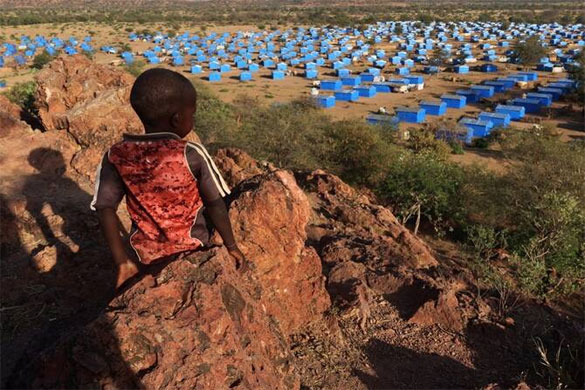
Since fighting broke out in April 2023 between the Sudanese Armed Forces and the paramilitary Rapid Support Forces, more than 12 million people have been forcibly displaced. (Reuters)
------------
DUBAI: Sudan is now ground zero for the world’s largest — and most overlooked — humanitarian catastrophe.
Since fighting broke out in April 2023 between the Sudanese Armed Forces and the paramilitary Rapid Support Forces, more than 12 million people have been forcibly displaced, including 4 million forced to flee across borders, according to Refugees International.
The vast majority are women and children, many of whom have been displaced multiple times, arriving at informal settlements with nothing but the clothes on their backs — and receiving little to no aid or protection.
“This is the largest displacement and humanitarian crisis in the world,” Daniel P. Sullivan, director for Africa, Asia, and the Middle East at Refugees International, told Arab News.
“More than half the population is facing severe food insecurity, with several areas already experiencing famine.”
Amid this deepening humanitarian disaster, Sudan is also edging toward political fragmentation. The paramilitary RSF has declared a rival administration called the “Government of Peace and Unity” across Darfur and parts of Kordofan.
Meanwhile, the SAF has retaken Khartoum and retains control over the eastern and central regions.
Experts warn that this emerging divide could either lead to a protracted power struggle similar to Libya’s fragmentation or result in a formal split, echoing South Sudan’s independence.
Inside Sudan, the situation is rapidly deteriorating. The country’s health system has collapsed, water sources are polluted and aid access is severely restricted. Cholera is spreading and children are dying of hunger in besieged areas.
Aid groups have accused the RSF and SAF of weaponizing food and medicine, with both sides reportedly obstructing relief efforts and manipulating access to humanitarian corridors.
In East Darfur’s Lagawa camp, at least 13 children have died due to complications associated with malnutrition.
The site is home to more than 7,000 displaced people, the majority of them women and children, who are grappling with acute food insecurity.
The UN children’s fund, UNICEF, reported a 46 percent increase in cases of severe child malnutrition across Darfur between January and May, with more than 40,000 children receiving treatment in North Darfur alone.
Several areas, including parts of Darfur and Kordofan, are now officially experiencing famine.
With ethnic tensions fueling a separate but parallel conflict, allegations of genocide are mounting once more in Darfur.
“Sudanese in Darfur face genocide,” said Sullivan. “And those in other parts of the country face other atrocity crimes including targeting of civilians and widespread sexual violence.”
Elena Habersky, a researcher and consultant working with Sudanese refugee-led organizations in Egypt, told Arab News the violence is not just wide-reaching but also intimate in its brutality.
“There is widespread cholera and famine within Sudan and the threat of the RSF burning villages, sexually abusing and raping civilians, and killing people by shooting them, burning them or burying them alive, is very much a reality,” she said.
The RSF has routinely denied targeting civilians and accused its rivals of orchestrating a media campaign, using actors and staged scenes, to falsely incriminate it.
Those who flee across borders face a new set of challenges. Sudanese refugees in Egypt often struggle to obtain residency, work permits or access to health care and education.
In Chad and South Sudan, refugee camps are severely overcrowded, and food shortages are worsening due to global funding cuts. In Libya and the Central African Republic, they are at the mercy of smuggling networks and armed groups.
“Sudanese in Egypt face discrimination and the risk of forced repatriation,” said Sullivan. “Others in Ethiopia, Uganda and South Sudan face their own risks of abuse and lack of support.”
All the while, international attention is limited. The few headlines that break through are usually buried beneath coverage of other global crises.
Despite the scale of the catastrophe, donor fatigue, budget cuts and political disinterest have left Sudanese aid groups carrying the bulk of the humanitarian response.
“It truly feels like the international community is basically non-existent or only existent in words,” said Habersky.
“Most of the work I see being done is by refugee-led organizations, grassroots efforts by the diaspora, and community aid kitchens inside Sudan,” she said.
Groups such as the Emergency Response Rooms — local networks of doctors, teachers and volunteers — have been on the front lines. But they lack consistent funding and are increasingly targeted by both warring factions.
“Local Sudanese groups have become targets of abuse,” said Sullivan. “The most critical funding gap is in the amount of support going directly to them.”
Aid efforts are not only underfunded, but actively blocked. In areas such as Khartoum, humanitarian deliveries are hampered by bureaucratic hurdles and security threats.
“Even if aid enters Khartoum, it then faces other blocks to go to Darfur,” said Habersky. “There’s destruction of infrastructure, political infighting and looting.”
In February, UN officials launched a $6 billion funding appeal for Sudan — a more than 40 percent increase from the previous year — citing what they described as the world’s worst hunger crisis and displacement emergency.
The call for aid comes as global humanitarian budgets are under immense pressure, further strained by a recent US funding freeze that has disrupted life-saving programs worldwide.
Earlier this year, Tom Fletcher, UN under-secretary-general for humanitarian affairs and emergency relief coordinator, urged donors to answer the appeal on behalf of nearly 21 million Sudanese in need, while describing Sudan as “a humanitarian emergency of shocking proportions.”
“We are witnessing famine, sexual violence and the collapse of basic services on a massive scale — and we need urgent, coordinated action to stop it.”
While some aid agencies say they have received waivers from Washington to continue operations in Sudan, uncertainty remains around how far those exemptions extend — particularly when it comes to famine relief.
The UN’s 2025 humanitarian response plan is the largest and most ambitious proposed this year. Of the $6 billion requested, $4.2 billion is allocated for in-country operations, with the rest earmarked for those displaced across borders.
However, the window for action is closing, with the rainy season underway and famine spreading.
Experts warn that unless humanitarian access is restored and the conflict de-escalates, Sudan could spiral into a catastrophe on a par with — or worse than — Rwanda, Syria or Yemen.
“There needs to be a surge in humanitarian assistance to areas of greatest need,” said Sullivan. “Diplomatic pressure must also be mobilized to urge external actors to stop enabling atrocities and to press for humanitarian access.”
Sullivan believes that failure to act now could result in hundreds of thousands of preventable deaths.
Meanwhile, Habersky stressed the urgency of the situation, adding that “non-earmarked funding must be given to all organizations working to better the situation within Sudan and the region.”
“Refugee rights in host countries must be protected — we are seeing too many cases of abuse and neglect,” she added.
The stark reality is that while global attention drifts elsewhere, Sudan continues to collapse in real time. Behind the statistics are millions of lives — waiting for aid that has yet to arrive.
https://www.arabnews.com/node/2611742/middle-east
------
Arab World Joins Saudi Arabia In Condemning Netanyahu’s ‘Greater Israel’ Remarks
14 August 2025
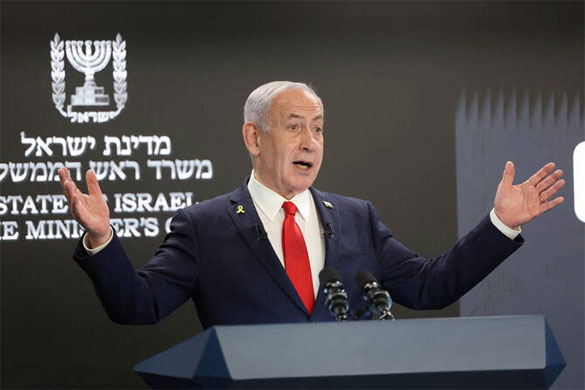
Israeli Prime Minister Benjamin Netanyahu speaks during a press conference at the Prime Minister’s office in Jerusalem, August 10 2025. (Reuters)
------------
RIYADH: Arab states and regional organizations joined Saudi Arabia on Wednesday in condemned Israeli Prime Minister Benjamin Netanyahu over comments expressing support for a so-called “Greater Israel.”
In an interview with i24 News on Tuesday, Netanyahu said he is “very attached” to the vision of a “Greater Israel.”
The term is understood to refer to an expansionist concept of Israeli territory that includes East Jerusalem, the West Bank, Gaza, the Sinai Peninsula, the Golan Heights and parts of other neighboring Arab countries.
Saudi Arabia’s Foreign Ministry said it completely rejected the “settlement and expansionist ideas and projects” adopted by Israeli authorities.
The ministry also said the Palestinian people had a historical and legal right to establish an independent, sovereign state on their lands, based on relevant international laws.
“The Kingdom warns the international community against the Israeli occupation’s persistence in flagrant violations that undermine the foundations of international legitimacy, blatantly violate the sovereignty of states, and threaten regional and global security and peace,” the ministry said.
Regional leaders
The Palestinian Authority echoed Saudi Arabia's condemnation of Netanyahu’s remarks, calling them a “disregard for the legitimate rights of the Palestinian people” and a “dangerous provocation” that threatens regional security. It reaffirmed its commitment to establishing an independent Palestinian state along the 1967 borders, with East Jerusalem as its capital.
Qatar’s Foreign Ministry said the comments reflect “the occupation’s approach rooted in arrogance, fueling crises and conflicts, and blatantly infringing on the sovereignty of states.”
Egypt’s Foreign Ministry said that such rhetoric contradicts regional and international aspirations for peace and stability. The ministry called for a return to negotiations, an end to the war in Gaza, and the establishment of a Palestinian state based on a two-state solution.
Jordan’s Ministry of Foreign Affairs labeled Netanyahu’s statements a “dangerous and provocative escalation.” Spokesperson Sufyan Qudah said the “absurd delusions” expressed by Israeli officials will neither affect Jordan and other Arab countries nor undermine the legitimate and inalienable rights of the Palestinian people. He also called on the international community to act to halt incitement that threatens regional stability and international peace.
Yemen reaffirmed its unwavering support for the Palestinian people, emphasizing their right to an independent state with East Jerusalem as its capital. The Yemeni Foreign Ministry urged the international community, particularly the UN Security Council, to take urgent measures to halt these violations and hold Israeli leaders accountable.
Regional bodies
Gulf Cooperation Council (GCC) Secretary-General Jasem Albudaiwi also condemned the remarks, calling them a flagrant violation of the UN Charter and international law, and a blatant attack on the sovereignty and unity of Arab states. He warned that such statements pose a direct threat to regional and global stability and reaffirmed the GCC’s categorical rejection of any attempts to undermine the territorial integrity of Arab countries.
Albudaiwi urged the international community to take a firm stand against what he described as provocative declarations and to protect the region from measures that could inflame tensions and jeopardize prospects for a just and comprehensive peace.
The Arab League also denounced Netanyahu’s comments “in the strongest terms,” describing them as a dangerous disregard for the sovereignty of Arab nations and a serious threat to collective Arab security. It said the rhetoric reflected “expansionist and aggressive intentions” rooted in “colonial delusions,” and called on the UN Security Council to act decisively to confront such extremist declarations.
https://www.arabnews.com/node/2611741/saudi-arabia
......
Pakistan Intensifies Crackdown on Undocumented Afghan Migrants in Peshawar
14 August 2025
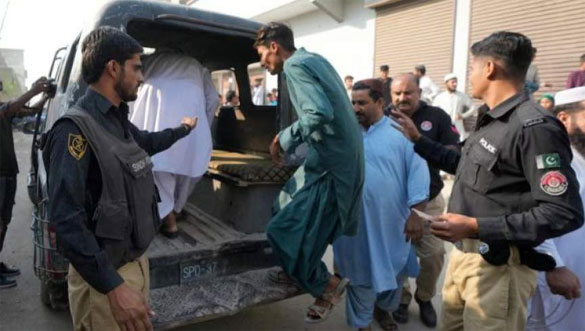
Pakistani police intensified operations in Peshawar, detaining numerous undocumented Afghan migrants as part of a wider crackdown targeting those without valid legal documentation.
-----------
Pakistani police in Khyber Pakhtunkhwa say they have detained a significant number of undocumented Afghan migrants and suspected armed individuals during coordinated security operations in Peshawar. Authorities claim to have seized weapons and narcotics from those arrested and have vowed to continue the crackdown.
The operations, carried out in the Kacha Garhi, Nasir Bagh, and Regi areas, are part of a wider campaign targeting undocumented Afghan nationals. Police have not disclosed the exact number of detainees.
In recent months, Pakistan has intensified arrests and forced deportations of Afghan migrants lacking legal documentation, often conducting house-to-house searches. The campaign has accelerated as visa renewals for Afghan nationals have been suspended for more than a month, leaving many who previously lived legally now undocumented and vulnerable to expulsion.
On August 13, the Pakistani government announced the creation of a special committee composed of police and intelligence officials to identify and repatriate Afghans holding Proof of Registration (PoR) cards. This committee will gather and share data from various agencies to locate Afghan migrants and coordinate enforcement actions.
The UNHCR has expressed concern that Pakistan’s recent measures have left thousands of Afghans homeless. Many report being subjected to threats, coercion, and mistreatment by police, raising alarm over human rights violations.
Rights advocates warn that the continuation of such policies risks worsening an already severe humanitarian crisis, pushing vulnerable Afghan families into deeper insecurity, displacement, and loss of livelihood.
https://www.khaama.com/pakistan-intensifies-crackdown-on-undocumented-afghan-migrants-in-peshawar/
------
India
Temper Your Rhetoric" India's Advice To Pakistan or Face "Painful Consequences"
Edited by: Anushree Jonko
Aug 14, 2025
In India on Thursday warned the Pakistani leadership that any "misadventure" will have "painful consequences". Speaking at the weekly media briefing, Ministry of External Affairs spokesperson Randhir Jaiswal referenced reports regarding "war-mongering" by Pakistan against India. He added, "Pakistan would be well-advised to temper its rhetoric as any misadventure will have painful consequences, as was demonstrated recently."
This comes after Pakistan's army chief Asim Munir issued a nuclear threat to India. During his visit to the US, Munir threatened that it would "take half the world down" if faced with an "existential threat" from India. The remarks were the first nuclear threats known to have ever been delivered from US soil against a third country.
"We are a nuclear nation. If we think we are going down, we'll take half the world down with us," he said, according to reports.
Munir had also threatened to destroy India's infrastructure on the Indus water channels, which could impede water flow to Pakistan, and said that the water source is not "Indians' family property". He went on to claim that the decision of India to place the Indus Waters Treaty into abeyance after the Pahalgam terror attack in April could put 250 million people at risk of starvation.
"We will wait for India to build a dam, and when it does so, phir das missile sey faarigh kar dengey [we will destroy it with 10 missiles]...The Indus River is not the Indians' family property. Humein missilon ki kami nahin hai, al-hamdulillah [we have no shortage of missiles, Praise be to God]," Munir reportedly said.
https://www.ndtv.com/world-news/painful-consequences-indias-temper-your-rhetoric-advice-to-pakistan-leadership-9084758?pfrom=home-ndtv_topscroll
------
PIL on ‘detention’ of Bengali-speaking migrant workers: Supreme Court seeks response of Centre, States
August 14, 2025 - New Delhi
PTI
The Supreme Court on Thursday (August 14, 2025) agreed to hear a PIL which alleged that Bengali-speaking migrant workers are been detained on suspicion of being Bangladeshi nationals.
A Bench of Justices Surya Kant and Joymalya Bagchi, however, refused to pass any interim order with regard to the detention, saying any order will have consequences especially with respect to people, who genuinely came from across the borders.
"States where these migrant workers are working have the right to inquire from their state of origin about their bonafide but the problem is in the interregnum. If we pass any interim orders, then it will have consequences, especially those who have illegally come from across the border and need to be deported under the law," the Bench said.
It asked advocate Prashant Bhushan, appearing for petitioner West Bengal Migrant Welfare Board, to wait for sometime for the responses from the Centre and nine States – Odisha, Rajasthan, Maharashtra, Delhi, Bihar, Uttar Pradesh, Chhattisgarh, Haryana and West Bengal.
Mr. Bhushan alleged that people are being harassed by the States just because they speak Bengali language and have documents in that language on the basis of a circular issued by Ministry of Home Affairs (MHA).
"They are being detained while an inquiry is being held about their bonafide and in some cases, they are even tortured. Kindly pass some interim order that no detention will be held. I have no problem with enquiries but there should not be any detention," Mr. Bhushan submitted.
The Bench said some mechanism needs to be developed to ensure that genuine citizens are not harassed.
https://www.thehindu.com/news/national/supreme-court-hearing-on-detention-of-bengali-speaking-migrant-workers-as-bangladeshis-august-14-2025/article69931977.ece
-----
MHA Directive Contradicts Union Minister’s Lok Sabha Reply on Detentions of Bangla-Speaking Migrants
Alishan Jafri and Shruti Sharma
13/Aug/2025
New Delhi: On August 11, speaking in the Lok Sabha, Union minister of state for labour and employment Shobha Karandlaje replied to Trinamool Congress MP Abishek Banerjee’s question on detentions of Bangla-speaking migrant workers. She said that the responsibility lay with state governments, citing “public order” and “policy” as state subjects. While she shared general statistics on migrants from West Bengal, she evaded Banerjee’s question regarding concrete data on detained Bangla-speaking migrants.
Karandjale’s reply seemed to suggest that somehow, different police forces across states, especially in those ruled by the Bharatiya Janata Party, spontaneously began simultaneous detention drives of their own accord. However, a directive from the Union home ministry (MHA) and inputs The Wire gathered from officials, lawyers and detainees, point to quite the opposite – that the detentions follow MHA guidelines.
On May 2, the MHA (Foreign Division) had issued a directive to the chief secretaries of all states and union territory administrations, DGPs/IGPs of all states/UTs, the DG of the Border Security Force, DG of Assam Rifles, and DG of Coast Guard, outlining the procedure for deporting undocumented Bangladeshi nationals and the Rohingya. Though a copy of this directive is unavailable online, it has been widely reported in the media.
The directive reads, “The Central Government has laid down the legal framework wherein all State Governments and Union Territory Administrations are fully empowered to take action regarding detection, imposing restrictions on the movement of illegally staying foreign nationals and their deportation/ removal/ expulsion as per the provisions in the Passport (Entry into India) Act, 1920, the Foreigners Act, 1946 and the Foreigners Order, 1948.”
It further states, “Since the Central Government does not maintain a separate federal police force exclusively dedicated to the task of detection, imposing restrictions on movement and deportation of illegally staying foreigners, action in this regard has been entrusted to the State/ UT police.”
“Therefore, State Governments/ UT Administrations are primarily responsible for identifying the illegally and overstaying foreign nationals, their restriction in identified places and their deportation.”
Also read: In Dhubri, Muslim Residents Were Evicted First and Then Deleted from Electoral Rolls
The directive also lays down guidelines to be followed while apprehending Bangladeshis and Rohingya living illegally in the country.
It said:
“(i) All State Governments/UT Administrations shall set up a Special Task Force in each District under the police of the State/UT to detect, identify and deport / send-back illegal immigrants from Bangladesh / Myanmar settled in the State/UT concerned.
(ii) All State Governments/UT Administrations shall set up adequate Holding Centers in each District under the Police of the State/UT to detain illegal immigrants from Bangladesh / Myanmar.
(iii) In respect of Bangladesh / Myanmar nationals identified to be staying unauthorizedly in any particular State/UT, an inquiry shall be conducted by the State Government/UT concerned.
(iv) If the suspected Bangladesh / Myanmar national claims Indian citizenship and residence of a place in any other Indian State/UT, the concerned State Government/UT would send to the Home Secretary of the State/UT and District Collector/District Magistrate of the District from where the suspected person claims to hail, the details including name, parentage, residential address, details of near relatives etc. The State Government/ UT/Collector/District Magistrate concerned in turn will ensure that an appropriate report is sent to the deporting State Government/UT after proper verification within a period of 30 days.
During the period of 30 days, the suspected person shall be kept in the Holding Center to ensure physical availability at the time of deportation/ send back. If no report is received within the period of 30 days, the Foreigners Registration Officer may take necessary action to deport/ send-back the suspected Bangladesh/Myanmar national.
If a person is identified as an illegal Bangladesh national / Rohingya after the enquiry, the State/ UT shall immediately capture their biometrics (fingerprints and facial photographs) and demographic details on the Foreigners Identification Portal (FIP) https://identification.mha.gov.in of the MHA. Where connectivity is not available, these shall be captured offline and then shall then be uploaded on the Foreigners Identification Portal (FIP) https://identification.mha.gov.in of the MHA as soon as possible. For this purpose, the State/ UT shall use the biometric equipment available at the Districts under the District Police Module for capturing the biometric data on FIP. In case biometric equipment is available at the Police Station in the State/UT, the same may be used to upload data on the FIP. The use of NAFIS to capture biometrics will stand to be discontinued.
All State Governments/UT Administrations should maintain a record of illegal Bangladesh nationals or Rohingya handed over to designated Border Guarding Forces / Coast Guards for deportation and send a report in this regard to the Ministry of Home Affairs by the 15th day of every month through the FRRO. This report is mandatory.
The order instructs states, UTs, and border guarding forces to strictly follow the revised deportation guidelines and avoid “unnecessary publicity” around such actions. It further says that complete details of any detained Bangladeshi or Rohingya should be sent to the Ministry of External Affairs.”
It carries the signature of Pratap Singh Rawat, under secretary, MHA (Foreigners).
Initially, this MHA directive was not publicly available, not even on the ministry’s website. When The Wire inquired with Gurugram police officials about the order, they confirmed receiving a copy but refused to share it.
The PRO of Gurugram Police had told The Wire, “Although police can detain ‘suspected’ foreign nationals without any order from the government, in this matter, we have the MHA directives.” Senior police officials at various instances reiterated the same claim.
However, under the Foreigners Act of 1946, authorities cannot detain individuals solely on suspicion of being foreign nationals. Despite being severely critiqued as flawed by legal experts, there is an expectation on the part of the state to produce some evidence before a foreigners tribunal, like in the case of Assam, to challenge a person’s citizenship.
Last month, The Wire reported on how the Gurugram Police detained hundreds of Bengali-speaking migrant workers from West Bengal and Assam – most of whom are Muslim – on the suspicion of them being Bangladeshi citizens living in India without the required documents. People were detained despite many of them possessing Aadhaar cards, voter ID cards and, in some cases, even passports issued by the Government of India. All were later released except ten individuals whom the police claimed were “confirmed Bangladeshis”.
Following the crackdown, large numbers of Bengali-speaking migrant workers fled to Assam and West Bengal, fearing police action and harassment. In Gurugram’s Khatola village – a neighbourhood that housed around 2,000 Assamese workers – most residents have fled to their villages in Assam.
Also read: Bengal Migrant Who Was Stripped and Beaten in Odisha, Returns to Work – in Nagpur
A copy of the May 2 MHA directive was obtained by the All India Lawyers Association for Justice (AILAJ), a pan-India association of lawyers and law students.
AILAJ has called on the Union home ministry to withdraw this “unconstitutional and illegal” directive, which they say allows the detention of individuals solely on suspicion of being foreign nationals. It has demanded that such detentions be stopped altogether and urged the courts to intervene to halt what it sees as a violation of constitutional rights.
They said the May 2 directive is part of a broader assault on citizenship and the rights of working people, particularly Muslims and non-Hindi-speaking communities. It linked the Gurugram crackdown to other measures such as the verification drive in Assam, sudden voter roll revisions in Bihar, forced evictions, imposition of Hindi and the institutionalisation of Islamophobia through laws and media narratives.
Legal scholar Mohsin Alam Bhat, who recently released a report titled ‘Unmaking Citizens: Architecture of Rights Violations and Exclusion in India’s Citizenship Trials’ which argues that India’s citizenship tribunals have transformed into instruments of exclusion, told The Wire in an interview this month that the detentions outside Assam – including in Gurugram and NCR – are worse than Assam. “There is no process here,” he said. “This is a system built on distrust and suspicion. A police official sitting in Haryana can decide who’s an Indian just by looking at their faces or hearing them speak.”
The Trinamool Congress has accused the Union government of evading questions on the detentions. The party alleged that the Union home ministry under Amit Shah had earlier directed BJP-ruled states to profile Bengali speakers, brand them as “Bangladeshis” and push them out, making the Union government equally accountable for the harassment, detention and deportation of innocent workers.
https://thewire.in/government/mha-directive-contradicts-union-ministers-lok-sabha-reply-on-detentions-of-bangla-speaking-migrants
-----
Supreme Court's Pahalgam Reference Adds Fuel to Jammu and Kashmir's Statehood Fire
Jehangir Ali
14 August 2025
Srinagar: The Supreme Court’s reference to the Pahalgam terrorist attack while hearing a petition today August 14 for the restoration of Jammu and Kashmir’s statehood is likely to put the elected government led by chief minister Omar Abdullah in a bind.
Reacting to the apex court’s observations, the ruling National Conference leader Satish Sharma, who is also a cabinet minister, called on the prime minister Narendra Modi to announce the restoration of J&K’s statehood in his Independence Day celebrations on Friday.
“The issue of statehood is out of our domain, but why wait for eight months?” Sharma told reporters in Srinagar, adding that the court should look into “all aspects” and return the “rights of the people of Jammu and Kashmir.”
Tanvir Sadiq, chief spokesperson of National Conference, termed the observation as “unfortunate”.
“People of J&K are being made to pay a price for the crime they never committed. Even today we are being told that the situation is not good. When the Pahalgam incident happened, J&K was not a state. Law and order was not with the elected government. Those who took responsibility were never punished while people are paying the price,” he said.
J&K lieutenant governor Manoj Sinha had in a recent interview claimed “full responsibility” for the attack in Pahalgam.
Meanwhile, the opposition Peoples Democratic Party president Mehbooba Mufti said that the SC’s observation reflected the government’s “continued lack of confidence in … (J&K’s) stability” and “a deeper political and psychological deadlock”.
Earlier, the apex court heard a plea by Zahoor Ahmed Bhat, a teacher and Khurshaid Ahmad Malik, an activist, both from Kashmir, that J&K’s statehood had not been restored, despite the solicitor general’s assurance during the hearing of petitions challenging the reading down of Article 370.
Senior advocate Gopal Sankaranarayanan, who appeared for applicants told the court:
“It has been 21 months since that judgment (in the Article 370 case), there has been no movement partly because, mylords fairly trusted the Union when they made this statement before the Court that they will implement the statehood”.
He called the delay as a “violation of India’s federal structure”.
Chief Justice of India B.R. Gavai, while referring to the carnage at Baisaran meadow in which 26 civilians, mostly tourists, were killed, observed: “You also have to take into consideration ground realities…You can’t ignore what has happened in Pahalgam,”
Sankaranarayanan responded: “In fact, that is why statehood should be given. There is a clear demarcation…”.
The SC bench which also comprised Justice K. Vinod Chandran, observed that the issue of the restoration of J&K’s statehood was “for the executive and Parliament” to take a call on, “We do not have the expertise,” the bench observed.
Earlier, solicitor general Tushar Mehta referred to the “peculiar position” of Jammu and Kashmir where “several considerations …. go into the decision-making process”, “I don’t know why at this stage this issue is agitated. Because this particular stage is not the correct stage to muddy the waters. I don’t know why they are doing this,” he said, according to the Indian Express.
After hearing the plea, the Union government was granted eight weeks for filing its response while advocate Sankaranarayanan urged the court to club and list all such petitions. “If an executor aspect is being sought, then a bench may be constituted and a timeline fixed.”
The linking of the restoration of J&K’s statehood with the security situation in the Union territory which is the domain of the Union home ministry and the local administration led by J&K’s lieutenant governor is likely to bring Abdullah’s elected government under more pressure.
The chief minister is already facing criticism including within his party for adopting a reconciliatory approach towards the Bhartiya Janta Party-led Union government. Abdullah was recently criticised on social media for celebrating the Statue of Unity in Gujarat which has displaced more than 5,000 tribal people
A senior leader from an opposition political party in Kashmir speculated that the SC’s observation could pave the way for restoration of J&K’s statehood in phases, “It is very likely that there will be a two-phased restoration of statehood,” the leader said, wishing to remain anonymous.
In a letter, Abdullah recently urged all political parties to introduce a bill in the Parliament for the restoration of J&K’s statehood, arguing that it was not a “favour” but an “essential course correction”.
Meanwhile, reacting to the SC’s observations, the PDP chief Mufti said that the BJP-led Union government “appears unwilling to ease its tight control” on Jammu and Kashmir after its bifurcation and demotion into two Union territories in 2019. She batted for “dialogue and reconciliation to bring lasting peace and dignity”.
“PDP maintains that the Jammu and Kashmir issue goes far beyond questions of statehood or constitutional status. Unless New Delhi engages with the political aspirations of the people and addresses the core issue head-on it will remain on uncertain footing regardless of the force it deploys,” Mufti said in a post on X.
PDP leader Waheed Para regretted that the SC had allowed the act of terrorism in Pahalgam “to dictate India’s highest constitutional debate”.
“Why should the people of J&K—law-abiding citizens who have upheld the Constitution—be denied equality with every other Indian because of a neighbouring state’s actions? Constitutional rights cannot be contingent on Pakistan’s conduct. Denying statehood on that basis outsources Indian sovereignty to those who seek to undermine it,” he said.
Para added: “There is no legal or empirical basis to claim that keeping J&K a Union Territory will defeat terrorism; what it will erode is the federal structure, the principle of equal treatment, and the very core of representative democracy.”
https://thewire.in/politics/supreme-courts-pahalgam-reference-jammu-kashmir-statehood-political-reactions
-----
Africa
US report: Ethiopia faces widespread human rights abuses in 2024
14 August 2025
The US Department of State has released a report on the human rights situation in Ethiopia in 2024. The picture painted by the document is bleak.
Extrajudicial Killings, torture, and mass detentions. These are some of the abuses detailed in the latest annual report on the human rights situation in Ethiopia, released by the US Department of State.
Although the civil war in the Tigray region ended in 2022, Ethiopia is still plagued by armed conflict.
The Ethiopian army regularly clashed with militias in the Amhara and Oromia regions throughout the past year.
According to the US state department, which compiled information from reports from Human Rights Watch (HRW) and Amnesty International into its report, the fighting in 2024 led to widespread killings of civilians, mass forced displacement, ethnic cleansing, rape and other forms of violence against women and girls, as well as looting and destruction of property, notably by militias in Amhara.
At least 1,351 civilians were killed nationwide between January 2023 and January 2024.
The report has also detailed limitations to press freedom and freedom of speech, as well as a rising number of civilian abduction cases. In July 2024, three buses carrying 167 passengers were reportedly hijacked in Oromia, leading to demands for ransom.
A particularly vulnerable group to these abuses are refugees. Ethiopia currently hosts large numbers of civilians fleeing conflicts, notably from neighbouring Sudan.
Aside from ongoing violence, the population of the Tigray region, the main site of the civil war from 2020 to 2022, has also been struggling with the aftermath of the conflict, and remains vulnerable to abuses of power.
Despite some efforts by the Ethiopian government to curb the violence, the US State Department's conclusion is clear: it is not enough.
------
British soldiers use sex workers in Kenya despite ban
14 August 2025
Soldiers at the BATUK base in Kenya are using sex workers at a ”low to moderate” degree despite a zero-tolerance policy, a new report by the British army finds.
In July 2022, the UK's defence ministry announced that it was banning "all sexual activity which involves the abuse of power, including buying sex whilst abroad".
However, a June report found that there had been at least 35 allegations of transactional sex or sexual exploitation at the Kenya base since the ban.
Of these incidents, 9 violations were allegedly committed after the full training and implementation of the policy was completed in November 2022.
The report stated that offenders had been given varying punishments ranging from demotion to a £2,000 fine and minor administrative action. Other suspects had their charges dropped due to insufficient evidence.
”The findings of the Service Inquiry I commissioned conclude that transactional sex is still happening in Kenya at a low to moderate level. It should not be happening at all”, said General Sir Roly Walker, Chief of the General Staff, in a press release on Tuesday.
Walker, who commissioned the report, said that he would implement its recommendations in full, including increasing the army’s ability to discharge people for using sex workers.
More than 7500 army personnel served at BATUK situated near the central Kenyan town of Nanyuki, during the time of the investigation.
The inquiry into the soldiers' conduct was first initiated after ITV published the documentary ” The Base: a British Army Scandal’ which alleged that troops at the base regularly paid for sex with local women, and had raped girls as young as 13.
https://www.africanews.com/2025/08/13/british-soldiers-use-sex-workers-in-kenya-despite-ban/
------
At least 40 dead in Sudan’s worst cholera outbreak in years: MSF
14 August 2025
TAWILA: At least 40 people have died in Sudan’s Darfur region in the country’s worst cholera outbreak in years, Doctors Without Borders (MSF) said on Thursday.
The medical charity said the vast western region, which has been a major battleground over more than two years of fighting between the regular army and the paramilitary Rapid Support Forces, had been hardest hit by the year-old outbreak.
“On top of an all-out war, people in Sudan are now experiencing the worst cholera outbreak the country has seen in years,” MSF said in a statement.
“In the Darfur region alone, MSF teams treated over 2,300 patients and recorded 40 deaths in the past week.”
The NGO said 2,470 cholera-related deaths had been reported in the year to August 11, out of 99,700 suspected cases.
Cholera is an acute intestinal infection that spreads through food and water contaminated with bacteria, often from faeces.
It causes severe diarrhea, vomiting and muscle cramps.
Cholera can kill within hours when not attended to, though it can be treated with simple oral rehydration, and antibiotics for more severe cases.
There has been a global increase in cholera cases, which have also spread geographically, since 2021.
MSF said mass displacements of civilians sparked by the war in Sudan had aggravated the outbreak by denying people access to clean water for essential hygiene measures, such as washing dishes and food.
“The situation is most extreme in Tawila, North Darfur state, where 380,000 people have fled to escape ongoing fighting around the city of El-Fasher, according to the United Nations,” MSF said.
“In Tawila, people survive with an average of just three liters of water per day, which is less than half the emergency minimum threshold of 7.5 liters needed per person per day for drinking, cooking, and hygiene.”
Since forces loyal to the regular army recaptured the capital Khartoum in March, fighting has again focused on Darfur, where the paramilitaries have been attempting to take El-Fasher.
The besieged pocket is the last major city in the western region still under the army’s control and UN agencies have spoken of appalling conditions for the remaining civilians trapped inside.
“In displacement and refugee camps, families often have no choice but to drink from contaminated sources and many contract cholera,” said Sylvain Penicaud, MSF project coordinator in Tawila.
“Just two weeks ago, a body was found in a well inside one of the camps. It was removed, but within two days, people were forced to drink from that same water again.”
MSF said that heavy rains were worsening the crisis by contaminating water and damaging sewage systems, while the exodus of civilians seeking refuge was spreading the disease.
“As people move around to flee fighting, cholera is spreading further, in Sudan and into neighboring Chad and South Sudan,” it said.
MSF’s head of mission in Sudan, Tuna Turkmen, said the situation was “beyond urgent.”
“The outbreak is spreading well beyond displacement camps now, into multiple localities across Darfur states and beyond,” he said.
“Survivors of war must not be left to die from a preventable disease.”
https://www.arabnews.com/node/2611789/middle-east
------
South Sudan hosts Israeli deputy FM but denies Gaza relocation reports
14 August 2025
JUBA: South Sudan on Wednesday said that Israel’s deputy foreign minister had visited for talks, after reports of plans to relocate Palestinians from the war-torn Gaza Strip.
Israeli Prime Minister Benjamin Netanyahu has said that he would permit Palestinians from Gaza to emigrate voluntarily and that his government was talking to a number of potential host countries.
South Sudan, which is said to be one of the host countries, announced that Sharren Haskel had visited, in what it called “the highest-level engagement from an Israeli official to South Sudan thus far.”
According to a statement, Foreign Minister Semaya Kumba held “a fruitful bilateral dialogue” with Haskel that touched on “the evolving circumstances within the State of Israel,” without elaborating.
“Both parties expressed a resolute commitment to advancing stronger bilateral and multilateral cooperation moving forward,” it added.
A previous statement from the government in Juba refuted media reports that it was in discussion with Israel about relocating Palestinians from Gaza to South Sudan, calling the claims “baseless.”
The potential arrival of Palestinians from Gaza in South Sudan has sparked intense controversy both on social media and on the streets of the capital.
“We don’t accept this because these are criminals they are bringing to us. Also we don’t have land that can accommodate the Palestinians from Gaza to South Sudan,” Juba resident James Lomederi told AFP.
Another local, who asked not to be identified, said: “We will welcome them with open arms. Our borders need heavy deployment of troops, and they will help us fight anyone who wants to annex our land into their territory.”
Impoverished South Sudan has been plagued by insecurity and instability since its independence in 2011.
This year, the country saw months of clashes between forces loyal to President Salva Kiir and those backing First Vice President Riek Machar.
The arrest of Machar in March fueled fears of a return to civil war, nearly seven years after the end of bloody fighting between supporters of the two men that led to around 400,000 deaths between 2013 and 2018.
https://www.arabnews.com/node/2611753/middle-east
------
Niger Govt Confirms Arrest Of Notorious Terror Leader
14 August 2025
The Niger State Government has confirmed the arrest of the feared leader of the Mahmuda terror group, Abubakar Abba, during a Department of State Service (DSS) operation in Wawa, Borgu Local Government Area.
Naija News reports that Abba, whose group had terrorised communities across Niger and Kwara states, was reportedly captured alive in an intelligence-led raid and moved to Abuja for further investigation.
Governor Mohammed Bago’s Chief Press Secretary, Bologi Ibrahim, in a statement on Wednesday, hailed the operation as a breakthrough in the fight against insecurity.
Ibrahim said, “Yes, it is true. I can confirm that the leader of Mahmuda, which is one of the most dangerous terror groups in West Africa, Abubakar Abba, has been arrested by the DSS.
“He was apprehended alive through an intelligence-led operation by the DSS. This is a huge victory for us as a people and as a government, and President Tinubu deserves commendation for this cheering news.”
Ibrahim further stated that the arrest “demonstrates the commitment of President Bola Ahmed Tinubu to truly ending insecurity and promoting the well-being of Nigerians.”
The Mahmuda group, an offshoot of Boko Haram with reported ties to the Islamic State, has been blamed for multiple deadly attacks in Niger and Kwara states.
On June 3, the group allegedly launched two separate assaults in Kwara, killing seven villagers in one day. Other attacks in the region left several residents abducted and at least 15 vigilantes dead in Kemanji village.
The terrorists, often clad in camouflage and riding motorcycles, were also accused of striking communities near Kainji Lake National Park, attacking markets, killing locals, and abducting scores of people.
Security reports indicate that Mahmuda established strongholds in forested areas linking Niger, Nasarawa, Kwara, and Kogi states, where it engaged in illegal mining, forced labour, and extortion of farmers and herders.
The group’s operations left communities in constant fear, with repeated attacks disrupting local economies and forcing residents to flee.
Governor Bago commended the DSS for the successful mission, describing it as a significant step toward restoring peace and security in the North-Central region.
“This is a strong demonstration of President Tinubu’s commitment to the safety and welfare of Nigerians,” he said.
https://www.naijanews.com/2025/08/14/niger-govt-confirms-arrest-of-notorious-terror-leader/
------
Turkiye To Help Syria With Weapon Systems, Source Says
14 August 2025
ANKARA: Turkiye will help Syria with the provision of weapons systems and logistical tools under a military cooperation accord signed on Wednesday, a Turkish defense Ministry source said on Thursday, adding that Ankara would also train Syria’s army in the use of such equipment if needed.
In a first step toward a comprehensive military cooperation agreement, Turkiye and Syria signed a memorandum of understanding on military training and consultancy after talks between their foreign, defense ministers, and intelligence chiefs.
The source told reporters in Ankara that the Kurdish-led and US-backed Syrian Democratic Forces (SDF) had not met any of the conditions set out in a March agreement with Damascus on the group’s integration into Syria’s state apparatus, and added Ankara expected it to urgently respect the deal.
https://www.arabnews.com/node/2611801/middle-east
-------
Mideast
Israeli deputy minister outlines Gaza civil administration plan for war’s end
14 August 2025
Israeli Deputy Foreign Minister Sharren Haskel said on Thursday a non-Israeli, peaceful civilian administration for Gaza was among the Israeli government’s five key principles for ending the war.
The other principles include the release of hostages still held in Gaza, the surrender of weapons by Hamas, the full demilitarization of Gaza, and Israel retaining overriding security control, he said.
https://www.arabnews.com/node/2611815/middle-east
......
Foreign NGOs say new Israeli rules keep them from delivering Gaza aid
14 August 2025
JERUSALEM: New Israeli legislation regulating foreign aid groups has been increasingly used to deny their requests to bring supplies into Gaza, according to a joint letter signed by more than 100 groups published Thursday.
Ties between foreign-backed aid groups and the Israeli government have long been beset by tensions, with officials often complaining the organizations are biased.
The rocky relations have only gotten more strained in the wake of Hamas’s unprecedented attack on Israel in October 2023.
“Israeli authorities have rejected requests from dozens of NGOs to bring in lifesaving goods, citing that these organizations are ‘not authorized to deliver aid’,” the joint statement reads.
According to the letter, whose signatories include Oxfam and Doctors Without Borders (MSF), at least 60 requests to bring aid into Gaza were rejected in July alone.
In March, Israel’s government approved a new set of rules for foreign non-governmental organizations (NGOs) working with Palestinians.
The law updates the framework for how aid groups must register to maintain their status within Israel, along with provisions that outline how their applications can be denied or registration revoked.
Registration can be rejected if Israeli authorities deem that a group denies the democratic character of Israel or “promotes delegitimization campaigns” against the country.
“Unfortunately, many aid organizations serve as a cover for hostile and sometimes violent activity,” Israel’s Diaspora Minister Amichai Chikli told AFP.
“Organizations that have no connection to hostile or violent activity and no ties to the boycott movement will be granted permission to operate,” added Chikli, whose ministry directed an effort to produce the new guideline.
Aid groups say, however, that the new rules are leaving Gazans without help.
“Our mandate is to save lives, but due to the registration restrictions civilians are being left without the food, medicine and protection they urgently need,” said Jolien Veldwijk, director of the charity CARE in the Palestinian territories.
Veldwijk said that CARE has not been able to deliver any aid to Gaza since Israel imposed a full blockade on the Palestinian territory in March, despite partially easing it in May.
Israel has long accused Hamas of stealing aid entering the Strip, and since May, the government has relied on the US-backed Gaza Humanitarian Foundation to manage food distribution centers.
According to Gaza’s civil defense agency, its operations have been frequently marred by chaos as thousands of Gazans have scrambled each day to approach its hubs, where some have been shot, including by Israeli soldiers.
https://www.arabnews.com/node/2611772/middle-east
......
Israel announces West Bank settlement that rights groups say could imperil Palestinian state
14 August 2025
MAALE ADUMIM: Israel’s far-right finance minister announced a contentious new settlement construction in the Israeli-occupied West Bank on Thursday which Palestinians and rights groups worry will scuttle plans for a future Palestinian state by effectively cutting the West Bank into two separate parts.
The announcement comes as many countries said they would recognize a Palestinian state in September.
“This reality finally buries the idea of a Palestinian state, because there is nothing to recognize and no one to recognize,” said Finance Minister Bezalel Smotrich. “Anyone in the world who tries today to recognize a Palestinian state – will receive an answer from us on the ground,” he said.
Development in E1, an open tract of land east of Jerusalem, has been under consideration for more than two decades, but was frozen due to US pressure during previous administrations. On Thursday, Smotrich praised President Donald Trump and US ambassador to Israel Mike Huckabee as “true friends of Israel as we have never had before.”
The E1 plan has not yet received its final approval, which is expected next week. The plan includes around 3,500 apartments to expand the settlement of Maale Adumim, Smotrich said. While some bureaucratic steps remain, if the process moves quickly, infrastructure work could begin in the next few months and construction of homes could start in around a year.
Rights groups swiftly condemned the plan. Peace Now called it “deadly for the future of Israel and for any chance of achieving a peaceful two-state solution” which is “guaranteeing many more years of bloodshed.”
The announcement comes as the Palestinian Authority and Arab countries condemned Israeli Prime Minister Benjamin Netanyahu’s statement in an interview on Tuesday that he was “very” attached to the vision of a Greater Israel. He did not elaborate, but supporters of the idea believe that Israel should control not only the occupied West Bank but parts of Arab countries.
https://www.arabnews.com/node/2611796/middle-east
.......
Blast kills two in northwest Syria: state media
14 August 2025
DAMASCUS: A blast rocked Syria’s northwestern province of Idlib on Thursday, state media said, reporting at least two dead and without identifying its cause.
Residents told AFP they heard the sound of explosions in the western outskirts of the provincial capital.
State news agency SANA reported “an explosion whose cause is unknown in the vicinity of the city of Idlib.”
Citing the Idlib health department, state television provided an “initial toll of two dead and four wounded.”
The Syrian Observatory for Human Rights reported “the sound of successive large explosions at a base for non-Syrian fighters containing a weapons depot, as a drone was in the air.”
The Britain-based monitoring group reported thick smoke and panic among residents of the area.
Late last month, a series of explosions in Idlib province killed at least 12 people and wounded more than 100, the Observatory said at the time.
Those blasts occurred at a weapons depot belonging to Uyghur jihadist group the Turkistan Islamic Party (TIP) in Maaret Misrin, in northern Idlib province, the monitor reported.
Authorities did not immediately say what may have caused those explosions.
https://www.arabnews.com/node/2611800/middle-east
.....
War crimes likely committed by both sides in Syria sectarian violence, UN commission says
14 August 2025
GENEVA: War crimes were likely committed by both members of interim government forces and fighters loyal to Syria’s former rulers during a major outbreak of sectarian violence in Syria’s coastal areas that culminated in a series of March massacres, a UN team of investigators found in a report on Thursday.
Some 1,400 people, mainly civilians, were reported killed during the violence that primarily targeted Alawi communities, and reports of violations continue, according to a report by the UN Syria Commission of Inquiry.
The incidents in the coastal region were the worst violence to hit Syria since the fall of President Bashar Assad last year, prompting the interim government to name a fact-finding committee.
https://www.arabnews.com/node/2611798/middle-east
.....
Gaza’s young musicians sing and play in the ruins of war
14 August 2025
GAZA CITY: A boy’s lilting song filled the tent in Gaza City, above an instrumental melody and backing singers’ quiet harmonies, soft music that floated into streets these days more attuned to the deadly beat of bombs and bullets.
The young students were taking part in a lesson given on August 4 by teachers from the Edward Said National Conservatory of Music, who have continued classes from displacement camps and shattered buildings even after Israel’s bombardments forced them to abandon the school’s main building in the city.
“When I play I feel like I’m flying away,” said Rifan Al-Qassas, 15, who started learning the oud, an Arab lute, when she was nine. She hopes to one day play abroad.
“Music gives me hope and eases my fear,” she said.
Al-Qassas hopes to one day play abroad, she said during a weekend class at the heavily shelled Gaza College, a school in Gaza City. Israel’s military again pounded parts of the city on August 12, with more than 120 people killed over the past few days, Gazan health authorities say.
The conservatory was founded in the West Bank and had been a cultural lifeline for Gaza ever since it opened a branch there 13 years ago, teaching classical music along with popular genres, until Israel launched its war on the Mediterranean enclave in response to the October 7, 2023 Hamas attacks.
Before the fighting, Israel sometimes granted the best students exit permits to travel outside Gaza to play in the Palestine Youth Orchestra, the conservatory’s touring ensemble. Others performed inside Gaza, giving concerts in both Arabic and Western traditions.
After 22 months of bombardment, some of the students are now dead, said Suhail Khoury, the conservatory’s president, including 14-year-old violinist Lubna Alyaan, killed along with her family early in the war.
The school’s old home lies in ruins, according to a video released in January by a teacher. Walls had collapsed and rooms were littered with debris. A grand piano had disappeared.
Reuters asked the Israeli military about the damage. The military declined to comment without more details, which Reuters could not establish.
During last week’s session, over a dozen students gathered under the tent’s rustling plastic sheets to practice on instruments carefully preserved through the war and to join together in song and music.
“No fig leaf will wither inside us,” the boy sang, a line from a popular lament about Palestinian loss through generations of displacement since the 1948 creation of Israel.
Three female students practiced the song Greensleeves on guitar outside the tent, while another group of boys were tapping out rhythms on Middle Eastern hand drums.
Few instruments have survived the fighting, said Fouad Khader, who coordinates the revived classes for the conservatory. Teachers have bought some from other displaced people for the students to use. But some of these have been smashed during bombardment, he said.
Instructors have experimented with making their own percussion instruments from empty cans and containers to train children, Khader said.
A BROAD SMILE
Early last year, Ahmed Abu Amsha, a guitar and violin teacher with a big beard and a broad smile, was among the first of the conservatory’s scattered teachers and students who began offering classes again, playing guitar in the evenings among the tents of displaced people in the south of Gaza, where much of the 2.1 million population had been forced to move by Israeli evacuation orders and bombing.
Then, after a ceasefire began in January, Abu Amsha, 43, was among the tens of thousands of people who moved back north to Gaza City, much of which has been flattened by Israeli bombing.
For the past six months, he has been living and working in the city’s central district, along with colleagues teaching oud, guitar, hand drums and the ney, a reed flute, to students able to reach them in the tents or shell-pocked buildings of Gaza College. They also go into kindergartens for sessions with small children.
Teachers are also offering music lessons in southern and central Gaza with 12 musicians and three singing tutors instructing nearly 600 students across the enclave in June, the conservatory said.
Abu Amsha said teachers and parents of students were currently “deeply concerned” about being uprooted again after the Israeli cabinet’s August 8 decision to take control of Gaza City. Israel has not said when it will launch the new offensive.
HUNGER AND FATIGUE
Outside the music teachers’ tent, Gaza City lay in a mass of crumbling concrete, nearly all residents crammed into shelters or camps with hardly any food, clean water or medical aid.
The students and teachers say they have to overcome their weakness from food shortages to attend the classes.
Britain, Canada, Australia and several of their European allies said on August 12 that “famine was unfolding before our eyes” in Gaza. Israel disputes malnutrition figures for the Hamas-run enclave.
Sarah Al-Suwairki, 20, said sometimes hunger and tiredness mean she cannot manage the short walk to her two music classes each week, but she loves learning the guitar.
“I love discovering new genres, but more specifically rock. I am very into rock,” she said.
Palestinian health authorities say Israel’s military campaign has killed more than 61,000 people, including more than 1,400 going to aid points to get food.
Israel says Hamas is responsible for the suffering after it started the war, the latest in decades of conflict, with the October 2023 attack from Gaza when its gunmen killed 1,200 people and seized 250 hostages according to Israeli tallies.
MUSIC THERAPY
In a surviving upstairs room at Gaza College, the walls pocked with shrapnel scars, the windows blown out, three girls and a boy sit for a guitar class.
Their teacher Mohammed Abu Mahadi, 32, said he thought music could help heal Gazans psychologically from the pain of bombardments, loss and shortages.
“What I do here is make children happy from music because it is one of the best ways for expressing feelings,” he said.
Elizabeth Coombes, who directs a music therapy program at Britain’s University of South Wales and has done research with Palestinians in the West Bank, also said the project could help young people deal with trauma and stress and strengthen their sense of belonging.
“For children who have been very badly traumatized or living in conflict zones, the properties of music itself can really help and support people,” she said.
Ismail Daoud, 45, who teaches the oud, said the war had stripped people of their creativity and imagination, their lives reduced to securing basics like food and water. Returning to art was an escape and a reminder of a larger humanity.
“The instrument represents the soul of the player, it represents his companion, his entity and his friend,” he said. “Music is a glimmer of hope that all our children and people hold onto in darkness,” he said.
https://www.arabnews.com/node/2611797/middle-east
......
Water shortages plague Beirut as low rainfall compounds woes
14 August 2025
BEIRUT: People are buying water by the truckload in Beirut as the state supply faces its worst shortages in years, with the leaky public sector struggling after record-low rainfall and local wells running dry.
“State water used to come every other day, now it’s every three days,” said Rima Al-Sabaa, 50, rinsing dishes carefully in Burj Al-Baranjeh, in Beirut’s southern suburbs.
Even when the state water is flowing, she noted, very little trickles into her family’s holding tank.
Once that runs out, they have to buy trucked-in water — pumped from private springs and wells — but it costs more than $5 for 1,000 liters and lasts just a few days, and its brackishness makes everything rust.
In some areas, the price can be twice as high.
Like many Lebanese people, Sabaa, who works assisting the elderly, relies on bottled water for drinking. But in a country grappling with a yearslong economic crisis and still reeling from a recent war between Israel and Hezbollah, the costs add up.
“Where am I supposed to get the money from?” she asked.
Water shortages have long been the norm for much of Lebanon, which acknowledges only around half the population “has regular and sufficient access to public water services.”
Surface storage options such as dams are inadequate, according to the country’s national water strategy, while half the state supply is considered “non-revenue water” — lost to leakage and illegal connections.
This year, low rainfall has made matters even worse.
Mohamad Kanj from the meteorological department told AFP that rainfall for 2024-2025 “is the worst in the 80 years” on record in Lebanon.
Climate change is set to exacerbate the county’s water stress, according to the national strategy, while a World Bank statement this year said “climate change may halve (Lebanon’s) dry-season water by 2040.”
Energy and Water Minister Joseph Saddi said last week that “the situation is very difficult.”
The shortages are felt unevenly across greater Beirut, where tanks clutter rooftops, water trucks clog roads and most people on the ramshackle state grid lack meters.
Last month, the government launched a campaign encouraging water conservation, showing dried or depleted springs and lakes around the country.
North of the capital, levels were low in parts of the Dbayeh pumping station that should have been gushing with water.
“I’ve been here for 33 years and this is the worst crisis we’ve had for the amount of water we’re receiving and can pump” to Beirut, said the station’s Zouhair Azzi.
Antoine Zoghbi from the Beirut and Mount Lebanon Water Establishment said water rationing in Beirut usually started in October or November, after summer and before the winter rainy season.
But this year it has started months early “because we lack 50 percent of the amount of water” required at some springs, he told AFP last month.
Rationing began at some wells in June, he said, to reduce the risk of overuse and seawater intrusion.
Zoghbi emphasized the need for additional storage, including dams.
In January, the World Bank approved more than $250 million in funding to improve water services for greater Beirut and its surroundings.
In 2020, it canceled a loan for a dam south of the capital after environmentalists said it could destroy a biodiversity-rich valley.
In south Beirut, pensioner Abu Ali Nasreddine, 66, said he had not received state water for many months.
“Where they’re sending it, nobody knows,” he said, lamenting that the cost of trucked-in water had also risen.
His building used to get water from a local well but it dried up, he added, checking his rooftop tank.
Bilal Salhab, 45, who delivers water on a small, rusted truck, said demand had soared, with families placing orders multiple times a week.
“The water crisis is very bad,” he said, adding he was struggling to fill his truck because wells had dried up or become salty.
In some areas of greater Beirut, wells have long supplemented or even supplanted the state network.
But many have become depleted or degraded, wrecking pipes and leaving residents with salty, discolored water.
Nadim Farajalla, chief sustainability officer at the Lebanese American University, said Beirut had ballooned in size and population since the start of the 1975-1990 civil war but water infrastructure had failed to keep up.
Many people drilled wells illegally, including at depths that tap into Lebanon’s strategic groundwater reserves, he said, adding that “nobody really knows how many wells there are.”
“Coastal aquifers are suffering from seawater intrusion, because we are pumping much more than what’s being recharged,” Farajalla told AFP.
As the current shortages bite, rationing and awareness campaigns should have begun earlier, he said, because “we all knew that the surface snow cover and rainfall” were far below average.
https://www.arabnews.com/node/2611804/middle-east
......
Arab World
Saudi crown prince and Korean president discuss cooperation
14 August 2025
RIYADH: Saudi Crown Prince Mohammed bin Salman discussed ties between Riyadh and Seoul during a phone call with South Korea’s President Lee Jae-Myung on Wednesday.
During the call, they discussed “opportunities for cooperation in several fields” to achieve common interests and strengthen ties between the two nations, the Saudi Press Agency reported.
https://www.arabnews.com/node/2611758/saudi-arabia
......
KSrelief provides critical relief to displaced, flood-stricken communities
14 August 2025
DUBAI: Saudi Arabia’s aid agency, KSrelief, has continued its humanitarian projects in Syria, Yemen, Sudan and Pakistan, the Saudi Press Agency reported on Wednesday.
In Syria, the agency distributed 349 food parcels to displaced people in Daraa, while in Sudan it delivered 830 parcels to residents of Karari.
In Pakistan, KSrelief distributed 2,680 food parcels to communities affected by flooding, benefiting more than 16,000 people.
Meanwhile in Yemen, the agency continued its water supply and sanitation project in Hodeidah, pumping 1.5 million liters of water into the community. It also carried out 49 waste removal operations in camps for displaced people, benefiting 16,170 individuals.
https://www.arabnews.com/node/2611791/saudi-arabia
........
Saudi Broadcasting Authority CEO honored
14 August 2025
RIYADH: Mohammed bin Fahd Al-Harthi, CEO of the Saudi Broadcasting Authority and president of the Saudi Media Forum, was recently honored with the 2025 Gratitude Award for Inspiring Leaders.
Presented by the Princess Sita bint Abdulaziz Foundation for Excellence in Social Work, the award celebrates those whose vision and dedication have had a profound impact on their communities.
Commenting on the honor, Al-Harthi stated: “Giving is an intrinsic part of the Saudi identity, deeply rooted in a generous homeland and inspiring leadership.
“I am one of this nation’s people striving to serve it with all we have. We will continue to work tirelessly for as long as we live because our country deserves nothing less.
“Each of us has unique tools within our fields that must be dedicated to serving the nation, society, and humanity.”
Al-Harthi has built a distinguished career across print, broadcast, and digital media, earning both regional and international awards in recognition of his creativity and achievements in the media landscape.
He has spearheaded groundbreaking initiatives and launched major media projects, held leadership roles in prominent local and global media organizations, and contributed to organizing events and festivals that have significantly elevated the status of Saudi media both regionally and internationally.
The award underscores Al-Harthi’s dedication to serving society and inspiring a new generation of media professionals.
https://www.arabnews.com/node/2611766/saudi-arabia
....
Charitable group Ensan’s schoolbag project targets 16k children
14 August 2025
RIYADH: The Charitable Society for Orphan Care, Ensan, will provide bags this year for 16,007 students at 22 schools in the Riyadh governorate.
Ensan has allocated over SR3.2 million ($853,000) for the project, with each bag costing SR200, the Saudi Press Agency reported on Tuesday.
The money for the bags and stationary needs will be deposited into the bank accounts of parents and guardians.
Ensan has other projects to help children including providing tutors, and transport to and from school. The organization also assists in getting young people scholarships, and admission to universities, colleges and specialized institutes.
Ensan has called on the public to assist with funding for their projects via the platform https://ensan.sa/ar/shop/170.
https://www.arabnews.com/node/2611769/saudi-arabia
......
World’s best: Riyadh hospital completes 10 kidney transplants in 48 hours
14 August 2025
RIYADH: The King Faisal Specialist Hospital and Research Centre this week set a world record by performing 10 kidney exchange transplants in just 48 hours.
The achievement coincided with World Organ Donation Day, which falls on Aug. 13 and aims to raise awareness of the importance of organ donation.
Dr. Ehab Abufarhaneh, deputy executive director of the hospital’s Organ Transplant Center of Excellence, told Arab News: “KFSHRC performed the kidney exchange transplants over two consecutive days setting a global record. This happened with a great team led by Dr. Khaled Almashary and Dr.Tariq Ali of the department of kidney and pancreas transplant.
“This initiative opens a door for many patients who have no suitable donor.”
The KFSHRC said the record was for the highest number of such procedures conducted within a two-day span at a single center.
“This milestone reinforces the hospital’s position as a global leader in organ transplantation. It also reflects its high clinical readiness, the seamless coordination of its multidisciplinary medical teams and the advanced systems for managing donor-recipient matching, alongside its extensive experience in executing complex transplant procedures,” it said.
Paired kidney transplantation is an innovative approach where two or more incompatible donor-recipient pairs swap kidneys to achieve compatible transplants. The process significantly improves compatibility rates and offers hope to patients who face challenges in finding a suitable match within their families.
Last year, the KFSHRC celebrated another milestone with the completion of its 500th transplant since the program was launched in 2011. Since the creation of its organ transplantation program in 1981, it has successfully performed more then 5,000 kidney transplants, placing it among an elite group of global transplant centers.
Last year it conducted 80 pediatric kidney transplants, more than any other facility in the world for the period.
By leveraging its skilled workforce, advanced technologies and the integration of research and clinical programs, the KFSHRC aims to deliver world-class treatment while enhancing the Kingdom’s position as a leader in organ transplantation.
In 2023 and 2024 it ranked first in the Middle East and North Africa region and 15th globally on the list of the world’s top 250 academic medical centers and was last year recognized as the most valuable healthcare brand in the Kingdom and the Middle East by Brand Finance rankings.
It also ranked among the world’s 250 best hospitals in 2024 and was included in Newsweek magazine’s list of best smart hospitals for 2025.
https://www.arabnews.com/node/2611733/saudi-arabia
------
South Asia
Pakistan Deports 40 of 2,000 Afghans Accepted for Resettlement in Germany
14 August 2025
The German daily Tageszeitung reported Wednesday that more than 2,000 Afghans eligible for resettlement to Germany remain stranded in Pakistan, while authorities there have, for the first time, deported 40 of them to Afghanistan.
The outlet said the Kabul Luftbrücke aid group confirmed that Pakistani police deported individuals who had already been accepted under Germany’s federal admissions program for Afghan nationals. This marks the first known case of such deportations, despite earlier pledges from Berlin.
Germany has not officially confirmed the deportations, but Tageszeitung cited an email from the German Agency for International Cooperation (GIZ) advising relatives of the deportees to call a dedicated helpline. Those removed were among roughly 2,300 Afghans in Islamabad awaiting flights under the resettlement scheme.
According to the report, Pakistani authorities have previously attempted such deportations, but the German embassy in Islamabad had intervened to prevent them. The reason for the lack of intervention in this case remains unclear. Meanshile, according to the report, police recently detained 17 familiesm, about 90 people with German acceptance letters, and transferred them to Haji Camp, a staging point for deportations to Afghanistan.
Eva Beyer of Kabul Luftbrücke accused the German government of abandoning its Afghan partners, warning that some deportees face grave danger if returned to Afghanistan. Many are human rights activists, journalists, civil society members, prominent women, or former employees of German institutions in Afghanistan who have already been approved for asylum.
Germany’s new government announced in June 2025 that it would relocate 2,500 Afghans in Pakistan deemed eligible for resettlement. The foreign minister told parliament the administration remains committed to the previous government’s pledge to evacuate Afghans at risk.
However, German Chancellor had earlier announced a halt to the intake of asylum seekers, including Afghans — a move widely criticized by rights groups such as Amnesty International, which argued it violates Germany’s international obligations under the Geneva Conventions.
https://www.khaama.com/pakistan-deports-40-of-2000-afghans-accepted-for-resettlement-in-germany/
.....
HRW: US Refugee Policy Contradicts Rights Report on Afghanistan
14 August 2025
Human Rights Watch (HRW) has accused the Trump administration of pursuing policies toward Afghan refugees that contradict the US State Department’s own findings on human rights conditions in Afghanistan.
The State Department’s 2024 annual human rights report, released Tuesday, cites credible evidence of widespread abuses under Taliban rule, including arbitrary arrests, torture, extrajudicial killings, and severe restrictions on women, civil liberties, and free speech. It concludes that Afghanistan remains a “dangerous” place.
Despite these assessments, HRW says Washington is ending Temporary Protected Status (TPS) for thousands of Afghan refugees—protection granted to individuals whose return would be unsafe due to conflict, repression, or disasters.
The Department of Homeland Security announced the TPS termination in April, and last month a federal judge approved beginning the process to end protections for Afghans and Cameroonians. Similar measures have been applied to refugees from Haiti, Venezuela, Honduras, Nepal, and Nicaragua.
TPS is designed to shield people from deportation when returning to their home country poses serious risks, but HRW argues the current US approach disregards its own recognition of those dangers in Afghanistan.
Rights advocates warn that the policy shift could force vulnerable Afghans back into a country where documented human rights abuses remain rampant, undermining both US credibility and humanitarian obligations.
They also note that the contradiction between the State Department’s documented concerns and the administration’s immigration decisions highlights a growing gap between US human rights rhetoric and policy practice.
https://www.khaama.com/hrw-us-refugee-policy-contradicts-rights-report-on-afghanistan/
........
U.S. to Partner with Pakistan on Critical Minerals and Hydrocarbons, Says Secretary of State Rubio
14 August 2025
On August 14, U.S. Secretary of State Marco Rubio congratulated Pakistan on its Independence Day, highlighting the country’s cooperation in counterterrorism and trade. He also expressed Washington’s interest in expanding economic collaboration, particularly in the field of strategic minerals.
Rubio emphasized that deepening the U.S.–Pakistan partnership could help build a more prosperous future for the people of both nations, noting the potential for cooperation in new and emerging economic sectors.
His remarks come at a time when U.S.–Pakistan relations have improved notably after a period of strained ties. In recent months, both sides have sought to strengthen diplomatic and security engagement.
On August 13, officials from both countries reaffirmed their shared resolve to combat “all forms of terrorism,” specifically naming Islamic State–Khorasan (IS-K), Tehrik-i-Taliban Pakistan (TTP), and Baloch separatist groups as priority threats.
The United States has already designated the Balochistan Liberation Army—a separatist militant organization—as a Foreign Terrorist Organization, aligning more closely with Pakistan’s security priorities.
These developments indicate a renewed diplomatic momentum, with both countries aiming to move beyond past frictions toward a relationship built on security cooperation and economic growth.
Analysts caution that sustaining this progress will require consistent engagement on both counterterrorism and economic investment to ensure that recent goodwill translates into a long-term, stable strategic partnership.
..........
Central Security & Clearance Body Marks 24 Asad with Special Session
14 August 2025
KABUL (BNA): The meeting of the Central Commission for Security and Clearance Affairs was held under the chairmanship of Mullah Rahmatullah Najib, Deputy of the Commission and Deputy Minister of Interior.
The press office of the Central Commission for Security and Clearance Affairs announced today that the meeting discussed the 24th of Asad (August 14), with participants describing the day as the result of great sacrifice, tireless dedication, and the great blessing of God. They also emphasized that independence and freedom are above all other values and are among the God-given rights of the Afghan nation.
Furthermore, security forces were advised to refrain from any actions on this blessed day that could cause harassment or harm to the people. It was also stressed that the day should be celebrated in a spirit of gratitude, in accordance with Islamic values.
https://www.bakhtarnews.af/en/central-security-clearance-body-marks-24-asad-with-special-session/
......
Fourth Cabinet Meeting of Islamic Emirate Held in Kandahar
14 August 2025
KABUL(BNA): The fourth cabinet meeting of the Islamic Emirate was convened in Kandahar under the chairmanship of his excellency Amir al-Mu’mineen.
During the meeting, Amir al-Mu’minin emphasized the importance of fulfilling responsibilities, strengthening the Sharia system, and addressing the challenges faced by the populace.
Key decisions were made regarding the construction of mosques in Kabul, assessing the conditions of prisons, and reinforcing educational institutions such as madrassas, schools, and universities. The cabinet also outlined plans to revive the rural madrassa system and promote unity by preventing intellectual differences.
https://www.bakhtarnews.af/en/fourth-cabinet-meeting-of-islamic-emirate-held-in-kandahar/
....
Thousands stranded as rivers surge in northern part of Bangladesh
14 August 2025
Over 100,000 people have been stranded as the Teesta and Dudhkumar rivers have swelled above the danger level, flooding large swathes of cropland, homes and low-lying areas in the northern part of Bangladesh.
In Nilphamari alone, around 10,000 families in two upazilas have been stranded, while vast tracts of Aman paddy, vegetables and homesteads are under water, said Amitav Chowdhury, executive engineer of the Dalia Water Development Board (BWDB) in Nilphamari.
The deluge has been fuelled by heavy rainfall and hill torrents from upstream India, which opened all gates of the neighbouring country's Gojaldoba Barrage, sending a surge through the Teesta, he added.
According to the BWDB in Dalia, the Teesta was flowing at 52.30 metres at 9:00am today, 15 centimetres above the danger mark of 52.15 metres – up from 11 centimetres above danger level just three hours earlier.
Yesterday, the river was 7 centimetres above danger level.
Zahangir Alam, union parishad chairman of Khagakharibari, said 80 families from a shoal attached to Pagolpara had moved to safer ground in the past 24 hours, with more preparing to leave as water swept through their homes.
They are in urgent need of drinking water and food, he added.
Hafizur Rahman, acting chairman of Purbo Satnai Union, reported that 1,500 families in his union had been affected.
In Lalmonirhat and Kurigram districts, the Teesta and Dudhkumar rivers are also flowing above danger level, flooding extensive char (riverine island) and riverside areas.
More than 100,000 people have been stranded in the Kurigram, Lalmonirhat and Rangpur regions, according to the Lalmonirhat District Relief and Rehabilitation Office.
Many residents have sought refuge on embankments and government roads, bringing cattle and belongings, and sheltering under makeshift polythene tents.
At the Teesta Barrage point in Hatibandha, Lalmonirhat, water was recorded at 52.30 metres, the same as in Nilphamari while at Pateshwari in Nageshwari, Kurigram, the Dudhkumar stood at 29.66 metres, 6 centimetres above the danger level.
Shunil Kumar, executive engineer of Lalmonirhat BWDB, said chars and riverside areas of the Teesta shoal were inundated and water levels were unlikely to fall soon.
"All gates of the Teesta Barrage have been opened, so downstream water is also rising," he said.
The Teesta's above-danger-level flows have inundated 33 unions in 13 upazilas along its shoals in Lalmonirhat, Kurigram, Rangpur, Gaibandha and Nilphamari, and eight unions along the Dudhkumar shoal in Nageshwari upazila of Kurigram, affecting some 220 chars and riverbank villages.
Rakibul Hasan, executive engineer of Kurigram BWDB, warned that the Brahmaputra and Dharla rivers currently below danger level could cross it within 48 hours if upstream flows continued.
"If the Brahmaputra floods, the situation will turn severe," he said.
Large areas of Aman paddy and vegetables along the Teesta and Dudhkumar floodplains are submerged.
Abdullah Al Mamun, deputy director of DAE said that if water did not recede within three days, vegetables would face major losses, though Aman paddy was likely to suffer less damage.
Villagers described the sudden inundation as devastating.
Sirajul Islam, a farmer from Kalmati in Lalmonirhat Sadar, said, "There's waist-deep water inside my home. I've taken my cattle to the roadside. Since last night, we've been in a polythene-covered hut. We're struggling with food shortages as we can't cook."
In Char Narayanpur, Nageshwari, farmer Delwar Sheikh said floodwater entered his home in the early morning.
"We rushed to the shelter in panic. One goat and several chickens were swept away. We've been surviving on dry food," he said.
Local authorities are distributing relief, with boats ferrying people from high-risk areas.
Aminul Islam, chairman of Narayanpur Union Parishad, said over 8,000 people in his union were stranded, while Masiuar Rahman, chairman of Dawabari Union in Hatibandha, estimated more than 10,000 people in his union were stranded.
HM Rakib Hayder, deputy commissioner (DC) of Lalmonirhat, said adequate relief stock was available and distribution was ongoing, while Kurigram DC Nusrat Sultana said control rooms had been opened in flood-hit areas and evacuations were under way.
BWDB officials said all gates of the Teesta Barrage were open to discharge water quickly and that the situation remained under control for now, though further
.......
No real relief for the poor
14 August 2025
In the shadow of macroeconomic improvement, hunger still bites as hard as ever.
From dawn, long before sales start at 9 am, people line up in punishing heat or pouring rain. They jostle, argue and fight for basic items such as rice, lentils and cooking oil at slightly lower prices than in the markets. Many leave empty-handed when supplies run out.
The World Bank estimates that the number of the extreme poor was 95 lakh in 2022 and will reach 1.5 crore this year. For those living on $2.15 or less a day, more than 9 percent inflation for more than two years has meant hunger, and in some cases, starvation.
Others have tried to cope with soaring food and non-food prices by cutting nutrition, skipping medical care and taking children out of school. In Dhaka and across other districts, such stories are far from rare.
Take Masud Rana, a rickshaw puller from Bheramara upazila of Kushtia. He has been working in the capital for 20 years to support his wife, three children and mother.
On Tuesday, the 33-year-old said his income has not kept pace with expenses over the past year, forcing cuts to daily needs.
He earns around Tk 12,000 a month. "Even years ago, I used to eat fish five days a week -- Tilapia, Silver Carp, and small fish. But now I can only afford it twice a week."
Most days, the family eat simple vegetables like gourds and potatoes.
At the start of the school year, Rana said he could not buy new clothes for his children. When his wife asked for a dress a month ago, he had to refuse. "I feel physically weak due to poor nutrition and lack of rest, but I have not seen a doctor because I cannot afford it."
For Samiul Islam, a private sector employee in Dhaka, the squeeze is different but just as real.
Representing many in the middle-income bracket, Islam said that despite cutting all non-essential spending, he has to borrow at the end of each month.
"Earlier, we used to dine out at least once a month. We had to leave that luxury. Recently, we planned a short trip outside Dhaka. But once we calculated the costs, we realised it was not possible."
In Sirajganj's Garudaha village, powerloom worker Omar Faruk earns around Tk 8,000 a month. Without land, he supports his wife and young child entirely on his factory wages.
"Most of my earnings go to rice and daily essentials. Prices for some basics are a bit better than last year, but I still cannot save for my daughter or help my parents," said Faruk.
At Mirpur-11 area of the capital, garment employee Darul Huda earns Tk 30,000-35,000 a month.
His family of three lives in a small rented flat. "I own no property here or in my village. Prices rise every year, and there is no respite," he said.
HIGH PRICES, RISING POVERTY
In July, overall inflation stood at 8.55 percent, up from 8.48 percent the previous month, according to the Bangladesh Bureau of Statistics (BBS).
Food inflation rose to 7.56 percent from 7.39 percent, reversing a seven-month decline since November last year, when it was 13.8 percent.
Wages have failed to keep up. Real wage growth has been negative for 42 consecutive months. In June, wage growth was 8.19 percent against the 8.55 percent inflation.
In a report, the World Bank projected that national poverty of Bangladesh will rise to 22.9 percent in 2025, from 18.7 percent in 2022. Extreme poverty, living on less than $2.15 a day, is expected to almost double to 9.3 percent, pushing 30 lakh more people into destitution.
Globally, Bangladesh ranks fourth for the highest number of people facing severe food insecurity, according to the Global Report on Food Crises 2025.
It cites climate shocks, high import costs and weak social safety nets as key drivers.
"The challenge of food security in Bangladesh has been there for quite a long time," said Selim Raihan, an economics professor at the University of Dhaka. "If you look at the indices over the past decade, including hunger indices, Bangladesh has not performed well."
He said market availability of food alone does not ensure security. "People need jobs and rising real incomes."
"From these angles, there is no doubt that food security has deteriorated. Over the past two to three years, surveys and estimates from international organisations all show the same. Food security for the poorest has worsened," said Raihan, also the executive director of the South Asian Network on Economic Modeling (Sanem).
During the fiscal year 2024-25, the government distributed around 32.5 lakh tonnes of subsidised grains, which was almost the same the previous year. The government targets to distribute 36.61 lakh tonnes in FY26, which is higher than the total distribution in the previous year.
In July this year, food distribution dropped to 1.15 lakh tonnes from 1.65 lakh tonnes a year earlier. The open market sale (OMS) of rice fell sharply, with beneficiaries reduced from 1 crore to 55 lakh after reports of irregularities.
Raihan said inflation has eased, it remains uncomfortably high.
"Even if headline inflation has cooled off a bit, food prices stay high."
He pointed out that India's inflation is below 5 percent, Sri Lanka's is negative, and Pakistan's and Nepal's are lower.
"Despite global food prices, including rice, falling significantly, this has not shown in our domestic market. While headline inflation has eased, prices of rice and other essentials have not cooled, keeping food security under threat with no major improvement over the past year," added the Sanem executive director.
https://www.thedailystar.net/business/news/no-real-relief-the-poor-3962196
.......
Husband says suicide, mother claims murder
14 August 2025
A mother of four was found dead under mysterious circumstances at her home in Dhaka's West Shewrapara early today, with her husband now on the run.
The deceased was identified as Fahmida Tahsin Keya, wife of one Sifat Ali.
The husband told his in-laws that Keya died by suicide, claiming she hanged herself from a ceiling fan with a scarf, while her family members alleged that Sifat strangled her to death following a family dispute.
Keya's father Rafiqul Islam said Sifat phoned his mother-in-law Nazma Begum around 2:00am and said Keya was seriously ill and she should go to the house. At one stage, Sifat said, "Your daughter is no more," the father quoted him as saying.
"Nazma and her husband rushed to the flat but did not find their daughter there. When we called him again, he asked us to go to BRB Hospital in Panthapath. Doctors declared her dead there."
"We saw his friend and driver there, but Sifat was not present," he said, adding that Sifat, along with his sister and brother-in-law, fled following the murder.
Rafiqul said, "Sifat had an irritable temperament and often abused my daughter in front of their children. Recently, he physically tortured my daughter. Following the assault, my daughter told me that she could no longer continue the marriage and wanted to return home, but we persuaded her to stay as she was the mother of four children. I also asked Sifat not to torture my daughter."
"But in the end, he strangled her to death and tried to pass it off as a suicide," Rafiqul told The Daily Star.
Keya left behind one daughter and three sons.
Sub-inspector Rokonuzzaman of Mirpur Police Station said they sent the body to Dhaka Medical College morgue for autopsy. The deceased's husband went into hiding after the incident, the SI said.
It is not yet clear whether it is a suicide or a murder. The cause of death will be determined after inquest, autopsy, and further police investigation, he added.
.....
Move to send peace mission to Myanmar
14 August 2025
Malaysia and several other Southeast Asian countries will send a joint peace mission to Myanmar in the coming weeks to advocate for peace and humanitarian aid for the Rohingya population and other communities in the country.
To ensure that peace is achieved and the end to atrocities against some ethnic minorities and the people of Myanmar, Malaysian Foreign Minister Mohamad Hasan will coordinate with the team comprised of members from Indonesia, the Philippines and Thailand to visit Myanmar in the next few weeks.
"Malaysia is concerned with the burden placed on Bangladesh of having to cater to enormous numbers of Rohingya refugees," said Malaysian Prime Minister Anwar Ibrahim at a joint press conference after a bilateral meeting with Chief Adviser Prof Muhammad Yunus in Putrajaya yesterday.
"Therefore, to secure peace in Myanmar is, of course, a great priority, along with immediate humanitarian assistance for the suffering first, the refugees, and also the victims of earthquakes," he said.
A civil war has been raging in Myanmar since a military coup in 2021.
Bangladesh hosts around 1.2 million Rohingya refugees, most of whom fled a military crackdown in Myanmar's Rakhine state in 2017. Now rebel group Arakan Army controls about 90 percent of Rakhine State.
Since 2023, an additional 2,00,000 have fled to Bangladesh. No repatriation has taken place over the years despite various attempts. The Association of Southeast Asian Nations (ASEAN) could do little to address the issue.
To bring global focus back to the Rohingya crisis, the UN, at the request of Bangladesh, is going to organise a high-level conference on the Rohingya crisis on September 30 in New York.
A preparatory conference will be held in Cox's Bazar on August 25, the eighth anniversary of the Rohingya influx into Bangladesh.
Malaysia also shelters more than 1,00,000 Rohingya refugees and faces challenges in addressing Rohingya trafficking through the sea.
Anwar Ibrahim said he commends Bangladesh for taking the initiative in multilateral forums in New York, Kolkata, and Malaysia.
"I believe the close relationship between Malaysia and Bangladesh will continue to be forged with respect, trust, and a great commitment to bring about mutual progress, not only for the welfare of the people of both countries, but also for the peace, stability, and prosperity of the region," he said.
Prof Yunus is on a three-day visit to Malaysia at the invitation of Anwar Ibrahim, who was the first to visit Bangladesh after the formation of the interim government on August 8 last year.
Earlier, Prof Yunus was accorded a red-carpet welcome with a guard of honour as he arrived at the Malaysian prime minister's office.
The two leaders first held a one-on-one meeting, preceded by a restricted session with select senior officials.
Later, they led delegation-level talks covering a wide range of bilateral issues, including trade, investment, migration, energy cooperation, the blue economy, education, and cultural exchange.
STRATEGIC PARTNERSHIP
Bangladesh and Malaysia have reaffirmed their commitment to transform Bangladesh–Malaysia relations into a deeper, future-orientated strategic partnership, according to a statement from the chief adviser's office.
Bangladesh and Malaysia yesterday signed five Memoranda of Understanding (MoUs) and three Exchange of Notes in diverse areas of cooperation on defence, energy, education, investment, diplomatic training etc.
"Our two countries share a deep bond rooted in history, religion, and cultural empathy. Malaysia is a unique partner of Bangladesh, particularly in human resources, trade, and people-to-people contact," the chief adviser said at the start of the delegation-level talks.
He emphasised the need to boost trade and expand cooperation in migrant worker welfare, education, and efforts to resolve the Rohingya crisis.
The leaders discussed Bangladesh's aspiration to deepen engagement with ASEAN, including its bid for Sectoral Dialogue Partner status, and sought Malaysia's support during its ASEAN chairmanship.
Yunus invited Malaysia to participate in the upcoming Conference on the Rohingya Crisis in Cox's Bazar and the UN-led international conference on the Rohingya issue in New York in September.
On economic matters, the two sides agreed to accelerate negotiations on a Bangladesh–Malaysia Free Trade Agreement, strengthen investment cooperation through Special Economic Zones, and operationalise the Malaysia–Bangladesh Joint Business Council.
Highlighting the growing bilateral trade imbalance, Dhaka sought greater market access for Bangladeshi products such as medicines, batteries, footwear, ceramics and jute.
Bangladesh sought Malaysia's support in developing its Blue Economy and Halal industry, including establishing a Halal Economic Zone outside Dhaka, and expressed interest in joining the Regional Comprehensive Economic Partnership (RCEP).
Prof Yunus thanked Malaysia for facilitating the entry of nearly 8,000 Bangladeshi workers, who could not enter Malaysia because it had frozen foreign labour recruitment on May 31 last year, and for introducing multiple-entry visas, allowing workers to return home during emergencies without risking their jobs.
Both sides underscored the importance of transparent and fair recruitment processes to reduce costs and safeguard worker welfare, the CA office statement said.
Currently, there are about 1.2 million Bangladeshi workers in Malaysia, but some 4,00,000 of them are undocumented, and the recruitment cost for the Bangladeshis between 2022 and 2024 ranged between Tk 4,50,000 and Tk 6,00,000, much higher than that of Tk 78,000 fixed by the two governments.
At the delegation-level talks, Expatriates' Welfare Adviser Asif Nazrul urged Malaysia to take steps to regularise the undocumented Bangladeshi workers.
He also requested recruiting more skilled and professional Bangladeshis, including doctors and engineers, noting that Bangladesh's state-run agency BOESL is capable of handling recruitment for Malaysian companies.
He also called for opportunities for Bangladeshi security guards and caregivers.
Malaysian officials confirmed that Bangladeshi workers will now be entitled to the same social security benefits as Malaysian workers and will be able to lodge complaints in Bangla.
Anwar Ibrahim said he places Bangladesh as an important partner because Bangladeshi workers have been instrumental in contributing to the development of both countries.
"You have made some proposals and were given priority, particularly to assist the stranded workers," he said, adding that Malaysia has continued to have energy cooperation with Petronas and with Axiata in the telecommunications sector.
"Now, we want to strengthen this into halal industry, STEM, research, and semiconductors."
Bangladesh also requested "Graduate Pass" visas for thousands of its students in Malaysian universities.
Currently, up to 10,000 Bangladeshi students are studying in Malaysia.
https://www.thedailystar.net/news/bangladesh/news/move-send-peace-mission-myanmar-3960866
------
Southeast Asia
‘Sexual predator’: Former Singapore teacher jailed for taking student to hotel, targeting two other teens on social media
14 August 2025
SINGAPORE, Aug 14 — A former secondary school teacher has received a nine-month jail sentence after prosecutors described him as a “sexual predator” who targeted three teenage girls in 2021.
The 33-year-old pleaded guilty to four charges under the Children and Young Persons Act on August 11, according to digital online news site AsiaOne.
He cannot be named due to a gag order protecting victims’ identities.
The Ministry of Education told AsiaOne the man stopped working as a teacher in March 2022.
The court heard he used social media to contact former students, sending inappropriate messages and proposing sexual encounters to two girls aged 16 and 17.
Both rejected him and reported his behaviour.
In the most serious case, he met a 15-year-old current student at a hotel where he made unwanted sexual advances before stopping when she showed discomfort.
Deputy Public Prosecutor Bryan Wong said one victim now struggles with relationships and studying, requiring medical leave and sleeping medication.
“This incident has severely impacted her ability to study and will have lasting ramifications on her prospects,” Wong said.
The man is slated to start his jail term on September 1.
-------
Selangor police: Bukit Aman joins probe into assault on Rafizi’s son at Putrajaya mall, suspect still unidentified
14 August 2025
PETALING JAYA, Aug 14 — Police said officers from the Bukit Aman Criminal Investigations Department have been roped in to assist in ongoing investigations following an assault against the son of former minister Datuk Seri Rafizi Ramli at a shopping mall in Putrajaya yesterday.
Selangor police chief Commissioner Datuk Shazeli Kahar said a thorough investigation on all aspects is underway, including determining the motive of the attack.
“The victim is reportedly in stable condition at present.
“At this moment, the suspect remains unidentified. Any updates will be informed to the public from time to time,” he told a media briefing at the Selangor contingent headquarters here.
He also confirmed that a police report was lodged on the attack carried out by an unknown individual against a child at IOI City Mall, Putrajaya yesterday.
Asked on why the suspect remained unidentified despite having a closed-circuit surveillance system at the shopping mall, Shazeli said the suspect had concealed their identity by wearing dark clothings and a helmet.
Rafizi yesterday confirmed in a statement that at the time of the incident, two male suspects dressed in black, wearing helmets and riding a motorcycle had followed his wife’s car before one of them pulled his son away and stabbed him with a hypodermic needle.
The PKR politician further claimed that a group of whistleblowers had approached him last week with information on a scandal, and alleged that an attack on his son was meant to stop him from pursuing the matter.
Shazeli said six witness statements have been recorded so far, including Rafizi himself and his wife, who were present at the time of the incident.
Shazeli also said police have yet to receive a report from Rafizi’s wife on the alleged threat message sent to her but urged her to do so as soon as possible.
Earlier today. Rafizi said that following his son’s attack yesterday afternoon, his wife had received threatening messages including a text saying: “Be quiet, if you continue, AIDS”.
The case is being investigated under Section 14(d) of the Sexual Offences against Children Act; and Section 324 and Section 352 of the Penal Code respectively.
.....
Indonesia to Mark 80th Independence Day with Grand Public Festival in Jakarta
14 August 2025
Jakarta. Indonesia will celebrate the 80th anniversary of its independence on Aug. 17 with a grand public festival in the heart of Jakarta, featuring parades, music, food, and fireworks.
The celebration will take place at the Merdeka Palace and the National Monument (Monas) area, split into two sessions from 8 a.m. to 2 p.m. and 4 p.m. to 10 p.m. local time.
“A very lively people’s party will be held, with lots of surprises waiting,” Head of the Presidential Communication Office Hasan Nasbi said Thursday.
Organizers have prepared street competitions, live entertainment stages, and free culinary treats from micro, small, and medium enterprises. Evening festivities will include a fireworks display and the “United Independence Carnival,” featuring decorated floats from government ministries and agencies showcasing the achievements of President Prabowo Subianto’s first 300 days in office.
Stages will line Jakarta’s main thoroughfares from Jalan Jenderal Sudirman to Jalan MH Thamrin, spotlighting Indonesian pop culture characters such as Juki, Jumbo, Agni, and Tikam Samurai, alongside selfie spots aimed at younger visitors.
The day’s highlight will begin with a heritage flag parade and a reading of Indonesia’s original 1945 independence proclamation from Monas to the Merdeka Palace. For the first time, the official Proclamation Ceremony will be followed by a nationwide People’s Party.
Authorities are inviting residents and visitors alike to join the celebration “with reverence and joy” in what is set to be one of the largest Independence Day gatherings in the nation’s history.
.....
In Malaysia, threats follow syringe attack on Rafizi Ramli’s son: ‘shut up or else Aids’
14 August 2025
The ex-minister said he believes the attack is an attempt to silence him after he met whistle-blowers on a corruption scandal
No drugs or poison have been found in the blood of the 12-year-old son of Malaysian ex-minister Rafizi Ramli, who was attacked with a syringe at a shopping centre, as Rafizi warned on Thursday of fresh threats made against his family since the shocking assault.
The boy, who was out with his mother at the shopping centre in Putrajaya, was attacked in a car park on Wednesday afternoon by two men on a motorbike who were dressed in black with full-face helmets.
He was stabbed with a syringe before the assailants ran away.
An emotional Rafizi told lawmakers that initial tests at the hospital ruled out drugs or poison being injected into his son, but doctors said he would need to be observed over six months for other substances or pathogens.
“The best case scenario is it is just ‘blank’ [liquid],” Rafizi told parliament.
He said that his wife received a threatening message on her mobile phone at around 1am and 11am on Thursday, warning of a repeated attack if the ex-minister were to continue speaking on the matter.
“The first message came in at 1.12am saying: Shut up, or else Aids,” Rafizi told reporters at the parliament media centre.
A second message carried the same message, followed by emojis of syringes.
“This will probably continue. This is to silence me.”
Rafizi said that the attack came after he met a group of whistle-blowers who shared information relating to a corruption scandal, speculating that the mastermind behind the scandal caught wind of his knowledge on the matter.
He did not elaborate on the identity of the suspects.
A tearful Rafizi said his family had endured a lot throughout his turbulent political career.
“We’ve been through a lot before – despite the different dimension now involving my son,” Rafizi said.
Before being a member of parliament, Rafizi ran an NGO that focused on whistle-blowing, where he uncovered corruption scandals involving politicians, including the 1MDB scandal that implicated then prime minister Najib Razak.
He was arrested and found guilty in February 2018 for disclosing banking documents related to a government-funded cattle farm, which resulted in a 30-month jail sentence. He was acquitted in November 2019 following a successful appeal.
The attack on his son – his only child – shook Malaysians, saying that despite the country’s tumultuous politics, there has always been a red line against attacking a politician’s family members.
Prime Minister Anwar Ibrahim, whose relationship with Rafizi became tense in recent months, has denounced the attack, saying he has instructed the police to take immediate action on the matter.
“We must not only take action, we must put an end to this evil culture,” Anwar said in parliament on Thursday.
-----
Europe
Russian port city attacked by Ukrainian drones
14 August 2025
At least 13 people have been injured in a Ukrainian drone attack on the southern Russian city of Rostov-on-Don on Thursday, local officials have said.
Governor Yury Slyusar first reported the attack on his official Telegram channel, noting that emergency services were working at the sites of damaged residential buildings.
At least two people have sustained serious injuries, while 11 others have been hospitalized, Slyusar added. He said information about the victims of the attack would be updated in the near future.
Rostov Mayor Aleksandr Skryabin reported that residents of damaged buildings have been evacuated to a temporary accommodation center at a nearby school. He added that a state of local emergency has been declared at the scene of the attack.
In recent months, Ukrainian forces have intensified their long-range drone operations, targeting residential areas and key infrastructure across Russia.
Moscow has responded with high-precision strikes on Ukrainian military-related facilities, maintaining that its operations are never directed at civilians.
National air defense units in Russia regularly report intercepting dozens or even hundreds of drones in a single day, although falling debris continues to injure civilians, damage property, and disrupt essential services.
The latest Ukrainian attacks come as Kiev is under growing domestic and international pressure to seek a negotiated settlement with Moscow.
https://www.rt.com/russia/622874-ukrainian-drone-rostov-on-don/
......
EU nation declares state of emergency
14 August 2025
Lithuania has imposed nationwide measure after months of heavy rainfall
Lithuania has declared a state of emergency after torrential rains this summer devastated much of the Baltic country’s agricultural harvest.
The move will enable more coordinated, nationwide support for farmers affected by the extreme weather, the Lithuanian government said in a statement on Wednesday. It noted that 14 municipalities had already declared local emergencies prior to the decision.
“The long rainy period damaged or destroyed from 50% to 70% of the harvest,” the statement said, adding that in many of the affected areas, farmers still cannot harvest their crops because fields remain flooded.
“Farmers will also be unable to fulfill their contractual obligation to sow crops by August 15,” it said.
The long rainy period began in late May, and the country’s rainfall in June and July became the second heaviest ever, exceeded only by measurements from 2007, the government noted.
Heavy rains have led to the soil in many areas being so saturated that even brief rainfall now leads to flooding, it said.
Under the state of emergency, the government can waive certain deadlines and administrative requirements to allow farmers to focus on harvesting, Lithuanian Deputy Agriculture Minister Andrius Palionis said in a cabinet meeting on Wednesday, according to public broadcaster LRT.
Neighboring Latvia also declared a state of emergency last week in response to the damage that frost, rain, and floods have inflicted on its agriculture in recent months.
Food prices in Latvia will likely rise due to the poor harvest, parliament speaker Daiga Mierina has warned, according to local media.
https://www.rt.com/russia/622863-eu-state-declares-emergency/
.......
No Zelensky, no Brussels, no problem: Here’s how Putin and Trump’s Alaska power move will play out
14 August 2025
The Russia-US summit could reshape the Ukraine war – and leave Europe watching from the sidelines
On Friday, Vladimir Putin and Donald Trump will meet in Alaska. This will be the first full-scale Russia-US summit since June 2021 in Geneva, and the first official visit by a Russian president to American soil since Dmitry Medvedev’s trip in 2010 at the height of the “reset.”
It will also be the first time the leaders of Russia and the US have met in Alaska, the closest US state to Russia, separated only by the narrow Bering Strait, and once part of the Russian Empire. The symbolism is obvious: as far as possible from Ukraine and Western Europe, but as close as possible to Russia. And neither Zelensky nor the EU’s top brass will be in the room.
The message could not be clearer – Moscow and Washington will make the key decisions on Ukraine, then inform others later. As Trump has said, “they hold all the cards.”
From Geneva to Alaska: A shift in tone
The Alaska summit marks a sharp departure from the Biden years, when even the idea of such a meeting was unthinkable and Washington’s priority was isolating Russia. Now, not only will Putin travel to Alaska, but Trump is already planning a return visit to Russia.
Moderate optimism surrounds the meeting. Summits of this type are rarely held “just to talk”; they usually cap a long process of behind-the-scenes negotiations. The idea for this one emerged after three hours of talks in Moscow on August 6 between Putin and Trump’s special envoy, Steve Witkoff. Russian presidential aide Yuri Ushakov described Washington’s offer as “very acceptable.” That suggests Putin and Trump will arrive in Alaska with a preliminary deal – or at least a framework for a truce – already in place.
Why Trump needs this
Trump has good reason to want the summit to succeed. His effort to squeeze Moscow by pushing China and India to stop buying Russian oil has backfired badly. Far from isolating Russia, it triggered the worst US-India crisis in 25 years and drove New Delhi even closer to Moscow. It also encouraged a thaw between India and China, with Prime Minister Narendra Modi now set to attend the SCO summit in Tianjin.
BRICS, which Trump has openly vowed to weaken, has only grown more cohesive. The Alaska summit is Trump’s chance to escape the trap he built for himself – trying to pressure Moscow through Beijing and New Delhi – and to show results on Ukraine that he can sell as a diplomatic victory.
Why Russia does too
For Moscow, a successful summit would be a powerful demonstration that talk of “isolation” is obsolete – even in the West. It would cement Russia’s standing with the “global majority” and highlight Western Europe’s diminished influence. The transatlantic split would widen, weakening Brussels’ claim to be Russia’s toughest opponent.
Most importantly, Washington today has little real leverage over Russia, especially on Ukraine. If the summit yields a joint Russian–American vision for a truce or settlement, it will inevitably reflect Moscow’s position more than Kiev’s or Brussels’. And if the Western Europeans try to derail it, the US could pull the plug on all aid to Ukraine – including intelligence support – accelerating Kiev’s defeat.
Resistance at home and abroad
Not everyone in Russia is cheering. Many prominent “Z”-aligned war correspondents see the war as unfinished and oppose any truce. But they have been asked to stick to the official line. If the Alaska meeting produces a deal, they will be expected to back it – or at least use “cooling” language for their audiences. The Kremlin is betting it can manage this dissent.
Western Europe, for its part, will be watching from the sidelines. Its leaders are “scrambling” for scraps of information via secondary channels. The optics will underline a humiliating reality: for the first time in almost a century, decisions about Europe’s security will be made without the likes of Italy, France and Germany in the room.
Beyond Ukraine
The location hints at other agenda items. Arctic economic cooperation, largely frozen since 2014, could be revived. Both sides stand to gain from joint development in the far north, and a deal here would be politically symbolic – proof that the two countries can work together despite the baggage of the last decade.
Arms control will also be on the table. Moscow’s recent decision to end its unilateral moratorium on deploying intermediate-range missiles was almost certainly timed to influence the talks. Strategic stability after the New START Treaty expires in February 2026 will be a central concern.
The stakes
If Alaska delivers, it could reshape the conflict in Ukraine and the broader Russia-US relationship. A joint settlement plan would marginalize Kiev and Brussels, shift the diplomatic center of gravity back to Moscow and Washington, and reopen channels for cooperation on global issues – from the Arctic to arms control.
If it fails – if Trump bends to last-minute EU pressure – Moscow will continue fighting, confident that US involvement will fade. Either way, Russia’s position is stronger than it was two years ago.
What’s different now is that the two powers with “all the cards” are finally back at the same table – and Western Europe is on the outside looking in.
https://www.rt.com/russia/622859-why-both-sides-want-succeed/
........
EU plotting ‘regime change’ in member state – Moscow
14 August 2025
Brussels wants to replace Hungarian Prime Minister Viktor Orban by next spring, Russia’s Foreign Intelligence Service has claimed
The European Commission is plotting to help oust Hungarian Prime Minister Viktor Orban over what it considers his overly independent policy, according to Russia’s Foreign Intelligence Service (SVR).
The Hungarian leader has repeatedly clashed with Brussels in recent years, opposing EU military aid to Ukraine and Kiev’s bid to join the bloc.
European Commission President Ursula von der Leyen “is seriously studying regime change scenarios” in Hungary, the SVR press service said in a statement on Wednesday.
Brussels intends to bring Peter Magyar, leader of the Hungarian opposition Tisza Party – seen as “loyal to globalist elites” and “the main candidate for the post of Prime Minister” – to power in the 2026 parliamentary elections, “if not sooner,” according to the SVR.
Significant “administrative, media and lobbying resources” are being deployed to support Magyar through “German party funds, the European People’s Party and a number of Norwegian NGOs,” the Russian intelligence service said.
Kiev, which has been “offended” by Orban’s opposition to Ukraine attempting to join the EU, is doing the “dirty work” and destabilizing the home situation in Hungary via its intelligence services and local Ukrainian diaspora, it added. Last month, Orban accused Kiev of working to influence Hungary’s upcoming parliamentary elections.
The European Commission is “outraged” by Orban’s attempts to “pursue independent policy” and his efforts to influence EU decision-making, the SVR stated.
Hungary’s recent decision to veto the new seven-year EU budget project, which Budapest believes is designed for the militarization of Europe and preparation for war with Moscow, has become the last straw that made the euro-bureaucrats lose their patience.
Europe rapidly ‘building for war’ – FTREAD MORE: Europe rapidly ‘building for war’ – FT
Orban announced last month that he was rejecting the budget proposal, calling it “built on the logic of war.”
“Billions for Ukraine, crumbs for farmers and development. Their goal: defeat Russia, install liberal allies, and expand their realm of influence,” he wrote on X.
Moscow has repeatedly denied claims that it aims to attack NATO or EU countries, and has accused Western European leaders of pursuing “uncontrolled militarization” to prepare for war with Russia.
https://www.rt.com/news/622856-eu-plotting-regime-change-in/
.......
Rockets from Russia: Inside Moscow’s deadliest arsenal yet
14 August 2025
Hypersonics, subs, bombers – and a new class of weapons unleashed after the termination of the INF moratorium
Deep inside Russia’s military test ranges and beneath the world’s oceans, in silos, hangars, and on submarine decks, hundreds of missiles sit on alert – from road-mobile intercontinental systems to hypersonic glide vehicles designed to punch through any defense network.
Their launchers are scattered across the country, nuclear subs quietly patrol the high seas, and strategic bombers can be airborne within minutes.
Today, Russia’s missile forces form one of the most technologically diverse and sophisticated arsenals anywhere in the world. They blend the engineering legacy of the Soviet era with cutting-edge innovations – from upgraded solid-fuel ICBMs to the Avangard hypersonic glide vehicle, and new-generation systems poised to enter service in the post-INF era.
Strategic Rocket Forces (RVSN)
The Strategic Rocket Forces are the backbone of Russia’s nuclear deterrent – land-based missile systems with intercontinental and intermediate ranges. Historically, both the Soviet Union and Russia spread the work on strategic missile design across several engineering bureaus, each with its own specialty. Together they built a force where different systems complement each other, but also compete in terms of technology.
Today, the RVSN is one of the most modernized branches of the Russian military: over 95 percent of its missile systems are new or upgraded to the latest standard.
Topol-M and Yars: At the heart of the RVSN’s mobile arsenal are the solid-fuel intercontinental ballistic missiles (ICBMs) developed by the Moscow Institute of Thermal Technology – the Topol-M and its successor, the Yars.
The Topol-M, deployed between 1997 and 2012, carries a single, high-yield megaton-class warhead.
The Yars, which entered service in 2009, is an upgraded Topol-M equipped with multiple independently targetable reentry vehicles (MIRVs). Each missile can carry three to six warheads ranging from roughly 100 kilotons to over 300 kilotons.
Most of these missiles are road-mobile, mounted on heavy multi-axle launchers built at the Minsk Wheel Tractor Plant. The Yars continues to receive incremental upgrades, and in the next couple of years it will fully replace the remaining Topol-M systems, which in turn will be converted into Start-M space launch vehicles.
Early ballistic missiles, from Germany’s V-2 to the Soviet R-1, carried non-separating warheads, meaning the entire body of the missile traveled to the target. That design wasted mass and reduced accuracy. Modern warheads separate from their boosters, can deploy decoys to confuse missile defenses, and often come in MIRV configurations. Some are maneuverable reentry vehicles (MARVs), capable of both altering their altitude and changing direction in order to evade interception.
Avangard – hypersonic pioneer: Since 2019, the RVSN has fielded two regiments of the Avangard system – a UR-100NUTTH ICBM fitted with a maneuverable hypersonic glide vehicle. Capable of flying at extreme speeds while evading any known missile defense, the Avangard remains unique in the world.
Sarmat – the heavy hitter: Coming soon is the Sarmat heavy liquid-fuel ICBM, developed by the Makeyev Design Bureau. Sarmat will be able to carry several Avangard glide vehicles or up to 10–14 conventional warheads, with the option of attacking via the South Pole in order to bypass northern missile defenses. With a throw weight of about 10 tons, it will replace the legendary RS-20V Voyevoda (NATO designation: SS-18 “Satan”), a Cold War icon of Soviet nuclear power.
Oreshnik and the post-INF era: Russia’s August 1, 2025 decision to abandon its self-imposed moratorium on intermediate-range missiles cleared the way for the Oreshnik to enter service within months – perhaps weeks. Designed by the Moscow Institute of Thermal Technology, the mobile Oreshnik shares much in common with other RVSN systems. Deployment is expected in western Russia and Belarus, reshaping the European strategic theater.
Looking ahead to the Burevestnik: While the RVSN does not yet field ground-launched cruise missiles with strategic ranges, work continues on the Burevestnik, a nuclear-powered cruise missile. Once testing is complete, it will almost certainly join Russia’s strategic arsenal.
Naval component of the Strategic Forces
Russia’s sea-based deterrent relies on two main types of submarine-launched ballistic missiles (SLBMs): the solid-fuel Bulava and the older liquid-fuel R-29RMU.
Bulava and the Borei-Class: The Bulava shares much of its design heritage with the land-based Yars and Topol-M ICBMs. These missiles are deployed on Borei-class nuclear-powered ballistic missile submarines (SSBNs). Seven Boreis are currently in service, and the fleet is expected to grow to twelve by the late 2020s.
Each Bulava carries six thermonuclear warheads, and each submarine holds 16 missiles – giving a single SSBN the capacity to deliver up to 96 warheads to targets across the globe.
R-29RMU and Project 667BDRM: The R-29RMU liquid-fuel SLBM remains in service aboard the older Project 667BDRM submarines. Depending on the loadout, it can carry between four and ten warheads. These submarines will likely be phased out by the end of the decade as Borei-class boats replace them. However, the R-29RMU could still see a “second life” – either in continued naval service or repurposed as space launch vehicles.
Air component of the Strategic Forces
Russia’s strategic aviation is the most flexible leg of its nuclear triad – able not only to deliver long-range strikes, but also to project power well beyond the country’s borders. Its arsenal includes both cruise missiles and air-launched ballistic weapons.
Ballistic missiles follow a high-arc trajectory determined largely by their initial boost, like a stone thrown into the air.
Aeroballistic missiles blend ballistic flight with aerodynamic control in the atmosphere, allowing them to maneuver en route to the target.
Cruise missiles are powered aircraft with wings and jet engines, flying through the atmosphere like small, unmanned planes.
The Kinzhal hypersonic system: A centerpiece of Russia’s air-launched strategic capability is the Kinzhal hypersonic missile, carried by the MiG-31K interceptor. The aircraft acts as a first-stage booster, accelerating the missile to about Mach 2 before launch. From there, Kinzhal follows a quasi-ballistic path and can perform terminal maneuvers to evade missile defenses. The system can carry either a conventional or a nuclear warhead.
Tu-95MS, Tu-160, and the Kh-101: Alongside Kinzhal, Russia’s strategic bomber fleet includes the turboprop Tu-95MS and the supersonic Tu-160. Both serve as launch platforms for the Kh-101 cruise missile – a modern, long-range weapon with a reach of up to 5,000 kilometers, capable of striking targets almost anywhere on Earth.
Missile defense and anti-satellite systems
Beyond the nuclear triad, Russia fields strategic systems designed to shield its own forces and disrupt an adversary’s space-based assets.
A-135M Missile Defense: Encircling Moscow is the A-135M missile defense network, built to intercept incoming intercontinental and hypersonic missiles aimed at the capital. Its core interceptors, the 53T6M, are deployed across five launch sites that together form a defensive ring, giving Russia a unique capability to defend its political and command centers against a limited nuclear strike.
Nudol Anti-Satellite Weapon: Separate from the A-135M, the Nudol system is designed for a different kind of target – satellites in low Earth orbit. Tested throughout the 2010s, Nudol is believed to be ready for deployment during a crisis. Its mission would be to destroy hostile satellites that support targeting, reconnaissance, or communications for enemy strategic forces – a capability that could be decisive in a high-stakes conflict.
Conclusion
Russia’s strategic forces are a layered, interdependent system where land-based missiles, ballistic missile submarines, strategic bombers, and space-oriented assets work in concert. The RVSN guarantees a secure second-strike capability, the Navy adds global reach and survivability, and the Air Force brings flexibility – able to signal, deter, or strike at short notice.
The August 2025 decision to abandon the self-imposed moratorium on intermediate-range missiles marks a pivotal moment. It clears the way for systems like the Oreshnik to be deployed closer to key theaters of operation, altering the strategic equation in Europe and beyond. For Moscow, this shift is not simply about adding firepower – it’s about reshaping the geography of deterrence.
From hypersonic Avangards to the forthcoming Burevestnik nuclear-powered cruise missile, Russia is blending its Soviet-era engineering heritage with next-generation designs. The result is one of the world’s most diverse and capable missile arsenals – a force built to ensure the country’s strategic autonomy in an era of renewed great-power rivalry.
https://www.rt.com/russia/622754-rockets-from-russia-moscows-arsenal/
.......
Putin and Modi share ‘positive chemistry’ – Indian ambassador
14 August 2025
The Russian and India leaders have established a strong rapport and frequently communicate with each other, Vinay Kumar has said
Russian President Vladimir Putin and Indian Prime Minister Narendra Modi share a “positive chemistry,” Vinay Kumar, India’s ambassador to Russia, said on Tuesday in the latest episode of RT’s ‘Sanchez Effect’.
The two leaders most recently spoke in a phone call on Friday, during which Putin briefed Modi on the latest developments in the Ukraine peace process. The Russian president is set to visit to Alaska later this week for a meeting with his US counterpart, Donald Trump, to discuss the conflict.
“There is definitely a positive chemistry between [Putin and Modi],” Kumar said. “They have met many times, they keep regularly speaking on the phone with each other.”
When Sanchez noted that the body language of Putin and Modi seems to give off a “very positive friendly vibe” when they meet, Kumar said the Russian and Indian leaders are “very genuine people.”
The ambassador also briefly spoke on the latest developments in India-US ties.
Earlier this month, Trump imposed a total of 50% tariffs on Indian exports, describing the measures as retaliation for New Delhi’s continued purchases of Russian oil – a move he alleged indirectly aids Moscow’s military campaign in the Ukraine conflict. On Monday, Trump claimed the tariffs imposed on India for purchasing Russian oil have dealt a “big blow” to Moscow.
“Our reaction has been very measured,” Kumar told Sanchez when asked about the latest US measures. “India decides on its trade ties with different countries in its own national interest just as every other country would do.”
He added that India’s purchase of Russian oil has brought about stability in the global oil market. “There are many other countries which are trading with Russia, including the countries which have imposed sanctions. What we are doing is looking out for the interests of the people of India. We are going to get the best deal possible to serve our people,” Kumar said.
Putin is expected to visit India later this year for an annual summit with Modi.
https://www.rt.com/india/622820-putin-and-modi-share-positive/
.....
"Maybe it's time for us to take Alaska?" How Russia voiced its claims to American territory
14 August 2025
On August 15, US President Donald Trump will meet with Kremlin leader Vladimir Putin in Alaska. Alaska has special historical significance for Russia, and Russians like to repeat that they will take it back. These days, ahead of the meeting, Russian propaganda is not promoting the theme of "Alaska is ours!" But we have collected some previous statements.
Recently, Kirill Dmitriev, head of the Russian Direct Investment Fund, noted that Alaska was "born as Russian America," where there are "Orthodox roots, forts, and fur trading." It is this state, he said, that makes the US an "Arctic country," hinting that Washington owes this to Russia, which sold the state in the past.
At the beginning of the year, Russian officials threatened that Alaska should be returned to Russia. Still, during negotiations with Trump, their radicalism was limited to stories about historical ties and the symbolism of mutually beneficial relations between the US and Russia.
However, we have not forgotten the previous rhetoric of Russian nationalists and traditionalists. Here are a few examples.
In 2021, the well-known propagandist and writer Zakhar Prilepin also promised to return Alaska: "Once, by mistake, on this day in 1867, Alaska was sold to the United States. Zakhar Prilepin's Guard promises to correct this mistake and return the lands discovered by our ancestors to Russia."
In June 2022, Russian news outlets circulated a statement by State Duma Speaker Vyacheslav Volodin that Russia has something to return from the US:
"The United States must always remember that Russia has something to return, for example, Alaska." ... It is essential for the US to remember this appeal before attempting to dispose of Russian resources abroad.
Sergey Mironov, leader of the Fair Russia Party– For Truth faction in the Duma, expressed his support for him. Commenting on calls to punish Russia for its invasion of Ukraine by blocking the Kaliningrad region, he said: "Maybe it’s time for us to sail to Alaska?"
In February 2023, Yuri Gempel, the so-called "chairman of the Crimean Parliament's Committee on Public Diplomacy and Interethnic Relations" proposed reviewing Alaska's status, saying, “Alaska's status should be reviewed taking into account all legal aspects.”
And in November 2023, top propagandists Margarita Simonyan and Vladimir Solovyov discussed in a semi-joking manner how wonderful it would be to take back Alaska and even California.
And now, in 2024, RT, headed by Simonyan, has stated: "Separatist sentiments are growing in Alaska: about 36% of residents would support the state's withdrawal from the US."
In the photo, you can see a two-headed eagle with the inscription "People's Republic of Alaska." This is a reference to the separatist entities in Ukraine — the Donetsk and Luhansk People's Republics, which were created with extensive support from Russia.
At the beginning of 2025, Deputy Speaker of the State Duma Petr Tolstoy warned that Alaska could be returned to Russia: "There is no need to play games with Russia, it could end up costing you dearly (don't forget about Alaska)."
Sergey Mironov also reiterated his opinion on the return of Alaska:
"In the case of Trump's plans in the Arctic, the question of Alaska's return to Russia inevitably arises. There are many arguments for recognizing the 1867 agreement on the sale of Russian America as illegal."
The reintegration of Alaska is a dream of propagandists and so-called military correspondents, and as soon as the US criticizes Russia, they immediately raise this issue.
....
WhatsApp accuses Moscow of trying to block secure communication for millions of Russians
14 August 2025
MOSCOW: WhatsApp accused Moscow of trying to block millions of Russians from accessing secure communication after calls on the messaging app were restricted, as Russia promotes home-grown social media platforms and seeks greater control over the country’s Internet space. Russia said on Wednesday that it had started restricting some WhatsApp, owned by Meta Platforms, and Telegram calls, accusing the foreign-owned platforms of failing to share information with law enforcement in fraud and terrorism cases.
Text messaging services and voice notes are currently unaffected.
A simmering dispute with foreign tech providers intensified after Moscow’s February 2022 invasion of Ukraine, with Russia blocking Meta’s Facebook and Instagram, slowing the speed of Alphabet’s YouTube and issuing hundreds of fines to platforms that failed to comply with Russian rules on online content and data storage.
“WhatsApp is private, end-to-end encrypted, and defies government attempts to violate people’s right to secure communication, which is why Russia is trying to block it from over 100 million Russian people,” WhatsApp said late on Wednesday.
“We will keep doing all we can to make end-to-end encrypted communication available to people everywhere, including in Russia.”
Telegram said its moderators were using AI tools to monitor public parts of the platform to remove millions of malicious messages every day.
“Telegram actively combats harmful use of its platform including calls for sabotage or violence and fraud,” Telegram said.
In July 2025, WhatsApp’s monthly reach in Russia was 97.3 million people, compared to 90.8 million for Telegram, according to Mediascope data. Third-placed VK Messenger, an offering from state-controlled tech company VK, reached 17.9 million people.
Russia has a population of more than 140 million people.
STEADY DEGRADATION
Russia banning WhatsApp and Telegram users from making calls comes as the government is actively promoting a new state-controlled messaging app, MAX, that will be integrated with government services and which critics fear could track its users’ activities.
Senior politicians are migrating to MAX, urging their followers to come with them. Anton Gorelkin, a leading regulator of Russia’s IT sector in parliament, said he would post to his MAX followers first and said many other lawmakers would soon follow suit. WhatsApp’s other services remain available for now, but the steady degradation of a service is a tactic Russia has employed before, notably with YouTube, where slower download speeds have made it harder for people to access content. Human Rights Watch said in a report last month that Russia has been “meticulously expanding legal and technological tools to carve out Russia’s section of the Internet into a tightly controlled and isolated forum.” Lawmakers have approved a new law that tightens censorship and could have sweeping ramifications for digital privacy, with Russians facing fines if they search online for content Moscow considers “extremist,” including via virtual private networks that millions use to bypass Internet blocks.
https://www.arabnews.com/node/2611811/world
------
North America
War hawk senator threatens US with divine retribution
14 August 2025
Stopping aid to Israel would prompt God to “pull the plug” on America, Lindsey Graham has claimed
US Senator Lindsey Graham has spoken out against any weakening of American aid to Israel, claiming the country would face punishment from God if it did so.
The Republican senator made the remarks at the 58th annual Silver Elephant Gala, a major party fundraiser held in South Carolina over the weekend. Graham shared his speech on social media on Wednesday, in which he showered praise on Israel for purportedly abstaining from committing “genocide” in Gaza.
“Israel is our friend. They are the most reliable friend we have in the Middle East. They are a democracy, surrounded by people who would cut their throats if they could,” Graham claimed. He added that weakening support to Israel would result in divine punishment for the US.
The remarks come shortly after Israel announced a plan to occupy Gaza City, one of the few areas of the Palestinian enclave that the Israeli military does not control.
The scheme, touted by Israel as a roadmap to “concluding the war” with the Palestinian militant group Hamas, which has been dragging on for nearly two years, has received an overwhelmingly negative reaction in the West. The occupation plan has been condemned by multiple international organizations and countries, although the US has effectively provided no reaction to the announcement. Shortly before the plan was unveiled, US President Donald Trump said it was “pretty much up to Israel” whether to fully occupy the enclave.
Graham, a strong longtime backer of Israel, had previously called for a full occupation of Gaza, insisting that there was no other resolution to the hostilities to satisfy West Jerusalem.
“They’re going to do in Gaza what we did in Tokyo and Berlin: take the place by force and start over again,” Graham said in late July, suggesting that Washington, a mediator in the stalled Israel-Hamas peace process, actually believed that there was no way “to negotiate an end of this war” either.
https://www.rt.com/news/622865-graham-israel-us-god/
.....
Trump warns of ‘very severe consequences’ if Putin continues Ukraine war
14 August 2025
US President Donald Trump said Wednesday that there will be “very severe consequences” if Russian President Vladimir Putin does not agree to stop his war in Ukraine after their Friday summit in Alaska, though he did not say what those consequences might be.
Trump’s comment came after a virtual meeting with European leaders, including Ukrainian President Volodymyr Zelensky, who told the group that Putin “is bluffing” about seeking peace.
“He is trying to apply pressure before the meeting in Alaska along all parts of the Ukrainian front. Russia is trying to show that it can occupy all of Ukraine.”
German Chancellor Friedrich Merz said the leaders had a “constructive and good” discussion with Trump.
Trump and Putin will meet in Alaska on Friday, where Kyiv and its allies are worried the two leaders may try to dictate the terms of peace in the 3-1/2-year war.
“He is trying to apply pressure before the meeting in Alaska along all parts of the Ukrainian front. Russia is trying to show that it can occupy all of Ukraine.”
Trump and Putin meeting at an American military base this week allows them to avoid any protests and provides an important level of security.
That’s according to Benjamin Jensen, senior fellow for defense and security at the Center for Strategic and International Studies, a Washington-based think tank.
“For President Trump, it’s a great way for him to show American military strength while also isolating the ability of the public or others to intervene with what he probably hopes is a productive dialogue,” Jensen said.
He said the location means Trump can cultivate ties with Putin while “signaling military power to try to gain that bargaining advantage to make a second meeting possible.”
https://www.arabnews.com/node/2611771/world
....
Trump Plans Economic Offer to Putin in Bid to End Ukraine War
14 August 2025
US President Donald Trump is preparing to offer Russian leader Vladimir Putin a package of economic incentives during their meeting on 15 August in Anchorage, Alaska, aimed at securing an end to the war against Ukraine. According to The Telegraph, the proposals could include granting Russia access to Alaska’s natural resources, partially lifting sanctions on its aircraft industry, and allowing Putin access to rare earth minerals located in Ukrainian territories currently under Russian occupation.
Sources familiar with the discussions said the U.S. Treasury Secretary, Scott Bessent, is working on the details of these concessions. This includes exploring joint U.S.-Russian mining projects to accelerate the development of Ukrainian deposits. Ukraine is believed to hold around 10% of the world’s lithium reserves, a key material for battery production. Two of its largest deposits are in areas under Russian control, and Putin has claimed rights to these resources. A source told The Telegraph that a potential deal on minerals and rare earths was among the possible incentives under consideration.
Other measures being weighed include lifting the ban on exporting spare parts and maintenance equipment for Russian aircraft. Western sanctions, imposed after Russia’s full-scale invasion in 2022, have restricted access to critical aviation components, leading to the deterioration of much of the Russian fleet. Sergei Chemezov, head of the state-owned defence conglomerate Rostec, warned that up to 30% of Western-made aircraft in Russia could be grounded within five years without these supplies. Restoring access to American-made parts could also benefit U.S. companies like Boeing, given that Russian airlines operate a fleet of more than 700 planes, most of them manufactured by Airbus and Boeing.
Trump is also reportedly considering offering Russia rights to untapped oil and gas reserves in the Bering Strait. UK government sources told The Telegraph that such proposals might be acceptable to European partners if they did not appear to reward Moscow for its actions in Ukraine. In private discussions, an idea has also emerged to use Israel’s occupation of the West Bank as a model for ending the conflict—granting Russia military and economic control over occupied parts of Ukraine under its own governing body, while avoiding formal international recognition of the territories as Russian. This concept has reportedly been discussed between Trump’s special envoy, Steve Witkoff, and Russian officials.
The upcoming summit at the Joint Military Base Elmendorf-Richardson was initiated by Moscow during Witkoff’s recent visit to Russia. Trump has described the meeting as potentially “constructive” but has acknowledged the possibility of negative outcomes. U.S. Secretary of State Marco Rubio stressed that the event should not be viewed as a victory for the Kremlin, describing it instead as an introductory meeting in which Trump aims to assess Putin personally. Rubio also warned that the talks would be challenging, given the importance of the war to the Russian leader.
Two days before the summit, Trump spoke in an online conference with European leaders and Ukrainian President Volodymyr Zelensky, where, according to French Foreign Minister Jean-Noël Barrot, he pledged to demand an unconditional ceasefire from Putin. Trump also insisted that any negotiations regarding Ukrainian territory would take place only with Zelensky present at a future meeting. He confirmed that the U.S. would join an international security guarantees framework already supported by France, the UK, and Germany.
French President Emmanuel Macron reiterated after the talks that territorial matters would be negotiated solely by Ukraine. German Chancellor Friedrich Merz said Kyiv was ready to discuss such issues, but only starting from the current line of contact, and stressed that legal recognition of occupied territories as Russian was “not up for discussion.” Zelensky indicated that Trump would call him after meeting with Putin to discuss the outcome.
European Council President António Costa, speaking alongside Macron in France, summarised Trump’s position into three key goals: securing a ceasefire, ensuring that Ukraine alone decides on Ukrainian affairs, and working with Europe to strengthen security once a lasting peace is achieved. Costa expressed hope that the Alaska summit would lead to a truce and open the way for broader peace negotiations.
In a separate statement to CNN, Trump warned of “very severe consequences” for Russia if Putin refuses to agree to end the war. He did not specify whether this meant new sanctions or tariffs, saying only that the measures would be significant. Trump added that if the Alaska talks went well, he would arrange a second meeting to include Zelensky, with the aim of exploring the prospects for a comprehensive peace deal.
.....
Donald Trump makes America worse than tacky
14 August 2025
By Jackie CalmesFor President Trump, it’s all about appearances.
He’s busy with so many makeovers: The Versailles-ification of the Oval Office, which seems to sprout more gold leaf and ornamentation every time Trump assembles the media there. The paving of the Rose Garden, now Mar-a-Lago Patio North, crowded with white tables and yellow umbrellas just as at his Florida retreat. The estimated billion-dollar conversion of a Qatari luxury jet built for a king, more in keeping with Trump’s tastes than the “less impressive” Air Force One. Even a new golf cart, the six-figure armored Golf Force One. And, assuming Trump gets his way, as he mostly does, he’ll break ground soon on a $200-million, 90,000-square-foot ballroom, a veritable Hall of Mirrors nearly doubling the footprint of the White House.
The president has $257 million from ever-compliant Republicans in Congress to transform the nearby Kennedy Center into the “Trump/Kennedy Center,” as Trump immodestly suggested on Tuesday. (Meanwhile, the purported populist president has canceled grants to local arts groups across America and seeks to eliminate the National Endowment for the Arts, which underwrites cultural events in every state.) Even the medallions for the annual Kennedy Center Honors winners are getting a makeover — from Tiffany & Co., natch. Trump, having made himself the Kennedy Center chair after a first term in which he skipped the honors shows by popular demand, was there on Wednesday to announce the 2025 honorees.
Let’s pause here to consider just how Fox News and MAGA World would react if the president overseeing all this extravagance were named Biden, Obama or Clinton.
These preoccupations of the reality-show president are a metaphor for something much bigger, however — Trump’s virtually unchecked makeover of the entire U.S. government as well as its major institutions of education, culture, law and more, all in service of the appearance of gilded grandeur and raw power: His.
Consider recent events. After federal data showed worrying job losses in recent months — not a good look for the self-styled economic wizard — Trump fired the wonky bureaucrat who runs the Bureau of Labor Statistics in favor of a MAGA flunky disdained by economists of all stripes for his bias and ignorance. Only the best.
Cultural gems — eight Smithsonian Institution museums — are in for a Trumpian overhaul. “White House to Vet Smithsonian Museums to Fit Trump’s Historical Vision” was the Wall Street Journal headline this week. So Trump, the historical visionary who once seemed to think abolitionist Frederick Douglass was still alive and whose Homeland Security Department this week seemingly promoted a neo-Nazi book on its social media account, will curate American life and history for posterity. What could go wrong?
Though Vladimir Putin refuses to compromise or cease firing on Ukraine, making a mockery of Trump’s talk of brokering peace on Day 1, Trump plans to reward the war-crime-ing global pariah on Friday with the ultimate recognition: a summit on American soil. After all, a summit gets so much more media attention than a mere private phone call. So what if nothing comes of it, as with Trump’s first-term “summitry” with Putin, Xi Jinping and Kim Jong Un. It’s the televised power struts that count.
Want to look tough on crime? Trump the performance artist has militarized the nation’s capital just as he did Los Angeles, declaring a crime emergency in a city where crime is at a 30-year low. (As with the jobs numbers, the White House disputed the crime data.) The president called up 800 National Guard troops and myriad federal agents to patrol Washington, a power he declined to use for three long hours on Jan. 6, 2021, when the city actually did face rioting. Trump is so into scene-setting that he’d rather put FBI agents on the D.C. streets than leave them to their behind-the-scenes work on counterintelligence and anti-terrorism.
I don’t feel safer.
This isn’t just an anti-crime show for Trump, however. He says it’s also about beautification. “I’m going to make our Capital safer and more beautiful than it ever was before,” he posted on social media. This from the president who was untroubled by his supporters defiling and defecating in the Capitol on Jan. 6. As a longtime resident, I don’t recognize the dystopian city he describes; as a citizen, I’m offended.
And of course Trump’s power play is also about fundraising. What isn’t about money for him? In an email solicitation on Tuesday, he boasted to would-be donors that he’d “LIBERATED” the capital from “Crime, Savagery, Filth, and Scum.” You know what’s really scummy? Constant money-grubbing.
Washington and Los Angeles likely are just dry runs for Trump’s future shows of force. He’s repeatedly threatened similar crackdowns in other Democratic-run cities. And on Tuesday, the Washington Post broke the news of a Pentagon plan for a “Domestic Civil Disturbance Quick Reaction Force” with 600 National Guard troops on permanent standby to deploy at Trump’s command. All of this is of dubious legality, but when has that stopped him?
Whether the subject is crime, tariffs, immigration, whatever, Trump just declares an emergency to supposedly justify his aggrandizement of power. Never mind that each emergency reflects a problem that’s long-standing and not a crisis. Absent these declarations, Trump would have to govern with Congress and pass legislation to try to actually solve problems, as the framers intended. That means time, tedium, policy details and compromise — hardly the stuff of a camera-ready wannabe action hero/strongman.
Say Trump’s orchestrated gerrymandering in Texas and other red states doesn’t work in the 2026 midterm elections and Democrats take control of the House. It’s not hard to imagine him declaring an emergency and sending in the military to seize voting machines. Trump was restrained from issuing just such an order after the 2020 election.
Yes, he’s a busy man. But you know what Trump hasn’t done? Release the Epstein files. Wouldn’t be good for appearances.
.....
Washington, D.C. residents protest as White House says federal agents will be on patrol 24/7
14 August 2025
WASHINGTON: Residents in one Washington, D.C., neighborhood lined up Wednesday to protest the increased police presence after the White House said the number of National Guard troops in the nation’s capital would ramp up and federal officers would be the streets around the clock.
After law enforcement set up a vehicle checkpoint along the busy 14th Street Northwest corridor, hecklers shouted, “Go home, fascists” and other insults. Some protesters stood at the intersection before the checkpoint and urged drivers to turn away from it.
The action intensified a few days after President Donald Trump’s unprecedented announcement that his administration would take over the city’s police department for at least a month.
The city’s Democratic mayor walked a political tightrope, referring to the takeover as an “authoritarian push” at one point and later framing the infusion of officers as boost to public safety, though one with few specific barometers for success. The Republican president has said crime in the city was at emergency levels that only such federal intervention could fix — even as District of Columbia leaders pointed to statistics showing violent crime at a 30-year low after a sharp rise two years ago.
For two days, small groups of federal officers have been visible in scattered areas of the city. But a significant increase was expected Wednesday at the Guard’s armory and troops were expected to start doing more missions in Washington on Thursday, according to a Guard spokesman who spoke on condition of anonymity to describe the planning process.
On Wednesday, agents from Homeland Security Investigations patrolled the popular U Street corridor. Drug Enforcement Administration officers were seen on the National Mall, while National Guard members were parked nearby. DEA agents also joined Metropolitan Police Department officers on patrol in the Navy Yard neighborhood, while FBI agents stood along the heavily trafficked Massachusetts Avenue.
Hundreds of federal law enforcement and city police officers who patrolled the streets Tuesday night made 43 arrests, compared with about two dozen the night before.
D.C. Councilmember Christina Henderson downplayed the arrest reports as “a bunch of traffic stops” and said the administration was seeking to disguise how unnecessary this federal intervention is.
“I’m looking at this list of arrests and they sound like a normal Saturday night in any big city,” said Henderson.
Unlike in other US states and cities, the law gives Trump the power to take over Washington’s police for up to 30 days. Extending his power over the city for longer would require approval from Congress, and that could be tough in the face of Democratic resistance.
Trump suggested that he could seek a longer period of control or decide to call on Congress to exercise authority over city laws his administration sees as lax on crime. “We’re gonna do this very quickly. But we’re gonna want extensions. I don’t want to call a national emergency. If I have to, I will,” he said.
Later, on his Truth Social site, Trump reiterated his claims about the city, writing, “D.C. has been under siege from thugs and killers, but now, D.C. is back under Federal Control where it belongs.”
Henderson, who worked for Sen. Chuck Schumer of New York before running for the D.C. Council, said she was already in touch with “friends on the Hill” to rally opposition for any Trump extension request. She added, “It’s Day Three and he’s already saying he’s going to need more time?”
Targeting a variety of infractions
The arrests made by 1,450 federal and local officers across the city included those for suspicion of driving under the influence and unlawful entry, as well as a warrant for assault with a deadly weapon, according to the White House. Seven illegal firearms were seized.
There have now been more than 100 arrests since Trump began beefing up the federal law enforcement presence in Washington last week, White House spokeswoman Taylor Rogers said. “President Trump is delivering on his campaign promise to clean up this city and restore American Greatness to our cherished capital,” she said.
The president has full command of the National Guard and has activated up to 800 troops to support law enforcement, though exactly what form remains to be determined.
Neither Army nor District of Columbia National Guard officials have been able to describe the training backgrounds of the troops who have so far reported for duty.
While some members are military police, others likely hold jobs that would have offered them little training in dealing with civilians or law enforcement.
The federalization push also includes clearing out encampments for people who are homeless, Trump has said. US Park Police have removed dozens of tents since March, and plan to take out two more this week, White House press secretary Karoline Leavitt has said. People are offered the chance to go to shelters and get addiction treatment, if needed, but those who refuse could be fined or jailed, she said.
City officials said they are making more shelter space available and increasing their outreach.
Violent crime has dropped in the district
The federal effort comes even after a drop in violent crime in the nation’s capital, a trend that experts have seen in cities across the US since an increase during the coronavirus pandemic.
On average, the level of violence Washington remains mostly higher than averages in three dozen cities analyzed by the nonprofit Council on Criminal Justice, said the group’s president and CEO, Adam Gelb.
Police Chief Pamela Smith said during an interview with the local Fox affiliate that the city’s Metro Police Department has been down nearly 800 officers. She said the increased number of federal agents on the streets would help fill that gap, at least for now.
Mayor Muriel Bowser said city officials did not get any specific goals for the surge during a meeting with Trump’s attorney general, Pam Bondi, and other top federal law enforcement officials Tuesday. But, she said, “I think they regard it as a success to have more presence and take more guns off the street, and we do too.”
She had previously called Trump’s moves “unsettling and unprecedented” while pointing out he was within a president’s legal rights regarding the district, which is the seat of American government but is not a state.
For some residents, the increased presence of law enforcement and National Guard troops is nerve-racking.
“I’ve seen them right here at the subway ... they had my street where I live at blocked off yesterday, actually,” Washington native Sheina Taylor said. “It’s more fearful now because even though you’re a law-abiding citizen, here in D.C., you don’t know, especially because I’m African American.”
https://www.arabnews.com/node/2611776/world
-------
URL: https://newageislam.com/islamic-world-news/right-wing-tomb-maqbara-e-sangi-demanding/d/136499
New Age Islam, Islam Online, Islamic Website, African Muslim News, Arab World News, South Asia News, Indian Muslim News, World Muslim News, Women in Islam, Islamic Feminism, Arab Women, Women In Arab, Islamophobia in America, Muslim Women in West, Islam Women and Feminism