
Profiling Of Mosques Should Not Be Viewed With Suspicion: J&K Waqf Board Chairperson
New Age Islam News Bureau
17 January 2025
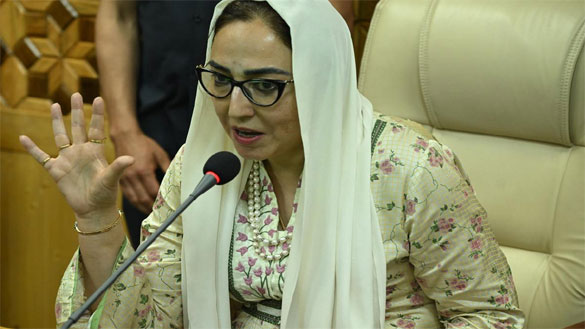
J&K Waqf Board chairman Darakhshan Andrabi addresses mediapersons at a function in Srinagar. | Photo Credit: Imran Nissar
----------
· Profiling of mosques should not be viewed with suspicion: J&K Waqf Board chairperson
· Syrian Democratic Forces withdraws from east of Aleppo
· Saudi foreign ministry welcomes second phase of Gaza peace plan, formation of transitional committee
· Glimmers of hope for those resisting Islamophobia and racism in Australia
· Even With a Muslim Mayor Zohran Mamdani, Islamophobia Isn’t Going Anywhere
· Tinubu Mourns Islamic Cleric Who Saved 200 Christians In 2018
· Malaysia: High Court dismisses GISBH’s application to review Perlis fatwa declaring its teachings deviant
· Silencing media in Bangladesh endangers society’s rights, says Nurul Kabir, president of the Editors’ Council
------
India
· Pro-Iran protests staged in Kashmir; parties seek safe evacuation of stranded students
· SC declines to hear plea on UMEED portal glitches, asks waqf mutawalli to approach authorities
· Pinarayi Vijayan accuses Centre of marginalising Muslims, warns secularism is under threat
· Asaduddin Owaisi’s door-to-door campaign helps AIMIM secure 114 seats in Maharashtra civic polls
· Call of inclusion and unity as RSS, Muslim leaders hold dialogue
· 'Ramayana is Hindu, I'm Muslim, Hans Zimmer is Jewish,' says AR Rahman as he opens up on doing the music for the Ranbir Kapoor, Sai Pallavi starrer: 'I value all..'
· No entry for non-Hindus: Banners erupt at Uttarakhand's Har Ki Pauri, citing 1916 bylaws
· As police seek details of Kashmir’s mosques, some Valley leaders express concerns
· Sundergarh curbs lifted, internet restored after beef sale rumour sparks violence
· NLU protest backfires on Jammu: Call to set up varsity in Pir Panjal, Chenab Valley
------
Mideast
· Israeli military kills Palestinian teenager in occupied West Bank
· Palestinian technocrats who will run Gaza hold their first meeting in Cairo
· Hundreds flee to government-held areas in north Syria ahead of possible offensive
· Israeli strike in south Lebanon kills one: ministry
· Israel operating beyond ceasefire line in Gaza, satellite images suggest
· Trump taps Tony Blair, US military head for Gaza
· Syria’s Sharaa grants Kurdish Syrians citizenship, language rights for first time, SANA says
· UN must ‘carefully’ heed Lebanese views as it weighs post-UNIFIL options, peacekeeping chief says
· US military visits contested area in northern Syria to defuse rising tensions
· Syria’s leader set to visit Berlin with deportations in focus
------
Arab World
· KSrelief delivers medical supplies to Yemen authorities
· Minister meets international ministers ahead of Future Minerals Forum in Riyadh
· KSrelief distributes food baskets in Sudan and serves over 5,000 patients in Yemen
· What new technologies are revealing about the Silk Road’s forgotten landscapes
· Taif festival attracts record-breaking 370,000 visitors
· France, Saudi collaborate on space for artists in Riyadh
· Riyadh takes shape at Tuwaiq Sculpture Symposium 2026
-------
Europe
· Blair and Rubio among names on Gaza 'Board of Peace'
· Dmitry Trenin: Russia and the EU drift toward an undeclared war
· Why does Zelensky keep switching defense ministers?
· Why are EU leaders suddenly being nice to Russia?
· Union wants action over Muslim prayer comments
· The exact date that Ramadan lights will return to London’s West End for 2026
· Badenoch at odds with Jenrick over 'broken' Britain
· Germany returns stolen fragments of Bayeux Tapestry to France
· Would Russia negotiate with Stubb? Don’t count on it
-----
North America
· CAIR Maryland, Muslim Council Condemn Islamophobic and Violent Hate Graffiti at Walt Whitman High School
· Argentina designates Muslim Brotherhood branches as terrorist organisations
· CAIR Action Alert: Call on Arizona Lawmakers to Reject Anti-Muslim Hysteria
· CAIR-Florida Welcomes Criminal Charges Against Men Who Harassed Muslim Students During Prayer at USF
· CAIR, CAIR-CA Condemn Political Grandstanding, Scapegoating of Afghan Nationals and Muslim-Serving Groups at Joint Subcommittee Hearing
· CAIR-CA, CPHB Welcome USDA Approval of CDE’s Ramadan Waiver for To-Go Meals for Fasting Students During Ramadan
· CAIR-NY Welcomes Limiting of Committee Assignments for NYC Council Member Who Called for Expulsion of Muslims from U.S.
· CAIR Calls Suspension of Immigrant Visa Processing for 75 Countries a ‘Cruel’ Policy That Tears American Families Apart
-----
Africa
· Uganda: tensions between police and protesters as Museveni leads polls
· Sokoto holds special prayer for peace, unity
· Muslim, Christian clerics seek divine intervention for Tinubu’s 2027 bid
· Ansaru Terror Suspects’ Trial Stalls As DSS Denies Lawyer Access
· Court Stops Rivers Chief Judge From Proceeding With Fubara’s Impeachment
· Fubara Impeachment: ‘Wike Want To Bring His Puppet Into Office’ – Baba Yusuf
· Gov Yusuf: ‘Betraying Kwankwaso Does Not End Well’ – Umar
------
Southeast Asia
· Indonesia reaffirms Palestine support at Hajj officers' training
· Govt targets 1,500 schools for Sekolah Angkat Madani programme this year, says Amir Hamzah
· Journalist released from police detention after sedition probe linked to public lecture question in KL
· Umno has yet to decide on working with Pakatan in next general election, says party sec-gen
· King to deliver Royal Address as Parliament begins new session Monday
· King grants audience to PM Anwar for briefing on current national matters
· Treasury sec‑gen: Nearly a third of SARA aid spent within five days, showing programme is meeting low‑income needs
------
South Asia
· Former Pakistan provincial chief alleges militants launch attacks from Afghanistan
· IEA Established to End Chaos, Promote Unity in Country, Farahi Says
· IEA Ambassador to Russia Presents Credentials to President Putin
· Interns at Sylhet Osmani hospital on work abstention following 'assault' on doctor
· Shaheen Hails UNHCR Support, Urges Seamless Aid for Returning Afghan Refugees
· 500 Jeribs of State Land Allocated for Industrial Park in Kandahar
· Mujahid Rejects BBC Claims of IEA Internal Disagreements
Compiled by New Age Islam News Bureau
------
Profiling of mosques should not be viewed with suspicion: J&K Waqf Board chairperson
January 16, 2026
J&K Waqf Board chairman Darakhshan Andrabi addresses mediapersons at a function in Srinagar. | Photo Credit: Imran Nissar
-------------
Jammu and Kashmir Waqf Board chairperson Darakhshan Andrabi on Friday (January 16, 2026) joined other Bharatiya Janata Party (BJP) leaders in Kashmir in defending the police move to profile mosques in the Valley.
“Verification of properties should not be viewed with suspicion. Just as land ownership in a household requires proper documents, religious properties like mosques, shrines, and gurdwaras also need verification. Imams, maulavis, and mosque committees need not to panic,” Ms. Andrabi said.
Stating that there was no political agenda behind the process of profiling mosques, Ms. Andrabi said, “When the Waqf Development Act was introduced and passed, it too was termed as interference in the religious affairs. There are a few people who do their politics on such issues. The fact is that J&K has emerged as a leading Union Territory in the registration of Waqf assets.”
“There is no need to politicise mosques or mislead people on this issue,” she added.
BJP spokesman Altaf Thakur said that for accountability and transparency of all institutions, surveillance and vigil was must. “Past experience tells us that mosques were used in Kashmir by maulvis to ask people to come out and hold pro-Pakistan rallies. Though it has been stopped in 2019 but still some elements use mosque as political platform and for propaganda,” Mr. Thakur said.
He said there was nothing wrong with finding out who was funding the mosques, the nature of the land on which a mosque was built and the ideology followed. “Wahabi ideology is the same as ‘sar tan say juda’ ideology. We need to know what is taught in these mosques. There should be no objection to it,” Mr. Thakur said.
The BJP leader said mosques in Kashmir were used in the 1990s to play pro-Pakistan songs. “Pakistan used local molvis in Kashmir in the 1990s. Recently, a doctors’ terror module was busted and traced to a moulvi,” Mr. Thakur said, while referring to the Red Fort blast in November last year.
The BJP’s stand followed a statement by the Muttahida Majlis-e-Ulema (MMU), a conglomerate of Islamic religious organisations in Jammu and Kashmir, which described the police profiling as “intrusive”.
According to the MMU, the police were distributing multi-page forms and sought details, including private identification details, family particulars, financial information, phone details, digital and social media profiles, passport details, travel history, and even phone IMEI details and other personal data of all those connected with the running and management of mosques.
The profiling of mosques was opposed by the ruling National Conference, the Opposition Peoples Democratic Party (PDP), J&K Peoples Conference, and the Communist Party of India (Marxist) in Kashmir.
Source: thehindu.com
Please click the following URL to read the text of the original Story
https://www.thehindu.com/news/national/profiling-of-mosques-should-not-be-viewed-with-suspicion-jk-waqf-board-chairperson/article70515842.ece
------
Syrian Democratic Forces withdraws from east of Aleppo
January 17, 2026
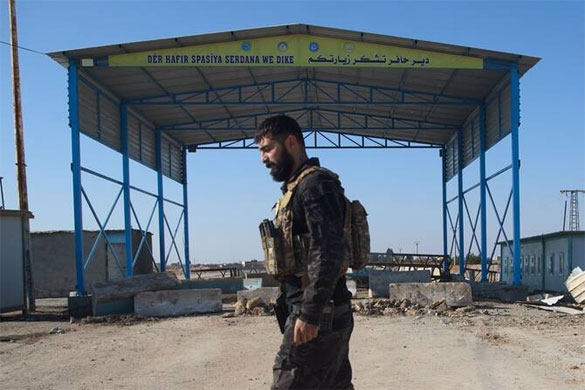
A fighter with the Syrian Democratic Forces (SDF) guards a checkpoint. (AP)
------------
RIYADH: Syrian Democratic Forces have withdrawn from positions east of Aleppo, according to SDF head Mazloum Abdi.
He announced Friday that SDF will withdraw from east of Aleppo at 7 a.m. local time on Saturday and redeploy them to areas east of the Euphrates, citing calls from friendly countries and mediators.
Hours earlier, a US military designation had visited Deir Hafer and met with SDF officials in an apparent attempt to tamp down tensions.
The US has good relations with both sides and has urged calm. A spokesperson for the US military did not immediately respond to a request for comment.
Shortly before Abdi’s announcement, interim President Ahmed Al-Sharaa had announced issuance of a decree strengthening Kurdish rights.
Syria’s army said Saturday its forces had begun entering an area east of the city of Aleppo after Kurdish forces agreed a day earlier to withdraw from the region following recent clashes.
In a statement carried by state television, the army said its forces “began entering the western Euphrates area, starting with the town of Deir Hafer”, after Kurdish forces had agreed to withdraw on Saturday morning.
A wave of displacement
Earlier in the day, hundreds of people carrying their belongings arrived in government-held areas in northern Syria ahead of the anticipated offensive by Syrian troops on territory held by Kurdish-led fighters.
Many of the civilians who fled were seen using side roads to reach government-held areas because the main highway was blocked at a checkpoint in the town of Deir Hafer controlled by the SDF.
The Syrian army said late Wednesday that civilians would be able to evacuate through the “humanitarian corridor” from 9 a.m. to 5 p.m. Thursday and then extended the evacuation period another day, saying the SDF had stopped civilians from leaving.
There had been limited exchanges of fire between the two sides in the area before that.
Men, women and children arrived on the government side of the line in cars and pickup trucks that were packed with bags of clothes, mattresses and other belongings. They were met by local officials who directed them to shelters.
* with input from Reuters, AP
Source: arabnews.com
Please click the following URL to read the text of the original Story
https://www.arabnews.com/node/2629620/middle-east
------
Saudi foreign ministry welcomes second phase of Gaza peace plan, formation of transitional committee
ARAB NEWS
January 16, 2026
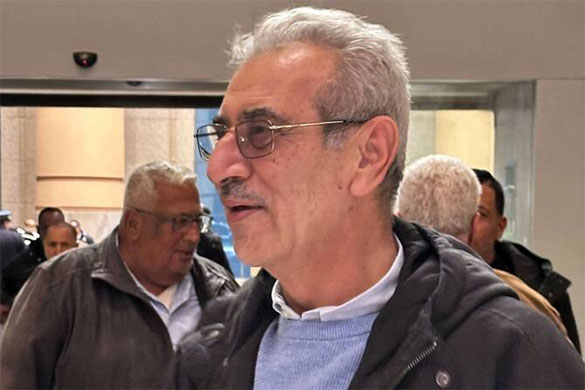
Ali Shaath, head of the Palestinian technocratic committee for managing the Gaza Strip, arrives at a hotel in Cairo on January 16, 2026. (AFP)
--------------
RIYADH: The Saudi Ministry of Foreign Affairs on Friday welcomed the announcement of the second phase of a comprehensive peace plan for Gaza, the Saudi Press Agency reported.
The ministry said it also welcomed the formation of the Palestinian National Committee for the Administration of the Gaza Strip as a temporary transitional body, established under UN Security Council Resolution 2803, which met in Cairo on Friday.
In a statement, the ministry also thanked US President Donald Trump, who declared the formation of the Gaza “board of peace,” for his leadership and efforts to end the war in Gaza.
It highlighted his commitment to the withdrawal of Israeli forces, the prevention of any annexation of parts of the West Bank, and efforts to advance sustainable peace in the region.
The ministry commended the role of mediators Qatar, Egypt and Turkiye, stressing the importance of international and regional cooperation in supporting the peace process.
It underlined the need to support the work of the temporary Palestinian National Committee in managing the daily affairs of Gaza’s residents, while preserving the institutional and geographical link between the West Bank and the Gaza Strip, ensuring Gaza’s unity and rejecting any attempts to divide it.
The statement also called for consolidating the ceasefire, halting violations, ensuring the unhindered delivery of humanitarian aid, and accelerating early recovery and reconstruction efforts across Gaza.
It said these steps were essential to enabling the Palestinian National Authority to resume its responsibilities in the Gaza Strip, leading to an end to the Israeli occupation of Palestinian territory in Gaza and the West Bank and the establishment of an independent Palestinian state in line with UN resolutions, the Arab Peace Initiative and the two-state solution.
Source: arabnews.com
Please click the following URL to read the text of the original Story
https://www.arabnews.com/node/2629605/saudi-arabia
------
Glimmers of hope for those resisting Islamophobia and racism in Australia
January 16, 2026
by Ramia Sultan
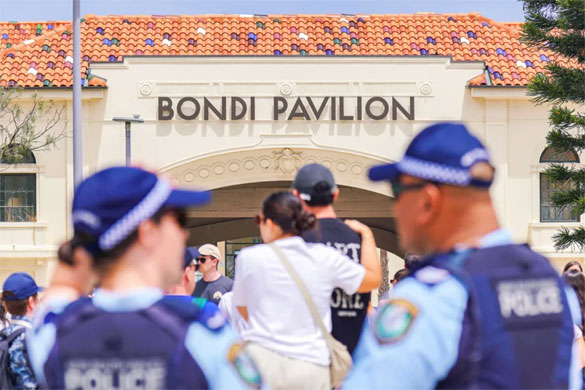
Police officers guard the perimeter as members of the public visit a memorial outside the Bondi Pavilion to pay their respects following a mass shooting attack that killed 15 people at Bondi Beach in Sydney, New South Wales, Australia on December 15, 2025. [Claudio Galdames Alarcon – Anadolu Agency]
--------------
I have faced these few weeks with a heavy heart. Like many Australian Arab Muslims, I experienced the horror of the Bondi attack not simply as a single moment of fear, but as the latest shock to an already overwhelmed collective nervous system. So many of our responses have been shaped by the ongoing genocide in Gaza and exhaustion about the relentless suspicion we face here in Australia.
An attack on any innocent life is an attack on our shared humanity. This is something most of us have been naming for more than two years. And we have been crying out for others to join us in recognising this awful fact.
The violence of the Bondi attack did not arrive in a vacuum. It landed on communities already carrying layered grief and accumulated trauma. Not only have we watched a livestreamed genocide in which our family, friends and those who resemble us have been killed in the most gruesome ways, we have also endured daily encounters with Islamophobia and racism.
Muslims in Australia have a long history of being treated as conditional members of the nation. The Bondi attack took place just 30 kilometres from Cronulla Beach, where white supremacist youth violently attacked many of our community members twenty years ago. Indeed, the horror in Bondi happened in the same December week as the Cronulla attacks.
There is a familiar and corrosive demand placed on Muslim communities to publicly condemn violence, again and again, regardless of who commits it. Many of us understandably jumped to express our sorrow. But we all understood immediately that the expectation of demonstrating our horror was not neutral. In this country, which many refer to as the most successful multicultural society in the world, Muslims grow up instinctively justifying our humanity, values, and Australianness. Over time we internalise Islamophobia; accepting the quiet, devastating belief that our pain is suspect unless we can prove to others that we are genuine.
This is a form of moral injury – harm caused when people are forced to carry responsibility for actions that violate their own deepest values.
These wounds were further reopened just days after the Bondi attack, when police forcibly removed seven Muslim men from their vehicles and detained them for hours. While they were locked up, the young men were subjected to Islamophobic taunts, including being called “terrorists.”
These young men were visiting Sydney on holiday. The police’s use of highly visible, forceful tactics in a public space, followed by their release without charge seemed designed to warn others. It raises serious questions about proportionality, racial profiling, and accountability. Worse, the mainstream media amplified the police actions, and premier of New South Wales (NSW) commended the police for their actions, saying, “police are not mucking around and I don’t think anyone in NSW wants them to muck around.” This clearly deepens the harm and potentially reinforces the racialised and religious stereotypes that Muslim communities know all too well.
For many of us, this kind of treatment came as no surprise. Though it is fundamentally at odds with the standards expected of law enforcement in Australia, it is hauntingly familiar. If you grew up in the shadow of 911 in Australia, you know how it feels to be viewed as a constant suspect.
As Australia mourns the victims of the Bondi attack, Arab Muslims feel their grief is monitored, policed or overshadowed. Public empathy feels selective, abundant for some lives and conditional for others. For those watching Israel’s genocide in Gaza unfold daily, this contrast deepens a painful sense of invisibility and disposability.
And yet, despite this weight, the Muslim community continues to respond with care. While mourning alongside the broader public, Muslims too are checking in on the victims, on one another, reaffirming values of compassion, condemning violence without surrendering dignity, and insisting, quietly but firmly, that grief should not be ranked.
For many in the Muslim community, the events at Bondi have rekindled memories of past “counterterrorism” operations, years marked by invasive surveillance, lengthy detentions, hostile and racist media narratives, and long-lasting trauma. We have been reminded that our belonging here is conditional. This is especially painful because during the past decade, significant effort has been made to rebuild trust between Muslim communities and law enforcement. Or at least we thought so. Current events – and in particular the responses of politicians, police and authorities – threaten to undo that fragile progress.
In the past weeks I have seen glimmers of hope in ordinary people who are resisting the Islamophobia and racism of the past. In the last two years, anti-genocide efforts have built powerful grassroots coalitions of people who are driven by a love of humanity and a refusal to accept Israel’s genocide. The way forward for Australia is to ensure that those voices rise and are protected, not stifled.
Source: middleeastmonitor.com
Please click the following URL to read the text of the original Story
https://www.middleeastmonitor.com/20260116-after-bondi-there-are-glimmers-of-hope-for-those-resisting-islamophobia-and-racism/
------
Even With a Muslim Mayor Zohran Mamdani, Islamophobia Isn’t Going Anywhere
BY RANA ABDELHAMID
January 16, 2026
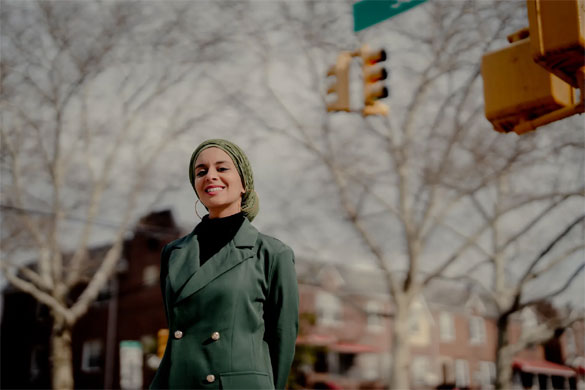
Photo: Amir Hamja / Bloomberg / Getty Images
------------
Last summer, when I was eight months pregnant, I found myself in the velvet–dark glow of the Beacon Theatre for a comedy show. At one point in the night—put on by Egyptian American comic Ramy Youssef—Youssef pulled Palestinian Algerian student activist Mahmoud Khalil onto the stage, and then, unexpectedly, Zohran Mamdani walked out—our Muslim mayor-elect and someone whom I had been working alongside for years as an activist. It was the political moment that even I, a Muslim political organizer born in Queens, could never have imagined.
My son shifted and kicked, and I pressed a hand to my belly. In eight years, he’ll be eight, I thought. In eight years, inshallah, he may grow up having only ever known a New York City where a Muslim was the mayor. A city where his name won’t be a liability. A city where his mother’s hijab won’t be a target. Maybe.
When I was eight years old, this city had already taught me how quickly your sense of belonging can be taken. It was after 9/11, and the FBI abducted and surveilled people who lived on our block. Overnight, uncles who used to bellow with confidence on Steinway Street shaved their beards and called themselves Joe instead of Youssef, Moe instead of Mohamed, Al instead of Ali—whatever felt safest. Women traded hijabs and abayas for baseball caps and jeans, anything that might help them blend into the background.
My identity shifted from Egyptian to Muslim to just suspect in the span of a week. And even when I found the courage and self-love to embrace the hijab, even when I found the softness in myself to pronounce my name as my mother did—Rana, with a gentle r—I found myself face-to-face with a world that did not know how to look at a girl like me except with distrust.
The first time a man tried to pull my hijab off, the force of that moment stayed with me longer than his grip. It changed the trajectory of my life. I became a martial artist, then a self-defense instructor. At 16, I founded Malikah, a nonprofit dedicated to helping women feel powerful and safe.
For almost 20 years, I taught Muslim women in New York City how to defend themselves against shoves and hijab grabs—techniques literally created in response to the violence we endure. And for almost 20 years, I’ve watched every election cycle stir up the same old demons: Islamophobic fearmongering, coded language, explicit threats.
The night at the Beacon Theatre should have been pure joy. A Muslim mayor-elect in New York City would have been unthinkable when I was a child. It should have been my peace. But even as we celebrated, the context was impossible to ignore. Zohran’s campaign was a battleground, amplified by trolls, bots, and political opportunists who understood exactly how to weaponize his—as well as my and one million other people in this city’s—identity. The Center for the Study of Organized Hate found that after Zohran accepted the Democratic Party’s candidacy for mayor, anti-Muslim and xenophobic tweets reached unprecedented levels, with 35,522 messages variously labeling Zohran as a terrorist or radical, reaching more than 1.5 billion people. And all that did not occur in a vacuum but amid an increasingly hostile political environment both across the country and abroad. At the Malikah Safety Center, the mutual-aid hub I run, we heard from hijabi nurses who were followed home from working the night shift. Workers who were fired for their political opinions. Teenagers disciplined for wearing pro-Palestinian pins. Grandmothers afraid to speak Arabic on the bus. This city has not yet learned how to keep Muslim communities safe. If anything, our Muslim mayor’s visibility has only revealed how fragile the progress has been.
But that night at the Beacon has stayed with me. I imagined my son at eight years old, running down the same Queens streets I grew up on. Would he inherit the fear I learned at his age or something softer and freer? What I want for him is a city where pronouncing his name in Arabic is not an act of resistance. Where being Muslim is not a political crisis but a simple, unremarkable truth. Yet hope, for marginalized communities like mine, has never been enough. Our safety has always been something we’ve had to create for ourselves, whether through organizing, community, or just through the quiet belief that we deserve more.
A few weeks into Mamdani’s term, that work is continuing—in Astoria, in Jackson Heights, in Bay Ridge, in Harlem. Across WhatsApp chats and protest lines and healing circles. Across the classrooms where young people teach each other to intervene against hate. Across the mosques, delis, and bodegas and in living rooms where families whisper the same prayer: Let us be safe here. For us, a Muslim mayor is a milestone, but it is not a guarantee.
But what gives me faith is not just Mamdani’s election; it’s also the people who made it possible. The aunties, the delivery workers, the students, the organizers, the hijabis who continue to show up with trembling courage, the immigrant mothers building safety from scratch—they are the reason I believe my son might inherit a world gentler than mine. My son is being born into a story that is still being written. A story full of risk and beauty and resilience. A story where we fight for each other because we have learned that no one else will.
That is the New York I want him to know.
Source: vogue.com
Please click the following URL to read the text of the original Story
https://www.vogue.com/article/rana-abdelhamid-personal-essay
-----
Tinubu Mourns Islamic Cleric Who Saved 200 Christians In 2018
Jonathan Nda-Isaiah
January 17, 2026
President Bola Tinubu has expressed sorrow at the passing of Imam Abdullahi Abubakar, the Chief Imam of Nghar village in the Barkin Ladi Local Government Area of Plateau State, who passed away at 92.
The late Imam Abubakar shot into national and international prominence for hiding over 200 Christians in 2018, during the communal strife, which ravaged Plateau State.
In a statement by his spokesman, Bayo Onanuga, on Friday, President Tinubu described the late Imam as an extraordinary religious leader, whose lifetime represented a striking testament to faith, courage and a staunch belief in the sacredness of human life.
“At such a time when tribal and religious tendencies seemed to overwhelm reason, Imam Abubakar stood firmly on the side of peace, benevolence and conscience,” President Tinubu remarked.
“Mindless of the enormous risk to his own life, the noble cleric chose humanity over division, love as opposed to hatred and embrace rather than rejection. His heroic feat underlines the essence of true faith, resonating louder than sermons in a salient message to the world at large. Imam Abubakar is a worthy example of a better human we should all aspire to be,” the President said.
“His act of uncommon bravery did not go unnoticed, as he received local and international honours that celebrated his commitment to coexistence among people with diverse orientations.
“I urge religious and community leaders to imbibe and preach the spirit of tolerance, mutual respect and peaceful togetherness as expounded in the life of Imam Abubakar.
“May the Almighty grant Imam Abubakar eternal rest and reward him for his good deeds and courage,” the President said.
Source: leadership.ng
Please click the following URL to read the text of the original Story
https://leadership.ng/tinubu-mourns-islamic-cleric-who-saved-200-christians-in-2018/
------
Malaysia: High Court dismisses GISBH’s application to review Perlis fatwa declaring its teachings deviant
16 Jan 2026
KANGAR, Jan 16 — The High Court here today dismissed an application by GISB Holdings Sdn Bhd (GISBH) and its chief executive officer, Nasiruddin Mohd Ali, for leave to appeal against a decision by the Perlis State Fatwa Committee, which ruled that the company’s teachings contain deviant elements, particularly in its spiritual beliefs.
Judge Datuk Mohamad Abazafree Mohd Abbas said that a fatwa (edict) issued by the state fatwa committee falls within the expertise of authorities in matters relating to Syariah law and is grounded in Article 121(1A) of the Federal Constitution.
“This provision clearly states that this court, as a civil court, has no jurisdiction over matters that fall within the jurisdiction of the Syariah Court,” he said.
The judge further ruled that the court also has no jurisdiction to review the fatwa, as it was issued pursuant to the prerogative of the Raja of Perlis.
He explained that the approval of a fatwa is a prerogative of the Raja of Perlis, Tuanku Syed Sirajuddin Jamalullail, in his capacity as the Head of the Islamic Religion in the state, and is distinct from the Raja’s legislative function in approving a Bill.
The judge said approving a fatwa was a prerogative of the Raja of Perlis, Tuanku Syed Sirajuddin Jamalullail, as the Head of the Islamic Religion, which was different from the legislative function of the Raja of Perlis in approving a Bill.
“What is required by law is not a mere procedural formality, but a process intended to strengthen the royal institution as the patron and Head of the Islamic Religion in the state of Perlis. It is a significant action that transforms a draft fatwa into a binding ruling on every Muslim in Perlis upon its publication in the Gazette.
“In this regard, the court concludes that it has no jurisdiction to review the said fatwa, as it was issued pursuant to the prerogative of the Raja of Perlis. Consequently, this court lacks the jurisdiction to hear and determine any challenge to it,” he said.
The Perlis State Fatwa Committee issued the fatwa on Oct 14, 2024, declaring the beliefs of the GISBH group as deviant, misguided and rooted in esoteric teachings.
Earlier, on Sept 20, 2024, Perlis Mufti Datuk Dr Mohd Asri Zainul Abidin announced in a statement that a special meeting of the Perlis State Fatwa Committee held on that date had concluded that the beliefs and teachings propagated by GISBH contained elements of deviant doctrine, particularly inner or esoteric teachings.
The mufti was also quoted as saying that these teachings were a continuation of the al-Arqam movement, which had previously been declared deviant.
Judge Datuk Mohamad Abazafree said the court’s consideration of the fatwa showed that its substance related to the understanding, teachings, beliefs or practices of the leaders, followers, employees and members of GISBH and its network, which were found to contain elements of deviation that were fundamentally contrary to the teachings of Islam.
“Therefore, the fatwa was issued to prohibit Muslims from practising those beliefs, teachings or practices, or any similar beliefs, teachings or practices,” he said.
He explained that when both applicants sought to challenge the fatwa, the court found that their position was essentially that the findings of the Perlis State Fatwa Committee were incorrect, or in other words, that the understanding, teachings, beliefs or practices of GISBH’s leaders, followers, employees and members were in accordance with the true teachings of Islam.
Judge Mohamad Abazafree said this made it clear that both applicants were, in essence, challenging the substance of the fatwa itself.
He added that if the court were to allow the application, it would be required to embark on complex proceedings to determine matters of Islamic faith, including historical context, comparative principles, interpretation of the Quran and prophetic traditions, as well as principles of religious practice.
He said the purpose of such proceedings would be to determine whether the beliefs practised by GISBH members and their network are in accordance with Islamic teachings and, consequently, whether the applicants are entitled to the relief sought.
“In this regard, this court, as a civil court, is not the appropriate forum to determine such matters. This position reflects one of the underlying raison d’etre behind Clause (1A) of Article 121 of the Federal Constitution.
“That is, only those who possess the requisite knowledge and expertise should be entrusted with deciding such issues. The body legally recognised as having this expertise is the Syariah Court,” he said.
During the proceedings, both applicants were represented by lawyer Zulfikri Ulul Azmi, while the Attorney General was represented by Senior Federal Counsel Ahmad Hanir Hambali and Federal Counsel Mohammad Solehheen Mohammad Zaki, who objected to the application for leave. — Bernama
Source: malaymail.com
Please click the following URL to read the text of the original Story
https://www.malaymail.com/news/malaysia/2026/01/16/high-court-dismisses-gisbhs-application-to-review-perlis-fatwa-declaring-its-teachings-deviant/205696
-------
Silencing media in Bangladesh endangers society’s rights, says Nurul Kabir, president of the Editors’ Council
17 Jan 2026
Democracy cannot survive without a free, active and fearless media, and any attempt to silence news organisations ultimately endangers the rights of the entire society, Nurul Kabir, president of the Editors’ Council, said today.
“The democratic aspiration that brings people into journalism can never be a crime,” Nurul said, adding that when media institutions are attacked or silenced, “the rights of the whole society are bound to be obstructed.”
Nurul, also editor of New Age, made the remarks while delivering his opening address at the first-ever Media Convention at the Krishibid Institution Bangladesh auditorium in the morning.
Addressing journalists, editors and media leaders from across the country, he said those who choose journalism do so with a collective commitment to democracy, human rights, equality and a non-communal society.
“From our way of life to our way of thinking, journalists try to contribute through writing and speaking to the struggle for democracy and people’s rights in Bangladesh,” he said.
He warned that attempts to silence democratic institutions through legal and extralegal means reflected a dangerous trend.
“Those who want to suppress institutions that act as vehicles of democratic aspirations are doing so through laws, force and intimidation,” he said, stressing the need for unity and collective resistance.
“If newspapers and other media cannot function, cannot remain active and cannot speak out, then different rights across society will inevitably be suppressed,” he said, adding that media development and democratic development were deeply interconnected worldwide.
Referring to recent attacks on The Daily Star and Prothom Alo, Nurul said violence was being carried out in the name of democracy itself.
“One newspaper office was vandalised and another was set on fire. But we must ask in whose name this arson was committed,” he said.
He said the attacks were particularly alarming as the country was transitioning from an authoritarian system towards a democratic one following a mass pro-democracy uprising.
Nurul alleged that groups involved in the attacks were misusing the spirit of the July uprising to justify violence.
“By attacking newspaper offices in the name of July, they are actually trying to destroy the core democratic spirit of that movement,” he said, adding that there was clear evidence of such misuse.
Recalling the attack on The Daily Star office, he described it as a deeply traumatic experience.
“This was not an attack on a building, nor an expression of anger against equipment or property,” he said, adding that trapping journalists inside a building and setting fire around it reflected medieval brutality.
“At this stage of global civilisation, trying to burn journalists alive is an expression of barbarism,” he said.
Nurul said such violence was not about agreeing or disagreeing with a newspaper’s editorial stance.
“Today it happened to one newspaper. Tomorrow it can happen to another, and the day after to someone else,” he warned.
“Different views and different voices must exist. Protecting this diversity is crucial,” he said, calling for solidarity, collective awareness and organised struggle.
Source: thedailystar.net
Please click the following URL to read the text of the original Story
https://www.thedailystar.net/news/bangladesh/news/silencing-media-endangers-societys-rights-says-nurul-kabir-4082946
------
India
Pro-Iran protests staged in Kashmir; parties seek safe evacuation of stranded students
January 16, 2026
With tensions escalating in Iran following US President Donald Trump’s threats of military action, some protests have also erupted in India against the United States. The Kashmiri Shia Muslims held a demonstration in Srinagar today in support of Iran, condemning the US’ interference in Iran’s internal affairs. Similar agitations were held in Budgam, where demonstrators marched from Imambara to Main Chowk to oppose US actions.
PDP chief Mehbooba Mufti also commented on the evolving situation in Iran and blamed the United States for interfering in the internal matters of Muslim countries, in the name of restoring democracy. “The greatest destruction in Muslim countries has been caused by America. The example of Gaza is right in front of us. The people of Iran should not fall for this deception and should stand with their own government,” she said.
Mufti also took a dig at the BJP government for the changing relations between India and Iran. She said, “Iran and India have had very close relations. Iran has also had very close relations with Kashmir, but ever since the BJP government came to power in India, the entire system in the country has changed…”
The unrest in Iran began in December 2025, with reports of clashes escalating between protesters and security forces in recent days. The violent protests have resulted in an estimated death toll ranging from under 3,000 to more than 12,000, according to media reports.
Kashmiri students stranded in Iran
Amid the nationwide unrest in Iran, there are reports of several Indians, including many students from Kashmir, being stranded in Iran. Expressing concern for their children, the families of these students have urged the Indian Government to ensure their early evacuation. According to sources, the MEA is preparing to facilitate the return of Indian nationals from Iran amid the evolving situation there.
Several political leaders, including PDP chief Mehbooba Mufti and Baramulla MP Abdul Rashid Sheikh alias Engineer Rashid, have written to External Affairs Minister S. Jaishankar, seeking immediate measures from the government for the rescue of Kashmiri students trapped in Iran amid the tense situation there.
Mufti said, “Not only students from Jammu and Kashmir but students from across the country are stranded in Iran. I have previously requested and appealed to Foreign Minister S. Jaishankar to arrange special flights for their evacuation…”
However, in a video posted on social media, some Kashmiri students studying in Gulistan University of Medical Science in Iran shared a message that they are safe in Gorgan. They said, “On behalf of all the students at Gorgan Gulistan University, we are safe. The university is fulfilling all our needs, and officials regularly check on us, so there is no need to worry. As soon as our internet is restored, we will contact our parents. Please stay calm and do not worry.”
On safe evacuation of Indians from Iran, J&K Waqf Board Chairperson Dr Darakhshan Andrabi hailed Prime Minister Narendra Modi for instant action when it comes to safe rescue of Indians from a conflict zone. She said, “Since our Prime Minister took office in 2014, his priority has always been to evacuate students first from any conflict zone, ensuring that no child is left behind. Therefore, I don’t think any Indian children will face any difficulties…”
Yesterday, Jammu and Kashmir CM Omar Abdullah had also spoken to EAM Dr S Jaishankar about the evolving situation in Iran. He informed that EAM has assessed the situation on ground and assured that all steps will be taken to safeguard the lives of students and other people from J&K who are in Iran now.
Source: thestatesman.com
Please click the following URL to read the text of the original Story
https://www.thestatesman.com/india/pro-iran-protests-staged-in-kashmir-parties-seek-safe-evacuation-of-stranded-students-1503541606.html
-------
SC declines to hear plea on UMEED portal glitches, asks waqf mutawalli to approach authorities
16.01.26
The Supreme Court on Friday refused to entertain a petition filed by a waqf mutawalli who alleged technical and structural deficiencies in the Centre’s UMEED portal, which has been made mandatory for uploading details of waqf properties across the country.
A bench comprising Chief Justice Surya Kant and Justice Joymalya Bagchi dismissed the plea after observing that the issues raised were administrative in nature and did not warrant the court’s intervention at this stage.
However, the bench granted liberty to the petitioner, Hashmat Ali, to approach the appropriate authorities for redressal.
“We see no ground to entertain this writ petition. The petitioner may be well advised to approach the prescribed authority for clarification or addressing of grievances for which liberty is granted,” the CJI said in the order.
At the outset, the Chief Justice questioned why the petition had been filed directly before the Supreme Court instead of a high court. “Why did you not approach the high court?” the CJI asked.
Senior advocate Maneka Guruswamy, appearing for Ali, told the bench that the high court was unlikely to take up the matter since challenges to the 2025 amendments to the Waqf law were already pending before the Supreme Court.
The court, however, was not convinced. The Chief Justice pointed out that the present petition did not raise any substantive constitutional challenge to the amendments.
Instead, it focused on difficulties in using the UMEED portal, which the bench described as “administrative difficulties”. Such issues, the court said, could be addressed either by the high court or by the authorities concerned.
During the hearing, Guruswamy said the petition went beyond technical glitches and also raised concerns about how waqfs were being classified under the Waqf Rules, 2025.
She argued that the category of ‘Waqf by survey’ had been subsumed under ‘Waqf by user’, and that the UMEED portal did not offer a separate option for ‘Waqf by survey’ in its drop-down menu.
Justice Bagchi responded by noting that the ministry had already clarified that ‘Waqf by survey’ stood subsumed within the ‘Waqf by user’ category.
Ali, a mutawalli from Madhya Pradesh, had challenged the enforceability of the digital uploading mandate under Section 3B of the Unified Waqf Management, Empowerment, Efficiency and Development Act, 1995.
He alleged that the UMEED portal, notified under the UMEED Rules, 2025, was structurally defective and technologically unfit for registering waqf properties.
The petition also referred to an earlier order of the Supreme Court. On December 1 last year, the court had refused to extend the deadline for mandatory registration of all waqf properties, including ‘waqf by user’, on the UMEED portal.
The Centre launched the Unified Waqf Management, Empowerment, Efficiency and Development (UMEED) Act central portal on June 6 with the stated aim of creating a digital inventory of waqf properties after geo-tagging them.
As per the mandate, details of all registered waqf properties across India are required to be uploaded on the portal within six months.
With Friday’s order, the Supreme Court has made it clear that grievances related to the functioning of the UMEED portal must first be taken up with the authorities or before the appropriate high court, rather than being brought directly to the top court.
Source: telegraphindia.com
Please click the following URL to read the text of the original Story
https://www.telegraphindia.com/india/sc-declines-to-hear-plea-on-umeed-portal-glitches-asks-waqf-mutawalli-to-approach-authorities/cid/2142998
--------
Pinarayi Vijayan accuses Centre of marginalising Muslims, warns secularism is under threat
17.01.26
Kerala Chief Minister Pinarayi Vijayan launched an attack on the BJP-led Centre, alleging that its laws and policies were pushing Muslims to the margins and weakening India’s secular fabric.
Speaking at the concluding session of the ‘Kerala Yatra’, an outreach programme organised by the Kerala Muslim Jamaat, Vijayan said legislations such as the Citizenship Act and the new Waqf Act treat Muslims as “second-class citizens” and isolate them from the mainstream.
The month-long yatra began in Kasaragod on January 1 and concluded in Thiruvananthapuram after traversing the length of the state.
Vijayan said secularism, democracy and constitutional values were under threat, pointing to what he described as increasing attacks on minority communities and their places of worship across the country.
In such a climate, he argued, communal polarisation could not be countered by mirroring it. “Majority communalism cannot be fought with minority communalism as both forces complement each other,” he said while addressing a large gathering at Putharikandam grounds.
“Instead, they have to be fought by strengthening secularism,” the chief minister added.
Speaking at the event, also attended by Leader of Opposition in the state assembly V D Satheesan and senior Congress leader V D Satheesan, Vijayan said that having a "soft stand" or adopting an "appeasement strategy" towards any form of communalism was "dangerous".
The Marxist veteran said that Kerala has seen several brutal communal conflicts and riots in the state in the past, but all that has ended due to the strong, uncompromising stand adopted by the LDF against any form of communalism.
He called for creating awareness among the people about the forces trying to divide them along the lines of religion, race, caste or language and praised the 'Kerala Yatra' led by Kanthapuram A P Abubacker Musliyar, saying that it was a step in the right direction.
"In this era when conscious efforts are being made to separate people in the name of religion or race, such moves are a great defence against it," the CM said.
Source: telegraphindia.com
Please click the following URL to read the text of the original Story
https://www.telegraphindia.com/india/pinarayi-vijayan-accuses-centre-of-marginalising-muslims-warns-secularism-is-under-threat/cid/2143069
--------
Asaduddin Owaisi’s door-to-door campaign helps AIMIM secure 114 seats in Maharashtra civic polls
16.01.26
Asaduddin Owaisi’s door-to-door campaign and the sting of narrow defeats in previous polls energized the workers of All India Majlis E Ittehadul Muslimeen (AIMIM) in the Maharashtra civic elections, resulting in the party winning 114 seats across the state, its leader Shareque Naqshbandi said on Friday.
The AIMIM won 33 seats in Chhatrapati Sambhajinagar, 21 in Malegaon, 15 in Amravati, 13 in Nanded, 10 in Dhule, eight in Solapur, six in Mumbai, five in Thane, two in Jalgaon, and one in Chandrapur.
Winning 80 seats in earlier civic polls gave the party an idea of the temperament of the urban voter, which also helped, Naqshbandi told PTI.
"Initially, AIMIM faced a challenge from its own people over candidature in Chhatrapati Sambhajinagar. Later, the presence of Asaduddin Owaisi and his rallies in potent pockets resulted in AIMIM winning 33 out of 37 seats we contested here. We have bagged wins from Mumbai to Chandrapur this time," he said.
Owaisi dedicated more time to the campaign compared to 2015 and managed to overcome dissidence by speaking to disgruntled leaders and convincing nearly 70 percent of them, Naqshbandi said.
"The rest had already moved ahead by joining other political parties. We brought these people together and this got converted into votes. There were divisions among the opposition parties, which proved to be an opportunity to us. Moreover Asaduddin Owaisi went door to door in the areas where we were contesting. He pointed out local civic issues in smaller rallies which appealed to the voter," he added.
Narrow losses, like the one faced by Imtiaz Jaleel in the 2024 assembly elections from Aurangabad East, had hurt workers who put in extra efforts, Naqshbandi said.
Speaking on the Chhatrapati Sambhajinagar civic poll results, former MP Jaleel said the BJP was fighting with the aim of ending the Shiv Sena here.
"The BJP had money and resources but they had a target to end Shiv Sena led by Eknath Shinde. They severed the alliance at the last moment and achieved their target. Now Shiv Sena is behind us here. They have 4-5 MLAs, one MP and a minister here. But they could do nothing and people have answered them through votes," he told reporters.
The people of the city have stood with AIMIM for the past 12 years, resulting in 33 wins, Jaleel added.
"We are the second biggest party in the city after BJP. We have given candidature to the ordinary people here and they have won here. This is a tight slap to those political parties who gave candidature to their relatives. While the opposition called AIMIM communal, we made people from the Hindu community win seats," he said.
Source: telegraphindia.com
Please click the following URL to read the text of the original Story
https://www.telegraphindia.com/india/asaduddin-owaisis-door-to-door-campaign-helps-aimim-secure-114-seats-in-maharashtra-civic-polls/cid/2143012
-------
Call of inclusion and unity as RSS, Muslim leaders hold dialogue
January 17, 2026
Ishita Mishra
Senior leaders of the Rashtriya Swayamsewak Sangh (RSS) and Muslim community held a dialogue in New Delhi on Friday (January 16, 2026) in which speakers underlined the need for unity, inclusion and peace while discussing sensitive issues such as the politics of hatred and the role of fringe elements in society.
Organised by Khwaja Iftikhar Ahmed, founder of the Inter Faith Harmony Foundation of India, the dialogue session at India Islamic Cultural Centre was attended by RSS joint general secretary Krishna Gopal and the Sangh’s outreach in-charge Ramlal.
Incidentally, RSS chief Mohan Bhagwat had launched Mr. Ahmed’s book The Meeting of Minds: A Bridging Initiative back in 2021, which dwelled on bridging perceived gaps between Muslims and Hindus.
The Muslim community was represented by former Delhi Lieutenant Governor Najeeb Jung, former Chief Election Commissioner S.Y. Quraishi, retired Lieutenant General Zameeruddin Shah, social activist and political analyst Shalini Ali, social worker Jasim Muhammad, NCPUL director Shams Iqbal, Major Muhammad Shah Ali, among others.
In his address, Mr. Jung expressed concern over a recent speech of National Security Advisor Ajit Doval in which he urged the youth in India to “avenge India’s history”. He also raised the issue of denial of bail to activist Umar Khalid, accused in a larger conspiracy case related to the North East Delhi riots in 2020.
Why is PM silent on attacks?: Jung
Questioning Prime Minister Narendra Modi’s silence during attacks on minorities, demolitions of homes, and the spread of falsehoods, Mr. Jung termed such incidents as a matter of grave concern for democracy. He also pointed out about rewriting history in school textbooks, cow vigilantism and spoke at length on several burning issues pertaining to Muslims.
Lt. Gen. (retd.) Zameeruddin Shah also raised issues like social media, cinema and right-wing “hooliganism” as dangerous tools for spreading hatred against Muslims. He appealed to the RSS that if the organisation believes 20% of society consists of fringe elements, they must be identified and restrained — because “a single faulty part can jam an entire machine”.
Addressing the gathering, RSS leader Mr. Krishna Gopal said that fringe elements are not the problem themselves, but symptoms of a deeper social illness. Instead of only confronting provocateurs, society must identify and cure the underlying causes.
Referring to late Prime Minister Jawaharlal Nehru’s speech at Aligarh Muslim University on January 24, 1948, Mr. Gopal hailed him for placing nationalism above religion as it truly unites India.
On Umar Khalid’s bail status
Responding to Mr. Jung’s statement on denial of bail to Umar Khalid, Mr. Ramlal said: “That is why people are only talking about denial of bail to Umar Khalid but not speaking about [journalist] Mohammad Zubair who was given bail very quickly by the Supreme Court even when his crime was bigger.”
In 2022, the Supreme Court had granted interim bail to Mohammed Zubair in eight criminal cases registered against him by the Uttar Pradesh Police in different districts on hate speech charges.
Mr. Ramlal also questioned the perception that courts are influenced by the government and said that it is not right to bring the government and RSS into everything.
Refuting the allegations that RSS influences the BJP-led government, Mr. Ramlal said the Sangh Parivar never has any “say” even in the smallest decisions of the BJP. He added that the RSS never asks anyone to vote for any party.
He also refuted the allegations of a particular section of society that RSS only supports BJP.
RSS’s message to Congress
“Mai Congress ke logo se milta hu or kehta hu jab tak aap Sangh ko gali dete rahoge, hum BJP ko support karte rahenge... aapko support kaise karein... aap support mango to sahi. Sangh ki majburi aapne BJP bana di hai (I meet Congress members and tell them that as long as you keep abusing the Sangh, we will continue to support the BJP… How can we support you when you are not seeking our support? You keep insulting us. You have made BJP a compulsion for Sangh),” Mr. Ramlal said, adding that “selective narratives” show the RSS in bad light.
“News of Bajrang Dal members vandalising churches spread fast but facts that those hooligans were either suspended or terminated by Sangh long before they commit such a crime never make it to news. They (hooligans) misuse our name....even when we clarify, we are criticised. You (Muslims) and RSS are on same page. In your case, if one person does anything bad, the entire community is blamed. Same is with the Sangh. We are victims of same narrative building,” he said adding that turning a few incidents into a “national crisis” is wrong.
Source: thehindu.com
Please click the following URL to read the text of the original Story
https://www.thehindu.com/news/national/rss-and-muslim-leaders-hold-dialogue-on-unity-inclusion/article70515669.ece#google_vignette
------
'Ramayana is Hindu, I'm Muslim, Hans Zimmer is Jewish,' says AR Rahman as he opens up on doing the music for the Ranbir Kapoor, Sai Pallavi starrer: 'I value all..'
Jan 16, 2026
Ever since Nitesh Tiwari's 'Ramayana' is announced, fans just cannot wait for the mythological saga to release. The film sees Ranbir Kapoor as Lord Ram, Sai Pallavi as Goddess Sita and Yash as Raavan. The film also stars Sunny Deol, Ravi Dubey among others. One of the most exciting things for netizens is that AR Rahman has collaborated with Hans Zimmer for the film's music. In a recent interview, Rahman has opened up on this collaboration. The Oscar winning composer also opened up on doing music for a film based on Hindu mythology despite being a Muslim. The composer revealed how he respects these values and ideas.
He said during a chat with BBC Asian's Youtube channel and said that Indian epics were a part of his education growing up. “I studied in a Brahmin school, and every year we had Ramayana and Mahabharata, so I know the story," he said. For Rahman, the heart of the epic lies in its moral core. He added, “The story is about how virtuous a person is, higher ideals, and all that stuff. People may argue, but I value all those good things, any good things that you can learn from."
He also spoke about the importance of seeking wisdom without prejudice “The prophet has said that knowledge is something invaluable, no matter where you get it from – a king, a beggar, a good act or a bad one. You can’t shy away from things," Rahman explained.
The composer also urged people to have a broader mindset. He said, “I think we need to elevate from small-mindedness and selfishness. When we elevate, we become radiant, and that’s very important." Highlighting the diversity behind the project, Rahman said, “Hans Zimmer is Jewish, I am Muslim, and the Ramayana is Hindu. It’s coming from India to the whole world, with love."
AR Rahman was born as Dileep Kumar Rajagopala in Madras and embraced Islam in 1989.
Source: indiatimes.com
Please click the following URL to read the text of the original Story
https://timesofindia.indiatimes.com/entertainment/hindi/bollywood/news/ramayana-is-hindu-im-muslim-hans-zimmer-is-jewish-says-ar-rahman-as-he-opens-up-on-doing-the-music-for-the-ranbir-kapoor-sai-pallavi-starrer-i-value-all-/articleshowprint/126566505.cms
------
No entry for non-Hindus: Banners erupt at Uttarakhand's Har Ki Pauri, citing 1916 bylaws
Narendra Sethi
16 Jan 2026
DEHRADUN: Highly contentious posters barring entry to non-Hindus have been prominently displayed around the sacred Har Ki Pauri ghats in the religious city of Haridwar.
The signs explicitly state: "Non-Hindus Entry Prohibited." These notices have been erected by the Shri Ganga Sabha, the organization responsible for managing the affairs of the revered site.
The posters cite the 1916 Municipal Act/Bylaws of Haridwar as the legal basis for the restriction, asserting that entry for non-Hindus is expressly forbidden in this area.
Har Ki Pauri is the spiritual heart of Haridwar, attracting thousands of devotees daily for the holy dip in the Ganga.
The Shri Ganga Sabha, founded by Pandit Madan Mohan Malaviya, manages the site's operations.
Nitin Gautam, the current President of the Shri Ganga Sabha, has strongly demanded strict enforcement of this entry ban. His call is being echoed by numerous seers and Hindu organisations who argue that restricting access is crucial for maintaining religious sanctity.
"The 1916 Municipal Bylaw clearly states that no non-Hindu can enter the Har Ki Pauri area," Gautam stated emphatically. "We have repeatedly requested the administration to act on these existing provisions, but with no concrete response, we were compelled to put up these signs."
Sources indicate that the 1916 Municipal Bylaws originated from an agreement between Pandit Madan Mohan Malaviya and the British government, designed to preserve the religious purity and dignity of Haridwar.
According to these historical rules, non-Hindus were restricted from entering prime ghats like Har Ki Pauri and were also barred from establishing permanent residences, ensuring the city remained secure according to Sanatan traditions.
Significantly, these rules reportedly remain codified within the current Haridwar Municipal Corporation bylaws. Sadhus and local priests have long demanded the enforcement of these bylaws not only for entry but also for prohibiting commercial activities by non-Hindus in the area.
Source: newindianexpress.com
Please click the following URL to read the text of the original Story
https://www.newindianexpress.com/nation/2026/Jan/16/no-entry-for-non-hindus-banners-erupt-at-uttarakhands-har-ki-pauri-citing-1916-bylaws
-----
As police seek details of Kashmir’s mosques, some Valley leaders express concerns
by Bashaarat Masood
January 16, 2026
The Jammu and Kashmir police exercise seeking granular information about mosques in the Valley and the people who run them has drawn sharp criticism from several quarters.
As reported by The Indian Express on Monday, the police have initiated an exercise seeking information such as the physical structure of the mosque, cost of construction, source of funds, monthly expenditure and income. It also sought information about the people associated with the mosques, including their financial status, and bank, passport, ATM and credit card details.
While the Mirwaiz Umar Farooq-led Muttahida Majlis Ulama (MMU) termed it an “invasive data collection exercise”, National Conference leader and Parliament member Aga Ruhullah Mehdi said the “right-wing ideology which is running the system in this country” wants to control the pulpit.
“This is a particular right-wing ideology which is running this system in this country. This is its project,” Ruhullah said. “And it is clearly visible that it wants to control other religions which are not in accordance with their right-wing ideology”.
Calling it an infringement of freedom to practice religion, guaranteed by the Constitution, Ruhullah asked what is the need for seeking such minute details when the security agencies already have most of them.
“There are some people who propagate a particular religion. In this way, you will bring extra layers of surveillance (for them). It seems that they are trying to intimidate them,” he said. “The preachers of the mosques will be told to read the sermon according to the order of the BJP. The RSS will send them a sermon on Friday.”
Muttahida Majlis Ulama, a conglomerate of religious organisations in the Valley, questioned the motives of the exercise.
“The nature and depth of information being sought goes far beyond any routine administrative requirement, raising serious questions of intent, reflecting an attempt to control and regulate religious institutions through coercive means and checks,” MMU said. “Such an unprecedented and invasive data-collection exercise has caused widespread anxiety.”
MMU said that the institutions of worship and their internal religious affairs “can’t be subjected to arbitrary surveillance and intrusive scrutiny”.
“The elected government must immediately intervene in this matter. Such an exercise must be stopped forthwith, as it undermines trust, creates fear among religious functionaries and sends a disturbing message to the Muslim community of the state. Measures that single out mosques and religious personnel in this manner are unjustified, counterproductive and harmful to social harmony,” the religious conglomerate said, urging Lt Governor Manoj Sinha to withdraw the exercise without a delay.
The Awami Ittehad Party (AIP) led by Engineer Rashid said that profiling the mosques and keeping religious institutions under surveillance is “nothing less than policing faith”.
“This is neither governance nor security, it is intimidation,” AIP chief spokesperson Inam un Nabi said. “This mindset criminalises normal religious life and targets the very identity of common people. If the administration continues to treat every religious space as a threat, it will only fuel resentment and destroy public trust.”
While police have not officially acknowledged the exercise, sources said this has been in the works for some time. “We have been asked to fill these details and submit the forms,” said a police officer.
Source: indianexpress.com
Please click the following URL to read the text of the original Story
https://indianexpress.com/article/india/police-details-kashmir-mosques-criticism-disturbing-message-muslims-10471903/
------
Sundergarh curbs lifted, internet restored after beef sale rumour sparks violence
Subhashish Mohanty
17.01.26
Normalcy returned to Odisha’s Sundargarh town on Friday, after tension erupted on Thursday over rumours of alleged sale of beef at a meat shop in Regent Market.
Prohibitory orders under Section 163 of the BNS, which had been imposed in the area, were lifted, and internet services that were earlier suspended were restored.
However, all educational institutions, including schools and colleges, remained closed as a precautionary measure. Efforts are now underway to restore normalcy and maintain peace in the area.
Violence broke out after rumours spread that beef was being sold at a meat shop in the market. People gathered at the spot, and the situation worsened when members of two groups confronted each other, leading to heated exchanges that later turned violent. Both sides indulged in
stone pelting.
Several vehicles, including a scooter and a pick-up van, were damaged. Miscreants vandalised some shops and set them on fire. When police attempted to control the situation, they were also attacked, leaving a few personnel injured. Police, however, managed to contain the violence and prevented it from spreading to other parts of the district.
The administration has deployed 10 platoons of force in the town to maintain
law and order.
DIG, Western Range, Brijesh Ray said: “The situation is under control. The situation turned violent on Thursday when an allegation surfaced regarding sale of beef at Regent Market. Following prompt action by the police, the situation has been brought under control.”
The district administration has formed a peace committee to ensure the early restoration of peace in the western Odisha town. “We appeal to everyone to maintain peace and cooperate with us so that law and order is maintained throughout the region,” Collector, Sundergarh, Subhankar Mohapatra said.
Source: telegraphindia.com
Please click the following URL to read the text of the original Story
https://www.telegraphindia.com/india/sundergarh-curbs-lifted-internet-restored-after-beef-sale-rumour-sparks-violence-prnt/cid/2143029
------
NLU protest backfires on Jammu: Call to set up varsity in Pir Panjal, Chenab Valley
Muzaffar Raina
17.01.26
Jammu’s aggressive demands for a National Law University have exposed its own fault lines, with residents of its Muslim-majority Pir Panjal and Chenab Valley areas seeking the university in their own backyard.
While Hindus are 66 per cent of the population in the Jammu division, the two Muslim-majority sub-regions account for six of its 10 districts and make up about two-thirds of the division by area.
Protesters in Jammu’s Hindu-majority “Dogra heartland” — consisting of the districts of Jammu, Udhampur, Samba and Kathua — had initially wanted to wrest the proposed NLU from the Valley.
They later modified their stand, seeking an NLU in both Kashmir and Jammu, after chief minister Omar Abdullah asked why there was no parity between the two regions when Jammu got both an IIT and an IIM in 2016.
However, influential voices in Pir Panjal and the Chenab Valley are now calling for the varsity to be set up in their own areas.
“Chenab Valley deserves a National Law University for justice, equal opportunity and equal development,” former state minister Ghulam Mohammad Saroori wrote on X.
Pir Panjal political activist Guftar Choudhary said that all the big institutions in the Jammu region — the AIIMS, IIT, IIM and the central university — were in the Jammu, Samba or Kathua districts.
He said the movement for an NLU was gaining momentum in Pir Panjal.
“A Joint Action Committee should be formed immediately. Leaders across political parties should join hands for this important cause. Peer Panjal deserves an NLU. Peer Panjal is the heart of J&K,” Choudhary wrote on X.
“If securing a National Law University demands that we step onto the streets, raise our voices, and stand shoulder to shoulder for our future, then we will not hesitate for a moment….”
Choudhary told reporters that “when the issue of development comes, they want everything there (in the Dogra heartland)”.
Jammu’s BJP politicians and Rightwing ecosystem have in recent weeks launched multiple communally tinged protests, from opposing the admission of Muslims to a medical college to objecting to Muslims dominating the Jammu and Kashmir senior football team and under 14 cricket squad.
Jammu witnessed a Tricolour-waving demonstration for the NLU on Friday, too.
Peoples Conference president and legislator Sajad Lone on Wednesday sought an “amicable divorce” between the Kashmir and Jammu regions following the NLU controversy. Several leading voices in Jammu, too, have called for separate statehood.
“Maybe time has come for an amicable divorce. It is not only about developmental matters. Jammu has become the proverbial stick to beat the Kashmiri with,” Lone said.
Many in Kashmir claim that the Jammu region has been pocketing most of the government jobs and professional-college seats following a controversial reservation policy implemented by lieutenant governor Manoj Sinha’s administration.
Student activist Sahil Parray wrote on X on Friday that the latest advertisement for police posts had set aside 681 posts for Jammu district against only 29 for Srinagar.
“Let that sink in. A region that has lived through 35 years of turmoil, carries the highest population, highest unemployment and one of the largest BPL populations reduced to just 29 selections from the summer capital,” he said.
He described this as a “systematic sidelining of Kashmir”.
Overall, 2,381 of the police posts advertised are for the Jammu division and 1,097 for Kashmir, sources said. Each division has 10 districts, but the Valley has the larger population.
Source: telegraphindia.com
Please click the following URL to read the text of the original Story
https://www.telegraphindia.com/india/nlu-protest-backfires-on-jammu-call-to-set-up-varsity-in-pir-panjal-chenab-valley-prnt/cid/2143033
-------
Mideast
Israeli military kills Palestinian teenager in occupied West Bank
January 16, 2026
AL-MUGHAYYIR: Israeli forces killed a 14-year-old Palestinian in the occupied West Bank village of Al-Mughayyir on Friday, the Palestinian Health Ministry said, while the military said soldiers had responded to stone throwing.
The Ramallah-based Health Ministry announced the death of 14-year-old Mohammed Al-Nassan by Israeli fire in Al-Mughayyir in a statement on Friday.
Shortly after, Israel’s military said its forces had come to the village after Palestinians “hurled stones toward Israelis, set tires on fire and blocked access routes to the area.”
The military said dozens of Palestinians were throwing stones upon their arrival, including one who posed “an imminent threat.”
“The soldiers responded by firing warning shots into the air, followed by fire to eliminate the terrorist,” the military said, adding it had set up roadblocks in the area to search for another suspect.
Amin Abu Aliya, mayor of Al-Mughayyir, said that the army raided the village when people began to exit mosques after Friday prayers.
“This young man (Nassan) was exiting the mosque where he was praying with the people, the military vehicle stopped in front of the mosque, they opened the back door and started shooting at him directly,” Abu Aliya said.
Abu Aliya added that following the incident, the army introduced a curfew for the village, closing all shops and setting up a new checkpoint at the village’s entrance.
He pointed to the heavy military presence in his village in recent months, which he said often protected Israeli settlers who recently set up nearby outposts and took land from Al-Mughayyir farmers.
In September, a settler who the military said was an off-duty soldier shot and killed a 20-year-old who the army said had thrown stones in Al-Mughayyir.
Israeli settlers in the West Bank also serve in the army, and sometimes carry their weapons with them when off duty.
Israel has occupied the West Bank since 1967.
Violence there has soared since the Oct. 7, 2023, attack on Israel that triggered the Gaza war and has not subsided despite the truce that came into effect in October.
Since October 2023, Israeli troops and settlers have killed more than 1,000 Palestinians in the West Bank, according to Health Ministry figures.
Source: arabnews.com
Please click the following URL to read the text of the original Story
https://www.arabnews.com/node/2629591/middle-east
-------
Palestinian technocrats who will run Gaza hold their first meeting in Cairo
January 16, 2026
CAIRO: The Palestinian committee that will govern postwar Gaza held its first meeting in Cairo on Friday.
Formed on Wednesday as the second phase of the US-brokered Gaza ceasefire deal came into effect, the committee is made up of 15 technocrats charged with administering everyday life in the Palestinian territory.
The meeting followed US President Donald Trump’s declaration of the formation of a Gaza “board of peace,” a key phase two element of the US-backed plan to end the war.
Members of the board will be announced shortly, Trump said, and he will chair it. “I can say with certainty that it is the Greatest and Most Prestigious Board ever assembled at any time, any place,” he said.
The peace plan also calls for the deployment of an International Stabilisation Force to help secure Gaza and train vetted Palestinian police units.
“The ball is now in the court of the mediators, the American guarantor and the international community to empower the committee," senior Hamas leader Bassem Naim said.
The US-backed Gaza peace plan first came into force on October 10, facilitating the return of all the hostages held by Hamas and an end to the fighting between the Palestinian militant group and Israel in the besieged territory.
The plan's second phase is now underway, though clouded by ongoing allegations of aid shortages and violence. Israeli forces have killed 451 Palestinians since the ceasefire began.
Source: arabnews.com
Please click the following URL to read the text of the original Story
https://www.arabnews.com/node/2629582/middle-east
------
Hundreds flee to government-held areas in north Syria ahead of possible offensive
January 16, 2026
DEIR HAFER, Syria: Scores of people carrying their belongings arrived in government-held areas in northern Syria on Friday ahead a possible attack by Syrian troops on territory held by Kurdish-led fighters east of the city of Aleppo.
Many of the civilians who fled used side roads to reach government-held areas because the main highway was blocked with barriers at a checkpoint that previously was controlled by the Kurdish-led and US-backed Syrian Democratic Forces, Associated Press journalists observed.
The Syrian army said late Wednesday that civilians would be able to evacuate through the “humanitarian corridor” from 9 a.m. to 5 p.m. Thursday. The announcement appeared to signal plans for an offensive against the SDF in the area east of Aleppo.
There were limited exchanges of fire between the two sides.
Men, women and children arrived in cars and pickup trucks that were packed with bags of clothes, mattresses and other belongings. They were met by local officials who directed them to shelters.
In other areas, people crossed canals on small boats and crossed a heavily damaged pedestrian bridge to reach the side held by government forces.
The SDF closed the main highway but about 4,000 people were still able to reach government-held areas on other roads, Syrian state TV reported.
A US military convoy arrived in Deir Hafer in the early afternoon but it was not immediately clear whether those personnel will remain. The US has good relations with both sides and has urged calm.
Inside Deir Hafer, many shops were closed and people stayed home.
“When I saw people leaving I came here,” said Umm Talal, who arrived in the government-held area with her husband and children. She added that the road appeared safe and her husband plans to return to their home.
Abu Mohammed said he came from the town of Maskana after hearing the government had opened a safe corridor, “only to be surprised when we arrived at Deir Hafer and found it closed.”
SDF fighters were preventing people from crossing through Syria’s main east-west highway and forcing them to take a side road, he said.
The tensions in the Deir Hafer area come after several days of intense clashes last week in Aleppo, previously Syria’s largest city and commercial center, that ended with the evacuation of Kurdish fighters from three neighborhoods north of the city that were then taken over by government forces.
The fighting broke out as negotiations stalled between Damascus and the SDF over an agreement reached in March to integrate their forces and for the central government to take control of institutions including border crossings and oil fields in the northeast.
The US special envoy to Syria, Tom Barrack, posted on X Friday that Washington remains in close contact with all parties in Syria, “working around the clock to lower the temperature, prevent escalation, and return to integration talks between the Syrian government and the SDF.”
The SDF for years has been the main US partner in Syria in fighting against the Daesh group, but Turkiye considers the SDF a terrorist organization because of its association with Kurdish separatist insurgents in Turkiye.
Source: arabnews.com
Please click the following URL to read the text of the original Story
https://www.arabnews.com/node/2629558/middle-east
-------
Israeli strike in south Lebanon kills one: ministry
January 16, 2026
BEIRUT: An Israeli strike on south Lebanon killed one person on Friday, the health ministry in Beirut said a day after raids that Israel said had targeted the Iran-backed Hezbollah.
Israel has kept up regular strikes in Lebanon despite a November 2024 ceasefire that sought to end more than a year of hostilities with Hezbollah, usually saying it is targeting members of the group or its infrastructure.
In a statement, the health ministry said an “Israeli enemy strike” on a vehicle in Mansuri in south Lebanon killed one person.
It also said that a strike on Mayfadun in south Lebanon the previous night killed one person.
Israeli said Thursday’s attack killed a Hezbollah member it alleged “took part in attempts to reestablish Hezbollah’s infrastructure in the Zawtar Al-Sharqiyah area.”
The attacks come a week after Lebanon’s military said it had completed disarming Hezbollah south of the Litani River, the first phase of a nationwide plan, although Israel has called those efforts insufficient.
On Thursday, Israel carried out several strikes against eastern Lebanon’s Bekaa region, north of the Litani, after issuing warnings to evacuate.
United Nations peacekeepers, deployed in the south to separate Lebanon from Israel, said on Friday that an Israeli drone “dropped a grenade” on its troops.
On Monday, the peacekeeping force said an Israeli tank fired near its troops, and warned that such incidents were becoming “disturbingly common.”
Source: arabnews.com
Please click the following URL to read the text of the original Story
https://www.arabnews.com/node/2629556/middle-east
--------
Israel operating beyond ceasefire line in Gaza, satellite images suggest
January 16, 2026
LONDON: Israel has moved the so-called Yellow Line marking the boundary of its area of control within Gaza, satellite images show.
A report by the BBC suggests that Israeli personnel have moved blocks denoting the line of control further inside territory ostensibly controlled by Hamas in at least three areas of Gaza.
The move endangers Palestinians living nearby who have been left unclear where they can move freely, after Israeli Defense Minister Israel Katz warned in October that the military would open fire on anyone crossing the Yellow Line.
The line’s markers have been moved further inside Hamas-controlled territory at Beit Lahia, Jabalia and Al-Tuffah, images seen by BBC Verify suggest.
In total, 16 markers were moved in the three areas, at an average of 295 meters beyond their original positions.
The BBC mapped another 205 Yellow Line markers across Gaza, with more than half of them found to have been placed further inside Hamas territory than previously agreed under the US-backed ceasefire plan.
It added that some areas of the Yellow Line — amounting to nearly 10 km in total — remain unmarked almost three months after the ceasefire came into effect, despite Katz’s warning to civilians.
A Palestinian told the BBC that in December Israeli troops moved markers around where he lives, leaving him “trapped” on the Israeli side.
“We are now living inside the Yellow Line, (but) behind the yellow blocks, with no idea what our fate will be,” said the man, whom the BBC did not name for his safety.
“The atmosphere at night is terrifying. We hear shells exploding, soldiers advancing, gunfire, and drones buzzing overhead without pause. We are also being shot at directly.”
The BBC said satellite images showed that Israeli vehicles and personnel frequently crossed the Yellow Line despite the ceasefire agreement prohibiting them from doing so.
It added that armored vehicles had been spotted at Bani Suhaila roundabout in Khan Younis, 400 meters west of the line, in verified footage, and that tanks and heavy machinery had been identified 260 meters beyond the line in Beit Lahia.
The forays into Hamas territory have often been accompanied by demolitions of buildings and infrastructure.
At least 69 incidents have been identified by the BBC since the ceasefire came into effect of Israeli troops shooting at Palestinian civilians in the vicinity of the Yellow Line.
They include an airstrike on a school building on Dec. 19 in Al-Tuffah, which was 330 meters inside the Yellow Line on the Hamas side, but which was close to a marker denoting the line that had been moved from where it should have been. The strike killed five people, local authorities said.
In Jabalia on Dec. 10, 17-year-old Zaher Nasser Shamiya was shot and run over by an Israeli tank on the Hamas side of the Yellow Line, his father said.
“The tank turned his body into pieces … It came into the safe area (west of the Yellow Line) and ran over him,” he told the BBC.
In November, two children were reportedly killed west of the line while out gathering firewood for their family.
Middle East security expert Prof. Andreas Krieg told the BBC: “By keeping the legal line on the map and the physical blocks hundreds of meters apart, Israel preserves the ability to shift where Gazans may live, move and farm without ever formally announcing a change of border.”
On Wednesday, Israel is due to begin withdrawing from more parts of Gaza under the terms of the US plan, but no timeline has been put in place as yet.
Krieg warned that Israel’s continued moving of the Yellow Line markers and the accompanying destruction would reduce a swath of Gaza to a “sterilized belt.”
He told the BBC: “In practice, that means the status of land is less about what the ceasefire map says and more about where concrete blocks sit on a given day.”
Source: arabnews.com
Please click the following URL to read the text of the original Story
https://www.arabnews.com/node/2629555/middle-east
------
Trump taps Tony Blair, US military head for Gaza
January 17, 2026
WASHINGTON: US President Donald Trump on Friday gave a key role in post-war Gaza to former British prime minister Tony Blair and appointed a US officer to lead a nascent security force.
Trump named members of a board to help supervise Gaza that was dominated by Americans, as he promotes a controversial vision of economic development in a territory that lies in rubble after two-plus years of relentless Israeli bombardment.
The step came after a Palestinian committee of technocrats meant to govern Gaza held its first meeting in Cairo which was attended by Jared Kushner, Trump’s son-in-law who plays a key role on the Middle East.
Trump has already declared himself the chair of a “Board of Peace” and on Friday announced its full membership that will include Blair as well as senior Americans — Kushner, Secretary of State Marco Rubio and Steve Witkoff, Trump’s business partner turned globe-trotting negotiator.
Blair is a controversial figure in the Middle East because of his role in the 2003 invasion of Iraq. Trump himself said last year that he wanted to make sure Blair was an “acceptable choice to everybody.”
Blair spent years focused on the Israeli-Palestinian issue as representative of the “Middle East Quartet” — the United Nations, European Union, United States and Russia — after leaving Downing Street in 2007.
The White House said the Board of Peace will take on issues such as “governance capacity-building, regional relations, reconstruction, investment attraction, large-scale funding and capital mobilization.”
Trump, a real-estate developer, has previously mused about turning devastated Gaza into a Riviera-style area of resorts, although he has backed away from calls to forcibly displace the population.
The other members of the board are World Bank President Ajay Banga, an Indian-born American businessman; billionaire US financier Marc Rowan; and Robert Gabriel, a loyal Trump aide who serves on the National Security Council.
Israel strikes
Israel’s military said Friday it had again hit the Gaza Strip in response to a “blatant violation” of the ceasefire declared in October.
The strikes come despite Washington announcing that the Gaza plan had gone on to a second phrase — from implementing the ceasefire to disarming Hamas, whose October, 2023 attack on Israel prompted the massive Israeli offensive.
Trump on Friday named US Major General Jasper Jeffers to head the International Stabilization Force, which will be tasked with providing security in Gaza and training a new police force to succeed Hamas.
Jeffers, from special operations in US Central Command, in late 2024 was put in charge of monitoring a ceasefire between Lebanon and Israel, which has continued periodic strikes aimed at Hezbollah militants.
The United States has been searching the world for countries to contribute to the force, with Indonesia an early volunteer.
But diplomats expect challenges in seeing countries send troops so long as Hamas does not agree to disarm fully.
Source: arabnews.com
Please click the following URL to read the text of the original Story
https://www.arabnews.com/node/2629614/middle-east
-------
Syria’s Sharaa grants Kurdish Syrians citizenship, language rights for first time, SANA says
January 16, 2026
DAMASCUS: Syria’s President Ahmed Al-Sharaa issued a decree affirming the rights of the Kurdish Syrians, formally recognizing their language and restoring citizenship to all Kurdish Syrians, state news agency SANA reported on Friday.
Sharaa’s decree came after fierce clashes that broke out last week in the northern city of Aleppo, leaving at least 23 people dead, according to Syria’s health ministry, and forced more than 150,000 to flee the two Kurdish-run pockets of the city.
The clashes ended after Kurdish fighters withdrew.
The violence in Aleppo has deepened one of the main faultlines in Syria, where Al-Sharaa’s promise to unify the country under one leadership after 14 years of war has faced resistance from Kurdish forces wary of his Islamist-led government.
The decree for the first time grants Kurdish Syrians rights, including recognition of Kurdish identity as part of Syria’s national fabric. It designates Kurdish as a national language alongside Arabic and allows schools to teach it.
It also abolishes measures dating to a 1962 census in Hasaka province that stripped many Kurds of Syrian nationality, granting citizenship to all affected residents, including those previously registered as stateless.
The decree declares Nowruz, the spring and new year festival, a paid national holiday. It bans ethnic or linguistic discrimination, requires state institutions to adopt inclusive national messaging and sets penalties for incitement to ethnic strife.
The Syrian government and the Kurdish-led Syrian Democratic Forces (SDF), that controls the country’s northeast, have engaged in months of talks last year to integrate Kurdish-run military and civilian bodies into Syrian state institutions by the end of 2025, but there has been little progress.
Source: arabnews.com
Please click the following URL to read the text of the original Story
https://www.arabnews.com/node/2629610/middle-east
------
UN must ‘carefully’ heed Lebanese views as it weighs post-UNIFIL options, peacekeeping chief says
EPHREM KOSSAIFY
January 16, 2026
NEW YORK CITY: The UN must take its lead from authorities in Lebanon as it weighs its options for international support after the UN’s peacekeeping mission in the country ends, the head of UN peace operations said on Friday.
The views of Beirut must be central to any future arrangement, he stressed.
“We have to listen carefully to the Lebanese authorities,” Jean-Pierre Lacroix, the UN under-secretary-general for peace operations, told Arab News during a virtual press conference from Saudi Arabia, in reference to discussions about what UN support for the country might look like when the UN Interim Force in Lebanon’s peacekeeping mandate ends.
He was speaking during a regional tour that has taken him to Lebanon, Syria, Jordan and Israel, during which he met senior political and military officials as well as members of the UN peacekeeping force on the ground.
UNIFIL will continue to operate in Lebanon until its current mandate expires on Dec. 31 this year, with all forces remaining in place until then, Lacroix said. “There is no predrawdown mandate,” he added.
The UN Security Council voted in August last year to grant one final extension to the UNIFIL mandate through the end of 2026, despite Lebanon’s objections. It came as Israel and the US pressed for an end to the decades-old peacekeeping mission, established in 1978, and amid a renewed push to enforce Resolution 1701.
The resolution ended the 2006 war between Israel and Hezbollah. It also underpins their current truce, and calls for the Lebanese state to assert exclusive control over security in the south of the country and to disarm all non-state armed groups.
Lacroix said the relationship between UNIFIL and Lebanese authorities was “excellent,” and cooperation with the Lebanese Armed Forces remained strong. He praised what he described as the political will in Beirut to advance the full implementation of Resolution 1701, citing in particular the recent announcement by Lebanese authorities outlining the first phase of their efforts to establish operational control south of the Litani River. He also acknowledged that significant work remains to be done.
Asked about the disarmament of Hezbollah, Lacroix told Arab News he had heard nothing during his visit that casts doubt on the political will of Lebanese authorities to achieve this, while acknowledging that there are differing assessments among interlocutors about the pace of progress and the risk of rearmament.
“The bottom line for us is that there is momentum,” he said, adding that the UN’s role was to support Lebanese efforts through both its peacekeeping mission and political engagement.
The Security Council has asked UN Secretary-General Antonio Guterres to present options for post-UNIFIL support for Resolution 1701 by June 1. Work on that is ongoing, he said, and includes consultations with Lebanese and Israeli authorities, as well as members of the Security Council.
While Lebanese leaders have expressed concern about the end of UNIFIL’s mission and interest in maintaining some form of UN presence in the country, Lacroix said any successor arrangement would be decided by the Security Council.
He declined to speculate about the form or size of any future force. Several factors would need to be assessed, he said, including the security environment and the level of international support for the Lebanese Armed Forces.
However, he repeatedly emphasized the need for greater backing of the Lebanese army from international partners, describing such support as “more important than ever.”
Lacroix described the “appalling” widespread destruction he had witnessed during his visit to southern Lebanon along the Blue Line that separates the country from Israel. Many villages had been heavily damaged and Lebanese civilians were still unable to return to their homes, he said, warning that this complicates the prospects for rehabilitation and reconstruction.
He also raised concerns about the safety of UN peacekeepers as their operating environment had become increasingly dangerous. While relations with local communities were generally good, he said UNIFIL had faced a growing number of hostile incidents involving the Israeli army.
“The frequency of (Israeli attacks) has been quite high and has been increasing,” he said, warning that some of them could have had “very tragic consequences.”
He said he had raised this issue directly with Israeli officials, and called for action to be taken to prevent further incidents, stressing that all parties have a responsibility to ensure the safety of peacekeepers.
Turning to Syria, Lacroix said the Israeli military presence in the UN-monitored area of separation has become the main challenge for peacekeepers, as Israeli forces occupy 10 positions in a zone reserved under a 1974 agreement for UN troops only. Daily liaison with Israeli forces had helped limit the effects on civilians, he added.
“Our objective remains a return to full implementation of the 1974 agreement,” Lacroix said, and he welcomed US-mediated talks between Israel and Syria.
He also addressed the effects of budget cuts on UN peacekeeping missions. Financial shortfalls had forced missions, including UNIFIL, to reduce patrols and prioritize certain areas, he said, limiting their ability to support national forces and protect civilians.
Jordanian officials have expressed support for Lebanon’s efforts and are providing assistance, he added, including training for members of the Lebanese Armed Forces.
Lacroix said he had yet to meet Saudi officials but expected to discuss Lebanon with them during upcoming talks. He also noted Saudi Arabia’s role in discussions about a possible international conference to support the Lebanese army.
Source: arabnews.com
Please click the following URL to read the text of the original Story
https://www.arabnews.com/node/2629606/middle-east
-----
US military visits contested area in northern Syria to defuse rising tensions
January 16, 2026
DEIR HAFER, Syria: A US military delegation arrived in a contested area of northern Syria on Friday following rising tensions between the Syrian government and a Kurdish-led force that controls much of the northeast.
The US has good relations with both sides and has urged calm. A spokesperson for the US military did not immediately respond to a request for comment.
Earlier in the day, scores of people carrying their belongings arrived in government-held areas in northern Syria ahead of a possible offensive by Syrian troops on territory held by Kurdish-led fighters east of the city of Aleppo.
Many of the civilians who fled were seen using side roads to reach government-held areas because the main highway was blocked by a checkpoint in the town of Deir Hafer normally controlled by the Kurdish-led and US-backed Syrian Democratic Forces, or SDF.
The Syrian army said late Wednesday that civilians would be able to evacuate through the “humanitarian corridor” from 9 a.m. to 5 p.m. Thursday and then extended the evacuation period another day. The announcement appeared to signal plans for an offensive against the SDF in the area.
There have been limited exchanges of fire between the two sides.
Men, women and children arrived in cars and pickup trucks that were packed with bags of clothes, mattresses and other belongings. They were met by local officials who directed them to shelters.
In other areas, people crossed canals on small boats and crossed a heavily damaged pedestrian bridge to reach the side held by government forces.
The SDF closed the main highway but more than 11,000 people were still able to reach government-held areas on other roads, Syrian state TV reported.
A US military convoy arrived in Deir Hafer in the early afternoon accompanied by SDF officials. Associated Press journalists saw SDF leaders and American officials enter one of the government buildings, where they met inside for more than an hour before departing the area.
Inside Deir Hafer, many shops were closed and people stayed home.
“When I saw people leaving I came here,” said Umm Talal, who arrived in the government-held area with her husband and children. She added that the road appeared safe and her husband plans to return to their home.
Abu Mohammed said he came from the town of Maskana after hearing the government had opened a safe corridor, “only to be surprised when we arrived at Deir Hafer and found it closed.”
SDF fighters were preventing people from crossing through Syria’s main east-west highway and forcing them to take a side road, he said.
Kortay Khalil, an SDF official at the Deir Hafer the checkpoint, said they had closed it because the government closed other crossings.
“This crossing was periodically closed even before these events, but people are leaving through other routes, and we are not preventing them,” he said. “If we wanted to prevent them, no one would be able to leave the area.”
The tensions in the Deir Hafer area come after several days of intense clashes last week in Aleppo, previously Syria’s largest city and commercial center, that ended with the evacuation of Kurdish fighters from three neighborhoods north of the city that were then taken over by government forces.
The fighting broke out as negotiations stalled between Damascus and the SDF over an agreement reached in March to integrate their forces and for the central government to take control of institutions including border crossings and oil fields in the northeast.
The US special envoy to Syria, Tom Barrack, posted on X on Friday that Washington remains in close contact with all parties in Syria, “working around the clock to lower the temperature, prevent escalation, and return to integration talks between the Syrian government and the SDF.”
The SDF for years has been the main US partner in Syria in fighting against the Daesh group, but Turkiye considers the SDF a terrorist organization because of its association with Kurdish separatist insurgents in Turkiye.
Source: arabnews.com
Please click the following URL to read the text of the original Story
https://www.arabnews.com/node/2629586/middle-east
-------
Syria’s leader set to visit Berlin with deportations in focus
January 16, 2026
BERLIN: Syrian President Ahmed Al-Sharaa is expected in Berlin on Tuesday for talks, as German officials seek to step up deportations of Syrians, despite unease about continued instability in their homeland.
Sharaa is scheduled to meet his counterpart Frank-Walter Steinmeier, the German president’s office said.
Chancellor Friedrich Merz’s office has yet to announce whether he would also hold talks with Sharaa during the visit.
Since ousting Syria’s longtime leader Bashar Assad in late 2024, Sharaa has made frequent overseas trips as the former Islamist rebel chief undergoes a rapid reinvention.
He has made official visits to the United States and France, and a series of international sanctions on Syria have been lifted.
The focus of next week’s visit for the German government will be on stepping up repatriations of Syrians, a priority for Merz’s conservative-led coalition since Assad was toppled.
Roughly one million Syrians fled to Germany in recent years, many of them arriving in 2015-16 to escape the civil war.
In November Merz, who fears being outflanked by the far-right AfD party on immigration, insisted there was “no longer any reason” for Syrians who fled the war to seek asylum in Germany.
“For those who refuse to return to their country, we can of course expel them,” he said.
- ‘Dramatic situation’ -
In December, Germany carried out its first deportation of a Syrian since the civil war erupted in 2011, flying a man convicted of crimes to Damascus.
But rights groups have criticized such efforts, citing continued instability in Syria and evidence of rights abuses.
Violence between the government and minority groups has repeatedly flared in multi-confessional Syria since Sharaa came to power, including recent clashes between the army and Kurdish forces.
Several NGOs, including those representing the Kurdish and Alawite Syrian communities in Germany, have urged Berlin to axe Sharaa’s planned visit, labelling it “totally unacceptable.”
“The situation in Syria is dramatic. Civilians are being persecuted solely on the basis of their ethnic or religious affiliation,” they said in a joint statement.
“It is incomprehensible to us and legally and morally unacceptable that the German government knowingly intends to receive a person suspected of being responsible for these acts at the chancellery.”
The Kurdish Community of Germany, among the signatories of that statement, also filed a complaint with German prosecutors in November, accusing Sharaa of war crimes, genocide and crimes against humanity.
There have also been voices urging caution within government.
On a trip to Damascus in October, Foreign Minister Johann Wadephul said that the potential for Syrians to return was “very limited” since the war had destroyed much of the country’s infrastructure.
But his comments triggered a backlash from his own conservative Christian Democratic Union party.
Source: arabnews.com
Please click the following URL to read the text of the original Story
https://www.arabnews.com/node/2629540/middle-east
------
Arab World
KSrelief delivers medical supplies to Yemen authorities
January 16, 2026
HADHRAMOUT: KSrelief has delivered a range of medical supplies to Yemen’s Ministry of Health in Wadi Hadhramout, the Saudi Press Agency reported on Friday.
The initiative aims to enhance the preparedness of health facilities and strengthen their capacity to respond rapidly and effectively to suspected and confirmed cholera cases, as part of the urgent cholera response project in Yemen.
The project targets the areas most affected by the epidemic and aims to reduce infection rates and limit the spread of cholera through preventative measures.
These measures include establishing specialized medical teams to examine and monitor travelers at air and land ports in several governorates, including Aden and Hadhramout, benefiting more than 1,153,000 individuals, the SPA reported.
This initiative reflects the Kingdom’s efforts, through the King Salman Humanitarian Aid and Relief Center, to strengthen healthcare responses in the fight against the cholera epidemic in the country.
Source: arabnews.com
Please click the following URL to read the text of the original Story
https://www.arabnews.com/node/2629602/saudi-arabia
-----
Minister meets international ministers ahead of Future Minerals Forum in Riyadh
January 16, 2026
RIYADH: Saudi Minister of Industry and Mineral Resources Bandar Alkhorayef held bilateral meetings with several international ministers to enhance cooperation and develop mutual investments on the sidelines of the fifth Future Minerals Forum in Riyadh.
The forum drew participation from more than 100 countries, the Saudi Press Agency reported on Friday.
In his meeting with Sudanese Minister of Minerals Nour Al-Daem Taha, both sides reaffirmed strong bilateral relations and discussed joint opportunities in mineral exploration and resource management.
A similar focus on advancing cooperation and developing joint investments was central to Alkhorayef’s meeting with Mauritanian Minister of Mines and Industry Thiam Tidjani, the SPA reported.
Discussions highlighted a shared commitment to strengthening the mining sector between the two nations through strategic partnerships and resource development.
Source: arabnews.com
Please click the following URL to read the text of the original Story
https://www.arabnews.com/node/2629599/saudi-arabia
--------
KSrelief distributes food baskets in Sudan and serves over 5,000 patients in Yemen
January 17, 2026
RIYADH: The King Salman Humanitarian Aid and Relief Center (KSrelief) distributed 1,000 food baskets in Sheikan Locality in Sudan’s North Kordofan, benefiting 6,625 displaced people as part of the 2026 Madad Project.
The effort reflects Saudi Arabia’s ongoing humanitarian and relief initiatives carried out through KSrelief to help ease suffering among vulnerable populations worldwide.
In Yemen, and with support from KSrelief, mobile medical and nutritional clinics in Al-Khawkhah District of Al-Hudaydah provided healthcare services to 5,128 beneficiaries between December 24 and 30, 2025.
During that period, the emergency department treated 1,512 patients, while internal medicine received 874 cases. Reproductive health services attended to 379 patients, pediatrics treated 235, and mobile medical teams assisted 242 individuals.
Additional services included care for 162 surgery and dressing cases, 59 epidemiology cases, 34 immunization cases, 30 nutrition cases, 29 obstetrics cases, and 11 medical referrals. Preventive care was also a key focus, with health awareness and education services reaching 1,561 people.
In terms of medical support, 3,146 patients received medications, while the healthcare department handled 2,036 cases. Diagnostic and laboratory services were also active, serving 1,488 individuals in laboratories, 10 patients in the blood transfusion department, and eight in the electrocardiogram department.
Source: arabnews.com
Please click the following URL to read the text of the original Story
https://www.arabnews.com/node/2629625/saudi-arabia
-------
What new technologies are revealing about the Silk Road’s forgotten landscapes
JUMANA KHAMIS
January 16, 2026
DUBAI: Across the deserts and mountain valleys of the Arab world, drones are now doing work that once took teams of archaeologists months to complete.
In northern Saudi Arabia, for example, aerial surveys can map an entire ancient settlement in minutes, revealing faint outlines of walls, pathways and structures hidden beneath the surface.
These images are later turned into 3D models — part of a growing effort across the region to use technology to trace old trade routes, map forgotten sites and better understand how people once moved across Arabia and beyond.
Much of this work is connected to renewed interest in the Silk Road and the networks that once linked Arabia with the wider world.
The Silk Road refers to a network of ancient trade routes that linked East Asia with the Middle East, North Africa and Europe for more than 1,500 years.
Rather than a single road, it was a vast web of caravan paths and maritime corridors connecting cities from China and Central Asia to Iran, Iraq, the Arabian Peninsula, the Levant and the Mediterranean.
Along these routes, merchants, scholars and travelers exchanged goods such as silk, spices and metalwork, as well as ideas, technologies and cultural traditions that shaped the development of the wider region.
In more recent times, scholars, students and heritage authorities across the Middle East and Central Asia are increasingly relying on drones, laser scanning, photogrammetry and satellite analysis to document archaeological landscapes.
In Saudi Arabia’s AlUla and Khaybar regions — now considered some of the world’s densest concentrations of prehistoric and Bronze Age structures — drone surveys have helped researchers record sites that would otherwise remain inaccessible.
Dr. Hugh Thomas, a lecturer in archaeology at the University of Sydney and co-director of the Prehistoric AlUla and Khaybar Excavation Project, says the scale of the Saudi landscape makes aerial work essential.
“Saudi Arabia contains an exceptionally dense archaeological landscape distributed across a vast geographic area,” he told Arab News. “Drone-based surveys allow large volumes of archaeological data to be collected efficiently.”
Indeed, many structures sit on steep or remote terrain that ground teams cannot easily reach. This shift to aerial archaeology has also revealed details that would be almost impossible to see from ground level.
Thomas notes that researchers have long suspected a link between water sources and Neolithic mustatil structures, which date back approximately 7,000 years. In 2020, drone images captured by his team near Khaybar also strengthened theories linking mustatil to water sources.
“The drone images revealed that recent rains had settled in specific parts of wadi valleys, exactly where the mustatil were built,” he said. Since then, multiple surveys and peer-reviewed studies have supported this connection, with many mustatil shown to point directly toward water.
In parallel, new technologies are reshaping how archaeologists understand the wider landscape. Thomas says tools such as drones, satellite imagery and 3D modelling allow researchers to document vast areas quickly and at far higher resolution than ever before.
These approaches “enable the rapid, cost-effective documentation of this vast and previously understudied landscape” and create permanent digital records that support long-term monitoring and analysis, he said.
This has been transformative for understanding past movement and land use.
Remote sensing work in northern Saudi Arabia has revealed extensive Bronze Age funerary avenues — pathways lined with monumental tombs, running for thousands of kilometers and linking major oases such as Khaybar, Al-Hait and Al-Huwayyitt.
Drone surveys and 3D models have allowed researchers to classify tomb types more accurately and identify where excavation would yield the most useful results. Thomas says these techniques directly contributed to one of the project’s most significant achievements.
“This has ultimately assisted us with our most recent paper, where we were able to publish the C14 dates of remains found in 40 Bronze Age tombs, helping us understand when these tombs appeared on the landscape and how they developed over time,” he said.
While international collaborations play a central role, Thomas says long-term progress in the Kingdom depends on building local capacity.
He says contributions from Saudi researchers, students and even members of the public are becoming increasingly important.
“Local researchers, students, and members of the public are taking photographs of archaeological sites and sharing them digitally,” he said. “Each image provides a lasting record of archaeological remains.”
In Saudi Arabia’s AlUla, one of the region’s most active archaeological hubs, the Royal Commission for AlUla has supported wide-ranging surveys that combine aerial photography, remote sensing and targeted excavation.
Published research from the AlUla and Khaybar Aerial Archaeology Project describes how thousands of structures — from ancient hunting traps to tombs and settlements — have been recorded using these methods in recent years.
“We’re seeing landscapes we did not even know existed before this kind of work began,” said archaeologist Dr. Rebecca Repper of the University of Sydney in an RCU briefing.
“Technology is helping us reassess northern Arabia’s role in long-distance connections.”
Recent research across Central Asia shows how drones and LiDAR, a remote-sensing technology used to create extremely accurate 3D maps of landscapes, buildings, or buried features, are transforming the study of Silk Road-era landscapes.
In Uzbekistan, a team led by Dr. Michael Frachetti — an archaeologist at Washington University in St. Louis, who specializes in ancient mobility systems — used drone-mounted LiDAR to scan remote high-altitude terrain, revealing two previously undocumented medieval cities, Tugunbulak and Tashbulak.
A 2024 peer-reviewed study, “Automated analysis of high-resolution lidar traces large-scale medieval urbanism in highland Central Asia,” details how these surveys exposed plazas, fortifications and settlement layouts previously invisible from the ground.
In southeast Kazakhstan, a 2021 study in the journal Applied Sciences shows how UAV photogrammetry helped map irrigation networks, settlement traces and burial mounds linked to medieval trade and pastoral routes.
Together, these findings demonstrate how high-resolution aerial mapping is reshaping our understanding of the landscapes and movement patterns that framed the Silk Road.
For governments, these discoveries are more than scientific. UNESCO describes the Silk Roads as a shared heritage space where cooperation is critical, and regional countries have increasingly embraced cross-border research partnerships.
In Saudi Arabia, AlUla’s collaborations with universities including Oxford, Bologna and the French National Centre for Scientific Research reflect a growing diplomatic interest in cultural research.
These partnerships have generated shared excavations, joint field schools and open-access databases — opportunities that were rare in the region two decades ago.
Digital access is also reshaping how the public engages with this history.
The International Dunhuang Project, a global consortium led by the British Library and multiple Asian national libraries, has digitized hundreds of thousands of manuscripts, murals and archaeological fragments linked to the Silk Road.
Its open platform has become a major educational resource for schools and researchers worldwide.
In AlUla, digital reconstructions and virtual models are increasingly used in classroom activities and community programs.
Youth involvement is part of this shift. In Saudi Arabia, RCU’s assorted heritage guardian programs introduce young people to survey techniques, basic archaeology and remote-sensing tools, helping train a new generation of community researchers.
In parts of Central Asia, student volunteers often support field surveys and digital documentation under national heritage ministries and international missions.
Across deserts, mountains and oasis towns, a fuller picture of ancient networks is beginning to emerge. Every drone flight reveals structures long buried under sand and stone.
“On the plateau, we found a hidden valley with large mounds and undulations on the surface,” Frachetti explained in a Washington University Magazine feature about his team’s drone-assisted work.
“It was obvious, both in person and on the drone-acquired surface model we created, that we had stumbled across something much larger and different from the typical campsite we had expected.”
Meanwhile, every 3D model helps trace how people once traveled, traded and settled across continents.
And every partnership — whether in AlUla, the Gulf, or Central Asia — reinforces the idea that this heritage connects far more than a single nation.
The Silk Road’s story is being rediscovered not through speculation but through data, satellites and the work of a generation that is documenting the past with new precision.
Source: arabnews.com
Please click the following URL to read the text of the original Story
https://www.arabnews.com/node/2629598/saudi-arabia
-------
Taif festival attracts record-breaking 370,000 visitors
January 16, 2026
TAIF: The Saudi Literature, Publishing and Translation Commission concluded its third Writers and Readers Festival in Taif. Running until Jan. 15, the event drew over 370,000 visitors, a record-breaking figure that solidifies the festival’s standing as a cornerstone of the Kingdom’s cultural calendar.
Commission CEO Abdullatif Alwasel said the event’s success reflects a strategic effort to integrate literature into daily life and expand creative spaces across Saudi Arabia.
The festival’s location underscores the historical and literary significance of Taif, which in 2023 became the first Saudi city designated as a UNESCO Creative City of Literature.
Source: arabnews.com
Please click the following URL to read the text of the original Story
https://www.arabnews.com/node/2629603/saudi-arabia
------
France, Saudi collaborate on space for artists in Riyadh
January 16, 2026
RIYADH: L’Institut francais in Saudi Arabia and Riyadh Art, an initiative of the city’s royal commission, have announced the opening of La Fabrique, a space for artists, on Jan. 22.
The project is based in the Riyadh Art Hub in JAX District and will enable Saudi and French artists to create, experiment, and bring their visions to life, according to a press release from the organizers.
La Fabrique also offers the public a rare opportunity to witness creative production including movement performances, digital and immersive arts, photography, music, cinema, cuisine and poetry.
At its core, La Fabrique fosters artistic exchange between French and Saudi artists, fostering new encounters, shared practices, and co-creation.
The initiative is aligned with the vision shared by French President Emmanuel Macron and Crown Prince Mohammed bin Salman, who have placed cultural cooperation at the heart of the renewed Saudi-French strategic partnership.
Anchored in the ambitions of Vision 2030, La Fabrique is a part of Riyadh’s transformation into a major international cultural hub.
Developed in cooperation with Saudi Arabia’s Ministry of Culture, the project strengthens the long-standing cultural dialogue between the two nations, the press release stated.
Patrick Maisonnave, ambassador of France to Saudi Arabia, said: “La Fabrique embodies the spirit of a new cultural chapter between France and Saudi Arabia.
“By bringing our artists together, we are not only sharing techniques and traditions, we are opening a space where imaginations meet, new forms emerge, and creativity becomes a bridge between our two societies.
“This initiative reflects our belief that artistic dialogue is one of the most powerful ways to build understanding, trust, and a shared future. It stands as a concrete example of France’s contribution to the ambitions of Vision 2030.”
Source: arabnews.com
Please click the following URL to read the text of the original Story
https://www.arabnews.com/node/2629568/saudi-arabia
------
Riyadh takes shape at Tuwaiq Sculpture Symposium 2026
GHADI JOUDAH
January 16, 2026
RIYADH: This season, one of Riyadh’s busiest streets has taken on an unexpected role.
Under the theme “Traces of What Will Be,”sculptors are carving granite and shaping reclaimed metal at the seventh Tuwaiq Sculpture Symposium, running from Jan. 10 to Feb. 22.
The symposium is unfolding along Prince Mohammed bin Abdulaziz Road, known locally as Al‑Tahlia, a name that translates to desalination. The choice of location is deliberate.
The area is historically linked to Riyadh’s early desalination infrastructure, a turning point that helped to shift the city from water scarcity toward long‑term urban growth.
Twenty‑five artists from 18 countries are participating in this year’s event, producing large‑scale works in an open‑air setting embedded within the city.
The site serves as both workplace and eventual exhibition space, with sculptures remaining in progress throughout the symposium’s duration.
In her opening remarks, Sarah Al-Ruwayti, director of the Tuwaiq Sculpture Symposium, said that this year new materials had been introduced, including recycled iron, reflecting a focus on sustainability and renewal.
She added that the live-sculpting format allowed visitors to witness the transformation of raw stone and metal into finished artworks.
Working primarily with local stone and reclaimed metal, the participating artists are responding to both the material and the place.
For Saudi sculptor Wafaa Al‑Qunaibet, that relationship is central to her work, which draws on the physical and symbolic journey of water.
“My work … presents the connection from the salted water to sweet water,” Al‑Qunaibet told Arab News.
Using five pieces of granite and two bronze elements, she explained that the bronze components represented pipes, structures that carry saline water and allow it to be transformed into something usable.
The sculpture reflected movement through resistance, using stone to convey the difficulty of that transition, and water as a force that enables life to continue.
“I throw the stone through the difficult to show how life is easy with the water,” she said, pointing to water’s role in sustaining trees, environments and daily life.
Formally, the work relies on circular elements, a choice Al‑Qunaibet described as both technically demanding and socially resonant.
“The circle usually engages the people, engages the culture,” she said. Repeated circular forms extend through the work, linking together into a long, pipe‑like structure that reinforces the idea of connection.
Sculpting on site also shaped the scale of the piece. The space and materials provided during the symposium allowed Al‑Qunaibet to expand the work beyond her initial plans.
The openness of the site pushed the sculpture toward a six‑part configuration rather than a smaller arrangement.
Working across stone, steel, bronze and cement, American sculptor Carole Turner brings a public‑art perspective to the symposium, responding to the site’s historical and symbolic ties to desalination.
“My work is actually called New Future,” Turner told Arab News. “As the groundwater comes up, it meets at the top, where the desalination would take place, and fresh water comes down the other side.”
Her sculpture engages directly with the symposium’s theme by addressing systems that often go unseen. “Desalination does not leave a trace,” she said. “But it affects the future.”
Turner has been sculpting for more than two decades, though she describes making objects as something she has done since childhood. Over time, she transitioned into sculpture as a full‑time practice, drawn to its ability to communicate across age and background.
Public interaction remains central to her approach. “Curiosity is always something that makes you curious, and you want to explore it,” she said. Turner added that this sense of discovery is especially important for children encountering art in public spaces.
Saudi sculptor Mohammed Al‑Thagafi’s work for this year’s symposium reflects ideas of coexistence within Riyadh’s evolving urban landscape, focusing on the relationships between long‑standing traditions and a rapidly changing society.
The sculpture is composed of seven elements made from granite and stainless steel.
“Granite is a national material we are proud of. It represents authenticity, the foundation, and the roots of Saudi society,” Al‑Thagafi told Arab News.
“It talks about the openness happening in society, with other communities and other cultures.”
That dialogue between materials mirrors broader social shifts shaping the capital, particularly in how public space is shared and experienced.
Because the sculpture will be installed in parks and public squares, Al‑Thagafi emphasized the importance of creating multi‑part works that invite engagement.
Encountering art in everyday environments, he said, encouraged people to question meaning, placement, simplicity and abstraction, helping to build visual‑arts awareness across society.
For Al‑Thagafi, this year marked his fifth appearance at the symposium. “I have produced more than 2,600 sculptures, and here in Riyadh alone, I have more than 30 field works.”
Because the works are still underway, visitors can also view a small on‑site gallery displaying scaled models of the final sculptures.
These miniature models offer insight into each artist’s planning process, revealing how monumental forms are conceived before being executed at full scale.
As the symposium moves toward its conclusion, the completed sculptures will remain on site, allowing the public to encounter them in the environment that shaped their creation.
Source: arabnews.com
Please click the following URL to read the text of the original Story
https://www.arabnews.com/node/2629559/art-culture
-------
Europe
Blair and Rubio among names on Gaza 'Board of Peace'
17 January 2026
Maia DaviesThe Trump administration has named US Secretary of State Marco Rubio and former UK prime minister Sir Tony Blair as two of the founding members of its "Board of Peace" for Gaza.]Trump's Middle East envoy Steve Witkoff and the president's son-in-law Jared Kushner will also sit on the "founding executive board", the White House said in a statement on Friday.
Trump will act as chairman of the board, which forms part of his 20-point plan to end the war between Israel and Hamas.
It is expected to temporarily oversee the running of Gaza and manage its reconstruction.
Also on the founding executive board are Marc Rowan, the head of a private equity firm, World Bank chief Ajay Banga and a US national security adviser, Robert Gabriel.
Each member would have a portfolio "critical to Gaza's stabilisation and long-term success", the White House statement said.
Trump had said on Thursday that the board had been formed, calling it the "Greatest and Most Prestigious Board ever assembled at any time, any place".
Further members of the board would be named in the coming weeks, the White House said.
Sir Tony was UK prime minister from 1997 to 2007 and took the UK into the Iraq War in 2003. After leaving office, he served as Middle East envoy for the Quartet of international powers (the US, EU, Russia and the UN).
In this role, he focused on bringing economic development to Palestine and creating the conditions to move towards a two state-solution.
Sir Tony had already been a part of high-level talks about Gaza's future with the US and other parties. In August, he joined a White House meeting with Trump to discuss plans for the territory, which Witkoff described as "very comprehensive".
In September, Health Secretary Wes Streeting told the BBC that involving Sir Tony in such talks, given his record on the Iraq War, would "raise some eyebrows".
But Streeting also noted the former prime minister's role in brokering the 1998 Good Friday Agreement to end Northern Ireland's Troubles.
"If he can bring those considerable skills there, in both diplomacy and state craft," Streeting told the BBC, "that can only be a good thing".
It comes after the announcement of a separate 15-member Palestinian technocratic committee, the National Committee for the Administration of Gaza (NCAG), charged with managing the day-to-day governance of post-war Gaza.
Ali Shaath, a former deputy minister in the Palestinian Authority (PA) which governs parts of the occupied West Bank not under Israeli control, will head that new committee.
The statement also said that Nickolay Mladenov, a Bulgarian politician and former UN Middle East envoy, would be the board's representative on the ground in Gaza working with the NCAG.
Trump's plan says an International Stabilisation Force (ISF) will also be deployed to Gaza to train and support vetted Palestinian police forces and the White House statement said that US Major General Jasper Jeffers would head this force to "establish security, preserve peace, and establish a durable terror-free environment".
The White House said that a separate "Gaza executive board" was being formed that would help support governance and includes some of the same names as the founding executive board as well as further appointees.
The US peace plan came into force in October and has since entered its second phase, but there remains a lack of clarity about the future of Gaza and the 2.1 million Palestinians who live there.
Under phase one, Hamas and Israel agreed a ceasefire in October, as well as a hostage-prisoner exchange, a partial Israeli withdrawal, and an aid surge.
Earlier this week Witkoff said phase two would see the reconstruction and full demilitarisation of Gaza, including the disarmament of Hamas and other Palestinian groups.
"The US expects Hamas to comply fully with its obligations," he warned, noting these include the return of the body of the last dead Israeli hostage. "Failure to do so will bring serious consequences."
However the ceasefire is fragile, with both sides accusing each other of repeated violations.
Almost 450 Palestinians have been killed in Israeli strikes since it came into force, according to Gaza's Hamas-run health ministry, while the Israeli military says three of its soldiers have been killed in attacks by Palestinian groups during the same period.
Humanitarian conditions in the territory remain dire, according to the UN, which has stressed the need for the unrestricted flow of critical supplies.
The war in Gaza was triggered by the Hamas-led attack on southern Israel on 7 October 2023, in which about 1,200 people were killed and 251 others were taken hostage.
More than 71,260 people have been killed in Israeli attacks in Gaza since then, according to the territory's Hamas-run health ministry.
Source: bbc.com
Please click the following URL to read the text of the original Story
https://www.bbc.com/news/articles/c07xv92vrz2o
------
Dmitry Trenin: Russia and the EU drift toward an undeclared war
17 January 2026
Experience shows that making predictions even a year ahead is risky. Events that later seem obvious can be invisible in advance. Yet trying to identify the main trends shaping world politics remains worthwhile. So, what will the international system look like in 2026?
Ukraine: The war will not end
A peace agreement on Ukraine that would satisfy Russia is unlikely in 2026. Western European ruling elites, supported by the US Democratic Party and what is often called the ‘deep state’, will likely block Donald Trump’s efforts to reach a settlement acceptable to Moscow. Moreover, Trump himself may harden his position for domestic political reasons: tightening sanctions on energy exports and stepping up measures against the alleged Russian ‘shadow fleet’.
Under such conditions, the Kremlin’s ‘special diplomatic operation’, ongoing since early 2025, may have to be curtailed, while the military operation continues with renewed intensity.
Fighting will likely persist throughout 2026. Russian forces will continue advancing and may reclaim additional parts of the Donetsk People’s Republic and Zaporozhye Region that remain under Ukrainian control. Russia will expand buffer zones in the Kharkov and Sumy directions, with possible advances elsewhere.
The Ukrainian Armed Forces will be forced to retreat. But EU military and financial support, combined with expanded mobilization inside Ukraine, will allow Kiev to stabilize the front and prevent collapse.
At the same time, the conflict will become more brutal. A desperate adversary is likely to attempt bloody provocations intended to destabilize Russian society psychologically. Moscow’s restraint – guided by the principle “we are at war with the regime, not the people” – may be interpreted in Kiev not as moral discipline, but as weakness. This will encourage increasingly daring actions, forcing Russia to abandon certain taboos.
The theater of confrontation will also broaden beyond Ukraine and Russia. Anonymous attacks on tankers carrying Russian oil, as well as strikes deep behind enemy lines, will likely be met with covert retaliatory sabotage against European states participating in the proxy war against Russia. Joint actions by Ukrainians and Western Europeans could have more serious consequences, provoking responses beyond Ukrainian territory. The undeclared Russia-EU war will intensify, though a direct, large-scale military clash remains unlikely in 2026.
Kiev: Regime continuity, possible leadership change
The current regime in Kiev will likely remain in place through 2026. But a change of leadership is possible. Zelensky could be forced out through a corruption scandal or political maneuvering. In that scenario he may be replaced by a heavyweight such as General Valery Zaluzhny. Or, more likely, by Kirill Budanov, who is on Russia’s list of terrorists and extremists but is considered more flexible.
Ukraine will come under even deeper Western European control. Conditions inside the country will continue to worsen, though the population will not yet experience a mass ‘sobering-up’. The most active part of Ukrainian society remains sharply anti-Russian.
The West of Europe: Liberal globalism, but limited capacity
Western Europe will remain a stronghold of liberal globalism. Despite growing unpopularity, the governments of Britain, Germany and France will likely manage to stay in power through 2026. The ‘change of elites’ that some believe necessary for normalization with Russia will not happen soon, if it happens at all.
The EU are UK are not preparing for war with Russia in the classic sense. Rather, they are preparing for a long military confrontation modelled on the Cold War. This confrontation, framed as defending “European freedom and civilization from Russian barbarism,” has already become the EU’s principal unifying narrative. It will likely endure through 2026.
Yet Western Europe’s practical militarization will probably lag behind last year’s grand declarations. EU states face fiscal constraints. They must compensate for Washington’s unwillingness to fund Ukraine directly. And governments know that cutting social spending sharply risks voter revolt. These realities will restrain militaristic zeal.
The ‘dissidence’ inside the EU – spanning much of the old Austro-Hungarian space – will persist, whatever the outcome of Hungary’s spring elections. But its influence will remain limited.
More important is America’s evolving geopolitical reorientation toward the Western Hemisphere and East Asia. Washington’s skepticism about EU integration and NATO enlargement could create a leadership vacuum in Europe, exposing contradictions between European states that were long suppressed but never resolved.
America: Trump’s peak, and his limits
The United States will celebrate the 250th anniversary of independence in 2026, hosting the G20 summit and the FIFA World Cup. These events will highlight Trump’s global stature. But his political influence may weaken as Republicans likely lose their House majority in the midterm elections and as divisions deepen between MAGA forces and the traditional party elite.
Trump will not receive the Nobel Peace Prize. He will appear increasingly aged and erratic. The 2028 nomination battles will begin inside both parties. Polarization will grow sharper, though it will not turn into a new American civil war.
Trump’s January operation against Venezuela reinforced his National Security Strategy: the Western Hemisphere is the priority. Venezuela may not be the end of it. By 2026, leftist regimes in Cuba and Nicaragua could also face pressure. Colombia and Mexico may become targets of destabilization.
Trump may attempt to establish full American control over Greenland. Canada will not become part of the US, but Washington will increase pressure on Ottawa to align strictly with American policy. Canada will be unable to “shelter under the EU.”
Trump’s Western Hemisphere focus will damage Russia’s reputation if Washington moves against Cuba, though there will be no second Caribbean crisis. At the same time, this reorientation may weaken Washington’s interest in Ukraine.
Middle East: Iran remains the main risk
Israeli Prime Minister Benjamin Netanyahu has signaled that Israel will address security threats not only on its borders, but more broadly. Iran remains a central concern, especially its missile capabilities. Netanyahu will count on Trump’s support.
Encouraged by the operation against Maduro, Washington could support Israel in a military action targeting Iranian ballistic missile infrastructure. As in the 12-day war last June, planners may calculate that Iranian air defenses cannot provide reliable protection. And that Russia and China will limit themselves to diplomatic condemnation.
Iran will remain internally tense in 2026. At the top, the succession struggle around the supreme leader will intensify. At the bottom, economic frustration could fuel mass protests. A crisis, possibly already in 2026, could trigger a reformatting of the regime: a larger role for the security forces (IRGC) and reduced influence for clerical structures. Iran will still pursue regional power status, but its revolutionary drive could weaken.
China: Military build-up, but Taiwan crisis unlikely
China will strengthen military capabilities in nuclear forces, missiles, naval power and air power – seeking parity with the US and regional superiority in the Western Pacific. Relations with Washington will continue deteriorating, but a Taiwan crisis escalating into armed conflict remains unlikely in 2026.
As Sino-American relations worsen, so will China’s relations with Japan. Tokyo is increasingly prepared to militarize and to act more autonomously, no longer relying on automatic US protection. This could include a willingness to develop nuclear weapons independently if necessary. A process that, if political decisions were made, could take months, perhaps even weeks.
Korea: Deterrence stabilizes the peninsula
North Korea will strengthen nuclear and missile capabilities while deepening ties with Russia and China. US alliances with Japan and South Korea will be counterbalanced by the Moscow-Beijing-Pyongyang alignment. Even so, a major military confrontation on the peninsula remains unlikely.
Russia’s neighbors: Integration, pragmatism, distancing
Russia and Belarus will deepen military integration inside the Union State, including nuclear elements. Minsk’s ability to maintain a multi-vector policy will narrow as Western Europe grows more hostile and Trump’s own position weakens.
Moldova is unlikely to initiate a military conflict with Transnistria. More likely, Brussels will seek deals with the local elite to weaken ties with Russia. Transnistria’s final fate will depend on the outcome of the Ukraine conflict, which will not be decided in 2026.
In Armenia, Nikol Pashinyan’s party will likely win June elections and continue drifting toward the West while keeping economically profitable links with Russia. The Armenian-Azerbaijani conflict will remain under the control of Washington, Ankara, Brussels, and London. A new flare-up is unlikely in 2026. Moscow will maintain cold but functional relations with Baku, while continuing pragmatic dialogue with Tbilisi.
Central Asia will deepen relations with Russia, but primarily as business. At the same time, the region will cultivate multi-vector policies and new identities portraying their imperial and Soviet past as a temporary deviation. This will gradually distance them from Russia.
The ‘Collective West’ and the ‘Global Majority’: Illusions and reality
Since last year, ‘Collective West’ increasingly refers to a civilizational bloc rather than a formal political structure. The shift in US policy from empire to metropolis deprives Europe of the privileged role it enjoyed during the Cold War. Western Europe is changing from a protected and nurtured partner into a resource for ‘Great America’.
NATO will remain an instrument of American control. The EU is increasingly described in Washington not as a pillar, but as a hindrance. This invites comparisons with the British Empire: an American ally in World War II, but nonetheless undermined by Washington as an imperial competitor.
The concept of a ‘global majority’, formulated at the start of the Ukraine operation, originally described those states that refused to join Western sanctions and could be Russia’s partners in a new world order. But it soon became a vague synonym for ‘the non-West’. Turning it into a consolidated anti-West bloc, BRICS and SCO against NATO and the EU, would be self-deception.
The so-called majority will not consolidate in 2026. China, Qatar, Cambodia, and Kazakhstan will all act primarily in their own interests, including with the West. UN voting illustrates this. We have also seen armed clashes between SCO members India and Pakistan, and between ASEAN members Cambodia and Thailand. On the eve of 2026, relations between Saudi Arabia and the UAE worsened sharply, reshaping the Yemen conflict.
Thus, multipolarity is becoming reality rather than aspiration. Key global players will be the United States and China, as well as Russia and India. They will not embody neat civilizational blocs, but will represent the diversity of civilization itself, which is the signature of multipolarity. Each will focus on domestic development while seeking to shape its surrounding region to its advantage.
The same will occur at the regional level, where Brazil, Israel, Iran, Saudi Arabia, Turkey, and South Africa already play leading roles. Transformations inside the Western world may eventually restore a degree of autonomy to Britain, France, Germany, and Japan. But if this happens, it will not be in 2026.
Source: rt.com
Please click the following URL to read the text of the original Story
https://www.rt.com/news/631057-dmitry-trenin-russia-and-eu-2026/
-------
Why does Zelensky keep switching defense ministers?
16 Jan, 2026
Mikhail Fedorov is the latest on the conveyor belt of defense ministers to serve under Ukrainian leader Vladimir Zelensky. None of his three predecessors have managed to turn the country’s campaign against Russia around, yet it’s been venal corruption – and not strategic failure – that ended all of their careers.
Zelensky’s defense chiefs have all been handed an impossible task: deliver the victory promised by Zelensky to his Western sponsors, in a conflict against Russia that Ukraine – disadvantaged in manpower and materiel – is predetermined to lose. Furthermore, they have been tasked with managing tens of billions of dollars in foreign cash, atop a ministry plagued by graft and embezzlement.
Aleksey Reznikov (November 2021 – September 2023)
Reznikov is the only one of Zelensky’s wartime defense ministers with any military experience, having served as a commando in the Soviet Air Forces during the 1980s. Thrust into the international spotlight when Russia’s military operation began in 2022, his initial task was to secure as much foreign aid as possible, and in that regard, he succeeded.
More than €100 billion ($115 billion) flowed into Kiev’s coffers during the first year of the conflict, with military aid accounting for roughly half of that amount, according to Germany’s Kiel Institute.
That money soon began to disappear. Reznikov was implicated in multiple graft scandals: his ministry allegedly spent $17.8 million procuring food for soldiers at three times the high-street price; paid a Polish company roughly $95 million for weapons that never arrived; and bought summer jackets during wintertime for triple the list price, from a company owned by a relative of a ministry official.
After the Ukrainian military’s 2023 ‘counteroffensive’ against Russian forces ended with no territory retaken and an estimated 160,000 men lost, the writing was on the wall for Reznikov. He handed Zelensky his resignation on September 4.
Rustem Umerov (September 2023 – July 2025)
Transferred to the Defense Ministry from Ukraine’s state property fund, Umerov’s tenure was tainted with allegations of corruption from the outset. One month before his appointment, Ukrainian media reported that Umerov was under investigation for his role in obstructing an embezzlement probe.
In January 2024, Umerov promised to “eradicate corruption” and root out “unscrupulous participants” from the ministry. Three weeks later, ministry officials were investigated for embezzling $40 million intended for the purchase of mortar rounds, and the Pentagon announced that it was probing 50 cases of “theft, fraud or corruption, and diversion” of American military aid.
Later that year, Ukrainian media exposed a scheme in which military and civilian authorities in Kharkov Region paid millions of dollars to fake companies for the supply of non-existent building materials to construct defensive fortifications, leaving the region undefended when Russian troops rolled in.
Umerov weathered similar accusations for another year, until he was finally ousted after attempting to merge two state defense procurement agencies – a move that NATO argued would elevate the risk of further corruption.
Denis Shmigal (July 2025 – January 2026)
Taking over at the Defense Ministry after five years as Zelensky’s prime minister, Shmigal was free of the more public and venal scandals that tarred Reznikov and Umerov, and represented something of a clean slate.
Instead, public anger at Shmigal focused on the increasing brutality of Ukraine’s military conscription. Shmigal did little to reassure the public when he told parliament in July 2025 that if men simply volunteered, “there will be no need for such a forceful mobilization.”
However, corruption would indirectly play a part in his dismissal and transfer to Ukraine’s Energy Ministry. The Energy Ministry had been left leaderless since November, when it was revealed that Zelensky’s associate and one-time financier, Timur Mindich, ran a $100 million kickback scheme at nuclear operator Energoatom.
A probe by NABU, Ukraine’s US-linked anti-corruption agency, led to the resignations of Justice Minister German Galushchenko and Energy Minister Svetlana Grinchuk, as well as Zelensky’s chief of staff, Andrey Yermak.
Shmigal’s appointment as energy minister was approved by parliament on Wednesday.
Source: rt.com
Please click the following URL to read the text of the original Story
https://www.rt.com/russia/631058-ukraine-switching-defense-ministers/
-------
Why are EU leaders suddenly being nice to Russia?
16 Jan, 2026
By Tarik Cyril Amar
Sometimes a surprising statement made almost in passing on a minor occasion can pack a lot of political oomph. And sometimes, it’s just a slip and won’t tell you much about either the present or the future. But how do you know?
That is the challenge posed by German Chancellor Friedrich Merz’s recent – and very unusual – talk about a “compromise” (“Ausgleich” in German) with Russia, which, he also stressed, is “a European country,” indeed “our greatest European neighbor.”
Outside the context of current Western and, in particular, German and EU politics, such a statement may seem almost commonplace. Obviously, it would make sense for Berlin – and Brussels, too – to work toward a peaceful, productive, mutually beneficial relationship with Moscow. Equally obviously, this is not merely an option but, in reality, a vital necessity (as Merz may have been hinting at when emphasizing that Russia is Germany’s greatest European neighbor: Greatest as in indispensable?).
Yet once you add the actual context of escalating German and EU policies toward Russia since 2014 at the very latest, Merz’s sudden insight into the obvious appears almost sensational. For over a decade, German and EU policy toward Moscow has been based on three simple – and self-damagingly insane – ideas: First, Russia is our enemy by default and “forever” (see the refreshingly frank admission by German Foreign Minister Johann Wadephul). Second, using Ukraine (and a lot of Ukrainians), we can defeat that enemy with a combination of economic and diplomatic warfare and a very bloody proxy war on the ground. Finally, there is no alternative: it is VERBOTEN to even think about genuine give-and-take negotiations and any compromise that would also be good enough for Moscow.
Merz, moreover, has no record as a doubter of these moronic dogmas. On the contrary, he has been a consistent uber-hawk, combining the requisite constant Russophobic undertone with a long series of hardline initiatives and positions. Just a few months ago, for instance, Merz fought tooth and nail for confiscating Russian sovereign assets frozen in the EU. That he lost that fight was due to resistance from Belgium – which would have been exposed to absurdly irrational risks by permitting that robbery – and France and Italy, whose leaders tripped up their hapless German “ally” at the last minute.
In a similar combination of public belligerence and final futility, Merz had long been a proponent of delivering advanced German Taurus cruise missiles – particularly well-suited for destroying things such as Russia’s Kerch Bridge – to Ukraine, before abandoning that awful idea. Ultimately and wisely, he shied away from involving Germany even more deeply in the proxy fight against Russia, most likely under the impression of very firm warnings from Moscow.
Just this month, the German chancellor declared he is ready to send German soldiers to secure a “ceasefire” in Ukraine. Yes, that would be that ceasefire that Moscow has ruled out as a dishonest half-measure. It is true that Merz hedged this announcement with conditions that make it irrelevant. But, nonetheless, it was not a contribution to de-escalation with Russia.
Yet here we are. Speaking not in Berlin, but the provincial metropolis of Halle in Eastern Germany, Merz used the occasion of a fairly humdrum meeting under the auspices of a regional IHK (Industrie und Handelskammer) meeting to speak about Germany’s relationship with Russia.
The IHK is a chamber of industry and commerce, an economic association of some weight. But it is not the parliament in Berlin or, for instance, even a foreign-policy information war outfit/think tank. Most of Merz’s remarks, unsurprisingly, concerned the German economy, which, he had to admit, is not in a good state, but, he promised, will be better soon. He also gave his word to fight and reduce bureaucracy, not only in Germany but the EU as well. That sort of stuff, nothing special, political potboiler.
But then, in the middle of the absolutely predictable and rather boring meeting, the chancellor suddenly extended a hand to Moscow. Or did he? Merz himself knows that his having anything to say about Russia that comes without foam at the mouth is extraordinary: he took care to assure his listeners that it was not the location “in the East” (that is, the former East Germany) that made him strike such a new tone regarding Russia.
His audience may or may not have been convinced by that all-too-quick denial. Halle is not only a major city in Germany’s East, but also, more specifically, the second-largest conurbation in the Land of Saxony-Anhalt. That is where, polls suggest, the new-right Alternative for Germany (AfD) party may well win a crucial election in September, particularly by outdistancing Merz’s own mainstream conservatives (CDU). A similar scenario is possible in Mecklenburg-Vorpommern, also in Germany’s East.
In both places, even a relative (not absolute) AfD majority, which seems certain at this point, would expose the traditional parties and especially the CDU to one of their worst nightmares: the end of the so-called “firewall,” that is, the harebrained and undemocratic policy of simply freezing the AfD out of the building of ruling coalitions. Merz personally has been an iron proponent of the “firewall.” Razing it, even regionally, will cost him his political career or force him into a brutal, humiliating 180-degree turn.
One important reason voters in Germany’s East are unhappy with the traditional parties is their policy of relentless, self-damaging confrontation toward Russia and equally relentless, really masochistic support for Zelensky’s regime in Ukraine. Just now, one of Germany’s highest courts has finally, in essence, recognized the fact that Ukraine was deeply involved in the worst vital-infrastructure attack in postwar German history, the destruction of most of the Nord Stream pipelines. Many Germans have had enough, not only but especially in Germany’s East.
That is why Merz knows that any apparent concessions to Moscow will meet healthy skepticism there. He also has a solid and well-deserved reputation for breaking his promises. His listeners in Halle may well have dismissed the new Merz sound as nothing but cheap pre-electoral manipulation.
And perhaps that is all it was. But there are good reasons to keep an open mind. For one thing, Merz has not been the only EU leader striking a more conciliatory note recently. As the Russian government has noted, similar statements have been made in France and Italy. The leaders of both countries, Emmanuel Macron and Georgia Meloni, have been no less bold than Merz in stating the obvious, namely – to summarize – that not even talking to Moscow is a daft policy.
It is not hard to see why EU politicians may be prepared to pursue diplomacy again. Their imperial overlord in Washington has made it clear that the Ukraine war will be their problem and theirs alone, while also displaying a brutality towards the world, including the clients/vassals in Europe, that is unusually open even by American standards.
After the tariff wars, the new US National Security Strategy, Venezuela, and the threats against Denmark over Greenland, could it be that, at very long last, some in Europe are slowly waking up to the fact that the worst threat to the sorry remains of their sovereignty, their economies, and also their traditional political elites is Washington, not Moscow? It would be very rash to assume so. But we can hope.
Source: rt.com
Please click the following URL to read the text of the original Story
https://www.rt.com/news/631052-russia-eu-leaders-compromise/
-------
Union wants action over Muslim prayer comments
January 17, 2026
Dan Martin
Union officials have called for Reform UK to take action after a senior councillor said he was worried about "seeing children in primary schools being taught to pray the Muslim way".
Carl Abbott made the remarks during an internal Prevent counter-terrorism briefing held by Leicestershire County Council, attended by politicians and police.
Abbott said he feared it could lead to the radicalisation of children.
The authority's Unison branch said Abbott's comments were "offensive" and urged the cabinet member for adult social care to apologise.
It has also urged council leader Dan Harrison to take action over his colleague's comments.
Abbott and Harrison have been contacted for comment.
Abbott's comments came to light after a recording of the internal meeting, held on 5 January, was leaked to the media.
County council Unison branch secretary Dionne Royston said: "In a county as diverse as Leicestershire, these remarks are offensive and out of date.
"Muslim residents and council staff deserve to know they are respected by those in charge of vital services."
East Midlands Unison regional organiser Liz Lowe said: "These comments are utterly incompatible with holding responsibility for adult social care and safeguarding.
"The council leader must say whether these remarks were acceptable and what action will be taken."
'Absolutely correct'
Labour, Tory and Green county councillors have previously condemned Abbott's comments.
However, a Reform UK spokesperson previously told the BBC: "Councillor Abbott is absolutely correct. Britain is and remains a Christian country.
"He speaks on behalf of millions who are rightly alarmed by the rapid, unchecked transformation of our culture and values driven by successive Tory and Labour governments' obsessions with mass immigration."
A council spokesperson said the authority would not comment on the issue but confirmed an investigation had been launched to find the source of the leak.
Source: bbc.com
Please click the following URL to read the text of the original Story
https://www.bbc.com/news/articles/c0mkl3emgjeo
-------
The exact date that Ramadan lights will return to London’s West End for 2026
16 January 2026
It’s just over a month until Ramadan begins. For the fourth year in a row, London will be celebrating the period where Muslims fast, pray and reflect with lights strung up in the West End.
A display of more than 30,000 LED bulbs, inspired by Islamic geometric patterns and the celestial symbols of Ramadan, will light up London’s streets throughout Ramadan and Eid.
In 2023 London was the first city in western Europe to put up aerial lights for the celebration – at the time they were switched on by London Mayor Sadiq Khan.
About the 2026 lights, Rahima Aziz BEM, Trustee at Aziz Foundation, said: ‘Ramadan Lights London is our open invitation to people of all beliefs and backgrounds to come together and experience the values at the heart of Ramadan. We at the Aziz Foundation are proud that this initiative has become a shining symbol of London's rich diversity, reflecting the warmth, coexistence and community spirit that make this city so incredible.’
Want to see the illuminations for yourself? Here’s everything you need to know about Ramadan in London 2026.
When will the Ramadan lights be switched on?
Although there is no official ‘switch on’ for the Ramadan lights, they will be turned on every night from 5pm to 5am over the Ramadan and Eid period, which is from February 18 to March 24 2026. As Ramadan comes to an end on 18 March, the lights will shift from wishing Londoners a ‘Happy Ramadan’ to a ‘Happy Eid’.
Where are London’s Ramadan lights?
The capital’s lights will be in the West End on Coventry Street, near Piccadilly Circus.
Source: timeout.com
Please click the following URL to read the text of the original Story
https://www.timeout.com/london/news/the-exact-date-that-ramadan-lights-will-return-to-londons-west-end-for-2026-011626
-----
Badenoch at odds with Jenrick over 'broken' Britain
17 January 2026
Nick Eardley
Conservative Party leader Kemi Badenoch has insisted Britain is not broken after her former minister Robert Jenrick criticised the party for failing to campaign on that line.
Writing in the Daily Telegraph, she said: "Ours is still one of the most successful, resilient and influential countries on Earth," adding that telling voters their "country is finished" only "drags them down".
She also insisted that the Conservatives were stronger after Jenrick was sacked, ahead of his defection to Reform.
In an interview with the BBC's Laura Kuenssberg on Friday, Jenrick said a shadow cabinet meeting where colleagues failed to agree that the country was broken had been the final straw for him.
In her editorial, Badenoch said there were problems in the UK, some of which were getting worse, but that the country's best days lay ahead.
She insisted the Conservatives were best placed to offer solutions to the country's problems, saying that Reform were destined to fail as they welcomed "toxic people" who "destroy organisations".
"A movement built on grievance and serial disloyalty is doomed to fail, and they will be at each other's throats soon enough," the opposition leader wrote.
Speaking to BBC Newsnight, Reform UK deputy leader Richard Tice praised Jenrick as "the only cabinet minister who resigned on a matter of principle from the Conservative government".
This was in reference to Jenrick's decision to resign from Rishi Sunak's government, saying it was not going far enough to find a solution to fast-rising immigration levels.
Tice continued: "That makes him uniquely qualified to actually to explain where things went so badly wrong on both legal and illegal immigration, which is to the fury of tens of millions of British people."
Badenoch said that Jenrick's defection "was never about principle, it was about ambition" and "every criticism he now makes occurred when he was in government".
The Conservative party are now a "stronger and more united team", she wrote.
Badenoch hopes her sacking of Jenrick will strengthen her position as Tory leader and make her look decisive.
But Reform UK now has a new, prominent MP who is intent on publicising what he sees are the many mistakes of his former party.
Source: bbc.com
Please click the following URL to read the text of the original Story
https://www.bbc.com/news/articles/cd0y723mr3eo
------
Germany returns stolen fragments of Bayeux Tapestry to France
17 January 2026
Malu Cursino
Germany has returned two small fragments of the Bayeux Tapestry stolen by a German scientist during the Nazi occupation of France in 1941.
The pieces of unembroidered fabric were discovered by historians in state archives in Schleswig-Holstein in northern Germany as they sifted through the collection of German textile specialist Karl Schlabow.
The fragments were later identified as part of the Bayeux Tapestry - a 70m-long (230ft) embroidery that tells the story of the Norman conquest of England in 1066.
The head of the archive, Rainer Hering, presented the mayor of Bayeux with the pieces of linen on Thursday, saying it was "obvious" they had to be returned to France.
Schlabow, who died in 1984, is assumed to have stolen the fragments, each only a few centimetres long, when he was sent to Bayeux as part of a research team to study Germany's "ancestral heritage" - a racist and antisemitic project run by Adolf Hitler's Nazi SS.
Although Schlabow died in 1984, historians from the Schleswig-Holstein archive carried out an inventory of his collection in 2023 and discovered "a glass plate containing pieces of fabric", Hering told reporters in northern France.
Other documents were found alongside the collection and labelling on the glass plate made it possible to identify the fragments of fabric as those coming from the Bayeux Tapestry, he added.
"For our state archives service, it was obvious that these pieces of fabric taken by the Nazis 85 years earlier had to be returned to France," Hering told Ici Normandie.
The fragments are thought to have been removed from the underside of the tapestry, which is made up of 58 scenes covering 20 years of history with 626 characters and 202 horses. It depicts William the Conqueror becoming the first Norman king of England by seizing the English throne from Harold Godwinson at the Battle of Hastings.
The tapestry is due to go on display at the British Museum in London in September, under a controversial deal agreed between the UK and France.
More than 77,000 people have signed a petition against moving the 11th-Century tapestry, arguing it is too fragile to travel.
UK artist David Hockney said this week that the idea of transporting it across the Channel was "madness". For the renowned British artist, "some things are too precious to take a risk with".
However, the British Museum has vowed to protect the historic tapestry. The UK government is insuring it during its loan to the British Museum for £800m.
Given its significance in British and French history, the tapestry was added to Unesco's "Memory of the World" register in 2007.
Source: bbc.com
Please click the following URL to read the text of the original Story
https://www.bbc.com/news/articles/c8x95nrg882o
------
Would Russia negotiate with Stubb? Don’t count on it
16 Jan, 2026
The European Union is reportedly under pressure to appoint a special envoy to negotiate directly with Russian President Vladimir Putin. Despite media reports naming Alexander Stubb as a candidate, citing his familiarity with Russia, the Finnish president’s actions and rhetoric make him a non-starter in Moscow.
According to a Politico report on Wednesday, European leaders first discussed the appointment of an envoy during a summit last March. The idea failed to find broad support, and was shelved until recently, when France and Italy began pressuring the European Commission again.
Their reasoning, according to Politico’s sources, is that without a direct channel to the Kremlin, the EU risks being sidelined in any potential peace settlement by US President Donald Trump, whose envoy Steve Witkoff has built a cordial relationship with Putin.
Why Stubb?
As the EU’s chief diplomat, the task of negotiating with foreign powers should fall on the shoulders of Kaja Kallas. However, Kallas’ single-minded “hatred” of Russia (in the words of Slovak PM Robert Fico) and refusal to entertain the idea of talks effectively rules her out.
Kallas has described Putin as a “terrorist” who Europe “shouldn’t be negotiating with,” has rejected every iteration of peace deal put forward by Witkoff and Trump, and has expressed support for the defeat of Russia and its dissolution into “many different nations.”
Politico likewise praised Stubb as a “center-right veteran diplomat,” who as a sitting leader, could be “a bit more free in what they say” than an EU bureaucrat.
This portrayal suggests a certain sleight of hand. While Stubb may appear moderate next to Kallas, he also emerges as the most hardline contender, who succeeded a prime minister with a similarly hawkish stance.
Is Stubb pro-peace?
It is easy to declare oneself pro-peace while opposing the idea of broad security guarantees. Stubb has ridiculed Russia’s concerns before, however, declaring last year that Russia has “absolutely no say in the sovereign decisions” of its neighbors, and “doesn’t decide” whether Ukraine joins NATO or not. The issue of Ukraine potentially joining NATO is of course a red line for Moscow and a contributing factor to the escalation of the conflict in 2022.
Finland has provided Ukraine with two dozen military aid packages, which Stubb said are intended “to defeat Russia in the war.” This view – that Ukraine can somehow defeat Russia on the battlefield – is shared by the top figures in his NCP party. Prime Minister Petteri Orpo has publicly lobbied Trump to donate Tomahawk cruise missiles to Ukraine, while parliamentary defense committee chair Jukka Kopra has stated that “Ukraine has the right to use [Finnish] weapons against military targets also on Russian soil.”
Antagonizing Russia
Stubb often refers to Finland’s history of conflict with the Soviet Union as a guidebook for Ukraine. “We found a solution in 1944 – and I believe we can find one in 2025,” he declared during a visit to Washington in August, at which he was lavished with praise by US President Donald Trump.
Stubb’s retelling of the Second Soviet–Finnish War left out the fact that Nazi-allied Finland allowed a buildup of German troops on its soil before declaring war on the USSR in 1941.
Nor did he mention that Finnish troops took part in the extermination of a million Russians during the siege of Leningrad, and used concentration camps to ethnically cleanse Karelia of up to a third of its Russian population. Finland lost 10% of its territory during the war and remained neutral until it joined NATO in 2023.
“A solution to the Finnish problem was found in 1944. It was called the Moscow Armistice,” Russian Foreign Ministry spokeswoman Mariz Zakharova responded. “Finland had no other choice.
The cunning Finns decided to make a separate peace with the USSR to avoid being a completely defeated country.”
Turning Ukraine into Finland
Following Finland’s example, Ukraine would join the EU and become a non-member partner of NATO, until such time as it could openly join the Western bloc. This, Zakharova suggested, is the “hellish implication” of Stubb’s appeal to history.
Stubb’s comments caused outrage in Moscow, with Zakharova describing them as “the stupidity of the year.” His revisionism and his express desire to secure NATO membership for Ukraine mean that, should he be appointed their envoy to Putin, the Europeans will likely find themselves just as frozen out as if they had chosen Kallas.
UN-seating Security Council members
Stubb is a known advocate of “unlocking” the UN by removing the veto powers held by the permanent members of the institution’s security council. He told the General Assembly in August that “if a member of the Security Council violates the UN Charter, its voting rights should be suspended” and followed that up with a call to expel countries from the body altogether.
Is Stubb the acceptable face of trans-Atlanticism?
Neither Washington nor Moscow will be impressed by calls for their respective ejections from the UN Security Council. While Stubb smiled his way through the meetings with Trump and NATO’s Rutte, where the Finnish president’s golf-skills were deemed more important than the military bloc’s interests, his historical revisionism, readiness to embrace NATO and willingness to endorse an isolationist foreign policy with a neighbor effectively discredits any potential candidacy for a significant role in possible peace talks.
Source: rt.com
Please click the following URL to read the text of the original Story
https://www.rt.com/news/631062-would-russia-negotiate-with-stubb/
-----
North America
CAIR Maryland, Muslim Council Condemn Islamophobic and Violent Hate Graffiti at Walt Whitman High School
January 16, 2026
The Maryland office of the Council on American-Islamic Relations (CAIR) and the Montgomery County Muslim Council today strongly condemned Islamophobic and hate-based graffiti discovered at Walt Whitman High School in Bethesda.
PHOTO OF HATE VANDALISM.
The graffiti reportedly included the phrases “F*** Muslims” and “Nuke Palestine,” along with a Star of David painted on a school wall.
CAIR is in touch with the school superintendent and local police and characterized the messages as deeply troubling and dehumanizing – warning that such acts create an unsafe and hostile environment for Muslim students and the broader school community.
“Language that calls for the obliteration of a population victimized by over two years of genocide and decades-long oppression is an expression of abject, pathological cruelty,” said CAIR’s Maryland director Zainab Chaudry. “Vandalism is not protected speech or political expression. Promoting hate and violence against any community is never acceptable in our institutions and communities. Muslim students deserve to feel safe, valued and protected. We urge school officials and law enforcement to fully investigate this incident, hold those responsible accountable, and take immediate steps to ensure the safety and well-being of impacted students.”
She noted that Washington, D.C., based CAIR offers a booklet, called “An Educator’s Guide to Islamic Religious Practices,” designed to help school officials provide a positive learning environment for Muslim students.
CAIR expressed concern about students being targeted and traumatized due to hateful rhetoric tied to global conflicts.
“Our schools must be places of learning, not fear,” said Asif Husain, President of the Montgomery County Muslim Council. “No child should be intimidated or made to feel unsafe because of their faith or identity. We stand with Muslim families across Montgomery County and call on community leaders to respond decisively and with compassion, making clear that hate and bigotry will not be tolerated.”
CAIR Maryland is offering support and assistance to students, families, and educators impacted by this incident, including:
• Know Your Rights resources for students facing harassment or discrimination
• Assistance with reporting and advocacy with school officials
• Referrals to counseling and mental health services through trusted community partners
• Educational workshops for schools on addressing Islamophobia, bias, and hate incidents
Community members can contact the Maryland office at mdoutreach@cair.com for resources and questions. Students or parents who experience or witness harassment are encouraged to document the incident and contact CAIR for confidential assistance.
CAIR urges Montgomery County Public Schools to communicate transparently with families, provide trauma-informed support for affected students, and reaffirm a zero-tolerance policy for hate, threats, and intimidation. The organization also urges community members to reject attempts to divide communities and to stand united against Islamophobia, antisemitism, racism, and all forms of bigotry.
CAIR’s mission is to protect civil rights, enhance understanding of Islam, promote justice, and empower American Muslims.
La misión de CAIR es proteger las libertades civiles, mejorar la comprensión del Islam, promover la justicia, y empoderar a los musulmanes en los Estados Unidos.
Source: cair.com
Please click the following URL to read the text of the original Story
https://www.cair.com/press_releases/cair-maryland-muslim-council-condemn-islamophobic-and-violent-hate-graffiti-at-walt-whitman-high-school/
-------
Argentina designates Muslim Brotherhood branches as terrorist organisations
January 16, 2026
Argentina has officially designated the Lebanese, Egyptian and Jordanian branches of the Muslim Brotherhood as terrorist organisations, according to a statement issued by the presidency.
In a post published on the X platform and signed by Argentine President Javier Milei, the presidency said the decision followed coordination among several ministries and government agencies and was based on reports documenting what it described as the illegal activities of the listed entities.
“The Presidency of the Republic announces that the government has designated the Lebanese, Egyptian and Jordanian branches of the Muslim Brotherhood as terrorist organisations,” the statement said, without providing further details on the evidence cited.
The move comes after a similar decision by the United States, whose administration under President Donald Trump recently added the same three branches to its list of designated terrorist organisations. Washington also imposed sanctions on the groups and individuals linked to them.
The US Treasury and State Departments said at the time that the Muslim Brotherhood branches in Lebanon, Jordan and Egypt pose a threat to US interests, a position now echoed by Argentina’s designation.
Source: middleeastmonitor.com
Please click the following URL to read the text of the original Story
https://www.middleeastmonitor.com/20260116-argentina-designates-muslim-brotherhood-branches-as-terrorist-organisations/
------
CAIR Action Alert: Call on Arizona Lawmakers to Reject Anti-Muslim Hysteria
January 16, 2026
Join the Arizona chapter of the Council on American-Islamic Relations (CAIR-AZ), in calling on the Arizona State House of Representatives to reject Representative John Gillette’s anti-Muslim memorial, HCM2002, which recycles long-debunked conspiracy theories and Islamophobic tropes and urges Congress to falsely label CAIR-AZ as a “foreign terrorist organization” without any evidence or due process.
Act Now: Click Here to Take Action!
Earlier this week, a coalition of 30 state and national civil rights, faith, labor, voting rights, veterans, and community organizations formally delivered a sign-on letter to every member of the Arizona Legislature urging rejection of HCM2002 and its federal companion, H.R. 4097. The coalition warns that HCM2002 is built on false claims, misleading narratives, and recycled allegations that have never been substantiated by any court of law, and that singling out a Muslim civil rights organization promotes fear, discrimination, and political intimidation.
Coalition signatories opposing HCM2002 and H.R. 4097 include: Council on American-Islamic Relations Arizona (CAIR-AZ); Progress Arizona; ACLU of Arizona; UnidosUS; AZ AANHPI Advocates; Wingbeat 88; One Arizona; Fuerte Arts Movement; Poder in Action; Rural Arizona Engagement; Arizona Students Association; Civic Engagement Beyond Voting; Opportunity Arizona; Episcopal Diocese of Arizona; Presbytery of Grand Canyon and de Cristo; Lutheran Advocacy Ministry in Arizona (LAMA); Foothills Christian Church; DSC Conference of the UMC; All Voting is Local Action; Vets Forward; Chispa Arizona; Tomorrow We Vote; Common Cause Arizona; Jesuits West CORE; National Lawyers Guild – Arizona State University Chapter; Instituto; Muslim Public Affairs Council; Mi Familia Vota; Common Defense; and the League of United Latin American Citizens (LULAC).
Representative Gillette’s memorial is defamatory, reckless, and designed to criminalize civil rights advocacy, suppress dissent, and target Muslim Arizonans for political gain.
HCM2002 is an attempt to weaponize state power against a religious minority and silence constitutionally protected advocacy. When elected officials normalize baseless accusations against Muslims, they endanger the safety and civil rights of all Arizonans.
CAIR’s mission is to protect civil rights, enhance understanding of Islam, promote justice, and empower American Muslims.
La misión de CAIR es proteger las libertades civiles, mejorar la comprensión del Islam, promover la justicia, y empoderar a los musulmanes en los Estados Unidos.
Source: cair.com
Please click the following URL to read the text of the original Story
https://www.cair.com/press_releases/cair-action-alert-call-on-arizona-lawmakers-to-reject-anti-muslim-hysteria/
-------
CAIR-Florida Welcomes Criminal Charges Against Men Who Harassed Muslim Students During Prayer at USF
January 16, 2026
The Florida chapter of the Council on American-Islamic Relations (CAIR-Florida), the state’s largest Muslim civil rights and advocacy organization, today welcomed the decision by the Hillsborough County State Attorney’s Office to file criminal charges against three men who harassed and disrupted Muslim students during a prayer gathering at the University of South Florida (USF).
Richard Penkoski, Christopher Svochak, and Ricardo Yepez have each been charged with disturbing a religious assembly and disorderly conduct following an incident on Nov. 18, 2025. According to investigators, the defendants targeted a group of 11 students and community members, repeatedly interrupting their worship until the gathering was forced to end.
CAIR-Florida Interim Executive Director Hiba Rahim issued the following statement:
“We welcome the state attorney’s decision to hold these individuals accountable for their disruptive and harassing behavior. This action sends a clear message: the harassment of students while they are practicing their faith is unacceptable and will be met with legal consequences. While we believe the evidence of bias in this case is significant, we respect the strategic decision to pursue charges that offer the most direct path to a conviction. Our primary focus is ensuring the safety of Muslim students on campus and protecting the sacred, constitutional right to worship without fear of intimidation.”
The charges were filed under Florida Statute 871.01, which criminalizes the willful interruption of people gathered for worship. Although the State Attorney’s Office noted that it did not seek hate crime enhancements due to constitutional protections regarding offensive speech, CAIR-Florida maintains that the prosecution is a vital step in deterring future criminal conduct targeting religious minorities.
“This prosecution is a vital step in protecting our constitutional freedoms,” said CAIR-Florida Communications Director Wilfredo Ruiz. “We are hopeful that this case reinforces that Florida must remain a place where all people can pray in peace and dignity, free from targeted harassment.”
CAIR’s mission is to protect civil rights, enhance understanding of Islam, promote justice, and empower American Muslims.
La misión de CAIR es proteger las libertades civiles, mejorar la comprensión del Islam, promover la justicia, y empoderar a los musulmanes en los Estados Unidos.
Source: cair.com
Please click the following URL to read the text of the original Story
https://www.cair.com/press_releases/cair-florida-welcomes-criminal-charges-against-men-who-harassed-muslim-students-during-prayer-at-usf/
-------
CAIR, CAIR-CA Condemn Political Grandstanding, Scapegoating of Afghan Nationals and Muslim-Serving Groups at Joint Subcommittee Hearing
January 16, 2026
The Council on American-Islamic Relations (CAIR), the nation’s largest Muslim civil rights and advocacy organization, along with its California chapter (CAIR-CA), today condemned the political grandstanding and scapegoating of Afghan nationals and the false and defamatory allegations made against CAIR during a recent Congressional joint subcommittee hearing, calling it part of a broader attack on American Muslims and Muslim-serving organizations, particularly those who support Palestinian human rights.
On Wednesday, Jan. 14, the U.S. Senate Committee on the Judiciary held a joint subcommittee hearing to address former President Joe Biden’s Afghan Parolee Program.
The hearing included a testimony from Julie Marzouk, a fringe anti-Palestinian, anti-Muslim extremist. Marzouk was a founding member of the Intelligent Advocacy Network (IAN), an apparent front group for the Israeli lobby whose primary purpose appears to be smearing critics of the Israeli government.
The organization has posted various conspiracy theories about CAIR and other critics of the Israeli government. The New York Post had to correct an article after it cited a false claim made by the IAN, which falsely claimed that CAIR-CA had raised tens of thousands of dollars for student vandals on college campuses.
Marzouk was invited by members of the subcommittee who have previously espoused Islamophobic rhetoric, including Senator Josh Hawley (R-MO), whose anti-Muslim behavior CAIR has previously condemned, and Senator John Cornyn (R-TX), who has participated in the harmful targeting of Texas’ Muslim population.
During the hearing, Senators Hawley and Cornyn and Marzouk repeated baseless allegations and blatant falsehoods recycled from anti-Palestinian and anti-Muslim groups in an attempt to discredit CAIR, including factually inaccurate claims of misused and untraced federal funding.
All three speakers demonstrated a concerning lack of understanding of grant processes and the U.S. immigration process, even going so far as to claim that CAIR’s immigration attorneys are responsible for vetting immigrants—a process that is performed by federal government officials.
Their discordant arguments also referenced Texas Governor Greg Abbott’s politically motivated campaign against the Muslim-led EPIC City Project and Gov. Abbott’s and Florida Gov. Ron DeSantis’ recent defamatory and unconstitutional designations of CAIR as a terrorist organization as “evidence.”
Prior to the hearing, CAIR sent a letter to the subcommittee chairs outlining its California chapter’s immigration work and countering the unsubstantiated allegations against the organization. Earlier this week, CAIR also sent a letter signed by more than 40 organizations in support of CAIR-CA and its service to immigrant communities.
In a statement, CAIR National Deputy Director Edward Ahmed Mitchell, Esq., said:
“The legacy of Senator Joseph McCarthy is alive and well in the Senate. Several senators used this committee hearing to spread debunked conspiracy theories and fan the flames of hate against immigrants, refugees, and Americans critical of U.S. foreign policy, especially American Muslims.
“Calling in an anti-Muslim bigot and acolyte of the Israeli government to serve as a witness is bad enough. Letting such an individual spew hate without any pushback is unacceptable.
“We stand in solidarity with the Afghan American community and the Afghan refugee committee, and we applaud CAIR California for the work it has done to serve the people of California, including new Californians establishing a better life for their families.”
In a statement, CAIR-CA CEO Hussam Ayloush said:
“The Joint Subcommittee Hearing was a disgraceful display of political grandstanding meant to demonize vulnerable Afghan immigrants and smear the organizations that serve them. Rather than meaningfully addressing policy or community safety, the hearing was used to disparage CAIR and our long-standing work serving immigrant and refugee communities—particularly the Afghan community—by echoing demonstrably false claims pushed by anti-Muslim and pro-Israel groups.
“These unfounded allegations are part of a larger defamation campaign targeting American Muslims by fringe anti-Muslim groups and individuals, such as Julie Marzouk, who intentionally misrepresent public documents and information to create a false narrative. These individuals have been recycling the same tired and refutable claims about CAIR and CAIR-CA and attempted to weaponize the hearing in a flailing effort to fulfill their anti-Muslim and xenophobic political agenda.
“It’s clear that our work threatens Israel-first politicians and activists who would rather Muslims remain silent and invisible in American society. CAIR-CA is proud of our partnership with the State of California in providing critical services to thousands of immigrant families, and we will not be intimidated by these transparent, politically motivated attacks.”
CAIR and CAIR-CA call on elected officials to reject fearmongering and the political scapegoating of immigrants and instead focus on constructive policies that uphold America’s commitment to human rights and the dignified treatment of all people.
CAIR is America’s largest Muslim civil liberties and advocacy organization. Its mission is to enhance understanding of Islam, protect civil rights, promote justice, and empower American Muslims.
Source: cair.com
Please click the following URL to read the text of the original Story
https://www.cair.com/press_releases/cair-cair-ca-condemn-political-grandstanding-scapegoating-of-afghan-nationals-and-muslim-serving-groups-at-joint-subcommittee-hearing/
------
CAIR-CA, CPHB Welcome USDA Approval of CDE’s Ramadan Waiver for To-Go Meals for Fasting Students During Ramadan
January 16, 2026
The California chapter of the Council on American-Islamic Relations (CAIR-CA), along with its Center for the Prevention of Hate and Bullying (CPHB), today welcomed the U.S. Department of Agriculture (USDA)’s approval of the California Department of Education (CDE)’s statewide waiver request allowing local program operators to serve meals in a non-congregate setting to participants fasting during Ramadan.
The waiver, initiated last year, would allow schools to provide fasting students with to-go meals during the Islamic holy month of Ramadan, which is set to take place from Feb. 17 to March 18, 2026.
In a statement, CAIR-CA CEO Hussam Ayloush said:
“We commend the USDA for approving California’s Ramadan meal kit waiver and the CDE for advocating for this important initiative; it represents a meaningful step toward accommodating the needs of California’s diverse students and exemplifies the values of understanding and respect that are crucial in educational settings. Many students depend on school meals for their daily nutrition, and this waiver ensures that students observing fasting during the month of Ramadan can maintain their spiritual commitment without barriers. We urge all California school districts to implement the waiver program, ensuring that Muslims students feel seen and valued at school, not only during Ramadan but throughout the year.”
In a statement, CPHB Director Osman Khan said:
“We welcome the USDA for the Ramadan state waiver initiative and the CDE for advocating on behalf of California’s Muslim students. The approval of non-congregate meals during Ramadan speaks volumes in affirming the dignity of Muslim students and helps them feel heard and seen. When schools make simple accommodations like this, they strengthen the belonging of communities that have been historically marginalized, reduce bias, and protect students’ holistic well-being.”
While this waiver has recently been approved in California, other states are still able to submit a request through the USDA to participate in the non-congregate meal program for Ramadan.
In 2024, several school districts throughout California offered free Ramadan meal kits for fasting students, including the Anaheim Union High School District, Corona-Norco Unified School District, Fullerton School District, Garden Grove Unified School District, and San Diego Unified School District.
CAIR-CA is a chapter of CAIR, America’s largest Muslim civil liberties and advocacy organization. Its mission is to enhance understanding of Islam, protect civil liberties, promote justice, and empower American Muslims.
The Center for the Prevention of Hate and Bullying is a special project of CAIR-CA. The CPHB is dedicated to combating hate, bias, discrimination, and bigotry through training, advocacy, community partnerships, education, and research.
Source: cair.com
Please click the following URL to read the text of the original Story
https://www.cair.com/press_releases/cair-ca-cphb-welcome-usda-approval-of-cdes-ramadan-waiver-for-to-go-meals-for-fasting-students-during-ramadan/
------
CAIR-NY Welcomes Limiting of Committee Assignments for NYC Council Member Who Called for Expulsion of Muslims from U.S.
January 16, 2026
The New York chapter of the Council on American-Islamic Relations (CAIR-NY), a chapter of the nation’s largest Muslim civil rights and advocacy organization, today welcomed a decision by New York City Council Speaker Julie Menin to limit committee assignments for Councilwoman Vickie Paladino due to her “abhorrent” and “unacceptable” social media posts about Muslims and other minorities.
Paladino recently called for the expulsion of Muslims from the United States.
Last month, CAIR-NY joined calls for Paladino’s censure. Paladino’s remarks sparked widespread condemnation from elected officials, civil rights advocates, and community leaders across New York City and beyond.
In a statement, Afaf Nasher, Esq., CAIR-NY Executive Director, said:
“We welcome Speaker Menin’s decision to hold Council Member Paladino accountable for her hateful and dangerous rhetoric. Calls to expel an entire religious community from the United States are not only morally reprehensible, but fundamentally incompatible with the values of our city and our Constitution.
“While this step is important, it should be part of a broader effort to ensure that elected officials understand there are real consequences for promoting Islamophobia, racism and bigotry. New York City must remain a place where Muslims and all communities are treated with dignity, safety and equal respect.”
She noted that other Republican lawmakers nationwide also called for the expulsion of Muslims.
The Washington Post quoted CAIR National Deputy Director Edward Ahmed Mitchell, who “attributes much of the resurgence in anti-Muslim rhetoric to mobilization by American Muslims in protest of Israel’s military offensive in Gaza” saying:
“Some of the anti-Muslim conspiracy theories that died out years ago, like Muslims plotting take over America and impose sharia law, or the Muslim Brotherhood secretly controlling all American Muslims … about nine months ago, they all came back in a flood. We certainly do not want to see the progress that American Muslims have made in media, politics and activism and in the courts of law eroded by this wave of hate that we’re seeing.”
CAIR-NY’s mission is to protect civil rights, enhance understanding of Islam, promote justice, and empower American Muslims.
La misión de CAIR-NY es proteger las libertades civiles, mejorar la comprensión del Islam, promover la justicia, y empoderar a los musulmanes en los Estados Unidos.
Source: cair.com
Please click the following URL to read the text of the original Story
https://www.cair.com/press_releases/cair-ny-welcomes-limiting-of-committee-assignments-for-nyc-council-member-who-called-for-expulsion-of-muslims-from-u-s/
------
CAIR Calls Suspension of Immigrant Visa Processing for 75 Countries a ‘Cruel’ Policy That Tears American Families Apart
January 16, 2026
The Council on American-Islamic Relations (CAIR), America’s largest Muslim civil rights and advocacy organization, today said the Trump administration’s sweeping decision to indefinitely suspend immigrant visa processing for nationals of 75 countries is a “cruel, unjustified and bigoted” policy that undermines American values and divides American families from their relatives overseas.
The policy, which is scheduled to take effect January 21, 2026, targets majority Black, Brown and Global South nations, and will disproportionately impact communities of color and immigrant populations around the world – including significant numbers of people from Muslim-majority nations.
The U.S. State Department said the suspension applies to immigrant visas – including family-based and employment-based pathways to lawful permanent residence – for citizens of countries the administration has characterized as “likely to require public assistance.”
“This is a cruel, unjustified and bigoted policy that harms immigrants and divides American families,” said CAIR’s National Executive Director Nihad Awad. “By halting legal immigration pathways for entire countries based on broad, prejudicial criteria, this policy is tearing families apart and undermining our nation’s historic commitment to refuge and opportunity – especially for communities already facing systemic bigotry.”
The countries affected by the suspension whose citizens will see immigrant visa processing paused include Afghanistan, Albania, Algeria, Antigua and Barbuda, Armenia, Azerbaijan, Bahamas, Bangladesh, Barbados, Belarus, Belize, Bhutan, Bosnia, Brazil, Burma, Cambodia, Cameroon, Cape Verde, Colombia, Cote d’Ivoire, Cuba, Democratic Republic of the Congo, Dominica, Egypt, Ethiopia, Fiji, Gambia, Georgia, Ghana, Grenada, Guatemala, Guinea, Iraq, Jamaica, Jordan, Kazakhstan, Kosovo, Kuwait, Kyrgyzstan, Laos, Lebanon, Liberia, Libya, Macedonia, Moldova, Mongolia, Montenegro, Morocco, Nepal, Nicaragua, Nigeria, Pakistan, Republic of the Congo, Russia, Rwanda, Saint Kitts and Nevis, Saint Lucia, Saint Vincent and the Grenadines, Senegal, Sierra Leone, South Sudan, Sudan, Syria, Tanzania, Thailand, Togo, Tunisia, Uganda, Uruguay, Uzbekistan, and Yemen.
These countries represent diverse regions of North Africa, the Middle East, and South Asia, and include long-standing U.S. immigrant-origin communities.
This suspension represents one of the broadest curbs on legal immigration in decades. It comes against a backdrop of other aggressive immigration actions by the administration and risks deepening existing divisions and inequities.
CAIR firmly rejects any policy that automatically blocks entire populations with restrictive measures that disrupt families, suppress economic opportunity, and fuel xenophobia.
The civil rights group is calling on Congress, community leaders, faith bodies, and civil rights advocates to publicly oppose this policy and defend immigrant communities. We urge lawmakers to champion immigration reforms aligned with human dignity, fairness, and equal opportunity for all.
CAIR’s mission is to protect civil rights, enhance understanding of Islam, promote justice, and empower American Muslims.
La misión de CAIR es proteger las libertades civiles, mejorar la comprensión del Islam, promover la justicia, y empoderar a los musulmanes en los Estados Unidos.
Do you like reading CAIR press releases and taking part in our action alerts? You can help contribute to CAIR’s work of defending civil rights and empowering American Muslims across the country by making a one-time contribution or becoming a monthly donor. Supporters like you make CAIR’s advocacy work possible and defeating Islamophobia an achievable goal. Click here to donate to CAIR.
You are receiving this email due to your interest selection from commercial media databases. If you would like to join CAIR’s media list, please sign up here:
Source: cair.com
Please click the following URL to read the text of the original Story
https://www.cair.com/press_releases/cair-calls-suspension-of-immigrant-visa-processing-for-75-countries-a-cruel-policy-that-tears-american-families-apart/
-------
Africa
Uganda: tensions between police and protesters as Museveni leads polls
January 17, 2026
Police in the Ugandan capital of Kampala lobbed tear gas at protesters and put out fires lit after the Ugandan electoral commission announced early results showing incumbent president Yoweri Museveni leading a presidential ballot.
Footage showed people running down the streets and clouds of tear gas rising in the distance.
Police meanwhile was seen throwing water on a fire burning on the side of a road. Uganda's President Yoweri Museveni has an early lead in a tense presidential election. The election has been marred by an internet shutdown, voting delays, and opposition claims of ballot stuffing.
Provisional results show Museveni with over 70% of the vote. His main challenger, Bobi Wine, has 19%.
Wine, a musician-turned-politician, has faced heavy security and alleged harassment. He claims his polling agents were abducted.
Museveni, in power for 40 years, seeks to extend his rule.
Uganda has not seen a peaceful transfer of power since independence from British colonial rule in 1962.
Source: africanews.com
Please click the following URL to read the text of the original Story
https://www.africanews.com/2026/01/16/uganda-tensions-between-police-and-protesters-as-museveni-leads-polls/
------
Sokoto holds special prayer for peace, unity
January 17, 2026
The Sokoto State Government on Friday convened a special prayer session for Nigeria’s peace, unity, and development amid ongoing national security and economic concerns.
The prayers, held at the Sultan Bello Jumu’at Mosque shortly after the weekly Jumu’at service, drew prominent religious leaders and high-ranking government officials.
Chief Imam of the mosque, Sheikh Malami Akwara, led the session, seeking divine intervention for the nation and asking Allah to ease the challenges hindering Nigeria’s progress — especially insecurity.
Also offering prayers, the Sarkin Malaman Sokoto, Sheikh Yahaya Na Malam Boyi, asked Allah to guide Nigeria’s leaders as they navigate national affairs.
He further prayed for Governor Ahmad Sokoto, asking Allah to strengthen his efforts to transform the state.
Governor Aliyu, Deputy Governor Idris Mohammed Gobir, former Deputy Governor Mukhtar Shagari, Speaker of the State Assembly Tukur Bala Bodinga, the Wazirin Sokoto Prof. Sambo Wali Junaid, top traditional title holders, lawmakers, commissioners, political leaders, and other dignitaries were in attendance.
Government officials say the prayer session is part of broader efforts to foster peaceful coexistence and rally spiritual support for Nigeria’s socio-economic stability.
Source: punchng.com
Please click the following URL to read the text of the original Story
https://punchng.com/sokoto-holds-special-prayer-for-peace-unity/
------
Muslim, Christian clerics seek divine intervention for Tinubu’s 2027 bid
Shakirah Adunola
17 January 2026
In a fusion of faith and political maneuvering, scores of Muslim and Christian clerics gathered to offer intercessory prayers for the re-election of President Bola Tinubu in 2027.
The session, framed as a spiritual cornerstone for his ambition, saw religious leaders invoking Divine protection for the administration amid the country’s complex socio-economic challenges. Organised by the Presidential Coalition Council (PCC), the event served as the official launch of the group’s activities for the year. It drew a significant assembly of the Lagos political establishment, signaling an early consolidation of support for the President’s second-term mandate.
Addressing the gathering, the Administrative Secretary of the PCC, Abiodun Mafe, underscored the necessity of the spiritual exercise. He noted that the rites were specifically designed to secure God’s guidance for what he described as a “smooth political transition” next year.
“This prayer session brings together members of the PCC and clerics from both faiths to seek Divine support for President Bola Tinubu’s re-election,” Mafe said.
The gathering featured a notable roll-call of APC stalwarts, including: “PCC National Coordinator and member representing Ikeja Federal Constituency,Abiodun Faleke, former Minister of State for Defence, Musiliu Obanikoro,former Lagos State Deputy Governors,
Adebisi Sosan, Abiodun Ogunleye, former Lagos APC Chairman, Henry Ajomale among others.
The religious proceedings were led by the Overseer of the Cherubim & Seraphim Church of All Nations, Prophet Sobukola Olubode and the National Chief Imam of Ahmadiyyah Nurul Islam, Imam Abdulkabeer Komolafe.
Imam Komolafe reminded the assembled politicians and public office holders of the transience of power.
He stressed the importance of gratitude, humility, and the fear of God in governance.
“Public office holders must remain committed to their responsibilities and persevere despite challenges,” the Imam said.
He further reminded those in attendance that many occupying high offices today are the beneficiaries of their parents’ goodwill, urging them to maintain sincerity in their dealings with the public.
Prophet Olubode described the President as a “legend” and a leader chosen by God for a “critical moment” in Nigeria’s history. He offered prayers against any forces opposing the President or the PCC leadership, urging both Tinubu and Faleke to remain steadfast in faith.
Source: guardian.ng
Please click the following URL to read the text of the original Story
https://guardian.ng/news/nigeria/metro/muslim-christian-clerics-seek-divine-intervention-for-tinubus-2027-bid/
-----
Ansaru Terror Suspects’ Trial Stalls As DSS Denies Lawyer Access
January 16, 2026
The trial of two alleged senior members of Ansaru, a terrorist group linked to al-Qaeda, was on Thursday stalled at the Federal High Court in Abuja following complaints by defence counsel that he had been denied access to his clients in detention.
The development occurred when the matter came up for trial before Justice Emeka Nwite.
Counsel to the defendants, Bala Dakum, told the court that he could not proceed with the case because operatives of the Department of State Security (DSS) had refused him access to the two accused persons, Mahmud Usman and Abubakar Abba.
Dakum explained that he had taken over the defence in October 2025 but had not been allowed to meet the defendants since then.
“I have not seen them since I took over this matter. The defendants are unfamiliar to me. I have only gone through the charges,” he said.
The lawyer urged the court to order the transfer of the suspects to a correctional facility where he would be able to consult with them adequately.
“If they want us to proceed, I just have to have access to them or they should be taken to any of the prison facilities,” Dakum told the court.
The defendants were arrested by Nigerian security forces in August 2025 and arraigned in September 2025 on a 32-count charge bordering on terrorism, illegal mining and violent attacks allegedly carried out between 2013 and 2015.
At their earlier arraignment, Usman pleaded guilty to one of the counts and was sentenced to 15 years’ imprisonment, while Abba pleaded not guilty to all the charges.
Responding, the prosecuting counsel, David Kaswe, informed the court that he was ready to open the case and call his first witness.
However, he explained that access to detainees at the DSS headquarters had been restricted due to an ongoing renovation of the facility.
According to him, the upgrade was aimed at bringing the detention facility in line with global best practices, adding that access would remain difficult until the work was completed.
He apologised to the court and applied for an adjournment.
Justice Nwite expressed displeasure over the delay, noting that the case had been fixed specifically for trial and that he had rearranged his schedule to preside over the matter.
“It is as if all the efforts I am making are going nowhere. I should be resting by now because during the period of Christmas and New Year celebrations, I was here,” the judge said.
When the court sought clarity on the duration of the renovation, a DSS officer disclosed that the work might be completed by March or April but could not give a definite timeline.
Kaswe later told the court that the prosecution would not oppose the transfer of the defendants to a correctional centre if their lawyers were still unable to gain access to them before the next hearing date.
Dakum, however, insisted that the defendants should be granted access not only to their lawyer but also to their family members, noting that Usman has 19 children.
Justice Nwite subsequently adjourned the matter until March 16 for the commencement of the trial.
The case adds to growing concerns over delays in terrorism-related prosecutions, particularly issues surrounding access to detainees and compliance with fair trial procedures.
Source: naijanews.com
Please click the following URL to read the text of the original Story
https://www.naijanews.com/2026/01/16/ansaru-terror-suspects-trial-stalls-as-dss-denies-lawyer-access/
-------
Court Stops Rivers Chief Judge From Proceeding With Fubara’s Impeachment
January 16, 2026
A Rivers State High Court, sitting in Port Harcourt, has issued an order preventing the Chief Judge of Rivers State, Justice Simeon Chibuzor Amad, from accepting an impeachment notice directed against Governor Siminalayi Fubara and his Deputy, Ngozi Odu.
Naija News recalls that the Rivers State House of Assembly had earlier directed the Chief Judge of the state to constitute a panel to investigate allegations against Fubara and his Deputy.
The order was issued by the High Court of Oyibo Local Government Area, sitting in Port Harcourt, following two separate suits filed by Governor Fubara and his deputy, marked Suit No. OYHC/7/CS/2026 and Suit No. OYHC/6/CS/2026.
In the interim orders of injunction, the court restrained the Speaker of the Rivers State House of Assembly, Mr. Martin Amaewhule, and 32 others, including the Clerk of the House and the Chief Judge, from taking any steps towards the impeachment process.
Specifically, the court barred Justice Amadi from receiving, forwarding, considering or acting on any request, resolution, articles of impeachment or any form of communication from the 1st to the 27th defendants for the purpose of constituting a panel to investigate the alleged misconduct against the governor and his deputy for a period of seven days.
The presiding judge, Justice F. A. Fiberesima, gave the ruling while granting motions ex parte in the two suits filed by the governor and his deputy.
Justice Fiberesima also granted leave to the claimants/applicants to serve the interim orders and originating processes on the 1st to the 31st defendants by pasting them at the gate of the Rivers State House of Assembly Quarters.
The court further directed that the interim orders and originating processes be served on the 32nd defendant, the Chief Judge of Rivers State, through any staff member of the judiciary at the Chief Judge’s Chambers within the High Court premises.
The matter was thereafter adjourned to January 23, 2026, for the hearing of the motion on notice.
Source: naijanews.com
Please click the following URL to read the text of the original Story
https://www.naijanews.com/2026/01/16/breaking-court-stop-rivers-chief-judge-from-proceeding-with-fubaras-impeachment/
------
Fubara Impeachment: ‘Wike Want To Bring His Puppet Into Office’ – Baba Yusuf
January 17, 2026
A political strategist, Baba Yusuf, has accused the Minister of the Federal Capital Territory (FCT), Nyesom Wike, of doing everything to remove the Rivers State Governor, Siminalayi Fubara, and bring his loyalist into office.
Naija News reports that Yusuf made this allegation on Friday during an interview on Arise Television’s ‘Prime Time’ programme.
According to Yusuf, the ongoing crisis in Rivers State is a fight to finish, citing the action of the Rivers lawmakers regarding the impeachment proceedings against Fubara.
He said, “Wike has taken this recalcitrant position despite several interventions by President Bola Tinubu even in his favour.
“It got to the point where Mr President has to take tough decisions of suspending the democratic institution in Rivers for six months. Obviously, it’s a fight to finish.
“If you look at the entire game plan now, some days ago, we saw some of them shifting ground, today, they made a U-turn.
“If you look at the Constitution of the Federal Republic of Nigeria 1999 (as amended), we all know that Chapter six, Section 191 provides for the Speaker to take over in the event that the governor and the deputy are impeached.
“Wike wants to upend Fubara and bring his stooge into office by virtue of impeachment.
“If this happens, Martin Amaewhule, who is the speaker of the Rivers State Assembly, will emerge as acting governor as is provided by the 1999 constitution as amended.”
Source: naijanews.com
Please click the following URL to read the text of the original Story
https://www.naijanews.com/2026/01/17/fubara-impeachment-wike-want-to-bring-his-puppet-into-office-baba-yusuf/
-------
Gov Yusuf: ‘Betraying Kwankwaso Does Not End Well’ – Umar
January 17, 2026
By Enioluwa Adeniyi
The Welfare Officer of the Kwankwasiyya Movement in Kano State, Saddam Sani Umar, has dismissed claims that the movement and its leader, Rabiu Musa Kwankwaso, would be weakened by reports that Governor Abba Kabir Yusuf may defect to the All Progressives Congress.
Speaking in an interview with Daily Trust, Umar described the speculation as exaggerated, insisting that Kwankwaso remains the most influential political figure in Kano and beyond.
Umar rejected the notion that Kwankwaso would emerge as the loser if Governor Yusuf defects, stressing that the former presidential candidate commands national relevance.
He said, “I do not agree with that. Kwankwaso is the leader of this movement across Nigeria, not just in Kano. To suggest he will be the loser is to ignore reality.
“No matter how strong a political party claims to be, they are all pursuing Kwankwaso. He is the only leader in this country who truly stands for the masses.”
Drawing on past political events in Kano, Umar warned that abandoning Kwankwaso’s political structure often carries consequences.
“Betraying Kwankwaso does not end well; history proves it. Look at the previous administration. Ganduje betrayed Kwankwaso and eventually lost,” he said.
He recalled that despite lacking grassroots political control, Kwankwaso delivered a victory for Yusuf in 2023.
“By 2023, even without a single councillor in government, Kwankwaso single-handedly brought in ‘Abba Gida Gida,’” Umar stated.
The Kwankwasiyya chieftain emphasised that Yusuf’s political rise was built entirely on Kwankwaso’s influence.
He further stated, “Abba had never contested for any position, not even as a councillor, in his life. He worked as Kwankwaso’s PA for over 30 years. Kwankwaso elevated him to commissioner and then to governor.
“To think Kwankwaso will lose out now is myopic.”
Asked whether the APC and Governor Yusuf could be the ultimate losers, Umar answered in the affirmative.
Umar said, “Yes, that is my position. They will lose in Kano. When the time comes, the people will turn out massively to vote for anyone Kwankwaso chooses.
“In Kano, if Kwankwaso chooses a dog, the people will vote for it because they trust him as a leader who stands by his people.”
Umar dismissed fears that the Kwankwasiyya Movement would collapse without control of state resources.
He added, “I don’t believe the movement will be affected. The other side may boast about government money and resources, but people are wise now.
“They will take your resources and use them to fight you. Many of those currently behind the governor are just hanging around to see what they can get.”
According to him, Kwankwaso had already advised loyalists holding government positions to remain calm and strategic.
“This is why Kwankwaso said that anyone who has spent their time and resources for this movement should not step down from their government positions, even if Abba moves to the APC.
“They should remain there as strong pillars on standby. They may stay quiet for now, but the time for action will come,” Umar said
When asked whether the strategy was to undermine the government from within, Umar denied such claims.
“We are not praying for open confrontation yet. As I speak to you, they haven’t even secured a waiver to move to another party because there is nothing solid on the ground,” he said.
He added that the APC’s interest was not truly in Yusuf but in Kwankwaso.
“The APC isn’t really looking for Gov Yusuf; they are looking for Kwankwaso. That is why you hear so many rumours,” he claimed.
Umar insisted that the Kwankwasiyya identity symbolised by the red cap remains intact despite internal disagreements.
“The red cap ideology remains. Even if they move to the APC, they wouldn’t dare remove the red cap for now.
“It would be the most dangerous thing they could do. The moment they take that cap off, they lose their political safety.
“You cannot tell the people of Kano that you are safe from Kwankwaso’s ideology; you would only be deceiving yourself,” he said.
Source: naijanews.com
Please click the following URL to read the text of the original Story
https://www.naijanews.com/2026/01/17/gov-yusuf-betraying-kwankwaso-does-not-end-well-umar/
------
Southeast Asia
Indonesia reaffirms Palestine support at Hajj officers' training
January 16, 2026
Jakarta (ANTARA) - Indonesia remains committed to supporting Palestinian peace and statehood, Deputy Minister for Hajj and Umrah Dahnil Anzar Simanjuntak said, urging reflection on the Isra Miraj commemoration marked on Friday, Jan. 16.
Amid intensive physical training, more than 1,600 prospective hajj officers for the 2026 pilgrimage paused to reflect on the Prophet Muhammad’s journey, which Dahnil said remains relevant to their duties and today’s geopolitical challenges.
Speaking at the Pondok Gede Hajj Dormitory in Jakarta on Thursday night, Dahnil urged participants to view Isra Miraj not merely as an annual ritual but as guidance on balancing spiritual devotion and social responsibility.
He said the horizontal dimension of Isra, symbolized by the journey from the Grand Mosque in Mecca to Al-Aqsa Mosque in Jerusalem, carries a message of solidarity central to Indonesia’s values.
“The horizontal symbolism reflects change and struggle. Al-Aqsa represents the ongoing hardship faced by our brothers and sisters in Palestine,” Dahnil said during the evening assembly of prospective hajj officers.
Addressing future servants of Indonesian pilgrims, Dahnil reaffirmed the government’s stance, saying the gathering also served as a moral expression of support for peace and independence for Palestine.
He said the pilgrimage and its preparations should not be separated from broader concerns for social justice and humanitarian issues affecting Muslim communities worldwide.
“This reflects an extraordinary commitment by the Indonesian government to play an active role in supporting peace in Palestine,” Dahnil said.
Turning to the vertical dimension of Miraj, Dahnil said it emphasizes prayer and spiritual growth, reminding officers to strengthen their relationship with God before serving pilgrims in Saudi Arabia.
Prayer, he said, represents the core of faith and will serve as spiritual energy when officers face exhaustion while assisting elderly pilgrims during the demanding Hajj period.
“Tonight is not merely a closing assembly. It is a moment for reflection. Hajj officers must ask themselves why we are gathered here and what responsibility we carry,” Dahnil said.
Regarding the Palestinian issue, ANTARA noted that Indonesia has long been a staunch supporter of the Palestinian people’s struggle for independence, a position that has remained unchanged since the presidency of Sukarno.
In 1962, Indonesia’s founding president articulated a principle that continues to guide the country’s foreign policy on Palestine.
“As long as the freedom of Palestine has not been returned to the Palestinians, Indonesia will stand in opposition to Israel’s occupation,” Sukarno said.
Source: antaranews.com
Please click the following URL to read the text of the original Story
https://en.antaranews.com/news/400197/indonesia-reaffirms-palestine-support-at-hajj-officers-training
-------
Govt targets 1,500 schools for Sekolah Angkat Madani programme this year, says Amir Hamzah
17 Jan 2026
KLANG, Jan 17 — The government is targeting 1,500 schools, nationwide, to participate in the Sekolah Angkat Madani or Madani Adopted School (SAM) initiative, said Minister of Finance II, Datuk Seri Amir Hamzah Azizan.
He said that the target represents an increase from 921 schools selected last year, reflecting the positive response and strong support from government-linked companies (GLCs) and the private sector.
“Last year, 921 schools participated in the Madani Adopted School initiative, with most of the involvement coming from ministries, government agencies and government-linked companies (GLCs).
“This year, the target has been increased through collaboration with private companies, which came forward after seeing the positive outcomes achieved last year. Insya-Allah, the country will continue to progress as we invest in our young people, who will form the backbone of the nation,” he said.
He was speaking to reporters after officiating the MyPLUS Community Day at Sekolah Menengah Kebangsaan (Perempuan) (SMK (P)) Bukit Kuda, here, today. Also present were PLUS Malaysia Berhad (PLUS) chairman Datuk Mohamad Nasir Ab Latif; members of the PLUS board of directors; and UEM Group Berhad managing director Datuk Amran Hafiz Affifudin.
Meanwhile, Amir Hamzah said that, for the first time this year, PLUS implemented the MyPLUS Community Day, involving five Madani Adopted Schools — SMK (P) Bukit Kuda, Sekolah Kebangsaan (SK) Khir Johari in Kedah, SK Perlok in Perak, SMK Buluh Kasap in Johor and SK Bukit Besi in Terengganu.
He said the MyPLUS Community Day also involved the participation of 1,250 volunteers, comprising PLUS staff and students from 11 higher learning institutions, including Universiti Teknologi MARA, Universiti Kebangsaan Malaysia and Advanced Technology Training Centre (ADTEC).
“More than 4,000 students and educators, from five Madani Adopted Schools under PLUS’ management, were involved in, and benefited from, the implementation of this corporate social responsibility (CSR) initiative,” he said.
Elaborating further, he said the CSR programme, themed ‘Memperkasa Komuniti Selamat dan Lestari’, has benefited a total of 138,255 community members, along expressways managed by PLUS, since its inception in 2013.
“A total of 25 project locations nationwide have been selected, involving community improvement works at sites such as five schools, health clinics, community centres, recreational parks, beach areas and other locations, located near PLUS-managed highways,” he said.
Meanwhile, at SMK (P) Bukit Kuda, PLUS is implementing various infrastructure and facilities improvement initiatives, aimed at creating a safer and more conducive learning environment for more than 700 students, educators and school support staff. — Bernama
Source: malaymail.com
Please click the following URL to read the text of the original Story
https://www.malaymail.com/news/malaysia/2026/01/17/govt-targets-1500-schools-for-sekolah-angkat-madani-programme-this-year-says-amir-hamzah/205794
------
Journalist released from police detention after sedition probe linked to public lecture question in KL
By Malay Mail
17 Jan 2026
KUALA LUMPUR, Jan 17 — Former Free Malaysia Today journalist Rex Tan was released from police custody this afternoon following an overnight detention at the Dang Wangi district station lock-up.
The release was confirmed by Tan’s lawyer, Rajsurian Pillai, who explained that police had initially requested a four-day remand.
However, after legal intervention, the magistrate granted only a one-day remand, which ended today.
Tan, aged 31, was arrested under Section 4(1) of the Sedition Act and Section 505(c) of the Penal Code, both of which pertain to making statements intended to cause alarm or fear.
The arrest stemmed from a question Tan posed during a public lecture in Kuala Lumpur featuring UK politician George Galloway.
The event, titled “Gaza Exposes the Complicity of International Actors,” became controversial after Tan’s question was said to carry racial overtones.
In addition to the sedition investigation, Tan is also being probed under Section 233 of the Communications and Multimedia Act (CMA).
According to Rajsurian, the CMA investigation raised questions, as Tan did not post the allegedly seditious remarks online; rather, other individuals shared video recordings from the forum.
Source: malaymail.com
Please click the following URL to read the text of the original Story
https://www.malaymail.com/news/malaysia/2026/01/17/journalist-released-from-police-detention-after-sedition-probe-linked-to-public-lecture-question-in-kl/205796
------
Umno has yet to decide on working with Pakatan in next general election, says party sec-gen
By Muhammad Yusry
17 Jan 2026
KUALA LUMPUR, Jan 17 — Umno has yet to make any decision on whether it will cooperate with Pakatan Harapan (PH) in the 16th general election, party secretary-general Datuk Asyraf Wajdi Dusuki said today.
He said the party was prioritising the interests of the people over political calculations, stressing that any decision on future political cooperation would be guided by what is best for the rakyat.
“We do not have any decision regarding that yet,” Asyraf said when asked about the possibility of Umno working with PH in GE16.
“As a party with long experience in governing the country, Umno will certainly give greater thought to the interests of the people,” he added.
According to Asyraf, any political decision made by the party in the future would place the rakyat at the forefront.
His remarks come amid ongoing speculation over Umno’s political direction ahead of the next general election, particularly following its cooperation with PH in the current unity government.
Asyraf, however, did not elaborate on the timeline for such a decision, reiterating that Umno would continue to focus on issues affecting the people while strengthening the party internally.
He said this at a press conference on the sidelines of the Umno General Assembly 2025 here.
Source: malaymail.com
Please click the following URL to read the text of the original Story
https://www.malaymail.com/news/malaysia/2026/01/17/umno-has-yet-to-decide-on-working-with-pakatan-in-next-general-election-says-party-sec-gen/205785
-------
King to deliver Royal Address as Parliament begins new session Monday
17 Jan 2026
KUALA LUMPUR, Jan 17 — The First Meeting of the Fifth Session of the 15th Parliament will begin this Monday with the Royal Address of His Majesty, Sultan Ibrahim, the King of Malaysia at the opening ceremony of the meeting as the main focus.
His Majesty is scheduled to deliver the Royal Address to open both houses, the Dewan Rakyat and the Dewan Negara.
The gist of the Royal Address is expected to touch on various important matters including national development, the welfare of the people and economic matters in line with the commencement of the 13th Malaysia Plan (13MP), the country’s five-year development plan that begins this year until 2030.
The Opening Ceremony of the First Meeting of the Fifth Session of the 15th Parliament will be broadcast live starting at 10 am via official media channels, local television and online platforms.
Before the Royal Address takes place at the Dewan Rakyat, the Yang di-Pertuan Agong is scheduled to proceed to Parliament Square to inspect a Royal Guard of Honour from the 1st Battalion of Royal Malay Regiment, Sungai Besi Camp.
Prime Minister Datuk Seri Anwar Ibrahim, as well as both Deputy Prime Ministers Datuk Seri Dr Ahmad Zahid Hamidi and Datuk Seri Fadillah Yusof, the cabinet and heads of foreign delegations are also scheduled to attend the ceremony.
Based on the calendar on the official Parliament website, the 20-day session of Dewan Rakyat will see the tabling of the Motion of Thanks on the Royal Address, followed by a debate session on the motion for seven days starting Jan 20.
The Parliament session will then continue with a winding-up session by the relevant ministers in the third week of the session, starting Feb 4 to 10.
The calendar also lists the tabling of bills and other government business to take place on the last six days of the session starting on Feb 23.
According to the calendar, Parliament will not sit on Feb 2 and 3 due to the Federal Territories Day and Thaipusam Day celebrations, as well as from Feb 16 to 19 due to the Chinese New Year and early Ramadan celebrations that week.
The Dewan Negara session will continue for 13 days starting on Feb 23.
Meanwhile, the tabling of several new laws is expected to be the main agenda at this Dewan Rakyat session, including a bill to limit the Prime Minister’s term of office to no more than 10 years or two full terms, as well as a bill relating to the separation of powers between the Public Prosecutor and the Attorney General.
The Prime Minister announced the matter on Jan 5, which he described as among the institutional reform measures implemented by the government in this year’s parliamentary session.
Anwar said other bills include the Ombudsman Bill 2025 and the Freedom of Information Bill.
In addition, the focus will be on the second reading of the International Settlement Agreements Resulting from Mediation Bill 2025 and the Urban Renewal Bill 2025 which were postponed in the previous session. — Bernama
Source: malaymail.com
Please click the following URL to read the text of the original Story
https://www.malaymail.com/news/malaysia/2026/01/17/king-to-deliver-royal-address-as-parliament-begins-new-session-monday/205775
-----
King grants audience to PM Anwar for briefing on current national matters
17 Jan 2026
KUALA LUMPUR, Jan 17 — His Majesty, Sultan Ibrahim, King of Malaysia, granted an audience to Prime Minister Datuk Seri Anwar Ibrahim at Istana Bukit Tunku, here today.
According to a post on Sultan Ibrahim Sultan Iskandar’s Facebook, during the meeting, His Majesty consented to be briefed on current developments on national affairs.
His Majesty was also briefed on matters related to administration and the well-being of the people, according to the post. — Bernama
Source: malaymail.com
Please click the following URL to read the text of the original Story
https://www.malaymail.com/news/malaysia/2026/01/17/king-grants-audience-to-pm-anwar-for-briefing-on-current-national-matters/205764
--------
Treasury sec‑gen: Nearly a third of SARA aid spent within five days, showing programme is meeting low‑income needs
17 Jan 2026
PUTRAJAYA, Jan 17 — Almost one third of the approximately RM624.97 million disbursed under the Sumbangan Asas Rahmah (SARA) aid programme since Jan 9 has been spent as of Jan 13, indicating its effectiveness in helping low-income groups cope with the cost of living.
Treasury secretary-general Datuk Johan Mahmood Merican said that since SARA’s introduction, the Madani Government has implemented various improvements by taking into account feedback from various quarters, including expanding the types of products that can be purchased and increasing the number of registered premises for the convenience of the recipients.
He added that the government has also continuously adopted an open approach and always welcomes suggestions from recipients, particularly to enhance the monthly aid programme further.
“So far, the feedback we’ve received from participating shops has also been very positive. Once SARA payments were credited into the identity cards, all of them saw their sales increase.
“Based on the latest data I received, nearly a third of the amount disbursed since Jan 9 has already been spent. I think this proves that SARA is an effective mechanism for channelling assistance to households,” he told Bernama in an interview here recently.
According to data from the Ministry of Finance (MoF), Labuan and Sabah recorded the highest percentage of SARA spending at 36 per cent each while Kuala Lumpur was the lowest at 21 per cent as of Jan 13, five days after SARA’s 2026 disbursement began.
The data also show that SARA recipients have spent about RM172.49 million, involving recipients from all the states and federal territories, including Labuan and Putrajaya.
In addition to benefiting recipients, Johan said, the disbursement of SARA and Sumbangan Tunai Rahmah (STR) has also created spillover effects and opportunities for participating traders and premises to engage in healthy competition by offering lower prices, thereby providing recipients with more spending options.
“By involving sundry shops, supermarkets and the like, what we have noticed is that they also compete to attract SARA recipients to spend at their respective outlets.
“At the same time, we also ensure that the goods that can be purchased using SARA credits include products from local micro, small and medium enterprises (MSMEs),” he said.
Johan also said that the MoF has intensified engagement and data cross-checking with relevant agencies such as the Social Welfare Department and the Department of Orang Asli Development (JAKOA), as well as going on the ground covering rural areas to ensure that no eligible recipients are left out of the SARA and STR assistance.
Earlier, on Jan 5, the MoF announced that SARA redemption premises had been expanded to include more small and independent shops located closer to local communities, hence going beyond just supermarkets and large retail chains.
The ministry added that the government aims to increase the number of small shops participating in the SARA programme to 10,000 by the end of 2026 to complement existing supermarket outlets. As of Nov 23, 2025, the 9,200 registered premises included more than 3,000 small shops.
This year, the SARA programme has also seen a sharp increase in the number of recipients, involving 8.1 million people with an allocation of RM8 billion, compared with 5.4 million recipients and an allocation of RM5 billion in 2025.
The monthly SARA disbursements for 2026 beginning Jan 9 are expected to benefit five million recipients comprising 3.7 million households and 1.3 million senior citizens without spouses, while payments to 3.1 million single individuals started yesterday (Jan 16).
In addition, the STR Phase 1 disbursement for 2026 will kick off on Jan 20, involving an allocation of RM1.1 billion for 3.7 million households and 1.3 million single senior citizens, with recipients receiving between RM100 and RM500 depending on their eligibility.
To reduce the risk of eligible recipients being left out, new STR applications and appeals are open throughout the year via the official portal, https://bantuantunai.hasil.gov.my. — Bernama
Source: malaymail.com
Please click the following URL to read the text of the original Story
https://www.malaymail.com/news/malaysia/2026/01/17/treasury-secgen-nearly-a-third-of-sara-aid-spent-within-five-days-showing-programme-is-meeting-lowincome-needs/205752
------
South Asia
Former Pakistan provincial chief alleges militants launch attacks from Afghanistan
By Fidel Rahmati
January 17, 2026
Pakistan’s former Khyber Pakhtunkhwa chief minister said authorities have documented evidence that militants are using Afghanistan territory to plan attacks inside Pakistan.
Ali Amin Gandapur, Pakistan’s former chief minister of Khyber Pakhtunkhwa, said on Friday there was “clear and documented” evidence that Afghanistan soil was being used to launch militant attacks inside Pakistan.
Speaking to reporters in Islamabad, Gandapur said both provincial and federal authorities possessed concrete proof of armed groups infiltrating Pakistan from across the Durand Line.
He alleged that the Pakistani Taliban, or Tehreek-e-Taliban Pakistan (TTP), was planning and directing attacks from bases inside Afghanistan, adding that several suicide attackers involved in recent assaults were Afghan nationals.
Gandapur further claimed that Afghanistan’s Taliban authorities were fully aware of TTP activities and that Afghan citizens had been arrested during security operations in Khyber Pakhtunkhwa for involvement in militant violence.
Pakistan has repeatedly accused the Afghan Taliban of allowing militant groups, particularly the TTP, to operate freely from Afghanistan territory since the Taliban’s return to power in Kabul in 2021.
The Afghan Taliban deny the allegations, insisting they do not permit any group to use Afghanistan soil against neighboring countries, though Islamabad says cross-border attacks have risen sharply.
Gandapur said Pakistan sought constructive relations with Afghanistan’s Taliban rulers but stressed that national security was “non-negotiable,” warning that Islamabad would not tolerate attacks launched from neighboring countries.
His remarks come amid heightened tensions between Pakistan and the Afghan Taliban, which have led to the repeated closure of key border crossings, disrupting trade and movement.
Security analysts say continued accusations and border closures risk further destabilizing relations between the two sides at a time of growing regional insecurity.
They warn that without effective coordination and trust-building measures, cross-border militancy is likely to remain a major flashpoint in Pakistan-Afghanistan relations.
Source: khaama.com
Please click the following URL to read the text of the original Story
https://www.khaama.com/former-pakistan-provincial-chief-alleges-militants-launch-attacks-from-afghanistan/
------
IEA Established to End Chaos, Promote Unity in Country, Farahi Says
January 17, 2026
KABUL: Mawlavi Muhajer Farahi, Deputy Minister of Information and Culture for Publication Affairs, said in a statement on his X official page on Friday that the Islamic Emirate of Afghanistan (IEA) was established to eliminate chaos and disunity in the country.
“A system founded on unity and cohesion cannot fall victim to internal conflicts or power struggles, Farahi said, emphasizing that the IEA has always been committed to national unity, stability, and governance based on Islamic principles.
The deputy minister added that the ranks of the Islamic Emirate remain fully united under the leadership of the Amir-ul-Momineen, leaving no room for division within the system.
Source: thekabultimes.com
Please click the following URL to read the text of the original Story
https://thekabultimes.com/iea-established-to-end-chaos-promote-unity-in-country-farahi-says/
-------
IEA Ambassador to Russia Presents Credentials to President Putin
January 17, 2026
MOSCOW: Mawlawi Gul Hassan Hassan, Ambassador of the Islamic Emirate to Russia, has formally presented his credentials to Russian President Vladimir Putin in Moscow, paving the way for strengthened ties and enhanced collaboration between the two countries, the embassy said in a statement on Friday.
Speaking at a ceremony held in the Kremlin Palace, President Putin highlighted Afghanistan’s recent positive developments and praised efforts in combating narcotics and strengthening national security.
He reaffirmed Russia’s support for a united, independent, and peaceful Afghanistan, emphasizing the importance of regional stability, security, and constructive cooperation.
Following the credential presentation, Ambassador Hasan expressed gratitude for the President’s remarks and conveyed the well-wishes of Amir al-Mu’minin, the Prime Minister, and the Foreign Minister.
Both sides underscored the need to expand and sustain bilateral relations and ongoing cooperation.
Russia became the first country to officially recognize the Islamic Emirate of Afghanistan (IEA), marking a significant milestone in Afghanistan’s diplomatic relations and underscoring its willingness to engage with the IEA on political, economic, and strategic matters, signalling the beginning of formal bilateral cooperation between the two nations.
Source: thekabultimes.com
Please click the following URL to read the text of the original Story
https://thekabultimes.com/iea-ambassador-to-russia-presents-credentials-to-president-putin/
------
Interns at Sylhet Osmani hospital on work abstention following 'assault' on doctor
17 Jan 2026
Interns at Sylhet MAG Osmani Medical College Hospital (SOMCH) have been observing an indefinite work abstention following an "assault" on a duty doctor.
The strike began last night around 11:30pm and is continuing as of the filing of this report at 12:00pm today.
Hospital sources said an altercation broke out between intern doctors and patients and their attendants at Ward No. 4 on the fourth floor around 11:00pm yesterday. The situation escalated, leading to a scuffle, during which a female intern doctor was attacked.
On information, police rushed to the spot and brought the situation under control. Following the incident, the patient involved and their attendants were shifted to another hospital.
In a statement issued later that night, the intern doctors said a "shameful attack" was carried out on a duty female intern doctor of the MBBS 57th batch at the hospital.
The statement said, "An attack of this nature inside a medical institution, especially on a female doctor, is extremely disgraceful and alarming."
Strongly condemning the incident, the interns demanded the immediate arrest and exemplary punishment of those responsible. They also called for effective and permanent measures to ensure the safety of interns and junior doctors in hospitals.
The interns said they had decided to go on an indefinite work stoppage in protest until proper security was ensured.
Dr Badrul Amin, assistant director of the hospital, said discussions were ongoing with the intern doctors.
"We are discussing the overall issue with the interns. Hopefully, they will return to work soon," he said, adding that the hospital administration would file a case over the incident.
No comments could be obtained from the patient’s family, as they left the hospital after the incident.
Source: thedailystar.net
Please click the following URL to read the text of the original Story
https://www.thedailystar.net/news/bangladesh/news/interns-sylhet-osmani-hospital-work-abstention-following-assault-doctor-4082991
------
Shaheen Hails UNHCR Support, Urges Seamless Aid for Returning Afghan Refugees
January 17, 2026
DOHA: Mohammad Suhail Shaheen, Afghanistan’s Ambassador to Qatar, praised the United Nations High Commissioner for Refugees (UNHCR) for its continued support of Afghan refugees and emphasized the need for aid to fully meet the expectations and needs of those returning to the country.
In a meeting with UNHCR officials, including Deputy Representative Vanessa Mattar and Senior External Relations Officer Charlie Goodlake, Shaheen discussed the pressing challenges faced by Afghan returnees from Iran and Pakistan, the embassy said in a statement on Friday.
“Key issues included the restoration of properties and businesses that had been confiscated in host countries, as well as ensuring adequate financial and humanitarian assistance for a smooth reintegration have been discussed in the meeting,” the statement said.
Both sides agreed on the need for continued collaboration to address humanitarian challenges and ensure that returnees receive the resources and protections they require.
Source: thekabultimes.com
Please click the following URL to read the text of the original Story
https://thekabultimes.com/shaheen-hails-unhcr-support-urges-seamless-aid-for-returning-afghan-refugees/
------
500 Jeribs of State Land Allocated for Industrial Park in Kandahar
January 17, 2026
KANDAHAR: Based on a decree from the Supreme Leader of the Islamic Emirate of Afghanistan, Shaikh Hebatullah Akhundzada, 500 jeribs of state-owned land have been allocated for the establishment of an industrial park in Daman district of Kandahar province.
The land was transferred from the Ministry of Agriculture, Irrigation, and Livestock to the Kandahar Department of Industry and Commerce to create space for large and small manufacturing factories, boost exports, and promote economic growth, the provincial Agriculture, Irrigation and Livestock Department said in a statement the other day.
Tens of thousands of jeribs of land have so far been allocated nationwide for the establishment of industrial parks, aiming to strengthen Afghanistan’s industrial capacity, promote economic growth, create employment opportunities, and boost both local production and exports.
Source: thekabultimes.com
Please click the following URL to read the text of the original Story
https://thekabultimes.com/500-jeribs-of-state-land-allocated-for-industrial-park-in-kandahar/
-------
Mujahid Rejects BBC Claims of IEA Internal Disagreements
January 17, 2026
KABUL: Zabihullah Mujahid, the spokesman of the Islamic Emirate, in a statement on Friday, strongly rejected a recent BBC report alleging internal disagreements within the IEA, calling the claims baseless and misleading.
“There are no divisions within the ranks of the Islamic Emirate,” Mujahid said, emphasizing that all affairs are managed in strict accordance with Islamic Sharia.
He clarified that leadership statements highlighting unity, cohesion, or even minor differences of opinion should not be misinterpreted as discord.
The spokesman stressed that firm unity, obedience, and organizational cohesion prevail within the Islamic Emirate, and there is no fear of discord.
Source: thekabultimes.com
Please click the following URL to read the text of the original Story
https://thekabultimes.com/mujahid-rejects-bbc-claims-of-iea-internal-disagreements/
------