
Maha Kumbh Sees Wave of Humanity: UP's Muslims to the Rescue of Stranded Hindu Devotees
New Age Islam News Bureau
3 February 2025
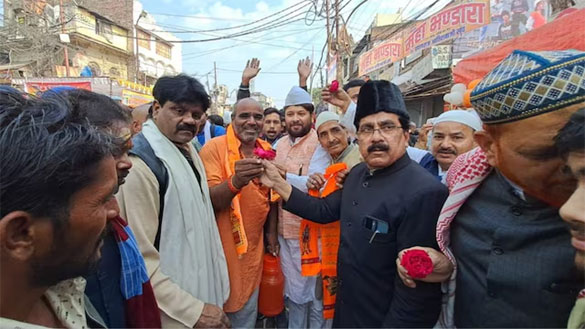 Hindu devotees get help from the Muslim community in Prayagraj. (News18)
---------
· Maha Kumbh Sees Wave of Humanity: UP's Muslims to the Rescue of Stranded Hindu Devotees
· King tells Malaysia to take the lead and steer Asean right on peace and justice even for a ‘single coral in the middle of the ocean’
· First phase of Ijtema ends with ‘Akheri Munajat’
· ‘Shariah panel meant for civil Muslim matters’
· Gaza to Prevail over Israeli Regime: Ayatollah Khamenei
· Saudi Arabia plays crucial role in achieving Middle East peace, says Danish foreign minister
· Pope Francis and Trump increasingly aligned on peace for Ukraine
· Zelensky has no idea where most of ‘$200 billion’ in US aid went
· Islamabad lawyers boycott courts today over judges transfer row
------
India
· Parties mum on communal harmony, Muslims dither ahead of Delhi Assembly elections
· Big guns on Delhi election campaign trail, INDIA allies back AAP on VIP seats amid heat from BJP
· We want Kashmiri Pandits to return, says Mirwaiz Umar Farooq
· Illegal Migration Changing Delhi's Demography Causing 'Notable Rise In Muslim Population': JNU Report
· Backward Classes More Than Half Of Telangana Population, Muslims Constitute 12.56%: Caste Survey
· Congress leader Shakeel Ahmed Khan's son found dead in Patna
· Opposition MPs allege dissent notes censored in final report on Waqf Amendment Bill
· Kerala court issues non-bailable arrest warrant against Baba Ramdev
· Uttar Pradesh: Fresh arrest in Sambhal Mosque violence case
· Non-Muslim backward classes largest social group in Telangana, shows caste survey
· Halal certification is turning into a scam. It’s creating a Muslim-only economy
· Gandhi’s Last Fast is a Lesson for India’s Present
· FIR ordered against cop for torturing Muslims in 2020 Delhi riots
------
Southeast Asia
· Umrah fraud allegations: Motac revokes license of al Quds Umrah & Tours effective Jan 24
· PAS open to reunion with Umno, if latter's leadership changes
· Ahmad Fadzli appointed new Selangor State Secretary
· Police arrest man for smuggling RXZ motorcycles from neighbouring country
· PM Anwar: Government proposes mandatory 2pc EPF contribution for foreign workers
· Government clinic waiting times slashed from three hours to just 30 minutes through digital transformation, says Dzulkefly
· KRI report: Hawkers, now essential to the economy, lack sufficient support from Putrajaya
------
South Asia
· No terrorist group to be allowed to operate in country, Fitrat
· Titumir college: No hasty decision on univ status
· Daily struggle of Dhaka dwellers
· Laghman Police Command Sends 500 Addicts for Treatment in Kabul
· Uzbekistan-Afghanistan Strengthen Trade Ties
· Afghanistan’s Railway Network Transports Over 408,000 Metric Tons of Goods in January
· NEPA Links Kabul’s Air Pollution to Climate Change & Industrial Emissions
· South Korea donates $3 million to Afghanistan
· Iran’s Interior Minister says over one million Afghan refugees deported
· Prices of essentials will remain stable during Ramadan: Bashir
-----
Africa
· It’s Constitutional Right, Muslim Group On Establishment of Sharia Panels In Southwest
· Okun Natives In Kogi Dissociate From Jihad Threat Against Yorubas In Southwest Over Rejection Of Sharia Law
· FG Hands Over Report To Kano Gov’t To Combat Maternal MortalityBy
· Governor Radda calls for reforms, better welfare for muslim pilgrims
· How Ijebu Elders Tried To Make Late Gen Murtala Stop Abeokuta From Being The Capital Of Ogun State – Obasanjo
· Police Rescue 13 Trafficked Victims, 3 Kidnapped Victims
------
Mideast
· Zionist settlers burn mosque west of Jericho
· Enemy Media: Hamas as Islamic Movement, Civil Authority at Peak
· Netanyahu agrees to begin talks on 2nd phase of ceasefire
· South Lebanon residents describe ‘terrifying’ border destruction
· Iran's major progress after Islamic Revolution - Healthcare
· Colonists storm Al Aqsa Mosque courtyards under protection of occupation forces
· Islamic Rev. role model for all independent nations
· Imam Khomeini was first Muslim thinker to warn against Zionist regime: Qalibaf
· Trump’s aid freeze shocks a Syria camp holding families linked to the Daesh group
· Baghdad’s newly opened skate park offers safe space Iraqi youth have longed for
· US-backed commander says his Kurdish-led group wants a secular and civil state in post-Assad Syria
· New Syria leader faces territorial, governance hurdles
· Explosive remnants of Syrian civil war pose a daunting challenge
· Drone attack targets Iraq’s northern Khor Mor gas field, security sources say
-----
Arab World
· 3 Saudi ports welcome 5 new shipping services from Hapag-Lloyd, Maersk
· Indonesian Embassy’s event aims to foster Saudi-Indonesian ties through fashion
· King Salman academy, Ministry of Education honor reading contest winners
· Road improvements worth SR8 billion announced for Riyadh
· ‘Difference’ exhibition in Dammam celebrates Saudi artists
· Volunteers plant more than 10,000 mangrove saplings across Kingdom for World Wetlands Day
· Najdi designs dazzle visitors at Tyn Festival in Diriyah
-----
Europe
· AI-generated child sex abuse images targeted with new laws
· Russia’s exclusion from Auschwitz events ‘shameful’ – Putin
· Today’s Germans don’t deserve blame for Nazis – Putin
· France prepares for trial of surgeon accused of abusing anaesthetised children
· Thousands protest against far-right in Berlin
· Starmer first UK PM to join EU leaders' meeting since Brexit
· Tony Martin, who killed burglar at farmhouse, dies
-----
North America
· Trump renews call for Canada to join US
· Canadian fans boo US anthem as tariffs spur 'buy local' pledge
· Air traffic control staffing 'not normal' during DC crash - officials
· Victims of Philadelphia air ambulance crash identified by jet company
· Musk team given access to sensitive federal payment system - reports
· Beatles and Rolling Stones win early Grammy Awards
· Rubio demands Panama 'reduce China influence' over canal
----
Pakistan
· PM advised to dissolve PTI dialogue committee
· Lawyers up in arms as new IHC judges report for duty
· PTI to repeal 26th amendment when in power, says Asad Qaiser
· PTI’s new provincial president says he won’t hesitate to march on Islamabad
· ‘Political’ development schemes for lawmakers make a comeback
· PM leaves for Quetta on day-long visit
· President to embark on state visit to China on Tuesday
· Anti-smuggling crackdown to yield positive results soon: Naqvi
· Terror attacks, security operations surged in January
· Kurram residents bemoan road closures
Compiled by New Age Islam News Bureau
URL: https://newageislam.com/islamic-world-news/maha-kumbh-muslims-humanity-hindu-devotees/d/134513
-----
Maha Kumbh Sees Wave of Humanity: UP's Muslims to the Rescue of Stranded Hindu Devotees
February 02, 2025
Hindu devotees get help from the Muslim community in Prayagraj. (News18)
-----------
In an extraordinary display of faith in humanity over religion, the Muslim community in Uttar Pradesh opened the doors of its mosques, madrasas, imambaras, and even homes to the Hindu devotees stranded after the Maha Kumbh stampede on January 29. Volunteers set up relief stations, offering food, water, and warm blankets to those in need.
The stampede erupted in the mela area during the Amrit Snan on Mauni Amavasya. The tragedy claimed around 30 lives and left many others injured.In the aftermath of the stampede, scores of devotees were stuck, with buses and even private vehicles stuck on highways. Ramnath Tiwari, a 68-year-old pilgrim from Madhya Pradesh, said, “We were exhausted and helpless."As the word spread, Muslim families from neighbourhoods such as Nakhas Kohna, Roshan Bagh, Himmatganj, Khuldabad, Rani Mandi, and Shahganj opened their doors. Mosques such as Khuldabad Sabzi Mandi Masjid, Bada Tajia Imambara, and Chowk Masjid quickly became shelters for the night. Community kitchens were set up within hours, serving tea, snacks, and hot meals to those who had gone hungry for hours.In such times, there is no Hindu or Muslim — there is only humanity," said Mohammad Irshad of Bahadur Ganj. “That night, we saw people suffering, and we did what needed to be done. We welcomed them as our guests, fed them, and made sure they were safe."
THE SPIRIT OF HUMANITY
Throughout the night, volunteers worked tirelessly to accommodate as many people as possible. Women and children were given priority in mosques and homes, while makeshift sleeping arrangements were made in community halls and madrasas. Local residents even set up roadside counters to distribute water, biscuits, and blankets.“Everyone rushed to do their part," said Raza Abbas Zaidi, a primary school teacher from Nakhas Kohna. “Women started cooking, men set up distribution points, and young boys helped guide stranded devotees to safe shelters. It was an unspoken understanding that we had to stand by our fellow citizens."
Even schools stepped in to provide relief. Mohammad Mehndi Gauhar Kazmi, manager of Yadgar Hussaini Inter College, turned his institution into a relief camp. “It was not planned. Seeing the suffering of people who were our guests, we acted. Thousands of people rested in our classrooms, halls, and playgrounds. We cooked khichdi and matar pulao, and continued feeding people until the last of them left on Friday afternoon," he said.
A LEGACY OF COEXISTENCE
Historically, the Maha Kumbh has been a shared experience for both Hindus and Muslims in Prayagraj. The mega spiritual event has long provided economic opportunities for Muslim traders, transporters, and daily wage workers — from boatmen ferrying pilgrims to Sangam, to artisans selling handcrafted religious souvenirs, the event has benefited both communities for generations.
However, this year was different. Calls for a boycott of Muslim participation in the Kumbh had led to their exclusion from trade and services at the event. Many Muslim shopkeepers were denied entry, while others who tried to operate discreetly faced harassment.
“We were told that we were not welcome at the Kumbh," said Mohammad Zahid, a local businessman. “Despite this, when the crisis hit, we could not ignore the suffering around us. It was our duty to help."
“Earlier, we would ferry pilgrims to the Sangam, sometimes even for free," said Akhtar Ali, an auto driver.
COMPASSIONATE GROUNDS
“Faith and humanity should never be compromised," said Mohammad Khalid, a resident of Khuldabad. “These devotees were guests in our city, and it was our duty to help them."Pictures and videos that surfaced on social media showed Muslim volunteers distributing food, offering medical aid, and guiding lost devotees. At Jama Masjid in Chowk, a team of young men set up a medical assistance booth, where doctors like Dr. Naz Fatima provided free treatment to injured pilgrims. “This is a moment of crisis," she said. “Our duty is to serve humanity first."
“We did what any human being should do," said Masood Ahmed, a school teacher from Chowk. “Hindus were following their faith at the Kumbh, and we were following ours by helping those in need. This was not about religion; it was about standing together as one."
Source:news18.com
Please click the following URL to read the text of the original Story
https://www.news18.com/india/maha-kumbh-sees-wave-of-humanity-ups-muslims-to-the-rescue-of-stranded-hindu-devotees-9211654.html
---------
King tells Malaysia to take the lead and steer Asean right on peace and justice even for a ‘single coral in the middle of the ocean’
By Muhammad Yusry
03 Feb 2025
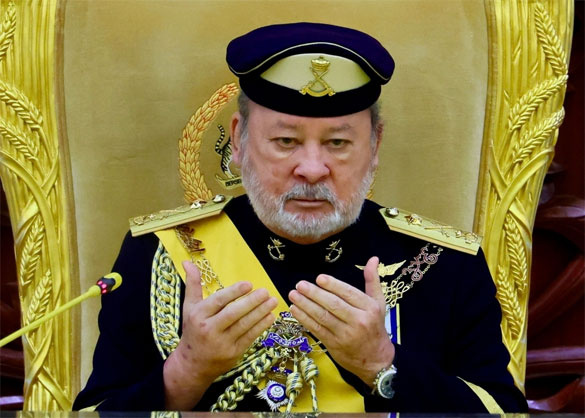 Sultan Ibrahim said the government must also be strategic in maintaining diplomatic relations with all parties and enhancing cooperation in addressing regional and border security issues. — Bernama pic
------------
KUALA LUMPUR, Feb 3 — Malaysia needs to demonstrate its bold leadership and show its South-east Asian neighbours the path forward, His Majesty the King of Malaysia Sultan Ibrahim said today.
He noted Malaysia’s chairmanship of Asean and highlighted the need for the nation to act decisively to protect its sovereign interests too.
“Malaysia must remain firm in upholding the principles of peace and opposing violence and oppression. The war in Gaza must end immediately, and legal justice must be upheld.
“The government must also be strategic in maintaining diplomatic relations with all parties and enhancing cooperation in addressing regional and border security issues.
“Decisive action through diplomatic, legal, and defence channels must be taken to safeguard the country’s sovereignty and national interests, even if it concerns just a single coral in the middle of the ocean,” he said in his royal address at the opening of the First Meeting of the Fourth Session of the 15th Parliament.
Both Houses of Parliament, the Dewan Rakyat and the Dewan Negara, held their meetings simultaneously today.
This Parliament sitting will last for 18 days, focusing mainly on the debate of the royal address by members of Parliament for seven days from tomorrow, followed by the winding-up by the relevant ministries from February 19 to 25.
Debates on Bills and other government matters will take place during the final six days of the meeting starting from February 26.
The Dewan Negara is scheduled to sit for 13 days, beginning March 3.
*Editor’s note: An earlier version of this story that mentioned ‘rock in the middle of the ocean’ has been corrected to ‘coral’, which is the translation of the Malay term ‘batu karang’.
Source:malaymail.com
Please click the following URL to read the text of the original Story
https://www.malaymail.com/news/malaysia/2025/02/03/king-tells-malaysia-to-take-the-lead-and-steer-asean-right-on-peace-and-justice-even-for-a-single-coral-in-the-middle-of-the-ocean/165341
---------
First phase of Ijtema ends with ‘Akheri Munajat’
Feb 3, 2025
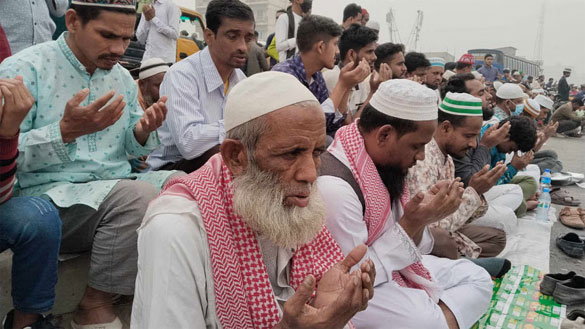 Photo: Amran Hossain
-----------
The first phase of Bishwa Ijtema concluded yesterday through "Akheri Munajat" seeking divine blessings for peace and prosperity of the Muslim Ummah.
The final prayer was conducted by Maulana Zubair, top spiritual leader of Shura-e-Nizam, Bangladesh.
Maulana Kefayet Ullah, another senior leader, said the prayer began at 9:00am and ended around 9:35am.
Nearly four million devotees joined the concluding prayers.
Habibullah Raihan, media coordinator of the Ijtema's Shura-e-Nizam, said around 3,050 delegates from 76 countries took part in the gathering.
The first phase, attended by followers of Maulana Zubair Ahmed, began on January 31 and is divided into two sessions. The Akheri Munajat for the second session of Zubair's followers will take place on February 5, with devotees from 22 districts expected to join.
Followers of Maulana Saad Kandhalvi will attend the second phase from February 14 to 16, with their Akheri Munajat scheduled for February 16.
Meanwhile, at least 40 people were injured in a commotion at the Ijtema ground after a drone crashed, triggering panic among devotees.
The injured were taken to Shaheed Ahsan Ullah Master General Hospital in Gazipur.
Faridul Islam, officer-in-charge of Tongi East Police Station, said the drone crashed near the Mill Gate of the Ijtema venue, causing a sudden panic. As devotees rushed toward the exit points, many fell and sustained injuries.
It was not immediately clear who owned the drone or why it fell.
Mostafizur Rahman, emergency department officer at the hospital, confirmed that at least 40 injured devotees were brought in following the incident.
Five devotees attending the Biswa Ijtema have passed away during the first phase.
The deceased are Abdul Gafur, 75, Romij Ali, 60, Yakut Ali, 60, Abdul Quddus Gazi, 60, and Sabet Ali, 65.
Source:thedailystar.net
Please click the following URL to read the text of the original Story
https://www.thedailystar.net/news/bangladesh/news/first-phase-ijtema-ends-akheri-munajat-3814086
---------
‘Shariah panel meant for civil Muslim matters’
February 3, 2025
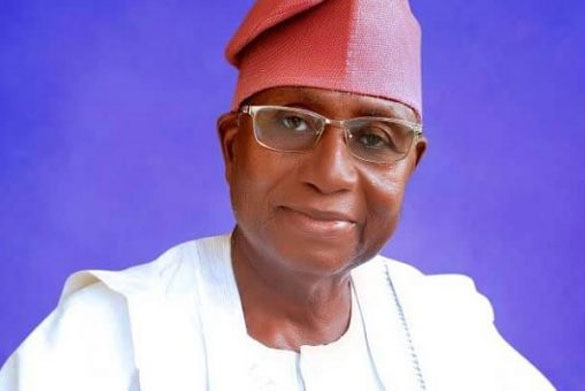 The Muslim Ummah of Southwest Nigeria (MUSWEN) yesterday said the establishment Independent Shariah Arbitration Panel in some parts of the Southwest is constitutional.
Its President, Alhaji Rasaki Oladejo, said the arbitration panel and the Shariah Court of Appeal, just like the Customary Court of Appeal, are provided for in the 1999 Constitution of the Federal Republic of Nigeria (as amended).
He advised critics to check Section 275 of the Constitution, which confirms the legality of both legal bodies.
Oladejo expressed worried over what he called the “unnecessary noise, misinformation and unfounded allegations credited to the non-Muslims on the establishment Independent Shariah Arbitration Panel” in some parts of the region.
The leadership of the umbrella body for Muslims in the Southwest is more disturbed that some high personalities in the region, including traditional rulers and senior state government law officials, were at the forefront of misleading the public on the issue of Independent Shariah Arbitration Panel, the MUSWEN president said.
Oladejo added: “We expect that with the intervention of the number one Muslim bod y in the country, the Nigerian Supreme Council for Islamic Affairs (NSCIA), on the matter, it ought to have been laid to rest.
“Unfortunately, rather than heed to the caution of the NSCIA, some people went to abuse the head of the Muslims in the country, His Eminence, the Sultan of Sokoto/President-General of NSCIA, Alhaji Muhammad Sa’ad Abubakar, CFR, mni.
“These actions of abusing people in the leadership position on the basis of erroneous perception are distasteful and uncivilised.”
According to him, individuals and institutions that are oppose the establishment of the Shariah Panel should seek proper understanding of the matter to avoid lending their voices to ignorance.
He said: “Shariah panel is a committee of Islamic scholars set up by Muslims to settle marriage and inheritance disputes. The panels also use mosques as venues. They are not courts. They are voluntary platforms designed solely for the resolution of civil disputes among consenting Muslims.
“As said, it was to fill the inexplicable vacuum created by the failure of the political elite in the Southwest to establish Shariah Courts, as allowed by the Nigerian Constitution, despite the huge population of Muslims in the region.
“The public should know and understand that the essence of Shariah Arbitration Panel is to provide a peaceful platform for conflict resolution, fostering unity, understanding, and adherence to Islamic ethics. The panelists aim to interpret Allah’s injunctions and provide guidance based on Shariah principles. It has nothing to do with unwilling Muslims and non-Muslims whatsoever.”
Oladejo urged governors, traditional rulers, community leaders and other groups in the region to always seek proper understanding of anything that has to do with Islam and consult the leadership of the MUSWEN before going to town with misinformation.
“As said by the NSCIA, MUSWEN strongly supports the establishment of Independent Shariah Arbitration Panel in Ekiti State for the purpose so intended, especially where the Muslims in the state have been denied their constitutional right to a Shariah Court of Appeal, as obtains in all the states of the South-Western Nigeria.”
“In fact, such Shari’ah Arbitration panels have existed in some Southwest states without creating any furore. These panels do not have any power of enforcement. They are only meant for Muslims who would prefer their family matters be resolved according to the dictates of Islam. The panel in Oyo State has flourished for over 20 years. The panels also exist in Osun and Lagos states. We must stress that the existence of these panels have helped the government in reducing marriage breakdowns, which might have bloated the army of vulnerable children. MUSWEN did not find any legal justification, therefore, for the unnecessary alarm and unwarranted resistance with establishment of Shari’ah Panel in Ekiti State.
“While others are enjoying their constitutional rights, Muslims, too, should not be denied their constitutional rights,” he added.
Source:thenationonlineng.net
Please click the following URL to read the text of the original Story
https://thenationonlineng.net/shariah-panel-meant-for-civil-muslim-matters/#google_vignette
---------
Gaza to Prevail over Israeli Regime: Ayatollah Khamenei
February, 02, 2025
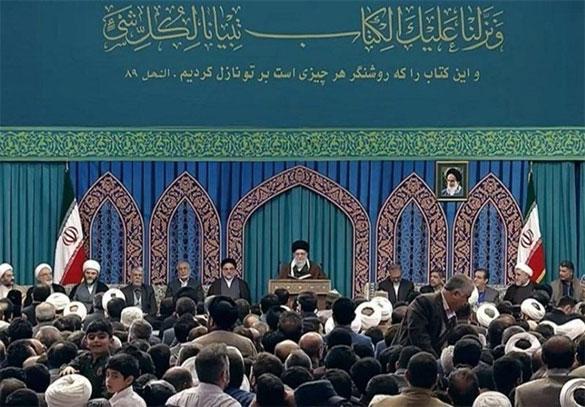 TEHRAN (Tasnim) – Leader of the Islamic Revolution Ayatollah Seyed Ali Khamenei lauded the sacrifices of Palestinian resistance groups against the Israeli regime and underscored the imminent victory of people in the besieged Gaza Strip against the occupying entity.
“God willing, Gaza will prevail over the Zionist regime,” the Leader said in a meeting on Sunday in the Iranian capital, Tehran, with dozens of Quran reciters and memorizers attending the 41st International Holy Quran Competition.
Ayatollah Khamenei underlined the victory of the people of Gaza over the Zionist regime and the American regime as an example of the realization of what seemed impossible.
“If it had been said that the people of the small region of Gaza would fight against a great power like the US and emerge victorious, no one would have believed it, but this impossible matter has been realized by God’s permission,” he said.
Elsewhere in his remarks, Ayatollah Khamenei praised Iran’s progress in various domains, saying the country has grown in all directions over the past 40 years.
“The Iranian nation has shown patience and perseverance for over 40 years, while all the arrogant world powers stood against it, working and plotting against it,” the Leader said.
“Yet, not only has the Iranian nation not been harmed, but it has also advanced and grown. Today’s Iran is not the Iran of 40 years ago—we have progressed in every aspect,” he added.
The Leader stressed that the Islamic Republic is confronting global arrogance alongside other countries in the world.
However, he went on, “What distinguishes Iran from many other nations is the Iranian people’s courage to denounce the United States as an aggressor, a liar, a deceitful and arrogant power while proclaiming down with America.”
Source:tasnimnews.com
Please click the following URL to read the text of the original Story
https://www.tasnimnews.com/en/news/2025/02/02/3249879/gaza-to-prevail-over-israeli-regime-ayatollah-khamenei
---------
Saudi Arabia plays crucial role in achieving Middle East peace, says Danish foreign minister
LAMA ALHAMAWI
February 02, 2025
RIYADH: Saudi Arabia plays a crucial role in achieving peace in the Middle East, Denmark’s foreign minister told Arab News during an official visit on Sunday, the first such visit in nine years.
Lars Lokke Rasmussen commended Saudi Arabia’s continuous diplomatic efforts in Palestine, Lebanon and Syrian Arab Republic.
He noted “the very crucial … and constructive role Saudi Arabia is playing in the entire region” at a critical time that has seen a ceasefire implemented in Gaza, a new president elected in Lebanon, and a new regime come to power in the Syrian Arab Republic.
“There is a real possibility that we could have peace in Syria, but also (to) a large extent a more … peaceful region,” Rasmussen added.
The foreign minister underlined that his visit to the Kingdom is driven by two key objectives: to recognize Saudi Arabia’s constructive role in the region and to strengthen bilateral ties across various sectors such as trade and investment.
Rasmussen’s visit is the first by a Danish foreign minister to Saudi Arabia in over nine years.
“Finally, I’m here, and I’m very thrilled about it for many good reasons,” he told Arab News.
His visit coincided with that of the Syrian Arab Republic’s President Ahmed Al-Sharaa, who was in Riyadh on his first official visit since he led the overthrow of the Assad regime late last year.
Speaking of the country’s new leader, Rasmussen expressed he was “happy” with the developments that took place in Damascus, adding that “Saudi Arabia is a very important player in all this” and that “there’s a real possibility of a long-lasting peace and a much more stable region.
“Of course, we recognize that there are dilemmas, given the past of the new leader, so to speak …
“Should we pay attention to his curriculum vitae, or should we pay attention to the speeches he’s giving now? … I think the jury’s still out, but we want to give him the benefit of the doubt,” Rasmussen said.
Denmark intends to engage with the new Syrian Arab Republic government, he said, explaining that as a foreign minister, he has introduced humanitarian assistance packages to the Syrian Arab Republic following the announcement of the government.
Rasmussen said the aid was introduced for two reasons: to assist in a humanitarian sense and to send a message from Denmark to Syrian Arab Republic that the former was ready and willing to engage.
During his visit, the foreign minister is set to meet with Saudi Foreign Minister Prince Faisal bin Farhan to discuss geopolitical relations further.
On the topic of the recent ceasefire in Palestine, the Danish official stressed that a two-state solution is the “only solution” to the reconstruction of Gaza, addressing statements made by other world leaders that the solution cannot be “exporting the Palestinian problem to neighboring countries.”
Rasmussen said: “I support a two-state solution … that is a consensus decision in the Danish parliament and has been our position for many, many years.
“And that’s why we have joined the global coalition behind the two-state solution,” he added, referring to the Global Alliance for the Implementation of the Two-State Solution.
“And I want to commend my good colleague in Saudi Arabia for taking this initiative together with the European Union. I think that is, at the end of the day, the only suitable solution.”
He added that a two-state solution is also in Israel’s best interest.
“You can’t solve that problem without creating a sovereign Palestine state, and any idea of just exporting the Palestinian problem to neighboring countries … It’s not doable,” he said.
Egypt, Jordan, Saudi Arabia, the UAE, Qatar, the Palestinian Authority and the Arab League recently released a joint statement in response to US President Donald Trump, rejecting his proposal that regional leaders take in Palestinians from Gaza.
“Jordan (has) already done tremendously good work and shown a lot of generosity hosting many, many Palestinian refugees,” Rasmussen said.
“Now we need the ceasefire, and then we need a proper discussion about reconstruction in Gaza,” he said.
The official stressed that the Palestinian Authority must also be involved in the solution.
He proposed that the EU aid the Palestinian Authority “in order to give them the needed competencies to take upon themselves this task.”
The foreign minister also addressed the status of relations between Denmark and the US following Trump’s attempts to acquire the Danish territory of Greenland.
“I think the narrative that all Greenlanders should prefer to become Americans is not a true narrative,” he said.
Despite these challenges, Rasmussen said that he and Trump “have an excellent working relationship.
“Frankly … and I don’t think it will offend him, he’s kind of (a) different politician. But we managed to overcome that,” he said.
He added that despite the “America first” policy and “tariffs” in Trump’s first term, Danish-American relations actually managed to grow stronger, with the US becoming Denmark’s largest export market.
“We have awaited his inauguration,” he said.
“Equally as important (are) the bilateral relations between the Kingdom of Denmark and the Kingdom of Saudi Arabia, where I really think there’s huge potential for further cooperation.
“I really want to recognize the development in Saudi Arabia, which is quite impressive.”
While Denmark is a small country, it is home to world-class companies with strongholds in green energy, food security and water management, Rasmussen said.
During his trip, the official will also meet with Saudi Minister of Transport and Logistics Services Saleh Al-Jasser, with whom he plans to sign a memorandum of understanding, the details of which have not yet been disclosed.
Source:arabnews.com
Please click the following URL to read the text of the original Story
https://www.arabnews.com/node/2588745/saudi-arabia
---------
Pope Francis and Trump increasingly aligned on peace for Ukraine
February 2, 2025
Pope Francis made a real-world effort toward working for peace in Ukraine over the weekend. The gesture came as the 2025 Jubilee of Hope entered its second month, while at the same time the new administration of President Donald Trump is getting into gear. The new president has promised to bring an end to the conflict between Ukraine and Russia.
The Pope marked the beginning of February by conducting a surprise video conference with young Ukrainians, and responding to the questions of young people from different countries. At the beginning of the meeting, Major Archbishop Sviatoslav Shevchuk of the Ukrainian Greek Catholic Church said “this is probably the first time that Ukrainian youth have had the opportunity to communicate in this way with the Holy Father”.
The Pope used the time to urge the need for work toward peace between Russia and Ukraine.
“War always destroys,” Francis said. “The remedy is dialogue: always, among ourselves, even with those who oppose us. Please, never grow tired of dialogue. Peace is built through dialogue. It is true that sometimes dialogue is impossible due to the stubbornness of some, but we must always make the effort.”
The Pope continued: “Life today is devalued. Money and war positions are given more importance than human life itself.”
Russia illegally annexed Crimea in 2014 and then invaded Ukraine in February 2022. Russia has been making slow advances in Ukraine, but is suffering huge casualties, as are the Ukrainians.
Last week, in reference to the seemingly intractable conflict that is entering its third year, Donald Trump told reporters: “We will be speaking, and I think will perhaps do something that’ll be significant. We want to end that war.”
The video conference by the Pope highlighted his longstanding call for dialogue between Ukraine and Russia, one which has seen Ukrainian Catholics sometimes object to his efforts at compromise between the warring sides.
In March 2024, the Pope was rebuked for saying he believes “the strongest one is the one who looks at the situation, thinks about the people and has the courage of the white flag, and negotiates”.
He added: “The word negotiate is a courageous word. When you see that you are defeated, that things are not going well, you have to have the courage to negotiate.”
During the online conference at the weekend, Francis held up a New Testament and a Book of Psalms that belonged to Oleksandr, a young Ukrainian soldier who died in Avdiivka.
“For me, this is a relic from you, Ukrainians, from this young man who gave his life for his homeland,” the Pope said. “Oleksandr is one of you.”
“For me, this is a relic of a young man who gave his life for peace. I keep it on my desk and pray with it daily. We must remember our heroes who defended their homeland. The Ukrainian people are suffering. Let us open our eyes and see what war does!” Francis said.
He also told young Ukrainians living outside of their country to be “patriots”.
“Every young person has a mission. In difficult times, young people must carry forward ‘the spirit of the homeland.’ Your homeland is wounded by war, but love it. Loving one’s homeland is a beautiful thing,” Francis said, adding: “A young person who cannot dream has grown old.”
In a special plea, he asked them not to forget their grandparents, describing elder relatives as “the guardians of memory”.
Following the Pope’s video conference, on the morning of 2 February, Ukrainian President Volodymyr Zelensky highlighted Russia’s continued attacks on his country.
“Every day, Russia attacks Ukraine with drones, missiles, and aerial bombs. This week alone, there have been hundreds of strikes on our cities and communities – nearly 50 missiles, around 660 attack drones, and more than 760 guided aerial bombs launched by the enemy against our people,” he wrote on social media platform X.
“Russia will not stop on its own. The world must force it to end this brutal and unprovoked aggression. Strengthening our defence is absolutely necessary. We need better protection – air defence systems, long-range weapons, and sanctions pressure,” the Ukrainian president emphasised.
“All of this helps save lives here in Ukraine. I thank everyone around the world who understands the importance of this, continues to believe in our country and supports us.”
However, the Pope struck a different tone, and told the Ukrainian young people that while he understands how ending the conflict is not an easy thing to do or to accept after all that has happened, he urged them to support peace.
“Forgiveness is one of the hardest things. It is difficult for everyone, even for me,” the Pope said.
“But I am helped by this thought: I must forgive as I have been forgiven. Each of us must recall how we have been forgiven. The art of forgiveness is not easy, but we must keep moving forward and always forgive,” he added.
The Pope concluded with a message of perseverance: “We have all made mistakes, but when one falls, they must get back up and keep moving forward. Do not be afraid! Take risks, and if you fall, do not stay down.”
The Jubilee year faces an enormous challenge in seeing its goals attained in Ukraine. But the new US president may prove a crucial, if not decisive, factor in helping the Jubilee’s hopes come to fruition.
Source:catholicherald.co.uk
Please click the following URL to read the text of the original Story
https://catholicherald.co.uk/pope-francis-and-trump-increasingly-aligned-on-peace-for-ukraine/
---------
Zelensky has no idea where most of ‘$200 billion’ in US aid went
3 Feb, 2025
Washington has provided Kiev with just over $75 billion in military and other types of assistance, Ukrainian leader Vladimir Zelensky has claimed, adding that he has no idea where US President Donald Trump’s estimate of $200 billion originated or where it could have vanished.
Trump, who has been highly critical of his predecessor Joe Biden’s generosity toward Ukraine, has argued that NATO states and the EU should “equalize” their contributions with Washington’s support.
“We are in there for $200 billion more than the EU. I mean, what are we, stupid?” Trump said last month. US Vice President J.D. Vance referenced the figure as early as last July, saying, “We have now spent $200 billion. What is the goal? What are we trying to accomplish?”
In an interview with AP published on Sunday, Zelensky insisted that Ukraine never received even half of that sum.
“When it is said that Ukraine received $200 billion to support the army during the war – that’s not true. I don’t know where all that money went. Perhaps it’s true on paper with hundreds of different programs – I won’t argue, and we’re immensely grateful for everything. But in reality, we received about $76 billion. It’s significant aid, but it’s not $200 billion,” Zelensky said.
Since 2022, the US Congress has authorized roughly $175 billion for Ukraine, but a significant portion of that funding has reportedly gone to American industries and various US government activities related to the conflict. According to Germany’s Kiel Institute, as of October 2024, the US had allocated approximately $92 billion in financial and military aid to Ukraine, while EU countries and the UK had allocated $131 billion.
Zelensky also insisted that he has seen little actual cash, as more than $70 billion of the aid came in the form of direct military assistance.
“There are also many other humanitarian programs I’m uninformed about, except for knowing of their existence. Perhaps the US president’s administration will audit these programs and find additional billions, but I don’t know where those funds went,” he said.
Among his first actions upon returning to office, Trump suspended US foreign aid for 90 days to review its alignment with his administration’s objectives, vowing to put “America first.” The cut affected many Kiev-related initiatives, particularly those funded by grants from the United States Agency for International Development (USAID).
Over the weekend, USAID’s official website went offline, and its X account disappeared, amid reports that the White House was considering merging the agency into the State Department. The newly created US Department of Government Efficiency (DOGE), led by Tesla and SpaceX CEO Elon Musk, has reportedly sent inspectors to audit USAID’s activities.
“USAID is a criminal organization. Time for it to die,” Musk wrote on Sunday. In a brief comment the same day, Trump also criticized the agency as being “run by a bunch of radical lunatics and we are getting them out.”
Source:rt.com
Please click the following URL to read the text of the original Story
https://www.rt.com/news/612069-ukraine-aid-us-bilions-zelensky/
--------
Islamabad lawyers boycott courts today over judges transfer row
February 02, 2025
ISLAMABAD: All the Islamabad bar councils have unanimously announced observing strike and boycotting the proceedings of the high and district courts on Monday (today) against the latest “malafide” transfer of judges to the Islamabad High Court (IHC).
In a joint sitting, the Islamabad Bar Council (IBC), Islamabad High Court Bar Association (IHCBA), and Islamabad District Bar Association (IDBA) on Sunday gave their nod to a resolution seeking withdrawal of a notification about the posting of three judges to the IHC.
The move came a day after President Asif Ali Zardari transferred three judges from other high courts to IHC amid speculations that the capital court's next chief justice would be a "transferred judge."
According to a notification issued by the Ministry of Law and Justice, Justice Sarfraz Dogar from Lahore High Court, Justice Khadim Hussain Soomro from Sindh High Court and Justice Muhammad Asif from Balochistan High Court were transferred to the federal territory's court.
The approval of judges’ transfer to the IHC by the president against the request of the five Islamabad judges raised many eyebrows. Last week, five judges of the IHC penned a letter to Chief Justice of Pakistan Yahya Afridi and expressed concerns over recent media reports claiming that a transferred judge would be considered for the post of chief justice of the federal territory's court.
The letter — signed by Justices Mohsin Akhtar Kayani, Tariq Mehmood Jahangiri, Babar Sattar, Sardar Ejaz Ishaq Khan and Saman Rafat Imtiaz — was addressed to CJP Yahya Afridi, IHC Chief Justice Aamer Farooq, LHC Chief Justice Aalia Neelum, and SHC Chief Justice Mohammad Shafi Siddiqui.
The letter also had the names of Justices Arbab Muhammad Tahir and Miangul Hassan Aurangzeb, but their signatures were missing.
In today’s resolution, the lawyer bodies decided to challenge the transfer notification of three judges to the IHC at every forum. It further said that the Judicial Commission's February 10 meeting to appoint Supreme Court judges should also be postponed.
Throwing their weight behind the IHC judges’ letter, the Islamabad lawyers demanded that the next IHC chief justice should not be an “outsider”.
It further said that a historic lawyer convention, under all bar councils, would be held at 11am on Monday.
During his interaction with journalists, IBC Vice Chairman Aleem Khan Abbasi said: “We reject the notification about the posting of judges to the IHC.”
The lawyers will stage a historic convention on Monday, he said, adding they smelled malice behind the fresh posting of judges to the IHC and the judicial commission’s meeting slated to be held next week.
He urged bar councils across the country to boycott the proceedings of the relevent courts.
He termed the 26th Amendment “black law” and sought full court of the SC to decide on the amendment.
IHCBA President Riasat Ali Azad was of the view that strike and the convention was their unanimous decision. He said that attempts were being made to conqueror the IHC.
“The IHC’s sin is that it wants independence of the judiciary,” he added.
Meanwhile, IDBA Naeem Ali Gujjar said that the lawyers were not standing with any judge or personality but with the judiciary and the Constitution. He said that the lawyer would resist the outsider judges.
In solidarity with the Islamabad lawyers, Karachi Bar Association (KBA) President Aamir Waraich announced boycotting the courts against judges’ transfers to the IHC on Monday.
In a statement, the KBA president said: “Lawyers will boycott court proceedings today to show solidarity with Islamabad bar. A general body meeting of the KBA would be held at 11:30am, he added.
Source:thenews.com.pk
Please click the following URL to read the text of the original Story
https://www.thenews.com.pk/latest/1278817-islamabad-lawyers-to-boycott-courts-tomorrow-over-judges-appointment-row
--------
India
Parties mum on communal harmony, Muslims dither ahead of Delhi Assembly elections
Pheroze L. Vincent
03.02.25
Communal harmony is the proverbial elephant in the room in the upcoming Delhi elections with no political party comfortable discussing the matter and Muslims getting mired in a dilemma — who to vote?
The confusion dominates the chatter at dinner tables, markets and workplaces.
“We have always been told that if we don’t vote for the Congress, the BJP will win. Now the BJP is already in power (at the Centre). We need representatives who can articulate our problems,” Wasim Chaudhary, a young professional from the Chandni Chowk Assembly seat, told The Telegraph.
This time, the quandary is more acute because the memories of the counter-mobilisation against the citizenship protests of 2019-20 and the riots of 2020 are still fresh. Specific mention of these events is, however, usually kept out of conversations.
“No riots happened here. We all live here in peace,” Naim, a butcher in Mustafabad, curtly replies when asked if the riots had influenced his voting decisions.
His customer Ruksana is more engrossed with the immediate problem at hand — how much meat can her money buy? She begins by ordering a kilo. As Naim picks up a piece to cut, she asks him to give her the ribs that are cheaper than the flesh and slashes her order quantity to half a kilo. No sooner than Naim begins to slice through the meat, Ruksana says only 250gm will do.
“It’s impossible to manage expenses. (AAP chief) Arvind Kejriwal gave some relief as the government hospital in Karawal Nagar has improved. But we still need to travel there. If a government hospital and more government schools come up in Mustafabad, we will save on commuting. The men are saying that we should either vote for the Congress or the AIMIM, but I think Kejriwal is ahead,” Ruksana said.
Naim said the candidates from the AAP, BJP, Congress and the AIMIM were equally placed.
From Mustafabad, the AAP has fielded Adil Ahmad Khan, who has been with the party since the Anna Hazare movement; the BJP has nominated former MLA Mohan Singh Bisht, who is blamed by some for the riots; the Congress has chosen Ali Mehdi, the son of ex-MLA Hasan Mehdi who held the seat from 2008 to 2016; and the AIMIM has opted for former AAP councillor and 2020 Delhi riots accused Tahir Hussain.
Karawal Nagar and Mustafabad are adjacent neighbourhoods divided by a psychological barrier. The former has more Hindus and the latter Muslims. Both seats were hit by the 2020 riots that claimed 53 lives. Both are characterised by squalor, clogged open drains and broken lanes choked with traffic.
Muslims are sharply divided over who best can fix this.
“Civic work happened here during the tenure of Hasan Ahmed (the father of Congress candidate Ali),” Nawab Ansari, a resident, says.
“People will vote for Tahir Hussain only because of (AIMIM leader) Asaddudin Owaisi sahab. He speaks well for our community. But the AAP has improved medical facilities here,” says biryani seller Nomaan Siddiqui.
“The current MLA (AAP’s Haji Yunus) is too old to get any work done. We need an efficient MLA like Adil Ahmad Khan to get things moving…. But people are confused and (the BJP’s) Mohan Bisht has a chance because of this,” Javed Malik, a shopkeeper, says.
The BJP won the seat in 2015 when Muslim votes were split between the AAP and the Congress. Mustafabad is among the seven seats in Delhi where Muslims make up more than a third of the population. The community has a sizeable presence in half a dozen other seats as well.
Former Planning Commission member Syeda Hameed is a voter in Okhla — one of five seats with a Muslim MLA. Delhi has 70 seats.
Hameed told The Telegraph: “Nobody is talking specifically about communal harmony. Even the secular parties are not saying what needs to be done…. If Muslims vote for the Congress, the BJP is going to win — that’s the dilemma. I see a lot of problems with the AAP but what can I do?”
Fear of the BJP trumps civic woes as a poll issue for Muslims who constitute almost 13 per cent ofDelhi’s population.
Hameed added: “While there are not enough educational institutions and no government hospitals here, there is dirt and open drains and garbage all around. However, there is no dearth of police apparatus and status surveillance here.”
Reshma, who moved to Shaheen Bagh from Lucknow in 2010, said preventing riots was a major poll issue for her but education and health were more important. “...At least under the AAP, sanitation and schools have improved. My daughter went to a government school, which is very good. The mohalla clinics are good although some tests that were available earlier have stopped. Kejriwal has done a lot of work,”she said.
Source:telegraphindia.com
Please click the following URL to read the text of the original Story
https://www.telegraphindia.com/india/parties-mum-on-communal-harmony-muslims-dither-ahead-of-delhi-assembly-elections/cid/2081249
--------
Big guns on Delhi election campaign trail, INDIA allies back AAP on VIP seats amid heat from BJP
03.02.25
The prestigious battle for Delhi has prompted the three major contenders to field their heavyweight leaders from across the country for the poll campaign.
The ruling AAP, which is facing a tough fight from the BJP that has stepped up the corruption heat on AAP leaders and promised to roll out a slew of welfare schemes, has also engaged leaders of its INDIA allies to campaign for the party on VIP seats.
Samajwadi Party, Trinamool Congress, Uddhav Thackeray’s Shiv Sena and Sharad Pawar’s NCP have announced their support for the AAP.
SP president Akhilesh Yadav campaigned for the AAP in the Poorvanchali-dominated constituencies of Kirari and Mundka last Thursday. The party’s debutant MP, Iqra Choudhary, led a march through the lanes of Nizamuddin, a Muslim-majority pocket of former deputy chief minister Manish Sisodia’s Jangpura constituency, and the student hub of Rajinder Nagar.
Trinamool MP Shatrughan Sinha is campaigning for AAP national convener Arvind Kejriwal, chief minister Atishi and four other candidates in whose constituencies there are a large number of Poorvanchali voters.
The AAP’s Punjab chief minister, Bhagwant Mann, MP and former cricketer Harbhajan Singh and Jammu and Kashmir MLA Mehraj Malik have also campaigned inthe city.
Almost all BJP Union ministers and chief ministers are campaigning for their party in Delhi. Prime Minister Narendra Modi held a rally in Kartar Nagar and RK Puram. The party’s filmstar MPs, Manoj Tiwari and Ravi Kishen, are also holding a series of meetings in parts of the capital dominated by Poorvanchalis.
In the last leg of the campaign, the BJP is focusing on reaching out to working-class women with the promise of a dole of ₹2,500, which is more than the AAP’s pledge to pay ₹2,100 to each beneficiary.
The leader of the Opposition in the Lok Sabha, Rahul Gandhi, and Wayanad MP Priyanka Gandhi Vadra are also holding multiple meetings in the city. Rahul, who had taken a break from campaigning due to ill health, has repeatedly questioned Kejriwal’s commitment to social justice and raised allegations of corruption against him in his speeches. This has become a cause for friction between the AAP and the Congress, with the former accusing the latter of colluding with the BJP.
Jammu and Kashmir National Conference president Farooq Abdullah campaigned for the Congress in Northeast Delhi’s Mustafabad last Wednesday.
Earlier, the Congress had roped in senior leaders from other states to announce its poll guarantees.
Himachal chief minister Sukhvinder Singh Sukhu had flagged off the party’s month-long Delhi Nyay Yatra to reach out to voters. Karnataka deputy chief minister D.K. Shivakumar had announced a monthly dole of ₹2,500 for women, which was further publicised by Jharkhand minister Dipika Pandey Singh. Former Rajasthan chief minister Ashok Gehlot had announced a ₹25 lakh health insurance scheme. Telangana chief minister A. Revanth Reddy had announced that the party would give LPG cylinders at ₹500, free ration kits and free electricity up to 300 units. Bihar Congress chief Akhilesh Prasad Singh had said there would be a separate ministry and budget for Poorvanchalis in Delhi.
Source:telegraphindia.com
Please click the following URL to read the text of the original Story
https://www.telegraphindia.com/india/big-guns-on-delhi-election-campaign-trail-india-allies-back-aap-on-vip-seats-amid-heat-from-bjp/cid/2081250
--------
We want Kashmiri Pandits to return, says Mirwaiz Umar Farooq
February 3, 2025
Hurriyat (M) chairman Mirwaiz Umar Farooq on Sunday said that the Muslims of Kashmir Valley want the Kashmiri Pandits to return, while emphasising that the issue is a humanitarian one and not political.
During an interaction with IANS, Mirwaiz Umar Farooq also spoke on several issues, including the long-standing Kashmir conflict and the Waqf Amendment Bill.
He expressed concern over the Waqf Amendment Bill and termed it as against the interests of Muslims.
Here are some excerpts from the interview.
What do you have to say about the current situation in Kashmir?
The situation in Kashmir can be seen by all of us. Everything is clear, nothing is hidden. We have always believed that the Kashmir problem can be solved only through dialogue. The issue is an old one and its solution is possible only through dialogue and not by any other means.
You have recently met a delegation of Kashmiri Pandits. Would you like to talk about that meeting?
The issue of Kashmiri Pandits is a humanitarian matter, it is not a political one. Muslims of Kashmir want Kashmiri Pandits to return to their homes. I met representatives of Kashmiri Pandits in Delhi and discussed this.
I have openly said this many times in Jama Masjid that we are ready to provide all possible support for the return of Kashmiri Pandits.
Some steps should be taken by the Kashmiri Pandit community as well. A suggestion has been made to form a committee which we will consider further and take steps. We will take initiatives for the return of Kashmiri Pandits.
The bond of love and brotherhood that existed earlier between Kashmiri Pandits and Muslims should be re-established.
Preparations are on to present the Waqf Amendment Bill in Parliament. Any remarks?
I have submitted my reservations on this. I believe that this Bill will adversely affect the interests of Muslims and create more problems in society. I want this Bill not to be passed.
The Bill should be postponed till the next session. Waqf is a matter of faith, the government should not interfere in it.
This is an issue related to people’s religious beliefs and should be resolved with everyone’s consent and trust. Those who believe in humanity and brotherhood should stand against this Bill. I feel that there is a hurry in passing this Bill.
I hope that NDA allies Nitish Kumar and N. Chandrababu Naidu will not support this Bill and the negotiation process will be postponed till the next session. –IANS
Source:muslimmirror.com
Please click the following URL to read the text of the original Story
https://muslimmirror.com/we-want-kashmiri-pandits-to-return-says-mirwaiz-umar-farooq/
---------
Illegal Migration Changing Delhi's Demography Causing 'Notable Rise In Muslim Population': JNU Report
By :
Madhuparna Das
February 03, 2025
Illegal migration from Bangladesh and Myanmar has altered Delhi-NCR’s socio-political and economic fabric, causing ‘notable increase of Muslim population’ as political patronage plays a crucial role allowing the steady influx of undocumented Bangladeshi and Rohingyas, reveals a 114-page report released by the Jawaharlal Nehru University (JNU). News18 has exclusively accessed the report. It also elaborates on how such influx of illegal settlers has not only transformed the city’s demographics but disrupted its economy, strained the resources, and also strengthened criminal networks by feeding into it. Significantly, the findings of the report echoed a similar study on Mumbai by TISS ahead of the Maharashtra election.The report titled – Illegal Immigrants to Delhi: Analysing Socio-economic and Political Consequences – published this week, also highlights how the political parties and their accomplices facilitate fake voter registration for these migrants, raising concerns about electoral integrity and democratic manipulation.The team of researchers were led by Prof Manuradha Chaudhary, dean of students of JNU. The team was also supported by the senior professors of the Tata Institute of Social Sciences (TISS) who investigated the impact of illegal Bangladeshi migration in Mumbai.
Political Patronage and Economic Strain
According to the findings, the illegal immigration from Bangladesh and Myanmar has changed the capital city’s socio-political and economic fabric, with political patronage enabling the steady influx. Economically, the presence of undocumented or illegal migrants has intensified job competition, particularly in low-wage sectors like construction and domestic work.Their participation in informal markets has driven wages down, while their exclusion from the tax system burdens the city’s legitimate workforce. Unauthorised settlements have also led to overcrowding, unplanned urban expansion, and environmental degradation, straining public services such as water, electricity, healthcare, and education.
“Illegal immigration to Delhi has significantly altered the city’s demographic landscape,with a large influx of migrants from neighbouring countries like Bangladesh and Myanmar.These migrants often settle in overcrowded neighbourhoods such as Seelampur, JamiaNagar, Zakir Nagar, Sultanpuri, Mustafabad, Jafrabad, Dwarka, Govindpuri and many more, where they strain resources and disrupt local social cohesion," the report stated.“The historical context of illegal immigration from Bangladesh dates back to the 2017 Rohingya crisis, during which millions of refugees fled to India. Over the decades, many of these migrants settled in Delhi, creating dense pockets of undocumented populations," it further added.
Informal Network of Brokers, Agents, Preachers
The migrants who cross the border with the help of brokers and agents rely on the informal syndicates of producing fake documents for them in exchange for money. The report said. “Migrants often rely on informal networks, including brokers, agents and religious preachers, to secure housing and jobs, perpetuating cycles of illegal immigration. These networks also facilitate the creation of fake identification documents, which undermine legal systems and electoral processes. Unauthorised settlements by illegal immigrants have led to the proliferation of slums and unplanned colonies, causing immense pressure on Delhi’s already overstretched infrastructure, including housing, sanitation, and water supply," it added.
The report pointed out that current demographic changes caused by migration have ‘altered the religious composition of Delhi, with a notable increase in the Muslim population due to migration from Bangladesh’. This has impacted the socio-political dynamics of the city.
Proliferation of criminal network
Beyond the huge economic and social disruption, the steady illegal migration has also led to the mushrooming of criminal networks involved in smuggling, document forgery, and human trafficking.The report further outlines how these informal networks of brokers, religious preachers, and middlemen facilitate the influx of migrants, providing them with fake identification documents that undermine law enforcement efforts.
Law enforcement agencies, despite intensified crackdowns, face bureaucratic hurdles and political resistance, delaying deportation efforts which in a way make the illegal settlements thrive.
Source:news18.com
Please click the following URL to read the text of the original Story
https://www.news18.com/india/illegal-migration-changing-delhis-demography-causing-notable-rise-in-muslim-population-jnu-report-9212275.html
---------
Backward Classes More Than Half Of Telangana Population, Muslims Constitute 12.56%: Caste Survey
By :Ashesh Mallick
February 03, 2025
Backward classes constitute up to 56.33% of the Telangana population, making the largest chunk in the state, according to the caste survey report released on Sunday.
According to the report, Scheduled Castes (SC) account for 17.43% of the total population while Scheduled Tribes (ST) are 10.45% in the state. There are 15.79% Other Castes (OC) in Telangana, The Indian Express reported.The survey report has been tabled before a Cabinet sub-committee and will be presented before the Cabinet on February 4, followed by a discussion on the survey in the Assembly on the same day.Key Takeaways From Telangana Caste Survey Report
As per the report, the population of Backward Classes (BC) in the state is 1,99,85,767, which also includes 35,76,588 Backward Classes Muslims, while the SC population stands at 61,84,319 and ST numbers are at 37,05,929. The Other Classes in Telangana are 44,21,115, The Indian Express reportedAccording to the survey, the Muslim population in the state is 44,57,012 – which constitutes nearly 12.56% of the total population of the state. Out of them, BC Muslims are 10.08% while OC Muslims account for 2.48%.
About 96.9% of the households in the state came in the ambit of the survey, covering 3,54,77,554 people in a span of 50 days, according to state minister Uttam Kumar Reddy said at a press conference on Sunday.
Notably, the caste survey was one of the promises by the Congress party in the run-up to the Assembly polls in 2023.
How Was Telangana Caste Census Conducted?
The survey was carried out with the assistance of 94,863 enumerators and 9,628 supervisors across 94,261 enumeration blocks. To ensure swift data processing, 76,000 data entry operators digitised the collected information within 36 days.According to the government, the findings will contribute to enhancing welfare schemes, expanding job opportunities, and supporting marginalized communities.
Reddy said that Telangana’s process to conduct the caste survey was smoother and more efficient than Bihar’s, where a similar census took place in 2023.
Source:news18.com
Please click the following URL to read the text of the original Story
https://www.news18.com/india/telangana-caste-survey-census-backward-classes-more-than-half-of-telangana-population-muslims-constitute-12-56-congress-9212259.html
---------
Congress leader Shakeel Ahmed Khan's son found dead in Patna
03.02.25
The son of senior Congress leader Shakeel Ahmed Khan was found dead in Patna on Monday, police said.
The body of Ayaan Ahmad Khan was found hanging from a ceiling fan at the official residence of his father, the Bihar Congress Legislature Party leader, in Sachiwalaya area here, a senior officer said.
Speaking to PTI, Patna Senior Superintendent of Police (SSP) Awkash Kumar said, "Senior officials along with forensic experts have reached the spot and are collecting scientific evidence. The matter is being investigated from all angles." The body has been sent for post-mortem examination, he said, adding that the exact cause of death was yet to be ascertained.
Khan is the MLA of Kadwa assembly seat in Katihar district.
Bihar Congress chief Akhilesh Prasad Singh, in a post on X, said, "I am shocked by the news of the sudden death of Ayaan Ahmad Khan, son of Shakeel Ahmed Khan. My condolences are with his family. May God give strength to his family in this hour of grief and grant peace to the departed soul. Om Shanti."
Congress leader Kaukab Quadri said, "We heard in the morning that Ayaan had died by suicide. We are deeply saddened; nothing could be more distressing for a family. He was like family, a bonafide child. There was no sign of stress—he was amiable. I don’t know what happened that led him to take this step. We can only console the family. All Congress leaders are arriving, and everyone is shocked. He was enjoying himself at a party; we don’t know what went wrong."
Source:telegraphindia.com
Please click the following URL to read the text of the original Story
https://www.telegraphindia.com/india/congress-leader-shakeel-ahmed-khans-son-found-dead-in-patna/cid/2081310
---------
Opposition MPs allege dissent notes censored in final report on Waqf Amendment Bill
J.P. Yadav
03.02.25
Some of the Opposition MPs who are part of the joint parliamentary committee that examined the contentious waqf amendment bill have alleged that large portions of their dissent notes have been censored in the final report submitted to the Lok Sabha Speaker.
AIMIM MP Asaduddin Owaisi and Congress’s Naseer Hussain posted on X copies of their original dissent notes alongside the portions redacted in the final report, expressing shock over the move. The dissent note submitted by Trinamool Congress MPs Kalyan Banerjee and Nadimul Haque were also learnt to have been censored.
The JPC headed by BJP MP Jagdambika Pal is scheduled to table the over 900-page report on the waqf amendment bill in the Lok Sabha on Monday. Pal, who was busy campaigning for his party in Delhi, could not be contacted for his comments on the charges levelled by the two key Opposition members inthe panel.
“I’d submitted a detailed dissent note to the JPC against the Waqf Amendment Bill. It’s shocking that parts of my note were redacted without my knowledge. The deleted sections were not controversial; they only stated facts,” Owaisi posted on X on Friday.
Addressing Pal, Owaisi asked: “The Chairman @jagdambikapalmp got the report he wanted, but why stifle the opposition’s voice?”
Owaisi accused Pal of misusing a rule to censor his dissent note. “Since he (Pal) misused a rule to alter my report, I will soon release my complete dissent note for the public to read,” he said, posting images of his original dissent note alongside the sections redacted in thefinal report.
“Please compare the redacted and the original versions of my notes. What’s so objectionable?” Owaisi said.
The JPC meetings on the waqf bill had been stormy with the Opposition members of the panel repeatedly accusing the chairman of steamrolling the proceedings by overruling objections. The JPC had rejected hundreds of amendments proposed by the Opposition members but had accepted all the 14 changes proposed by BJP members on the panel.
“The Joint Committee on Waqf (Amendment) Bill, 2024, was already reduced to a farce, but now they’ve stooped even lower — censoring dissenting voices of Opposition MPs! What are they so scared of? Why this attempt to silence us?” Congress MP Naseer Hussain posted on X, attaching the redacted and original versions of his dissent note.
Source:telegraphindia.com
Please click the following URL to read the text of the original Story
https://www.telegraphindia.com/india/opposition-mps-allege-dissent-notes-censored-in-final-report-on-waqf-amendment-bill/cid/2081245
--------
Kerala court issues non-bailable arrest warrant against Baba Ramdev
February 2, 2025
A court in Kerala’s Palakkad has issued a non-bailable warrant against yoga guru Baba Ramdev and Acharya Balkrishna, the co-founders of Patanjali Ayurved, after they failed to appear in a criminal case related to misleading medical advertisements.
The case, filed by the Kerala Drugs Inspector, targets Divya Pharmacy, the marketing division of Patanjali Ayurved, for allegedly promoting false claims about their products’ medicinal efficacy.
The Palakkad District Court had initially issued bailable warrants, requiring their appearance on February 1. However, following their non-compliance, the court escalated the matter by issuing non-bailable warrants to ensure their presence at the next hearing on February 15.
The legal proceedings stem from a complaint registered in October 2024 under the Drugs and Magic Remedies (Objectionable Advertisements) Act, 1954. Authorities allege that Patanjali Ayurved disseminated misleading advertisements through news media, falsely claiming that its products could cure conditions such as high blood pressure and diabetes.
The case highlights concerns over deceptive health claims and the regulation of medical advertisements in India. With the court taking a strict stance, Baba Ramdev and Balkrishna are now required to appear in court to address the charges against them. — With Agencies Inputs
Source:muslimmirror.com
Please click the following URL to read the text of the original Story
https://muslimmirror.com/kerala-court-issues-non-bailable-arrest-warrant-against-baba-ramdev/
---------
Uttar Pradesh: Fresh arrest in Sambhal Mosque violence case
February 2, 2025
A man named Arshad, a resident of Khaggu Sarai locality, was arrested in connection with the violence that occurred during the survey of a mosque in Sambhal last year.
According to Additional Superintendent of Police Shreesh Chandra, the arrest followed the identification of Arshad from video footage of the incident. This arrest, made on Saturday, is part of an ongoing investigation into the violence that erupted during a survey of the Shahi Jama Masjid.
The violence took place on November 24, 2024, when a local court had authorized a survey of the mosque, based on a plea from the Hindu side, which claimed that the mosque had been built by Mughal emperor Babur in 1526 after demolishing a temple at the site.
The survey, led by an advocate commissioner, triggered clashes between security personnel and protesting locals, resulting in the deaths of four individuals and injuries to dozens more.
So far, a total of 74 people have been arrested in connection with the violence, with authorities continuing to investigate and track down other individuals involved. Further arrests are expected as part of the investigation into the incident, which has caused widespread concern and heightened tensions in the region. — With Agencies Inputs
Source:muslimmirror.com
Please click the following URL to read the text of the original Story
https://muslimmirror.com/uttar-pradesh-fresh-arrest-in-sambhal-mosque-violence-case/
---------
Non-Muslim backward classes largest social group in Telangana, shows caste survey
Feb 3, 2025
Backward Classes (BCs), other than Muslim minorities, make 46.25 per cent of Telangana’s total population of 3.70 crore, making them the largest social group in the state, revealed the caste survey conducted by the state planning department.
The survey results, submitted to the cabinet sub-committee headed by Civil Supplies Minister N Uttam Kumar Reddy on Sunday, revealed that Scheduled Castes (SCs) account for 17.43 per cent, Scheduled Tribes (STs) 10.45 per cent, backward classes among Muslims constitute 10.08 per cent, Other Castes (OCs) 13.31 per cent, and OCs among Muslims 2.48 per cent.
In absolute numbers, the state’s SC population stands at 61,84,319, STs at 37,05,929, BCs (excluding Muslim minorities) at 1,64,09,179, BCs among Muslims at 35,76,588, and OCs among Muslims at 8,80,424. The total Muslim population in Telangana accounts for 12.56 per cent.
The survey, which covered 96.9 per cent of the population (3,54,77,554 individuals), left out around 16 lakh people (3.1 per cent) who were either unavailable or unwilling to participate. It also recorded a total of 1,15,78,457 households, of which 1,12,15,134 were surveyed.
Calling the report a “historic” achievement, Reddy stated that the findings would be presented before the Telangana Cabinet and a special session of the Legislative Assembly on February 4 for debate. He emphasised that the survey, a Congress election promise made by Rahul Gandhi, would facilitate data-driven policies in social, economic, educational, and political spheres, benefiting the most marginalised communities.
“This process and the report itself mark a landmark achievement in the social history of the country,” Reddy said.
Telangana currently provides reservations to backward Muslims under the BC category. The survey, conducted over 50 days beginning November 6, 2024, aims to enable targeted welfare measures and equitable opportunities for all sections of society.
Source:indiatoday.in
Please click the following URL to read the text of the original Story
https://www.indiatoday.in/india/telangana/story/telangana-caste-survey-reveals-backward-classes-emerge-largest-chunk-of-population-followed-by-scs-sts-muslims-2673887-2025-02-03
---------
Halal certification is turning into a scam. It’s creating a Muslim-only economy
IBN KHALDUN BHARATI
03 February, 2025
Halal is the latest Islamic fad. The internet is buzzing with content on Halal living, Halal dating, and even Halal sex. Halal certification is a booming global industry created by New Islam. A religion that has so far been proudly political is becoming brazenly commercial too. And why not, when catchphrases like “Islam is the complete way of life”—making detailed prescriptions for politics, economy, and every imaginable aspect of life—go unchallenged?
In an ongoing Supreme Court case, Solicitor General Tushar Mehta submitted that while nobody had any objection to Halal certification for meat, nowadays even cement, iron rods, and bottled water were being certified as Halal. Since such certification comes at a cost—charged by private agencies in the Halal certification business—even customers who have no interest in such labels are being made to pay higher prices for the commodities thus certified.
Halal certification preys on the naïveté of the newly prosperous Muslim masses. The Indian economy has been steadily growing, and Muslims have shared in this prosperity as much as anyone else. But this upward mobility has to be matched by enhanced self-esteem and social respectability, which, for a Muslim, still comes through overt piety and demonstrative religiosity. The Halal industry sows such fervour and reaps a good harvest from it. In the process, not entirely unwittingly, it also fosters a narrow and rigid religious attitude among Muslims—one that leads, inevitably, to radicalisation.
Halal and economic separatism
The growth of the Indian economy has placed unprecedented purchasing power in Muslim hands too. And though the Halal certification business is aimed at tapping into the vast and growing Muslim market, it is bound to have some insidious and unforeseen consequences.
For one, it will result in economic separatism, creating a Muslim-only parallel economy. In effect, it will lead to the systemic economic boycott of other communities.
Stray calls to boycott Muslim street vendors, which keep circulating on social media, are a red herring compared to the harm the Halal market is insinuating into the political economy. Its normalisation and mainstreaming will have far-reaching consequences for inter-community relations—even greater than what Muslim Personal Law or vote bank politics have had so far.
If a non-Muslim were to buy and sell in the Halal market, he would have to comply with the terms prescribed by Sharia, as interpreted by the agents of Halal certification. In such a market, they would be second-class citizens. Dhimmis. We would have the economic version of an Islamic state. Having suffered from the Two-Nation Theory, are we now sleepwalking into a Two-Economy reality? The path is nearly charted as a parallel economy develops around Islamic banking, Halal stocks, Halal mutual funds, Halal investments, and Halal travels.
This trend will eventually lead to demands for the Halal certification of India itself as a country fit for Muslims. Then for the Constitution as a document that doesn’t conflict with Sharia. And, as has already been happening informally, Halal certification for political parties—determining whether it is right for a Muslim to vote for some of them.
The fake piety of pop Islam
One wonders, why should the religious lens be used to look at everything from iron rods and cement to electric wires and batteries? How will someone who looks at iron and cement through an Islamic filter see people of other religions? An outlook like this, even if genuinely Islamic, would have no place in the modern world.
But as I will show in the latter part of this article, this isn’t even Islamic. It has no precedence in history or theological feet to stand on. It’s pop Islam—faux piety, driven by pseudo-Islamic power theology that seeks to paint the world in garish green. It divides the world between Islamic and non-Islamic and posits an antagonistic relation between Muslims and non-Muslims. A parallel Islamic economy is the reincarnation of the old divide between Dar ul Islam (land of Islam) and Dar ul Harb (land of war) under a new name.
Why should everything be reduced to the binary of Halal and Haram? There is a vast world beyond what is religious and non-religious, or what is Islamic and non-Islamic. There are secular, scientific, and rational criteria for assessing whether something is good or bad and fit for consumption or not.
One may ask: has there ever been an institutional mechanism in Islamic history, especially a non-governmental and extra-legal one, for certifying whether something was Halal or Haram? Were non-consumable commodities ever part of this regime?
The answer is, never ever! Not in the age of the Prophet, nor of the Rashidun caliphs, nor in the Mughal empire. This is New Islam, desperate to regain the old supremacy with these toolkits.
What’s really Halal in Islam?
First, a disclaimer. Even if Halal certification for every commodity were mandatory in Islam, it would not accord with modern sensibilities and constitutional morality. Like many other religious injunctions, it would have to be read down in favour of scientific standards of evaluation and assessment, and of what is permissible and prohibited.
Let’s, however, verify whether the economic theology of Halal has any basis in the foundational text of Islam, the Quran.
In a number of ayats (verse), the Quran provides a near-identical list of what is Haram—that is, prohibited, forbidden, or unlawful for a Muslim to partake of. It mainly pertains to edible or consumable items, more specifically the types of meat that are forbidden.
The Ayats of Surahs Baqara (2:173), Maeda (5:3, 90, 91), Anaam (6:145), and Nahl (16:115) enumerate all that is generically Haram for consumption. The most detailed list appears in 5:3, which says:
“Prohibited for you are: carrion, blood, the flesh of swine, and those upon which (a name) other than that of Allah has been invoked (at the time of slaughter), animal killed by strangulation, or killed by a blow, or by a fall, or by goring, or that which is eaten by a beast unless you have properly slaughtered it; and that which has been sacrificed on an altar; forbidden also is the meat divided by the raffling of arrows.”
Apart from consumables, Surah Araf (7:33) forbids certain acts:
“Say, My Lord has prohibited only the indecency, whether open or secret, and sinful act, and unjust aggression, and that you associate with Allah anything for which He has not sent an authority, and that you attribute to Allah anything about which you don’t have sure knowledge.”
Beside the few items and acts mentioned above, there is hardly anything explicitly described as Haram, though a few more things could fall into the category by analogy and extrapolation. However, the golden rule is that all that is not Haram is Halal. Any further rule regarding prohibition or permission is not to be guided by Islam but must be decided on secular, scientific, and rational criteria.
The Quran gives a list of the Don’ts, not the Dos. Every religion has some taboos, and Haram is Islam’s taboo. It defines its sense of the sacred (another meaning of Haram) and draws its external boundary, which is sacrosanct and can neither be stretched nor shrunk. Therefore, it comes down heavily on those who, in the name of God, prohibit the permitted and permit the prohibited—who make Halal into Haram and Haram into Halal.
In Surahs Maeda (5:87), Yunus (10:59), and Nahl (16:116), there is a clear proscription against falsely declaring things Halal or Haram. Ayat 16:116 says:
“Do not speak about what your tongues label falsely, ‘This is Halal and That is Haram’ so as to ascribe falsehood to Allah. For those who fabricate lies about Allah will never prosper”.
Thus, we see that the line around Halal and Haram is clearly drawn in the Quran, and an attempt to tamper with it invites divine wrath. So much so that in Surah Tauba (9:31), a people are accused of making their priests and religious scholars into gods because they were invested with the power of declaring Haram as Halal and Halal as Haram, by convoluted interpretation and far-fetched extrapolation.
Thus, those who sit in judgement over the air conditioner and stabiliser in my bedroom, and certify whether they are Halal or Haram—what are they if not the gods of New Islam?
Throughout history, Muslims have known what is Haram and what is Halal. They never needed a certification agency to tell them that. A fraud is going on in the name of Islam, and it is defrauding Muslims the most. The government should put a ban on the Halal certification business.
Source:theprint.in
Please click the following URL to read the text of the original Story
https://theprint.in/opinion/halal-certification-turning-into-scam-creating-muslim-only-economy/2472043/
---------
Gandhi’s Last Fast is a Lesson for India’s Present
Qurban Ali
03.02.25
On August 15, 1947 India became free and the non-violent struggle against foreign rule ended. However, the historic event was disfigured by outbreaks of communal violence, provoked and sustained by a prolonged hymn of hate, accompanying the campaign for a separate state for the Muslim community.
Mahatma Gandhi pitted his whole soul against this madness and tried to calm the angry passions on both sides. In Calcutta, the “one-man boundary force” (as Lord Mountbatten hailed him) stopped the rioting, when 55,000 soldiers failed to do so in Punjab. Gandhi’s fast extinguished the fire in Bengal. It could not, however, be repeated in Delhi.
Disagreeing with a correspondent’s suggestion that he was being “buried alive”, Gandhi pointed out that even the members of the Muslim League had started saying, “we are all brothers”; that the masses had not lost faith in his ideals and that he would be “alive in the grave and speaking from it”.
Gandhi’s faith in the people seemed to be vindicated in Calcutta, where he reached on August 9, 1947, on his way to Noakhali to resume his peace mission there, intending afterwards to go to Bihar. Here he found the Muslims “living in terror”.
The memory of the great Calcutta killing of August 16, 1946, provoked by the Muslim League’s Direct Action Day, was rankling in the people’s minds and the Hindus, it was reported to Gandhi, had started threatening revenge.
The secretary of the Calcutta District Muslim League waited on Gandhi on August 10 and entreated him to stay on in Calcutta even if it were only for two more days. He agreed, on the condition that the Muslim League guarantee peace in Noakhali and that if things went wrong there on the 15th then they would have to face a fast unto death by him. The Muslim leaders accepted the condition. Appealing for sanity in his prayer speech on the 11th, Gandhi said, “…we must unlearn the habit of retaliation in every shape and form”, not merely in action but, more importantly, in thought. Late in the evening the same day the former Muslim League Premier of Bengal, H. S. Suhrawardy, came with the Muslim League leader and requested Gandhi to prolong his stay in Calcutta indefinitely, till peace was firmly restored in the city. Gandhi replied:
“I would remain if you and I are prepared to live together…We shall have to work till every Hindu and Mussalman in Calcutta safely returns to the place where he was before. We shall continue in our effort till our last breath.”
He asked Suhrawardy to think carefully before accepting the offer, for this would mean “that the old Suhrawardy would die” and become a fakir. Suhrawardy accepted the offer, and on the evening of August 13th, the two moved for joint residence to an old, abandoned Hydari Mansion house in the predominantly Muslim locality of Beliaghata.
Gandhi wrote to his trusted co-worker, Satis Chandra Das Gupta, “I have taken many risks, perhaps this is the greatest of all”. The Hindus were in an aggressive mood, for Suhrawardy was believed to have been responsible for the killing on August 16 last year. Facing an angry demonstration on the very first day of their arrival at the place, Gandhi reasoned with the leaders, “I have come here to serve not only Muslims but Hindus, Muslims and all alike. I am going to put myself under your protection. You are welcome to turn against me.”
Their reply was, “We do not want your sermons on ahimsa. You go away from here.” But Gandhi persisted in the non-violent confrontation. “You can obstruct my work, even kill me. I won’t invoke the help of the police…what is the use of your dubbing me an enemy of the Hindus? …How can I, who am a Hindu by birth, a Hindu by creed and a Hindu of Hindus in my way of living, be an ‘enemy’ of Hindus?”. The opposition was softened somewhat, but not quite. It was overcome the next evening, only when Suhrawardy openly admitted his responsibility for the previous year’s killing on August 16.
The admission, Gandhi said afterwards, “was the turning-point. It had a cleansing effect”….And so on the 15th, he celebrated the coming of freedom with prayer, fasting and spinning of the charkha.
Calcutta threw itself into a delirium of joy, “Hindus and Muslims meeting together in perfect friendliness” and “Hindus . . . admitted to mosques and Muslims … to the Hindu mandirs” and exuberant cries of ‘Long Live Hindustan and Pakistan’ “from the joint throats of the Hindus and the Muslims”. Gandhi claimed no credit for this miracle.
“This sudden upheaval is not the work of one or two men. We are toys in the hands of God. He makes us dance to His tune. … in this miracle He has used us two as His instruments and … I only ask whether the dream of my youth is to be realised in the evening of my life”.
There was encouraging news from West Pakistan, too. Mohammad Ali Jinnah was reported to have said that “there was no longer any quarrel” between Hindus and Muslims. C. Rajagopalachari had confirmed the information.
Regardless of Pakistan’s policy, Gandhi urged the Hindus in India to be just to Muslims at all cost. “The proper thing,” he said, “was for each majority to do their duty in all humility, irrespective of what the other majority did in the other state.”
Gandhi wrote in Harijan, “the Indian Union and Pakistan belong equally to all who call themselves and are, sons of the soil, irrespective of their creed or colour.” Gandhi pleaded with the press, “Let the past be buried. Do not rake it up. Think of the future”. Gandhi wished India “to assure liberty of religious profession to every single individual”. This was the one great achievement of ancient India.
It had “recognised cultural democracy”, holding that “the roads to God were many, but the goal was one, because God was one and the same…the roads were as many as there were individuals in the world”. In other words, religion was “a personal matter” and should be confined to “ the personal plane”.
The atmosphere was too vitiated, however, for such wise and humane counsels to prevail. Gandhi sensed the continued tension in the air, “Though there is rejoicing,” he wrote to Amrit Kaur on August 16, “somehow or other, there is disturbance within. Is there something wrong with me? Or are things really going wrong?” He shared his doubts with Vallabhbhai Patel too, “I am reminded of the days of the Khilafat. But what if this is just a momentary enthusiasm?”.
Before two weeks were over, Gandhi’s fears proved true. While Calcutta and Bengal were returning to peace, trouble started in the Punjab and the waves of the passions it aroused reached Calcutta through the Punjabi population there.
Even as Gandhi, believing that things had settled down, was preparing to leave for Noakhali on September 2, an excited crowd of Hindu youths invaded Hydari Mansion where Gandhi was staying. The next day there were reports of conflagrations in several parts of the city. Gandhi began a fast “to end only if and when sanity returns to Calcutta”. As usual, co-workers remonstrated against the decision.
“Can you fast against the goondas?” asked Rajagopalachari. Gandhi replied, “It is we who make goondas. Without our sympathy and passive support, the goondas would have no legs to stand upon. I want to touch the hearts of those who are behind the goondas”.
Anticipating criticism from Patel, he wrote, “If the riots continue what will I do by merely being alive? What is the use of my living? If I lack even the power to pacify the people, what else is left for me to do?”.
The fast had the intended effect. Sarat Chandra Bose, leader of the forward bloc, called on Gandhi on September 2 and promised to do his best to establish peace.
Syama Prasad Mookerjee, the Hindu Mahasabha leader, gave the assurance that the Mahasabha’s national guards would patrol the streets along with the Muslim national guards.
A prominent member of the Bengal Muslim League “with tears in his eyes” assured Gandhi that “no Muslim in this area will again disturb the peace”. The leaven had begun to work.
A group controlling the turbulent elements in Calcutta met Gandhi on September 4 and told him that the ring-leaders would all surrender themselves to him. One of them confessed responsibility for the disturbance in Gandhi’s camp on September 1 and agreed to “gladly submit to whatever penalty” Gandhi might impose.
In the evening, a deputation of prominent citizens representing all the communities met Gandhi and signed a pledge promising that they would “never again allow communal strife in the city” and would “strive unto death to prevent it”. Thus peace returned to the city. Gandhi broke the fast at 9:15 p.m.
The following morning, a stream of young men brought some country-made arms and surrendered them to Gandhi. A peace corps was formed, to whom Gandhi gave his well-known message “My life is my message”. Freed thus from anxiety on account of Calcutta, Gandhi left for Delhi on the 7th and, on the 9th, issued a press statement, ‘Man proposes, God disposes’ … I knew nothing about the sad state of things in Delhi when I left Calcutta … I have been listening the whole day long to the tale of woe that is Delhi today. I heard enough to warn me that I must not leave Delhi for the Punjab until it had regained its former self”.
Gandhi had arrived too late. Jawaharlal Nehru had written to him on August 21 that Punjab needed his “healing presence”, but did not press him to go immediately. Gandhi wrote to him, asking, “When do you think I should go … if at all?” But Nehru could not make up his mind. Well aware of the serious situation there, he perhaps did not want Gandhi to expose himself to danger. Receiving no positive response from Nehru, Gandhi decided to leave for Noakhali on September 2, accompanied by Suhrawardy. But that resolve collapsed after the events of August 31 and September 1. Nehru’s wire came the following day: “I feel sure now that you should come to Punjab as early as possible”. But Gandhi’s fast had commenced and he could leave only on September 7.
Arriving in Delhi, “which always appeared gay”, he now found it “a city of the dead”. The plague had spread from Punjab, where men had simply gone insane with hatred and indulged in large-scale killing, looting and arson, Muslim against Hindu and Sikh and vice-versa. The glorious land that was India had become a cremation-ground.
Gandhi prayed to God to take him away and spare him from being a helpless witness of the senseless destruction. However, Gandhi did not yield to the weakness of despair. “I am surrounded by fire on all sides,” he wrote to a correspondent, “and yet I am not consumed by it. This is so only because of Rama-nama. I derive profound peace from it”.
This peace survived even disappointment caused by differences among political co-workers and lapses of Ashram inmates. He continued to live in spite of them because he looked upon life “as a particle of God” and took “care of it as His gift,” to be spent in the service of His creation.
With this faith in god and man, Gandhi reached out to the hearts of the people, Hindus, Muslims and Sikhs, to awaken the truth of life in them. He put the blame for the tragedy first on the Hindus and Sikhs who ought to have been “men enough to stem the tide of hatred”.
Not that he lacked sympathy for the sufferers. “I have seen the terrible plight of the Hindus and Sikhs of Pakistan. Do you think I am not pained? … I would say that his brother is my brother, his mother is my mother, and I have the same anguish in my heart as he has.” But the way of revenge was not the human way. The right response was to make the wrongdoers “feel repentant for their crimes”.
If the Muslims had lost their humanity, that was no reason why the Hindus and Sikhs also should lose theirs. “It seems to me,” he told a prayer meeting, “that we have all become savages. Both Hindus and Muslims have turned savage”. “What is going on is not Sikhism, nor Islam nor Hinduism,” Gandhi told those who thought they were fighting to save their religions.
“No one can destroy Hinduism. If it is destroyed, it would be at our own hands. Similarly if Islam is destroyed in India, it would be at the hands of Muslims living in Pakistan. It cannot be destroyed by Hindus”.
Addressing a rally of the Rashtriya Swayamsevak Sangh (RSS), Gandhi said ,“if the Hindus felt that in India there was no place for anyone else except the Hindus and if non-Hindus, especially Muslims, wished to live here, they had to live as the slaves of the Hindus, they would kill Hinduism”.
At the same time, Gandhi advised Muslims to show by their behaviour that they were loyal citizens of the country. They should surrender their arms and admit that “they had wished to …turn the whole of India into Pakistan” but had now realized their error.
And they should shed their exclusiveness. “If you desire complete protection for Muslims,” he told U.P. Muslim League members, “you should show sympathy towards the Hindus who have come from Pakistan. You should serve them in their camps and convince them that you are their brothers”.
Gandhi complained, both publicly and in private, to Lord Mountbatten, that even Jinnah had failed in this regard. In trying to reach the hearts of Muslims, Gandhi had to contend against the prejudice of the Muslim masses who had been taught to regard him as an enemy of Islam.
On the other hand, because of his efforts to befriend the Muslims, the Hindus were furious with him. “I shall not be surprised,” he said, “if one day I fall a prey to this fury”. Gandhi acknowledged that Pakistan’s high commissioner in Delhi was “an enthusiastic believer in communal peace and friendship”.
Suhrawardy, who had gone, at Gandhi’s suggestion, on a peace mission to Jinnah, reported that the Pakistan government had become unpopular with the masses because of its policy towards the Hindus and Sikhs. But some of the public utterances of the Pakistan leaders had created deep distrust among them.
Gandhi blamed Jinnah primarily for this. The mischief, he told Suhrawardy, “commenced with Qaid-e-Azam, and still continues”. The distrust was aggravated by the problem of the accession of the three states, Hyderabad, Junagadh and Kashmir.
Gandhi and the government of India held that it should be decided by the wishes of the people in each case. When Junagadh went to India by popular action, Pakistan allowed frontier tribesmen to invade Kashmir and force the hands of its ruler to join Pakistan. But the action had the opposite effect of uniting the people of the state, under their leader Sheikh Abdullah, who preferred accession to India.
Gandhi commended the Sheikh’s nationalism. “If this is the attitude of the Sheikh and if he has influence on the Muslims, all is well with us. The poison which has spread amongst us should never have spread. Through Kashmir that poison might be removed from us”.
The Hindu-Muslim conflict was not the only problem, though it was the most difficult one, that demanded Gandhi’s attention. For shortages of food and cloth, he suggested decontrol in order to let the people learn “self-help and self-reliance”. He advised self-help to the refugees, too, for maintaining cleanliness in the camps and overcoming their hardships. He also outlined a code of conduct for governors.
But Gandhi was content with offering advice and refused to dictate or to choose his own men to run the government. “Government of the people, by the people and for the people”, he told a correspondent, “cannot be conducted at the bidding of one man”.
From September 1947, the communal situation in north India became grievous. Massacres were taking place in Punjab and Sindh, sparking off the migration of over ten million Hindus, Sikhs and Muslims.
In September, hundreds of Muslims of Delhi were killed in Karol Bagh, Subzi Mandi and Paharganj. Tens of thousands of Hindu and Sikh refugees from Punjab were crammed into Diwan Hall, Chandni Chowk and Kingsway Camp; while thousands of Muslims, including Meos from Alwar and Bharatpur, camped in fear in Jamia Millia, Purana Qila and Humayun’s Tomb.
The life of Zakir Husain, vice chancellor of Jamia Millia Islamia and president of the Hindustani Talimi Sangh, was saved by a Sikh army captain and a Hindu railway official. Upon arrival in Delhi on September 9, Gandhi was asked to stay not in the sweepers colony (his preferred residence in the city), but in Birla House. Gandhi plunged into the turmoil around him, travelling to nearby places, talking to refugees and cadres of social organisations.
On December 22, he made this announcement at his prayer meeting: “Some eight or ten miles from here, at Mehrauli, there is a shrine of Qutubuddin Bakhtiyar Chisti. Esteemed as second only to the shrine at Ajmer, it is visited every year not only by Muslims but by thousands of non-Muslims too. Last September, this shrine was subjected to the wrath of Hindu mobs. The Muslims living in the vicinity of the shrine for the last 800 years had to leave their homes. I mention this sad episode to tell you that, though Muslims love the shrine, today no Muslim can be found anywhere near it. It is the duty of the Hindus, Sikhs, the officials and the government to open the shrine again and wash off this stain on us. The same applies to other shrines and religious places of Muslims in and around Delhi. The time has come when both India and Pakistan must unequivocally declare to the majorities in each country that they will not tolerate desecration of religious places, be they small or big. They should also undertake to repair the places damaged during riots.”
In fulfilment of his vow to “do or die”, to establish peace in Delhi or perish in the attempt, he undertook on January 13 a fast which did have a cleansing effect on most people in both countries. But it also roused the resentment of a few fanatics who promptly put out the light that hurt their eyes.
After Partition, the Indian government sought to pressure Pakistan by delaying the payment of its agreed share of the cash balances from undivided India, in the wake of Pakistan-backed attacks by raiders in Kashmir in October 1947). In a press statement on 12 January, Sardar Patel elaborated on the rationale behind this decision.
However, following Gandhi’s fast, which began on January 13 “in the cause of the Muslims”, the Indian Cabinet reversed its stance and decided to honour the agreement immediately, and transferred Rs 55 crores to Pakistan’s account.
A government communique from January 15, 148 said, “The Government have, however, shared the world-wide anxiety over the fast undertaken by Gandhiji, the Father of the Nation. In common with him they have anxiously searched for ways and means to remove ill will, prejudice and suspicion, which have poisoned the relations between India and Pakistan…The Government have decided to implement immediately the financial agreement with Pakistan in regard to the cash balances. The amount due to Pakistan on the basis of the agreement, i. e., Rs. 55 crores, minus the expenditure incurred by the Government of India since August 15 on Pakistan account will, therefore, be paid to the Government of Pakistan.”
In the flames of hatred raging round him Gandhi saw, not the failure of ahimsa, but his own failure to understand and apply the truth behind ahimsa. Some Maulanas of Delhi saw him on January 11 and one of them asked for help to enable them to go away to England. Gandhi had no answer to give them.
In his prayer speech that evening, he pleaded, “…we must forget that we are Hindus or Sikhs or Muslims or Parsis. We must be only Indians. It is of no consequence by what name we call god in our homes. In the work of the nation, all Indians of all faiths are one…We are Indians and we must lay down our lives in protecting Hindus, Muslims, Parsis, Sikhs and all others”. For days he had been brooding over his “impotence” to give the right answer to the Muslim friends who had sought his guidance.
The final conclusion flashed upon him on the afternoon of the 12th and it made him happy. Without consulting anyone, not even Nehru or Patel, who had called on him a couple of hours earlier, he drafted a statement to be read out at the prayer meeting in the evening, announcing the commencement of an indefinite fast the following day.
This was his answer to the Maulanas. The fast was to quicken conscience, not deaden it, to turn the searchlight inwards and seek self-purification.
“No man, if he is pure, has anything more precious to give than his life. I hope and pray that I have that purity in me to justify the step”.
The step was indeed justified as it evoked the right response from all quarters. Numerous telegrams from Pakistan as well as India conveyed assurances of communal amity. On the 16th, the government of India announced the decision to release forthwith the cash balances due to Pakistan.
Gandhi’s last fast
This was the background to his last protest. It began on January 13, 1948 and was announced at his prayer meeting that evening. He said, “Now that I have started my fast many people cannot understand what I am doing, who are the offenders – Hindus or Sikhs or Muslims. How long will the fast last? I say I do not blame anyone. Who am I to accuse others? I have said that we have all sinned.”
He continued, “I shall terminate the fast only when peace has returned to Delhi. If peace is restored to Delhi it will have an effect not only on the whole of India but also on Pakistan and when that happens, a Muslim can walk around in the city all by himself. I shall then terminate the fast. Delhi is the capital of India. It has always been the capital of India. So long as things do not return to normal in Delhi, they will not be normal either in India or in Pakistan. Today I cannot bring Suhrawardy here because I fear someone may insult him. Today he cannot walk about in the streets of Delhi. If he did he would be assaulted. What I want is that he should be able to move about here even in the dark. It is true that he made efforts in Calcutta only when Muslims became involved. Still, he could have made the situation worse, if he had wanted, but he did not want to make things worse. He made the Muslims evacuate the places they had forcibly occupied and said that he, being the Premier, could do so. Although the places occupied by the Muslims belonged to Hindus and Sikhs he did his duty. Even if it takes a whole month to have real peace established in Delhi it does not matter. People should not do anything merely to have me terminate the fast. So my wish is that Hindus, Sikhs, Parsis, Christians and Muslims who are in India should continue to live in India and India should become a country where everyone’s life and property are safe. Only then will India progress.”
Delhi was visibly affected by Gandhi’s fast. Leaders of all communities, Hindus, Sikhs and Muslims, met in Delhi. Addressing a gathering of 3,00,000 people on January 17, Maulana Azad announced seven tests given by Gandhi to be fulfilled and guaranteed by responsible people. On the 18th, 100 representatives of various organisations called on Gandhi with a joint statement pledging themselves to fulfil the conditions he had laid down for breaking the fast.
Satisfied at last, he said, “till today our face was turned towards Satan, we have now resolved to turn towards God”. After breaking the fast, Gandhi wrote to his co-workers, “From calm I have entered a storm”. In two days it became clear what shape the storm would take.
They included freedom of worship to Muslims at the tomb of Khwaja Bakhtiar Chishti, non-interference with the Urs festival due to be held there; the voluntary evacuation by non-Muslims of all mosques in Delhi that were being used as houses or which had been converted into temples; free movement of Muslims in areas where they used to stay; complete safety to Muslims while travelling by train; no economic boycott of Muslims; and freedom to Muslim evacuees to return to Delhi.” That evening a procession of citizens walked to Birla House where Nehru addressed them.
Gandhi’s speech was read out at the prayer meeting, attended by some 4,000 people. Among other things, he said:
“My fast should not be considered a political move in any sense of the term. It is in obedience to the peremptory call of conscience and duty. It comes out of felt agony. I call to witness all my numerous Muslim friends in Delhi. Their representatives meet me almost every day to report the day’s events. Neither Rajas and Maharajas nor Hindus and Sikhs or any others would serve themselves or India as a whole, if at this, what is to me a sacred juncture, they mislead me with a view to terminating my fast” (vol 98:248).
On January 18, Gandhi ended his fast. Over a 100 representatives of various groups and organisations including the Hindu Mahasabha, RSS and Jamiat-ul-Ulema-e-Hind, who had assembled at Rajendra Prasad’s residence, called on Gandhi at 11:30 am.
Those present included Nehru, Abul Kalam Azad, Rajendra Prasad, INAs General Shah Nawaz Khan, Maulana Hifzur Rahman and Zahid Hussain, Pakistan’s high commissioner. Prasad reported that even those who had some doubts on the previous night were confident that they could ask Gandhi with a full sense of responsibility to break the fast. As the president of the Congress, Prasad said that he had signed the document in view of the guarantee which they had all jointly given.
Khurshid Lal, the chief commissioner and Randhawa, deputy commissioner of Delhi, had signed the document on behalf of the administration. It had been decided to set up a number of committees to implement the pledge.
Prasad hoped that Gandhi would now terminate his fast. Deshbandhu Gupta described scenes of fraternisation between Hindus and Muslims, which he had witnessed at a Muslim procession that morning. The procession was received with an ovation and Hindu inhabitants offered fruit and refreshments to those passing by. A seven-point declaration in Hindi was read out solemnly affirming the people’s desire for communal harmony and civic peace. It read as follows:
We wish to announce that it is our heart-felt desire that the Hindus, Muslims and Sikhs and members of the other communities should once again live in Delhi like brothers and in perfect amity and we take the pledge that we shall protect the life, property and faith of Muslims and that the incidents which have taken place in Delhi will not happen again.
We want to assure Gandhi that the annual fair at Khwaja Qutb-ud-Din Mazar will be held this year as in the previous years.
Muslims will be able to move about in Subzimandi, Karol Bagh, Paharganj and other localities just as they could in the past.
The mosques which have been left by Muslims and which now are in the possession of Hindus and Sikhs will be returned. The areas which have been set apart for Muslims will not be forcibly occupied.
We shall not object to the return to Delhi of the Muslims who have migrated from here if they choose to come back and Muslims shall be able to carry on their business as before.
We assure that all these things will be done by our personal effort and not with the help of the police or military.
We request Mahatmaji to believe us and to give up his fast and continue to lead us as he has done hitherto.” .” (CWMG Vol 98, P. 249, 253).
Gandhi’s speech on the Delhi declaration
In his reply, Gandhi said, “I am happy to hear what you have told me, but if you have overlooked one point all this will be worth nothing. If this declaration means that you will safeguard Delhi and whatever happens outside Delhi will be no concern of yours, you will be committing a grave error and it will be sheer foolishness on my part to break my fast.
You must have seen the Press reports of the happenings in Allahabad, if not, look them up. I understand that the RSS and the Hindu Mahasabha are among the signatories to this declaration.
It will amount to breach of faith on their part if they hold themselves responsible for peace in Delhi, but not in other places. I have been observing that this sort of deception is being practised in the country these days on a large scale. Delhi is the heart – the capital of India. The leaders from the whole of India have assembled here. Men had become beasts. But if those who have assembled here, who constitute the cream among men cannot make the whole of India understand that Hindus, Muslims and followers of other religions are like brothers, it bodes ill for both the Dominions. What will be the fate of India if we continue to quarrel with one another?… Let us take no step that may become a cause for repentance later on. The situation demands courage of the highest order from us. We have to consider whether or not we can accomplish what we are going to promise. If you are not confident of fulfilling your pledge, do not ask me to give up my fast. It is for you and the whole of India to translate it into reality. It may not be possible to realize it in a day. I do not possess the requisite strength for it. But I can assure you that till today our face was turned towards Satan, we have now resolved to turn towards God. If what I have told you fails to find an echo in your hearts or if you are convinced that it is beyond you, tell me so frankly.
What greater folly can there be than to claim that Hindustan is only for Hindus and Pakistan is for Muslims alone? The refugees here should realize that things in Pakistan will be set right by the example set in Delhi. I am not one to be afraid of fasting. Time and again I have gone on fasts and if occasion arises I may again do so. Whatever therefore you do, do after careful thought and consideration.
My Muslim friends frequently meet me and assure me that the peaceful atmosphere has been restored in Delhi and Hindus and Muslims can live in amity here. If these friends have any misgivings in their hearts and feel that today they have perforce to stay here – as they have nowhere else to go – but ultimately they will have to part company, let them admit it to me frankly. To set things right in the whole of India and Pakistan is no doubt a Herculean task. But I am an optimist. Once I resolve to do something I refuse to accept defeat. Today you assure me that Hindus and Muslims have become one but if Hindus continue to regard Muslims as Yavans and asuras, incapable of realizing God, and Muslims regard Hindus likewise, it will be the worst kind of blasphemy.
I feel that if the hearts of both Hindus and Muslims are full of deceit and treachery, why need I continue to live?
After listening to all that I have said, if you still ask me to end my fast I shall end it. Afterwards you have to release me. I had taken the vow to do or die in Delhi and now if I am able to achieve success here I shall go to Pakistan and try to make Muslims understand their folly. Whatever happens in other places, people in Delhi should maintain peace. The refugees here should realize that they have to welcome as brothers the Muslims returning from Pakistan to Delhi. The Muslim refugees in Pakistan are suffering acute hardships and so are the Hindu refugees here. Hindus have not learnt all the crafts of Muslim craftsmen. Therefore they had better return to India. There are good men as well as bad men in all the communities.
Taking into consideration all these implications, if you ask me to break my fast I shall abide by your wish. India will virtually become a prison if the present conditions continue. It may be better that you allow me to continue my fast and if God wills it He will call me.”
Maulana Abul Kalam Azad said that the remarks about non-Muslims to which Gandhi had referred were abhorrent to Islam. They were symptoms of the insanity that had seized some sections of the people.
Maulana Hifzur Rahman insisted that Muslims wanted to remain in India as citizens with self-respect and honour. He welcomed the changed atmosphere in the city as a result of Gandhi’s fast and appealed to Gandhi to break the fast.
On behalf of the Hindu Mahasabha and the RSS, Ganesh Datt reiterated the appeal.
Hussain said a few words to Gandhi. He said he was there to convey the deep concern of the Pakistani people about him and the anxious inquiries they made every day about his health. It was their hearts’ desire that circumstances might soon enable him to break the fast. If there was anything that he could do towards that end, he was ready and so were the people of Pakistan.
Hussain was followed by Khurshid and Randhawa who, on behalf of the administration, reiterated the assurance that all the conditions mentioned in the citizens’ pledge would be implemented, and no effort would be spared to restore the Indian capital to its traditional harmony and peace.
Sardar Harbans Singh endorsed the appeal on behalf of the Sikhs.
When Prasad said, “I have signed on behalf of the people, please break your fast,” Gandhi replied, “I shall break my fast. Let God’s will prevail. You all be witness today.”
During his prayer meeting on the 20th, a group of angry Hindus made the first attempt on his life. Gandhi did not know at the time that it was a bomb explosion.
The following evening he advised his listeners not to hate the bomb-thrower. In fact, he pleaded his case and cited in his defence a verse from the Gita. “He had taken it for granted that I am an enemy of Hinduism” and “thinks he has been sent by God to destroy me”. Deprecating the security measures taken by the government, he told his host G. D. Birla, “…it is Rama who protects me, everything else is futile”.
Twelve days later, on January 30, 1948, Mahatma Gandhi was murdered at his daily prayer meeting.
Source:thewire.in
Please click the following URL to read the text of the original Story
https://thewire.in/history/the-conditions-on-which-gandhi-broke-his-last-fast
---------
FIR ordered against cop for torturing Muslims in 2020 Delhi riots
February 3, 2025
NEW DELHI: A Delhi court has directed that an FIR be registered against a former SHO of the Jyoti Nagar police station for his alleged role in an incident during riots when police personnel were captured on video assaulting Muslim men and forcing them to sing the national anthem and Vande Mataram and to chant Jai Shri Ram.
“FIR be registered under sections 295-A/323/342/506 IPC against the SHO PS Jyoti Nagar (Mr Tomar) who was holding the said post in February-March 2020,” the court directed Magistrate Udbhav Kumar Jain of Karkardooma Court, reported Bar and Bench.
The offences mentioned against the officer include wrongful confinement, criminal intimidation, hurt, and religious insult under the Indian Penal Code (IPC).
“Current SHO is directed to depute a responsible officer not below the rank of Inspector to conduct investigation in the present matter and role of other unknown police officials involved in the commission of alleged offences,” added the court directive.
According to the complaint filed by one Mohammed Waseem, he had stepped out of his house on Feb 24, 2020, in search of his mother during the fraught situation and allegedly saw BJP leader Kapil Mishra leading an unlawful assembly and shooting at people.
He also allegedly saw policemen supporting Kapil Mishra and others.
Waseem alleged that some police personnel, under instructions from the SHO, threw the complainant along with a few other injured people and assaulted them. They also made the complainant and others chant slogans like Jai Shri Ram and Vande Mataram.
The SHO later allegedly forced Waseem and his father to sign a paper carrying content not written by him and to make statements to the media under the SHO’s directions.
“Clearly, the SHO PS Jyoti Nagar, Mr Tomar (complete name with post not provided) and other unknown police officials engaged themselves in hate crimes against the complainant/victim and they cannot be protected under the garb of sanction as alleged offences committed by them cannot be said to have been committed while acting or purporting to act in the discharge of their official duty,” the court added.
Source:dawn.com
Please click the following URL to read the text of the original Story
https://www.dawn.com/news/1889374/fir-ordered-against-cop-for-torturing-muslims-in-2020-delhi-riots
---------
Southeast Asia
Umrah fraud allegations: Motac revokes license of al Quds Umrah & Tours effective Jan 24
By Malay Mail
03 Feb 2025
PUTRAJAYA, Feb 3 — The Ministry of Tourism, Arts and Culture (Motac) has revoked the licence of Al Quds Umrah & Tours (M) Sdn Bhd effective January 24, following its alleged involvement in an umrah fraud case that left many victims still awaiting compensation.
Its Tourism Commissioner Datuk Roslan Abdul Rahman said the action was in accordance with Section 8 of the Tourism Industry Act 1992 (Act 482).
“The ministry takes violations of legal provisions by licensed tourism operators seriously in order to protect the welfare and interests of the Malaysian public,” he said in a statement today.
Previously, MOT Motac AC had suspended the company’s licence from July 9, 2024 to January 19, 2025. — Bernama
Source:malaymail.com
Please click the following URL to read the text of the original Story
https://www.malaymail.com/news/malaysia/2025/02/03/umrah-fraud-allegations-motac-revokes-license-of-al-quds-umrah-tourseffective-jan-24/165355
---------
PAS open to reunion with Umno, if latter's leadership changes
Feb 3, 2025
PAS spiritual leader Hashim Jasin appeared to suggest that cooperation between PAS and Umno could be revived if Umno president Ahmad Zahid Hamidi were no longer involved.
He stated that PAS has always kept its doors open to the possibility of working with Umno again in order to unite Muslims in Malaysia.
Source:malaysiakini.com
Please click the following URL to read the text of the original Story
https://www.malaysiakini.com/news/733368
---------
Ahmad Fadzli appointed new Selangor State Secretary
BERNAMA
02-02- 2025
SHAH ALAM: State Financial Officer Datuk Dr Ahmad Fadzli Ahmad Tajuddin has been appointed as the new Selangor State Secretary, effective tomorrow.
The appointment was announced through the official Facebook page of the Selangor State Secretary’s Office tonight.
Ahmad Fadzli replaces Datuk Haris Kasim, whose tenure ended on Jan 31.
Previously, Ahmad Fadzli served at the National Institute of Public Administration (Intan) as the Head of the Management Development and Innovation Cluster.
He also held the position of President of the Klang Municipal Council (now the Royal Klang City Council) in April 2020 before being appointed as State Financial Officer in December 2021
Source:thesun.my
Please click the following URL to read the text of the original Story
https://thesun.my/malaysia-news/ahmad-fadzli-appointed-new-selangor-state-secretary-HE13606753
---------
Police arrest man for smuggling RXZ motorcycles from neighbouring country
BERNAMA
02-02- 2025
JERTEH: Police arrested a 41-year-old man suspected of smuggling RXZ motorcycles and engine components from a neighbouring country during Op Mega Lejang at his home in Kampung Padang Luas, here yesterday.
Terengganu police chief Datuk Mohd Khairi Khairuddin said an inspection led police to uncover 11 RXZ motorcycles, four motorcycle chassis, and six motorcycle engine components that were believed to have been brought into the country from Thailand without any valid documentation.
“The suspect was arrested at his house, which had been turned into a workshop. The suspect admitted to his involvement in the investigated case during the inquiry,” he said in a statement today.
Mohd Khairi said further checks revealed that the suspect had three prior criminal records under Section 365 of the Penal Code, Section 29(1) of the Minor Offences Act 1955, and Section 6(1) of the Dangerous Drugs (Special Preventive Measures) Act 1985.
In the same development, he said 30 men, aged between 24 and 46, along with 30 motorcycles of various types, were inspected during Op Mega Lejang, which aims to prevent property-related crimes.
“Owners and premise operators are reminded not to engage in selling, purchasing, or colluding with any individuals or criminal groups,” he added.
Source:thesun.my
Please click the following URL to read the text of the original Story
https://thesun.my/malaysia-news/police-arrest-man-for-smuggling-rxz-motorcycles-from-neighbouring-country-AE13606666
---------
PM Anwar: Government proposes mandatory 2pc EPF contribution for foreign workers
03 Feb 2025
KUALA LUMPUR, Feb 3 — The government has proposed to implement a mandatory two per cent Employees Provident Fund (EPF) contribution rate on foreign workers, said Prime Minister Datuk Seri Anwar Ibrahim.
He said the rate was lower than the initial proposal of 12 per cent.
“But there were some concerns that it might accumulate, starting at two per cent, then increasing to four and six per cent. That is not the case. We are keeping it at 2 per cent, which is very minimal,” he said during the Associated Chinese Chambers of Commerce and Industry of Malaysia (ACCCIM) Chinese New Year reception.
He added that the Cabinet had considered suggestions from the commerce chambers. — Bernama
Source:malaymail.com
Please click the following URL to read the text of the original Story
https://www.malaymail.com/news/malaysia/2025/02/03/pm-anwar-government-proposes-mandatory-2pc-epf-contribution-for-foreign-workers/165375
---------
Government clinic waiting times slashed from three hours to just 30 minutes through digital transformation, says Dzulkefly
By Malay Mail
03 Feb 2025
PETALING JAYA, Jan 3 — The waiting time for treatment at government clinics is now down from three hours to just 30 minutes.
As reported by Utusan Malaysia, Health Minister Datuk Seri Dr Dzulkefly Ahmad said this achievement is possible through the digital transformation initiatives implemented by the Ministry of Health within the public health sector.
“We have digitised the core services, reducing the waiting time at primary care clinics from three hours to just 30 minutes,” he was quoted as saying in a post on X yesterday.
The minister stated that the initiative began with 107 clinics in 2007, and by February this year, the number had grown to 159, reflecting an increase of 48.6 percent.
Dzulkefly emphasised his commitment to advancing the digital transformation of the public health sector, particularly government clinics, this year.
“2025 is the year of implementation, it’s time to deliver,” he said.
According to Utusan, when Dzulkefly assumed the role of Health Minister in December 2023, he committed to implementing several digital transformations within the health sector.
He explained that these efforts would focus on the Electronic Medical Records (EMR) system and address spending within the sector, particularly by tackling key issues in hospitals through the introduction of targeted policies.
During a session in the Dewan Rakyat last March, he revealed that the digital transformation would encompass all health facilities nationwide over the next four to five years.
He outlined that the “one individual, one record” strategy would begin with the adoption of EMR across all participating health facilities.
The government will also conduct a comprehensive mapping study of the nation’s digital health infrastructure and enhance the current strategy to ensure faster, more efficient implementation of comprehensive, high-quality health services for the public.
Source:malaymail.com
Please click the following URL to read the text of the original Story
https://www.malaymail.com/news/malaysia/2025/02/03/government-clinic-waiting-times-slashed-from-three-hours-to-just-30-minutes-through-digital-transformation-says-dzulkefly/165356
---------
KRI report: Hawkers, now essential to the economy, lack sufficient support from Putrajaya
By Syed Jaymal Zahiid
03 Feb 2025
KUALA LUMPUR, Feb 3 — Hawkers have long been integral to Malaysia’s socio-economic fabric.
Today, they are a critical component of urban life, providing essential goods and services to both rural and urban communities.
Boom or bust, they are the go-to source for affordable food for all income class.
Yet until this day, crucial policy support for these micro traders are still lacking, according to Khazanah Research Institute, which put out a report that studied hawkers’ cultural and economic significance this morning.
The “Hawkers and Hawking Space in Malaysia: A Case Study”, which aimed to provide insights into the hawkers’ landscape, highlighted various hurdles that prevent them from reaching their full potential as a cultural and economic force, including bureaucratic and financial constraints.
“Despite their importance in the economy, hawkers face significant challenges that hinder their growth and sustainability. Key issues include regulatory constraints, limited access to financing and increasing competition from formal retail sectors,” the reseachers said.
“These challenges are compounded by fragmented policies and insufficient institutional support, leaving many hawkers excluded from formal economic systems.”
Formalisation is important because it opens up pathways for hawkers to operate while complying with the rules and regulation.
The most common problems that often comes with unlicenced trading is spatial conflict and health risks.
KRI researchers said unlicencsed hawkers remain a prevalent problem, a reflection of gaps formalisation.
“The persistent challenge of unlicensed hawkers highlights gaps in formalisation. Regulatory reforms need to streamline licensing processes, offering accessible and affordable pathways for hawkers to legalise their operations,” said Mohd Amirul Rafiq Abu Rahim and Goh Hao Yi, the report’s authors.
“Simplifying compliance requirements and decentralising approvals to local councils could reduce bureaucratic barriers and incentivise formalisation.”
A key finding from the study noted how important hawkers are both culturally and economically.
The study said hawker do more than just provide diverse and affordable food options, but also serves as an easy pathway to employment, especially in regions with weaker formal employment opportunities.
The researchers said hawkers serve as a “safety valve” for employment, providing livelihoods for individuals with limited capital, education, or skills and addressing poverty and income inequality.
“And by offering fresh and cooked food at affordable prices, hawkers cater to diverse income groups, ensuring accessibility and affordability in food supply systems,” they added.
But perennial issues like the lack of space and barriers to loans and credit can make trading far less accessible than it should be, the report noted.
As such, the researchers said planning policies must prioritise affordable, well-organised hawking spaces in high-demand areas like commercial and residential zones.
It can also involve creating hawker zones with heritage status or creating incentives for traditional food vendors.
The researchers said this could help maintain the cultural essence of street food while boosting tourism and local pride.
“Initiatives under the Kuala Lumpur Structural Plan 2040, which aims to expand informal business zones, could serve as a guide for replicating similar approaches nationwide,” they wrote.
Financially, there should be microcredit schemes tailored to hawkers that facilitate investments in permanent structures and technology adoption, KRI said.
“This can be done with the collaborations between financial institutions and fintech platforms can provide innovative financing solutions for informal entrepreneurs,” the report said.
Still, many of the policy recommendations may be contingent on future research on the subject. KRI said interdisciplinary research remains necessary to address gaps from the current study.
“Such studies will not only enhance our understanding of hawking culture but also inform policies that support the sustainability and growth of this sector in our rapidly urbanising economy,” the think tank said.
Source:malaymail.com
Please click the following URL to read the text of the original Story
https://www.malaymail.com/news/malaysia/2025/02/03/kri-report-hawkers-now-essential-to-the-economy-lack-sufficient-support-from-putrajaya/165350
---------
South Asia
No terrorist group to be allowed to operate in country, Fitrat
February 2, 2025
KABUL: The Deputy Spokesperson of the Islamic Emirate, Mullah Hamdullah Fitrat, said Saturday in an audiotape that Daesh has been suppressed in Afghanistan. Rejecting the recent report of the U.S. Special Inspector General for Afghanistan Reconstruction (SIGAR) regarding the presence of Daesh, Tehrik-iTaliban Pakistan (TTP), and AlQaeda in Afghanistan, Fitrat emphasized that Daesh has been eliminated in the country and the Islamic Emirate will not allow any terrorist group to operate in the country. “Expressing concerns about the activities of Daesh, Tehrik-i-Taliban Pakistan (TTP), and Al-Qaeda in Afghanistan, is essentially a “campaign” in favor of the terrorist groups,” he said. In its latest report, the U.S. Special Inspector General for Afghanistan Reconstruction (SIGAR) expressed concerns over the activities of Daesh, Tehrik-iTaliban Pakistan (TTP), and AlQaeda in Afghanistan. The Kabul Times
Source:thekabultimes.com
Please click the following URL to read the text of the original Story
https://thekabultimes.com/no-terrorist-group-to-be-allowed-to-operate-in-country-fitrat/
--------
Titumir college: No hasty decision on univ status
Feb 3, 2025
The government would not make any hasty decision on Government Titumir College students' demand for the institution's university status, Education Adviser Prof Wahiduddin Mahmud said yesterday.
In the wake of days of public suffering due to a road blockade programme by the protesting students of the college, the adviser said giving a deadline to meet such a demand was illogical.
"We will no longer make decisions under pressure. Taking a hasty and illogical decision now will become a burden in the future," he told reporters after an ECNEC meeting.
If the Titutmir College students wished to protest, they should have done it without causing public suffering, he said. The demonstrators should also realise that the interim government was not formed to fulfil every demand, the adviser added.
"Our goal is to establish a well-governed democratic system, and in the process, we can introduce some minor reforms, but not necessarily can we meet every demand."
Regarding the affiliation of seven colleges with Dhaka University, the education
Wahiduddin mentioned that Titumir College was among seven colleges affiliated with Dhaka University, but the colleges and the university recently took a "reasonable" decision to part ways.
The education ministry then formed a special expert committee led by the University Grants Commission chairman to explore the possibility of bringing the seven colleges, including Titumir College, under a new independent university-like institution.
"This committee is already engaging with students from these colleges to understand their grievances," Wahiduddin said.
Besides these seven colleges, there are many prestigious and historic colleges across the country, none of which was turned into a university, he said.
He criticised the previous Awami League government for the rapid establishment of public universities without preparation during its rule.
"We have 55 public universities in the country and half of them have been established in the last seven years. Bangladesh has set a record for the rapid establishment of universities, whereas, under normal circumstances, it takes years to do that from planning to execution," he said.
The protesting students of Titumir College continued their demonstration on Bir Uttam AK Khandakar Road outside the institution in Mohakhali, rejecting the adviser's statement.
They resumed the blockade of the road that links Mohakhali and Gulshan 1 around noon yesterday for the fourth consecutive day, bringing traffic to a complete halt.
After the education adviser made the comments on their demand, the protesters marched to Amtoli intersection in the evening, blocking the Mohakhali-Banani road as well.
They ended the demonstration for the day around 8:00pm, vowing to return to the streets if their demands were not met. Their other demands include the opening of law and journalism departments at the institution.
Source:thedailystar.net
Please click the following URL to read the text of the original Story
https://www.thedailystar.net/news/bangladesh/news/titumir-college-no-hasty-decision-univ-status-3814406
---------
Daily struggle of Dhaka dwellers
Feb 3, 2025
Dhaka has worn many titles: the city of mosques, the Venice of the east, the rickshaw Capital of the World.
It's about time the metropolis gets a new moniker: the city of protests.
But Dhaka's protests are mostly a commuter's nightmare, as it amplifies the city's infamous traffic woes.
Since August 5 last year, following the fall of Sheikh Hasina through a popular uprising, it seems all 24.65 million [estimated] residents of this city have at least one demand each.
And they want them all addressed -- everything, everywhere, all at once.
Grievances, aspirations, and frustrations accumulated over the past 15 years are now flooding the streets of the capital.
From the logical to ludicrous, Dhaka's streets have become the stage for everything under the sun.
If you're navigating Dhaka's streets, consider this fair warning: the question isn't whether you'll encounter a protest, but when.
Take the recent Titumir College protests as an example. Yesterday, for the fourth day straight, students blocked the roads in front of their campus and at the Gulshan-1 intersection, demanding university status for their institution.
On January 30, both sides of the road were obstructed, resulting in hours-long traffic congestion. Commuters could do little but watch the clock tick.
The same group had previously blocked roads and railways in Mohakhali on November 18.
Meanwhile, injured protesters from the mass uprising took to Mirpur Road to demand better medical treatment and compensation. This caused significant disruptions on one of Dhaka's key arteries.
Simultaneously, "Inquilab Mancha" led a protest march to the home ministry, calling for the resignation of the home affairs adviser and denouncing the "safe exit" granted to individuals allegedly involved in the July killings.
January 22 saw two separate protests in Karwan Bazar and Shahbagh, while days earlier, four different protests erupted across the city -- in Mohakhali, Shikkha Bhaban, Agargaon, and Shaheed Minar.
People have taken to the streets for multiple other reasons -- some demanding job regularisation, others seeking to curb corruption, and some claiming to be victims of discrimination or deprived of their rights.
Many even gathered in front of the chief adviser's residence at Jamuna (the state guesthouse) to voice their demands. Over time, Shahbagh became another preferred protest site.
Protests have erupted in various areas, including Uttara, Mohakhali, Mirpur Road, Jatiya Press Club, Secretariat, Rampura, and Kakrail, blocking key roads.
Demands have varied widely. There have been protests against not taking the HSC exams, as well as movements demanding the exams to be held again. On multiple occasions, protesters have even forced their way into the Secretariat.
On August 26 last year, hundreds of pedal rickshaw drivers blocked roads in Shahbagh, demanding a ban on battery-operated rickshaws. However, on November 19, battery rickshaw drivers launched counter-protests after a High Court ruling restricted their movement.
Other major protests include demands for raising the government job entry age to 35 and dismissed workers seeking reinstatement.
On August 13, Ansar members demonstrated for job regularisation, which escalated on August 25 when they surrounded the Secretariat.
Besides, garment workers, tea labourers, families of ex-BDR members, minority rights groups, and various other groups demonstrated on the streets.
In an attempt to address this crisis, the Dhaka Metropolitan Police (DMP) recently launched a partial traffic update service via the national emergency helpline 999. Introduced on January 28, the service provides real-time updates on road closures due to protests, construction, or accidents.
DMP Commissioner SM Sazzat Ali said, " I urge them [protesters] to stay on the sidewalk, but unfortunately, road blockades have become the preferred method of protest."
A traffic constable from DMP's Ramna division said the main reasons for increasing traffic congestion at key intersections like Shahbagh and Farmgate are the rising number of road blockades.
THE WIDER IMPACT
Dhaka, already crowned the world's slowest city by a 2023 report from the National Bureau of Economic Research, now teeters on the brink of a complete traffic meltdown.
Commuters, especially during school and office hours, endure hours-long delays, missing appointments and, in some cases, jeopardising their livelihoods.
"Yesterday, it took me over three hours just to reach my office in Karwan Bazar," said Sumaiya Rahman, a private bank employee. "By the time I got there, I had missed an important client meeting."
There are other factors that compound the city's traffic woes. An increasing number of rickshaws on major roads, ongoing construction projects, illegal parking, and vendors encroaching on footpaths all contribute to the chaos.
Randomly stationed buses and unregulated stops further clog the streets.
"Every day feels like a gamble," said Ashfaq Hossain, a father of two. "I can never be sure if I'll be able to pick up my kids from school on time. The stress is unbearable."
The economic cost? Incalculable.
Delayed deliveries, missed business opportunities, and lost productivity add up to a staggering loss for the city's economy.
"I run a small business, and my deliveries are always late," said Kamrul Islam, a shop owner in Old Dhaka. "Customers get angry, and I lose money every day because of this mess."
EFFORTS PROVE INSUFFICIENT
Between September 1 and December 31, 2024, the DMP's traffic division issued 139,001 traffic violation cases, resulting in fines totalling nearly Tk 50 crore. The DMP also confiscated 45,457 battery-operated rickshaws and 5,979 foot-operated rickshaws during this period.
The police have deployed 4,200 officers and 600 student representatives to enhance enforcement. Recently, the government has introduced traffic signal systems at four key intersections using manual technology and formulated a policy to regulate battery-powered rickshaws.
Yet, these measures have done little to ease congestion.
Besides, construction for MRT Line-5 and Line-1 has prompted public advisories to avoid several areas, including Gulshan-2, Uttar Badda and Aftabnagar.
Traffic congestion persists in hotspots like Pragati Sarani, Vatara, and Badda due to metro rail construction, while dug-up roads in Moghbazar-Mouchak and gridlocks in Old Dhaka worsen the crisis.
Lalbagh Traffic Division ADC Abu Sayeed blamed increasing auto-rickshaw numbers, street vendors spilling onto roads, and reckless bus operations as reasons behind Dhaka's traffic mess.
Echoing him, Mofizul Islam, deputy commissioner (Traffic-Gulshan) of the DMP, said roads under his division have been narrowed down due to ongoing metro rail construction.
Those interviewed by this newspaper, both commuters and cops, said while protests are a democratic right, their unchecked proliferation -- especially in a city as congested as Dhaka -- requires urgent attention.
Authorities must strike a balance between allowing citizens to voice their grievances and ensuring that the city remains functional, they added.
Experts have called for designated protest zones, stricter enforcement of traffic regulations, and better urban planning.
For now, Dhaka's streets remain a battleground of demands and a cacophony of grievances disrupting the daily rhythm of life.
Source:thedailystar.net
Please click the following URL to read the text of the original Story
https://www.thedailystar.net/news/bangladesh/news/daily-struggle-dhaka-dwellers-3814676
----------
Laghman Police Command Sends 500 Addicts for Treatment in Kabul
2025-02-03
LAGHMAN(BNA): The Drug Control Department of the Laghman Police Command has reported that over the past six months, 500 drug addicts have been referred to a 1,000-bed medical center in Kabul for treatment.
Younis Yousafzai, spokesperson for the Laghman Police Command, shared details with a reporter from Bakhtar News Agency, stating that these individuals were collected from various centers and districts across the province.
Yousafzai also noted that in previous efforts, hundreds of addicts had been sent to the same medical center, with approximately 450 individuals successfully reintegrating with their families after receiving treatment.
Source:bakhtarnews.af
Please click the following URL to read the text of the original Story
https://www.bakhtarnews.af/en/laghman-police-command-sends-500-addicts-for-treatment-in-kabul/
---------
Uzbekistan-Afghanistan Strengthen Trade Ties
2025-02-03
KABUL(BNA): Nooruddin Azizi, the Acting Minister of Industry and Commerce of the Islamic Emirate of Afghanistan, met yesterday with a government delegation and representatives from Uzbekistan’s private sector.
The meeting focused on enhancing coordination, fulfilling commitments made between the two nations, and expanding trade opportunities.
The Uzbek delegation provided an overview of their prior discussions with Afghanistan’s Ministry of Mines and Petroleum, highlighting their interest in importing Afghan coal to balance trade between the two countries.
Minister Azizi expressed strong support for Uzbekistan’s private sector initiatives, proposing the organization of up to five exhibitions annually at the Termez International Trade Center.
The meeting also addressed the development of a preferential trade agreement, the establishment of a cement factory in Samangan, and the creation of trade offices in both countries.
The joint Uzbek delegation arrived in Kabul in response to commitments made during the visit of Uzbekistan’s Prime Minister, Abdulla Aripov. Alongside trade discussions, trade contracts worth $4.5 million were signed between private sector representatives of both nations in the presence of Mawlawi Ahmadullah Zahid, Deputy Minister of Industry and Commerce.
Source:bakhtarnews.af
Please click the following URL to read the text of the original Story
https://www.bakhtarnews.af/en/uzbekistan-afghanistan-strengthen-trade-ties/
--------
Afghanistan’s Railway Network Transports Over 408,000 Metric Tons of Goods in January
2025-02-02
KABUL(BNA): Afghanistan’s railway network facilitated the transportation of more than 408,000 metric tons of goods in January, as reported by the Ministry of Public Works.
The data reveals that the majority of shipments were handled through the Hairatan railway, which accounted for 302,327 tons. Other key railway routes contributed as follows: Aqina Railway, 27,045 tons, Torghondi Railway, 70,564 tons, Khawaf-Herat Railway, 8,940 tons.
In total, the ministry reported that 407,178 tons of petroleum and various other commodities were imported. Additionally, Afghanistan saw 1,698 tons of commercial exports, which included valuable products such as dried fruits, canola, rice, and pomegranate juice.
The Ministry of Public Works reaffirmed its commitment to improving railway infrastructure and enhancing facilities for traders, aiming to boost both imports and exports.
Comparatively, December 2023 (1403 fiscal year) saw a total of 452,133 tons of goods transported, alongside 777 tons of exports and transit shipments, highlighting a consistent effort to develop the railway sector.
Source:bakhtarnews.af
Please click the following URL to read the text of the original Story
https://www.bakhtarnews.af/en/afghanistans-railway-network-transports-over-408000-metric-tons-of-goods-in-january/
---------
NEPA Links Kabul’s Air Pollution to Climate Change & Industrial Emissions
2025-02-02
KABUL(BNA): The National Environmental Protection Agency (NEPA) has highlighted climate change and the burning of coal, plastic, and rubber as major causes of air pollution in Kabul.
Speaking at a press briefing at the Government Media Center, Dr. Mullah Zainul Abidin, NEPA’s Deputy Director for Policy and Professional Affairs, stated that air quality in the first ten months of this year has shown improvement compared to last year, thanks to ongoing efforts by relevant agencies.
He noted that eight NEPA task forces are actively working to monitor and regulate major pollution sources, including central heating systems, high-rise buildings, and public bathhouses in Kabul.
Dr. Abidin emphasized that air pollution remains a serious challenge in many developing countries, particularly during winter, and Kabul is no exception. He identified coal, wood, plastic, tire, and rubber combustion as primary contributors to deteriorating air quality.
Current statistics indicate that Kabul hosts approximately 638 industrial facilities, 673 government and private hospitals, 260 marketplaces, 17 residential towns, 705 high-rise buildings, and nearly 690,000 transport vehicles, all of which contribute to environmental degradation.
The NEPA official also pointed out that reduced snowfall and rainfall due to climate change have further exacerbated the issue, making the air more hazardous. Officials reiterated the urgency of coordinated efforts among government agencies to tackle the problem.
Source:bakhtarnews.af
Please click the following URL to read the text of the original Story
https://www.bakhtarnews.af/en/nepa-links-kabuls-air-pollution-to-climate-change-industrial-emissions/
--------
South Korea donates $3 million to Afghanistan
ByFidel Rahmati
February 3, 2025
The United Nations High Commissioner for Refugees (UNHCR) has announced that South Korea has provided a $3 million donation to address the needs of displaced persons, returnees, and vulnerable host communities in Afghanistan.
In a statement released on Sunday, January 2, the UNHCR stated that this funding would help build permanent shelters for 400 families, or around 2,800 returnees.
According to the UNHCR, decades of war, along with recurring natural and climate disasters such as earthquakes, floods, and harsh winters, have led to the displacement of thousands of families, forcing them to live in unsafe or temporary shelters.
The statement further mentioned that in addition to providing shelter, the funds would also be used to offer psychological and psychosocial services to 34,000 individuals.
The agency added that the ongoing crises in Afghanistan have severely impacted the mental and social well-being of the population. By providing mental health and psychosocial support, including individual counseling and group activities, the UNHCR aims to address the urgent mental health needs of displaced individuals.
In response, Arfat Jamal, the UNHCR Representative in Afghanistan, welcomed South Korea’s contribution, noting that the funds will help them find long-term solutions for vulnerable groups facing displacement and working to rebuild their lives.
Previously, the World Food Programme had also announced South Korea’s $5 million donation to assist needy families in Afghanistan.
According to the World Food Programme, South Korea has donated $36 million in the past five years for humanitarian aid in Afghanistan.
However, several international aid organizations have warned about the increasing needs of the Afghan population and the shortage of funding to address those needs.
The continued support from countries like South Korea plays a crucial role in addressing the humanitarian crisis in Afghanistan. However, the situation remains dire, and more resources are needed to meet the growing demands of those affected by displacement and ongoing crises.
Source:khaama.com
Please click the following URL to read the text of the original Story
https://www.khaama.com/south-korea-donates-3-million-to-afghanistan/
--------
Iran’s Interior Minister says over one million Afghan refugees deported
By Fidel Rahmati
February 2, 2025
Iskandar Momeni, Iran’s Minister of the Interior, announced on Saturday, February 1, that since the beginning of March last year, 1.1 million Afghan refugees have been sent back to Afghanistan from Iran.
Momeni made these remarks during a special interview with Iran’s state television, IRIB News. He highlighted that, as of now, there are six million foreign nationals living in Iran. He also pointed out that two million of these individuals are residing in Iran illegally, even for short-term stays.
Minister Momeni reminded that there are limited job opportunities available for both refugees and local citizens. Furthermore, international assistance to address the needs of the migrant population is still lacking.
Although Afghan migrants have historically been present in Iran, the number of migrants has increased significantly since the Taliban took control of Afghanistan. Factors such as lack of job opportunities, poverty, insecurity, and ethnic discrimination under Taliban rule have forced many Afghan citizens to flee their homeland.
The large number of Afghan refugees in Iran is placing immense pressure on the country’s resources. With limited opportunities for both refugees and local populations, Iran faces a challenging situation. The need for international cooperation to support both the migrants and host communities is becoming more urgent.
Given the ongoing political instability in Afghanistan, long-term solutions to the refugee crisis are necessary. International organizations and governments must work together to create sustainable plans that support refugees while addressing the root causes of displacement, such as conflict and lack of opportunity in Afghanistan.
Source:khaama.com
Please click the following URL to read the text of the original Story
https://www.khaama.com/irans-interior-minister-says-over-one-million-afghan-refugees-deported/
--------
Prices of essentials will remain stable during Ramadan: Bashir
02 Feb 2025
DHAKA, Feb 2, 2025 (BSS) – Commerce Adviser Sk. Bashir Uddin today said prices of essentials will remain under control during the upcoming holy month of Ramadan as the government has already taken all-out preparations to this effect.
“Bangladesh has sufficient import systems and stocks. InshaAllah, there will be no problem on the occasion of Ramadan. There is no crisis of oil, sugar, chickpeas and dates in the market,” he said.
The adviser said this while speaking as the chief guest at a conclave titled "Rational Prices of Food Products: Strategies for Market Supervision", organised by Bonik Barta at the city’s Pan Pacific Sonargaon Hotel.
Noting that there was a lot of discussion today about what the reasonable price of food products could be, Bashir Uddin said that short-term and long-term plans will be made on how to turn these into action.
He also expressed the opinion that policy formulation is necessary to provide real help to the consumers.
National Board of Revenue (NBR) Chairman Md Abdur Rahman Khan, eminent economist Professor Anu Muhammad and Secretary (Routine Responsibilities) of the Ministry of Commerce Md Abdur Rahim Khan, among others, were present on the occasion.
Research Director of the Centre for Policy Dialogue (CPD) Dr Khondaker Golam Moazzem presented the keynote paper, titled "Integration of Food Supply Chains in Bangladesh: Digitalization for Efficiency, Transparency, Traceability, Legal Accountability, and Accessibility."
At the presentation, Moazzem suggested establishment of a commission headed by an agricultural economist and ensuring that every business obtains a Business Identification Number (BIN).
"We hope that such autocracy will no longer exist in the market," he added.
He mentioned that while the government may have information on annual production and supply, it lacks real-time data on daily production and supply.
Even local-level data on distributors and supply chains is often unavailable, though such information is accessible internationally or to businesspersons, he said.
"With such limited data, it is impossible for the government to regulate the market effectively," he added.
Moazzem emphasised the need for legal reforms in market regulation and suggested changing the current system, where a distributor supplies goods exclusively for a single company.
Trading Corporation of Bangladesh Chairman Brigadier General Mohammad Faisal Azad, Vice President of the Consumers Association of Bangladesh (CAB) SM Nazir Hossain, Chief Coordinator of the National Citizens' Committee Sarjis Alam, Director of Kazi Farms Kazi Zahin Hasan and spokesperson for Anti-Discrimination Student Movement Umama Fatema also spoke on the occasion.
Sarjis Alam said controlling commodity prices requires political decisions. "As we have observed, any attempts to stabilise prices will fail without strong political commitment," he added.
He hoped that large businesses will embrace philanthropic practices to secure their legacy for generations.
“Globally, the private sector has set positive examples, and we believe they can do the same here also," he added.
Nazir Hossain suggested the government to set a limit on business profits, which could help regulate prices.
"Consumers are paying VAT, but it is not being deposited in the government exchequer," he added.
Bonik Barta Editor Dewan Hanif Mahmud moderated the conclave.
Source:bssnews.net
Please click the following URL to read the text of the original Story
https://www.bssnews.net/news-flash/243071
---------
Africa
It’s Constitutional Right, Muslim Group On Establishment of Sharia Panels In Southwest
February 3, 2025
The proposal to establish Sharia panels in Southwest, specifically Oyo State is the people’s constitutional right, the Jama’atu Nasril Islam (JNI) has said.
The Muslim group while reacting to the controversy caused by the call for constituting Sharia Panels in the Southwest region said the proposal is not a privilege.
Khalid Aliyu, JNI’s Secretary General said the outrage brewing over the proposal is unnecessary and an outright distortion of fact by some individuals and groups.
Aliyu expressed concerns over the outrage while stating that such is the least expected from a people who claim to be tolerant.
He said, “The 1999 Constitution of Nigeria (as amended) guarantees the religious freedoms of all citizens, including Muslims.
“Specifically, sections 38 and 275-279 provide for the establishment and operation of Shari’a courts for civil matters where applicable,” Aliyu stated.
Further assuring that Sharia law does not impede on the rights of non-Muslims, Aliyu said it is an approach used in settling disputes in marriage, inheritance and land matters in line with Islamic law.
“For the discerning mind, Islam has very interesting and enriching inheritance codes that have remained inalienable to Muslims’ lives. It is, therefore, mischievous and deceptive to suggest that these panels aim to ‘impose’ Shari’a on non-Muslims.
“The panels are strictly for Muslims, adjudicating only cases where both parties consent, a practice that exists in various pluralistic societies worldwide,” he said.
Source:politicsnigeria.com
Please click the following URL to read the text of the original Story
https://politicsnigeria.com/its-constitutional-right-muslim-group-on-establishment-of-sharia-panels-in-southwest/
--------
Okun Natives In Kogi Dissociate From Jihad Threat Against Yorubas In Southwest Over Rejection Of Sharia Law
By Bolu-Olu Esho
Feb 3, 2025
The Okun natives of Yoruba descent in Kogi state have dissociated themselves from the threat of Jihad (war) against the Yoruba in South-West Nigeria for rejecting the proposed introduction of Sharia Law in the region.
This was contained in a statement signed by the President General, Okun Development Association (ODA), Amb. Akenson Rotimi made available to newsmen on Sunday.
The group was reacting to a statement allegedly credited to a man who claimed to be from Okun in Kogi State, whose mother is a Fulani, threatening to unleash jihad on the Yoruba in the South-West for rejecting introduction of Sharia Law in the region.
Distancing themselves from the report on a social media, the group in the statement declared that the Okun People are purely Yoruba descent from Kogi State and share everything in common with the Yoruba in the South-West region in Nigeria.
The statement reads in parts: “The Okun people who are mainly Yorubas from Kogi State Okun are YORUBA PONMBELE that is totally Yoruba in history, culture- language, customs, practices, dresses, diet, perspectives, social and moral laws, games, music etc etc)
“The attention of Okun People, currently in the Western Senatorial District of Kogi State, has been drawn a Sahara Reporter’s story, quoting from Facebook that an Okun man with a Fulani mother, has threatened Jihad on the Yoruba of South West Nigeria for rejecting Sharia Law.
“Before our response we draw attention to the following facts in the report, that the man claims that his name is Abbey, an Okun man with a Fulani mother, he claimed to be an Okun man but not Yoruba. He claims that he identifies with the Fulani, his mother’s tribe, rather than Okun and He, very correctly, stated that the Okun are mot Islamaophobic.
“Mr. Abbey, who issued a threat of Jihad, may not know who he is, but Okun People know who they are. Okun people therefore, dissociate themselves from his threats.
“We want to state clearly that Okun People don’t know him and by his own claim, he identifies with the Fulani. He therefore cannot speak for Okun
“We also affirm that his position on the matter at hand does not reflect or represent that of Okun People who wholeheartedly disassociate themselves from the threat he issued.
“Okun People affirm that they are not Islamaophobic. Christians, Muslims and Traditional Religion Practitioners have always lived together happily and are mixed in most families and that there has never been a crisis in their relationships.
“On the matter of religion, Okun People strictly adhere to the very clear position of the 1999 Constitution (as Amended) that NIGERIA IS A SECULAR STATE where everyone has rights to practise any religion. This Constitutional provision means that any part of Nigeria that adopts a religion as State Religion proclaims that it has exited from the Federation of Nigeria.
“We also affirm that the land on which Okun People live is entirely and historically Yorubaland. It never belonged to any other tribe or religion
“Okun is Isale Oya KUN IS ISALE OYA (South) not Oke Oya (North). Okun had been in the North not by the voluntary will of our people but through British Colonialism.
“Okun was taken out of its traditional historical and cultural relationship and merged with other tribes in the North with which they had no geographical, historical, cultural and economic ties.”
The President of the group, therefore, called for a reversal of the injustice done to them since 1903 and demand for a referendum to give expression to their new course of history, this is because Okun People want to develop new relationship and alliances with those of similar culture, history and development
Source:independent.ng
Please click the following URL to read the text of the original Story
https://independent.ng/okun-natives-in-kogi-dissociate-from-jihad-threat-against-yorubas-in-southwest-over-rejection-of-sharia-law/
--------
FG Hands Over Report To Kano Gov’t To Combat Maternal MortalityBy
Salim Umar Ibrahim
Mon, 3 Feb 2025
The Federal Ministry of Health through the Maternal and Neonatal Mortality Reduction Innovation Initiative (MAMII) has handed over a co-created intervention report designed to address maternal mortality to the Kano State government.
The National Coordinator, MAMII, Dr Dayo Adeyanju, presented the report to the Kano State government after a five-day workshop in the state.
Dr Adeyanju explained that the document focuses on thematic areas crucial to improving community-level actions, including enhancing financial and physical access to health facilities, stressing that incorporating the report’s recommendations into the annual operational plan will help mobilize essential resources for timely intervention.
“This has to stop now as women die every minute, and this is not what the president and minister want to see,” he stated.
Also speaking, Dr Ashiru Adamu Abubakar, the SWAP National Coordinator, highlighted the comprehensive approach taken by the team, which involved reviewing all available evidence, visiting 10 communities in Kano, and consulting with experts from Bangladesh and the United States.
“After five days, we have presented Kano State with a holistic document that identifies the key issues and innovative solutions to save the lives of women and children,” he said.
Source:dailytrust.com
Please click the following URL to read the text of the original Story
https://dailytrust.com/fg-hands-over-report-to-kano-govt-to-combat-maternal-mortality/
---------
Governor Radda calls for reforms, better welfare for muslim pilgrims
February 2, 2025
Governor Dikko Umaru Radda of Katsina State has urged the implementation of actionable reform programs and enhanced welfare measures for Muslim pilgrims across Nigeria.
Radda made the call during a courtesy visit by the Chairman of the National Hajj Commission of Nigeria (NAHCON), Professor Abdullahi Saleh Usman, at the Governor’s Lodge in Abuja.
He highlighted several challenges affecting Hajj operations, stressing the need for improvements.
Reflecting on the 2024 Hajj operations in Katsina, the governor pointed to the impact of currency depreciation on pilgrimage costs, emphasizing the need for sustainable solutions.
He said: “Last year, Hajj operations faced significant difficulties, causing distresses to many intending pilgrims and the government alike. Despite these challenges, we managed to send about 2,700 pilgrims from Katsina State,”
The governor further proposed reducing the pilgrimage duration from 40 days to three or four weeks to minimize costs.
He said “I question why our pilgrims are required to spend up to 40 days in Saudi Arabia after Hajj, while those on international Hajj programs complete their pilgrimage in just 5 to 7 days,”
Addressing medical concerns, Governor Radda revealed that his administration had to supplement NAHCON’s medical supplies last year and emphasized the need for preventive healthcare while strongly recommending that malaria medication be given to pilgrims before departure to prevent serious health complications
The governor further disclosed that Katsina State provided significant financial support to its pilgrims in 2024, including over ₦500 million for animal sacrifice (Hadya) and increasing the Basic Travel Allowance from $400 to $4,500.
On financial management, he stressed the importance of protecting rural pilgrims from electronic payment fraud and called for continued federal government support in subsidizing exchange rates for Hajj payments.
“I’ll be meeting with other Northwest governors to discuss this issue and collectively raise it with President Bola Ahmed Tinubu to find a lasting solution,” the Governor assured
Earlier, NAHCON chairman Professor Abdullahi Saleh Usman detailed the Commission’s efforts to reduce costs for the 2025 Hajj exercise.
“Through discussions and engagements with service providers in Saudi Arabia, we have been able to save approximately ₦50 billion for our pilgrims, and we are still working on securing additional reductions,” Professor Usman stated.
The chairman revealed that initial projections had put the 2025 Hajj fare at over ₦10m adding that the agency have successfully reduced it to₦8m and still negotiating further reductions
Professor Usman also identified key challenges facing the Commission, particularly the Central Bank of Nigeria’s 2% charge on remittances.
The chairman also highlighted that aviation-related charges constitute approximately 65% of the total Hajj costs.
He indicated that the commission has already initiated requests for waivers or reductions in these charges, which could potentially lead to further decreases in the Hajj fare.
Professor Usman concluded by seeking Governor Radda’s support in engaging relevant authorities to secure these waivers, emphasising the importance of making the pilgrimage more affordable for Nigerian Muslims
Source:thenationonlineng.net
Please click the following URL to read the text of the original Story
https://thenationonlineng.net/governor-radda-calls-for-reforms-better-welfare-for-muslim-pilgrims/
---------
How Ijebu Elders Tried To Make Late Gen Murtala Stop Abeokuta From Being The Capital Of Ogun State – Obasanjo
3 February 2025
By Justina Otio
Former President Olusegun Obasanjo has revealed how Ijebu leaders tried to stop Abeokuta from being chosen as the capital of Ogun State.
According to him Ijebu leaders lobbied the then Head of State, the late Gen. Murtala Mohammed, to designate Sagamu as the capital of Ogun State when it was created in February 1976.
Obasanjo made the disclosure at the induction ceremony and Gala Night of the Egba Legacy Network, held at the Olusegun Obasanjo Presidential Library in Abeokuta.
He stated that the Ijebu leaders argued against Abeokuta being chosen as the state capital, citing land constraints.
The former President recounted his encounter with Gen. Mohammed, saying, “When we wanted to establish Ogun State, our brothers from Ijebu did their exercise very well. They said we don’t have land, and they campaigned against making Abeokuta the state capital. When we got to the discussion table, they proposed Sagamu instead.
“This place we call Ogun State, before 1932, it was named Abeokuta Province, including Ijebu. When Ijebu Province was to be established, it was DO that was in Ijebu.
“They said we don’t have land, that was why it is called Abeokuta. My boss, Murtala Mohammed, had been briefed and agreed that Sagamu should be the state capital. He said, ‘We are going that way.’ But I told him, ‘Since we are going to have Kano State, then Rago should be the capital of Kano.’”
Obasanjo said this response angered Murtala Mohammed, who lashed out at him.
He attacked me, saying, ‘How dare you?’ And I said, ‘How dare you too?’ That was how we ended the discussion.”
Obasanjo urged the Egba Legacy Network to document Abeokuta’s rich history and ensure that key figures in the development of Egbaland are recognised in their heritage tourism project.
He emphasised that Abeokuta’s proximity to Lagos should be leveraged to turn the ancient city into a major tourist attraction.
Source:naijanews.com
Please click the following URL to read the text of the original Story
https://www.naijanews.com/2025/02/03/how-ijebu-elders-tried-to-make-late-gen-murtala-stop-abeokuta-from-being-the-capital-of-ogun-state-obasanjo/
--------
Police Rescue 13 Trafficked Victims, 3 Kidnapped Victims
2 February 2025
By Udeze Ekene
The Nigeria Police Force has intensified the crackdown on various sorts of organized crime and crimes against persons, particularly human trafficking and kidnapping.
Naija News reports that the Inspector General of Police, Kayode Egbetokun, said the successes recorded in different Commands were part of ongoing efforts to strengthen national security and curb crimes and criminality, bringing it to the absolute minimum. In a statement on Sunday by Force spokesman, Olumuyiwa Adejobi, 13 trafficking victims were rescued in Kaduna State while 3 kidnap victims were rescued in Ogun State.
“The Kaduna State Command, on Friday, apprehended 3 persons identified as Samson Peter, aged 25, Haruna Duniya, aged 45, and Abdulazaq Olawole, aged 58.
“The suspects were arrested while trafficking 13 victims to Oyo State in an unmarked vehicle. The victims were rescued, and the investigation was still ongoing.
“Similarly, on Thursday, the Ogun State Command carried out a covert operation and located the den of kidnappers responsible for an earlier reported abduction last Sunday.
“Upon sighting the operatives, the gang engaged the Police operatives in a gun duel. The confrontation led to the neutralization of 5 of the gang members and the successful rescue of the 3 kidnapped victims.
“Recovered were some arms and ammunition of various calibers, 3 mobile phones and the cash sum of N5.2 million (Five million, two hundred thousand Naira only). Also recovered, were the vehicles of the kidnapped victims,” it read.
Egbetokun commended the operatives for their exhibition of gallantry, dedication to duty and patriotism.
The IGP further encouraged all Police Officers to remain relentless towards the goal of achieving peace and reassured members of the public that the Police Force remains committed to effectively combatting all security threats.
Source:naijanews.com
Please click the following URL to read the text of the original Story
https://www.naijanews.com/2025/02/02/police-rescue-13-trafficked-victims-3-kidnapped-victims/
---------
Mideast
Zionist settlers burn mosque west of Jericho
02 Feb 2025
Zionist settlers burned a mosque in the Arab al-Malihat community northwest of Jericho at dawn today, Sunday.
Hassan Malihat, the general supervisor of the Palestinian "Al-Baidar" organization for the defense of Bedouin rights, stated that a number of settlers poured a flammable substance and set fire to a mosque in the Arab al-Malihat community, which led to its complete burning, and they also set fire to an agricultural tractor.
This attack comes with the spread of settlement outposts at the end of the Al-Ma'rajat Road, northwest of Jericho, and as part of a series of attacks aimed at displacing Palestinian citizens and seizing their homes and properties.
Source:saba.ye
Please click the following URL to read the text of the original Story
https://www.saba.ye/en/news3432694.htm
---------
Enemy Media: Hamas as Islamic Movement, Civil Authority at Peak
02 Feb 2025
The Arab affairs analyst on the Zionist channel "i24 News", Baruch Yedid, confirmed that despite the severe blows that Hamas suffered during the war that lasted for more than a year, it is still at its peak.
The Zionist analyst spoke about the development of Hamas over time..indicating that as an Islamic movement, it is still at its peak, as it has proven the idea of jihad itself such that it is still alive in front of "Israel", which was forced to sign an agreement with it.
He added: The first stage of the agreement greatly strengthened Hamas as an Islamic movement and as a civil authority, and the second stage will strengthen this phenomenon upon the Zionist withdrawal from "Philadelphia" and the release of "heavier" Palestinian prisoners.
The third stage raises a fundamental question regarding the extent of Hamas's continuity as a civil authority running the Strip.
He continued by saying: Hamas is accumulating one achievement after another.
The military analyst in the Zionist newspaper Yedioth Ahronoth, Yossi Yehoshua, had said: "There is no alternative to authority in Gaza, Gaza is Hamas, and Hamas is Gaza."
Source:saba.ye
Please click the following URL to read the text of the original Story
https://www.saba.ye/en/news3432683.htm
---------
Netanyahu agrees to begin talks on 2nd phase of ceasefire
February 02, 2025
JERUSALEM: Israeli Prime Minister Benjamin Netanyahu will begin talks on a second phase to the Gaza ceasefire in Washington on Monday, his office said hours after the completion of the fourth hostage-prisoner exchange of the truce.
Netanyahu spoke with the US President’s Middle East envoy Steve Witkoff, on Saturday and agreed that negotiations would “begin when they meet in Washington.”
A date for formal talks involving mediators and delegations from Hamas and Israel has not been set, with the 42-day first phase due to end next month.
Netanyahu’s office said Witkoff would talk to key mediators before discussing with the Israeli premier “steps to advance the negotiations, including dates for delegations to leave for talks.”
The second phase is expected to cover the release of the remaining captives and to include discussions on a more permanent end to the war, something several members of Netanyahu’s government oppose.
As part of the first phase, Hamas on Saturday freed three Israeli hostages in exchange for more than 180 Palestinian prisoners released from Israeli custody.
Hostages Ofer Kalderon and Yarden Bibas were paraded on stage by militants before being handed over to the Red Cross in the southern Gaza city of Khan Younis.
US-Israeli Keith Siegel was freed in a similar ceremony at Gaza City’s port in the north.
The Israeli military later confirmed that all three were back in Israel.
Israeli campaign group the Hostages and Missing Families Forum hailed their release as “a ray of light in the darkness.”
“I hope that this is a sign of the rebirth of the people of Israel, not just of Ofer, not just of the hostages,” Kalderon’s uncle Shemi said, overcome with emotion.
Later in the day, a bus carrying released Palestinian prisoners was greeted by a cheering crowd in the West Bank city of Ramallah, while three other buses were met by hundreds of well-wishers in Khan Younis.
“I need a great deal of composure to control myself, to steady my nerves, to absorb this overwhelming moment,” said one released prisoner, Ata Abdelghani, as he prepared to meet his now 10-year-old twin sons for the first time.
After holding the hostages for more than 15 months, militants in Gaza began releasing them on Jan. 19 under the terms of the ceasefire deal with Israel.
Hamas and Islamic Jihad have so far handed over 18 hostages to the International Committee of the Red Cross, the Israelis among them, in exchange for hundreds of Palestinian prisoners, many of them women and children.
A total of 183 prisoners were freed Saturday, all of them Palestinian except for one Egyptian.
The ceasefire’s six-week first phase hinges on the release of a total of 33 hostages in exchange for around 1,900 people, mostly Palestinians, held in Israeli jails.
Hundreds had gathered in the Tel Aviv plaza dubbed “Hostage Square” to watch live television coverage of the latest releases.
Sighs of relief ran through the crowd as the three were freed, though the mood was mostly somber. Ahead of the releases in Khan Younis and Gaza City, scores of masked Hamas fighters stood guard in an apparent effort to prevent large crowds from forming.
It was a sharp contrast to the chaotic scenes that accompanied Thursday’s handover, which prompted Israel to delay its release of Palestinian prisoners in protest briefly.
After Saturday’s hostage release, Gaza’s key Rafah border crossing with Egypt was reopened, with the Health Ministry in the Hamas-run territory saying 50 Palestinian patients in need of specialist treatment had passed through.
Egyptian state-linked channel Al-Qahera News showed footage of the first evacuees, who included 30 children with cancer.
Gaza hospitals director Muhammad Zaqout said he hoped the numbers would increase.
“We now have 6,000 cases ready to be transferred, and more than 12,000 cases that are in dire need of treatment,” he said.
Rafah was a vital entry point for aid before the Israeli military seized the Palestinian side of the crossing in May.
US President Donald Trump, who has claimed credit for the ceasefire deal, is expected to host Netanyahu at the White House on Tuesday.
Source:arabnews.com
Please click the following URL to read the text of the original Story
https://www.arabnews.com/node/2588769/middle-east
---------
South Lebanon residents describe ‘terrifying’ border destruction
NAJIA HOUSSARI
February 02, 2025
BEIRUT: Residents of the southern Lebanese border towns of Aitaroun, Houla, and Yaroun returned to inspect their homes on Sunday.
Returnees described “huge and terrifying destruction” in Aitaroun and Houla. Tarif Salami, a member of the Aitaroun Municipal Council, stated: “The destruction in the neighborhoods of Aitaroun is beyond description, and we can say that the situation in the town is catastrophic.”
The Israeli forces that invaded the villages remain in place and continue to threaten to open fire on returning locals.
They also detained a fisherman from the Juhair family in Ras Al-Abiad, near Naqoura, while he was sailing with his brother on their boat.
Roads from Wadi Al-Hojeir and Wadi Al-Salouqi were opened on Sunday morning to convoys of Lebanese wishing to return to their homes.
The Lebanese Armed Forces are already present in some villages, and residents from others were escorted on their journey back.
Checkpoints have been established at village entrances to manage the influx of residents and ensure the safety of returnees.
Pro-Hezbollah caretaker Labor Minister Mustafa Bayram said southern residents would not wait for a statement to return to their villages.
“We uphold the legitimacy of the Lebanese constitution, and people are the source of authority. Today, they are demonstrating authority and capability.”
The residents of Kfarkila waited in the corridor that connects their town to Deir Mimas, waving Lebanese flags.
They called for the withdrawal of Israeli forces, which conducted a large-scale attack in Kfarkila on Saturday night, targeting 10 houses.
A video shared on social media showed Lebanese soldiers dismantling the first fence in the area, allowing residents of Kfarkila to enter.
As the Lebanese Armed Forces redeployed in Aitaroun, residents returned to their town on foot, arriving in several neighborhoods despite the ongoing presence of Israeli forces on the outskirts.
Lebanese bulldozers cleared the roads to Yaron for residents to return, but Israeli forces fired on the crowd to halt their advance.
An Israeli military convoy launched two sound bombs at residents, but they remain determined to enter the town.
Community gatherings in support of Hezbollah have taken place in the town of Maroun Al-Ras. Residents spread out on the ground near the position of the Lebanese Armed Forces and raised the party’s flags on nearby trees. In response, Israeli forces fired shots into the air in an attempt to disperse the crowd.
Several residents of Adaisseh gathered at the town entrance and came under Israeli gunfire.
To apply popular pressure for the withdrawal of Israeli forces, the people of Beit Yahoun attempted to enter the town, accompanied by Lebanese soldiers, but came under gunfire.
Israeli forces have extended their occupation of the border region until Feb. 18, continuing to hinder the return of residents to their villages, much of which have been destroyed.
The Israeli strategy has made much of the border area uninhabitable for residents for the foreseeable future.
On Saturday night, Israeli soldiers burned houses in Adaisseh and Rab El-Thalathine. Israeli Army spokesperson Avichay Adraee warned residents of the area where the Israeli military is stationed, stating that “any individual who travels south is putting themselves at risk.”
The Israeli Army remains active in the area, restricting movement southward.
“For your safety, you are advised not to return to your residences in the affected areas until further notice.”
Adraee stated that the deployment process was progressing gradually.
In some sectors, he said that the process was delayed and needed more time to ensure that Hezbollah could not regain its presence on the ground.
He indicated that Israel would continue its current approach and would soon inform residents about the areas to which they could return.
“Until then, do not allow Hezbollah to return and exploit you in an attempt to cover up the devastating consequences of its irresponsible decisions at the expense of Lebanon’s security,” he said.
Israeli media reported that Lebanese residents returning to their villages were being observed by Israeli intelligence to detect any Hezbollah attempts to reposition in the area.
Israeli Channel 12 reported that military leaders in Israel recommended maintaining control over strategic positions in southern Lebanon until the full readiness of the Lebanese Army was verified.
Media reports indicate that the Israeli military was planning outposts in each of the border towns for what they describe as “defensive purposes.”
Source:arabnews.com
Please click the following URL to read the text of the original Story
https://www.arabnews.com/node/2588760/middle-east
---------
Iran's major progress after Islamic Revolution - Healthcare
Feb 3, 2025
Since the Islamic Revolution of 1979, Iran has made significant progress in various fields, particularly in science, technology, healthcare, and infrastructure. Despite sanctions and economic pressures, the country has advanced in nuclear energy, space technology, and medical research, becoming a regional leader in scientific innovation.
While challenges remain, Iran’s commitment to scientific development continues to shape its future on the global stage.
After the Islamic Revolution, Iran has made significant progress in healthcare, including increased life expectancy, the eradication of polio, and advancements in specialized medical training and treatments, making the country a regional leader in health services.
Iran's healthcare system has undergone remarkable transformations since the Islamic Revolution, with major improvements in medical education, disease control, and access to healthcare services. Here are some key achievements:
Increased life expectancy:
The average life expectancy in Iran has increased by 21 years, rising from 55 years before the revolution to 76.2.
Going from foreign-dependent healthcare to medical tourism hub:
Before the Revolution, 30% of Iran’s doctors were foreign professionals from Bangladesh, the Philippines, India, and Pakistan.
Today, patients from 53 countries travel to Iran for treatment, and the country trains specialists in 27 medical fields.
Expansion of rural healthcare:
Over 35,000 health workers serve in 19,739 villages to boost the country's healthcare system.
Before the Revolution, only 1,500 villages had healthcare centers.
Polio eradication and disease control:
Through a national polio vaccination campaign, with 95% coverage, polio has been completely eradicated in Iran, while neighboring countries still struggle with it.
Infectious diseases like malaria, tuberculosis, and cholera are now under control.
Medical education boom:
In 1979, Iran had only 7 medical schools with 700 students.
Today, there are 47 medical universities, 180,000 medical students, and 11,000 faculty members, a 16-fold increase from pre-revolution levels.
Cardiac surgery excellence:
Iran is now among the world’s leading countries in cardiac surgery and is one of the few nations performing heart transplants.
To date, at least 140 successful heart transplants have been conducted in Iran.
World-class cornea bank:
Iran’s cornea bank is among the best in the world, providing corneal transplants within 24 hours.
Growth of medical specialists:
The number of specialist doctors has grown tenfold, from 7,000 before the revolution to at least 72,000 today.
Access to essential medicines:
According to the World Health Organization (WHO), 80% to 94% of Iran’s population has access to essential medicines, ensuring widespread healthcare coverage.
These major achievements position Iran as a regional leader in medical science and public health, showcasing the Islamic Revolution’s impact on healthcare development.
Source:mehrnews.com
Please click the following URL to read the text of the original Story
https://en.mehrnews.com/news/227765/Iran-s-major-progress-after-Islamic-Revolution-Healthcare
---------
Colonists storm Al Aqsa Mosque courtyards under protection of occupation forces
02 Feb 2025
Occupied Jerusalem: Colonists stormed the courtyards of Al-Aqsa Mosque on Sunday, protected by the Israeli occupation forces.
The Palestinian news agency (WAFA) reported that dozens of colonists entered Al-Aqsa Mosque in groups and carried out provocative tours within its courtyards, performing Talmudic rituals under the protection of the occupation forces.
The report added that the occupation police turned the Old City of Jerusalem into a military barracks, deploying hundreds of officers at close distances, particularly near the gates of Al-Aqsa.
They heightened their military measures at the gates of the Old City and the mosque, imposing restrictions on the entry of Palestinian worshipers.
Colonists escalated their incursions into Al-Aqsa Mosque since the beginning of the Israeli occupation's aggression against the Palestinian people in Gaza and the West Bank, including occupied Jerusalem, on October 7, 2023. Meanwhile, the occupation forces have intensified their measures at the mosque's gates and the entrances to the Old City.
Source:thepeninsulaqatar.com
Please click the following URL to read the text of the original Story
https://thepeninsulaqatar.com/article/02/02/2025/colonists-storm-al-aqsa-mosque-courtyards-under-protection-of-occupation-forces
---------
Islamic Rev. role model for all independent nations
Feb 2, 2025
Between January 1978 and February 11, 1979, the Muslim revolutionary people of Iran, under the wise leadership of Ayatollah Ruhullah Khomeini, the Founder of the Islamic Revolution, voiced their oppositions against the secular and US-backed rule of Mohamad Reza Shah.
The regime of Mohammad Reza Shah had caused many suffering and economic gap and inequality in the Iranian society and its Secret Police (SAVAK) had tortured Iranian youth brutally, therefore, widespread dissatisfaction among the lower classes, Shia clergy, bazaar merchants, and students led in 1978 to the growth of support for Imam Khomeini who was living in exile in Paris.
The dictator of Iran and his family fled Iran on January 16, 1979, and Imam Khomeini returned home after a 15-year- exile, and the nationwide demonstrations ended up with the Victory of the Islamic Revolution on February 11, 1979.
The impressive notions, ideologies of the Islamic Revolution became a role model for all independent Muslim countries and freedom-seeking nations.
Today, after passing 42 years, the Islamic Republic of Iran, under the leadership of the Ayatollah Seyyed Ali Khamenei is at the forefront of the fight against global arrogance and oppressive powers like the United States and the Zionist Regime.
White Revolution
In January 1963, Iran’s Shah issued a set of reforms called the “White Revolution”. This six-point plan was claimed to be prepared for Iran’s further development; however, the anti-religious and Western nature of the program was clear for religious figures including Imam Khomeini.
Imam Khomeini saw these reforms in favor of the Shah and his monarchy, and a ground for more American and Zionist plots in Iran.
Talks between these religious figures and the representatives of Shah all ended without any result as Shah refused to clarify the dimensions of the program.
Finally, Imam Khomeini and other religious figures decided to boycott the referendum on White Revolution. Two days later, the Shah took an armored column to Qom and delivered a speech harshly attacking the religious figures as a class. The referendum was carried out and the program was approved despite the opposition.
Historic Speech of Imam Khomeini
The religious and public opposition to the Pahlavi Regime continued in different ways, from declarations to the cancelation of Nowruz (Iranian New Year) celebrations.
Yet, the turning point was the speech delivered by Ayatollah Khomeini on June 3, 1963, at the Feyziyeh Seminary School.
The ceremony was held to commemorate the tragic martyrdom of Imam Hussein (PBUH) in Karbala. In his speech, Imam Khomeini strongly criticized the Shah’s government for its anti-Islam policies and drew parallels between the tyrant Umayyad ruler Yazid, by whose order Imam Hussein was killed, and the Shah.
Addressing a large gathering of people, students, and religious scholars, Imam exposed the treasons of the Pahlavi regime to the Iranian nation. He pointed out, "They are against the foundations of the divine religion of Islam and the ulema and aim at destroying Islam and the ulema. O People! you should know that our Islam and country are threatened. We are deeply concerned about the situation of Iran and the state of the Shah’s despotic regime."
Imam Khomeini arrested, exiled by Pahlavi Regime
Two days later at three o'clock in the morning, security men and commandos of Pahlavi Regime descended on Khomeini's home in Qom and arrested him.
Imam Khomeini's influence and popularity was to the extent that the commandos refused his request for waiting only 5 minutes to allow him to perform his morning prayers, in order to take no risk of people finding about the detention.
Moreover, they even did not dare to start the car engine and pushed the car for some distance as they feared the sound of the engine would wake the neighbor who would for sure prevent the arrest. They hastily transferred him to the Qasr Prison in Tehran.
Imam Khomeini was first imprisoned, then kept under house arrest from October 1963 to May 1964; on 4 November 1964, he was secretly taken to Ankara and then to Bursa, Turkey. On 5 September 1965, he moved to Najaf, Iraq, and stayed there until Saddam Regime deported him.
Finally, under the pressure of the Pahlavi Regime, he was exiled to Neauphle-le-Château, Paris on 6 October 1978.
Bloody uprising of Khordad 15th
The demonstrations of June 5, 1963, known as the 15th of Khordad Uprising can be considered as one of the most history-making events in contemporary Iran, that ignited the flames of the Islamic Revolution and touched off a series of chain events, leading to the victory of the Islamic Revolution some 15 years later.
On June 5, 1963, the Iranian people, wearing particular white clothes used for burying the dead as a sign of their readiness for dying for their cause, staged massive demonstrations against the US-backed Shah, following news of detention of the Founder of Islamic Revolution, Imam Khomeini in the aftermath of his historic speech against the Pahlavi regime.
The regime attacked the people and brutally suppressed them, martyring and wounding a large number of Iranian Muslims.
The historical uprising was known as the "15th of Khordad" marked the starting point of the Islamic movement which was to change Iran's destiny.
Though Imam Khomeini was exiled a year later, the movement culminated in his eventual return home in February 1979.
Dictator leaves Iran forever, Imam Khomeini arrives home after 15 years
In early 1979, political unrest, nationwide street demonstrations, and Iranian public dissatisfaction all over the country intensified and the dictator of Iran and his family fled Iran on January 16, never to return.
Only two weeks after Mohammad Reza Shah fled Iran, Imam Khomeini returned home triumphantly on February 1, 1979.
Imam Khomeini coming down the airplane's staircase, in Tehran at Mehrabad Airport
Upon his arrival to the country, Imam Khomeini, was welcomed by millions of Iranians.
Victory of Islamic Revolution, Collapse of Pahlavi Dynasty
On February 11, the commanders of the armed forces attended Imam Khomeini’s home and submitted their resignation, declaring support of the founder of the Islamic Revolution.
Following the armed forces declared neutrality and the regime's main institutions and all remnants collapsed, Shapour Bakhtiar, who served as the last Prime Minister of Iran under the Mohammad Reza Shah Pahlavi, quickly fled Iran for France.
This influential event marked the end of 2500 years of monarchy in the country, Imam Khomeini called on the people to restore peace and order, and the independent Islamic Republic of Iran established officially.
98% of Iranians voted in favor of Islamic Republic
Two months after the victory of the Islamic Revolution in 1979, the interim government held the Iranian Islamic Republic referendum on 30 and 31 March proposing to change the Pahlavi dynasty into the Islamic Republic.
All Iranians sixteen years of age and older, male and female, were asked to vote in a referendum on the question of accepting the Islamic Republic as the new form of government and constitution.
On April 1, the referendum results were announced, with 98.2 percent of the Iranians voting for the Islamic Republic.
Anniversary of Islamic Revolution Victory
Every year, Iranians mark the anniversary of their Islamic Revolution from February 1 to 11, known as the Ten-Day Fajr (Dawn) ceremonies.
Each year on the 22nd day of the month of Bahman on the Persian calendar (11th of February), Iranians turn out in ceremonies attended by high-ranking officials to renew their allegiance to the Islamic establishment and Imam Khomeini, the late founder of the Islamic Republic.
Source:mehrnews.com
Please click the following URL to read the text of the original Story
https://en.mehrnews.com/news/227791/Islamic-Rev-role-model-for-all-independent-nations
---------
Imam Khomeini was first Muslim thinker to warn against Zionist regime: Qalibaf
Feb 2, 2025
Tehran, IRNA – Iran’s Parliament speaker Mohammad Baqer Qalibaf says the late founder of the Islamic Republic, Imam Khomeini, was the first Muslim thinker to raise awareness about the dangers posed by the Zionist regime.
“Imam Khomeini (RA) was among the earliest Muslim thinkers to raise alarms about the threats posed by the Zionist regime,” he said during a ceremony at the holy shrine of Imam Khomeini to mark the 46th anniversary of the victory of the Islamic Revolution.
Qalibaf emphasized that a major reason for Imam Khomeini’s uprising against the Pahlavi regime in Iran was the Shah’s ties with the Zionists.
He expressed confidence in Khomeini’s promise that the liberation of al-Quds by Muslims and the oppressed would eventually happen.
He pointed out that Zionism, which he described as the root of the corrupt system of global arrogance, has been further disgraced in the eyes of the international community and will continue to fail in its objectives in Gaza and Lebanon.
Qalibaf was among members of Iran’s Parliament who visited Imam Khomeini’s shrine on Sunday to reaffirm their commitment to his ideals and to celebrate the Ten-Day Dawn period, which runs from February 1 to 11.
Source:irna.ir
Please click the following URL to read the text of the original Story
https://en.irna.ir/news/85737989/Imam-Khomeini-was-first-Muslim-thinker-to-warn-against-Zionist
---------
Trump’s aid freeze shocks a Syria camp holding families linked to the Daesh group
February 03, 2025
AL-HOL, Syrian Arab Republic: Ahmad Abdullah Hammoud was lucky to have some food stored to feed his family after a US-funded organization abruptly suspended its aid activities at the sprawling tent camp in northeastern Syrian Arab Republic where they have been forced to stay for nearly six years.
His family is among 37,000 people, mostly women and children, with alleged ties to the Daesh group at the bleak, trash-strewn Al-Hol camp, where the Trump administration’s unprecedented freeze on foreign aid caused chaos and uncertainty and worsened the dire humanitarian conditions.
When the freeze was announced shortly after Trump took office, US-funded aid programs worldwide began shutting down operations, including the
Aid organization works under the supervision of the US-led coalition formed to fight Daesh.
The US-based Blumont briefly suspended operations, according to the camp’s director. It had been providing essentials such as bread, water, kerosene and cooking gas. Blumont didn’t reply to questions.
“We were troubled when Blumont suspended its activities,” said Hammoud, who denies links with Daesh and had been sheltering in an Daesh -controlled area after being displaced during Syrian Arab Republic’s civil war.
“Believe me, we did not find food. Even bread only came at 2 p.m.,” said another camp resident, Dirar Al-Ali.
Camp director Jihan Hanan told The Associated Press that other aid agencies, including the World Health Organization, had ceased some operations.
“It is a disgraceful decision,” Hanan said of the Trump administration’s action, adding that some residents argued they should be allowed to leave if food cannot be provided.
She said Blumont distributes 5,000 bags of bread daily at a cost of about $4,000, something that local authorities in the Kurdish-run enclave cannot afford.
Uncertain times ahead
Hanan said Blumont received a two-week waiver from the Trump administration and resumed work on Jan. 28. It is not clear what will happen once the waiver ends.
Mazloum Abdi, the commander of the US-backed Syrian Democratic Forces that control northeastern Syrian Arab Republic, said he has raised the aid freeze issue with officials from the US-led coalition.
“We are on the verge of finding an alternative to this decision,” Abdi said, adding that an exemption might be issued for northeastern Syrian Arab Republic.
The US freeze comes as Daesh tries to take advantage of the vacuum created by the fall of Assad’s government in early December to insurgents. Another cut in food supplies could lead to riots by camp residents that Daesh, which has sleeper cells there, could exploit.
Hanan said the camp had received information from the US-led coalition against Daesh, the Iraqi government and the US-backed and Kurdish-led SDF, that Daesh was preparing to attack the camp after Assad’s fall. Security was increased and the situation is under control, she said.
The SDF runs 28 detention facilities in northeastern Syrian Arab Republic holding some 9,000 Daesh members. Security at Al-Hol camp and the detention facilities are not expected to be affected by the US aid freeze, according to Hanan and an official at the largest detention facility in the northeastern city of Hassakeh, who spoke on condition of anonymity in line with regulations.
The main part of Al-Hol houses some 16,000 Iraqis and 15,000 Syrians. In a separate, heavily guarded section known as the Annex are another 6,300 people from 42 countries, the vast majority of them wives, widows and children who are considered the most die-hard Daesh supporters.
The camp has no paved roads and piles of trash. Teenagers and children with almost nothing to do spend their time playing soccer or wandering around.
Children in the Annex threw stones at visiting AP journalists and shouted “You are a Satan” and “The Islamic State is lasting.”
’Sustenance is from God’
A Chinese woman in the Annex, who identified herself as Asmaa Ahmad and said she came from the western region of Xinjiang, described her husband as “an Islamic State martyr” killed in 2019 in the eastern Syrian Arab Republic village of Baghouz, where Daesh lost the last sliver of land it once controlled.
Ahmad, who is in the camp with her four children, said she does not want to go back to China, fearing persecution. Asked about the temporary loss of US aid, she replied: “Sustenance is from God.”
She said she is waiting for Daesh members to rescue her family one day.
Al-Hol is the most dangerous place in the world, camp director Hanan asserted, adding that countries should repatriate their citizens to prevent children being fed the extremist ideology. “This place is not suitable for children,” she said.
The US military has been pushing for years for countries who have citizens at Al-Hol and the smaller, separate Roj Camp to repatriate them.
“Without international repatriation, rehabilitation and reintegration efforts, these camps risk creating the next generation of Daesh,” Gen. Michael Erik Kurilla, head of US Central Command, said during a visit to Al-Hol in mid-January.
Hanan said that since the fall of Assad, many Syrians in the camp have expressed a desire to return to their homes in areas held by the country’s new rulers. She said camp authorities decided that any Syrian who wants to leave can go.
Even if the camp population drops, “there will be a disaster” if US aid is suspended again, she added.
Source:arabnews.com
Please click the following URL to read the text of the original Story
https://www.arabnews.com/node/2588811/middle-east
---------
Baghdad’s newly opened skate park offers safe space Iraqi youth have longed for
February 03, 2025
BAGHDAD: Car bombs and militant attacks are no longer a daily concern in the streets of Baghdad as they were in the chaotic years after the fall of Saddam Hussein, or at the height of the battle to push back the Daesh group.
But while violence has decreased, many young Iraqis say their opportunities remain limited.
Baghdad, a city of nearly 9 million, has seen some efforts to restore public parks and cultural spaces, but urban planning has largely overlooked youth-focused projects.
That may be starting to change.
The capital inaugurated its first skate park this weekend at a ceremony attended by foreign diplomats, sports officials and young athletes, in what many hope will be the beginning of a drive to build more spaces for recreation and creative expression.
“I have been waiting for this moment for five years,” said Mohammed Al-Qadi, 19, one of the park’s first visitors on Saturday.
Al-Qadi, like many skateboarders in Baghdad, used to practice in public spaces such as Al-Zawraa Park and Abu Nawas Street, where skaters were often chased off by authorities, risked colliding with cars and faced safety risks due to uneven terrain and lack of designated areas.
“Before, we were often forced to move or got injured because there were no proper places for us,” he said. “Now, we have a safe space, and I hope this is just the beginning.”
The facility, located within the Ministry of Youth and Sports complex near Al-Shaab International Stadium, was completed in three weeks with support from the German and French embassies.
The project underscores growing international interest in developing Iraq’s sports infrastructure, particularly for activities beyond the country’s traditional focus on soccer.
Al-Qadi and other enthusiasts are now pushing for the formation of a national skating federation that could pave the way for participation in international competitions, including the Olympics.
“We have 25 male and female skaters now, but with this park, that number will definitely grow,” Al-Qadi said.
The skate park also sparked enthusiasm among female skaters, despite lingering societal resistance to girls participating in the sport seen as rough and sometimes dangerous.
“I hope to compete internationally now that we finally have a place to train,” said Rusul Azim, 23, who attended the opening in sportswear and a hijab.
Skating remains far less popular in Iraq than soccer and other mainstream sports, but Azim said she believes the new facility will encourage more young people — especially women — to take up the activity.
Zainab Nabil, 27, also came to the opening of the park despite the fact that her family disapproves of her skating.
“I am here to show that women belong in this sport too,” she said, adding, “I hope there will be separate days for women and men, so more girls feel comfortable joining.”
For now, the skate park stands as a small but significant step toward providing Iraq’s youth with a place of their own. Many hope it will be the first of many.
“We need more places like this — safe spaces where young people can be active, express themselves, and dream of something bigger,” Al-Qadi said.
Source:arabnews.com
Please click the following URL to read the text of the original Story
https://www.arabnews.com/node/2588797/middle-east
---------
US-backed commander says his Kurdish-led group wants a secular and civil state in post-Assad Syria
February 03, 2025
HASSAKEH, Syria: The commander of the main US-backed force in Syria said Sunday the recent ouster of the Assad family from power should be followed by building a secular, civil and decentralized state that treats all its citizens equally no matter their religion or ethnicity.
The commander of the Kurdish-led Syrian Democratic Forces, Mazloum Abdi, said in an interview Sunday that he recently met with Syria’s newly named interim President Ahmad Al-Sharaa in Damascus. He said the two sides are negotiating with the help of mediators to find compromises regarding Syria’s future — including the future of the Kurds.
Abdi added that US troops should stay in Syria because the Daesh group will benefit from a withdrawal, which would affect the security of the whole region.
A new leader chosen after the fall of Assad
The Assad family’s 54-year rule in Syria came to an end in early December when insurgents led by the Islamist Hayat Tahrir Al-Sham, or HTS, captured Damascus. The fall of Bashar Assad on Dec. 8. came after a nearly 14-year conflict that has killed half a million people and displaced half the country’s population.
Syrian factions that toppled Assad met in Damascus last week and named HTS leader Al-Sharaa as the country’s interim president. The groups suspended the country’s constitution adopted by Assad in 2012 and officially dissolved the army and Syria’s dreaded security agencies.
“The fall of the regime was a historic step and based on that a new Syria should be built without restoring the Baath party or its ideology,” Abdi said referring to Assad’s once ruling Baath party that was also dissolved last week. “We want to move Syria forward together.”
‘The matter was not discussed with us’
Asked about the meeting in Damascus last week in which Al-Sharaa was named interim president while the parliament, constitution and the army were dissolved, Abdi said: “We were not present there and we will not comment.”
“The matter was not discussed with us,” Abdi said adding that there are negotiations between Al-Sharaa and the SDF and “our stance will be based on the results of the negotiations.”
Abdi said that visits by SDF officials to Damascus will continue to try to reach an understanding with the new authorities. “We will continuously try to see how Syria of the future will look like,” Abdi said, adding that the vision of the SDF is based on dialogue and understanding.
Abdi revealed that members of the US-led coalition to fight the Daesh group, including the US, Britain and France, are mediating between the SDF and authorities in Damascus. He did not go into details.
Abdi said his group wants Syria to remain a united country with a central government in Damascus.
“Our vision of Syria is a decentralized, secular and civil country based on democracy that preserves the rights of all of its components,” he said referring to the country’s different religious groups, such as Sunni Muslims, Christians, Alawites, Druze and Yazidis and ethnic groups such as Arabs, Kurds, Turkmen and Armenians.
“Syria is mixed and is not made up of Sunnis only. There are other identities,” Abdi said referring to the country’s Sunni Muslims who are the majority in the country. There have been concerns that HTS, which is rooted in the Salafi-jihadi ideology, might be working on turning Syria into an Islamic state, although in recent years Al-Sharaa has distanced himself from the group’s earlier stances and preached religious coexistence.
Kurds want a decentralized state but not autonomy
Abdi said the Kurds of Syria do not want to break away from the country or set up their own autonomous government and parliament as is the case in northern Iraq. He said the people of northeast Syria want to run their local affairs in a decentralized state.
“Syria is not Iraq and Iraq is not Syria and northeast Syria is not (Iraq’s) Kurdistan,” Abdi, whose forces control 25 percent of Syria, said.
Most of the country’s former insurgent factions have agreed to dissolve and to become part of the new army and security services, although it remained unclear exactly how that will work in practice. The SDF has not so far agreed to dissolve.
Asked whether he is ready to dissolve the SDF, Abdi said that in principle they want to be part of the defense ministry and part of Syria’s defense strategy. He said the details still need to be discussed and they have sent a proposal regarding this issue to Damascus and “we are waiting for the response.”
He said the SDF fighters have been fighting IS for 12 years and the rights of his fighters should be guaranteed.
US troops should stay in Syria
Speaking about IS, which his group played a major role in defeating, Abdi said that the extremists took advantage after the fall of Assad and captured large amounts of weapons from posts abandoned by Assad’s forces.
Abdi said US troops should stay in Syria because they are needed in the fight against IS.
In 2019, President Donald Trump decided on a partial withdrawal of US troops form the northeast before he halted the plans. “The reason for them (US troops) to stay is still present because Daesh is still strong,” Abdi said, using an Arabic acronym to refer to IS.
“We hope that the coalition does not withdraw,” Abdi said, adding that they are not aware of any US plans to withdraw from Syria. “We ask them to stay.”
Source:arabnews.com
Please click the following URL to read the text of the original Story
https://www.arabnews.com/node/2588791/middle-east
---------
New Syria leader faces territorial, governance hurdles
February 03, 2025
DAMASCUS: The ousting of Bashar Assad ended decades of iron-fisted rule, but despite power now resting in Ahmed Al-Sharaa’s hands, Syria faces a fragile transition amid territorial and governance challenges.
Military commanders appointed Sharaa interim president weeks after Islamist-led rebel forces overran Damascus.
His nomination has been welcomed by key regional players Egypt, Qatar, Turkiye and Saudi Arabia.
Syrians are “now fully dependant” on the intentions of the new authorities over the future of their country, said Damascus-based lawyer Ezzedine Al-Rayeq.
“Will they really take the country toward democracy, human rights?” he asked.
Sharaa led the Islamist Hayat Tahrir Al-Sham group, which spearheaded the rebel offensive that toppled Assad on December 8.
The group and other factions have been dissolved, with fighters set to be integrated into a future national force.
Sharaa has now traded his fatigues for a suit and a tie.
In his first address as president Thursday, he vowed to “form a broad transitional government, representative of Syria’s diversity” that will “build the institutions of a new Syria” and work toward “free and transparent elections.”
Sharaa had already been acting as the country’s leader before Wednesday’s appointment, which followed a closed-door meeting with faction leaders who backed the overthrow of Assad.
Rayeq said he wished the presidential nomination had been made “in a more democratic, participatory way.”
Authorities have pledged to hold a national dialogue conference involving all Syrians, but have yet to set a date.
“We thought that the national conference would see the creation of (new) authorities and allow the election of a president — perhaps Sharaa, or someone else,” Rayeq said.
“But if we are realistic and pragmatic, (appointing Sharaa) was perhaps the only way forward,” said Rayeq, who since Assad’s fall has helped found an initiative on human rights and political participation.
Authorities have suspended the constitution and dissolved parliament, while the army and security services collapsed after decades of Baath party rule.
Ziad Majed, a Syria expert and author on the Assad family’s rule, said Sharaa’s appointment “could have been negotiated differently.”
“It’s as if the heads” of the different armed groups chose Sharaa, Majed said, while noting the leader was effectively “already acting as a transitional president.”
Sharaa said his appointment followed “intense consultations” with legal advisers, promising a “constitutional declaration” and a “limited legislative council.”
Majed said most armed groups “recognize Sharaa’s leadership,” but noted unresolved tensions with fighters in the south and northeast.
Armed groups in the southern province of Sweida, including from the Druze minority, have been cautious about the new authorities, though two groups said last month they were ready to join a national army.
In the north and northeast, the Kurdish-led Syrian Democratic Forces from a semi-autonomous Kurdish administration have been battling pro-Turkiye fighters.
Syria’s new rulers, also backed by Ankara, have urged the SDF to hand over its weapons, rejecting any Kurdish self-rule.
Majed said he expected “Sharaa and those close to him” to seek to “consolidate territorial control and control over armed groups,” but that other priorities would include reviving the war-battered economy.
He also cited sectarian challenges and the need for efforts to avoid “acts of revenge,” particularly against members of the Alawite community, from which the Assads hail.
Lawyer Rayeq said he supported grouping Syria’s ideologically diverse armed groups “under a single authority, whatever it is.”
If such a move were successful, “we will have put the civil war behind us,” he said.
Assad’s toppling has finally allowed Syrians to speak without fear, after years of repression, but concerns remain.
Dozens of Syrian writers, artists and academics have signed a petition urging “the restoration of fundamental public freedoms, foremost among them the freedoms of assembly, protest, expression and belief.”
The petition also called for the right to form independent political parties and said the state must not “interfere in people’s customs,” amid fears Islamic law could be imposed.
Spare car parts seller Majd, 35, said the authorities’ recent announcements were “positive,” but expressed concern about the economy.
“Prices have gone down, but people don’t have money,” he told AFP from a Damascus park with his family, noting hundreds of thousands of civil servants had been suspended from work since Assad’s overthrow.
Near the capital’s famous Ummayad square, vendors were selling Syrian flags, some bearing Sharaa’s image.
“It’s too early to judge the new leadership,” Majd said, giving only his first name.
He said he preferred to wait to see the “results on the ground.”
Source:arabnews.com
Please click the following URL to read the text of the original Story
https://www.arabnews.com/node/2588786/middle-east
--------
Explosive remnants of Syrian civil war pose a daunting challenge
ANAN TELLO
February 02, 2025
LONDON: The sudden fall of Bashar Assad’s regime in early December prompted around 200,000 Syrians to return to their war-ravaged homeland, despite the widespread devastation. But the land they have come to reclaim harbors a deadly threat.
Almost 14 years of civil war contaminated swathes of the Syrian Arab Republic with roughly 324,600 unexploded rockets and bombs and thousands of landmines, according to a 2023 estimate by the US-based Carter Center.
In the last four years alone, the Syrian Arab Republic has recorded more casualties resulting from unexploded ordnance than any other country, yet no nationwide survey of minefields or former battlefields has been conducted, according to The HALO Trust.
Those explosives have maimed or killed at least 350 civilians across the Syrian Arab Republic since the Assad regime fell on Dec. 8, Paul McCann, a spokesperson for the Scotland-based landmine awareness and clearance charity, told Arab News.
The actual toll, however, is likely much higher. “We think that’s an undercount because large areas of the country have no access or monitoring, particularly in the east,” he added.
Children bear the brunt of these hidden killers.
Ted Chaiban, deputy executive director for humanitarian action and supply operations at the UN children’s agency, UNICEF, warned that explosive debris is the leading cause of child casualties in Syria, killing or injuring at least 116 in December alone.
According to McCann, the bulk of the documented incidents involving landmines and unexploded ordnance took place in Idlib province, north of Aleppo, and Deir Ezzor, where intense battles between regime forces and opposition groups had occurred.
“There is a long frontline — maybe several hundred kilometers — running through parts of Latakia, Idlib, and up to north of Aleppo, where the government was on one side, and they built large earthen barriers,” he said.
“They used bulldozers to push up big walls and dig trenches, and in front of their military positions they put a lot of minefields.”
McCann said the exact number of landmines, across the Syrian Arab Republic and in the northwest specifically, remains unknown. “We don’t know exactly how many, because there hasn’t been a national survey,” he said.
After the regime’s forces withdrew from these areas, locals discovered maps detailing the location of dozens of minefields. Although it will take time and resources to clear these explosives, such maps make containment far easier.
“There was a battalion command post, and when the troops left, local residents went in and found some maps of local minefields,” McCann said. “So, for that one area, we’ve discovered there were 40 minefields, but this could be repeated up and down this line for all the different military positions.”
Landmines planted systemically by warring parties are not the only threat. HALO reported “huge amounts of explosive contamination anywhere that there might have been a battle or been any kind of fighting.”
One such area is Saraqib, east of Idlib. The northwestern city endured a major battle in 2013, fell to rebel forces, was recaptured by the Syrian Army in 2020, and was then seized during the Hayat Tahrir Al-Sham-led offensive on Nov. 30.
“The city was fought over by the government and multiple different opposition groups, who sometimes fought each other,” McCann said. “And in a big spread south of there, there are dozens of villages that we’ve been through which are contaminated with explosives.”
The Carter Center warned in a report published in February 2024 that the “scale of the problem is so large that there is no way any single actor can address it.”
Since Assad’s ouster, HALO has seen a 10-fold surge in calls to its emergency hotline in areas near the Turkish border where it operates.
“Every time our teams dispose of a piece of ordnance… people hear the explosion and they come running to say, ‘I found something in my house’ or ‘I found something on my land, can you come and have a look? Can you come and take care of that?” McCann said.
“We are hoping to be able to increase the size of the program as quickly as possible to deal with the demand.”
As the only mine clearance operator in northwest Syria, HALO is struggling to keep up with surging demand. With funding for only 40 deminers, the organization is desperately understaffed, HALO’s Syrian Arab Republic program manager Damian O’Brien said in a statement.
HALO urgently needs emergency funding “to help bring the Syrian people home to safety,” he said. “Clearing the debris of war is fundamental to getting the country back on its feet,” he added.
The urgency of clearing unexploded ordnance in Syria has grown as displaced communities, often unaware of those hidden dangers, rush to return home and rebuild their lives.
“One of the problems we’re finding is the people are coming back now,” McCann said. “They want to plant the land for spring. They want to start getting the land ready because they’re going to need the income to rebuild.
“Millions of homes have been either destroyed by fighting, or they’ve been destroyed by the regime that stripped out the windows and the doors and the roofs and the copper pipes and the wiring to sell for scrap.”
The war in the Syrian Arab Republic created one of the largest displacement crises in the world, with more than 13 million forcibly displaced, according to UN figures. With Assad’s fall, hundreds of thousands returned from internal displacement and neighboring countries.
And as host countries, including Turkiye, Lebanon and Jordan, push to repatriate Syrian refugees, UNICEF’s Chaiban warned in January that “safe return cannot be achieved without intensified humanitarian demining efforts.”
HALO’s O’Brien warned in December that “returning Syrians simply don’t know where the landmines are lying in wait. They are scattered across fields, villages and towns, so people are horribly vulnerable.”
He added: “I’ve never seen anything quite like it. Tens of thousands of people are passing through heavily mined areas on a daily basis, causing unnecessary fatal accidents.”
Unless addressed, these hidden killers will impact multiple generations of Syrians, causing the loss of countless lives and limbs long after the conflict has ended, the Carter Center warned.
Economic development will also be disrupted, particularly in urban reconstruction and agriculture. Environmental degradation is another concern. As munitions break down, they leach chemicals into the soil and groundwater.
But safely demining an area is costly and securing adequate funding has been a challenge. Mouiad Alnofaly, HALO’s senior operations officer in the Syrian Arab Republic, said disposal operations could cost $40 million per year.
Faced with these limitations, locals eager to cultivate their farmland are turning to unofficial solutions, hiring amateurs who are not trained to international standards, resulting in more casualties, McCann warned.
“People are returning and trying to plant, and so we’re hearing reports that they’re hiring ex-military personnel with metal detectors to do some sort of clearance of their land, but it’s not systematic or professional,” he said.
“I met a man a few days ago who said his neighbor had hired an ex-soldier with a metal detector to find the mines on his land. The man (ex-soldier) was killed straight away, and the neighbor was injured.”
McCann emphasized that a field cannot be considered safe until every piece of explosive debris and every landmine has been removed.
“If there are 50 mines in a field, and somebody finds 49 of them, the field still cannot be used,” he said. “You can only hand back land when you are 100 percent confident that every single mine is gone.
“So, even in places where some people are removing mines, we don’t know if all of them have been cleared, and we’ll have to do clearance again in the future.”
Although the northwest of the Syrian Arab Republic is riddled with unexploded ordnance, locals remain resolute in their determination to stay and rebuild their lives — a decision that is likely to lead to an increase in accidents.
“We think the number of accidents will increase because a lot of people don’t want to leave their displaced communities in Idlib in the winter,” McCann said. “They’re waiting for the weather to improve.”
In the village of Lof near Saraqib, one resident HALO encountered returned to work on his land just hours after the charity’s team had neutralized an unexploded 220mm Uragan rocket. Had it detonated, it would have devastated the village.
“We took the rocket, dug a big hole, and evacuated the whole village,” McCann said. “We used an armored front loader to take it to this demolition site in the countryside.
“By the time we came back to the village, the landowner had started to rebuild his house where the rocket had been. He couldn’t touch it (before), and the rocket had been there probably since 2021.
“But within three or four hours of us removing the rocket, he had started to rebuild.”
Among the most common unexploded ordnance found in the northwest Syrian Arab Republic are TM-62 Russian anti-tank mines and ShOAB-0.5 cluster bombs.
Despite HALO’s 35 years of work in safely clearing explosive remnants of war, the scale of the problem, compounded by a lack of adequate resources, remains a significant challenge.
“To cover the whole country, there will have to be thousands of Syrians trained and employed by HALO over many years,” said program manager O’Brien.
And until international and local efforts are effectively coordinated to neutralize this deadly threat, the lives of countless civilians, particularly children, will continue to be at risk.
Source:arabnews.com
Please click the following URL to read the text of the original Story
https://www.arabnews.com/node/2588785/middle-east
---------
Drone attack targets Iraq’s northern Khor Mor gas field, security sources say
February 02, 2025
BAGHDAD: A drone attack targeted the Khor Mor gas field in Iraq’s Kurdistan region on Sunday, two security sources told Reuters.
There was no damage to the field or Dana Gas company and production is normal, the Kurdish Regional Government’s Ministry of Natural Resources reported.
The Pearl Consortium, United Arab Emirates energy firm Dana Gas (DANA.AD), and its affiliate, Crescent Petroleum, have the rights to exploit Khor Mor.
No group has claimed responsibility for the attack.
Source:arabnews.com
Please click the following URL to read the text of the original Story
https://www.arabnews.com/node/2588784/middle-east
----------
Arab World
3 Saudi ports welcome 5 new shipping services from Hapag-Lloyd, Maersk
February 03, 2025
RIYADH: Saudi Arabia’s General Authority of Ports — also known as Mawani — on Sunday announced the addition of five new shipping services from Hapag-Lloyd and Maersk to the Jeddah Islamic Port, King Abdulaziz Port in Dammam, and Jubail Commercial Port.
In a news release, Mawani said the new services will connect the three Saudi seaports with the ports of Aqaba in Jordan, Port Said in Egypt, Tangier in Morocco, Algeciras in Spain, Jebel Ali in the UAE, Mundar and Pipavav in India, and Salalah in Oman, with a total capacity of 19,869 20-foot-long containers.
The new additions are expected to enhance the position of the Kingdom’s pivotal ports and raises their competitiveness at the regional and international, said the statement that was also carried by the Saudi Press Agency.
Mawani said efforts to widen the Kingdom’s position in the maritime navigation network connectivity index are in line with the objectives of the National Strategy for Transport and Logistics Services, which aims to advance the Kingdom’s position as a global logistics center and a hub linking the Asia, Africa and Europe.
Jeddah Islamic Port was earlier chosen as a center for the “Gemini” cooperation agreement between “Hapag-Lloyd” and “Maersk”, which will consist of around 340 modern and efficient vessels to cover seven trades and offer 57 services including mainliner and dedicated shuttle services.
Source:arabnews.com
Please click the following URL to read the text of the original Story
https://www.arabnews.com/node/2588808/saudi-arabia
---------
Indonesian Embassy’s event aims to foster Saudi-Indonesian ties through fashion
LAMA ALHAMAWI
February 02, 2025
RIYADH: The Embassy of Indonesia on Friday hosted the Indonesia Fashion Night, an evening celebrating designs, at Riyadh’s Cultural Palace.
Sugiri Suparwan, the deputy chief of mission at the embassy, said: “Tonight we celebrate creativity, culture, and collaboration as we showcase the beauty and diversity of Indonesian fashion.”
Noesa Birama showcased collections from nine Indonesian designers, including Deden Siswanto and her line Rachana Abra; Opie Ovie with Blue Journey to Eternity; Nina M. Nata with Splendor of Abaya; Irmasari Joedawinata with Hidden; Yani Halim with Cordial Bellis; Shaza by Adelina with Bon Voyage; Althafunissa by Karina with Haneen Jeumpa; Rinnasuri with Urang Minang; and Nura Boutique by Oewi Wahyono with Floral Blooming.
Wahyono has been living in Jeddah for over 30 years and said that many of her pieces drew inspiration from Saudi Arabia.
When asked if there were any Saudi elements that inspired or impacted her design process, she referenced her love for the Saudi abaya.
She said: “I have been here in Saudi and you can see now with the outfit I am wearing, I always make my designs into dresses, but also similar to abayas.
“Abaya for me is something that I can’t live without. Everywhere I go I’m always wearing an abaya. I love abayas, maybe that’s why.”
She added: “I might change it slightly but I am always wearing and using the abaya style.”
Speaking about her fashion line, Floral Blooming, the designer said: “These designs tell the story of floral blooming. The pattern of the material displays many floral sand butterflies.”
Attending the fashion event were a variety of figures from the Kingdom, including business owners, ambassadors, fashion designers, and influencers.
The main element of the event featured a catwalk that ran through the center of the Cultural Palace’s hall with a backdrop that showcased dresses and themes.
In their mission to strengthen the bilateral cooperation between Saudi Arabia and Indonesia, the embassy invited designers to showcase their pieces in a way that allowed visitors a close look.
The evening began with remarks from Suparwan followed by a message from Yusuf Arifin, the chairman of the fashion show.
The deputy chief of mission said that the fashion industry was one of Indonesia’s most “dynamic and growing” sectors.
Suparwan added: “In 2025, revenue from Indonesia’s fashion market is projected to reach $8.8 billion with an annual growth of 2.07 percent.
“Saudi Arabia’s fashion market, on the other hand, is expected to generate $5.1 billion by this year, growing at an impressive rate of 10.3 percent a year.”
Suparwan spoke of the “enormous potential for both markets and the opportunities that lie ahead.”
The envoy said that potential alone was not enough and that it needed to be connected, expressing the hope that the fashion event could serve as a bridge between the Saudi and Indonesian fashion industries while “fostering collaboration, partnerships and mutual growth.”
Arifin described the event as “an evening that celebrates the creativity, artistry, and cultural heritage of Indonesia,” with some 18 local models adorning traditional Indonesian textiles.
Source:arabnews.com
Please click the following URL to read the text of the original Story
https://www.arabnews.com/node/2588759/saudi-arabia
---------
King Salman academy, Ministry of Education honor reading contest winners
HEBSHI ALSHAMMARI
February 02, 2025
RIYADH: The King Salman Global Academy for Arabic Language, and the Ministry of Education honored the winners of the Children’s Reading Challenge in Riyadh on Sunday.
The academy awarded SR250,000 ($67,000) to 60 winners from a total of nearly 8,000 participants across 30 countries.
Abdullah Al-Washmi, the academy’s secretary-general, thanked the Ministry of Education for promoting the competition in Saudi schools.
He also praised the judges, schools, and institutions for their contributions toward the academy achieving its goals — enhancing classical Arabic speaking skills, strengthening its presence in education and culture, and providing a platform for talented children.
Al-Washmi highlighted the competition’s international reach, saying: “This confirms the global status of the Arabic language and the academy’s role in promoting its spread and supporting linguistic creativity among future generations.”
The event featured a theatrical performance by children which showcased their speech and skills of expression in an engaging cultural display.
The academy offered a training course on speaking skills on the sidelines, covering voice control techniques, audience interaction, expressive performance, and confidence in speech.
Maha Al-Otaibi, head of the linguistic culture sector at the academy, said that the participation of about 8,000 children from 30 countries reflected the growing global interest in the Arabic language.
Al-Otaibi said: “The competition contributes to strengthening cultural identity and consolidating Arab children’s connection to their mother tongue.
“It enhances their love for the art of the Arabic language and encourages families and teachers to support it, especially amid the challenges posed by the influence of other languages," she told Arab News.
She spoke of the programs accompanying the ceremony, such as the interactive Arabic language exhibition and the training course which helps children acquire essential skills to strengthen their Arabic proficiency and bring them closer to classical Arabic.
“Such programs contribute to promoting the spread of the Arabic language globally, building a generation aware of its culture and language, and capable of representing it with pride and distinction,” Al-Otaibi said.
Source:arabnews.com
Please click the following URL to read the text of the original Story
https://www.arabnews.com/node/2588752/saudi-arabiac
-------
Road improvements worth SR8 billion announced for Riyadh
February 02, 2025
RIYADH: The second phase of a project to expand Riyadh’s road network and improve traffic congestion has been announced.
The eight new projects, costing around SR8 billion ($2.13 billion), are the second phase of the Road Development Program for the capital, announced by the Royal Commission for Riyadh City.
As part of the works, a 20km road network surrounding King Abdullah Financial District will be developed to include three intersections and 19 bridges. Two major intersections will be constructed on Prince Turki bin Abdulaziz I Road in the northern part of Riyadh, as well as three bridges and a tunnel, increasing road capacity to 200,000 vehicles per day.
In the center of Riyadh, five intersections will be upgraded on the Thumamah Road axis, and 11 bridges and five tunnels will be constructed, also increasing road capacity to 200,000 vehicles per day.
Imam Abdullah bin Saud Road will have four main intersections, three bridges and two tunnels, increasing capacity to 200,000 vehicles daily. Dirab Road, where there will be two main intersections and nine bridges, will see an increased vehicle capacity of 340,000 vehicles per day.
Imam Muslim Road will serve as the future southern extension of the Prince Turki bin Abdulaziz I axis with the construction of four main intersections and four bridges, increasing capacity to 200,000 vehicles per day. Connecting King Salman Road in the east and Abu Bakr Al-Siddiq Road in the north, an intersection bridge is planned to enhance traffic flow in the area.
The final project in this phase will see engineering modifications for high congestion areas, an extension of work started in the first phase which will improve congestion during peak traffic hours.
The Royal Commission for Riyadh City is working with the relevant authorities to ensure seamless traffic flow during the works, which are expected to take around three years.
In the meantime, the Road Development Program for Circular and Main Axes in Riyadh will be working to support the city’s increasing population, improve connectivity, boost traffic flow, increase travel speeds and decrease travel time, and ease cross-city transportation.
Launched by the RCRC in August 2024, the first phase included four projects with a total worth of SR13 billion.
Source:arabnews.com
Please click the following URL to read the text of the original Story
https://www.arabnews.com/node/2588749/saudi-arabia
---------
‘Difference’ exhibition in Dammam celebrates Saudi artists
HIND ALKHUNAIZI
February 02, 2025
DHAHRAN: A vibrant art exhibition titled “Difference” is celebrating the work of three talented Saudi artists.
Held at the Saudi Arabian Society of Culture and Arts in Dammam from Jan. 27 to Feb. 3, the exhibition displays the works of Faraj Al-Dossary, Maha Al-Askar, and Eman Al-Youssef.
Each artist brings their unique vision to the canvas, celebrating their individual style while seamlessly contributing to the shared theme of the exhibition.
Al-Dossary is showcasing a diverse collection blending a variety of techniques and styles.
Often drawing inspiration from everyday life, his work illustrates subjects ranging from coffee and flowers to rich Arabic calligraphy.
Al-Dossary’s 14 paintings, which incorporate impressionistic, realistic, and abstract styles, burst with color thanks to his skillful use of acrylic and oil paints.
His artistic journey, marked by a strong foundation in realism, has recently evolved as he delves into the worlds of impressionism and abstraction.
“After reaching a stage of mastery in the realistic style, I wanted to create something new,” Al-Dossary told Arab News.
“This new style has pleased many of my followers, and I’m thrilled to embark on this experience.”
As part of the exhibition, he conducted a live drawing workshop that drew crowds eager to witness his process firsthand.
Building on this captivating showcase, Maha Al-Askar’s artworks stand out for their dynamic style, featuring fluid art techniques with wave-like patterns and marbling effects.
“Each painting is a story that I have crafted with my colors,” she explained.
Al-Askar specialized in art at King Saud University and worked as an art teacher for deaf people for 20 years.
Her seven abstract works invite viewers to interpret scenes reminiscent of cosmic landscapes, with paintings that blend earthy tones with bright whites and blues, creating depth and suggesting light emerging from darkness.
Eman Al-Youssef is likewise capturing visitors with her art therapy sessions and abstract works.
With a portfolio of eight paintings displayed at the exhibition, Youssef emphasizes the healing power of colors and the transformative nature of art.
Her approach blends various styles and elements, including calligraphy, shapes, and squiggles, resulting in compelling pieces that encourage artistic exploration.
Youssef’s art therapy workshop on Jan. 28 focused on using art for emotional healing, guiding participants to explore their feelings through creative expression.
Along with the exhibition, SASCA held a meeting on Saturday titled “Writing about the past to imagine the future of arts in the Kingdom.”
The event emphasized the significance of historical discourse in shaping modern art, encouraging participants to engage with evolving cultural narratives.
Source:arabnews.com
Please click the following URL to read the text of the original Story
https://www.arabnews.com/node/2588747/saudi-arabia
---------
Volunteers plant more than 10,000 mangrove saplings across Kingdom for World Wetlands Day
February 02, 2025
RIYADH: More than 10,000 mangrove saplings were planted across Saudi Arabia’s coastal regions on Sunday in an initiative led by the National Center for Vegetation Cover Development and Combating Desertification, in celebration of World Wetlands Day.
The regions included Madinah, Aseer, Jazan, Makkah, and the Eastern Region, each selected for its ecological significance and potential to benefit from enhanced coastal vegetation.
The initiative forms part of the center’s commitment to engaging local communities in environmental conservation, which also includes various volunteer opportunities to foster a “collective sense of responsibility toward protecting and restoring the Kingdom’s natural ecosystems.”
Mangrove forests, often referred to as the “green lungs” of the coastline, play a critical role in maintaining ecological balance, the NCVC said.
They act as natural barriers against storms and tsunamis, provide rich habitats for marine life, and are highly effective in capturing carbon, making them vital in the fight against climate change.
The NCVC’s broader mission focuses on developing, protecting, and monitoring vegetation cover sites across Saudi Arabia while rehabilitating degraded areas.
The center is also involved in detecting environmental violations, combating illegal logging, and overseeing the management of natural rangelands, forests, and national parks.
These efforts align with the Saudi Green Initiative’s objectives to promote sustainable development and environmental sustainability.
Source:arabnews.com
Please click the following URL to read the text of the original Story
https://www.arabnews.com/node/2588751/saudi-arabia
---------
Najdi designs dazzle visitors at Tyn Festival in Diriyah
HAIFA ALSHAMMARI
February 02, 2025
RIYADH: Diriyah Season is welcoming visitors to explore the region’s rich history and traditional architecture through the Tyn Festival, held until mid-February.
Located in the At-Turaif World Heritage Site in Diriyah, the event highlights the history of the city and the legacy of its mud architecture, a milestone of innovation and sustainability in urban development.
The event is attracting a diverse audience, including art lovers, creatives, architects, designers, and people from all age groups who are seeking to discover Diriyah and the authentic heritage of sites such as At-Turaif.
Various forms of art are on display, as well as the materials used to build Najdi houses in the past, including clay, rocks, and wicker.
In addition, visitors at Tyn will have the opportunity to watch clips of architects explaining the steps involved in designing a Najdi home, learn about 3D-printing in design and engage in a clay workshop at the end of the tour.
“Clay is the material of the Arabian Peninsula,” noted Prince Sultan bin Salman bin Abdulaziz, special adviser to King Salman and founder and chairman of the nonprofit Al-Turath Foundation.
During the opening of the event, Prince Sultan gave a speech on the importance of preserving heritage such as the traditional (mud) buildings that are an essential part of Saudi and Najdi culture.
“Diriyah during the 80s was an abandoned area,” he said, elaborating on the development efforts over the years to present Diriyah as the historical city that people are familiar with now.
Tyn Festival is one of many programs and activities offered by Diriyah Season to draw attention to historic sites and monuments and create a gathering place for lovers of history, culture, and art.
Source:arabnews.com
Please click the following URL to read the text of the original Story
https://www.arabnews.com/node/2588737/saudi-arabia
---------
Europe
AI-generated child sex abuse images targeted with new laws
February 2, 2025
Four new laws will tackle the threat of child sexual abuse images generated by artificial intelligence (AI), the government has announced.
The Home Office says the UK will be the first country in the world to make it illegal to possess, create or distribute AI tools designed to create child sexual abuse material (CSAM), with a punishment of up to five years in prison.
Possessing AI paedophile manuals - which teach people how to use AI for sexual abuse - will also be made illegal, and offenders will get up to three years in prison.
"What we're seeing is that AI is now putting the online child abuse on steroids," Home Secretary Yvette Cooper told the BBC's Sunday with Laura Kuenssberg.
Cooper said AI was "industrialising the scale" of sexual abuse against children and said government measures "may have to go further."
Other laws set to be introduced include making it an offence to run websites where paedophiles can share child sexual abuse content or provide advice on how to groom children. That would be punishable by up to 10 years in prison.
And the Border Force will be given powers to instruct individuals who they suspect of posing a sexual risk to children to unlock their digital devices for inspection when they attempt to enter the UK, as CSAM is often filmed abroad. Depending on the severity of the images, this will be punishable by up to three years in prison.
Artificially generated CSAM involves images that are either partly or completely computer generated. Software can "nudify" real images and replace the face of one child with another, creating a realistic image.
In some cases, the real-life voices of children are also used, meaning innocent survivors of abuse are being re-victimised.
Fake images are also being used to blackmail children and force victims into further abuse.
The National Crime Agency (NCA) said that there are 800 arrests each month relating to threats posed to children online. It said 840,000 adults are a threat to children nationwide - both online and offline - which makes up 1.6% of the adult population.
Cooper said: "You have perpetrators who are using AI to help them better groom or blackmail teenagers and children, distorting images and using those to draw young people into further abuse, just the most horrific things taking place and also becoming more sadistic."
She continued: "This is an area where the technology doesn't stand still and our response cannot stand still to keep children safe."
Some experts, however, believe the government could have gone further.
Prof Clare McGlynn, an expert in the legal regulation of pornography, sexual violence and online abuse, said the changes were "welcome" but that there were "significant gaps".
The government should ban "nudify" apps and tackle the "normalisation of sexual activity with young-looking girls on the mainstream porn sites", she said, describing these videos as "simulated child sexual abuse videos".
These videos "involve adult actors but they look very young and are shown in children's bedrooms, with toys, pigtails, braces and other markers of childhood," she said. "This material can be found with the most obvious search terms and legitimises and normalises child sexual abuse. Unlike in many other countries, this material remains lawful in the UK."
The Internet Watch Foundation (IWF) warns that more sexual abuse AI images of children are being produced, with them becoming more prevalent on the open web.
The charity's latest data shows reports of AI-generated CSAM have risen 380% with 245 confirmed reports in 2024 compared with 51 in 2023. Each report can contain thousands of images.
In research last year it found that over a one-month period, 3,512 AI child sexual abuse and exploitation images were discovered on one dark website. Compared with a month in the previous year, the number of the most severe category images (Category A) had risen by 10%.
Experts say AI CSAM can often look incredibly realistic, making it difficult to tell the real from the fake.
The interim chief executive of the IWF, Derek Ray-Hill, said: "The availability of this AI content further fuels sexual violence against children.
"It emboldens and encourages abusers, and it makes real children less safe. There is certainly more to be done to prevent AI technology from being exploited, but we welcome [the] announcement, and believe these measures are a vital starting point."
Lynn Perry, chief executive of children's charity Barnardo's, welcomed government action to tackle AI-produced CSAM "which normalises the abuse of children, putting more of them at risk, both on and offline".
"It is vital that legislation keeps up with technological advances to prevent these horrific crimes," she added.
"Tech companies must make sure their platforms are safe for children. They need to take action to introduce stronger safeguards, and Ofcom must ensure that the Online Safety Act is implemented effectively and robustly."
The new measures announced will be introduced as part of the Crime and Policing Bill when it comes to parliament in the next few weeks.
Source:bbc.com
Please click the following URL to read the text of the original Story
https://www.bbc.com/news/articles/c8d90qe4nylo
---------
Russia’s exclusion from Auschwitz events ‘shameful’ – Putin
2 Feb, 2025
Russian President Vladimir Putin has slammed Poland for excluding Russia from this year’s ceremony commemorating the liberation of the Auschwitz death camp. The decision to bar Russia from the event is a “shameful” and “strange” gesture, especially given the presence of the Ukrainian delegation at the gathering, he said.
The 80th anniversary of the liberation of Auschwitz was observed on International Holocaust Remembrance Day on January 27. This marks the day in 1945 when Soviet troops liberated the Nazi death camp in occupied Poland.
The ceremony was attended by 56 Auschwitz survivors, along with German Chancellor Olaf Scholz, Ukrainian leader Vladimir Zelensky, French President Emmanuel Macron, the UK’s King Charles, and other leaders. Russia was not invited, despite being the direct successor to the Soviet Union, reportedly due to the Ukraine conflict and Poland’s opposition to Russia’s military operation.
“This is such a strange, shameful thing to do,” Putin said in an interview with Russia 1 journalist Pavel Zarubin on Sunday, adding that events such as the Auschwitz commemoration should be free of politics.
“They can treat Russia’s politics today any way they like. They can treat the head of the Russian state, me, any way they like. No one is asking for any invitation. But if they thought about it, they could have acted much more subtly,” Putin went on to say. Warsaw should have invited the surviving Soviet soldiers who took part in the liberation of the camp or their descendants to the ceremony, especially given the fact that Ukrainian representatives took part, he stated.
“To invite people who have chosen Bandera as their national hero… is very strange,” Putin said, referring to Stepan Bandera, a leader of the Ukrainian Insurgent Army (UPA) during WWII. The UPA allied with the invading Nazi German army and massacred Poles, Jews, Russians, and Ukrainians that they accused of collaborating with the Soviet army. Former Ukrainian President Viktor Yushchenko declared Bandera and other UPA members national heroes in 2010, which was later reaffirmed by the current regime in Kiev. Ukrainian nationalists hold annual torchlit marches to mark Bandera’s birthday, calling him the ‘father of the nation’.
Putin noted that Bandera was among those “guilty of the Holocaust” and “the extermination of hundreds of thousands of Jews, Russians, and Poles.”
“The leadership of Ukraine, however, elevated Bandera to the rank of a national hero, a symbol of Ukrainian statehood. Well, these are the current realities in Europe,” he said.
Moscow has accused the current Ukrainian government of embracing Nazi ideology, and listed the denazification of Ukraine as one of the key objectives of its military operation, along with demilitarization and neutrality.
Source:rt.com
Please click the following URL to read the text of the original Story
https://www.rt.com/russia/612059-russia-exclusion-auschwitz-shameful-putin/
---------
Today’s Germans don’t deserve blame for Nazis – Putin
2 Feb, 2025
Germany should not bear the blame for its Nazi past forever, Russian President Vladimir Putin has said. Historical memory is important to avoid repeating the same mistakes, but blaming a nation’s past sins on younger generations is “unfair,” he has said.
In an interview with journalist Pavel Zarubin on Sunday, Putin commented on the invitation of the German delegation to Holocaust commemoration events and the ceremony marking the liberation of the Auschwitz Nazi death camp in Poland. It would be incorrect to compare modern Germany to Adolf Hitler’s Nazi regime, the Russian president said. “Modern German society has nothing to do with it.”
“We must remember this, we must not forget this, but to shift the blame onto today’s generation of Germans for what happened in the 1930s and 1940s, it seems unfair to me,” he said, adding that he lived in Germany and still has many friends there, so he is well aware that Germans still feel guilt for the past.
Newer “generations should not face deprivation of civil rights for what happened under Hitler,” he stated.
Earlier, a similar sentiment was shared by US-based billionaire Elon Musk. Germans should be “proud” of who they are, he told a group of Alternative for Germany (AfD) party supporters last weekend. “Children should not be guilty of the sins of their parents, let alone their great grandparents,” the Tesla and SpaceX CEO said.
Source:rt.com
Please click the following URL to read the text of the original Story
https://www.rt.com/russia/612061-germans-nazi-blame-putin/
---------
France prepares for trial of surgeon accused of abusing anaesthetised children
February3, 2025
A former surgeon who is accused of abusing hundreds of young patients, often while they were under anaesthetic, is set to go on trial this month in the largest child abuse trial in French history.
Joel Le Scouarnec, 73, is accused of assaulting or raping 299 children – the majority former patients of his – between 1989 and 2014, mostly in Brittany.
He has admitted to some charges, but not all.
The trial in Vannes, north- west France, follows a painstaking police investigation lasting several years.
It is likely to raise uncomfortable questions over whether Le Scouarnec was protected by his colleagues and the management of the hospitals that employed him, despite an FBI warning to the French authorities that he had been consulting child abuse websites, after which he was given only a suspended sentence.
A staggering number of opportunities to stop the former surgeon from having contact with children appear to have been missed or rejected.
Members of his own family also knew of Le Scouarnec's paedophilia but failed to stop him, it is claimed.
"It was the family's omertà which meant his abuse was allowed to continue for decades," one lawyer involved in the case told the BBC.
Le Scouarnec, once a respected small-town surgeon, has been in jail since 2017, when he was arrested on suspicion of raping his nieces, now in their 30s, as well as a six-year-old girl and a young patient. In 2020 he was sentenced to 15 years' imprisonment.
After his arrest, police searched his home and found child-sized sex dolls, more than 300,000 child abuse images, and thousands of pages of meticulously compiled diaries in which Le Scouarnec is alleged to have logged assaults he carried out on his young patients over 25 years.
He has denied assaulting or raping children, arguing that his diaries merely detailed his "fantasies".
In several instances, however, he had also written: "I am a paedophile".
Le Scouarnec is facing more than 100 rape charges and more than 150 charges of sexual assault.
Some of his former patients, who are all now adults, have said they remember the surgeon touching them under the guise of medical examinations, sometimes even when their parents or other doctors were in the room.
But because a huge number of his alleged victims were under the effect of anaesthetics when it is claimed the assaults took place, they had no recollection of the events and were shocked to be contacted by police and told their names – alongside graphic descriptions of abuse – allegedly appeared in Le Scouarnec's diaries.
Le Scouarnec felt "all-powerful" and liked the feeling of "flirting with danger" through "calculated transgressions," French daily Le Monde quoted the court order against the former surgeon as saying.
Some of the alleged victims have said the unsettling revelations helped them make sense of unexplained symptoms of trauma that had burdened them their whole lives.
Lawyer Francesca Satta, who represents several alleged victims, told the BBC that among her clients are "the families of two men who did remember, and who ended up taking their own lives."
Olivia Mons of the France Victimes association spoke to many of the alleged victims and said several only had blurry recollections of events which they were never able to "find the words to explain".
When the surgeon's case came to light, "it provided them with the beginning of an explanation," Ms Mons said.
But she added that most of the alleged victims were people who had no memories of being raped or assaulted, and who were living ordinary lives before police contacted them. "Today, many of these people are understandably very shaken," Ms Mons said.
One woman told French media that when police showed her an entry under her name in Le Scouarnec's diary, memories instantly flooded in. "I had flashbacks of someone coming into my hospital room, lifting the bedsheets, saying he would check if everything had gone well," she said. "He raped me."
Margaux Castex, a lawyer for one of the alleged victims, told the BBC her client is "traumatised that he ever gave his trust to a medical professional, and that's been hard to shake".
"He wishes he had never been told what happened," Ms Castex said.
Another woman called Marie, now a married mother in her mid-thirties, said that police came to her house and revealed that her name appeared in the diaries of a surgeon who was accused of child abuse.
"They read out what he had written about me and I wanted to read it back myself but it was impossible," she told outlet France Bleu. "Can you imagine reading hardcore pornography and knowing that it is about you, as a child?"
Marie said she had seen mental health specialists for years because of "issues" she had with regards to men, and that doctors had wondered whether she had experienced childhood trauma.
"I have to believe that my memory protected me from that. But the [police] examination brought it all back to the surface - images, sensations, memories came back to me day by day," she said. "Today, I feel this as if it had just happened."
Marie added that when she was shown a photo of Le Scouarnec, "everything came back to me... I remembered his icy gaze."
She wondered how the surgeon had been able to commit his alleged crimes unnoticed for so long.
It is a haunting question that is bound to be explored at length during the trial.
'Institutional and judicial missteps'
The first court proceedings heard claims that several members of Le Scouarnec's family had been aware since the mid-1980s of his disturbing behaviour towards children, but did not intervene.
His ex-wife has denied knowing what her husband – and father of their three children – allegedly did until he was arrested.
Le Scouarnec – a medical professional and a lover of opera and literature – had long been the pride of his middle-class family. He was a respected small town medical practitioner for many years, which may have afforded him a significant degree of protection in the workplace.
"A huge degree of dysfunction allowed Le Scouarnec to commit his deeds," lawyer Frederic Benoist told the BBC.
Mr Benoist represents child protection advocacy group La Voix de L'Enfant (The Child's Voice), which is pressing to highlight what it calls the "crucial institutional and judicial missteps" which allowed Le Scouarnec to allegedly continue abusing children for decades.
In the early 2000s, an FBI alert to the French authorities that Le Scouarnec had been accessing child abuse websites only resulted in a four-month suspended sentence with no obligation to follow medical or psychological treatment.
Mr Benoist said prosecutors never shared this information with the medical authorities and there were no consequences for Le Scouarnec, who continued in his role as a surgeon, often operating on children and managing their aftercare.
When a colleague – who already harboured suspicions against Le Scouarnec – read about the charges against him in the local press in 2006, he urged the regional medical association to take action.
All but one doctor - who abstained - voted that Le Scouarnec had not violated the medical code of ethics, which states that doctors "must in all circumstances be trustworthy and act with integrity and devotion to duty". No sanctions were imposed.
"We therefore have proof that all these colleagues knew, and none of them did anything," Mr Benoist said. "There were many circumstances which meant he could have been stopped; he wasn't, and the consequences are tragic."
The BBC has approached both the regional medical association and prosecutors for comment.
Le Scouarnec was eventually arrested when the six-year-old victim told her parents that he had assaulted her. By then, he was living like a recluse in a large derelict home, surrounded by child-sized dolls.
Moment of reckoning
Ms Driguez, the nieces' lawyer, sat opposite Le Scouarnec during the 2020 trial in the south-western town of Saintes. "His answers were cold and calculated," she said. "He is extremely clever, but showed no empathy whatsoever."
The trial uncovered more allegations of child abuse within Le Scouarnec's family, Ms Driguez said, but the former surgeon never had any particular reaction and mostly looked at the floor.
At one point, the court was shown lurid videos of Le Scouarnec and his dolls. "Everyone was watching the screen but I was watching him," Ms Driguez said. "Up to that point he had always kept his gaze down. But at that moment, he looked up, staring intently at the video. His eyes were twinkling."
As the city of Vannes prepares to host the trial, three lecture halls in a former university building nearby have been made available to accommodate the hundreds of alleged victims, their legal representatives and families. The trial starts on 24 February and is due to last until June.
Whether the press and the public are allowed in will depend on all of the alleged victims giving up their right to a closed trial.
Many lawyers believe the trial could be a moment of reckoning for the authorities that failed to take provisions against Le Scouarnec, as well as an important moment for the victims to voice their trauma.
Ms Satta said that although many people involved in this case have no memory of what happened to them, they were still victims, adding that the former surgeon had enjoyed the "impunity of silence" for too long.
"The trial will be a moment for the victims to speak out," Mr Benoist agreed. "It would be terrible, in my eyes, if it was held behind closed doors."
Source:bbc.com
Please click the following URL to read the text of the original Story
https://www.bbc.com/news/articles/clyz0v97257o
---------
Thousands protest against far-right in Berlin
February 3, 2025
Tens of thousands of people took to the streets of Berlin to protest what they see as a breach of a taboo in post-war German politics.
The protests came after some parties voted alongside the far-right party, Alternative for Germany (AfD), over a non-binding resolution on immigration last week.
Christian Democratic Union (CDU) leader Friedrich Merz, who is tipped to be Germany's next chancellor, had tried to rely on support from AfD twice last week, including for a bill aimed at curbing immigration.
The move sparked anger among many, with organisers of the demonstration saying people had turned out to condemn what they see as a breach of the country's agreement not to work with the far right at the national level.
The demonstrations come three weeks before national elections and follow similar protests across Germany on Saturday.
Police estimate that about 160,000 people came out to protest on Sunday. The rally began just outside the Bundestag, Germany's parliament building and moved on towards the CDU's headquarters.
Protester Anna Schwarz, 34, told AFP she was joining a political rally for the first because "we can no longer avert our gaze".
"(We want to) make as much noise as possible to call for the self-described 'democratic' parties to protect this democracy," she said.
The CDU is leading in the polls ahead of Germany's snap election this month. The AfD is currently polling in second place, although Merz has ruled out any kind of coalition with them.
On Wednesday, a non-binding motion over changes to immigration law passed through Germany's parliament.
Two days later, a bill aimed at reducing immigration numbers and family reunion rights was rejected by Germany's parliament by 350 votes to 338. The bill was put forward by the CDU and backed by the far-right.
The strategy was widely condemned, including by Merz's predecessor as CDU leader and former chancellor Angela Merkel, who accused him of turning his back on a previous pledge not to work with AfD in the Bundestag.
Merz defended his actions as "necessary" and said he had not sought the party's support.
"A right decision doesn't become wrong just because the wrong people agree to it," he said last week.
Source:bbc.com
Please click the following URL to read the text of the original Story
https://www.bbc.com/news/articles/cpqlyr02125o
---------
Starmer first UK PM to join EU leaders' meeting since Brexit
February 3, 2025
Sir Keir Starmer is heading to Brussels to join a gathering of European Union leaders – the first time a British prime minister has done so since Brexit.
Starmer is heading over the English Channel for talks focused on defence and security co-operation and will also meet Nato Secretary General Mark Rutte.
The trip is part of what he calls a "reset" between the UK and the European Union.
The government has promised the UK will not re-join the EU's Single Market or Customs Union, or sign up to freedom of movement.
But ministers do want what they see as a better relationship on defence and security, crime and trade.
They hope to sort this out by the spring and finalise it at a UK-EU summit, possibly in April or May.
Leaders of the European Union's 27 member states are gathering for what is described as an "informal retreat" at the Palais d'Egmont in Brussels - a 16th century palace in heart of the Belgian capital.
The backdrop is clear: the ongoing war in Ukraine and the return of Donald Trump to the White House.
The EU acknowledges it needs to take greater responsibility for its own defence – a key and recurring demand of President Trump, as he threatens the bloc with import taxes or tariffs.
The prime minister said: "President Trump has threatened more sanctions on Russia and it's clear that's got Putin rattled. We know that he's worried about the state of the Russian economy.
"I'm here to work with our European partners on keeping up the pressure, targeting the energy revenues and the companies supplying his missile factories to crush Putin's war machine.
"Because ultimately, alongside our military support, that is what will bring peace closer."
The UK is also exploring closer ties with the EU on dealing with serious and organised crime, and, crucially, trade.
Allowing food and animal products to be traded more freely is being discussed, as is cooperation on energy with a possible tie-up between the UK and the EU's emission trading schemes.
The mutual recognition of professional qualifications and allowing touring musicians to travel more easily are also themes of interest.
Plenty in the EU are keen on a youth mobility scheme allowing young people from the UK and the EU to travel much more easily.
But such a scheme will sound to some rather like freedom of movement, albeit for a narrow chunk of the population and so may be a hard sell for the UK politically.
It is also likely, given the respective sizes of the EU and the UK, that more young people from the EU would come to the UK than vice versa.
Ministers have rejected the idea so far.
The EU has also floated the UK joining what is known as the Pan-Euro-Mediterranean Convention.
The Convention isn't quite a customs union but removes customs on the components that go into a product that are sourced from the other countries signed up to it.
Notably, the UK has not ruled out signing up to this and it is not seen by the government as a breach of its red lines.
Some sectors, such as the car industry, with its 'just in time' supply chains, would likely welcome such a move but other manufacturers would be exposed to greater competition.
Leading the technical negotiations for the UK is Michael Ellam, who worked in Downing Street when Gordon Brown was prime minister.
Ellam has been tasked with managing what is known as the "the EU Relations Secretariat" within the Cabinet Office, which the prime m inister set up shortly after the general election to lead on his planned "reset" with the EU.
As the negotiations continue, Starmer knows he faces political pressure from both sides of the argument.
Conservative leader Kemi Badenoch has claimed "the Labour government are trying to reopen the divisions of the past and edge us back into the EU."
Sir Ed Davey, leader of the Liberal Democrats, has said the government should be negotiating to re-join the customs union.
Source:bbc.com
Please click the following URL to read the text of the original Story
https://www.bbc.com/news/articles/c0e4rv2rw4eo
---------
Tony Martin, who killed burglar at farmhouse, dies
February 3, 2025
Convicted killer Tony Martin, who shot dead a teenage intruder in his home in 1999, has died at the age of 80, a family friend has said.
The killing of 16-year-old Fred Barras at Martin's Norfolk farmhouse was hugely controversial at the time, with the country divided over whether his actions were pre-meditated, or simply a farmer defending himself and his property.
Martin was jailed in 2000 for the boy's murder, and for injuring another man, 29-year-old Brendan Fearon in the same incident, before being released three years later after the murder conviction was reduced to manslaughter.
His friend, Malcolm Starr, said Martin died on Sunday afternoon shortly before 15:00 GMT after suffering a stroke a few months ago.
He was surrounded by close friends when he died at Wisbech Hospital in Cambridgeshire, Mr Starr said.
Martin lived on his own at his sprawling, semi-derelict farmhouse in Emneth Hungate, near Wisbech on the Norfolk/Cambridgeshire border at the time of the incident.
On the night of 20 August 1999, the pair entered his home, in an isolated part of the village, with the intention of burglary.
They had travelled from Newark in Nottinghamshire that evening to raid the property, called Bleak House, where Martin stored antiques.
The farmer heard them, came down from an upstairs bedroom and opened fire with a pump-action shotgun.
Fred died at the farm while Fearon was treated in hospital for his injuries.
Martin was arrested and charged with murdering the boy.
At his trial, Martin claimed to have been acting in self-defence while prosecutors argued he had anticipated the pair and lay in wait for them.
The case attracted huge public attention, with Martin's supporters casting him as a man taking a stand to defend his home and others seeing him as a violent eccentric who turned vigilante.
Martin was convicted of murder and jailed for life in April 2000, with 10 years to run concurrently for a wounding offence and a further 12 months for possession of an illegal firearm.
The charge was later downgraded to manslaughter on grounds of diminished responsibility after a diagnosis of paranoid personality disorder, and he was released in 2003.
Mr Starr, who first came to know Martin shortly before the Bleak House incident, said: "He turned up one day at my office in Wisbech, in a tractor, to talk about the closure of a police station. Not many people turn up in tractors.
"I thought he was a bit of an oddball, but it was an interesting meeting."
The pair kept in touch throughout the incident, the trial and beyond.
"If [Tony] had said sorry, he'd have been released sooner," he added.
"But he refused and that's what kept him in prison. He couldn't lie - that's my opinion."
Mr Starr, now 74, said it was important that people should see both sides of Martin.
"I found him very honest," he said.
"He couldn't lie despite what some believed, and I think many police officers at the time thought the same. He was quite a character and deserves some good words."
Following his release from prison, Mr Starr said that Martin became "quite depressed" and lived in cars, a barn and a rented house before his health declined.
Bleak House, he said, while already considered in a bad state of repair in 2000, was now "shuttered up and rotting away even more".
"It will no doubt soon collapse," Mr Starr added.
Martin hit the headlines several times after his release from jail, including in 2013 when he said two men tried to steal a pair of £90 batteries from his barn.
In the same year, the Crime & Courts Act gave people a "householder's defence" if they used "reasonable" force against an intruder that was not "grossly disproportionate" - a change in the law that was influenced by the Tony Martin trial and other similar cases.
Martin always maintained he had acted in self-defence.
Speaking to the BBC in 2019, some 20 years after the incident, Martin said: "I've always said when people get into exceptional circumstances which are beyond the norm, the law should leave you alone.
"You should be protected in law against these things."
Source:bbc.com
Please click the following URL to read the text of the original Story
https://www.bbc.com/news/articles/c0rq4evqq75o
---------
North America
Trump renews call for Canada to join US
2 Feb, 2025
US President Donald Trump has reiterated his proposal for Canada to become the 51st state of the US, promising that such a move would lead to “no tariffs” and “much lower taxes” for Canadians. Ottawa previously firmly rejected the idea, emphasizing the country’s commitment to national sovereignty.
In a post on his social media platform Truth Social on Sunday, Trump stated: “We pay hundreds of billions of dollars to subsidize Canada. Why? There is no reason.” He further suggested that without US support, its northern neighbor would struggle to remain viable and proposed statehood as a solution, promising “much lower taxes, and far better military protection for the people of Canada – and no tariffs!”
This statement follows his decision to impose a 25% tariff on imports from Canada and Mexico, citing illegal immigration and drug trafficking. Trump acknowledged that Americans might experience “some pain” from these measures but emphasized their necessity for long-term benefits.
In response, both neighboring countries announced counter tariffs. “It will have real consequences for you, the American people,” Canadian Prime Minister Justin Trudeau warned, indicating it would result in higher prices on groceries and other goods.
Trudeau has firmly rejected the notion of Canada joining the US, stating there is “not a snowball’s chance in hell” of it happening.
This is not the first time Trump has raised the idea of territorial expansion. After returning to the White House, he has revived efforts to acquire Greenland and take control of the Panama Canal, citing national security imperatives. These proposals have been met with rejection from the government of Panama and Denmark.
The suggestion of Canada becoming the 51st state has elicited widespread criticism from Canadian officials across the political spectrum. Conservative Leader Pierre Poilievre stated that “Canada will never be the 51st state. Period. We are a great and independent country.” New Democratic Party Leader Jagmeet Singh dismissed the proposal as absurd, asserting that no Canadian desires such a union.
Public opinion in Canada reflects strong opposition to the idea of joining the US. A recent poll suggested that only 13% of Canadians support such a notion, while 82% are opposed.
Source:rt.com
Please click the following URL to read the text of the original Story
https://www.rt.com/news/612062-trump-canada-join-us/
---------
Canadian fans boo US anthem as tariffs spur 'buy local' pledge
3 Feb, 2025
A few hours after President Donald Trump announced that he would impose steep tariffs on Canada, hockey fans in the capital Ottawa booed the Star-Spangled Banner during a National Hockey League game against a visiting US team.
On Sunday, during a National Basketball Association game between the Toronto Raptors and the Los Angeles Clippers, it happened again, continuing throughout the song and almost drowning out the 15-year-old's singer's arena performance.
The vocal displeasure from usually respectful fans is a clear sign of Canadians' deep dismay at Trump's move to hit its nearest ally with punitive taxes, which threaten to spark an unprecedented trade war on the North American continent.
The 25% tariffs imposed by Trump on all Canadian imports into the US - with a lower 10% levy on energy - are set to take effect on Tuesday.
And they come as President Trump doubles down on his push - no longer dismissed as a joke - for Canada to join America and become the 51st state.
While many economists project the tariffs will also drive up costs for Americans on everyday essentials, from gas to groceries, Canada is the more exposed trade partner. If they last for months, the country could tip into a painful economic recession.
Anger is building - and with it, a desire to mount a fightback that has been echoed by political leaders in the country of 40 million.
"Many among us will be affected by this, and we will have some hard times. I ask you to be there for each other," said Prime Minister Justin Trudeau in a Saturday evening address. "Now is the time to choose Canada."
Some Canadians have already heeded the calls for solidarity. On social media, guides have circulated on how to avoid American-made products. One local grocery store in Toronto even began labelling its Canadian yogurt for shoppers, according to an image posted by Toronto doctor Iris Gorfinkel on X.
Others have stated they will be cancelling travel plans to the US, or forgoing visiting there altogether.
"Yesterday, in response to Trump tariffs, we cancelled our family March break to the US," wrote Seth Klein, a Canadian author, on Bluesky on Sunday. "Took a small hit on cancelled train tickets, but it needed to be done."
In some Canadian provinces - namely Ontario, the largest by population - American booze will be pulled off the shelves indefinitely starting on Tuesday.
This is in addition to a total of C$155bn ($105bn; £86bn) of American goods that Canada has said it will tariff in retaliation, including vegetables, clothing, sports equipment, perfume and other items. Goods originating from Republican-led states, like Florida orange juice, are specifically being targeted.
The US imports more of its oil from Canada than any other country, and Trudeau's government has signalled "all options remain on the table" for further retaliation.
A 'destabilising' moment for Canada
Trump's follow-through on his threat of steep tariffs - which were long speculated to be a negotiation tactic to get concessions on border security - have bewildered Canadians, who have enjoyed close economic, social and security ties to the US for decades.
"It's a shock," Michael Ignatieff, the former leader of Canada's Liberal Party, told the BBC.
"We're into a new world, in which the question on whether you can trust America becomes the fundamental question in foreign policy for every country."
Pierre Poilievre, leader of Canada's opposition Conservative Party, called the tariffs on Sunday "massive, unjust and unjustified."
"Canada is the United States' closest neighbour, greatest ally and best friend," he said, noting that Canada fought alongside the US in two world wars, as well as in Korea and Afghanistan. "There is no justification whatsoever for this treatment."
Prime Minister Trudeau questioned in his Saturday address why the US would target Canada instead of looking to "more challenging parts" of the world.
A portion of his speech was directly addressed to Americans, and he too, pointed to a history of shared bloodshed. "We have fought, and died, alongside you," Trudeau said.
Thomas Juneau, a professor at the University of Ottawa with a focus on national security, told the BBC that Trump's tariffs "undoubtedly represent an earthquake in Canada-US relations."
"This is extremely destabilising for Canada," Prof Juneau said. "As a country, we have massively benefited from our extremely close trade and security partnership with the US for decades."
While the trade battle would likely force Canada to look for partners elsewhere, it ultimately can't escape geography, he said. It will remain reliant on the economic superpower next door.
"That is why Canada must absolutely now focus on salvaging the relationship as much as possible," Prof Juneau said.
An unclear, costly fight ahead
The big unknown remains how long the US will keep the tariffs in place, and what steps Canada could take to appease the Trump administration, which has said it expects action on cross-border fentanyl trafficking and illegal migration.
TD Economics projects that the longer the tariffs remain in place, the worse the impact will be. Canada could enter a recession in five to six months, and its unemployment rate could hit more than 7%.
Theo Argitis, managing director of the Ottawa-based public affairs firm Compass Rose Group, said the unknowns had left Canada no choice "but to hit (Trump) back hard."
"At the end of the day, we don't even really know why he's doing this," Mr Argitis told the BBC.
Trump says the flow of fentanyl, a highly potent and deadly drug, into the US from Canada and Mexico, is one key reason. US officials say the levies will remain in place "until the crisis is alleviated."
In response, the Canadian government has noted that less than 1% of fentanyl and illegal border crossings into the US come from Canada. It has offered to spend an additional C$1.3bn to secure the US-Canada border
But Trump has also spoken publicly about his frustration with the trade deficit between Canada and the US, and more broadly his view that tariffs could be a source of revenue for Washington's coffers.
On Sunday, he wrote on Truth Social that the US does not need Canadian products, and said the US pays "hundreds of billions of dollars to subsidize Canada."
"Without this massive subsidy, Canada ceases to exist as a viable country," Trump wrote, before repeating his view that Canada should instead become a US state.
He has warned that the White House will enact harsher penalties on Canada should it choose to retaliate. For now, Canada has chosen to try and inflict some targeted pain on its more powerful neighbour, even if the economic scales are tipped against it.
"We prefer to solve our disputes with diplomacy," Trudeau told his country on Saturday. "But we are ready to fight when necessary."
Source:bbc.com
Please click the following URL to read the text of the original Story
https://www.bbc.com/news/articles/c3348gk8my0o
---------
Air traffic control staffing 'not normal' during DC crash - officials
3 Feb, 2025
Air traffic control staffing was "not normal" at the time of a mid-air collision between a military helicopter and passenger plane in Washington, DC that killed 67 people, Transportation Secretary Sean Duffy has acknowledged.
US media reported that Reagan National Airport tower was understaffed during Wednesday's crash, according to a government report.
"I'll take the Federal Aviation Administration (FAA) at their word that it wasn't normal," Duffy said when asked about reports during the FOX News Sunday programme.
So far, 55 victims have been recovered from the Potomac River, with divers continuing to search for 12 more.
There were 64 passengers aboard the American Airlines flight when it collided mid-air with an army Black Hawk helicopter carrying three soldiers as crew. There were no survivors.
At the time of the crash, one air traffic control worker was managing helicopters and some planes from the airport, a job normally done by two people, two sources told CBS News, the BBC's US news partner.
Duffy said "that was part of the review process that we have to do".
He explained there was a "consolidation of air traffic controllers an hour before it was supposed to happen during the time of this crash. And so was, what was the appropriateness of that?"
Duffy raised questions about whether controllers did "appropriately direct traffic, consistent with procedures at the FAA", as well as the elevation of the helicopter.
National Transportation Safety Board (NTSB) Board Member Todd Inman said preliminary data revealed the helicopter was flying at about 200ft (60m), CBS reported. The flight ceiling for helicopters in the area near Reagan National Airport is 200ft.
Duffy also questioned the timing of its flight.
"Why would they fly a mission at nine o'clock at night through really busy air space... as opposed to flying that mission at one o'clock in the morning, when there's very little traffic"? he asked.
"I want our military to be trained up and ready to go, but I also want air travellers to be safe as well, and there's a time and a place to do it, not at nine o'clock at night when there's heavy traffic."
Investigators are considering a number of factors, including height, in determining the cause of the crash, but have not yet made any public conclusions, NTSB officials said on Thursday.
Military officials told a news conference on Sunday said the helicopter crew was based in DC, where they flew daily missions to support senior army leadership and other government leaders.
Wednesday's flight was a training mission required annually for recertification, led by two experienced pilots who had flown in the local area many times before, officials said.
Duffy said the US has a chronic understaffing problem in air traffic control.
US media has reported that more than 90% of air traffic control facilities in the country are operating below FAA recommended staffing levels.
"We haven't had enough air traffic controllers in America for a very long time," Duffy said, adding "they are stressed out. They're tapped out. They're overworked. That's no excuse. It's just a reality of what we have in the system."
The new transportation secretary said he was working with the FAA to train new air traffic controllers and "has a plan that's going to come out to fix the problem, but the issue is you can't flip a switch and get air traffic controllers here tomorrow."
As officials investigate the cause of the crash, recovery operations continue.
"We believe we're going to be able to recover all of the victims, but we don't know where they are at this point," DC fire chief John Donnelly said.
At first light on Monday morning, the Army will begin to lift the wreckage, pausing if they recover any remains, Col Francis Pera said.
"Uniting those lost in this tragic incident is really what keeps us going," he added.
During the operation on Sunday, a DC police diver was taken to hospital with hypothermia, but recovered.
On Sunday morning, dozens of family members of the victims gathered at the scene of the crash.
They arrived in chartered buses with a police escort, first travelling to the crash scene and then on to a runway where the flight was supposed to land.
The fire chief said he was not at the event, but had met with families, who he said are "grieving" with a "whole range of emotions".
"They are a strong group of families that are focused on getting their loved ones back," he said.
Source:bbc.com
Please click the following URL to read the text of the original Story
https://www.bbc.com/news/articles/cq5gyx09pj8o
---------
Victims of Philadelphia air ambulance crash identified by jet company
3 Feb, 2025
Six people, including a mother and her daughter, who were killed in a small plane crash in Philadelphia have been identified by the company operating the medical transport jet.
A seventh victim, who was not named, was on the ground at the time of the crash.
Philadelphia mayor Cherelle Parker announced on Sunday that the injury count had gone up to 22, with five people still in hospital and three of those in critical condition.
The cause of the crash is not yet known, but investigators recovered the aircraft's black box on Sunday, the National Transport Safety Board said in a statement obtained by CBS, the BBC's US news partner.
A spokesman for Jet Rescue Air Ambulance disclosed the identity of victims to CBS. All were Mexican citizens, including the child onboard who was traveling to receive medical treatment.
The spokesman identified the victims as Captain Alan Alejandro Montoya Perales, co-pilot Josue de Jesus Juarez Juarez, Doctor Raul Meza Arredondo, Rodrigo Lopez Padilla, Valentina Guzman Murillo, and Lizeth Murillo Ozuna.
The crash on Friday happened just blocks from the Roosevelt Mall, a three-storey shopping centre in a densely populated part of Philadelphia, the fifth biggest city in the US.
The area is filled with terraced housing and shops. Many properties lost power after the crash.
Authorities were still assessing the extent of the damage to the residential area.
While they were not sure how many individuals had been displaced, city officials confirmed that 11 properties sustained significant damage.
A shelter set up at local high school had an average of six people per night, or fewer, officials said. Several businesses had also been affected.
Some streets around the crash site remain closed, but Philadelphia Police Commissioner Kevin Bethel said that some lanes could open to traffic on Monday.
The deadly crash is being investigated by the NTSB and the Federal Aviation Administration with assistance from other local agencies.
NTSB officials say preliminary investigations revealed that the flight climbed to about 1,500 feet before going into a steep descent and making a high impact crash.
The entire flight was less than one minute, they said.
Investigators have found two engines, but the aircraft's black box has not been located.
Mayor Parker said investigators were "poring over every bit of material that has been available".
Residents are being asked to report any debris they find in the area.
Source:bbc.com
Please click the following URL to read the text of the original Story
https://www.bbc.com/news/articles/cd9qe3z0vyeo
---------
Musk team given access to sensitive federal payment system - reports
3 Feb, 2025
The Trump administration has given Elon Musk's deputies access to the federal payments system that controls the flow of trillions of dollars in government funds every year, US media report.
Reports suggest members of Musk-led Department of Government Efficiency (Doge) - which is not a government department, but a team within the administration - have been granted access to sensitive personal information of millions of Americans.
Two officials at the United States Agency for International Development (USAID) were reportedly placed on leave after a standoff with Doge members over access.
The White House and the Treasury Department did not immediately respond to requests for comment.
Just days after President Donald Trump announced its launch, Doge has fanned out to a number of US government agencies with the stated mission of slashing federal spending.
Musk helped set up the team in order to carry out this effort, bringing allies from his private companies and Silicon Valley to assist the process.
Those efforts appear to be causing turmoil within agencies like the Treasury Department and USAID, which the Tesla boss has repeatedly attacked on social media.
On X, the social media platform he owns, the billionaire called USAID "evil" and claimed that Treasury employees "are breaking the law every hour of every day".
The Treasury division accessed by Doge handles payments of nearly $6 trillion for programmes like Social Security, pays government salaries, and distributes money allotted by Congress.
The access to the payment system was granted by incoming Treasury Secretary Scott Bessent on Friday, the same day when a longtime Treasury official named David Lebryk was placed on administrative leave and suddenly retired, the New York Times reported.
The newspaper said Mr Lebryk had strongly resisted allowing "Musk's lieutenants into the department's payment system, which sends out money on behalf of the entire federal government".
Typically, only a handful of Treasury employees work on the payments system.
"To put it bluntly, these payment systems simply cannot fail, and any politically-motivated meddling in them risks severe damage to our country and the economy," US Senator Ron Wyden, a Democrat from Oregon, wrote in a letter to Bessent.
"I am concerned that mismanagement of these payment systems could threaten the full faith and credit of the United States," he wrote.
Musk's allies are also causing turbulence at the USAID, which distributes billions in aid around the world. The agency's website has not worked since Saturday and its X account appears to have been deactivated.
The Trump administration reportedly placed two senior security officials on administrative leave after they resisted Doge team members who arrived at the agency seeking access to a secure facility, or a "Scif", the Washington Post reported on Sunday.
Such facilities are used to store and share highly classified information and are often highly restricted.
"No classified material was accessed without proper security clearances," Katie Miller, a spokesperson for Doge, wrote on X.
Meanwhile, the federal workforce has been grappling with the multiple executive orders signed by Trump since taking office.
Employees have received letters from the Office of Personnel Management asking them to report their colleagues who are attempting to "disguise" diversity efforts, as well as an offer to take paid resignations -- an offer many employees view with suspicion.
Agencies have scrambled to pull down references to diversity, equity and inclusion, as well as transgender and LGBT individuals from their websites in order to comply with the executive orders.
A raft of such information has disappeared from the website for the Centers for Disease Control. The critical health agency serves as a repository for vetted, reliable scientific and medical information for researchers, medical professionals, and everyday Americans.
Now, links to information about LGBT health for adults and minors, as well as mpox vaccines, lead to broken pages.
DEI (diversity, equity and inclusion) programmes aim to promote participation in workplaces by people from a range of backgrounds.
Their backers say they address historical or ongoing discrimination and underrepresentation of certain groups, including racial minorities, but critics argue such programmes can themselves be discriminatory.
Source:bbc.com
Please click the following URL to read the text of the original Story
https://www.bbc.com/news/articles/c77rkg5dm3vo
--------
Beatles and Rolling Stones win early Grammy Awards
3 Feb, 2025
The Beatles and the Rolling Stones have both won Grammy Awards, as the ceremony gets underway in Los Angeles.
The Fab Four picked up best rock performance for Now And Then, their "final" song, which was assembled from a demo by the late John Lennon; while the Stones won best rock album for their 2023 comeback, Hackney Diamonds.
The awards were handed out at the Grammys' "premiere ceremony", which precedes the main event at 5pm Los Angeles / 1am London time.
Other winners in the early stages included Sabrina Carpenter, who won best pop solo performance for her percolating summer anthem, Espresso; and British star Charli XCX, who scooped three prizes, including best dance/pop album for Brat.
The show started with an all-star rendition of Simon & Garfunkel's Bridge Over Troubled Water, dedicated to the victims of the LA Wildfires.
Yolanda Adams and Angelique Kidjo were among the artists performing a raw, gospel-infused version of the 60s classic, dedicated to the first responders who risked their lives to tackle the inferno and protect the vulnerable.
Grammys CEO Harvey Mason Jr told the audience at the Crypto.com arena that the awards would "honour music's great power to inspire, to heal and to unite".
He added: "Because of the recent fires that devastated Los Angeles, we're also going to recognise the resilience of our community and celebrate our first responders and do our very best to lift up this city that we love."
Beyoncé is the main nominee at this year's ceremony, with her country-adjacent album Cowboy Carter shortlisted for 11 awards.
She has already won best country performance by a duo or group, for her duet with Miley Cyrus, II Most Wanted.
However, she was beaten to best country song by Kacey Musgraves, whose song The Architect questions the existence of God after a school shooting.
Taking to the stage, Musgraves said: "There's so much darkness in the world right now, and it just feels so good to be able to fight some of that darkness through song".
Musgraves previously won album of the year in 2019 for Golden Hour.
The nominees for that prize this year include Billie Eilish, Beyoncé (who has never won the category, despite four previous nominations) Taylor Swift, Chappell Roan and rapper André 3000, who is nominated for his spiritual jazz flute album New Blue Sun.
Charli XCX and Sabrina Carpenter are also up for best album - and fans are already speculating whether their early wins increase their odds of taking the night's biggest prize.
Neither artist was there in person to collect their initial trophies, as they are due to perform at the headline ceremony later in the evening.
However Charli's producer, Finn Keane, accepted the award for dance/pop single (Von Dutch) on her behalf, calling her an "amazing collaborator".
"She has been making this kind of music for 10 years, but everyone's just caught up to it," he added.
Her album, Brat, also won the "best packaging" award, recognising the deliberately ugly, low resolution lime green artwork that became a key part of her branding last year.
John Lennon's son, Sean Ono Lennon, picked up the Beatles' award, calling them "the greatest band of all time".
"I just want to say, play the Beatles music to your kids," he added. "I feel like the world can't afford to forget about people like the Beatles. We need this music in the world, we need peace and love, and we need the magic of the '60s to stay alive."
Meanwhile, Kendrick Lamar won three consecutive prizes - best rap song, best rap performance and best music video - for Not Like US, his no-holds-barred takedown of fellow musician Drake.
His producer, Mustard, accepted the awards, noting: "He performed his ass off on that song, didn't he?"
Source:bbc.com
Please click the following URL to read the text of the original Story
https://www.bbc.com/news/articles/cy0890pddz7o
---------
Rubio demands Panama 'reduce China influence' over canal
3 Feb, 2025
US Secretary of State Marco Rubio has demanded that Panama make "immediate changes" to what he calls the "influence and control" of China over the Panama Canal.
America's top diplomat said Panama must act or the US would take necessary measures to protect its rights under a treaty between the two countries.
The warning follows President Donald Trump's vow to retake the canal and a meeting between Rubio and Jose Raul Mulino, Panama's conservative president, in Panama City on Sunday.
The two men appeared to emerge from their two-hour meeting with different interpretations.
Mulino told reporters he did not see a serious threat of US military force to seize the canal, saying he had proposed technical-level talks with the US to address Mr Trump's concerns about Chinese influence.
However, Trump's vow to retake the canal has sparked a significant backlash in Panama. Protesters in Panama City on Friday burned effigies of Trump and Rubio.
Riot police moved in on another crowd of demonstrators, firing tear gas and wrestling people away. The clashes were small-scale, but the resistance to the US president's stance is widely felt.
On Thursday, Mulino said the issue of the canal's ownership would not be up for discussion with Rubio.
"I cannot negotiate or even open a negotiation process about the canal. It's sealed, the canal belongs to Panama," he said.
Mr Trump's comments about the canal included an unfounded claim that Chinese soldiers are operating it. He also said American ships were unfairly charged more than others, despite the fact such a practice would be unlawful under treaty agreements.
The waterway is in fact owned and operated by the Panamanian government, under a neutrality treaty signed with the US decades ago. However, Chinese companies have invested heavily in ports and terminals near the canal. A Hong Kong based company runs two of the five ports close to its entrances.
But President Trump's muscular approach - even refusing to rule out military action to take the canal - has aroused a strongly patriotic reaction in the small strategic nation.
"It's ridiculous," says Panama City resident Mari, who asked not to have her surname published.
"There's a treaty that he has to respect, and there's nothing in the treaty that says that we cannot have ports run by the Chinese," she told the BBC, pointing out that there is Chinese investment in American ports and cities.
Surrounded by tourists and stalls hawking Panama hats and souvenirs, Mari explained that many residents have strong memories of US control of the canal and don't want to go back.
The US and Panama signed a treaty in 1979, starting a handover process that saw Panama take full control of the canal in 1999.
"We could not cross into the canal zone without being arrested if we didn't follow all the American rules. The minute you stepped across that border, you were in the United States," Mari said.
"We had no rights within our own country, and we will not put up with that again… We are very insulted by [Trump's] words."
For some, Trump's refusal to rule out the use of military force has also triggered suspicion and fear. It evokes memories of the 1989 US invasion of Panama to depose de facto ruler General Manuel Noriega, a conflict that lasted several weeks and rapidly overwhelmed Panamanian forces.
"I was the political leader of the opposition when Noriega said he was going to kill all the leaders of the opposition if the US were to invade," recalled former Panama congressman Edwin Cabrera, speaking to the BBC by the locks of the canal's Pacific entrance.
"I heard the bombs and started seeing people dying… The only thing President Trump and Rubio have left to say is that they will invade us," he told the BBC. "I wouldn't like to live that again in the 21st Century, relive the imperial experience. Panama is in the middle of war between two powers, the USA and China, while we are looking at the sky."
Marco Rubio is the first Hispanic Secretary of State and is well known for his hawkish positions on some leaders in the region and on China. While Panama closely co-operates with the US on many issues, Mr Rubio's visit is meant to signal the administration's intolerance of countries soaking up Chinese investment in what the US sees as its own backyard.
In Panama, he claims China could ultimately use its interests at the ports to block US merchant or war ships in the event of a conflict or trade war.
"If China wanted to obstruct traffic in the Panama Canal, they could. That's a fact… That's what President Trump is raising and we're going to address that topic… That dynamic cannot continue," Mr Rubio said on The Megyn Kelly Show last week.
Despite the overwhelming support among ordinary Panamanians for their country's ownership of the canal, some remain sceptical of their own leadership, arguing profits from the waterway don't filter through to enough ordinary Panamanians.
"What you see here - that the United States and Donald Trump want to take back the canal - that's what we call cause and effect," says Andre Howell, a hotel worker in the historic centre of Panama City.
"They're not administrating the Panama Canal the right way... No Panamanians have [the] benefits," he said.
Source:bbc.com
Please click the following URL to read the text of the original Story
https://www.bbc.com/news/articles/c39149p920no
---------
Pakistan
PM advised to dissolve PTI dialogue committee
Syed Irfan Raza | Amjad Mahmood
February 3, 2025
• NA speaker meets premier, interior minister as govt mulls next steps
• PM briefed on PTI’s abrupt withdrawal after three rounds of talks
• Naqvi commends Sadiq for ‘bringing together govt, opposition parties’
ISLAMABAD / LAHORE: Prime Minister Shehbaz Sharif met National Assembly Speaker Ayaz Sadiq on Sunday after Mr Sadiq’s meeting with Interior Minister Mohsin Naqvi and discussed the scenario following the collapse of government negotiations with the Pakistan Tehreek-i-Insaf (PTI).
A source in the government told Dawn that the prime minister was advised to dissolve the dialogue committee formed to negotiate with PTI.
The opposition party had boycotted the talks after the government failed to meet its demands, which included the formation of two separate judicial commissions to probe the May 9, 2023, and Nov 26, 2024, incidents, as well as the release of jailed PTI leaders and workers.
However, PM Shehbaz has not yet issued formal orders to dissolve the committee, which has remained inactive since PTI withdrew from the talks.
“We have requested the PM to dissolve the committee, as it was formed by him. We believe the PTI will not sit for talks in the near future as it has again adopted its previous strategy to hold street protests for the fulfilment of its demands,” Senator Irfan Siddiqui, the committee’s spokesperson, told Dawn.
“The PM has so far not dissolved the committee even though it is not functional anymore,” he added.
The premier visited Mr Sadiq’s residence in Lahore on Sunday. The meeting was also attended by NA Deputy Speaker Ghulam Mustafa Shah and MNAs Khursheed Shah and Shazia Marri, among others.
While the meeting was officially to congratulate the deputy speaker on his son’s wedding, sources suggest that discussions also centred on the stalled dialogue process with the PTI.
The prime minister was briefed on PTI’s abrupt withdrawal from the talks after three rounds of discussions. The opposition party had issued a seven-day ultimatum for forming judicial commissions, which was not met, leading to their decision to boycott further negotiations.
The talks between the PML-N-led government and PTI began in late December to ease political tensions but saw little progress on major issues.
After PTI threatened to quit the negotiations over the judicial commission issue, PM Shehbaz had offered to form a parliamentary committee three days ago to keep the talks intact. However, PTI rejected the proposal.
The prime minister also highlighted Pakistan’s improving economic indicators, citing growing investor confidence and collaboration between federal and provincial governments to address public welfare concerns.
Mohsin-Ayaz meeting
Interior Minister Mohsin Naqvi also met the National Assembly speaker in Islamabad on Sunday to discuss PTI’s “attitude” in the failed dialogue process and the country’s overall political situation.
According to a statement from the Ministry of Interior, the two leaders expressed disappointment over PTI’s role despite what they called the government’s positive efforts to facilitate negotiations.
The interior minister lauded Mr Sadiq’s efforts in taking along “opposition and government parties together”, the statement added. “Ayaz Sadiq has played a commendable role in bringing together the government and opposition parties,” Mr Naqvi was quoted as saying.
The negotiation teams representing both sides comprised multiple political parties.
The government team included representatives from PML-N, PPP, MQM-P, PML-Z and Balochistan Awami Party.
The opposition team featured members of PTI, Majlis Wahdat-i-Muslimeen and Sunni Ittehad Council.
Source:dawn.com
Please click the following URL to read the text of the original Story
https://www.dawn.com/news/1889379/pm-advised-to-dissolve-pti-dialogue-committee
---------
Lawyers up in arms as new IHC judges report for duty
Malik Asad
February 3, 2025
• Fresh roster sees changes to seniority rank of existing judges; six division benches also formed
• Newly-transferred Justice Dogar comes at No. 2, erstwhile senior-most Justice Kayani moves down to No. 3
• Legal fraternity announces strike against judges’ transfer, opposes JCP meeting and Peca tweaks
ISLAMABAD: With three new judges, transferred to the Islamabad High Court, all set to start their duties from today (Monday), the capital’s lawyers have demanded the withdrawal of their transfer orders and decided to pursue all legal and constitutional avenues to resist the decision.
In a statement issued after the meeting of the Islamabad Bar Council, Islamabad District Bar Association, and the Islamabad High Court Bar Association, the legal fraternity announced the All Pakistan Lawyers Convention to be held on 3 Feb at the judicial complex in G-11 to formulate future strategy regarding the recent transfers.
The lawyers bodies issued a joint resolution condemning the transfer of judges and supported the letter written by five judges of the IHC that opposed the transfer of the judges from other provinces.
According to the resolution, the legal fraternity reaffirms its commitment to resisting the unjustified transfers and appointments of judges from other provinces to the IHC.
It said that they would safeguard the judicial independence of Islamabad using all legal and constitutional avenues. The lawyers demanded that the IHC CJ be appointed from among the present senior most judges of the IHC to ensure fairness and merit-based selections, as per the resolution.
The lawyers also criticised the Judicial Commission of Pakistan for scheduling a meeting on Feb 10 to appoint eight judges to the Supreme Court and demanded a hearing of petitions against the 26th Amendment by the full court comprising the existing 16 judges.
They said the decision to appoint judges without a decision on the 26th Constitutional Amendment compromised the judiciary’s independence and eroded public trust. The resolution also asked the legal fraternity to observe a strike on Feb 3.
The lawyers also endorsed the media’s reservations regarding the Prevention of Electronic Crimes Act (Peca) amendments which were criticised by international and national stakeholders.
New IHC roster
A day earlier, the president approved the transfer of three judges, Justice Mohammad Sarfraz Dogar of the Lahore High Court, Justice Khadim Hussain Soomro of the Sindh High Court, and Justice Mohammad Asif of the Balochistan High Court, to the IHC under Article 200 of the Constitution despite opposition by the judges and lawyers.
The transfer also altered the seniority list of the IHC judges affecting a number of judges, except Chief Justice Aamir Farooq.
According to the list, the newly transferred Justice Sardar Mohammad Sarfraz Dogar has become the senior puisne judge for being second in the seniority list. Justice Mohsin Akhtar Kayani, who was the senior-most judge after the CJ, is at number three now.
Likewise, Justice Miangul Hassan Aurangzeb, Justice Tariq Mehmood Jahangiri, Justice Babar Sattar, Justice Sardar Ejaz Ishaq Khan and Justice Arbab Mohammad Tahir also moved one step down in the seniority list.
Justice Khadim Hussain Soomro, transferred from the Sindh High Court, comes at number 9 before Justice Saman Rafat Imtiaz, who has moved down from eighth to tenth position. Justice Mohammad Azam Khan who was at number 9 is at 11 now.
Justice Mohammad Asif, who was transferred from the Balochistan High Court is at number 12, while Justice Inaam Ameen Minhas has moved down three places, from 10 to 13.
As per the cause list issued by the IHC, six division benches have been constituted. The first division bench comprised IHC CJ Farooq and Justice Minhas; second division bench included Justice Dogar and Justice Soomro; third division bench comprised Justice Kayani and Justice Sardar Ejaz; fourth division bench included Justice Aurangzeb and Justice Imtiaz; fifth division bench included Justice Jahangiri and Justice Azam Khan; and sixth division bench included Justice Sattar and Justice Tahir.
The staff of newly transferred judges was also directed to report to their respective courts by Monday.
Source:dawn.com
Please click the following URL to read the text of the original Story
https://www.dawn.com/news/1889383/lawyers-up-in-arms-as-new-ihc-judges-report-for-duty
---------
PTI to repeal 26th amendment when in power, says Asad Qaiser
Muqaddam Khan
February 3, 2025
SWABI: PTI leader Asad Qaiser on Sunday vowed that his party will roll back the 26th Constitutional Amendment whenever it returned to power.
The former National Assembly speaker said this while addressing a gathering in the build-up to PTI’s rally in Swabi on Feb 8.
Mr Qaiser alleged that the 26th Constitutional Amendment has practically made courts “subservient” to government.
“We will fight for an independent judiciary and will liberate the courts from the clutches of these tyrants,” Mr Qaiser said while referring to the incumbent government.
He called independent judiciary a “prerequisite for justice and strengthening of a true democratic order” in the country.
He also criticised the recent amendments to the Prevention of Electronic Crimes Act, 2016, calling it an attack on people’s fundamental right to free speech.
The law passed has completely eroded freedom of expression and “our basic right to free speech has been snatched”.
“On Feb 8, we will raise our voice against it,” he said, demanding the government immediately repeal the amendments.
He added that his party stands with journalists in their movement against the new law.
‘Rigged’ elections
The PTI leader once again called last year’s general elections “rigged”, calling for the accountability of those who stopped PTI from forming the government. The elections were rigged “under a well-planned strategy” to block PTI and “install a feeble government”, Mr Qaiser claimed.
He said the rigging of general elections “flagrantly violated” people’s fundamental right to elect their representatives, Constitution and principles of universal franchise.
Mr Qaiser accused the ruling PML-N of being the “primary beneficiary of rigged elections”, claiming the party only won 17 seats.
“Now, it is ruling the country against the wishes of voters who voted for someone but are being ruled by someone else.”
He said following the elections, PML-N president Nawaz Sharif delivered a victory speech despite knowing that his party had suffered an “ignominious defeat”.
Security challenges
Mr Qaiser raised concerns over the rising number of terrorist attacks, saying the law and order situation was deteriorating, particularly in Khyber Pakhtunkhwa and Balochistan.
“The increasing incidents of terrorism have worried citizens, and they don’t know how to cope with the government’s failure,” he said.
He noted that while security personnel were “making tremendous sacrifices for their motherland”, the government was focused on “suppressing PTI” rather than addressing the critical issues faced by Pakistan.
While talking about Saturday’s rally, Mr Qaiser said circumstances have forced PTI leaders to hold public meetings and educate people about the “wrong policies” of the federal government.
“We were compelled to enter the field again and will not give up until we achieve our goal, he added. “People are with us.”
Source:dawn.com
Please click the following URL to read the text of the original Story
https://www.dawn.com/news/1889457/pti-to-repeal-26th-amendment-when-in-power-says-asad-qaiser
---------
PTI’s new provincial president says he won’t hesitate to march on Islamabad
Mohammad Ashfaq
February 3, 2025
PESHAWAR: The newly-appointed provincial president of Pakistan Tehreek-i-Insaf, Junaid Akbar, here on Sunday said that persecution of the party would not deter it from its goals, but it would further increase the distance between people and ‘institutions’.
In his maiden speech to PTI lawmakers, leaders and workers in the provincial capital, he said that they could march towards Islamabad without any hesitation and fear if the jailed founder of the party, Imran Khan, issued orders in that connection.
He said that contemplation about the nature of their protest in future were under way among the senior leaders of the party. He said that they would follow instructions of party in letter and spirit in that regard.
Mr Akbar is visiting different areas of the province to motivate PTI workers for participation in the protest rally scheduled for February 8 in Swabi.
“This time we will land at Islamabad with full arrangements, keeping in view the bullets fired by the state. During our previous protest in Islamabad on November 24, we were not expecting the state to fire straight bullets on peaceful citizens,” he said.
Mr Akbar said that it was a wrong perception that the PTI workers were afraid of bullets and FIRs. “The more the state increases its atrocities against PTI leaders and workers, they will react in the same manner,” he added.
Unlike the previous provincial president Ali Amin Gandpur, he said that he would not give targets to lawmakers to arrange vehicles and bring a selected number of party workers to the protest venue.
Giving targets to lawmakers, which required huge amount of money to achieve, would stop poor party workers from becoming MPAs or MNAs, he said.
“It is our party’s agenda that no lawmaker should indulge in corruption. If they are given targets of arranging vehicles and bringing people then from where they will arrange funds to achieve such targets,” he questioned.
The PTI leader suggested to party workers at village and neighbourhood council levels to collect Rs2,000 to Rs3,000 from those, who could afford, and arrange vehicles for themselves to reach Swabi, the venue of the protest.
Sharing his plan with the party leaders and workers for the Swabi protest, he said that each constituency of National Assembly consisted of 70 to 80 village and neighbourhood councils.
A large number of vehicles could be arranged to take party workers to the protest if two to three vehicles were arranged by each council, he added.
“We will have differences among the party leaders but we will not harm the party,” he said. He added that he would not disappoint the party leadership, especially Imran Khan, who expressed confidence in him and selected him head of party in Khyber Pakhtunkhwa.
“I will standby the party workers and will convince Imran Khan for getting their rights. I will resign instantly if Imran Khan does not agree with me about the rights of party workers,” he said.
Regarding the law enforcement agencies’ expected crackdown, he said that the party workers would stage sit-in outside the relevant police station if any of them was picked up by any agency. He said that the sit-in would continue till the recovery of the worker.
If the protest outside the police station didn’t work, then protest sit-in would be staged outside the office of inspector general police, he said.
“I am not the man, who only delivers speeches, rather I fulfil and implement whatever I say in the speech,” he said.
Source:dawn.com
Please click the following URL to read the text of the original Story
https://www.dawn.com/news/1889354/ptis-new-provincial-president-says-he-wont-hesitate-to-march-on-islamabad
---------
‘Political’ development schemes for lawmakers make a comeback
Khaleeq Kiani
February 3, 2025
ISLAMABAD: On the eve of the first year in office, the PML-N government has revived the controversial parliamentarians’ development schemes, which could not take off in the first half of the current fiscal year (2024-25), despite over Rs460 billion revenue shortfall in first seven months.
In a major move, the government doubled the size of these political schemes, code-named ‘Sustainable Development Goals Achievement Programme’ (SAP), to almost Rs50bn from Rs25bn allocation in the budget books 2024-25.
It also declined a demand of the coalition partner PPP to carry forward around Rs30 billion in unspent funds from the last fiscal year.
The government also relaxed principles already notified for the Public Sector Development Programme (PSDP) to ensure quick disbursements to satisfy parliamentarians associated with the government. This is in addition to about 300pc increase in the salaries of parliamentarians allowed last week.
The government has also decided that since the Pak Public Works Department (PWD) that used to implement most of such schemes had been abolished, the task should be given to Pakistan Infrastructure Development Company Ltd (PIDCL) of the housing ministry.
At a recent meeting, the Steering Committee on SAP, led by Deputy Prime Minister Ishaq Dar, was informed that Chairman Senate Yousaf Reza Gilani and Deputy Speaker National Assembly Ghulam Mustafa Shah had written letters for re-validation of funds which lapsed during the financial year 2023-24.
It may be recalled that the then PML-N government had allocated Rs91bn in FY2023-24 budget for the parliamentarians’ scheme and approved for disbursement about Rs61bn before it was replaced by the caretaker government which put a freeze on such political schemes.
As a result, about Rs57bn could be utilised by end of the fiscal year. The two PPP constitutional officeholders wanted those Rs34bn unspent funds to be utilised this year.
Mr Dar, however, explained that the Public Finance Management Act 2019 did not allow such re-validation of lapsed funds of previous years, therefore the committee feels constrained to agree to the proposals, as per the official record seen by Dawn.
SDGs Achievement Programme
Planning Minister Ahsan Iqbal, however, told the meeting that Rs50bn had been allocated by the government for the SAP for FY24-25 under PSDP.
However, the PSDP available on the ministry’s official website involves an allocation of Rs25bn for SAP without approval of the respective schemes.
Based on the planning minister’s statement, all members of the steering committee unanimously agreed that SAP funds may be released to respective federal ministries/divisions and provincial governments.
The committee approved the release of Rs48.37bn for execution of SAP schemes after authorisation for release from the Ministry of Planning and relaxation of quarterly release strategy from the Finance Division.
The committee comprised 27 members, including a total of 16 parliamentarians, seven federal secretaries and four provincial representatives.
The parliamentarians included seven sitting cabinet members and nine MNAs, including Raja Pervez Ashraf, Shazia Marri, Sardar Yousaf Zaman, Riazul Haq, Javed Hanif Khan, Khalid Magsi, Ijazul Haq, and Tariq Fazal Chaudhry.
Of the total Rs48.37bn, Rs28.87bn were approved by Punjab-based parliamentarians, followed by Rs15.25bn for Sindh, Rs2.25bn for Balochistan, Rs1.25bn for Khyber Pakhtunkhwa and Rs750 million for Islamabad.
Sources said about Rs40bn has since been authorised by the planning commission for disbursement.
It may be noted that the government has so far kept a tight lid on the core development programme under which only Rs148bn could be utilised in the first half of the fiscal year against a budget allocation of Rs1.1 trillion, accounting for 10.45pc.
This utilisation is even lower, both in absolute and percentage terms, than in the same period of last year when a caretaker government was in place. Six-month utilisation had amounted to Rs150bn last year, accounting for 16pc of Rs940bn annual allocation.
Despite relatively higher spending, the PSDP spending could not go beyond Rs635bn by end of the year and almost one-third of the budget allocation was used for deficit financing. If that is an indication, the development programme is unlikely to even cross Rs600bn this year.
Under the mechanism announced by the Ministry of Finance for the current fiscal year, the government should release 15pc of the budgeted allocation in the first quarter, followed by 20pc in the second quarter, 25pc in the third quarter and remaining 40pc in the last quarter of the fiscal year.
As such, the estimated release for PSDP by end-December should be at least 35pc of annual allocation or no less than Rs385bn, almost three times the actual spending in six months.
Source:dawn.com
Please click the following URL to read the text of the original Story
https://www.dawn.com/news/1889382/political-development-schemes-for-lawmakers-make-a-comeback
---------
PM leaves for Quetta on day-long visit
February 03, 2025
Prime Minister Shehbaz Sharif has left for Quetta on a day long visit.
During his visit, he will meet with security forces personnel who were injured while courageously fighting against terrorists in the recent operation in Kalat.
He will also meet with the provincial leadership and will be briefed on the overall law and order situation.
Deputy Prime Minister and Foreign Minister Ishaq Dar, Defense Minister Khawaja Asif, Minister for Information and Broadcasting Attaullah Tarar and Minister for Power Awais Leghari are accompanying the Prime Minister.
Source:radio.gov.pk
Please click the following URL to read the text of the original Story
https://www.radio.gov.pk/03-02-2025/pm-leaves-for-quetta-on-day-long-visit
--------
President to embark on state visit to China on Tuesday
February 03, 2025
At the invitation of Chinese President Xi Jinping, President Asif Ali Zardari will undertake a five-day state visit to China from Tuesday.
During the visit, the President would hold meetings with Chinese leadership, including President Xi Jinping, Premier Li Qiang and other senior Chinese leaders in Beijing.
The discussions will encompass the full spectrum of Pakistan-China relations, with a particular focus on economic and trade cooperation; counter-terrorism and security collaboration, China-Pakistan Economic Corridor (CPEC) and future connectivity initiatives.
The two sides would also exchange views on the unfolding global and regional geopolitical landscape, and bilateral cooperation at multilateral fora.
At the special invitation of the Chinese government, the President would also attend the inaugural ceremony of the 9th Asian Winter Games in Harbin, Heilongjiang province of China.
In a statement Foreign Office Spokesperson Shafqat Ali Khan said the visit underscores the tradition of high-level exchanges between Pakistan and China, reflecting deep commitment of the two countries to strengthen their All-weather Strategic Cooperative Partnership.
He said it reaffirms mutual support on the issues of core interests, advance economic and trade cooperation including CPEC, and to highlight their joint commitment to regional peace, development and stability.
Source:radio.gov.pk
Please click the following URL to read the text of the original Story
https://www.radio.gov.pk/03-02-2025/president-to-embark-on-state-visit-to-china-on-tuesday
---------
Anti-smuggling crackdown to yield positive results soon: Naqvi
February 02, 2025
Interior Minister Mohsin Naqvi has lauded the Anti-Narcotics Force for its exemplary performance in combating smuggling activities across the country.
He said this while talking to newsmen along with the official of ANF in Lahore.
He said that the ANF has initiated a nationwide crackdown against smuggling, with positive outcomes anticipated in the near future.
He emphasized the ongoing operations targeting drug traffickers, particularly those operating within educational institutions to safeguard the youth from the menace of narcotics.
Mohsin Naqvi expressed gratitude to the Saudi government for facilitating the repatriation of a Pakistani family that had been victimized by a fraudulent scheme.
He cautioned citizens to remain vigilant against individuals offering free Umrah packages, as such offers may be deceitful.
Source:radio.gov.pk
Please click the following URL to read the text of the original Story
https://www.radio.gov.pk/02-02-2025/nationwide-anti-smuggling-crackdown-will-yield-results-soon-naqvi
---------
Terror attacks, security operations surged in January
Ikram Junaidi
February 3, 2025
ISLAMABAD: The country witnessed a sharp increase in terror attacks in January 2025, surging by 42 per cent compared to the previous month.
According to a data released by the Pakistan Institute for Conflict and Security Studies (PICSS), a think tank, at least 74 militant attacks were recorded nationwide, resulting in 91 fatalities, including 35 security personnel, 20 civilians and 36 militants.
Another 117 individuals suffered injuries, including 53 security forces personnel, 54 civilians and 10 militants.
The report highlighted an intensified counterterrorism campaign by security forces, which led to elimination of at least 185 militants in January, making it the second deadliest month for militant casualties since 2016.
The highest number of militants killed in a single month since 2016 was recorded in December 2024, when security forces neutralised 190 militants. The combined toll of militant attacks and security operations in January stood at 245 fatalities, comprising 185 militants, 40 security forces personnel and 20 civilians.
Khyber Pakhtunkhwa (KP) remained the worst-affected province, followed by Balochistan. In KP’s settled districts, insurgents carried out 27 attacks, resulting in 19 fatalities, including 11 security personnel, six civilians, and two militants.
The tribal districts of KP (erstwhile Fata) witnessed 19 attacks, leading to 46 deaths, including 13 security personnel, eight civilians, and 25 militants.
Balochistan also experienced a surge in militant activity, with at least 24 attacks, which claimed 26 lives, including 11 security personnel, six civilians, and nine militants.
In Punjab, two militant attacks were reported, leaving one security official injured. On the last day of January, militants launched a major assault on a police check post in DG Khan’s Jhangi area, but security forces repelled the attack without any casualties. Sindh and the federal capital, Islamabad, each witnessed one attack, though neither resulted in fatalities.
The month also saw two suicide bombings, both in Balochistan. The banned Tehreek-i-Taliban Pakistan claimed responsibility for one, while the proscribed Balochistan Liberation Army took credit for the other.
Additionally, the report observed a concerning spike in kidnappings, with militants abducting at least 37 individuals.
Of these, 22 were taken in five incidents across KP’s Lakki Marwat and Tank districts, while 15 were kidnapped in North and South Waziristan. The surge in abductions in southern KP reflects a deteriorating security situation in the region, it stated.
Meanwhile, security forces intensified operations across KP and Balochistan, eliminating 67 militants in the tribal districts of KP (erstwhile Fata), 71 in its settled areas, and 47 in Balochistan. Counterterrorism raids were reported in multiple parts of both provinces as authorities sought to curb the growing militant threat.
Source:dawn.com
Please click the following URL to read the text of the original Story
https://www.dawn.com/news/1889375/terror-attacks-security-operations-surged-in-january
---------
Kurram residents bemoan road closures
February 3, 2025
KURRAM: Four more bunkers were demolished as part of ongoing efforts to enforce a peace agreement in parts of Lower Kurram, on Sunday.
So far, 22 bunkers have been demolished as per the peace accord signed between the warring sides last month.
However, locals have complained that helicopter flights from Parachinar to Peshawar are too few and far between, while continuous road closures have taken a toll on students, among other segments of society, who have been unable to begin their academic year.
Trade Union President Haji Imdad said that bringing goods in through convoys once or twice a week for millions of besieged people was not enough. Convoys should be sent daily and supply routes should be opened for general transport as well, he said.
Jirga in capital
Meanwhile, the representatives of the warring groups sat down for talks at former senator Sajjad Syed Mian’s residence in Islamabad.
Although emissaries of both sides and members of the Grand Jirga, which solemnised the peace accord, attended, no government representative was present. However, the talks were held in a cordial atmosphere.
The leaders of both parties — Jalal Hussain and Munir Bangash — said that it was necessary to immediately stop the misuse of social media.
The second session of the jirga, to be held today, will feature discussions regarding other measures, including the opening of transportation routes and establishing peace.
Jirga leaders said that the people of both sides were facing difficulties due to the unrest, which needs to be resolved immediately.
Source:dawn.com
Please click the following URL to read the text of the original Story
https://www.dawn.com/news/1889458/kurram-residents-bemoan-road-closures
---------
URL: https://newageislam.com/islamic-world-news/maha-kumbh-muslims-humanity-hindu-devotees/d/134513