
Human Rights Commission Ignoring Lynchings Of Muslims, Says Allahabad HC Judge In Split Verdict
New Age Islam News Bureau
30 April 2026
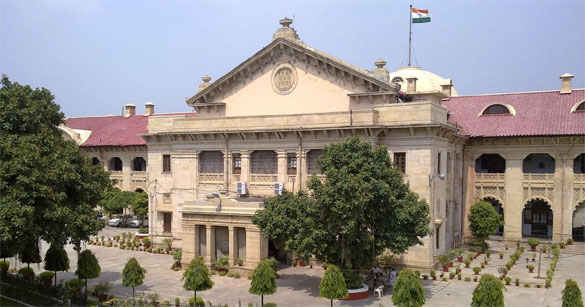
The Allahabad High Court building | Vroomtrapit at English Wikipedia, CC0, via Wikimedia Commons
--------
· Human rights commission ignoring lynchings of Muslims, says Allahabad HC judge in split verdict
· Trump told Netanyahu to only carry out “surgical” Lebanon strikes, Axios reports
· Japan-Saudi parliamentary ties shift toward broader strategic partnership
· Plot shortage: why many French Muslims are being forced to wait weeks to bury their relatives
· CAIR-NY Calls on Public Officials to Speak Out Against Rising Islamophobia After Anti-Muslim Vandalism of Stop Signs in Deer Park
· Uganda Arrests 62 Nigerians Over Church Operations
· Malaysians missing after Israeli forces board Gaza aid flotilla, says Sumud Nusantara
· Russia Defence Chief Says Afghanistan Remains Main Source of Terror Threats
------
India
· Allahabad High Court judges disagree over NHRC probe into 558 aided madrassas in Uttar Pradesh
· Pune cops issue 'Leave India' notice to three US tourists engaged in 'religious propagation'
· J&K government drops Urdu language for revenue services exam, sparks row
· Supreme Court refuses fresh hate speech guidelines, says laws exist but gaps remain
· India slips six places in a year, Pakistan goes up five notches in World Press Freedom Index 2026
· Jammu and Kashmir police step up anti-drug drive with roadside tests, sniffer dogs
· Army chief General Dwivedi discusses stronger India-US military ties at Pentagon visit
------
Mideast
· How the Strait of Hormuz crisis is disrupting global sugar supplies
· Hezbollah adopts a new weapon: Fiber-optic drones, used widely in the war in Ukraine
· Iran’s highly enriched uranium likely is still at the Isfahan site, UN nuclear chief tells AP
· Gaza flotilla organizers say surrounded by Israeli ‘military boats’
· Over a million Lebanese at risk of going hungry between now and August, UN warns
· Syria arrests former general accused of chemical attack involvement
· Al-Sheikh affirms Palestinian support for Syria in meeting with Al-Sharaa in Damascus
------
Arab World
· Makkah greens surge: 60,000 trees planted as Al-Mughmas park spotlights eco-tourism push
· Saudi ambassador says adherence to Taif Accord key to any settlement in Lebanon
· Saudi Arabia hosts GCC ambassadors meeting in Poland to strengthen regional ties
· Mauritius president commends Saudi Arabia’s Arabic program for non-native speakers
· Saudi crown prince and Canada’s PM Carney discuss regional developments
· Saudi archeology project uncovers Jurash remains
· Saudi academics emphasize role of higher education in combating extremism
------
Europe
· New Zealand court rejects appeal by mosque gunman to abandon guilty pleas
· Islamic education centre- The Madani Institute Preston- in Deepdale Conservation Area is hoping to expand
· Central Mosque slams sudden increase in burial costs in Glasgow
· Caucasus Muslims Office rebukes WCC over April 23 statement on Azerbaijan claims
· Reform candidate wants ‘every Muslim out of Europe’
· Misleading claim about ‘council tax exemption’ for Muslims recirculates on Facebook
· Ireland to end state-provided housing for Ukrainians
------
North America
· Trump threatens to pull troops from Germany amid feud with Merz
· 'Strait of Trump': US President shares new map naming Hormuz after himself
· CAIR-LA Commends OC Board of Supervisors for Speaking in Support of Muslim Community
· Following Islamophobic Remarks at Board Meeting
· Muslim Student Union responds to funding request controversy
· Comey surrenders over charge of threatening Trump's life in Instagram post
· Smiles and wonder: How the US reacted to King Charles
· Senate blocks bid to limit Trump’s power to attack Cuba
------
Africa
· Libya says 17 migrants perish at sea, nine missing feared dead
· Mali’s armed groups fill a government vacuum – addressing this is key to ending the violence
· 2027: Makinde warns against religion-based politics ahead of succession
· Funeral services for Mali's slain defence minister to be held on Thursday
· Health sovereignty focus of Nairobi summit following US aid cuts
· Tinubu Govt Declares Friday Public Holiday
-----
Southeast Asia
· Indonesian soldiers charged in acid attack on activist
· Ex-footballer brings Malaysian comfort food to Mecca for homesick Haj pilgrims
· Mas Ermieyati slams Bersatu rep’s dog sticker post, says it insults Muslim manners and elected office
· New Malaysia–Indonesia pact to tap health, education and cultural travel
· Tabung Haji sets two-hour response for pilgrim complaints
· MyIPO NexGen to drive innovation-led economy
----
South Asia
· Establish Qur’anic law: Jamaat MP
· Afghanistan Ranks 175th Out of 180 in 2026 Press Freedom Index, RSF Warns
· Over 500 Afghan migrants freed from Pakistan prisons
· Austria plans Afghan deportations via Uzbekistan under new deal
· Pak Regime’s Escalating Aggression a Dangerous Path
· Haqqani Emphasizes Implementation of Supreme Leader Decree No. 17, Cultural Development
· Beradar Kicks Off Three Power Transmission, Distribution Projects in Faryab
Compiled by New Age Islam News Bureau
-----
Human rights commission ignoring lynchings of Muslims, says Allahabad HC judge in split verdict
30 Apr 2026
The Allahabad High Court building | Vroomtrapit at English Wikipedia, CC0, via Wikimedia Commons
------------
A judge of the Allahabad High Court has alleged that the National Human Rights Commission was ignoring the lynching of Muslims in the country and instead “dabbling in matters that prima facie do not concern them”, reported Live Law on Wednesday.
Hearing a petition filed by the Teachers Association Madaris Arabia against a directive issued in February 2025, Justice Atul Sreedharan said on Monday it was “surprising” that rights commissions in the country are trying to indulge in matters beyond their jurisdiction, according to The Indian Express.
However, Justice Vivek Saran, who was part of the same division bench, said that he did not agree with such sweeping observations.
In February 2025, the rights body directed the Economic Offences Wing to investigate allegations against 558 aided madrasas in Uttar Pradesh, The Hindu reported.
This stemmed from a complaint filed before the NHRC alleging financial irregularities, including the misuse of government grants and the appointment of unqualified teachers through corrupt practices to madrasas.
Challenging this, petitioners told the High Court that the human rights body lacked the authority to initiate inquiries into alleged violations beyond one year, the newspaper reported. They had sought an adjournment of the matter.
In his order on Monday, Sreedharan said that he is prima facie astounded by the order passed by the NHRC on the investigation into the madrasas, The Indian Express.
He added that the court was not aware of the rights body taking suo motu cognisance in situations where vigilantes take the law into their own hands and harass ordinary citizens of the country, Bar and Bench reported.
This included when such groups “harass individuals on account of the nature of the relationship between persons of different communities, or where even having a cup of coffee at a public place with the person of different religion becomes a fearful act”.
In such cases, no instance has been placed before the court about whether a state human rights commission or the NHRC had taken suo motu cognisance, said the judge.
“But instead it has the time to entertain matters which would fall within the precincts of the High Court under Article 226 and which could be effectively render justice,” the judge said.
Article 226 empowers High Courts to issue writs for the enforcement of fundamental rights.
Listing the case for May 11, Sreedharan directed that a notice be issued to the NHRC to appear before the court and file a response in the matter.
In a separate order, Saran said that he did not agree with the observations made by Sreedharan.
The judge said that all parties should be heard if any order touching on the merits of the case or about the role of the NHRC had to be passed, Bar and Bench reported.
He added that he was conscious of the fact that a court can pass an order in the absence of any particular party.
“…however, in the instant case, when in Paragraph Nos. 6 and 7, certain definite observations were being made, then it would have been in the fitness of things that parties were properly represented in the Court,” Bar and Bench quoted Saran as saying. “In the absence of the parties, no adverse observations were required.”
Source: scroll.in
Please click the following URL to read the text of the original Story
https://scroll.in/latest/1092483/human-rights-commission-ignoring-lynchings-of-muslims-says-allahabad-hc-judge-in-split-verdict
-----
Trump told Netanyahu to only carry out “surgical” Lebanon strikes, Axios reports
April 29, 2026
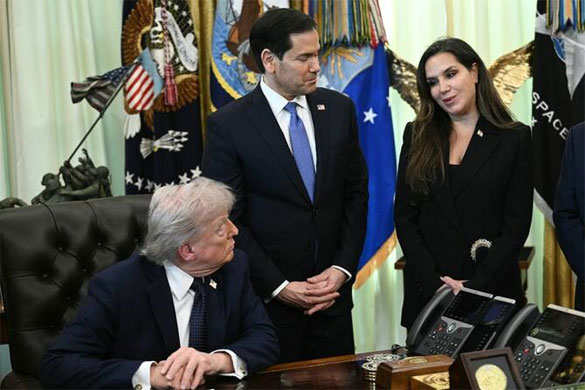
US President Donald Trump and US Secretary of State Marco Rubio listen to Lebanon Ambassador to the US Nada Hamadeh Moawad speak during a meeting in Washington, DC, US. (AFP)
-----------
US President Donald Trump said in an interview with Axios on Wednesday that he has told Israeli Prime Minister Benjamin Netanyahu that Israel should only take “surgical” military action in Lebanon and avoid a full resumption of the war.
In telephoned statements to Axios Trump said: “I told Netanyahu that he must carry out the order more carefully, not destroy the buildings.” He can’t do that. It is absolutely horrific and harms Israel’s image.”
The US President stressed his “admiration for Lebanon and its leadership, and his belief in the country’s ability to rise again,” and continued: “Iran destroyed Lebanon.” Its agent, Hezbollah, destroyed Lebanon.
The Israeli army continues its occupation of southern Lebanon and the destruction of homes it claims are used by Hezbollah, which, in turn, continues to launch rocket and drone attacks on Israeli forces inside Lebanon and in villages across the border.
An American official told Axios: “Hezbollah is not a party to the ceasefire and is trying to sabotage it. Its strategy is clear: provoke and attack, then blame Israel for derailing negotiations and discrediting the Lebanese government.”
The official added: “We cannot expect Israel to bear the brunt of the attacks alone. This is not the Biden administration.”
However, the official said the Trump administration has asked Israel to “exercise restraint” and allow space for the new diplomatic process with Lebanon.
Despite US mediation in the ceasefire in Lebanon, the agreement has not been fully implemented, and officials in both Israel and Lebanon fear its complete collapse before its expiration in mid-May.
Source: arabnews.com
Please click the following URL to read the text of the original Story
https://www.arabnews.com/node/2641810/middle-east
------
Japan-Saudi parliamentary ties shift toward broader strategic partnership
KHALDON AZHARI
April 30, 2026
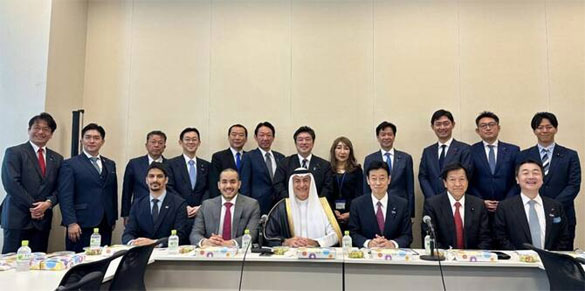
TOKYO: The Japan-Saudi Parliamentary Friendship League convened a high-level general meeting in Tokyo on Tuesday, bringing together Saudi Ambassador to Japan Dr. Ghazi Faisal Binzagr, former Minister of Economy, Trade, and Industry NISHIMURA Yasutoshi, 21 parliamentarians including SASAKI, Secretary General of the League and Vice Minister of Land, Infrastructure, Transport and Tourism, and senior officials.
The meeting reflected a growing momentum in bilateral relations, with discussions pointing to an evolution from traditional exchange toward a broader, more integrated strategic partnership.
Ambassador Binzagr emphasized that the League represents more than a forum for dialogue, describing it as a platform capable of advancing practical cooperation and shaping the future trajectory of Saudi–Japan relations. “Our partnership today is defined not only by exchange, but by a shared responsibility to build long-term resilience and shape stable, future-oriented value chains — in energy, in the economy, and in the stability of our regions and the wider world,” he said.
He noted that since the launch of the Saudi–Japan Vision 2030 initiative in 2017, cooperation has expanded beyond energy into integrated value chains across industry, technology, investment, and culture — reflecting a deeper alignment in both ambition and outlook.
The Ambassador also underscored the importance of human capital in sustaining this trajectory, pointing to Saudi professionals with experience in Japan, and Japanese experts with deep familiarity in the Arab world, as key enablers of future collaboration.
“These individuals are not only bridges between our societies, but partners in execution and co-creation,” he added.
Addressing current global developments, Binzagr framed energy security not as a short-term concern, but as an opportunity to deepen cooperation across the full value chain — from supply and logistics to innovation and future energy systems.
He reiterated Saudi Arabia’s commitment not only to ensuring reliable energy supply, but also to contributing to regional stability, noting that “stability in our region is integral to the stability of our partners.”
The discussion also reflected a growing recognition that resilience, prosperity, and stability are increasingly interconnected — particularly as both countries expand cooperation across advanced and emerging sectors.
Former METI Minister Nishimura Yasutoshi expressed appreciation for Saudi Arabia’s continued role in maintaining stable energy supplies, particularly during recent regional tensions.
“Saudi Arabia has always been an important energy partner for Japan, and we are grateful for its consistent efforts to ensure supply stability,” Nishimura said, noting deliveries via Yanbu and the East-West pipeline.
He added that bilateral cooperation now extends beyond crude oil to hydrogen, ammonia, and advanced materials, and reaffirmed Japan’s commitment to strengthening corporate partnerships under the Japan-Saudi Vision framework.
Nishimura also highlighted the strong public engagement with the Saudi Pavilion at Expo 2025 Osaka and expressed interest in expanding cooperation in emerging sectors such as e-sports, gaming, anime, space, and advanced industries.
He referred to a recent call between Prime Minister TAKAICHi Sanae and Crown Prince Mohammed bin Salman, where both sides reaffirmed their intention to deepen cooperation across innovation-driven sectors.
IWAMOTO Keiichi, Director of the Middle East Division at Japan’s Ministry of Foreign Affairs, provided a fact-based overview of Saudi–Japan relations, underscoring the Kingdom’s central role in energy security while highlighting the expanding scope of cooperation across multiple sectors.
The question-and-answer session further deepened the discussion, pointing to future opportunities across a wide spectrum — from animation, sports, gaming, and cultural industries, to advanced technologies and, as raised by participants, potential areas of cooperation in defense — alongside continued expansion in traditional sectors.
Participants noted that these developments reflect a shared recognition of the need for broader collaboration in support of global peace, security, prosperity, and improved quality of life.
The meeting concluded with a shared view that parliamentary engagement will play a central role in translating strategic alignment into tangible outcomes and advancing a more comprehensive Saudi–Japan partnership.
Source: arabnews.com
Please click the following URL to read the text of the original Story
https://www.arabnews.com/node/2641811/saudi-arabia
------
Plot shortage: why many French Muslims are being forced to wait weeks to bury their relatives
30 April 2026

© Photo Laurent Grandguillot / REA
----------
WhenWhen 'Yasmina' - not her real name - learned of her father’s sudden death on December 18th 2025 she did not expect to have to wait 29 days before she could bury him. Still less did she imagine the burial would take place around 150 miles from his home.
The young woman had simply wanted her dad to be buried in line with Muslim rites: as quickly as possible, in a designated religious section and oriented towards Mecca, as permitted by law. The problem was that no space was available in Tours, the city in west-central France where he lived.
“We were offered a solution in an oriented grave [editor's note, but not in a Muslim section], but that was out of the question, so we refused,” she says. The municipal authorities then explained that she could apply for special permission to bury her father in neighbouring towns that have such sections: Joué-lès-Tours, Chambray-lès-Tours, Saint-Cyr-sur-Loire and Saint-Pierre-des-Corps.
Yasmina thus approached the authorities in Saint-Pierre-des-Corps, which has a larger Muslim burial area. “The council staff told us that the other towns on the list first had to refuse us before we could apply there,” she recalls.
For two weeks, in the middle of the Christmas and New Year festive period, she went from one town hall to another, to obtain the necessary paperwork. In the meantime, she was signed off work due to the shock and the paperwork involved.
“In the end, the council in Saint-Pierre-des-Corps told us they couldn't arrange the burial,” she says. It was a heavy blow for Yasmina and her family. “We were convinced they'd accept, especially as the body was beginning to deteriorate in the mortuary.” After further unsuccessful requests in nearby Blois and Amboise, she resigned herself to burying her father around 150 miles to the north at Vernouillet, where he had family, on January 16th 2026.
In total, her late father's body spent 29 days in the mortuary. “For a month, we couldn't begin to grieve,” says Yasmina, torn between anger, bewilderment and sadness. Deeply affected by the ordeal, she only returned to work in early April. “Now I have to drive three hours to visit my father’s grave. It’s disgraceful.”
Plans for a metropolitan cemetery
Yasmina’s case is not an isolated one. In November 2025, one family had to wait 15 days before burying their newborn baby. The delay was as much as 21 days for Ali, a 48-year-old father. The two cemeteries in Tours, at Saint-Symphorien and Tours Sud, which have designated religious sections, are full. “On average, families now wait 14 days,” says Abdelkader Boucetta, director of the Muslim funeral service El Yousra and a member of the Dignité funéraire 37 collective.
Made up of local associations, mosques and professionals in the sector, this collective has been warning the authorities about a situation that has been known about since 2019. “We told them: ‘Be careful, in a few years there won’t be any spaces left.’ We tried to anticipate it,” he says.
A nationwide problem
Tours is far from being the only French town or city facing a shortage of designated religious burial sections in its cemeteries. In 2020 France's Muslim council, the Conseil français du culte musulman, warned the state and mayors' associations about the lack of available space. The issue intensified nationwide during the health crisis in that year. “Covid was a major catalyst for this change. With borders closed, families could no longer repatriate the bodies of their relatives to their countries of origin. They turned instead to local authorities,” explains Nada Afiouni, a senior lecturer at Le Havre-Normandie University and a specialist in funeral practices.
Local mayors, who alone have the power to create these religious sections, were then forced to face up to the shortcomings of their municipal cemeteries. In Gennevilliers and Saint-Denis near Paris, Lyon in the south-east and Le Havre in the north, for example, new spaces are due to be created to make up for the shortfall. But it is difficult to know exactly what the needs are nationwide. “For ten years, we have cited the figure of 600 Muslim sections [across the country]. We don’t really have an updated figure,” the academic adds.
A national comparison is difficult because local situations vary widely. “They depend on the mayor’s policy and on local dynamics. If Muslim associations and religious representatives are active locally, they can do more to push for the creation of such spaces,” says Nada Afiouni.
But by 2020, the cemeteries were full. The Covid health crisis and the closure of national borders during that period played a major role. There has also been a shift in habits within the Muslim community. “Our grandparents and parents were buried in their countries of origin. But their children, those who were born and grew up here, prefer to be laid to rest in France,” explains funeral director Abdelkader Boucetta.
In charge of his company since 2018, he now has to deal with grieving families who are inconsolable, angry and sometimes even threatening towards him. “They don’t expect to be told that we don’t know where their relative will be buried,” he explains.
Council promises
Up until September 2024 the situation had, however, remained manageable, in particular thanks to the numerous permissions granted by the former mayor of Saint-Pierre-des-Corps, Emmanuel François. After his resignation in the summer of 2024, his deputy Olivier Conte, who was recently re-elected, took over as mayor and “decided no longer to systematically grant requests [for permission to bury] until the shortage of space was addressed,” says Abdelkader Boucetta.
Instead, in May 2025 the municipality purchased a 10,000-square-metre plot on Rue Marcel-Cachin in Saint-Pierre-des-Corps, as the new mayor's predecessor had promised local associations. The aim is to create a cemetery for the whole metropolitan area, and it will include a large Muslim section.
The announcement has been welcomed by the Muslim community, and the council in Saint-Pierre-des-Corps is awaiting the results of a land study before transferring it to the local metropolitan authority. “But all this could take years,” says a worried Abdelkader Boucetta. Contacted by Mediapart, the town hall declined to respond.
In March this year the Dignité funéraire 37 collective suggested to the mayor of Tours itself, Emmanuel Denis – who was then standing for re-election - that land at the Tours Nord cemetery could also be used as a Muslim section. The council has confirmed it is studying the technical feasibility of such an option, which would “provide a temporary solution while the development of a metropolitan site offers a lasting answer [to the problem]”.
Another council pledge is that families facing a lack of burial space for their loved ones can now “contact the mayor’s office” to request assistance with their procedures, the town hall in Tours says.
“It’s a first step and it will meet immediate needs,” the collective says. Dignité funéraire 37 now wants politicians to “fully grasp the scale of the problem”, to remember – and not just during election periods - that “they're dealing with their fellow citizens”. The organisation adds: “This is not just a matter of religion, but of dignity.”
Source: mediapart.fr
Please click the following URL to read the text of the original Story
https://www.mediapart.fr/en/journal/france/290426/plot-shortage-why-many-french-muslims-are-being-forced-wait-weeks-bury-their-relatives
-------
CAIR-NY Calls on Public Officials to Speak Out Against Rising Islamophobia After Anti-Muslim Vandalism of Stop Signs in Deer Park
April 29, 2026
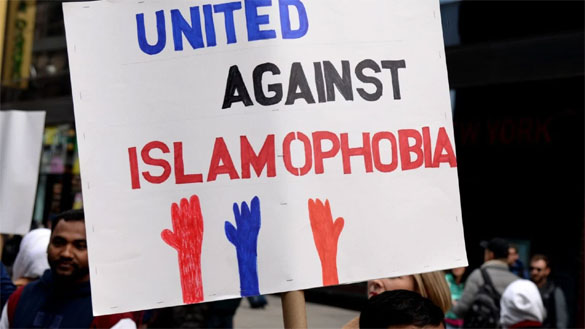
The New York chapter of the Council on American-Islamic Relations (CAIR-NY), a chapter of the nation’s largest Muslim civil rights and advocacy organization, today called on public officials and community leaders to speak out against rising Islamophobia in New York and nationwide after at least nine stop signs in Deer Park, a hamlet in the Town of Babylon, were defaced with the word “Islam” carved beneath the word “STOP.”
CAIR-NY also called on local law enforcement to conduct a thorough investigation into the anti-Muslim vandalism.
According to reports from community members, the vandalism was promptly reported to the Town of Babylon, resulting in removal of the sign. Multiple stop signs in the same area were similarly defaced shortly after. Residents again contacted town officials and the police. While the town removed most of the affected signs, some reportedly remain in place.
One responding officer allegedly did not immediately file a report once informed. A second officer later arrived, documented the incident, and acknowledged the presence of the graffiti. A community member informed CAIR-NY that they contacted the state attorney, as well as general and local politicians.
CAIR-NY expressed concern over both the nature of the vandalism and the initial response to the incident.
In a statement, CAIR-NY Executive Director Afaf Nasher said:
“This repeated defacement of public property using the word ‘Islam’ in a derogatory context is deeply troubling. Such acts contribute to a climate of hostility and fear for Muslim residents and those perceived to be Muslim. Equally concerning are reports of a delayed or inadequate initial response. Every act that may target a protected community deserves to be taken seriously. We urge authorities to act swiftly and communicate transparently with the public about the status of this investigation. We also urge public officials to speak out against growing Islamophobia in New York and nationwide.”
CAIR-NY is urging the Suffolk County Police Department to conduct a full and transparent investigation into these incidents and to ensure appropriate accountability.
The organization is also calling on local officials to prioritize the prompt removal of all remaining vandalized signs and to take proactive steps to reassure affected community members.
According to CAIR’s most recent civil rights report, complaints of anti-Muslim bias and discrimination have continued to rise nationwide, reflecting an ongoing pattern of Islamophobia impacting communities across the country.
CAIR-NY encourages any witnesses or individuals with information related to these incidents to come forward and assist in the investigation.
CAIR-NY’s mission is to protect civil rights, enhance understanding of Islam, promote justice, and empower American Muslims.
La misión de CAIR-NY es proteger las libertades civiles, mejorar la comprensión del Islam, promover la justicia, y empoderar a los musulmanes en los Estados Unidos.
You can help contribute to CAIR’s work of defending civil rights and empowering American Muslims across the country by making a one-time contribution or becoming a monthly donor. Supporters like you make CAIR’s advocacy work possible and defeating Islamophobia an achievable goal. Click here to donate to CAIR.
Source: cair.com
Please click the following URL to read the text of the original Story
https://www.cair.com/press_releases/cair-ny-call-on-public-officials-to-speak-out-against-rising-islamophobia-after-anti-muslim-vandalism-of-stop-signs-in-deer-park/
-----
Uganda Arrests 62 Nigerians Over Church Operations
April 30, 2026
The Ugandan government has detained 62 Nigerians for “illegally operating” a church.
The government announced the development in a statement posted on its 𝕏 handle on Wednesday
The Ugandan National Citizenship and Immigration Control (NCIC) stated that the suspects were also living and working in the country without valid permits.
They explained that the arrest followed a tip-off after learning that the individuals were operating illegally without the required permits.
“Following a tip-off, our enforcement team has arrested 62 Nigerian nationals operating illegally in Adjumani (without work permits).
“The group, primarily found operating a church among other things, is now being processed for prosecution under Uganda’s immigration,” the statement reads.
Simon Peter Mundeyi, spokesperson for the country’s ministry of internal affairs, said the Nigerians often pose as gospel preachers and engage in other illegal activities.
He added that they are currently being held at the ministry’s Namanve facility, where they are undergoing legal processes that could result in deportation, fines, or blacklisting.
“They often pose as gospel preachers while engaging in other irregular activities. Acting on intelligence, we moved in and apprehended them,” Mundeyi said.
Mundeyi said early investigations revealed conflict accounts from the suspects, adding that some claimed they were lured to Uganda with fake job offers, while others are suspected of involvement in online fraud and related crimes.
Source: naijanews.com
Please click the following URL to read the text of the original Story
https://www.naijanews.com/2026/04/30/uganda-62-nigerians-church-operations/
-----
Malaysians missing after Israeli forces board Gaza aid flotilla, says Sumud Nusantara Command Center
30 Apr 2026
BANGI, April 30 — The Sumud Nusantara Command Center (SNCC) has confirmed that 22 vessels under the Global Sumud Flotilla 2.0 (GSF2.0) mission were intercepted and boarded by Israeli forces in international waters en route to Gaza, including six with 10 Malaysians on board.
SNCC director-general Datuk Sani Araby Abdul Alim Araby said they are Zainal Rashid Ahmad on board Arkham III; Osman Zolkifli and Dr Jihan Alya Mohd Nordin (Eros 1); Hazwan Hazim Dermawan, Mohd Hanafi Mohd Salim, Ahmad Musa Al-Nuwayri Kamaruzaman and Norhelmi Ab Ghani (Bianca BCN).
Also Mohd Redzal Amzah and Muhamad Muhsin Zaidi, who were on board Freia and Marea respectively, as well as Mohd Shamsir Mohd Isa (Esplai).
Sani Araby, who is also chief executive of the Malaysian Consultative Council of Islamic Organisations, said the GSF2.0 mission involved 63 vessels in total, but only 22 were intercepted, lost contact and directly boarded, affecting a total of 186 activists.
Apart from the six vessels with the Malaysians on board, other vessels are Saf Saf, Bella Blue, Romantica, Goleta, Mystere, Magic Boat, Ghea, Snap, Eros, Tam Tam, Nagual, Lapinya, Batolo, Bribon, Malia and Holy Blue.
Sani Araby said the incident occurred between 1 am and 11 am Malaysian time today, when the flotilla was aggressively approached by Israeli forces in international waters off the Great Greek Islands.
“The flotilla’s position during the intimidation was approximately 656 nautical miles from the Gaza Strip coastline, within a legitimate international shipping zone fully protected under the United Nations Convention on the Law of the Sea,” he told an emergency press conference on the mission here today.
He said that the incident also involved provocation, with Israeli forces firing warning shots towards the vessels and jamming radio frequencies in a threatening manner against unarmed humanitarian activists.
The SNCC also confirmed the presence of dozens of unidentified drones operating around the flotilla during the incident, allegedly conducting surveillance and disrupting the vessels’ movements and communications.
“Audio and visual recordings obtained by the SNCC show Israeli forces using a false narrative to justify the warning shots,” he said.
To ensure the safety of the remaining vessels, Sani Araby said the SNCC has instructed all ships that have not been intercepted to immediately enter Greek waters.
He said the latest developments have been communicated to Prime Minister Datuk Seri Anwar Ibrahim and several ministerial patrons, seeking government support, particularly in terms of security and diplomatic engagement with the governments of Greece and Turkiye.
On the status of the 10 Malaysians involved, last contacted at 8.30 am Malaysian time, he said their whereabouts remain unknown.
“SNCC will provide updates as to whether they have been detained aboard vessels and ordered to turn back, or allegedly taken to an unknown location. We hope to receive further information soon,” he said.
Sani Araby also noted that the SNCC had anticipated Israeli interception of the GSF 2.0 mission due to perceived global support, including from Malaysia.
However, he said the interception tactics appeared to differ from an October 2025 incident, which allegedly occurred within a "red zone" 50 nautical miles from Gaza, suggesting, in his view, increased pressure on Israeli forces.
Sani Araby also urged Malaysians to hold special prayers and recite Qunut Nazilah for the safety of all detained mission delegates.
The GSF 2.0 mission comprises an international coalition combining maritime efforts with global mobilisation on land, including legal advocacy and solidarity campaigns across multiple countries, aimed at breaking the blockade on the Gaza Strip amid a worsening humanitarian crisis. — Bernama
Source: malaymail.com
Please click the following URL to read the text of the original Story
https://www.malaymail.com/news/malaysia/2026/04/30/ten-malaysians-missing-after-israeli-forces-board-gaza-aid-flotilla-says-sumud-nusantara-command-center/218252
-----
Russia Defence Chief Says Afghanistan Remains Main Source of Terror Threats
By Fidel Rahmati
April 29, 2026
Andrey Belousov has warned that Afghanistan continues to be a major source of cross-border crime and terrorist threats, highlighting growing regional security concerns.
Speaking at a meeting of defense ministers from the Shanghai Cooperation Organisation, Belousov described the situation in Afghanistan as unstable and stressed the need for coordinated regional efforts to address emerging risks.
He added that broader international conditions remain highly volatile, with multiple conflicts and security challenges putting pressure on global stability and regional cooperation mechanisms.
The Shanghai Cooperation Organisation, which includes major regional powers such as China, Russia, India, and Pakistan, has increasingly focused on counterterrorism and security coordination, particularly in relation to Afghanistan.
Regional states, especially in Central Asia, have repeatedly expressed concern over the potential spillover of extremist activity, drug trafficking, and organized crime from Afghanistan territory into neighboring countries.
Belousov also welcomed efforts by member states, including Pakistan, aimed at reducing tensions and supporting diplomatic engagement as a pathway toward long-term stability.
Since the Taliban’s return to power in 2021, Afghanistan has faced deep economic challenges, security incidents, and limited international recognition, all of which have contributed to persistent instability and humanitarian pressures.
At the same time, Central Asian countries have stepped up border security and intelligence cooperation, fearing infiltration by groups such as ISIS-K and other militant networks operating in the region.
Belousov’s remarks come amid heightened geopolitical tensions, including ongoing conflicts in the Middle East and strained relations between major powers, which have further complicated efforts to stabilize Afghanistan and the wider region.
Source: khaama.com
Please click the following URL to read the text of the original Story
https://www.khaama.com/russia-defence-chief-says-afghanistan-remains-main-source-of-terror-threats/
-------
India
Allahabad High Court judges disagree over NHRC probe into 558 aided madrassas in Uttar Pradesh
29.04.26
Two Allahabad High Court judges have made differing remarks while hearing a writ petition challenging an order of the National Human Rights Commission, which directed an inquiry into allegations against 558 aided madrassas in Uttar Pradesh.
Justice Atul Sreedharan strongly criticised the human rights commission (NHRC), expressing surprise that it directed an inquiry into such a matter when it takes no suo motu action in cases where members of the Muslim community are attacked or lynched, and when cases are either not registered against perpetrators or not investigated properly.
The other judge, Justice Vivek Saran, expressed his disagreement with the remarks, saying that the observations were made even as the NHRC was not represented in the court.
The two-judge bench adjourned the case to a later date.
They were hearing a writ petition filed by the Teachers Association Madaris Arabia, challenging an inquiry being conducted by the Economic Offences Wing in Lucknow against the 558 madrassas following the NHRC order.
The NHRC had passed the order after hearing a complaint filed by Mohammad Talha Ansari alleging that 558 madrassas were operating in collusion with officers of the Minority Welfare Department and were receiving government grants without meeting the required standards.
During the hearing, Justice Sreedharan remarked, "Instead of taking suo motu cognisance in which members of the Muslim community are attacked and lynched in some cases, and where cases are not registered against perpetrators or not investigated properly, the human rights commissions are seen dabbling in matters that prima facie do not concern them."
"This court is not aware of the NHRC taking suo motu cognisance in situations where vigilantes take the law in their own hands and harass ordinary citizens of this country, or harass individuals on account of the nature of relationship between persons of different communities, or where even having a cup of coffee at a public place with the person of a different religion becomes a fearful act," he observed.
"Under the circumstances, looking into the nature of this case, specifically the manner in which the NHRC has gone ahead and accepted the complaint in a case where prima facie there was no human right involved, the adjournment sought by the learned counsel for the petitioner is granted. The objection of the state for non-grant of adjournment is rejected," Justice Sreedharan said.
Justice Vivek Saran said he differed from the adverse remarks, observing that the NHRC was not represented before the court, and even the petitioner was not arguing the case but had only sought an adjournment.
"I am strictly of the opinion that if any order touching on the merits of the case or even touching on the role of the NHRC had to be passed, then all parties concerned ought to have been heard," Justice Saran said.
"The petitioner was definitely not arguing the case. There was no representation of the National Human Rights Commission. The only party opposing the adjournment during the mention was the state counsel," he said.
Justice Saran observed that while a writ court can pass an order even in the absence of a particular party, in the current case, when definite observations were being made, it would have been fit if the parties were properly represented in the court.
"In the absence of the parties, no adverse observations were required," Justice Saran, adding, "I differ from the order as has been dictated by brother Justice Atul Sreedharan. However, I agree with the adjournment being allowed."
In February 2025, the NHRC passed an order directing the Economic Offences Wing to inquire into allegations against 558 aided madrassas in Uttar Pradesh.
The complaint before the NHRC alleged that the madrassas were operating in collusion with officers of the Minority Welfare Department and were receiving government grants without meeting the required standards.
The complaint also alleged that uneducated teachers were being recruited by taking bribes and commissions offered to state authorities.
The writ petition before the high court contended that the NHRC is not empowered to order an inquiry into alleged human rights violations more than one year after the alleged incident.
Source: telegraphindia.com
Please click the following URL to read the text of the original Story
https://www.telegraphindia.com/india/allahabad-high-court-judges-disagree-over-nhrc-probe-into-558-aided-madrassas-in-uttar-pradesh/cid/2158377
------
Pune cops issue 'Leave India' notice to three US tourists engaged in 'religious propagation'
29.04.26
Police in Maharashtra's Pune city have issued a 'Leave India' notice to three American nationals after they were allegedly found engaging in religious propagation activities and violating tourist visa norms, officials said on Wednesday.
The trio was recently found distributing pamphlets of religious nature in Sadashiv Peth area of the city, they said.
All three US nationals are men. While one of them is a senior citizen, two others are in the age group of 45 to 50 years, an official said.
"These three American nationals are on tourist visas. They were found distributing pamphlets in Sadashiv Peth. Alert citizens spotted them and informed the police," Deputy Commissioner of Police (Special Branch) Sandip Bhajibhakare said.
During inquiry, it was confirmed that all three are American nationals visiting India on tourist visas, he said.
"The pamphlets distributed by them were in English, Marathi and Hindi, and contained content related to Christian religion. Following scrutiny, they were issued a 'Leave India' notice for violating the tourist visa norms. They are required to leave the country by May 10," he added.
He said the trio was in Mumbai before arriving in Pune about a week ago.
Police are also probing possible local links in the case.
"We are checking if any local institution or individual is connected to them," Bhajibhakare said.
Source: telegraphindia.com
Please click the following URL to read the text of the original Story
https://www.telegraphindia.com/india/pune-cops-issue-leave-india-notice-to-three-us-tourists-engaged-in-religious-propagation/cid/2158355
-----
J&K government drops Urdu language for revenue services exam, sparks row
Fayaz Wani
30 Apr 2026
SRINAGAR: The Omar Abdullah government is facing sharp criticism from Kashmir-based opposition parties for dropping Urdu, one of the official languages of J&K, mandatory for qualifying for revenue services, from the newly amended draft recruitment rules for revenue posts.
On April 10, the Revenue Department issued the draft Jammu and Kashmir Revenue Service Recruitment Rules for non-gazetted posts, inviting objections within 15 days.
The proposed amendments remove the earlier requirement of Urdu knowledge for posts such as Naib Tehsildar, Girdawar and Patwari—positions that are central to maintaining land and revenue records.
The move comes against the backdrop of a legal challenge and subsequent order by the Central Administrative Tribunal in July 2025, which stayed provisions of the 2009 rules mandating graduation with knowledge of Urdu. As per the fresh draft, the minimum qualification has been reduced to a graduation degree from a recognised university, without any Urdu language requirement.
The opposition BJP, which had been protesting for a year to get Urdu removed as qualification for revenue posts, welcomed the move.
The PDP, however, has opposed the move. PDP leader Iltija Mufti said the issue was not political but concerned the cultural, linguistic identity of J&K people. She accused the government of taking a series of steps to collectively weaken Urdu’s institutional presence.
Source: newindianexpress.com
Please click the following URL to read the text of the original Story
https://www.newindianexpress.com/nation/2026/Apr/30/jk-government-drops-urdu-language-for-revenue-services-exam-sparks-row
-----
Supreme Court refuses fresh hate speech guidelines, says laws exist but gaps remain
30.04.26
The Supreme Court on Wednesday dismissed a batch of petitions seeking action against hate speech, saying there were enough laws to deal with such crimes but there were lacunae in implementation.
It said it was not for courts to legislate on such subjects.
One of the petitioners had sought action against Assam chief minister Himanta Biswa Sarma for his alleged anti-Muslim remarks during public events.
A bench of Justices Vikram Nath and Sandeep Mehta passed the verdict while dealing with a batch of PILs filed since 2020 during Covid-19 and certain applications seeking contempt action against authorities for non-implementation of the various directions issued earlier by the apex court in the Tehseen Poonawalla, Shakti Vahini and other cases. The directions included the prompt registration of FIRs against those delivering hate speeches.
The petitions were mostly filed against certain alleged inflammatory speeches made at Dharam Sansads in Uttarakhand, Uttar Pradesh and other places by Hindutva activists and alleged provocative speeches made by some Muslim politicians.
In 2023, the Supreme Court passed a directive to all states and Union Territories that the police should suo motu register FIRs for speeches promoting communal hatred and offending religious sentiments without awaiting a formal complaint. Thereafter, contempt petitions were filed alleging non-compliance with the court’s directions.
However, on Wednesday, the bench declined to pass any fresh directions on the ground that the existing directives and laws were sufficient to deal with such hate crimes and it was for the executive and the legislature to take a call on their strict implementation.
“Creation of criminal offences lies squarely within the legislative domain and constitutional courts may interpret the law, but they cannot compel legislation. What manner to legislate remains in the domain of the legislature. The field of hate speech is not unoccupied. The concerns don’t arise from law but in implementation,” the bench said while pronouncing the judgment.
The court said the statutory mechanism under the BNSS provides a comprehensive way to put criminal law in motion and to ensure “no legislative vacuum exists”. While declining to issue directives, the bench observed that issues related to hate speech and rumour mongering directly affect fraternity and constitutional order.
Source: telegraphindia.com
Please click the following URL to read the text of the original Story
https://www.telegraphindia.com/india/supreme-court-on-hate-speech-laws-says-no-new-rules-needed-flags-enforcement-gaps-prnt/cid/2158408
------
India slips six places in a year, Pakistan goes up five notches in World Press Freedom Index 2026
30.04.26
India slipped six places to 157 out of 180 countries in the 2026 World Press Freedom Index published by Reporters Without Borders (RSF) early on Thursday, India time. Last year India was ranked 151 in the global media independence index. Pakistan, India’s nuclear neighbour, is ranked 153, up from 158 last year.
Norway holds the top spot as the best country for journalists for the 10th consecutive year, while Eritrea comes in last for the third year in a row.
The RSF said it had released the list “at a time when political pressure on the press is intensifying, authoritarian tendencies are growing and the media market is heavily weakened.”
This year, it said, “the Index’s analysis highlights an alarming deterioration in the conditions for journalism in many parts of the world, despite some isolated improvements, as 100 out of 180 countries and territories have seen their press freedom score decline.”
In India, the RSF said, “judicial harassment of independent media is intensifying, driven by the growing use of criminal statutes – defamation and national security laws among them – directly targeting journalists.”
The press in Pakistan “faces relentless waves of restrictions amid a fraught political climate in which authorities seek to control, and in some cases suppress, the dissemination of journalistic content,” the RSF said.
The US has been ranked at 64, down from 57 last year, with the RSF saying: “…journalists who were already fighting against economic headwinds and dealing with a crisis of public trust — among other challenges — now also contend with President Donald Trump’s systematic weaponisation of state institutions, including funding cuts to public broadcasters such as NPR and PBS, political interference in media ownership, and politically motivated investigations targeting disfavoured journalists and media outlets.”
Since Trump’s return to office, “journalists have also been targeted on the ground during protests, reflecting a broader deterioration that amounts to one of the most severe crises for press freedom in modern US history,” the RSF said.
For the first time in the history of the World Press Freedom Index, the RSF said, “over half of the world’s countries now fall into the “difficult” or “very serious” categories for press freedom. In 25 years, the average score of all 180 countries and territories surveyed in the Index has never been so low.
“Since 2001, the expansion of increasingly restrictive legal arsenals — particularly those linked to national security policies — has been steadily eroding the right to information, even in democratic countries.
“The Index’s legal indicator has declined the most over the past year, a clear sign that journalism is increasingly criminalised worldwide,” it added.
Source: telegraphindia.com
Please click the following URL to read the text of the original Story
https://www.telegraphindia.com/india/india-slips-six-places-in-year-pakistan-goes-up-five-notches-in-world-press-freedom-index-2026/cid/2158455
-----
Jammu and Kashmir police step up anti-drug drive with roadside tests, sniffer dogs
30.04.26
Kashmir police have intensified the lieutenant governor-led dispensation’s Nasha Mukt Jammu and Kashmir Abhiyan by conducting on-the-spot urine tests on drivers and deploying sniffer dogs to check substance abuse, bringing a novelty to the campaign that has put the entire administration on its toes.
LG Manoj Sinha launched a 100-day intensive campaign for a “drug-free Jammu and Kashmir” this month, during which he has travelled to different parts of the state to raise awareness about drug misuse.
The police have filed dozens of FIRs and arrested scores of people during the last fortnight as part of the campaign.
The police in south Kashmir’s Kulgam on Wednesday said rapid urine drug abuse tests were conducted on drivers plying on the Srinagar-Jammu highway to ensure “road safety and curbing drug abuse”.
Source: telegraphindia.com
Please click the following URL to read the text of the original Story
https://www.telegraphindia.com/india/jammu-and-kashmir-drug-crackdown-urine-tests-sniffer-dogs-in-anti-narcotics-drive-prnt/cid/2158415
------
Army chief General Dwivedi discusses stronger India-US military ties at Pentagon visit
29.04.26
Army Chief Gen Upendra Dwivedi recently visited the Pentagon in the US and held discussions with senior military officials seeking to bolster defence cooperation and explore new avenues for collaboration in capability development and joint operations, officials said on Wednesday.
The chief of the Army staff was on an official visit to the US from April 20-23.
"In a significant boost to India-US military ties, General Upendra Dwivedi visited Pentagon on April 23, reinforcing strategic cooperation between the two armies," a senior official said.
The visit was anchored around key engagements at the Pentagon, where Gen Dwivedi interacted with Daniel P Driscoll, United States Secretary of the Army, and also met Gen Christopher LaNeve, Acting Chief of Staff of the US Army, the officials said.
"The discussions focused on expanding bilateral defence cooperation, enhancing military-to-military engagement and exploring new avenues for collaboration in training, capability development and joint operations," the senior official said.
Both sides emphasised the importance of interoperability and jointness in addressing emerging security challenges.
Gen Dwivedi also held interactions with Elbridge Colby, Under Secretary of Defense for Policy and Gen Steven S Nordhaus, Chief of the National Guard Bureau, the officials said.
These engagements added a "wider strategic dimension", covering defence policy coordination, institutional linkages and future areas of cooperation.
The interactions at the Pentagon were a crucial part of the visit, reflecting the growing importance both nations attach to their defence partnership amid a dynamic global security environment, the official added.
The exchanges helped build mutual trust and highlighted convergence on key strategic priorities, another senior official said.
The visit marks another step forward in strengthening India-US defence relations, with both sides reaffirming their commitment to regional stability, enhanced capability development and deeper military cooperation, the official said.
Source: telegraphindia.com
Please click the following URL to read the text of the original Story
https://www.telegraphindia.com/india/army-chief-general-dwivedi-discusses-deepening-india-us-military-ties-during-pentagon-visit/cid/2158360
------
Mideast
How the Strait of Hormuz crisis is disrupting global sugar supplies
GABRIELE MALVISI
April 29, 2026
LONDON: On the first day of April, as Brazilian mill operators began the new harvest season, the numbers on their trading screens had little to do with sugar.
Crude oil was trading above $119 a barrel, ethanol margins were climbing, and the Strait of Hormuz had effectively closed to commercial shipping.
The arithmetic was straightforward: the more oil costs, the more ethanol is worth, and the less cane needs to become sugar.
Brazil supplies roughly 45 percent of all sugar traded internationally. Every harvest, mills decide how much sugarcane goes to sugar and how much to ethanol — a uniquely Brazilian mechanism that makes the country the swing producer not just of sweetener but of biofuel.
When oil spikes, that balance shifts fast. Consultancy Datagro had already projected before any shots were fired that mills would cut the cane share earmarked for sugar to 48.5 percent this season from 50.7 percent in 2025.
The war arrived just as that calculation was being made.
Brazil’s government has since moved to raise the ethanol blend in gasoline from 30 percent to 32 percent, with a further increase to 35 percent targeted before year end — a trajectory that industry estimates suggest will push the ethanol share of cane to 54 percent this season.
“Brazilian mills were already planning to direct a larger share of cane toward ethanol production even before the war, because sugar prices were extremely depressed,” Arnaldo Luiz Correa, CEO of Archer Consulting, told Arab News.
“This was largely due to delayed fixations by the mills, which created intense selling pressure as they rushed to fix prices.
“When funds began covering their short positions — a move that could have pushed prices higher — that upward momentum was neutralized by the simultaneous volume of mill fixations hitting the market.”
The Strait of Hormuz disruptions have played a key role in the market calculus. With the ongoing blockade pushing oil steadily around $100 a barrel, the incentive for Brazilian mills to divert cane toward ethanol has grown — meaning less sugar reaching global markets.
On Tuesday, the situation appeared more uncertain than ever.
Following the collapse of Islamabad talks and the extension of a fragile ceasefire, Tehran passed a new proposal to Washington via Pakistani mediators over the weekend, offering to reopen the strait to commercial shipping in exchange for the US lifting its naval blockade on Iranian ports and ending hostilities.
The White House said it was examining the proposal. But the diplomatic mood remained tense: Iran’s ambassador to the UN, Amir Saeid Iravani, told the Security Council that any lasting stability in the Gulf requires “credible guarantees,” as Washington is no longer in a position to “dictate” policy to other nations.
Against that backdrop, raw sugar futures on ICE rose last Friday, snapping a three-week losing streak, as traders set aside concerns over ample supplies and focused on the energy-driven supply squeeze.
Yet the recovery has been modest: prices remain roughly 9.7 percent below where they stood a month ago and 22.2 percent lower than a year ago, reflecting just how depressed the market was before the conflict began.
According to a report by trading company Foodcom, before the war, global production in 2025/26 was estimated at 189-190 million tons against consumption of roughly 177-178 million tons — a surplus of 11-12 million tons that is acting as a ceiling on any rally.
What is keeping a sustained recovery in check is a paradox at the heart of this crisis. The same disruption that is tightening supply is also threatening demand. The Arab region — far from a passive consumer — sits at the structural center of global sugar trade.
In 2024, six Middle Eastern and North African countries ranked among the world’s top 30 sugar importers by value, led by the UAE — a major re-export hub — at $1.28 billion, Saudi Arabia at $1.25 billion, Algeria at $1.1 billion, and Egypt at $975 million.
Saudi Arabia’s import volume alone grew 26 percent year-on-year in the most recent data, driven by rising domestic industrial and food processing demand.
At the center of the region’s sugar logistics is Al-Khaleej Sugar at Jebel Ali Port in Dubai — the world’s largest standalone port-based sugar refinery, processing 1.8 million tons of raw cane annually.
In 2024, it accounted for nearly 48 percent of all physical deliveries against the ICE White Sugar Futures contract, the London-traded benchmark that sets global refined sugar prices.
The Gulf as a whole imports roughly 10 percent of the world’s raw sugar through the Strait of Hormuz and re-exports around 5 percent of global refined sugar via the same route, according to sugar consultant Michael McDougall.
The Hormuz closure disrupts both ends of that chain simultaneously.
Analysts warned that such disruption leaves raw sugar cargoes afloat and looking for new buyers, while accelerating a draw-down in regional white sugar stocks.
Refineries in Dubai, Iraq, Bahrain, and Iran are already operating under constraints, compounded by years of thin margins that have left little buffer.
Historically, sugar moves from Brazil, India, and Thailand to Gulf refineries and consumers, passing through the Strait of Hormuz on its final leg.
Those flows now face war-risk surcharges of $2,000 to $4,000 per container depending on size and carrier — costs that will not stay on traders’ balance sheets for long before passing to buyers.
Maersk, MSC, CMA CGM, and Hapag-Lloyd — the world’s four largest container carriers — have all suspended strait transit, diverting cargo instead through the UAE’s eastern ports of Fujairah and Khorfakkan, and Oman’s port of Sohar, all of which sit outside the strait.
Those ports offer a workable corridor, but Reuters reported they lack the capacity of Jebel Ali and are already experiencing congestion, longer clearance times, and higher handling costs — adding friction to supply chains already running thin.
The responsibility for navigating those complexities falls largely outside Brazil’s borders.
“The vast majority of sugar exported by Brazil is sold on FOB (free on board) terms, meaning that logistics from Brazilian ports to the final destination — in this case the Middle East — are the responsibility of the trading companies or the importers themselves,” Correa said.
“Therefore, any disruption does not directly affect Brazilian exporters; it will depend on the importer’s ability to find alternative routing to ensure the product reaches its destination.”
Al-Khaleej’s managing director Jamal Al-Ghurair has sought to reassure markets, saying the refinery can use Fujairah, Khorfakkan, and Sohar if needed and that it holds raw sugar reserves sufficient for up to two years.
“Import and export doors are still open,” he said in March.
Saudi Arabia has also begun rerouting eastern-port shipments through Jeddah Islamic Port. But traders remain cautious, noting that some Omani facilities have already been targeted in the conflict, and that alternative routes are a workaround, not a solution.
“Whether through alternative ports, substitute suppliers, or strategic reserves, the outcome will depend largely on the operational capacity and creativity of the trading companies involved,” Correa added.
Layered on top is a logistical wildcard some analysts say the market may be underpricing.
Brazil’s truckers, their diesel costs inflated by the same oil shock, have been circling industrial action since March.
In 2018, a nine-day stoppage paralyzed the country’s road network, forced Copersucar — Brazil’s largest sugar shipper — to declare force majeure on contracts, and severed the routes connecting fields to mills and ports. Cut cane must reach a mill within hours or it is lost entirely.
Correa, however, said a strike does not represent an “imminent risk,” noting that trucks operating within mill complexes — handling cane from field gate to processing unit — are company-owned and would not be affected by a broader walkout.
The least visible pressure may prove the most lasting. Close to half of global urea exports — the primary nitrogen source for sugarcane — originate from or transit the Gulf, and fertilizer prices have already risen 40 to 60 percent globally.
And while those costs will not show up in this season’s prices, they will be felt in next season’s fields, affecting yields in Brazil, India, and Southeast Asia well beyond any ceasefire.
Analysts have also flagged a strong probability of an El Nino weather pattern in the coming months, bringing drought conditions to Southeast Asia and threatening production in Thailand and India — the other two pillars of global sugar supply.
For now, the market is pricing in disruption rather than shortage. The difference between the two will depend, in large part, on how long the strait stays closed and what that does to a region that the global sugar trade cannot afford to sideline.
Source: arabnews.com
Please click the following URL to read the text of the original Story
https://www.arabnews.com/node/2641786/middle-east
------
Hezbollah adopts a new weapon: Fiber-optic drones, used widely in the war in Ukraine
April 30, 2026
TEL AVIV: Hezbollah has launched a new weapon against northern Israel in the latest round of fighting: small drones controlled with fiber-optic cables the width of dental floss that avoid electronic detection.
These drones — used widely in the war in Ukraine — are small, hard to track and potentially lethal.
Many drones are susceptible to electronic jamming by air defenses. Jamming can cause a drone to crash or return to its point of origin.
But fiber-optic drones are not controlled remotely. They have a thin cable that connects an operator directly to the drone, making it impossible to electronically jam.
The drones are not infallible because the wind — or other drones — can cause the cables to tangle.
But, “if you know what you’re doing, it’s absolutely deadly,” said Robert Tollast, a drone expert and researcher at the Royal United Services Institute in London, explaining how the drone can fly low and creep up on a target.
Experts say militaries must either intercept the drones, which is difficult due to their small size and short flight path, or find a way to snip the nearly invisible cable.
Hezbollah — the Iran-backed militant group in Lebanon — has mostly been using the fiber optic drones on Israeli soldiers operating in southern Lebanon or towns on the border.
Here’s a closer look at these weapons.
A new weapon with a long trail
An Israeli military official told AP the fiber optic drones are a relatively new threat during the latest round of fighting with Hezbollah. Hezbollah seems to have turned to them because Israeli air defenses have been successful against larger and more powerful rockets, missiles and other drones, said the official, who spoke on the condition of anonymity in line with military guidelines.
Israel believes the drones are made locally and are easy to produce – requiring little more than an off-the-shelf drone, a small amount of explosives, and transparent wire that is readily available on the consumer market, he said.
He called the drones the biggest threat to troops inside Lebanon but said the Israeli military is working on technological solutions. In the meantime, Israel is taking measures on the ground to defend troops, such as adding nets and cages to military vehicles.
The fiber-optic drones are the latest part of a cat-and-mouse race as Israel’s high-tech defenses race to intercept new threats, especially ones that are less sophisticated.
Ran Kochav, a former head of the Israeli military’s air defense command, said Israel is failing in its attempts to defend against the fiber-optic drones.
“They fly very low and very fast, and they are very small, it’s very difficult to detect them, and even after they’re detected, they are really hard to track,” he said.
Kochav said Israel spent years focusing on strengthening its air defense systems to improve protection against rockets and missiles. But drones were not seen as a top priority.
He said Israel should have been following the advances in fiber-optic drones in the war in Ukraine and assumed that like Russia, other Iranian allies would eventually use them.
A technology race in the war in Ukraine
Throughout the war in Ukraine, Moscow and Kyiv have been engaged in a race to develop new technology.
Russia pummels Ukraine almost nightly with Shahed long-range attack drones — originally from Iran. Although Moscow has made many improvements to the drones, some can still be taken down by electronic jamming.
Fiber-optic drones were developed to get around that problem — although they do not have the same range as a drone that uses a radio link or artificial intelligence to navigate.
In some cases, fiber-optic drones have been recorded with cables extending as far as 31 miles (50 kilometers) said Tollast, the expert in London.
Russia and Ukraine are using many different types of drones “at a phenomenal scale,” he said.
In Ukraine, some fields are coated with drone cables
The fiber-optic drones are in such wide use that footage shows front-line Ukrainian towns coated with shiny, fishing line-like strings, resembling massive spiderwebs shimmering in the sunlight.
Israel has sufficient firepower to intercept drones, but the key is early detection, Kochav said.
He explained that Israel already has suitable technology that tracks changes in light, identifies signals and communications, and can recognize the sound of drone propellers.
But he said these monitoring systems haven’t been widely deployed along the northern border.
Hezbollah has posted videos of the new drone attacks
Over the past weeks, Hezbollah has aired videos through social media platforms and its Al-Manar TV station of attacks with these new drones, especially against Israeli troops in southern Lebanon.
These attacks have captured public attention. One attack killed one Israeli soldier and wounded six others, some of them seriously, last weekend. Another attack, on Tuesday, killed an Israeli civilian contractor in southern Lebanon.
In the attack that killed the soldier, Hezbollah issued a video taken by the drone until it exploded in the middle of troops gathering near a vehicle. Another drone was fired at the same location as a military helicopter landed to evacuate the wounded but narrowly missed.
Hezbollah announced that it began using fiber-optic guided drones for the first time during the round of fighting that began March 2, after using other types of drones for years.
Israel also has a fleet of drones that carry out surveillance and attacks, though not necessarily with the fiber optics cables, to target Hezbollah militants.
At a northern Israel home, a drone left coils of cable in the backyard
Zevik Glidai, a 78-year-old math teacher and volunteer ambulance driver, discovered coils of the translucent fiber-optic cables surrounding a drone that crashed into his backyard in the northern Israeli city of Kiryat Shmona on April 13.
His house is 2 kilometers (1.5 miles) from the Lebanon border. He was sitting at home when he heard a high-pitched shriek and a small crash. His neighbor yelled that the yard was on fire.
The two of them put out the fire with a garden hose but noticed something new: The destroyed drone was surrounded by loops and curls of a white thread.
“We are very worried about these drones because there’s no way to shoot it down, because we can’t detect it,” Glidai said.
He said there was no warning siren before the drone crashed into his house, and the bomb squad that responded called it a miracle that nearly 2 kilograms (4.4 pounds) of explosives failed to detonate.
“They told me, ‘You have a lot of luck,’” said Glidai, who noted that he’s lived through several iterations of Hezbollah weapons in his 48 years in Kiryat Shmona. “They picked up all of the pieces that they could pick up, and they left me a few optical fibers as a keepsake.”
Source: arabnews.com
Please click the following URL to read the text of the original Story
https://www.arabnews.com/node/2641814/middle-east
------
Iran’s highly enriched uranium likely is still at the Isfahan site, UN nuclear chief tells AP
April 29, 2026
UNITED NATIONS: The majority of Iran’s highly enriched uranium is likely still at its Isfahan nuclear complex, which was bombarded by airstrikes last year and faced less intense attacks in this year’s US-Israeli war, the UN nuclear agency’s leader told The Associated Press.
Rafael Grossi said in an interview Tuesday that the International Atomic Energy Agency has satellite images showing the effects of the latest US-Israeli airstrikes against Iran and that “we continue to get information.”
IAEA inspections ended at Isfahan when Israel last June launched a 12-day war that saw the United States bomb three Iranian nuclear sites.
The UN nuclear watchdog believes a large percentage of Iran’s highly enriched uranium “was stored there in June 2025 when the 12-day war broke out, and it has been there ever since,” Grossi said.
“We haven’t been able to inspect or to reject that the material is there and that the seals — the IAEA seals — remain there,” he said. “I hope we’ll be able to do that, so what I tell you is our best estimate.”
Images from an Airbus satellite show a truck loaded with 18 blue containers going into a tunnel at the Isfahan Nuclear Technology Center on June 9, 2025, just before last year’s war started. Those containers, believed to contain highly enriched uranium, likely remain there.
Grossi says all Iran’s nuclear sites must be inspected
The IAEA also wants to inspect Iran’s nuclear facilities at Natanz and Fordo, where there is also some nuclear material, the IAEA director general added.
Iran is a party to the Nuclear Nonproliferation Treaty, whose five-year review is underway at UN headquarters. Under its provisions, Iran is required to open its nuclear facilities to IAEA inspection, Grossi said.
Iran has 440.9 kilograms (972 pounds) of uranium that is enriched up to 60 percent purity, a short, technical step from weapons-grade levels of 90 percent, according to the agency. Grossi has said the IAEA believes roughly 200 kilograms (about 440 pounds) is stored in tunnels at the Isfahan site.
The Iranian stockpile could allow the country to build as many as 10 nuclear bombs, should it decide to weaponize its program, Grossi told the AP last year.
Tehran long has insisted its nuclear program is peaceful. President Donald Trump said one of the major reasons the US went to war was to deny Iran the ability to develop nuclear weapons, even as he has insisted that the strikes last summer “obliterated” the country’s atomic program.
Grossi told a UN press conference Wednesday that Iran declared a new uranium enrichment facility at Isfahan last June and that IAEA inspectors were scheduled to visit the day strikes began. He said the facility apparently was not hit in attacks on Isfahan this year or last.
IAEA has talked to Russia and others about taking Iran’s highly enriched uranium
Grossi said the IAEA has discussed with Russia and others the possibility of sending Iran’s highly enriched uranium out of the country — a complex operation that would require either a political agreement or a major US military operation in hostile territory.
Trump said Wednesday that Russian President Vladimir Putin renewed his offer to help the United States handle Iran’s enriched uranium. Trump said he told Putin it was more important the Russian leader “be involved with ending the war with Ukraine.”
Grossi, meanwhile, noted that “what’s going to be important is that that material leaves Iran” or is blended to reduce its enrichment.
He said the IAEA participated in US-Iran nuclear talks in February but has not been part of recent ceasefire negotiations mediated by Pakistan. He said the agency has been in discussions separately with the US and informally with Iran.
Trump told Axios on Wednesday that he’s rejecting Iran’s latest proposal, which had called for postponing discussions on its nuclear program but ending its chokehold on the Strait of Hormuz, a crucial sea route for oil and natural gas shipments, if the US lifts its blockade and ends the war.
Grossi told reporters Wednesday that Iran had a much smaller nuclear program with one type of centrifuge in 2015 when it agreed to rein in its nuclear program in a deal with six major powers. Trump pulled the US out of the agreement in 2018.
The IAEA chief said negotiations now are a “completely different ballgame” because of Iran’s “exponential progress” not only on enriching uranium but using the latest generation of centrifuges, different compounds and new facilities.
A deal between the US and Iran would take ‘political will’
It would take “political will” from Tehran to reach a deal, Grossi told AP, stressing that “Iran has to be convinced that it is important to negotiate.”
Iran’s leaders say they are willing to negotiate and so does the Republican US president, Grossi said, but “where the frustration kicks in, apparently for both, is that they do not seem to come to agreement, or be at an eye-to-eye level, on what needs to be done first, or on how.”
Calling himself a negotiator who likes to see a “flicker of hope,” Grossi noted that “one important thing is that there is apparently an interest on both sides to come to an agreement.”
Asked if he thinks the Iranians are serious about making a deal, Secretary of State Marco Rubio told Fox News Channel this week that they are skilled negotiators looking to buy time and that any agreement must be “one that definitively prevents them from sprinting toward a nuclear weapon at any point.”
Source: arabnews.com
Please click the following URL to read the text of the original Story
https://www.arabnews.com/node/2641808/middle-east
------
Gaza flotilla organizers say surrounded by Israeli ‘military boats’
April 30, 2026
ATHENS: The organizers of a flotilla carrying pro-Palestinian activists aiming to break through an Israeli blockade in Gaza said Thursday their boats were surrounded by Israeli “military boats.”
Israel’s foreign ministry said Thursday that Israeli forces had arrested about 175 activists aboard 20 ships from an aid-laden flotilla bound for Gaza.
“Approximately 175 activists from more than 20 boats... are now making their way peacefully to Israel,” the ministry said in a statement, including a video of the activists aboard an Israeli navy ship.
Israel controls all entry points to Gaza, and has been accused by the United Nations and foreign NGOs of strangling the flow of goods into the territory, causing shortages since the start of the war in October 2023.
The flotilla, made up of more than 50 boats, set sail in recent weeks from Marseille in France, Barcelona in Spain and Syracuse in Italy.
In a post to X overnight, the Global Sumud Flotilla said that Israeli military boats had “illegally surrounded the flotilla in international waters and threatened kidnapping and violence.”
“Communications with 11 vessels have been lost,” the organization added.
The flotilla is currently off the coast of Greece, near Crete, according to the organization’s live tracking on its website.
“Our boats were approached by military speedboats, self-identified as ‘israel’, pointing lasers and semi-automatic assault weapons ordering participants to the front of the boats and to get on their hands and knees,” the organization added.
“Boat communications are being jammed and a SOS was issued.”
In late 2025, an initial flotilla of about 50 boats, composed of political figures and activists such as Sweden’s Greta Thunberg, was boarded by the Israeli navy — illegally according to the organizers and Amnesty International.
The crew members were arrested and expelled by Israel.
The Gaza Strip, governed by Hamas, has been under an Israeli blockade since 2007. Israel and the Palestinian Islamist movement accuse each other of violating a ceasefire that came into effect on October 10, 2025, after two years of war.
Source: arabnews.com
Please click the following URL to read the text of the original Story
https://www.arabnews.com/node/2641797/middle-east
-----
Over a million Lebanese at risk of going hungry between now and August, UN warns
EPHREM KOSSAIFY
April 30, 2026
NEW YORK CITY: More than 1 million people in Lebanon are at risk of acute food insecurity in the coming months as violence, mass displacement and economic hardship worsen an already fragile humanitarian situation, the UN warned on Wednesday.
It came on the same day that Israeli authorities issued a new displacement order for 16 areas in Lebanon south of the Litani River, which directed residents to relocate to the nearby city of Saida.
UN spokesperson Stephane Dujarric said the latest order adds to growing displacement pressures across the country as civilians continue to bear the brunt of ongoing hostilities.
Women and children continue to be disproportionately affected, he added, with reports indicating rising levels of psychological distress. Many are facing compounded hardships stemming from displacement, family separation, and worsening economic conditions. Overcrowded shelters also increase the risk of gender-based violence, further exacerbating the vulnerabilities among displaced populations.
“We and our partners are responding to the mounting needs where access allows,” Dujarric told reporters in New York, but he pointed out that humanitarian operations remain constrained by limited access in affected areas.
The crisis has been further aggravated by deteriorating conditions affecting food security. A new analysis by the Food and Agriculture Organization and the World Food Programme concluded that recent gains had been reversed by the recent sharp escalation in violence, pushing Lebanon back into a state of crisis.
Findings from the latest Integrated Food Security Phase Classification indicate that about 1.24 million people, nearly one-in-four of those assessed, were projected to face “phase 3,” or crisis-level, food insecurity or worse between now and August. This level means that households are forced to adopt severe coping mechanisms, such as skipping meals or selling essential belongings to afford food.
Despite the scale of the crisis in the country, funding for humanitarian efforts remains critically insufficient. The Lebanon Flash Appeal has so far received just over $117 million, which is only 38 percent of the $308 million required to meet the most urgent needs.
Dujarric warned that without further immediate financial support and improved humanitarian access, conditions are likely to deteriorate further, leaving millions at heightened risk of hunger and hardship in the months ahead.
Source: arabnews.com
Please click the following URL to read the text of the original Story
https://www.arabnews.com/node/2641791/middle-east
-------
Syria arrests former general accused of chemical attack involvement
April 29, 2026
DAMACUS: Syria’s interior minister on Wednesday said it detained an Assad-era general accused of involvement in the 2013 Ghouta chemical attack.
In a post on X, Anas Khattab said that “Adnan Abboud Hilweh, one of the most prominent officers responsible for the chemical massacre in Eastern Ghouta in 2013, is now in the custody of the Counter-Terrorism Department.”
US intelligence says more than 1,000 people were killed with sarin nerve gas in the suburb of the Syrian capital Damascus, in 2013 during Syria’s civil war.
The attack was attributed to the Syrian government under the rule of Bashar Assad, who was toppled in late 2024.
The government at the time denied involvement and blamed rebels.
Hilweh was one of three Syrian generals accused by the US State Department in 2022 of involvement in “gross violations of human rights, namely the flagrant denial of the right to life of at least 1,400 people in Ghouta,” banning them along with their immediate family from entering the country.
Hilweh was sanctioned by the European Union, the United Kingdom and other countries.
Syria’s 13-year civil war killed more than half a million people and displaced millions of others. Tens of thousands of people disappeared, many into the country’s brutal prison system.
Syria’s new authorities have repeatedly vowed to provide justice and accountability for Assad-era atrocities, while activists and the international community have emphasized the importance of transitional justice in the war-ravaged country.
On Monday, a Syrian court conducted the first hearing in the trial of Assad, in absentia, and senior figures from his government, one of whom appeared in person.
Former security official Atif Najib, a relative of Assad’s, was in the dock in handcuffs.
Assad fled to Moscow with only a handful of confidants as Islamist-led forces closed in on Damascus in December 2024, abandoning senior officials and security officers, some of whom reportedly went abroad or took refuge in the coastal heartland of Assad’s Alawite minority.
Source: arabnews.com
Please click the following URL to read the text of the original Story
https://www.arabnews.com/node/2641788/middle-east
-----
Al-Sheikh affirms Palestinian support for Syria in meeting with Al-Sharaa in Damascus
April 29, 2026
LONDON: Palestinian Vice President Hussein Al-Sheikh met on Wednesday with Syrian President Ahmad Al-Sharaa at the People’s Palace in Damascus to discuss the latest regional developments.
He reaffirmed Palestinian support for Syria’s territorial unity and discussed with Al-Sharaa the developments in the Gaza Strip, the occupied West Bank, and Jerusalem, according to Wafa news agency.
Al-Sheikh is the second-highest-ranking Palestinian official to visit Syria after the fall of Bashar Assad’s regime in December 2024. President Mahmoud Abbas visited Damascus last April and congratulated the Syrians on their country’s “liberation.”
The Palestinian Authority adopted a neutral position on Syrian affairs during the civil war from 2011 to 2024 to protect thousands of refugees from the consequences of the violent conflict.
Syrian Foreign Minister Asaad Hassan Al-Shaibani attended the meeting. From the Palestinian side, the chairman of the Palestinian National Council, Rawhi Fattouh, Fatah Central Committee member Samir Al-Rifai, and Chief of Military Intelligence Majed Faraj were also present.
Source: arabnews.com
Please click the following URL to read the text of the original Story
https://www.arabnews.com/node/2641779/middle-east
------
Arab World
Makkah greens surge: 60,000 trees planted as Al-Mughmas park spotlights eco-tourism push
April 30, 2026
MAKKAH: More than 60,000 trees have been planted across the holy sites in Makkah, in a major greening drive that underscores the Kingdom’s push to enhance sustainability and improve the pilgrimage experience, the Saudi Press Agency (SPA) has reported.
Kidana Development Company, a subsidiary of the Royal Commission for Makkah City and Holy Sites, said it recently planted 40,000 trees, building on an earlier phase of over 20,000 plantings.
The combined effort marks a threefold increase in green spaces compared to last year’s Hajj season, helping to create a cooler, more comfortable environment for pilgrims.
The initiative aligns with the goals of Saudi Vision 2030 and the Saudi Green Initiative, reflecting a broader strategy to balance development with environmental stewardship in and around Islam’s holiest sites.
Complementing this greening effort, SPA also highlighted the growing prominence of Al-Mughmas Valley Park, a natural reserve that is emerging as a key eco-tourism destination in Makkah.
The park features diverse desert and semi-desert vegetation, including hardy wild tree species adapted to high temperatures and limited rainfall. Its varied terrain supports a range of wildlife, from birds to insects and reptiles, making it a valuable ecosystem for conservation.
Al-Mughmas exemplifies the Kingdom’s expanding focus on eco-tourism and quality-of-life initiatives, providing residents and visitors with access to nature while reinforcing the importance of preserving biodiversity.
Together, the large-scale tree planting and the promotion of natural sites such as Al-Mughmas signal a coordinated approach to sustainability—one that enhances the spiritual journey of pilgrims while opening new avenues for environmentally responsible tourism.
Source: arabnews.com
Please click the following URL to read the text of the original Story
https://www.arabnews.com/node/2641804/saudi-arabia
-----
Saudi ambassador says adherence to Taif Accord key to any settlement in Lebanon
ASHARQ AL-AWSAT
April 30, 2026
BEIRUT: Adherence to the 1989 Taif Agreement is the backbone of any settlement in Lebanon, alongside the need to reinforce civil peace and prioritize wisdom and reason, Saudi Ambassador to Lebanon Walid Bukhari has said.
Bukhari made the remarks during his visits to Grand Mufti Sheikh Abdul Latif Derian, Deputy Head of the Higher Islamic Shiite Council Sheikh Ali Al-Khatib and Druze spiritual leader Sheikh Sami Abi Al-Muna.
During his meeting with Derian, Bukhari stressed Saudi Arabia’s commitment to Lebanon’s unity in facing current challenges, saying the Kingdom was pursuing diplomatic efforts to help Lebanon through its crisis and stood by the Lebanese state and its institutions in support of solutions that promote security, stability and prosperity.
Derian, for his part, praised Saudi Arabia’s role in the region, particularly in supporting Lebanon’s stability, security and unity under exceptional circumstances.
He said rebuilding the state was the only path to saving Lebanon by restoring its authority across all its territory, confining weapons to the Lebanese army and adhering to the Taif accord while strengthening national unity.
Derian also welcomed diplomatic efforts by President Joseph Aoun and Prime Minister Nawaf Salam, with the support of Arab and international partners, to halt the war in Lebanon and reach a settlement that ensures stability.
In a second stop, Bukhari met Ali Al-Khatib at the Higher Islamic Shiite Council, where they reviewed developments in Lebanon and the region and prospects for the coming phase.
Bukhari voiced optimism about the future and stressed the need to strengthen civil peace in Lebanon, saying this had been a focus of recent Saudi efforts and expressing confidence in “people of wisdom and reason.”
He stressed that what is needed today is a path agreed by Lebanon’s three top leaders to safeguard civil peace, while praising the wisdom and experience of parliament Speaker Nabih Berri at every critical juncture.
Bukhari said a return to the Taif accord was the main gateway to agreement on broad principles that protect every Lebanese component and avoid excluding any party, recalling late parliament speaker Hussein Husseini’s saying that “the alternative to Taif is implementing Taif.”
Khatib praised Saudi Arabia’s role in strengthening civil peace in Lebanon and repeated that “we have no separate political project of our own.”
He said hopes rested on Saudi Arabia’s role in curbing Israeli and Western overreach, calling for cooperation among major Arab and Islamic states to forge a project capable of confronting the Zionist plan.
He added that the Arab and Islamic worlds needed a front to protect them and that Saudi Arabia was central to that effort, expressing hope that such cooperation would lead to greater integration while preserving each state’s particularities.
Bukhari also met Abi Al-Muna to discuss broader developments in light of continued military operations, efforts to stop the war, Saudi Arabia’s role in helping Lebanon overcome its difficult circumstances, the importance of preserving civil peace and national unity, and the outcome of the recent visit to Lebanon by Saudi Foreign Ministry adviser Yazid bin Farhan.
Source: arabnews.com
Please click the following URL to read the text of the original Story
https://www.arabnews.com/node/2641789/middle-east
-------
Saudi Arabia hosts GCC ambassadors meeting in Poland to strengthen regional ties
April 29, 2026
Saudi Arabia’s Ambassador to Poland Enass Al-Shahwan recently hosted a meeting of ambassadors of the GCC countries accredited to the European nation.
During the meeting, the participants discussed joint cooperation among GCC states, recent developments in the region, and ways to strengthen relations with Poland, the Saudi Embassy said in a statement on X.
Meanwhile, Saudi Arabia’s Ambassador to Guinea Fahad Al-Rashidy received the African nation’s Higher Education and Scientific Research Minister Diaka Sidibe for discussions on developing ties.
Source: arabnews.com
Please click the following URL to read the text of the original Story
https://www.arabnews.com/node/2641781/saudi-arabia
------
Mauritius president commends Saudi Arabia’s Arabic program for non-native speakers
April 29, 2026
RIYADH: President of Mauritius Dharambeer Gokhool discussed efforts by a Saudi program to qualify professionals in Arabic during a Wednesday meeting with a delegation from the Sultan bin Abdulaziz Al Saud Charitable Foundation.
Gokhool commended the Kingdom’s “Arabic for Non-Arabic Speakers Curriculum Support Project” for qualifying teachers and students and enhancing the presence of the Arabic language in educational institutions, according to the Saudi Press Agency.
The Sultan bin Abdulaziz Al Saud Charitable Foundation is a non-governmental organization founded in 1995 that provides programs in the education, healthcare and social sectors.
On Saturday, the foundation concluded an Arabic language program in Mauritius that benefited 375 primary school students from both genders. It was launched in January 2025 and conducted in partnership with the Islamic World Educational, Scientific and Cultural Organization and with the cooperation of the Blue Crescent Society of Mauritius.
Arabic is one of the six official languages of the UN and is used in nearly 60 countries. Mauritius has a Muslim population of nearly 18 percent who use Arabic in their daily worship. More than 50 percent of the 1.25 million people in Mauritius speak Creole, while the rest speak Indian languages such as Bhojpuri, Tamil, Hindi, Urdu, in addition to Chinese and English.
Source: arabnews.com
Please click the following URL to read the text of the original Story
https://www.arabnews.com/node/2641766/saudi-arabia
------
Saudi crown prince and Canada’s PM Carney discuss regional developments
April 29, 2026
RIYADH: Saudi Arabia’s Crown Prince Mohammed bin Salman and Canada’s Prime Minister Mark Carney discussed the latest developments in the region in a phone call on Wednesday.
Carney and the Crown Prince spoke about relations between the Kingdom and Canada, reviewed areas of cooperation, and explored ways to enhance and develop them in several fields, Saudi Press Agency reported.
“They also discussed the latest developments in the region and their security and economic repercussions at the regional and international levels,” the report said.
Source: arabnews.com
Please click the following URL to read the text of the original Story
https://www.arabnews.com/node/2641763/saudi-arabia
------
Saudi archeology project uncovers Jurash remains
April 29, 2026
ABHA: The 17th season of the Heritage Commission’s archeological excavation project at the Jurash site in Asir has now ended.
The scheme is part of the commission’s ongoing efforts to preserve national heritage, document archeological and architectural features, and highlight the Kingdom’s cultural diversity.
Excavations have uncovered residential structures from two distinct periods, built with dressed stone and mud mortar. These units include grain storage niches, pottery ovens and basins, reflecting the architectural traditions of their respective periods. A range of artifacts was also discovered, including stone tools such as pestles and millstones, and glass vessels.
The commission reaffirmed its commitment to continuing archaeological work and strengthening documentation and protection efforts, supporting the preservation of cultural heritage in line with Vision 2030.
Source: arabnews.com
Please click the following URL to read the text of the original Story
https://www.arabnews.com/node/2641775/saudi-arabia
------
Saudi academics emphasize role of higher education in combating extremism
HEBSHI ALSHAMMARI
April 29, 2026
RIYADH: Saudi academics have spoken about the importance of consolidating national values through higher education as a way to combat extremism and protect societies.
Dr. Saad Al-Shathri, adviser to the Royal Court and member of the Council of Senior Scholars, said that consolidating national values was fundamental to protecting societies, speaking during a forum organized by Prince Sattam bin Abdulaziz University in Al-Kharj on Tuesday.
Al-Shathri said that building awareness began with reinforcing established principles in daily and institutional practices.
Naif Arab University for Security Sciences also held an international symposium on “Publishing and Security” in cooperation with the Islamic World Educational, Scientific and Cultural Organization on Tuesday.
Participants in the two-day symposium warned that extremist ideologies found fertile ground when individuals’ connection to their cultural identity weakened, including their rich history, authentic social values, cultural heritage and positive traditions.
Dr. Ayad Al-Shammari, an independent researcher, highlighted “the Kingdom’s strategy to confront extremism professionally by promoting the values of moderation and tolerance and spreading awareness of the dangers of extremism.”
Al-Shammari stressed the importance of “strengthening cultural identity” to combat extremist ideas and hate speech in publishing.
Researchers said that Saudi Arabia had long-term strategies to counter extremism and hate speech by strengthening cultural identity through research initiatives and programs.
The symposium participants also recommended employing artificial intelligence positively in the publishing process to enhance cultural identity by making it available to researchers and research centers.
They also urged the development of a comprehensive national strategy for cultural publishing aimed at strengthening cultural identity, linking various government sectors so that traditional, digital, visual and audio publishing policies were integrated to serve the promotion of cultural identity and the prevention of extremism.
Dr. Mohammed Al-Muqbil, supervisor of the Intellectual Awareness Unit at Prince Sattam bin Abdulaziz University, told Arab News: “This meeting reflects a deep understanding of the current situation and a forward-looking vision for the future.”
Al-Muqbil said that intellectual security was no longer a supplementary option, but rather a national necessity and a fundamental pillar of comprehensive security.
This was especially relevant in light of contemporary challenges that targeted minds and undermined convictions, thus requiring vigilant awareness and a responsible, scholarly response, he added.
Al-Muqbil said that universities played a leading role in building individuals and fortifying minds through an integrated system that combined education, training and values development.
Building awareness was an institutional responsibility and an integrated effort, and the university’s Intellectual Awareness Unit was implementing programs that contributed to consolidating national values, he said.
Universities “build and fortify minds to protect the present and the future alike,” Al-Moqbil added.
On the sidelines of the forum, the university signed a memorandum of understanding with the Center for Intellectual Property Protection to enhance research and awareness cooperation.
This coincided with the university’s announcement of implementing 160 awareness programs that benefited more than 10,000 people this year.
Source: arabnews.com
Please click the following URL to read the text of the original Story
https://www.arabnews.com/node/2641744/saudi-arabia
------
Europe
New Zealand court rejects appeal by mosque gunman to abandon guilty pleas
30 APR, 2026
The white supremacist who shot and killed 51 Muslims at two mosques in Christchurch, New Zealand, has lost an attempt to undo his guilty pleas in an appeal court ruling.
The panel of three judges at New Zealand’s Court of Appeal dismissed Brenton Tarrant’s claim that harsh prison conditions prompted him to make an involuntarily admission to terrorism, murder and attempted murder charges.
Tarrant’s bid to withdraw his guilty pleas and seek a trial was “utterly devoid of merit”, they wrote.
The Australian man, who is now 35, killed 51 worshippers and injured dozens more in March 2019 when he drove to two Christchurch mosques and opened fire with semiautomatic weapons during Friday prayers.
Tarrant’s guilty pleas in March 2020 brought relief to bereaved families and survivors of the attack, who feared he would use a public trial to air his hateful views.
The dismissal of his appeal appears to end the possibility of Tarrant ever facing a trial, a prospect that lawyers representing some of his victims – who included men, women and children as young as three – said had been “unimaginably traumatic”.
The court noted the gunman’s bid was made 505 days after the legal deadline for it to be filed. Tarrant had “failed by a considerable margin to adequately explain the extraordinarily long delay” in seeking an appeal, the judgment said.
At the court’s five-day hearing in February, the attacker argued his admissions of guilt were provoked by “irrationality” induced by poor mental health, which led him to desert his racist views for a time.
The judges concluded, however, that his claims of mental illness were not supported by prison staff, mental health professionals or lawyers who had earlier represented him.
The court added that Tarrant also did not meet the legal definition of unfitness to plead guilty, a point he had admitted.
“He was not suffering from a mental impairment or any other form of mental incapacity which rendered him unable to voluntarily change his pleas to guilty,” the judges wrote in Thursday’s ruling.
“He endeavoured to mislead us about his state of mind in a weak attempt to advance an appeal in circumstances where all other evidence demonstrated that he made an informed and totally rational decision to plead guilty.”
The court’s decision also revealed that Tarrant sought to abandon his appeal shortly after making his case at the hearing in February. The judges rejected that bid too, writing that the case was “of significant public interest and should be finally determined”.
They suggested that Tarrant “began to form the opinion that the hearing was not proceeding in his favour, and as a result decided to file a notice of abandonment after the hearing concluded.”
New Zealand law does not automatically allow an appellant to quit an appeal bid once it is under way.
The shooter’s complaints about his prison conditions included that he was kept away from other prisoners without anything to do and was under constant surveillance. The judges, however, said his solitary confinement was necessary because Tarrant was at risk for suicide or self-harm.
“He was monitored because of concerns about his welfare and not to torment him or treat him cruelly,” they wrote.
The shooter “was not coerced or pressured in any way” to plead guilty, the judges said. In fact, they added, Tarrant rejected his lawyers’ offer to attempt to negotiate away the terrorism charge because he wanted to be known as a terrorist.
Tarrant, who has fired the lawyers who were acting for him in February, remains in Auckland Prison, where he was sentenced in August 2020 to spend life in prison without the chance of parole.
The judges allowed him to abandon his appeal against that sentence, which was scheduled to be heard later in 2026.
Source: irishexaminer.com
Please click the following URL to read the text of the original Story
https://www.irishexaminer.com/world/arid-41836646.html
-----
Islamic education centre- The Madani Institute Preston- in Deepdale Conservation Area is hoping to expand
By Aimee Seddon
30th Apr 2026
We take a closer look at one of the most interesting planning applications submitted in Preston last week.
An Islamic education centre in Preston is hoping to expand.
The Madani Institute Preston, based at 98 Deepdale Road is looking to build a new classroom on its site.
Last week, the religious centre submitted an application to Preston City Council for a first floor rear extension and roof lights installation.
Planning documents confirm the extension, located on the building's rear outrigger, will provide a new classroom for the institution, which currently provides an education to 180 people.
The planning agent, A&T Architectural Design, states the new classroom, measuring approximately 14.5m² “will be integrated as an open-plan space with the existing first-floor educational facilities to accommodate the growing needs of the institution.”
The classroom is proposed to be open-plan to the existing first floor facilities to “ensure efficient circulation for staff and students” and to “avoid the need for new corridors that could impact the structural integrity of the historic building”.
Indeed, 98 Deepdale Road sits within a conservation area, the property being a Victorian terraced house.
To preserve the character of the conservation area, the “extension will utilize red facing brick matching the existing 19th-century fabric” according to the Design and Access Statement.
Regarding the roof lights installation, the agent says these will create “a high-quality learning environment” and be positioned on the internal slopes of the outrigger, so as not to be visible from the street, ensuring no negative impact on the conservation area's character.
Source: lep.co.uk
Please click the following URL to read the text of the original Story
https://www.lep.co.uk/public-notices/islamic-education-centre-in-preston-is-hoping-to-expand-8174982
-----
Central Mosque slams sudden increase in burial costs in Glasgow
29TH APRIL
By Andrew Learmonth
Glasgow Central Mosque has criticised the council over huge hikes in burial charges and a new levy on lairs which could almost double funeral costs for some families.
In a strongly worded statement circulated to worshipers, Glasgow Central Mosque said the changes had been introduced “without any consultation or prior warning”.
We previously reported that under the new pricing structure, approved by councillors in February, the purchase of an exclusive right of burial on an initial 25-year lease for a Glasgow resident is £1,573, while the same lair for a non-resident is £3,146.
Previously it had been a fixed sum of £1,542, regardless of whether someone lived in the city or not.
Resident interment fees have increased too, and are now listed at £1,171, rising to £2,342 for non-residents.
Combined with associated council costs, mosque leaders say that takes the total burial cost to £3,038.10 for a resident family but £5,782.10 where either the deceased or the lair owner lives outwith Glasgow.
It warned the new structure would create “real concern, creating both financial pressure and practical difficulty for families at an already difficult time”.
The mosque said it was now engaging directly with the council to “challenge the impact of these changes” and seek “a more reasonable and workable approach”.
As well as the steep non-resident surcharge, the mosque questioned the decision not to offer burial lairs in perpetuity.
Instead, the council now issues an initial lease of 25 years, with future 10-year renewals charged at 20% of the prevailing lair purchase price.
For Muslims burial rather than cremation is a religious requirement and funerals are generally expected to take place as quickly as possible after death.
Community representatives fear the sudden increase could leave bereaved relatives facing major unexpected bills with little time to make alternative arrangements.
There is also concern that many Glasgow Muslim families have close relatives across neighbouring local authority areas, meaning the non-resident definition could capture a significant number of burials even where the funeral is arranged through Glasgow institutions.
In their statement, the mosque said: “These new charges have been imposed without any consultation or prior warning. We know that this will be a source of real concern, creating both financial pressure and practical difficulty for families at an already difficult time.
“We are engaging directly with Glasgow City Council to challenge the impact of these changes and to seek a more reasonable and workable approach for our community.
"At the same time, we are raising this issue with elected representatives, ensuring that the wider implications for Muslim families are properly understood.
“Alongside this, we are working closely with neighbouring local authorities to explore practical ways to reduce the burden on families. Discussions are ongoing, and we are actively pursuing both policy changes and practical solutions.”
A council spokesperson said: “Under national legislation, the Burial and Cremation (Scotland) Act 2016, any lair purchased in Scotland after 1 March 2026 comes with a 25-year right of burial. After 25 years, the right of burial may be renewed for 10 years at a time, with no limit on how many times this can be done.
“We will contact a lair holder prior to the right of burial expiring with information on how to renew it. Non-resident charging is common across the funeral services provided by Scottish local authorities.
"This measure will help to prioritise our bereavement service’s land for Glasgow residents.
“Written notifications were sent to faith groups in advance, and we have had regular engagement with Glasgow Central Mosque regarding the change to ownership of plots.
"We recognise that arranging a funeral can be a difficult and emotional time. Your funeral director will guide you through the process, including the purchase of a right to burial.”
The introduction of non-resident charging is expected to bring in £150,000.
Budget papers state the average surcharge for non-residents using other councils’ funeral services is 181%.
Glasgow’s figures are “based on introducing a surcharge of 100% and savings have been reduced for a 25% reduction in demand from non-Glasgow residents”.
The council provides burial services in the 32 cemeteries and churchyards within the city boundaries as well as cremation services at Linn and Daldowie crematoria.
Source: glasgowtimes.co.uk
Please click the following URL to read the text of the original Story
https://www.glasgowtimes.co.uk/news/scottish-news/26064687.mosque-seek-talks-council-lair-levy-change/
------
Caucasus Muslims Office rebukes WCC over April 23 statement on Azerbaijan claims
29 April 2026
Chairman of the Caucasus Muslims Board, Sheikh-ul-Islam Allahshukur Pashazade, has strongly rejected allegations contained in the World Council of Churches’ April 23 statement, saying the document distorts regional realities and undermines the peace process.
In a letter addressed to the Secretary General of the World Council of Churches, Pashazade stated that the organisation’s recent statement contains inaccurate and biased assessments regarding Azerbaijan, Caliber.Az reports.
Recalling previous contacts, he noted attempts by Armenian church structures to influence the Council, arguing that these efforts have now resulted in the WCC being used as a platform for inflammatory narratives that distort reality and seek to introduce a religious dimension into a political conflict.
“Regrettably, the statement seriously distorts the recent developments in the region with regard to our country, and such an approach is unacceptable.
During our previous contacts, you had acknowledged that Armenian churches regularly attempted to influence you. Unfortunately, it appears that those efforts are ‘bearing fruit,’ and the WCC is being used as a tool for inflammatory propaganda that does not reflect reality, undermines the peace process, and attempts to artificially introduce a religious dimension to the issue.
At the meeting held on 8 February 1993 in Montreux under the mediation of the WCC, we signed a Joint Communiqué with then Catholicos of All Armenians Vazgen I, stating that ‘despite certain attempts to portray this conflict, which has resulted in the shedding of innocent blood, as a Christian-Muslim confrontation, it is not a religious conflict. Christian Armenians and Muslim Azerbaijanis should continue to live in peace, mutual respect, and good neighborliness.’ The WCC unequivocally supported this position of ours at that time.
The stance demonstrated by the Council during that period, as well as its visits to the refugee and internally displaced persons’ settlements and the humanitarian assistance provided to them, was received with deep gratitude by our citizens and religious people who had suffered from Armenian aggression and was appreciated as a valuable contribution to peace and justice, as well as endeavors of interreligious dialogue.
Unfortunately, during your leadership at the WCC, your organization has not taken steps that contribute to reconciliation between the Armenian Church and us.
As it is well known, as a result of Armenia’s military aggression against Azerbaijan, 20% of Azerbaijan’s territories remained under occupation for nearly 30 years, mass atrocities were committed against Azerbaijanis, and more than one million of our compatriots were forcibly displaced from their native lands. The UN Security Council adopted four resolutions strongly condemning Armenia’s aggression against Azerbaijan and demanding the immediate, complete, and unconditional withdrawal of Armenian armed forces from our occupied territories.
In 2020, Azerbaijan liberated its ancestral lands from occupation in accordance with international law, the UN Charter, and the aforementioned Security Council resolutions. In September 2023, in response to large-scale armed provocations by the armed forces of Armenia in several regions of our country, Azerbaijan conducted a one-day counter-terrorism operation, after which it fully restored its sovereignty.
In this regard, presenting Azerbaijan’s historical land as Armenian territory constitutes a violation of international law and a disregard for historical realities. The statement issued as a result of the Prague meeting of the President of the Republic of Azerbaijan and the Prime Minister of the Republic of Armenia in October 2022 emphasized that both sides recognized each other’s territorial integrity and sovereignty, and the Prime Minister of Armenia has officially declared that Karabakh is an integral part of Azerbaijan. The peace agreement initiated between Azerbaijan and Armenia during the Washington Summit in August last year clearly reflects mutual respect for the territorial integrity and sovereignty of both countries. Nevertheless, the Armenian Church, as always, does not accept the fact that Karabakh is a sovereign territory of Azerbaijan, calling on Armenians to pursue a policy of occupation, aggressive separatism, and revanchism, which in turn creates serious obstacles to the peace process between the two countries.
At the same time, the allegations in the WCC statement claiming that Armenian residents were forcibly expelled from Karabakh and that their rights were violated are completely unfounded. I would like to emphasize that the UN missions that visited the region immediately after the 2023 anti-terror measures confirmed that there was no violence against the civilian population or civilian infrastructure in this area. Despite the disinformation of Armenian propaganda, as international observers have also confirmed, there was no pressure or violence against the civilian population in the Karabakh region of Azerbaijan, and they left this area voluntarily.
The claims made in the statement regarding Azerbaijan’s treatment of religious and cultural heritage are equally baseless. For centuries, places of worship and communities belonging to various religions, including Orthodox, Catholic, and Jewish communities, have operated freely in Azerbaijan. Azerbaijan ensures the protection and restoration of all religious monuments on its territory, including mosques, churches, and synagogues, without discrimination. At the same time, it is necessary to emphasize the recent restoration of the Armenian Kazanchi Church in Shusha as well as the state protection of the Armenian Church in Baku throughout the conflict. Yet, it is regrettable that the facts of the systematic destruction of mosques and other religious and cultural monuments of Azerbaijan during the occupation were not taken into account by international religious organizations.
Regarding the allegations on Armenian prisoners, we would like to bring to your attention that Azerbaijan, demonstrating goodwill, returned the vast majority of detainees after the 2020 war and the 2023 anti-terror measures. The prisoners currently in custody are individuals who have been convicted of many serious crimes, including terrorism, sabotage, and war crimes, and their sentences within the legal framework are the manifestation of divine justice.
It is regrettable that the statement did not take these important points into account and presented the events in a one-sided manner. Such an approach undermines the fragile trust in the region and does not serve the peace process.
We call on the influential international religious organization, such as the World Council of Churches, to base its positions on balanced, objective, and verified information when formulating its positions on the region. Politicization of religious platforms and selective approaches do not contribute to the peace and reconciliation process.
By the Will of the One Creator, it is one of the most virtuous deeds for religious figures to serve the Truth and contribute to the ideas of humanism - peace, coexistence, and mutual understanding.
I hope that the WCC, while not succumbing to the political provocations left over from the past, will demonstrate a fair approach to the Armenian Church’s attempts to incite discord and will not allow attempts that hinder the establishment of lasting peace in our region.
We once again declare our readiness for constructive cooperation, adhering to the principles of interfaith dialogue and mutual respect,” the letter read.
Source: caliber.az
Please click the following URL to read the text of the original Story
https://caliber.az/en/post/caucasus-muslims-office-rebukes-wcc-23-april-statement-over-azerbaijan-claims
------
Reform candidate wants ‘every Muslim out of Europe’
30 April 2026
Yet another Reform UK candidate has been exposed for having Islamophobic and hateful views, as the crisis affecting Reform’s candidates continues, despite Nigel Farage claiming that his party have ‘beefed up’ their vetting processes.
This time anti-extremist campaign group Hope not Hate has exposed Leo Fruhman, Reform’s candidate for Mill Hill ward in Barnet.
Leo Fruhman, who also goes by Ari Fruhman has repeatedly endorsed Restore Britain via an anonymous Twitter account under the name “Johnny Lawrence”.
Under his pseudonym, Fruhman wrote on X: “Every Muslim out of Europe”. Hope not Hate also reports that he has called “Keir Starmer a “proper cunt” and “Muslim loving abhorrent man”, and said “this is beyond incredible” in response to an anti-Muslim rant by US activist Valentina Gomez in which she called Home Secretary Shabana Mahmood a “dirty Pakistani”.
Alongside his vile Islamophobia, Fruhman also appears to be disgusted at the fact that Israel hosts a Gay Pride festival, leaving the comment “disgraceful” under a post pointing it out.
Will Farage take action against yet another candidate with disgraceful views, or is Reform more than happy to have them run for office?
Source: leftfootforward.org
Please click the following URL to read the text of the original Story
https://leftfootforward.org/2026/04/reform-candidate-wants-every-muslim-out-of-europe/
------
Misleading claim about ‘council tax exemption’ for Muslims recirculates on Facebook
29 APRIL 2026
Claims that Muslims are exempt from paying council tax if living areas within their home are used as a place of worship are once again being shared on social media.
As we’ve explained several times before, this is false. There is no council tax exemption for Muslims—or members of any other religion—who claim their home, or part of it, is used for prayer or worship.
The posts include a screenshot of a public petition on the Parliament.uk website created in 2013.
The screenshot actually shows the petition has a notice attached which warns it has been “identified as misleading”, with a link to our 2019 fact check.
The only exemption related to religion set out in council tax law is for members of religious communities with “no income or capital” who are “dependent on the community” to provide for their “material needs”. (For example, some nuns may fall within this category.) There is no exemption that applies only to Muslims.
Source: fullfact.org
Please click the following URL to read the text of the original Story
https://fullfact.org/culture-and-society/muslim-council-tax-exemption-claims-recirculate/
-----
Ireland to end state-provided housing for Ukrainians
29 Apr, 2026
The Irish government has agreed to put in motion a plan to terminate government-provided accommodation for Ukrainian migrants, as well as cut benefits for those living in rentals.
An estimated 125,000 Ukrainians have received temporary protection in Ireland since the escalation of the Ukraine conflict in February 2022. According to local media reports, Dublin has spent more than €438 million ($516 million) on housing support for roughly half of them.
The government sealed the scheme to cut housing benefits for Ukrainians who arrived in Ireland before March 2024 on Monday. The move is set to affect some 16,000 Ukrainian migrants living in state-provided accommodation, save for those unable to live on their own and “highly vulnerable.”
Asked on Tuesday what exactly constitutes the latter category, Prime Minister Micheal Martin admitted that the government was still fleshing it out, adding that it would likely include “women and children and people with disabilities and so forth, elderly or frail people who need support.”
The withdrawal of state-provided accommodation will begin in August, with those affected to receive a minimum of three months’ notice. The properties used to house the migrants will be returned to tourism, alternative use, and potentially private rental, according to local media.
Apart from ending state-provided accommodation, the government opted to sharply reduce the Accommodation Recognition Payment Scheme from €600 to €400. The move, expected to be implemented in September and completed by March of next year, will affect a further 42,000 Ukrainians residing in hosted accommodation.
The government plans have been harshly criticized by pro-migrant groups and opposition politicians, who slammed them as “immoral and unethical” and bound to become “really problematic” for many Ukrainian families.
Last week, Irish Migration Minister Colm Brophy said the government has been considering offering payouts to Ukrainians to encourage them to leave and repatriate. The minister argued that Dublin had offered unique benefits to Ukrainians, pointing out that no other EU states had such programs.
An estimated 4.35 million Ukrainians are registered for temporary protection across the bloc. In recent months, numerous EU states, including the Czech Republic, Denmark, Germany, Poland, and Hungary, have moved to curb social programs for Ukrainian migrants.
Source: rt.com
Please click the following URL to read the text of the original Story
https://www.rt.com/news/639282-ireland-ukrainians-state-housing/
------
North America
Trump threatens to pull troops from Germany amid feud with Merz
30 Apr, 2026
US President Donald Trump has said he could withdraw some American troops stationed in Germany amid a public spat with German Chancellor Friedrich Merz over the war in Iran.
“The United States is studying and reviewing the possible reduction of troops in Germany, with a determination to be made in the near term,” Trump wrote on Truth Social on Wednesday.
In 2020, near the end of his first term in office, Trump planned to withdraw around 12,000 of the roughly 36,000 American service members stationed in Germany at the time. Former President Joe Biden later deployed additional troops to Germany, citing the Ukraine conflict.
More than 36,000 active-duty troops and 1,500 reservists are currently stationed at bases across Germany, according to CBS.
Trump has chided European allies for refusing to back the US-Israeli war with Iran and declining to help reopen the Strait of Hormuz, which Tehran closed to “hostile” shipping in February. The conflict has also prompted the president to revive his longstanding criticism of NATO, which he described this month as “a paper tiger.”
Speaking to students at a German school on Monday, Merz argued that the US was being “humiliated” by Iran and that the Trump administration lacked a clear strategy in the conflict. He also stressed that Germany was being hit hard by energy price increases caused by the war.
Trump responded by berating Merz on social media. “He doesn’t know what he’s talking about!” Trump wrote on Truth Social, adding: “No wonder Germany is doing so poorly, both economically and otherwise!”
Merz sought to downplay the feud on Wednesday, saying his personal relationship with the US president “remains good.”
“I simply had doubts from the start about what was begun with the war in Iran. That is why I have made that clear,” Merz said, as cited by Reuters.
Meanwhile, oil prices rose above $120 on Wednesday, the highest level since 2022, with uncertainty continuing over the prospects for US-Iranian negotiations.
Source: rt.com
Please click the following URL to read the text of the original Story
https://www.rt.com/news/639286-trump-germany-troops-merz/
------
'Strait of Trump': US President shares new map naming Hormuz after himself
Apr 30, 2026
US President Donald Trump on Thursday shared a modified map renaming the Strait of Hormuz as the "Strait of Trump" after claiming that the naval blockade against Iran could continue for months.
Trump posted the image on his Truth Social account that labelled the strategic Strait of Hormuz as the "Strait of Trump" with no caption. The graphic was originally posted by an account named "IStandWithTrump47."
This is not the first time Trump has made such a remark. In an earlier statement, he appeared to mix up the name, saying Iran needed to "open up the Strait of Trump, I mean, Hormuz."
"Excuse me. I’m so sorry. Such a terrible mistake. The fake news will say, ‘He accidentally said’ — No, there’s no accidents with me, not too many. If there were, we’d have a major story," he added.
The development comes as Trump indicated that the US naval blockade against Iran could continue for months. The blockade, enforced since mid-April, targets vessels entering or leaving Iranian ports and has contributed to a surge in global oil prices, which recently hit their highest levels in over four years.
Earlier, a report by the Institute for the Study of War suggests Iran is unlikely to back down. The analysis indicates that a hardline approach led by Ahmad Vahidi has become dominant within Tehran’s leadership.
According to the report, Iran is unwilling to negotiate its nuclear programme until the US lifts the blockade and is exploring alternative strategies to maintain leverage.
These include a possible plan with Oman to impose tolls on ships passing through the Strait of Hormuz, allowing Tehran to present a "new proposal" without compromising its core demands. The report also notes that Iran may seek to pressure the US indirectly by encouraging Houthi groups in Yemen to target vessels in the Bab el-Mandeb Strait.
Earlier, US Treasury Secretary Scott Bessent had said that the combined impact of sanctions and the naval blockade would inflict long-term damage on Iran’s economy.
"The Treasury Department, through Economic Fury, has targeted Iran’s international shadow banking infrastructure, access to crypto, shadow fleet, weapons procurement networks, funding for terrorist proxies in the region, and independent Chinese ‘teapot’ refineries that support Iran’s oil trade. These actions have disrupted tens of billions of dollars in revenue that would be used to fund terrorism," Scott said.
"Kharg Island, Iran’s primary oil export terminal, is soon nearing storage capacity, which will force the regime to reduce oil production, resulting in an additional approximately $170 million per day in lost revenue, and causing permanent damage to Iran’s oil infrastructure. Treasury will continue to exert maximum pressure and any person, vessel, or entity facilitating illicit flows to Tehran risks exposure to U.S. sanctions," he added.
Iran, however rejected the US claims and criticised the strategy. Parliament Speaker Mohammad Bagher Ghalibaf dismissed Bessent’s remarks, calling his advice "junk.”
"3 days in, no well exploded. We could extend to 30 and livestream the well here. That was the kind of junk advice the US admin gets from people like Bessent who also push the blockade theory and cranked oil up to $120+. Next stop:140. The issue isn't the theory, it's the mindset," Ghalibaf said in a post on X
Source: indiatimes.com
Please click the following URL to read the text of the original Story
https://timesofindia.indiatimes.com/world/us/strait-of-trump-us-president-shares-new-map-naming-hormuz-after-himself/articleshowprint/130625115.cms
------
CAIR-LA Commends OC Board of Supervisors for Speaking in Support of Muslim Community Following Islamophobic Remarks at Board Meeting
April 29, 2026
The Greater Los Angeles Area office of the Council on American-Islamic Relations (CAIR-LA) today commended Orange County Board of Supervisors Chairman Doug Chaffee and Supervisor Vicente Sarmiento for speaking in support of the Muslim community in response to a series of Islamophobic statements made during a recent board meeting.
On April 28, more than a dozen members of the public made inflammatory, anti-Muslim remarks during the meeting in response to the board recognizing Eid al-Fitr—one of Islam’s most important religious holidays—for the first time in Orange County history. Speakers also referenced the recent introduction of Assembly Bill 2017, a CAIR California-sponsored legislation to recognize Eid al-Fitr and Eid al-Adha as official state holidays.
The comments made during the meeting included claims that recognizing Eid is part of “a greater effort toward the Islamization of our society,” as well as stating “Islam is not a religion; it’s a dangerous cult … We don’t want Orange County to turn into New York.” Several speakers also repeated false claims about the implementation of “Sharia law” in the U.S.—rhetoric heavily pushed by anti-Muslim elected officials.
In response to the anti-Muslim statements, Supervisor Sarmiento said, in part:
“Recognizing observances such as Eid al-Fitr is not an endorsement of any one faith … it is a civic acknowledgement of the communities that make up Orange County and our responsibility to serve all residents … At the end of the day, what strengthens Orange County is not our homogeneity, but our ability to live alongside one another with mutual respect and understanding.”
Chairman Chaffee said, in part:
“We try to honor everyone that does good service … The ‘Muslim extreme’ is not something we see in Orange County; the charity side is what I see most, and we indeed need to commend that.”
In a statement, CAIR-LA Executive Director Hussam Ayloush said:
“The Islamophobic comments made by members of the public at the recent OC Board of Supervisors meeting are a stark reminder that anti-Muslim hate is on the rise across Southern California. Rather than allow the hateful rhetoric to go unanswered, both Chairman Chaffee and Supervisor Sarmiento pushed back against the bigotry and reaffirmed their commitment to inclusion and unity for all. We commend their example of moral leadership and their clear understanding of their responsibility to foster communities where hate against any group is openly rejected.”
He added that CAIR-LA recently called on the Long Beach Unified School District Board of Education to publicly condemn similar Islamophobic comments made during a school board meeting earlier this month.
According to CAIR’s most recent civil rights report, complaints of anti-Muslim bias and discrimination have continued to rise nationwide, reflecting an ongoing pattern of Islamophobia impacting communities across the country.
If you or someone you know is the victim of a hate crime or incident, click here to contact CAIR-LA’s Civil Rights department or call (714) 776-1177 (ext. 1).
CAIR-LA is Southern California’s largest Muslim civil liberties and advocacy organization. Its mission is to enhance the understanding of Islam, protect civil rights, promote justice and empower American Muslims.
Source: cair.com
Please click the following URL to read the text of the original Story
https://www.cair.com/press_releases/cair-la-commends-oc-board-of-supervisors-for-speaking-in-support-of-muslim-community-following-islamophobic-remarks-at-board-meeting/
------
Muslim Student Union responds to funding request controversy
Ashton Dolce
April 29, 2026
On the first day of voting in this year’s Associated Students of Stanford University (ASSU) elections, an anonymous user of campus social media app Fizz shared a screenshot of their ballot showing a vote against the $175,000 funding allocation to the Muslim Student Union (MSU).
“MSU demanding $175k of YOUR mandatory ASSU fees for religion?? VOTE NO ON MSU. Fund your own religious beliefs, don’t tax everyone else,” the user wrote.
A flurry of posts followed. Dozens of back-and-forth posts on the app circulated, some of which included Islamophobic tropes. One student posted a photo of people wearing burqas, a full-body garment worn by some Muslim women, captioned with, “ASSU’s America.”
Within hours, what most expected to be nothing more than a routine approval vote had erupted into a campus-wide controversy.
The MSU funding request eventually passed with 75.81% of voters supporting the measure, but the conversations the request raised have continued.
“What is happening to MSU on Fizz is Islamophobic, plain and simple…the hate on Fizz represents a loud minority — one that should be ashamed of the divisive, discriminatory rhetoric they are spreading,” David Sengthay ’26, chair of the Undergraduate Senate, wrote to The Daily.
Last Thursday, Stanford Political Union, a voluntary student organization (VSO) and nonpartisan group focused on bridging civic divides, hosted an event titled “Stanford and Religion” to address the controversy.
“It was a great dialogue,” said Baraa Abdelghne ‘27, one of MSU’s co-presidents.
Both Abdelghne and MSU co-president Hashem Albezreh ’27 spoke extensively about the request at the event.
“A large portion of our budget goes to Ramadan…students need to have a sustainable option to break their fast on campus for this month,” Albezreh said.
Albezreh also pointed to the high cost of renting spaces for VSO organizations on campus, particularly for religious groups that lack a permanent physical space.
“The Stanford University system for providing venues for VSOs is one that is extremely expensive…more than $35,000 was spent just this past year for simply getting spaces,” he said.
Albezreh also focused on MSU’s programming beyond religious services.
“MSU is not a VSO that only serves Muslims on campus…more than 80% of MSU events are open to all students, including weekly homeless feeding service, political advocacy workshops and inter-faith dialogues,” he said.
Though some participants expressed concern about the funding, no students were willing to speak on the record about their vote against MSU’s funding request.
Albezreh said it was “dangerous” for conversations to take place only on Fizz.
“There is no accountability for making sure information is correct,” he said. “It allows people to combine their reasoning with more extreme attitudes, like Islamophobia.”
Other conversations at the SPU event focused on access to dining halls and finding community during Ramadan. Several students noted that many dining halls close around 8 p.m., leaving many Muslim students without University-provided options.
“My first year on campus, I was nervous about being alone during Ramadan. But the MSU makes sure Muslim students don’t feel that way,” Undergraduate Senator Laila Ali ’28 wrote to The Daily. “Especially during a time when many of us are far from home, that sense of community matters deeply.”
Event attendees also considered the implications of using student funding to support religious organizations.
“It is imperative to ask the broader normative question of whether or not ASSU should be funding religious organizations,” said attendee Vish Karthikeyan ’27. “While technically the Muslim Student Union events are open to everyone, I do believe that a lot of people are just not comfortable [going] to an event…so from that perspective, the $175,000 is concerning.”
In several SPU breakout groups, some spoke about the need for increased transparency on grant requests before voting.
Sengthay defended the process as very transparent. After multiple rounds of review, “the [MSU funding] application…[was] placed on the Spring ballot by the Elections Commissioner in March, where a financial summary of the entire application was made publicly available to all students,” he wrote.
Abdelghne also questioned the all-or-nothing nature of voting on budgets.
“There needs to be more transparency throughout the process of assigning budgets, so people are not shocked by just seeing $175,000, where your decision either eliminates the group from existing or allows it to have a budget,” he said.
Students of other faiths expressed their support for MSU at the event.
Lauren Tapper ’27, who is Jewish and serves on SPU’s leadership team, said that coming to Stanford “was the first time that I was able to explore my identity outside of my family…I think that religious clubs are hugely important to individual students as they discover who they are, especially religious organizations.”
Tapper added that interactions with those from other religious backgrounds encouraged her to vote in support of MSU’s funding request.
“I have been exposed to a lot of students of different faiths, and what we really connect over is how important our religion has been to us in becoming who we are today,” she said. “Every other student who is discovering their religion should have the funding and the opportunity.”
Albezreh said that dialogue was necessary to bridge divides on campus. “The solution is to actively open up our community and abolish some of the stereotypes they may have held before,” he said.
Source: stanforddaily.com
Please click the following URL to read the text of the original Story
https://stanforddaily.com/2026/04/29/muslim-student-union-funding/
------
Comey surrenders over charge of threatening Trump's life in Instagram post
April 30, 2026
Kayla Epstein
Former FBI Director James Comey surrendered to authorities to face charges alleging that an image he briefly shared on social media posed a threat to the life of US President Donald Trump.
The case stems from a 2025 Instagram post shared by Comey, which contained a photo of seashells on a beach arranged to read "86 47". "Eighty-six" is a slang term for "get rid of", and prosecutors allege it encourages violence against Trump, the 47th president.
Comey denied any wrongdoing, saying he did not know what the numbers meant, and accused the prosecution of political motivation.
This marks the second time the justice department has brought criminal charges against Comey, a longtime critic of Trump.
Comey did not enter a plea or speak during his brief appearance at a Virginia court on Wednesday afternoon.
His attorney, Patrick Fitzgerald, said the former director would seek dismissal on grounds of selective and vindictive prosecution - arguing he was targeted for speaking out against Trump.
Judge William Fitzpatrick read the charges against Comey. He nodded as he was read his rights and later smiled back at his family when he was leaving, the BBC's US partner CBS News reported.
Judge Fitzpatrick denied the justice department's efforts to set conditions of release for Comey, saying they were not necessary, according to CBS.
Prosecutors have charged Comey with knowingly and wilfully making a threat to take the life of - and to inflict bodily harm - on the president, and also, knowingly transmitting in interstate commerce a threat to kill him.
Each charge carries a maximum penalty of 10 years in prison.
In a video statement on Tuesday, Comey said he was determined to fight the charges.
"This won't be the end of it - but I'm still innocent, I'm still not afraid and I still believe in the independent federal judiciary."
Comey's original post from May 2025 contained an image of the seashells on a beach that spelled out "86 47", with the caption, "Cool shell formation on my beach walk".
Following a public outcry, Comey deleted the image and posted a follow-up note on Instagram.
"I posted earlier a picture of some shells I saw today on a beach walk, which I assume were a political message," he wrote. "I didn't realize some folks associate those numbers with violence. It never occurred to me, but I oppose violence of any kind so I took the post down."
Talking to reporters about the charges against Comey on Wednesday, Trump called him a "crooked man".
"If anybody knows anything about crime, they know 86," Trump said. "It's a mob term for kill him. The mob uses that term to say when they want to kill them, they say 86 the son of a gun."
When asked if he believed Comey's social media post was a threat to him, the president replied: "Probably."
"People like Comey have created tremendous danger, I think, for politicians and others," Trump said
Some legal experts - and lawmakers - have questioned the strength of the charges.
Republican Senator Thom Tillis told reporters on Wednesday that he hoped "there's more to it than just the picture in the sand".
"Otherwise, I just think it's another example where we're going to regret this because we're setting a fairly low bar," he said.
Jimmy Gurulé, a former federal prosecutor and former assistant US Attorney General appointed by President George W Bush, said the new indictment was "an embarrassment to the American criminal justice system".
On Wednesday, when asked whether the case will result in conviction, Acting US Attorney General Todd Blanche told reporters that it had been investigated "for the past year".
"If there's a prosecutor in this country that speaks about what a jury will do, they are not living up to their oath," he said.
Blanche rejected the suggestion that there were political motives behind the case.
"People should be very wary of threatening the life of President Trump because that is a crime. Full stop," he said.
In his second term, President Trump has publicly implied that justice department officials should investigate his political adversaries.
Comey was fired by Trump during his first term, after the former FBI director opened an investigation into Russian interference in the US 2016 presidential election.
Since then, Trump has repeatedly called for his prosecution - Tuesday's charges are the administration's second attempt to do so.
He was first indicted by a federal grand jury in late September on charges that he lied to Congress during testimony and obstructed a congressional proceeding.
Comey pleaded not guilty in October before the case was dismissed in November.
US District Judge Cameron Currie tossed the indictment because of prosecutor Lindsey Halligan's "invalid" appointment as US attorney.
Halligan, the prosecutor in eastern Virginia who secured the indictments, was not authorised to present the charges to the grand jury, the judge said.
Source: bbc.com
Please click the following URL to read the text of the original Story
https://www.bbc.com/news/articles/c70vzj1nrddo
------
Smiles and wonder: How the US reacted to King Charles
April 30, 2026
Bernd Debusmann Jr
The United States declared independence from the British crown 250 years ago - but this week, it could not get enough of it.
From the minute King Charles and Queen Camilla stepped onto the White House South Lawn, US networks dumped their standard diet of political warfare and breaking news for something rare: pure pageantry.
In a country that seems to agree on almost nothing, the British royals managed something close to a clean sweep - drawing warm receptions from both sides of a political spectrum where neutral ground is rare.
The visit came at a fraught time in US-British relations, with the White House and Downing Street at odds over the war in Iran, straining a relationship both governments insist remains unshakeable.
The reviews following the King's appearances at the White House, in Congress and in New York were warm across the political divide.
A commentator in the conservative Washington Examiner wrote that the UK needed more than conventional diplomacy - and that King Charles delivered.
"His Majesty's Government under scandal-plagued Labour Prime Minister Keir Starmer needed the monarchy to do what only the king could do," the editorial said.
The King's comments in Congress and at the White House's lavish banquet on Tuesday - mixing humour with history and a call for unity - also were widely praised.
Some saw them as a subtle rebuke of President Trump.
"Sometimes it takes an outside perspective to see what's really going on," an opinion writer wrote in the Arizona Republic. "It's striking to have a king remind us of what democracy is all about."
For months, Donald Trump - a committed Anglophile and avid fan of the Royals - repeatedly told reporters that he was excited for the King's visit. That excitement was on full display throughout the King's visit to Washington, in which the world saw a warmer version of a president not shy to make his feelings known.
Uncharacteristically, Trump largely stuck to a script, making no mention of policy disagreements with Downing Street and lauding the long ties between the US and Britain.
"Before we ever proclaimed our independence, Americans carried within us the rare gifts of moral courage," he said. "And it came from a small but mighty kingdom from across the sea."
On Capitol Hill, where the King became only the second British monarch to address a joint session of Congress, Charles received a standing ovation - though some in the room heard something more pointed in his words.
"As opposed to Keir Starmer, who is looked at...as a leftist weenie, we saw in King Charles - someone who is proud of Britain," Washington Republican Representative Michael Baumgartner told the BBC. "I think that was good."
The warm welcome on Capitol Hill was not lost on President Trump.
"He got the Democrats to stand, I've never been able to do that. I couldn't believe it," Trump said at the banquet a few hours later. "They liked him more than they've ever liked any Republican or Democrat, actually."
Elizabeth Holmes, an expert on the Royal Family and author, told the BBC that many members of the American public are broadly interested in the family, even as that interest has ebbed and flowed over the years.
"I think the fascination is rooted in a combination of novelty and distance," she said. "It's not something we have here."
The King and Queen traveled to New York City on Wednesday where they made a few stops, including one at the 9/11 Memorial. Jacob Knutton, who manages a British-themed restaurant and store in New York, says business has been "a lot busier" around the King's visit.
"There's definitely been a lot of people talking about it," said Knutton, who grew up in London and Australia. "Americans are talking about it and trying to get our opinions on it."
But not every American is as enthused.
While recent statistics are hard to come by, a YouGov poll conducted in 2024 found that only 42% of Americans held a favourable view of King Charles.
In comparison, his mother, Queen Elizabeth, garnered a 67% approval rating. Over three quarters of those polled - 76% - held a favourable view of the King's ex-wife, Princess Diana, who died in 1997.
According to Holmes, in the eyes of some Americans, Charles had a "far less compelling" narrative than his mother, who became Queen at a young age.
US feelings about King Charles are further complicated by his complex relationship with son Prince Harry, Holmes added.
Data from Google Trends suggests that US-based searches for the King during the visit spiked by 20 to 25 times over normal, and by 50 times during his speech to Congress.
Others who haven't followed the royal visit closely, still are excited. "I think it's cool that he's here," said Harry James, 21, who works in a fish and chips shop in New York. "It's cool we can keep these traditions going."
Holmes believes the visit already has improved US perceptions of the King. "Trump is such a polarising figure, and I think people were very eager to see their interactions," she said.
His dinner comments, in particular, have "really taken off".
"I think people are delighted to see British wit on display," she added.
Near the White House on Tuesday, some of those who turned out to watch the King's motorcade pass said they felt hopeful.
"It's natural for human beings to disagree," said Maribeth Massie, of Maine, who watched the King's motorcade near the White House on Monday. "Hopefully they'll lay some common ground together and move forward."
Knutton also hopes the visit helps - in part for his business' sake. His store imports nearly all of its goods from the UK, and feels the pinch of Trump's tariffs, he said.
"I'm sure it will have an effect," he said. "But I'm not expecting magical wand-waving."
Source: bbc.com
Please click the following URL to read the text of the original Story
https://www.bbc.com/news/articles/ce8pd1kr387o
-------
Senate blocks bid to limit Trump’s power to attack Cuba
29 Apr, 2026
A Democratic-led effort to limit US President Donald Trump’s authority to use military force against Cuba without congressional authorization has failed in the Senate.
The Republican-majority Senate’s vote on the measure on Tuesday narrowly dismissed it as out of order in a 51-47 tally on grounds that there are no active hostilities with Cuba.
Senator Tim Kaine, a Virginia Democrat who introduced the war powers resolution in March, said it was needed as Trump’s blockade of the island had caused “humanitarian crises across Cuba,” including disruptions to medical care, shortages of clean water and rising food prices.
Trump imposed an oil blockade on Cuba in February, tightening the decades-old US embargo by threatening sanctions against countries and companies that ship crude to the island. He has repeatedly hinted at possible regime-change operations against the socialist government in Havana, pledging “a new dawn for Cuba” and warning that it is “next” after he is “finished with this,” in reference to the ongoing US-Israeli war on Iran.
Trump said his policy of “peace through strength” – including the raid to abduct Venezuelan President Nicolas Maduro and his wife in January – had been “very, very successful.”
Cuba has faced nationwide blackouts and severe fuel shortages in recent months, after Venezuela – once its main oil supplier – halted shipments under US pressure.
Cuban Foreign Minister Bruno Rodriguez condemned Washington’s “ferocious blockade” of fuel supplies, calling it a “brutal onslaught” on the country’s economic system.
The situation briefly eased in late March, when a Russian tanker delivered 100,000 tons of crude after reportedly bypassing the US blockade. Trump later said that Washington doesn’t “mind having somebody get a boat load” into the island, as “they need to survive.” Moscow has said it will maintain support for Cuba amid the tightening blockade.
Source: rt.com
Please click the following URL to read the text of the original Story
https://www.rt.com/news/639268-us-cuba-trump-military-force/
-------
Africa
Libya says 17 migrants perish at sea, nine missing feared dead
April 30, 2026
Libya is a transit route for migrants, many of them from sub-Saharan Africa, who risk their lives to flee to Europe across desert and sea in the hope of escaping conflict and poverty
BENGHAZI: At least 17 migrants died and nine are missing after their boat broke down and drifted for eight days in the Mediterranean Sea, Libya’s Red Crescent and Libyan security sources said on Wednesday.
The Red Crescent said in a statement that the volunteers in cooperation with naval forces and coast guards of the Libyan National Army rescued seven survivors during recovery operations off Tobruk city in eastern Libya, near the border with Egypt.
Libya is a transit route for migrants, many of them from sub-Saharan Africa, who risk their lives to flee to Europe across desert and sea in the hope of escaping conflict and poverty.
The security sources said they expected the bodies of the nine missing migrants to wash ashore in the next few days. Pictures posted on the Internet by the Red Crescent showed the volunteers placing the bodies in black plastic bags and loading them into the back of pick-up vehicles.
On Tuesday, the country’s attorney general said Tripoli Criminal Court sentenced four members of a “criminal gang” in Zuwara, western Libya, to up to 22 years jail for human trafficking, abductions for ransom and torture.
In a separate case, the Public Prosecutor’s Office ordered on Monday the arrest of another gang that allegedly sent migrants from Tobruk on a dilapidated boat that capsized, resulting in the death of 38 Sudanese, Egyptian, and Ethiopian nationals, according to the attorney general.
Source: arabnews.com
Please click the following URL to read the text of the original Story
https://www.arabnews.com/node/2641795/middle-east
------
Mali’s armed groups fill a government vacuum – addressing this is key to ending the violence
April 29, 2026
Mali has been in a state of political turmoil since 2012. That year saw a military coup as well as armed groups taking over northern regions of the west African country. In the intervening years, efforts at establishing transitional governments have failed, culminating in the military junta dissolving and banning all political parties in May 2025.
In addition, the country has seen waves of military interventions by outside players like France, the US and most recently Russia. All have invested heavily in trying to contain the extremist threat in Mali.
But groups linked to al-Qaeda and the Islamic State have continued to expand their influence. And in late April 2026 the military government found itself having to fend off coordinated attacks from separatists and jihadists across the country. The defence minister, General Sadio Camara, was killed.
Foreign interventions over the past decade have often misunderstood what was happening on the ground. Extremist groups have capitalised on issues such as land disputes, corruption, and resource competition to gain legitimacy, often aligning with the community’s tensions. The weakness of state institutions and security forces has allowed groups such as Jamaat Nusrat al-Islam wal-Muslimin (JNIM) and the Islamic State in the Greater Sahara (ISGS) to consolidate power.
These groups have adapted by forming alliances and tailoring their narratives to local grievances, prioritising immediate issues over ideological objectives.
We are political scientists who have researched the security situation in Mali and the Sahel. Our recently published paper showed that non-state armed groups in the Sahel, particularly in Mali, have emerged as key power brokers, shaping local governance by filling gaps left by weak state institutions.
While external actors such as France, the US and Russia have prioritised counter-terrorism and state-building, they often overlook the governance functions of non-state armed groups. These groups often provide essential services and gain local legitimacy.
Recognising the role of armed groups as local power holders does not mean accepting or legitimising their actions. However, ignoring this reality has led to policies that miss the mark. When interventions focus only on military solutions, they risk misunderstanding why people interact with these groups in the first place.
Our findings challenge conventional interventions that focus solely on defeating non-state armed groups or reinstating centralised state control. We argue that security solutions alone are insufficient. We advocate for a more nuanced approach that integrates the potential for non-state armed groups when it comes to governance, legitimacy and local agency. Non-state armed groups have provided governance over territories in countries like Colombia, Syria and South Sudan, among others.
Armed groups as de facto authorities
Armed groups in Mali are not just fighting forces. In many parts of the country, they play a more complex role. It is difficult to estimate the exact number of groups operating within Mali. The largest and best known, Jama’at Nusrat al-Islam wa al-Muslimeen, is a coalition of five organisations and claims to have over 10,000 fighters in the country.
In central and northern Mali, bordering Algeria, the state is often distant, absent or mistrusted. Armed groups step into this vacuum. They settle disputes, enforce rules, collect taxes, and sometimes provide a basic sense of order.
For communities living with daily insecurity, these functions are not abstract; they shape everyday life.
Our study established that this does not necessarily mean the population agrees with these groups or supports their ideology. Many do not. However, when there are few alternatives, people adapt. They follow the rules because they need to survive, not because they believe in them.
This distinction is important. This helps explain why these groups are so difficult to dislodge. Their strength does not come only from weapons but also from how deeply they are embedded in local realities.
Why military strategies fall short
International efforts have largely focused on fighting these groups and rebuilding the authority of the Malian state. Although well intentioned, these kinds of interventions often overlook something essential: what happens to the spaces these groups leave behind?
An example is France’s 2013 intervention. The French army helped the Malian army to regain control of the northern part of the country from advancing Islamists during Operation Serval. The aim was to stop extremist forces from advancing to Bamako. This did not end the conflict. Many fighters moved to rural areas where the state had little presence and built ties with local communities.
In central Mali, where cattle farming is a key source of income, this dynamic contributed to the spread of violence between Fulani and Dogon communities, reinforcing grievances exploited by extremist groups.
Simultaneously, attempts to strengthen state institutions have struggled. In some places, security forces are seen as ineffective and even abusive.
Faced with this reality, people often turn to whoever can offer some level of predictability and protection, even if that actor is an armed group.
External involvement has also become increasingly fragmented. France’s withdrawal, rising anti-western sentiment, and the arrival of Russian-linked forces have created a crowded and sometimes conflicting intervention landscape.
Different actors bring different agendas, and their presence does not always translate into greater security. In some cases, it can even worsen things by reinforcing tensions or weakening trust in already fragile institutions.
Caught in the middle, civilians make difficult choices daily. Their decisions are rarely ideological but rather about survival.
Rethinking the response
We conclude from our findings that a more grounded approach would begin by listening to local realities. It would address the gaps that allow armed groups to take root. This means improving access to justice and security, supporting local institutions, and taking grievances seriously. It also means recognising that legitimacy is built from the ground up, not imposed from above.
Mali’s experience shows that there are clear limits to what military force can achieve on its own. As long as interventions overlook the everyday realities of governance and survival, they are unlikely to bring about lasting change. Until that shift happens, armed groups will remain hard to dislodge, not only because they can fight but also because, in many places, they have become part of how life is organised.
Source: thenationonlineng.net
Please click the following URL to read the text of the original Story
https://theconversation.com/malis-armed-groups-fill-a-government-vacuum-addressing-this-is-key-to-ending-the-violence-281648
-------
2027: Makinde warns against religion-based politics ahead of succession
by Yinka Adeniran, Ibadan
April 29, 2026
Oyo State Governor, Seyi Makinde, has cautioned political stakeholders, religious leaders and residents against allowing religious sentiment to shape political decisions ahead of the next election cycle.
He emphasised the need for unity in a religiously diverse society while speaking at a farewell ceremony for Muslim pilgrims at the Olodo Hajj Camp in Ibadan, ahead of the 2026 Hajj in Mecca.
The governor urged the intending pilgrims to pray for the state and the nation, noting that Nigeria is approaching a critical political period that will determine leadership for the next four years.
Makinde disclosed that some individuals had approached him, advocating that a Muslim should succeed him as governor in 2027. He, however, rejected such considerations, insisting that religion should not be a basis for leadership selection.
According to him, the people of the state should instead seek divine guidance in choosing a competent and forward-looking leader capable of sustaining development.
“Leadership should be based on capacity, vision and commitment to the welfare of the people, not religious sentiment,” he said.
The governor added that, at the appropriate time, details regarding the succession process would be made public, urging citizens to prioritise unity and peaceful coexistence.
In a move seen as an effort to ease potential religious tension, Makinde highlighted the state’s political history, noting that all three serving senators from Oyo State—Sharafadeen Alli, Yunus Akintunde and Fatai Buhari—are Muslims.
He further observed that the pattern is longstanding, recalling that previous senatorial representations, including those of Kola Balogun, Teslim Folarin, Rilwan Soji Akanbi and Monsurat Sunmonu, also reflected similar trends.
Makinde noted that the Christian community had remained supportive despite this pattern, stressing the importance of preserving religious harmony and mutual respect in the state.
Governor Makinde said, “They came to me and advised that the next governor in Oyo State should be Muslim. The people of Oyo State should pray that God will choose for the state and select a progressive individual.
“I told them to bring statistics for me, and at the appropriate time, I will share them. The current three senators representing Oyo State are Muslims, including the senators who occupied the office before them.
“Also, those who came before the previous people mentioned, the three of them are also Muslims. Is it the vote of only Muslims that brought them in? Religion can divide them in other states, but not in Oyo State.
“This is a period leading to the next election. New leaders will emerge, and whatever decisions we take, we will live with them for the next four years.
“In our various houses, we have all religions present. So, people must not be forced into making decisions on the basis of religion.”
Addressing the intending pilgrims, the governor expressed confidence in their conduct, describing them as disciplined and good representatives of the state, and encouraged them to maintain that standard during the pilgrimage.
He charged them to pray for peace, unity, and prosperity of Nigeria and Oyo State, especially as the nation prepares for the next general elections.
He later announced that Oyo State pilgrims would no longer need to borrow buses for travel, either in Nigeria or in Saudi Arabia, as he had approved the provision of two buses for the Pilgrims Welfare Board.
In his remarks, the Chairman of the Oyo State Pilgrims Welfare Board (Muslim Wing), Sheikh Ashim Atere, urged the pilgrims to act as worthy ambassadors of the state while in Saudi Arabia.
He highlighted the present administration’s efforts to improve facilities at the Hajj camp, streamline travel processes, and strengthen logistics arrangements for intending pilgrims.
“Oyo State is a pacesetter and a role model for other states. I implore our pilgrims to uphold this reputation,” Atere said.
He disclosed that all arrangements for the pilgrimage, including visa processing and health requirements, had been completed.
Atere added that 1,036 intending pilgrims from Oyo State will participate in the 2026 Hajj, with airlifting scheduled to begin on May 3 in batches from Ibadan.
Source: thenationonlineng.net
Please click the following URL to read the text of the original Story
https://thenationonlineng.net/2027-makinde-warns-against-religion-based-politics-ahead-of-succession/
------
Funeral services for Mali's slain defence minister to be held on Thursday
April 30, 2026
Mali’s slain defence minister Sadio Camara will be laid to rest on Thursday, the country’s military has announced.
The 47-year-old died on Saturday when a car bomb targeted his home in Kati. His wife and two granddaughters were also killed.
The attack was part of a two-day offensive launched by jihadist militants and Tuareg separatists against the ruling military junta and the Russian paramilitary fighters supporting it.
Camara was widely seen as the mastermind behind the junta’s pivot to Russia after it cut ties with its traditional Western allies, including former colonial power France.
Russia’s Africa Corps mercenaries have been supporting the junta in its fight against insurgents in the country’s north.
In an address to the nation on Tuesday, junta leader Assimi Goita paid tribute to a "valiant officer" whose "passage constitutes an immense loss" for Mali.
The government declared two days of mourning following Camara's death.
Source: africanews.com
Please click the following URL to read the text of the original Story
https://www.africanews.com/2026/04/30/funeral-services-for-malis-slain-defence-minister-to-be-held-on-thursday/
------
Health sovereignty focus of Nairobi summit following US aid cuts
April 30, 2026
World Health Summit focuses on "health sovereignty" for Africa in wake of US funding cuts.
US aid cuts to Africa marked the death blow of an "outdated" development system and should push the continent to take charge of its own services, the heads of the World Health Summit said Wednesday.
The overriding theme of the three-day summit in Nairobi, attended by 15 African health ministers and thousands of NGO and academic delegates, was "health sovereignty" for the continent, which sees an opportunity in the loss of donor funding.
Massive aid cuts by Western donors, especially President Donald Trump's decision to scrap the $40bn-a-year USAID agency, have been highly controversial in the West, but have been welcomed by many Africans who say aid has fuelled corruption and lethargy in their governments for decades.
The aid system in Africa was based on the idea of "poor medicine for poor people," Lukoye Atwoli, the summit's co-host, told reporters.
"That era is gone," he said, pointing to countries like Kenya that have implemented comprehensive insurance and modern facilities, even if there are still plenty of teething troubles.
The cuts are a second "wake-up call" after the harsh lessons of the Covid pandemic, when Africa was last in line for vaccines, added World Health Summit president Axel Pries.
"We don't have the virus, but we have a political virus," he said.
"This political change completely changes the paradigm of how health systems are financed... You need more local financing. We all have to do away with this donor-recipient paradigm, which is much outdated," he said.
Not congratulating Trump
So should Trump be praised for ripping off the bandage?
"Rather than congratulating Trump, I would say: never spoil a good crisis," Pries told AFP.
Aid cuts were "something which would have happened anyhow at a certain point in time. But the way it was done was completely unacceptable," he added, highlighting the "brutal" stop that left millions suddenly unable to access life-saving treatments for HIV/AIDS and other diseases.
Pries was also damning of the new US bilateral approach to aid in which it has pulled out of global institutions like the World Health Organisation and instead sought deals with individual countries, reportedly demanding access to resources and health data in exchange for funds.
Several African nations have raised the alarm, saying their data will be harvested to create treatments that will not be shared with them.
"So I'm a little worried about individual treaties which make... data a commodity which is no longer available to the broader family of nations," said Pries.
He took an oblique swipe at the Trump administration, saying: "It's a little bit irritating when a group of people who are otherwise talking about 'alternative facts' and creating a lot of misinformation have such an interest in real data.
"The alarm bell has to ring."
Source: africanews.com
Please click the following URL to read the text of the original Story
https://www.africanews.com/2026/04/30/health-sovereignty-focus-of-nairobi-summit-following-us-aid-cuts/
------
Tinubu Govt Declares Friday Public Holiday
April 29, 2026
The Bola Ahmed Tinubu-led Federal Government has declared Friday, 1st May 2026, a public holiday to celebrate this year’s International Workers Day.
The Honourable Minister of Interior, Dr. Olubunmi Tunji-Ojo, announced this on behalf of the Federal Government. He congratulated workers across the country on this year’s celebration.
Naija News reports that this was made known in a statement on Wednesday night by the Ministry’s Permanent Secretary, Dr. Magdalene Ajani.
The Minister commended Nigerian workers for their hard work and dedication to national development. He noted that their efforts are essential for the nation’s growth and prosperity.
The statement added: “He encouraged workers to embrace patriotism, productivity, and dedication to their duties. These qualities are crucial for sustainable development.
“The Federal Government of Nigeria is committed to supporting the welfare and security of all workers and creating a favorable environment for economic growth.
“While wishing workers a happy celebration, the Minister urged all Nigerians to remain peaceful and law-abiding. He encouraged everyone to use this occasion to reflect on the importance of unity and hard work in building the nation.”
Source: naijanews.com
Please click the following URL to read the text of the original Story
https://www.naijanews.com/2026/04/29/tinubu-govt-declares-public-holiday/
-----
Southeast Asia
Indonesian soldiers charged in acid attack on activist
29 Apr 2026
Four Indonesian soldiers face military court for acid attack on activist critical of military’s expanding role.
JAKARTA: Military prosecutors indicted four Indonesian soldiers Wednesday on charges including premeditated assault for their alleged role in an acid attack on an activist critical of the armed forces’ perceived expanding role in government.
Andrie Yunus of the KontraS rights group, suffered serious injuries when two men on a scooter threw acid at him last month while he was riding a motorbike in Jakarta.
He had just finished recording a podcast in which he criticised what he views as the militarisation of the Indonesian government under ex-general turned President Prabowo Subianto.
Andrie, 27, was blinded in his right eye and suffered burns to 24% of his body including his face, neck, torso and limbs, according to military prosecutor Mohammad Iswadi.
The four men arrested in the case all worked for the military’s Strategic Intelligence Agency (BAIS), whose chief resigned in the aftermath. The reasons for him stepping down were never disclosed.
The suspects: Edi Sudarko, 45; Budhi Hariyanto Widhi Cahyono, 43; Nandala Dwi Prasetya, 40; and Sami Lakka, 41, attended the first day of the trial in a military court Wednesday in fatigues.
They were represented by military-appointed lawyers.
A defence lawyer for the men told the court they would not dispute the indictment, allowing the trial to proceed.
According to the prosecution, the men had been inspired by anger at Andrie’s activism, not acting on orders.
Andrie and others have asked for the trial to be held in a civilian, not military, court over fears of a cover-up in a country where attacks on activists are rarely punished.
Police had initially identified two different suspects, based on CCTV footage, but they were never charged.
Prosecutor Iswadi said Wednesday that suspect Edi had expressed anger to his co-accused over a 2025 incident in which Andrie and another activist interrupted a lawmakers’ meeting in an act of protest over a revision to Indonesia’s armed forces law.
KontraS coordinator Dimas Bagus Arya said in a statement that reducing the motive of the suspects to a personal grudge was “completely unreasonable”.
The amendment by Indonesia’s parliament last year allowed active-duty military personnel to work in 14 government ministries and state institutions — up from 10.
They were expanded to include the attorney general’s office, national disaster mitigation and the counter-terrorism agency.
Indonesia’s Constitutional Court is weighing the validity of the revision.
Iswadi said Edi and his co-conspirators jointly planned the attack at their military lodgings in Jakarta.
Budhi allegedly obtained a “rust removal fluid” from a military workshop and mixed it with battery fluid, he added, before the group set out on two motorbikes in search of Andrie.
“The defendants… planned to splash Andrie Yunus with a chemical liquid known to cause serious burns,” the prosecutor added.
The charge of premeditated aggravated assault carries a sentence of up to 12 years in prison.
Dimas of KontraS said charging the suspects with alleged premeditated assault was not appropriate, adding the attack warranted a more serious charge of attempted murder.
“The reduction of the act to merely premeditated assault in Andrie’s case is nothing more than an attempt to protect the perpetrator and obscure the facts,” Dimas said.
The next hearing in the trial has been scheduled for May 6, when the prosecution is expected to produce witnesses.
Source: thesun.my
Please click the following URL to read the text of the original Story
https://thesun.my/news/world-news/asia/indonesian-soldiers-charged-in-acid-attack-on-activist/
----
Ex-footballer brings Malaysian comfort food to Mecca for homesick Haj pilgrims
29 Apr 2026
MECCA, April 29 — Who would have thought that in the heart of the holy city of Makkah, Malaysian pilgrims can still savour nasi lemak, nasi kerabu, nasi dagang and a variety of local dishes that taste just like home throughout their Haj journey.
Behind these appetising dishes is the effort of former national footballer Hairuddin Omar, who has ventured into the food business in Makkah to bring Malaysian flavours closer to pilgrims.
He said the idea of opening a Malaysian food café in Rehab Janadriyah, about 1.7 kilometres from Masjidil Haram, came from observing how pilgrims often long for Malaysian cuisine while performing Haj.
“When they are here for a long time, they will certainly miss Malaysian food. So I want to offer something that makes them feel closer to home,” he said when met here.
He said the café caters 100 per cent to Malaysian taste, ensuring every dish is prepared using authentic recipes and quality ingredients.
Among the popular menu items are nasi lemak, nasi kerabu, nasi dagang, asam pedas, lontong and roti canai, dishes that are hard to find in the surrounding area, making them a preferred choice for pilgrims to start their day.
To preserve authenticity, Hairuddin brings in three chefs from Malaysia and prepares the food at a central kitchen in Kudai before delivering it to the café.
During the Haj season, in addition to operating the café, he also supplies food to several hotels housing thousands of Malaysian pilgrims, allowing more pilgrims to enjoy home-style meals.
He said the main focus is breakfast, since most Haj packages only provide lunch and dinner.
“Once food is taken care of, pilgrims are less burdened and can fully focus on their worship,” he said.
At the same time, he acknowledged facing various challenges, including compliance with Saudi Arabia’s food safety regulations, logistical issues and sourcing raw ingredients, all of which require careful planning.
“We bring some of the spices from Malaysia to ensure the taste remains truly authentic and helps ease the pilgrims’ homesickness,” he said.
The café operates as early as 4am until 10pm, with its schedule tailored to the pilgrims’ daily routine, especially after Subuh prayers when breakfast demand surges.
For Hairuddin, the effort is not merely a business, but a form of service to pilgrims who come to fulfil the fifth pillar of Islam, while bringing a little taste of home to the holy land. — Bernama
Source: malaymail.com
Please click the following URL to read the text of the original Story
https://www.malaymail.com/news/life/2026/04/29/ex-footballer-brings-malaysian-comfort-food-to-mecca-for-homesick-haj-pilgrims/218146
-----
Mas Ermieyati slams Bersatu rep’s dog sticker post, says it insults Muslim manners and elected office
30 Apr 2026
PETALING JAYA, April 30 — Masjid Tanah MP Datuk Mas Ermieyati Samsudin has criticised Sungai Udang assemblyman Dr Mohd Aleef Yusoh over a Facebook post showing a Melaka exco member’s face covered with a cartoon dog sticker.
According to The Star, she said the post was inappropriate for both a Muslim and an elected representative.
“Of all the stickers available, why was that particular one your choice?
“This is an action that does not reflect our manners as Muslims and Malays,” she wrote in a Facebook post today.
Mohd Aleef had earlier uploaded a photo believed to show Melaka tourism, heritage, arts and culture committee chairman Datuk Abdul Razak Abdul Rahman, with the sticker placed over his head.
The post followed a heated exchange between the two men during the state assembly sitting on Wednesday, when Mohd Aleef accused Abdul Razak of failing to answer his additional question on the status of a floating market project, The Star reported.
Mohd Aleef said that his Facebook post was in response to Abdul Razak’s TikTok video about him after the assembly session.
Source: malaymail.com
Please click the following URL to read the text of the original Story
https://www.malaymail.com/news/malaysia/2026/04/30/mas-ermieyati-slams-bersatu-reps-dog-sticker-post-says-it-insults-muslim-manners-and-elected-office/218259
------
New Malaysia–Indonesia pact to tap health, education and cultural travel
30 Apr 2026
KUALA LUMPUR, April 30 — Malaysia and Indonesia have agreed to strengthen cooperation in the tourism industry by focusing on the development of multi-segment products, including cultural experiences, educational exchanges, as well as health and wellness tourism.
Tourism, Arts and Culture Minister Datuk Seri Tiong King Sing said the agreement was reached during a dinner with representatives of Indonesia’s key tourism industry associations as part of his recent working visit to the country.
“All parties at the meeting agreed that tourism product content must continue to be enriched, encompassing cultural experiences, educational exchanges as well as health and wellness tourism to meet the needs of various visitor segments,” he said in a Facebook post today.
He said the increasingly evident recovery of regional tourism also opens opportunities for Malaysia to leverage its position as a transit hub in attracting visitors from Europe and other long-haul markets.
According to him, among the main focuses is intensifying the development of MICE (Meetings, Incentives, Conventions and Exhibitions) tourism, while capitalising on growing demand in the medical and health tourism sectors.
In addition, Tiong said Indonesian students and senior citizens have been identified as potential segments through the implementation of student exchange programmes and the development of senior-friendly tourism packages, particularly to boost visitor arrivals during the off-peak season.
At the same time, both parties are also exploring the expansion of cooperation in education tourism, including strengthening networks between higher learning institutions and secondary schools in both countries.
“Given that Indonesia has more than 3,000 higher learning institutions and an extensive secondary school system, the scope for cooperation in this field is wide open,” he said.
In terms of connectivity, the expansion of flight routes, including via Malaysia Airlines and other carriers, has been proposed to strengthen regional and long-haul flight capacity, potentially attracting more international visitors to use Malaysia as a transit destination.
He said Tourism Malaysia will continue to enhance cooperation with Indonesia’s tourism industry in product development, market promotion and resource sharing, while coordinating efforts with relevant agencies to facilitate collaboration in the education and aviation sectors.
“The Indonesian market remains large and highly promising. Close communication with local industry players will continue to be strengthened to formulate more targeted market strategies and product offerings, thereby supporting more stable tourism growth momentum throughout Visit Malaysia Year 2026,” he added. — Bernama
Source: malaymail.com
Please click the following URL to read the text of the original Story
https://www.malaymail.com/news/malaysia/2026/04/30/new-malaysiaindonesia-pact-to-tap-health-education-and-cultural-travel/218254
------
Tabung Haji sets two-hour response for pilgrim complaints
30 Apr 2026
This was among the standard operating procedures (SOPs) that must be adhered to, ensuring that every complaint is dealt with promptly.
MAKKAH: A maximum response time of two hours has been set for resolving critical complaints from pilgrims, particularly cases of pilgrims losing their way, in a bid to ensure the smooth conduct of worship throughout the 1447H/2026 haj season.
Tabung Haji (TH) Customer Service Unit manager Azrisham Mahmad said this was among the standard operating procedures (SOPs) that must be adhered to, ensuring that every complaint is dealt with promptly.
He said cases of pilgrims losing their way were among the main complaints received, particularly during early arrivals in Makkah and the first umrah, when pilgrims often found themselves separated from their groups.
“For cases involving pilgrims losing their way, immediate action is taken by dispatching a team and vehicles to track them down and bring them back to their hotel accommodation within two hours,” he told reporters today.
According to him, the customer service team operates 24 hours daily, with special vehicles in place to ensure prompt response at any time.
Azrisham said cases related to luggage damage also accounted for the highest number of complaints so far, following the long journey from Madinah to Makkah.
He said that for such cases, a three-day resolution period has been set in accordance with the service level agreement (SLA).
Meanwhile, Azrisham said the customer service centre provides various channels, including telephone calls, in-person visits, and through maktab management, to facilitate pilgrims in lodging complaints.
He also said improvements were implemented this year, with customer service centre operations extended to 24 hours a day, from the previous office-hour arrangement.
Azrisham said other initiatives introduced included the establishment of a patrol team known as “Semut Hitam” to assist pilgrims in the field and provide directional guidance in hotspot areas.
Source: thesun.my
Please click the following URL to read the text of the original Story
https://thesun.my/news/malaysia-news/people-issues/tabung-haji-sets-two-hour-response-for-pilgrim-complaints/
-----
MyIPO NexGen to drive innovation-led economy
30 Apr 2026
MyIPO NexGen aims to reposition the agency beyond IP registration to drive Malaysia’s innovation-led economic growth
KUALA LUMPUR: The Domestic Trade and Cost of Living Ministry (KPDN), through the Intellectual Property Corporation of Malaysia (MyIPO), is taking proactive steps under the MyIPO NexGen transformation framework to strengthen the agency’s role in driving an innovation-led economy.
Its minister, Datuk Armizan Mohd Ali, said MyIPO NexGen, which serves as the agency’s Strategic Plan 2025–2030, will reposition MyIPO beyond its conventional role as an intellectual property (IP) registration body into a facilitator of economic growth, a driver of creativity and a strategic partner to industry and innovators.
He said the transformation focuses on modernising service delivery, digitalising work processes, strengthening IP valuation and commercialisation, and expanding the use of IP as a valuable asset for financing and business development.
“This transformation will also enhance the country’s capacity to meet future challenges through the adoption of new technologies, including artificial intelligence (AI), improved efficiency in application examinations and faster service delivery.
“This reflects the government’s commitment to ensuring Malaysia remains competitive as a trusted, innovative nation at both regional and global levels,” he said when officiating the National Intellectual Property Awards 2026 here today.
Armizan said the MyIPO transformation is a key component in supporting the aspirations of the 13th Malaysia Plan (13MP), which positions innovation and IP commercialisation as drivers of economic growth.
He said the approach will not only strengthen national technological capability but also ensure IP contributes to gross domestic product (GDP) growth, in line with the MADANI economic framework that emphasises inclusivity and competitiveness.
Armizan said that amendments to key legislation involving patents, trademarks, industrial designs and copyright are being reviewed to ensure Malaysia’s IP protection system remains robust, responsive and globally competitive.
Meanwhile, he said efforts to enhance IP registration and commercialisation in the sports sector will be intensified to boost its contribution to GDP.
“The commercialisation of sports IP must be strengthened. Globally, the value of sports broadcasting rights is estimated at US$55.2 billion, but in Malaysia, this potential remains underutilised as more focus is given to events rather than licensing rights,” he said.
He said this year’s World Intellectual Property Day theme, ‘IP & Sports: From Idea to Podium’, highlights the link between IP and the development of the sports industry, which goes beyond physical competition to include an innovation ecosystem driven by intellectual property.
Armizan said IP registrations have shown steady growth, with 15,350 patent registrations recorded between 2024 and 2025, including 118 related to the sports sector, while trademark registrations reached 115,850, of which 1,812 were sports-related.
At the event, the MADANI Inspiration Award was presented to six recipients: national track cycling champion Datuk Muhammad Azizulhasni Awang, the National Sports Institute, Johor Darul Ta’zim FC, Astro Arena, Petroliam Nasional Berhad and Al-Ikhsan Sports Sdn Bhd.
Source: thesun.my
Please click the following URL to read the text of the original Story
https://thesun.my/news/malaysia-news/myipo-nexgen-to-drive-innovation-led-economy/
------
South Asia
Establish Qur’anic law: Jamaat MP
30 APRIL 2026
Jamaat-e-Islami MP Mujibur Rahman yesterday called for “burying man-made laws and establishing Quranic law” in Bangladesh.
The Rajshahi-1 MP said LGRD Minister and BNP Secretary General Mirza Fakhrul Islam Alamgir had once said he did not believe in Sharia law, but before the national election, said that no law will be passed against Sharia.
“I thank him for repenting and returning. We want Allah’s law. You [BNP] have said you will not oppose Allah’s law. Therefore, let us bury man-made laws and establish the law of the Quran in Bangladesh,” he said.
Mujibur urged the formation of an Islamic board to implement Islamic law. He proposed that madrasa-educated MPs, scholars from different schools of thought, and Ahle Hadith clerics be included in such a board to advise on introducing Islamic law in the country.
Mujibur said Awami League came to power six times, BNP five times, and Jatiya Party twice, but none of these governments implemented any law from the Quran, calling it “the most shameful and painful reality”.
Source: thedailystar.net
Please click the following URL to read the text of the original Story
https://www.thedailystar.net/news/bangladesh/news/establish-quranic-law-jamaat-mp-4164231
------
Afghanistan Ranks 175th Out of 180 in 2026 Press Freedom Index, RSF Warns
By Fidel Rahmati
April 30, 2026
Afghanistan remains one of the worst countries for media freedom, ranking 175th out of 180 in the 2026 World Press Freedom Index published by Reporters Without Borders, reflecting continued repression under Taliban rule.
The report highlights that media conditions in Afghanistan have sharply deteriorated since 2021, with journalists facing censorship, legal restrictions, and growing risks to safety. Over the past five years, the country has dropped 53 places, underlining a sustained collapse in press freedom.
Globally, the situation is also worsening. For the first time in the index’s history, more than half of all countries are now classified as having “difficult” or “very serious” conditions for journalism, signaling a broader decline in access to independent information.
Before 2021, Afghanistan held a comparatively better position in global press freedom rankings, but following major political changes, the country saw a sharp decline. In the years since, this downward trend has continued, pushing Afghanistan to one of the lowest positions worldwide.
Since Talibn took power, they have imposed sweeping controls on the media landscape, including restrictive laws, tight oversight of reporting, and efforts to shape public narratives. Independent journalism has been increasingly marginalized, while many outlets have shut down or operate under severe pressure.
According to Reporters Without Borders, legal pressures on journalists have intensified worldwide, with 60% of countries seeing a deterioration between 2025 and 2026. Governments are increasingly using national security laws, anti-terror legislation, and “fake news” regulations to limit reporting—even in democratic states.
Wars and political instability continue to endanger journalists. Regions such as the Middle East, Eastern Europe, and parts of Africa have seen sharp declines, while countries like China and North Korea maintain some of the strictest media controls. In conflict zones, including Gaza, Iraq, and Sudan, journalists face deadly risks while covering ongoing violence.
The 2026 index also shows stark contrasts globally. Norway retained the top spot for the tenth consecutive year, while Eritrea remained at the bottom. Meanwhile, some countries saw notable changes, including improvements in Syria following political shifts.
The report warns that economic pressure, political hostility, and legal restrictions are converging to weaken journalism worldwide. It adds that even in established democracies, media organizations face shrinking resources and growing legal threats, further undermining their ability to operate independently.
In Afghanistan, analysts say the outlook remains bleak, with continued restrictions on journalists and limited space for independent reporting, leaving the country near the bottom of global rankings for the foreseeable future.
Source: khaama.com
Please click the following URL to read the text of the original Story
https://www.khaama.com/afghanistan-ranks-175th-out-of-180-in-2026-press-freedom-index-rsf-warns/
-------
Over 500 Afghan migrants freed from Pakistan prisons
By Fidel Rahmati
April 30, 2026
Over 500 Afghan migrants were released from Pakistan prisons this week, as arrests increase and concerns grow over detention conditions and treatment.
Taliban say 527 Afghan migrants were released from Pakistan prisons, as arrests rise and concerns grow over treatment of refugees and detainees.
Taliban authorities said 527 Afghan migrants have been released from prisons in Pakistan over the past week, highlighting ongoing detention and repatriation issues affecting Afghan nationals. The Ministry of Refugees and Repatriation confirmed the releases in a statement issued Thursday.
According to the ministry, the individuals returned to Afghanistan through the Spin Boldak and Torkham border crossings after being freed. Images shared by Taliban officials showed that women were also among those released, underscoring the broad scope of detentions.
Pakistani authorities have in recent months intensified efforts to detain undocumented Afghan migrants, as part of a wider crackdown on irregular migration. The measures have affected thousands of Afghans, many of whom had been living in Pakistan for years.
Human rights groups and local sources have raised allegations of mistreatment, including claims that some migrants face extortion or demands for money while in custody. These reports have increased concern about the conditions faced by detainees.
Following the Taliban’s return to power in 2021, a new wave of Afghan migrants fled to neighboring countries, including Pakistan, seeking safety and economic opportunities. Many remain without formal documentation, making them vulnerable to detention and deportation.
Amnesty International has previously urged Pakistani Prime Minister Shehbaz Sharif to halt what it described as unlawful arrests and harassment of Afghan migrants. The organization called for adherence to international human rights standards and protection for vulnerable individuals.
The situation continues to raise concerns among aid organizations and observers, who warn that increased detentions and forced returns could worsen the humanitarian situation for Afghan migrants already facing uncertainty and hardship.
Source: khaama.com
Please click the following URL to read the text of the original Story
https://www.khaama.com/over-500-afghan-migrants-freed-from-pakistan-prisons/
------
Austria plans Afghan deportations via Uzbekistan under new deal
By Fidel Rahmati
April 30, 2026
Austria plans to deport Afghan asylum seekers via Uzbekistan under a new deal, raising concerns over growing restrictions on refugees in Europe.
Austria plans to deport Afghan asylum seekers via Uzbekistan under a new deal, reflecting tougher European migration policies and rising concerns among refugees.
Austria is preparing to deport Afghan asylum seekers through Uzbekistan under a new bilateral agreement aimed at facilitating returns to Afghanistan, according to local media reports. The deal is expected to be signed during a planned visit by Austria’s foreign and interior ministers to Tashkent on May 7.
Officials say the agreement is designed to streamline the transfer of Afghan migrants to Uzbekistan before onward deportation to Afghanistan. The move signals a shift in Austria’s approach, as it seeks alternative routes for removals amid logistical and political challenges.
Austrian authorities stated that the plan would allow individuals facing deportation to be transported via Afghanistan’s northern neighbor, marking a departure from previous practices. Until now, deportations from Europe were often carried out through transit hubs such as Istanbul in Turkey.
European countries have increasingly tightened migration policies in recent years, particularly concerning Afghan asylum seekers who arrived after the Taliban’s return to power in 2021. Many applicants remain in legal uncertainty, facing stricter asylum reviews and growing pressure of removal.
Humanitarian organizations have raised concerns about the safety and legality of deportations to Afghanistan, citing ongoing security risks and humanitarian challenges in the country. Advocacy groups argue that forced returns could expose individuals to serious harm.
The International Rescue Committee has also warned of a rising trend in deportations of Afghan migrants globally, urging governments to reconsider policies that could endanger vulnerable populations. The group highlighted the need for protection mechanisms and humane migration frameworks.
The proposed agreement with Uzbekistan reflects broader efforts by European states to externalize migration management by cooperating with third countries. Such arrangements aim to control migration flows but have sparked debate over responsibility-sharing and human rights standards.
The development underscores growing anxiety among Afghan refugees in Europe, many of whom fear forced return despite uncertain conditions in their home country. The outcome of the agreement may set a precedent for similar policies across the region.
Source: khaama.com
Please click the following URL to read the text of the original Story
https://www.khaama.com/austria-plans-afghan-deportations-via-uzbekistan-under-new-deal/
------
Pak Regime’s Escalating Aggression a Dangerous Path
April 30, 2026
The recent attacks on Kunar province mark yet another grim chapter in Pakistan’s military regime’s conduct toward Afghanistan.
The Ministry of Foreign Affairs in Kabul summoned Pakistan’s chargé d’affaires, issuing a strong protest note that condemned the violation of Afghan airspace and the targeting of civilian sites. Such actions are not only a blatant breach of Afghanistan’s sovereignty but also a direct affront to international humanitarian principles.
The United Nations Assistance Mission in Afghanistan (UNAMA) has confirmed that dozens of civilians, including students at a university, were killed or injured in the strikes. International law is unequivocal in this respect saying civilians and civilian infrastructure must be protected at all times. Yet Pakistan’s military regime has repeatedly crossed this line, striking hospitals, residential areas, and now educational institutions. Each attack underscores not only a failure of intelligence but also a disturbing disregard for human compassion and dignity.
The United Nations should investigate these attacks and prevent further aggression as Pakistan’s actions appear calculated to undermine Afghanistan’s progress, particularly in education and development.
Although, Pakistan’s Ministry of Information has denied the latest strikes, but the pattern of violence is undeniable. Each denial only deepens mistrust and raises questions about Islamabad’s willingness to abide by international norms. The regime’s behavior resembles that of a predator, striking blindly, without regard for innocence or justice. This is not the conduct of a responsible neighbor but of a reckless aggressor.
Afghanistan will not forget these crimes. While dialogue remains the best path to resolving disputes and preventing further destruction in both countries, Afghanistan cannot and will not hesitate to defend its sovereignty and protect its citizens. The path of violence chosen by the regime erodes the possibility of peace and pushes the region closer to instability.
The time has come for the international community to hold Pakistan accountable. Continued silence or inaction will only embolden further aggression. Afghanistan has made clear that while it prefers peace through dialogue, it will not shy away from defending its territorial integrity. The world must recognize that Pakistan’s military regime has crossed the boundaries of mercy and humanity, and unless checked, its actions will continue to sow devastation across the region.
Source: thekabultimes.com
Please click the following URL to read the text of the original Story
https://www.thekabultimes.com/pak-regimes-escalating-aggression-a-dangerous-path/
-----
Haqqani Emphasizes Implementation of Supreme Leader Decree No. 17, Cultural Development
April 29, 2026
KABUL: Shaikh Shir Ahmad Haqqani, Minister of Information and Culture visited Ghazni province where he participated in a large public gathering focused on the implementation of Decree No. 17 issued by the Supreme Leader, the ministry said in a statement on Tuesday.
Speaking at the event, Minister Haqqani elaborated on the significance of Decree No. 17, stating that all directives issued by the leadership are rooted in the principles of the Holy Qur’an and the traditions of the Prophet, and are intended to promote societal reform and serve the broader interests of the nation.
The minister also visited multiple sections of the provincial Directorate, including publishing departments, an educational center, and the Al-Biruni Public Library, the statement said.
Minister Haqqani praised the ongoing work of the department and pledged that serious steps would be taken toward establishing a modern exhibition facility for the province’s historical and cultural heritage.
Meanwhile, Deputy Minister for Publications Affairs Mawlavi Mohajer Farahi emphasized the importance of effective implementation of the decree, highlighting the critical role of media organizations, religious scholars, and community elders in raising awareness and ensuring coordinated efforts toward social reform.
Source: thekabultimes.com
Please click the following URL to read the text of the original Story
https://www.thekabultimes.com/haqqani-emphasizes-implementation-of-supreme-leader-decree-no-17-cultural-development/
-----
Beradar Kicks Off Three Power Transmission, Distribution Projects in Faryab
April 29, 2026
KABUL: Mullah Abdul Ghani Baradar, Deputy Prime Minister for Economic Affairs, inaugurated construction work on three major electricity transmission and distribution projects worth 1.2 billion Afghanis in Faryab province.
The projects include the extension of a 110-kilovolt transmission line from the central substation in Faryab to Belcheragh and Garziwan districts, the construction of a 110/20 kV substation in Belcheragh, and the expansion of electricity distribution networks, the Office of the Deputy PM for Economic Affairs said in a statement on Tuesday.
The upgrades will be supported by transformers with a capacity of 18 MVA in Belcheragh and 5 MVA in Pashtun Kot district, the statement said.
Funded by the Islamic Emirate, the projects are expected to be implemented by the private sector and completed within three years.
The statement added that the initiatives will help reduce electricity shortages in the region and provide improved access to reliable power for local residents, contributing to economic activity and better public services.
Source: thekabultimes.com
Please click the following URL to read the text of the original Story
https://www.thekabultimes.com/beradar-kicks-off-three-power-transmission-distribution-projects-in-faryab/
-----