
Delhi Cab Row: Rapido Driver Suspended After Alleged Religious Discrimination Against Muslim Passenger Goes Viral
New Age Islam News Bureau
24 March 2026

· Delhi cab row: Rapido driver suspended after alleged religious discrimination against Muslim passenger goes viral
· Targeting Civilians: A War Crime Perpetrated by Pakistani Military Regime
· Iran fires new wave of missiles at Israel after denying Trump talks
· Thunderstorms to continue across Saudi Arabia until Saturday, public warned
· Worshippers at a Greater Manchester Mosque in England: 'We're not safe at our mosque after another attack'
· Are US-Iran talks happening in Pakistan? What White House said
· JUST IN: Peter Obi reacts to arrest of Islamic cleric Sheikh Umar
· Anwar backs Indonesia’s bid to cool Iran-Israel conflict, calls for talks and civilian protection
-----
India
· India reiterates support for Palestine, backs Gaza peace plan: Government in Parliament
· Kashmir issue needs ‘just settlement’ under UN resolutions for peaceful India-Pakistan ties: Islamabad envoy
· AIMIM UP chief Shaukat Ali threatens ‘encounters’ for those who harm muslims
· Varanasi court denies bail to 14 Muslims arrested for allegedly eating chicken biryani on Ganga
· Owaisi-Kabir assembly poll pact draws fire from Muslim groups
· Panel headed by retired justice to decide on 423 religious structures in Dharavi
· Muslim backlash in Davanagere South puts Congress in a spot
· From piggy banks to gold, Kashmir rallies for Iran
· West Bengal 2026: Owaisi–Kabir alliance sparks ‘vote split’ fears akin to Bihar
· Jammu Univ proposes to remove topics on Jinnah, Iqbal and Sir Syed from syllabus; NC, PDP slam move
· MHA concerned over Pakistan spy ring in UP, orders countrywide CCTV audit
--------
South Asia
· Pak Military Regime’s Persistance in Attacks and Afghanistan’s Imperative for Defense
· Pakistani Military Regime’s Reckless Escalation Threatens Fragile Peace
· Balanced Development Prevents Regional Inequality: Building a Fair and Sustainable Nation
· A Nation’s Strength Begins in Its Classrooms: Education as the True Foundation of National Power
· Green Tea Innovation in Helmand: A Hope for Afghanistan’s Self-Sufficiency
· Antibiotics Misuse: How Human Behavior Turns Medical Miracle into Global Threat
· Afghanistan Sees Political and Transport Gains in 1404, Signaling Shift Toward Regional Engagement
-------
Mideast
· Airstrikes on Iraq’s Shiite PMF site kill 10 including Anbar commander
· Israel strikes hit south Beirut overnight killing 2
· Rockets launched from Iraq’s Mosul toward US base in Syria, sources say
· Iran’s parliament speaker Qalibaf increasingly central in Tehran
· Macron, alongside Lebanese minister, warns against ‘occupation’
· Jordanian field hospital treats hundreds of Palestinians in Nablus
· Gathering near Aleppo Citadel marks 15th anniversary of Syrian revolution
------
Arab World
· Dutch, Belgian leaders rally behind Saudi Arabia in calls with crown prince
· Saudi Arabia keen to address water challenges
· Jazan beach sees a high turnout of visitors
· Heavy rain boosts Al-Baha’s tourist appeal
· Saudi ambassador to Tanzania attends Eid Al-Fitr reception
· Project Masam clears 3,500 mines in Yemen in March
-------
Europe
· Reform Scotland's Holyrood candidates part of 'racist' and anti-Muslim Facebook group
· Arson attack on Jewish charity ambulances investigated by counter-terror police
· Blast that injured two was 'terrorist attack', Ukrainian authorities say
· 'Depravity': anti-Muslim Invasion Day manifesto slammed
· North West Islamic Association buys ex-Reformed Presbyterian Church in Londonderry for community and worship centre
· Le Pen party wins small-town votes in French elections
· EU energy crisis caused by policy mistakes – Rosatom chief
-------
North America
· Trump backs down from strikes on Iran’s power network: What we know so far
· CAIR-Chicago Condemns ‘Sharia-Free America Caucus’ as Threat to Religious Freedom;Calls on Rep. Mary Miller to Withdraw and Keep Illinois Hate-Free
· CAIR Welcomes Charity & Security Network Report Describing CAIR’s Response to Attacks by Rogue Governors as a Model for Civil Society
· Ultimatums, diplomacy and a trip to Graceland as Trump eyes a deal with Iran
· Community Advisory: REGISTER TODAY for USCMO 11th National Muslim Advocacy Day on Capitol Hill
· US Senate confirms Markwayne Mullin as homeland security chief
· Jury orders Cosby to pay $19m to ex-waitress after finding he abused her in 1972
------
Africa
· Sokoto cleric: Tinubu won Muslims’ votes, now ignores them
· New details shed light on Sadiku, the terrorist behind Nigerian massacre
· Insecurity: Army chief urges troops to uphold unity, sacrifice
· Former Kenyan minister reappears after disappearance sparks alarm
· Ghana leads UN effort to acknowledge slave trade as crime against humanity
· 'Dignity restored': Remains of 63 Khoisan people reburied in South Africa
· Troops Arrest Boko Haram, ISWAP Informant In Adamawa
-------
Southeast Asia
· Repeat offender with 13 convictions nabbed within hours over Kulim shooting, motive still unclear
Compiled by New Age Islam News Bureau
-----
Delhi cab row: Rapido driver suspended after alleged religious discrimination against Muslim passenger goes viral
Mar 24, 2026
NEW DELHI: A short audio clip of a Delhi commuter alleging he was denied a cab ride because of his religion has set off a storm online, reigniting concerns over discrimination in everyday services.
The clip, shared on March 21 on X by a user named A Zain on Eid, captures a tense exchange between the passenger and a Rapido driver. What begins as a confused back-and-forth quickly turns confrontational. The passenger is heard asking if the refusal is because he is Muslim. The driver’s response is blunt and unmistakable: “Muslims are not allowed in my vehicle.”
In a statement on Monday, a Rapido spokesperson said the driver has been suspended from the platform.
Zain’s 16-second audio recording was posted with the caption: “Eid Mubarak! Such a nice way to receive this Eid wish…”. In the now-viral clip, the passenger is heard questioning the driver after being denied the ride: “Why are you saying I am not allowed? Because I am a Muslim?” The driver responds bluntly, “Yes, Muslims are not allowed in my vehicle. This is not your dad’s vehicle.”
The audio also captures parts of the initial exchange, with one voice saying, “Hello, I am trying to explain, but you are not able to understand,” followed by, “What did you say? You tell me.” The driver then adds, “Musalman allowed nahi hai meri car mein.”
The clip, which includes vehicle details from the app, quickly gained traction online, with many demanding strict action against the driver.
Replying to the post, the company said, “Hi, we are deeply sorry to hear about the disturbing behaviour you encountered. Such actions are completely unacceptable, and we take incidents like this very seriously. Your safety is our top priority, and we are committed to ensuring a respectful and secure experience for all our passengers...”
On Monday, a spokesperson from Rapido said: “At Rapido, we have a zero-tolerance policy towards any form of misconduct or refusal of service without a valid reason. We remain committed to providing an inclusive platform and do not support or tolerate discrimination of any kind, including on the basis of religion. We regret the experience faced by the customer in Delhi. We have spoken to them and extended our full support.”
Source: indiatimes.com
Please click the following URL to read the text of the original Story
https://timesofindia.indiatimes.com/city/delhi/commuter-alleges-denied-ride-because-of-religion-cabbie-suspended-from-platform/articleshowprint/129758805.cms
-------
Targeting Civilians: A War Crime Perpetrated by Pakistani Military Regime
March 23, 2026
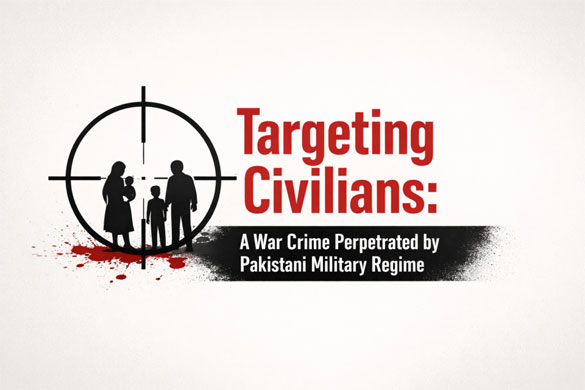
Under International Humanitarian Law (IHL), targeting of hospitals and medical facilities is a war crime. Hospitals, medical personnel, and the wounded and sick are granted special protection under the Geneva Conventions and customary international law to ensure that essential medical care can be provided during conflicts. This comes as attacks by the Pakistani Military Regime’s forces have targeted several healthcare centers, putting the lives at risk and damaging critical health infrastructure. Just in the past 24 hours, the Pakistani military regime carried out airstrikes on a drug rehabilitation hospital in Kabul, the capital. Officials of the Islamic Emirate of Afghanistan (IEA) have stated that 400 people were martyred and more than 250 others injured in the attack, while the number of casualties could rise further.
This brutal attacks by the Pakistani military regime on the 1,000-bed drug-rehabilitation hospital is a war crime and must be investigated. Sharafat Zaman, spokesperson for the Ministry of Public Health has warned that attacks on hospitals and medical facilities pose a serious threat to patients and healthcare workers while severely disrupting essential medical services for vulnerable communities. Speaking at a press conference in Kabul yesterday, Sharafat Zaman said that attacks by the Pakistani Military Regime’s forces have targeted several healthcare centers, putting lives at risk and damaging critical health infrastructure. He said that at least five health facilities were affected in the latest incidents, raising concerns about the safety of patients, doctors, and medical staff who rely on these centers for treatment and emergency care.
Hospitals and medical institutions serve civilians, including some of the most vulnerable members of society, and must remain protected at all times, he emphasized, adding that attacks on such facilities not only cause casualties but also undermine the ability of healthcare providers to deliver lifesaving services. Meanwhile, Mohammad Nabi Omari, the First Deputy Minister of Interior Affairs, announced during the press conference that the families of those killed and injured in the attack on the drug-rehabilitation hospital will receive financial assistance from the government. He further urged the families of the victims to allow the martyrs to be buried together in a single location, emphasizing unity and collective remembrance for those who lost their lives.
In the meantime, a number of Afghan key figures have strongly condemned the brutal attacks by the Pakistani military regime on a drug rehabilitation hospital, calling for international denunciation and stating that such attacks will never be forgotten by the Afghan people. Abdul Salam Zaeef, former Afghan ambassador to Pakistan, in reaction to the attacks, said: “The ruthless enemy has once again, by violently bombing a drug treatment centre in Kabul, caused the martyrdom and injury of a number of our compatriots.” He added that these actions were exactly like the “actions of the Israeli regime” against the people of Gaza and must be condemned at the international level.
On the other hand, Rashid Khan, Afghanistan’s cricket star, has also reacted to the brutal attacks by Pakistani military regime on drug-rehabilitation hospital in Kabul. He said he was deeply saddened by the attacks on civilians in Afghanistan.
“I am deeply saddened by the latest reports of civilian casualties from Pakistani airstrikes in Kabul,” Rashid Khan said, adding that targeting civilian homes, educational centres, or health infrastructure, whether intentionally or by mistake, is a war crime and disregard for human life, especially during the holy month of Ramadan, is deeply concerning. He called on the United Nations and other human rights organisations to fully investigate the incident and hold those responsible accountable.
Mohammad Nabi Eisakhil, another Afghan national cricket team player, said in response to the attacks that young men seeking treatment were martyred in the Pakistani military’s bombing.
Naveen-ul-Haq, another national cricket team player, compared Pakistan’s airstrike on a drug treatment centre in Kabul to Israel’s attacks on Gaza. He added: “It is hard to find any difference between Israel and the Pakistani regime.”
The people of Afghanistan will never forget the latest attacks by Pakistani military regime on the drug-rehabilitation hospital that martyred over 400 innocent patients. Medical units must be respected and protected in all circumstances and must not be the object of any attacks. This protection is in place regardless of the claimed actions of any party to a conflict. Recent tensions between Afghanistan and Pakistan have seen several attacks by Pakistani military regime on health facilities.
Source: thekabultimes.com
Please click the following URL to read the text of the original Story
https://thekabultimes.com/targeting-civilians-a-war-crime-perpetrated-by-pakistani-military-regime/
------
Iran fires new wave of missiles at Israel after denying Trump talks
March 24, 2026
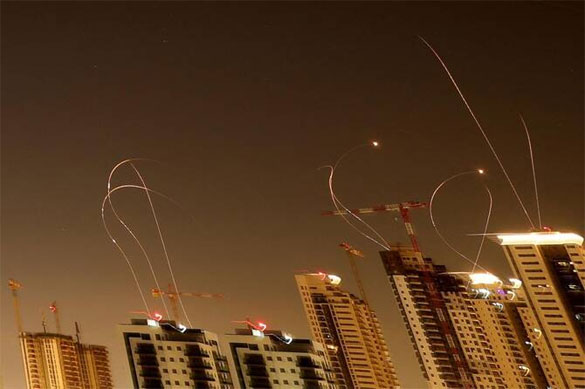
Rocket trails are seen in the sky above the Israeli coastal city of Netanya amid a fresh barrage of Iranian missile attacks on March 24, 2026. (AFP)
-----------
TEHRAN: Iran launched a new wave of missiles against Israel Tuesday, hours after US President Donald Trump hailed “very good” talks to end the war despite Tehran denying any dialogue had taken place.
Trump’s surprise disclosure — which prompted a positive response from jittery markets and pushed oil prices down — came ahead of a deadline he imposed for Iran to reopen the Strait of Hormuz shipping lane or see the US “obliterate” its power plants.
Trump said his administration was speaking with an unidentified “top person,” while warning if talks failed in the next five days “we’ll just keep bombing our little hearts out.”
Axios, citing an unnamed Israeli official, identified Trump’s interlocutor as Mohammad Bagher Ghalibaf, Iran’s speaker of parliament and one of its most prominent non-clerical figures.
The outlet reported US negotiators Steve Witkoff and Jared Kushner may meet an Iranian delegation for talks in Pakistan as soon as this week, with Vice President JD Vance possibly joining.
White House spokeswoman Karoline Leavitt did not deny the reports, saying “speculation about meetings should not be deemed as final until they are formally announced by the White House.”
Pakistan’s Prime Minister Shehbaz Sharif said Monday he spoke with Iran’s President Masoud Pezeshkian, promising Islamabad’s help to bring peace to the region.
But Ghalibaf said on X that “no negotiations” were underway, insisting Trump was seeking “to manipulate the financial and oil markets.”
Iranian foreign ministry spokesman Esmaeil Baqaei said messages were received from “some friendly countries indicating a US request for negotiations aimed at ending the war,” but denied any such talks had taken place, Iran’s official IRNA agency reported.
Israeli Prime Minister Benjamin Netanyahu said he had spoken to Trump and acknowledged Washington thought a deal was possible, but vowed to continue striking Iran and Lebanon to protect Israel.
“Trump believes there is a chance to leverage the tremendous achievements of the IDF and the US military … in an agreement,” he said.
Early Tuesday, state-run Iranian media reported another round of missiles fired at Israel, and rescue services there showed images of a damaged building in the north but reported no casualties.
Lebanese state media said Israel carried out seven air raids on south Beirut overnight.
‘Trump blinked’
On Monday, Iran’s neighbors breathed a sigh of relief after Trump stepped back from his threat to target the country’s power infrastructure.
Tehran had vowed to deploy naval mines and strike power and water infrastructure across the region in retaliation, threatening to escalate an energy crisis of already historic proportions.
“Trump blinked first — out of a clear understanding that striking Iran’s energy infrastructure would trigger a direct and significant retaliation,” Danny Citrinowicz, a security analyst and former Israeli intelligence Iran expert, wrote on X.
Thousands of US Marines are headed to the Middle East, reinforcing America’s presence following weekend speculation Trump was mulling ground operations either to seize Iranian oil assets or to forcibly reopen the Strait of Hormuz.
‘Major threat’ to economy
Since the war erupted, Tehran has retaliated against US-Israeli attacks by throttling traffic through the Strait, a conduit for one-fifth of global crude, and by hitting Gulf energy sites and US embassies as well as targets in Israel.
International Energy Agency chief Fatih Birol warned if the war is protracted, daily oil losses would pave the way for a crisis worse than the combined impact of both 1970s oil shocks and Russia’s invasion of Ukraine.
Oil prices have been driven above $100 a barrel by the conflict, but they tumbled sharply after Trump’s announcements.
Asian markets were up Tuesday, following rises in Europe and on Wall Street in the wake of Trump’s announcement.
Trump said there were already “major points of agreement” with Iranian negotiators.
US conditions included Iran abandoning any nuclear ambitions and giving up its enriched uranium stockpiles, he said.
Lebanon ground campaign
Trump has offered shifting timelines and objectives for the war, saying Friday he was considering “winding down” the operation — only to later threaten Iran’s power plants, of which it has more than 90.
Netanyahu has spoken of a long-term campaign against Iran’s government, a sponsor of Hamas, which launched the October 7, 2023 attack that triggered the Gaza war.
In Lebanon, Israel has expanded its ground campaign against Iran-backed Hezbollah, warning of “weeks of fighting,” striking southern Beirut again Monday and claiming to capture two Hezbollah fighters.
Israel’s attacks in Lebanon have killed more than 1,000 people and displaced more than a million, Lebanon’s health ministry said.
The war has killed at least 3,230 Iranians, including 1,406 civilians, according to the US-based Human Rights Activists News Agency. AFP cannot access strike sites nor independently verify tolls in Iran.
Source: arabnews.com
Please click the following URL to read the text of the original Story
https://www.arabnews.com/node/2637415/middle-east
-----
Thunderstorms to continue across Saudi Arabia until Saturday, public warned
March 24, 2026
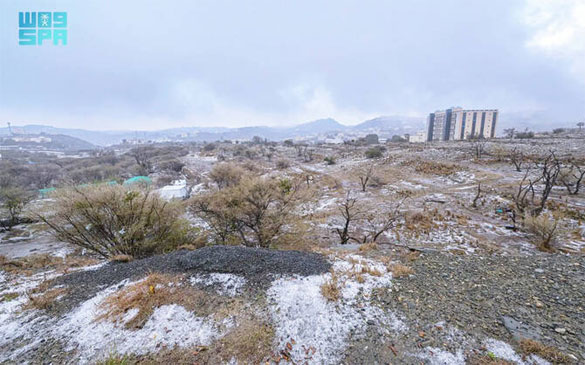
Hail covered streets and highlands in Al-Baha on Monday, briefly creating a winter-like landscape. (SPA photo)
-------------
RIYADH: Members of the public are urged to take care as thunderstorms are expected to affect parts of the Kingdom until Saturday, says Saudi Arabia’s General Directorate of Civil Defense.
Residents are advised to stay in safe locations, avoid flood-prone areas such as valleys, and follow safety instructions issued via media and official social platforms.
The authority says regions including Makkah, Riyadh, Tabuk, Al-Jouf, Hail, Northern Borders, Madinah, Al-Baha, Asir, Jazan, Najran, Qassim and the Eastern Province are expected to see moderate to heavy rainfall, potentially accompanied by flash floods, hail and dust storms.
The National Center for Meteorology attributes the conditions to seasonal atmospheric instability over the Arabian Peninsula, driven by the interaction of warm surface air with cooler upper-level troughs, leading to thunderstorms, heavy downpours, and hail.
Asir records highest rainfall during Eid
Data from the Ministry of Environment, Water and Agriculture showed widespread rainfall over the weekend, with 63 monitoring stations recording precipitation across nine regions.
The Asir region recorded the highest levels, with Abha Airport receiving 52 millimeters and Al-Fawha in Balqarn registering 50.8 millimeters. All governorates and centers in the region experienced heavy rainfall, which brought cooler temperatures, greener landscapes and scenic views.
Highlands and plains were covered with rainfall, hail and dense fog, the SPA reported, and the rainfall in Asir enhanced the region’s appeal as a destination for Eid celebrations.
In the Riyadh region, Al-Aflaj recorded up to 14.2 millimeters, while other notable totals included 11.2 millimeters in Al-Muhammadiyah in Baljurashi, Al-Baha, and 8.4 millimeters in Yabrin in the Eastern Province.
Heavy rain and hail in Al-Baha and northern regions
The southwestern Al-Baha Region saw intense weather on Monday, as heavy rain and hail briefly created a winter-like landscape. Authorities continued to monitor conditions and maintain road safety, urging the public to avoid flood channels and areas where water was accumulating.
Further north, moderate rainfall was reported across the Hail Region, including Hail city and surrounding governorates, leading to the flow of local valleys and streams.
Source: arabnews.com
Please click the following URL to read the text of the original Story
https://www.arabnews.com/node/2637410/saudi-arabia
-------
Worshippers at a Greater Manchester Mosque: 'We're not safe at our mosque after another attack'
24 Mar 2026
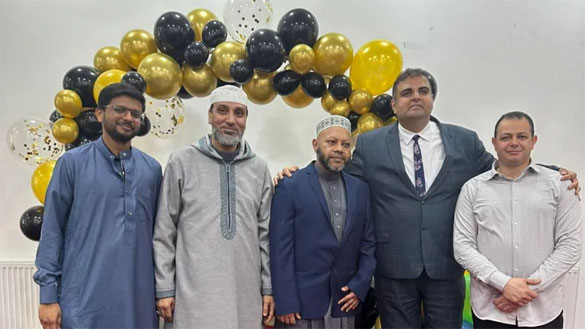
The break-in happened the day after Eid al-Fitr celebrations at Elaf Mosque in Stockport
-----------
Worshippers at a Greater Manchester mosque have said they are frightened to return to the building after it was vandalised and items were stolen.
Ben Pickering said he arrived at the Elaf Mosque in Cheadle Heath, Stockport, at 05:34 GMT on Saturday to find it had been "ransacked", with religious texts "thrown on to the floor", equipment vandalised and items including £5,000 in cash stolen.
"It was incredibly distressing," the 38-year-old from Stockport told BBC Radio Manchester. "When I arrived I thought there was a chance there was somebody in the building waiting to attack a Muslim."
Greater Manchester Police said it was investigating. No arrests have been made.
Pickering said it had been "very upsetting" to see all of the damage.
"The door had been opened and as I entered into the mosque I could see that the donation box had been opened and thrown on the floor," he said.
"A number of the Qurans had been thrown on to the floor - it was malicious, it's hateful and it's very sad.
"I believe it was a dual attack - they were in there to get the money - but tipping the bookshelves over and damaging the kids' equipment? There's no financial value in that - I personally would class that as a hate crime.
"The damage to the equipment, taking the sound system out - it's just to prevent us from going about our daily tasks."
Pickering said it was particularly distressing since it had happened after several other attacks on the mosque during the last 12 months.
"It makes me feel quite vulnerable, to be honest," explained the father of two. "It makes me feel afraid and reluctant to go back.
"There's always that hesitation now before I get in the mosque.
"I worry that they are going to come back while children are there."
Mosque administrator Ahmed Helal, 38, said the incident was especially sad since it had happened the day after a large Eid celebration at the mosque.
The attack meant another celebration, planned for Saturday, had to be called off.
"The day before had been a very happy day - a very good day and a very successful day," Helal said.
"We had lots of kids and families, balloons, chocolate, sweets and drinks - and we had planned to do another event on the second day of Eid, but we had to cancel it because we are not safe."
Helal said the Elaf Mosque community now felt under threat during their day-to-day activities.
"We are scared to host the prayers now," he told BBC Radio Manchester. "I am worried about our kids, about our families, about the ladies.
"We did not feel safe even yesterday - we had to close the main door behind us because we were frightened during prayers."
The mosque said it had suffered up to £30,000 worth of damage, including theft and damage to its brand new £6,000 sound system.
A fundraiser started by Pickering has since raised more than £9,800.
The mosque hopes this will aid repairs and replace equipment.
Police confirmed an investigation into the incident was ongoing.
Source: bbc.com
Please click the following URL to read the text of the original Story
https://www.bbc.com/news/articles/cz90xkn0yx9o
-------
Are US-Iran talks happening in Pakistan? What White House said
Mar 24, 2026
The White House on Monday said there is no confirmation yet regarding reports that US Vice President JD Vance, special envoy Steve Witkoff and former presidential adviser Jared Kushner may meet Iranian officials in Islamabad.
US press secretary Karoline Leavitt said the situation remains “sensitive” and “fluid,” cautioning against drawing conclusions. Responding to an ANI query on the reported meeting, she said such developments should not be treated as final unless formally announced by the White House.
“These are sensitive diplomatic discussions, and the US will not negotiate through the press. This is a fluid situation, and speculation about meetings should not be deemed as final until they are formally announced by the White House,” she said.
Reports point to Islamabad as possible venue
The statement follows multiple reports by Reuters, Financial Times and The Times of Israel indicating that mediating countries are attempting to convene US-Iran talks in Islamabad, possibly within days.
According to these reports, Pakistan has pitched itself as a neutral venue, leveraging its ties with both Washington and Tehran. Contacts are said to be underway, with a senior Israeli official noting that “contacts are underway” to organise a meeting involving senior representatives from both sides.
Pakistan’s Army Chief Asim Munir is also reported to have spoken with US President Donald Trump, while Prime Minister Shehbaz Sharif has held multiple conversations with Iranian President Masoud Pezeshkian, according to FT.
Backchannel diplomacy, but no formal talks
Diplomatic activity has intensified in recent days, with Pakistan, Turkey and Egypt engaging in backchannel efforts alongside US envoy Witkoff and Iranian officials, according to Reuters.
However, Tehran has denied any direct negotiations with Washington since the conflict began.
“Over the past few days, messages were received via certain friendly states conveying the US request for negotiations to end the war,” Iranian foreign ministry spokesperson Esmaeil Baqaei said, adding that “appropriate responses were given.”
Analysts say these efforts remain preliminary. Sanam Vakil of Chatham House told the FT that countries are “scrambling” to de-escalate but added, “I don’t take this as any signal the war is coming to an end.”
Trump signals pause, markets react
The diplomatic push comes after Trump said the US would pause strikes on Iran’s energy infrastructure for five days following what he called “very good and productive” talks.
“We’re doing a five-day period, and we’ll see how that goes. If it goes well, we’re going to end up settling this. Otherwise, we’ll just keep bombing our little hearts out,” he said.
US interior secretary Doug Burgum expressed confidence in the outreach, saying, “President Trump is going to resolve it, and I'm very confident that as dealmaker-in-chief, he's going to come out of this with a winning deal for Americans,” as quoted by Al Jazeera.
He added that the administration was aware of risks to global energy flows through the Strait of Hormuz. “We've been completely aware of this thing,” he said.
Oil markets reacted to the developments, with Brent crude falling 10.9% to settle at $99.94 after briefly nearing $120 last week, while the S&P 500 rose 1.1%, according to Al Jazeera.
Pakistan’s tightrope amid regional pressures
Pakistan’s mediation push comes as it balances competing strategic interests. Islamabad has adopted cautious diplomacy, condemning strikes on Iran while urging de-escalation.
It maintains strong ties with Saudi Arabia, including a defence pact, while also sharing a border and economic links with Iran. At the same time, it is seeking closer engagement with the US.
“Pakistan is putting itself forward as a mediator between the US and Iran, but unconvincingly,” Edmund Fitton-Brown of the Foundation for Defense of Democracies told Fox News Digital.
Source: indiatimes.com
Please click the following URL to read the text of the original Story
https://timesofindia.indiatimes.com/world/us/are-us-iran-talks-happening-in-pakistan-what-white-house-said/articleshowprint/129765522.cms
------
JUST IN: Peter Obi reacts to arrest of Islamic cleric Sheikh Umar
Mojeed Oladipupo
March 24, 2026
The 2023 presidential candidate for the Labour Party, Peter Obi has condemned the arrest of an Islamic cleric, Sheikh Ahmad Tijjani Umar in Kaduna State.
Reacting to the cleric’s arrest, Obi said this recent development in the Nigerian polity where individuals are arrested over their connection with opposition leaders must be nipped in the bud.
He also stated that Umar was arrested by the authorities in the state shortly after meeting with him in Kaduna on Sunday.
In an X post titled, “Troubling Developments in Our Polity that Must Be Nipped in the Bud”, Obi said this arrest underscores the troubling state of Nigeria’s democracy.
He said, “I have just been made aware early this morning that Revered religious leader, Sheikh Ahmad Tijjani Umar has been arrested by authorities shortly after hosting me in Kaduna on Sunday.
“This development underscores the deeply troubling state of our nation and our democracy, where freedom of speech and movement is increasingly threatened, and where citizens and perceived political opponents face harassment and unnecessary persecution,” Obi said.
Also noting that this new trend must not be allowed to become the order of the day, the former Anambra State governor said the nation must defend freedom and free speech.
“This cannot be allowed to continue. This country must defend freedom and free speech, which are the hallmarks of every democratic society.
“Suppression and intimidation of dissent can never stand in a democratic society, and this Nigerian government must understand this fact,” Obi added.
He further urged those bent on undermining the already fragile democracy of the nation to stop and apply the rule of law and tenets of democracy in dealing with citizens.
Source: politicsnigeria.com
Please click the following URL to read the text of the original Story
https://politicsnigeria.com/2026/03/24/just-in-peter-obi-reacts-to-arrest-of-islamic-cleric-sheikh-umar/
------
Anwar backs Indonesia’s bid to cool Iran-Israel conflict, calls for talks and civilian protection
24 Mar 2026
KUALA LUMPUR, March 24 — Malaysia will continue to support Indonesia’s diplomatic efforts to ease the Iran-Israel conflict to ensure tensions are reduced and civilian lives are protected.
Prime Minister Datuk Seri Anwar Ibrahim said such support for Jakarta’s initiative is expected to help open the door to meaningful negotiations towards a peaceful and lasting solution in West Asia.
In a Facebook post, Anwar said the matter was among the issues discussed during his telephone conversation with Indonesian President Prabowo Subianto yesterday.
“We both called for peace, and I informed President Prabowo that Malaysia supports all efforts aimed at achieving peace and resolving the conflict,” he said.
Apart from regional and international matters, Anwar said he and Prabowo also agreed to meet soon to further strengthen the already close bilateral relations between the two countries.
“We agreed to arrange a meeting in the near future, including my proposal to visit Jakarta as part of efforts to enhance our close bilateral ties,” he said. — Bernama
Source: malaymail.com
Please click the following URL to read the text of the original Story
https://www.malaymail.com/news/malaysia/2026/03/24/anwar-backs-indonesias-bid-to-cool-iran-israel-conflict-calls-for-talks-and-civilian-protection/213651
-------
India
India reiterates support for Palestine, backs Gaza peace plan: Government in Parliament
23 Mar 2026
NEW DELHI: India's position towards Palestine has been long-standing, and New Delhi remains committed to advancing a just, comprehensive and lasting peace in the region, the government has informed Parliament.
In a written response to a query in the Lok Sabha on March 20, Minister of State for External Affairs Kirti Vardhan Singh also said India attended the Board of Peace meeting held at the US Institute of Peace in Washington on February 19 as an "observer".
The question and the response were uploaded on the Lok Sabha website on Monday.
The Board of Peace, unveiled by US President Donald Trump, is being projected by Washington as a new international body to usher in peace and stability in Gaza and beyond, and has triggered speculation that it may respond to other global conflicts as well.
The Ministry of External Affairs (MEA) was asked whether the government has assured Israel of its "firm support" and has also supported the Gaza Peace Initiative during the recent visit of Prime Minister Narendra Modi to Israel.
The MEA was also asked whether India had "stayed out of a statement" issued at a joint press conference of diplomats from more than 85 countries at the United Nations on February 17, criticising Israel's plans to tighten control of territory in the West Bank.
It was also asked whether a day after India "skipped a joint appearance" with other countries at the United Nations to condemn Israel for its plans for West Bank settlement, India signed a joint statement on February 18.
"Prime Minister Shri Narendra Modi paid a State visit to Israel on February 25-26, 2026. During the visit, Prime Minister reaffirmed India's support for the Gaza Peace Plan, which has been endorsed by the UN Security Council," Singh said in his response.
"India's position towards Palestine has been long-standing. India remains committed to advancing a just, comprehensive and lasting peace in the region," he said.
The government further said that "in consonance with our position, India associated itself with the joint statement at the United Nations".
The MEA was also asked whether India attended the Board of Peace meeting held in Washington as an observer and whether it still stood for a sovereign, independent and viable State of Palestine based on 1967 borders.
"India attended the Board of Peace meeting held at the US Institute of Peace in Washington, DC, USA on February 19, 2026, as an Observer," Singh said.
The government said 26 countries participated as members in the meeting, while 22 countries, including India, participated as observers.
In his response, Singh shared the full list of participating countries.
Source: newindianexpress.com
Please click the following URL to read the text of the original Story
https://www.newindianexpress.com/nation/2026/Mar/23/india-reiterates-support-for-palestine-backs-gaza-peace-plan-government-in-parliament
------
Kashmir issue needs ‘just settlement’ under UN resolutions for peaceful India-Pakistan ties: Islamabad envoy
23.03.26
Peaceful relations between Pakistan and India can only be established based on equality, mutual respect and harmonious settlement of all disputes, a Pakistani envoy said on Monday.
Addressing the Pakistan Day event in New Delhi, Saad Ahmad Warraich, Charge d'Affaires of Pakistan to India, raised the Kashmir issue and called for a "just settlement" on it.
Pakistan Day was commemorated at the country's High Commission in New Delhi on Monday.
Warraich hoisted the Pakistani national flag during the ceremony held at the Chancery Lawns, according to a statement issued by the high commission.
He was quoted in the statement as saying that peaceful relations between Pakistan and India "can only be established based on equality, mutual respect and peaceful settlement of all disputes."
"A just settlement of the Jammu and Kashmir dispute in accordance with the relevant UN resolutions and aspirations of the Kashmiri people was intrinsic to this end," the envoy said.
India has been maintaining that it desires normal neighbourly relations with Pakistan while insisting that the onus is on Islamabad to create an environment free of terror and hostility for such engagement.
New Delhi has also been stressing that the entire Jammu and Kashmir is an integral part of India and Pakistan has been illegally occupying parts of the Union territory.
In his remarks, the charge d'Affaires said the Lahore Resolution of March 23, 1940 "served as a touchstone for the Muslims of the subcontinent to strive for a separate homeland of their own".
He said under Muhammad Ali Jinnah's leadership, "this collective aspiration" found expression in the establishment of Pakistan within a short span of seven years.
Paying homage to the martyrs of the freedom movement, Warraich emphasised that their "exalted sacrifice serves as a living inspiration for the nation" to uphold the precious gift of freedom and to make tireless efforts for the progress and prosperity of the country.
The charge d'Affaires underscored that the abiding lesson of history was that "only those nations were truly free who were strong enough to defend their freedom".
"The entire world is witness to Pakistan's unwavering resolve to preserve and protect its sovereignty and independence," he said without elaborating.
Warraich said, "Pakistan's established deterrence was not only a factor of stability in South Asia, but was also an assurance for regional peace".
Officers and Staff of the High Commission along with their families attended the event.
Messages of president, prime minister and the deputy prime minister of Pakistan were read out on the occasion, the statement said.
Source: telegraphindia.com
Please click the following URL to read the text of the original Story
https://www.telegraphindia.com/world/pakistan-envoy-links-kashmir-settlement-under-un-resolutions-to-peaceful-india-ties/cid/2152778
--------
AIMIM UP chief Shaukat Ali threatens ‘encounters’ for those who harm muslims
March 24, 2026
All India Majlis-E-Ittehadul Muslimeen (AIMIM) leader, Shaukat Ali, made a provocative statement warning of “encounters” against those who harm Muslims.
Addressing party supporters at a public gathering, AIMIM’s Uttar Pradesh unit president Ali urged them to strengthen AIMIM’s political presence in the state. “Give us just 11 MLAs in Uttar Pradesh, not 111,” he said, asserting that a smaller but decisive representation could influence governance. He further claimed that those responsible for killing Muslims would face similar consequences in “encounters.”
During his speech, the AIMIM leader alleged that Muslims in the state have been subjected to injustice despite their contributions to India’s independence. He accused authorities of targeting the community through actions such as sealing madrasas, demolishing homes on alleged false grounds, and incidents of police firing.
Ali also criticised mainstream political parties, alleging that those who secured large electoral mandates have failed to address the concerns of minorities. “Those who were elected with 111 MLAs now say this is not their government,” he remarked.
Raising development issues, Ali called for balanced growth across Uttar Pradesh, stating that progress should extend beyond regions like Gorakhpur and Saifai to cities such as Meerut.
Referring to a recent administrative remark in Meerut about cancelling licences of individuals offering prayers on streets, Ali said similar scrutiny should be applied during religious processions. He specifically mentioned about action against practices like the “Naagin dance” near mosques during Ram Navami.
The statement has intensified political tensions in Uttar Pradesh, with reactions expected from various parties as the issue gains traction.
Source: thestatesman.com
Please click the following URL to read the text of the original Story
https://www.thestatesman.com/india/aimim-up-chief-shaukat-ali-threatens-encounters-for-those-who-harm-muslims-1503573558.html
-----
Varanasi court denies bail to 14 Muslims arrested for allegedly eating chicken biryani on Ganga
Mar 24, 2026
A Varanasi court on Monday denied bail to 14 Muslim men who were arrested after they organised an iftar party on a boat in the river Ganga and allegedly ate chicken biryani, Bar and Bench reported.
The offences allegedly committed by the men were of “a serious nature and non-bailable”, held Additional Chief Judicial Magistrate Amit Kumar Yadav.
“Keeping in view the facts and circumstances of the case, there are no sufficient grounds to grant bail to the accused,” the judge said.
The 14 men who were denied bail are Azad Ali, Aamir Kaiki, Danish Saifi, Mohd Ahmad, Nehal Afridi, Mahfooz Alam, Mohd Anas, Mohd Awwal, Mohd Tahseem, Mohd Ahmad alias Raja, Mohd Noor Ismail, Mohd Tausif Ahmad, Mohd Faizan and Mohd Sameer.
They were arrested after a video showing them holding the party on the boat was widely shared on social media on March 16.
The men face charges under the Bharatiya Nyaya Sanhita sections pertaining to defiling a place of worship with intent to insult the religion of a class, deliberate and malicious acts intended to outrage religious feelings of a class by insulting its religious beliefs and promoting enmity between groups.
They were also booked under sections pertaining to public nuisance, fouling water of a public spring or water reservoir, disobeying a public servant’s order and sections of the Water Prevention and Control of Pollution Act, Bar and Bench reported.
The police later added charges of extortion under threat of death or grievous hurt to the case. This came after the owners of the boat alleged that the men forcibly took the boat.
Charges under the Information Technology Act section 67, which punishes publishing or transmitting obscene material in electronic form, have also been invoked, reported Bar and Bench.
Source: scroll.in
Please click the following URL to read the text of the original Story
https://scroll.in/latest/1091587/varanasi-court-denies-bail-to-14-muslims-arrested-for-allegedly-eating-chicken-biryani-on-ganga
--------
Owaisi-Kabir assembly poll pact draws fire from Muslim groups
Mar 24, 2026
Kolkata: The tie-up between Asaduddin Owaisi's All India Majlis-e-Ittehadul Muslimeen (AIMIM) and Humayun Kabir's Aam Janata Unnayan Party (AJUP) for the upcoming assembly elections has drawn reactions from sections of the Muslim community, including civil society members and religious figures who cautioned voters against supporting the alliance, alleging it could split Muslim votes in a state where the community is influential in over 100 assembly seats.
"The alliance is communal and unholy. Both Asaduddin Owaisi and Humayun Kabir are the B and C teams of the BJP. Voters must be cautious of such parties that are trying to vitiate the atmosphere in the state and trying to provide a benefit to BJP. Humayun Kabir was a BJP candidate in the 2019 general elections. In many other states, Owaisi's party's performance has benefited BJP," said Abdul Aziz, secretary of the Forum for Democracy and Communal Amity, Milli Ittehad Parishad. Syed Sakib Molla, part of an imam association in Kolkata, said, "Their only objective is to divide Muslim votes and help BJP. But historically, Muslims in Bengal have shown that they do not vote for self-proclaimed Muslim parties."
Trinamool spokesperson Kunal Ghosh said, "Any anti-BJP vote that does not strengthen Mamata Banerjee or Trinamool will be a waste." Left Front chairman Biman Bose said, "It will be seen in the upcoming days when the election is over and the report (result) is released; we will see then."
Source: indiatimes.com
Please click the following URL to read the text of the original Story
https://timesofindia.indiatimes.com/city/kolkata/owaisi-kabir-assembly-poll-pact-draws-fire-from-muslim-groups/articleshowprint/129762123.cms
------
Panel headed by retired justice to decide on 423 religious structures in Dharavi
Mar 24, 2026
MUMBAI: The Maharashtra government on Monday informed the legislative council that a decision on the removal, relocation or regularisation of 423 religious structures in Dharavi will be taken by a high-level committee headed by a retired chief justice of the Allahabad High Court. Hearings for 52 of the 423 structures have been completed so far, the government said.
BJP MLC Prasad Lad raised the issue of unauthorised religious structures in Dharavi through a calling attention motion, stating that despite court orders directing the removal of four mosques, including the Madina mosque in Dharavi, no action had been taken so far. He sought clarity on what action the government planned to take against unauthorised structures.
Replying to the motion, minister Shambhuraj Desai said decisions on the four mosques and other religious structures would be taken by the committee constituted as per guidelines laid down by the Supreme Court of India. He said the committee would decide whether the structures should be removed, relocated or regularised.
Desai said the high-level committee was constituted on October 4, 2024, under the chairmanship of a retired chief justice and comprises seven members. A survey conducted by the committee identified 423 religious structures in Dharavi, including 199 temples, 53 mosques, 9 Buddhist viharas, 29 churches, 8 dargahs, 64 madrasas and 61 other religious places.
“The committee has held 10 meetings so far and completed hearings for 52 religious structures. The report is being submitted in phases, based on which further action will be taken,” Desai said.
Responding to Lad’s query on why the four mosques had not yet been removed despite court orders, Desai said the committee would examine those structures as well and action would be taken in accordance with its recommendations.
He added that details regarding specific structures raised by members would be sought from the Brihanmumbai Municipal Corporation (BMC) commissioner, and the government would verify court orders related to such structures before referring the cases to the committee for a final decision.
Source: hindustantimes.com
Please click the following URL to read the text of the original Story
https://www.hindustantimes.com/cities/mumbai-news/panel-headed-by-retired-justice-to-decide-on-423-religious-structures-in-dharavi-101774291831118.html
------
Muslim backlash in Davanagere South puts Congress in a spot
Mar 23, 2026
Bengaluru: Governing Congress faces a delicate balancing act in Davanagere South assembly constituency after its choice of candidate, Samarth Shamanur, a Lingayat, for the April 9 byelection triggered discontent among a section of the Muslim population. The community forms a significant chunk of Congress' traditional support base.
The byelection was necessitated by the death of four-time legislator Shamanur Shivashankarappa. Muslim representatives had sought the ticket, citing their numerical strength — about 88,000 of the 2.3 lakh electorate. The community had consistently backed Shivashankarappa, and expected representation following his passing.
But Congress brass opted for Samarth, Shivashankarappa's grandson, factoring in local sentiment and the influence of the Lingayat community.
"Usually in a byelection, the party ticket is given to a family member, and the high command followed the same principle in Davanagere South," said HB Manjappa, president, Congress' Davanagere district unit. "Moreover, BJP would have taken advantage if we had picked a Muslim over a Lingayat."
Senior Lingayat members, including ministers MB Patil and Eshwar Khandre, backed the Shamanur family. They argued that overlooking Lingayat sentiment could hurt Congress in the long run and would allow BJP to consolidate support among the politically dominant community ahead of the 2028 assembly polls. Party brass endorsed their view.
"There is nothing wrong with the minority community's demand, but we had to consider other critical factors," said DK Shivakumar, deputy CM and Congress state president. "Shivashankarappa's contribution to the party and Davanagere is unmatched and people remember it with reverence."
Muslims, though, are seething. Housing minister BZ Zameer Ahmed Khan, who had supported calls for a minority candidate, reportedly offered to resign. AICC general secretary Randeep Surjewala is learnt to have told Khan he could do so if he wished, but chief minister Siddaramaiah intervened and defused the situation.
The developments have exposed internal fault lines, with local Muslim figure Sadiq Pailwan entering the fray as a rebel. Senior MLC K Abdul Jabbar, who was among the aspirants for the ticket, also expressed dissatisfaction. "The party has made a call, and now it is up to voters," said Jabbar.
Congress has initiated damage control and is planning a legislative party meeting to bring all sections on board to ensure a united front. Senior Muslim members have been tasked with outreach efforts, with assurances of future representation, including in the 2028 assembly polls and the upcoming MLC elections.
"At present, our focus should be to win the election while looking at opportunities ahead," said Saleem Ahmed, Congress chief whip.
Source: indiatimes.com
Please click the following URL to read the text of the original Story
https://timesofindia.indiatimes.com/city/bengaluru/muslim-backlash-in-davanagere-south-puts-congress-in-a-spot/articleshowprint/129758291.cms
--------
From piggy banks to gold, Kashmir rallies for Iran
Mar 24, 2026
BUDGAM: Donations piled high. Emotions ran higher. At an Imambara in Budgam — a town about 15km southwest of Srinagar — cash, gold and heirlooms spilled across a table Monday, as residents turned up in a steady stream to give for Iran.
Money in thick stacks lay beside gold earrings, bangles, rings and a gold biscuit. Copper samovars and shawls — items usually stashed away for weddings — added weight to the collection.
A youth parted with his motorbike. Another donor handed over a truck. In several Shia-majority pockets across Kashmir valley, children broke open piggy banks on the spot — scenes that moved onlookers. At one donation centre, a girl unable to walk gave her gold earrings.
Grief, faith and geopolitics dovetailed in Budgam, central to Kashmir’s Shia population, where support for Iran found resonance after the killing of the Ayatollah in a US-Israel strike —turning donation centres into sites of inspired resolve.
Volunteers struggled to keep pace as contributions kept coming through the day. Some donors came quietly, placed what they had, and left. First-year college student Arifa handed over her savings. “I had some cash. I donated it. My friend had gold and she gave it,” she said, rousted by the collective support for Iran. Nearby, a woman arrived with her three-year-old son, donated a gold ring, and slipped away without a word.
Volunteer Illyas Hussain said proceeds would be routed to the Iranian embassy in New Delhi after converting jewellery and metal items into cash. Direct bank transfers were also underway, he said, while those unable to do so brought valuables to collection points. “This centre is centrally located. People come and drop their donations,” he said.
Iran’s embassy acknowledged the response on X, calling it a gesture blessed with goodwill.
National Conference functionary Tanvir Sadiq described the donations as a cross-section of society rising in solidarity. “The response reflected a collective conscience that cut across villages and towns,” he said.
Peoples Conference functionary and Shia cleric Imran Reza Ansari said the drive across Kashmir followed an appeal from Iran’s embassy and drew strength from religious duty, stressing the nation’s hardships under sanctions and war. “Humanity must come before everything,” said Budgam legislator Muntazir Mehdi of PDP, who pledged a month’s salary.
Yet, a note of caution crept in. Some organisers reported calls from authorities seeking details on funds and contributors, raising questions over oversight as collections swelled. But the flow showed no sign of a fall-off.
Source: indiatimes.com
Please click the following URL to read the text of the original Story
https://timesofindia.indiatimes.com/india/from-piggy-banks-to-gold-kashmir-rallies-for-iran/articleshowprint/129760951.cms
-------
West Bengal 2026: Owaisi–Kabir alliance sparks ‘vote split’ fears akin to Bihar
VIBHA SHARMA
March 23, 2026
Asaduddin Owaisi on Sunday announced an alliance between his party, the All India Majlis-e-Ittehadul Muslimeen (AIMIM), and Humayun Kabir’s Aam Janata Unnayan Party (AJUP) for the upcoming 2026 West Bengal Assembly elections, reigniting political debate over whether such alliances fragment opposition votes, potentially benefiting the opposition BJP in the state
The two leaders are expected to outline their electoral strategy in Kolkata later this week
Kabir, a former minister in the ruling Trinamool Congress, had earlier drawn attention for a controversial proposal to build a mosque in Murshidabad modeled on the Babri Masjid. The proposal led to tensions within the TMC and remains a key talking point.
Making the announcement Owaisi targeted rivals saying: “We want to strengthen the AIMIM and ensure that our candidates in every corner of the country succeed and raise the voice of the poor and oppressed in the assembly. In West Bengal, 5 lakh backward category certificates have been cancelled, majority of which belong to Muslims. There are many stories of oppression as well. They secure votes in the name of secularism but when the Majlis advocates for share and representation, they don’t like it”
Observers say there are many ways to look at this alliance. While one of them may be AIMIM’s renewed attempt to establish a foothold in West Bengal after failing to win any seats in the 2021 West Bengal Assembly elections, there are other facets as well
Congress leaders are questioning the rationale behind the alliance and so are members of the ruling TMC. BJP leaders have also criticised the move, accusing the two leaders of divisive politics and alleging that the alliance would harm community interests, analysts point to the benefit the saffron party may accrue due to this get-together.
The argument is based on simple arithmetic—the AIMIM-AJUP partnership is expected to split the anti-BJP votes, affecting the TMC and the Left-Congress bloc. Muslims constitute roughly 27–30% of West Bengal’s electorate, and form a crucial support base for the TMC, Even a modest shift of minority votes has the potential to influence outcomes in closely contested seats and multi-angle contests. Owaisi’s presence can also trigger counter-polarisation, consolidating Hindu votes in favour of the BJP in certain constituencies.
At the same time, they also point to the danger of overestimating this impact, saying that “voters are smart enough to understand the aim of this alliance.” Besides TMC supremo Mamata Banerjee’s strong ground presence will not allow the repeat of what happened in the Bihar Assembly elections
In both 2020 and 2025 Bihar Assembly elections, the AIMIM significantly harmed the RJD-Congress and their Mahagathbandhan alliance by splitting their traditional “Muslim-Yadav” vote bank. In several constituencies, its vote share is said to have been more than the margin of victory between the ruling NDA and the opposition Mahagathbandhan, contributing to the losses.
Owaisi has consistently rejected allegations that his party acts as “B team” for the BJP, stating that AIMIM seeks to provide an independent political voice for Muslims and Other Backward Classes. But as West Bengal heads toward a high-stakes election, the electoral impact of the new venture will be watched closely.
Source: thestatesman.com
Please click the following URL to read the text of the original Story
https://www.thestatesman.com/bengal/west-bengal-2026-owaisi-kabir-alliance-sparks-vote-split-fears-akin-to-bihar-1503573173.html
------
Jammu Univ proposes to remove topics on Jinnah, Iqbal and Sir Syed from syllabus; NC, PDP slam move
Fayaz Wani
24 Mar 2026
SRINAGAR: The University of Jammu's proposal to remove topics on Mohammad Ali Jinnah, Sir Syed Ahmad Khan and Mohammad Iqbal from some postgraduate programmes has evoked criticism from the ruling National Conference party, opposition Peoples Democratic Party (PDP) and Minister Javed Rana.
According to the Head of Department (HoD) of Political Science, University of Jammu, a Faculty/Departmental Affairs Committee (DAC) meeting was held on March 22 in the HoD's office to deliberate upon certain issues concerning the syllabi of the one-year and two-year MA Programmes in Political Science as per the guidelines of NEP-2020.
"After a thorough consideration, the Committee unanimously resolved to recommend the removal of topics concerning Mohammad Ali Jinnah, Syed Ahmad Khan and Mohammad Iqbal from the course content of PIPSTC 102 of the one-year Postgraduate programme and course content of P2PSTC 302 of the two-year Postgraduate programme in Political Science to the Board of Studies for its consideration," the HoD said.
The Jammu University's move to recommend the removal of topics on Jinnah, Sir Syed and Iqbal came after protests by students linked to ABVP.
Students with ABVP links staged a protest on Friday and demanded the removal of the chapter from the course, claiming that the figures linked with partition and the two-nation theory were inadmissible to students.
After recommendations of removal of topics on Jinnah, Iqbal, and Sir Syed, Jammu University Vice Chancellor has constituted a six-member committee to examine the matter and submit the report at the earliest.
Meanwhile, J&K Jal Shakti Minister Javed Rana criticised the Jammu University move.
"The recommendation by Jammu University’s Political Science Department to purge Allama Muhammad Iqbal and Sir Syed Ahmed Khan from the curriculum is a laughable, anti-scholarly act of intellectual vandalism," Rana said in a post on X.
He said that by erasing these foundational figures of political thought, JU is transitioning from a site of critical pedagogy into a propaganda apparatus for RSS supremacism. "This is a deliberate attempt to manufacture ideological bigots rather than nurturing inquisitive citizens."
"JU must stop acting as a laboratory for historical revisionism. It should instead leverage its Academic Autonomy to promote a culture of dialectic enquiry and intellectual pluralism, making students restless and inquisitive rather than mere docile propagandists," the minister said.
NC leader and MLA Tanvir Sadiq said the university's move reeks of pressure, not principle.
"A syllabus change triggered by protests, targeting thinkers under a paper titled “Minorities and the Nation,” and justified in the name of NEP 2020, this isn’t academic reform, it’s capitulation," he said. "Education is not endorsement, history should not be distorted."
"In today’s world, where information is a click away, such attempts to curate 'acceptable history' are not just ill-thought, they are futile and dangerous. You don’t strengthen national integrity by erasing debate. You weaken it!," Sadiq added.
PDP youth president Aditya Gupta said the University of Jammu has formed a committee to review the Political Science syllabus on Jinnah without a single Political Science teacher in it.
"How can a syllabus be decided by those with no expertise in it. This is not reform, this is academic absurdity. From Jammu University’s Law School being headed by a Political Science teacher to decisions on political science syllabus by a Physics professor, is a 'khichdi' system which is failing students and growth of Jammu on academic levels," he said.
Source: newindianexpress.com
Please click the following URL to read the text of the original Story
https://www.newindianexpress.com/nation/2026/Mar/24/jammu-univ-proposes-to-remove-topics-on-jinnah-iqbal-and-sir-syed-from-syllabus-nc-pdp-slam-move
-------
MHA concerned over Pakistan spy ring in UP, orders countrywide CCTV audit
Mukesh Ranjan
24 Mar 2026
NEW DELHI: As an after-effect of a Pakistan-linked spy ring, which was busted by Ghaziabad police, the Union Ministry of Home Affairs (MHA) has ordered a country-wide audit of CCTV networks across major cities, including Delhi and Mumbai, sources said.
The advisory has been issued to all the state police forces in view of the vulnerability of the country’s surveillance infrastructure, they said, adding that the countrywide review would go well beyond a routine inspection, as the authorities want a full physical verification of every CCTV unit, registered or otherwise, operating across sensitive urban zones.
“Police departments have been asked to map all installations, verify them with official records and flag any camera that cannot be accounted for,” a source said, adding that special attention is going to be given to railway stations, cantonment areas, highways and routes with known military movement.
The sources said that the advisory has been sent to all the police forces following busting of a Pakistan-linked espionage network that did not merely exploit existing cameras but installed its own covertly at sensitive locations, including Delhi Cantonment Railway Station and Sonipat Railway Station.
“The group fitted their own cameras with solar power systems to ensure round-the-clock, uninterrupted footage, which was allegedly relayed live to ISI-linked handlers across the borders. The probe revealed that the network had tasked and funded plans to install more such panels in different cities,” another source said.
The verification advisory aims to ensure no camera operates outside the knowledge and oversight of security authorities, the sources said.
Source: newindianexpress.com
Please click the following URL to read the text of the original Story
https://www.newindianexpress.com/nation/2026/Mar/24/mha-concerned-over-pak-spy-ring-in-up-orders-countrywide-cctv-audit
------
South Asia
Pak Military Regime’s Persistance in Attacks and Afghanistan’s Imperative for Defense
March 24, 2026
The persistence of Pakistan’s military regime in launching attacks on Afghan civilian infrastructure highlights the fact that it is not ready to abandon adventure and targeting non-militaries. These actions, carried out along the hypothetical Durand Line, represent not only a violation of Afghanistan’s sovereignty but also a blatant disregard for international norms and humanitarian principles. Despite widespread condemnation from both domestic voices and the international community, Pakistan continues its reckless campaign, exposing its inability to manage internal crises without resorting to external aggression.
Afghanistan, under the Islamic Emirate, faces a stark reality. The protection of its people and the preservation of national integrity demand readiness for decisive action against the invading forces. While diplomatic channels remain the preferred path to resolving disputes, Pakistan’s unwillingness to engage constructively leaves Afghanistan with limited options. The repeated targeting of civilian facilities, schools, clinics, and public infrastructure, underscores the urgency of a robust defensive posture. No nation can tolerate sustained assaults on its citizens without consequence.
Pakistan’s motivations appear rooted in desperation. Struggling with economic instability, political fragmentation, and rising domestic unrest, its military establishment seeks to deflect attention by manufacturing external conflicts. This pattern of behavior is not new; history is replete with examples of regimes attempting to consolidate power through adventurism abroad. Yet such tactics rarely succeed. Instead, they deepen isolation, erode credibility, and invite retaliation. For Afghanistan, the lesson is clear. Deterrence must be credible, and preparedness must be absolute.
The Islamic Emirate’s defensive and security forces have already demonstrated resilience in responding to incursions. However, the scale and persistence of Pakistan’s aggression suggest that Afghanistan must prepare for the possibility of a broader confrontation. This does not mean abandoning diplomacy; rather, it means ensuring that negotiations are backed by strength. A nation that cannot defend its sovereignty cannot negotiate from a position of dignity. Thus, readiness by the Islamic Emirate defense and security forces for a full-scale conflict, is not a choice but a necessity.
At the same time, Afghanistan must continue to appeal to international forums, exposing Pakistan’s violations and seeking solidarity from nations that value stability in the region. The world cannot remain indifferent to a military regime that repeatedly strikes civilian targets. Silence or inaction would embolden further aggression, not only against Afghanistan but potentially against other neighbors. By highlighting Pakistan’s recklessness, Afghanistan can strengthen its moral and diplomatic standing while reinforcing its defensive resolve.
Ultimately, the responsibility of the Islamic Emirate is to safeguard its people. If Pakistan persists in its campaign of violence, Afghanistan must respond with clarity and strength. The path of peace remains open, but it requires Pakistan to abandon its destructive policies and embrace dialogue. Should it fail to do so, Afghanistan’s readiness for decisive defense will serve as both a shield for its citizens and a message to the world that sovereignty is non-negotiable, and aggression will not go unanswered.
Source: thekabultimes.com
Please click the following URL to read the text of the original Story
https://thekabultimes.com/pak-military-regimes-persistance-in-attacks-and-afghanistans-imperative-for-defense/
-------
Pakistani Military Regime’s Reckless Escalation Threatens Fragile Peace
March 23, 2026
The Eid ceasefire between Afghanistan and Pakistan was hailed as a rare moment of hope in a region long scarred by conflict. For a brief period, families on both sides of hypothetical Durand Line could imagine a holiday free from the sound of gunfire. Yet, this fragile truce was shattered almost immediately by Pakistan’s military actions, leaving Afghan civilians to pay the ultimate price. Reports from Kabul’s Ministry of Defense confirm that Pakistani forces violated the ceasefire, resulting in civilian deaths along the border. The Islamic Emirate, in an effort to prevent escalation, refrained from retaliatory strikes, but warned that continued aggression would force a decisive response.
The timing of these violations, on the sacred days of Eid, underscores the military regime’s disrespect to the values of religion. Instead of honoring dialogue and mediation efforts supported by regional partners like Türkiye, the regime appeared intent on pursuing a path of confrontation. This confrontation raises serious questions about Pakistan’s sincerity in peace efforts and its willingness to prioritize stability over adventurism.
International voices have expressed concern. The European Union welcomed the ceasefire as a positive step, urging both sides to uphold their commitments. Canada, too, has voiced alarm over the rising civilian toll. Yet words alone will not suffice. The international community must demand accountability, particularly in light of Pakistan’s airstrike on Kabul’s drug treatment center, a facility where hundreds of vulnerable patients were martyred or injured. Amnesty International’s call for an independent investigation highlights the gravity of this atrocity, which violates the most basic principles of humanitarian law.
The Pakistan’s military regime is not merely engaging in border skirmishes but is targeting civilian infrastructure, deepening mistrust and fueling instability. Such actions erode any prospects for dialogue and demonstrate a disregard for mediation by friendly nations. If unchecked, this trajectory risks plunging the region into sustained conflict, with ordinary Afghans bearing the brunt of violence.
The last day of Eid should have been a celebration of peace and unity. Instead, it became a grim reminder of Pakistan’s disregard for human life and international norms. Afghanistan’s restraint in the face of provocation reflects a commitment to avoid escalation, but patience has limits. If Pakistan continues its reckless violations, it will not only destroy the fragile trust built during Eid but also invite a decisive response that could destabilize the entire region.
At this critical juncture, the world must recognize Pakistan’s actions for deliberate provocations that undermine peace. Accountability, transparency, and genuine dialogue are the only path forward. Without them, the cycle of violence will persist, and the promise of Eid will remain forever broken.
Source: thekabultimes.com
Please click the following URL to read the text of the original Story
https://thekabultimes.com/pakistani-military-regimes-reckless-escalation-threatens-fragile-peace/
-------
Balanced Development Prevents Regional Inequality: Building a Fair and Sustainable Nation
March 24, 2026
Economic growth and social progress are hallmarks of a successful nation. Yet, not all growth is equal. Across the world, disparities between regions within the same country remain one of the most pressing challenges to national cohesion, stability, and long-term prosperity. When certain regions flourish while others lag, it is not just the disadvantaged areas that suffer—the entire nation experiences the consequences. Balanced development, which ensures equitable access to resources, infrastructure, education, and economic opportunity, is therefore not a luxury but a necessity. It is the most effective tool to prevent regional inequality and build a cohesive, resilient society.
Regional inequality emerges when economic growth and social development are concentrated in specific areas—usually urban centers—while rural or less-developed regions are left behind. This disparity manifests in multiple ways: unequal access to quality education and healthcare, limited employment opportunities, poor infrastructure, and underdeveloped industries. Over time, these imbalances create a cycle of poverty, migration pressures, and social tensions. For example, cities may become overcrowded as rural residents migrate in search of jobs and services, leading to housing shortages, increased cost of living, and pressure on public utilities. Meanwhile, the regions they leave behind remain underdeveloped, further widening the gap.
Balanced development is essential to prevent these negative outcomes. When a nation invests equitably across its regions, it fosters inclusive economic growth, reduces social disparities, and strengthens national unity. Infrastructure projects, industrial investment, and social services should not be concentrated in a few urban hubs but strategically distributed to empower all regions. Roads, transportation networks, reliable electricity, and internet connectivity are not merely conveniences—they are lifelines that enable commerce, education, and social mobility. By ensuring that every region has access to such fundamental resources, governments can stimulate local economies, attract investment, and create sustainable employment opportunities.
Education and skill development play a pivotal role in preventing regional inequality. Rural and underserved regions often suffer from a lack of quality schools, trained teachers, and vocational training centers. This limits opportunities for young people, reduces the talent pool, and perpetuates regional economic disparities. By establishing schools, colleges, and technical institutes in these areas, and by investing in teacher training and digital learning tools, nations can empower local populations to participate fully in the economy. A skilled workforce in every region strengthens the nation’s competitiveness and reduces the concentration of talent in a few urban centers.
Healthcare is another critical component of balanced development. Disparities in medical services between regions can have devastating consequences. In underdeveloped areas, preventable diseases, maternal and infant mortality, and lack of access to emergency care remain major challenges. By investing in hospitals, clinics, telemedicine, and mobile health units, governments can ensure that citizens, regardless of location, receive essential medical care. A healthy population across all regions enhances productivity, reduces the economic burden of disease, and fosters social equity.
Economic diversification is also crucial. Regions often remain underdeveloped because their economies are reliant on a limited set of industries or agricultural practices. By promoting local industries, entrepreneurship, and small- and medium-sized enterprises, governments can create sustainable jobs and economic resilience. For instance, rural areas may benefit from agro-processing plants, handicraft industries, or eco-tourism, turning local resources into viable economic opportunities. When every region contributes to the national economy, the benefits of growth are shared more evenly, reducing the risk of resentment and marginalization.
Balanced development also strengthens social cohesion and political stability. Regional inequality often fuels grievances, leading to tensions between regions and even internal conflicts. Citizens who perceive themselves as neglected may lose faith in national institutions, undermining democracy and governance. Conversely, equitable development fosters a sense of inclusion, shared purpose, and national pride. It signals that every citizen, regardless of location, is valued and has a stake in the country’s future. In this way, balanced development is not just an economic or social strategy—it is a foundation for national unity and peace.
Environmental sustainability must be integrated into development planning to ensure that growth in one region does not harm another. Unchecked industrialization or resource exploitation in one area can lead to pollution, deforestation, and depletion of water resources that affect neighboring regions. A balanced development approach promotes responsible use of resources, equitable distribution of environmental benefits, and protection of vulnerable communities. Sustainable practices ensure that future generations inherit a livable environment while economic growth continues uninterrupted.
Government policy is central to achieving balanced development. Strategic planning, targeted investment, and incentives for private sector participation can help reduce regional disparities. Policies that promote equitable taxation, regional development funds, infrastructure projects, and education and healthcare initiatives are critical. Moreover, local governance structures must be empowered to identify specific needs and implement tailored solutions. Top-down strategies alone cannot achieve balanced development; community engagement and local leadership are essential to ensure that initiatives are effective and sustainable.
International examples provide valuable lessons. Countries like Germany and Japan have successfully addressed regional disparities through deliberate planning and investment. Germany’s emphasis on supporting industrial regions outside major cities has reduced inequality and maintained social cohesion. Japan’s regional development programs have fostered local industries, improved infrastructure, and enhanced educational opportunities, ensuring that rural areas remain viable and productive. These examples demonstrate that with strategic planning and sustained commitment, regional inequality can be mitigated and national development can be more equitable.
Technology and innovation are powerful tools to promote balanced development. Digital connectivity can bridge geographic barriers, providing access to education, telemedicine, e-commerce, and remote work opportunities in underserved areas. Online platforms allow rural entrepreneurs to access broader markets, while students can benefit from virtual classrooms and learning resources. By harnessing technology, governments can accelerate regional development, reduce migration pressures, and create economic opportunities where physical infrastructure may be limited.
However, challenges remain. Political favoritism, corruption, and short-term planning often exacerbate regional disparities. Investments may be directed toward politically influential areas rather than those most in need. Without transparent governance and long-term commitment, efforts at balanced development can falter. Civil society, media, and citizens must hold governments accountable to ensure that policies truly address regional disparities rather than perpetuate inequality.
Balanced development is not solely an economic or political imperative—it is a moral one. Every citizen, regardless of their birthplace, deserves access to opportunities, resources, and services that allow them to thrive. Regional inequality is not just a matter of numbers; it reflects social injustice and wasted potential. By investing in all regions, nations unlock human talent, stimulate innovation, and create a society where everyone can contribute meaningfully. This ethical dimension strengthens the legitimacy of governments and reinforces the social contract between the state and its people.
In conclusion, regional inequality poses significant challenges to national cohesion, economic sustainability, and social justice. Balanced development addresses these challenges by ensuring equitable investment in infrastructure, education, healthcare, industry, and technology across all regions. It empowers local populations, fosters social cohesion, promotes political stability, and enhances national competitiveness. Nations that embrace balanced development recognize that growth confined to a few regions is not true prosperity. Real strength lies in shared opportunity, inclusion, and fairness. By prioritizing balanced development, governments affirm their commitment to justice, unlock the potential of every citizen, and build a resilient, cohesive, and prosperous nation.
Ultimately, preventing regional inequality is not merely an economic strategy—it is a moral and strategic imperative. Every region’s development contributes to the nation’s collective strength. The prosperity of one region should not come at the expense of another. By embracing balanced development, nations ensure that no citizen, no matter where they live, is left behind. In doing so, they create a society that is not only stronger and more competitive but also fairer, more inclusive, and truly sustainable for generations to come.
Source: thekabultimes.com
Please click the following URL to read the text of the original Story
https://thekabultimes.com/balanced-development-prevents-regional-inequality-building-a-fair-and-sustainable-nation/
-------
A Nation’s Strength Begins in Its Classrooms: Education as the True Foundation of National Power
March 24, 2026
The strength of a nation is often measured by its military, its economic prowess, or its political influence on the global stage. Yet, beneath the visible markers of power lies a far more essential determinant of national success: the quality and reach of its education system. A nation that invests in the intellectual growth and development of its people does more than cultivate skilled workers—it builds the foundation for sustainable prosperity, social cohesion, and resilience in the face of challenges. Classrooms, libraries, and laboratories are not merely educational spaces—they are incubators of innovation, critical thinking, and civic responsibility. To truly understand national power, one must recognize that the strength of a country begins not with weapons, banks, or infrastructure, but with its classrooms.
Education serves as the backbone of societal development. When citizens are educated, they acquire the knowledge and skills necessary to participate meaningfully in the economy, politics, and culture. An educated population can adapt to technological advances, drive economic innovation, and contribute to informed policymaking. Conversely, societies that neglect education often face stagnation, inequality, and vulnerability to exploitation. History offers numerous examples: nations that prioritized education—ranging from the Renaissance city-states of Europe to modern East Asian countries—reaped enormous benefits in cultural and economic achievement. The correlation is clear: a nation’s intellectual capital often precedes its political or military ascendancy.
Moreover, education is the ultimate equalizer. It provides opportunities for individuals to transcend social, economic, and geographic limitations. When a nation ensures universal access to quality education, it unlocks the potential of its citizens regardless of their background. This inclusivity fosters social cohesion, mitigates inequality, and empowers communities. Societies that deny this opportunity, whether through systemic neglect or discriminatory policies, risk perpetuating cycles of poverty and social unrest. In this context, education is not simply a personal benefit—it is a social imperative, a prerequisite for national stability and unity.
In addition to fostering individual development, education fuels innovation and economic competitiveness. In the 21st century, knowledge economies dominate global progress. Industries rely increasingly on human capital: engineers, scientists, researchers, and skilled professionals drive productivity and technological breakthroughs. Nations that cultivate creativity, analytical thinking, and scientific literacy in their classrooms enjoy disproportionate advantages in trade, technology, and industry. South Korea and Singapore, for instance, transformed from resource-limited countries to global economic leaders largely through strategic investments in education. Their classrooms became breeding grounds for future entrepreneurs, engineers, and policymakers, illustrating the profound link between education and national power.
Education also plays a critical role in cultivating informed citizenship. Democracy, good governance, and civic engagement are strengthened when people understand their rights, responsibilities, and the mechanisms of government. Educated citizens are less likely to succumb to manipulation, propaganda, or extremism. They are better equipped to engage in debates, vote thoughtfully, and hold leaders accountable. Even in non-democratic contexts, the presence of an educated populace encourages policy innovation, efficiency, and social accountability. In essence, the classroom is the training ground for responsible citizens who contribute to the ethical and effective functioning of a nation.
Furthermore, national security is deeply intertwined with education. While military strength is often highlighted as the core of defense, a country’s resilience against threats—both external and internal—relies heavily on the intellectual preparedness of its citizens. Strategic planning, technological sophistication, cybersecurity, intelligence gathering, and problem-solving all stem from a population educated to think critically and adapt swiftly. History demonstrates that nations with strong education systems often maintain strategic advantages even when facing numerically superior adversaries. Knowledge, after all, is a weapon in itself.
Investing in education is also an investment in moral and ethical frameworks. Schools and universities are not just centers for academic learning—they are spaces where values such as empathy, integrity, tolerance, and social responsibility are nurtured. A society that cultivates these principles alongside intellectual growth is better equipped to confront social challenges, bridge divides, and foster a culture of mutual respect. By embedding ethical reasoning into curricula, nations strengthen not only individual character but also the moral fabric of society itself. This ethical foundation is essential for long-term stability and national coherence, qualities that power alone cannot secure.
However, the path to educational empowerment is not without challenges. Many nations face structural barriers: underfunded schools, inadequate teacher training, outdated curricula, and inequitable access. In rural or marginalized areas, the lack of resources can prevent children from acquiring basic literacy and numeracy skills, let alone higher-level critical thinking. Globally, an estimated hundreds of millions of children still lack access to quality primary education, while millions of young adults are unable to pursue higher education due to economic constraints. These gaps undermine not only individual potential but also the nation’s future capacity for innovation, governance, and resilience.
Addressing these challenges requires visionary policies and long-term commitment. Governments must prioritize education as a central component of national strategy rather than treating it as a peripheral concern. Investment must extend beyond physical infrastructure to include teacher training, curriculum reform, digital literacy, and inclusive access programs. Innovative approaches—such as technology-assisted learning, community-based education, and public-private partnerships—can help bridge gaps and ensure that no child is left behind. Equally important is fostering a culture that values learning at all stages of life, recognizing that education does not end with formal schooling but continues throughout an individual’s career and personal development.
Education also demands global engagement. In an interconnected world, nations benefit from sharing knowledge, research, and best practices. Collaborative initiatives, international scholarships, and academic exchanges broaden perspectives, expose students to diverse ideas, and enhance the nation’s intellectual capital. By cultivating globally aware and culturally competent citizens, countries not only strengthen their domestic potential but also enhance their ability to operate effectively on the world stage.
Critically, societies must recognize that education is both a means and an end. It is a tool for economic growth, social equity, and national security, but it is also a fundamental human right and a measure of civilization. A nation that invests in its classrooms sends a powerful message: it values the potential of its people and acknowledges that human development is the most enduring source of power. Conversely, neglecting education undermines national capacity, erodes social cohesion, and diminishes long-term influence.
Ultimately, classrooms are the crucibles of a nation’s future. The students who fill them are the engineers, doctors, artists, entrepreneurs, policymakers, and leaders of tomorrow. Every lesson learned, every critical discussion, every experiment conducted contributes to the building blocks of national strength. A society that equips its youth with knowledge, skills, and values is not merely preparing individuals for personal success—it is shaping the destiny of the entire nation. Education transforms potential into achievement, curiosity into innovation, and aspiration into national progress.
In conclusion, national power is multidimensional, encompassing military strength, economic capability, and political influence. Yet these tangible measures are supported, sustained, and ultimately defined by education. The classrooms of today are the laboratories of national resilience, creativity, and prosperity. Investment in education is therefore not a mere expenditure—it is a strategic imperative, a moral responsibility, and the surest path to enduring national greatness. Nations that recognize this truth understand that the most powerful weapon a country possesses is not a missile, a bank, or an army, but an educated, empowered, and enlightened populace.
As the world navigates complex technological, environmental, and social challenges, the nations that will thrive are those that cultivate minds capable of solving tomorrow’s problems today. Strength, after all, is built not in factories or barracks but in classrooms. A nation’s true power is the sum of its citizens’ knowledge, creativity, and character. To invest in education is to invest in national destiny—to ensure that the strength of the nation endures for generations to come.
Source: thekabultimes.com
Please click the following URL to read the text of the original Story
https://thekabultimes.com/a-nations-strength-begins-in-its-classrooms-education-as-the-true-foundation-of-national-power/
-------
Green Tea Innovation in Helmand: A Hope for Afghanistan’s Self-Sufficiency
March 23, 2026
Tea is one of the most significant beverages in the world, ranking second only to water in terms of consumption. Millions of people across various countries drink tea every day, making it an inseparable part of daily life.
Historically, the original home of tea is considered to be Asia, specifically the regions of China. Even the name “tea” (or chai) is derived from the Chinese language. From there, tea spread to other parts of the world, occupying an important place in the cultures and traditions of various nations.
Afghanistan is also among those countries where the people have a long-standing and special love for drinking tea. In Afghan society, tea is considered more than just a drink; it is a vital component of hospitality and social relations. In most families, the start and end of the day are tied to a cup of tea, and guests are almost always welcomed with a serving of tea.
Specifically, green tea is considered the favorite beverage in most regions of the country and has become an essential daily necessity. Green tea is made from the leaves of the tea plant that undergo minimal processing and a specific drying method. Due to this minimal processing, the natural color, flavor, and nutritional content of green tea remain largely preserved.
In Afghanistan, the consumption of green tea is intertwined with the customs and traditions of daily life, playing a special role in strengthening hospitality, friendly gatherings, and social bonds.
According to reports, millions of dollars worth of tea are consumed in Afghanistan every year, most of which is imported from foreign countries, particularly China.
Recently, a farmer in the southern province of Helmand has turned to the cultivation of green tea and claims that his experiment with growing the crop has reached a level of success.
Hafiz Sharifullah, a resident of the Kalakaz area in the Gereshk district of Helmand province and the owner of this first green tea cultivation experiment, says this is his first time trying to grow green tea. He states that his efforts have been successful and that the cultivation of this plant will expand further in the coming years. According to the farmer, he brought the seeds for this plant from China and planted them on an experimental basis for the first time. Sharifullah says that if the yield is good, he will strive to increase the cultivation in the following years.
At the same time, local officials in Helmand state that Helmand is an agricultural province and that farmers in the province have recently turned to cultivating various new crops. Officials say they support the innovations of farmers but emphasize that those who wish to experiment with new plants or crops should consult with professional staff from the Department of Agriculture beforehand.
Meanwhile, ordinary residents and social activists in Helmand welcome the farmer’s efforts and call on other landowners to move away from traditional farming toward innovative and modern agriculture.
Najibullah Baha, a resident and activist in Helmand, says he hopes the farmer’s efforts will be successful so that Afghanistan can achieve self-sufficiency in tea production. He believes that if the current efforts with green tea yield good results, many other farmers will also cultivate it on their lands. This, he says, would free Afghanistan from dependence on foreign countries and simultaneously improve the economic status of farmers.
Green tea leaves are generally first lightly heated or steamed and then dried; therefore, the natural characteristics of the tea are preserved. These characteristics make green tea one of the most beneficial beverages from a health perspective.
According to research and scientific data, green tea is a significant source of antioxidants. These substances protect body cells from harmful materials and strengthen the immune system. Furthermore, green tea plays an important role in reducing the risk of heart disease, lowering cholesterol levels, controlling weight, and accelerating the body’s metabolism. Some studies suggest that green tea can also be effective in preventing certain dangerous diseases, such as cancer and neurological disorders.
Dr. Bismillah Ibrahimi, who is currently specializing in the health sector at Mirwais Regional Hospital in Kandahar, says that green tea is also considered beneficial for a person’s mental and neurological state. According to him, the tea contains natural compounds that help reduce fatigue, increase focus, and create mental tranquility.
He adds that the consumption of green tea is also considered effective for skin protection, strengthening bones, and reducing certain inflammatory diseases in the body. He notes: “We can say that green tea is not just a simple beverage, but rather an important tool for health, tranquility, and a healthy life. People in many countries around the world utilize the benefits of green tea, and it has become an important part of daily life.”
This comes at a time when experiments in growing green tea were previously conducted in several other provinces of the country, some of which failed due to a lack of suitable climatic conditions.
Source: thekabultimes.com
Please click the following URL to read the text of the original Story
https://thekabultimes.com/green-tea-innovation-in-helmand-a-hope-for-afghanistans-self-sufficiency/
------
Antibiotics Misuse: How Human Behavior Turns Medical Miracle into Global Threat
March 23, 2026
The misuse and overuse of antibiotics has quietly grown into one of the most serious threats to human health in the modern world. It’s not dramatic or obvious like a sudden outbreak or a visible disaster, but it’s far more dangerous in the long run. Antibiotics once changed the course of medicine. They turned deadly infections into treatable conditions and gave doctors the power to save lives that would have otherwise been lost. But now, the very tool that once protected us is being weakened, largely because of how carelessly it is used.
At a human level, the problem often begins with something simple: impatience. Someone gets sick a sore throat, a cough, a mild fever, and instead of waiting or consulting a professional properly, they reach for antibiotics. Maybe they’ve used them before and felt better. Maybe a friend recommended them. Maybe they just don’t want to feel sick for long. So they take a pill, expecting a quick fix. What they don’t realize is that if the illness is caused by a virus, like the common cold or flu, antibiotics will do absolutely nothing. Still, the habit continues.
In many places, getting antibiotics without a prescription is easy. That convenience might feel helpful in the moment, but it creates a dangerous pattern. People start diagnosing themselves. They decide when to take antibiotics, how much to take, and when to stop. This is not just a mistake—it’s a gamble with real consequences. Medicine is not guesswork, and antibiotics are not harmless.
There is also a strong emotional side to this issue. When people feel unwell, they want relief as quickly as possible. They don’t want to wait, and they don’t want to hear that their body just needs time to recover. In some cases, patients even pressure doctors to prescribe antibiotics, believing that a prescription means effective treatment. Doctors, under pressure or short on time, may give in just to satisfy expectations. This creates a cycle where antibiotics are used even when they are not needed, reinforcing the false belief that they are always the answer.
One of the most serious consequences of this behavior is antibiotic resistance. This isn’t just a technical term, it’s a real and growing danger. Bacteria are living organisms, and like all living things, they adapt. When they are repeatedly exposed to antibiotics, especially when those antibiotics are used incorrectly, they begin to change. Over time, they develop the ability to survive the drugs that once killed them. These stronger, resistant bacteria can spread from person to person, making infections harder to treat.
What makes this especially frightening is how it changes the nature of everyday health risks. Infections that were once minor and easily treated can become severe and life-threatening. A simple cut, a routine surgery, or even a common infection could turn into something much more dangerous if antibiotics no longer work. This is not a distant possibility, it is already happening in many parts of the world.
Another human mistake that contributes to the problem is stopping antibiotics too early. Many people begin to feel better after a few days and assume the infection is gone. So they stop taking the medication. But feeling better does not mean all the bacteria have been eliminated. The strongest bacteria often survive the early stages of treatment. When the medication is stopped too soon, these bacteria remain in the body, multiply, and become even more resistant. In a way, incomplete treatment trains bacteria to become stronger enemies.
The issue extends beyond individual behavior. Antibiotics are widely used in agriculture, especially in livestock farming. Animals are often given antibiotics not just to treat illness, but to prevent disease and promote faster growth. While this may increase production, it also accelerates the development of resistant bacteria. These bacteria can reach humans through food, water, or environmental exposure. This means that even people who use antibiotics responsibly can still be affected by resistance created elsewhere.
The consequences of all this are not just medical, they are social and economic as well. Resistant infections are harder and more expensive to treat. Patients may need longer hospital stays, stronger medications, and more complex care. In countries with limited healthcare resources, this can overwhelm the system. It also puts vulnerable populations, such as children and the elderly, at even greater risk.
Addressing this problem requires a shift in mindset. People need to understand that antibiotics are not a quick fix for every illness. They are powerful tools that must be used carefully and only when truly necessary. This means trusting medical advice, even when it’s not what we want to hear. It means completing the full course of treatment, even after symptoms improve. And it means avoiding the use of leftover or shared medications.
Healthcare providers also have a responsibility. Prescribing antibiotics should be based on clear medical evidence, not patient pressure or convenience. Doctors and pharmacists must take the time to educate patients, even if it takes a few extra minutes. Clear communication can prevent misunderstanding and reduce unnecessary use.
Governments and health organizations play a crucial role as well. Regulations around the sale of antibiotics must be enforced. Public awareness campaigns should be strengthened to help people understand the risks of misuse. At the same time, investment in research is essential to develop new antibiotics and alternative treatments. But new drugs alone will not solve the problem if the underlying behavior does not change.
In the end, this is not just a medical issue, it is a matter of responsibility. Every individual action contributes to the bigger picture. Taking antibiotics when they are not needed, skipping doses, or stopping treatment early may seem like small decisions, but they have long-term consequences for everyone.
The uncomfortable truth is that if people continue to misuse antibiotics, we are heading toward a future where common infections become deadly again. This is not an exaggeration. It is a predictable outcome based on current trends. The good news is that this future is not inevitable. With awareness, discipline, and better choices, the effectiveness of antibiotics can be preserved.
But that requires people to stop taking shortcuts. It requires patience, trust in medical knowledge, and a willingness to act responsibly, not just for personal health, but for the health of others.
Source: thekabultimes.com
Please click the following URL to read the text of the original Story
https://thekabultimes.com/antibiotics-misuse-how-human-behavior-turns-medical-miracle-into-global-threat/
-------
Afghanistan Sees Political and Transport Gains in 1404, Signaling Shift Toward Regional Engagement
March 24, 2026
By: S. Naser Watandost
Afghanistan marked the solar year 1404 as a period of notable progress in both political outreach and infrastructure development, according to officials of the Islamic Emirate. The year was characterized by expanded diplomatic engagement, increased regional cooperation, and measurable improvements in the country’s transport and aviation sectors—developments that analysts say could shape Afghanistan’s future trajectory on the global stage.
In the political arena, authorities reported a steady expansion of Kabul’s relations with countries across the region and beyond. Afghan officials highlighted that diplomatic engagement intensified throughout the year, with efforts focused on reducing isolation and strengthening bilateral ties. A significant milestone, according to officials, was Russia’s formal recognition of the Afghan government—a move that Kabul welcomed and described as an important step toward broader international acceptance.
The Afghan leadership has called on other nations to follow suit by enhancing their diplomatic engagement with Kabul. Officials argue that greater recognition and cooperation would contribute to stability and economic recovery, both within Afghanistan and across the wider region.
Relations with India also saw progress during the year. Following a visit by Foreign Minister Mawlavi Amir Khan Muttaqi to New Delhi, diplomatic ties were elevated to the embassy level, signaling a renewed phase of engagement between the two countries. Meanwhile, relations with Tajikistan also improved, with high-level visits and discussions aimed at strengthening cooperation and addressing shared concerns.
Afghanistan’s diplomatic outreach extended to participation in major regional forums, where representatives sought to promote dialogue and expand cooperation with neighboring countries and global partners. Officials reported that deputy prime ministers undertook nearly 100 visits to various countries over the course of the year, underscoring Kabul’s push to build political ties and foster good neighborly relations.
The Islamic Emirate has consistently emphasized its desire for constructive relations based on mutual respect with all countries, including the United States. According to official statements, discussions aimed at normalizing relations between Kabul and Washington remain ongoing, although no formal breakthrough has yet been announced.
Observers note that these diplomatic efforts, if sustained, could play a crucial role in helping Afghanistan emerge from years of political and economic isolation. Improved international engagement may open the door to investment, trade, and humanitarian cooperation—key factors for a country seeking long-term stability.
Alongside political developments, Afghanistan also recorded progress in the transport and aviation sectors in 1404. The Ministry of Transport and Civil Aviation reported that more than 12,000 flights were conducted from airports across the country during the year, transporting approximately 1.6 million passengers. Officials described this as a significant indicator of growing mobility and connectivity.
The ministry stated that particular attention had been given to improving the aviation sector, including efforts to enhance the professional capacity of personnel and ensure technical standards in aircraft maintenance and operations. Cargo services and air routes were also expanded, facilitating the movement of goods and supporting trade.
In addition, authorities reported advancements in digital infrastructure within the transport sector. Several systems were modernized, including those related to property registration, revenue management, passenger and cargo tracking, and aviation statistics. These measures, officials say, are aimed at increasing efficiency, transparency, and accountability.
Efforts were also made to improve land transport management. Contracts were signed with multiple companies to install GPS tracking systems in vehicles, with more than 40,000 vehicles already undergoing installation across the country. Furthermore, nearly 83,000 vehicles were subject to technical inspections at terminals and transport hubs, reflecting a broader push toward standardization and safety.
The Ministry of Transport emphasized that further steps would be taken to modernize the sector and ensure safe, reliable travel for citizens. Improved transport infrastructure is seen as essential for economic growth, particularly in a landlocked country where connectivity plays a critical role in trade and development.
The combined progress in diplomacy and infrastructure suggests that Afghanistan is attempting to reposition itself as a more connected and engaged state. While challenges remain—including economic constraints, limited recognition, and ongoing security concerns—the developments of 1404 indicate a strategic focus on integration and modernization.
In conclusion, the year 1404 may represent an important turning point for Afghanistan. Expanded diplomatic engagement has the potential to gradually reduce international isolation, while improvements in transport and aviation could enhance internal connectivity and support economic activity. If these efforts continue and translate into tangible partnerships and investment, Afghanistan could move toward greater stability and self-reliance. However, the long-term outcome will depend on sustained political engagement, inclusive economic policies, and the ability to build trust with the international community.
Source: thekabultimes.com
Please click the following URL to read the text of the original Story
https://thekabultimes.com/afghanistan-sees-political-and-transport-gains-in-1404-signaling-shift-toward-regional-engagement/
------
Mideast
Airstrikes on Iraq’s Shiite PMF site kill 10 including Anbar commander
March 24, 2026
Airstrikes targeting a site belonging to Iraq’s Shiite Popular Mobilization Forces in the western province of Anbar killed at least 10 fighters, including the PMF’s Anbar operations commander, and wounded 30 others, security and health sources told Reuters early on Tuesday.
The PMF confirmed in a statement the death of its Anbar commander, Saad Al-Baiji, and several of his companions. It accused the United States of carrying out the attack, saying a US airstrike targeted a command headquarters while personnel were on duty.
The strikes targeted the PMF headquarters during a security meeting attended by senior commanders, the sources added.
The PMF, known in Arabic as Hashd al-Shaabi, is an umbrella group of mostly Shiite paramilitary factions that was formally integrated into Iraq’s state security forces and includes several groups aligned with Iran. Tehran-backed armed groups have launched attacks on US bases in Iraq since the outbreak of the US-Israeli war on Iran in February, raising fears of a wider regional escalation.
The conflict has spilled beyond Iran’s borders, with Tehran launching strikes on Israel and Gulf Arab states hosting US military installations, while Israel has carried out attacks in Lebanon following cross-border fire by Iran-aligned Hezbollah.
Source: arabnews.com
Please click the following URL to read the text of the original Story
https://www.arabnews.com/node/2637412/middle-east
------
Israel strikes hit south Beirut overnight killing 2
March 24, 2026
BEIRUT: Israel targeted seven areas of Beirut’s southern suburbs overnight killing at least two people, Lebanese state media reported on Tuesday.
“Enemy warplanes launched seven raids overnight on the southern suburbs,” Lebanon’s state-run National News Agency reported, adding that seven areas were targeted.
An Israeli strike on Bshamoun, a town south of Beirut, killed at least two people, Lebanon’s health ministry said Tuesday.
“The Israeli enemy raid on the town of Bshamoun in the Aley district resulted, in a preliminary toll, in the martyrdom of two citizens and the injury of five others,” the ministry said in a statement.
Bshamoun lies outside of the traditional strongholds of Iran-backed Hezbollah, which has been trading strikes with Israel since the killing of supreme leader Ayatollah Ali Khamenei in an Israeli-US attack.
Source: arabnews.com
Please click the following URL to read the text of the original Story
https://www.arabnews.com/node/2637411/middle-east
------
Rockets launched from Iraq’s Mosul toward US base in Syria, sources say
March 24, 2026
MOSUL, Iraq: At least seven rockets were launched from the Iraqi town of Rabi’a toward a US military base in northeastern Syria on Monday, two Iraqi security sources said, the first attack of its kind since the start of the US-Israeli military campaign against Iran.
A rocket launcher platform, fixed on top of a burnt truck, was seized in the Rabi’a district, west of Mosul. It is believed the launcher was used to fire the seven rockets toward the Rmeilan base in Syria, the sources said.
It was the first cross-border attack targeting US troops in Syria since the start of the Iran war, they added.
However, the Syrian army said one of its military bases in the northeastern city of Hasaka came under a rocket attack, without referring to the base being American or housing US troops.
It said in a statement that contact and coordination were made with the Iraqi side over the incident, adding that the Iraqi army had begun a sweep and search operation for the perpetrators of the attack.
The war has already spilled beyond Iran’s borders, as Tehran has responded by hitting Israel and Gulf Arab states hosting US military installations, and Israel has launched fresh attacks in Lebanon after the Iran-aligned militia Hezbollah fired across the border.
Source: arabnews.com
Please click the following URL to read the text of the original Story
https://www.arabnews.com/node/2637397/middle-east
-------
Iran’s parliament speaker Qalibaf increasingly central in Tehran
March 23, 2026
DUBAI: Iran’s parliament speaker, Mohammad Baqer Qalibaf, is taking a more central role as Israeli and US strikes pick off the Islamic Republic’s political leadership, making him a critical figure at a decisive moment.
An Israeli official and a source familiar with the matter said on Monday that Qalibaf had been negotiating on Iran’s behalf with the United States as the conflict has escalated, a sign of his growing role.
With fewer of Iran’s most prominent figures remaining, the former Revolutionary Guards commander, Tehran mayor, national police chief and presidential candidate is now a key node between the political, security and clerical elites.
Nearly three weeks after the sudden assault on Iran began with the killing of then Supreme Leader Ayatollah Ali Khamenei, the leadership in Tehran is engaged in a bitter attritional effort to outlast its assailants.
Qalibaf, long seen as a protégé of Khamenei and a confidant of his son Mojtaba who has succeeded to the position of supreme leader, has been a leading voice of defiance against Israel and the United States, vowing revenge for their attack.
Addressing US President Donald Trump and Israeli Prime Minister Benjamin Netanyahu after the killing of Khamenei, he promised “such devastating blows that you will be begging.”
“I say to these two dirty criminals and their agents: you have stepped on our red line and you have to pay for it,” he declared in a television speech.
That fiery rhetoric reflects his longstanding position as a fierce disciple of the Islamic Republic’s theocratic system of government, a stance he has also demonstrated through helping to crush displays of internal dissent.
Yet despite that hard-line profile, Qalibaf has also built a reputation as a modernizer and pragmatist, posing during his 2005 presidential run in his uniform as a qualified pilot for campaign adverts to bolster his image as a professional.
That stance may have helped position him as a useful candidate for backchannel talks with Washington as the conflict continued, though Iran’s Fars news agency has also reported that there have been no communications with the US
A THREATENED COUP
Born in the northeastern town of Torqabeh in 1961, Qalibaf’s early life was partly shaped by lectures he attended in mosques as a teenager, according to Iranian media, as the 1979 Islamic Revolution gathered steam.
When Iraq invaded Iran months after the ruling shah was ousted, he joined the Revolutionary Guards, a new military unit devoted to upholding the country’s new Islamic system, rising to become a general within three years.
Pursuing a career with the Guards after the war ended, he qualified as a military pilot and eventually became head of the Guards’ air force unit.
While with the Guards, he took part in a bloody crackdown on university students in 1999 and joined other commanders in signing a letter to the reformist president, Mohammad Khatami, threatening to oust him if he did not curb protests.
Khamenei, caught between growing discontent at home and foreign pressure over Iran’s nuclear program, increasingly turned to security hawks like Qalibaf as the reformist movement ran out of steam.
As police chief he could be ruthless — ordering his forces to fire on protesters in 2002 — while trying to court modernizers by smartening up the dishevelled police with new uniforms.
Yet when he ran for president in 2005, trying to appeal to middle- and lower-income voters, his populist credentials were outdone by the firebrand Tehran mayor Mahmoud Ahmadinejad and Khamenei eventually swung his support away from his favored former general to the new man.
Qalibaf never stopped seeking the presidency, running unsuccessfully in 2013 and 2024, and pulling out of the 2017 race to avoid splitting the hard-line vote.
He replaced Ahmadinejad as Tehran mayor, holding the post for 12 years and taking credit for helping suppress months of unrest that rocked the establishment after his predecessor was declared winner of a disputed election in 2009.
His 12-year stint as mayor was followed by his return to national politics with his election to parliament and installation as speaker in 2020, giving him one of the top posts in Iranian politics.
Source: arabnews.com
Please click the following URL to read the text of the original Story
https://www.arabnews.com/node/2637395/middle-east
------
Macron, alongside Lebanese minister, warns against ‘occupation’
March 23, 2026
PARIS, France: French President Emmanuel Macron, hosting an event attended by a Lebanese minister, on Monday issued a warning that “occupation” does not bring security, in a message seen as directed at Israel.
“No occupation, no form of colonization — not here, not in the West Bank, nor anywhere else — is able to ensure the security of anybody,” Macron said as he opened an exhibition at the state-funded Institute of the Arab World in Paris.
He was speaking alongside Lebanon’s culture minister, Ghassan Salame.
The remark came as Israel waged an offensive on Lebanon, targeting Hezbollah, which launched rockets and missiles at Israel in retaliation for the US-Israeli war on Iran that, at its start, killed the Islamic republic’s supreme leader.
Israel has been conducting airstrikes, and sent ground troops into Lebanon’s south in what its military has described as a “limited” incursion.
The Israeli offensive has killed more than 1,000 people, according to Lebanese officials.
In the occupied West Bank, meanwhile, at least six Palestinians have been killed in attacks and buildings and cars have been torched by Israeli settlers since the start of the Middle East war.
Macron urged respect for international law, saying that “at a time that certain people want to have us believe that security can only be achieved by invading a scary neighbor, Lebanon reminds us of just one thing: the force of universalism.”
The Paris exhibition is dedicated to Byblos, a city in Lebanon inhabited since 6900 BC that is considered the oldest port in the world.
Source: arabnews.com
Please click the following URL to read the text of the original Story
https://www.arabnews.com/node/2637391/middle-east
-----
Jordanian field hospital treats hundreds of Palestinians in Nablus
March 23, 2026
LONDON: The Jordanian Field Hospital began providing medical services on Monday to Palestinians in Nablus, a city in the northern West Bank, as part of humanitarian efforts to assist the Palestinian people.
The hospital treated a total of 668 patients on its first day, including cases that required minor surgeries, chronic disease follow-ups, laboratory testing, and emergency care in internal medicine, according to the Petra news agency.
The Jordanian Armed Forces dispatched 10 medical teams to operate in the hospital, which began its operations in September 2023, just before the start of the war in Gaza. The facility includes radiology and sterilization units, a pharmacy, and clinics for pediatrics, gynecology, internal medicine, surgery, orthopedics, dermatology, and dentistry, as well as two operating rooms and intensive care units.
The ninth medical team deployed by the Jordanian military returned to Amman last week after treating approximately 20,600 patients and performing over 90 major and minor surgical operations.
Source: arabnews.com
Please click the following URL to read the text of the original Story
https://www.arabnews.com/node/2637390/middle-east
-------
Gathering near Aleppo Citadel marks 15th anniversary of Syrian revolution
March 23, 2026
ALEPPO: A large public celebration was held in the vicinity of Aleppo Citadel to mark the 15th anniversary of the Syrian revolution, with broad participation from residents, activists, media professionals, and local figures.
Participants raised national flags and chanted slogans reaffirming their commitment to the principles that drove the revolution 15 years ago, stressing their determination to continue working toward building a new Syria, the Syrian Arab News Agency reported.
The event featured several speeches expressing pride in the anniversary and honoring the sacrifices made by the martyrs and the Syrian people in their pursuit of freedom, dignity, and the fall of tyranny.
Civil activist Aisha Al-Khatib said the gathering reflected the positive atmosphere in Aleppo since its liberation.
Actor Yamen Nour said the anniversary “holds a special meaning,” adding that Syrians were experiencing mixed emotions as they recalled a revolution “that prevailed through sacrifice.”
Aleppo revolutionary Nasser Nabha said the turnout showed that the spirit of the revolution remains alive.
Celebrations were held in several Syrian provinces in recent days to mark the 15th anniversary of the revolution, a pivotal moment in the country’s modern history, and culminated in victory and liberation on Dec. 8, 2024.
Meanwhile, President Ahmad Al-Sharaa received a delegation from the Syrian Kurdish community at the People’s Palace on Saturday.
The meeting, held on the dual occasion of Eid Al-Fitr and the first official national celebration of Newroz, was attended by the governors of Aleppo, Raqqa, and Al-Hasakah, as well as the presidential envoy responsible for overseeing the Jan. 29 integration agreement with the SDF, Brig. Gen. Ziad Al-Ayesh.
During the reception, Al-Sharaa emphasized that Newroz is a national holiday that reflects the unique cultural identity of the Kurdish people within the unified Syrian fabric.
He stressed that the rights of Kurdish citizens are “authentic and inherent,” and that Syria’s cultural diversity is a primary source of national strength rather than a point of division.
The president also reiterated the state’s commitment to the comprehensive development of the eastern region.
The attendees expressed their deep appreciation for Presidential Decree No. 13 of 2026, which formally recognized Kurdish identity, restored citizenship to those affected by the 1962 census, and designated the Kurdish language as a national language.
They affirmed their commitment to national unity and the principle of partnership, stressing that the monopoly on arms must remain solely with the state institutions.
Source: arabnews.com
Please click the following URL to read the text of the original Story
https://www.arabnews.com/node/2637378/middle-east
------
Arab World
Dutch, Belgian leaders rally behind Saudi Arabia in calls with crown prince
March 24, 2026
RIYADH: Saudi Crown Prince Mohammed bin Salman received separate phone calls on Tuesday from two European leaders, each expressing solidarity with the Kingdom amid sustained Iranian missile and drone attacks, the Saudi Press Agency reported.
Netherlands Prime Minister Rob Jetten called the crown prince to convey his country’s support for Saudi Arabia over the repeated Iranian assaults, describing the attacks as a threat to regional security and stability. Their discussion also covered the latest regional developments and their repercussions for regional and international security.
Earlier on Tuesday, Belgium’s King Philippe spoke with the crown prince, affirming the solidarity of the Belgian government and people with Saudi Arabia and supporting measures taken by Riyadh to preserve its sovereignty and security.
The calls follow a similar conversation on Monday between the Crown Prince and Emmanuel Macron, who reiterated France’s solidarity with Saudi Arabia, condemned repeated Iranian attacks, and warned of the risk of uncontrollable escalation. Macron also called for the protection of energy infrastructure and urged Iran to ensure the free flow of traffic through the Strait of Hormuz.
The diplomatic outreach comes as Saudi Arabia and other Gulf states face sustained missile and drone attacks, part of Iran’s retaliation for US-Israeli strikes on targets inside Iran launched on Feb. 28 by Donald Trump and Benjamin Netanyahu.
As of early Tuesday, the Saudi Ministry of Defense reported that more than 630 drones and over 50 missiles had been intercepted and destroyed.
European support for Saudi Arabia
Saudi Arabia maintains strong bilateral relations with both Belgium and the Netherlands, centered on trade, energy, industrial cooperation, and engagement within the European Union framework.
Belgium serves as a key European gateway for Saudi petrochemical exports via the Port of Antwerp-Bruges, while Belgian companies are active in Saudi projects spanning engineering, infrastructure, and water management under Vision 2030.
The Netherlands collaborates with Saudi Arabia in sectors including renewable energy, water management, logistics, and advanced engineering, supporting economic diversification and sustainable development initiatives.
Although neither country is directly involved in regional security operations, both Belgium and the Netherlands have consistently supported diplomatic efforts, de-escalation, and international frameworks for conflict resolution. The calls from King Philippe and Prime Minister Jetten thus reaffirm longstanding European backing for Saudi Arabia amid heightened regional tensions.
Source: arabnews.com
Please click the following URL to read the text of the original Story
https://www.arabnews.com/node/2637404/saudi-arabia
-------
Saudi Arabia keen to address water challenges
March 23, 2026
RIYADH: The Saudi Ministry of Environment, Water and Agriculture has noted that the Kingdom’s continuous efforts to support regional and international water-related issues reflect its leading role in addressing challenges and enhancing sustainable water management practices and resource conservation.
Saudi Arabia marked World Water Day on Sunday, which is observed globally on March 22 each year.
This year’s theme focused on the role of water and sanitation in achieving gender equality through initiatives that include awareness campaigns, consumption rationalization, and the protection of water sources, in pursuit of sustainable development goals to ensure access to safe water and sanitation for all by 2030.
The Saudi initiatives include adopting measures such as the decision by Crown Prince Mohammed bin Salman to establish the Global Water Organization, headquartered in Riyadh.
This will help unify international efforts to address water challenges worldwide.
The Kingdom will also host the 11th World Water Forum next year, the largest international gathering dedicated to water issues.
Source: arabnews.com
Please click the following URL to read the text of the original Story
https://www.arabnews.com/node/2637383/saudi-arabia
-----
Jazan beach sees a high turnout of visitors
March 23, 2026
JAZAN: Beaches in Jazan region have recently witnessed a high turnout of visitors. These beaches are among the preferred destinations for residents and visitors during the days of Eid Al-Fitr, offering moderate weather, coastal scenery, and facilities and services that meet the needs of beachgoers.
Among these locations is the Swimming Beach, considered one of the region’s most promising tourist destinations, where the municipality is working to provide modern facilities and exceptional services in line with Saudi Vision 2030, aiming to create a distinctive recreational environment for residents and visitors.
The beach has recently attracted large numbers of visitors of various age groups seeking to spend an enjoyable time during the holidays and enjoy the cloudy and moderate weather currently prevailing in Jazan, especially along the coasts, which feature unique natural characteristics, along with opportunities for swimming, relaxation, and leisure.
Source: arabnews.com
Please click the following URL to read the text of the original Story
https://www.arabnews.com/node/2637382/saudi-arabia
------
Heavy rain boosts Al-Baha’s tourist appeal
March 23, 2026
AL-BAHA: The Kingdom’s Al-Baha region has experienced heavy rainfall, accompanied by hail and a noticeable drop in temperature — yet the weather appears to have boosted its appeal to tourists.
While there have been flash floods in the area’s valleys and ravines, the weather has also created a distinctive spring-like atmosphere that has emphasized the region’s diverse terrain and beauty.
Hail has covered the roads and vehicles, but waterfalls have formed and vegetation in the highlands and open areas has flourished, coinciding with increased visitor numbers.
Source: arabnews.com
Please click the following URL to read the text of the original Story
https://www.arabnews.com/node/2637380/saudi-arabia
------
Saudi ambassador to Tanzania attends Eid Al-Fitr reception
March 23, 2026
DODOMA: Saudi Ambassador to Tanzania Yahya Okeish recently attended an Eid Al-Fitr reception held under the patronage of President Samia Suluhu Hassan and organized by the Supreme Islamic Council, headed by Mufti Sheikh Abu Bakr bin Ali.
Senior officials, ambassadors, religious leaders and members of the public attended the event, the Saudi Embassy said in a post on X on Monday.
“This holiday reflects the values of brotherhood, compassion, and solidarity that unite us,” Okeish said in a post on X. “I ask Almighty God to keep Tanzania safe and bless it with peace, tranquility, and progress.”
Source: arabnews.com
Please click the following URL to read the text of the original Story
https://www.arabnews.com/node/2637381/saudi-arabia
------
Project Masam clears 3,500 mines in Yemen in March
March 23, 2026
RIYADH: KSrelief’s demining initiative, Project Masam, has cleared 3,500 landmines and explosive remnants of war across Yemen so far in March 2026, continuing efforts to reduce explosive threats and protect civilians in contaminated areas.
According to the project’s latest operational figures covering March 1–20, 2026, the items removed include: 12 anti-personnel mines, 242 anti-tank mines, 3,233 items of unexploded ordnance and 13 improvised explosive devices.
During the same period, Project Masam teams secured 41,280 sq. meters of land, making it safe for civilian use.
Clearance operations took place across several governorates, including Aden, Al-Hudaydah, Hadramout, Hajjah and Marib, where explosive contamination continues to threaten communities, agricultural activity and access routes.
The majority of explosive items located during March have been unexploded ordnance, highlighting the ongoing risks posed by munitions left behind in former conflict zones.
Many of these items remain buried or concealed in farmland, roadsides and residential areas, posing long-term dangers to civilians.
Operations during this period have also taken place while many Project Masam demining teams were temporarily stood down during the holy month of Ramadan, with a number of emergency and standby teams remaining active to respond to urgent threats and conduct limited clearance where required.
Since the project began operations in mid-2018, Project Masam teams have cleared 549,452 explosive threats across Yemen, including landmines, unexploded ordnance, and improvised explosive devices.
These operations have helped render 77,988,650 sq. meters of land safe, enabling displaced families to return, farmers to access their land and humanitarian organizations to operate more safely.
Despite difficult terrain, security constraints, and shifting environmental conditions such as sand movement, Project Masam continues to carry out systematic clearance operations in line with international humanitarian mine action standards.
Source: arabnews.com
Please click the following URL to read the text of the original Story
https://www.arabnews.com/node/2637363/saudi-arabia
------
Europe
Reform Scotland's Holyrood candidates part of 'racist' and anti-Muslim Facebook group
Paul Hutcheon
23 Mar 2026
Over a dozen of Reform’s Holyrood candidates are part of a Facebook group whose members have described Muslims as a “cancer”.
Other members of the online forum have branded followers of Islam "invaders" and described their faith as an "evil cult".
According to the Scottish Sun, nearly 15 potential MSPs use the Reform Team Scotland Facebook group which rivals dub "toxic".
One comment in the group said Muslims would “try and take over once the party they voted for are in”, while another branded Islam an “evil cult”.
One user said of former First Minister Humza Yousaf: “Get him out with his extended family”.
Other members of the group called on Scottish Labour leader Anas Sarwar to be deported.
Three candidates - Carolyn Grant, David McLennan and Audrey Dempsey - have all used the group seeking support or to reach out to party activists.
It comes as Reform’s leader in Scotland, Malcolm Offord, has been on the back foot over the extreme views of his Holyrood candidates.
One candidate, Stuart Niven, was suspended after it emerged he is banned from being a company director.
Another hopeful, Senga Beresford, backed far right thug Tommy Robinson.
Offord has defended Beresford, despite admitting she expressed “fruity” views.
Labour's Jackie Baillie said: “A party whose candidates are sharing space with racist conspiracy theories, anti-Muslim hatred and calls to deport political opponents has no place in Scottish politics.
“Malcolm Offord cannot dodge responsibility for this — if he had any backbone, he would be taking immediate action against the extremists and cranks gathering under his banner.”
Scottish Lib Dem MSP Jamie Greene blasted: “This is a party which seems perfectly happy to let its candidates peddle in racist and extremist campaign groups.
“This sort of hateful bile has no place in our politics, nor should such online groups be used for recruitment purposes.”
A Reform UK Scotland spokesperson said: “This is an unofficial public page that is not owned or moderated by Reform UK Scotland officials.
“It is wrong and disingenuous to suggest that Reform UK Scotland or our candidates endorse the content in this group.”
Source: dailyrecord.co.uk
Please click the following URL to read the text of the original Story
https://www.dailyrecord.co.uk/news/politics/reform-scotlands-holyrood-candidates-part-36907627
--------
Arson attack on Jewish charity ambulances investigated by counter-terror police
24 Mar 2026
Thomas Mackintosh
An arson attack on Jewish charity-owned ambulances in north London is being treated as an antisemitic hate crime and is being investigated by counter-terror officers, the Metropolitan Police has said.
Four Hatzola ambulances were set ablaze in Golders Green in the early hours of Monday, causing several explosions - caused by gas canisters onboard the vehicles.
No arrests have been made, but CCTV which appears to show three suspects dressed in black setting fire to an ambulance is being investigated.
Met Police chief Sir Mark Rowley said officers were investigating whether a group with "potential Iranian state links" could have been behind the attack.
He stressed it was too early to attribute the attack to Iran but expressed concern at the "rapid growth in recent years of Iranian state threats" in the UK.
Police also said the attack had not been declared a terror incident "at this stage".
Footage appears to show three people in hoods pouring accelerant on the vehicles before setting them on fire and fleeing.
Home Secretary Shabana Mahmood urged anyone with information to contact police.
"There have as yet been no arrests, but the perpetrators must be in no doubt we will pursue them and make them face the consequences of this wicked crime," she told the the House of Commons.
"This incident comes at a time of soaring antisemitism in our country and today my message to our Jewish community is clear: we stand with you, we will do everything in our power to protect you and we will fight relentlessly to rid our society of antisemitism."
Iran-aligned group Harakat Ashab al-Yamin al-Islamiya - The Islamic Movement of the People of the Right Hand - made an unsubstantiated claim of responsibility for the attack on its Telegram channel.
In an update on Monday evening, the Met Police said detectives were "aware of an online claim from a group taking responsibility for the attack and inquiries are ongoing to establish the authenticity and accuracy of this claim".
Speaking later at the annual dinner of the Community Security Trust (CST), a charity that tracks antisemitism in the UK and provides security, the Met commissioner said all lines of inquiry were being pursued, including the "online claim of responsibility".
Sir Mark added that 264 extra police officers would be deployed to protect the Jewish community in London, alongside "additional highly visible firearms patrols".
The Met Police has also created an online portal for members of the public to share any video footage they have before, during or after the incident.
"We've already gathered a large amount of CCTV footage from the local area and taken a number of statements from witnesses," Commander Helen Flanagan said.
The London Fire Brigade said crews were sent to Highfield Road at around 01:40 GMT. The fires were brought under control less than two hours later. No injuries have been reported.
Deputy assistant commissioner Paul Askew said: "Upon arrival, crews were met with a well-developed fire involving four ambulances.
"Several cylinders stored within the vehicles exploded because of the heat, causing damage to the windows of a nearby residential block."
Around 30 people were taken to a local shelter, the London Fire Brigade added. One resident, Abigael Levi, said she and her children fled in bare feet after hearing the explosions.
Local resident and councillor Shimon Ryde told the BBC that the ambulances were close to the Machzike Hadath synagogue.
"It's very shocking, it's not unexpected... the Jewish community is very aware of the danger we live in," Ryde said.
Chief Rabbi Ephraim Mirvis said the targeting of the volunteer ambulance service was "particularly sickening", adding that their "sole mission is to protect life, Jewish and non-Jewish alike".
Hatzola is a large non-profit, Jewish-led organisation that provides free emergency medical response and transportation to hospitals.
Run by volunteers, it has served the north London community of Golders Green, which has a large Jewish population, since 1979. There are dozens of synagogues throughout the area and according to the London Data Store, 49% of residents in the Golders Green ward identify as Jewish.
Hatzola representative Laurence Blitz said it was "shocking for any normal-minded person to attack an organisation whose sole purpose is to save lives".
Mayor of London Sadiq Khan described the overnight arson attack as a "dark day for London".
"Jewish Londoners who volunteer to provide a service for all Londoners have been attacked for no other reason than because they are Jewish," he says.
"This is an antisemitic hate crime. And it's really important for all of us to show allyship to the Jewish community."
The government will fund the replacement of the four destroyed Hatzola ambulances, Prime Minister Sir Keir Starmer - who earlier met Jewish community leaders in Downing Street - told Parliament.
During a select liaison committee hearing at the Commons, Sir Keir said: "The idea that we live in a society where people should feel they need to hide their identity or their religion is, frankly, abhorrent.
"Antisemitism is an old hatred, but it requires constant vigilance to overcome it."
More than £1m has been raised across multiple GoFundMe pages to help rebuild the Hatzola fleet.
Health Secretary Wes Streeting promised the London Ambulance Service would provide additional support to ensure that "we don't miss a beat" responding to emergency callouts.
Security Minister Dan Jarvis later told the Commons the damaged vehicles would be replaced on Tuesday.
Police said they were "engaged with faith leaders" and "were carrying out additional patrols in the local area".
Many people in the Jewish community were said to be deeply concerned by the attack, with some saying it may be linked to wider global tensions.
Reports of antisemitic incidents have risen in the UK following the October 2023 Hamas attacks in Israel that began the war in Gaza.
Last year, two Jewish people were killed in an attack on a synagogue in Manchester on Yom Kippur, the holiest day in the Jewish calendar.
"Antisemitism is rife on the streets of London," the Israeli embassy wrote on X on Monday.
"Enough is enough. There must be thorough investigation and decisive action to put an end to this climate of intimidation before it spirals further."
The volunteer-run Community Security Trust said it was assisting police in their inquiries.
"This has obvious comparison to similar antisemitic attacks recently in Belgium and the Netherlands," it said in a statement on X.
Earlier this month, a synagogue in Liege was damaged by an explosion, while explosions also targeted a synagogue in Rotterdam and a Jewish school in Amsterdam.
Elsewhere, Archbishop of Canterbury Sarah Mullally condemned the "appalling antisemitic attack", while the British Medical Association criticised "deliberate attacks on healthcare services" as "reprehensible".
Home Secretary Mahmood also spoke at CST's annual dinner where she praised staff and volunteers who give their time to protect their local synagogues.
She said: "History has repeatedly screamed its warning at us. And yet, here we are again, in 2026, with the oldest hatred rising once more."
She said Jews in the UK were being "forced to live a smaller life" and that she could not "pretend" to know how it felt to face "this rising tide of antisemitism".
"But I can tell you that I too have felt the surge in hatred that we are experiencing across society today. I have felt it directed at me personally and at my family, because of who we are and what we believe."
"Some, in these turbulent and dangerous times, seek to pit communities against one another. But division is no answer to hatred. I have always considered it this country's superpower: that different communities have lived, for so long, side by side."
Source: bbc.com
Please click the following URL to read the text of the original Story
https://www.bbc.com/news/articles/cwyj1p49gdpo
-------
Blast that injured two was 'terrorist attack', Ukrainian authorities say
Vitaliy Shevchenko
24 Mar 2026
Two police officers have been injured in an explosion that authorities say was a "terrorist act" in the town of Bucha near the Ukrainian capital, Kyiv.
An explosion occurred on a residential street in the early hours of Monday. When police arrived at the site, a second blast took place, injuring two officers.
Police arrested a 21-year-old local resident who they say was recruited online to carry out the two explosions.
They did not share what platform the suspect had been been recruited on, but a security source told the BBC it had been done through the online game World of Tanks.
"He says he just wanted to make some money and was promised 25,000 hryvnyas [£450; $570] for each blast," the Kyiv Region Criminal Iinvestigations Directorate head, Andriy Kravchuk, told the media at the scene.
The Ukrainian security service SBU issued a statement calling the suspect "a Russian agent".
But police - who are working to establish who recruited the suspect - are not confirming any links to Russia.
They released footage of the suspect being questioned, in which he says he was blackmailed into planting the explosives.
The man said those he communicated with over the internet told him they knew where his mother was and could "see her from a drone".
"Either you do what we tell you or something happens to your mum," they allegedly told him.
The suspect has been charged with terrorism.
Kravchuk said the two police officers who were injured in the explosions received injuries to their limbs, which are not believed to be life-threatening.
Local resident Viktoria Ivasyshyna, 21, told the BBC she heard "a very loud explosion and I immediately realised that this was not civilian or an industrial accident."
"We woke up to a powerful explosion. At first we thought someone had a gas explosion in their apartment, but it turned out that it wasn't," a resident of the house in Bucha outside which blasts occurred told the local town council.
In a post on Facebook, the council also quoted eyewitnesses as saying that the shock wave was palpable, and all emergency services quickly arrived at the scene.
This follows a string of similar incidents across Ukraine this year. In the western city of Lviv on 22 February, a police officer was killed and more than 20 people were injured as a bomb went off after police arrived to look into a report of an earlier explosion.
Police say the explosives in Lviv were planted by a Ukrainian woman who had been paid by Russian secret services.
On 23 February, a bomb targeted police who had gathered at a disused police station in the southern city of Mykolayiv, injuring seven. On the same day, there was a blast outside a police station in Dnipro, a city in central Ukraine.
Source: bbc.com
Please click the following URL to read the text of the original Story
https://www.bbc.com/news/articles/crl1n0pn3e9o
-------
'Depravity': anti-Muslim Invasion Day manifesto slammed
By Miklos Bolza
March 24 2026
An unemployed man's depraved manifesto inciting people to "reclaim Australia" through lethal violence on Invasion Day sparked community insecurity, a Muslim leader has said.
Raymond John Brookes mailed the four-page document to Sydney's largest mosque in Lakemba and independent Western Australia senator Fatima Payman in January.
Titled, "V for Vendetta," the often rambling letter called for revenge against Muslims, Aboriginals and Torres Strait Islanders, Labor, the Greens and "socialist" journalists at the ABC, SBS and the Guardian.
The Belmore man called for anyone who protested during Invasion Day rallies to be "beaten to death" in the street.
"You must do your bit for Australia," the 70-year-old wrote.
He sent two letters to Lakemba Mosque, one addressed to the Mullah and the other to the Australian Muslim Advocacy Network.
Lebanese Muslim Association secretary Gamel Kheir said the manifesto had created a sense of vulnerability and insecurity for members of the Muslim community in going anywhere in public.
"When places of worship of any kind, or other places like community halls, when they're targeted, it does strike fear," he told AAP.
He said Brookes had a lot to answer for, wanting maximum impact by targeting Sydney's largest, oldest mosque.
"To write a whole manifesto shows just the level of depravity and hatred that someone has for a community collectively," he said.
Brookes has pleaded guilty to three counts of sending a document threatening to kill.
He has yet to enter a plea to a fourth charge relating to a separate letter sent to NSW Labor MP Jason Clare in late 2023.
That document celebrated the "Muslim Brotherhood in Palestine" and called for hatred against the Jewish community, court documents seen by AAP allege.
Brookes appeared by video link wearing a prison-issued green top from Silverwater prison during a brief hearing at Bankstown Local Court on Tuesday.
Magistrate George Breton postponed the 70-year-old's sentence hearing to April 14 to get clarity on the charges, particularly the contents of the letter sent to Mr Clare.
The manifesto referred to Senator Lidia Thorpe, two nurses who allegedly threatened to kill Israeli patients, pro-Palestinian protests held on the anniversary of the October 7 attacks by Hamas, and the mass shooting at a Hanukkah celebration at Bondi Beach.
Brookes called for a total ban on protests, mass deportations and a ban on immigration.
The manifesto ended with a dive into numerology and how Australia Day in 2026 showed "rebirth," "regeneration" and "new beginnings".
Brookes' fingerprints were found on the letters he sent out, court documents say.
Police raided his Belmore home two days before Australia Day.
He was arrested, charged and placed into custody before bail was refused.
Source: northweststar.com.au
Please click the following URL to read the text of the original Story
https://www.northweststar.com.au/story/9206436/depravity-anti-muslim-invasion-day-manifesto-slammed/
-------
North West Islamic Association buys ex-Reformed Presbyterian Church in Londonderry for community and worship centre
By Philip Bradfield
23 Mar 2026
The North West Islamic Association has bought a former Reformed Presbyterian Church in Londonderry for a community and worship centre which it says will continue the building’s tradition of “reflection, care, and service” for the local community.
Muslims in the city currently meet in a unit in Hyde Business Park in the Pennyburn area. It is reported to have some 1000 members, coming from countries such as Pakistan, Syria, Egypt, Iran and the Palestinian territories.
The former church on Clarendon Street will be known as the Peace Islamic Centre and is “intended to serve as a shared space for community use and worship” the The North West Islamic Association (NWIA) said.
No asking price was published for the former church when it was on the market last summer.
Sold by Montgomery & McCleery estate agents, however, as a Grade B listed building it was advertised as a “substantial city centre property, income producing” located in a conservation area in the city centre.
The purchase and plans for internal refurbishment was made possible by community fundraising, NWIA, said.
The property dates back to 1837 and was closed as a church in 1990, with a planning application lodged that year for change of useage.
The former church has two floors including an open-plan reception/landing with large boardroom, director’s office, kitchen and bathroom facilities. It also included the Adjoining building, 17 Queen Street.
In a press statement on social media, North West Islamic Association said it was pleased to confirm that it has purchased the former church.
The group noted that for the last four decades, the building has been home to a organizations including Unison, the Migrant Centre NI, and Derry Well Women, among others.
"These groups have played an important role in the civic and community life of the city,” the group said.
"NWIA recognizes the importance of this building to many people in Derry/Londonderry and is mindful of the responsibility that comes with caring for a building of such significance. We are committed to ensuring it enters its next chapter with care, maintaining it with full respect for its history and its place within the community.
"The building will be known as the Peace Islamic Centre and is intended to serve as a shared space for community use and worship. It will provide a dedicated prayer space for the local Muslim community, alongside facilities for community support, engagement, and outreach activities, including local charity initiatives and support for those in need. This continues the building’s long tradition of reflection, care, and service."
NIWA said any future use of the building will comply with all relevant planning and regulatory requirements.
There are currently no plans to alter the building’s original external appearance.
"NWIA will continue engaging with local residents and the wider community and ensuring the building operates in a way that is considerate, proportionate, and respectful to its surroundings."
NWIA said it is committed to continuing to play “a positive and welcoming role” within the city.
"We aim to contribute in a constructive and respectful way to community life by building relationships, supporting those in need, and encouraging understanding across communities. In doing so, we hope to reflect the spirit of openness, goodwill, and peace at the heart of the Peace Islamic Centre.”
Spokesman Dr Sameh Hassan added: “This building has a long history of serving the people of this city, and we are committed to ensuring it continues to be a place that benefits the wider community.”
Source: newsletter.co.uk
Please click the following URL to read the text of the original Story
https://www.newsletter.co.uk/news/politics/north-west-islamic-association-buys-ex-reformed-presbyterian-church-in-londonderry-for-community-and-worship-centre-6174018
------
Le Pen party wins small-town votes in French elections
23 Mar, 2026
Marine Le Pen’s right-wing National Rally (RN) party has won votes in dozens of small and mid-sized towns in France’s municipal elections, but suffered defeats in major cities.
Jordan Bardella, the party’s Euroskeptic, anti-immigration leader, has remained a favorite in approval polls for the 2027 presidential race. RN’s former head, political heavyweight Le Pen, who was previously seen as a front-runner for president, was sidelined last year after a French court convicted her of misusing EU funds. She has maintained that she is innocent.
Bardella has hailed the municipal election, which concluded on Sunday, as a major win for his party.
“Nearly 70 municipalities won. 3,000 RN elected officials are making their entry into municipal councils across France,” he said on X on Monday.
RN’s biggest victory came in the conservative city of Nice, France’s fifth largest city, where its ally Eric Ciotti beat a candidate backed by President Emmanuel Macron.
However, RN candidates lost in key urban centers such as Marseille, Toulon, and Nimes in Sunday’s runoffs, despite strong first-round performances.
The racial and ethnic breakdown of the population is a central and direct part of the explanation for why RN succeeds in smaller towns but fails in major cities, according to The Nation. Large French cities feature a larger proportion of residents with North African, sub-Saharan African, and other immigrant backgrounds.
Overall, RN more than tripled its number of mayoral and council positions since the last municipal elections. These positions will heavily influence France’s upcoming Senate election, expected to take place in September.
“We won more cities than we had hoped,” Le Pen told journalists on Sunday.
Opinion polls project a strong performance for her protege in a prospective 2027 vote.
Bardella has emerged as the front-runner, with 37% of French people holding a favorable opinion of him, according to an Elabe survey taken earlier this month. His prospective center-right rivals, Macron’s former prime ministers Edouard Philippe and Gabriel Attal, garnered 33% and 32% approval ratings, respectively, the poll indicated.
Macron cannot stand for reelection in 2027, having served two consecutive terms since 2017. Only a quarter of the French public currently approve of the president, according to the Elabe survey.
Source: rt.com
Please click the following URL to read the text of the original Story
https://www.rt.com/news/635971-le-pen-party-france-municipal-elections/
------
EU energy crisis caused by policy mistakes – Rosatom chief
23 Mar, 2026
The EU’s repeated errors and its oversimplified view of energy transition are to blame for the energy crisis currently affecting the bloc, the head of Russia’s state nuclear corporation Rosatom has told RT in an exclusive interview aired on Monday.
Rosatom Director General Alexey Likhachev spoke with RT as angry EU consumers face higher fuel and energy costs, as well as broader increases in the cost of living amid the fallout from the US-Israeli attacks on Iran. The war has resulted in disruptions to traffic through the key Strait of Hormuz energy shipping lane and strikes on oil and gas infrastructure across the region.
According to Likhachev, the conflict has exposed deeper flaws in EU energy policymaking. “The energy crisis in Europe did not take shape over just a few years but over decades,” he said, blaming it on “a series of consistent mistakes, sometimes a crude and simplistic understanding of energy transition and environmentally friendly energy.”
He argued that an “unjustified rejection” of gas and restrictions on nuclear power have led to the current crisis.
The EU has moved to reduce its reliance on Russian natural gas since 2022, gradually phasing out supplies and resolving to cut all imports by 2027. Instead, it accelerated a shift to alternative energy sources and increasingly turned to other suppliers, including liquefied natural gas from global markets.
Several EU countries have imposed restrictions on nuclear energy. It has been banned in Austria and Denmark for decades, while Germany, the bloc’s largest economy, phased out nuclear power completely in April 2023. Belgium and Spain have introduced phase-out policies or limits on reactor lifetimes. At the same time, other EU states, such as France, Slovakia, Hungary, Bulgaria, and Finland, continue to rely heavily on nuclear energy for electricity generation. Rosatom currently cooperates with Hungary on nuclear energy projects.
A solution to the crisis is a return to nuclear power, the head of Rosatom insists. Watch the full interview with Alexey Likhachev here.
Source: rt.com
Please click the following URL to read the text of the original Story
https://www.rt.com/business/635904-eu-energy-crisis-rosatom-likhachev/
-------
North America
Trump backs down from strikes on Iran’s power network: What we know so far
23 Mar, 2026
US President Donald Trump has ordered a five‑day delay in planned strikes on Iranian power plants and energy infrastructure, claiming “very good and productive” talks with Tehran are under way and will continue through the week. The move follows his threat to “obliterate” Iran’s power network if it does not reopen the critical Strait of Hormuz to international shipping.
Iranian officials, however, insist there is “no dialogue between Tehran and Washington,” describing Trump’s statements as an attempt to cool energy markets and buy time for his military plans. Tehran has warned it will target regional energy infrastructure if US attacks resume. Here is what we know so far.
What exactly has Trump ordered?
Trump said he had instructed the Department of War to “postpone any and all military strikes against Iranian power plants and energy infrastructure for a five‑day period.” The pause is “subject to the success of the ongoing meetings and discussions” he claims are taking place.
Israel has clearly not read the memo again, and announced “another wave of strikes” against “infrastructure of the Iranian terror regime across Tehran.”
So, why were US strikes on Iran’s energy grid on the table?
Disruption at a chokepoint that carries roughly a fifth of global oil and LNG, combined with strikes on energy infrastructure across the Gulf, has driven up prices and fueled fears of a deeper global economic shock. Against that backdrop, US planners openly weighed strikes on Iranian energy assets as a way to force Tehran to ease its pressure on shipping.
Trump issued a 48-hour deadline to Tehran, threatening to “hit and obliterate” Iran’s power stations and energy infrastructure unless it allows shipping to move freely through the Strait of Hormuz, effectively closed by Iranian threats to shipping linked to “unfriendly countries.” (Both Indian and Chinese tankers have passed through the straits.)
Tehran responded by publishing a list of sensitive energy-linked targets across the Gulf, should Trump follow through on his threat. Officials listed power plants supplying American bases in the Middle East, vital desalination plants in Gulf countries, and key elements of “economic, industrial and energy infrastructures in which Americans have shares.”
Did US-Iran “talks” really happen?
Trump has presented his decision to halt strikes as the result of direct engagement with Tehran, but his own descriptions of those contacts have varied. In his Truth Social post announcing the postponement, he said the US and Iran had held “very good and productive conversations” over two days about a “complete and total resolution of our hostilities in the Middle East.” In a subsequent call with CNBC, he described the discussions as “very intense,” said they would continue through the week, and voiced hope that “something very substantive” could be achieved.
Trump later claimed it was Iran that had picked up the phone, saying that “they called” before he agreed to hold fire. “Why would they want that?” he added, insisting that Washington was “very willing to make a deal.”
Iranian officials have rejected that account. The Fars news agency reported that there had been no direct or indirect communication. The IRNA similarly quoted the Foreign Ministry as saying no negotiations had taken place.
How has Tehran reacted?
Iranian officials have welcomed the canceling of strikes on their energy sector but insist it is not the result of negotiations. According to Fars, Iranian sources say Trump “retreated” only after being warned that Iran would target power plants across West Asia if its own infrastructure was attacked.
Publicly, Iran continues to demand conditions for a ceasefire that Washington is unlikely to accept, including the withdrawal of US forces from the Gulf and compensation for wartime damage.
What impact is the ‘energy truce’ having on markets?
Trump’s de-escalation announcement, made ahead of an expected onslaught on Monday morning markets, combined with his claims of ongoing talks, has sent oil prices sharply down. Some of the losses on equity markets were pared back as traders priced in a lower near‑term risk of an all‑out energy war.
Iranian officials, however, argue that this is precisely why the US president is talking up “productive” conversations – accusing him of trying to push energy prices down and buy time while keeping pressure on Tehran.
Trump, who has already provided sanctions waivers for Russian energy in light of the conflict – a major concession given Washington’s earlier efforts to strong‑arm countries such as India over purchases of Russian oil – said on Monday that the price of crude “will drop like a rock” as soon as a deal with Iran is reached.
How long will the delay last?
For energy markets, the fragile “truce” offers only a temporary respite from the risk of a wider regional energy war.
For now, the US order to hold off on attacks on Iranian energy infrastructure appears to have averted a further immediate escalation. However, it is explicitly limited to five days and is tied, on the US side, to the “success” of talks that Iran says do not exist. Israel and the US have not halted their broader military operations against other targets inside Iran.
A new strike on critical infrastructure or an incident at sea could quickly end the pause.
How has Trump’s move been received globally?
Many observers see Trump’s announcement less as a major diplomatic success than as a tactical pause. Russian commentators reacted skeptically, with some saying the situation is “neither a breakthrough nor a mockery, just the way things are now,” arguing that the move looks more like a short‑term adjustment than a change in US strategy.
In the US, former counterterrorism chief Joe Kent has warned that any de‑escalation will be fragile unless Washington is willing to restrain Israel’s actions, saying otherwise the cycle of escalation is likely to repeat every time. Senator Chris Murphy has portrayed the decision as a panic move aimed at stabilizing markets rather than a coherent plan to end the conflict, quipping that there will be “no war escalation until markets close on Friday.”
What does Russia say?
The Kremlin has stressed that it opposes any long-term disruption to shipping through the strait, while insisting that Iran’s actions should be viewed in the broader context of the conflict triggered by US and Israeli strikes.
Source: rt.com
Please click the following URL to read the text of the original Story
https://www.rt.com/news/635916-us-iran-energy-attacks-pause/
------
CAIR-Chicago Condemns ‘Sharia-Free America Caucus’ as Threat to Religious Freedom; Calls on Rep. Mary Miller to Withdraw and Keep Illinois Hate-Free
March 23, 2026
The Chicago office of the Council on American-Islamic Relations (CAIR-Chicago) today strongly condemned the newly formed so-called “Sharia-Free America Caucus” as an attempt to undermine the constitutional rights and religious freedom of millions of Americans and promote harmful misinformation about Islam.
CAIR-Chicago specifically called on Congresswoman Mary Miller (R-IL15) to immediately withdraw from the caucus and reaffirm her commitment to protecting the religious freedom of all Illinois residents.
[NOTE: Previously, CAIR designated the “Sharia-Free America Caucus” as an anti-Muslim hate group. This is the first time in CAIR’s 32-year history that the organization has designated a congressional caucus as an extremist organization. SEE: CAIR Designates House’s ‘Sharia-Free Caucus’ an Anti-Muslim Hate Group]
“Let’s be clear: ‘shariah’ simply means ‘path’ in Arabic,” said CAIR-Chicago Executive Director Ahmed Rehab. “Every major faith tradition has its own form of religious law – or shariah – guiding personal and private communal practice. Muslims follow Islamic shariah principles; Christians follow Christian shariah principles (canon law); Jews follow Jewish shariah principles (halakha). These systems govern personal aspects of religious life—such as diet, prayer, marriage, and burial rites—and are protected under the First Amendment.”
“Does congresswoman Miller suggest that Muslim burial rites should be outlawed in IL as opposed to the burial rites of other religions, for example? Or that Muslims be banned from refraining from eating pork at restaurants? Or that Muslims must be forced to pray at churches or synagogues instead of mosques? That is what this caucus is in fact suggesting by calling for ‘Shariah free’ states. This absurdity designed to divide Americans by dumbing them down must stop.”
Rehab emphasized that there is no effort by American Muslims to impose Islamic religious law on the U.S. Constitution or on non-Muslims, and that such claims are baseless and rooted in long-debunked Islamophobic conspiracy theories.
“Religious Americans of all faiths must remain free to practice their beliefs freely within the framework of the Constitution. That is not a threat—that is the very essence of American liberty,” Rehab added. “Those who know a thing or two about American history, know that the quest for religious freedom free from state interference was in fact how America came about in the first place.”
Rehab warned of a real and growing concern: attempts by some public officials to blur the line between church and state. “Ironically, the only genuine threat of religious imposition in public life comes from those who seek to privilege one religion over others,” Rehab stated, pointing to public remarks by Rep. Miller calling for the “return of Jesus” in public schools.
Rehab also highlighted troubling rhetoric associated with the caucus and its founders, including past anti-Muslim statements and inflammatory public comments. Caucus co-founders Representative Randy Fine (R-FL) compared Muslims to dogs while Representative Keith Self (R-TX) recently argued that the US military must fight religious wars on behalf of Christians and stated that “Muslims do not belong in America,” while Representative Keith Self (R-TX) declared that Muslims are the enemy within.
Rehab noted that Rep. Miller herself previously faced bipartisan condemnation from Republican and Democratic leaders, Jewish organizations, and civil rights groups after invoking language associated with Adolf Hitler—an incident for which she later apologized.
“Those same organizations and leaders who rightly condemned Miller’s hateful rhetoric must now speak out again—this time against policies and initiatives that seek to chill the religious freedoms of American Muslims and other minority communities,” Rehab said.
Rehab further called on members of the Illinois congressional delegation, particularly those representing districts neighboring Rep. Miller’s, to publicly oppose the caucus and reaffirm Illinois’ long-standing commitment to pluralism, inclusion, and constitutional protections.
“CAIR-Chicago unequivocally opposes the imposition of religious law—of any religion—on the United States government. We stand firmly for the separation of church and state, and for every American’s right to practice their faith freely without fear or discrimination. Efforts by elected officials to stigmatize one faith community or erode these foundational guarantees must be rejected and loudly condemned.”
Since the beginning of the war on Iran, researchers at the Center for the Study of Organized Hate have documented an 11-fold amplification of online anti-Muslim hate.
Source: cair.com
Please click the following URL to read the text of the original Story
https://www.cair.com/press_releases/cair-chicago-condemns-sharia-free-america-caucus-as-threat-to-religious-freedom-calls-on-rep-mary-miller-to-withdraw-and-keep-illinois-hate-free/
-------
CAIR Welcomes Charity & Security Network Report Describing CAIR’s Response to Attacks by Rogue Governors as a Model for Civil Society
March 23, 2026
The Council on American-Islamic Relations (CAIR), the nation’s largest Muslim civil rights and advocacy organization, today welcomed a new report by the Charity & Security Network detailing the threat that state-level terrorism designations issued by rogue governors pose to civil society groups.
CAIR also welcomed the report’s conclusion that CAIR’s response to attacks on the Muslim civil rights group in Florida and Texas serves as an “example” for how civil society can effectively respond to such threats.
That report stated in part:
“In late 2025 and early 2026 officials in Congress, Texas and Florida escalated the long-running disinformation and lawfare attacks on the Council on American Islamic Relations (CAIR), the largest Muslim civil rights organization in the United States, along with its affiliates in California, Florida and Texas…
“One could easily see similar allegations against other nonprofits across the progressive space. CAIR has set an example of resilience that nonprofit organizations can look to when planning how to respond to potential attacks. It has publicly responded to disinformation about it by leading with its values and debunking false narratives. It has not backed down from its mission or been silenced when it encounters official wrongdoing.
“CAIR’s webpage on “What They Say About CAIR” quotes the Indiana Star as saying, “The organization…has developed a reputation for being something of a pit bull in protecting the civil rights of Muslims.” Civil society is fortunate to have CAIR on the front lines protecting free speech and association rights, and the nonprofit sector must continue to support such efforts….
“CAIR’s robust response is an example for other groups on how to push back against false allegations while continuing their core work reflecting their values and mission.”
In a statement, CAIR said:
“We welcome this thorough and important report from the Charity & Security Network detailing the danger to civil society posed by rogue politicians abusing the powers of their office to punish nonprofit organizations who dare to disagree with their policies. We also welcome the Charity & Security Network’s conclusion that CAIR’s proactive response to such attacks in the court of public opinion and the court of law can serve as a model for other targeted civil society groups.”
“As the Charity & Security Network correctly notes, ‘These attacks consistently claim that constitutionally-protected speech and association are outside of tax-exempt purposes for nonprofits, and they use unsubstantiated allegations to claim support for terrorism. This ignores the rights of nonprofit organizations including 501(c)(3)s to speak out on issues of the day.'”
“We thank the Charity & Security Network for their detailed examination of this threat and efforts to protect all nonprofit organizations.”
Source: cair.com
Please click the following URL to read the text of the original Story
https://www.cair.com/press_releases/cair-welcomes-charity-security-network-report-describing-cairs-response-to-attacks-by-rogue-governors-as-a-model-for-civil-society/
------
Ultimatums, diplomacy and a trip to Graceland as Trump eyes a deal with Iran
Mar 24, 2026
Anthony Zurcher
America may be a nation at war, but President Donald Trump's activities over the past few days have been a mix of diplomacy and diversions - with the occasional swing towards the surreal.
On Friday, he said the US war against Iran was "winding down". By Saturday night, he had given Iran a 48-hour deadline to reopen the Strait of Hormuz or face withering new American airstrikes.
The next day, he golfed and spent the afternoon at his Mar-a-Lago resort in Florida.
By Monday morning, with global markets swooning, he said the Iranians were engaging in "constructive" talks with the US. Then he flew to Memphis, Tennessee, gave a speech and visited Graceland, music legend Elvis Presley's historic home.
Meanwhile, US and Israeli airstrikes on Iranian targets are ongoing. The Iranians continue to fire missiles and launch drones against US forces and its Middle East allies. Traffic through Hormuz remains limited.
At the time, Trump's Saturday-night ultimatum seemed clear: if Iran didn't allow full access to Hormuz for international shipping, the US would plunge the nation into darkness by targeting its energy production infrastructure.
It was a stark warning. Iran replied that it would, in turn, target regional energy and water infrastructure. A new escalation of the three-week war, with potentially dire consequences for civilians, appeared imminent.
By Monday morning, however, Trump had called off the strikes – at least temporarily.
US contact with an unnamed Iranian leader - contact not confirmed by Iran - was enough to merit a five-day stay of the threatened attacks, the president said.
He struck an optimistic tone over the course of the day, as he flew to Tennessee for a visit he said had been planned weeks earlier.
The US and Iran have "major points of agreement," he said from the tarmac before his departure.
"They want very much to make a deal," he said. "We'd like to make a deal, too."
A few hours later, speaking to gathered US National Guard personnel in Memphis, he said the US was having "very, very good discussions" with Iran.
"Iran has one more opportunity to end its threats to America and our allies," he said. "We hope they take it."
Then Trump headed to Graceland, Memphis's most famous tourist attraction, to tout a drop in the city's crime rate, which he attributed to his deployment of National Guard soldiers to its streets.
As Trump walked through Elvis's home, observing the fashion and design tastes of the "king of rock'n'roll", reports continued to filter in of a presidential phone call to Israeli Prime Minister Benjamin Netanyahu and potential direct talks with Iranian officials later in the week.
Diplomatic wheels, it seemed, were in motion, even as the lack of detail left many around the world with suspicious minds, as Elvis once crooned.
Iranian state media, citing Trump's Truth Social post as evidence, claimed the president backed down in the face of threats. Iranian officials denied any substantive talks between the two nations. While the president spoke of "15 points of agreement", he declined to provide much in the way of specifics.
Even the prospect of talks was enough to send the US stock market surging and global oil prices dropping, however. What had been shaping up as a day of heartbreak for major world economies now had a glimmer of hope for investors eager to see an off-ramp to this conflict.
Trump is back in Washington, where a new five-day countdown to US attacks on Iranian power infrastructure will begin.
After fits, starts and a pilgrimage to the home of a deceased rock legend, Trump may have provided the first indication of a real breakthrough.
Or it could be just the latest instance of this president realising that the ultimatum he delivered put him in a tight spot, forcing a move to buy himself more time.
During his tour of Graceland, Trump said that he was a big Elvis fan and that Hurt was his favourite song.
Given the current circumstances, however, It's Now or Never may have been a more appropriate choice.
Source: bbc.com
Please click the following URL to read the text of the original Story
https://www.bbc.com/news/articles/c895v5pq5p1o
------
Community Advisory: REGISTER TODAY for USCMO 11th National Muslim Advocacy Day on Capitol Hill
March 23, 2026
The Council on American-Islamic Relations (CAIR), the nation’s largest Muslim civil rights and advocacy organization, today encourages Muslim Americans nationwide to participate in the upcoming 11th National Muslim Advocacy Day on Capitol Hill, organized by the U.S. Council of Muslim Organizations (USCMO), taking place April 20–21, 2026, in Washington, D.C.
This two-day national gathering brings together Muslim American organizations, community leaders, students, and advocates from across the country to engage directly with members of Congress, strengthen civic participation, and advance policies rooted in justice, equity, and the common good.
Each year, National Muslim Advocacy Day (#MuslimHillDay) serves as a vital platform for coordinated Muslim civic engagement. Participants receive advocacy training, attend issue briefings, and meet directly with lawmakers to ensure that Muslim voices are represented in the policymaking process.
This year’s theme, “Dismantling Islamophobia, Demanding Accountability, and Fighting for Justice,” reflects the urgent need for unified advocacy in response to rising discrimination, threats to civil liberties, and ongoing humanitarian crises.
Policy Priorities for 2026 include:
Opposing Anti-Muslim Legislation: Delegates will challenge bills that stigmatize Muslim religious practices and promote Islamophobia under the guise of national security.
Demanding Accountability in U.S. Foreign Policy: Participants will urge Congress to address the humanitarian crisis in Gaza, end U.S. complicity in violence and occupation, oppose escalation toward war with Iran, and reassert congressional authority over war powers.
Defending Civil Liberties and Immigrant Rights: Advocates will push back against the weaponization of immigration laws, surveillance, and national security rhetoric targeting activists, students, and nonprofit organizations, emphasizing that free speech is not terrorism and advocacy is not a crime.
Last year, more than 750 delegates from 27 states participated, holding meetings with over 210 congressional offices, demonstrating the growing civic engagement and political impact of Muslim communities across the country.
Source: cair.com
Please click the following URL to read the text of the original Story
https://www.cair.com/press_releases/community-advisory-register-today-for-uscmo-11th-national-muslim-advocacy-day-on-capitol-hill/
------
US Senate confirms Markwayne Mullin as homeland security chief
Mar 24, 2026
Laura Blasey
The US Senate has voted to approve Senator Markwayne Mullin as the country's new head of the Department of Homeland Security.
The 54-45 vote was the final step in a rapid approval process. Once sworn in, Mullin, a former mixed martial arts fighter with a fiery personality, will oversee the nation's immigration enforcement, border protection and airport security.
President Donald Trump nominated Mullin this month after removing former DHS Secretary Kristi Noem from the position.
The department remains embattled. A partial government shutdown stemming from immigration enforcement blunders has deprived much of its services of funding, though DHS remains central to Trump's immigration promises.
Mullin became a first-time senator after winning a special election, but previously had served as a US representative in the lower house of Congress for 10 years.
A staunch Trump supporter, Mullin has been complimentary of the administration's signature promise to crack down on undocumented immigrants.
In a relatively quick confirmation process, Mullin was nominated by the president 5 March, then questioned during hearings before both the House and Senate committees.
"President Trump ran on restoring law and order, and he quickly delivered the most secure U.S. border in American history. I look forward to supporting @POTUS' mission to safeguard the American people and defend the homeland," he wrote on X in response to the nomination.
Mullin will succeed Kristi Noem, who is being removed by Trump as homeland security secretary after months of controversy and bipartisan criticism. She was in the job for just over a year.
During his confirmation hearing earlier this month, Mullin promised a "better approach" on immigration enforcement and, despite recent criticism of the Homeland Security department, pledged that he would be "protecting everybody" as leader.
Kentucky Senator Rand Paul, who leads the Senate Committee on Homeland Security, was the only Republican to vote against Mullin's confirmation on Monday.
During the hearing, Paul asked Mullin if someone who applauds political violence is the right person to lead the department. He offered Mullin the chance to apologise for reportedly previously saying he understood why a neighbour attacked Paul, which Mullin ignored.
The Oklahoma senator was pressed by Democrats during the hearing on comments he has made about Alex Pretti, a 37-year-old man who was shot and killed in January by federal immigration officials in Minneapolis.
Mullin had previously said Pretti was deranged and was attempting to do maximum damage when he approached federal agents. During the hearing, Mullin said he regreted his comments but would not apologise to Pretti's family until the investigation into the incident is done.
He noted that he would not make similar comments as Homeland Security secretary.
"I can have different opinions with everybody in this room, but as secretary of homeland I'll be protecting everybody," Mullin said. "My goal in six months is that we're not in the lead story every single day."
His confirmation comes amid the department's funding impasse, which the Trump administration has blamed on Democrats, who declined to pass funding without immigration reforms.
Speaking of the shutdown, Mullin said, "We have to realize that we're putting our homeland and the peace of mind at risk for the American people."
The senator was also grilled about what Immigration and Customs Enforcement (ICE) would look like under his tenure.
Mullin said he has made it "very clear" to Homeland Security staff that judicial warrants will be used to enter properties unless agents are actively pursuing someone inside.
Source: bbc.com
Please click the following URL to read the text of the original Story
https://www.bbc.com/news/articles/c98kd9x705eo
-------
Jury orders Cosby to pay $19m to ex-waitress after finding he abused her in 1972
Sareen Habeshian
Mar 24, 2026
A jury in California has ordered Bill Cosby to pay $19.25m (£14.3m) in damages to a former waitress after finding he drugged and sexually assaulted her while taking her to one of his shows more than five decades ago.
Donna Motsinger said the former star gave her wine and a pill that left her incapacitated after picking her up at her home in a limousine in 1972.
Cosby, 88, has denied Motsinger's allegations, along with similar claims in a string of civil and criminal cases filed by dozens of women.
He was freed from prison in Pennsylvania in 2021 nearly three years into a sentence for sex assault after his conviction was thrown out on a technicality.
Cosby's lawyer Jennifer Bonjean told US media her client would appeal against Monday's verdict.
The jury in the Santa Monica case could award even more in punitive damages that they have yet to determine.
Motsinger, now 84, used to work as a waitress at a restaurant called the Trident in Sausalito, near San Francisco, that was a haunt for celebrities, including Cosby.
She alleged in her lawsuit that Cosby invited her to one of his stand-up comedy shows and after picking her up to drive her to the gig he gave her a pill that she thought was aspirin, according to the court papers.
"Next thing she knew, she was going in and out of consciousness," her legal action said, according to the Los Angeles Times. "The last thing Ms Motsinger recalls were flashes of light."
The filing said she woke up at home naked except for her underwear and "she knew she had been drugged and raped by Bill Cosby".
Cosby's lawyers rejected the allegation, arguing in court filings that Motsinger "freely admits that she has no idea what happened", reports AP news agency.
His spokesperson and lawyer did not respond to the BBC's requests for comment.
The comedian enjoyed huge fame in the 1980s and 90s with his sitcom The Cosby Show, but his reputation was shattered after dozens of women came forward with allegations of rape, sexual harassment and sexual misconduct from as early as the 1960s. He has maintained all of the encounters were consensual.
Source: bbc.com
Please click the following URL to read the text of the original Story
https://www.bbc.com/news/articles/c1eq7v91n4xo
-------
Africa
Sokoto cleric: Tinubu won Muslims’ votes, now ignores them
March 24, 2026
Animashaun Salman
A prominent Sokoto-based Islamic scholar, Professor Mansur Ibrahim Sokoto, has criticised President Bola Ahmed Tinubu of sidelining Muslims and the northern region after benefiting from their support in the 2023 general elections.
Delivering his Eid sermon on Friday in Sokoto, the cleric said the Muslim-Muslim ticket that powered Tinubu’s emergence was merely a political calculation rather than a commitment to the interests of Muslims.
“Tinubu won the election in 2023 using the Muslim-Muslim ticket, but presently, Muslims are suffering under him. He is not after the interests of Muslims or Islam,” Professor Ibrahim said.
He further alleged that the northern region, which is largely Muslim, has not received priority attention under the current administration.
“The northern region, which is predominantly Muslim, is not his priority either. What he is only after is Lagos, and even in Lagos, his allies are the Christians,” he added.
The scholar cautioned fellow Islamic clerics against mobilising support for the president in future elections based on religious sentiments, urging them instead to focus on tangible performance indicators.
“Whosoever will campaign for Tinubu should tell us what he did for us. But if there is nothing to campaign for him with, we should be allowed to try other candidates. Maybe we can get relief,” he stated.
Professor Ibrahim also challenged Nigerians to assess the administration based on measurable outcomes in key sectors, including education, healthcare, agriculture, business, the economy, and electricity.
Efforts to obtain a response from the Presidency were unsuccessful as of press time, with calls and messages to presidential spokespersons yet to be returned.
Source: punchng.com
Please click the following URL to read the text of the original Story
https://punchng.com/sokoto-cleric-tinubu-won-muslims-votes-now-ignores-them/
------
New details shed light on Sadiku, the terrorist behind Nigerian massacre
March 24, 2026
Nigeria was shaken after members of a Boko Haram offshoot killed about 200 people and kidnapped 38 on 3 February. Some of the victims were shot to death, others were burned alive.
Survivors said jihadists had sent a letter demanding that villagers embrace their strict interpretation of Islam and were infuriated when community leaders declined. Woro is predominantly Muslim, and about 90% of those killed in the attack were Muslims.
Days after the massacre, Nigeria’s Punch newspaper identified Abubakar Saidu, locally known as Sadiku, as the leader of the attack. Sadiku heads the Jama’atu Ahlis Sunna Lidda’awati wal-Jihad (JAS) terror group. In 2025, he established a base in the Kainji Forest Reserve, which spans Kwara and Niger states. The group also is active in Borno and Kaduna states, and across the Lake Chad Basin.
According to the Institute for Security Studies (ISS), Sadiku is a Borno State native. He was sent to Niger State in 2014 by the late JAS leader Abubakar Shekau and was part of a group directed to meet members of the Darul Islam terror group, which had rejected Boko Haram’s overture for alignment. Sadiku, however, found common cause with the group’s followers and formed a JAS cell in Niger State.
He traveled between Borno and Niger states, embedded himself in the Alawa Forest Reserve and coordinated with the local Fulani. Sadiku’s cell began launching attacks in 2021. For a while, Sadiku maintained an alliance with notorious bandit kingpin Dodo Gide, using the partnership to acquire weapons, intelligence and local influence until ideological differences fractured relations, leading to deadly clashes.
From forest camps such as Kugu and Dogon Fili in Niger State, JAS has attacked security forces and civilians in villages and towns, and on roads in the Shiroro, Munya and Rafi local government areas. It has killed hundreds, displaced thousands and planted numerous improvised explosive devices.
According to the ISS and Nigeria’s Premium Times newspaper, the group is known to abduct boys who are forced into labor and indoctrinated at Islamic schools. Women and girls are commonly kidnapped and forced into marriages with JAS fighters. Ideologically fluid, the group blends jihadism with banditry.
“Unlike the doctrinal and tighter command discipline of rival Boko Haram faction Islamic State West Africa Province’s (ISWAP), JAS thrives on ideological fluidity and predation,” wrote ISS researcher Taiwo Adebayo. “Militants raid villages, carrying out kidnapping and extortion, which they justify as ‘fayhoo’ (spoils taken from civilian ‘unbelievers’). This flexibility appears key to its entrenchment in Niger State.”
The Woro attack was less than 4 kilometers from Nuku, where fighters of the al-Qaida-affiliated Jama’at Nusrat al-Islam wal-Muslimin (JNIM) terror group launched their first attack in Nigeria in October 2025. The proximity suggests an operational overlap between JNIM and JAS — either an opportunistic alliance or a nonaggression pact, west and east African security analyst Brandon Phillips wrote on X.
The Woro massacre followed patterns similar to recent attacks in the Papiri area of Niger State, indicating a continued southward push by JAS toward areas of the Kainji Reserve dominated by JNIM. Operational links between JNIM and JAS became increasingly evident between November and December 2025, when Sadiku redeployed most of his fighters into JNIM-controlled areas of Kwara, Niger and southern Kebbi states, according to Phillips.
The analyst also linked JNIM to the kidnapping of Catholic children in Papiri, Niger State, after a JAS operation.
“These attacks have occurred within established JNIM operational zones, suggesting continued cooperation between the two groups,” Phillips wrote.
Written by Africa Defense Forum and republished with permission. The original article can be found here.
Source: defenceweb.co.za
Please click the following URL to read the text of the original Story
https://defenceweb.co.za/security/civil-security/new-details-shed-light-on-sadiku-the-terrorist-behind-nigerian-massacre/
-------
Insecurity: Army chief urges troops to uphold unity, sacrifice
March 23, 2026
The Chief of Army Staff, Lt.-Gen. Waidi Shaibu, has urged troops of Operation Fasan Yamma and other formations of the Nigerian Army to remain united, disciplined, and committed to defending the nation, as Muslims across Nigeria celebrate Eid-el-Fitr.
Shaibu conveyed the message on Sunday during a special Eid-el-Fitr Sallah luncheon held for frontline personnel within the 8 Division Area of Responsibility in Dan-Ali, Danmusa Local Government Area of Katsina State.
Represented by the Commander, Infantry Corps and Centre, Maj.-Gen. Godwin Mutkut, the Army Chief, described the occasion as both a celebration and an opportunity for reflection on service, sacrifice, and shared purpose among personnel.
“As we mark the joyous and spiritually uplifting occasion of Eid al-Fitr, I extend my warmest greetings and heartfelt congratulations to all Muslim officers, soldiers, and their families for successfully witnessing this sacred month of Ramadan,” Shaibu said.
He noted the unique nature of this year’s celebrations, highlighting that Ramadan coincided with the Christian Lenten season, meaning that Muslim and Christian personnel observed fasting and spiritual reflection simultaneously.
“The discipline required to deny oneself comfort, the resilience to endure hardship, and the commitment to spiritual and moral renewal are qualities that shape not only the faithful but also the professional soldier.
“We have fasted in different ways but reflected together, endured together, and renewed our sense of purpose together. This is a strength we must continue to cherish and uphold,” he added.
Shaibu also honoured officers and soldiers who lost their lives in the line of duty, calling them fallen heroes whose sacrifices continue to inspire serving personnel. He further recognised troops currently deployed across difficult theatres of operation, often far from their families.
Assuring troops of the army’s commitment to their welfare, the COAS emphasised that operational strength depends not only on weaponry and tactical capability but also on the morale, confidence, and well-being of personnel.
“The Nigerian Army will continue to improve living conditions, strengthen professional development, and enhance support systems for soldiers and their families,” he stated.
Shaibu also expressed gratitude to President Bola Ahmed Tinubu for his continued support of the Armed Forces, particularly in areas of welfare, operational readiness, and institutional development.
In his remarks, Major General Paul Koughna, General Officer Commanding 8 Division and Commander, Sector 2, Joint Task Force (North-West) Operation Fasan Yamma, appreciated the state government’s support.
He described the luncheon as a timely initiative in line with the COAS’s directive to boost morale among troops engaged in combating insecurity.
On behalf of Katsina State Governor, Dikko Umaru Radda, the Commissioner for Internal Security and Home Affairs, Mua’zu Nasiru, commended the dedication and gallantry of the troops in tackling crime and banditry.
He assured that the state government would continue to support security agencies with welfare and logistics, while sustaining collaboration with all stakeholders to restore peace across the state.
The event concluded with dignitaries, including the COAS and Governor Radda’s representatives, personally serving the troops, highlighting a spirit of camaraderie and appreciation for their sacrifices in ensuring national security.
Katsina state, like many parts of North-Western Nigeria, has been grappling with rising insecurity due to banditry, kidnappings, and communal clashes.
Operation Fasan Yamma, a joint military initiative, was launched to curb these threats and protect residents, with the Nigerian Army playing a central role alongside other security agencies.
The Eid-el-Fitr luncheon reflects ongoing efforts to boost troop morale and acknowledge the sacrifices of personnel deployed in challenging operational environments.
Source: punchng.com
Please click the following URL to read the text of the original Story
https://punchng.com/insecurity-army-chief-urges-troops-to-uphold-unity-sacrifice/
--------
Former Kenyan minister reappears after disappearance sparks alarm
March 24, 2026
Former Kenyan cabinet minister Raphael Tuju has said he went into hiding after suspecting he was being followed, a day after his disappearance prompted fears he may have been abducted.
Speaking to Citizen TV on Monday, Tuju said he noticed an unmarked vehicle trailing him and took evasive action, changing routes before abandoning his car to avoid being tracked.
He described the experience as distressing for his family and said his decision was influenced by concerns over past cases of abductions in Kenya. He added that this was why he did not immediately seek police help.
Tuju had last been seen on Saturday while heading to a radio interview. His family later reported him missing, prompting concern. Police said his car was found abandoned in Karen, an affluent suburb of Nairobi, with its hazard lights on. His phone was switched off at the time.
Authorities launched an investigation and appealed for information as speculation grew about his whereabouts.
The former minister is currently involved in a long-running court dispute over properties linked to his company, Dari Limited. Lenders are seeking to recover more than $15m in unpaid loans, a move he has challenged in court.
He has also alleged that security officers previously entered his property and took control of business premises, claims the government has not commented on.
Opposition figures welcomed news of his return but renewed concerns about alleged abductions, calling for respect for the rule of law.
Source: africanews.com
Please click the following URL to read the text of the original Story
https://www.africanews.com/2026/03/23/former-kenyan-minister-reappears-after-disappearance-sparks-alarm/
------
Ghana leads UN effort to acknowledg slave trade as crime against humanity
March 24, 2026
Ghana is calling for global support at the United Nations for a draft resolution that would recognize the transatlantic slave trade as the gravest crime against humanity. The move is aimed at strengthening ongoing conversations around reparations and historical accountability.
Speaking ahead of the proposal, Ghana’s Permanent Representative, Samuel Yao Kumah, urged member states to see the resolution as a step toward acknowledging the full scale and lasting impact of one of history’s most devastating systems.
Kumah addressed concerns that such language could be interpreted as placing one atrocity above others. He rejected that view, explaining that the resolution is not about comparing suffering or creating a legal hierarchy among crimes against humanity. Instead, he said it seeks to identify a historical system that reshaped the modern world and continues to influence global inequalities.
He emphasized that atrocities such as genocide, apartheid, and colonial violence remain clearly condemned under international law. The focus, he said, is on recognition rather than comparison.
For Ghana, the resolution represents an effort to confront history honestly while helping to build a foundation for broader discussions on justice and reparative measures.
Kumah also stressed that supporting the resolution should not be seen as an act of accusation, but as one of shared responsibility. Acknowledging the past, he said, reflects a commitment to dignity, equality, and truth.
Between 1501 and 1867, more than 13 million Africans were forcibly taken across the Atlantic, torn from their homes, families, and futures. The effects of that history continue to shape the world today.
Source: africanews.com
Please click the following URL to read the text of the original Story
https://www.africanews.com/2026/03/24/ghana-leads-un-effort-to-acknowledg-slave-trade-as-crime-against-humanity/
-------
'Dignity restored': Remains of 63 Khoisan people reburied in South Africa
March 24, 2026
South Africa on Monday reburied the remains of 63 Khoisan people, among southern Africa's oldest indigenous communities, some of whose bodies were shipped to European museums over a century ago.
The remains were laid to rest at a historic monument in Steinkopf, in the Northern Cape province, during a ceremony attended by President Cyril Ramaphosa.
Rows of freshly dug graves lined the site as the wooden coffins, some draped in traditional clothing, were laid side by side.
Traditional leaders offered prayers, marking a farewell rooted in ritual.
"This is not merely a burial. It is a restoration of dignity long denied," one of the leaders, James Mapanga, said.
Six of the remains were repatriated from the Hunterian Museum at the University of Glasgow in Scotland, while the others had been held at South Africa's Iziko Museums.
South African authorities said the remains returned from Glasgow were exhumed from graves between 1868 and 1924. The university also returned two plaster face casts and a smoking pipe excavated from a burial ground.
"It is about acknowledging that the past, no matter how painful, must be addressed with honesty and courage to complete the healing process," Ramaphosa said.
In one of colonialism's darkest episodes, a Khoisan named Sarah Baartman was taken to Europe in the early 19th century by a British doctor and paraded as an anatomical freak -- the "Hottentot Venus," who people could see and touch for a fee.
The Khoisan have long sought recognition as South Africa's first indigenous people.
Source: africanews.com
Please click the following URL to read the text of the original Story
https://www.africanews.com/2026/03/23/dignity-restored-remains-of-63-khoisan-people-reburied-in-south-africa/
-------
Troops Arrest Boko Haram, ISWAP Informant In Adamawa
March 24, 2026
By Richard Ogunsile
Troops of the Joint Task Force, Operation HADIN KAI, in collaboration with civilian hunters and members of the Vigilante Group of Nigeria, have arrested a suspected informant working for terrorist groups in Gombi, Adamawa State.
The arrest was carried out following credible intelligence on the movement of suspected elements of the Islamic State West Africa Province (ISWAP) and Boko Haram within the area.
Naija News reports that the development was disclosed in a report by security expert, Makama Zagazola, who detailed how the suspect was tracked and apprehended within the 232 Battalion Tactical Area of Responsibility.
The suspect, identified as Abdullahi Umar, 25, and a native of Gwoza, was arrested on March 23.
Preliminary investigations revealed that Umar had been assigned a reconnaissance role by the terrorist group.
Sources said he was tasked with monitoring routes leading to the 232 Battalion general area and other military installations.
The objective, according to findings, was to identify vulnerable access points that could be exploited for future attacks.
During interrogation, the suspect reportedly admitted involvement in a recent attack carried out against troops in Ngoshe.
Security sources said the confession has provided useful intelligence for ongoing counter-insurgency operations in the region.
The suspect is currently in military custody and undergoing further interrogation.
Authorities say necessary actions will be taken based on the outcome of the investigation, as efforts continue to dismantle informant networks aiding terrorist operations in the North-East.
Source: naijanews.com
Please click the following URL to read the text of the original Story
https://www.naijanews.com/2026/03/24/troops-arrest-boko-haram-iswap-informant-in-adamawa/
-------
Southeast Asia
Repeat offender with 13 convictions nabbed within hours over Kulim shooting, motive still unclear
24 Mar 2026
KULIM, March 24 — The suspect in the shooting at Kampung Permatang Durian, Seberang Paya, Padang Serai on March 21 has 13 prior criminal and drug-related convictions.
Kulim deputy police chief DSP Tengku Mohd Faisal Tengku Yeng said the 42-year-old lorry driver was arrested within 24 hours of the incident at a house in Kampung Naga Lilit, Padang Serai, at 12.30am.
“A.38-calibre revolver, 10 bullets with casings, a yellow Honda Civic, and a mobile phone were also seized.
“Checks on his background show that the suspect, a local, has 13 prior convictions related to crime and drugs. However, he tested negative for drugs,” he said at a press conference at Kulim district police headquarters today.
He added that the suspect has been remanded for six days until March 26 to assist with the investigation. The motive for the shooting has yet to be determined.
Preliminary investigations indicate that the suspect and the victim knew each other. In the early hours of last Saturday, the 32-year-old victim was reportedly on his way to his mother’s house in Kampung Permatang Durian.
“Witnesses said an argument broke out between them before the suspect fired a shot, hitting the victim in the right arm and chest, then fled the scene,” he said.
Tengku Mohd Faisal added that the victim, a factory operator, is currently receiving treatment at Kulim Hospital and is in stable condition.
“Initial medical reports show the gunshot did not hit any critical internal organs. However, a check on the victim’s record revealed 12 prior criminal and drug-related offences,” he said.
The case is being investigated under Section 307 of the Penal Code and Section 3 of the Firearms (Increased Penalties) Act 1971. — Bernama
Source: malaymail.com
Please click the following URL to read the text of the original Story
https://www.malaymail.com/news/malaysia/2026/03/24/repeat-offender-with-13-convictions-nabbed-within-hours-over-kulim-shooting-motive-still-unclear/213655
--------
URL: https://newageislam.com/islamic-world-news/delhi-rapido-driver-suspended-after-denying-ride-to-muslim-passenger/d/139384