
3 States, 3 Patterns: How Muslim Voters Flipped Across West Bengal, Assam And Kerala
New Age Islam News Bureau
05 May 2026

· 3 states, 3 patterns: How Muslim voters flipped across West Bengal, Assam and Kerala
· Turkiye says world should prepare for energy crisis over Iran war lasting longer
· Saudi crown prince condemns attacks on UAE in call with Sheikh Mohamed bin Zayed
· Russia declares Victory Day truce, warns Kiev of strike if Moscow targeted
· America is having a surprising church revival
· Nigeria to evacuate 130 citizens from South Africa amid xenophobia fears
· Ten Malaysians safe in Istanbul after Israeli detention, set to join second Gaza flotilla wave
· Some arrested journalists ‘complicit in crimes against humanity’: Bangladeshi Adviser Zahed
-----
India
· 18 out of 19 MLAs who won on the Congress ticket in Assam are Muslims
· Humayun Kabir, man planning Babri-style mosque, wins with massive margins in two TMC strongholds
· Himanta’s ‘Miya’ label stuck on Cong, weaned away voters
· Badruddin Ajmal’s perfume loses fragrance
· BJP claims ‘regime change’ wave will reach Punjab in 2027 after West Bengal win
------
Mideast
· US intelligence indicates limited new damage to Iran’s nuclear program, sources say
· Lebanese president says security deal with Israel must come before Netanyahu meeting
· New Syria protest conditions raise concern over freedoms
· ‘No pilgrims’: regional war hushes Iraq’s holy cities
· Jordan evacuates dozens of sick Palestinian children from Gaza to receive medical care
· Gaza flotilla activists ‘facing abuse in Israel jail’
· Gaza heart patients at risk as Israeli aggression takes heavy toll
------
Arab World
· Pottery in Madinah emerges as key driver in creative economy
· KSrelief expands aid to vulnerable communities
· Saudi deputy minister receives Chinese ambassador
· Saudi, Singaporean FMs urge protection of international waterways during meeting in Jeddah
· Makkah deputy governor reviews Hajj operations readiness
· Saudi FM discusses regional developments with Egyptian counterpart
· Training to enhance communication skills with pilgrims
------
Europe
· Landowner quashes false rumours of new mosque on Walney
· Azerbaijan needs to use energy windfalls to build buffers – IMF’s Jihad Azour
· Mosque arsonist admits starting fire but denies intent to harm
· PACE and European Parliament risk credibility in Azerbaijan dispute
· Two killed and many injured after car driven into crowd in German city of Leipzig
· German army invites nearly 200,000 young people to join
------
North America
· New CAIR on Air to Analyze Evolving American Views on Palestine with AMP’s Dr. Osama Abu Irshaid
· CAIR Calls for Hate Crime Probe of Bomb Threat Targeting North Carolina Mosque
· CAIR-CT OP-ED: Act to protect Muslim students in CT schools – CT Mirror
· US strikes Iranian fast boats as Iran attacks UAE oil facility
· Most Americans disapprove of Trump – poll
· White House put on lockdown after shooting nearby
------
Africa
· Islamic State attacks eastern DRC mines
· Strand’s Muslim community reclaims its heritage and history decades after forced removals
· Prosecutors identify suspects in Saif al-Islam Gaddafi case
· Ugandan civil society denounces ‘foreign agents’ bill
· Mali junta chief to take over killed defence minister's role
· Morocco king names son to senior defence post
· Why Army Hasn’t Transferred Detained Blogger To DSS
-----
Southeast Asia
· Malaysia, Indonesia to continue close military cooperation
· Malaysia to press on with Gaza humanitarian mission
· Man suspected of assaulting wife linked to burial of foetus in Muslim cemetery in Kedah, says police
· Bank Muamalat launches digital platform to accelerate Islamic banking push
· ‘Allah’ inscription at Perlis shrine: Shop owner freed on bail as probe continues
· Lulu Hypermarket to buy RM470m in Mara halal goods
· Malaysia haj pilgrims can still perform wukuf in Arafah
-----
South Asia
· UN Warns of Rising Shelter Needs in Afghanistan Ahead of Global Forum
· Janata Bank to auction Globe Janakantha assets
· Writ petition challenges Bangladesh-US Reciprocal Trade Agreement
· UN Says 3.4 Million Hit by Drought in Afghanistan as Food Prices Rise
· Strengthening Public Security to Restore Confidence in Kabul
· Clean Hands, Safer Futures: The Lifesaving Power of Hygiene in Healthcare
· Alternative Crops and Agricultural Innovation in Afghanistan
Compiled by New Age Islam News Bureau
------
3 states, 3 patterns: How Muslim voters flipped across West Bengal, Assam and Kerala
May 5, 2026
NEW DELHI: Often a decisive factor, Muslim voting patterns took sharply different turns across states this election, fragmenting in West Bengal, consolidating behind the Congress-led front in Kerala, and shifting decisively towards Congress in Assam, reshaping outcomes in constituencies where the community holds disproportionate influence.
West Bengal: Fragmented minority vote dents Trinamool, aids BJP surge
In West Bengal, the most striking shift was the breakdown of near-total minority consolidation behind Trinamool Congress, long seen as the party’s biggest electoral cushion.
Across 142 minority-influence seats, the outcome tilted sharply: BJP won 72, Trinamool Congress 64, Congress 2, CPM 1, and others 3.
In districts such as Murshidabad, Malda, North Dinajpur and parts of South 24 Parganas, Muslim voters dispersed across Congress, Left parties, ISF, smaller outfits like AJUP, and even, in pockets, the BJP.
“This is the first time in Bengal’s history after Independence that the minority community did not vote collectively,” said political analyst Udayan Banerjee.
The fragmentation came at a time when BJP successfully consolidated Hindu votes, creating a dual shift that worked against Trinamool. Political scientist Zaad Mahmood noted, “We saw a crucial shift where the Muslim vote split, while a large portion of the majority Hindu vote consolidated in favour of the BJP.”
The shift was visible even in industrial belts like Howrah and Barrackpore, where economic distress and factory closures drove disillusionment.
The fragmentation unfolded against deep anti-incumbency, anger over corruption, and governance failures — from recruitment scams to protests after the RG Kar hospital incident.
Economic distress added another layer. In industrial belts like Howrah and Barrackpore, job losses, migration and factory closures weakened traditional loyalties, with sections of Muslim worker communities drifting away from Trinamool.
Kerala: Minority consolidation powers UDF landslide
In contrast, Kerala witnessed a near-complete consolidation of Muslim votes behind the Congress-led United Democratic Front (UDF), which became a decisive factor in the alliance’s sweeping victory.
Across 44 Muslim-influence seats, the distribution stood as follows: IUML won 21 seats, Congress 14, other UDF partners 1, CPM 6, CPI 1, and other LDF constituents 1.
The UDF dominated constituencies with significant Muslim populations, winning 38 of these 44 seats, with the trend extending beyond Malabar into central and southern Kerala.
This marks a full return of Muslim voters to the UDF fold, reversing the gains made by the Left Democratic Front (LDF) in 2021. The consolidation, combined with anti-incumbency, reshaped the electoral landscape.
The reasons were layered. A perception that CPM had recalibrated its politics towards majority appeasement, controversies during the campaign, and unease over leadership signals contributed to a growing trust deficit. Attempts by the LDF to counter this — including tactical outreach and counter-polarisation — largely failed, and in some cases backfired.
With Muslims accounting for roughly 27% of Kerala’s population, the consolidation once again reaffirmed their role as a core pillar of UDF’s electoral coalition, alongside Christian voters.
Assam: Tactical shift to Congress within shrinking space
In Assam, Muslim voters largely consolidated behind Congress, but within a much narrower electoral space shaped by delimitation and political messaging.
Across 22 Muslim-majority seats, Congress won 18, AIUDF secured 2, while Trinamool Congress and Raijor Dal got 1 seat each.
The shift reflected a strategic choice by voters to back what they saw as the most viable challenger to the BJP, leading to a sharp decline in AIUDF’s influence.
However, this consolidation also underlined Congress’s shrinking reach beyond minority-dominated pockets. Following delimitation in 2023, Muslim-majority seats dropped from 35 to 22, tightening the party’s electoral base.
Chief minister Himanta Biswa Sarma’s sustained campaign portraying Congress as a party of “Miya” Muslims appeared to have further limited its broader appeal.
Source: indiatimes.com
Please click the following URL to read the text of the original Story
https://timesofindia.indiatimes.com/city/delhi/3-states-3-patterns-how-muslim-voters-flipped-across-west-bengal-assam-and-kerala/articleshowprint/130817872.cms
------
Turkiye says world should prepare for energy crisis over Iran war lasting longer
May 05, 2026

Turkey's Minister of Energy and Natural Resources Alparslan Bayraktar speaking during an event in Antalya. (AFP)
-------------
ANKARA: Turkish Energy Minister Alparslan Bayraktar said on Monday that the world should prepare for the energy price and supply crisis stemming from the Iran war to potentially last longer.
Speaking to broadcaster tvnet, Bayraktar added that Turkiye did not have any supply issues at the moment, but that certain developments regarding the Strait of Hormuz and the withdrawal of the United Arab Emirates from OPEC last month added to the uncertainties.
Source: arabnews.com
Please click the following URL to read the text of the original Story
https://www.arabnews.com/node/2642341/middle-east
------
Saudi crown prince condemns attacks on UAE in call with Sheikh Mohamed bin Zayed
May 04, 2026
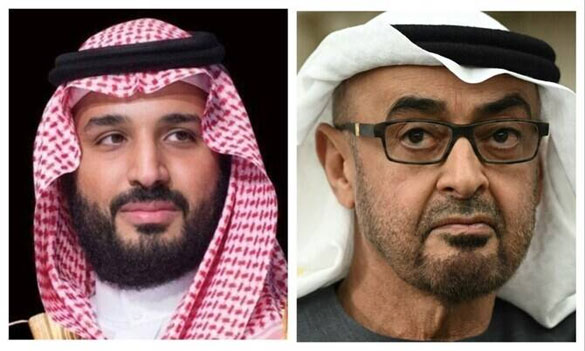
Saudi Crown Prince Mohammed bin Salman and the President of the UAE Sheikh Mohamed bin Zayed Al-Nahyan. (File/SPA/AFP)
----------
RIYADH: Saudi Crown Prince Mohammed bin Salman held a phone call with UAE President Sheikh Mohamed bin Zayed on Monday, during which he condemned Iranian attacks on the UAE.
During the call, Prince Mohammed reaffirmed Saudi support for the security and stability of UAE, the Saudi Press Agency reported.
The two leaders also discussed the latest regional developments and efforts to enhance regional security and stability, SPA added.
Source: arabnews.com
Please click the following URL to read the text of the original Story
https://www.arabnews.com/node/2642330/saudi-arabia
-------
Russia declares Victory Day truce, warns Kiev of strike if Moscow targeted
4 May, 2026
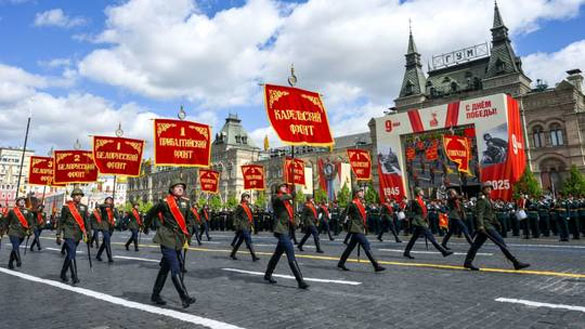
FILE PHOTO: A military parade is held in Moscow, Russia, on May 9, 2025. © Sputnik / Evgeny Biyatov
------------
The Russian Defense Ministry has announced a two-day ceasefire on May 8–9 to mark the end of World War II in Europe, calling on Kiev to follow suit. It warned that any attempt to disrupt the celebrations, including a strike on Moscow, would be met with a retaliatory strike on the Ukrainian capital.
The ministry pointed in particular to a statement made by Ukraine’s Vladimir Zelensky on the sidelines of the European Political Community summit in Yerevan on Monday, which it said contained threats to target Moscow during the Victory Day celebrations. The Ukrainian leader claimed that Moscow fears Ukrainian “drones may buzz over Red Square.”
The Russian military will take all the necessary measures to ensure the security of the celebrations, the ministry said, warning that if Ukraine attempts to disrupt them, “the Russian Armed Forces will launch a major retaliatory strike on the center of Kiev.”
Moscow has so far refrained from such actions for humanitarian reasons, the ministry added, urging residents of the Ukrainian capital and foreign diplomats to leave the city “in a timely manner.”
Talking to journalists earlier on Monday, Zelensky branded the two-day ceasefire “unfair” and claimed that “no one officially suggested anything” to Kiev and that Moscow only discussed a potential truce with the US. He referred to a phone call between presidents Vladimir Putin and Donald Trump in late April, during which the Russian president informed his American counterpart about the Victory Day ceasefire plans.
Shortly after the Russian Defense Ministry’s announcement, he took to X to say that Ukraine would unilaterally declare a ceasefire starting at midnight on the night of May 5–6, adding that Kiev would “act reciprocally” from that point despite what he claimed was the lack of any “official appeal” from Russia.
Russia has repeatedly declared pauses during various holidays throughout the Ukraine conflict.
Last year, it also suspended its offensive operations in early May to mark the 80th anniversary of the Soviet victory over Nazi Germany. Moscow expressed its hope at the time that the move would contribute to the “start of direct negotiations with Kiev without preconditions.” Zelensky dismissed it as “manipulation.”
In 2023, Russia observed truces both during the Orthodox Christmas holiday in January and on Easter weekend in April upon the initiative of the Russian Orthodox Church. In 2025, the Easter truce was declared again.
Last month, Moscow also declared an Easter truce, which was violated by the Ukrainian military more than 6,500 times within just 32 hours, according to the Defense Ministry.
Source: rt.com
Please click the following URL to read the text of the original Story
https://www.rt.com/russia/639437-moscow-declares-victory-day-ceasefire/
------
America is having a surprising church revival
4 May, 2026

© Maskot / Getty Images
----------
Growing up in southwestern Pennsylvania in the 1970s, it seemed like everyone I knew attended church services every Sunday without fail. Then something unexpected began to happen. The Catholic school I attended – like others around the country – was forced to merge with other schools to keep classrooms filled. At the same time, many churches of all denominations began closing their doors only to reopen as shopping malls, restaurants, or boutique hotels.
In total, over the past several decades, median worship attendance in the US plummeted by more than half. And the reason cannot be blamed on demographics. The US population has consistently increased for over a century, growing from roughly 76 million in 1900 to over 343 million by 2025, reinforced by heavy rates of immigration, both legal and illegal. Yet 40 million Americans have stopped attending church in the past 25 years, which works out to about 12% of the population.
Some people have pointed to mental health problems in American society as the culprit.
“The problem in front of us is not that we have a healthy, sustainable society that doesn’t have room for church,” writes Jake Meador in The Atlantic. “The problem is that many Americans have adopted a way of life that has left us lonely, anxious, and uncertain of how to live in community with other people.”
The downturn in church membership was at least partially due to alarming problems within the church as lurid scandals involving sexual abuse charges among the clergy and young boys grabbed the headlines. But now it seems that worshippers are willing to forgive the church for past offenses and are making a gradual return to the pews.
A new report from the Hartford Institute for Religion Research shows signs of a shift – for the first time in two decades, church attendance is up. “Across a range of indicators, there are signs of recovery and, in some cases, renewal,” the study’s authors wrote in a report released on April 24, which surveyed a representative sample of leaders at 7,453 congregations between September and December of 2025.
Median in-person attendance, which dropped from 137 per service in 2000 to 45 during the Covid pandemic, is now at 70 adults. That is higher than the 2020 Faith Communities Today survey from the Hartford Center for Religious Research, which put the figure at 65.
Surprisingly, it is young people who are leading the charge back to the houses of worship. For decades, older adults – Boomers and older – were the most frequent churchgoers. Today, the pattern has been turned on its head.
According to 2025 Barna Group data, Gen Z (18-28) and Millennials (29-44), who once had a notorious reputation for their disinterest in church services, are leading a historic resurgence in church attendance, now attending more frequently than older generations. Gen Z averages 1.9 weekend visits monthly, while Millennials average 1.8, reversing a decades-long trend. Among Gen X – those born between 1965 and 1980 – churchgoing has landed at about the same rate as it was in 2000. This shift indicates a strong, renewed interest in faith, community, and purpose, with some reports noting young men are key drivers of this growth.
“The significant drop-off among older generations shows that the fabric of congregational life is changing. It’s more frayed and less gray than it was a decade ago,” notes David Kinnaman, CEO of Barna Group. “The influx of new generations represents a massive opportunity for congregational leaders, but this renewed interest must be stewarded well.”
“Our research clearly shows that churchgoing alone does not in itself create devoted disciples. Even with the increasing participation of younger generations, there is still the challenge of shaping hearts and minds to live out their faith beyond church participation,” adds Kinnaman.
So what is responsible for getting people, predominantly the young, back in the pews? Part of the growth is explained by churches – particularly nondenominational ones – understanding that it was important to make attendance an interesting and vibrant event for youth to get them through the doors. The empty recital of prayers was no longer working. This has led to the modernization of church services, which now includes social events, musical concerts by popular religious bands, and other such ‘gimmicks’. The introduction of the so-called nondenominational ‘megachurches’, which allows for more publicity, has also played a part in the rise among the youth.
Moreover, young people may be feeling empty inside from their endless addiction to their smartphones and social media. A return to religion and spirituality might just be what they need to fill the void.
Source: rt.com
Please click the following URL to read the text of the original Story
https://www.rt.com/news/639427-america-young-church-revival/
-----
Nigeria to evacuate 130 citizens from South Africa amid xenophobia fears
5 May 2026
At least 130 Nigerians have registered for evacuation from South Africa following renewed fears of xenophobic violence, Nigerian officials said, as tensions rise in parts of the country including Durban, KwaZulu-Natal.
"This figure is expected to rise," Nigerian Foreign Minister Bianca Odumegwu-Ojukwu said in a statement on social media, adding that "Nigerian lives and businesses in SA must not continue to be put at risk."
According to reports by BBC News and local media, the Nigerian government has begun arrangements for a voluntary evacuation programme after a surge in threats and isolated attacks targeting foreign nationals.
Many of those signing up are said to be based in Durban, where anxiety has grown in recent weeks.
Authorities said the evacuation is precautionary, aimed at protecting citizens who feel unsafe amid rising anti-immigrant sentiment. Nigerian officials have urged calm but acknowledged concerns among their nationals, some of whom have begun preparing to leave.
South Africa has a long history of xenophobic violence, often driven by economic frustrations, unemployment and perceptions that migrants compete for jobs and resources.
Nigerians, who form a significant part of the migrant community, have frequently been among those targeted.
Previous outbreaks of violence — including deadly riots in 2008 and renewed attacks in 2015 and 2019 — have strained relations between Africa’s two largest economies, Nigeria and South Africa.
While South African authorities have repeatedly condemned xenophobia and pledged to protect all residents, the latest developments highlight persistent tensions and the vulnerability of migrant communities in the country.
Source: africanews.com
Please click the following URL to read the text of the original Story
https://www.africanews.com/2026/05/04/nigeria-to-evacuate-130-citizens-from-south-africa-amid-xenophobia-fears/
------
Ten Malaysians safe in Istanbul after Israeli detention, set to join second Gaza flotilla wave
4 May 2026
SEPANG, May 4 — Ten Malaysians involved in the Global Sumud Flotilla 2.0 (GSF) humanitarian mission, who were previously held by Israeli forces in international waters, are now in stable health in Istanbul and are expected to take part in a reorganised second wave of the mission.
Sumud Nusantara Command Center (SNCC) director-general Datuk Dr Sani Araby Abdul Alim Araby said all of them underwent medical checks upon arrival in Turkiye and were confirmed to have no serious injuries, despite reports they were unlawfully abducted at midnight while sailing towards Gaza.
“So far, we can confirm they are stable, remain in high spirits and have chosen not to return to Malaysia as the mission will continue. Assignments will be given from time to time,” he told a press conference here today.
He said the mission organisers are assessing the next steps, including combining flotilla assets from Greece and Turkiye to resume the voyage soon.
Sani Araby also revealed that of the 21 vessels detained on April 31, three have been successfully towed by the Open Arms vessel from Barcelona, after being found in severely damaged condition.
“One vessel, Goleta, has been confirmed sunk and is believed to have been sabotaged, while 17 others remain at sea and efforts are underway to tow them,” he said.
Sani Araby said that the mission is restructuring its logistical assets, including vessels, to redeploy activists currently in Turkiye.
“With 17 vessels still adrift and some damaged due to suspected sabotage, this is not an easy task. However, we have prepared for various contingencies since the mission began from Barcelona,” he noted.
Meanwhile, he said that of the 175 individuals detained in the incident, some were reportedly assaulted and abused, with 31 requiring hospital treatment.
“The SNCC condemns the mistreatment of two key GSF activists, Saif Abukeshek and Thiago Ávila, who were detained for more than 96 hours at Shikma Prison in Ashkelon.
“Both of them deserve a fair trial and should be released immediately without conditions,” he stressed.
Sani Araby also announced the launch of a seven-day countdown campaign as part of the second wave of #BreakTheSilent and #BreakTheSiege, calling for a united global push to intensify efforts towards the liberation of Gaza.
“During this period, we will step up our efforts and may announce the next voyage at any time,” he said.
He added that the mission has received international backing, including from the Organisation of Islamic Cooperation (OIC) and the United Nations (UN).
SNCC also urged Malaysians to continue voicing support for Palestine through various platforms, including social media, while ensuring information shared is based on credible and authoritative sources.
The public was further encouraged to perform special prayers, including solat hajat and Qunut Nazilah, as a sign of solidarity with the humanitarian mission. — Bernama
Source: malaymail.com
Please click the following URL to read the text of the original Story
https://www.malaymail.com/news/malaysia/2026/05/04/ten-malaysians-safe-in-istanbul-after-israeli-detention-set-to-join-second-gaza-flotilla-wave/218734
-----
Some arrested journalists ‘complicit in crimes against humanity’: Bangladeshi Adviser Zahed
5 May 2026
Zahed Ur Rahman, prime minister's adviser on information and broadcasting, has said that filing specific murder cases against journalists arrested over the July uprising was a wrong move.
However, he personally believes that some of the arrested journalists are partially responsible for crimes against humanity, which he considers a far graver offence than a murder charge.
The PM’s adviser said this in response to questions from reporters during a weekly press briefing at the Secretariat's Press Information Department (PID) today. He highlighted the recent initiatives taken by several ministries and departments. Principal Information Officer Syed Abdal Ahmed was also present at the briefing.
The adviser, who holds the rank of a state minister, explained that the journalists are currently in custody for specific murder cases rather than genocide. He noted that what occurred in July were crimes against humanity -- a systematic pattern Sheikh Hasina had established long ago through actions like enforced disappearances.
Zahed emphasised that for some of these individuals, the gravity of their actions exceeds a standard murder case, raising the question of their accountability for crimes against humanity. He clarified that this reflects his personal stance on the matter.
Drawing a historical example, Zahed mentioned that during the Nuremberg and Tokyo trials following World War II, those who created narratives that facilitated killings were also brought to justice.
Zahed added that even before taking office, he had expressed that the specific cases under which these journalists were arrested were incorrect.
Regarding journalists facing similar charges who have not yet been arrested, he assured that the government would take appropriate measures.
He also mentioned that the prime minister has assured the leaders of Newspaper Owners' Association of Bangladesh that the government would do as much as possible in collaboration with the judiciary, as the government cannot unilaterally interfere in a judicial process.
Source: thedailystar.net
Please click the following URL to read the text of the original Story
https://www.thedailystar.net/news/bangladesh/news/some-arrested-journalists-complicit-crimes-against-humanity-adviser-zahed-4168111
------
India
18 out of 19 MLAs who won on the Congress ticket in Assam are Muslims
May 05, 2026
In the recently concluded Assembly elections across multiple states, the Indian National Congress (INC) and its allies have recorded notable results among Muslim candidates, even as the party’s overall performance remains mixed.
In Assam, the Congress won 19 seats, of which 18 were secured by Muslim candidates. Of the 20 Muslim candidates fielded by the party, 18 emerged victorious, indicating a high conversion rate. In contrast, only one of the 79 non-Muslim candidates fielded by the party managed to win.
Congress ally Raijor Dal won two seats. One of its winning candidates is Muslim, while the other, Akhil Gogoi, has faced investigation by the National Investigation Agency in the past over alleged Maoist links.
In Kerala, 35 Muslim MLAs have been elected in the 140-member Assembly. Of these, 30 belong to the Congress-led United Democratic Front (UDF). Within this bloc, eight Congress MLAs are Muslim, while all 22 MLAs from the Indian Union Muslim League (IUML), a key UDF ally, are from the community.
In West Bengal, Congress won two seats, both in Muslim-majority constituencies and both represented by Muslim candidates. The party had fielded 63 Muslim candidates in the state, more than the Trinamool Congress (TMC), which fielded 47.
Meanwhile, in Tamil Nadu, Congress nominated two Muslim candidates, one of whom won.
Across Assam and Kerala, Muslim candidates fielded by Congress and its allies have recorded a winning strike rate exceeding 80%, reflecting strong electoral consolidation in specific constituencies.
However, political analysts caution against broad generalisations. They note that candidate selection in Indian elections is often shaped by constituency demographics, local alliances, and voting patterns, rather than any single factor determining electoral success.
Source: hindustantimes.com
Please click the following URL to read the text of the original Story
https://www.hindustantimes.com/india-news/18-out-of-19-mlas-who-won-on-the-congress-ticket-in-assam-are-muslims-101777964693187.html
------
Humayun Kabir, man planning Babri-style mosque, wins with massive margins in two TMC strongholds
MOUSHUMI DAS GUPTA
04 May, 2026
Kolkata: Humayun Kabir, who was expelled from Trinamool Congress last December after he announced he would build a masjid in Murshidabad’s Beldanga, modelled after the Babri Masjid that was demolished in Ayodhya, has sprung a surprise in West Bengal elections.
Kabir, who launched his own party, the Aam Janata Unnayan Party (AJUP), has not only won with huge margins in two seats in Murshidabad district—Rejinagar and Nowda—but has clearly split the Muslim votes in these two constituencies, which the Trinamool Congress won in the 2021 Assembly election.
Kabir won with 1,23,536 votes in Rejinagar against his nearest rival Bapan Ghosh from the Bharatiya Janata Party (BJP) who got 64,660 votes. Trinamool Congress’ Ataur Rahaman came a distant third with 41,718 votes.
In Nowda, the second constituency from where Kabir contested, he won with 86,463 votes. BJP’s Rana Mandal came second with 58,520 votes while Trinamool Congress’ Sahina Momtaz Khan came a close third with 51,867 votes.
Kabir’s victory is a surprise considering the controversy around him just ahead of the first phase of polling in Murshidabad. A purported video of his, claiming BJP had entered into a Rs 1,000 crore deal with him to defeat Mamata Banerjee and that he was in touch with senior BJP leaders in West Bengal had kicked up a political storm.
The alleged video led to Asaduddin Owaisi’s All India Majlis-e-Ittehadul Muslimeen (AIMIM), which had entered into an alliance with Kabir’s AJUP, walking out of it. Political analysts had said the controversy would shadow his party’s prospects in the elections. The video had also put a question mark over the fate of the masjid his trust was building.
But he has proved them wrong with massive leads in the two Trinamool strongholds.
The AJUP and Owiasi’s AIMIM had decided to contest in 192 out of the 294 seats before the alliance broke down.
The AJUP had projected itself as an alternative political platform for Muslims in Bengal, who had mostly gravitated towards the TMC and to some extent the Congress after the collapse of the Left-led government in 2011 after a 34-year reign.
The Babri masjid style mosque
Kabir’s announcement to build a Babri masjid has generated interest in the state, which has a 27 per cent Muslim population.
He had told ThePrint in April that preparatory work for building the masjid had already started. The West Bengal Islamic Foundation of India, the trust that he formed to execute the project, has already acquired approximately 8 acres of private land in Beldanga for Rs 13 crore.
The cost of building the entire masjid will be approximately Rs 86 crore, Kabir had said.
At the site, there were boards with ‘Babri Masjid’ written on them. The ground where the masjid will come up has been dug up, the boundary wall is in the process of being erected. A ‘Babri masjid committee’ has been set up to oversee the day-to-day work. The committee even has an office on the masjid site.
“We plan to complete the masjid by 2030. We have currently put all construction activity on hold because of the model code of conduct. Work will restart after May 4. Whatever work has happened till now has been done with money donated by the public,” Kabir had told ThePrint.
The masjid site has become a big draw for people from the community, who are visiting in hordes everyday. A tent has been put up at the site and everyday around 50-100 people, not only from adjoining districts but from states like Assam, throng the site to see the work in progress.
Source: theprint.in
Please click the following URL to read the text of the original Story
https://theprint.in/politics/humayun-kabir-man-planning-babri-style-mosque-leading-with-massive-margins-in-two-tmc-strongholds/2921762/
-------
Himanta’s ‘Miya’ label stuck on Cong, weaned away voters
May 5, 2026
GUWAHATI: Twin blows at the top. Gaurav Gogoi and Debabrata Saikia defeated. A campaign built on sharp attacks — including on CM’s family — and a pitch for justice for Zubeen Garg. Little to show at the ballot. Congress is left with a narrow, largely Muslim-majority base and shrinking reach in Assam.
The party won 19 seats — all Muslim-majority constituencies. Its footprint has tightened to pockets once shared with AIUDF, which has now faded, handing Congress a consolidated but limited vote bank.
CM Himanta Biswa Sarma’s sustained messaging appears to have cut through. He cast Congress as a ‘Miya’ party — a term for Bengali-speaking Muslims from Bangladesh. The label stuck, weakening Congress’ ability to expand among indigenous tribal and Hindu voters.
Delimitation in 2023 compounded the problem. Muslim-majority seats fell from 35 to 22, narrowing the party’s electoral runway. Muslims account for about 30% of Assam’s electorate — roughly 75 lakh voters — and remain influential in these constituencies, but the concentration has isolated Congress politically.
A late six-party alliance failed to shift momentum. Losses in upper and northern Assam underlined the slide. Assam Congress chief Gogoi and leader of the opposition Saikia — sons of former CMs Tarun Gogoi and Hiteswar Saikia, respectively — both fell in their family strongholds.
For Congress, the verdict is stark. The road back runs through constituencies it no longer commands.
Inside Congress, unease surfaced. Gogoi did not comment. Party’s Ripun Bora promised a review. “EVM manipulation is possible — results don’t match Gen Z anger over delayed justice for Zubeen or fury at price rises,” he said, adding many would question the result as the CM had predicted a near-100seat tally for NDA, a projection echoed by exit polls.
Source: indiatimes.com
Please click the following URL to read the text of the original Story
https://timesofindia.indiatimes.com/india/himantas-miya-label-stuck-on-cong-weaned-away-voters/articleshowprint/130814052.cms
------
Badruddin Ajmal’s perfume loses fragrance
May 5, 2026
GUWAHATI: The scent of success wore off. Badruddin Ajmal’s AIUDF, once the principal voice of Muslim minorities in Assam, has crashed from 16 seats in the assembly to just two, signalling a sharp erosion of its political relevance as BJP’s wider sweep and Congress’ consolidation redraw the map.
The 70-year-old businessman-politician, whose family-run fragrance house, Ajmal Perfumes, is a global brand, returned to the fray after his 2024 LS defeat in Dhubri. He won from Binnakandi in Hojai. Mazibur Rahman held Dalgaon. Elsewhere, the party collapsed across lower Assam and Barak Valley despite over 90% turnout in Muslim-majority constituencies.
The surge in participation did not translate into votes for AIUDF. Instead, it consolidated behind Congress, which swept most minority-heavy seats. Constituencies with over 95% Muslim electorates — including Dhubri, Gauripur, Mankachar, Jaleswar, Chenga and Samaguri — tilted decisively toward Congress.
Political analyst Hafiz Rashid Ahmed Choudhury attributed the slide to leadership choices and perception. “Ajmal could have projected someone else. A man who cannot walk properly became a candidate. It signals they want to keep the party confined to family,” he said.
AIUDF functionaries pointed to “wrong candidate selection” and a direct contest with Congress — unlike their 2021 alliance — as key factors. Rahman, who retained Dalgaon, framed the verdict as a broader opposition defeat. “We thought Gaurav Gogoi would become the CM, but he lost. It’s painful,” he said, crediting his own win to local development.
Formed in 2005 after SC scrapped IMDT Act, it had built its base among Bengali-speaking Muslims. Now, with no MPs and two MLAs, its future looks uncertain.
Source: indiatimes.com
Please click the following URL to read the text of the original Story
https://timesofindia.indiatimes.com/india/badruddin-ajmals-perfume-loses-fragrance/articleshowprint/130813908.cms
------
BJP claims ‘regime change’ wave will reach Punjab in 2027 after West Bengal win
Harpreet Bajwa
04 May 2026
CHANDIGARH: With less than a year left for the Punjab Assembly elections and the Bharatiya Janata Party (BJP) securing a historic mandate in the West Bengal polls, Union Minister of State for Railways Ravneet Singh Bittu and state BJP president Sunil Jakhar claimed that Punjab will witness similar results in 2027, asserting there will be a “takhta palat”.
Speaking to the media at the party headquarters while celebrating victories in various states, Jakhar praised the dedication of party workers in West Bengal and paid tribute to their perseverance. He said they stood firm against the alleged oppression of the ruling party and helped form a government committed to the principle of “Sabka Saath, Sabka Vikas”.
He added that West Bengal was a major challenge for the party, and under strong leadership and with the support of the people, that challenge has now been overcome. With the same enthusiasm, the party has begun preparations for the upcoming elections in Punjab.
Jakhar said the Bengal results would energise party workers and instil hope that if the BJP can come to power in Bengal, it can do so in Punjab as well. He alleged that law and order in Bengal is poor and that politically motivated oppression is prevalent, adding that Punjab is also facing similar concerns. He claimed the AAP government has failed on all fronts.
He called upon party workers to begin preparations for the 2027 elections with determination and hard work, stating that Prime Minister Narendra Modi has a special affection for Punjab and that the party will take its message to every household.
Jakhar asserted that AAP’s exit from Punjab is certain. Taking a dig at Chief Minister Bhagwant Mann over the issue of transporting MLAs to Delhi by bus, he remarked that the Chief Minister should ensure the bus does not turn towards the BJP office.
He further claimed that Congress has been wiped out not only in Punjab but across the country. He said that in Punjab, Congress has surrendered before the ruling party, and alleged that Chief Minister Mann has allowed his MLAs free rein in corrupt activities to save his position.
Jakhar concluded by saying that the coming months may be challenging for Punjab, but the BJP will stand firmly to protect the interests of the state and its people.
Meanwhile, Mr Bittu said that state governments under opposition rule, rather than addressing their shortcomings, are engaged in blame games and targeting the BJP and the Union government.
“The West Bengal results reflect the larger situation in the state; it is a regime change there and now it is Punjab’s turn. People are fed up with mafia, drugs and illegal sand mining,” he said, adding that people have made up their minds to vote for the BJP in Punjab as they are afraid due to cases being registered against those who oppose the government.
Mr Bittu further claimed that the party’s performance in West Bengal has boosted the morale of its cadre.
Source: newindianexpress.com
Please click the following URL to read the text of the original Story
https://www.newindianexpress.com/nation/2026/May/04/bjp-claims-regime-change-wave-will-reach-punjab-in-2027-after-west-bengal-win
------
Mideast
US intelligence indicates limited new damage to Iran’s nuclear program, sources say
May 04, 2026
WASHINGTON: US intelligence assessments indicate that the time Iran would need to build a nuclear weapon has not changed since last summer, when analysts estimated that a US-Israeli attack had pushed back the timeline to up to a year, according to three sources familiar with the matter.
The assessments of Tehran’s nuclear program remain broadly unchanged even after two months of a war that US President Donald Trump launched in part to stop the Islamic Republic from developing a nuclear bomb.
The latest US and Israeli attacks that began on February 28 have focused on conventional military targets, but Israel has hit a number of significant nuclear facilities.
The unchanged timeline suggests that significantly impeding Tehran’s nuclear program may require destroying or removing Iran’s remaining stockpile of highly enriched uranium, or HEU.
The war has stalled since the US and Iran agreed an April 7 truce to pursue peace. Tensions remain high as both sides appear deeply divided, and as Iran has choked traffic through the Strait of Hormuz, blocking some 20 percent of world oil supplies and igniting a global energy crisis.
Secretary of Defense Pete Hegseth has said publicly that the US aims to ensure Iran does not obtain a nuclear weapon via ongoing negotiations with Tehran.
US intelligence agencies had concluded prior to June’s 12-day war that Iran likely could produce enough bomb-grade uranium for a weapon and build a bomb in around three to six months, said two of the sources, all of whom requested anonymity to discuss US intelligence.
Following the June strikes by the US that hit the Natanz, Fordow and Isfahan nuclear complexes, US intelligence estimates pushed that timeline back to about nine months to a year, said the two sources and a person familiar with the assessments.
The attacks destroyed or badly damaged the three enrichment plants known to have been operating at the time. But the UN nuclear watchdog has been unable to verify the whereabouts of some 440 kilograms of uranium enriched to 60 percent. It believes that about half was stored in an underground tunnel complex at the Isfahan Nuclear Research Center, but it has been unable to confirm that since inspections were suspended.
The International Atomic Energy Agency assesses the total HEU stockpile would be enough for 10 bombs if further enriched.
“While Operation Midnight Hammer obliterated Iran’s nuclear facilities, Operation Epic Fury built on this success by decimating Iran’s defense industrial base that they once leveraged as a protective shield around their pursuit of a nuclear weapon,” said White House spokeswoman Olivia Wales, referring to the June operation and the latest war that began in February.
“President Trump has long been clear that Iran can never have a nuclear weapon – and he does not bluff.”
The Office of the Director of National Intelligence did not respond to a request for comment.
Stopping Tehran’s nuclear program a key US goal
US officials, including Trump, repeatedly cite the need to eliminate Iran’s nuclear program as a key objective of the war.
“Iran can never be allowed to obtain a nuclear weapon. That is the goal of this operation,” Vice President JD Vance wrote on X on March 2.
The unchanging estimate of how long it would take Iran to build such a weapon reflects in part the focus of the latest US and Israeli military campaign, the sources said.
While Israel has struck nuclear-related targets, including a uranium-processing facility in late March, US attacks have concentrated on conventional military capabilities, Iran’s leadership and its military-industrial base.
The unchanged estimates may also stem from a lack of major nuclear targets that can be readily and safely destroyed following June’s military action, according to some analysts.
Eric Brewer, a former senior US intelligence analyst who led assessments of Iran’s nuclear program, said it was not surprising that the assessments have not changed because recent US strikes have not prioritized nuclear-related targets.
“Iran still possesses all of its nuclear material, as far as we know,” said Brewer, vice president of the nuclear materials study program at the Nuclear Threat Initiative arms control think tank. “That material is probably located in deeply buried underground sites where US munitions can’t penetrate.”
In recent weeks, US officials have contemplated dangerous operations which would significantly impede Iran’s nuclear efforts. Those options include ground raids to retrieve the HEU believed to be stored in the tunnel complex at the Isfahan site.
Iran has repeatedly denied seeking nuclear weapons. US intelligence agencies and the IAEA say Tehran halted a warhead development effort in 2003, though some experts and Israel contend that it secretly preserved key parts of the program.
Possible impact from killing of scientists
Precisely evaluating Iran’s nuclear capacity is difficult, even for the world’s leading intelligence services, say experts.
Several US intelligence agencies have independently studied Iran’s nuclear program, and while the sources described a broad consensus regarding Iran’s capacity to build a nuclear weapon, outlying assessments do occur.
It is possible Iran’s nuclear ambitions have been set back further than the intelligence estimates suggest.
Some officials, including US Secretary of State Marco Rubio, have argued that US strikes on Iranian air defenses have reduced the nuclear threat by diminishing Iran’s ability to defend its nuclear sites should it decide to rush toward weaponization in the future.
There also is the impact of Israel’s assassinations of Iran’s leading nuclear scientists.
David Albright, a former UN nuclear inspector who runs the Institute for Science and International Security, said the killings have added significant uncertainty to Tehran’s ability to build a bomb that would function as intended. “I think everyone agrees knowledge can’t be bombed, but know-how certainly can be destroyed,” he said.
Source: arabnews.com
Please click the following URL to read the text of the original Story
https://www.arabnews.com/node/2642361/middle-east
------
Lebanese president says security deal with Israel must come before Netanyahu meeting
May 04, 2026
BEIRUT: Lebanese President Joseph Aoun on Monday said a security deal and an end to Israeli attacks were needed before any meeting with Israeli Prime Minister Benjamin Netanyahu, sought by Washington.
Aoun’s office said in a statement that the president “reiterated his view that the timing is not appropriate now for a meeting” with Netanyahu.
The statement quoted Aoun as saying: “We must first reach a security agreement and stop the Israeli attacks on us before we raise the issue of a meeting between us.”
Israeli and Lebanese representatives last month met twice in Washington — the first such meetings in decades, which came after Iran-backed Hezbollah drew Lebanon into the Middle East war on March 2, sparking heavy Israeli strikes and a ground invasion.
After the first talks, US President Donald Trump announced a 10-day ceasefire in Lebanon that began on April 17, and a three-week extension after the second round.
The two countries are preparing for direct negotiations.
The statement from Aoun’s office said a third round of “preparatory talks” were expected “in the coming days.”
At the second meeting later in April, Trump said he expected Aoun and Netanyahu to meet jointly with him at the White House “over the next couple of weeks.”
Last week, the US embassy in Beirut urged such a meeting, saying that “Lebanon stands at a crossroads. Its people have a historic opportunity to reclaim their country and shape their future,” adding that “the time for hesitation is over.”
‘No loss’
The planned negotiations have caused a rift in Lebanon, with Hezbollah rejecting direct negotiations as well as Beirut’s previous commitment to disarm it.
Hezbollah chief Naim Qassem earlier Monday criticized direct talks, saying they put Lebanon “under tutelage,” and instead called for diplomacy that leads to an end to the war.
“Direct negotiations are a gratuitous concession, without results,” Qassem said.
Aoun said “there is no turning back from the path of negotiations, because we have no other option,” according to the statement from his office, reiterating that the process sought to achieve the withdrawal of Israeli troops from Lebanon.
Earlier Monday, US ambassador to Lebanon Michel Issa told journalists that “to me, if the president (Aoun) visited President Trump, there is no loss.”
Aoun “can go and present his decisions clearly” to Trump and Netanyahu, and after returning to Lebanon “we can begin negotiations. I don’t know why people consider this a loss or concession,” Issa said.
Aoun “will go to present all Lebanon’s demands, most importantly the sovereignty of its lands,” Issa said, noting full Lebanese territorial sovereignty was a key Hezbollah demand.
Israeli strikes have killed almost 2,700 people in Lebanon, including dozens since the ceasefire.
Source: arabnews.com
Please click the following URL to read the text of the original Story
https://www.arabnews.com/node/2642360/middle-east
------
New Syria protest conditions raise concern over freedoms
May 05, 2026
DAMASCUS: Syrian authorities have announced new conditions for street protests, with an official telling AFP on Monday that the move was purely regulatory, despite concerns over restrictions on freedoms.
It is the Islamist authorities’ first such move since the ousting of Bashar Assad in December 2024 following nearly 14 years of civil war that erupted with the longtime ruler’s brutal repression of anti-government protests in 2011.
The interior ministry announcement last Sunday said the “right to demonstrate and gather peacefully” is guaranteed under Syria’s transitional constitution, but must be exercised according to “legal conditions and mechanisms” to ensure security and public order.
It said a committee would decide on applications for demonstrations within five days of being lodged, with applicants having the right to appeal.
An interior ministry official told AFP on condition of anonymity on Monday that “the decision is purely regulatory and aims to protect demonstrators” from violence.
“It doesn’t restrict freedoms but regulates them,” the official added.
Rights activists have nonetheless criticized the move, saying it reinstates a permit system in place under Assad — which also included a notional right to appeal.
According to the ministry announcement, authorities will have the right to demand an end to an authorized protest under certain conditions, including if it “exceeds the limits of the granted permit or if riots take place.”
Syrian human rights activist Michal Shammas said on Facebook that the decision “reinstated the same conditions that were imposed” by Assad when the former leader sought to put down the 2011 protests.
He said only legislative bodies could impose restrictions on constitutional rights like freedom of assembly, and called the administrative decree “illegal and in violation of the constitution.”
Protests have erupted in different parts of Syria since Assad’s ouster over a variety of issues, including living conditions as well as political and rights issues, sometimes voicing criticism of the new authorities.
At times counter-protests have taken place, with clashes sometimes erupting.
Last month, Syrian President Ahmed Al-Sharaa sought to reassure his Emirati counterpart that Damascus wanted to maintain good relations with the United Arab Emirates, following a violent protest outside its embassy in Damascus.
Source: arabnews.com
Please click the following URL to read the text of the original Story
https://www.arabnews.com/node/2642342/middle-east
------
‘No pilgrims’: regional war hushes Iraq’s holy cities
May 04, 2026
NAJAF, Iraq: In Iraq’s holy city of Najaf, the majestic shrine of Imam Ali stands quiet, its vast courtyards no longer echoing with the multilingual whispers of pilgrims from before the Middle East war.
The absence of tourists leaves nearby shopkeepers and hotel owners with little to do, their days dragging on as they hope for the crowds to return and revive their businesses.
“Iranians used to keep us busy, whether the jeweller, the fabric merchant or the taxi driver. Now there are none,” said jewelry shop owner Abdel Rahim Harmoush.
“It used to be hard even to step into the market because of foreigners... Even street vendors drew huge crowds of visitors,” the 71-year-old added.
Millions of Shia Muslims from around the world typically flock to Najaf and fellow holy city Karbala every year.
But the regional war ignited in late February by US-Israeli strikes on Iran has stemmed the usual influx of pilgrims from the Islamic republic, Lebanon, the Gulf states, India, Afghanistan and elsewhere.
Iraq was drawn into the conflict from the onset, with strikes targeting US interests and Tehran-backed armed groups in the country.
People in the holy cities “live on religious tourism,” said Harmoush, who for 38 years has worked in the old market near Najaf’s golden-domed mausoleum.
The shrine is the ornate burial place of Ali — the Prophet Muhammad’s son-in-law, the fourth Islamic caliph and the first Shia Imam.
Harmoush warned of economic ruin were the crisis to persist: shop owners unable to pay rent and taxes, cab drivers left without passengers and laborers struggling to find work.
HOTELS CLOSED
Hotel owner Abu Ali, 52, was forced to lay off five employees, leaving just one to tend to nearly 70 empty rooms.
“How can I pay salaries if there is no work?” he said.
Saeb Abu Ghneim, head of the hotel association in Najaf, told AFP that 80 percent of the city’s 250 hotels had closed, with more than 2,000 employees laid off or on unpaid leave.
He added that most of Najaf’s religious tourism relies on Iranians, followed by Lebanese visitors — also trapped at home by war — and other nationalities.
The sector, which already weathered the closure of mosques and shrines in the pandemic, is a rare type of tourism in a country reeling from decades of conflicts.
Religious tourism also constitutes a significant source of revenue for Iraq’s non-oil economy.
Before the war, 28-year-old Moustafa Al-Haboubi could barely manage the crowds queuing to exchange foreign currency for Iraqi dinars.
He now spends the long hours idly scrolling through his phone or chatting with neighbors.
“We barely receive one or two customers,” he said. “There are no pilgrims now, Iranian or otherwise.”
Even after a fragile ceasefire took effect on April 8 and Iraq’s airspace reopened, little has changed.
Some pilgrims trickle through during the week, while on weekends the area grows somewhat livelier as Iraqis visit the sacred sites.
‘CATASTROPHE’
The situation is no different in Karbala, which is around 80 kilometers (50 miles) north of Najaf and home to the shrines of the revered grandsons of Prophet Muhammad, Imam Hussein and his brother Abbas.
The main corridor linking the two golden shrines and the surrounding alleyways were once alive with the murmurs of tourists walking to prayers.
Today, the visitors are almost exclusively Iraqi.
“The situation is dangerous... a catastrophe,” said Israa Al-Nasrawi, head of Karbala’s tourism committee.
She warned that the war had devastated the city’s economy, slashing tourist numbers by around 95 percent and forcing hundreds of hotels to close.
The city’s many pilgrim tour companies sit idle.
Akram Radi, who has worked in the sector for 16 years, said his company once helped up to 1,000 visitors a month but is now operating at only 10 percent of capacity.
“I might have to close and look for another job,” he said.
Source: arabnews.com
Please click the following URL to read the text of the original Story
https://www.arabnews.com/node/2642333/middle-east
------
Jordan evacuates dozens of sick Palestinian children from Gaza to receive medical care
May 04, 2026
LONDON: Jordanian authorities evacuated 42 sick Palestinian children and 75 members of their families from Gaza on Monday as part of the country’s medical and humanitarian corridor initiative.
The Jordanian Armed Forces were tasked with carrying out the operation. The children will be treated at hospitals in Jordan and other countries, the official Jordan News Agency reported.
Jordan initiated a program in March last year to evacuate from Gaza about 2,000 Palestinian children in need of medical care. So far it has helped more than 716 youngsters, in coordination with the Jordanian Ministry of Health and the World Health Organization.
Jordan has been at the forefront of efforts to provide Palestinians in Gaza with humanitarian aid and food supplies, through aid convoys or airdrops, since the conflict between Israel and Hamas began in October 2023. A ceasefire agreement between the two sides was established in October 2025.
Medical teams associated with the Jordanian military operate two field hospitals in the Palestinian territory, one in southern Gaza and the other in Gaza City, in the north.
Source: arabnews.com
Please click the following URL to read the text of the original Story
https://www.arabnews.com/node/2642328/middle-east
------
Gaza flotilla activists ‘facing abuse in Israel jail’
May 04, 2026
JERUSALEM: Two foreign activists from a Gaza-bound flotilla who have been detained in an Israeli prison are facing psychological abuse, death threats, and poor detention conditions, a rights group representing them said Monday.
On Sunday, an Israeli court extended by two days the detention of Spanish national Saif Abu Keshek and Brazilian Thiago Avila, who were brought to Israel for questioning last week.
The pair were among dozens of activists aboard a Gaza-bound flotilla intercepted by Israeli forces off the coast of Greece early on Thursday.
“Thiago Avila reported being subjected to repeated interrogations lasting up to eight hours. Interrogators have explicitly threatened him, stating he would either be ‘killed’ or ‘spend 100 years in jail,’” rights group Adalah, whose attorneys visited both activists in their detention Monday, said in a statement.
Adalah said it was awaiting a decision on whether the state would seek another extension of their detention on Tuesday.
Both Abu Keshek and Avila are held in total isolation, with “high-intensity lighting” on at all times in their cells, Adalah said, adding that Avila was being held in “extremely cold temperatures.”
“They are kept blindfolded at all times whenever they are moved outside their cells, including during medical examinations,” it added.
Adalah said the activists were continuing a hunger strike that entered its sixth day on Monday.
During the hearing in a court in the city of Ashkelon on Sunday, Adalah said the state attorney had presented a list of offenses the pair were accused of, including “assisting the enemy during wartime” and “membership in and providing services to a terrorist organization.”
But Adalah’s lawyers challenged the state’s jurisdiction, arguing against the “unlawful abduction” of the two activists in international waters.
Its lawyers told the court Avila and Abu Keshek had testified to “severe physical abuse amounting to torture, including being beaten and held in isolation and blindfolded for days at sea.”
Israel’s Foreign Ministry rejected claims that the men were subjected to physical violence.
“Contrary to the false and baseless claims prepared in advance, at no point were Saif Abu Keshek and Thiago Ávila subjected to torture,” ministry spokesman Oren Marmorstein said on Sunday.
Israel’s Foreign Ministry said the pair were affiliated with the Popular Conference for Palestinians Abroad, or PCPA — a group accused by Washington of “clandestinely acting on behalf of” Hamas.
It said Abu Keshek was a leading PCPA member, and that Avila was also linked to the group and “suspected of illegal activity.”
The Global Sumud Flotilla’s first voyage last year aimed to bring humanitarian supplies to Gaza and drew worldwide attention before being intercepted by Israeli forces off the coasts of Egypt and Gaza.
Israel controls all entry points into Gaza, which has been under an Israeli blockade since 2007.
Throughout the Gaza war, there have been shortages of critical supplies in the Palestinian territory, with Israel at times cutting off aid entirely.
Source: arabnews.com
Please click the following URL to read the text of the original Story
https://www.arabnews.com/node/2642316/middle-east
------
Gaza heart patients at risk as Israeli aggression takes heavy toll
May 04, 2026
GAZA: Amid the ongoing Israeli aggression in the Gaza Strip over the past two-and-a-half years, and in particular the widespread destruction of health infrastructure, heart patients have faced deteriorating humanitarian and medical situations.
The crisis has left their lives at risk as a result of the collapse of the healthcare system, lack of treatment, and difficulties in accessing essential care.
Remaining hospitals across Gaza are overwhelmed with heart patients in an ongoing medical reality that is marked by a severe shortages of equipment, medicines and supplies and an inability to meet even basic care needs, as the repercussions of the attacks on the territory continue to deepen the crisis.
Patient Mohammed Al-Sa’ati, 66, has been at Nasser Medical Complex for two months. Doctors will not allow him to leave due to the severity of his condition.
“I have been suffering from irregular heart rhythms for eight years and I currently need a pacemaker but it is unavailable,” he said. “Doctors insist that I remain in the hospital out of concern for my life.
“My symptoms worsen in the absence of the device. I experience a sharp drop in heart rate, causing dizziness and recurrent fainting, leaving my condition unstable. My life is at risk and no solution appears on the horizon.”
Another patient, 67-year-old Fatima Rashid described her suffering: “I have chronic, irregular hypertension and require frequent hospital admission but treatment is unavailable.
“I am currently suffering from fluid accumulation in the lungs due to high blood pressure, and doctors have warned me of the risk of a stroke due to the shortage of medication.
“I underwent a catheterization procedure a year-and-a-half ago and was supposed to take a specific medication for a year, but it is unavailable, which led to the narrowing of the stent in my heart. “I feel that my death is near.”
Dr. Ashraf Hallas, head of the cardiology department at Nasser Medical Complex, said the Israeli aggression against Gaza, and the resultant destruction and depletion in the health sector, has exacerbated the suffering of heart patients to unprecedented levels.
“We are facing a severe shortage of medicines and equipment, particularly those required for catheterization procedures, which has led to the suspension of around 80 percent of cases scheduled for treatment,” he said.
Prior to the conflict, between five and eight catheterization procedures took place each day at Al-Shifa Medical Complex and the European Hospital, as well as private health centers. Now, only a few such procedures are carried out.
Hallas said the Ministry of Health has contracted Al-Quds Hospital to perform catheterization procedures but these are limited to no more than three a day and reserved exclusively for the most critically ill patients, based on medical prioritization.
He noted that shortages of catheterization equipment, including stents and balloons, sometimes forces doctors to carry out procedures without inserting stents, and when it is necessary to transfer patients for treatment outside of Gaza, the process is hindered by restrictions imposed by the occupation.
Many patients lose their lives as a result of delays to treatment or the inability to travel for care amid the continuing closure of border crossings and other restrictions on movement.
Regarding shortages of diagnostic equipment, Hallas said electrocardiogram devices, which monitor the heart’s electrical activity, are entirely unavailable. Echocardiography machines, which use ultrasound technology to produce images of the interior of the heart, are in short supply, he added, and other diagnostic equipment is no longer functioning as a result damage inflicted on the health sector by the Israeli attacks.
These conditions have led to the deterioration of heart disease patients, increased psychological stress, and a rise in mortality rates compared with the period before the current conflict.
According to the Palestinian Ministry of Health, heart diseases currently account for about 56 percent of all deaths in Gaza as thousands of patients are unable to leave the territory for treatment because of imposed restrictions on movement.
Local sources also indicate that about 20,000 patients face difficulties accessing treatment, and 1,400 wounded persons have died while waiting to travel for care outside Gaza in what is described as one of the most severe consequences the ongoing aggression is having on the humanitarian and health situations in the territory.
Source: arabnews.com
Please click the following URL to read the text of the original Story
https://www.arabnews.com/node/2642315/middle-east
------
Arab World
Pottery in Madinah emerges as key driver in creative economy
May 04, 2026
MADINAH: Pottery, one of the oldest handicrafts, has been closely linked to human history since ancient times, evolving from meeting daily needs into cultural heritage reflecting the identity and diversity of societies.
Today, pottery remains a key traditional craft supporting the creative economy. No longer limited to preservation, it has become a field for innovation, where artisans create contemporary pieces that blend authenticity with modern design, expanding their reach in local and global markets.
Madinah-based potter Ammar Jabarti said his journey began by incorporating clay into contemporary artworks in his studio. He now seeks to present pottery in new ways beyond its traditional association with cookware and classic vessels such as drinking pots.
He noted growing interest in learning pottery, especially among young people, adding that introducing the craft in early school stages has helped raise awareness and gradually develop skills.
The sector is further supported through initiatives that back artisans, organize exhibitions, and provide training. Craftsmen continue to preserve this heritage by passing on their expertise and adopting modern techniques that align with contemporary tastes without compromising its cultural value.
Source: arabnews.com
Please click the following URL to read the text of the original Story
https://www.arabnews.com/node/2642322/saudi-arabia
-------
KSrelief expands aid to vulnerable communities
May 04, 2026
RIYADH: Saudi Arabia’s aid agency KSrelief continues to provide vital assistance to some of the world’s most vulnerable communities.
In Yemen, the agency distributed 40 shelter kits and tents in the Tur Al-Bahah district of Lahj governorate, benefiting 119 people affected by rain and floods.
In Afghanistan, KSrelief distributed 183 food baskets to returnees from neighboring countries, internally displaced persons, needy families and orphans in the Takhta Pul district of Kandahar Province, benefiting 1,098 people.
In Mali, KSrelief distributed 425 food baskets to internally displaced persons, families in need and people with disabilities in the city of Djenne, benefiting 2,550 people.
The Saudi aid agency also distributed 24,800 hot meals to Palestinians in central and southern Gaza.
Since 2015, KSrelief has implemented 4,367 projects in 113 countries, spending more than $8.4 billion on food security, health, education, water and sanitation, shelter and early recovery.
Source: arabnews.com
Please click the following URL to read the text of the original Story
https://www.arabnews.com/node/2642321/saudi-arabia
-------
Saudi deputy minister receives Chinese ambassador
May 04, 2026
RIYADH: Saudi Arabia’s Deputy Minister for International Multilateral Affairs Abdulrahman Al-Rassi received Ambassador of China to the Kingdom Chang Hua in Riyadh on Monday.
Al-Rassi also held a meeting with the ambassador of Djibouti and dean of the diplomatic corps, Dya-Eddine Said Bamakhrama, the Foreign Ministry said in a statement on X.
During the meetings, the officials discussed bilateral relations between their respective countries and reviewed topics of mutual interest.
Source: arabnews.com
Please click the following URL to read the text of the original Story
https://www.arabnews.com/node/2642318/saudi-arabia
-------
Saudi, Singaporean FMs urge protection of international waterways during meeting in Jeddah
May 04, 2026
RIYADH: Saudi Foreign Minister Prince Faisal bin Farhan met his Singaporean counterpart in Jeddah on Monday.
Prince Faisal and Vivian Balakrishnan met to discuss ties between the Kingdom and Singapore, the Saudi Press Agency reported.
During their meeting, they also discussed regional developments, stressing the need to safeguard maritime routes to support regional and global security, SPA added.
Source: arabnews.com
Please click the following URL to read the text of the original Story
https://www.arabnews.com/node/2642308/saudi-arabia
-------
Makkah deputy governor reviews Hajj operations readiness
May 04, 2026
JEDDAH: Makkah Deputy Gov. Prince Saud bin Mishaal inspected the Hajj and Umrah halls at King Abdulaziz International Airport in Jeddah during a field tour to review readiness for the Hajj season.
He was accompanied by Raed Al-Mudaiheem, chairman of Jeddah Airports Co., CEO Mazen Johar, and several security and operational officials.
During the visit, he toured security checkpoints, inspection procedures, and the Hajj and Umrah halls development project to review capacity expansion and service improvements.
He also inspected the operations center, where he was briefed on crowd management systems and technologies supporting pilgrim movement.
Prince Saud reviewed electronic gate systems designed to speed up entry and exit procedures, as well as passport and customs facilities aimed at facilitating pilgrims’ clearance.
He visited waiting halls and service areas prepared for pilgrims before their transport to the holy sites.
The tour concluded with a meeting of the Permanent Committee for Hajj and Umrah, which reviewed operational plans and coordination among relevant authorities to improve services during the season.
Source: arabnews.com
Please click the following URL to read the text of the original Story
https://www.arabnews.com/node/2642303/saudi-arabia
------
Saudi FM discusses regional developments with Egyptian counterpart
May 04, 2026
RIYADH: Saudi Foreign Minister Prince Faisal bin Farhan received a telephone call from his Egyptian counterpart Badr Abdelatty on Monday.
During the call, regional developments and the importance of continued coordination and consultation on these matters were discussed, the Saudi Press Agency reported.
Source: arabnews.com
Please click the following URL to read the text of the original Story
https://www.arabnews.com/node/2642292/saudi-arabia
------
Training to enhance communication skills with pilgrims
May 04, 2026
MADINAH: Sheikh Abdulrahman Al-Sudais, head of the Presidency of Religious Affairs at the Grand Mosque and the Prophet’s Mosque, launched the course “Enhancing Communication Skills with Visitors” in Madinah.
The course is part of the presidency’s programs to improve service quality for visitors to the Two Holy Mosques and enhance field performance.
The initiative aims to develop effective communication skills with visitors to the Prophet’s Mosque and instill human values in engagement with them.
It contributes to enriching visitors’ spiritual experience and highlights the noble mission of the Two Holy Mosques in serving them.
Al-Sudais stressed the importance of investing in human capacity development, enhancing professional readiness, and improving field performance.
These efforts align with the leadership’s aspirations to deliver the highest standards of service to pilgrims and achieve excellence in quality and institutional performance.
Source: arabnews.com
Please click the following URL to read the text of the original Story
https://www.arabnews.com/node/2642286/saudi-arabia
------
Europe
Landowner quashes false rumours of new mosque on Walney
May 05, 2026
RUMOURS that circulated on social media alleging a new mosque was being built Walney have been quashed.
The false rumours were that a new community garden near Walney Aerodrome, called BOB's Community Garden, will be a mosque and prayer centre.
BOB's Community Garden is a new project that is focused on providing a peaceful space to promote positive mental health and wellness.
It has recently been awarded £18,000 from the National Lottery for a new building that will be a meeting place and a place to serve refreshments.
It is unknown how the rumours began but it was circulated on social media with several people expressing disapproval.
Edward White, who is one of the people who runs the community garden and partially owns the land it is on, was baffled at the rumours and moved to quash them.
Mr White said: "After receiving a number of messages related to an alleged mosque on Walney, we were shocked at some of the statements that were being made.
"It was clear nobody bothered to check the facts.
"We would like to reiterate that we are not a mosque, we are a community project that is open to all nationalities and religions.
"We would urge people to check the facts before they go on social media."
Users of the garden have felt threatened by some of the comments on social media regarding these false rumours, he said.
Mr White said: "We believe it's racially motivated because one of our users is a well-known Asian businessman.
"It shocked us as an organisation the amount of racial hatred in this area.
"One idiot threatened to burn the place down.
"We've had members of the public that are using our facilities contact us concerned for their health and safety.
"All they are doing is coming here for a quiet place."
Source: nwemail.co.uk
Please click the following URL to read the text of the original Story
https://www.nwemail.co.uk/news/26063607.landowner-quashes-false-rumours-new-mosque-walney/
-----
Azerbaijan needs to use energy windfalls to build buffers – IMF’s Jihad Azour
5 May 2026
BAKU, Azerbaijan, May 5. Azerbaijan needs to use benefits from energy windfalls amid the geopolitical situation in the Middle East to build buffers, Jihad Azour, Director of the Middle East and Central Asia Department at the International Monetary Fund (IMF) said in an exclusive interview with Trend News Agency.
“The difference between Azerbaijan and other countries in Central Asia and the Caucasus is that Azerbaijan is an oil-exporting, oil and gas-producing country. Therefore, the increase in prices of oil and gas are a positive development for Azerbaijan, which may not be the case for other countries in the region. Therefore, this is one positive development that benefits, in the short term, the economy of Azerbaijan. Of course, what is important when you have this kind of unexpected windfalls is to remain vigilant, not to consider this as a permanent increase in revenues, and therefore treat this as a way for Azerbaijan to build buffers,” he said.
Azour recalled that Azerbaijan is a country that is adjacent to where the conflict is taking place, and therefore, needs to be attentive.
“Again, it's very important also here to remain very much attentive to the risks and take precautionary measures for that in order to limit the risk premium that could arise because of the proximity to the zone of conflict. I think this is something that always helps countries which have this kind of benefits in adversity. It is important to view it as a way to build resilience. Again, building resilience requires vigilance on the one hand and the wise use of resources on the other,” he added.
Azour pointed out that amid the high level of uncertainty in the world, it is very important to use this moment to build buffers: “Buffers are very important, because they provide you with the capacity to respond to a crisis.”
“The second important element is that Azerbaijan is also embarking on large investment projects in terms of reconstruction, strengthening institutions, assessing the quality of expenditure management, investment management. Those are important factors, given the size of those spendings and the expectations of the population. Therefore, strengthening the capacity of finance to manage investment, manage complex public spending is important,” he noted.
Third, Azour believes that at the central bank level, it is important to improve monetary policy mechanisms and transmission, especially in a context where inflation may pose risks.
“This requires institutions with right policies, including strengthening the central bank’s institutional framework, increasing its capability, improving communication of monetary policy decisions, and increasing the central bank’s capacity to control the financial system. Last but not least, in order to embrace the opportunities that regional integration could create, you need to do structural reforms. The IMF is an advisor, is a partner to Azerbaijan in order to help accelerate those structural reforms,” he added.
He pointed out that there is a need for a clear communication of the monetary policy decisions, strengthening the quality of statistics.
“As for the supervision of the financial sector, make sure that the central bank and various agencies are well equipped in order to keep the financial sector stable. Those are pretty much the reforms that countries need. Of course, in a world where we have high level of volatility, it's really important to be conservative when it comes to the medium-term planning or the medium-term projections on economic issues. First of all, the level of uncertainty is extremely high. We are now two months since the outbreak of the war, and this war had a major economic impact on the region, mainly on the Gulf region and beyond. Internationally, with increasing oil and gas prices, as well as derivatives of oil and gas, chemical products constitute a new challenge for price stability.
This, of course, increases the level of pressure that we see currently. With the high level of uncertainty, it's very important for countries to remain vigilant. Those who are outside the zone of conflict need to use this as a windfall, not as a structural source of revenue. And this is why it's very important to manage wisely, build buffers and to be very vigilant. There's a great opportunity here to increase the level of connectivity, and this is something that we have worked on between Central Asia and the Caucasus, Middle East, especially with the Gulf. There are opportunities for investments, trade, and for strengthening connectivity in order to bypass risks,” he added.
Azour also touched upon the growing importance of the Middle Corridor amid the growing geopolitical uncertainties.
“Geopolitical risks with the recent developments are calling for more agility in finding other channels for trade in the world. Therefore, this is an opportunity to offer to the world a channel that would not replace the others, but a complementary channel to increase the fluidity of movement of goods between different geographies. Also, the improvement of the geopolitical front makes this opportunity more realistic. Of course, this would require to build an alternative that is not only based on infrastructure, but also to strengthen key elements in terms of coordination between institutions, between customs authorities, simplifying customs procedures, allowing the private sector to operate with a global approach, improve the flexibility in managing transshipment and all kinds of logistics facilities that reduce the cost and the duration and increase the predictability of trade. Therefore, those are important reforms to give this opportunity the full impact,” he added.
The second priority, according to Azour, is to deepen the financial market through greater coordination and by standardizing financial sector operations: “This would help build a more developed market, increase its size, and allow smoother capital flows. Those are important elements that make opportunities like the Middle Corridor more competitive, turning it into an alternative trade route for goods, people, and services.”
Further, he spoke about the regional situation in the South Caucasus and Central Asia, noting the importance of not being complacent.
“Countries in the region have been enjoying recently a good level of growth and performance. The first advice is not to be complacent, because we are living in a shock-prone world. Therefore, it's very important to preserve the buffers as strong as possible. Also, we live in a world where we see higher volatility in oil and gas prices, and therefore always plan accordingly to avoid the super prices. Developing medium-term fiscal frameworks, strengthening fiscal institutions, providing predictability to investors, to the market, to the citizen is being important on the fiscal side. Especially for a country that is increasing capital spending, building a transparent framework of investment management and so on, is an important element in strengthening confidence and reducing risks, especially when you resort to public-private partnerships.
Therefore, institutional reforms matter, and medium-term planning is also very important. On the fiscal side, diversifying revenues outside energy is also very important. On the expenditure side, the focus should shift more toward strengthening automatic stabilizers—fiscal measures that ease economic pressure—and improving the targeting of transfers and spending to better address the needs of vulnerable groups. This is what on the fiscal side is needed. In addition to that, given the high level of uncertainty, at the monetary side, it is important to have clarity of objectives that should revolve on inflation management, reducing the risk of inflation, especially in a world where prices could be driven up because of the oil shock,” Azour explained.
Azour went on to add that technical assistance is one of IMF’s main vectors of support to countries in the region, which may not need financing, but are in the midst of reform and reform management.
“To this end, the IMF has established the center in the region to be closer to countries, has also scaled up the technical assistance in order to cater for the region’s transformation.
Over the last three years, this region has been enjoying a fairly good level of growth, good economic performance, was mildly affected by the shocks that occurred around it. There is an opportunity now, with the improvement of the geopolitical and geoeconomic situation in the region, to play a bigger role as a connector through the Middle Corridor and also to be more integrated.
For that, the governments need to do reforms, both at the level of central bank and fiscal level, as well as on the statistics. This is where the IMF is very much engaged. The Fund is also focused on another important dimension of being the center that brings all the authorities of the region together. We have annually a certain number of regional dialogues that happen at our center and are coordinated by the Fund in order to bring more alignment between authorities and to strengthen the level of cooperation between countries in the region,” he concluded.
Source: trend.az
Please click the following URL to read the text of the original Story
https://www.trend.az/business/finance/4180408.html
------
Mosque arsonist admits starting fire but denies intent to harm
May 04, 2026
A man has admitted setting fire to the mosque in Peacehaven but denied trying to harm anyone.
The mosque was occupied and lights were on when a fire was allegedly started with accelerant on its front steps on the night of Saturday 4 October last year.
On Friday (1 May), at the Central Criminal Court, better known as the Old Bailey, Ricky Ryder pleaded guilty to arson that was reckless as to whether life was endangered.
Ryder, 38, of Richington Way, Seaford, pleaded not guilty to a charge of arson with intent to endanger life and two further charges of arson relating to the vehicles.
Jack Slowey, 34, of Mayfield Avenue, Peacehaven, pleaded not guilty to all four charges.
A case management hearing is due to take place at the Old Bailey on Friday 9 October.
The pair are scheduled to face a trial by jury starting on Tuesday 1 December at Kingston Crown Court.
Three other men have been arrested in relation to the fire at the mosque including a 38-year-old man, from Brighton, who was held on suspicion of malicious communication and criminal damage.
A 36-year-old man, from Eastbourne, was arrested on suspicion of conspiring to commit arson.
And a 42-year-old man, from Saltdean, was held on suspicion of malicious communication and encouraging or assisting a crime as part of a group – contrary to section 45 of the Serious Crime Act 2007.
All three were released on bail until Tuesday 23 June.
Source: brightonandhovenews.org
Please click the following URL to read the text of the original Story
https://www.brightonandhovenews.org/2026/05/04/mosque-arsonist-admits-starting-fire-but-denies-intent-to-harm/
------
PACE and European Parliament risk credibility in Azerbaijan dispute
4 May 2026
Azerbaijan's eradication of separatism in its sovereign territories in September 2023 and the termination of decades-long illegality were a historic event in terms of the restoration of international law. However, this reality created an unexpected shock effect for some Western institutions, especially the European Parliament (EP) and the Parliamentary Assembly of the Council of Europe (PACE). As President Ilham Aliyev emphasized in his trenchant speech at the European Political Community Summit, Azerbaijan turned UN resolutions, which had remained on paper and unexecuted for 30 years, into reality through its own strength. It is noteworthy that the activation of sanction mechanisms against Azerbaijan by these institutions just four months after this just step is an indicator of a deep moral crisis in the system of international relations.
Today, the position demonstrated by European structures is a provocation directed not only against Azerbaijan but against global principles of justice in general. While Azerbaijani lands groaned under occupation for thirty years and more than one million people were displaced from their native homes, the European Parliament and PACE did not think about applying any serious sanctions. This inactivity shown against Armenia's aggressive policy effectively served as a guarantee that the criminal would go unpunished. This approach served to encourage separatism and occupation not only in the region but throughout the entire world. Now, when Azerbaijan has rid itself of the scourge of separatism through its own strength and begun peaceful construction work, the reintroduction of expressions like "Nagorno-Karabakh," which have already vanished into the archives of history, by these institutions is direct proof that they stand by separatism.
In any country in the world, separatism is considered one of the gravest state crimes, and the penalties applied for it are extremely severe. Even in Armenia's own domestic legislation, steps taken against state integrity are punished in the harshest form. Azerbaijan has also taken measures within the framework of the law precisely against individuals who, for many years, financed terrorism and separatism, created illegal armed groups, and conspired against the constitutional order. However, the attempt by European structures to portray these criminals as "political prisoners" or "prisoners of war" is legal nonsense. Thus, this argument is self-refuting in any case and exposes itself as it tries to justify itself. If these individuals are truly prisoners of war, as these organizations claim, it means that Armenia has waged a formal war of occupation against Azerbaijan for 30 years. Then the question arises: why have the EP and PACE not adopted a single trenchant document condemning Armenia's aggression during these years? This is the most despicable form of double standards.
We see the same selective approach in the issue of the "right of return" of Armenians. Azerbaijan has repeatedly declared that—as is a known fact—Azerbaijan is a multi-ethnic country and is one of the rare countries in the world where there is no discrimination on an ethnic basis. Dozens of nations live in Azerbaijan, one of which is the Armenians. Even during the most heated times of the war, 30,000 Armenians lived in Azerbaijan. While the Karabakh conflict was active, the sister of the Armenian defense minister lived in Azerbaijan and faced no problems. To put it briefly, Azerbaijan has not had, does not have, and will not have a problem with any ethnic group. Armenians living in Karabakh could have been our citizens, and state guarantees were provided for their security. The departure of individuals who did not wish to obtain an Azerbaijani passport from the region of their own volition after the separatist regime dissolved itself can in no way be portrayed as ethnic cleansing. In that case, why is the right of return of more than 300,000 Azerbaijanis and Muslim Kurds, who were brutally expelled from Armenia 30 years ago, not remembered? Are their rights insignificant for Europe because they are Muslims?
The hypocrisy regarding the issue of cultural heritage is at its peak. While the Armenian church in the very center of Baku is protected and restored by the state, hundreds of mosques, shrines, and historical monuments have been razed to the ground in the territory of Armenia and in our formerly occupied lands. Where was the European Parliament when outrages such as the conversion of mosques into animal stables occurred? Shedding crocodile tears today for "Armenian monuments" against the backdrop of this silence is a moral bankruptcy. As the President noted, double standards have already become the operating method, or "modus operandi," of these institutions. However, it must not be forgotten that Azerbaijan's territorial integrity is as sacred as the integrity of any other country, and we will continue to protect our national interests in matters where we have no obligation to report to anyone. Today, the severing of relations with Azerbaijan is a great loss not for our country, but precisely for the European institutions that have lost their reputation and their scales of justice.
Source: azernews.az
Please click the following URL to read the text of the original Story
https://www.azernews.az/analysis/257960.html
-----
Two killed and many injured after car driven into crowd in German city of Leipzig
4 May 2026
Two people are dead and several others injured after a car drove into a crowd in the eastern German city of Leipzig on Monday afternoon, local authorities said.
Leipzig Mayor Burkhard Jung said the suspected perpetrator - who authorities have confirmed is a 33-year-old German citizen - was arrested. Jung added that authorities were not yet clear about a motive.
Police confirmed a car had struck several people in the central Grimmaische Straße area before driving off. Authorities said 22 people were injured, including three seriously.
Michael Kretschmer, the head of the state of Saxony, of which Leipzig is a part, said the suspect previously suffered from mental illness.
"We are utterly stunned by what has happened. A man has driven at high speed into the shopping area. We are currently mourning two deaths, three people with serious injuries and many others who have been injured," Jung said.
"It is impossible to find the right words to describe this horrific rampage."
Lepzig police spokesperson, Susanne Luebcke, said that at about 17:35 (15:35 GMT) "a person drove a vehicle across Augustusplatz into Grimmaische Street, continuing on past the market".
"Several people were injured in the incident. Unfortunately, we also have to report two fatalities," she added.
"We are talking about a case of violent rampage here. We are working on the assumption that this was the act of a lone perpetrator and currently have no indications that there is still a threat to public safety."
The Leipzig's public prosecutor's office confirmed the deceased were a 63-year-old woman and a 77-year-old man, both German citizens.
It said they are investigating the suspect for murder and attempted murder, and that there was "no basis on current knowledge" to suggest there was either a religious or political motive involved.
One eyewitness, Susi, told Radio Leipzig that she was with her friend on a bench on Grimmaische Straße at the time of the incident.
"We heard a loud bang," she said, adding that the driver was going "really fast".
Susi and her friend took refuge in a jewellery shop nearby. When they came out of the store, she said she saw injured people lying on the ground.
Another eyewitness told the same outlet that the car came to a halt at some bollards and a woman fell from the roof of a car. They said passersby went to administer first aid and about 15 people gathered around the car to apprehend the driver and tried to drag him out through an open window.
The eyewitness said the driver tried to escape through a passenger window, but police arrived at the scene and secured his hands with cable ties.
Germany has seen a series of car ramming attacks in recent years.
In December 2024, at least six people were killed and more than 300 were wounded following an attack on a Christmas market in Magdeburg.
In February last year, at least 30 people were injured when a car was driven into a crowd in Munich, more than a week before the country's federal elections.
Source: bbc.com
Please click the following URL to read the text of the original Story
https://www.bbc.com/news/articles/ckgpzgxgz58o
------
German army invites nearly 200,000 young people to join
4 May, 2026
The German Armed Forces have said they sent tens of thousands of young people a questionnaire on joining the military. Every 18-year-old male is obliged to fill it out and register for potential military service under a new law.
Around 194,000 young people received a letter from the military with the questionnaire between January 15 and April 24, a spokesperson for the armed forces told KNA news agency following a request. A spokeswoman for the Defense Ministry said it has “no reliable” data on the responses yet.
The questionnaire asks for personal data, including physical condition, health, and education, and whether they would like to join the army. Those who show interest are asked to choose their preferred branch and potential duration of service, from six months to more than six years.
Women can also fill out the form but are not required to under the Military Service Modernization Act adopted late last year. The legislation is part of an effort by Berlin to boost the military ranks from 186,000 troops to 260,000, plus 200,000 reservists by the mid-2030s. German officials have discussed the need to grow the military since the escalation of the Ukraine conflict in 2022, citing the supposed “Russian threat.”
President Vladimir Putin has dismissed speculation that Russia harbors aggressive intentions against NATO countries as “nonsense.”
Some German politicians, including the head of the state of Bavaria, Markus Soder, have argued for the reinstatement of the draft. The government’s plans have drawn criticism from young people, with thousands of students taking to the streets of Berlin to protest in early March.
Source: rt.com
Please click the following URL to read the text of the original Story
https://www.rt.com/news/639441-german-army-invite-young-join/
------
North America
New CAIR on Air to Analyze Evolving American Views on Palestine with AMP’s Dr. Osama Abu Irshaid
May 4, 2026
On Wednesday, May 6, the Council on American-Islamic Relations (CAIR), the nation’s largest Muslim civil rights and advocacy organization, plants to release its latest CAIR on AIR podcast, which features an interview with Dr. Osama Abu Irshaid, executive director of American Muslims for Palestine (AMP), about the major shift in how Americans view Palestine, Israel and U.S. foreign policy.
The conversation also addresses why advocacy groups face increased targeted by Israel First politicians, and how social media and grassroots organizing transformed the conversation around Palestine in America.
Tune in this Wednesday on Spotify, YouTube, Apple Podcasts or Amazon.
Source: cair.com
Please click the following URL to read the text of the original Story
https://www.cair.com/press_releases/cair-on-air-podcast-to-address-shift-in-views-on-israel-and-gaza-with-amps-dr-osama-abu-irshaid/
------
CAIR Calls for Hate Crime Probe of Bomb Threat Targeting North Carolina Mosque
May 4, 2026
The North Carolina office of the Council on American-Islamic Relations (CAIR-NC), the nation’s largest Muslim civil rights and advocacy organization, today called on local, state and federal law enforcement authorities to investigate a reported bomb threat targeting a mosque in that state as a hate crime.
In an announcement posted online, the Islamic Association of Raleigh said: “Unfortunately, a bomb threat was made directly to 911 targeting our masjid. The Raleigh Police Department (RPD) responded within minutes, working in close coordination with the IAR Security Team. Alhamdulillah, the campus has been cleared and is safe to resume normal operations.”
In a statement, CAIR-NC Community Engagement Manager Al Rieder said:
“Any threat targeting a house of worship is deeply alarming and must be treated with the utmost seriousness. Given the ongoing rise in anti-Muslim rhetoric and hate incidents nationwide, it is essential that law enforcement authorities investigate this bomb threat as a possible hate crime and take all necessary steps to ensure the safety and security of the local Muslim community.”
Rieder said that last year, CAIR-NC joined community members in helping to paint over hate vandalism targeting a mosque in that state.
He noted that last month, CAIR-NC condemned the reported posting of flyers containing white supremacist and neo-Nazi imagery at a public park in Clayton, North Carolina. Earlier this year, CAIR similarly condemned the distribution of antisemitic and neo-Nazi propaganda in Charlotte, North Carolina.
CAIR offers a “Best Practices for Mosque and Community Safety” booklet to help keep religious facilities safe. The advice in the booklet is applicable to all houses of worship.
According to CAIR’s most recent civil rights report, complaints of anti-Muslim bias and discrimination have continued to rise nationwide, reflecting an ongoing pattern of Islamophobia impacting communities across the country.
Washington, D.C., based CAIR encourages community members facing bias or hate incidents to report them to law enforcement and to CAIR.
Source: cair.com
Please click the following URL to read the text of the original Story
https://www.cair.com/press_releases/cair-calls-for-hate-crime-probe-of-bomb-threat-targeting-north-carolina-mosque/
------
CAIR-CT OP-ED: Act to protect Muslim students in CT schools – CT Mirror
May 4, 2026
At its core, this issue is about something fundamental: dignity.
No child should have to defend their identity in a classroom. No parent should feel that their concerns are minimized when their child is harmed. And no community should have to wonder whether their children will be treated differently because of who they are.
The Connecticut General Assembly has an opportunity —and an obligation— to act.
Passing HB 5328 will not erase what happened to Yusef. But it can help ensure that the next child who faces harassment is met with a system that recognizes the warning signs early, responds appropriately, and prioritizes their safety and well-being.
We often say that schools should be safe spaces for all children. Now is the time to make that statement real.
Source: cair.com
Please click the following URL to read the text of the original Story
https://www.cair.com/press_releases/cair-ct-act-to-protect-muslim-students-in-ct-schools-ct-mirror/
--------
US strikes Iranian fast boats as Iran attacks UAE oil facility
May 5, 2026
George Wright
President Donald Trump says the US has struck seven Iranian "fast boats" in the Strait of Hormuz, as Washington seeks to guide stranded ships out of the Gulf through the largely closed waterway.
The UAE and South Korea both reported strikes on ships in the vital channel on Monday. The UAE also said a fire broke out at the oil port of Fujairah after an Iranian attack.
Shipping company Maersk told the BBC that one of its US-flagged vessels had successfully exited the strait with US military protection - under what Trump has called "Project Freedom".
Iranian Foreign Minister Abbas Araghchi said that events in the strait "make clear that there's no military solution to a political crisis".
He added: "Project Freedom is Project Deadlock."
Maersk said the transit of one of its commercial vessels was "completed without incident, and all crew members are safe and unharmed".
The Strait of Hormuz has remained largely blocked since the US and Israel launched air strikes on Iran in February. Tehran responded by blocking the crucial waterway through which 20% of the world's oil and liquefied natural gas usually passes.
In early April, the US and Iran announced a ceasefire under which Iran ended its drone and missile strikes on Gulf countries including the UAE, but few vessels have been able to transit the strait since then. The US also imposed its own blockade on Iranian ports.
Trump said: "We've shot down seven small boats or, as they like to call them, 'fast' boats. It's all they have left." The US military said it had used helicopters to attack the boats.
Iranian state media later disputed Trump's announcement that the US had struck the speed boats. Citing a military source, the Tasnim news agency reported that two small cargo vessels had been hit instead, killing five civilians.
The US earlier said navy destroyers and US-flagged merchant ships sailed through the strait on Monday. Iran called the claims "entirely false", with its military saying it fired warning shots at a US warship. The US military denied this.
Later on Monday, shipping firm Maersk said its US-flagged vessel the Alliance Fairfax, which had been stranded in the Gulf since the US and Israeli attack on Iran at the end of February, had exited the Strait of Hormuz.
The firm said it had been contacted by the US and "offered the opportunity for the vessel to exit the Gulf under US military protection".
In a statement, the firm added: "The vessel subsequently exited the Persian Gulf accompanied by US military assets."
Meanwhile, the UAE's foreign ministry reported a tanker affiliated with Adnoc, its state-owned oil company, was hit in the Strait of Hormuz. South Korea also reported an explosion on one of its ships anchored just off the UAE.
UAE authorities also reported air defences had engaged 12 ballistic missiles, three cruise missiles and four drones. Local officials said one strike caused a large fire and three injuries at its key oil port of Fujairah.
India's foreign ministry said the three injured people were Indian nationals and that the attack on Fujairah was "unacceptable".
Abu Dhabi called the attacks a "dangerous escalation" and said it reserved the right to respond. Iranian state TV has quoted an unnamed military official as saying that Iran had "no plans to target the UAE".
International leaders have condemned the attacks on UAE infrastructure.
French President Emmanuel Macron said the strikes were "unjustified and unacceptable". British Prime Minister Sir Keir Starmer said the UK will continue to "support the defence of our partners in the Gulf".
German Chancellor Friedrich Merz called for an end to the blockade of the strait, saying "Tehran must return to the negotiating table and stop holding the region and the world hostage".
In a post on X, Saudi Arabia's foreign ministry called on Iran to "respect the principles of good neighborliness".
The benchmark Brent crude oil price passed $115 a barrel shortly after the reports that Fujairah had come under attack, up more than 5% on the day.
Fujairah lies on the UAE's eastern coast on the Gulf of Oman, beyond the Strait of Hormuz. A pipeline from the oilfields of Abu Dhabi runs to Fujairah, allowing limited amounts of crude to be loaded on to tankers and shipped to world markets despite the strait being effectively blockaded.
Neighbouring Qatar condemned the attack on the tanker affiliated with Adnoc and called for the strait's "unconditional reopening".
In Oman, two people were injured when a residential building was targeted in Bukha, along the coastline of the Strait of Hormuz, state media reported on Monday.
On Sunday, Trump said the US would start helping stranded vessels out of the shipping lane as part of "Project Freedom". An estimated 20,000 seafarers on 2,000 ships have been stuck since the US-Iran war began in February.
The president said the US had been asked by countries "from all over the World" to help free up their ships which were "locked up in the Strait of Hormuz" and were "merely neutral and innocent bystanders!".
There has been growing concern over dwindling supplies and the effects on sailors' physical and mental health.
But Trump did not say how they would be able to sail away - he only threatened to use force "if, in any way, this Humanitarian process is interfered with".
Source: bbc.com
Please click the following URL to read the text of the original Story
https://www.bbc.com/news/articles/cjwp432d0v5o
-------
Most Americans disapprove of Trump – poll
4 May, 2026
US President Donald Trump’s disapproval rating has reached a new high of 62%, according to the latest Washington Post–ABC News–Ipsos poll.
The survey published by WaPo on Monday shows most Americans are dissatisfied with Trump’s job performance, while his approval stands at just 37%. Trump has repeatedly attacked the outlet, accusing it of publishing “fake” news stories.
Opposition to the Iran war is a key factor in Trump’s declining popularity, with 66% disapproving of his handling of the conflict. His weakest ratings are on the economy, with 76% disapproving on the cost of living, 72% on inflation and 65% overall.
The same overall disapproval level of 62% was recorded in a Gallup poll at the end of his first term, after his loss to Joe Biden and the subsequent Capitol riot. His high disapproval at the time was driven by his handling of the Covid-19 pandemic and unrest following the killing of George Floyd.
The latest findings come six months before the midterm elections, a period when presidential approval ratings often shape the incumbent party’s performance at the ballot box.
Trump’s declining support, however, is not translating into a proportional boost for the Democrats. Many voters remain wary of the party, with around 54% describing it as “too liberal,” according WaPo polling director Scott Clement.
Analysts point to the Democrats’ weaknesses, including internal divisions and a lack of a clear message. Writing in The Guardian, political commentator Osita Nwanevu argued the party relies too heavily on Trump’s unpopularity rather than offering a clear alternative.
Many Americans also say they trust “neither” party to handle immigration, the economy, crime and inflation.
Republicans continue to back Trump despite declining overall support, with about 85% of GOP voters approving of his performance. His approval among independents stands at 25%.
Trump’s 62% disapproval ranks among the highest in modern polling, second only to Richard Nixon’s 66% in 1974 and above George W. Bush’s 61% in 2009, according to Gallup data.
Source: rt.com
Please click the following URL to read the text of the original Story
https://www.rt.com/news/639433-trump-disapproval-rating-rising-poll/
----
White House put on lockdown after shooting nearby
4 May, 2026
The White House was briefly put on lockdown on Monday after a shooting involving the US Secret Service near the Washington Monument, where an armed suspect allegedly opened fire on officers, wounding a minor.
The incident took place at around 3:30pm near 15th Street and Independence Avenue, several blocks from the White House, according to the Secret Service. President Donald Trump was attending a small-business event at the White House at the time, which reportedly continued without disruption.
Secret Service Deputy Director Matt Quinn said plainclothes agents had spotted a suspicious man near the White House complex. The agents followed him briefly and called in uniformed officers.
“Upon making contact, that individual fled briefly on foot, withdrew a firearm and fired in the direction of our agents and officers,” Quinn said. “They returned fire and engaged.”
A juvenile bystander was wounded during the exchange, but the injuries were not life-threatening, according to NBC Washington. Initial findings suggested the minor may have been hit by the suspect’s gunfire. The suspect was detained and taken to a hospital, but his condition was not immediately known.
Journalists at the White House reported being moved off the North Lawn and ordered to shelter inside the press briefing room as a precaution. The lockdown was lifted shortly afterward, with local roads remaining closed while police and forensic teams worked at the scene.
The motive remains unclear, and officials have not said whether the suspect had been targeting the president, the White House, or a nearby motorcade. The Washington Post reported that Vice President JD Vance’s motorcade had passed through the area shortly before the confrontation, but no direct connection was immediately established.
The scare came just over a week after an alleged assassination attempt on Trump. Cole Allen, a teacher from California, was charged with trying to kill the US president after he breached security at the White House Correspondents’ Dinner while armed with guns and knives.
In his purported manifesto, Allen, without identifying Trump by name, slammed his policies and described an intent to take action against “a pedophile, rapist, and traitor.”
Source: rt.com
Please click the following URL to read the text of the original Story
https://www.rt.com/news/639443-white-house-lockdown-shooting/
------
Africa
Islamic State attacks eastern DRC mines
4 May 2026
Islamic State’s recent attack on a Chinese-owned gold mine along the Ituri River in the Democratic Republic of the Congo was the first of its kind for the group and demonstrated a shift in both tactics and strategy, according to analysts.
The Muchacha mine in the eastern Ituri Province employs thousands of workers, both Chinese and Congolese, and was protected by the 311th Battalion of the Congolese Army (FARDC) under a contract with the owner, China-based Mimia Mining.
According to social media reports, attackers with the Islamic State Central African Province (ISCAP) claimed to have killed seven FARDC Soldiers during the raid. They burned buildings and equipment and stole weapons at the mine complex, then killed 17 civilians and burned homes at the nearby village of Muchacha. Locals and some Chinese nationals fled in boats down the Ituri River.
Images that ISCAP posted to the social platform X show trucks and buildings on fire. Work at the mine was suspended after the 11 March attack.
It was the first time ISCAP assaulted such a large, heavily guarded, semi-industrial gold mine. Before the attack, the group focused its raids on smaller artisanal mines, according to Caleb Weiss and Ryan O’Farrell of the Bridgeway Foundation.
The attack also shows that ISCAP remains a resilient threat in eastern DRC, even after the Army’s five-year campaign to eradicate the group.
“That ISCAP was able to travel so far out of its normal AO [area of operation] undetected and then assault a fortified mining complex protected by FARDC soldiers, now potentially puts other large-scale mines, many of which also operate in Ituri Province’s Mambasa territory, within the group’s crosshairs,” Weiss and O’Farrell wrote for the Foundation for the Defense of Democracies.
The Muchacha mine sits inside the sprawling Okapi Wildlife Reserve, which is home to rare okapis, forest elephants and other wildlife. However, the forest is also a refuge for ISCAP fighters, who have established a variety of semipermanent and highly mobile camps. The camps are connected by satellite technology, GPS navigation and commercial drones used for reconnaissance. The heavy tree canopy makes the camps almost invisible to government surveillance drones.
“Though ISCAP has always relied on mobility as one of its core strengths, a movement of this scale is only possible through advancements in the group’s technological toolbox,” Weiss and O’Farrell wrote. “These tools have now been distributed to almost all of the ISCAP’s disparate camps in what is clearly a centrally organized technological upgrade, likely costing tens of thousands of dollars.”
Along with technology, ISCAP uses child combatants recruited from nearby communities to carry out raids. Videos shot from within the mine’s worker housing and posted to X show young teenage boys entering the property, some with weapons and others with sacks over their shoulders.
According to Weiss and O’Farrell, ISCAP has benefited from the Congolese Army’s focus on fighting the Rwanda-backed M23 rebel group, which operates in parts of Ituri and neighboring North Kivu Province to the south.
ISCAP also benefits, they add, from the DRC’s persistent problems in sharing intelligence with the Ugandan People’s Defence Force, its partner in Operation Shujaa, the joint campaign against the terrorists.
“The Muchacha attack demonstrates that despite almost five years of sustained military operations against the group, ISCAP retains the capability to pull off such assaults,” Weiss and O’Farrell wrote.
Written by Africa Defense Forum and republished with permission. The original article can be found here.
Source: defenceweb.co.za
Please click the following URL to read the text of the original Story
https://defenceweb.co.za/land/land-land/islamic-state-attacks-eastern-drc-mines/
------
Strand’s Muslim community reclaims its heritage and history decades after forced removals
May 05, 2026
For decades, their history lived only in memory. Now, the Muslim community of Strand is pushing to have it written back into the landscape, describing the proposed renaming of Ben Friedman Square to Strand Muslim Community Square as an act of long-overdue justice and a chance to reclaim their place as some of the town’s earliest settlers.
Located about 40 minutes from Cape Town, Strand sits at the foot of the Hottentots Holland Mountains, between Macassar and Gordon’s Bay. It is here that the Muslim community has spent the past four years lobbying for the name change, a process they say is about far more than symbolism.
The application was submitted to the City of Cape Town by historian Ebrahim Rhoda and Feisal Daniels, with the assistance of Prof Doria Daniels, on behalf of the community.
Speaking to the Sunday Times, Daniels said the legacy of the Group Areas Act in the 1960s went far beyond the loss of land. “It did not just dispossess our parents and forefathers of their properties, it robbed us of our history and our ancestral foundation,” she said.
“When people are forcibly removed and relocated, they become disconnected from their roots. For us, this name change is about restoring that history.”
She said renaming the square would bring long-overdue visibility to a once-thriving community that was uprooted in the mid-1960s.
“When you walk around Strand, there is no building, no school, no landmark named after people like us. We were erased from the town’s history, despite our contributions. This is about recognition, about remembering who we were before everything was taken.”
The square itself holds deep historical significance. Daniels said the area was once home to a vibrant Muslim community and remains anchored by three of its oldest mosques, including the Jaavia Mosque, which has recently been granted heritage status as one of the oldest in the Western Cape.
“There is clear justification for the community to lay claim to this space, it is part of our heritage,” she said.
Central to the story is a century-old relationship between the Muslim community and the Friedman family, after whom the square is currently named. The family has publicly supported the renaming.
Rhoda said the relationship spans generations, with his grandfather having worked as an agent for the Friedman family.
“This is a relationship that goes back more than a hundred years. The Friedman family employed members of the Muslim community and rented properties to Muslim fishermen. On difficult days, people were allowed to pay what they could afford,” he said.
He added that the proposal emerged from this history of mutual respect. “Because of that relationship, it was not difficult to approach Ben Friedman’s grandson, Barry. We met, shared our proposal and, after consulting his family, he came back with a positive response.”
Barry Friedman said his grandfather, who arrived in Strand from Lithuania in 1899, built a retail business and owned property in the area, contributions that led to the square being named after him. However, he said the family supported the renaming from the outset.
“We have always had a warm relationship with the Muslim community. They lived in the area until they were forcibly removed, and there is not a single sign recognising their contribution,” he said.
He added that the family’s only request was that Ben Friedman’s legacy should not disappear entirely. The Muslim community has since proposed that a nearby traffic circle be named Ben Friedman Circle, ensuring both histories are acknowledged.
The city confirmed that the proposal is currently under consideration by its naming committee, alongside other renaming initiatives. Officials say the Strand proposal stands out for its cooperative nature, with backing from the community, civic bodies and the Friedman family.
For Prof Daniels, the process has been long and, at times, frustrating.
“We have worked tirelessly over the past four years, following up constantly to ensure the application is taken seriously,” she said.
Framed as an act of recognition rather than erasure, the proposed renaming reflects a broader effort to restore visibility to communities whose histories were deliberately marginalised, and to ensure that the stories of places like Strand are finally told in full.
Source: timeslive.co.za
Please click the following URL to read the text of the original Story
https://www.timeslive.co.za/news/south-africa/2026-05-05-strands-muslim-community-reclaims-its-heritage-and-history-decades-after-forced-removals/#google_vignette
-------
Prosecutors identify suspects in Saif al-Islam Gaddafi case
BY SAFAALHARATHYMON
04/05/2026
The Public Prosecution has identified three suspects in the attack against Saif al-Islam Gaddafi, according to his defence team, which has criticised delays in the investigation.
In a video statement, lawyer Khaled al-Zaidi said the suspects have yet to be detained more than 90 days after the incident. He called on authorities to expedite the process and issue clear arrest warrants to bring those involved to justice.
The Office of the Attorney General had announced in March that suspects had been identified and warrants issued, but did not disclose their identities. Authorities have cited security challenges and the alleged protection of suspects by armed groups as obstacles to carrying out arrests.
However, the defence team said these explanations were insufficient and urged security agencies to enforce judicial orders and pursue anyone providing protection to those wanted.
Lawyers also said they had submitted more than 14 legal requests to access evidence and clarify the circumstances of the incident, warning that delays could risk the loss of forensic evidence. They called for a transparent legal process free from political interference.
The case has prompted mixed reactions among groups seen as close to the former regime. Some tribal and youth organisations have called for greater transparency and faster legal accountability, warning of potential wider repercussions if the case remains unresolved.
Source: libyaobserver.ly
Please click the following URL to read the text of the original Story
https://libyaobserver.ly/news/prosecutors-identify-suspects-saif-al-islam-gaddafi-case
---
Ugandan civil society denounces ‘foreign agents’ bill
5 May 2026
Civil society groups in Uganda have strongly criticised a proposed “Protection of Sovereignty Bill,” warning it could stifle dissent and harm the economy, as debate intensifies ahead of its presentation in parliament.
At a press conference, former cabinet minister Miria Matembe condemned the speed at which the controversial legislation is being pushed forward.
“I have never seen such a controversial, widely controversial, rejected bill being rushed to be debated within two days… And you bring a bill that has been controversial and widely rejected.”
The draft law would criminalise actions deemed to promote “the interests of a foreigner against the interests of Uganda” and label individuals or organisations receiving foreign funding as “foreign agents.” Critics say the language mirrors similar legislation used in other countries to silence opposition voices.
However, some Ugandans support tighter oversight. Businessman and events organiser Elijah Rabwoni argued that monitoring foreign funding could be beneficial.
“The law… is controversial, is good. It has come at a time whereby many people are receiving money without being monitored well. If it is monitored by the government, it is good.”
Others fear the economic fallout could hit ordinary livelihoods. Motorcycle taxi driver Samuel Musoba warned that reduced inflows of foreign money would affect businesses and families.
“If the money is not coming in the country… the business will not move as well. So, it will affect me as a person, and hence, at the end of the day, also my family will be affected.”
The bill has sparked widespread concern among rights groups, journalists and sections of the private sector, who say it could undermine freedoms and deter investment in the East African nation.
Source: africanews.com
Please click the following URL to read the text of the original Story
https://www.africanews.com/2026/05/05/ugandan-civil-society-denounces-foreign-agents-bill/
-------
Mali junta chief to take over killed defence minister's role
5 May 2026
Mali's junta leader, Assimi Goita, will assume the additional role of defence minister, according to a decree announced on Monday, after the death of the previous minister in large-scale attacks.
Mali is facing a security crisis following an assault on junta strongholds led by Tuareg separatists and Al-Qaeda-linked jihadists more than a week ago, during which defence minister Sadio Camara was killed by a car bomb at his residence.
The separatists and jihadists were able to capture the key northern town of Kidal in their assault on multiple junta locations, in the largest attack in the west African country in nearly 15 years.
The fighting resulted in the death of at least 23 people, with the United Nations children's agency UNICEF reporting that civilians and children were among the dead and injured.
Militants from Al-Qaeda's branch in the Sahel region -- the Group for the Support of Islam and Muslims (JNIM) -- joined forces with the Azawad Liberation Front (FLA), an ethnic Tuareg separatist movement, in the attacks against the junta and its Russian mercenaries.
Goita, in his new role, will be assisted by General Oumar Diarra, according to a separate decree.
Diarra had been serving as military chief of staff but is now minister delegate to the minister of defence.
Both decrees were read out on public broadcaster ORTM.
'Cat and mouse'
In the wake of the attacks during the weekend of April 25-26, the militants had announced a blockade of the capital Bamako in retaliation for "the population's support of the army".
However, that blockade has only partially been effective, according to an AFP correspondent in the city.
"The jihadists are merely engaging in harassment," an officer in charge of patrolling the highway connecting the city of Kayes to Bamako told AFP.
"We haven't actually encountered them anywhere. They are playing cat and mouse with us but -- admittedly -- the population is panicking
A manager at a transport company that operates along the Bamako-Sikasso route said, however, that his firm had "suspended all departures for Bamako until further notice".
One person heading to Bamako from Segou told AFP of having travelled "with knots in our stomachs" but there was no major incident.
Another said some people were taking detours to avoid certain areas.
Source: africanews.com
Please click the following URL to read the text of the original Story
https://www.africanews.com/2026/05/04/mali-junta-chief-to-take-over-killed-defence-ministers-role/
------
Morocco king names son to senior defence post
5 May 2026
Morocco’s King Mohammed VI has appointed his son, Crown Prince Moulay El Hassan, to a senior coordinating role within the country’s armed forces, according to an official statement released Saturday.
The royal court said the 22-year-old prince was named “coordinator of the offices and services of the general staff of the Royal Armed Forces,” a strategic position at the heart of Morocco’s military structure.
King Mohammed VI, who serves as chief of the military general staff, made the appointment as part of efforts to strengthen institutional continuity within the armed forces.
The move echoes the monarch’s own path to leadership. In 1985, the late King Hassan II appointed Mohammed VI — then crown prince — to a similar role, giving him early exposure to military command and decision-making processes.
Crown Prince Moulay El Hassan has increasingly taken on official duties in recent years, representing the kingdom at high-level events both at home and abroad.
His new role is seen as a significant step in preparing him for future leadership responsibilities in the North African nation.
Source: africanews.com
Please click the following URL to read the text of the original Story
https://www.africanews.com/2026/05/04/morocco-king-names-son-to-senior-defence-post/
------
Why Army Hasn’t Transferred Detained Blogger To DSS
May 4, 2026
The Nigerian Army has yet to transfer social media influencer and blogger, Justice Mark Chidiebere, popularly known as Justice Crack, to the Department of State Services (DSS), contrary to earlier claims.
The Army had earlier confirmed Chidiebere’s arrest, accusing him of attempting to incite soldiers and plotting what it described as “subversion” against the military high command.
In a statement issued on Saturday and signed by the Acting Director of Army Public Relations, Colonel Appolonia Anele, the Army said the blogger was arrested alongside some soldiers following preliminary investigations into viral social media posts on troop welfare and feeding.
The statement claimed that Chidiebere had been handed over to “relevant civil authorities” for further investigation and possible prosecution, but did not specify the agency.
The Army said, “While the soldiers remain in own custody, Chidiebere has been handed over to the relevant civil authorities for further investigation and possible prosecution.”
DSS Reportedly Reluctant To Take Custody
However, military sources told SaharaReporters that the agency referred to by the Army was the DSS.
The sources claimed on Sunday that Chidiebere had not yet been moved to DSS custody because the secret police were allegedly reluctant to accept him in his present condition.
One of the sources said, “Nigerian Army has yet to transfer Justice Crack to the DSS.
“They contacted the DSS on Saturday, but the fellow is said to be in bad shape, and DSS is careful not to accept him in battered condition.”
The source added, “They plan to charge him in court for encouraging mutiny.”
The Army’s statement followed public outrage over reports that Chidiebere was allegedly abducted and tortured after criticising the military.
According to the Army, Chidiebere’s engagement with some soldiers went beyond whistleblowing.
It is alleged that he was interacting with “vulnerable personnel” in a manner capable of causing discontent within the ranks.
The statement said, “While the matter is being investigated for breach of the Armed Forces’ Social Media Policy and an attempt to misinform the public, preliminary report reveals that the soldiers discussed a wide range of issues with Justice Chidiebere, who seemed to be inciting soldiers to create discontent within the system.
“An example was a chat bothering on subversion which Chidiebere had with the soldiers. It is important to state that a situation where civilians cultivate vulnerable personnel towards acts of subversion has far-reaching implications for discipline and national security.
“Hence, Justice Chidiebere was picked by the Nigerian Army alongside the soldiers for investigation.”
Relative Alleges Torture
SaharaReporters had earlier reported a viral video in which a relative of the blogger alleged that he was detained and tortured by military personnel.
The relative claimed that Chidiebere had been denied access to legal representation and the police.
In the video shared on 𝕏 by user @drkenon2 on Saturday, a woman believed to be his relative accused the military of punishing him for speaking for oppressed Nigerians.
She said, “Justice has been under the sun. He was tied to a tree, and he was left outside for 72 hours, and he’s been tortured by the military. What’s his crime? His crime is that he spoke for the oppressed Nigerians.”
She also alleged that Chidiebere was targeted for speaking against the alleged killing of a 24-year-old corps member, Abdulsamad Jamiu, by soldiers in Abuja, and for raising concerns over the welfare of junior soldiers.
“When are we going to finally fight for our voice? We don’t have a voice anymore. Nothing is working well in the country, and it can be anybody tomorrow,” she added.
Source: naijanews.com
Please click the following URL to read the text of the original Story
https://www.naijanews.com/2026/05/04/army-detained-blogger/
-----
Southeast Asia
Malaysia, Indonesia to continue close military cooperation
4 May 2026
Malaysia and Indonesia to maintain close military cooperation within ASEAN framework, says Mohamed Khaled.
KUALA LUMPUR: Malaysia and Indonesia will continue maintaining close ties through military cooperation and joint commitment within the ASEAN framework, Defence Minister Datuk Seri Mohamed Khaled Nordin said.
He said both countries played vital roles in ensuring the safety of strategic waters such as the Melaka Straits and the Sulu Sea, as well as strengthening land border controls in Borneo island, including the Kalimantan region.
The cooperation between both countries were important for the regional stability and security, he added.
Mohamed Khamed had earlier received a courtesy call from Indonesian Ambassador to Malaysia Raden Datuk Mohammad Iman Hascarya Kusumo at Wisma Pertahanan.
“His first visit since assuming his official duties in Kuala Lumpur opens up room to strengthen bilateral ties, especially in the field of defence between both countries,” he posted on Facebook today.
Source: thesun.my
Please click the following URL to read the text of the original Story
https://thesun.my/news/malaysia-news/people-issues/malaysia-indonesia-to-continue-close-military-cooperation/
-----
Malaysia to press on with Gaza humanitarian mission
4 May 2026
Malaysia reaffirms commitment to Gaza humanitarian mission despite detention of Sumud Flotilla participants by Israeli forces, says Amirudin.
SEPANG: The government has reaffirmed its commitment to supporting the humanitarian mission to Gaza despite the detention of Global Sumud Flotilla 2.0 (GSF2.0) participants, including Malaysians, by Israeli forces on May 1.
Selangor Menteri Besar Datuk Seri Amirudin Shari, who is the mission’s patron minister, said Prime Minister Datuk Seri Anwar Ibrahim’s consistent support reflects Malaysia’s commitment to championing humanitarian causes on the international stage.
“Our support will only grow stronger as we value the sacrifices made by activists, including Malaysians, who give up their time, money and comfort voluntarily. Malaysia should be proud of these individuals.
“They expose themselves to risk solely to ‘Break the Silence’ and ‘Break the Siege’, the two missions carried out consistently,” he told reporters after visiting the Sumud Nusantara Command Center (SNCC) operations centre here today.
He said the mission’s management this time appeared more structured and organised, boosting confidence that its objectives are closer to being achieved, or at least strengthening international awareness of the situation in Gaza.
Amirudin said that support for the cause is growing louder in Europe, prompting Malaysia to take a clear and firm stance.
He said Malaysia is currently the only country providing official government-level recognition of the mission, while others have offered support individually, financially or morally.
“This approach has drawn attention from other countries, which appreciate Malaysia’s willingness, and that of the Prime Minister, to act as patron not just in a personal capacity, but officially on behalf of the government,” he said.
He noted that the humanitarian mission is not limited to Muslims, but involves participants from Europe and the Nusantara region in efforts to break the blockade on Gaza and raise global awareness.
The current mission adopts both land and sea approaches, with aid deliveries via Rafah, where 30 containers carrying 374 tonnes are en route.
Amirudin said the delivery process requires compliance with protocols in the countries involved, particularly in crossing borders.
However, he noted that previous efforts had successfully delivered 100 containers of aid, including 40,000 tins of food distributed ahead of Ramadan and Eid, which reached Palestinians.
Updates on the mission, including developments in Rafah, he said, would be provided once all delivery arrangements are completed.
In a related development, Amirudin said attempts to block the GSF2.0 mission in international waters, about 1,000km (600 nautical miles) from Gaza, reflect the desperation of the Israeli regime and have drawn widespread global attention.
“Voices in Europe are growing stronger, and Malaysia will continue to adopt a peaceful yet firm stance, with bolder actions, as demonstrated by the government.
“I believe Malaysia’s position will encourage other countries to follow suit and serve as an example in extending similar recognition,” he added.
Source: thesun.my
Please click the following URL to read the text of the original Story
https://thesun.my/news/malaysia-news/people-issues/malaysia-to-press-on-with-gaza-humanitarian-mission/
-----
Man suspected of assaulting wife linked to burial of foetus in Muslim cemetery in Kedah, says police
05 May 2026
KUALA LUMPUR, May 5 — A man suspected of assaulting his wife in Sungai Petani last month is now under investigation after allegedly burying a foetus at a Muslim cemetery in Kedah on April 2.
Kedah police chief Datuk Adzli Abu Shah said investigations found that the 43-year-old suspect had confessed and led police to the burial site last Thursday, Harian Metro reported today.
He said the foetus was from his wife’s 12-week pregnancy, which was believed to have miscarried following the assault incident at Ambangan Heights, Sungai Petani, on April 2.
“Last Thursday, police brought the suspect together with his wife, the 39-year-old victim, to show the location where the foetus was buried.
“We also brought a forensic team from the Kedah police headquarters to excavate the site, where we found an undeveloped foetal tissue,” he said at a press conference at the Kedah police headquarters today.
Adzli said if laboratory tests confirm the remains are human foetal tissue, police will open an investigation paper under Section 318 of the Penal Code for concealment of birth.
He added that samples have been sent to the Chemistry Department for analysis to determine whether the remains are human.
Police have also urged any other victims of the suspect to come forward to assist investigations.
Earlier reports stated that a woman sustained injuries after allegedly being assaulted by her husband, causing her to miscarry at 12 weeks of pregnancy.
The victim, a civil servant, is still receiving treatment at Sultan Abdul Halim Hospital in Sungai Petani for severe injuries, including fractured ribs, spinal fractures, and multiple bruises.
The suspect was arrested at a homestay in Kedah on April 28 and remanded for seven days to assist investigations.
Source: malaymail.com
Please click the following URL to read the text of the original Story
https://www.malaymail.com/news/malaysia/2026/05/05/man-suspected-of-assaulting-wife-linked-to-burial-of-foetus-in-muslim-cemetery-in-kedah-says-police/218787
------
Bank Muamalat launches digital platform to accelerate Islamic banking push
05 May 2026
KUALA LUMPUR, May 5 — Bank Muamalat Malaysia Berhad has launched ATLAS, a Shariah-compliant digital banking platform, as it accelerates its transition into a digital-first Islamic financial institution.
“ATLAS goes beyond a digital banking application. It represents our commitment to reimagine Islamic banking as a seamless, everyday companion that integrates financial management with lifestyle and values,” said Bank Muamalat’s president and chief executive officer Datuk Khairul Kamarudin.
He said the platform is guided by the principle of Amanah, focusing on delivering services with integrity, transparency and responsibility while safeguarding customers’ long-term interests.
He added that ATLAS is also aimed at supporting Malaysia’s digital economy by expanding access to inclusive and secure financial services.
The bank said the platform has recorded early traction, with rising downloads and active users since its rollout.
Essentially, ATLAS offers a Shariah-compliant savings account with a savings pouch feature providing profit rates of up to 2.25 per cent per annum.
It also integrates lifestyle features such as prayer times, daily supplications, Al-Quran access, kiblat direction and mosque locators, with additional services including aqiqah and qurban in development.
Bank Muamalat said it plans to roll out financing and investment solutions within the year as it builds ATLAS into a broader digital financial ecosystem.
Source: malaymail.com
Please click the following URL to read the text of the original Story
https://www.malaymail.com/news/money/2026/05/05/bank-muamalat-launches-digital-platform-to-accelerate-islamic-banking-push/218779
------
‘Allah’ inscription at Perlis shrine: Shop owner freed on bail as probe continues
05 May 2026
KANGAR, May 5 — The hardware shop owner detained over the discovery of Jawi inscriptions bearing the word “Allah” at a small shrine at his premises in Seriab near here has been released on police bail.
Kangar district police chief Yusharifuddin Mohd Yusop said the man was released earlier yesterday.
However, he said the probe is ongoing, with the investigation paper to be completed before being referred to the State Prosecution Director for further action.
“Police take a serious view of any act that could threaten public order and will take firm action against any individual involved,” he said in a statement yesterday.
Yusharifuddin advised the public not to speculate or share videos of the incident, as it could disrupt public harmony and order, and urged all parties to respect religious sensitivities and refrain from any act that could spark racial or religious tension.
The media reported yesterday that the 61-year-old man was arrested at 3pm by officers from the district police headquarters’ Criminal Investigation Division.
Perlis police chief Datuk Muhammad Abdul Halim had earlier told Bernama that police received a report at 2.30 pm yesterday after a man watched a video of the incident on the Facebook page “SAYA ANAK PERLIS”.
The case is being investigated under Section 298 of the Penal Code and Section 14 of the Minor Offences Act. — Bernama
Source: malaymail.com
Please click the following URL to read the text of the original Story
https://www.malaymail.com/news/malaysia/2026/05/05/allah-inscription-at-perlis-shrine-shop-owner-freed-on-bail-as-probe-continues/218745
-----
Lulu Hypermarket to buy RM470m in Mara halal goods
4 May 2026
Lulu Hypermarket commits to buying RM470 million in halal products from Mara entrepreneurs for global markets starting July 1.
KUALA LUMPUR: Global retail chain Lulu Hypermarket has expressed its commitment to purchase and market halal products from Majlis Amanah Rakyat (MARA) entrepreneurs worth USD100 million (approximately RM470 million) for the international market beginning July 1.
Deputy Prime Minister Datuk Seri Dr Ahmad Zahid Hamidi said the commitment was conveyed personally by the owner of the retail chain, Yusuff Ali, during a meeting with Prime Minister Datuk Seri Anwar Ibrahim last week.
Ahmad Zahid said he has instructed MARA’s top management to immediately coordinate products from its guided entrepreneurs to meet global market demand, particularly in the Middle East through the hypermarket’s network.
“I told him (Yusuff Ali) in front of the Prime Minister, do not look left or right, you must work with MARA to purchase these halal products for the global market.
“He wants to proceed starting July 1 this year to market these products,” he said when speaking at the launch of the MARA Halal Ecosystem here today.
Ahmad Zahid, who is also Rural and Regional Development Minister, added that following the vast market opportunities, he has set a higher target for MARA’s international halal sales potential to exceed RM1 billion by next year.
He said the target is realistic as MARA entrepreneurs have already demonstrated their capability by recording potential sales transactions amounting to RM819 million on international platforms this year.
“If we are able to achieve RM819 million this year, I want MARA to surpass the RM1 billion mark in potential sales value in the international market next year. At the same time, I am targeting at least 300 more entrepreneurs to obtain halal certification this year,” he said.
Earlier, he said the launch of the MARA Halal Ecosystem aims to establish a comprehensive value chain encompassing training, certification, financing and infrastructure to ensure Bumiputera entrepreneurs not only participate but also lead the global halal market.
To further strengthen the ecosystem, Ahmad Zahid also announced a target to produce an additional 30 Halal Executives and 30 Internal Halal Auditors among MARA officers to provide more efficient technical guidance to entrepreneurs.
At the event, a Memorandum of Understanding (MoU) exchange took place between MARA and Maybank Islamic Berhad to enhance cooperation in capacity building for entrepreneurs, halal industry development, access to financing and market expansion.
In addition, a Letter of Intent (LOI) was presented to the Department of Islamic Development Malaysia (JAKIM) to strengthen training, certification and halal competency development among entrepreneurs and MARA training institutions.
Source: thesun.my
Please click the following URL to read the text of the original Story
https://thesun.my/news/malaysia-news/people-issues/lulu-hypermarket-to-buy-rm470m-in-mara-halal-goods/
-----
Malaysia haj pilgrims can still perform wukuf in Arafah
5 May 2026
Malaysian haj pilgrims in Saudi hospitals can still perform wukuf in Arafah with Tabung Haji’s assistance.
MAKKAH: Malaysian haj pilgrims receiving treatment in hospitals in Saudi Arabia are still able to perform wukuf in Arafah, the central rite of the pilgrimage.
Head of the Malaysian Haj Delegation Mohd Hisham Harun said Lembaga Tabung Haji, in collaboration with its partner hospitals in Saudi Arabia, is working on arrangements to ensure those undergoing treatment can be brought to Arafah, even if only briefly.
“We will do our best to bring them to Arafah, at least for a short period to perform wukuf. We understand they have waited a long time to perform the haj, so we will assist as much as possible,” he said at a press conference here today.
He said a total of 16 Malaysian pilgrims have so far been referred to Saudi government hospitals, mostly involving heart, respiratory, neurological and muscle-related conditions linked to physical fatigue.
Of the 16, four pilgrims are still receiving treatment, including one in intensive care and on respiratory support due to heart complications.
“Their condition is reported to be stable and Tabung Haji continues to monitor their progress,” he said.
Overall, Mohd Hisham said the health condition of Malaysian pilgrims remains good despite temperatures in the Holy Land exceeding 40 degrees Celsius.
He advised pilgrims to manage their physical activity, get adequate rest and avoid prolonged exposure to the heat, especially ahead of wukuf.
“We understand pilgrims are eager to perform prayers at Masjidil Haram, but they need to conserve energy as haj rituals require significant physical movement, including the stoning ritual (melontar jamrah) and mabit (staying overnight in Mina).
“Get sufficient rest, maintain proper nutrition and avoid outdoor activities during extreme heat,” he said.
Source: thesun.my
Please click the following URL to read the text of the original Story
https://thesun.my/news/malaysia-news/people-issues/malaysia-haj-pilgrims-can-still-perform-wukuf-in-arafah/
-----
South Asia
UN Warns of Rising Shelter Needs in Afghanistan Ahead of Global Forum
By Fidel Rahmati
May 4, 2026
As Afghanistan faces mounting housing pressures, the UN-Habitat said shelter challenges will be a key focus at the upcoming World Urban Forum in Baku later this month.
UN-Habitat said more than five million migrants have returned to Afghanistan since 2023, increasing strain on already limited housing and urban services, with informal settlements expanding rapidly across major cities.
In the capital Kabul, around four in five residents are estimated to be living in informal areas with limited access to basic services such as water, sanitation and electricity, highlighting the scale of the crisis.
The agency warned that the influx of returnees has compounded existing shortages, making access to adequate housing more difficult and increasing pressure on fragile urban infrastructure.
Afghanistan’s housing sector has been severely impacted by years of conflict, economic decline and limited investment, leaving millions without access to safe and durable shelter, particularly in urban and peri-urban areas.
Humanitarian agencies estimate that about four million people in Afghanistan will require emergency shelter assistance this year, underscoring urgent needs as displacement and return movements continue.
The World Urban Forum, scheduled from May 17 to 22, is expected to bring together global policymakers and development actors to address urban challenges, with Afghanistan’s housing crisis emerging as a key concern.
UN-Habitat said addressing informal settlements and expanding access to basic services will be critical to improving living conditions and supporting long-term stability in the country.
Source: khaama.com
Please click the following URL to read the text of the original Story
https://www.khaama.com/un-warns-of-rising-shelter-needs-in-afghanistan-ahead-of-global-forum/
------
Janata Bank to auction Globe Janakantha assets
5 May 2026
State-owned Janata Bank has issued an auction notice to sell the assets of Globe Janakantha, including the 15-storey Janakantha Bhaban in the capital, as it seeks to recover Tk 215 crore in defaulted loans.
Interested bidders have been asked to submit applications along with a pay order or bank draft of 10 percent of the reserve price by 2:00pm on April 28 at the court office.
The reserve price will be announced at the auction and bidding increments will follow court rules. The bank or court will not be liable for any disputes arising after the sale.
The loans were disbursed in 2021 by Janata’s Dilkusha Corporate Branch following a recommendation from Salman F Rahman, the private industry and investment adviser to former Prime Minister Sheikh Hasina.
In August 2020, Salman wrote to Janata chairman recommending Tk 250 crore in loans as working capital for Globe Janakantha as the company had been adversely affected during the BNP-Jamaat government.
Subsequently, the Janata board in September 2021 approved working capital loans of Tk 225 crore in favour of five entities of Globe Janakantha. Two months later, Bangladesh Bank provided a no-objection certificate (NOC).
Globe Janakantha Shilpa Paribar (GJSP) has eight entities: Globe Metal Complex, Globe Insecticides, Globe Cables, Globe Printers, Janakantha, Globe Construction, Globe Khamar Prokalpa and Globe Technologies.
Most of the companies are currently inactive.
In March, Janakantha, its Bangla daily newspaper, suspended its print publication and online operations.
The Daily Star could not reach GJSP for comment. However, its former Chief Operating Officer Afizur Rahman said the institution has many liabilities.
"It has around 350 to 400 creditors. All properties are mortgaged. It has not been paying income tax for a long time. There are bank loans. Overall, it is difficult to survive in the current situation," said Afizur, who resigned last year.
State-run Janata Bank is currently struggling with high defaulted loans of Beximco, S Alam, Thermex Group and Anontex Group.
At the end of last year, its total outstanding loans stood at Tk 97,934 crore, 74 percent of which are classified as bad loans.
Under the Artha Rin Adalat Act, efforts to recover defaulted loans are first made through auction, said Md Mazibur Rahman, managing director of Janata Bank.
“However, this does not always receive a good response. In some cases, responses are received for smaller loans. If recovery is not possible this way, cases have to be filed in accordance with the law.”
Following the fall of the previous Awami League-led government, cases have been filed against many borrowers. Besides, efforts are ongoing to recover loans through other means. Last year, the bank recovered Tk 900 crore.
Source: thedailystar.net
Please click the following URL to read the text of the original Story
https://www.thedailystar.net/news/bangladesh/news/janata-bank-auction-globe-janakantha-assets-4168006
-------
Writ petition challenges Bangladesh-US Reciprocal Trade Agreement
4 MAY 2026
A Supreme Court lawyer today filed a writ petition with the High Court challenging the legality of the Reciprocal Trade Agreement (RTA) signed between Bangladesh and the United States of America on February 9.
Advocate Mohammad Maidul Islam Polok submitted the petition as a public interest litigation through Advocate Subir Nandi Das, saying that the "impugned" agreement is manifestly unreasonable, structurally unequal, and detrimental not only to the national interest of Bangladesh but also to the public at large.
In this context, the petition has been filed on behalf of the general public, seeking judicial intervention to protect broader public interest.
The petitioner further alleged a failure on the part of the respondents to safeguard the country’s economic sovereignty and public welfare in the negotiation and execution of the agreement.
The secretaries of the Ministry of Foreign Affairs, Ministry of Finance, and Ministry of Commerce have been impleaded as respondents in the petition.
The petition raises concerns regarding disproportionate obligations imposed upon Bangladesh, adverse tariff arrangements, erosion of regulatory autonomy, and potential harm to domestic industries, agriculture, and environmental safeguards. It also questions the constitutional validity of the agreement on the ground of non-compliance with the procedural requirements relating to treaty-making under the Constitution, petitioner's lawyer Subir Nandi Das told The Daily Star.
The matter is expected to be mentioned for hearing before the High Court bench of Justice Razik Al Jalil and Mr Justice Devasish Roy later in the day, he added.
Source: thedailystar.net
Please click the following URL to read the text of the original Story
https://www.thedailystar.net/news/bangladesh/news/writ-petition-challenges-bangladesh-us-reciprocal-trade-agreement-4167281
-------
UN Says 3.4 Million Hit by Drought in Afghanistan as Food Prices Rise
By Fidel Rahmati
May 5, 2026
Drought has affected 3.4 million people in Afghanistan, damaging crops and livelihoods, as rising food prices worsen hunger and deepen the country’s humanitarian crisis.
OCHA said drought in 2025 has affected at least 3.4 million people in northern and western Afghanistan, worsening an already severe humanitarian crisis.
The agency said the drought has damaged crops, livestock and livelihoods, leaving many families struggling to secure food and income, particularly in rural areas heavily dependent on agriculture.
OCHA said aid partners, supported by the Afghanistan Humanitarian Fund, are providing food assistance, but warned that urgent additional support is needed to prevent further deterioration.
The crisis is compounded by rising food prices, with the World Food Programme reporting increases of up to 47% for staple goods compared to last year, placing basic items beyond the reach of many households.
Afghanistan remains highly vulnerable to climate shocks, with recurring droughts and water shortages undermining food production and increasing dependence on humanitarian aid.
Years of economic decline and instability have weakened coping mechanisms, leaving millions exposed to hunger, displacement and limited access to basic services.
Aid agencies warn that without sustained funding and coordinated response, the situation could worsen further, particularly as climate pressures and economic hardship continue to intersect.
Source: khaama.com
Please click the following URL to read the text of the original Story
https://www.khaama.com/un-says-3-4-million-hit-by-drought-in-afghanistan-as-food-prices-rise/
-----
Strengthening Public Security to Restore Confidence in Kabul
May 5, 2026
Recent reports about rising crimes in Kabul have raised serious concern among the citizens and highlighted the need for more effective measures to ensure safety in the capital. Although overall security across the country has improved, these incidents risk weakening public confidence if not addressed promptly and decisively.
Ensuring the safety of citizens is a fundamental responsibility of the authorities. In a situation where large-scale conflict and external threats have significantly decreased, people expect a higher level of everyday security. Residents of Kabul, as the center of political and economic life, should be able to carry out their daily activities without fear or anxiety.
The increase in theft and other criminal activities, even at a small scale, has created a sense of insecurity among the population. When people begin to limit their movements or avoid carrying personal belongings due to fear of theft, it reflects a deeper issue that requires immediate attention. More serious incidents, including violent attacks and abductions, further intensify these concerns.
Relevant institutions have acknowledged these challenges and stated that steps are being taken to address them. This is an important development. However, such commitments must be supported by visible and practical actions. Strengthening patrols in key areas, improving coordination among security units, and ensuring timely responses to incidents can play a crucial role in preventing crime.
Accountability is equally important. Identifying and bringing perpetrators to justice in a timely manner not only provides relief to affected families but also serves as a strong deterrent against future crimes. Delays in handling such cases can weaken public trust and encourage further criminal behavior.
Public cooperation also plays a key role in improving security. Citizens should be encouraged to share information and work together with authorities to help prevent crime. A cooperative environment between the public and security institutions can significantly strengthen overall safety.
The current situation should be seen as an opportunity to reinforce security efforts and improve public trust. With greater attention, coordination, and commitment, it is possible to ensure a safer environment for all residents. A secure Kabul is essential not only for its citizens but also for the stability and progress of the entire country.
Source: thekabultimes.com
Please click the following URL to read the text of the original Story
https://www.thekabultimes.com/strengthening-public-security-to-restore-confidence-in-kabul/
------
Clean Hands, Safer Futures: The Lifesaving Power of Hygiene in Healthcare
May 5, 2026
Clean hands are still one of the simplest actions in healthcare, yet they remain one of the most inconsistently practiced. Every day, patients around the world develop infections that did not need to happen, not because medicine lacks solutions, but because small preventive steps are missed in busy, pressured environments. These healthcare-associated infections affect a significant number of patients globally, and the burden is especially heavy in places where resources are limited, staffing is stretched, and basic supplies are not always guaranteed.
The problem is often misunderstood as a matter of awareness. In reality, most healthcare workers already understand the importance of hand hygiene. The real challenge is execution under pressure. Hospitals are fast, unpredictable spaces where doctors, nurses, and support staff move constantly between patients, equipment, medications, and procedures. In these environments, even a brief lapse in hygiene can create serious consequences. A healthcare worker may be overwhelmed with responsibilities, responding to emergencies, handling critical patients, or working long shifts with little rest. Under these conditions, maintaining perfect consistency becomes difficult, even for experienced professionals.
When hand hygiene is missed, the consequences are far from minor. Infections acquired during healthcare can extend hospital stays, increase the need for antibiotics, and in many cases lead to severe complications or death. Patients who are already weak due to illness or surgery become even more vulnerable when exposed to harmful microorganisms inside healthcare facilities. For newborn babies, elderly individuals, cancer patients, and people with weakened immune systems, these infections can become life-threatening very quickly.
These infections also contribute to another growing global crisis: antimicrobial resistance. Every avoidable infection often leads to additional antibiotic use. Over time, excessive and repeated use of antibiotics allows bacteria to adapt and become resistant to treatment. This means infections that were once easily controlled may eventually become harder, more expensive, or even impossible to treat. Hand hygiene therefore protects more than just individual patients. It also helps slow the spread of dangerous resistant organisms that threaten healthcare systems worldwide.
There is also a deeper issue of inequality behind this problem. Not all hospitals and clinics operate under the same conditions. Some healthcare facilities have advanced sanitation systems, continuous staff training, reliable supplies, and strong infection prevention programs. Others struggle daily with overcrowded wards, water shortages, insufficient protective equipment, and limited resources. In some areas, healthcare workers may not have immediate access to clean water or alcohol-based hand rubs during patient care. Expecting perfect compliance in environments where basic necessities are missing ignores the reality many healthcare workers face.
Clean care cannot depend only on personal responsibility. Safe healthcare requires systems that support safe behavior. A nurse cannot maintain ideal infection control practices if hand hygiene stations are empty or inaccessible. A doctor cannot consistently follow every protocol in an overcrowded emergency room without adequate support. Strong healthcare systems understand that patient safety depends on both individual discipline and institutional commitment.
Patients and families also experience the emotional and financial burden caused by preventable infections. A patient who was expected to recover in a few days may suddenly remain hospitalized for weeks due to complications. Families may face rising medical costs, emotional stress, fear, and uncertainty. In low-income communities, prolonged illness can affect entire households, reducing income and increasing hardship. What may begin as a simple infection can quickly grow into a crisis that affects not only the patient but everyone around them.
Despite these challenges, the encouraging reality is that proper hand hygiene remains one of the most effective and affordable methods of preventing infection. Washing hands correctly or using alcohol-based hand rub at the appropriate moments can significantly reduce the spread of harmful microorganisms. It is a small action with enormous impact. Unlike expensive medical technologies or advanced treatments, hand hygiene does not require highly complex systems to save lives. What it requires is consistency, accessibility, and commitment.
Healthcare campaigns over the years have tried to increase awareness through education, reminders, posters, and training programs. While these efforts are important, awareness alone is not enough anymore. Most healthcare workers already know that clean hands save lives. The real issue is creating environments where safe practices are easy, expected, and consistently supported. Hospitals need reliable hygiene supplies, regular monitoring, proper staffing, and leadership that treats infection prevention as a serious priority rather than a secondary issue.
Training also plays a major role. Hand hygiene is not simply about washing hands occasionally. Healthcare workers must understand when and how to perform proper hygiene during patient care. International guidelines emphasize critical moments before touching a patient, before clean procedures, after exposure to bodily fluids, after touching a patient, and after touching patient surroundings. Missing these moments increases the risk of transmitting infections between patients and healthcare environments.
Another important factor is workplace culture. In healthcare settings where hygiene practices are taken seriously by leadership, compliance tends to improve. When hospitals encourage accountability without humiliation, healthcare workers feel more motivated to maintain high standards. Safety grows stronger in environments where everyone from senior doctors to cleaning staff understands that infection prevention is a shared responsibility.
The message of hand hygiene is especially important today because the world continues to face public health threats, outbreaks, and pressure on healthcare systems. Recent global health emergencies showed how quickly infections can spread when prevention measures are weak. They also reminded the world that simple actions, including proper hand hygiene, remain among the strongest tools for protecting both healthcare workers and patients.
Clean hands may seem like a small detail compared to surgery, medicine, or advanced technology, but their impact is enormous. Behind every safe recovery is a chain of protective actions, and hand hygiene is one of the first and most important links in that chain. It protects patients, supports healthcare workers, reduces unnecessary suffering, and strengthens healthcare systems as a whole.
In the end, safer healthcare does not begin with expensive equipment or complex innovation. It begins with responsibility, consistency, and the willingness to protect human life through simple but powerful actions. Clean hands are more than a routine practice. They are a symbol of respect for patient safety, dignity, and care. When healthcare systems prioritize hygiene, they do more than prevent infection they save lives, protect futures, and build trust in the care people depend on every day.
Source: thekabultimes.com
Please click the following URL to read the text of the original Story
https://www.thekabultimes.com/clean-hands-safer-futures-the-lifesaving-power-of-hygiene-in-healthcare/
-------
Alternative Crops and Agricultural Innovation in Afghanistan
May 5, 2026
Afghanistan has been known for many years in the world as a notorious country because of narcotics. Wherever the name of Afghanistan was mentioned, people would directly sense the smell of drugs. That is, unfortunately, for many years, we were known as a center for the cultivation of narcotics. After the Islamic Emirate came to power, it truly began a fight against narcotics, and this fight was so strict and serious that it reduced the cultivation of this harmful plant to almost zero across the country. Satellite evidence, eyewitness accounts, and global drug markets acknowledge that now there is no permission for poppy cultivation in Afghanistan, and even with the collapse of poppy cultivation in Afghanistan, the price of this harmful plant has increased in the world. Despite such great achievements, the world has not provided significant assistance to Afghanistan, especially to Afghan farmers, nor has it created opportunities for alternative livelihoods.
Recently, in some provinces of the country, farmers, through their own courage and innovation, have experimented with various plants in order to cultivate them as alternatives to poppy. As alternatives, these plants include strawberries, cotton, and saffron, whose cultivation is expanding across the country.
Recently, officials of the agriculture and livestock departments of Kandahar and Nangarhar provinces have said that strawberry yields have increased in these provinces. Officials say that in Nangarhar alone, this year’s yield is estimated at 700 metric tons. According to information, strawberries have been cultivated on 406 jeribs of land in the districts of Khogyani, Kot, Dara Noor, and Surkh Rod.
The spokesperson of the mentioned department, Ajmal Subhani, says that strawberries are a good alternative to poppy, and the agriculture department is trying to further expand their cultivation.
Subhani: “This year, in four districts of Nangarhar—Kot, Dara Noor, Surkh Rod, and Khogyani—strawberries have been cultivated on 406 jeribs of land, which are expected to produce 670 metric tons of yield. For expansion, the agriculture department plans to establish demonstration plots next year in those districts where good results have been achieved. For farmers who are unfamiliar with it or in other districts where it can yield results but farmers do not cultivate it, we will establish demonstration plots next year in coordination with the Ministry of Agriculture so that we can expand it.”
On the other hand, farmers and strawberry sellers say that although recent rains have damaged some of the yield, the market for this fruit has become active and its sales are increasing every day.
They request officials to support them in the future so that the production of this fruit increases further and they become self-sufficient domestically. They also request assistance in cold storage and marketing so that they can sell their harvested products at a reasonable price.
According to information, last year in the same districts, strawberries were cultivated on 356 jeribs of land, from which about 587.38 metric tons of yield were obtained.
According to information, the mentioned department has also provided farmers with necessary training through its staff in agriculture, irrigation, farming practices, and disease control.
In southern Afghanistan, officials of the Kandahar provincial agriculture and livestock department have also announced that the level of strawberry cultivation has increased in the province. According to these officials, it is estimated that this year, only in Kandahar province, strawberry production will reach about 80 tons. Agricultural experts say that this product is considered economically beneficial and requires less water compared to some other traditional crops. Meanwhile, images released from Kandahar show farmers busy harvesting and packaging their crops in their fields.
Strawberries are among those products that, after research and evaluations by the Ministry of Agriculture several years ago, became common in Afghanistan, and in recent years their cultivation has expanded, especially in provinces with suitable climates.
According to the Ministry of Agriculture and Livestock, strawberries were cultivated on a total of 1,081 hectares of land in six provinces of the country, while in 2024 this figure was 575 hectares. The highest yields have been recorded in Balkh, Herat, Nangarhar, Ghazni, Maidan Wardak, and other nearby provinces. This fruit is also cultivated in the northeastern province of Badakhshan, in Panjshir near Kabul, and in the central region of Daikundi.
In addition to strawberries, cotton cultivation has also increased in the country, is exported to other countries, and is considered a good alternative to poppy cultivation.
Reports say that in seven districts of Kandahar, lands that two years ago were under poppy cultivation are now covered with cotton fields. According to the Ministry of Agriculture and Livestock, last year cotton was cultivated on nearly fifty-five thousand hectares of land in Afghanistan, from which about 72 thousand metric tons of cotton seeds were collected. The spokesperson of the ministry says that the year before last, there was an increase of more than 40 percent in cotton cultivation and production. He says that cotton was cultivated in 17 provinces of Afghanistan, with the highest production collected from Helmand, Balkh, Jawzjan, Nangarhar, Kandahar, Takhar, Kunduz, Baghlan, Samangan, and Nimroz provinces.
Regarding what the Ministry of Commerce under the Taliban government has done in the field of marketing cotton production, we asked the spokesperson of the ministry, Akhundzada Abdul Salam Jawad:
“Last year we had exports of 153 thousand tons of cotton, with a total value of 233 million dollars. Our effort is to export cotton not only to regional countries but also to other international markets.”
Now that for the past two years the Afghan government have banned the cultivation of poppy and cannabis, there is a need for a clear and comprehensive strategy based on seasonal forecasts, including policy changes for agricultural planning, broad marketing of produced goods, their export to foreign countries, modernization of irrigation methods, and the use of technologies for efficiency, to support farmers so that they permanently abandon poppy and cannabis cultivation and turn to alternative crops that will fill both their flour sacks and their pockets.
In the field of agriculture and providing alternative livelihoods for farmers, the Ministry of Agriculture, Irrigation, and Livestock has announced that it has a five-year plan for alternative cultivation to poppy in the country.
According to the spokesperson of the ministry, the five-year alternative livelihood plan has been prepared by the Ministry of Agriculture in accordance with the decree of the leader of the Islamic Emirate to stop poppy cultivation and to introduce valuable plants to farmers instead of poppy and drug-producing plants. The spokesperson of the Ministry of Agriculture, Irrigation, and Livestock, Misbahuddin Mustaeen, says: the ministry calls on all citizens, international aid organizations, and partner institutions to always cooperate with farmers in the field of alternative livelihoods. Some farmers who previously met their needs through poppy cultivation before the issuance of the decree banning it now say they face difficulties and expect alternative crops and support from the international community and the Islamic Emirate. Meanwhile, the Chamber of Agriculture and Livestock emphasizes the distribution of improved seeds and chemical fertilizers, the establishment of standard markets for agricultural products inside and outside the country, the reduction of customs tariffs, and the provision of alternative crops by the Islamic Emirate for farmers.
The deputy of the Chamber of Agriculture and Livestock, Mirwais Haji Zada, says: instead of poppy, asafetida should be used, our saffron holds the first place in the world, and it should be cultivated, or other good plants should be chosen. A proper market should also be provided for them, including the markets of Pakistan and India, so that through these countries we can export to other countries as well.
In summary, Afghan farmers should also, through their own effort and innovation, experiment with plants that are easy to cultivate and generate high income. Recently, the cultivation of some plants, including green tea, has been experimented with and has shown good results. Likewise, there are some plants that were cultivated in Afghanistan hundreds and thousands of years ago, but unfortunately, in recent times their cultivation declined and was neglected. For example, about 50 years ago in Afghanistan, cotton was cultivated annually on 128,000 hectares of land, producing about 150,000 tons, but due to political changes, instability, and the severance of relations with countries around the world, poppy and cannabis replaced this crop. Kandahar, Helmand, and Farah provinces have a history of hundreds of years in cotton cultivation and are considered among the first regions in Afghanistan where cotton was promoted and cultivated.
Similarly, Afghanistan’s saffron, whose high quality is acknowledged worldwide, should be cultivated more, and the Afghan government should further encourage farmers. Also, in recent times, strawberries have been tested in some provinces of the country and have yielded very good results. The Ministry of Agriculture has noted that strawberries are recognized as a high-value agricultural product in Afghanistan, and their cultivation is expanding due to the suitable climate. It is said that the quality of Afghan strawberries can compete with imported ones and has a good position in the domestic market.
Likewise, the Afghan government should encourage wealthy citizens and investors to build cold storage facilities inside the country so that farmers can store their products there, and we are not forced to re-import our exported products from Pakistan and neighboring countries.
Source: thekabultimes.com
Please click the following URL to read the text of the original Story
https://www.thekabultimes.com/alternative-crops-and-agricultural-innovation-in-afghanistan/
------