
'Takes Muslim Votes, Builds Temples': Expelled TMC Leader Humayun Kabir Targets Mamata Banerjee Ahead Of Polls
New Age Islam News Bureau
01 April 2026

· 'Takes Muslim votes, builds temples': Expelled TMC leader Humayun Kabir targets Mamata Banerjee ahead of polls
· Airline Emirates says Iranian nationals barred from entering or transiting UAE
· How Saudi Arabia’s East-West pipeline is easing the Hormuz chokehold on global oil markets
· More UK troops to be sent to Middle East, defence secretary announces
· Gaston County school board member faces resignation calls after anti-Islam comments
· Plateau massacre: JNI claims four Muslims killed, 10 missing
· Three detained in Johor over TikTok content alleged to insult Islam and Johor royal institution
· Global Consensus: Pakistan an Aggressor, Its Attacks on Afghan Territory Unjustifiable
-----
India
· ‘At odds with values of Islam’: Liquor ban remark by Omar’s legislator faces blowback
· Badruddin Ajmal at a crossroads: As Assam Muslims move away, AIUDF faces a litmus test
· Bihar cleric who made ‘objectionable remarks’ against UP CM Adityanath’s mother arrested
· He grew a beard, offered namaz: How a UP history-sheeter led a double life as ‘Sultan’ for two decades
· Terrorist killed in overnight encounter in J&K’s Ganderbal, operation underway
· Omar Abdullah questions withdrawal of security from NC headquarters after attack on Farooq
------
Mideast
· Mideast war driving major aid distribution disruptions: UN
· Drone attack targets Kuwait airport, fuel tanks on fire: aviation agency
· White House says Trump to give address on Iran Wednesday night
· Iraq’s ancient ruins must wait a bit longer to be uncovered
· At least seven killed in Israeli strikes in Beirut area, Lebanon says
· Israel says will reduce French defense imports ‘to zero’
· Jordan’s king and crown prince hold talks with Polish and German officials
------
Arab World
· Always online, rarely focused: Is ‘brain rot’ becoming a Saudi problem?
· Saudi defense ministry says two drones intercepted
· Saudi ambassador to UK receives Egypt’s ambassador in London
· Serving pilgrims is Kingdom’s deep-rooted commitment, says Madinah governor
· Saudi cardiac surgeon honored in US with lifetime achievement award
· Jeddah forum explores AI’s role in libraries
· Historic Qur’an highlights artistic heritage in Makka
------
Europe
· Russian military transport plane crashes in Crimea
· 'Please don't shut our mosque over planning error'
· Katie Hopkins didn’t confront Muslim MPs in the House of Commons
· Boy with autism, 12, baking cakes against racism visits Glasgow Mosque
· Shahjalal Islamic Centre GoFundMe for new study room
· UK and France extend talks over new small boats deal
· EU diplomats call Kiev’s obstruction of Druzhba inspection ‘not smart’ – media
------
North America
· NATO without America? A slow shift is already underway
· CAIR-NJ Demands Officials Rein In Anti-Muslim Rhetoric That Led to Alexander Heifler’s Alleged Assassination Plot and Arrest
· CAIR-Texas Condemns Rep. Chip Roy’s Unconstitutional ‘No More Muslims’ Social Media Post, Calls for Congressional Accountability
· Hegseth calls on US allies to 'step up' over Strait of Hormuz
· 'A million things could go wrong' - why seizing Iran's uranium would be so risky for the US
· Judge temporarily halts construction of Trump's White House ballroom
-------
Africa
· Why Nigerians Are Yet To See Effect Of American Forces – DHQ
· Surulere politics: CAN, Islamic clerics differ over alleged marginalisation of Christians
· South Africa launches major security operation to tackle crime and gang violence
· Haiti: At least 30 people dead after gang attacks town
· Nigeria Apologises To South Africans For ‘Igbo King Coronation’
· FG Speaks On UK Dumping Foreign Criminals In Nigeria
-------
Southeast Asia
· It’s going up, up, up: Malaysia records higher tourist arrivals in March despite Middle East turmoil
· Malaysia, Saudi Arabia to deepen cooperation on Haj and umrah management, says minister
· Singapore warns X and TikTok over failures to detect child sexual and terrorism content, places both under enhanced supervision
· Government withdraws appeal on Pastor Koh report; court awards RM15,000 costs to family
· MCMC probes three for circulating fake electricity‑tariff claims with edited news graphics on social media
· WHO chief praises Malaysia’s global health leadership
· RTM’s role more critical in AI era, says PM Anwar
-----
South Asia
· Afghanistan Eyes Regional Integration with $514 Million Trade Deals with Uzbekistan
· Legitimacy; the Consent of the People or the Divine Standards
· Expanding Economic Ties between Afghanistan & Uzbekistan
· Torkham Border Reopens for Return of Afghan Migrants
· UN Says Rights and Living Conditions in Afghanistan Are Worsening
· Iran verifying details of 6 fuel ships bound for Bangladesh stuck at Hormuz
· US grants $235,000 to restore Mughal-era Musa Khan Mosque
Compiled by New Age Islam News Bureau
-----
'Takes Muslim votes, builds temples': Expelled TMC leader Humayun Kabir targets Mamata Banerjee ahead of polls
Apr 1, 2026
NEW DELHI: Aam Janata Unnayan Party chief Humayun Kabir has accused West Bengal Chief Minister Mamata Banerjee of ignoring Muslim voters while favouring Hindus through temple construction.
“Mamata Banerjee takes Muslim votes and builds temples after becoming Chief Minister three times. She builds Jagannath Dham, and in Rajarhat, she is also building a Durga temple by taking Muslim land. When she does things for Hindus, won't I work for Muslims?” Kabir told ANI.
Kabir, who was expelled from the Trinamool Congress after proposing to build the Babri Masjid in Murshidabad, formed the Aam Janata Unnayan Party to contest elections in West Bengal. He recently joined hands with AIMIM chief Asaduddin Owaisi as part of their campaign against the TMC and BJP.
“We won't let Mamata Banerjee come back to power. She is distributing Rs 1,500 under the 'Lakshmir Bhandar' scheme; I promise to give women Rs 3,500,” Kabir said, signalling a larger outreach to Muslim voters.
Speaking at a press conference earlier, Owaisi outlined the alliance’s strategy, saying their main goal was to build independent political leadership for Muslims in the state. “Our attempt is that a leadership from the Muslim minority emerges and strengthens in this election in West Bengal. We have decided the number of seats we will contest. This alliance is not limited to just this election, but it will be taken forward to achieve our political objective,” he said.
Owaisi also highlighted development concerns in areas where Muslims lack political representation. “I believe, and government data from West Bengal, the Government of India, and NSSO confirms, that regions where the Muslim minority lacks independent political leadership have very poor social, economic, and human development indicators. There is an organic connection between development and independent leadership,” he added.
Humayun Kabir has announced that his party will contest 182 seats in the 2026 West Bengal Assembly elections, with around eight seats allocated to AIMIM. The elections will be held in two phases on April 23 and April 29, with votes counted on May 4.
Source: indiatimes.com
Please click the following URL to read the text of the original Story
https://timesofindia.indiatimes.com/india/takes-muslim-votes-builds-temples-expelled-tmc-leader-humayun-kabir-targets-mamata-banerjee-ahead-of-polls/articleshowprint/129939510.cms
-----
Airline Emirates says Iranian nationals barred from entering or transiting UAE
April 01, 2026
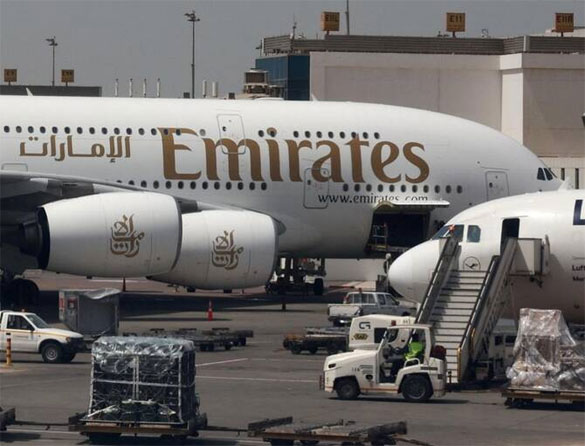
Iranians holding the UAE golden visa will be exempt from the ban. (REUTERS)
-----------
DUBAI: Dubai-based airline Emirates’ website said on Wednesday that Iranian nationals were not allowed to enter or transit the United Arab Emirates. The website of another carrier, Flydubai, said Iranian nationals holding a UAE “Golden Visa” were exempt and permitted to enter and transit the country.
The restrictions come amid heightened tensions between Iran and Gulf states.
Source: arabnews.com
Please click the following URL to read the text of the original Story
https://www.arabnews.com/node/2638383/middle-east
------
How Saudi Arabia’s East-West pipeline is easing the Hormuz chokehold on global oil markets
JONATHAN GORNALL
March 31, 2026
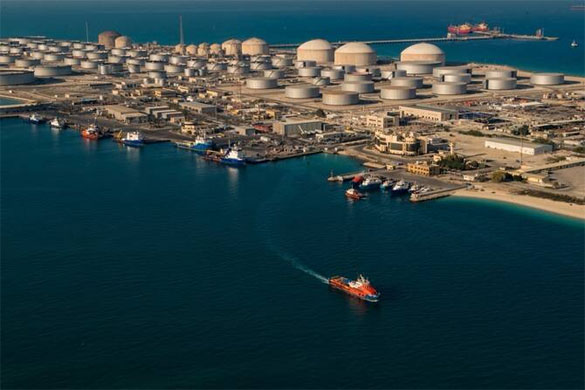
Petroline’s revival underscores Saudi Arabia’s strategy of bypassing maritime chokepoints, offering a partial buffer against supply shocks while exposing the vulnerability of global energy markets. (AFP)
------------
LONDON: It was created four decades ago in the shadow of an earlier regional conflict that threatened the flow of oil and gas through the Strait of Hormuz. Now, Saudi Arabia’s Petroline is back in the headlines and easing pressure on world energy markets once again.
Saudi Arabia’s East-West Pipeline consists of twin pipes and a series of pumping stations that carry oil more than 1,200 km across often challenging terrain, connecting the Abqaiq oil field in the Eastern Province to the port of Yanbu on the Red Sea.
Now, with passage through the Strait of Hormuz severely restricted, the 40-year-old Petroline is reported to be operating at full capacity.
According to reports by Bloomberg, Saudi national oil company Aramco triggered plans to ramp up Petroline operations the moment the US-Israeli war with Iran began on Feb. 28.
By March 4, it was already operating at close to full capacity, and tankers that would normally be heading to terminals in the Arabian Gulf were instead heading to the Red Sea.
The 7 million barrels a day flowing across the country from the Eastern Province to Yanbu only partially offsets the loss of the 15 million barrels that normally pass through the Strait of Hormuz — about 20 percent of the world’s daily total demand.
But, as Bloomberg reported on Saturday, Petroline is “one reason oil prices haven’t reached crisis-level highs.”
Access to oil via shipping is hostage not only to physical attacks by Iran, but also to fear of such attacks, compounded by prohibitive insurance hikes.
The insurance for oil tankers is calculated as a percentage of “hull value” — the cost of replacing the ship. According to Lloyd’s List, in normal times the cost of a week’s insurance to cover passage through the Strait of Hormuz ranges from 0.15 to 0.25 percent of hull value.
Last week, however, Lloyd’s reported that shipping companies were being quoted rates as high as 10 percent.
Reports suggest that some companies and even nations are succumbing to Iranian blackmail, negotiating fees with Iran to allow safe passage through the Strait. Last week Thailand confirmed that a Thai-flagged tanker, owned by the Bangchak Corporation, had passed through with Iran’s permission.
The relief delivered to world energy markets by Petroline during the crisis raises an intriguing possibility. If Saudi Arabia were to build a second pipeline, doubling Petroline’s capacity, then Iran’s stranglehold on the flow of oil through the Strait of Hormuz would end.
That would not, of course, resolve the problem faced by the world’s fleet of containerships and bulk carriers transporting other vital goods and materials through the chokepoint.
On Friday it was reported that two large container ships belonging to China’s Costco executed sudden U-turns while attempting passage through the Strait close to Iran’s Qeshm Island, just off the Iranian mainland.
According to maritime tracking services, the CSCL Indian Ocean and CSCL Arctic Ocean had clearly signaled their Chinese ownership before being forced to turn back.
But while a shortage of material goods would be bad for companies and consumers, it is the loss of the oil that lubricates the wheels of the global economy that poses the greatest threat to economic stability.
Certainly, the construction of a second Petroline would be a far easier, faster and cheaper alternative to one fanciful solution that has been touted on social media — the construction of a canal bypassing the Strait of Hormuz.
This would be a herculean engineering task, taking decades to build and requiring the construction of hundreds of locks to lift ships up and over the Hajar Mountains en route from the Arabian Gulf coast of the UAE to the Gulf of Oman.
Even if it could be achieved, a trans-Arabian canal would be exceptionally vulnerable to military action. Disabling a single ship could shut down the entire canal.
Not that Petroline itself is invulnerable. In May 2019, the Saudi energy ministry reported that the pipeline had been struck by drones launched by Yemen’s Houthi militia.
The drones hit two pumping stations along the route, located in Al-Duwadimi and Afif, about 200 km and 400 km west of Riyadh, respectively.
But in the same way that it was relatively easy to build, so the pipeline is relatively easy to repair.
A single strike can damage only a small section, which can be brought back online quickly, as demonstrated in 2019 when Aramco had Petroline back in action after only a brief shutdown.
Plus, a second, shadow pipeline could be constructed parallel to but at a safe distance from the original, ensuring that at least some oil could continue to flow even if one pipeline were temporarily disabled.
But Petroline can play a role only as long as shipping is free to transit the Red Sea in safety. The threat of Houthi attacks continues to occupy the minds of Aramco planners, shipping companies and maritime insurance firms.
As Bloomberg reported on Saturday, “flotillas of tankers have been redirected to the Red Sea port of Yanbu to collect the oil, providing an important lifeline for global supply.”
But, “with the Houthis now saying they are entering the war, the concern for the oil market will be that the Red Sea becomes a new front in the conflict.”
The Houthis had kept out of the war until Saturday, when they fired missiles at “sensitive military sites” in Israel, in an echo of the multiple attacks they launched against the country in support of Hamas following the Oct. 7, 2023, attack.
The Houthis also attacked or seized more than 170 ships sailing under many different flags in the Red Sea. As a result, many ships were re-routed around Africa’s Cape of Good Hope — a diversion costly in fuel and time and a blow to Egypt’s income from the Suez Canal.
In response, the US launched multiple attacks on Houthi sites and leadership in Yemen, which culminated in a ceasefire agreement, brokered by Oman, in May 2025.
Last year, however, Houthi attacks on shipping briefly resumed. On June 6 and 7, two cargo ships were attacked near the Houthi-controlled port of Hodeidah, and three crew members on board the Liberian-flagged Eternity C were killed.
As of Sunday, despite resuming missile attacks on Israel, the Houthis have so far given no indication that they would return to attacking shipping passing through the narrow Bab Al-Mandab Strait — at just 30 km wide, a bottleneck every bit as vulnerable as Hormuz.
If they did, global fuel costs would undoubtedly rise despite the flow of oil through Petroline.
Yanbu, where the oil line ends on the Red Sea, is more than 1,300 km from the Bab Al-Mandab and far from the scene of previous Houthi attacks on shipping in the southern Red Sea.
But if the Strait were blocked, tankers from the Far East hoping to load oil at Yanbu would face an incredibly lengthy and prohibitively expensive detour, forcing them around the Cape of Good Hope, up the west coast of Africa, through the Straits of Gibraltar into the Mediterranean and down the Suez Canal to Yanbu, and then back again with their cargo.
For a tanker coming from the east, this would add a 40,000 km round-trip to their voyage.
The Suez Canal is another potential chokepoint.
When Egyptian President Gamal Abdel Nasser nationalized the waterway in 1956, Britain and France, secretly assisted by Israel, attempted to depose Nasser and take back the Canal Zone by force of arms.
The canal was closed to shipping from October 1956 to March 1957, but the plan was thwarted by pressure from the US and the Soviet Union.
The canal was again closed by Egypt in 1967 at the start of the Six-Day War, and remained closed until June 1975.
Regardless of the vulnerability of the Bab Al-Mandab and the Suez, Petroline remains the world’s best hope for capping energy costs during the current crisis.
Petroline was a child of conflict, built in the 1980s during the “tanker war” that erupted amid the Iran-Iraq conflict. Between 1984 and 1988 more than 450 ships were attacked in or near the Arabian Gulf, by both Iraq and Iran.
Foreshadowing one aspect of the current crisis, the tit-for-tat began when Iraq attacked shipping using the Iranian oil terminal at Kharg Island, which is now a possible target for the thousands of US Marines and other ground forces en route to the Gulf.
Not all solutions have proved as resilient as Petroline.
In March 1987, Kuwait attempted to protect its tankers from attack by persuading the US to allow it to reflag its ships as American, but the plan backfired with disastrous consequences for the US.
Two months later, an Iraqi aircraft attacked the USS Stark, a guided-missile frigate, with two missiles, killing 37 crew. The Iraqis claimed to have mistaken the warship for an Iranian tanker.
There is another pipeline proposal which, under the current circumstances, might seem unworkable, or even unthinkable: to bypass Hormuz by building a new set of oil and gas pipelines from the Gulf producing states to the Mediterranean via Israel.
This, wrote Hal Brands, a senior fellow at the American Enterprise Institute, on Thursday, was a “likely scenario” that “fuses pressure with self-protection.”
But in light of Israel’s activities in Gaza, the West Bank and Lebanon, such a plan would require an enormous measure of pragmatism on the part of the Gulf states.
For his part, however, Israeli Prime Minister Benjamin Netanyahu has made clear that such a plan is on his post-war agenda.
“Just have oil pipelines, gas pipelines, going west through the Arabian Peninsula, right up to Israel, right up to our Mediterranean ports and you’ve just done away with the choke points forever,” he said during a speech on March 19.
“I see that as a real change that will follow this war.”
In fact, there is nothing new about this plan, apart from the proposed transit through Israel.
Work began in 1948 on the Trans-Arabian Pipeline, better known as the Tapline, along which oil was pumped from Ras Al-Mishab in the Eastern Province to a shipping terminal on the Mediterranean, just south of Sidon in Lebanon — a distance of 1,664 km.
By November 1950, the work was complete and oil was flowing.
In a sense, this was another innovation that was triggered by conflict, although on this occasion not one in the region.
In the immediate aftermath of the Second World War, there was an enormous demand for oil in Europe, which was being rebuilt economically and industrially under the terms of the US Marshall Plan.
There was no issue at the time with the Strait of Hormuz, or the Suez Canal, but the tankers of the time were simply not big enough, or sufficiently numerous, to slake Europe’s thirst for oil.
The Tapline, as it became known, served the world for 40 years until, with the new breed of massive oil tankers easily able to exceed its capacity, it was finally decommissioned in the 1990s.
In 1951, the year when the Tapline became fully operational, it carried more than one-third of the 278 million barrels of oil produced by Aramco. But as Aramco’s history of the project recounts, Tapline was more than just an artery for oil.
“The Tapline forever changed Saudi Arabia’s northern region, bringing facilities and prosperity along its route,” it read.
Around the line’s six pumping stations, “new communities sprang up, each with homes, schools and dining halls built for the families of people working on the Tapline.”
By the mid-1960s, “these communities had expanded to include mosques, shops, leisure facilities, theaters, playgrounds — and together had become home to more than 5,000 people.”
Tapline’s pumping stations have been out of service for decades, but “the towns they sparked still thrive today — Turaif, which did not exist in 1945, is now a port of entry into Saudi Arabia.”
The pipeline also created an investment boom. Between 1947 and 1952, Aramco and the Tapline Company paid out more than $46.8 million to more than 10,000 independent contractors, creating new skills and training as part of the project.
In December 2020, Tapline was selected as Saudi Arabia’s first industrial heritage site, and surveys are under way to propose it as a UNESCO World Heritage site.
Today, although the pumping stations have been dismantled, the Tapline itself remains, running parallel to the appropriately named Tapline Road.
The Tapline was saved for posterity after an initiative by Prince Badr bin Farhan, chairman of the Board of Directors of the Heritage Authority, in December 2020.
But the current geopolitical circumstance raises an intriguing question: could Saudi Arabia’s first industrial heritage site be relieved of its museum status, taken out of mothballs and pressed into service once again?
Tapline itself was, of course, not immune to regional conflicts.
The pumping of oil to the port of Sidon experienced several interruptions, starting with the Six-Day War in 1967. Operations were stopped again in 1975 following the outbreak of the Lebanese Civil War. Then in 1983, pumping to the port ended for good.
For seven years the pipeline was diverted to the Jordanian refinery Zarqa, for shipping from the Red Sea port of Aqaba, until 1990 when the Gulf War saw the Tapline fully retired.
During its four decades of service, the Tapline carried billions of barrels of oil from Abqaiq to Sidon.
Whether or not the Tapline could realistically be pressed back into service, both it and the Petroline demonstrate just how innovative Saudi Arabia can be under pressure, and perhaps offer permanent solutions to the troublesome chokepoints of Hormuz and Bab Al-Mandab.
Source: arabnews.com
Please click the following URL to read the text of the original Story
https://www.arabnews.com/node/2638351/saudi-arabia
------
More UK troops to be sent to Middle East, defence secretary announces
April 01, 2026
Cachella Smith
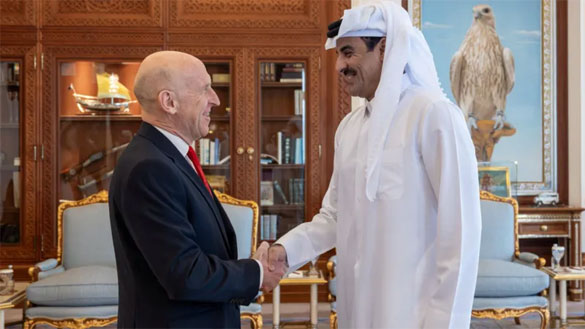
Defence Secretary John Healey has met with the Emir of Qatar as part of a trip to the Gulf nations
-------------
Extra British troops and more UK air defence systems will be deployed to the Middle East for defensive action against Iranian attacks, bringing the total number of UK personnel involved in the defence of the Gulf and Cyprus to around 1,000.
On a trip to the Gulf nations, Defence Secretary John Healey said extra air defence teams and systems would be deployed to Saudi Arabia, Bahrain and Kuwait while the use of Typhoon jets in Qatar will be extended.
"My message to Gulf partners is: Britain's best will help you defend your skies," he said.
The UK's position on the war in the Middle East is to participate in "defensive action" but US President Donald Trump has repeatedly criticised that stance.
Prime Minister Sir Keir Starmer said on Monday the UK is "not going to get dragged into this war" but would continue to defend its interests and allies in the region.
The defence secretary has been visiting Saudi Arabia, Qatar and Bahrain as the government announced the deployment of further systems, and associated teams, for the nations and for Kuwait.
Speaking to reporters from Qatar, Healey said the Gulf nations had praised the contributions of UK forces describing them as "a cornerstone" to their defence.
He added that Iran had been "expanding" its attacks in the region and that he expected the war to continue "for some weeks".
Qatar warned earlier on Tuesday that attacks on its civilian infrastructure are a threat to the entire region.
The comments came after a power and desalination plant in Kuwait was damaged in an attack earlier this week.
Visiting the UK Armed Forces at Dukhan air base, Healey said the government has extended the deployment of UK Typhoon jets to Qatar.
At the start of the month, Starmer said four additional jets would be sent to Qatar following the deployment of the Royal Air Force's joint UK-Qatari Typhoon squadron in January.
Separately, the defence secretary told Saudi Arabia's defence minister that the UK will deploy air defence missile system Sky Sabre there this week along with teams to operate the system.
The system, composed of radars, control node, and missile launchers, can intercept munitions and aircraft and will integrate within the wider air defences in the region, the ministry said.
The UK's Lightweight Multirole Missile launcher, a short-range air defence system, has already been deployed to Bahrain along with UK experts who will work to integrate the system into Bahraini defences - and ground-based air defence missile system Rapid Sentry has arrived in Kuwait.
Speaking on Monday, Starmer reiterated that UK troops will not be deployed on the ground in Iran.
"This is not our war and we're not going to get drawn into it," he said while responding to a question from reporters.
The UK previously gave permission for the US to use British military bases for "defensive" strikes on Iranian missile sites after Starmer denied a request for the use of UK bases for the initial US-Israeli strikes against Iran in February.
President Trump has been critical of the UK's involvement in the war, as well as that of other Nato allies.
On Tuesday, the president specifically referenced the UK as he said countries that did not participate in the initial strikes on Iran should "get your own oil" from the Strait of Hormuz.
In a post on his social media platform Truth Social, the US president said: "All of those countries that can't get jet fuel because of the Strait of Hormuz, like the United Kingdom, which refused to get involved in the decapitation of Iran, I have a suggestion for you: Number 1, buy from the U.S., we have plenty, and Number 2, build up some delayed courage, go to the Strait, and just TAKE IT.
"You'll have to start learning how to fight for yourself."
Healey told reporters on Tuesday that allies were looking at a range of options to keep the key shipping lane open. He said it would require an international response - which included the US.
He also said that military planners have been deployed to US military headquarters, and that a British Navy ship will also be used to facilitate autonomous drones that could clear mines from the Strait of Hormuz if and when that was necessary.
But he batted away the Trump administration's irritation with the UK not getting involved in the war.
"We're two nations whose militaries are bound closely together, that work closely together, whose intelligence services share uniquely the recognition of the threats around the world and the action that free nations must take and take together."
A Conservative Party spokesperson criticised Starmer's response to the conflict as being "confused and chaotic".
"He has spent the last fortnight telling us he won't get involved in this war and now he's sending British troops to the Middle East," a statement said.
"Only Kemi Badenoch has been clear that we need to act in Britain's national interest, while Starmer has only thought of what his backbenchers want and his own political interest because he has no backbone."
The Liberal Democrats have called for the government to publish legal advice to back up the deployment of more British troops to the Middle East.
The party's foreign affairs spokesperson, Calum Miller, said: "It's absolutely right that the government protects our troops, citizens and allies in the region who have come under unprovoked attack from Iran.
"But the prime minister must also resist any attempts by Trump to drag Britain down the path to war."
Zack Polanski, leader of the Green party of England and Wales, posted an online video in which he called for Britain to "stop the US using UK airspace" to launch bombing raids on Iran.
Polanski said: "Every day, US bombers are flying from UK bases, flying thousands of miles around the world to drop bombs on targets. We'll never know what those targets are..."
He added: "We are an accomplice in this conflict and and we don't need to be."
Source: bbc.com
Please click the following URL to read the text of the original Story
https://www.bbc.com/news/articles/c7vq76g45rvo
-------
Plateau massacre: JNI claims four Muslims killed, 10 missing
April 1, 2026
By Lekkyez Auta

Plateau State chapter of the Jama’atu Nasril Islam, JNI, has claimed that the Muslim community lost four of its members while 10 are still missing following the devastating attacks in the Gari Yawaye community of Angwan Rukuba in Jos North Local Government Area of the state on Sunday night which left over 30 people dead and several others injured.
In a statement issued on Tuesday by Salim Umar, the JNI Secretary in the state, the organization disclosed that the discovery was made after thorough investigations and reports from Muslim communities in the state following the attack.
Umar stated that contrary to stories making the rounds that only Christians were targeted in the attack, Muslim faithful also suffered casualties.
“The Jama’atu Nasril Islam (JNI), Plateau State Chapter, regrets to confirm the death of four Muslims and reports ten others missing following the recent attack on Anguwan Rukuba community in Jos North Local Government Area,” Umar said.
“Following thorough investigation and reports received from Muslim communities, we have discovered that four Muslims were killed while ten are still missing.”
He added that the bodies of some of the victims were identified by their relatives at the Jos University Teaching Hospital, JUTH, while the 10 missing persons have remained unaccounted for, and their families have continued to search for them since the incident with no luck.
“We have also discovered that two persons are currently receiving treatment at JUTH. JNI is in touch with the families of the victims.
“We condole with the parents of all the victims who lost their loved ones and call on the public to remain calm. We appreciate the efforts of the state government and the security agencies for controlling the situation,” the JNI Secretary said.
Source: dailypost.ng
Please click the following URL to read the text of the original Story
https://dailypost.ng/2026/04/01/plateau-massacre-jni-claims-four-muslims-killed-10-missing/
------
Three detained in Johor over TikTok content alleged to insult Islam and Johor royal institution
01 Apr 2026
JOHOR BAHRU, April 1 — Police have detained three individuals, including a 17-year-old teenager, to assist in an investigation into the dissemination of content on the TikTok application containing elements of incitement, defamation, and insults against Islam, the Johor royal institution, and the Johor police chief.
Johor police chief Datuk Ab Rahaman Arsad said that the two women and one man, aged between 17 and 49, were arrested in Taman Saujana here early this morning.
“Police received a report from a local man who detected a video uploaded by the owner of the account ‘ratunurputribalqis’ allegedly containing defamatory statements last Sunday,” he said in a statement today.
The content in the post included claims that the Sultan of Johor and the Tengku Mahkota Johor, as well as the Prime Minister, sought advice from the account owner in preparing speech texts.
Additionally, the content also displayed defamatory claims that the Sultan of Johor kept the account owner’s identification documents for certain purposes related to teachings she promoted.
The essence of the post also included accusations against the Johor State Islamic Religious Department of being involved in misconduct and corruption, as well as claims that obligatory prayers would revert to two rakaat and voluntary prayers to one rakaat.
Ab Rahaman said checks found that all suspects had no prior records and initial urine screening tests were negative.
He added that several items were seized for investigation, and the Magistrate’s Court here allowed them to be remanded for four days until April 3.
The case is being investigated under Section 4(1) of the Sedition Act 1948, Section 233 of the Communications and Multimedia Act 1988, and Sections 298 and 500 of the Penal Code.
Meanwhile, Johor Bahru South District Police Chief ACP Raub Selamat said in a separate statement that items seized included a jacket, mobile phones, glasses, rings, necklaces, bracelets, a table, a Quran, scripts, letters, and related accessories to assist investigations.
Earlier, Johor Islamic Religious Affairs Committee chairman Mohd Fared Mohd Khalid said strict action based on existing laws and enactments in Johor would be taken against those involved in deviant teachings.
This followed the spread of several video clips on social media found to contain misleading and deviant teachings, including one featuring an individual claiming to be “Ruhul Qudus, Ruhul Amin, Raja Muhammad or in my previous physical realm, Muhammad Putra Aminah.” — Bernama
Source: malaymail.com
Please click the following URL to read the text of the original Story
https://www.malaymail.com/news/malaysia/2026/04/01/three-detained-in-johor-over-tiktok-content-alleged-to-insult-islam-and-johor-royal-institution/214608
------
Global Consensus: Pakistan an Aggressor, Its Attacks on Afghan Territory Unjustifiable
April 1, 2026
United Nations experts have described the attacks carried out by Pakistan’s military regime on Afghanistan as being in complete contradiction with Article 2 of the United Nations Charter and with applicable customary and international laws. Article 2 of the Charter strictly prohibits the use of force. These experts added that Pakistan would only have had the right to use force and self-defense if it had first been attacked by Afghanistan. The International Criminal Court has also rejected the argument that the presence of terrorist groups in one country allows another country to attack it. The International Criminal Court stated: “The unlawful use of force means that Pakistan, in these attacks, has violated the fundamental human right to life of all those killed. Some attacks that cause civilian casualties may also be considered violations of international humanitarian law.” The aforementioned UN experts also said that Pakistan has so far not presented credible evidence showing that attacks on its territory are being carried out under the direction of the Afghan government. UN experts emphasize that every country has the right to protect its people from the threat of terrorism, but this must be done in accordance with international law. This discussion by UN experts comes at a time when the militias of Pakistan’s military regime repeatedly target civilians, including women and children, as well as public facilities in their attacks. The attack by Pakistan’s military regime on a drug treatment hospital in Kabul and on the tents of returning refugees is a clear example. According to the provided information, more than 400 people were martyred and around 300 others were injured in this attack. UN experts strongly condemned the attack on the drug treatment hospital and described it as a violation of international law. The UN experts have called on both countries to renew a ceasefire and reach a peace agreement between themselves. According to them, crises that threaten international security must be resolved peacefully. They also said they are in contact with both the Afghan government and Pakistan regarding these issues. Earlier, Amnesty International had asked Pakistan’s military regime for clarification regarding the attack, saying they must explain on what information this attack was based. Patricia, head of the Asia division of Human Rights Watch, said: “Pakistani authorities must conduct impartial investigations and bring to justice those involved in the attack on the drug treatment center and the site full of civilians.”
In this report, Human Rights Watch also provided details about how the incident occurred, stating, based on people’s accounts: “At the time of the attack on the hospital, hundreds of patients had gathered in the dining hall to break their fast.”
The world is aware of the fact that the Afghan government has never taken action against civilians; it has only targeted military facilities and posts in defense of its territory. In contrast, from the very first day of the conflict, the Pakistani regime has begun killing civilians and bombing civilian infrastructure. Due to Pakistan’s violation of ceasefire agreements, indiscriminate bombings, and shelling, a number of economic, social, and educational crises have also been created in Afghan provinces located near the imaginary line. People in villages and districts near this line have been displaced from their homes, their crops and residential areas have been destroyed, and their children have been deprived of education. Likewise, humanitarian and economic activities in these districts and villages have come to a halt, and the residents of these areas are living under difficult conditions with an uncertain future.
On this basis, UN experts have stressed that both sides must respect human rights and international humanitarian laws, ensure the protection of civilians, and safeguard health centers and markets from attacks. The ground reality is that since the aggression on Afghan territory and the start of the “Radd-ul-Zulm” operations by Afghanistan, no Pakistani civilian has been killed in the defensive and retaliatory operations of Afghan forces, nor have blind artillery attacks been carried out on people’s homes. It is Pakistan that, even during the days of Eid, turned the Eid of the people of Kunar into mourning by firing dozens of rockets at homes. The Pakistani regime does not target civilians by mistake, but deliberately. They have even targeted camps and tents of Afghan refugees who had been under oppression and exploitation by the Pakistani regime and had recently returned to their country. On last Wednesday, in various areas of Kunar, Pakistani regime shelling caused casualties to ten civilians. For several days, the Pakistani regime has also created a humanitarian crisis in Nuristan, targeting every person on foot or riding and destroying their vehicles. The main road of Barg-e-Matal and Kamdesh, which connects these two districts to Kunar, remains closed due to fear of clashes, exposing local people to shortages of food and threats to psychological security. A resident of Asadabad in Kunar told Radio Azadi about the situation last Wednesday:
“Last night was calm, and today until now, at 1 p.m., the situation is normal, but here in the center people are still afraid, because yesterday ten to twelve rockets landed in the Ma’no area, causing harm to people. People fear that rockets may come again. In Nari and Marawara, as far as I know, rockets are coming at any moment and hitting civilian homes, so the situation is not very good.”
Meanwhile, some residents of Kamdesh district in Nuristan say that the main road connecting Barg-e-Matal and Kamdesh to Kunar is still closed due to fear of clashes, and people in the area are facing severe difficulties.
A resident of this district, speaking on condition of anonymity, told Radio Azadi: “People are facing many problems, shops are closed, and basic food items in shops have run out, many people have nothing to eat, some even spent the entire fast on water and dry bread. The road is closed, and officials assure that the road connecting to Parun will reopen soon.”
It appears that Pakistan has once again taken on a project from its Western and American patrons and is fueling the fire in the region. Pakistan, which since its creation has been established to protect the interests and influence of the West, Britain, and the United States, is compelled to grasp even at straws for its survival and salvation. In contrast, the Islamic Emirate has from the beginning pursued a path of engagement and does not seek confrontation with any country. The Afghan government has stated from the outset that with the end of occupation, the phase of hostility and confrontation has also ended, and it now adopts a path of engagement with neighboring countries, the region, and the world. It has opened its arms to all countries for positive relations based on mutual respect. The Afghan government has also said that its relations with one country are not against another country.
Source: thekabultimes.com
Please click the following URL to read the text of the original Story
https://thekabultimes.com/global-consensus-pakistan-an-aggressor-its-attacks-on-afghan-territory-unjustifiable/
-----
India
‘At odds with values of Islam’: Liquor ban remark by Omar’s legislator faces blowback
Naveed Iqbal
Apr 1, 2026
The religious leadership of Kashmir, through its umbrella group, the Mutahida Majlis-e-Ulema (MMU), has lashed out at the “reckless statement” by National Conference MLA and former Justice of the J&K High Court, Hasnain Masoodi, on a potential liquor ban in the region. On Monday, Mastoid had told reporters outside the Assembly in Jammu that while he supports a liquor ban, “it would affect the revenue of the state government”. Stressing the examples of Bihar and Gujarat, he questioned whether a complete ban would encourage “smuggling and spurious liquor”.
A statement from the MMU said that such remarks are “deeply unfortunate when there are clear Islamic prohibitions on intoxicants, and it is fundamentally at odds with the values and beliefs of Islam”.
The MMU emphasised that the statement ignores the grave social consequences that liquor consumption has in general on families and society, including “domestic distress, financial hardship and moral degradation”.
The issue of a liquor ban has been in conversation in Kashmir for over a year. It also came up in the last session of the J&K Assembly. Members from the ruling National Conference and the opposition PDP had brought Private Members’ Bills seeking a ban on liquor in J&K. This was exacerbated by videos surfacing online of tourists openly consuming liquor in Gulmarg and in shikaras on the Dal Lake.
While the sale and consumption of liquor is not banned in J&K, its public consumption has always been frowned upon. Under Section 510 of the Ranbir Penal Code (RPC) — the criminal code that was in place in J&K before the abrogation of Article 370 in 2019 — “misconduct in public by a drunken person” was a punishable offence.
Liquor sales saw a rise from Rs 1,353 crore in 2020 to Rs 2,486 crore in 2024, adding substantially to J&K’s coffers. In March last year, J&K Chief Minister Omar Abdullah had dismissed speculation regarding the opening of new liquor stores in the UT. The government issued a clarification that, as per the J&K Excise Policy for the year 2025-26, 305 vends (wine shops) were put to e-auction, and after the culmination of the bidding process, 271 vends were allotted through the e-auction process (conducted by J&K Bank) to the successful bidders.
Around the same time, Kashmir’s chief cleric Mirwaiz Umar Farooq had criticised efforts to justify continuing liquor sales, specifically in the Valley.
On Tuesday, a spokesperson for the MMU added that justifications coming from a political party that claims to uphold the ethos, culture, and identity of Kashmir is both “disappointing and disturbing” and emphasised that economic considerations cannot be placed above moral, social, and human well-being, and that justifying liquor on revenue grounds reflects a troubling approach to governance.
Source: indianexpress.com
Please click the following URL to read the text of the original Story
https://indianexpress.com/article/india/odds-values-islam-liquor-ban-remark-by-omar-legislator-blowback-10611589/
-----
Badruddin Ajmal at a crossroads: As Assam Muslims move away, AIUDF faces a litmus test
Vikas Pathak
Apr 1, 2026
In Assam’s contested political terrain, Badruddin Ajmal’s AIUDF is a key political player given its hold over minority votes. However, in the coming Assembly elections, all eyes will be on how the party associated with Bengali-speaking Muslims performs following its collapse in the 2024 Lok Sabha elections in which Ajmal lost to the Congress’s Rakibul Hasan in Dhubri by more than 10-lakh votes.
The 2024 Lok Sabha result was bad news for the AIUDF, with distinct signs that its core base was looking at the Congress as an alternative. If the trend continues in the Assembly polls too, the Congress may post a decent performance in Lower Assam and the Barak Valley, though that may not be enough to defeat the BJP. Any signal that the Congress is becoming the favourite party of Bengali-speaking Muslims may polarise Upper Assam in a manner that the BJP reaps rich benefits there.
The AIUDF’s trajectory in Assam has been interesting since it was founded in 2005 and renamed four years later. The immediate trigger behind its formation was the repeal of the IMDT Act of 1983 by the Supreme Court in 2005 on a petition filed by Sarbananda Sonowal, current Union Minister and former Assam CM. The IMDT Act had laid the onus of proving someone an “illegal immigrant” on the government, which the indigenous Assamese saw as helping the undocumented migrants from across the border. The repeal of the Act, however, led to fear in the minds of Bengali-speaking Muslims and Ajmal floated his party to address their concerns.
The formation of the AIUDF dented the Congress’s Muslim votes, which fell from 58% in 2001 to 41% in 2011, academics Vikas Tripathi, Ahmed Tohidus Jaman and Dhruba Pratim Sharma write in a recent paper. However, the Congress still survived, the authors argue, because of a soft Hindutva slant of the Tarun Gogoi government. However, the BJP’s rise from 2016 brought a harder Hindutva position, where concerns around undocumented immigration from Bangladesh got aligned with indigenous Assamese concerns of a demographic shift.
The resultant polarisation seemed helpful both for the BJP and the AIUDF, as chunks of Bengali-speaking Muslims began to vote for the AIUDF and the counter-polarisation of Hindus also helped the BJP.
AIUDF’s political trajectory
There are eight Muslim-majority districts in Assam, where the minority community makes up an estimated 34% of the total population. The number of Assembly constituencies with strong Muslim influence is 45, while the number with an actual Muslim majority, which was earlier 30, is estimated at 22 after the last delimitation close to the Lok Sabha polls, political scientist Vikas Tripathi of Gauhati University told The Indian Express.
While the Congress led in 26 of these constituencies in the 2004 Lok Sabha elections, it could win only 14 of these in the 2006 Assembly polls, with the AIUDF winning nine. The BJP won four.
In the 2009 Lok Sabha polls, the AIUDF led in 22 of these seats and the Congress just 12, showing a significant shift among Bengali-speaking Muslims — who are the majority among Assam’s Muslims — regarding what they considered their party.
While the Congress recovered some ground in these seats in the 2011 Assembly polls, the 2014 Lok Sabha elections were a shocker for it, as it registered wins only in five of these, while the AIUDF won 22.
In the 2021 Assembly elections, the Congress and the AIUDF tied up to ensure that Muslim votes don’t split, but this led to counter-polarisation in Upper Assam, where the NDA won 43 seats and the Congress-led Mahajot just 12.
By the 2024 Lok Sabha polls, the Congress realised that its alliance with the AIUDF could alienate the Assamese majority voters and decided to contest alone. This election came as a shock for the AIUDF, as its support base went back to the Congress and it could not post a lead in even a single Muslim-majority Assembly seat. With Assam getting highly polarised on almost ethnic lines, Bengali-speaking Muslims decided to vote for the BJP’s main national rival rather than a small regional party. Tripathi, Jaman and Sharma argue in their paper that an important reason for this shift was the inability of the AIUDF to protect its voters during the NRC exercise, with nearly half of the 1.9 million people not making it to the final draft being Bengali Muslims.
The BJP, on its part, has relied on a hard Hindutva line in the state, which not just makes it register major gains in Upper Assam but also polarises Hindus in the Barak Valley and Lower Assam. At the same time, it has subtly reached out to the Mahimal and Kiran Sheikh Muslims by promising them Scheduled Caste (SC) status, something that isn’t permitted as SC status is not available to Muslims and Christians. Through this, the party is looking at making dents in Barak Valley and Lower Assam, too, apart from its surge in Upper Assam.
The coming elections are a make-or-break contest for the AIUDF, as any repeat of its 2021 and 2024 debacles will make it very difficult for it to rise again. However, it may turn out to be good news for the Congress, which can hope to register a respectable tally in such a situation.
Source: indianexpress.com
Please click the following URL to read the text of the original Story
https://indianexpress.com/article/political-pulse/badruddin-ajmal-assam-muslims-aiudf-10611920/
------
Bihar cleric who made ‘objectionable remarks’ against UP CM Adityanath’s mother arrested
Manish Sahu
Apr 1, 2026
Uttar Pradesh Police Tuesday arrested a 38-year-old cleric from Bihar for allegedly making objectionable remarks about Chief Minister Yogi Adityanath’s mother during a public meeting in Bihar in 2024.
Police said the matter came to light after a video of the accused’s remarks recently surfaced on social media.
Two separate cases, in Balrampur and Bahraich, have been registered against the accused, Mohammad Salim Qasmi, a resident of Bihar’s Araria district, said Amit Pathak, Inspector General of Police, Devipatan Range. The accused is a cleric at a local mosque in the district.
Police said the case was lodged on charges of promoting enmity between two groups, deliberate and malicious acts intended to outrage religious feelings of any class by insulting its religion or religious beliefs, and statements conducing to public mischief.
Police said they arrested Salim during questioning in connection with the Bahraich case registered at Kotwali police station.
“We arrested him on charges related to breach of peace and produced him before the court, which remanded him to judicial custody,” said Pradeep Kumar Singh, Station House Officer of Kotwali police station, adding that the case had been registered against Salim on March 8.
Police said protests were held in different parts of the state after the accused’s objectionable remarks came to light.
In another video doing the rounds on social media, the accused is purportedly heard admitting to his mistake and apologising.
He said on May 5, 2024, while attending a social reform and educational awareness conference in Miran Chak, Bhagalpur district, he delivered a speech where he made certain inappropriate and objectionable remarks about the UP CM’s mother, which he regrets.
He then seeks forgiveness and said he has especially apologised to the CM, assuring that he will not repeat such an error in the future.
Source: indianexpress.com
Please click the following URL to read the text of the original Story
https://indianexpress.com/article/cities/lucknow/bihar-cleric-mohammad-salim-qasmi-arrested-yogi-adityanath-mother-remarks-10611870/
-----
He grew a beard, offered namaz: How a UP history-sheeter led a double life as ‘Sultan’ for two decades
Manish Sahu
Apr 1, 2026
For nearly two decades, a history-sheeter from Moradabad named Naresh lived a quiet life in neighbouring Sambhal, assuming a new name — and religious identity.
Police said he went by the name Sultan, grew out his beard, took a house on rent near a mosque, and offered namaz. He also obtained forged documents, including an Aadhaar card, voter ID and PAN card, to bolster his fake identity.
It was during a routine verification drive last week to check the whereabouts of listed history-sheeters in the district that uncovered his carefully constructed double life, and led to the arrest of the 58-year-old.
“Naresh, a listed history-sheeter who had been missing for nearly two decades, was found living in Sambhal under the assumed identity of Sultan,” said Ran Vijay Singh, Additional Superintendent of Police, Moradabad. “We are now gathering details regarding the current status of cases registered against him.”
The op
According to Station House Officer of Pakwarha police station, Yogesh Kumar, a team was on routine patrol on Saturday, checking suspicious persons and vehicles and verifying accused persons and history-sheeters through the Yaksh app.
At the Hashampur crossing, the team received a tip-off — the informant said Naresh had gone to Pakwarha to meet someone and was at Dingarpur Road, preparing to leave.
Acting swiftly, the police team caught the suspect. When questioned, police said he initially identified himself as Sultan, son of Jamaluddin, a resident of Naharthair village in Sambhal.
During a search of his personal belongings, officers said they found an Aadhaar card, a PAN card and an e-Shram card with the same name and address.
They also recovered a small handbook written in Urdu from his kurta pocket. A purported letterhead of a right-wing group in the name of Sultan was also recovered, police said.
However, police said, a further search led to the recovery of a voter ID card in the name of Naresh, son of Shankar, as well as an Aadhaar card bearing the same name and an address in Moradabad’s Hashampur Gopal village.
Noticing the discrepancies in the recovered documents, police said they questioned the man again and he admitted that his real name is Naresh.
Police said he told them that multiple cases of robbery and dacoity had been registered against him and he was jailed for eight-nine years. He also said a history sheet had been opened against him at Pakwarha police station, leading to frequent police visits to his home.
To escape police scrutiny, officers said he told them he left his village 20-21 years ago, abandoning his family and relocating to Sambhal, where he began living under a false identity.
Source: indianexpress.com
Please click the following URL to read the text of the original Story
https://indianexpress.com/article/cities/lucknow/moradabad-history-sheeter-arrested-fake-identity-sambhal-10611634/
-----
Terrorist killed in overnight encounter in J&K’s Ganderbal, operation underway
01.04.26
A terrorist was killed in an overnight encounter in Jammu and Kashmir's Ganderbal district, the Army said on Wednesday.
A cordon and search operation was launched by security forces on Tuesday night, in Arahama area of Gandebal district based on inputs of suspicious movement in the region.
Based on specific intelligence input, joint search operation was launched by the Army and Jammu and Kashmir Police in general area Arahama of Ganderbal, Srinagar-based Chinar Corps said in a post on X.
"During the search, vigilant troops observed suspicious activity. On being challenged, terrorists opened fire and own troops retaliated," the Army said.
The cordon was tactically reorganised amidst intermittent firing, the Army wrote, saying the troops effectively retaliated with calibrated response, resulting in elimination of one terrorist.
Officials said the anti-terror operation is in progress.
Source: telegraphindia.com
Please click the following URL to read the text of the original Story
https://www.telegraphindia.com/india/terrorist-killed-in-overnight-encounter-in-jks-ganderbal-operation-underway/cid/2154114
------
Omar Abdullah questions withdrawal of security from NC headquarters after attack on Farooq
01.04.26
Jammu and Kashmir chief minister Omar Abdullah on Tuesday criticised the withdrawal of security from the National Conference (NC) headquarters in Srinagar, calling the move “incomprehensible” weeks after an assassination attempt on party president Farooq Abdullah.
The issue triggered a brief but heated discussion in the Jammu and Kashmir Assembly, with members across party lines raising concerns over security arrangements for political leaders.
Speaking to reporters outside the House, Omar Abdullah said the ‘Nawai Subuh’ complex has been left without any security cover despite frequent visits by Farooq Abdullah.
"The security at NC headquarters has not been reduced, but completely withdrawn," he said. "That in itself is surprising, because it has barely been weeks since the attack on Farooq Abdullah. At the time, everyone said it should not have happened, and it is a matter of concern."
On March 11, Farooq Abdullah narrowly escaped a point-blank shooting at a wedding function in Jammu.
Questioning the decision, the chief minister said, "Farooq Sahib visits that office two to three times a week. What is the compulsion? What is the reason that it had to be removed? If we come to know from the administration, it would be good."
The matter was raised during Zero Hour by NC MLA Hasnain Masoodi and was supported by legislators across parties, including NC members Nazir Ahmad Gurezi, Salman Sagar and Javid Hassan Baig, Congress MLA Nizam-ud-Din Bhat, and BJP’s S. S. Slathia.
Speaker Abdul Rahim Rather said the concerns expressed in the House required urgent attention.
"The message from this House is loud and clear: if you do not want to provide security, then declare Jammu and Kashmir a risk-free state. But a pick-and-choose approach has no merit. We are not speaking against any institution or the Lieutenant Governor; we are speaking against the system," he said.
Referring to the recent attack, he added, "if you are withdrawing security to his office, what message are you sending to the people?"
Deputy chief minister Surinder Choudhary said security should not be provided selectively.
"It must be ensured objectively, keeping in view the sacrifices made by leaders across parties in Jammu and Kashmir. Any arbitrary withdrawal or reduction of security is inappropriate, and agencies must act fairly to strengthen democracy," he said.
He added that the issue had been raised by members across party lines and was expected to come to the notice of the lieutenant governor.
The Assembly had earlier unanimously condemned the March 11 attack on Farooq Abdullah, describing it as a “glaring security lapse” and a “disgrace to humanity”, with several members calling for a judicial inquiry.
Source: telegraphindia.com
Please click the following URL to read the text of the original Story
https://www.telegraphindia.com/india/omar-abdullah-questions-withdrawal-of-security-from-nc-headquarters-after-attack-on-farooq/cid/2154049
------
Mideast
Mideast war driving major aid distribution disruptions: UN
March 31, 2026
GENEVA: Disruptions in global supply chains brought on by the war in the Middle East are impacting the delivery of tens of thousands of tons of food aid, the United Nations warned Tuesday.
The World Food Programme said deliveries of desperately-need food for aid operations around the world were facing long delays and increasing costs.
“For us, it’s the most significant disruption of supply chains that we have seen since Covid and the beginning of the war in Ukraine,” Corinne Fleischer, WFP’s supply chain chief, told reporters in Geneva, speaking via video link from Rome.
She said the UN agency currently had 70,000 metric tons of food impacted by the war in the Middle East.
Around half of that was on chartered bulk vessels, while the other half was in containers that were “either en route or stuck in ports and don’t move,” she said.
The effective blockade of the Strait of Hormuz by Iran, through which a fifth of the world’s oil and gas normally passes, has caused shortages in many countries.
WFP does not ship cargo directly through the Strait of Hormuz, but Fleischer warned the agency was “impacted by the ripple effects of what’s happening there.”
“This is a whole disruption of the global supply chain,” she said, pointing to vessels stuck in ports, not berthing properly, not leaving ports, or with containers not being offloaded.
And the disruptions are unlikely to be short-lived.
“What we’ve seen after COVID is that it took four to five months to get back into place once the situation stabilized,” she pointed out.
- Complex routes -
WFP was also being hit by carriers avoiding the Suez Canal and the Red Sea, Fleischer said.
The rerouting of vessels through the Horn of Africa and the Cape of Good Hope into Eastern Africa adds about 25 to 30 days of shipping time, which in turn translates to a 15-25-percent hike in rates, she said.
Conflict is also forcing WFP to create complex new routes to bring food into Afghanistan, where 17 million people are food insecure.
Fleischer said conflict with neighboring Pakistan had first pushed WFP to reroute cargo through Iran.
But then the Middle East war broke out, and cargo that was already en route was diverted to Dubai, and will now be trucked through Saudi Arabia, Jordan, Syria, Turkiye, Azerbaijan and Turkmenistan before finally reaching Afghanistan, she said.
“This adds about 1,000 euros per ton and another three weeks,” Fleischer explained.
In some countries, the effects of the crisis are already being felt in local transport costs, with prices surging 45 percent in Lebanon, and tripling in Afghanistan, WFP said.
The agency warned of the heavy impact on vulnerable populations.
“The people we are concerned about are not those who go to fuel stations to fill up their cars. They are people who already spend between 50 and 70 percent of their income on food,” Fleischer said.
There are already some 318 million people worldwide considered acutely food insecure, and the WFP warns an additional 45 million people could join their ranks if the Middle East war rages on beyond June.
Source: arabnews.com
Please click the following URL to read the text of the original Story
https://www.arabnews.com/node/2638377/middle-east
-----
Drone attack targets Kuwait airport, fuel tanks on fire: aviation agency
April 01, 2026
KUWAIT CITY, Kuwait: Kuwait’s civil aviation authority said the Gulf state’s international airport was under an Iranian drone attack on Wednesday that led to “a large fire” at fuel tanks.
“Kuwait International Airport has been subjected to blatant attacks by drones launched by Iran and the armed factions it supports,” the official Kuwait News Agency quoted the spokesman of the General Directorate of Civil Aviation as saying.
The spokesman, Abdullah Al?Rajhi, said “fuel storage tanks... were targeted, resulting in a large fire at the site,” reporting no casualties.
Source: arabnews.com
Please click the following URL to read the text of the original Story
https://www.arabnews.com/node/2638374/middle-east
------
White House says Trump to give address on Iran Wednesday night
April 01, 2026
WASHINGTON, United States: US President Donald Trump will deliver a national address at 9:00 p.m. Wednesday night (0100 GMT Thursday) related to the war against Iran, the White House said.
“TUNE IN: Tomorrow night at 9PM ET, President Trump will give an Address to the Nation to provide an important update on Iran,” Press Secretary Karoline Leavitt wrote Tuesday evening on X.
Source: arabnews.com
Please click the following URL to read the text of the original Story
https://www.arabnews.com/node/2638368/middle-east
------
Iraq’s ancient ruins must wait a bit longer to be uncovered
April 01, 2026
BAGHDAD: When you’re in a hole, it’s often said, stop digging. Unfortunately for international archeologists in Iraq, the Middle East war has forced them to do just that.
There are ruins in Iraq from some of the world’s earliest civilizations dating back thousands of years, and up to 60 teams would normally have been working on digs. But “all of these missions have left,” an government official in Baghdad said.
Adelheid Otto, 59, from the University of Munich, began a dig at ancient Shuruppak, modern-day Tell Fara, on Feb. 28 — the day the war began.
Her team of 18 German experts and students, and seven Iraqi archeologists, initially stayed. “We got kind of used to the rockets and drones above our heads,” she said.
But Iraqi officials urged them to depart, despite their discovery of ancient cuneiform tablets. Halting work was “like being a musician who can no longer play an instrument,” she said.
Chicago University professor Augusta McMahon was working at the 6,000-year-old Nippur site when the war began.
“We had pressure from a lot of different directions in terms of having to leave,” she said, and her eight-person team departed with an Iraqi escort on March 10.
In four decades in the region, it was her third evacuation. She had to leave Iraq in 2024, and Syria in 2011. “It is quite frustrating, along with everything else, I feel terribly bad for my Iraqi colleagues,” she said.
Source: arabnews.com
Please click the following URL to read the text of the original Story
https://www.arabnews.com/node/2638367/middle-east
------
At least seven killed in Israeli strikes in Beirut area, Lebanon says
April 01, 2026
BEIRUT: At least seven people were killed and 24 wounded in two Israeli strikes in the Beirut area, the Lebanese health ministry said on Wednesday, in attacks that hit vehicles in Beirut's southern outskirts and in an area just south of the capital.
The strikes are the latest in an escalating Israeli offensive in Lebanon which has killed at least 1,200 people and displaced 1.2 million others. Lebanon was pulled into the war in the Middle East when Hezbollah fired rockets at Israel in solidarity with Tehran, two days after Iran was attacked by Israel and the United States. Hezbollah's attack prompted a new Israeli ground and air offensive.
Israel's military said on Wednesday it carried out two separate strikes targeting a senior Hezbollah commander and another senior member of the Iran-aligned group in the Beirut area, but did not identify them or say whether they had been killed.
Lebanon's state news agency NNA reported that one strike hit a vehicle in the Khaldeh area south of Beirut, killing two people and wounding three others. A second strike hit vehicles in Beirut's Jnah area, where the health ministry said at least five people were killed and 21 wounded.
There was no immediate comment from Hezbollah on the strikes.
Source: arabnews.com
Please click the following URL to read the text of the original Story
https://www.arabnews.com/node/2638365/middle-east
-----
Israel says will reduce French defense imports ‘to zero’
April 01, 2026
JERUSALEM: Israel will reduce its military imports from France “to zero” in retaliation for French policies it deems hostile toward its interests, a defense ministry spokeswoman told AFP on Tuesday.
“The Director General of the Ministry of Defense, Amir Baram, has decided to reduce defense procurement from France to zero, diverting those funds to ‘Blue and White’ (Israeli) procurement or to allied nations,” the spokeswoman said.
According to the French parliament, Paris does not export weapons to Israel, but components to be used in defense systems or to be re-exported to third countries.
Israeli armament procurement from French defense companies totalled around $260 million between 2015 and 2024, according to the most recent French parliamentary report on military exports, which said global sales in 2024 topped $25 billion.
The Israeli spokeswoman added that the decision was in retaliation for several French government steps perceived as hostile to Israel.
Those were recognizing a Palestinian state, Israel’s exclusion from defense shows in France and “the recent ban on Israeli aircraft carrying munitions intended for the war against Iran from transiting French airspace.”
The Israeli announcement came as the French government said on Tuesday that it was surprised US President Donald Trump had accused France of being “very unhelpful” for not allowing Israel-bound planes carrying military equipment to use its airspace during the Iran war.
The French presidency said in a statement that the decision was “consistent with French policy since the start of this conflict.”
Israel’s defense ministry accused France of “harming Israel’s defense activities and the strategic cooperation between the two countries,” adding it viewed the moves “with great severity.”
“The French ban was imposed despite prior coordination, despite explanations that the munitions were intended solely for use against Iran, and despite the understanding that this effort serves the security of Europe,” the spokeswoman said.
On February 28, the US and Israel launched a massive military campaign against the Islamic republic, which has spiralled into a regional war.
Source: arabnews.com
Please click the following URL to read the text of the original Story
https://www.arabnews.com/node/2638359/middle-east
------
Jordan’s king and crown prince hold talks with Polish and German officials
March 31, 2026
AMMAN: King Abdullah of Jordan and Crown Prince Hussein bin Abdullah held meetings with senior international officials on Tuesday, focusing in particular on regional stability, humanitarian operations and enhanced cooperation.
During talks at Al-Husseiniya Palace with the Polish deputy prime minister and minister of national defense, Wladyslaw Kosiniak-Kamysz, the king stressed the need to restore comprehensive calm in the Middle East through dialogue and diplomacy, the Jordan News Agency reported.
He also highlighted the importance of efforts to expand the cooperation between Jordan and Poland, particularly in the military and security fields. The crown prince also attended the talks.
In a separate meeting, the king welcomed Mirjana Spoljaric Egger, president of the International Committee of the Red Cross, and expressed his appreciation for the humanitarian work of the organization in areas of conflict.
Spoljaric Egger highlighted the need to ensure civilians are protected in war zones, and commended Jordan for its role in efforts to promote stability.
They also discussed the upcoming High-Level Conference on Humanity in War, which Jordan will host toward the end of this year in partnership with the committee and several countries as part of their joint Global Initiative to Galvanize Political Commitment to International Humanitarian Law.
Meanwhile, the crown prince met Germany’s minister for economic cooperation and development, Reem Alabali Radovan, and expressed Jordan’s appreciation for the strong partnership between Amman and Berlin in the fields of economic and humanitarian development.
He also welcomed German support for a number of national projects, including advanced technical education, modernization of the public sector, and a national water-conveyance infrastructure project.
In addition, the crown prince and the minister discussed opportunities for expanded cooperation and joint initiatives.
Source: arabnews.com
Please click the following URL to read the text of the original Story
https://www.arabnews.com/node/2638353/middle-east
------
Arab World
Always online, rarely focused: Is ‘brain rot’ becoming a Saudi problem?
WAAD HUSSAIN
March 31, 2026
ALKHOBAR: Saudi Arabia’s young, hyper-connected population is spending more time online than ever before. Short videos, constant notifications and algorithm-driven feeds have become part of daily life.
Research from the American Psychological Association and the OECD has linked frequent digital interruptions to declining sustained attention, cognitive fatigue and learning challenges.
The phenomenon is often referred to online as “brain rot.” The term is informal and not medically recognized, but it has become shorthand for the cognitive strain associated with constant digital stimulation.
In Saudi Arabia, where social media penetration is among the highest in the region, the issue is increasingly visible in classrooms, offices and homes.
Platforms built around short videos have transformed how information is consumed. Content is fast, compressed and designed to hold attention for seconds rather than minutes.
Saud Al-Dossary, a university student in Riyadh, says the impact is most noticeable when he tries to study.
“I can sit with my books open and genuinely want to focus,” he said. “But my attention keeps breaking. Even when my phone is not in my hand, my mind expects interruption.”
He describes studying as mentally tiring, even when the workload is manageable. The problem, he says, is not understanding the material, but staying with it long enough to absorb it.
Educators, reflecting trends highlighted in OECD education reports, say this pattern is becoming increasingly common.
The shift accelerated during the pandemic, when learning moved online and screen time rose sharply. Even after a return to in-person education, habits formed during that period have largely remained.
Cognitive psychology research has long described attention as a finite resource that adapts to constant interruption by favoring speed and novelty over depth and retention.
Amina Al-Shahri, a university student in Dammam, says this has changed how she experiences learning.
“I notice it when I read,” she said. “I lose track easily. I reread the same page, not because it’s difficult, but because my focus slips.”
She added that silence has become harder to tolerate. “If nothing is happening, my instinct is to check my phone. It feels automatic.”
Mental health professionals say this constant stimulation can contribute to cognitive fatigue, sleep disruption and low-level anxiety. The effects are often subtle and cumulative rather than acute.
In Saudi workplaces, the issue appears less as a distraction and more as a matter of exhaustion.
Sara Al-Otaibi, a young Saudi working in a corporate environment, says digital overload has become normalized.
“You are expected to be available,” she said. “Messages come in all day, across different platforms. You jump between tasks constantly.”
The result, she said, is a feeling of busyness without depth. “At the end of the day, you feel drained, but not necessarily productive in a meaningful way.”
Research cited by organizations such as the World Health Organization, Deloitte and Harvard Business Review has broadened the understanding of burnout to include cognitive strain, a pattern human resources professionals say is increasingly visible among otherwise high-performing employees.
Instant messaging tools, particularly WhatsApp, have blurred the boundaries between focused work and continuous responsiveness. Over time, sustained thinking becomes harder to access.
Beyond work and study, digital behavior is reshaping everyday interactions.
Family gatherings are quieter. Conversations pause mid-sentence when screens light up. Waiting, once a neutral experience, is now filled instantly.
Al-Dossary says he notices this change in himself and those around him.
“Being alone with your thoughts feels uncomfortable now,” he said. “You reach for your phone without thinking.”
According to Harvard Medical School, unstructured mental downtime plays a key role in how the brain processes information, supports creativity and consolidates memory.
Saudi Arabia is investing heavily in education, innovation and a knowledge-based economy under Vision 2030. These ambitions depend on a workforce capable of learning, problem-solving and deep thinking.
Attention is foundational to all three.
If students struggle to focus, learning outcomes suffer. If professionals operate in a state of constant distraction, decision-making and creativity decline. If mental rest is continuously interrupted, burnout becomes more likely.
The concern is not technology itself. Smartphones and digital platforms are essential tools. The issue is unregulated use and environments that reward constant stimulation.
Mental health awareness has grown significantly in Saudi Arabia, and more young people are seeking support for concentration problems, sleep issues and mental exhaustion. In many cases, the underlying driver is not workload, but cognitive overload.
Experts caution against alarmism. There is no evidence that digital use permanently damages the brain. Cognitive patterns can be reshaped.
Small behavioral changes can make a difference, such as limiting notifications, creating uninterrupted periods for study or work, and separating professional communication from personal time where possible.
Al-Shahri says she has begun experimenting with boundaries.
“I’m not trying to quit social media,” she said. “I just want to be able to focus again when I need to.”
Her experience reflects a broader shift. Rather than rejecting technology, many Saudis are questioning how it fits into their lives.
The term “brain rot” may be casual, but the concerns it captures are real. Attention is becoming a scarce resource in a society that is always connected.
Source: arabnews.com
Please click the following URL to read the text of the original Story
https://www.arabnews.com/node/2638303/saudi-arabia
------
Saudi defense ministry says two drones intercepted
April 01, 2026
RIYADH: Saudi Arabia’s air defences intercepted and destroyed two drones on Wednesday, the Ministry of Defence said.
The ministry’s spokesperson, Major General Turki Al-Maliki, said the drones were detected and neutralised in recent hours.
The latest interception comes as Saudi Arabia has shot down dozens of drones in recent weeks, targeting key regions including the oil-rich Eastern Province.
The Iran war, which began on Feb. 28, has entered its second month, with Iranian missile and drone attacks increasingly targeting Gulf states and critical energy infrastructure.
Source: arabnews.com
Please click the following URL to read the text of the original Story
https://www.arabnews.com/node/2638387/saudi-arabia
------
Saudi ambassador to UK receives Egypt’s ambassador in London
March 31, 2026
LONDON: Saudi Ambassador to UK Prince Abdullah bin Khalid bin Sultan received Egypt’s Ambassador to the UK Ashraf Swelam at the Saudi Embassy in London on Tuesday.
“During the meeting, they reviewed bilateral relations and ways to enhance them across various fields,” the Saudi Embassy wrote in a post on X.
Prince Abdullah recently also met Lord Coaker, minister of state at the Ministry of Defence of the UK.
“We reviewed key areas of bilateral cooperation and exchanged views on regional developments,” he said in a post on X. “Additionally, we underscored the importance of sustained defence cooperation, and the preservation of regional and global peace and stability.”
Source: arabnews.com
Please click the following URL to read the text of the original Story
https://www.arabnews.com/node/2638335/saudi-arabia
------
Serving pilgrims is Kingdom’s deep-rooted commitment, says Madinah governor
March 31, 2026
JEDDAH: Madinah Gov. Prince Salman bin Sultan opened the third Umrah and Ziyarah Forum at the King Salman International Convention Center.
Organized by the Ministry of Hajj and Umrah in partnership with the Pilgrim Experience Program, the three-day event runs until April 1.
In his opening remarks, the governor affirmed that serving pilgrims is a deep-rooted commitment established since the Kingdom’s founding and upheld by successive leaderships.
He noted that the forum is gaining importance as a global platform that brings together experts, stakeholders, and investors to exchange expertise, explore opportunities, and shape the future of the Umrah and Ziyarah sector in support of Saudi Vision 2030 targets.
The governor also inaugurated the King Abdulaziz Foundation’s “Historical Atlas of the Prophetic Biography” and launched a naming initiative for neighborhoods and streets within the Rua Al-Madinah project, using historically documented names to preserve the area’s cultural and urban identity near the Prophet’s Mosque.
The event hosted the signing of several agreements and memoranda of understanding, as well as the presentation of Umrah and Ziyarah Forum awards to distinguished organizations and Umrah companies.
During the forum, Minister of Hajj and Umrah Tawfiq Al-Rabiah announced that the ministry has launched a special operations room to address challenges and provide services to pilgrims arriving from abroad, in collaboration with the General Authority of Civil Aviation and other relevant agencies. This initiative aims to ensure pilgrims’ comfort and safety during their rituals.
He added that 18 million Umrah performers arrived from outside the Kingdom this year, marking a growth of over 214 percent compared to 2022.
Al-Rabiah commended the Kingdom’s leadership for their support of the Umrah sector and noted that pilgrim satisfaction rose to 94 percent by 2025, alongside more than 15.6 million visitors to Al-Rawdah Al-Sharifah and significant increases in the number of developed historical sites.
He also announced that the Nusuk app has surpassed 51 million users worldwide. Developed by the Ministry of Hajj and Umrah, the app provides more than 130 digital services to help pilgrims plan their journey — from issuing Umrah permits and booking visits to Al-Rawdah Al-Sharifah to checking crowd density and accessing support — enhancing the overall experience and satisfaction of visitors.
The forum serves as a platform for sharing experiences and building partnerships, featuring over 150 exhibitors, 50 workshops, and the signing of more than 5,000 agreements, all aimed at improving Umrah and visitation services.
The accompanying exhibition brings together a diverse group of entities from the public, private, and nonprofit sectors involved in the pilgrim journey, including real estate, technology and artificial intelligence, hospitality, tourism, aviation, government services, logistics, healthcare, and sustainability.
The exhibition serves as an interactive platform that connects sector stakeholders and showcases advanced technologies and innovative solutions that enhance the pilgrim experience across operational, technical, sustainability, and cultural dimensions.
It also highlights automation and cultural experiences in Madinah, while promoting knowledge exchange and public-private partnerships to improve service quality.
Source: arabnews.com
Please click the following URL to read the text of the original Story
https://www.arabnews.com/node/2638313/saudi-arabia
------
Saudi cardiac surgeon honored in US with lifetime achievement award
March 31, 2026
RIYADH: A consultant cardiac surgeon at King Faisal Specialist Hospital has been awarded the American College of Cardiology 2026 Lifetime Achievement Award.
Prof. Zohair Al-Halees received the honor in recognition of his decades-long contribution to advancing cardiac surgery and his scientific and educational impact on cardiac care both in Saudi Arabia and internationally.
The award was presented during the college’s annual scientific session in New Orleans in the presence of leading cardiology experts from around the world, the Saudi Press Agency reported on Tuesday.
Al-Halees’ professional career spans more than 48 years, during which he has performed over 25,000 cardiac surgeries. He established the first congenital heart defects registry in the Middle East and played a central role in developing an integrated heart center at King Faisal Specialist Hospital, bringing together cardiac surgery, cardiology and critical care, while mentoring and training dozens of young surgeons.
Internationally, he led more than 60 humanitarian and educational surgical missions in more than 20 countries. His academic contributions include publishing more than 150 scientific papers and contributing to specialized reference textbooks. He was also elected president of the World Society for Pediatric and Congenital Heart Surgery, becoming the first Saudi and Arab physician to hold the position.
During the award ceremony, the American College of Cardiology highlighted Al-Halees’ contributions to advancing heart valve replacement surgery, including a pioneering technique that replaces a damaged valve with the patient’s own tissue.
This approach has enabled patients, particularly children and adolescents, to live with a valve that adapts to natural growth, reduces the need for lifelong medication, and improves long-term quality of life.
This surgical innovation, along with his work in treating complex congenital heart defects in infants and children, has improved success rates, reduced complications and enhanced recovery outcomes, as documented in leading international medical references, reinforcing his standing as a global pioneer in cardiac surgery.
Source: arabnews.com
Please click the following URL to read the text of the original Story
https://www.arabnews.com/node/2638294/saudi-arabia
-----
Jeddah forum explores AI’s role in libraries
March 31, 2026
JEDDAH: King Abdulaziz University in Jeddah recently organized a forum to explore the use of artificial intelligence in developing knowledge systems and supporting digital transformation.
The two-day event, which concluded on Tuesday at the King Faisal Convention Center, highlighted the role of libraries and information institutions in supporting education, research, and innovation in the digital era.
Opening the forum on behalf of the university’s president, Prof. Amin bin Yousef Noaman, the vice president for graduate studies and scientific research, also marked the launch of the ScienceDirect full-text database.
The platform provides access to over 23 million articles and book chapters from around 3,000 scientific journals and more than 48,000 books.
The forum included six panel discussions with 20 speakers, along with seven virtual sessions, workshops, and training courses.
An accompanying exhibition showcased technological solutions, allowing participants to engage with database providers and explore knowledge systems.
Sessions focused on the integration of AI in libraries and academic institutions, addressing governance, academic learning, and heritage preservation in the context of digital transformation.
The event also explored ways to strengthen library and information science practices to support future research, while experts discussed challenges related to AI literacy and shared best practices.
Discussions highlighted the role of AI in supporting the goals of Saudi Vision 2030 by improving the efficiency of information institutions and contributing to the knowledge economy.
The university’s General Administration of Library Affairs also announced the winners of the Elsevier Award for the top three published scientific papers.
Prof. Abdullah Baabdullah received the Research Impact Award, Abrar Al-Sufyani was named Best Emerging Researcher, and Prof. Zuhair Natto received the Academic Excellence Award.
The initiative aims to equip library professionals with a better understanding of AI and its impact on information services, while supporting the university’s role in the knowledge sector and sustainable development.
Source: arabnews.com
Please click the following URL to read the text of the original Story
https://www.arabnews.com/node/2638291/saudi-arabia
------
Historic Qur’an highlights artistic heritage in Makka
March 31, 2026
Makkah: The Holy Qur’an Museum in the Hira Cultural District in Makkah has highlighted a rare and unique example of Islamic artistic creativity — a historic copy of the Holy Qur’an written in the shape of a ship, reflecting the mastery and artistry Muslims achieved in Qur’an writing throughout the ages.
This copy is considered one of the most distinguished heritage pieces, the Saudi Press Agency reported on Tuesday.
It is estimated to date back to the 5th century AH (11th century CE), making it a testament to the development of Islamic calligraphy and ornamentation during that era.
It bears the marks of time, with some of its letters changing color from black to brown due to the age of the materials used.
Red markings were later added to clarify its recitation, reflecting Muslims’ continued interest in preserving copies of the Holy Qur’an and facilitating their recitation, the SPA reported.
This rare copy is preserved in the collections of the King Abdulaziz Library, which provides special care for preserving Islamic heritage and rare manuscripts, and making them accessible to researchers and interested parties, highlighting the civilizational legacy of the Kingdom and Islamic world.
Source: arabnews.com
Please click the following URL to read the text of the original Story
https://www.arabnews.com/node/2638286/saudi-arabia
------
Europe
Russian military transport plane crashes in Crimea
31 Mar, 2026
A Russian An-26 military transport plane crashed in Crimea on Tuesday evening, killing all 29 people on board, the Defense Ministry has said.
According to the MOD, communication with the aircraft was lost at around 6 PM local time during a “routine flight” over the strategic Black Sea peninsula.
The Russian Defense Ministry said there were “no signs of external impact on the aircraft,” implying that the plane had not been shot down by Ukraine. TASS cited a source as saying that the plane crashed into a mountain.
RIA Novosti reported that preliminary data suggests the aircraft may have suffered a technical issue.
The An-26 is a twin-engine turboprop aircraft capable of transporting up to 40 soldiers and designed for deploying paratroopers and evacuating the wounded.
Source: rt.com
Please click the following URL to read the text of the original Story
https://www.rt.com/russia/636897-russian-military-transport-crashes/
-------
'Please don't shut our mosque over planning error'
April 01, 2026
Haider Saleem
Worshippers at a Greater Manchester mosque have said they fear it could be shut down over a lack of correct planning permission.
Hundreds of people go to the Salford Islamic Community Centre, in Langworthy Road, which is being investigated by the city council over what the building can be used for.
It comes after a complaint that the building has been used as a mosque since 2017 despite only having permission to operate as a commercial premises. Imam Braima Balde said the centre was "where we come together to pray," adding: "I'm a little worried the mosque could close."
In an email to the landlord, who declined to comment, the Salford Council warned enforcement action could follow.
It said it discovered the mosque had not applied to change the use of the building before it opened in 2017 - and the premises were instead listed in its records as a shop.
The mosque's architect told the BBC a change-of-use application had not yet been submitted but would be soon.
More than 400 people have signed a petition calling for the centre to remain open.
Balde said the mosque also provided Jummah and Nikah services, ran a madrassa for children, organised street-cleaning projects and had previously provided free meals for homeless people and neighbours.
Worshipper Jamal Ibrahim said the mosque played an important role for local families.
"Worship is very important to me, my children and my neighbours," he said.
"If the mosque closed, we would have to travel much further to pray, and that would be difficult, especially as I attend five times a day."
He said he had been attending the mosque for more than four years.
Supporters told the BBC other mosques in the area were not within walking distance and were already busy on Fridays, raising concerns that losing the site would put extra pressure on already stretched congregations and congested roads.
Source: bbc.com
Please click the following URL to read the text of the original Story
https://www.bbc.com/news/articles/cgk0dxj4571o
-------
Katie Hopkins didn’t confront Muslim MPs in the House of Commons
31 MARCH 2026
A post circulating on social media claims Katie Hopkins accused Muslim MPs of “shameful political interference” during a speech in the House of Commons.
But there’s no evidence this happened, and images supposedly showing her in the Commons were generated with artificial intelligence (AI).
The post, which has been shared more than 1,000 times, claims “Katie Hopkins unleashed hell in the Commons today”, and quotes her as saying: “You should be ashamed – your campaigns twisted police decisions and put public safety at risk!”
It also includes a collage of two images, both supposedly showing Ms Hopkins speaking at the despatch box. One image appears to show MPs Adnan Hussain, Iqbal Mohamed and Zarah Sultana seated on the bankbenches, with Reform MPs Richard Tice, Lee Anderson and Danny Kruger seated just behind Ms Hopkins.
But there’s no record of these words being said, or her speaking in parliament, in Hansard, the official record of all parliamentary proceedings. Ms Hopkins is not an MP.
The post also claims to show events that happened “today” but it was shared on 13 February. The House of Commons rose for recess on 12 February, and there were no proceedings in the Commons from 13 until 23 February.
AI-generated images
When we searched the collage using Google Lens, a note under the ‘about this image’ section says it was “made with Google AI” indicating it contained SynthID—a digital watermark embedded into content that has been created or edited with Google AI tools.
We often see fake quotes and posts attributed to public figures spread widely online. It’s important to consider whether content you see on social media comes from a trustworthy and verifiable source before sharing it.
Source: fullfact.org
Please click the following URL to read the text of the original Story
https://fullfact.org/politics/katie-hopkins-house-of-commons-confront-muslim-mps/
------
Boy with autism, 12, baking cakes against racism visits Glasgow Mosque
April 01, 2026
By Emily Moore
An inspiring young autistic boy who bakes cakes as a way of helping to tackle Islamophobia and racism has visited a Glasgow Mosque as part of his family's nationwide tour.
Joshua Harris, also known as The Joshie Man, along with his dad, Dan, started Cake Not Hate after an incident at their local mosque in Peterborough.
Determined to respond with compassion rather than division, Dan and Josh turned to baking as a way to connect with those affected and demonstrate support.
Their campaign has gained a large attraction amongst a number of communities with the pair's Instagram page gaining more than 100,000 followers.
As part of their Scotland-wide tour the father and son, duo, paid a visit to the the country's largest Masjid, the Glasgow Central Mosque.
Speaking to the Glasgow Times, Dan said: "“The Cake Not Hate campaign has been driven because we want the Muslim community and other faiths that have been under attack from the far right to know that the far right do not represent the British public.
"We have been visiting dozens of mosques and other places of worship across the UK with the campaign Cake Not Hate in order to show those people this.
"We’ve been warmly received by all of these places of worship. Joshie has been diligently baking the cakes, he bakes them all week and then on a Friday he puts them in the car because we spend all weekend driving around.
"We’ve been to dozens of places from all different parts of the UK and we’ll be continuing this campaign because it is resonating with communities who are unfairly under attack.”
Josh and Dan were given a warm welcome by leaders of the Mosque before joining in with Zuhr prayers.
Later on, the pair were able to wheel inside their sweet treats to hand out to people who had turned out to see them.
Going through three boxes worth of the treats, Josh made sure to hand them out to as many people as possible.
Omar Afzal, director of Public Affairs at the Scottish Association of Mosques, praised the families work within the communities they visit.
He said: “Joshie may be non-speaking, but his message of kindness and unity is reverberating across the world.
"We are delighted to welcome Cake Not Hate to Scotland and look forward to communities coming together to celebrate compassion, understanding, and solidarity.”
Source: glasgowtimes.co.uk
Please click the following URL to read the text of the original Story
https://www.glasgowtimes.co.uk/news/scottish-news/25981408.boy-autism-12-baking-cakes-racism-visits-glasgow-mosque/
-------
Shahjalal Islamic Centre GoFundMe for new study room
31ST MARCH
By Oli Picton
An Islamic centre in Ipswich has launched a GoFundMe to fund a new study room.
Shahjalal Islamic Centre & Masjid, a mosque in Argyle Street, are nearing their funding goal of £1,100 to pay for a new room for Hifz students to study the Qur'an.
The mosque was started in Ipswich in the 1990s as a hub before moving to its current site in 2015.
The centre serves a diverse population of Muslims and non-Muslims alike, with Friday sermons delivered in Bengali and English.
Shahjalal Masjid offers Hifz classes, specialist memorisation of the Qur'an to both children and adults but spaces are full and a new room is required.
The funds will help pay for a new dedicated space for students to study in peace.
They said: "Your donations will go towards construction, essential furnishing and creating a safe and inspiring space for our students.
"This mosque began as a vision shared by a small group of individuals over three decades ago. Today, we have the opportunity to continue that vision and strengthen it for the next generation."
Source: ipswichstar.co.uk
Please click the following URL to read the text of the original Story
https://www.ipswichstar.co.uk/news/25979226.shahjalal-islamic-centre-gofundme-new-study-room/
------
UK and France extend talks over new small boats deal
Brian Wheeler
April 01, 2026
The UK is to pay France £16.2m to patrol beaches for the next two months, as the two sides continue to hammer out a new deal to intercept small boats attempting to cross the English Channel.
Under a three-year agreement signed in 2023, the UK has paid £476m to France for extra patrols to disrupt migrant smuggling gangs.
That agreement had been due to expire at midnight - but talks to renew it have been extended by two months, as the UK pushes for more enforcement officers to be deployed by the French authorities.
UK sources claimed Home Secretary Shabana Mahmood was "driving a hard bargain to deliver a better deal for the British people," adding: "We need more bang for our buck".
Conservative shadow home secretary Chris Philp said Labour were paying France for "continued failure".
He added: "We shouldn't pay the French a penny until they agree to substantially increase their prevention rate and start intercepting at sea by force - as they promised last summer."
Liberal Democrats immigration and asylum spokesperson Will Forster MP said "blowing up our international partnerships is never going to fix the problems in our immigration and asylum system".
"The only way to properly deter people from making these dangerous crossings and to break the criminal gangs' business model for good is to agree a large-scale returns agreement with France," he said.
Conservative leader Kemi Badenoch and Reform leader Nigel Farage have both said UK needs to pull out of the European Convention on Human Rights (ECHR) to stop small boat crossings.
Speaking on Tuesday, Reform UK Treasury Spokesperson Robert Jenrick said: "You can't spend hundreds of millions of pounds begging the French to take action" as he called such a move a "complete farce".
"The UK needs a sovereign deterrent," he added as he called for the government to "detain and deport every single illegal migrant who comes into our country".
The French authorities are reported by The Guardian to be concerned that UK demands could put the lives of asylum seekers at greater risk.
Under the current deal, nearly 700 law enforcement officers are on the ground patrolling beaches, using drones and buggies to stop people getting on boats.
The UK government claims the deal has prevented 42,000 illegal migrants getting on boats, although the overall number making the journey across the Channel has continued to increase.
The two month extension to the patrol deal is being backed by £16.2m in UK funding, according to the Home Office.
In a statement, Mahmood said: "Our work with France has stopped 42,000 attempts by illegal migrants to make the journey across the Channel.
"While we finalise a new and improved UK-France deal, French law enforcement operations to stop illegal migrants in France will continue.
"I will do whatever it takes to restore order and control at our borders."
When it was announced in 2023, the previous Conservative government said the £476m package would fund a new detention centre in France and hundreds of extra law enforcement officers on France's northern shores.
France agreed to make an unspecified "substantial and continuing" contribution.
Crossings in the Channel have increased over the past three years, with 41,472 people arriving in the UK by small boat in 2025 and Mahmood is under pressure to bring numbers down.
The home secretary is understood to be pushing for the new arrangement to include performance-related clauses that would link funding to the proportion of boats intercepted by the French, as first reported by the Times.
In August 2025, the Labour government signed a separate "one-in-one-out" deal with France, which allows the UK to return some small boat arrivals to France while admitting an equivalent number of migrants from France who have not attempted to come to the UK.
As of February this year, 305 people had been returned to France and 367 people had arrived in the UK under the scheme.
On pulling out of the ECHR, the Tory leader said: "The government came in with a promise to smash the gangs and that has not happened".
Badenoch added that the Conservatives had a borders plan which supports leaving the ECHR "including working with our European partners, a removals force and returns backed up by visa sanctions."
Speaking to reporters earlier at a news conference, the Reform leader said a renewed deal "wouldn't make any difference".
"Even if the French do stop boats from crossing, the same people come back the next time there is a calm day," Farage added.
He said a Reform UK government would order the Royal Navy to tow small boats back to northern France, which he claimed would be possible if the UK pulled out of the ECHR.
Source: bbc.com
Please click the following URL to read the text of the original Story
https://www.bbc.com/news/articles/c3exveglpe3o
------
EU diplomats call Kiev’s obstruction of Druzhba inspection ‘not smart’ – media
31 Mar, 2026
Ukraine’s delay of an EU inspection of the Druzhba oil pipeline for nearly two weeks is “not smart,” unnamed diplomatic sources have told Euractiv. Kiev had earlier agreed to allow the bloc’s experts to check the conduits for alleged damage.
The Soviet-era pipeline has been used to deliver Russian crude through Ukrainian territory to Hungary and Slovakia. Kiev claims the pipeline was damaged in Russian strikes – something that Moscow denies. Budapest has also rejected Kiev’s claims, arguing that the Ukrainian authorities deliberately halted the flow for political reasons.
Earlier in March, European Council President Antonio Costa and European Commission President Ursula von der Leyen announced that Kiev would allow an EU-funded inspection of the pipeline. According to Euractiv, the team is still waiting for a green light from Kiev to go to the site despite being in Ukraine for weeks.
“We don’t have a clear picture of what the Ukrainian play here is,” an EU diplomat told the media outlet. Other sources contacted by Euractiv called Kiev’s actions “unclear” and “not smart.”
“If Druzhba is deblocked, all sides win,” another EU diplomat said, adding that it would allow Hungary and Slovakia get their energy supplies and Ukraine, in turn, would get a €90 billion ($105 billion) assistance package from the EU, which is currently blocked by Budapest.
“The only way out of this stalemate is to check the situation on the ground and see there what the truth is,” the diplomat stated. Last week, Bratislava also said that it would veto the next round of Russia sanctions, as well as derail any attempts to simplify Kiev’s potential accession to the EU if the pipeline issue is not resolved.
In mid-March, Ukraine’s Vladimir Zelensky stated he was opposing the resumption of Russian oil shipments, and accused Brussels of “blackmail” over the inspection. Moscow retorted earlier this month that it was Kiev that subjected Hungary and Slovakia to “energy blackmail,” warning that Ukraine’s aggressive stance threatens the energy security of the bloc.
Source: rt.com
Please click the following URL to read the text of the original Story
https://www.rt.com/news/636898-lebanon-ukrainian-embassy-israeli-spy/
------
North America
NATO without America? A slow shift is already underway
31 Mar, 2026
US President Donald Trump’s approach to foreign policy is often dismissed as chaotic or erratic. In reality, it reflects a deeper shift that is unlikely to disappear when he leaves office. Beneath the surface lies a consistent worldview, one shaped by populism and nationalism, that’s steadily gaining ground, both within the United States and globally.
This shift is already reshaping long-standing institutions. Nowhere is this more visible than in Washington’s relationship with its European allies.
For decades, US foreign policy rested on a simple premise: alliances, above all NATO, were the foundation of American power and influence. That consensus held across party lines for nearly 80 years. Today, it’s breaking down.
Trump is not merely skeptical of alliances, he openly questions their value. His reaction to the refusal of European allies to support US and Israeli military action against Iran was telling. Writing on Truth Social, he described NATO as a “paper tiger” and accused American allies of cowardice. “Everyone agrees with us, but they don’t want to help. And we, as the United States, must remember this,” he said.
The message is blunt: if allies don’t act when Washington calls, then their status as allies is called into question.
This doesn’t mean the United States is about to withdraw from NATO. What is unfolding is more gradual, and arguably more significant – a quiet dismantling of the alliance’s traditional structure.
There are growing signs of this shift: sharper rhetoric, fewer high-level engagements, and plans to reduce the American role within NATO’s command system. This is no longer just political theater.
Even when constrained by Congress, as in the decision to block a rapid reduction of US troops in Europe, the administration has adjusted tactics rather than abandoning its objective. The restriction on cutting troop levels below 76,000 slows the process, but doesn’t change its direction. The broader aim remains clear: shifting responsibility onto Europe.
A key element of this strategy is the gradual transfer of operational control. Reforms to NATO’s integrated command structure are already underway. Soon, all three of the alliance’s operational commands will be led by Europeans. This marks a significant step towards transforming NATO into a European-led organization.
If the United States relinquishes its central role in force planning and command, the consequences will be profound. NATO may remain intact in form, but its substance will change. Washington will no longer lead the alliance in the way it once did.
This isn’t simply a matter of one president’s preferences. Trump reflects a broader shift in American public opinion.
There’s growing fatigue in the United States with the idea of underwriting the security of others. Years of costly conflicts in the Middle East, rising national debt, and pressing domestic concerns have made the traditional role of global guarantor increasingly unpopular.
Don’t mistake it for isolationism. The recent strikes on Iran demonstrate that Washington remains willing to use force when it chooses. The change is more subtle, and more consequential.
The United States no longer wants to be bound by obligations.
Alliances and institutions that once defined American leadership are now seen as constraints. The emerging model is one of leadership without commitments: the ability to act freely, without being tied to the interests or expectations of partners.
That is a fundamentally different approach to international relations. It leaves NATO in an uncertain position, still formally intact, but increasingly hollowed out.
In time, the alliance may survive. But it will no longer be the same organization that defined the transatlantic relationship for generations.
And it’s far from clear that Europe is ready for what comes next.
Source: rt.com
Please click the following URL to read the text of the original Story
https://www.rt.com/news/636893-nato-without-america-shift/
-------
CAIR-NJ Demands Officials Rein In Anti-Muslim Rhetoric That Led to Alexander Heifler’s Alleged Assassination Plot and Arrest
March 31, 2026
The New Jersey chapter of the Council on American-Islamic Relations (CAIR-NJ), the nation’s largest Muslim civil rights and advocacy organization, today called on New Jersey officials ranging from the local level to Congress, to rein in the unchecked, Anti-Muslim rhetoric that led to the alleged plot against Nerdeen Kiswani’s life.
Federal agents executed a search warrant near Willow Avenue and Clinton Street, where Alexander Heifler, 26, was taken into custody. Heifler’s target was Nerdeen Kiswani, an advocate for Palestinian liberation and the co-founder of Within Our Lifetime. This plot could have taken Nerdeen’s life, her husband’s and child’s, and the lives of other New Yorkers.
For weeks, Heifler had discussed the plot to throw Molotov cocktails into Kiswani’s home with an undercover NYPD officer who had infiltrated a group chat used by Heifler, according to a police department spokesperson. Heifler was a member of an offshoot of the Jewish Defense League, designated by the FBI as a “known violent extremist organization.”
CAIR-NJ is thankful that the NYPD and FBI thwarted this plan, which led to the arrest of Hoboken resident, alleged would-be assassin and pro-Israel extremist Alexander Heifler, but calls on local Hoboken officials, state officials, and new Jersey members of Congress to address the hateful ideology that allegedly motivated Heifler, and condemn anti-Muslim rhetoric spouted by officials across the country.
In an online statement, Nerdeen Kiswani said:
“For months, Zionist organizations like Betar and politicians like Randy Fine have encouraged violence against my family and me.”
SEE: Kiswani’s X post
Congressman Fine, known for some of the most vitriolic and hateful speech in Congress against Muslims and Palestinians, previously identified Kiswani online to his supporters.
SEE: Rep. Fine’s X post
In a statement, CAIR-NJ Operations Director Dyaa Terpstra said:
“There has been wide coverage in the last few days of this planned assassination and Heifler’s arrest, but it has largely been missing one of the most important parts. Hate does not spawn spontaneously in a vacuum. The articles have been missing what Kiswani herself pointed out. This is a result of officials not being held to account, and officials not holding extremist organizations and individuals to account.”
“Attacking and scapegoating Muslims for nonexistent Sharia law courts is all the craze lately. Nonsensical, Islamophobic initiatives like the ‘Sharia-Free America’ Congressional Caucus are part of a concerted effort by pro-Israel extremists to distract attention from themselves, the Israeli lobby’s crumbling grip on Congress, and Israeli genocide. When our local leaders stop at welcoming this arrest and do not address where Heifler’s extremist ideology came from, including Hoboken Mayor Emily Jabbour, Muslims continue to be gravely endangered. Officials at all levels of government must condemn the bigoted, Anti-Muslim rhetoric that allowed hate to fester.”
CAIR-NJ calls on local leaders in Hoboken to take a substantive stance against the root motivation of Heifler’s alleged plan, and to publicly condemn it and the Jewish Defense League. CAIR-NJ also calls on New Jersey members of Congress to reject the ‘Sharia-Free America’ caucus and publicly make the connection that such initiatives lead to hateful actions like Heifler’s alleged plot.
According to CAIR’s most recent civil rights report, complaints of anti-Muslim bias and discrimination have continued to rise nationwide, reflecting an ongoing pattern of Islamophobia impacting communities across the country.
CAIR’s mission is to protect civil rights, enhance understanding of Islam, promote justice, and empower American Muslims
Source: cair.com
Please click the following URL to read the text of the original Story
https://www.cair.com/press_releases/cair-nj-demands-officials-rein-in-anti-muslim-rhetoric-that-led-to-alexander-heiflers-alleged-assassination-plot-and-arrest/
------
CAIR-Texas Condemns Rep. Chip Roy’s Unconstitutional ‘No More Muslims’ Social Media Post, Calls for Congressional Accountability
March 31, 2026
The Texas chapter of the Council on American-Islamic Relations (CAIR-Texas) today condemned a social media post by U.S. Representative Chip Roy (R-TX) calling for “No more Muslims,” and called on House members to hold him accountable for his blatant violation of the U.S. Constitution’s guarantee of religious freedom.
On Sunday night, Rep. Roy posted a message on X (formerly Twitter) stating: “No more Muslims. No more criminals. No more marxists. No more corporatists. #SaveTexas.” This rhetoric follows a history of exclusionary policy proposals from the Congressman, including his recent calls to halt all U.S. immigration based on what he described as “Muslim immigrant violence.”
CAIR-Texas also noted that Roy recently admitted that his “Sharia-Free American Caucus” hate group is targeting ALL American Muslims.
In a statement, CAIR-Texas said:
“Representative Chip Roy’s public demand for the exclusion of an entire faith group is a shameful betrayal of his oath to uphold the U.S. Constitution. We must ask our fellow Americans: Imagine the universal and justified outrage if a member of Congress posted a message saying ‘No more Christians or no more Jewish people.’ It would be instantly recognized as a bigoted, unacceptable, and un-American call for a religious test.
“By targeting American Muslims, Rep. Roy is not only inciting bigotry but is actively calling for the dismantling of the First Amendment’s guarantee of religious liberty. It is the height of hypocrisy for a lawmaker to claim the mantle of a ‘constitutionalist’ while advocating for a religious test that the Founding Fathers explicitly prohibited. We call on members of the U.S. House of Representatives to formally hold Rep. Roy accountable for this dangerous and un-American rhetoric. This level of open hostility toward a religious minority has no place in the halls of Congress.”
CAIR-Texas noted that CAIR has previously called for accountability for other lawmakers who have engaged in similar dehumanizing rhetoric, such as Florida Representative Randy Fine, who has faced widespread condemnation for his inflammatory comments targeting the Muslim community.
ACTION REQUESTED:
Call for Accountability: CAIR-Texas urges all concerned citizens to contact their Congressional representatives and demand that the House of Representatives hold Rep. Chip Roy accountable for his Islamophobic statements.
Attend U.S. Muslim Hill Day: In light of this direct attack on our civil rights, CAIR-Texas encourages both Muslims and non-Muslim allies to register for and attend the upcoming U.S. Muslim Hill Day in Washington, D.C. This is a critical opportunity to meet with lawmakers and ensure that our voices—and the Constitution—are protected. Register HERE: https://fill.formnx.com/f/national-muslim-advocacy-day-2026-16tm73
CAIR-Texas’s mission is to protect civil rights, enhance understanding of Islam, promote justice, and empower American Muslims.
La misión de CAIR-Texas es proteger las libertades civiles, mejorar la comprensión del Islam, promover la justicia, y empoderar a los musulmanes en los Estados Unidos.
Source: cair.com
Please click the following URL to read the text of the original Story
https://www.cair.com/press_releases/cair-texas-condemns-rep-chip-roys-unconstitutional-no-more-muslims-social-media-post-calls-for-congressional-accountability/
------
Hegseth calls on US allies to 'step up' over Strait of Hormuz
Apr. 1, 2026
Tom Bateman
US Defence Secretary Pete Hegseth has called on allies to "step up" over the Strait of Hormuz, echoing earlier comments from President Donald Trump.
On Tuesday morning, Trump wrote on social media to tell countries to "go get your own oil", adding that "the U.S.A. won't be there to help you anymore, just like you weren't there for us".
Hegseth reiterated the president's view during a news conference on Tuesday, saying it was not just the job of the US to secure what he called a "critical waterway".
Iran has effectively closed off the Strait, one of the world's busiest oil shipping channels, since the US and Israel attacked it on 28 February.
Over the past three weeks, as Iran took control of the Strait, the Trump administration has whipsawed from asking Nato and European allies for help, to saying it doesn't need any help, to accusing them of disloyalty, to saying the requests for help were a "test", to now increasingly angrily demanding that allies go and reopen the Strait themselves - implying that it is not America's problem.
This comes with a threat that the US could abandon its alliances, a potentially history-defining shift.
In his Truth Social post on Tuesday, the president said countries "like the United Kingdom" that could not get jet fuel because of the restrictions around the Strait should "build up some delayed courage, go to the Strait, and just TAKE IT".
He said he was addressing countries "which refused to get involved in the decapitation of Iran".
"The hard part is done," the president added.
Trump reiterated his point in an interview with the BBC's US partner CBS News.
"Countries have to come in and take care of it. Iran has been decimated, but they're going to have to come in and do their own work," he said, adding that "there's no real threat" in the Strait.
The Wall Street Journal earlier reported that Trump had told aides he was willing to end the military campaign against Iran even if the Strait remains largely closed.
Instead, he is reportedly considering bringing the current fighting to an end, having severely damaged Iran's navy and missile stocks, and will continue to pressure Iran diplomatically to reopen the flow of trade.
The BBC has contacted the White House for comment on the report.
During his press conference on Tuesday, Hegseth drove home the sentiment of Trump's social media post, arguing that the US had "set the conditions of success" and that the Strait was "not just an American problem set".
"There are countries around the world who ought be prepared to step up on this critical waterway as well. It's not just the United States Navy," he said.
About 20% of the world's oil and liquefied natural gas (LNG) usually passes through the Strait, and the war has sent global fuel prices soaring.
In their recent 15-point peace plan, US negotiators said Iran would be required to reopen the Strait - among other demands - as a precondition for ending the war.
But on Monday, a spokesperson for Iran's foreign minister once again denied there had been talks with US officials. Esmaeil Baqaei said Iran had "had no negotiations with America in these thirty-one days," referring to the duration of the war.
Hegseth did not list reopening the Strait among his war objectives in his prepared statement on Tuesday, but he later described it as "the goal".
Like Trump, he singled out the UK, saying its "big bad Royal Navy" should get involved. The UK has said it won't be "dragged into" the war.
Hegseth said: "A lot has been laid bare. A lot has been shown to the world about what our allies would be willing to do for the United States of America... the president is pointing out you don't have much of an alliance if you have countries that are not willing to stand with you when you need them."
Hegseth also told reporters the timeline of the war could now be six to eight weeks, a break from the previous four-to-six-week timeline that was earlier set out by the administration.
Source: bbc.com
Please click the following URL to read the text of the original Story
https://www.bbc.com/news/articles/cpwj7r5yxv1o
------
'A million things could go wrong' - why seizing Iran's uranium would be so risky for the US
Apr. 1, 2026
Daniel Bush
US troops storming a secretive, underground nuclear facility to seize Iran's stockpile of enriched uranium may sound far-fetched, but it is an option President Donald Trump is reportedly considering to achieve his main objective in the war: preventing the regime from developing nuclear weapons.
Such an operation would be extremely challenging and fraught with danger, according to military experts and former US defence officials who spoke to the BBC. They said it would require the deployment of ground troops and could take several days or even weeks to complete.
Removing the uranium stockpile would be one of the "most complicated special operations in history," said Mick Mulroy, a former deputy assistant secretary of defence for the Middle East.
The scenario is just one of several military actions that Trump could take in Iran.
Others include the US taking control of Kharg Island in an effort to pressure Iran to fully reopen the Strait of Hormuz. The administration may also be using the threat of new military operations to pressure Iran to the negotiating table.
In a telephone interview with the BBC's US partner CBS News on Tuesday, President Trump declined to say whether it would be possible to declare victory in the war without removing or destroying Iran's enriched uranium.
But he appeared to play down the significance of the stockpile, pointing to the damage caused in US-Israeli strikes last June. "That's so deeply buried it's gonna be very hard for anybody," Trump said. "It's down there deep. So… it's pretty safe. But, you know, we'll make a determination."
His remarks came after the Wall Street Journal reported that the US was considering an operation to extract the material. The White House said Trump was yet to make a final decision.
An operation targeting Iran's stockpile would face several major logistical challenges, experts said.
At the start of the war, Iran possessed approximately 440kg of uranium enriched to 60%, according to senior US officials. The material can be fairly quickly enriched to the 90% threshold needed for weapons-grade uranium.
Iran also has roughly 1,000kg of uranium enriched to 20%, and 8,500kg that are enriched to the 3.6% threshold accepted for medical research.
Most of the highly enriched uranium that can be easily turned into material for bombs or missiles is believed to be stored at Isfahan. The facility is one of three underground nuclear sites in Iran that were targeted in US-Israeli airstrikes last year.
But it is unclear how much of the highly enriched uranium is stored at other locations.
A military operation to retrieve the material would be easier if the US knew exactly where the stockpile was, said Jason Campbell, a former senior US defence official in the Obama and Trump administrations.
"The ideal scenario is that you know exactly where it is," Campbell said. "If it's been dispersed to four different sites, then you're talking about a whole different" level of complexity.
In addition to Isfahan, some highly enriched uranium could also be stored at Fordo and Natanz, the other two enrichment facilities that were targeted in Operation Midnight Hammer last year.
Rafael Grossi, the director of the International Atomic Energy Agency, said last month that the majority of Iran's highly enriched uranium is stored at Isfahan, with some additional material at Natanz. But Grossi said more detailed information wasn't available because inspectors haven't visited the sites since being evacuated from Iran after the US-Israeli air campaign in 2025.
"There are many questions that we will only elucidate when we are able to go back," Grossi told reporters.
Gaining access to the highly enriched uranium presents another set of challenges, assuming the US knows where it is.
There are signs that Iran fortified an underground complex near one of its nuclear facilities before this year's US-Israeli strikes. At Isfahan, for example, satellite imagery from February indicated all entrances to its tunnel complex appeared to be sealed off with earth, which would make any operation more difficult.
Since the start of the war, the US and Israel have been able to use air strikes alone to decimate Iran's navy, degrade its ballistic missiles and damage its industrial base. But unlike those other military objectives, experts said that securing Iran's enriched uranium could not be done without using ground forces.
The US could use elements of the 82nd Airborne Division - which were deployed to the Middle East - to secure the areas surrounding Isfahan and Natanz. Special operations forces that are trained to handle nuclear material would then be sent in to retrieve the enriched uranium. The uranium itself is in gaseous form and is believed to be stored in large metal containers.
Satellite imagery shows that the entrances to Isfahan and Natanz were badly damaged by US airstrikes. US forces would likely need heavy machinery to dig through rubble in order to locate the enriched uranium, which is believed to be stored in tunnels buried deep underground - all while facing potential counterattacks from Iran.
"You've first got to excavate the site and detect [the enriched uranium] while likely being under near constant threat," Campbell said.
It is an open question how Iran might respond, or how much of a threat it might pose to US ground troops targeting the country's main nuclear facilities.
The US and Israel have been degrading "Iranian defence capabilities to enable this type of operation if it was necessary," said Alex Plitsas, a former US defence official and nonresident senior fellow at the Scowcroft Middle East Security Initiative. Nevertheless, he said it would still be a "high risk" operation.
US ground troops would be isolated at Isfahan, which is located approximately 300 miles (482km) inland from Iran's third largest city. "It makes [medical evacuations] difficult given the distances. It makes [US troops] vulnerable to anti-aircraft fire coming in and out, as well as attacks while they're" at the nuclear facility," Plitsas said.
While the operation could take multiple forms, experts said it would likely involve the seizure of an airfield or landing zone from which US forces could operate - and then remove the enriched uranium from Iran once they have retrieved it.
The 82nd Airborne Division, which is trained to secure airfields and other infrastructure, could be used along with other US forces to stage an operating base for the mission, military experts said. Once the uranium is secured, the US would then face the question of removing it from the country or diluting it on site.
Senior administration officials said at the start of the war that the US might consider diluting Iran's highly enriched uranium on site, rather than removing it from the country. But that would be a large, complex and time-consuming operation, said Jonathan Ruhe, an expert on Iran's nuclear programme at the Jewish Institute for National Security of America, a conservative think tank in Washington DC.
Seizing and taking the uranium out of Iran is faster and would allow the US to dilute the material in the United States, Ruhe said. The operation would be deeply risky no matter how it is done, he added.
"You've got basically a half ton of what's effectively weapons grade uranium that you've got to extricate," Ruhe said.
"And there are a million things that could go wrong."
Source: bbc.com
Please click the following URL to read the text of the original Story
https://www.bbc.com/news/articles/cvglv5v4yvpo
------
Judge temporarily halts construction of Trump's White House ballroom
Max Matza
Apr. 1, 2026
A US judge has temporarily halted President Donald Trump's White House ballroom construction project, ruling that proper procedures were not followed before the project began.
The decision comes after the White House was sued by the National Trust for Historic Preservation.
"(U)nless and until Congress blesses this project through statutory authorization, construction has to stop!" said Judge Richard Leon in a ruling with a number of exclamation points.
Trump vowed to appeal, and disputed the judge's finding that Congress must approve the ballroom. He added that the current setup is inadequate to host world dignitaries such as King Charles III, who will visit Washington next month.
The Trump administration previously said its plan was more economical than renovating the East Wing. It also noted that many presidents made changes to the White House.
Published on Tuesday, Leon's 35-page ruling said: "I have concluded that the National Trust is likely to succeed on the merits because no statute comes close to giving the President the authority he claims to have."
He continued: "The President of the United States is the steward of the White House for future generations of First Families. He is not, however, the owner!"
The ruling said Congress must give approval in order for the project to resume.
The order takes effect in 14 days, allowing time for an appeal.
In the lawsuit, the preservation group argued that the White House broke the law by beginning construction without filing plans with the National Capital Planning Commission, by not seeking an environmental assessment of the project, and by declining to seek authorisation from Congress.
It also alleged Trump was violating the US Constitution, "which reserves to Congress the right to dispose of and make all rules regarding property belonging to the United States".
In his conclusion, Leon wrote that with White House approval from Congress, "the American people will benefit from the branches of Government exercising their constitutionally prescribed roles".
"Not a bad outcome, that!"
The East Wing, which was constructed in 1902, was demolished in October to make way for Trump's multi-million dollar ballroom.
Since then, the proposed blueprint has expanded from a ballroom with a capacity of 500 people to a space that can fit 1,350 guests.
The White House says the project is expected to cost $400m (£302m) and is being funded entirely by private donors.
The National Trust is a nonprofit organisation tasked by the US Congress with helping preserve historic sites.
The group's president, Carol Quillen, released a statement, saying: "We are pleased with Judge Leon's ruling today to order a halt to any further ballroom construction until the Administration complies with the law and obtains express authorization to go forward.
"This is a win for the American people on a project that forever impacts one of the most beloved and iconic places in our nation."
Reacting to the judge's decision, Trump wrote on his Truth Social account: "The National Trust for Historic Preservation sues me for a Ballroom that is under budget, ahead of schedule, being built at no cost to the Taxpayer, and will be the finest Building of its kind anywhere in the World."
He also criticised the trust for suing to stop his renovation of the Kennedy Center, which Trump recently renamed after himself.
"All I am doing is fixing, cleaning, running, and 'sprucing up' a terribly maintained, for many years, Building," Trump wrote about the performing arts venue in Washington DC.
In later remarks with reporters, Trump said the White House would appeal against the ruling, and denied that he needs approval from Congress to continue building.
He also noted the forthcoming visit to the US by King Charles III, saying that a ballroom tent is not sufficient to host him because of how wet the grass can get when it rains.
"King Charles, who's a great guy. We don't want him to sit in a pool of water," he said.
The Trump administration has argued that any delay to the project would harm US national security, which the judge dismissed as "grasping at straws," adding a sarcastic: "Please!"
"The existence of a 'large hole' beside the White House is, of course, a problem of the President's own making!" he wrote.
On Sunday, Trump told reporters that the US military was building a "massive complex" under the ballroom.
He added that "the ballroom essentially becomes a shed for what's being built under".
Construction is already well under way, after the East Room was torn down in a matter of days last autumn.
The demolition and foundation-building already is completed; aboveground construction was due to begin next month.
Source: bbc.com
Please click the following URL to read the text of the original Story
https://www.bbc.com/news/articles/c7056exw78xo
------
Africa
Why Nigerians Are Yet To See Effect Of American Forces – DHQ
March 31, 2026
By Oladipo Abiola
The Defence Headquarters (DHQ) has appealed for patience on the part of Nigerians as it relates to the challenges of insecurity despite the deployment of American soldiers in the country.
The Director of Defence Media Operations, Major General Micheal Onoja, who addressed the concerns on Tuesday, during the military’s end of month briefing in Abuja, said Nigeria’s collaboration with the United States military will soon begin to deliver visible results.
Despite the current security challenges, Onoja described US support as “significant,” particularly in intelligence sharing and specialised training.
He explained that military operations require time before tangible outcomes become evident, adding that the foreign security personnel are strictly in advisory roles and not involved in combat operations.
“You may not see the impact immediately. There is always a gestation period in military engagements, but in the coming weeks and months, the difference will be clear,” he said.
Naija News recalls that the DHQ had previously confirmed the arrival of about 100 US military personnel and equipment at Bauchi Airfield on February 16, 2026, for technical support in Nigeria’s counter terrorism operations.
Meanwhile, the DHQ also announced a heightened nationwide alert ahead of the upcoming Easter celebrations.
According to Onoja, troops have been placed on high alert to forestall any potential attacks during the festive period, noting that similar measures adopted during previous celebrations have proven effective.
He warned that security forces would not lower their guard, stressing that criminal elements often exploit festive periods to launch attacks.
“We understand the tactics of these threats. They expect a relaxed atmosphere during celebrations, but we are fully prepared and will not relent,” he added.
Source: naijanews.com
Please click the following URL to read the text of the original Story
https://www.naijanews.com/2026/03/31/nigerians-american-forces-dhq/
-------
Surulere politics: CAN, Islamic clerics differ over alleged marginalisation of Christians
March 31, 2026
LAGOS — THE Christian Association of Nigeria, CAN, and the Council of Chief Imams and Alfas, CCIA, yesterday, bickered over the alleged marginalisation of Christians in political leadership in Surulere local government area of Lagos State.
CAN petitioned Governor Babajide Sanwo-Olu over the development, saying it was troubling and could undermine peaceful coexistence in the community.
However, the Council of Chief Imams and Alfas, CCIA, in Surulere, faulted the position of the Christian body, saying it does not reflect the true reality of the Surulere community.
It can undermine peaceful coexistence — CAN
CAN, in a letter by its Surulere Chairman, James Akingboye and nine other officials, said the development is troubling and could undermine peaceful coexistence in the community.
According to the association, only Desmond Elliot, a member of the Lagos State House of Assembly, is a Christian among the 13 political office holders from Surulere at the federal and state levels.
The Christian umbrella body said other political figures from the area, including Chief of Staff (CoS) to the President, Femi Gbajabiamila; Fuad Laguda, House of Representatives’ member; Sulaimon Bamidele, chairman of Surulere LGA; and Muiz Dosumu, Vice-Chairman of the council, are Muslims.
The CAN asked Governor Sanwo-Olu to ensure fairness in political representation in the area.
The petition reads: “Our community is composed of both Christians and Muslims who have lived together peacefully and have contributed equally to its growth and stability.
“This letter is not written to incite tension but to firmly state that a sustained imbalance in political appointments is neither healthy nor acceptable in a pluralistic community such as ours.
“Equity in leadership must reflect the religious diversity of our population.
“Presently, there is only one Christian occupying a political position within the party framework.
“Any attempt to remove or replace this sole representative would effectively eliminate Christian participation at a meaningful decision-making level.”
It’s unfounded, misleading— CCIA
Reacting to CAN’s petition, the Council of Chief Imams and Alfas (CCIA), Surulere, Lagos State, insisted that Christians are not marginalised on religious grounds in the distribution of political offices within Surulere.
It also warned that religious platforms should not be used as instruments for advancing political interests.
The CCIA said: “We wish to state categorically and without ambiguity that this claim is unfounded, misleading, and does not reflect the true reality of our community.
“Surulere has long been known as a peaceful and cosmopolitan local government where people of different religious backgrounds coexist harmoniously. Political participation and leadership within Surulere have never been determined by religious affiliation, but rather by interest, participation, competence, and democratic engagement. Individuals who contest elections and emerge as candidates do so through established political processes, not on the basis of religion.
“The Council finds it necessary to emphasise that no known Christian political office holder in Surulere has come forward at any time to complain of discrimination or marginalisation on religious grounds. On the contrary, Surulere has consistently produced and supported leaders from diverse religious backgrounds who have served and continue to serve with distinction.
“While we respect the role of the Christian Association of Nigeria (CAN), Surulere Chapter, as a religious body, we strongly caution against allowing religious platforms to be used as instruments for advancing political interests disguised as religious concerns. Such narratives, especially at a time when political activities are gaining momentum ahead of elections, risk creating unnecessary tension and division within an otherwise peaceful community.
“We firmly believe that religion should unite rather than divide us, and it must not be exploited to create fear, suspicion, or discord among the people. Surulere has a proud history of religious tolerance and mutual respect, and this must be preserved at all costs.
“The Council of Chief Imams and Alfas maintains a cordial and respectful relationship with all political office holders from Surulere, irrespective of their religious affiliations. We have always engaged constructively in matters that promote peace, development, and the collective well-being of our people.
“We, therefore, call on all stakeholders, including religious and political leaders, to exercise restraint, promote unity, and avoid statements or actions that could drag Surulere into needless political or religious turmoil.
“Let it be clearly stated that the peace and harmony of our community are paramount, and no individual or group should be allowed to undermine them for any reason.
“Surulere belongs to all of us — Muslims, Christians, and people of all backgrounds — and together, we must continue to build a community anchored on peace, fairness, and progress.”
Source: vanguardngr.com
Please click the following URL to read the text of the original Story
https://www.vanguardngr.com/2026/03/surulere-politics-can-islamic-clerics-differ-over-alleged-marginalisation-of-christians/
-----
South Africa launches major security operation to tackle crime and gang violence
April 1, 2026
In a show of force in Cape Town, around 500 military and police personnel paraded ahead of a year-long deployment targeting gangs, illegal mining, and organized crime across the Western Cape. The operation, set to begin in April, will cover five of South Africa’s nine provinces, focusing on areas struggling with rampant crime.
“Because for too long our families have been suffering. We're going to do this properly. We are going to bring peace, we are going to bring unity,” said South African MP Dereleen James. Switching between English and Afrikaans, she added, “My mission here… I am here for the drugs and the gangs. Every child back in school.”
Deputy National Police Commissioner Lieutenant General Tebello Mosikili emphasized a coordinated, intelligence-driven approach. “We place emphasis on operations to dismantle illicit mining networks, combat gang violence, and disrupt broader organized crime across the country,” she said.
The deployment comes as South Africa continues to battle high levels of violent crime. Excluding countries at war, the nation ranks among the world’s deadliest, with around 60 homicides reported daily. Authorities hope the combined efforts of the military and police will restore security, reduce gang activity, and protect vulnerable communities across the targeted provinces.
Source: africanews.com
Please click the following URL to read the text of the original Story
https://www.africanews.com/2026/03/31/south-africa-launches-major-security-operation-to-tackle-crime-and-gang-violence/
-----
Haiti: At least 30 people dead after gang attacks town
April 1, 2026
At least 30 people were dead and dozens more missing on Monday after a gang renewed its attack on a town in central Haiti, according to human rights activists.
Gran Grif attacked Petite-Rivière de l’Artibonite early Sunday, burning homes and leaving bodies strewn on the streets. The gang attacked again on Monday, said Bertide Horace, spokesperson for the Commission for Dialogue, Reconciliation and Awareness to Save the Artibonite, an activist group.
She told The Associated Press that the gang remained in control of the Jean-Denis neighborhood and set up roadblocks.
“The area is completely deserted,” she said by phone. “Only the gangs have control.”
She said her organization has collected at least 30 bodies and was investigating reports of people missing.
“Communication is very bad over there,” she noted.
Antonal Mortimé, a human rights lawyer and co-executive director of the Défenseurs Plus human rights group, told Radio Caraïbes that 70 people were believed killed, based on reports from activists on the ground.
Haiti’s National Police said officers backed by Kenyan police leading a U.N.-supported mission helped rescue people in the Jean-Denis neighborhood but were delayed because gangs had dug large holes to prevent police from entering.
Police in a statement reported at least 16 people killed and 10 others injured by gunfire.
Estimates of people killed and injured can vary wildly in the immediate aftermath of gang attacks in Haiti because of limited communication and authorities' inability to enter the area.
Gangs control an estimated 90% of the capital, Port-au-Prince, and have seized control of swaths of land in Haiti’s central region.
The United Nations human rights office earlier this year called gangs' consolidation of control in the capital and neighboring areas “unprecedented,” and said more than 5,500 people were killed in Haiti from March 1, 2025, to Jan. 15.
Gran Grif, the largest gang operating in the Artibonite region, attacked Petite-Rivière de l’Artibonite nearly a year ago, forcing dozens of people to swim and wade across the country's longest river to escape.
Gran Grif also was blamed for an attack in the central town of Pont-Sonde in October 2024, where more than 70 people were killed in one of the biggest massacres in Haiti’s recent history.
Gran Grif was formed after Prophane Victor, a former member of Parliament who represented Petite Rivière, began arming young men in the region, according to a U.N. report.
Source: africanews.com
Please click the following URL to read the text of the original Story
https://www.africanews.com/2026/03/31/haiti-at-least-30-people-dead-after-gang-attacks-town/
------
Nigeria Apologises To South Africans For ‘Igbo King Coronation’
April 1, 2026
The Nigerian High Commission in South Africa has addressed the alleged coronation of an “Igbo king” in the Eastern Cape Province.
Naija News reported that Solomon Eziko was reportedly crowned “Igwe” of Kugompo, South London, a city in the Eastern Cape Province.
The development led to violent protests on Monday, where demonstrators torched vehicles and buildings reportedly owned by foreign nationals.
Angry South Africans marched through parts of the province, demanding immediate government intervention, warning that failure to act could trigger further unrest.
However, speaking via a statement, the High Commission apologised for the controversy surrounding the alleged coronation.
They explained that the Igbo East London festival was merely a cultural event and not a coronation.
The High Commission said cultural expressions among the Igbo people are often misunderstood outside Nigeria, stressing that such gatherings are largely symbolic and not political.
It cited cultural practices such as the new yam festival (Iri Ji), masquerade displays (Mmanwu), traditional marriage rites (Igba Nkwu), and chieftaincy title ceremonies as key aspects of Igbo heritage.
The Deputy High Commissioner, Olajide Ogunmadeji, issued the apology while speaking to a group of protesting South Africans.
Ogunmadeji reiterated that the situation had been misinterpreted, noting that the coronation was only ceremonial rather than the installation of a traditional authority that defied the existing system
“They are just there to celebrate their cultural activity. It is not a political institution or a traditional institution,” he said.
“I offer our apology to the traditional institutions in South Africa. We say sorry for what has happened. The embassy would never encourage the undermining of the authority or institutions; we will not do this,” he added.
Source: naijanews.com
Please click the following URL to read the text of the original Story
https://www.naijanews.com/2026/04/01/nigeria-south-africans-igbo-king-coronation/
------
FG Speaks On UK Dumping Foreign Criminals In Nigeria
April 1, 2026
The Minister of Interior, Olubunmi Tunji-Ojo, has dismissed claims that Nigeria’s recent migration agreement will allow the dumping of foreign criminals in the country.
Naija News recalls that a migration agreement was signed during President Bola Tinubu’s recent state visit to the UK.
The deal attracted criticism from some Nigerians, with claims that it could enable the UK to transfer criminals seeking asylum in the country to Nigeria.
However, speaking on Channels Television’s Politics Today on Tuesday, Tunji-Ojo clarified that the agreement concerns only Nigerians who are out of status in the UK.
He said, “Article 7 of the agreement says, ‘the parties will work together to secure the dignified return of their nationals who do not or who no longer have the right to enter or remain in that country.’ I have seen some things in the media where some people are saying that they want to go and bring prisoners from all over the world and dump them in Nigeria.
“This government is not going to tolerate something like that. There is no way this government, under this president, will sign that sort of agreement; it’s never going to be done. What this agreement talks about are Nigerians who are overstayers or who are out of status in the United Kingdom.”
The Minister insisted that Nigerians have nothing to worry about regarding the agreements with the UK government, noting that they are based on the principle of reciprocity in international diplomacy.
“Why do I say there is nothing to be worried about? These agreements have opened a vista of opportunities for collaboration, and I say this very clearly: Nigeria, under this administration, is not interested in exporting problems to any part of the world. We want to solve our problems. We want to put our house in order.
“We believe that irregular migration today is not just a UK problem, it’s not just an American problem, it’s a problem all over the world, including in our own country. Partnership is needed to bring all hands together to solve this problem,” he added.
He maintained that the government is not hiding anything concerning the agreement with the UK, emphasising that Tinubu’s administration believes in transparency.
The Minister noted that although the full agreement was not published, a press release by Presidential Spokesperson Bayo Onanuga highlighted all its sections.
Asked what Nigeria stands to gain from the deal, Tunji-Ojo said Article 8 of the agreement addresses the rights of returnees, stressing that they will be treated with respect and dignity at all times, with due regard for their fundamental human rights.
He described the agreement as a “50-50” arrangement for the two countries, noting that both are two sides of the same equation.
Source: naijanews.com
Please click the following URL to read the text of the original Story
https://www.naijanews.com/2026/04/01/fg-uk-foreign-criminals-nigeria/
------
Southeast Asia
It’s going up, up, up: Malaysia records higher tourist arrivals in March despite Middle East turmoil
By Ida Lim
01 Apr 2026
KUALA LUMPUR, April 1 — Malaysia’s overseas travellers increased last month despite the ongoing Middle East conflict, mainly boosted by visitors from the Asean and Asian regions, with countries such as China and Indonesia showing the strongest growth.
Tourism Minister Datuk Seri Tiong King Sing said Malaysia had 2,835,724 (2.8 million) international visitors for March 1 to March 26 this year, which is a 2.4 per cent increase compared to the 2,769,305 (over 2.76 million) for the same period last year.
The South-east Asian region or Asean remains the largest contributor with 2,093,096 (2.09 million) arrivals last month, and grew by 0.6 per cent when compared against the same period last year.
Visitor numbers from the Middle East had a significant decline of 40.3 per cent year-on-year to 4,398 arrivals last month, which Tiong said reflects the impact of ongoing geopolitical tensions.
But as a whole, Tiong said Malaysia’s tourism sector remains stable and resilient as its overall international visitor arrivals continue to have positive growth.
“These figures demonstrate that while certain markets are affected, Malaysia’s tourism sector continues to be supported by strong growth across key regions, particularly within Asia and Asean,” he said in a Facebook post yesterday, after having listed all the regions which grew or declined year on year in terms of visitors numbers to Malaysia.
East Asia is the region with the second highest contribution to Malaysia’s total international visitors’ numbers, with 407,171 visitors from there in March 2026, representing a 12.8 per cent increase from last year.
Within the East Asia region, China showed a strong growth in visitor numbers — 22.7 per cent more travellers from China visited Malaysia in March 2026 when compared to March 2025.
In terms of visitor arrivals to Malaysia, other countries with top growth percentage-wise are Indonesia (28.2 per cent) and Australia (22.2 per cent).
Tiong said there have been no cancellations of flight routes to Malaysia to date, but instead, new routes are being added and more flight frequencies introduced to connect Malaysia with other countries.
These new and expanded flight routes since January this year link Malaysia to countries such as Indonesia, Thailand, Singapore, the Philippines, Timor-Leste, China, Sri Lanka and Algeria, based on Tiong’s Facebook posts.
“These developments reflect continued confidence in Malaysia as a key aviation and tourism hub in the region,” he said.
He said Malaysia will focus on high-value segments, the premium travel market, as well as Muslim-friendly tourism to make the country a preferred destination for Muslim travellers worldwide.
He said Malaysia’s top priority for tourism promotion includes China, Indonesia, Thailand, Japan, South Korea, India, Bangladesh and Vietnam.
The ministry said Malaysia will also focus on long-haul visitors from Kazakhstan, Russia, France, Germany and Australia, while Tiong also listed Uzbekistan, Turkmenistan, Timor-Leste, Ukraine, Denmark, Switzerland, Türkiye and Poland as countries that Malaysia would engage with to ensure diversification and long-term resilience.
Source: malaymail.com
Please click the following URL to read the text of the original Story
https://www.malaymail.com/news/malaysia/2026/04/01/its-going-up-up-up-malaysia-records-higher-tourist-arrivals-in-march-despite-middle-east-turmoil/214649
--------
Malaysia, Saudi Arabia to deepen cooperation on Haj and umrah management, says minister
01 Apr 2026
KUALA LUMPUR, April 1 — Malaysia and Saudi Arabia will continue to strengthen strategic cooperation in the management of Haj, umrah and related affairs to ensure high-quality services for pilgrims, says Minister in the Prime Minister’s Department (Religious Affairs) Dr Zulkifli Hasan.
He said the matter was discussed during his courtesy call on Saudi Arabia’s Minister of Haj and Umrah, Dr Tawfiq Fawzan Al-Rabiah.
The meeting was held at the King Salman International Convention Centre in Madinah Al-Munawwarah in conjunction with the Umrah and Ziyarah Forum 2026.
“This meeting opens up opportunities to strengthen relations and enhance the quality of services for Malaysian pilgrims.”
“May all these efforts be blessed by Allah SWT and bring great benefits to the ummah, particularly Malaysians,” he said in a Facebook post yesterday. — Bernama
Source: malaymail.com
Please click the following URL to read the text of the original Story
https://www.malaymail.com/news/malaysia/2026/04/01/malaysia-saudi-arabia-to-deepen-cooperation-on-haj-and-umrah-management-says-minister/214619
-----
Singapore warns X and TikTok over failures to detect child sexual and terrorism content, places both under enhanced supervision
31 Mar 2026
SINGAPORE, March 31 — Social media platforms X and TikTok have been issued letters of caution by the Singapore Infocomm Media Development Authority (IMDA) for serious weaknesses in detecting and removing child sexual exploitation and abuse material (CSEM) and terrorism content.
In a statement, IMDA said it found a 120 per cent increase in cases of CSEM on X originating from or targeting Singapore users, up from 33 cases in 2024 to 73 cases in 2025.
On TikTok, IMDA found 17 cases of terrorism content shared by Singapore-based accounts for the first time in 2025.
“Both platforms have also been placed under enhanced supervision.
“These findings are part of the second Online Safety Assessment Report 2025 on designated Social Media Services (DSMSs),” it said on Tuesday.
IMDA said the report assessed the presence, comprehensiveness and effectiveness of online safety measures in mitigating risks from harmful content, as required under the Code of Practice for Online Safety — Social Media Services (SMS Code).
It also requires X and TikTok to provide regular updates on their progress in implementing the rectification measures they have committed to, until IMDA is satisfied that the issues are adequately resolved.
Both platforms also need to provide supporting data and information to IMDA in their next annual online safety report due on June 30, 2026, to demonstrate the effectiveness of their implementation of the rectification measures.
According to the regulator, both X and TikTok have accepted IMDA’s findings and committed to implementing specific measures to rectify these serious weaknesses.
They will enhance their automated detection systems using artificial intelligence (AI) and incorporating additional signals to improve proactive measures for detecting CSEM and terrorism content respectively, the statement added.
“Should X or TikTok fail to satisfy IMDA that they have improved the effectiveness of their measures to address the specific types of CSEM and terrorism content detected, IMDA will not hesitate to explore further options, including potential regulatory action under the Broadcasting Act.
“IMDA’s main priority as Singapore’s online safety regulator is to ensure a safe online environment for users in Singapore and to protect children, in particular, from harmful content,” it added. — Bernama
Source: malaymail.com
Please click the following URL to read the text of the original Story
https://www.malaymail.com/news/singapore/2026/03/31/singapore-warns-x-and-tiktok-over-failures-to-detect-child-sexual-and-terrorism-content-places-both-under-enhanced-supervision/214544
----
Government withdraws appeal on Pastor Koh report; court awards RM15,000 costs to family
01 Apr 2026
PUTRAJAYA, April 1 — The Malaysian government today withdrew its appeal against a High Court ruling, which had granted Pastor Raymond Koh’s family access to a classified report.
As reported by Free Malaysia Today (FMT), senior federal counsel Nurul Farhana Khalid today informed the Court of Appeal that a notice of discontinuation had been filed, leading the panel to strike out the appeal.
While Nurul Farhana reportedly asked the court to not order the government to pay for legal costs, Koh's family's lawyer Michelle Wong had objected to this.
Wong reportedly asked for the court to award RM15,000 in costs to Koh's family, due to the substantial work that had been put in to respond to the government's appeal, including the family's filing of an application last month to give new evidence to the court.
The Court of Appeal panel, chaired by Justice Datuk Supang Lian alongside Justices Datuk Ismail Brahim and K Muniandy, then awarded RM15,000 in costs to Koh’s family despite the government’s request to waive it.
Koh has been missing since his abduction on February 13, 2017.
The Human Rights Commission of Malaysia's (Suhakam) inquiry in April 2019 concluded that Koh and the still-missing activist Amri Che Mat were victims of enforced disappearance carried out by the police’s Special Branch.
On August 15, 2024, the High Court in Kuala Lumpur had ordered the police and government to give Koh's wife a special task force report on Amri's and Koh's disappearance.
But the government had on September 9, 2024 appealed against the High Court order to give the report to Koh's wife, and this is the appeal which it had withdrawn today.
Source: malaymail.com
Please click the following URL to read the text of the original Story
https://www.malaymail.com/news/malaysia/2026/04/01/government-withdraws-appeal-on-pastor-koh-report-court-awards-rm15000-costs-to-family/214633
----
MCMC probes three for circulating fake electricity‑tariff claims with edited news graphics on social media
01 Apr 2026
PUTRAJAYA, April 1 — The Malaysian Communications and Multimedia Commission (MCMC) has launched an investigation into three individuals suspected of spreading false information about a new electricity tariff increase on digital platforms.
In a statement today, MCMC said the misleading content was circulated via Facebook, Threads and WhatsApp, and is believed to have misused the graphic design elements of a news agency.
“Based on complaints received, the content disseminated by the individuals regarding the electricity tariff increase is false and capable of creating negative perceptions, leading to anxiety and panic among the public.
“Investigations found that the content had been edited from official material published by Astro AWANI,” the commission said.
The case is being investigated under Section 233 of the Communications and Multimedia Act 1998 (Act 588), which provides for a maximum fine of RM500,000, imprisonment of up to two years, or both, upon conviction.
MCMC stressed that it takes seriously any misuse of digital platforms aimed at misleading the public through the spread of false information.
The public is also reminded to always be responsible in using digital platforms and not misuse communication facilities to the point of affecting community harmony and public order. — Bernama
Source: malaymail.com
Please click the following URL to read the text of the original Story
https://www.malaymail.com/news/malaysia/2026/04/01/mcmc-probes-three-for-circulating-fake-electricitytariff-claims-with-edited-news-graphics-on-social-media/214625
----
WHO chief praises Malaysia’s global health leadership
1 Apr 2026
WHO Director-General Tedros commends Malaysia’s commitment and constructive role in strengthening global health cooperation and preparedness.
PUTRAJAYA: World Health Organization Director-General Dr Tedros Adhanom Ghebreyesus has commended Malaysia for its commitment and constructive role in global health.
The appreciation was expressed during Dr Tedros’s official visit, highlighting the strategic partnership between Malaysia and the WHO.
The Ministry of Health stated the visit strengthens Malaysia’s health system preparedness and resilience.
It said the collaboration has direct benefits for Malaysians, particularly in improving public health response capabilities.
This includes ongoing negotiations on Pathogen Access and Benefit Sharing under an Intergovernmental Working Group.
Such efforts are bolstered by amendments to the International Health Regulations and a proposed Pandemic Agreement.
“These efforts will enable Malaysia to detect and respond more swiftly to future health crises,” the ministry’s statement read.
It added that this approach aims to minimise disruptions to economic and social continuity.
Health Minister Datuk Seri Dzulkefly Ahmad stressed Malaysia’s active participation ensures its voice is represented globally.
He said Malaysia remains committed to working with the WHO to maintain a robust and inclusive healthcare system.
This partnership is focused on readying the nation for future global health challenges for the well-being of its people.
Source: thesun.my
Please click the following URL to read the text of the original Story
https://thesun.my/news/malaysia-news/who-chief-praises-malaysias-global-health-leadership/
------
RTM’s role more critical in AI era, says PM Anwar
1 Apr 2026
Prime Minister Anwar Ibrahim says RTM’s role is vital to provide accurate information in the AI era, as the broadcaster marks its 80th anniversary.
KUALA LUMPUR: Prime Minister Datuk Seri Anwar Ibrahim has declared the role of Radio Televisyen Malaysia (RTM) as increasingly critical in the current era.
He stated that RTM must ensure accurate, balanced and credible information continues to reach the public.
This responsibility is heightened within a rapidly evolving broadcasting landscape, compounded by global uncertainties and the surge of technologies like artificial intelligence.
Anwar emphasised that RTM must fulfil its duty without compromising values and public trust.
“RTM must continue to lead by empowering local talent, elevating creative works, and leveraging technology ethically to remain relevant, credible and serve as a vehicle for nation-building,” he said.
The Prime Minister conveyed this message in a Facebook post marking RTM’s 80th anniversary.
He extended his congratulations to the national broadcaster, describing it as an institution that has long been the voice of the people.
RTM was originally established as a radio broadcasting station on April 1, 1946.
Its television services were later introduced on December 28, 1963.
Source: thesun.my
Please click the following URL to read the text of the original Story
https://thesun.my/news/malaysia-news/rtms-role-more-critical-in-ai-era-says-pm-anwar/
-----
South Asia
Afghanistan Eyes Regional Integration with $514 Million Trade Deals with Uzbekistan
April 1, 2026
By: Azar Rasikh
The signing of cooperation agreements worth more than $514 million between private sector representatives from Afghanistan and Uzbekistan marks a significant step in the deepening of economic ties between the two neighboring countries, reflecting a broader regional shift toward connectivity, trade integration, and pragmatic cooperation.
The agreements were finalized during a business conference and networking forum that brought together senior officials, investors, and representatives from both countries. The event was attended by Afghanistan’s Minister of Industry and Commerce, Nooruddin Azizi, and the governor of Namangan region in Uzbekistan, Shavkat Abdurazaqov, along with members of the Afghanistan Chamber of Commerce and Investment and delegations from various private sector institutions.
During the conference, Azizi expressed appreciation for Uzbekistan’s willingness to expand cooperation with Afghanistan, noting that recent high-level engagements between the two countries had resulted in practical decisions aimed at strengthening bilateral economic relations. He highlighted Afghanistan’s growing investment potential, particularly in sectors such as agriculture, mining, and light industry, and described the country as a reliable partner for trade and long-term economic collaboration.
Azizi also pointed to recent progress in trade facilitation, including an agreement on preferential tariffs. According to Afghan officials, both sides had earlier agreed to reduce tariffs on a number of goods, and Uzbekistan has now approved eight Afghan export items under this arrangement. This development is expected to provide Afghan exporters with improved access to Uzbek markets and beyond, particularly as Uzbekistan serves as a gateway to Central Asia.
On the Uzbek side, Governor Abdurazaqov emphasized the importance of economic cooperation as a foundation for broader regional stability. He stated that Uzbekistan’s leadership views peace and stability in Afghanistan as directly linked to its own national interests, a position that aligns with Tashkent’s consistent policy in recent years. Uzbekistan has actively promoted regional connectivity initiatives involving Afghanistan, including railway projects and energy transmission corridors aimed at linking Central Asia with South Asia.
Abdurazaqov also noted that out of approximately 40,000 traders and investors in the Namangan region, more than 40 major business figures were present at the conference, underscoring the seriousness of Uzbekistan’s private sector in engaging with Afghan counterparts. He described the gathering not only as an economic milestone but also as a step toward strengthening people-to-people ties and mutual understanding.
The agreements signed during the event cover a wide range of sectors, illustrating the diversity of economic cooperation between the two countries. These include plans to establish poultry production facilities in Afghanistan, expand the import and export of cement and coal, and increase trade in agricultural commodities such as beans and mung beans. Other areas of cooperation include asphalt production, the export of dried fruits and vegetables, and the import of essential goods such as cooking oil, petroleum products, bitumen, copper, and food supplies. Additionally, agreements were reached in the areas of non-alcoholic beverage exports, sports services, and egg production.
This broad scope of cooperation reflects Afghanistan’s ongoing efforts to diversify its economy and reduce dependence on limited export categories. Historically, Afghanistan’s exports have been dominated by agricultural products such as dried fruits, nuts, and carpets. However, with improved regional cooperation, the country is seeking to expand into new sectors and enhance value-added production.
From a regional perspective, the strengthening of Afghanistan-Uzbekistan economic ties carries significant implications. Uzbekistan has positioned itself as a key advocate for integrating Afghanistan into regional economic frameworks, particularly through initiatives such as the Trans-Afghan railway project, which aims to connect Central Asia with Pakistani ports. If realized, such infrastructure could transform Afghanistan into a critical transit hub linking major markets across Asia.
For Afghanistan, these agreements could contribute to economic stabilization by creating jobs, attracting investment, and increasing export revenues. The development of industries such as poultry farming and food processing has the potential to boost domestic production and reduce reliance on imports. At the same time, increased trade flows through formal channels could help curb informal and illicit economic activities, thereby strengthening state revenues.
The agreements may also have a positive impact on Afghanistan’s relations with other regional countries. As economic cooperation with Uzbekistan deepens, it could encourage neighboring states such as Kazakhstan, Turkmenistan, and other countries to expand their own trade and investment engagement with Afghanistan. In recent years, there has been a growing recognition among regional actors that economic stability in Afghanistan is essential for broader regional security.
Furthermore, improved economic ties with Central Asian countries could help Afghanistan reduce its economic isolation and strengthen its bargaining position in international markets. With increased connectivity, Afghan goods could reach new destinations more efficiently, while the country could benefit from access to energy resources and industrial inputs from its northern neighbors.
However, challenges remain. Infrastructure limitations, regulatory uncertainties, and financial constraints continue to pose obstacles to large-scale economic development in Afghanistan. Ensuring the effective implementation of these agreements will require sustained coordination between public institutions and private sector actors in both countries.
In the long term, the success of such initiatives will depend on Afghanistan’s ability to maintain a stable business environment, improve governance, and invest in human capital. Regional cooperation alone cannot guarantee economic transformation, but it can provide a critical foundation upon which sustainable growth can be built.
The $514 million in agreements signed between Afghan and Uzbek private sector representatives represent more than just commercial deals; they signal a strategic shift toward regional economic integration and mutual reliance. If effectively implemented, these partnerships could play a vital role in reshaping Afghanistan’s economic landscape and fostering a more interconnected and stable region.
In conclusion, the agreements highlight a growing momentum in Afghanistan’s economic diplomacy, particularly with its Central Asian neighbors. By strengthening trade links, encouraging investment, and promoting regional connectivity, Afghanistan has an opportunity to move beyond decades of conflict toward a future defined by economic cooperation and shared prosperity. The outcome of these efforts will not only influence Afghanistan’s domestic development but also shape the broader dynamics of regional integration in Asia.
Source: thekabultimes.com
Please click the following URL to read the text of the original Story
https://thekabultimes.com/afghanistan-eyes-regional-integration-with-514-million-trade-deals-with-uzbekistan/
-----
Legitimacy; the Consent of the People or the Divine Standards
April 1, 2026
Political legitimacy is the acceptance and authorization of a government’s authority to rule, transforming power into voluntary compliance rather than coercion. It signifies that citizens grant their government the right to make binding decisions and govern on their behalf. A system that lacks legitimacy, no matter how powerful its tools, cannot endure and will ultimately face internal decline.
The issue of legitimacy in contemporary political thought is largely linked to the will and consent of the people. It is believed that any system that has the support of the majority is inherently legitimate. However, this notion is not fully consistent with the fundamental philosophy of Islam, because Islam does not link legitimacy solely to human will or consent, but rather defines it within the framework of divine standards.
In the Islamic concept, sovereignty is the exclusive right of Almighty Allah and human is responsible for implementing this sovereignty. Here, politics is not a game of gaining power, but rather the fulfillment of a trust. When legitimacy is limited to the demands of the people, right and wrong become the taste of the majority, while the majority is not always the guarantor of truth. History shows that the majority often makes decisions under the influence of emotions, propaganda, and short-term interests, which leads the system towards moral deviation.
In contrast, the divine standard is fixed, clear, and above human inclinations. This standard is based on justice, piety, trustworthiness, and responsibility, and is not subject to the limited intellect and changing desires of human being. When a system derives its laws from the principles of Sharia, it does not merely seek to maintain order, but also provides a profound intellectual framework for the reformation of human and the balance of society. So, legitimacy is not only a license to acquire power, but also an obligation to enforce the law.
If a system enjoys widespread support from the people but is in conflict with the explicit principles of the Islamic Sharia, this support cannot give it real legitimacy. The consent of the people might give a system popularity, but legitimacy is meaningful only when that popularity is under the shadow of divine standards. Popularity is a variable mode, which might change due to circumstances, propaganda, and economic conditions, but legitimacy is a constant principle that draws the line between right and wrong.
The will of the people is still important in Islamic politics, as they play key and practical role in the structure of the system, the selection of the leader, and the management of affairs. Such will shifts the system from imposition to participation and gives it stability and legitimacy, but this role has its limits. In the Islamic concept, principles come from the source of revelation and are superior to human will; therefore, the will of the people does not have the authority to determine the principles. If this power is given to the people, then truth and justice will be subordinate to the majority and stability will be destroyed. However, within the framework of these fixed principles, the will of the people is active in the field of implementation, management, and selection, meaning that the people determine the form of the system, the method of selecting the leader, and the ways of organizing affairs, but within the same framework, not by creating their own framework.
A system that subordinates itself solely to the demands of the people has the appearance of flexibility and participation, but in practice it soon faces the challenges of instability because the demands of the people are not fixed; emotions – propaganda, economic pressures, and the political atmosphere change these demands every day. What the majority wants today, can reject it tomorrow, and this constant change somehow forces the system to constantly change its course. In this case, the law loses stability, economic decisions become unsustainable, and the social structure faces chaos.
In contrast, a system that is based on fixed principles is clear in direction and stable in identity. This stability means that even if circumstances change, the foundation not broken. In this way, the system neither remains static nor changes without root, but maintains a reasonable balance between stability and evolution. The experience of the contemporary world shows that systems that rely solely on the will of the people, although they claim legitimacy through elections and majority rule, face deep crises in practice. Concentration of power, economic inequality, and moral decline are signs that majority vote alone cannot guarantee justice. When legitimacy originates solely from human will, this will itself becomes subject to pressure, propaganda, and interests, and the result is a system that ostensibly represents the people – but in reality represents limited interests.
In contrast, the Islamic system defines the concept of legitimacy within a balanced framework, both firmly grounded and actively participatory. With this, the divine guidance is considered the principle, the standard that draws the line between right and wrong, justice and injustice, and does not allow man to change these foundations at will. However, at the same time, the will of the people is not left without influence, but is used as a means of implementing, regulating, and implementing these principles.
This combination gives the Islamic system a special character; on the one hand, it is stable, because its foundation does not change; on the other hand, it is popular, because people feel a sense of belonging to it. People adhere to a system that both meets their real needs and does not conflict with their natural and moral values. To this end, will is neither absolute nor ineffective, but rather active under the shadow of principles, and this balance becomes the basic condition for justice and continuity.
Legitimacy finds its true meaning when it is based on the laws of Almighty Allah and the consent of the people is ensured within this framework. If this balance is lost, the system either moves towards tyranny or towards chaos. The Islamic concept solves this problem in a way that both keeps the principles stable and leaves the door open for human participation, so that politics does not remain an instrument of power – but becomes an orderly system of justice and responsibility.
Source: thekabultimes.com
Please click the following URL to read the text of the original Story
https://thekabultimes.com/legitimacy-the-consent-of-the-people-or-the-divine-standards/
-----
Expanding Economic Ties between Afghanistan & Uzbekistan
April 1, 2026
Afghanistan and Uzbekistan are working to develop economic and trade ties, with the private sectors of both countries signing memoranda of understanding worth $514.80 million across various sectors. According to Afghanistan Ministry of Commerce and Industry (MoCI), the agreements have been signed during recent business meetings between representatives of Afghanistan’s private sector and officials from Uzbekistan’s Namangan region. The event took place in Kabul on Saturday as part of a connectivity conference and business forums attended by Minister of Commerce and Industry Nooruddin Azizi, Namangan Governor Shavkatjon Abdurazzoqov, the Chairman of the Afghanistan Chamber of Commerce and Investment, a joint Uzbek government–private sector delegation and a number of traders and investors from both countries,.
According to the country’s ministry’s statement, the memoranda of understanding span a wide range of sectors, including the establishment of poultry farms in Afghanistan; the import and export of cement, coal, pulses and asphalt; the export of dried fruits and vegetables; the import of fuel and food items; the production of non-alcoholic beverages; sports services; and egg production. Azizi, while expressing appreciation for Uzbekistan’s cooperation, described Afghanistan as a reliable partner in trade and investment and emphasized the need to expand economic ties between the two countries. He also referred to recent agreements on preferential tariffs for certain export items, which are expected to boost Afghanistan’s exports.
Meanwhile, the Governor of Namangan region underscored the importance of joint cooperation, stating that peace and stability in Afghanistan are vital for his country. He described the meeting as an effective step towards strengthening economic and cultural ties between the two nations. Officials from the Afghanistan Chamber of Commerce and Investment also reaffirmed their commitment to expanding cooperation with Uzbekistan’s private sector, describing the agreements as a significant step towards economic growth and enhanced trade relations.
This comes amid of increasing trade between and economic ties between the two countries. For further boosting the trade between the two countries, just this week, Tashkent hosted an exhibition entitled “Made in Afghanistan Expo Tashkent 2026”. The official representatives of Afghanistan and Uzbekistan, heads of ministries and agencies, representatives of business circles, international organizations, and media attended the opening. According to media reports, the key participants were 120 businesspeople led by the Chairman of the Afghanistan Chamber of Commerce and Investment, Mohammad Karim Hoshimi. Speakers stressed that the exhibition plays a key role in elevating trade and economic relations between the two countries to a new level. It was noted that such platforms promote direct dialogue between entrepreneurs, the formation of reliable partnerships, and an increase in mutual trade volume.
By the end of 2025, the trade turnover between the two countries amounted to about $1.68 billion. Exports from Uzbekistan to Afghanistan reached $1.53 billion, while imports exceeded $145 million, indicating increased trade between the two countries. In January 2026, more than 600 enterprises with Afghan capital participation operated in Uzbekistan. The exhibition showcases food products, agricultural products, building materials, textiles, jewelry, carpets, and handicrafts produced in Afghanistan. This allows visitors to get a closer look at the potential of Afghan producers and their export opportunities.
Source: thekabultimes.com
Please click the following URL to read the text of the original Story
https://thekabultimes.com/expanding-economic-ties-between-afghanistan-uzbekistan/
---
Torkham Border Reopens for Return of Afghan Migrants
By Fidel Rahmati
March 31, 2026
The Torkham border crossing has reopened for the return of Afghan migrants from Pakistan, easing movement at one of the busiest and most politically sensitive crossings between the two countries.
Local authorities in Nangarhar said the crossing reopened on Tuesday, allowing Afghan migrants to return from Pakistan. Officials said the Omari camp at Torkham is prepared to receive returnees and manage the flow of families crossing back into Afghanistan.
The reopening follows a brief closure after the route had been temporarily opened only to be shut again following a shooting incident in which a Pakistani border soldier was wounded. Afghan officials have not said how long the crossing will remain open this time, leaving uncertainty for many families waiting to cross.
The crossing is currently being used mainly for migrant returns rather than normal trade or passenger movement. Pakistan has in recent weeks resumed deportations of undocumented Afghans under a controlled repatriation mechanism, with border authorities and immigration agencies overseeing the process.
The reopening comes at a time of heightened strain between the two neighbors, with border tensions and security incidents repeatedly disrupting civilian movement. For thousands of Afghans facing detention, deportation or uncertainty in Pakistan, even a temporary opening of Torkham carries major humanitarian importance.
Torkham is one of the most important land crossings between Afghanistan and Pakistan and serves as a key route for people, trade and emergency movement. Closures there often affect not only migrants and daily wage workers, but also supply chains, medical travel and broader economic activity on both sides of the border.
The latest reopening also comes amid Pakistan’s broader campaign to remove undocumented Afghans, a policy that has drawn concern from aid agencies and rights groups. The United Nations has warned that forced or rushed returns could place already vulnerable Afghan families under additional pressure at a time of economic hardship and instability inside Afghanistan.
Source: khaama.com
Please click the following URL to read the text of the original Story
https://www.khaama.com/torkham-border-reopens-for-return-of-afghan-migrants/
-----
UN Says Rights and Living Conditions in Afghanistan Are Worsening
By Fidel Rahmati
March 31, 2026
A new United Nations report says living conditions in Afghanistan are deteriorating sharply, with women and girls bearing the brunt of deepening repression and poverty.
The United Nations has said conditions in Afghanistan worsened significantly between August 2025 and January 2026, particularly for women and girls. The report, presented Monday at the UN Human Rights Council in Geneva, said nearly every area of civilian life, from education and work to healthcare and freedom of movement has come under growing strain.
UN High Commissioner for Human Rights Volker Türk said about 21.9 million people; nearly half of Afghanistan’s population — will need humanitarian assistance this year. The report said the crisis has been aggravated by falling international aid, the return of roughly three million migrants from neighboring countries and the continuing effects of drought and economic collapse.
According to the report, since the Taliban tookover, girls remain barred from education beyond sixth grade and women continue to face sweeping restrictions on university study, employment, public services and freedom of movement. The UN said these measures have had a broad and deeply harmful impact on Afghanistan society, while also worsening poverty and dependence across households.
The report also pointed to growing pressure on free expression, saying journalists have been arbitrarily detained and women writers’ works removed from libraries. It further documented the continued use of punishments such as public executions and floggings, which the UN described as serious human rights violations.
The UN said a 48-hour internet shutdown in 2025 also disrupted vital services, including banking and healthcare, compounding daily hardship for ordinary Afghans. Türk described the situation as a “graveyard of human rights,” warning that millions are now living in extreme poverty without reliable access to food, water, education or medical care.
Afghanistan was already facing one of the world’s largest humanitarian crises before the latest deterioration. UN agencies have repeatedly warned that years of conflict, economic isolation, climate shocks and collapsing public services have left the country exceptionally vulnerable to further instability.
The report’s findings also come as international concern grows over forced and large-scale returns of Afghans from neighboring countries. Aid agencies have warned that additional returns could put even more pressure on already overstretched communities, services and humanitarian operations inside Afghanistan.
The United Nations has called on the Taliban to reverse discriminatory policies, restore women’s rights, end executions, and guarantee basic freedoms. It also urged the international community to prevent forced deportations of Afghan refugees and support international accountability mechanisms for rights violations.
Source: khaama.com
Please click the following URL to read the text of the original Story
https://www.khaama.com/un-says-rights-and-living-conditions-in-afghanistan-are-worsening/
----
Iran verifying details of 6 fuel ships bound for Bangladesh stuck at Hormuz
March 31, 2026
Iran is verifying detailed information of six fuel-carrying ships bound for Bangladesh that remain stranded at the Strait of Hormuz, Iranian Ambassador to Bangladesh Jalil Rahimi Jahanabadi said today.
“Initially, there were no specific details of the ships. After we informed Bangladesh, they shared the specific information last week. We are now verifying it,” he said at a media briefing at the Iranian Embassy in Dhaka.
Bangladesh had earlier requested Iran to allow the vessels to pass through the strait following the February 28 attacks by the United States and Israel on Iran.
The envoy said Iran maintains a principled position to allow Bangladesh’s fuel-carrying ships through the strategic waterway.
Jahanabadi said the embassy in Dhaka has sent information and photographs to Tehran highlighting the difficulties faced by Bangladeshis amid the ongoing fuel crisis.
At the briefing, the ambassador also expressed disappointment over Bangladesh’s official reaction to the attacks.
“Bangladesh has expressed concerns, but we would have been happy to see Bangladesh condemning the aggression on Iran,” he said.
He added that attacking a sovereign country violates the UN Charter and alleged that the US and Israel had breached international law.
He said Iran considered Bangladesh as a friend and thus expects more.
Source: thedailystar.net
Please click the following URL to read the text of the original Story
https://www.thedailystar.net/news/bangladesh/diplomacy/news/iran-verifying-details-6-fuel-ships-bound-bangladesh-stuck-hormuz-4140796
----
US grants $235,000 to restore Mughal-era Musa Khan Mosque
March 31, 2026
The US Embassy in Dhaka has announced a $235,000 Ambassadors Fund for Cultural Preservation (AFCP) grant to restore the historic Mughal-era Musa Khan Mosque in Dhaka.
US Ambassador Brent T Christensen announced the grant alongside the Minister of Cultural Affairs Nitai Roy Chowdhury and Sabina Alam, Director General of the Department of Archaeology, at an event at the Curzon Hall of Dhaka University today.
“This has further deepened a 25-year US-Bangladesh cultural partnership that has now funded over $1 million in 13 projects across the country,” said US Mission Spokesperson Poornima Rai in a statement today.
In partnership with Bangladesh’s Department of Archaeology, the United States will restore the mosque’s Islamic architectural features, establish a permanent digital archive, and train young architects to preserve Bangladesh’s cultural heritage, she added.
Source: thedailystar.net
Please click the following URL to read the text of the original Story
https://www.thedailystar.net/news/bangladesh/news/us-grants-235000-restore-mughal-era-musa-khan-mosque-4139911