
'Revelations Show How Vulnerable Bengal's Muslims Are': Owaisi's AIMIM Breaks Alliance With Humayun Kabir's Party Before Elections
New Age Islam News Bureau
10 April 2026

· 'Revelations show how vulnerable Bengal’s Muslims are': Owaisi's AIMIM breaks alliance with Humayun Kabir’s party before elections
· Trump says Iran doing ‘very poor job’ of allowing oil through the Strait of Hormuz
· Saudi, Iranian FMs hold first call since start of war: Saudi ministry
· Head of Islamic Community congratulated Easter: “We Muslims share the Joy of your great Holiday”
· 'Ceasefire unreasonable': Iran rejects Donald Trump's peace proposal, claims violation of 3 key clauses
· ‘Terrorists are teaching us Islamic knowledge,’ Woro hostages cry out, beg Gov Abdulrazaq to rescue them
· Johor religious authorities expected to issue fatwa on TikTok user’s teachings after investigation, says exco
· ‘Only Allah knows who did what in 1971 war’ - Says Shafiqur as JS passes Jamuka bill
-----
India
· Bhojshala dispute: Hindu outfit cites ASI report claiming temple preceded mosque
· ‘Rs 1,000 offer, Dy CM post promise’: TMC alleges AJUP-BJP deal to ‘mislead Muslims’, shares Humayun Kabir ‘sting’ VIDEO
· Mufti revives call for talks with Pakistan, pushes for reopening Kashmir’s ‘Hormuz’ routes
· ‘Inaction against noise pollution from mosque’: HC warns of contempt action
· Adhir comeback & Humayun Kabir’s ‘Babri’ stir interest, but Bengal’s Muslims fear BJP gains
· Army ramps-up info-warfare game after Op Sindoor, rollout to Corps level
-------
Mideast
· US-Iran ceasefire deal shows strain ahead of talks with oil flows squeezed
· Hormuz at near standstill as Iran warns ships to keep to its waters
· Kuwait accuses Iran and proxies of drone attacks despite a two-week ceasefire
· ‘Hezbollah must choose between Lebanon and Iran,’ says French diplomat Jean-Yves Le Drian
· Hormuz and Lebanon emerge as twin threats to fragile ceasefire
· Turkiye’s opposition under pressure as Istanbul mayor trial drags on
· UK PM Starmer arrives in Qatar as part of Gulf visit
-------
Arab World
· Saudi officials hold talks with envoys from UN, Ukraine and Germany in Riyadh
· Saudi Arabia’s Energy Ministry: Operations halted at several facilities due to recent attacks
· Masam project destroys 4,925 mines and war remnants in Bab Al-Mandab
· Indian delegation outlines enhanced Hajj 2026 arrangements in Jeddah briefing
· AlUla jumps 27 places in Smart City Index 2026, ranks 85th globally
· AGFUND, UNDP sign strategic partnership agreements
-------
Europe
· Couple deny alleged racially motivated attacks
· Man in court charged with terrorist activities
· Putin announces truce with Ukraine during Orthodox Easter celebrations
· 'We should not be at the mercy of events abroad' - Starmer
· UK says Russia ran submarine operation over cables and pipelines
· The Iran war exposes what the EU won’t admit
------
North America
· 'They better stop now': Trump warns Iran over Strait of Hormuz tanker fees
· CAIR-LA Condemns Hate Incidents Targeting Mosques in Simi Valley, Claremont and La Mirada, Calls for Community Awareness Amid Rise in Islamophobia
· 9/11 terror attacks made Dem congressional candidate more 'aware' of 'anti-Muslim bigotry': unearthed op-ed
· Chip Roy introduces legislation to label CAIR as a 'specially designated global terrorist'
· White House staff told not to place bets on prediction markets
· Has US achieved its war objectives in Iran?
· Melania Trump makes surprise Epstein statement
------
Africa
· Boko Haram Terrorists Release Video of Abducted Residents in Borno
· Spreading Islamist insurgency dominates Benin's presidential campaign
· Kano court grants bail to three accused of insulting Islamic scholar
· Tinubu Mourns General Killed In Boko Haram Attack
· U.S. Embassy Suspends Visa Appointments In Abuja
· Boko Haram Attack Kills Brigade Commander In Borno
-------
Southeast Asia
· Anwar mourns death of ‘exceptional diplomat’ former Iranian foreign minister Kharazi
· Singapore, Malaysia reaffirm defence ties, stress regional stability cooperation
· ADB Projects 5.2% Growth for Indonesia, Beating Malaysia’s 4.6%
· Philippines opens base in disputed South China Sea
------
South Asia
· Mohammad Yaqoob Mujahid meets China envoy, stresses security, regional stability
· U.S. Seeks Third-Country Options For Afghans Stranded In Qatar
· Arif Mohammed Khan tipped as next Indian envoy to Bangladesh as Pranay Verma heads to Brussels
· ‘BNP’s rhetoric is all about deceiving the people’
· Jamaat alleges voting irregularities in Bogura-6 by-polls, Sherpur-3 election
· Defense Minister Meets China Ambassador to Kabul
· UAE sends 96 tonnes of medical aid to Afghanistan
Compiled by New Age Islam News Bureau
------
'Revelations show how vulnerable Bengal’s Muslims are': Owaisi's AIMIM breaks alliance with Humayun Kabir’s party before elections
Apr 10, 2026
NEW DELHI: In a key political development ahead of the West Bengal Assembly elections, the All India Majlis-e-Ittehadul Muslimeen (AIMIM), led by Asaduddin Owaisi, has withdrawn its alliance with a party headed by Humayun Kabir, citing concerns over remarks attributed to him.
In a strongly worded statement on early Friday, AIMIM said it “cannot associate with any statements where the integrity of Muslims is brought into question,” confirming that the alliance has been ended with immediate effect.
The party added that Kabir’s “revelations have shown how vulnerable Bengal’s Muslims are.”
Humayun Kabir’s revelations have shown how vulnerable Bengal’s Muslims are. That AIMIM cannot associate with any statements where integrity of Muslims is brought into question. As of today, AIMIM has withdrawn its alliance with Kabir’s party. Bengal’s Muslims are one of the…
AIMIM to go solo in Bengal
Reiterating its strategy, AIMIM announced that it will contest the upcoming elections independently, without entering into alliances.
Watch: AIMIM cuts off Kabir after controversial sting video sparks fresh political turmoil
“AIMIM's policy in contesting elections in any state is so that the marginalised communities have an independent political voice,” the party said in a post on X.
The party also flagged the socio-economic condition of Muslims in the state, stating they remain “one of the poorest, neglected and oppressed communities” despite decades of governance by parties claiming a secular framework.
Kabir controversy adds to tensions
The split comes amid controversy surrounding Kabir, who was earlier expelled from the All India Trinamool Congress and later formed the Aam Janata Unnayan Party.
Earlier, a video allegedly featuring a man resembling Kabir suggested plans to influence Muslim voters and discussed financial dealings linked to post-poll support.
TMC shared the video on social media and wrote, "Here is the EXPLOSIVE sting operation video that fully EXPOSES @BJP4India ’s dirty conspiracy against Bengal. In the video, Humayun Kabir openly admits that BJP PAID him Rs 1,000 crore to mislead the minority community, and claims that senior BJP leaders like Himanta Biswa Sarma, Mohan Yadav, and even the PMO were involved in this CONSPIRACY."
Here is the EXPLOSIVE sting operation video that fully EXPOSES @BJP4India’s dirty conspiracy against Bengal.
In the video, Humayun Kabir openly admits that BJP PAID him ₹1,000 crore to mislead the minority community, and claims that senior BJP leaders like Himanta Biswa Sarma,… pic.twitter.com/yut8lhR6FS
However, Kabir denied the allegations, claiming the video was AI-generated and part of a conspiracy to defame him.
Political context and implications
Kabir had formed his own outfit to contest the elections after a controversy over a proposal related to the Babri Masji.
As per news agency ANI, political observers believe AIMIM’s decision could impact electoral dynamics in constituencies with significant minority populations, potentially leading to a multi-cornered contest.
Critics argue it may split votes, while the party maintains it strengthens representation for underrepresented groups.
The 294-member West Bengal Assembly will go to polls in two phases on April 23 and April 29, with counting scheduled for May 4.
Source: indiatimes.com
Please click the following URL to read the text of the original Story
https://timesofindia.indiatimes.com/india/revelations-show-how-vulnerable-bengals-muslims-are-owaisis-aimim-breaks-alliance-with-humayun-kabirs-party-before-elections/articleshowprint/130158215.cms
---
Trump says Iran doing ‘very poor job’ of allowing oil through the Strait of Hormuz
April 09, 2026
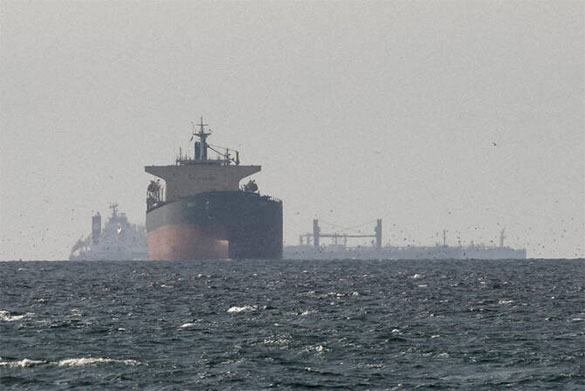
Cargo ships in the Gulf, near the Strait of Hormuz, as seen from northern Ras al-Khaimah, near the border with Oman's Musandam governanc. (REUTERS/Stringer/File Photo/)
--------------
DUBAI: US President Donald Trump appears to be casting doubt on the effectiveness of the ceasefire that has halted the Iran war.
“Iran is doing a very poor job, dishonorable some would say, of allowing Oil to go through the Strait of Hormuz,” he wrote on his social media site Thursday evening. “That is not the agreement we have!”
The post came after Trump posted earlier that “There are reports that Iran is charging fees to tankers going through the Hormuz Strait — They better not be and, if they are, they better stop now!”
The White House supports reopening the strait as part of the ceasefire deal, but says that Trump opposes Iran’s military, which continues to control the waterway, from seeking to raise revenue by charging tolls on passing ships.
In a potential boost to Middle East ceasefire efforts, Israeli Prime Minister Benjamin Netanyahu said Thursday that he authorized direct negotiations with Lebanon “as soon as possible” aimed at disarming Iranian-backed Hezbollah militants and establishing relations between the neighbors.
The two countries have technically been at war since Israel was established in 1948, and Netanyahu later stressed that there was no ceasefire between them. In a video statement, he said Israel will keep striking Hezbollah until security is restored in northern Israel.
There was no immediate response from Lebanon. But Israel-Lebanon negotiations were expected to begin next week at the State Department in Washington, according to a US official and a person familiar with the plans, who spoke on condition of anonymity due to the delicacy of the matter.
The prospect of talks appeared to bolster the tentative ceasefire in the Iran war that has staggered under the weight of Israel’s bombardment of Beirut, Tehran’s continued chokehold on the Strait of Hormuz and uncertainty over whether talks can find common ground.
US President Donald Trump said Thursday that he was “very optimistic” about the prospects of reaching a peace deal, saying Iranian leaders are more amenable in private conversations than in their public statements.
Netanyahu’s announcement came amid disagreement over whether the ceasefire deal included a pause in fighting between Israel and Hezbollah, and a day after Israel pounded Beirut with airstrikes, the deadliest day in Lebanon since the war began Feb. 28.
Israel has fought multiple wars and launched several major invasions of Lebanon over the years, most recently sending in troops last month in response to Hezbollah fire on Israel’s northern border communities.
The launch of direct peace talks is a significant achievement, though reaching an agreement will be difficult after decades of hostilities, Hezbollah’s continued presence and longstanding disagreements over the countries’ shared land border.
The talks in Washington are expected to be handled on the American side by the US ambassador to Lebanon, Michel Issa, and on the Israeli side by the Israeli ambassador to the US, Yechiel Leiter, according to the person familiar with the planning.
It was not immediately clear who would represent Lebanon.
The timing and location of the talks was first reported by Axios.
After declaring victory with the ceasefire announcement, both Iran and the US appeared to apply pressure on each other. Semiofficial news agencies in Iran suggested forces have mined the Strait of Hormuz, a crucial waterway for oil that Tehran has closed. Trump warned that US forces would hit Iran harder than before if it did not fulfill the agreement.
Questions also remained over what will happen to Iran’s stockpile of enriched uranium at the heart of tensions, how and when normal traffic will resume through the strait, and what happens to Iran’s ability to launch future missile attacks and support armed proxies in the region.
Iranian President Masoud Pezeshkian said in a message on Telegram that Iran’s decision to accept a ceasefire was made unanimously by senior government leaders and approved by the supreme leader. He said the ceasefire “is not a sign of weakness but a way to solidify Iran’s proud victories.”
Despite disputes over the ceasefire, it appears to have halted weeks of missile and drone attacks by Iran on its Gulf Arab neighbors and Israel, with no new launches reported Thursday. There were no reports of strikes by the US or Israel targeting Iran.
Israel vows to continue striking Hezbollah in Lebanon
Iran’s parliament speaker, Mohammad Bagher Qalibaf, warned in a social media post Thursday that continued Israeli attacks on the Iran-backed Hezbollah militant group in Lebanon would bring “explicit costs and STRONG responses.”
Qalibaf has been discussed as a possible negotiator who could meet US Vice President JD Vance this weekend in Islamabad. The White House has said Vance would lead the delegation for talks starting Saturday.
Iran had said Israel’s ongoing attacks on Hezbollah were violating the ceasefire agreement. Netanyahu and Trump have said they were not.
Trump said Thursday that he asked Netanyahu to dial back the strikes in Lebanon.
“I spoke with Bibi, and he’s going to low-key it. I just think we have to be sort of a little more low-key,” Trump told NBC News.
Hours before Netanyahu authorized the negotiations with Lebanon, he said Israel would continue striking militants in the country “with force, precision and determination.”
Lebanon’s health ministry said more than 300 people were killed and more than 1,100 wounded Wednesday by Israeli strikes on central Beirut and other areas of Lebanon that Israel said targeted Hezbollah, which joined the war in support of Tehran.
Israel said Thursday it killed an aide to Hezbollah leader Naim Kassem, Ali Yusuf Harshi. Hezbollah did not immediately respond to a request for comment.
A New York-based think tank warned the ceasefire ” hovers on the verge of collapse ” following Israel’s strikes Wednesday.
Lebanon’s state-run National News Agency reported that an Israeli strike overnight killed at least seven people in southern Lebanon. The Israeli military did not immediately acknowledge the strike.
Threat of mines looms over the strait
Semiofficial news agencies in Iran published a chart Thursday suggesting the country’s paramilitary Revolutionary Guard put sea mines into the Strait of Hormuz during the war — a message that may be intended to pressure the United States.
The chart, released by the ISNA news agency and Tasnim, showed a large circle marked “danger zone” in Farsi over the route ships take through the strait, through which 20 percent of all traded oil and natural gas once passed.
Only a trickle of ships have transited since the war began after several were attacked, and Iran threatened to hit any that it deemed connected to the US or Israel. Ships appeared to continue to avoid the strait even after the ceasefire.
The chart suggested that ships travel through waters closer to Iran’s mainland near Larak Island, a route some ships were observed taking during the war. It was dated from Feb. 28 until April 9, and it was unclear if the Guard had cleared any mines since then.
Iran’s deputy foreign minister, Saeed Khatibzadeh, told the BBC that his country will allow ships to pass through the strait in accordance with “international norms and international law” once the United States ends its “aggression” in the Middle East and Israel stops attacking Lebanon.
The head of the United Arab Emirates’ major oil company, Sultan Al-Jaber, said some 230 ships loaded with oil were waiting to get through the strait and must be allowed “to navigate this corridor without condition.”
The strait’s de facto closure has caused oil prices to skyrocket — affecting the cost of gasoline, food and other basics far beyond the Middle East. The spot price of Brent crude, the international standard, was around $98 Thursday, up about 35 percent since the war began.
Fate of Iran’s enriched uranium remains a question
The fate of Iran’s missile and nuclear programs — which the US and Israel sought to eliminate in going to war — was unclear. The US insists Iran must never be able to build nuclear weapons and wants to remove Tehran’s stockpile of highly enriched uranium, which could be used to build them. Iran insists its program is peaceful.
Trump said Wednesday that the US would work with Iran to remove the uranium, buried in last year’s US and Israeli strikes, though Iran did not confirm that. In one version of the ceasefire deal that Iran published, it said it would be allowed to continue enrichment.
The chief of Iran’s nuclear agency, Mohammad Eslami, said Thursday that protecting Tehran’s right to enrich uranium is “necessary” for any ceasefire talks.
Source: arabnews.com
Please click the following URL to read the text of the original Story
https://www.arabnews.com/node/2639396/middle-east
------
Saudi, Iranian FMs hold first call since start of war: Saudi ministry
April 09, 2026
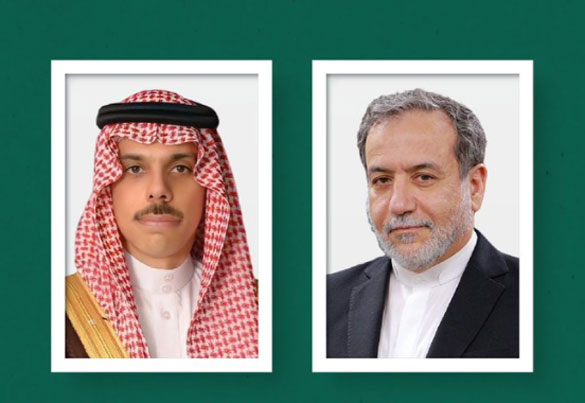
(MOFA)
----------
Saudi Foreign Minister Prince Faisal bin Farhan recieved a phonecall with his Iranian counterpart Abbas Araghchi, the Saudi foreign ministry said in a statement on X on Thursday.
"During the call, they reviewed the latest developments and discussed ways to reduce tensions to restore security and stability to the region," the statement said.
It is the first official contact between the countries since the beginning of the war which saw Iran launch strikes against Gulf countries including the kingdom in retaliation for Israeli-American attacks and comes amid a fragile ceasfire announced on Tuesday.
Source: arabnews.com
Please click the following URL to read the text of the original Story
https://www.arabnews.com/node/2639313/saudi-arabia
-------
Head of Islamic Community congratulated Easter: “We Muslims share the Joy of your great Holiday”
April 9, 2026
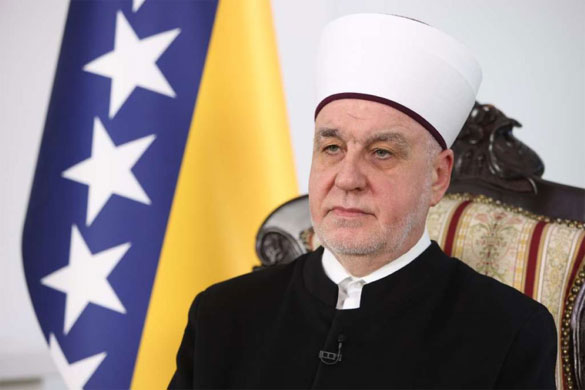
Reisul-ulema of the Islamic community in Bosnia and Herzegovina Husein-ef. Kavazović sent a congratulatory message to Metropolitan Chrysostom of Dabro-Bosnia on the occasion of Easter.
“On behalf of the Islamic community in Bosnia and Herzegovina and on my own behalf, I wish that the believers of the Orthodox faith celebrate the great Orthodox holiday Easter, the holiday of love and joy, in peace, with their closest ones in the circle of family, friends and neighbors. We Muslims in Bosnia and Herzegovina, with you, as well as with our Catholic neighbors, share the joy of your great holiday, as we have done for centuries sharing a common homeland and relying on each other as good neighbors.
With prayers to the Almighty God to help us preserve freedom and peace, to live together in prosperity, I send my sincere congratulations on this joyous occasion to you and your believers”.
Source: sarajevotimes.com
Please click the following URL to read the text of the original Story
https://sarajevotimes.com/head-of-islamic-community-congratulated-easter-we-muslims-share-the-joy-of-your-great-holiday/
-------
'Ceasefire unreasonable': Iran rejects Donald Trump's peace proposal, claims violation of 3 key clauses
Apr 9, 2026
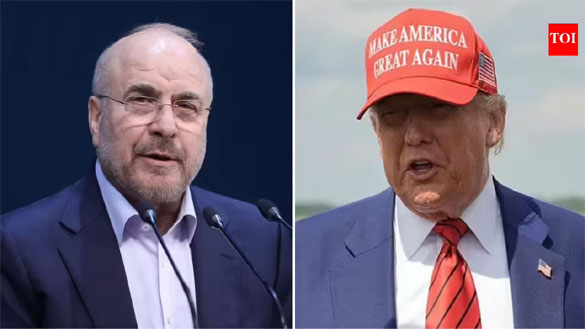
Iran on Thursday rejected US President Donald Trump's peace proposal claiming that the States had violated three key clauses of the plan even before the negotiations started. Terming the ceasefire "unreasonable", it said that Iran held a "deep historical distrust" towards America, citing repeated violations of all forms of commitments.
The three violations include non-compliance of first clause regarding ceasefire in Lebanon, entry of an intruding drone into Iran airspace and denial of Iran's right to enrichment.
"The deep historical distrust we hold toward the United States stems from its repeated violations of all forms of commitments a pattern that has regrettably been repeated once again. As the President of the United States has clearly stated in his Truth, the Islamic Republic of Iran's 10-Point Proposal is a "workable basis on which to negotiate" and the main framework for these talks. However, 3 clauses of this proposal have been violated so far," said a statement shared by Iranian Parliament Speaker MB Ghalibaf.
The three violated clauses as listed in the statement were:
Non-compliance with the first clause of the 10-Point Proposal regarding the ceasefire in Lebanon a commitment that Prime Minister Shehbaz Sharif has also explicitly referred to and declared as "an immediate ceasefire everywhere, including Lebanon and other regions, effective immediately";
The entry of an intruding drone into Iran airspace, which was destroyed in the city of Lar in Fars Province, in clear violation of the clause prohibiting any further violation of Iran airspace;
Denial of Iran's right to enrichment, which was included in sixth clause of the framework.
"Now, the very "workable basis on which to negotiate" has been openly and clearly violated, even before the negotiations began. In such situation, a bilateral ceasefire or negotiations is unreasonable," it concluded.
Earlier, chief of Iran's nuclear agency had said that protecting Tehran's right to enrich uranium was “necessary” for ceasefire talks.
“It is a part of the necessary (things) that nobody speaks about,” AP quoted Mohammad Eslami saying, referring to US refusal to acknowledge enrichment as one part of Iran's 10-point plan for a permanent ceasefire.
The United States and Iran are scheduled to hold talks in Islamabad later this weekend.
Both the US and Iran declared success following the ceasefire agreement. However, additional drones and missiles struck Iran and Gulf Arab states even after the deal was announced.
Meanwhile, Israel escalated its offensive against Hezbollah in Lebanon on Wednesday, targeting both commercial and residential areas in Beirut. The strikes marked the deadliest day of fighting, with at least 182 fatalities, as emergency teams continued overnight efforts to locate people trapped beneath the rubble.
Source: indiatimes.com
Please click the following URL to read the text of the original Story
https://timesofindia.indiatimes.com/world/middle-east/ceasefire-unreasonable-iran-rejects-donald-trumps-peace-proposal-claims-violation-of-3-key-clauses/articleshowprint/130138866.cms
------
‘Terrorists are teaching us Islamic knowledge,’ Woro hostages cry out, beg Gov Abdulrazaq to rescue them
April 9, 2026
Terrorists have again paraded hundreds of victims, including women and children, kidnapped from the Woro community in Kaiama LGA of Kwara.
Over 200 locals were killed in the community in February.
In a heart-wrenching video obtained by Peoples Gazette on Thursday, the assailants assembled the kidnap victims and interrogated them.
Many of the victims, who spoke in English, Yoruba, Hausa, Nupe and other languages, narrated their ordeals in captivity and begged the state government to come to their rescue.
One of the victims said that while their captors had continued to feed and teach them basic Islamic knowledge and etiquette, some of them battled various forms of diseases, and others were pregnant.
“Dear Muslim brothers and sisters, we are here today. We are those people picked from Woro in the Kiama Local Government Area of Kwara on February 3. Now we’re in April 8. We’re begging you: this is our last opportunity given to us. We have children and pregnant women among us. There are some with blood cancer among us.
“Please, we’re begging you. They teach us Islamic etiquette. What we don’t know at home, we have known them. We did not know so many things, but they taught us. They are not beating us. In fact, they give us food and water. Everything is available. But we are still begging you. Please, this is our last opportunity,” she said.
Another hostage stated, “Please, we beg the Kwara government to come to our rescue. This is the last opportunity they gave us to leave this place. So we need your support, even though they [terrorists] do not maltreat us.”
Governor Abdulrahman Abdulrazaq’s chief press secretary, Rafiu Ajakaye, and the police spokesperson Adetoun-Ejire-Adeyemi did not immediately reply to the Peoples Gazette’s request for comment on the video.
The video surfaced months after the terrorists invaded Woro and Nuku communities, killed over 200 people and kidnapped 176 others.
In February, the terrorists paraded the abductees and slammed the Abdulrazaq-led government for deliberately misleading Nigerians and the international community over the number of victims kidnapped.
Source: gazettengr.com
Please click the following URL to read the text of the original Story
https://gazettengr.com/terrorists-are-teaching-us-islamic-knowledge-woro-hostages-cry-out-beg-gov-abdulrazaq-to-rescue-them/
-------
Johor religious authorities expected to issue fatwa on TikTok user’s teachings after investigation, says exco
10 Apr 2026
JOHOR BAHRU, April 10 — The Johor Mufti’s Department is expected to issue a fatwa regarding the teachings of a TikTok user who is being reviewed for alleged deviancy.
Johor Islamic Religious Affairs Committee chairman Mohd Fared Mohd Khalid said that the Johor Islamic Religious Affairs Department (JAINJ) is currently conducting an investigation and research into the beliefs of the woman who uses the social media handle Ratu Nur Putri Ratu Balqis.
“Her statements seems to be deviant and misguided, so the investigation is to determine whether [her teachings] contain elements of heresy before the fatwa is issued,” he told reporters at the Johor Syariah Judicial Department’s building here today.
“JAINJ’s research division is preparing a final report to check for any deviation to the teachings. Following that, the investigation’s report will only be sent to the Johor Mufti’s Department for further action. This will take some time,” the Semerah assemblyman added.
Mohd Fared, who is also chairman of the Johor anti-heresy committee, explained that after all the processes are completed, the matter will be brought to the state’s head of Islam.
He added that JAINJ is currently working with the police and the Malaysian Communications and Multimedia Commission (MCMC) to monitor the case’s development.
Mohd Fared said that the woman’s social media posts, which disseminated her beliefs, have been taken down.
He added that the woman’s followers at present only consist of her children and biological brother.
“Initial investigations found that the woman’s beliefs had emerged since 2018, but no complaints were received until several new videos surfaced on March 26 this year.
“The woman’s latest postings also attracted attention as they had extreme views and claims,” he said.
On Tuesday, a 49-year-old single mother who claimed to be a teacher to His Majesty Sultan Ibrahim was charged with sending obscene messages insulting Malaysian and Brunei royalty.
Nurul Huda Mohd Bajuri pleaded not guilty after the two charges were read out before Sessions Court Judge Mohd Azhar Othman.
Earlier, three individuals, including a teenage girl, were detained in Taman Saujana here to assist in investigations into TikTok content containing alleged sedition, slander, and insults against Islam, the Johor royal institution, the Johor police, and Prime Minister Datuk Seri Anwar Ibrahim.
Two of the suspects were later released after agreeing to act as prosecution witnesses.
Source: malaymail.com
Please click the following URL to read the text of the original Story
https://www.malaymail.com/news/malaysia/2026/04/10/johor-religious-authorities-expected-to-issue-fatwa-on-tiktok-users-teachings-after-investigation-says-exco/215797
------
‘Only Allah knows who did what in 1971 war’ - Says Shafiqur as JS passes Jamuka bill
April 10, 2026
The parliament yesterday passed the Jatiya Muktijoddha Council (Amendment) Bill, 2026, retaining the names of the then Muslim League, Jamaat‑e‑Islami, and Nizam‑e‑Islam Party as local collaborators of the Pakistani invading force during the 1971 Liberation War.
Placing the bill before the House, Liberation War Affairs Minister Ahmed Azam Khan stressed the need to preserve the ideals of the Liberation War and uphold its core goals of equality, human dignity, and social justice.
According to the document, “Bir Muktijoddha” refers to individuals who actively engaged in combat or underwent military training during the fight against Pakistani occupation forces and their local collaborators -- Razakar, Al‑Badr, Al‑Shams, the then Muslim League, Jamaat-e-Islami, Nezam-e-Islam, and “Shanti Committee” -- between March 26 and December 16, 1971, to achieve Bangladesh’s independence.
The category specifically mentions “Biranganas” -- women who suffered torture at the hands of the occupation forces and their collaborators -- as well as medical staff who served in field hospitals.
A newly added category, “Associates of the Liberation War”, will now officially include individuals who played organisational roles, built international public opinion, or provided diplomatic and psychological support.
Opposition Leader and Jamaat‑e‑Islami Ameer Shafiqur Rahman raised objections to the bill, while the National Citizen Party, a key partner of the Jamaat‑led 11‑party alliance, formally informed the Speaker that it had no objections.
The Jatiya Muktijoddha [National Freedom Fighter] Council (Amendment) Bill, 2026, was later passed by voice vote.
After being given the floor, Shafiqur said only the Almighty knows who played what role in the 1971 Liberation War. “Allah alone is the complete witness; the rest of us are partial witnesses,” he told the House.
“Our region has gained independence twice -- once in 1947 and then again after 23 years through the Liberation War. I pay respect to all those who fought bravely for the country and the nation during the great Liberation War,” he said.
Although the country was born with great hopes, those aspirations were not fulfilled by the rulers at the time, Shafiqur continued.
He said multi-party democracy was killed through the establishment of BAKSAL soon after independence.
“Following the political changeover of 1975, late president Ziaur Rahman restored multi-party democracy. The nation benefited from it in subsequent periods, and today’s parliament is part of that continuity,” the Jamaat ameer said.
The Jamaat ameer said, “What is in this bill? It mentions the names of three organisations: the then Muslim League, Jamaat-e-Islami, and Nezam-e-Islam Party. Alongside the Pakistan army and some ancillary forces, the names of these three political parties have been included, and the current proposal refers to these organisations.”
Reiterating his earlier point, he said his party wanted every political organisation in the country to operate with a sense of responsibility and compassion towards the people.
Saying they did not want divisions in the nation, he added, “In 1979, the Awami League itself was revived in Bangladesh through the Political Parties Revival Act. At that time, all political parties regained the opportunity and the right to engage in politics. We, too, regained that right then.”
Earlier in the special parliamentary committee’s report, members of Jamaat gave a note of dissent, stating, “If the ordinance is passed in its current form without bringing any changes, then existing political parties like the Muslim League, Jamaat-e-Islami and Nezame Islam will continue to exist as part of Pakistan, which is not logical.”
The note also said the ordinance requires changes in the definitions of “Bir Muktijoddha” and the “Liberation War”.
Jamaat further argued that during Khaleda Zia’s government in 2002, the law did not identify these parties as collaborators of the Pakistani occupation forces.
“It was Sheikh Hasina, a distorted symbol of fascism, who incorporated it into the definition. The subsequent interim government maintained the provision with slight modifications.”
Source: thedailystar.net
Please click the following URL to read the text of the original Story
https://www.thedailystar.net/news/politics/news/only-allah-knows-who-did-what-1971-war-says-shafiqur-js-passes-jamuka-bill-4148151
------
India
Bhojshala dispute: Hindu outfit cites ASI report claiming temple preceded mosque
Apr 9, 2026
NEW DELHI: The Hindu Front for Justice on Thursday told the Madhya Pradesh High Court that documents of the Archaeological Survey of India (ASI), including its scientific survey report, support its claim that a temple existed before a mosque at the disputed Bhojshala complex in Dhar district.
The Bhojshala complex is regarded by Hindus as a temple of Vagdevi (Saraswati), while the Muslim side identifies it as the Kamal Maula mosque. The dispute has led to multiple petitions and a writ appeal regarding the site’s religious character, which the Indore bench has been hearing on a day-to-day basis since April 6.
In its public interest litigation (PIL), the Hindu Front for Justice claimed that a temple dedicated to Goddess Saraswati stood at the 11th-century site and that its remains were reused to build a mosque after the temple was demolished.
On the fourth day of hearing, advocate Vishnu Shankar Jain, appearing for one of the petitioners, concluded his arguments before a division bench of Justices Vijay Kumar Shukla and Alok Awasthi. Jain submitted that a Saraswati temple existed at the site and alleged that "Muslim rulers with a mindset to oppose idol worship" demolished the Hind place of worship and reused its remains to construct a mosque at the complex.
To support his submissions, Jain cited the ASI’s 2024 scientific survey report, prepared on the High Court’s direction, along with its replies and affidavits, and historical documents published by the central government agency in 1902 and 1904. He asserted that the ASI material, based on the site’s actual condition, supports the petitioner’s case.
"This does not mean that the ASI is taking sides. The ASI is only placing facts on record based on what exists at the site," Jain told the court. He also told the court that the report lists several evidences of a temple existing at the site, including religious symbols, Sanskrit inscriptions and remains of idols.
However, when Jain began referring in detail to portions of the scientific survey report, a senior lawyer representing the Centre objected, insisting that it was the ASI counsel’s task to "demonstrate" its findings before the court. A counsel for an intervenor from the Muslim side also objected, arguing that the petitioner was relying on documents from a respondent (ASI) to support its case, which is not permissible under law.
After considering the objections, the High Court allowed Jain to highlight certain relevant portions of the ASI report, which functions under the Union culture ministry.
The High Court had directed the ASI on March 11, 2024, to carry out a scientific survey of the Bhojshala-Kamal Maula mosque complex. The survey began on March 22, 2024, and the ASI submitted its report on July 15, 2024, after a 98-day exercise. The over 2,000-page report indicates that a large structure dating back to the Paramara period (9th to 13th centuries) existed at the site before the mosque, and that parts of temples were reused in the present complex.
The Muslim side has questioned the ASI survey and rejected the Hindu side’s claim that the site was originally a temple, alleging that certain materials included in the survey were "introduced from the backdoor."
Source: indiatimes.com
Please click the following URL to read the text of the original Story
https://timesofindia.indiatimes.com/india/bhojshala-dispute-hindu-outfit-cites-asi-report-claiming-temple-preceded-mosque/articleshowprint/130148549.cms
------
‘Rs 1,000 offer, Dy CM post promise’: TMC alleges AJUP-BJP deal to ‘mislead Muslims’, shares Humayun Kabir ‘sting’ VIDEO
April 9, 2026
Days ahead of the Assembly elections, the Trinamool Congress (TMC) on Thursday shared a purported video of former leader Humayun Kabir, alleging that the BJP offered him Rs 1,000 crore to mislead the minority community.
In a social media post on X, the TMC alleged that the “EXPLOSIVE sting operation video” exposes the BJP’s “dirty conspiracy against Bengal.”
“In the video, Humayun Kabir openly admits that BJP PAID him ₹1,000 crore to mislead the minority community, and claims that senior BJP leaders like Himanta Biswa Sarma, Mohan Yadav, and even the PMO were involved in this CONSPIRACY,” the TMC wrote on X.
The Statesman could not independently vouch for the authenticity of the purported video, in which Humayun Kabir is heard saying that he wants to remove West Bengal Chief Minister Mamata Banerjee at any cost and that BJP leader Suvendu Adhikari has promised him Rs 1,000 crore.
“I told Suvendu Adhikari that I need money — to consolidate Muslims and secure their votes in the elections… the entire target would be ₹1,000 crore,” he is heard saying in the video in Hindi.
Humayun Kabir, who had given a call for the construction of the Babri Mosque in Murshidabad, was suspended from the party last year. He subsequently quit the TMC and floated his own party – Aam Aadmi Unnayan Party (AJUP).
Kabir’s AJUP is contesting the West Bengal Assembly Elections 2026 in an alliance with Asaduddin Owaisi’s AIMIM.
In the “sting” video, Kabir also revealed his strategy to defeat Mamata Banerjee.
“Hindus trust Mamata Banerjee, but they know very well that if Muslims — who vote 90–100 per cent for her — shift away, she will not return to power, and then they will be left with only one option: the BJP,” he said.
The AJUP chief further claims in the purported video that BJP leader Suvendu Adhikari told him to connect with the central leadership. “Suvendu Adhikari said that on the 22nd, he will go to Delhi and get me connected with the central leadership… Madhya Pradesh CM Mohan Yadav is also connected with me… later, the PMO also brought the Assam CM on board,” he says.
Kabir also claims in the video that the BJP has offered him the deputy CM’s post if his party could cut through TMC’s Muslim votes and secure 70-80 seats. “The BJP has said that if 70–80 seats are secured, then you will directly be given the post of Deputy Chief Minister.”
Source: thestatesman.com
Please click the following URL to read the text of the original Story
https://www.thestatesman.com/india/west-bengal-polls-humayun-kabir-sting-video-1000-crore-deal-with-bjp-suvendu-adhikari-tmc-ed-probe-demand-1503579763.html
------
Mufti revives call for talks with Pakistan, pushes for reopening Kashmir’s ‘Hormuz’ routes
Muzaffar Raina
10.04.26
Peoples Democratic Party chief and former chief minister Mehbooba Mufti on Thursday brought back the forbidden "P" word into Kashmir's political discourse, reviving her call for talks with Pakistan on the Kashmir issue and pushing to reopen the region's "Hormuz" — a gateway through Pakistan to China, Central Asia and Iran.
The hardline rhetoric comes as the security establishment in Jammu and Kashmir keeps a wary watch on the ripple effects of the West Asia crisis, particularly Pakistan's role in brokering a fragile ceasefire in the Iran war.
Mehbooba on Thursday said the world had forced the US to start dialogue with Iran as the crisis had choked the world economy, drawing a parallel with the alleged costs Kashmir had to pay after it was cut off from its traditional routes in 1947.
"It is difficult to take Pakistan's name here. People feel scared (to do it). But what can you do? Pakistan has played a key role. The world was on the brink of war, and that was stopped by them, at least for now," she said at a rally here.
"Pray to God this ceasefire holds, and Iran gets the victory. Iran's victory is the victory of the Muslim Ummah. Ayatollah Ali Khamenei's sacrifice united Shias and Sunnis. Does anybody say today he is Shia and I am Sunni? We are all Muslims today," she said.
Mehbooba referred to her father Mufti Mohammad Sayeed's slogans for starting dialogue with the neighbours and opening the closed roads.
"He opened Muzaffarabad, Rawalakot (roads to PoK). He said Kashmir's apples will go across and money, not grenades, will flow in. Similarly, he said, 'our old road, used by Shahi Hamdan (a Central Asia Sufi seen as the founder of Islam in Kashmir) to enter Kashmir, which connected us with Central Asia, China and Iran, should be reopened'," she said.
The PDP president said all these roads in Jammu, Kashmir and Ladakh that connect India with Central Asia, Russia, China and Iran should be reopened.
"It (these roads) will become a Strait of Hormuz for Jammu and Kashmir. It will not just benefit Jammu and Kashmir but the whole of India," she said.
Source: telegraphindia.com
Please click the following URL to read the text of the original Story
https://www.telegraphindia.com/india/mehbooba-mufti-revives-call-for-talks-with-pakistan-pushes-for-reopening-kashmirs-hormuz-routes-prnt/cid/2155397
------
‘Inaction against noise pollution from mosque’: HC warns of contempt action
Omkar Gokhale
Apr 10, 2026
The Bombay High Court on Thursday directed the Mumbai Police to respond to a plea alleging inaction against early morning noise pollution from a mosque in Kandivali (East), even as loudspeaker use remains restricted between 10 pm and 6 am.
A division bench of Justices Ajey S Gadkari and Kamal R Khata observed that if the petitioner’s allegation of “blatant lies” by authorities was found to be true, it would constitute a serious breach of the Noise Pollution Rules, 2000.
The bench also issued a stern oral warning, stating that failure to enforce court orders would invite contempt proceedings against errant police officers.
The court was hearing a petition filed by advocate Reena Richard, a resident of Thakur Village, who alleged repeated violations by a mosque near her residence in Kandivali (East). She said multiple complaints to the Samta Nagar police station regarding loudspeaker use during early morning hours had not led to consistent enforcement.
According to Richard, authorities had earlier assured compliance and even apologised before the court for inaction, with criminal cases initiated against violators. However, she alleged that permissions for loudspeaker use were again being granted from 2024, despite the locality qualifying as a silence zone.
She further claimed that government prosecutors were incorrectly stating that the area was not a silence zone, even though a hospital maternity ward is within 50 metres of the mosque, along with a school and a college nearby.
Taking note of the allegations, the bench said, “if the contention of the petitioner is correct, then it is a matter of seriousness”, and directed the police to file an affidavit within two weeks.
Justice Khata also referred to a January 2025 ruling of the High Court, directing authorities to ensure strict compliance. “Nowhere should the rules be broken… every officer would be in contempt if there is a breach,” he said.
In its January 2025 judgment, a bench led by Justice Gadkari had ruled that the use of loudspeakers is not an essential part of any religion. It had also directed the Maharashtra government to establish a mechanism to regulate decibel levels of loudspeakers and public address systems at places of worship and institutions, irrespective of religion.
Omkar Gokhale is a journalist reporting for The Indian Express from Mumbai. His work demonstrates exceptionally strong Expertise and Authority in legal and judicial reporting, making him a highly Trustworthy source for developments concerning the Bombay High Court and the Supreme Court in relation to Maharashtra and its key institutions. Expertise & Authority Affiliation: Reports for The Indian Express, a national newspaper known for its rigorous journalistic standards, lending significant Trustworthiness to his legal coverage. Core Authority & Specialization: Omkar Gokhale's work is almost exclusively dedicated to the complex field of legal affairs and jurisprudence, specializing in: Bombay High Court Coverage: He provides detailed, real-time reports on the orders, observations, and decisions of the Bombay High Court's principal and regional benches. Key subjects include: Fundamental Rights & Environment: Cases on air pollution, the right to life of residents affected by dumping sites, and judicial intervention on critical infrastructure (e.g., Ghodbunder Road potholes). Civil & Criminal Law: Reporting on significant bail orders (e.g., Elgaar Parishad case), compensation for rail-related deaths, and disputes involving high-profile individuals (e.g., Raj Kundra and Shilpa Shetty). Constitutional and Supreme Court Matters: Reports and analysis on key legal principles and Supreme Court warnings concerning Maharashtra, such as those related to local body elections, reservations, and the creamy layer verdict. Governance and Institution Oversight: Covers court rulings impacting public bodies like the BMC (regularisation of illegal structures) and the State Election Commission (postponement of polls), showcasing a focus on judicial accountability. Legal Interpretation: Reports on public speeches and observations by prominent judicial figures (e.g., former Chief Justice B. R. Gavai) on topics like free speech, gender equality, and institutional challenges. Omkar Gokhale's consistent, focused reporting on the judiciary establishes him as a definitive and authoritative voice for legal developments originating from Mumbai and impacting the entire state of Maharashtra.... Read More
Source: indianexpress.com
Please click the following URL to read the text of the original Story
https://indianexpress.com/article/cities/mumbai/inaction-against-noise-pollution-from-mosque-hc-warns-of-contempt-action-10628547/
--------
Adhir comeback & Humayun Kabir’s ‘Babri’ stir interest, but Bengal’s Muslims fear BJP gains
Moushumi Das Gupta
09 April, 2026
Murshidabad/Malda/Kolkata: As the countdown for the first phase of the West Bengal polls begins, Safiqul Islam, 61, who runs a hardware shop in Beldanga, a Muslim-dominated locality in Murshidabad’s Baharampur, is in a dilemma.
Safiqul says he was a CPI(M) member till after 2011, when 34 years of Left rule in the state came to an end.
“I used to be with CPI(M)…I was a CITU (party-affiliated Centre of Indian Trade Unions) secretary for a good two decades, even after the Trinamool Congress (TMC) came to power in 2011,” he tells ThePrint, sitting inside his shop named Islampur Hardware.
Somewhere around 2012, he switched allegiance to the TMC and has voted for the party in every election since then. Safiqul says he felt betrayed when West Bengal Chief Minister and party supremo Mamata Banerjee, after opposing it tooth-and-nail, decided to implement the Centre’s Waqf (Amendment) Act in the state late last year.
“We did not like it. She was with us, opposing it when the Centre brought the waqf law. But then she did a U-turn,” he says. “This time, we are still thinking about who we should go with… Adhir babu is contesting in the vidhan sabha (assembly) from here after a long time. He is a good man and cares for people in his constituency. Then, Humayun Kabir’s party is also there.”
He was referring to Congress’s Adhir Ranjan Chowdhury, a five-term MP from Baharampur, who is contesting the assembly elections this time after 35 years.
The other person he referred to is former TMC MLA Humayun Kabir, who last year launched his own party, Aam Janata Unnayan Party (AJUP). For this assembly election, AJUP has formed an alliance with Asaduddin Owaisi’s AIMIM and they are together planning to contest 190 of the total 294 seats.
“AJUP is a new party. Humayun saheb was earlier with Trinamool. He is also building a Babri Masjid here,” Safiqul says.
Kabir had announced last December that his trust will build a mosque in Beldanga, which will be modelled after the demolished Babri Masjid in Ayodhya, Uttar Pradesh.
Preparatory groundwork has already started at the masjid site and has generated a lot of buzz in the community. Muslims, not only from West Bengal but from other adjoining states like Assam, are visiting the location in droves every day.
The dilemma
Safiqul says that the decision of Didi—as Mamata Banerjee is commonly referred to in Bengal—to suspend Kabir from the TMC after his announcement on building a new ‘Babri Masjid’, has not gone down well with many in the community.
“If Didi can get a Jagannath temple built in Digha with government money, it’s fine. But if Muslims build a masjid, then there is a problem?” he asks.
It’s a sentiment shared by many in the community, not only in Murshidabad but in other Muslim-dominated pockets—from Cooch Behar to Malda and Nadia, North 24 Parganas to Kolkata and Nandigram—that ThePrint visited.
Surprisingly, people from the community also know about AJUP despite the fact that it was founded just three months ago in December 2025.
And, herein lies Safiqul’s dilemma.
“It is not an easy choice for us this time in Murshidabad. I have been talking to elders from my community. They are in the same boat. There is an apprehension that with Adhir babu and Humayun saheb in the fray, there is a possibility that our (Muslim) votes will get divided. This will only help the BJP,” he explains.
He adds that this will not be confined to just Malda and Murshidabad alone—districts with 51 percent and 66 percent minority population, respectively—but other Muslim-dominated pockets as well.
There are over 2.4 crore Muslims in West Bengal, which make up 27 percent of the total population of 9 crore, according to the 2011 Census, and they have been by and large Trinamool voters after the fall of the Left government in 2011.
Aminal Islam, resident of Murshidabad’s Khargram village, says that Kabir’s party will take some Muslim votes because of the buzz generated after his announcement of the masjid.
“He (Kabir) does not have that kind of stature and hold over Muslim votes yet,” Islam, who had come with his family to visit the masjid site in Beldanga, tells ThePrint. “It is going to be a tight fight this time where every vote will count. If the BJP has to be stopped, Muslim votes will have to consolidate behind the TMC. Whether it will happen or not is not clear at this point. Nearer election day, things will be clearer.”
Kabir is himself contesting from two assembly seats from Murshidabad.
Giasuddin Modal, a resident of Malda, who has a small hardware shop in Baharampur’s Kadbeltala, says it’s hard to say which party is on a strong footing in Bengal today. “But we understand one thing: that Humayun (Kabir) is playing with Muslim sentiments.”
Safiqul says the community elders have already been discussing this, especially after the large-scale deletion of Muslim names from the voters’ list in the SIR (Special Intensive Revision) drive in the state.
For instance, of the approximately 18 lakh electors in Murshidabad, 4.55 lakh names have been deleted following the adjudication process. In Malda, some 2.39 lakh names among 27 lakh electors have been deleted. In North Dinajpur, 1.76 lakh names have been deleted.
Though the ECI does not publish the names of individuals who have been struck off the voter list, district administration officials in Malda and Murshidabad say the deleted names are mostly from the minority community.
Apurba Sarkar, TMC’s Murshidabad district president and MLA from Kandi, however, does not see a division of Muslim votes.
“AJUP is not a factor. And the Congress does not have a presence in Bengal today except in some pockets like Malda and Murshidabad. There also, its presence is shrinking,” he tells ThePrint.
Sarkar says there may be a slight dip in Muslim votes because of the deletion of Muslim voters’ names. “But even that won’t dent the overall numbers much… the Muslim vote is consolidated and will be with us only,” he asserts.
Polarisation is high
Hindu-Muslim polarisation has intensified across districts of West Bengal, especially in areas that have a significant chunk of people from both communities. This, political analysts and leaders across parties like TMC and Congress say, will have a bearing on the poll outcome this time too.
In Cooch Behar’s Mekhliganj, a small provincial town in north Bengal, Amit Kumar Singha, 48, who runs a small newspaper agency, says that in the last one-and-a-half years, Jamaldaha, the area he lives in, has witnessed two-three small incidents of communal tension.
“The Hindu-Muslim population in Jamaldaha is in the ratio of 70:30. Our sitting MLA is from TMC. But if you were to ask me today, I will say today people here are more inclined towards the BJP. They think a Hindu party will be a better choice here in today’s scenario,” Singha tells ThePrint.
Across the districts of Cooch Behar, and Hindu-dominated pockets in Malda, Murshidabad and Nandiram, one can still see small triangular saffron flags that were put up on the roadside and in market places last month for Ram Navami celebrations.
The Ram Navami processions have grown manifold across the state. Several thousand small rallies were taken out last month across towns and villages of Bengal, mostly by young men.
Sporadic incidents of violence were reported from Murshidabad during the celebrations and rallies. Clashes broke out in Jangipur’s Raghunathganj on 27 March during one procession. Over 20 people were injured and some 31 people were arrested.
Isha Khan Choudhury, Congress MP from Malda South, says that if polarisation happened like it did in 2021, then the Congress will be in a difficult position from the district, where the party still has a presence.
Khan blames the “appeasement policy” of both the TMC and Congress for the polarisation.
“If the polarisation intensifies, Congress votes will be affected like they were in 2021 because of the anti-NRC and CAA (National Register of Citizens and Citizenship Amendment Act) protests. I lost from Sujapur (assembly seat) by over 1.3 lakh votes despite the constituency being the Choudhury family’s pocketborough,” he says.
Khan went on to win the 2024 Lok Sabha election by a margin of over 1 lakh votes.
Malda’s Sujapur assembly segment witnessed angry protests from residents earlier this month following large scale deletion of people’s names from the electoral rolls. Seven judicial officers engaged in the SIR of electoral rolls were held hostage by an angry crowd on 1 April. The National Investigating Agency is probing the incident.
On 5 April, launching the BJP’s poll campaign in Cooch Behar, Prime Minister Narendra Modi accused the TMC of opposing the SIR to protect “ïnfiltrators”.
Source: theprint.in
Please click the following URL to read the text of the original Story
https://theprint.in/politics/muslims-in-bengal-wary-of-a-minority-vote-split-courtesy-sir-owaisi-humayun-kabirs-babri/2900527/
-----
Army ramps-up info-warfare game after Op Sindoor, rollout to Corps level
Javaria Rana
09 Apr 2026
NEW DELHI: The Indian Army has operationalised a dedicated Information Warfare Organisation and is now expanding its psychological and cyber units down to the Corps level after lessons from Operation Sindoor.
Army Chief General Upendra Dwivedi, speaking at the Ran Sanwad tri-services dialogue in Bengaluru on Thursday, formally revealed that the organisation comprises a Psychological Defence Division and a Command Cyber Operations Wing.
“The Psychological Defence Division under a Brigadier is playing a very, very pivotal role,” Gen Dwivedi said. He added that the Command Cyber Operations Wing would, “in a later time frame, also go down to the Corps headquarters.”
This means that the Army’s 14 Corps-level formations will have their own info-warfare capabilities.
The general was candid that this is the beginning of a longer journey. “We have just made the beginning. This is phase one. Based on this, we will move on to phase two and phase three,” he said. The phased rollout mirrors the Army’s recognition that information warfare is not a monolithic challenge. Domestic operations carry a different character from what expeditionary forces face when deployed in unfamiliar territory.
“When the expeditionary forces go, they have a different concept because they are going to an alien area. They don’t even know the culture of that area,” Gen Dwivedi said, underlining the layered complexity of perception management in foreign operational environments.
One of the key operational decisions during Operation Sindoor, he said, was to shut down all Army social media handles, leaving only the official ADG Strategic Communication (ADG Public Information) channel active.
“We closed on all the Twitter handles and all the social media handles other than the ADG Strat Comm. So there was a single source of truth, which went from the soldier to the topman to everybody looking to get the information,” the chief said. The centralisation, the Army assessed, prevented adversaries from exploiting a fragmented information environment.
The Army is also expanding its communication footprint, including on Instagram, to create a clear and authoritative information pipeline for personnel. “Every soldier who is there will also know which is the single source of truth which he has to look into,” Gen Dwivedi said.
The challenge of information warfare has been flagged earlier as well. Chief of Defence Staff General Anil Chauhan had first publicly disclosed last May that roughly 15 percent of operational effort during Operation Sindoor went into countering hostile disinformation, cautioning that misinformation is persistent rather than episodic and demands measured, non-reactive responses.
India’s first publicly available Joint Doctrine for Special Forces operations, released in August last year, also explicitly called on SF units to conduct offensive and defensive information campaigns and counter propaganda as an operational imperative.
Beyond info warfare, Gen Dwivedi offered a frank assessment of lessons absorbed in drone operations during last year’s hostilities with Pakistan, particularly the challenge of Identification Friend or Foe (IFF) in a heavily jammed environment.
"When the drones were flying, IFF was difficult; the jamming was also very effective. We didn’t know for whom. It’s a lesson which we have drawn, and we have to move forward from that,” he said.
The Army is now scaling up drone capabilities across arms and pushing them down to the tactical level, while working to resolve coordination gaps and integrate artificial intelligence into decision-making.
Source: newindianexpress.com
Please click the following URL to read the text of the original Story
https://www.newindianexpress.com/nation/2026/Apr/09/army-ramps-up-info-warfare-game-after-op-sindoor-rollout-to-corps-level
-------
Mideast
US-Iran ceasefire deal shows strain ahead of talks with oil flows squeezed
April 10, 2026
JERUSALEM/BEIRUT/ISLAMABAD: A fragile two-week ceasefire between the US and Iran showed further strain on Friday, a day before they are to negotiate in Pakistan, as Washington accused Tehran of breaching promises on the Strait of Hormuz and Israel struck Lebanon with attacks that Iran has claimed violate the truce. There was no sign Iran was lifting its near-total blockade of the strait, which has caused the worst-ever disruption to global energy supplies. Tehran cited Israel’s ongoing attacks on Lebanon, which included the heaviest strikes of the war on Wednesday, as a key sticking point.
US President Donald Trump said in a social media post late Thursday that Iran was doing a “very poor job” of allowing oil to go through the strait. “That is not the agreement we have!“
In a separate post, he said oil would start flowing again, without saying what actions the US might take. In the first 24 hours of the ceasefire, which Trump announced on Tuesday, just a single oil products tanker and five dry bulk carriers sailed through the strait, which typically carries a fifth of the world’s oil and liquefied natural gas flows and 140 ships a day before the war.
FRESH ATTACKS
Israel’s military said early on Friday it had struck 10 launchers in Lebanon that fired rockets toward northern Israel on Thursday evening, and that Iran-allied armed group Hezbollah launched a missile at Israel, triggering air sirens.
The missile was intercepted, according to the Times of Israel. Hezbollah said it had targeted Israeli military infrastructure in the northern city of Haifa.
The US and Israel have said the latest ceasefire does not include Lebanon, which Israel invaded last month — in parallel with the war on Iran — to root out Hezbollah. But Iran and Pakistan, which acted as mediator, say Lebanon was explicitly part of the deal. Iran’s Parliament Speaker Mohammad Baqer Qalibaf, expected to head the Iranian delegation opposite US Vice President JD Vance, said on social media that Lebanon and the rest of Iran’s “axis” of regional allies were inseparable parts of any ceasefire.
In a defiant statement, Iran’s Supreme Leader Ayatollah Mojtaba Khamenei said on Thursday that Iran would exact retribution for the war.
“We will certainly not leave unpunished the criminal aggressors who attacked our country. We will undoubtedly demand compensation for every single damage inflicted,” he said in the statement.
The agreement for a two-week truce, mediated by Pakistan, came just hours before a deadline that Trump said would trigger US attacks on Iran’s power plants and bridges and the destruction of “a whole civilization.”
US-IRAN TALKS SCHEDULED FOR SATURDAY
In Pakistan, authorities were preparing for the first round of US-Iran talks on Saturday aimed at settling the conflict that began with US and Israeli attacks on Iran on February 28.
Iran released on Wednesday a 10-point proposal for a settlement to the war that included maintaining control of the Strait of Hormuz, acceptance of Iran’s right to nuclear enrichment, lifting of sanctions and ending the war, including against Hezbollah in Lebanon. While he said Israel would continue attacks on Hezbollah, Israeli Prime Minister Benjamin Netanyahu, whose government rebuffed an offer for direct talks with Lebanon last month, said on Thursday he had given instructions to start peace talks as soon as possible, which would include disarming Hezbollah.
“The negotiations will focus on disarming Hezbollah and establishing peaceful relations between Israel and Lebanon,” he said.
A senior Lebanese official told Reuters Lebanon had spent the last day pushing for a temporary ceasefire to allow for broader talks with Israel, describing the effort as a “separate track but the same model” as the US-Iran truce.
Israel was preparing to scale down its attacks in Lebanon, a senior Israeli official said on Thursday. US media outlets reported that Trump said he asked Netanyahu to be more “low-key” in Lebanon.
Another Israeli official said talks with Lebanon were expected to begin in Washington next week. A US State Department official confirmed the US would host next week’s meeting to “discuss ongoing ceasefire negotiations.”
Hezbollah lawmaker Ali Fayyad said in a statement on Thursday that the group rejected direct negotiations with Israel and the Lebanese government should demand a ceasefire as a precondition to further steps.
(Reporting by Laila Bassam, Reuters bureaus Writing by Rod Nickel Editing by Cynthia Osterman)
Source: arabnews.com
Please click the following URL to read the text of the original Story
https://www.arabnews.com/node/2639414/middle-east
------
Hormuz at near standstill as Iran warns ships to keep to its waters
April 09, 2026
LONDON: Iran’s Islamic Revolutionary Guard Corps (IRGC) warned ships to keep to a route passing through its territorial waters when crossing the Gulf’s Strait of Hormuz as traffic on Thursday remained well below 10 percent of normal volumes.
Mitsui O.S.K. Lines, one of Japan’s big three shipping firms, is among those caught up in the confusion as firms try to work out what impact the US-Iran two-week ceasefire is having.
“It must be confirmed that the safety risks are sufficiently low,” President and CEO Jotaro Tamura told Reuters in an interview on Thursday.
The company has recently managed to bring three tankers – one loaded with liquefied natural gas and two with cooking gas liquefied petroleum gas (LPG) out of the strait.
Tamura said the company was awaiting guidance from the Japanese government on how to proceed under the two-week ceasefire.
Larak route
The IRGC wants vessels to sail through Iranian waters around Larak Island in order to avoid the risk of naval mines in the usual lanes through the strait, Iran’s semi-official Tasnim news agency reported on Thursday.
Vessels are to enter the strait north of Larak Island and exit just south of it until further notice in coordination with the IRGC’s navy, Tasnim quoted the IRGC as saying.
“There is to be a realistic possibility of continued risk to unauthorized Strait of Hormuz transits as well as to Israel- and US- affiliated shipping attempting to transit,” British maritime security company Ambrey said in an advisory.
“Even shipping with apparent approval has been turned back in recent weeks mid-transit,” it said.
Little traffic
Just six ships had passed through the strait in the past 24 hours, versus about 140 normally, ship-tracking data showed on Thursday.
They included one oil products tanker and five dry bulk carriers, data from Kpler, Lloyd’s List Intelligence and Signal Ocean showed.
A chemical tanker was set to cross destined for India, ship-tracking data on the MarineTraffic and Pole Star Global platforms showed on Thursday.
“Most shipping lines are likely to remain cautious, and two weeks will not be enough to clear the backlog even if there is a marked increase in traffic,” said Torbjorn Soltvedt at risk intelligence company Verisk Maplecroft.
More than 180 tankers carrying approximately 172 million barrels of crude oil and refined products remain stranded in the Gulf, according to ship tracker Kpler.
Toll system?
Media reports have suggested that Iran might want to charge a toll for ships passing through, some pinning the figure at $2 million, and ship-tracking data has shown some vessels such as the Indian-flagged Pine Gas LPG tanker are already taking the unusual route around Larak Island.
The chief officer of the Pine Gas, Sohan Lal, told Reuters they did not pay Iran a “toll” to transit and their vessel was not boarded by Iran’s Islamic Revolutionary Guard Corps when they exited the Gulf taking that route.
Western leaders have pushed back on any fees being imposed by Iran on ships sailing through Hormuz.
The Strait of Hormuz is shut and Iran must open it without conditions, the CEO of UAE state oil giant ADNOC said on Thursday.
India eases rules
With a view to speeding delivery of energy supplies from the Gulf, India recently granted waivers to allow two Iranian cargoes aboard an older tanker and another under international sanctions to enter its ports, two officials familiar with the matter said on Thursday.
The world’s No.2 importer of LPG used for cooking, India is facing its worst gas crisis in decades, with the government introducing rationing to ensure households are supplied.
Iran’s own ships
The United States issued a surprise temporary waiver on Iranian oil exports last month which is due to end on April 19 in a bid to support global supply and ease fuel price rises.
Oil prices have risen by about 50 percent since the Iran war began on Feb 28 with the US national average retail gasoline price recently topping $4 a gallon for the first time in more than three years.
One Iranian-flagged oil tanker and one bunkering tanker have sailed through the strait in the past 24 hours, according to analysis from Charlie Brown, senior adviser at US advocacy group United Against Nuclear Iran (UANI), which monitors Iran-related tanker traffic.
Since Feb 28., at least 23 Iranian-flagged tankers have reached Asia, keeping up their pace from pre-war levels, Brown said.
Source: arabnews.com
Please click the following URL to read the text of the original Story
https://www.arabnews.com/node/2639412/middle-east
------
Kuwait accuses Iran and proxies of drone attacks despite a two-week ceasefire
April 10, 2026
DUBAI: Kuwait accused Iran and its proxies of launching drone attacks targeting vital facilities despite a two-week ceasefire.
Kuwait’s Foreign Ministry, in a statement carried by state news agency KUNA, said the drone attacks struck “some vital Kuwaiti facilities” on Thursday night, adding pressure ahead of planned talks between the US and Iran in Islamabad, Pakistan.
The ministry stressed that the continuation of these flagrant attacks launched by Iran and its proxies on Kuwait and other Gulf states undermine international and regional peace efforts.
Bahrain’s Defense Force likewise announced that the Kingdom’s air defense systems confronted “successive waves of sinful Iranian terrorist attacks” during the day on Thursday. However, there were no attacks on Thursday night until the next day.
In a post on X, the BDF said Iran has launched a total of 191 missiles and 515 drones toward the Kingdom since February 28.
Meanwhile, the UAE enjoyed a quiet day for the first time in weeks as the ceasefire took hold.
In a post on its X account, the UAE Ministry of Defense said country’s air defences detected no ballistic missiles, cruise missiles, or incoming drones from Iran.
The ministry said that “since the start of Iran’s brazen attacks, the UAE’s air defences have intercepted 537 ballistic missiles, 26 cruise missiles, and 2,256 drones heading towards the country.”
It said 10 people had been killed in the attacks since February 28, and 224 people of different nationalities had been njured.
Source: arabnews.com
Please click the following URL to read the text of the original Story
https://www.arabnews.com/node/2639401/middle-east
------
‘Hezbollah must choose between Lebanon and Iran,’ says French diplomat Jean-Yves Le Drian
Zeina Zbibo
April 10, 2026
DUBAI: In the aftermath of an unprecedented number of Israeli airstrikes on Beirut and other parts of Lebanon, concerns among the international community are rising about the possibility of a new phase of escalation in the Middle East.
Lebanon was targeted without warning by about 100 strikes in the space of just 10 minutes on Wednesday, killing or injuring hundreds of people.
Jean-Yves Le Drian, executive president of the French Agency for the Development of AlUla, the personal envoy of the French president for Lebanon, and a former minister of defense and foreign affairs, told Arab News en Francais that the scale of the attacks marked a critical threshold.
He described the strikes as “unacceptable” and causing “terrifying carnage,” and noted that they took place just hours after the main parties to the conflict in the region, including the US and Iran, had announced a ceasefire in the conflict that began on Feb. 28.
Le Drian said the truce was essential but had already been undermined. It was “clear in its principles, unambiguous, and should have applied across the region, including Lebanon,” he added, yet its effect has been negated by the continuation of military operations.
By striking Beirut, he said, Israel was acting “against the diplomatic momentum that enabled the ceasefire.” This contradiction means the situation is “extremely serious” and is fueling widespread mistrust among all parties, he added.
Lebanon has become a secondary theater in a regional confrontation beyond its control, Le Drian said, as the fighting continues there even though the main protagonists in the wider conflict are not directly linked to the country. He fears it is a situation that jeopardizes fundamental aspects of the Lebanese state.
“What is at stake today is Lebanon’s integrity and sovereignty,” he warned, describing the country as trapped in an external confrontation.
Despite its shortcomings the truce agreement remains a strategic necessity, he believes. It was intended to halt a downward spiral deemed “unacceptable” both for regional stability and the global economy, he said, but its fragility is evident.
“Each side suspects the other of lies, misinterpretation or hiding its intentions,” he said, and the continuing strikes on Lebanon prevent any real chance of stabilizing the situation.
Le Drian clearly identified the role of Hezbollah in stoking the crisis, given its links with Iran, including the group’s initial cycle of strikes against Israel. At the same time, he denounced the Israeli response as “completely disproportionate.”
This creates a potential paradox, he warned: Rather than weakening Hezbollah, the intensification of the Israeli strikes might actually strengthen the group’s influence.
“The escalation today indirectly reinforces Hezbollah’s role, which is positioning itself as the protector of the nation,” Le Drian said.
Against this backdrop he issued a stark warning: “Hezbollah must choose: either Lebanon or Iran. There is no alternative.”
He said he hoped the choice would favor the welfare of the Lebanese state, and noted that the country currently has a “government of quality,” which he described as responsible and committed to strengthening the state. He pointed out that it has pledged to work to ensure that the state has a monopoly on weapons by disarming other groups.
But he added that “this government is today under strain due to the worsening crisis,” and stressed the need to provide it with support, particularly from international partners, including the Gulf countries.
Despite the intensity of the current hostilities, Le Drian believes there is still a political path to peace. The Lebanese government recently proposed direct talks with Israeli authorities, an initiative he described as a “considerable” gesture. He views it as a rare opportunity that could mark a turning point if seized. War offers no lasting solutions, he added, so it is vital that the central role of negotiation is restored.
The Gulf states, which have been indirectly affected by the conflict with Iran, have emerged as key players in deescalation efforts, Le Drian said, and back mediation efforts.
“There has been an offer for negotiation … with the support of several Gulf countries, particularly Saudi Arabia,” he added.
Such involvement opens the door for a broader redefinition of regional security based on “collective security,” he said.
As for the continuing Israeli military operations in southern Lebanon, Le Drian warned: “Any occupation intervention by Israel in Lebanon is contrary to international law.”
Previous interventions of this kind helped to strengthen Hezbollah, he said, an outcome that must not be repeated.
Beyond the strategic issues arising from the conflict, the humanitarian situation in Lebanon is rapidly deteriorating.
“The Israeli intervention has displaced almost a million people who are now surviving on the streets,” Le Drian said.
He warned that the situation could quickly get even worse, with potentially serious consequences for Lebanon’s internal cohesion.
France continues to act in response to this crisis, he added. It provides support for the Lebanese Armed Forces, notably through recent deliveries of armored vehicles, and its humanitarian aid efforts continue.
One of its main goals is to help strengthen the core functions of Lebanese state, in particular its ability to achieve and maintain a monopoly on force.
Should the current conflict continue, it can only result in deadlock, Le Drian said. All parties are aware of this, he added, and so the need for a return to the pursuit of a diplomatic solution is more urgent than ever.
“France has always considered that conflicts must be resolved through negotiation,” he said, adding that the parameters for an agreement already exist: “It is on the table; it must be discussed.”
Regarding the wider regional and international stakes in the crisis, particularly its effects on international shipping, Le Drian warned that “freedom of navigation in the Strait of Hormuz is essential” and any further disruption could create “considerable difficulties for the global economy.”
A number of initiatives are already under consideration to secure this strategic waterway, he added, including maritime escorts once the deescalation process is sufficiently advanced.
To that end, the French president, Emmanuel Macron, and the British prime minister, Keir Starmer, have mobilized a group of countries in support of the secure transit of shipping in the Gulf.
In a tense moment for the region, Le Drian said, Lebanon finds itself at a potentially decisive point in its history, poised between total collapse and a potential resolution of crisis through diplomacy.
Source: arabnews.com
Please click the following URL to read the text of the original Story
https://www.arabnews.com/node/2639399/middle-east
------
Hormuz and Lebanon emerge as twin threats to fragile ceasefire
April 10, 2026
RIYADH: The Strait of Hormuz and continuing Israeli strikes on Lebanon emerged on Thursday as twin threats to the fragile Middle East ceasefire.
Israeli attacks killed at least seven people in southern Lebanon a day after hundreds died in the largest attack since the war began.
Israeli Prime Minister Benjamin Netanyahu agreed to a Lebanese request for direct negotiations “as soon as possible,” amid mounting calls for Lebanon to be included in the ceasefire.
UN chief Antonio Guterres “unequivocally” condemned the Israeli strikes, as did French President Emmanuel Macron and British Foreign Secretary Yvette Cooper. The attacks were “completely wrong” and Lebanon must be included in the truce, Cooper said.
Iran’s parliamentary Speaker Mohammad Bagher Qalibaf said Israeli attacks on Lebanon would bring “explicit costs and strong responses,” but Netanyahu said Israel would continue striking Hezbollah.
Meanwhile Donald Trump’s position on the Strait of Hormuz caused confusion. Initially the US president described Iran’s 10-point ceasefire proposal, which included Iranian control over the strait, as “workable.” He then insisted the waterway must remain free and open. But then he suggested that the US and Iran could share the proceeds of the so-called “Tehran toll,” a fee of up to $2 million per vessel for permission to transit the strait.
Deputy Foreign Minister Saeed Khatibzadeh said Iran would allow ships to pass through in accordance with “international norms and international law” once the US ended its “aggression” in the Middle East and Israel stopped attacking Lebanon. “I think that we have shown to everybody that energy security is pivotal for Iran, is pivotal for this body of water,” he said.
But Iran also published a chart suggesting it had mined the strait, and there were growing demands for Tehran to reopen the waterway immediately and unconditionally. Italian Prime Minister Giorgia Meloni and the European Commission called for freedom of navigation under international law, and UAE oil chief Sultan Al-Jaber condemned “the weaponization of this vital waterway.”
Ahead of US-Iran peace talks expected to begin in Islamabad on Friday, Saudi Foreign Minister Prince Faisal bin Farhan spoke by telephone on Thursday with Iran’s Foreign Minister Abbas Araghchi, their first conversation since the war began.
Source: arabnews.com
Please click the following URL to read the text of the original Story
https://www.arabnews.com/node/2639393/middle-east
-------
Turkiye’s opposition under pressure as Istanbul mayor trial drags on
April 10, 2026
ISTANBUL: The corruption trial of Istanbul’s jailed opposition mayor entered its second month Thursday, in a case widely seen as a major setback for Turkiye’s opposition.
Jailed since March last year, Ekrem Imamoglu of the main opposition CHP party is accused of running a vast criminal network he allegedly influenced “like an octopus.”
Prosecutors want him jailed for 2,430 years.
“In this case, there is only one criminal organization, and that is the prosecution!” said Imamoglu, President Recep Tayyip Erdogan’s main rival, this week, again denying the accusations.
“This is a political trial, in which the role of the law is very limited. But the lawyers are trying to steer the proceedings toward legal grounds,” Istanbul Bar Association president Ibrahim Kaboglu told AFP.
“However, that doesn’t mean that in the end, we’ll have a verdict that respects the law,” he added.
The mass trial at the Silivri courthouse on Istanbul’s outskirts involves more than 400 defendants — 107 of whom remain in detention. The judge last week ordered the release of 18 of them pending trial.
Kaboglu condemned the continued detention of a large number of defendants as “unconstitutional.”
“The defendants should, in principle, appear in court as free men,” he told AFP.
‘Open-air prison’
“The efforts to keep our friends in prison … are aimed at halting the CHP’s march toward power,” CHP leader Ozgur Ozel said Wednesday at the opening of a football pitch in Istanbul’s Sisli district, whose mayor is also in jail.
As the marathon trial drags on, legal pressure has tightened around the opposition.
Four CHP mayors, including the mayor of Bursa in northwest Turkiye — the fourth-largest city — have been arrested since the Imamoglu trial began on March 9.
Erdogan’s ruling AKP party on Thursday won control of Bursa after its mayor was jailed last week on charges including leading a criminal organization and corruption, dealing another blow to the opposition.
“They (the government) have turned Turkiye into an open-air prison ... for all those who pose a threat to the regime,” said the CHP leader, who is widely seen as the potential opposition candidate in the 2028 presidential vote.
Imamoglu was thrown in prison on the day he was named the CHP’s presidential candidate. He is seen by many as the only figure capable of defeating Erdogan at the ballot box.
‘God’s justice’
Human Rights Watch has condemned “arbitrary restrictions” affecting journalists and lawyers covering the trial, saying they violate Turkish and international legal requirements for public hearings.
Sevgi Sancar, a 60-year-old housewife who attended the CHP event at the football pitch this week said she believed Imamoglu and other jailed CHP officials “have no chance of being released before the presidential election.”
“I don’t trust the justice system. There is no justice!” she said.
“We don’t trust the Turkish justice system, only God’s justice,” said Mine, a 50-year-old engineer who declined to give her last name.
“But we haven’t lost hope. Sooner or later, they’ll all be released, because they’re all innocent,” she added.
Source: arabnews.com
Please click the following URL to read the text of the original Story
https://www.arabnews.com/node/2639413/middle-east
------
UK PM Starmer arrives in Qatar as part of Gulf visit
April 09, 2026
DOHA: UK Prime Minister Keir Starmer arrived in Doha on Thursday evening for an official working visit, the Qatar News Agency reported.
Starmer and his accompanying delegation were welcomed upon arrival at Doha International Airport by Minister of State at the Ministry of Foreign Affairs Mohammed bin Abdulaziz bin Saleh Al-Khulaifi and British Ambassador to Qatar, Neerav Patel.
The visit comes amid increased diplomatic engagement between Qatar and the UK, as both sides seek to strengthen cooperation on regional and international issues, including the ongoing Middle East conflict
Source: arabnews.com
Please click the following URL to read the text of the original Story
https://www.arabnews.com/node/2639388/middle-east
-------
Arab World
Saudi officials hold talks with envoys from UN, Ukraine and Germany in Riyadh
April 10, 2026
RIYADH: Saudi Arabia’s deputy minister for economic and development affairs, Abdullah bin Zarah, met with Abdullah Al-Dardari, assistant UN. secretary-general and regional director for Arab States at the UN Development Programme, in Riyadh on Thursday.
The minister reviewed topics of common interest with Al-Dardari.
Meanwhile, Ambassador Saud Al-Sati, undersecretary of the Ministry for Political Affairs, met Ukraine’s Ambassador Anatolii Petrenko and Germany’s Ambassador Michael Kindsgrab on Wednesday in Riyadh.
The minister reviewed matters of common interest with both ambassadors, the Kingdom’s Ministry of Foreign Affairs said on X.
Source: arabnews.com
Please click the following URL to read the text of the original Story
https://www.arabnews.com/node/2639398/saudi-arabia
------
Saudi Arabia’s Energy Ministry: Operations halted at several facilities due to recent attacks
April 09, 2026
RIYADH: An official source at the Ministry of Energy said on Thursday that important energy facilities in the Kingdom have recently been subjected to multiple attacks, including oil and gas production, transportation, and refining facilities, as well as petrochemical facilities and the electricity sector in Riyadh, the Eastern Province, and Yanbu Industrial City.
These attacks resulted in the death of one Saudi national from the industrial security personnel of the Saudi energy company and the injury of seven other Saudi nationals from the company, in addition to the disruption of a number of operational activities at key facilities within the energy sector, the source added.
These attacks included one of the pumping stations on the East-West Pipeline, leading to a loss of approximately 700,000 barrels per day in throughput. This pipeline is considered the main route for supplying global markets during this period.
The Manifa production facility was also targeted, resulting in a reduction of approximately 300,000 barrels per day from its production capacity. Additionally, the Khurais facility had previously been targeted, leading to a reduction of 300,000 barrels per day from its production capacity, bringing the total reduction in the Kingdom’s production capacity to approximately 600,000 barrels per day.
The attacks also extended to major refining facilities, including SATORP in Jubail, Ras Tanura refinery, SAMREF refinery in Yanbu, and Riyadh refinery, directly affecting exports of refined products to global markets. Processing facilities in Ju’aymah were also affected by fires, impacting exports of liquefied petroleum gas (LPG) and natural gas liquids.
The continuation of these attacks leads to reduced supply and slows recovery, thereby affecting the security of supply for consuming countries and contributing to increased volatility in oil markets.
This has already negatively impacted the global economy, particularly with the depletion of a significant portion of operational and emergency inventories, which has affected the availability of supplies and limited the ability to respond to this supply shortfall.
Source: arabnews.com
Please click the following URL to read the text of the original Story
https://www.arabnews.com/node/2639376/saudi-arabia
-------
Masam project destroys 4,925 mines and war remnants in Bab Al-Mandab
April 09, 2026
JEDDAH: The Saudi-backed Masam project for landmine clearance in Yemen has destroyed 4,925 landmines, unexploded ordnance and other explosive remnants of war in the Bab Al-Mandab area of the Taiz governorate.
In a statement, the project’s media office said the destroyed items included 29 anti-personnel mines, 49 anti-tank mines, 106 assorted shells, 1,698 various fuses, 11 hand grenades, 14 improvised explosive devices, 2,986 rounds of ammunition, 26 shell projectiles and six rockets.
The operation was carried out by Masam’s Second Special Tasks Team, which also collected large quantities of war remnants from the governorates of Taiz, Hodeidah and Lahj.
Col. Adel Al-Mahwali, operations chief of the 17th Giants Brigade in Bab Al-Mandab, said the district’s villages had been among the areas most heavily contaminated with mines and war debris in recent years.
He said the contamination had caused numerous civilian casualties and prevented residents from returning to their homes and farms.
Al-Mahwali added that Masam has significantly reduced the threat by clearing thousands of mines and explosive remnants across Bab Al-Mandab and Yemen’s western coast, helping to lower accident rates and gradually restore normal life in several villages.
However, he warned that the danger remains due to the random planting of mines and the lack of maps marking their locations.
He cited a recent incident in the Kahboub area of the Bab Al-Mandab district, where an anti-tank mine exploded beneath a civilian vehicle. Masam teams responded to the scene and removed five additional anti-tank mines from the area.
Al-Mahwali expressed appreciation to the Masam project and Saudi Arabia for their humanitarian efforts, saying the initiative has played a key role in enabling families to return home and resume their lives after years of suffering caused by landmines.
Masam continues to conduct demining operations in several Yemeni governorates affected by widespread mine contamination.
Source: arabnews.com
Please click the following URL to read the text of the original Story
https://www.arabnews.com/node/2639364/saudi-arabia
------
Indian delegation outlines enhanced Hajj 2026 arrangements in Jeddah briefing
Afshan Aziz
April 09, 2026
JEDDAH: A high-level delegation from India’s Ministry of Minority Affairs has reviewed preparations for Hajj 2026 during an official visit to the Kingdom, with officials highlighting significant improvements aimed at ensuring a safer, more comfortable and spiritually enriching pilgrimage for Indian visitors.
The Consulate General of India in Jeddah hosted a press briefing outlining key logistical, infrastructural and technological measures being implemented this year.
India will facilitate 122,518 pilgrims through the Hajj Committee, and about 52,000 private pilgrims, in what officials have described as a large-scale logistical operation.
Among the key initiatives this year are the introduction of smartwatches integrated with the Haj Suvidha application to monitor pilgrims’ health and location; and the first instance of 100 percent accommodation in the Markaziya area of Madinah, with hotel-style facilities aimed at improving convenience and accessibility.
Ram Singh, the joint secretary at the Ministry of Minority Affairs, said India had secured its highest-ever Hajj quota and emphasized that preparations had adhered strictly to timelines.
He said: “Every year there is some improvement in Hajj arrangements, and this year too, several firsts have been introduced. We have ensured contract-secured visas, maintained close coordination with authorities in the Kingdom as well as Indian stakeholders, including airlines, health and immigration authorities, and strictly followed all timelines.”
Consul General Fahad Ahmed Khan Suri described the accommodation in Markaziya as a major milestone.
Suri said: “This is the first time we have achieved 100 percent accommodation in the Markaziya area. It significantly enhances convenience and accessibility for pilgrims, contributing to an improved overall experience.”
Shanavas Chandamkuzhiyil, the CEO of the Hajj Committee of India, said preparations were underway across multiple levels to manage logistics.
He added: “This is a massive logistical exercise involving multiple airports and airlines, with extensive coordination at both national and local levels.”
Flights to Madinah will begin on April 18 with final arrivals scheduled for May 20, while return flights will operate from June 2-13.
Chandamkuzhiyil stressed the importance of training, adding that pilgrims attended multiple sessions at state and district levels, supported by trained personnel who assisted them throughout their journey.
He added that all pilgrims were medically screened in line with regulations, ensuring compliance with health requirements set by authorities.
The delegation also highlighted special arrangements for women pilgrims traveling without a mahram, with around 5,300 such pilgrims expected to travel in dedicated groups with separate transportation and female support staff.
Source: arabnews.com
Please click the following URL to read the text of the original Story
https://www.arabnews.com/node/2639354/saudi-arabia
-------
AlUla jumps 27 places in Smart City Index 2026, ranks 85th globally
Rashid Hassan
April 09, 2026
RIYADH: AlUla has recorded the highest improvement in the IMD Smart City Index 2026, advancing from 112th place in 2025 to 85th this year, placing it among the most improved cities globally.
“The top three cities in this year’s ranking are Zurich (first), Oslo (second), and Geneva (third). AlUla jumped 27 places while Washington DC rose by 23. Big drops were seen from Bordeaux (down 19), Lyon (also down 19), and Ottawa (down 18, together with Shenzhen),” said the IMD Smart City Index official portal.
“The most advanced urban centers, where citizens feel happiest, are not necessarily distinguished by their utopian skylines, visible sensor networks, or pure technological sophistication,” said Arturo Bris, director of the IMD World Competitiveness Center that produces the yearly Smart City Index measuring economic and technological aspects of smart cities on the one hand, and “humane dimensions” of smart cities (quality of life, environment, and inclusiveness) on the other.
“AlUla recording a significant leap points to the rapid progress of its development and tourism projects, and reflects its ambition to become an ideal destination for living, working and visiting,” Mohammed Helal, an AlUla resident told Arab News.
This achievement is a continuation of the comprehensive and sustainable development objectives pursued by the Royal Commission for AlUla since its establishment, and in line with the AlUla vision, which targets the development of infrastructure, improvement of services, and enhancement of quality of life for the people and residents of AlUla, whilst preserving the unique natural and cultural environment of the governorate, Saudi Press Agency reported.
This year’s edition of the index measures city performance across key pillars including quality of life, service efficiency, technology, environmental sustainability, and smart governance.
These pillars are central to the commission’s priorities and are being continuously advanced in partnership with stakeholders across the public and private sectors.
On the quality of life front, RCU continues to develop services for the people and residents of AlUla, spanning education, healthcare, infrastructure, and public utilities, within an approach that balances urban development requirements with the preservation of the destination’s identity.
On the education front, RCU has established an integrated system that encompasses a language institute offering instruction in five languages, a scholarship program that has benefited more than 690 students, teacher qualification programs in which more than 800 educators have enrolled, and community activities that have engaged approximately 7,400 students.
In the area of transport, RCU has completed the expansion of AlUla International Airport, increasing its annual passenger capacity from 400,000 to 700,000, doubling the number of passport control lanes, and integrating smart technologies to enhance the passenger experience, alongside the introduction of smart mobility solutions.
RCU continues to develop infrastructure through the construction of power stations and water storage facilities, as well as the enhancement of public utilities, all within the framework of the second masterplan, “Path to Prosperity,” which aims to elevate quality of life.
This progress aligns with the objectives of Saudi Vision 2030 and reflects the accelerating transformation AlUla is undergoing across urban development and contributing to its growing presence on global smart city rankings.
Saudi Arabia dominated this year’s smart city index, published by the International Institute for Management Development, as eight cities made notable showings.
The result reflects faster development and improving quality of life across the cities, in line with Saudi Vision 2030.
Riyadh advanced to 24th globally from 27th. Makkah ranked 50th, Jeddah 55th, Madinah 67th, Alkhobar 64th, and AlUla 85th.
The index also listed Hail and Hafar Al-Batin Governorate for the first time. Hail ranked 33rd, while Hafar Al-Batin placed 100th among the 148 cities assessed.
The IMD Smart City Index is a global benchmark that measures how far cities have advanced in adopting modern technologies. It does so by assessing residents’ views of service quality, digital infrastructure, and their impact on daily life.
This strong progress underscores the Kingdom’s continued efforts to upgrade urban services and build smart, sustainable cities that improve quality of life and strengthen global competitiveness, as Saudi Arabia marks 2026 as the Year of Artificial Intelligence.
Makkah Mayor Musaed bin Abdulaziz Al-Dawood said Makkah’s advanced ranking reflects the qualitative development the city is witnessing in its digital transformation.
This ranking is an extension of the great support provided by the Saudi leadership for development projects in Makkah, and their continuous directives to enhance its position as a smart destination, he added.
“In the Smart City Index, the Kingdom is absolutely dominating. Riyadh has jumped to 24th place globally, leading a pack of 8 Saudi cities that are redefining what it means to be a Smart City. From AlUla’s massive climb to the debut of Hail and Hafar Al-Batin, Saudi's cities are getting smarter, faster, and more sustainable every single day!” a social media account, Lovin Riyadh, posted on X.
Source: arabnews.com
Please click the following URL to read the text of the original Story
https://www.arabnews.com/node/2639346/saudi-arabia
--------
Masam Project destroys 1,696 remnants of war in Ghayl bin Yamin
April 09, 2026
JEDDAH: Emergency teams from the Masam Project for landmine clearance in Yemen — in cooperation with the Executive Mine Action Center’s Mukalla branch — on Wednesday destroyed 1,696 landmines and items of unexploded ordnance in Ghayl bin Yamin district.
The media center said destroyed items included various types of shells, mines and rockets. The haul comprised 1,320 rounds of 12.7 mm ammunition, 220 assorted mortar shells, 11 rocket-propelled grenade rounds, 56 fuzes for anti-personnel mines, one rocket, two improvised explosive devices and 86 rounds of 23 mm ammunition.
The center said the operation was the seventh of its kind carried out in Hadramout Governorate since mid-January.
It added that Masam teams continued to work around the clock to clear landmines, improvised explosive devices and unexploded ordnance at a steady pace to protect civilians in Yemen from materials that threatened lives and restricted movement.
The operations, documented with audio and video, form part of the project’s strategy to safely dispose of items removed from populated areas.
With Wednesday’s operation, the total number of landmines, IEDs and unexploded ordnance destroyed by Masam teams in Hadramout since Jan. 17 has risen to 14,109.
Source: arabnews.com
Please click the following URL to read the text of the original Story
https://www.arabnews.com/node/2639321/saudi-arabia
-------
AGFUND, UNDP sign strategic partnership agreements
April 09, 2026
RIYADH: Prince Abdulaziz bin Talal bin Abdulaziz, the president of the Arab Gulf Program for Development, known as AGFUND, has signed a set of strategic partnership agreements with the UN Development Program.
The UNDP was represented by Abdallah Al-Dardari, the UN’s assistant secretary-general and regional director for Arab states.
The agreements are designed to renew support for the Arab Human Development Reports and deepen cooperation in development finance and innovation — efforts aimed at strengthening development pathways across the Arab region.
Specifically, the partnership will back upcoming editions of the Arab Human Development Reports series, first launched in 2002, which has played a key role in advancing the understanding of development challenges in the region, with backing from a number of development and financial institutions, including AGFUND.
The agreements also extend support to the Green Finance Platform for the Arab Region and seek to scale up investments in innovative development financing, with a particular focus on countries emerging from crises.
Al-Dardari said that the Arab Human Development Reports had helped shape development policy and deepen regional understanding of critical issues for more than two decades. He described the new partnership as a continuation of that legacy and one that will help build more inclusive and sustainable pathways for the future.
Hammam bin Juraied, the CEO at AGFUND, explained that the agreements covered several Gulf and Arab states and were focused on maximizing the impact of development investments, particularly in countries facing economic headwinds, by providing the data and analysis needed to support decision-makers and investors.
The partnership between AGFUND and the UNDP spans more than four decades and has seen the implementation of numerous development initiatives and projects, with total funding exceeding $25 million.
Source: arabnews.com
Please click the following URL to read the text of the original Story
https://www.arabnews.com/node/2639340/saudi-arabia
------
Europe
Couple deny alleged racially motivated attacks
April 10, 2026
Georgina Barnes
Two people who were arrested and charged after an attack outside an Islamic centre have pleaded not guilty to most charges.
Three people were attacked outside Jersey's Islamic Centre on 6 March, States of Jersey Police said. The force added it believed the attacks were racially motivated as the victims were Muslim.
The magistrates' court heard Tamara Nadine Dubois, 36, pleaded not guilty to two assaults on two men, but guilty to assault on a minor. Charges against her of threats to kill were dropped. Her partner 51-year-old Jade Clarke James Hamon pleaded not guilty to charges of disorderly behaviour.
Both pleaded not guilty to a joint charge of threatening, abusive or disorderly conduct.
Dubois and Hamon were released on conditional bail, with one of the conditions to stay away from the centre.
Due to nature of the charges and the not guilty pleas, Judge Mr Adam Clarke decided to send the case to the Royal Court, where a hearing has been set for Friday 12 June.
Source: bbc.com
Please click the following URL to read the text of the original Story
https://www.bbc.com/news/articles/crr1kzq1rk8o
------
Man in court charged with terrorist activities
April 10, 2026
Daniel Sandford
A 43-year-old British man has appeared in court accused of playing a leadership role in the Somali militant Islamist group al-Shabab - an organisation that has been linked to both al-Qaeda and the Islamic State group.
Jermaine Grant is charged with directing the activities of al-Shabab more than 16 years ago in the late 2000s.
The allegation is that he became a platoon commander.
Al-Shabab was labelled a "persistent threat" in Somalia's capital, Mogadishu, which carries out "high profile attacks that challenge government authority", according to a 2025 assessment by the UK Government.
It has targeted international aid workers, journalists, business people and non-government organisations who have opposed or resisted it.
Grant, who was born in London, also faces three charges of attending an al-Shabab commando training camp in Kismayu in southern Somalia, and two charges of possessing an AK47 assault rifle for terrorist purposes during a battle at Mogadishu Stadium and a battle in Karan in the north of the city.
All the alleged offences are said to have taken place between 31 December 2007 and 1 January 2010 when al-Shabab came to prominence, having been joined by a series of infamous fighters including the British extremist Samantha Lewthwaite, sometimes called the White Widow.
Al-Shabab later said it carried out the 2013 Westgate mall attack in the Kenyan capital Nairobi in which 67 people died.
Cdr Kris Wright, of Counter Terrorism Policing London, said the case showed the force "will always pursue anyone suspected of being involved in terrorist activity, no matter where in the world or how long ago it is alleged to have taken place".
Frank Ferguson, from the CPS's counter terrorism division, said his team had worked to establish there was "sufficient evidence to bring this case to court and that it is in the public interest to pursue criminal proceedings".
The case was adjourned for seven days to get the Attorney General's permission to prosecute. Grant's next court appearance will be at Westminster Magistrates Court on 16 April.
He was remanded in custody and was not asked to give an indication of plea.
Source: bbc.com
Please click the following URL to read the text of the original Story
https://www.bbc.com/news/articles/cedexl8d4elo
-------
Putin announces truce with Ukraine during Orthodox Easter celebrations
Apr 10, 2026
Russian President Vladimir Putin on Thursday announced a temporary ceasefire with Ukraine for the duration of the Orthodox Easter holidays, the Kremlin said, after Kyiv also proposed a pause in hostilities.
Ukrainian President Volodymyr Zelensky said earlier this week that he had passed a holiday truce proposal via the United States, even as talks to end the four-year war stalled amid shifting global focus to the Middle East.
"A ceasefire is declared from 16:00 (13:00 GMT) on 11 April until the end of the day on 12 April 2026" by Putin, "in connection with the approaching Orthodox feast of Easter," the Kremlin said.
The General Staff "have been instructed to cease combat operations in all directions for this period," it added, noting that troops are ready to "counter any possible provocations by the enemy".
"We assume that the Ukrainian side will follow the example of the Russian Federation."
Several rounds of US-led talks have failed to bring the two sides closer, with momentum slowing further as Washington’s attention shifted to Iran.
Negotiations remain deadlocked, with Moscow demanding territorial and political concessions that Kyiv has rejected as tantamount to capitulation.
The war has killed hundreds of thousands and displaced millions, making it Europe’s deadliest conflict since World War II.
Source: indiatimes.com
Please click the following URL to read the text of the original Story
https://timesofindia.indiatimes.com/world/europe/putin-announces-truce-with-ukraine-during-orthodox-easter-celebrations/articleshowprint/130153690.cms
------
'We should not be at the mercy of events abroad' - Starmer
Kate Whannel
Apr 10, 2026
The UK must become more resilient to deal with a "volatile and dangerous" world where "shocks" like the conflict in Iran are frequent, the prime minister has warned.
Writing in The Guardian, Sir Keir Starmer said he was "thinking about the long-term, and remaking this country" so that people "are not at the mercy of events abroad".
Separately, he told ITV's Talking Politics podcast he was "fed up with the fact that families across the country see their bills go up and down... because of the actions of Putin or Trump".
The prime minister is currently on a three-day trip to the Gulf to meet regional allies.
On Wednesday he met the Saudi Crown Prince Mohammed bin Salman in Jeddah and on Thursday he travelled to the UAE, Bahrain and Qatar.
His visit comes as a fragile ceasefire pausing the Iranian conflict has come under strain, with disagreements over whether the truce covered Lebanon.
On Thursday evening, Sir Keir held a phone call with US President Donald Trump. Downing Street says the two men discussed the need "for a practical plan to get shipping moving" through the Strait of Hormuz, the shipping lane that has been effectively closed as a result of the conflict.
The closure of the strait has had an impact on the cost of living in the UK with petrol and food prices driven up.
Speaking to Talking Politics, Sir Keir said the events of the past two months had demonstrated why the UK needed to have "energy independence".
"I'm fed up with the fact that families across the country see their bills go up and down on energy, businesses' bills go up and down on energy because of the actions of [Russian President Vladimir] Putin or Trump."
In his article for the Guardian newspaper, Sir Keir said Britain had been "buffeted by crises for nearly two decades", citing the 2008 financial crash, Brexit and Covid.
"The response from Westminster has always been the same - manage the crisis, find a sticking plaster and then desperately try to reassert the status quo."
He promised that "this time, it will be different" and that the conflict in Iran "must now become a line in the sand".
He argued that government policies such as investing in renewable energy, strengthening workers' rights and removing the two-child benefit cap would help prepare the country for increased global instability.
"Because resilience is what gives us control. Without it, we are constantly pushed off course by events beyond our borders."
Giving the Mansion House speech in central London, Foreign Secretary Yvette Cooper echoed the prime minister's sentiments.
"It might be tempting, even comforting, to think that the Iran crisis is a once-in-a-generation shock.
"But this is the third time in six years that international events have sent economic tidal waves around the globe, hitting Britain's shores - the Covid pandemic, the invasion of Ukraine and now the Iran conflict.
"Instability and volatility are becoming increasingly chronic and turbulence is the new normal.
"The new reality we face did not begin with the war in Iran, nor will it end with a reopened strait."
Responding to the prime minister's comments, Conservative Chairman Kevin Hollinrake said: "Keir Starmer says he wants resilience and energy security. So why is he banning North Sea drilling and ducking welfare reform?
"You cannot build a resilient economy by turning your back on British oil and gas workers, handing energy dependence to foreign states, and leaving millions trapped on benefits rather than in work."
Liberal Democrat Foreign Affairs Spokesperson Calum Miller MP said: "The prime minister is right that we must increase our resilience but he cannot achieve that if he won't name the greatest strategic challenge we face.
"It's clear we can't trust a Trump-led America anymore and the government should be doing everything it can to rebuild ties with our closest allies in Europe."
A spokesperson for Reform UK said: "If we don't want to be at the mercy of global crises, the answer is obvious: Use our own energy, control our borders and put the British people first."
Green Party leader Zack Polanski said: "Starmer is finally waking up to a reality Greens have been raising for years, and been attacked by him for - we cannot rely on the US for security, we need European security partnerships."
"And yes, we must end fossil fuel dependence but Starmer's words are not a plan... energy bills are soaring, the gap between rich and poor grows, and this government tinkers at the edges," Polanski added.
Source: bbc.com
Please click the following URL to read the text of the original Story
https://www.bbc.com/news/articles/cly7d9rv4nro
------
UK says Russia ran submarine operation over cables and pipelines
Apr 10, 2026
Olivia Ireland,Thomas Copeland
Three Russian submarines conducted a "covert" operation over cables and pipelines in waters north of the UK, Defence Secretary John Healey said.
A British warship and aircraft were deployed to deter the "malign" activity by Moscow and there was "no evidence" of any damage to UK infrastructure in the Atlantic, he added.
Addressing Russian President Vladimir Putin directly, Healey said: "We see you. We see your activity over our cables and our pipelines, and you should know that any attempt to damage them will not be tolerated and will have serious consequences."
The Russian embassy in London has denied Healey's claims, according to Moscow's state news agency Tass.
The UK is dependent on its undersea cables and pipelines for its data and energy.
There are around 60 undersea cables which come ashore at several points along the UK coastline, particularly around East Anglia and South West England.
More than 90% of the UK's day-to-day internet traffic travels via these undersea cables.
Healey told a Downing Street press conference on Thursday that Russia had sent an Akula class submarine as a diversionary tactic while two of its GUGI spy submarines carried out the surveillance of these cables.
Healey said the attack submarine soon left UK waters and went back to Russia after it was monitored, while the two GUGI vessels remained.
Tass reported that the embassy said Russia was "not threatening underwater infrastructure, which is truly critical to the UK. We are not using aggressive rhetoric in this regard."
The Royal Navy deployed frigate HMS St Albans, fuel tanker RFA Tidespring and anti-submarine Merlin helicopters to track all three of the Russian submarines.
Other nations were involved in tracking the Russian activity - though Healey mentioned only Norway by name.
"Our armed forces left [Russia] in no doubt that they were being monitored, that their movements were not covert, as President Putin planned, and that their attempted secret operation had been exposed," Healey said.
"We watched them, we were able to track them, we dropped sonar buoys to demonstrate to them that we were monitoring every hour of their operation."
Russia's GUGI submarines
GUGI is not yet as familiar to most people as say, the KGB or FSB, but it poses a formidable and dangerous challenge to Western nations. The acronym stands for the Russian words for Main Directorate for Deep Sea Research (Glavnoye upravlenie glubokovodnikh issledovanii).
Although it is a part of the Russian navy it is so secretive that it reports directly to the defence minister and the president.
Its headquarters are in St.Petersburg on the Baltic Sea but it has an Arctic base from which it can deploy at Olenya Bay, up on the Kola Peninsula which is home to Russia's strategic nuclear submarine fleet.
GUGI specialises in underwater surveillance, sabotage and reconnaissance. No other nation on Earth, except for the United States, has the same capacity to operate military equipment at extreme depths.
This equipment includes the kind of miniature, uncrewed submarines that Russia is believed to have deployed over Britain's data cables in the North Atlantic.
These "mini-subs" can be launched covertly, at night, from spy vessels like the Yantar, seen previously loitering around the English Channel. They have the ability to cut cables or in some cases, it's feared, interdict them to allow Russia to monitor the data passing through them.
All this comes under the heading of hybrid warfare: hostile acts that stop short of an attributable, lethal attack.
Britain and NATO's concern is that all Russian covert surveillance of Western undersea cables and pipelines is aimed at giving Moscow a standing start should hostilities ever break out.
Were that to happen then the expectation is that Russia would attempt to sever or disrupt as much of Britain's data as possible, activating devices it may have pre-positioned in the run-up to war.
Healey also claimed Putin had sought to capitalise on the world being "distracted" by war in the Middle East and that it was Russia that posed the "primary threat to UK security".
He said Moscow still "poses a threat" but expressed confidence the UK could track and monitor future activity while continuing to expose "any covert operations that Putin wants to mount that may threaten our vital interests".
Prime Minister Sir Keir Starmer said he was "determined to protect the British people from paying the price for Putin's aggression in their household bills", adding this was why the UK would not "shy away from taking action and exposing Russia's destabilising activity that seeks to test our resolve".
Following Healey's press conference, Conservative Party leader Kemi Badenoch posted on X calling for Starmer to "publish the Defence Investment Plan now".
Badenoch said: "We stand shoulder to shoulder on Russian aggression. To be strong abroad we need clarity on spending at home." She added that without the investment plan, Starmer's strategy was "just words."
Referring to reports this week that Russian oil tankers were escorted through the English channel by the Russian navy, Reform UK leader Nigel Farage said: "If we have learnt one thing in the last month, it is that we do not have an operational Royal Navy at any level in this country and that for us needs to be a massive wake-up call."
A former UK defence attaché in Moscow told the BBC "the rhetoric is a bit tired by now."
John Foreman, a retired Royal Navy officer, said: "We're well aware of the Russian threat. The question is whether we're doing something about it."
He went on to say the UK is "hard-pressed" to maintain its security, pointing out the decommissioning of two tankers, RFA Wave Knight and RFA Wave Ruler.
"I don't know how we are going to dig ourselves out of this nadir of maritime security that we have found ourselves in," Foreman said.
Underwater cables and pipelines are a major piece of critical infrastructure worldwide.
More than 600 undersea cables connect the world by 870,000 miles (1.4m km) carrying electricity and information across oceans and seas, coming ashore often at discreet locations.
Dr Sidharth Kaushal, a sea power researcher at the Royal United Services Institute (RUSI), told BBC Verify the Russian military's GUGI unit operates deep-diving mini-submarines supported by a larger "mothership".
These vessels are "complex targets", Kaushal said, because they are designed to avoid detection by reducing the amount of noise they emit, how much water they displace and how detectable they are to magnetic sensors.
Kaushal added it is likely the submarines were still able to gather data on the UK's undersea cable network despite being monitored by the Royal Navy.
He said the UK's ability to constrain their operations during peacetime is "limited" and notes that militaries and private organisations can legally carry out such monitoring "as long as they are in international waters".
But Kaushal said the Royal Navy may have gathered vital intelligence by monitoring the operation, in order to learn more about what is being mapped, the tactics used by Russia, and "potentially recover any surveillance assets left behind".
The UK also relies on a network of underwater gas pipelines, primarily in the North Sea, which provide essential energy from the UK and Norwegian Continental Shelves.
These include the 724 mile-long (1,166km) Langeled pipeline between Norway and the UK.
About 77% of the UK's gas imports come from Norway through pipelines lying under the North Sea.
BBC InDepth revealed in 2025 that Russia was waging "hybrid warfare" against the UK and western Europe, with the aim of punishing or deterring Western nations from continuing their military support of Ukraine.
"Hybrid warfare" is when a hostile state carries out an anonymous, deniable attack, usually in highly suspicious circumstances, but stops short of being an attributable act of war.
Source: bbc.com
Please click the following URL to read the text of the original Story
https://www.bbc.com/news/articles/cre13qn9z7do
------
The Iran war exposes what the EU won’t admit
By Ladislav Zemánek
9 Apr, 2026
There are moments in history when reality breaks through ideology with brutal clarity. Western Europe is living through one of those moments now.
The Iran war has sent shockwaves through global energy markets – but in Europe, the tremors feel like an earthquake. What was once dismissed as pessimism or “populist scaremongering” is now openly acknowledged at the highest levels of power.
With the Strait of Hormuz blocked, the EU faced a supply shock that promised to cripple manufacturing, ground airlines, hike up the price of food, spike borrowing costs, and send inflation spiraling back to crisis levels.
The crisis nobody can deny anymore
German Chancellor Friedrich Merz has compared the looming burden to the darkest days of recent memory, warning it could be “as heavy as we recently experienced during the Covid pandemic or at the start of the Ukraine war.” Head of the European Central Bank Christine Lagarde has admitted that the long-term effects are “probably beyond what we can imagine at the moment.”
Beyond imagination. That is where Western Europe now stands. And yet for millions of ordinary Europeans, the consequences are already painfully real: higher bills, shrinking savings, and a growing sense that something has gone profoundly wrong.
This is not just another cyclical downturn. It is something deeper – more systemic, more dangerous.
The greatest energy shock in modern history
Fatih Birol, head of the International Energy Agency, did not mince words: “At this moment, we are losing 11 million barrels per day, which is more than the two major oil crises combined… the greatest threat to global energy security in history.” Unlike past crises, this one spared nothing. Oil, gas, diesel, jet fuel – everything was under pressure at once.
The illusion that Europe could insulate itself has collapsed.
For years, Brussels reassured Europeans that the continent’s limited reliance on Persian Gulf crude would protect it. But reality has a way of exposing half-truths. Europe depends on the Gulf for more than 40% of its refined products – diesel that fuels trucks, and jet fuel that keeps planes in the air.
Now those lifelines are tightening. Asian economies, far more dependent on the region, are bidding assertively, pulling supplies away from Europe. Tankers are changing course. Contracts are being rewritten. Prices are surging. And the EU – self-constrained, self-limited – has found itself last in line.
The cost paid by ordinary Europeans
The consequences are immediate, tangible, and deeply personal. In some countries, diesel prices have nearly doubled since the start of the Iran war. Airlines are bracing for impact; Lufthansa is already discussing grounding up to 40 aircraft because of jet fuel shortages. The EU’s fossil fuel import bill jumped by €14 billion in mere weeks.
Behind these numbers are real lives. Farmers paying more to harvest their crops. Truck drivers watching margins evaporate. Families forced to choose between heating and other essentials. Businesses – already weakened – now pushed to the brink.
Higher costs in agriculture, transport, and manufacturing cascade through the economy. Prices rise everywhere. Growth stalls. Inflation returns with a vengeance.
Europe is staring into the abyss of stagflation – stagnant economies paired with relentless price increases, quietly eroding the savings and dignity of millions.
This is not just an economic crisis. It is a social wound. A psychological burden. Another chapter in a long decade of instability that has left many Europeans exhausted, anxious, and increasingly distrustful of those in power.
Leadership without answers
In times like these, people look to their leaders for clarity, for courage, for solutions equal to the scale of the problem. What they receive instead feels painfully inadequate.
Energy Commissioner Dan Jorgensen has advised people to work from home, drive slower, and share cars. These are not solutions; they are coping mechanisms. They shift responsibility onto individuals while the structural failures remain untouched.
Even as shortages loom, Brussels insists on staying the course: a complete ban on Russian energy imports, no change to the plan to end Russian LNG imports by 2026, and pipeline gas by 2027. At the very moment when flexibility is needed, rigidity prevails.
Warnings are coming from all sides. Shell CEO Wael Sawan has said shortages could hit as early as April. Germany’s Economy Minister Katherina Reiche has cautioned that supply scarcity may emerge within weeks. Italian Defense Minister Guido Crosetto confessed, “I’m forced to know things that don’t let me sleep.”
And still, the policy does not change. Even from across the Atlantic comes a blunt message. Donald Trump remarked: “You’ll have to start learning how to fight for yourself. The hard part is done. Go get your own oil!”
Harsh, perhaps – but not entirely wrong. The EU has boxed itself in.
The courage to speak the obvious
Yet across the continent, a different kind of leadership is beginning to emerge – one that dares to say what many already know.
In Germany, Alice Weidel of the AfD has articulated a position rooted in economic reality rather than political fashion: “Germany must return to an affordable and reliable energy supply to be internationally competitive… we must purchase energy resources… where it is cheapest, which is Russia.”
More and more Germans understand this. It is no coincidence that the AfD has risen to become the second most popular party. People are not embracing extremism – they are searching for common sense.
Central Europe’s warning – and its resolve
Further east, the message is even clearer, shaped by geography and experience.
Hungarian Prime Minister Viktor Orban has called for immediate action, urging Europe to lift sanctions on Russian energy to avoid “one of the most severe economic crises in its history.” Slovak Prime Minister Robert Fico has echoed this urgency, calling for restored pipeline flows and renewed dialogue with Moscow.
His words cut through the diplomatic fog. The EU must “ensure the supply of these strategic raw materials from all possible sources and directions, including Russia.” Otherwise, he warned, the current path resembles a “suicide ship.”
These leaders are often dismissed in Brussels. Yet they are the ones confronting reality head-on. They understand that geography cannot be negotiated away. That energy cannot be replaced overnight. That ideology does not heat homes or power factories.
The return of reality – and of Russia
The Iran war has accelerated a reckoning that was already underway. It has shown, with unforgiving clarity, that the EU cannot secure its energy future by excluding its most logical supplier. Russia is not a distant option; it is a structural pillar of the European energy system – one that has been deliberately removed without a viable replacement.
The result is what we see today: scarcity, volatility, vulnerability. Restoring relations with Moscow is no longer a theoretical debate. It is becoming an economic necessity.
And the momentum is shifting. Across Germany and Central Europe – Hungary, Slovakia, Serbia, Czechia – voices are growing louder, more confident, more aligned in their insistence on pragmatism over ideology.
A turning point for Europe
Europe now stands at a decisive turning point. One path leads further into crisis: continued shortages, declining industry, rising social tensions, and a widening gap between elites and ordinary people. The other path is more difficult politically – but far more sustainable economically. It requires acknowledging mistakes. Reopening dialogue. Rebuilding ties where they make sense.
Above all, it requires listening – to the citizens who are paying the price, and to the leaders who have the courage to speak uncomfortable truths. Change is coming. The Iran war may well accelerate it. Because in the end, reality is undefeated. And Europe, whether it admits it or not, is already on the road back to it.
Source: rt.com
Please click the following URL to read the text of the original Story
https://www.rt.com/news/637877-iran-war-eu-lesson/
------
North America
'They better stop now': Trump warns Iran over Strait of Hormuz tanker fees
Apr 10, 2026
US President Donald Trump early Friday renewed a sharp warning to Iran amid tensions over the Strait of Hormuz, accusing Tehran of disrupting vital oil flows during a conflict that has stretched on for over a month.
Posting on Truth Social, the MAGA leader issued a direct message to the Islamic Republic of Iran, led by Mojtaba Khamenei: "There are reports that Iran is charging fees to tankers going through the Hormuz Strait — They better not be and, if they are, they better stop now!"
Minutes later, he followed up with another post, escalating his criticism of Tehran’s handling of the crucial maritime route. "Iran is doing a very poor job, dishonorable some would say, of allowing Oil to go through the Strait of Hormuz. That is not the agreement we have!"
Trump also turned his fire on The Wall Street Journal, pushing back against its coverage of his Iran policy. "The Wall Street Journal, one of the worst and most inaccurate “Editorial Boards” in the World, stated that I “declared premature victory in Iran.” Actually, it is a Victory, and there’s nothing “premature” about it! Because of me, IRAN WILL NEVER HAVE A NUCLEAR WEAPON and, very quickly, you’ll see Oil start flowing, with or without the help of Iran and, to me, it makes no difference, either way. The Wall Street Journal will, as usual, live to eat their words. They are always quick to criticize, but never to admit when they’re wrong, which is most of the time!"
The remarks come just days after Washington and Tehran agreed to a two-week ceasefire, halting military actions in a move that was also welcomed by Israel. Trump had signalled acceptance of Tehran’s 10-point proposal on a “workable” basis, raising cautious hopes of de-escalation even as rhetoric remains sharply charged.
Source: indiatimes.com
Please click the following URL to read the text of the original Story
https://timesofindia.indiatimes.com/world/us/they-better-stop-now-trump-warns-iran-over-strait-of-hormuz-tanker-fees/articleshowprint/130155915.cms
-----
CAIR-LA Condemns Hate Incidents Targeting Mosques in Simi Valley, Claremont and La Mirada, Calls for Community Awareness Amid Rise in Islamophobia
April 9, 2026
The Greater Los Angeles Area office of the Council on American-Islamic Relations (CAIR-LA) today condemned a recent hate incident targeting the Islamic Society of Simi Valley, as well as reports of other mosques in Claremont and La Mirada being targeted.
CAIR-LA also urged local Muslim community leaders to heighten safety awareness as Islamophobia continues to rise nationwide.
On the evening of Tuesday, April 7, the Simi Valley Police Department (SVPD) responded to a report that “hate material” was left outside the front door of the Simi Valley mosque. Authorities reported they are investigating it as a possible hate incident.
CAIR-LA is also investigating reports that two other local mosques have received threatening and hateful communications in recent days.
In a statement, CAIR-LA Executive Director Hussam Ayloush said:
“The targeting of the Islamic Society of Simi Valley, alongside reports of hate incidents targeting two other local mosques, is deeply alarming and comes at a time when Muslims across the nation are facing an unprecedented wave of hate. These Islamophobic incidents contribute to a growing climate of fear and division, where Muslims feel increasingly unsafe in their own communities and places of worship.
“We urge all mosques and community centers to remain vigilant and immediately report any incidents or suspicious activity to CAIR-LA and local law enforcement.”
According to CAIR’s most recent civil rights report, complaints of anti-Muslim bias and discrimination have continued to rise nationwide, reflecting an ongoing pattern of Islamophobia impacting communities across the country.
CAIR-LA urges mosque leaders to maintain increased awareness and utilize resources to maintain community safety, including CAIR’s “Best Practices for Mosque and Community Safety” booklet, which offers advice on how to help keep religious facilities safe. The advice in the booklet is applicable to houses of worship of all faiths. The organization also published a guide on mosque security, which advises mosque leadership on what to do if their place of worship is targeted by hate.
To report any bias or hate incidents, contact CAIR-LA’s Civil Rights Department at (714) 776-1177 (ext. 2) or click here to file a report.
CAIR-LA is Southern California’s largest Muslim civil liberties and advocacy organization. Its mission is to enhance the understanding of Islam, protect civil rights, promote justice and empower American Muslims.
Source: cair.com
Please click the following URL to read the text of the original Story
https://www.cair.com/press_releases/cair-la-condemns-hate-incident-targeting-simi-valley-mosque-calls-for-community-awareness-amid-rise-in-islamophobia/
------
9/11 terror attacks made Dem congressional candidate more 'aware' of 'anti-Muslim bigotry': unearthed op-ed
April 9, 2026
An ordained Christian minister running for U.S. Congress in Iowa penned an opinion piece sharing how the Sept. 11, 2001, terrorist attacks — carried out by radical Islamic terrorists — made her more "aware" of the "rising anti-Muslim bigotry and its harm."
Sarah Trone Garriott is one of three Democratic candidates vying for the battleground seat held by Rep. Zach Nunn, R-Iowa.
Garriott, an Iowa state legislator and Lutheran minister, wrote the opinion piece for the Iowa Capital Dispatch in response to the "hateful messages" she received after she shared a prayer with Arabic words written by a Muslim woman on the statehouse floor in February 2021.
"They said horrible stereotypical things about my Muslim neighbors — Sharia law, hating freedom, violent religion," Garriott wrote. "There were others who made comments about the United States being a Judeo-Christian country and therefore Muslim prayers were not welcome. There were some attacks against me, as a Christian leader I was leading people astray, that I didn’t know what I was doing."
She said the pushback "convinced" her there is a greater need for "religious diversity."
Garriott revealed that she began her master's degree in theological studies at Harvard University a day after the 9/11 terrorist attacks.
"On that religiously diverse campus, I was more aware of the rising anti-Muslim bigotry and its harm," Garriott wrote. "I am kind a biblical literalist, and when Jesus said blessed are the peacemakers, I took that to heart. I worked with my Muslim classmates to organize a meal to bring the community together during Ramadan."
Meanwhile, Nunn had "a different response" to the 9/11 terrorist attacks by joining the Air Force, according to Nunn's spokesperson, Mark Matava. During his service, he "flew more than a hundred combat missions to defend America."
"Sarah Trone Garriott has called Christianity 'threatening,' mocked parents for protecting their daughters, and accused Christian schools of being 'white enclaves,'" Matava said. "Now we learn that her response to the deadliest attack on American soil was to lecture Americans about bigotry without so much as mentioning the nearly 3,000 people who were killed on 9/11. Her contempt for Iowa and America is on full display."
Iowa GOP spokesperson Jade Cichy also criticized Garriott for not mentioning the thousands of American victims killed on 9/11.
"Radical woke warrior Sarah Trone Garriott’s main concern after the September 11th terror attacks was ‘anti-Muslim bigotry,’ and she made no mention of the thousands of innocent Americans who lost their lives that day," Cichy said in a statement to Fox News Digital. "This stunning display of tone-deaf political pandering is just the latest example showing Trone Garriott is out of touch with Iowa values."
Republican National Committee spokesman Zach Kraft said she is "insulting Iowa values" by pandering to "coastal elite Democrat Party bosses."
"Sarah Trone Garriott should be ashamed for wagging her finger at America for not being woke enough about 9/11 and completely ignoring the more than 2,000 patriots tragically killed that day," Kraft said in a statement to Fox News Digital.
Fox News Digital reported last month on a 2023 speech given by Garriott in which she criticized Christian displays at political rallies, calling it one of several "pretty uncomfortable ways that faith and political power have collided."
Fox News Digital reached out to Garriott for comment.
Source: foxnews.com
Please click the following URL to read the text of the original Story
https://www.foxnews.com/politics/iowa-democrat-running-congress-wrote-9-11-made-her-more-aware-anti-muslim-bigotry
------
Chip Roy introduces legislation to label CAIR as a 'specially designated global terrorist'
April 9, 2026
By Misty Severi
Texas GOP Rep. Chip Roy introduced a bill Thursday that seeks to designate the Council on American Islamic Relations and its affiliates as specially designated global terrorists and revoke its nonprofit status.
The legislation seeks to label CAIR as a Hamas affiliate and prohibit Americans from dealing with the organization, which is considered one of the largest Muslim Civil Rights advocacy groups in the country.
A summary of the legislation shared with the Daily Signal claims CAIR has ties to multiple terrorist organizations, including Hamas and the Muslim Brotherhood and acts under the guise of a nonprofit.
"CAIR is not some innocent 501(c)(3) organization—they facilitate terrorism while operating under the guise of a nonprofit,” Roy told The Daily Signal. “This bill makes it clear: their assets must be frozen, their tax-exempt status revoked, and all Americans should be prohibited from supporting them.
"No organization that aids terrorism should financially benefit from it, especially on U.S. soil," he added.
The move comes after Florida and Texas both labeled CAIR and the Muslim Brotherhood as foreign terrorist organizations last year, which forbids both organizations and their affiliates from purchasing or acquiring land in either state.
Source: justthenews.com
Please click the following URL to read the text of the original Story
https://justthenews.com/government/congress/chip-roy-introduces-legislation-designate-cair-specially-designated-global
------
White House staff told not to place bets on prediction markets
Osmond Chia
April 10, 2026
White House staff were warned last month not to use insider information to place bets on predictions markets.
The email was sent to staff on 24 March, a day after US President Donald Trump announced a five-day pause on his threat to attack Iranian power plants and energy infrastructure.
It referred to press reports that raised concerns over government officials using non-public information to place bets on platforms like Kalshi or Polymarket.
White House spokesman Davis Ingle told the BBC that "any implication that Administration officials are engaged in such activity without evidence is baseless and irresponsible reporting."
The Wall Street Journal first reported the email on Thursday.
Ingle also said that all federal employees are subject to government ethics guidelines that prohibit the use of insider information for financial gain.
"The only special interest that will ever guide President Trump is the best interest of the American people," he added.
The BBC has contacted Kalshi and Polymarket for comment.
Polymarket came under scrutiny in January after a gambler made nearly half a million dollars on the capture of Venezuelan president Nicolás Maduro just before it was officially announced.
It was unclear who placed the bet. The anonymous account had a blockchain identifier of letters and numbers.
The incident raised concerns about whether they had benefited from inside information of the US military operation.
Predictions markets, which host more than $44bn (£33bn) in trades, have become increasingly popular in the past year.
The predictions can be related to anything. They mostly involve sports but users can also place bets on whether, for instance, the US central bank will cut rates or the results of local elections.
Prediction market bets on conflicts have fuelled debate over how industry should be regulated.
This week, US Congressman Ritchie Torres, a Democrat who sits on the House Financial Services Committee, sent a letter to the Commodity Futures Trading Commission that called for an investigation into "suspicious" trades.
The commission regulates the derivatives trading, which includes prediction markets.
In March, Democrat leaders introduced legislation that would completely ban prediction market betting related to war or military action.
"Corruption and exploitation are thriving right now within the gaps and loopholes of prediction markets," said US Senator Andy Kim from New Jersey.
"This manipulation leaves the select few winning big, at the expense of working Americans," he said.
Source: bbc.com
Please click the following URL to read the text of the original Story
https://www.bbc.com/news/articles/cgld65x396go
------
Has US achieved its war objectives in Iran?
April 10, 2026
In the weeks since the US and Israel launched strikes on Iran, the battle for the narrative over the war's progress has been taking place at the heart of American military power.
From week one, I've been inside the Pentagon press briefings given by US Defence Secretary Pete Hegseth, the former Army National Guard Major and Fox News pundit.
From the first update to reporters, when he set out America's war aims, until the latest which followed the announcement of a two-week truce, the man running the world's most powerful military has brought his TV-style, on-screen monologue to the Pentagon podium.
The briefings have been chest-thumping affairs, revelling in portrayals of American military supremacy. Hegseth said on Wednesday the US had scored "a capital V military victory". At another briefing, he said the US had dealt "death and destruction from the sky all day long".
Getting to the truth of the war's progress and its toll on the US, however, has taken deeper interrogation. So with a tenuous ceasefire in place that is already being tested, what can we say the US has achieved? And at what cost has it come?
Little progress on nuclear issue
President Trump's core war goal was to deny Iran the ability to develop a nuclear weapon, something Iran has said it never planned to do.
This, however, had also been a years-long objective of US-led diplomacy. Ultimately, Trump believed the 2015 Obama-brokered global nuclear deal with Iran - the Joint Comprehensive Plan of Action (JCPOA) - was too weak.
In his first term Trump violated it, effectively pulling the US out by reapplying sanctions on Iran, which had been in compliance with the deal. This was ultimately a choice of force over diplomacy (he later killed the Islamic Revolutionary Guard Corps officer General Qasem Soleimani), setting a pattern with Tehran in which he has zigzagged between diplomatic outreach and military action. It is that pattern that culminated in the current war.
But as the tenuous ceasefire remains in place, there is little evidence of any significant result for Trump on the nuclear issue.
He said last June that Iran's nuclear capabilities were already "obliterated" by his bombing raids on nuclear sites at Isfahan, Fordow and Natantz. After a further five weeks of war, today Iran maintains its stockpile of near-weapons grade enriched uranium which is thought to be contained in gas cylinders under rubble.
In the third week of the war, Rafael Grossi, the head of the global nuclear watchdog the IAEA, told me there could ultimately be no military solution to Iran's nuclear ambitions.
Trump has said the US will now work "with Iran" to "dig up and remove all of the deeply buried… Nuclear Dust". But Tehran remains defiant on this issue and it will be a decisive one in the looming negotiations between the US and Iran in Islamabad.
Arguably Tehran could now - with an even more suspicious leadership in place - become more, not less, determined to seek a nuclear capability to deter another US attack.
Degrading Iran's arsenal
When Trump announced the war in a social media video from his Mar-a-Lago estate, his stated objectives included regime change - calling on Iranians to take over their government when the US-Israeli bombing stopped.
Within days he demanded the regime's "unconditional surrender", something that hasn't happened. Although Israel has killed senior figures including the Supreme Leader Ayatollah Ali Khamenei, his son, Mojtaba, was named his successor.
Trump has said the new leadership is less "radicalised and far more intelligent" than its predecessors. He hoped to repeat the result of his attack on Venezuela, where his forces snatched President Nicholas Maduro and put him in a New York jail cell, leaving the remaining leadership in Caracas pliant to Washington's will. But there is so far no evidence of this happening in Tehran.
On Iran's arsenal, Trump's top officials say the US has destroyed its conventional capabilities ("obliterating" its missiles, launchers, drones, arm factories and navy). In the case of missile and drone stocks this claim has been disputed via leaked intelligence assessments suggesting Iran in fact maintains about half of its pre-war arsenal. The BBC has not been able to verify either claim.
Either way, the Trump administration's stated aims have shifted since the outset of this war, with the US-Israeli objective of regime change failing to materialise.
The cost of war
Thirteen US service members have been killed and hundreds more wounded. Munition supplies are said to have been expended at a rapid rate, including large numbers of tomahawk missiles, and an estimated price tag to the war of more than a billion dollars a day.
US officials, meanwhile, say unmatched military skill and technological prowess has completed an aerial campaign ahead of schedule that has forced a capitulation by Iran.
At home, meanwhile, there has been a political cost for Trump. Polling has consistently suggested a minority of Americans approve of the war. Trump's standing in Congress has largely been split along partisan lines with Republicans backing him. By early this week, however, some were openly opposing his social media threat to destroy a whole civilisation.
Throughout the war, influential figures in his MAGA movement, like the podcast host and journalist Tucker Carlson, sharply split with him.
On Sunday, as Trump escalated his threats to destroy Iranian infrastructure, Marjorie Taylor Greene, once one of his biggest cheerleaders who has since broken with him, said: "This is not making America great again, this is evil." These fractures show few signs of healing within Trump's movement.
Democrats, meanwhile, were equally outraged at Trump's increasingly wild threats as well as his insults to America's allies. They urged the administration to answer questions about whether a US missile was behind the strike on a school in the town of Minab on day one of the war, killing at least 168 people including 110 children.
If confirmed this would be one of the worst cases of civilian casualties from a US strike in the Middle East in a generation. I pressed both Hegseth and Secretary of State Marco Rubio about it. The Pentagon has said it is investigating but nearly six weeks later has released no findings.
This week, several lawmakers called for his cabinet to invoke the 25th Amendment to seize power from a sitting president. The administration argues Trump's threats forced Iran to back down, and his Press Secretary Karoline Leavitt said: "Never underestimate President Trump's ability to successfully advance America's interests and broker peace".
A clearer verdict on that may come from Americans in November. The global economic fallout of the Strait of Hormuz closure has already sparked higher petrol and diesel prices for Americans. This is set to feed through to "sticker shock" at the grocery store, with anger at increasing costs already predicted to make this year's midterm elections uncomfortable for Trump's party.
This could become even worse due to the war, potentially costing the Republicans control of the House of Representatives and possibly the Senate. For the Republican Party, that would be a steep price to pay.
Trump had to respond to the looming economic crisis as Iran used the tactics of insurgency to respond to a conventional aerial war. His war aim became the need to reopen a strait that was open when he started the war.
Testing America's allies
As Iran took control of the Strait of Hormuz, Trump flip-flopped repeatedly on how to respond. He went from demanding allies help reopen the strait, to saying the US did not need their help, to calling for them to help, to calling longstanding allies "cowards" for not doing so.
Nato's already fraying cohesion, deepened by Trump's designs on Greenland, has been supercharged by the Iran war. Trump has renewed his attacks on the alliance which avoided formal involvement. After talks at the White House, Nato Secretary General Mark Rutte said the conversation was "very frank".
The president may believe that overwhelming American military superiority will safeguard America's role as a superpower in the long-term. But European nations are already looking at ways to "derisk" away from what they see as a now unpredictable, unreliable protector.
This is a potential economic and strategic gain for China, and one that has caused dismay among Trump's critics in Washington.
The true costs of this war are yet to be counted, and if this ceasefire or delicate negotiations fail they could become far steeper.
Source: bbc.com
Please click the following URL to read the text of the original Story
https://www.bbc.com/news/articles/c1krpjr91v2o
------
Melania Trump makes surprise Epstein statement
10 Apr, 2026
US First Lady Melania Trump has made a surprise public statement about Jeffrey Epstein, denying that she had any meaningful relationship with the late financier and convicted sex offender, and insisting that he did not introduce her to Donald Trump.
In remarks released by the White House on April 9, Melania said she had “never been friends with Epstein,” described her contact with his associate, Ghislaine Maxwell, as nothing more than “casual correspondence,” and urged Congress to hold public hearings centered on Epstein’s victims.
“The lies linking me with the disgraceful Jeffrey Epstein need to end today,” the first lady said, accusing unnamed critics of trying to “defame” her reputation. She stated that she and Donald Trump had only occasionally attended the same social events as Epstein due to overlapping social circles in New York City and Palm Beach, and said she first crossed paths with him in 2000 at an event she attended with Trump.
Melania also denied ever being on Epstein’s plane or visiting his private island, and specifically pushed back against claims that Epstein played a role in her relationship with the future president. She further insisted that her name has never appeared in court documents, depositions, victim statements, or FBI interviews tied to the Epstein case.
The intervention appeared to catch even the president off guard. According to ABC and MSNBC reports, Donald Trump said he did not know in advance that Melania was going to speak publicly about Epstein that day.
The Trump administration has faced growing backlash over its handling of the Epstein files. One day earlier, several media outlets reported that Microsoft co-founder Bill Gates agreed to testify before the House Oversight Committee, which has already heard testimony from former President Bill Clinton and former Secretary of State Hillary Clinton.
Pressure has also been building around former Attorney General Pam Bondi, who was fired by Trump last week. The Justice Department has argued that Bondi no longer has to appear before Congress because she was summoned in her official capacity, but lawmakers from both parties have rejected this reasoning, saying her testimony is now even more important.
The controversy has simmered for over a year. In February 2025, Bondi said Epstein’s supposed client list was “sitting on my desk right now to review,” fueling expectations of major disclosures. But by July, the DOJ said no such list exists, and that it did not plan to release additional records – a reversal that triggered ridicule from both Democrats and Republicans and intensified accusations of a cover-up.
Source: rt.com
Please click the following URL to read the text of the original Story
https://www.rt.com/news/637909-melania-trump-epstein-statement/
------
Africa
Boko Haram Terrorists Release Video of Abducted Residents in Borno
April 10, 2026
A Boko Haram group, identified as Jama’atu Ahlis-Sunna Lidda’Awati Wal-Jihad (JAS), has released a video showing the condition of 416 abducted residents of Ngoshe, a community in Gwoza Local Government Area of Borno State, claiming the victims are alive, healthy, and not subjected to abuse.
In the video, obtained on Thursday, the group displayed and spoke with the victims mostly women and children, alongside a few men.
Speaking in the six-minute, 43-second clip, a member of the group said the footage was produced at the request of the Borno South Youths Alliance (BOSYA), which he said has been acting as a mediator since the abduction.
The spokesperson, who did not disclose his identity, said, “We are Jama’atu Ahlis-Sunna Lidda’Awati Wal-Jihad (JAS) under the leadership of Imam Abu Umaimatul Muhajjir. We are here to clear a few issues as requested by the organisation, Borno South Youths Alliance (BOSYA). As you can see, they (victims) are fine, we do not harm them or rape them. We are doing this because religion taught us so.”
He added, “Without wasting time, we will now turn the camera to them to speak as requested and ordered by our leader.”
One of the female victims, who spoke in the video, said they were in stable condition and receiving basic care.
“We are the people of Ngoshe who were abducted during the last attack. We are grateful to Allah, we are hale and healthy with women and children. Some of the sick people here are treated, given medicine and taken care of. Some of our children were brought here without clothes and have been given clothes. We thank God. They gave us a place to sleep and provided food,” she said.
She, however, expressed concern about their families and appealed for help.
“We are worried about our families. Some were killed by air force bombs, others affected by different calamities. Many don’t know whether we are alive or dead. We are grateful this video shows we are alive.
“We call on all Nigerian leaders—from President Bola Tinubu to Kashim Shettima, Babagana Zulum, Senator Ali Ndume, and all Gwoza leaders—to come to our aid. We want to return home. It is difficult for us to remain here.”
Meanwhile, BOSYA confirmed that 416 victims are currently in captivity.
In a statement issued late Thursday, the group’s president, Samaila Kaigama, said the figure was obtained after days of engagement and humanitarian discussions with the abductors, noting that it differs from earlier reports that underestimated the number.
“The Borno South Youth Alliance wishes to inform the public that we have been actively and discreetly mediating for the release of our Southern Borno brothers and sisters abducted when insurgents attacked Ngoshe.
“Following days of engagement and appeals, we were given an official figure of 416 victims currently alive in captivity,” the statement read.
The group stressed that its mediation efforts do not support insurgency but are aimed at amplifying the voices of the victims.
“We wish to state clearly that BOSYA does not support terrorism or the abduction of innocent civilians. However, we are committed to pursuing solutions to the insecurity affecting our region.
“The voices of the kidnapped victims must be heard both nationally and globally.”
Kaigama called for urgent government intervention, citing similar cases in states like Sokoto, Zamfara, Katsina, and Kebbi, where abductees regained freedom following mediation efforts.
“We expect the same urgency in addressing the plight of the Ngoshe victims. Their freedom and safety are non-negotiable,” he said.
He also appealed to the international community, including the United Nations and global leaders, to support efforts to secure the safe release of the victims.
Recall that on March 4, insurgents attacked a military base in Ngoshe, destroyed operational vehicles, overpowered security forces, killed several people, and abducted residents.
Source: politicsnigeria.com
Please click the following URL to read the text of the original Story
https://politicsnigeria.com/2026/04/10/boko-haram-terrorists-release-video-of-abducted-residents-in-borno/
------
Spreading Islamist insurgency dominates Benin's presidential campaign
Nicolas Négoce
Apr 10, 2026
With growing fears that the militant Islamist insurgency that has engulfed large parts of West Africa is spreading, security has been dominating the campaign trail in Benin - a once-largely peaceful nation.
Sunday's presidential election comes about four months after outgoing President Patrice Talon survived a coup attempt, when Nigeria - the regional superpower - sent warplanes to bombard mutinous soldiers who had attempted to overthrow him.
Nigeria's intervention prevented Benin from going down the path of several other regional states - including Niger, Burkina Faso and Mali - where the military seized power in recent years as disillusionment grew over the failure of civilian governments to beat back the militants allied with al-Qaeda or the Islamic State (IS) group.
The threat posed to Benin by the insurgents was highlighted by the fact that an al-Qaeda affiliate, known by the initials JNIM, killed 15 soldiers last month in an attack on a military base in Kofouno, near the border with Niger.
It signalled the continuation of a trend witnessed last year, when 28 of Benin's soldiers were killed in January in an attack in the W National Park, which stretches into Niger and Burkina Faso, and another 54 three months later in the same park - making it the highest death toll suffered by the military at the hands of the insurgents.
W National Park and two adjacent ones, Pendjari and Arly, are the largest protected wilderness areas in West Africa, covering 1.7 million hectares.
The forests are dense and the region's porous borders make it easy for the militants to set up bases and to move across countries without being detected by the security forces.
Violence monitoring group Acled says a sharp increase in attacks on the borderlands between Niger, Benin and Nigeria has also been recorded, turning remote transit corridors into active conflict zones.
As attacks intensified, at least 1,000 people were killed in these border areas in 2025, more than double the number from 2024, according to Acled.
The attacks have alarmed locals, with a school teacher telling the BBC: "We only want to work, to educate the youth, but it's becoming so difficult.
"We can't imagine our country becoming like Nigeria with Boko Haram's threats, which has killed so many people."
Expressing her fears, a mother-of-one said: "We are afraid to go to the fields.
"I don't know what to do, where to go. Anytime, those guys could come here and rape us, steal our stuff or kill us. It's not easy.
"Benin doesn't deserve this. The youth don't deserve this."
In an attempt to allay the fears of voters, the candidate of the ruling coalition, Finance Minister Romuald Wadagni, 49, launched his campaign in March in Kandi, a strategic trading hub near the border with Niger and Nigeria, and then travelled to other parts of the north, including Banikoara and Ségbana, two localities deeply affected by attacks.
In front of thousands of supporters, he pledged that the safety of every resident will be a "daily priority" if he takes office.
"We will not let any dark forces to come and take our lands or threaten citizens. We will make sure our whole country is under protection," he said.
While launching his campaign in the economic capital, Cotonou, his sole rival, Paul Hounkpè, 56, adopted a similar position, saying: "We must join forces with our neighbours without losing our dignity.
"Benin cannot act alone, close cooperation with Niger and Burkina Faso is essential."
Hounkpè's view is significant, as Benin's relationship with the two states plummeted following the coups there.
The West African regional bloc Ecowas - to which Benin belongs - suspended the membership of Niger, Burkina Faso and Mali, and - in the case of Niger - threatened military intervention to reinstall the civilian president.
The three states retaliated by forming their own group and have pivoted towards Russia, accusing Ecowas of being proxies of Western powers - a charge it denies.
Wadagni has also expressed support for improving relations with the military-ruled states, though he is seen to be closer to Western powers than Hounkpè, who worked as the culture minister in the government of Talon's predecessor, Boni Yayi.
Led by Gen Abdourahmane Tiani, Niger's relationship with Benin is particularly strained.
Niger has kept the border between the two nations shut since Gen Tiani took power in 2023, denouncing what it describes as "hostile manoeuvres" from Benin's territory - a charge Talon's government denies.
Talon is stepping down at the end of his two terms, with his supporters saying that he has kept Benin's reputation as a democracy intact - vital at a time when military rulers like Burkina Faso's Capt Ibrahim Traoré, have been pushing the view that democracy "kills" and people must "forget" it.
But Talon's critics say democracy has suffered setbacks under his presidency, with changes to electoral laws and party registration rules significantly reducing opposition participation.
The new requirements led to the main opposition party, the Democrats, failing to win a single seat in January's parliamentary elections.
Its candidate has also been disqualified from the presidential race on the grounds that he did not have enough sponsors to back his candidacy.
In contrast, Hounkpè's candidacy - the South Africa-based Institute of Security Studies think-tank noted in a recent report - was made possible "only through a political deal with the ruling coalition, which gave him the sponsorships needed to meet the legal requirements for the race".
With the Democrats out of the race, many of its high-profile members have backed Wadagni possibly because they see him as the winning horse who could offer them posts in his government.
However, Hounkpè remains confident of victory, believing he represents change.
Regardless of who wins, most people in Benin expect a smooth transfer of power, and hope that the next leader will have greater success in improving relations with neighbouring states and containing the insurgency that has caused havoc in the region.
Source: bbc.com
Please click the following URL to read the text of the original Story
https://www.bbc.com/news/articles/c75k1631e75o
-----
Kano court grants bail to three accused of insulting Islamic scholar
April 9, 2026
By Nana Ismail
A Magistrates’ Court sitting at Court No. 53 in Norman’s Land, Kano, has granted bail to three men accused of insulting Sheikh Umar Sani Fagge.
The defendants, Adamu Adamu, Salihu Bala, and Hassan Umar, were brought before the court presided over by Magistrate Mustapha Sa’ad Datti.
They are facing charges including conspiracy, defamation, and causing public disturbance.
During Thursday’s hearing, the court heard the case, and the accused persons denied all the allegations against them. Their lawyer then applied for bail on their behalf.
The court approved the request and granted each of them a bail set at N50,000, along with two sureties each.
One of the sureties must be a director, while the other must be a university lecturer.
The case was adjourned to April 28, 2026, for continuation of hearing.
The case stems from statements allegedly made during a political gathering in Kwaciri. At the event, a man identified as Isyaku Mai Fenti was said to have made defamatory remarks, claiming that “the goat of Kwaciri is better than Malam Umar Sani Fagge,” and later shared the statement on social media.
However, Isyaku Mai Fenti is currently on the run.
Source: dailypost.ng
Please click the following URL to read the text of the original Story
https://dailypost.ng/2026/04/09/kano-court-grants-bail-to-three-accused-of-insulting-islamic-scholar/
------
Tinubu Mourns General Killed In Boko Haram Attack
April 10, 2026
President Bola Tinubu has expressed “deep sorrow” over the killing of some soldiers by Boko Haram terrorists at a military base in Benisheikh, Borno State.
Suspected terrorists had attacked the camp of the 29 Task Force Brigade, Operation HADIN KAI, in the early hours of Thursday, killing an unspecified number of military personnel.
The Director of Defence Media Operations, Michael Onoja, said the “coordinated terrorist attack” occurred at about 12.30am.
In a statement issued by his Special Adviser on Information and Strategy, Bayo Onanuga, Tinubu condoled with the military authorities and families of the fallen soldiers, urging them to remain strong despite the loss.
The President commended the courage of the troops, noting that they fought bravely to repel the terrorists and stop them from overrunning nearby communities.
“From the reports I have received, our armed forces have been conducting sustained land and air offensives against the insurgents, neutralising many of their fighters and commanders. The insurgents’ counterattack is a sign of desperation,” the statement read.
Tinubu also paid tribute to the slain soldiers, including Brig.-Gen. Oseni Omoh Braimah, who was said to have died in the attack.
“I extend my condolences to the families of our gallant soldiers, led by Brigadier-General Oseni Omoh Braimah, who made the ultimate sacrifice in the defence of our country today in Borno State.
“The government will never forget their sacrifices. Their sacrifices will not be in vain. Because of the courage and dedication of our troops on the frontline, our resolve to defeat terrorism and all forms of violence across Nigeria is stronger than ever,” he said.
The President called on Nigerians and the media to support the military’s campaign against insurgency and banditry, warning against narratives that could weaken troop morale.
“These soldiers are our heroes, unforgettable and irreplaceable,” Tinubu said.
He assured that the Federal Government would continue to equip the armed forces and prioritise the welfare of personnel.
Tinubu also extended his condolences to the Borno State Government and the people of the state, while pledging continued collaboration to restore lasting peace.
Source: naijanews.com
Please click the following URL to read the text of the original Story
https://www.naijanews.com/2026/04/10/tinubu-general-killed-boko-haram-attack/
------
U.S. Embassy Suspends Visa Appointments In Abuja
April 9, 2026
The United States Mission in Nigeria has announced the suspension of visa appointments at its Embassy in Abuja.
Naija News reports that the suspension was communicated in a post shared on the mission’s official 𝕏 account on Thursday.
The Embassy did not announce the reason for the Abuja closure or how long it will last, but asked applicants to check their emails for updates.
“U.S. Embassy Abuja is closed for visa appointments. Applicants should check their email for details on rescheduled appointments,” the statement read.
The mission, however, clarified that visa operations at the U.S. Consulate General in Lagos remain active.
“Visa operations at U.S. Consulate General Lagos continue,” it added.
It also noted that American citizen services are still available in cases of emergency and by appointment.
“American citizen services are available in emergencies and by appointment,” the statement read.
Naija News earlier reported that the U.S. Department of State has authorised non-emergency U.S. government employees and their family members to leave the U.S. Embassy in Abuja.
The Department, in an updated travel advisory issued on Wednesday, cited a deteriorating security situation across Nigeria.
The advisory stated that starting April 8, 2026, Americans are advised to reconsider travel to the country due to crime, terrorism, kidnapping, and civil unrest.
It classified the overall travel advisory for Nigeria as “Level 3: Reconsider Travel,” while some states are at “Level 4: Do Not Travel.”
The department also added Plateau, Jigawa, Kwara, Niger, and Taraba states to the list of “Do Not Travel” areas, bringing the total to 23 states where travel is strongly discouraged.
Source: naijanews.com
Please click the following URL to read the text of the original Story
https://www.naijanews.com/2026/04/09/u-s-embassy-visa-abuja/
------
Boko Haram Attack Kills Brigade Commander In Borno
April 9, 2026
The Brigade Commander of the Joint Task Force in Benesheikh, Kaga Local Government Area of Borno State, Brig.-Gen. O. Braimah, has reportedly been killed in an attack by Boko Haram insurgents.
Sources who spoke with Vanguard also said many of the attackers were killed during the assault on the military formation.
A social media user, Mallam Lawa Benesheikh, disclosed this in a post on Thursday, saying the insurgents stormed the base in large numbers.
“Innalillahi wa Inna’illaihin raji’un.
“Boko Haram has again, unfortunately, succeeded in eliminating the commanding officer of Benishiehk.
“This unfortunate incident occurred yesterday night when the insurgent stormed the military formation in numbers.
“May the souls of the fallen heroes rest in peace,” he wrote.
The Chairman of Kaga Local Government Area, Zanna Ajimi, also confirmed the killing of the brigade commander.
Ajimi said he had just visited the military base and could verify that Braimah was among those killed in the attack.
“Yes, we just left the military base now, and I can confirm to you that the brigade commander is among the casualties,” he stated.
Sources said several insurgents were also killed during the attack, although the exact number could not be confirmed as of the time of filing this report.
Source: naijanews.com
Please click the following URL to read the text of the original Story
https://www.naijanews.com/2026/04/09/boko-haram-kills-brigade-commander/
-------
Southeast Asia
Anwar mourns death of ‘exceptional diplomat’ former Iranian foreign minister Kharazi
10 Apr 2026
KUALA LUMPUR, April 10 — Prime Minister Datuk Seri Anwar Ibrahim today expressed deep sorrow over the passing of former Iranian Foreign Minister Dr Kamal Kharazi, describing him as a man of rare intellect and genuine warmth, always thoughtful and gracious.
He said Kharazi's untimely death resulted from wounds inflicted by Zionist terrorist attacks.
“I first came to know Dr Kharazi during his years as Iran’s envoy to the United Nations in New York, and our friendship carried through his distinguished tenure as Foreign Minister.
“The world has lost an exceptional diplomat, and I have lost a dear friend. My heartfelt condolences to his family and to the people of Iran,” he said in a Facebook post.
The Prime Minister added that Kharazi's death is a stark reminder of the conflict's heavy toll and stressed that the war must end.
Kharazi, 81, head of the Strategic Council for International Relations under Iran's foreign ministry, died on Thursday from wounds suffered in US-Israeli strikes on April 1. — Bernama
Source: malaymail.com
Please click the following URL to read the text of the original Story
https://www.malaymail.com/news/malaysia/2026/04/10/anwar-mourns-death-of-exceptional-diplomat-former-iranian-foreign-minister-kharazi/215781
------
Singapore, Malaysia reaffirm defence ties, stress regional stability cooperation
10 Apr 2026
SINGAPORE, April 10 — Singapore and Malaysia have reaffirmed their long-standing defence ties and emphasised the importance of close cooperation in maintaining regional stability.
In a statement on Thursday, Singapore’s Ministry of Defence (Mindef) said the commitment was highlighted during a meeting between Minister for Defence Chan Chun Sing and Malaysian Chief of Defence Force General Datuk Malek Razak Sulaiman.
Malek Razak, who is on an introductory visit to Singapore from April 8 to 10, also called on Singapore Chief of Defence Force Vice Admiral Aaron Beng.
“General Malek Razak’s visit underscores the warm and long-standing bilateral defence relations between Singapore and Malaysia.
“Both countries’ armed forces interact regularly through a wide range of activities, including bilateral exercises, visits and professional exchanges, cross-attendance of courses, as well as through multilateral platforms like the Five Power Defence Arrangements (FPDA), the Asean Defence Ministers’ Meeting (ADMM), and ADMM-Plus,” said Mindef.
According to the ministry, these interactions have strengthened professional ties and mutual understanding between both armed forces, while contributing to regional security and stability.
During the visit, Malek Razak toured the Digital and Intelligence Service’s Cyber Defence Test and Experimentation Centre (CyTEC) at Stagmont Camp.
He also visited the Republic of Singapore Air Force’s 112 Squadron at Changi Air Base (East) for a brief on the squadron and the roles of the A330 Multi-Role Tanker Transport (MRTT), including airlift in support of humanitarian assistance and disaster relief (HADR) operations. — Bernama
Source: malaymail.com
Please click the following URL to read the text of the original Story
https://www.malaymail.com/news/singapore/2026/04/10/singapore-malaysia-reaffirm-defence-ties-stress-regional-stability-cooperation/215753
-------
ADB Projects 5.2% Growth for Indonesia, Beating Malaysia’s 4.6%
Jayanty Nada Shofa
April 10, 2026
Jakarta. The Asian Development Bank (ADB) predicts that Indonesia’s economy will grow by 5.2% this year, beating close neighbor Malaysia’s 4.6%.
The Manila-based lender has raised its growth outlook for Indonesia compared to the previous forecast of 5.1% made in December. Indonesia’s gross domestic product (GDP) will also expand at 5.2% in 2027.
In its latest Asian Development Outlook report published on Friday, the bank said that Indonesia had gained an early momentum this year, partially thanks to the Ramadan and Eid festivities. Indonesia is the world’s largest Muslim-majority country. The Ramadan season has been synonymous with rising household consumption as people spend a lot in food and homecoming trips.
"Unless the conflict in the Middle East becomes prolonged and worsens, early growth momentum may be sustained," the ADB wrote.
“Progress in mineral processing, manufacturing, and related supply chains should continue to crowd in domestic and foreign investment, supporting formal job creation.”
The report shows that Indonesia is the second-fastest-growing economy in the Developing Southeast Asia group.
Malaysia’s 2026 growth projection stands at 4.6%, and will slow to 4.5% in 2027. The 2026 figure indicates a 0.1 percentage-point increase from December’s forecast. However, both countries still have a long way to go to catch up to fellow ASEAN member Vietnam whose forecasts are within the 7-percent mark for both years.
ADB latest projections mean that Indonesia falls short of its target.
The World Bank has recently trimmed its 2026 outlook for Indonesia from 4.8% to 4.7%.
Despite the downgrade, senior economic minister Airlangga Hartarto said Thursday that Indonesia would stick to the 5.4% growth target for 2026. He was confident that the economy could grow by at least 5.5% in the first quarter alone, while admitting that the figure could hinge on the Iran war as a fragile two-week truce between the US and Tehran is currently in place.
“All this still depends on the geopolitical situation, whether things will be stable or not. The war is still ongoing, and there will be new dynamics within these two weeks. We are constantly adjusting to the dynamics,” Airlangga told the press.
Source: jakartaglobe.id
Please click the following URL to read the text of the original Story
https://jakartaglobe.id/business/adb-projects-52-growth-for-indonesia-beating-malaysias-46
------
Philippines opens base in disputed South China Sea
By Jim Gomez
April 10, 2026
The Philippines unveiled a major coast guard base Thursday on an island in the South China Sea to serve as a “steadfast sentinel of our sovereignty” in a disputed region closely guarded by China’s forces.
Chinese officials did not immediately react to the Philippines’ opening of its coast guard district command on Thitu Island, which has been occupied by Filipino forces and civilians for decades but is also claimed by Beijing.
Chinese coast guard and other Government-linked ships frequently patrol outlying waters off the island, which is also claimed by Vietnam and Taiwan. Chinese and Filipino forces have had tense but mostly minor confrontations in outlying waters in the past.
China claims virtually the entire sea, a key trade route, despite a 2016 arbitration ruling that invalidated its expansive claims under the 1982 UN Convention on the Law of the Sea. Beijing did not participate in the arbitration, rejected its outcome and continues to defy it.
Philippine Transport Secretary Giovanni Lopez, Sen Erwin Tulfo and coast guard commander Adm Ronnie Gil Gavan flew to Thitu to unveil the command in a brief ceremony, which was held to coincide with the country’s Day of Valour commemoration.
“This is a permanent step for us to show that our coast guard is ready to defend our interest in the waters, our fishermen, their livelihood and, most importantly, our sovereignty,” Lopez said.
A marker in the new coast guard building said it was “established as the vanguard and steadfast sentinel of our sovereignty, sovereign rights and maritime jurisdiction.”
The coast guard command will be led by a commodore and backed up by a number of personnel, patrol ships and aircraft for law enforcement, monitoring, environmental protection and search and rescue. Smaller coast guard outposts would be built on smaller Philippine-occupied outcrops, the coast guard said.
Surrounded by white beaches, the tadpole-shaped Thitu Island is called Pag-asa - Tagalog for hope — by about 400 Filipino villagers. It’s one of nine islands, islets and atolls which have been held by Philippine forces since the 1970s.
More than a decade ago, China started transforming seven disputed reefs into island bases in the Spratlys. Those included Subi Reef, now a major island base with a military-grade runway about 24 kilometres southeast of Thitu Island.
“Every day, our villagers see Chinese coast guard and militia ships all around the island,” MP Albayda, who serves as the vice mayor of the island municipality, told The Associated Press. “This new coast guard district command is a big morale booster for them.”
The Philippines claims the region as its most remote offshore township, under its western island province of Palawan. It encouraged fishing families to relocate there decades ago with incentives such as free rice, to underscore its control over the area.
Source: dailypioneer.com
Please click the following URL to read the text of the original Story
https://dailypioneer.com/news/philippines-opens-base-in-disputed-south-china-sea
------
South Asia
Mohammad Yaqoob Mujahid meets China envoy, stresses security, regional stability
By Khaama Press
April 10, 2026
Afghanistan’s Taliban Defence Minister, Mohammad Yaqoob Mujahid, held talks with China’s ambassador to Kabul, Zhao Xing, focusing on strengthening bilateral relations and addressing key regional developments. The meeting highlights growing diplomatic engagement between the two sides amid evolving geopolitical dynamics in the region.
According to Enayatullah Khwarazmi, spokesperson for the Taliban’s Defence Ministry, the discussions covered security cooperation, political ties, and recent regional developments.
Both sides reportedly explored ways to enhance coordination on shared concerns, particularly in maintaining stability and preventing security threats across borders.
During the meeting, the Chinese ambassador outlined Beijing’s position regarding the Urumqi talks and reiterated China’s readiness to expand future cooperation with Afghanistan. He emphasized the importance of dialogue-based approaches and expressed support for initiatives aimed at fostering long-term regional peace and economic collaboration.
Mujahid underlined that following the consolidation of internal security in Afghanistan, regional stability has become a key priority for the Taliban leadership. He stressed that dialogue remains the most effective solution to regional challenges, while also reaffirming the group’s commitment to safeguarding national sovereignty.
He further noted that the Taliban’s approach is based on patience, mutual respect, and understanding, but added that defending the country against any form of aggression remains a legitimate right and national responsibility. Both sides concluded by emphasizing the need to strengthen mutual trust, deepen bilateral cooperation, and expand regional partnerships.
Source: khaama.com
Please click the following URL to read the text of the original Story
https://www.khaama.com/mohammad-yaqoob-mujahid-meets-china-envoy-stresses-security-regional-stability/
-----
U.S. Seeks Third-Country Options For Afghans Stranded In Qatar
By Fidel Rahmati
April 9, 2026
The United States is negotiating with several countries to relocate more than 1,100 Afghan evacuees stranded in Qatar, after plans to move them to America stalled under tightened U.S. immigration restrictions.
The Wall Street Journal reported that Washington has opened talks with at least three countries; two in sub-Saharan Africa and one in Southeast Asia, as it seeks to close the costly transit facility where the Afghans have been left in limbo.
The evacuees are being housed at Camp As Sayliyah near Doha, a former U.S. military facility that was originally intended as a temporary transit point after the Taliban takeover of Afghanistan. The camp is costing more than $10 million a month to operate, and Qatari officials have pressed Washington to resolve the situation quickly after a U.S. deadline to empty the site by March 31 passed without a solution.
According to the report, some Afghans have also been offered money to abandon hopes of reaching the United States and instead return to Afghanistan. The financial offers reportedly range from $1,200 to $4,500 per family member, despite the fact that U.S. government forms acknowledge that returnees could face danger if sent back under Taliban rule.
The uncertainty has grown since the Trump administration’s January 2026 restrictions suspended visa issuance for Afghan nationals, including Afghan Special Immigrant Visas in most cases. That policy shift sharply narrowed legal pathways for many Afghans who had already been evacuated or were in advanced stages of U.S. processing, leaving many cases frozen despite earlier expectations of resettlement.
A U.S. official cited by the Journal said attempts to persuade Arab and Muslim-majority countries to accept the evacuees had so far failed, prompting Washington to widen its search to more distant destinations. But no country has yet publicly agreed to take the group, leaving the future of the stranded Afghans unresolved months after their expected onward movement.
The case has become one of the clearest examples of the unfinished legacy of the 2021 U.S. withdrawal from Afghanistan, when tens of thousands of Afghans linked to the American mission were evacuated in haste. While many were resettled, others remained trapped in legal, political and bureaucratic uncertainty, especially those whose immigration categories were later delayed, restricted or suspended.
Advocates and refugee groups have warned that any pressure on Afghans to return could expose them to serious danger, including retaliation, detention or worse. With no confirmed relocation plan, and no official U.S. figures on how many have accepted return payments, the fate of the evacuees in Qatar remains uncertain and increasingly urgent.
Source: khaama.com
Please click the following URL to read the text of the original Story
https://www.khaama.com/u-s-seeks-third-country-options-for-afghans-stranded-in-qatar/
------
Arif Mohammed Khan tipped as next Indian envoy to Bangladesh as Pranay Verma heads to Brussels
April 10, 2026
Arif Mohammed Khan is being reported as the next Indian high commissioner to Bangladesh, as the current envoy Pranay Verma has been appointed ambassador of India to Belgium and the European Union.
Verma is expected to take up the new assignment shortly, according to a press release issued by India's Ministry of External Affairs today.
With Verma’s new posting finalised, questions emerged over who will succeed him in Dhaka. Indian media reports have named Khan as the likely appointee.
According to indianmandarins.com, a news site focused on India’s civil service and governance, the Bharatiya Janata Party (BJP) politician recently served as governor of Bihar, from 2025 to 2026. Prior to that, he was governor of Kerala from 2019 to 2025, and also held the position of union minister, overseeing several portfolios including civil aviation.
The report also said Khan’s appointment would be the first in several years for the post to go to a politician rather than a career diplomat.
However, as of today, there has been no official confirmation of the appointment from Indian government sources.
Verma assumed office as the Indian high commissioner to Bangladesh on September 21, 2022, and served during a period when bilateral relations experienced tension amid political changeover in Bangladesh following the July 2024 uprising.
A career diplomat, Verma joined the Indian Foreign Service in 1994 and has held assignments in Hong Kong, San Francisco, Beijing, Kathmandu, Washington DC and Hanoi. Before arriving in Dhaka, he served as India’s ambassador to Vietnam from July 2019.
Source: thedailystar.net
Please click the following URL to read the text of the original Story
https://www.thedailystar.net/news/bangladesh/diplomacy/news/arif-mohammed-khan-tipped-next-indian-envoy-bangladesh-pranay-verma-heads-brussels-4148336
-------
‘BNP’s rhetoric is all about deceiving the people’
10 April 2026
Opposition leader and Jamaat-e-Islami Ameer Shafiqur Rahman yesterday slammed the BNP government after staging a walkout in protest against what he described as “anti-people and anti-democratic” laws passed in parliament.
“All of BNP’s rhetoric was about deceiving the people -- they are now heading down the same path of fascism,” he alleged.
At a press conference after the walkout, opposition leaders accused the government of enacting laws that could curtail citizens’ rights, undermine the Supreme Court’s jurisdiction, and weaken the electoral system.
Shafiqur said the opposition was given limited time to raise objections, while ministers were allowed “unlimited time”. “This is not fair,” he added.
He also said government moves on issues such as judicial appointments and an independent secretariat amounted to “executive interference”, which he said contradicts the constitution and court rulings. He criticised local government laws, alleging that institutions were being politicised through the appointment of administrators instead of elected representatives.
At the same briefing, Opposition Chief Whip and NCP Convener Nahid Islam said parliament has been “tainted” by the passage of laws through the scrapping of several key ordinances and ignoring objections.
He said several ordinances related to human rights, judicial independence, and judicial appointments were scrapped or altered despite the opposition’s “reasonable objections”.
“These laws were passed without satisfactory explanations,” Nahid said, adding that the move forced the opposition to stage the walkout.
Criticising by-elections in Sherpur and Bogura that were held yesterday, Shafiqur said the situation resembled past controversial polls and condemned reported violence. He also demanded justice and accountability.
However, he clarified that the opposition had not boycotted parliament. “We will return and speak for the people. If anything goes against public interest, we will protest again,” he said.
Meanwhile, NCP MP Hannan Masud alleged that opposition polling agents were driven out of centres in Bogura-6 and Sherpur-3 polls, with some injured.
“Even children were lined up to cast votes. This is pushing the country towards crisis again,” he said in the parliament.
Referring to the 1994 Magura by-election, he accused ruling party leaders of repeatedly trying to undermine democracy.
“But they have failed; they could not succeed the way Awami League did,” he claimed.
Responding to allegations of vote rigging, State Minister for LGRD Mir Shahe Alam said the opposition rejected the election only after realising defeat was certain.
“You claimed rigging after 4:00pm and then announced a boycott,” he said, urging the opposition to move away from the culture of boycotting elections.
Opposition members protested his remarks in parliament.
Jamaat MP Rashedul Islam later rejected the minister’s claim, saying their candidate had announced a boycott before 2:00pm.
Source: thedailystar.net
Please click the following URL to read the text of the original Story
https://www.thedailystar.net/news/bangladesh/news/bnps-rhetoric-all-about-deceiving-the-people-4148036
------
Jamaat alleges voting irregularities in Bogura-6 by-polls, Sherpur-3 election
9 April 2026
Bangladesh Jamaat-e-Islami has alleged “serious irregularities” during voting in Bogura by-polls and Sherpur-3 election and called on the chief election commissioner (CEC) to take immediate action.
At a press conference at the party’s central office in Dhaka’s Moghbazar this afternoon, Jamaat Secretary General Mia Golam Porwar said reports of irregularities had been received from multiple polling centres since morning.
He claimed that, in violation of the electoral code of conduct, presiding officers had obtained agents’ signatures on result sheets before voting began.
“Agents are supposed to sign the result sheets after voting and counting are completed. But signatures were taken in the morning, which is a serious irregularity,” Porwar claimed.
He also alleged that fake votes were being cast at several centres and that party agents had been forced out. In some places, he said, supporters of rival candidates entered polling stations, attacked personnel, and obstructed voters -- particularly women -- from casting their ballots.
Porwar called for voting to be suspended in centres where widespread irregularities occurred and for fresh polls to be arranged. He also demanded legal action against the presiding and returning officers responsible.
“If voting continues in this manner, it will not reflect the true will of the voters, and the public will not accept such results,” he said. “We believe in democratic politics. We will observe the situation and decide our next course of action accordingly.”
Voting for 299 seats took place in the 13th parliamentary elections on February 12. BNP Chairpman Tarique Rahman, who won two constituencies, later vacated the Bogura-6 seat, prompting a by-election there.
Meanwhile, polling in Sherpur-3 had been delayed following the death of a contesting candidate. The by-election is now being held in that constituency.
Source: thedailystar.net
Please click the following URL to read the text of the original Story
https://www.thedailystar.net/news/bangladesh/news/jamaat-alleges-voting-irregularities-bogura-6-polls-sherpur-3-election-4147541
------
Defense Minister Meets China Ambassador to Kabul
09 April 2026
During the meeting, Mawlavi Mohammad Yaqoob Mujahid emphasized that ensuring security within Afghanistan is a priority, and maintaining regional security is also of significant importance. He highlighted that dialogue remains the best solution to address regional challenges.
He further stated that the Islamic Emirate’s stance is founded on principles of tolerance, mutual respect, and understanding. However, he affirmed that defending the country against any aggression is a legitimate right and a national responsibility.
The China Ambassador expressed his country’s position regarding the Urumqi talks and preparations for future engagements. He appreciated Afghanistan’s constructive stance and support, expressing hope that the process would continue positively.
Source: bakhtarnews.af
Please click the following URL to read the text of the original Story
https://www.bakhtarnews.af/en/Defense-Minister-Meets-China-Ambassador-to-Kabul
------
UAE sends 96 tonnes of medical aid to Afghanistan
By Fidel Rahmati
April 10, 2026
A United Arab Emirates humanitarian organisation said it has delivered 96 tonnes of essential medicines and medical supplies to Afghanistan via a dedicated relief flight, underscoring continued international efforts to address the country’s growing health crisis.
The shipment departed from Al Maktoum International Airport in Dubai and includes critical assistance coordinated with major global health partners such as the World Health Organization, Médecins Sans Frontières and UNICEF.
According to officials, the aid is expected to support more than 250,000 people over the next three months, helping sustain essential healthcare services in underserved and crisis-affected communities across Afghanistan.
The organisation said the initiative aims to deliver life-saving assistance to vulnerable populations, as humanitarian needs continue to rise amid economic challenges and limited access to healthcare facilities.
Aid officials added that the airlift forms part of broader logistical efforts to expand humanitarian supply routes, including both air and ground corridors, to ensure timely delivery of assistance to those most in need.
The delivery highlights ongoing international efforts to sustain Afghanistan’s fragile health system, as humanitarian agencies warn that millions remain in urgent need of medical assistance.
Source: khaama.com
Please click the following URL to read the text of the original Story
https://www.khaama.com/uae-sends-96-tonnes-of-medical-aid-to-afghanistan/