
'Jihadi Module With Links To Foreign Handlers': Andhra Pradesh Police Busts Suspected ISIS-Linked Network With Multi-State Links
New Age Islam News Bureau
06 April 2026
· 'Jihadi module with links to foreign handlers': Andhra Pradesh Police busts suspected ISIS-linked network with multi-state links
· UAE’s Gargash says the use of Hormuz must be guaranteed in any US-Iran deal
· AI and the media: Experts to discuss challenges, opportunities in Riyadh
· ‘We bow to no one’: Trenin sets out Russia’s worldview in a ‘new world war’
· Trump dragging Americans ‘into hell’ – Iranian parliament speaker
· Ndume Condemns Boko Haram Attacks In Borno Communities
· Myanmar’s new president Min Aung Hlaing faces genocide complaint in Indonesia
· India seeks stronger ties with Bangladesh as envoy meets PM Tarique
-----
India
· Strait of Hormuz ‘deadline’ looms, Jaishankar talks to Iran counterpart Araghchi
· PM in Assam slams Congress for 'echoing Pakistan line', alleges threat to national security
· 3 detained from madrasa with firearm, SIT probe on
· Assam CM alleges Congress used ‘Pakistani source’ to target his wife, influence Assam polls
· Davanagere South bypoll: Cong faces rebel threat, disquiet among Muslims
· Rahul Gandhi questions Govt on data sovereignty, seeks clarity on US trade talks
· Gadkari says BJP is against infiltrators, not Muslims; confident of wins in Assam, West Bengal
------
Mideast
· US, Iran and mediators make push for 45-day ceasefire, Axios reports
· Israel renews Lebanon strikes, forces Syria border crossing closed
· After Gaza devastation, Israeli attacks on Lebanon’s health care system feel familiar for many
· Iran’s head of parliament lashes back at Trump
· Airstrike on Iranian city of Eslamshar kills at least 13
· UAE, Kuwait air defenses battle fresh Iranian missile and drone assault
· Two dead recovered after Iranian strike on Haifa residential building, Israeli media reports
-----
Arab World
· Saudi FM speaks to Pakistani, Kuwaiti, Latvian counterparts
· Saudi Arabia launches locally developed Shams satellite
· Saudi crown prince congratulates Thai PM on re-election
· Saudi history in spotlight at international festival
· Saudi explorer Badr Al-Shibani joins elite US club
· Saudi deputy FM receives French embassy official
· Saudi aid agency behind $294m mine-clearance programs
------
Europe
· Boy, 12, takes 'Cake Not Hate' campaign to city mosques
· Two more murder arrests over mosque stabbing
· Hungary alleges plot to blow up gas pipeline ahead of election
· German males under 45 may need military approval for long stays abroad
· Two conscription officers stabbed in Ukraine
· British King makes Easter message after backlash over Ramadan greeting
------
North America
· CAIR Calls on Congress to Reconvene and End Iran War After Pres. Trump Posts Message Threatening New War Crimes, Mocking Islam
· CAIR Condemns Neo-Nazi, Racist Vandalism Targeting Mosques in Sweden and UK
· US pilot rescued as Trump threatens to hit Iran infrastructure in profanity-laden social media post
· Trump issues expletive-laden threat to Iran over Hormuz Strait blockage
· Trump declares victory after rescue but threats to US operation in Iran still loom
· US Secret Service investigates reports of gunfire near White House
· What we know about downed F-15 jet and US airmen's rescue
-----
Africa
· Jos crisis: Communities that protected Christians, Muslims receive N1m reward
· Nigerian worshippers celebrate Easter under tight security after deadly attack
· IsDB deepens Islamic finance capacity
· ‘Biggest Fraud’ – Eedris Abdulkareem Blasts Tinubu, Rains Curses On Supporters
· People Are Angry And They Will Come Out – Obidient Movement Confirms Nationwide Protest Against INEC
· Boko Haram Insurgency Will Soon End, Borno Belongs To Us – Zulum
· Boko Haram Attack: Four Policemen, Hunter Killed In Borno
-----
Southeast Asia
· Knowledge and innovation key jihad for national progress
· Malaysians urged to support Gaza with solidarity and aid
· Global Sumud Flotilla to challenge Gaza siege from Barcelona
· Melaka F&B firms retain licences despite halal certification revocation, says exco
· King’s birthday celebrations begin with initiation ceremony in Johor
· Anwar hails Karam Singh Walia’s contributions to journalism and environment after veteran journalist’s death
· Gobind: Govt steps up monitoring of Middle East fallout, eyes digital sector impact
-----
South Asia
· PM seeks support of all faiths for prosperous country
· India Sends 2nd Aid Shipment to Afghanistan in Two Weeks
· Kabul, Tashkent Talk on Bilateral Economic Cooperation
· IEA Supreme Leader Orders Review, Replacement of Foreign Terms in Official Documents
· Safe Society Enables Growth, Confidence, and National Unity
· Private Sector and Strengthening Economic Cohesion
· Knowledge Is the Most Powerful Tool a Society Can Invest In
Compiled by New Age Islam News Bureau
-----
'Jihadi module with links to foreign handlers': Andhra Pradesh Police busts suspected ISIS-linked network with multi-state links
Apr 5, 2026
NEW DELHI: A suspected terror module with alleged links to foreign handlers and extremist organisations, including ISIS, has been uncovered, with investigators claiming the network was involved in radicalising young people in India.
The development comes after Andhra Pradesh Police sent teams to multiple states, Bihar, Delhi, Karnataka, Maharashtra, West Bengal, Telangana and Rajasthan, to arrest around a dozen suspects, including three from Andhra Pradesh, in connection with the case.
According to an intelligence department source quoted by news agency PTI, the group had links to foreign-based operatives and was actively spreading jihadi propaganda online.
“A jihadi module with links to foreign handlers and extremist organisations like Islamic State of Iraq and Syria (ISIS) and Al-Qaeda in the Indian Subcontinent (AQIS) has been unearthed, which was engaged in radicalising youth in India,” an intelligence department official said.
Prime accused and associates allegedly used online propaganda to target youth
Investigators have identified prime accused Rahamathullah Sharif as a key figure in the network. Police said Sharif and his associates were allegedly in touch with operatives involved in circulating jihadi content and motivating young people through online videos.
The accused were allegedly sharing extremist material and staying in contact with foreign handlers through social media.
The group is accused of circulating videos featuring Osama Bin Laden, Israr Ahmed Shaik, Zakir Naik and Anwar al-Awlaki in an attempt to influence Muslim youth towards jihad and extremist ideology.
Police also suspect the network was trying to expand by drawing in women through a separate ‘Khawateen’ wing.
Links traced to Pakistan, Afghanistan, Syria and Bangladesh
According to investigators, the group had established contact with handlers based in Pakistan, Afghanistan, Syria and Bangladesh through more than 40 social media accounts.
Agencies believe the network was working towards facilitating ‘Hijrat’ and eventually establishing an Islamic State, or ‘Khilafat’, in India.
Handlers identified as Al-Hakeem Shukoor, Mohammed Huzaifa, Ninja, Hemroxy, Abu Muharib and Abu Balushi allegedly guided the group on militant training and the use of weapons, including sniper rifles. They also reportedly assured the group that arms could be supplied.
Investigators further suspect that some radicalised individuals linked to the module were already undergoing jihadi training in madrasas abroad, while efforts were allegedly being made to recruit more people into the network.
One of the accused, Sayeeda Begum, was allegedly in contact with operatives in Pakistan as well as in Jammu and Kashmir and was planning to coordinate jihadi activities, PTI reported.
Probe also covers cyber terror, IED material and anti-India content
Investigators said the group was not limited to ideological propaganda and may also have been sharing content linked to cyber terror and bomb-making.
The accused allegedly circulated material promoting cyber attacks, including plans to hack official websites. Agencies are also examining possible foreign funding channels linked to the network.
Police further claimed that members uploaded material related to the preparation of black powder and improvised explosive devices (IEDs), while also claiming that firearms would be sourced from Pakistan and Afghanistan.
The group allegedly posted photographs of members wearing masks, displaying ISIS flags and raising slogans such as “One Ummah” to signal their commitment to the idea of an Islamic State in India.
Investigators also alleged that the accused shared provocative videos, sang the Indian National Anthem in a derogatory manner using abusive language, and circulated content showing the desecration and burning of the national flag.
Source: indiatimes.com
Please click the following URL to read the text of the original Story
https://timesofindia.indiatimes.com/india/jihadi-module-with-links-to-foreign-handlers-andhra-pradesh-police-bust-suspected-isis-linked-network-with-multi-state-links/articleshowprint/130038924.cms
-----
UAE’s Gargash says the use of Hormuz must be guaranteed in any US-Iran deal
April 06, 2026
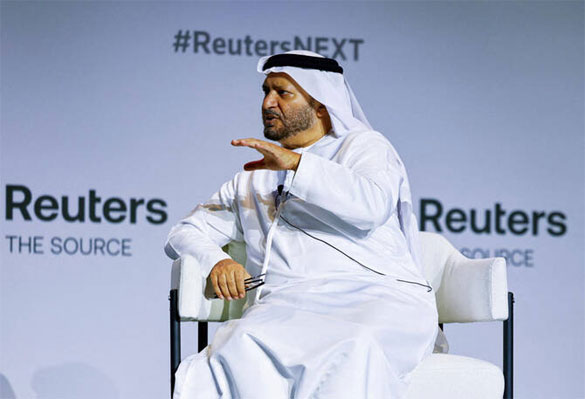
Anwar Gargash, the diplomatic adviser to the UAE president, said the ‘Strait of Hormuz cannot be held hostage by any country’. (Reuters)
-----------
DUBAI: UAE official Anwar Gargash said any settlement of the US-Iran war must guarantee access through the Strait of Hormuz, warning that a deal that fails to rein in Iran’s nuclear program and its missiles and drones would pave the way for “a more dangerous, more volatile Middle East.”
Gargash, the diplomatic adviser to the UAE president, told a weekend briefing that the Strait of Hormuz — the world’s most critical oil artery — cannot be weaponized, stressing that its security is not a regional bargaining chip but a global economic imperative.
“The Strait of Hormuz cannot be held hostage by any country,” said Gargash, adding that freedom of navigation through the waterway “has to be part and parcel of the settlement of any conflict with clear agreement on that.”
Gargash said the UAE wants the war to end, but warned against a ceasefire that leaves the root causes of instability unresolved.
“We don’t want to see more and more escalation,” he said. “But we don’t want a ceasefire that fails to address some of the main issues that will create a much more dangerous environment in the region … notably (Iran’s) nuclear program, the missiles and drones that are still raining down on us and on other countries.” US President Donald Trump threatened to rain “hell” on Tehran if it did not make a deal and reopen the Strait of Hormuz by his Tuesday deadline. In a post laden with expletives on Sunday on his Truth Social platform, Trump threatened further strikes on Iranian energy and transport infrastructure that critics say would constitute a war crime.
The US and Israel have pounded Iran with missiles and airstrikes for more than five weeks to destroy what they said was an imminent threat from the country’s nuclear weapon development program, ballistic missile arsenal and support for regional proxy militias.
Worst-case scenario unfolding
Gargash said the United Arab Emirates was ready to join any US-led international effort to secure shipping through the strait.
About a fifth of global oil and liquefied gas supplies normally pass through it each day, but Iran’s actions have severely curtailed traffic, triggering a global energy crisis.
The conflict erupted on February 28, when the US and Israel attacked Iran after talks aimed at securing a nuclear agreement between Washington and Tehran hit a deadlock. Iran retaliated with waves of missiles and drones targeting Israel, US military bases in the region, and vital Gulf energy infrastructure, including airports, ports and commercial centers.
The UAE has come under heavier Iranian strikes than any other Gulf state, according to regional officials.
Gargash said that for decades, the most unlikely worst-case scenario for the UAE had been a full Iranian attack — a scenario that is now unfolding. Despite that, he said, the country was coping well, demonstrating resilience and resourcefulness under pressure.
He said the UAE’s economic fundamentals remained strong and positioned the country for a recovery, though he acknowledged it would require effort.
Gargash said Iran’s strategy was likely to harden the Gulf’s security alignment with Washington rather than reduce it, entrenching the US military role in the region and amplifying Israel’s footprint. He said the US would remain the UAE’s core security partner and that Abu Dhabi would double down on that relationship as regional threats intensify.
Iran’s strikes on Gulf energy facilities and shipping lanes were seen by regional officials as a calculated attempt to raise the costs for Washington’s Gulf Arab allies. By hitting oil facilities, ports and key waterway — including the Strait — Iran banked on Gulf states, alarmed by economic shock and regional spillover, to press the United States to halt its campaign.
That logic drew on years of Gulf efforts to balance ties with Washington and Tehran, keep tensions contained, and avoid direct confrontation. Many Gulf states had restored diplomatic relations with Iran and tried to shield their economies from regional shocks, believing engagement would lower the risk.
Gargash said Iran’s leadership was fighting to preserve the “regime, not the country,” arguing that no normal government would accept such destruction simply to claim it had resisted. He said the UAE did not seek hostility with Iran, but warned that trust was impossible under the current Tehran government.
The UAE was grateful, he said, for the international support it has received, singling out France as a steadfast partner and praising Washington for its exceptional backing, particularly in strengthening the UAE’s air-defense capabilities.
Source: arabnews.com
Please click the following URL to read the text of the original Story
https://www.arabnews.com/node/2638924/middle-east
------
AI and the media: Experts to discuss challenges, opportunities in Riyadh
HEBSHI ALSHAMMARI
April 05, 2026
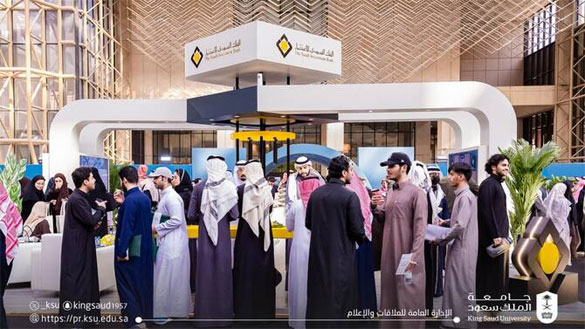
The two-day conference will discuss the growing impact of artificial intelligence on the media industry. (Supplied/File Photo)
-----------
RIYADH: Media academics and professionals will gather in Riyadh on Tuesday for a two-day conference to discuss the growing impact of artificial intelligence on the industry.
Organized by the Saudi Association for Media and Communication, “Artificial Intelligence Media: Opportunities and Challenges” will bring together many of the sector’s leading lights.
Jareh Al-Marshidi, the association’s vice president and chairman of the conference’s scientific committee, said AI was now widely used across media workflows, from scriptwriting to distribution and audience targeting.
The main challenge, he said, was maintaining professional and ethical standards while making use of tools that could produce content quickly.
Prof. Mutlaq Al-Mutairi, supervisor of the Dr. Ibrahim Al-Muhanna Chair for Energy and Specialized Media, said the development of media and AI depended on strengthening scientific research in the Arab world.
Limited research capacity and reliance on bureaucratic systems could slow innovation and weaken the ability to keep pace with technological change, he said.
Improving research quality and supporting knowledge-based policies were essential to avoid intellectual and technological stagnation, he said.
Prof. Mohammed Al-Qaari, from the College of Media and Communication at Imam Muhammad Ibn Saud Islamic University, said digital media developments driven by AI required a rethink of media education.
The reforms should include understanding algorithms, technical systems and smart applications that underpinned modern media, he said.
Some academic programs still treated technology as a minor component, even though AI was central to content production, distribution and analysis, he said.
Curricula should incorporate data analysis, algorithmic thinking and generative AI tools from early stages to better prepare students for industry demands, Al-Qaari said.
Faculty members also needed more education as some remained cautious about adopting these new technologies, he said.
Ahmed Al-Dayhani, a correspondent for Monte Carlo Radio in Saudi Arabia, said AI could not replace reporters, who used their experience to interpret information, compare it with real conditions and identify trends.
But AI-generated media content could create confusion among audiences, he said, and he urged editors to distinguish between high- and low-quality content.
Lafi Al-Rashidi, a Saudi TV news anchor, said AI was a useful tool that supported media professionals but should be used carefully to avoid overreliance.
AI could help to improve media quality when used properly, but misuse could lead to the generation of more superficial content, he said.
Source: arabnews.com
Please click the following URL to read the text of the original Story
https://www.arabnews.com/node/2638869/saudi-arabia
-----
‘We bow to no one’: Trenin sets out Russia’s worldview in a ‘new world war’
5 Apr, 2026

RT composite. © Getty Images / yulenochekk; Sputnik / Maria Devakhina
----------
The Russian International Affairs Council (RIAC) has a new president: the renowned international affairs expert Dmitry Trenin. In his first interview in his new role, he told Kommersant correspondent Elena Chernenko how he envisages the development of this important foreign policy think tank and who is more important to study, Russia’s partners or its adversaries.
Q: You become president of the RIAC at a time that diplomats describe not merely as turbulent, as it was before, but as dramatic. What is your plan?
Dmitry Trenin: My plan as president of the RIAC is to give this remarkable council new impetus and to rise to the challenges we face today and those that will arise tomorrow. Despite the apparent chaos and illogicality of what is happening, we should not pretend that nothing like this has ever happened in history. Today’s events have their own distinctive features, partly due to technological developments, but this is not the first time the world has gone through a period of fundamental change. In the past, such periods were linked to world wars. Today, we are experiencing something akin to a world war. I do not like to use the term ‘Third World War’, because it implies a continuation of what happened in the First and Second World Wars. A more accurate phrase is ‘a new world war’, distinct from the first two. We must get through this period and emerge from it in a stronger position, becoming better and wiser.
Q: By ‘we’, do you mean Russia?
Dmitry Trenin: Yes. But it won’t happen by itself. Everyone has their own section of the front or line of advance. We can be on the defensive, on the offensive, or launching a counter-offensive. Since we are talking about war, we can use such terms. The RIAC is, as I see it, a small but unique area of Russia’s interaction in the international arena with other states and civilizations. And I already have some initial ideas for its further development, which I will now propose and promote and, if possible, implement.
Q: Is there demand for foreign policy expertise in Russia?
Dmitry Trenin: I am convinced that yes, it is in demand. But, unfortunately, a significant proportion of foreign policy expertise, and not only in Russia, is either not interesting or detached from reality. I speak with Foreign Ministry staff and have heard from them on numerous occasions that they are swamped with paperwork, but cannot always get anything useful out of it. The RIAC has many tasks, but one of the key ones must be to assist those who are actually engaged in foreign policy. Such people often have less time than experts to delve into the causes and origins of what is happening; they are overburdened and operate under time constraints. Experts must understand the substance of the issues and provide conclusions and recommendations that will be useful to those involved in decision-making. This is where I see a role for the RIAC. But, as I have already said, the council has other functions too, including promoting our foreign policy around the world and educating the public on foreign policy issues.
Q: Russian think tanks have begun to focus more actively on the countries of the global majority. Those states that are regarded as unfriendly are receiving less and less attention. So, who should we study more closely, friends or foes?
Dmitry Trenin: An expert in international relations must first and foremost focus on his or her own country, on its needs regarding the outside world, and on the opportunities and risks that arise for it from that outside world. In this sense, for an expert, there is no difference between friendly and unfriendly countries. The distinction lies in whether, and to what extent, it’s possible to engage positively with a particular country. With unfriendly nations, this is practically impossible at present and for the foreseeable future. But that does not mean they should not be studied. In war, studying the enemy is of the utmost importance.
In fact, I would start by studying the enemy in Ukraine. We need to gain a better understanding of the reasons behind their behavior. For instance, why haven’t they surrendered yet? It is clear that external factors play a significant role here, but there are internal factors too.
We need to understand Western Europe better. For a long time, we were under the spell of the West, which prevented us from accurately assessing its intentions and actions at a time when we were seeking to build a partnership with it. We had, and, incidentally, the president himself spoke of this, illusions about the West. We are now re-evaluating many things, and it is important not simply to swap positives for negatives, but to gain a deep understanding of what the modern West represents, both its American and European components. In recent years, Western European countries have on more than one occasion behaved differently from what we expected.
Q: For example?
Dmitry Trenin: Ever since the days of the Soviet Union, we have viewed Western Europeans as hostages to the US: vassals upon whom Washington imposes its will. At the same time, we were firmly convinced that they were pragmatic and would not sacrifice business for the sake of politics. I think it came as a revelation to many of us just how quickly these European countries, including Germany, on which we had pinned our greatest hopes, severed ties with Russia, including cutting off trade links. Business didn’t stand in the way of these European countries’ anti-Russian policies.
Today, Western Europe continues to surprise us, though in a different way. It has refused to accept the Trump administration’s approach to the conflict over Ukraine and has begun to obstruct it. I had generally assumed that if the US president said we needed to move towards peace, the bloc would comply, but it is resisting. At the same time, we are witnessing Western European defiance regarding the US and Israel’s war against Iran.
It is clear that these Europeans still have many ties to the US, and many in Western Europe simply hope to wait out Trump’s presidency, especially as there are many like-minded people among the current president’s opponents in Washington. Yet, in many respects, it is no longer appropriate to speak of the European NATO states as vassals, this topic requires study and re-evaluation. The same applies to the US, where significant changes are also taking place. One must know one’s opponents almost as well as one knows oneself.
Q: And partners?
Dmitry Trenin: As I’ve already said, we need to start with ourselves. Next, it’s important to study our adversaries. And that knowledge must be up to date: the war in Iran changed the world in the space of just a month. The next circle comprises the neighboring countries that are most important to us: the states of the former USSR and the largest countries of Eurasia. We need to know the countries of the South Caucasus, Kazakhstan and Central Asia far better, rather than simply living on memories of holidays in Pitsunda or walks through Registan. We need to take this seriously, because our own ignorance or lack of understanding of our neighbors will create problems we really don’t need, right on our doorstep. Ukraine demonstrates just how dangerous such an approach can be.
Our largest neighbor, China, naturally deserves our closest attention. This requires a systematic approach. The same applies, of course, to India, of which we have a positive but as yet rather superficial understanding, and to other major Asian countries, from Pakistan to Indonesia and from Vietnam to Japan and the Korean Peninsula. I also count Türkiye and Iran among Russia’s immediate neighbors, as we are linked to them by the Black and Caspian Seas. Alongside the leading countries of the Arab world and Israel, these are the most important players in the Middle East. And then, on the next front, there are the countries of Africa and Latin America. It’s clear that these regions, especially Africa, are currently on many people’s minds; it is a rapidly developing continent that may be of interest to Russia, including in terms of developing economic ties. Personally, however, I currently view the outside world primarily from the perspective of Russia’s national security interests and, accordingly, set regional priorities.
Q: We spoke in an interview following the publication of your book ‘New Balance of Power: Russia in Search of Foreign Policy Equilibrium’ in 2021. Given the current balance, or imbalance, of power, how should Russia shape its policy?
Dmitry Trenin: The call to seek foreign policy equilibrium remains relevant, but under fundamentally different circumstances. The book was written long before the military operation in Ukraine. Back then, it was still possible to try to work together with countries that were subsequently deemed unfriendly. Since then, the situation has become more complicated. We are forced to wage war against a significant part of the collective West. A significant part, not the whole, because even within the European Union we see differing approaches towards Russia; it is important to take this into account when formulating policy. It’s a difficult task to strike a balance with the US, which is in fact our adversary, as they share intelligence with Ukraine to launch strikes against us and do much more for Kiev. Nevertheless, under the current US administration, we should not regard America as the same kind of adversary as, say, Britain.
As we find ourselves in a historic confrontation with the West, it is vital that we maintain a balance in our relations with its other opponents, supporting our partners and allies whilst ensuring we retain our freedom of maneuver, an indispensable attribute of a great power. For example, with China, which far surpasses Russia in demographic and economic terms and has achieved remarkable successes in the field of technology and so on, it’s absolutely essential for us to maintain an equal footing in our relations and to remember that Russia is a great power which cannot be a junior partner.
We must help maintain a positive balance between our strategic partners, China and India, preventing the Americans or anyone else from using India against China and, by extension, at least indirectly against us. We must maintain a balance in our relations with the former republics of the USSR, building relations on an equal footing – and in such a way that they bring far greater benefit to Russia than the previous ‘center-periphery’ model. And so on. We must maintain a balance, standing firmly on our own two feet and understanding that we are a sovereign nation: we bow to no one and will not let the world fall apart.
Source: rt.com
Please click the following URL to read the text of the original Story
https://www.rt.com/russia/637361-we-bow-to-no-one/
-----
Trump dragging Americans ‘into hell’ – Iranian parliament speaker
April 6, 2026
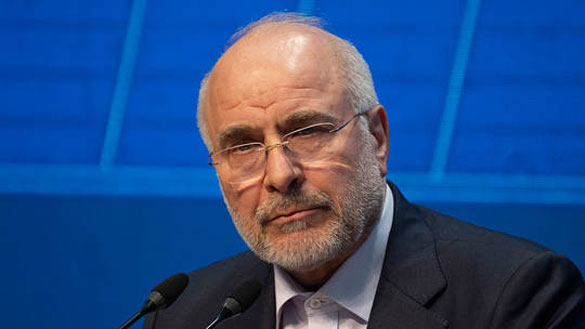
Iranian Parliament Speaker Mohammad Bagher Ghalibaf at a media conference in Tehran, Iran, December 2, 2025. © NurPhoto / Getty Images
-------------
US President Donald Trump’s war with Iran is making life worse for ordinary Americans, Iranian Parliament Speaker Mohammad Baqer Qalibaf has said in response to ultimatums over the Strait of Hormuz.
In an expletive-laden post on Truth Social on Sunday, Trump warned that Iran would be “living in hell” unless the vital waterway is reopened to shipping by Tuesday, 8 PM Eastern Time (midnight GMT). He also repeated his threat to bomb Iranian power plants and bridges.
Responding on X, Qalibaf urged Trump to end what he described as a “dangerous game.”
“Your reckless moves are dragging the United States into a living HELL for every single family, and our whole region is going to burn because you insist on following Netanyahu’s commands,” Qalibaf wrote, referring to the Israeli prime minister.
“Make no mistake: You won’t gain anything through war crimes,” the Iranian official added.
Iran closed the Strait of Hormuz to “enemy ships” shortly after the US and Israel initiated their air campaign on February 28. Tehran later said navigation rules would change and that the strait would remain inaccessible to the US and Israel for an extended period.
Traffic through the strait normally accounts for 20–25% of global oil shipments and around 20% of liquefied natural gas (LNG) trade. Disruptions linked to the ongoing conflict are driving up energy prices, including in the US, where the average price of gasoline has risen to $4 per gallon for the first time since 2022.
Russia’s envoy to international organizations in Vienna, Mikhail Ulyanov, said Washington fails to understand that Tehran would only accept agreements based on “reasonable compromises,” not ultimatums.
Source: rt.com
Please click the following URL to read the text of the original Story
https://www.rt.com/news/637399-trump-dragging-us-in-hell/
-----
Ndume Condemns Boko Haram Attacks In Borno Communities
April 5, 2026
The Senator representing Borno South Senatorial District, Ali Ndume, has condemned the latest attacks by Boko Haram/ISWAP terrorists on communities in Gwoza and Askira-Uba Local Government Areas of Borno State.
Naija News reports that the attacks, which occurred on Saturday, affected Ashigashiya village in Gwoza LGA and Kopul village in Askira-Uba LGA, leading to loss of property and displacement of residents.
Reports indicate that the attackers invaded Ashigashiya village, where they allegedly set houses on fire. A disabled household member was reportedly trapped in one of the buildings and was burned to death during the attack.
Several residential houses were also destroyed, while the assailants looted foodstuffs and livestock belonging to residents.
In a separate attack on Kopul village in Askira-Uba, many houses and shops were destroyed.
Although no casualties were recorded in the incident, residents reportedly fled into nearby bushes for safety following the invasion.
Reacting to the attacks in an interview with journalists in Maiduguri on Sunday, Ndume sympathised with the victims and renewed his call for the Federal Government to provide better equipment for security forces fighting insurgency.
He said, “Our Nigerian Armed Forces are doing their best in fighting Boko Haram/ISWAP terrorists, but they are handicapped in terms of weapons.
“There is an urgent need for the federal government to Train, Equip, Arm, and Motivate (TEAM) the military forces.”
He stressed that modern military hardware was essential to defeat the insurgents.
“Our military and other security agencies should have access to Mine Resistant Ambush Protected (MRAP) vehicles, fighter jets and drones if we really want to end Boko Haram,” Ndume added.
Despite the concerns, Ndume commended the Nigerian Armed Forces, other security agencies, and local security groups for their efforts in combating insurgency.
He praised members of the Civilian Joint Task Force, hunters, and vigilantes for their sacrifices in supporting military operations.
The senator also lauded Cameroonian security forces for their swift intervention during the Ashigashiya attack.
According to him, their response helped repel the terrorists and prevented what could have been a more devastating assault on the community.
Source: naijanews.com
Please click the following URL to read the text of the original Story
https://www.naijanews.com/2026/04/05/ndume-condemns-boko-haram-attacks-in-borno-communities/
-----
Myanmar’s new president Min Aung Hlaing faces genocide complaint in Indonesia
Apr 06, 2026
JAKARTA – A criminal case against Myanmar’s newly-elected President Min Aung Hlaing was filed in Indonesia on April 6 by a group of civil society organisations, accusing the leader of acts of genocide against the Rohingya ethnic group.
Myanmar is a member of the Association of South-east Asian Nations (ASEAN), but relations have come under strain since a 2021 coup led by Senior General Min Aung Hlaing, leading to civil war and a humanitarian crisis, with large numbers of Rohingya Muslims displaced and forced into refugee settlements.
Indonesia, which hosts ASEAN’s headquarters, is the biggest Muslim majority country in the world, and is among the destinations for Rohingya people fleeing Myanmar or the refugee camps by boat.
Myanmar’s armed forces, under then junta chief Senior General Min Aung Hlaing, launched an offensive in 2017 that forced at least 730,000 Rohingya from their homes and into neighbouring Bangladesh, where they recounted killings, mass rape and arson.
The complaint to Indonesia’s Attorney-General’s office was filed by Ms Yasmin Ullah, a Rohingya who fled Myanmar, and several Indonesian figures, including a former attorney-general and the chairman of Muhammadiyah, one of the country’s biggest Muslim groups, they said in a statement on April 6.
They said they would present evidence of forced displacement of the Rohingya, the world’s largest stateless population, as well as killings by the junta, adding that the case had been accepted by the Indonesian prosecutors.
“It is the first time under Indonesia’s new penal code that a case has been officially received and I warmly welcome this historic development as a milestone for all Rohingya people on their long march to justice and accountability,” Ms Ullah said.
The claimants said Indonesia’s penal code allows for “universal jurisdiction” when certain crimes are considered so serious they can be processed regardless of victim nationalities or where the crime was committed.
Indonesia’s Attorney-General’s Office did not immediately respond to a request for comment.
Another predominantly Muslim country, Gambia, told judges in January at the United Nations’ top court that Myanmar targeted minority Muslim Rohingya for destruction and made their lives a nightmare in a landmark case accusing Myanmar of genocide.
Myanmar has always denied genocide. The junta did not immediately respond to a request for comment on April 6.
Senior General Min Aung Hlaing was elected president through a parliamentary vote last week after an army-backed party won the December and January election in what Western governments described as a sham, formalising his grip on political power.
The 2021 coup has led to widespread protests and nationwide resistance ever since. REUTERS
Source: straitstimes.com
Please click the following URL to read the text of the original Story
https://www.straitstimes.com/asia/se-asia/myanmars-new-president-min-aung-hlaing-faces-genocide-complaint-in-indonesia
------
India seeks stronger ties with Bangladesh as envoy meets PM Tarique
6 Apr 2026
Indian High Commissioner to Bangladesh Pranay Verma underlined that India-Bangladesh cooperation should transform their geographical proximity into new opportunities by strengthening economic and connectivity linkages, and by enhancing cultural and people-to-people exchanges.
He made the remarks during a courtesy call on Prime Minister Tarique Rahman today, according to a statement from the Indian High Commission.
They discussed bilateral engagement with a focus on people-centric cooperation in multiple domains aligned with the national development priorities of the two countries.
The discussions focused on enhancing cooperation in a wide range of areas including public health, financial inclusion, women‘s empowerment, rural development, bilateral trade and investment, ease of doing business, technology partnerships, and power and energy cooperation.
Pranay Verma conveyed India’s intent to work together with the government and the people of Bangladesh in a positive, constructive and forward-looking manner based on mutual interest and mutual benefit.
Source: thedailystar.net
Please click the following URL to read the text of the original Story
https://www.thedailystar.net/news/bangladesh/diplomacy/news/indian-high-commissioner-meets-pm-tarique-4144761
------
India
Strait of Hormuz ‘deadline’ looms, Jaishankar talks to Iran counterpart Araghchi
Shubhajit Roy
Apr 6, 2026
External Affairs Minister S Jaishankar spoke to the foreign ministers of Iran, Qatar and UAE on Sunday as US President Donald Trump threatened to resume attacks on Iran’s energy infrastructure if the Strait of Hormuz is not reopened by Tuesday.
Iran’s Foreign Minister Seyed Abbas Araghchi called up Jaishankar and they discussed the “present situation”.
“Received a call from Foreign Minister @araghchi of Iran. Discussed the present situation,” Jaishankar posted on X, after the call.
According to the Iranian embassy, “Seyed Abbas @araghchi, Foreign Minister of the Islamic Republic of Iran, held a phone conversation with Subrahmanyam Jaishankar @DrSJaishankar, India’s Minister of External Affairs, discussing bilateral relations as well as regional and international developments.”
This was their sixth phone conversation since the war started on February 28.
After his phone conversation with UAE Foreign Minister Abdullah bin Zayed Al Nahyan, Jaishankar said, “Discussed the evolving situation in West Asia with DPM & FM @ABZayed of UAE.”
UAE has been facing attacks from Iran — more than 2,500 in the form of missile and drone strikes in the last five weeks of the US-Israel war on the Islamic Republic.
Jaishankar also spoke to Qatar’s Foreign Minister Sheikh Mohammed bin Abdulrahman bin Jassim Al Thani. He posted: “Had a telecon on the ongoing conflict with PM & FM @MBA_AlThani_ of Qatar this evening”. Qatar too had faced Iranian attacks due to the presence of the American military in the country.
Jaishankar has spoken to the foreign ministers of both UAE and Qatar at least twice in the past one month.
Delhi is engaging with the stakeholders as President Trump on Sunday escalated his threats to bomb Iranian power plants within the next two days.
India has been dealing with the consequences of the closure of the Strait and only a handful of ships have passed through in the last month. This has led to disruptions in the supplies of gas and energy.
Jaishankar’s engagement on Sunday is part of Delhi’s efforts to mitigate the impact of the war in West Asia and stabilise the situation.
Source: indianexpress.com
Please click the following URL to read the text of the original Story
https://indianexpress.com/article/india/jaishankar-discusses-bilateral-relations-regional-developments-in-call-with-iran-foreign-minister-araghchi-10620753/
------
PM in Assam slams Congress for 'echoing Pakistan line', alleges threat to national security
06 Apr 2026
Prime Minister Narendra Modi on Monday accused the Congress of aligning with Pakistan’s narrative, alleging that such a stance undermines national security.
Speaking at an election rally in Assam’s Barpeta district, he said that while his government has conducted Operation Sindoor targeting terror camps in Pakistan, the opposition continues to "sing to the tune of" the neighbouring country.
“This Pakistan connection compromises with the nation's security, and we can never allow that,” he said.
On the development front, he alleged that the Congress had always taken a myopic view on the matter, while the BJP works towards ensuring long-term development of the nation.
"The party always took short-term measures so that they could indulge in corruption. But the BJP looks far ahead while taking decisions for all-around development of all sections of society," Modi said.
The prime minister also accused the Congress of neglecting the armed forces by failing to implement the ‘One Rank, One Pension’ scheme, adding that his government ensured justice for military personnel.
He said that peace was established in Assam after a lot of sacrifices and due to the BJP's honest effort to implement the various peace accords signed during the last 10 years.
"Peace and stability in the state has led to development under the BJP rule... to ensure this continues, it is necessary to keep the Congress out (of power)," the PM said.
Appealing to women voters, Modi said the proposed 33 per cent reservation for women in Parliament would come into effect from the 2029 general elections. He urged women in Assam to press all political parties to support the Bill.
Elections to the 126 assembly constituencies in the state will be held on April 9, with counting of votes on May 4.
Source: newindianexpress.com
Please click the following URL to read the text of the original Story
https://www.newindianexpress.com/elections/assam-elections/2026/Apr/06/pm-in-assam-slams-congress-for-echoing-pakistan-line-alleges-threat-to-national-security
-----
3 detained from madrasa with firearm, SIT probe on
Ramashankar
06 Apr 2026
PATNA: Three individuals have been taken into custody from a madrasa with a firearm at Gawandra village under Chakia police station limits in Bihar’s East Champaran district.
Police conducted raids at the madrasa following an intelligence input and detained three individuals with a country-made pistol and live cartridges. Police are conducting a probe to ascertain the source of the weapons and the specific purpose for which they were kept at the madrasa, known as the Islamia madrasa.
Swarna Prabhat, superintendent of police (SP), East Champaran, confirmed the police operation and said that a special investigation team (SIT) has also been constituted.
The madrasa in question has been suspected of indulging in unlawful activities for a long time, alleged a local resident, Asgar Ali.
Meanwhile, SP Swarn Prabhat said that police acted after a specific tip-off. He said that three individuals had been taken into custody for questioning. Preliminary probe has revealed that the premises were used for the buying and selling of weapons. Efforts are underway to verify the antecedents of individuals detained, the SP added.
Police are investigating whether the individuals have any connections to the Popular Front of India (PFI).
Source: newindianexpress.com
Please click the following URL to read the text of the original Story
https://www.newindianexpress.com/nation/2026/Apr/06/3-detained-from-madrasa-with-firearm-sit-probe-on
-----
Assam CM alleges Congress used ‘Pakistani source’ to target his wife, influence Assam polls
06.04.26
Assam Chief Minister Himanta Biswa Sarma on Monday claimed the Congress has concocted the charge that his wife has multiple passports and owns properties in Dubai, using false information from a Pakistani social media group.
He also alleged that Pakistan was trying to influence the outcome of the Assam elections.
At a press conference here, a day after Congress leaders Pawan Khera and Gaurav Gogoi sought to know whether his wife or family owns property in Dubai, has companies in the USA, or has placed their assets in shell companies, Sarma said these charges have been made to influence the poll results, which is "punishable under the law".
The BJP leader also alleged that the documents the Congress used to make the allegations against his wife were sourced from a social media group "Pakistanis in Ajman", and her photo was morphed on a lost passport of a person from that country.
"I am concerned that they took the help of Pakistan. This is not a simple fraud case but a crime against the nation," he said.
Sarma claimed that Pakistan was attempting to influence the Assam elections, stating that the general narrative of at least 11 TV talk shows was that the Congress party should win.
The chief minister said his wife has filed a complaint against Congress spokesperson Pawan Khera. "I am sure the police will register the case and take necessary legal action," he said.
Sarma claimed these allegations were made before the polls to influence the results, which is a "criminal offence and punishable under the law." The chief minister also said it was "unfortunate" that former Assam chief minister Tarun Gogoi's son Gaurav Gogoi could "stoop so low" and make such false allegations against his wife.
Congress leader Pawan Khera alleged on Sunday that the Assam chief minister's wife has three passports of the UAE, Egypt and Antigua-Barbuda, two properties in Dubai and assets in shell companies.
Source: telegraphindia.com
Please click the following URL to read the text of the original Story
https://www.telegraphindia.com/north-east/assam-chief-minister-himanta-biswa-sarma-alleges-congress-used-pakistani-source-to-target-his-wife-influence-assam-polls/cid/2154803
-----
Davanagere South bypoll: Cong faces rebel threat, disquiet among Muslims
Apr 06, 2026
The Congress is confronting an unusual test of its internal cohesion in the Davanagere South Assembly by-election, where discontent among Muslim leaders and a surge of rebel candidates have raised the prospect of vote-splitting in a constituency long shaped by the party’s core support base.
The trigger for the unrest is the party’s decision to field Samarth Mallikarjun, a family member of late MLA Shamanur Shivashankarappa, instead of a Muslim candidate. The choice has unsettled sections of the community, which has consistently sought representation since the constituency was carved out in 2008 and remains a significant electoral bloc, with roughly 80,000 voters in an electorate of 2.32 lakh.
With the April 9 poll approaching, the Congress high command has focused on containing the fallout. Senior leaders have been working to persuade more than a dozen Muslim Independent candidates to withdraw from the contest and consolidate support behind the party nominee, while attempting to reassure voters that the community has not been sidelined.
The strain has also exposed divisions within the party’s leadership. Minister B Z Zameer Ahmed Khan, who had backed MLC K Jabbar Khan for the ticket, has stayed away from campaigning in Davanagere and is currently in Kerala. A remark by Deputy Chief Minister and state Congress president D K Shivakumar that the party “does not function relying on an individual and elections fought on ideologies” is reported to have prompted efforts to bring him into the campaign after April 5.
The tensions follow a March 20 meeting convened by AICC general secretary in charge of Karnataka Randeep Singh Surjewala and Chief Minister Siddaramaiah, where Muslim leaders pressed their demand for the ticket, citing their numerical strength. Those present -- including Zameer Ahmed Khan, Rahim Khan, Saleem Ahmed, Rizwan Arshad, Naseer Ahmed, Tanveer Sait and N A Haris -- were instead asked to ensure that Independent candidates withdrew and supported Samarth Mallikarjun. His father, S S Mallikarjun, is a minister in the state cabinet, and his mother, Prabha Mallikarjun, represents the Davanagere Lok Sabha constituency.
A Congress functionary familiar with the situation said the episode had highlighted the complexities of managing Muslim leadership within the party. “When the party had expected Khan to soothe the angst among the Muslims for not getting the ticket, he sulked and is campaigning in Kerala. Khan is the party’s trouble-shooter regarding minorities issues, but his reported differences with Mallikarjun has not gone down well with the Congress leadership,” the functionary said.
Efforts to contain rebellion have extended to local leaders. Sadiq Pailwan, who filed nomination papers as a rebel candidate, has been approached by party leaders Rizwan Arshad and Saleem Ahmed to withdraw. Another rebel, Subhan Sab, was expelled for derogatory remarks against senior Congress leaders.
Saleem Ahmed, speaking to a local television channel, pointed to coordination challenges within the party. “Only Arshad and I showed up at the meeting as Khan remained incommunicado by switching off his mobile and Naseer Ahmed excused himself saying he was preoccupied. I am going to reveal after the by-poll who all plotted to field Pailwan, why they did not ask him to withdraw and why some leaders did not campaign in the constituency,” he said.
Rizwan Arshad said the leadership had justified its decision by pointing to continuity. “We were told the by-poll’s tenure is another two years, which Shamanur Shivashankarappa would have completed if he was alive. In the next elections, if the Muslim community suggests a good candidate, it will be considered. I agree Muslims are upset over the ticket’s denial but not to the extent that they will defeat the Congress and help the BJP,” he said.
The Congress has also sought to signal its commitment to the constituency through a ₹100 crore allocation for infrastructure development in the 2026–2027 state budget.
The Bharatiya Janata Party has sought to capitalise on the divisions. Leader of Opposition R Ashoka has urged Muslim voters to defeat the Congress candidate, arguing that his victory could deny the community a chance to contest the seat for decades. The BJP has fielded Srinivas T Dasakariyappa, while state president B Y Vijayendra mocked the Congress, saying it now has to “convince” Muslims to support it. The party has also criticised the state budget’s ₹4,500 crore allocation for minorities, calling it a “Halal and Pakistan budget.”
Despite the present turmoil, the Congress has maintained a strong hold over Davanagere South since 2008, with Shamanur Shivashankarappa securing repeated victories by significant margins. The demand for a Muslim candidate, however, has persisted over the years.
Party leaders say the situation is stabilising after initial turbulence, though concerns remain about residual dissent. “We have managed to make the majority of the Muslim Independent candidates who were fielded as dummies by a disgruntled leader to retire. The spoiler can be the Social Democratic Party of India (SDPI) candidate Afsar Kodlipet, who is trying to exploit the community’s sentiments,” a Congress functionary said.
Kodlipet, positioning himself as an alternative, criticised the Congress and the Shivashankarappa family. “A railway track separates Davanagere South constituency from Davanagere North represented by Mallikarjun. All developments, be it educational institutions or employment opportunities, are there in Davanagere North. Why not in Davanagere South?” he said.
He further questioned the family’s record on minority issues, arguing that their political success relied on Muslim support without corresponding benefits to the community.
Source: hindustantimes.com
Please click the following URL to read the text of the original Story
https://www.hindustantimes.com/india-news/davanagere-south-bypoll-cong-faces-rebel-threat-disquiet-among-muslims-101775418427606.html
-----
Rahul Gandhi questions Govt on data sovereignty, seeks clarity on US trade talks
06 Apr 2026
Leader of Opposition Rahul Gandhi on Monday raised concerns over India’s data sovereignty, alleging a lack of transparency from the government on how citizens’ data will be protected amid ongoing digital trade negotiations with the United States.
Gandhi said India should be at the forefront of the global technology race but is instead being “kept in the dark” about critical issues related to data protection and usage.
He said that India’s data belongs to its people and could serve as a key asset in building artificial intelligence capabilities, boosting businesses, and generating employment.
In a series of questions directed at the government, Gandhi sought clarity on what “reducing barriers” in the India-US trade discussions would mean for data governance. He asked whether sensitive data, such as health records, financial information, and government databases would remain stored within India, and whether the country would retain the authority to enforce data localisation for foreign companies.
"Every question on our data sovereignty, health data, AI, and local data storage gets the same treatment: 'framework', 'balance', 'autonomy' - big words, zero specifics," the former Congress president said.
The government refuses to tell the country what it is negotiating away, he alleged.
"We should be leading the global tech race, but instead we are kept in the dark about how India's data will be protected," Gandhi said. People deserve transparency and accountability regarding country's data, he asserted.
"We deserve to own and use our data to build a better future," Gandhi said.
Rahul Gandhi had earlier raised similar questions in the Lok Sabha on April 1, asking how India plans to reconcile its commitments under the proposed India-US trade framework with existing data localisation rules and regulatory safeguards.
He also sought details on whether such agreements could limit India’s ability to regulate artificial intelligence, restrict foreign access to sensitive infrastructure, or mandate local storage of critical data.
Responding in writing, Minister of State for Electronics and Information Technology Jitin Prasada said India’s digital economy remains robust, with revenues exceeding $280 billion and exports touching $225 billion in FY 2024–25.
He noted that the sector employs over 60 lakh people, making digital trade a key pillar of the economy.
Prasada stated that India remains committed to expanding digital trade partnerships globally and has already concluded free trade agreements with the UAE, UK, and EU, all of which include dedicated digital trade provisions. He asserted that these agreements safeguard India’s interests while ensuring market access.
On the proposed India-US Bilateral Trade Agreement, Prasada said both countries are working towards a framework that promotes a “free, fair, and dynamic” digital environment.
He added that India has preserved its regulatory autonomy in data governance and that no agreement would restrict the country’s ability to manage its data within the existing legal framework.
The minister maintained that the negotiations aim to balance technological advancement with cross-border collaboration, without compromising India’s strategic digital interests.
Source: newindianexpress.com
Please click the following URL to read the text of the original Story
https://www.newindianexpress.com/nation/2026/Apr/06/rahul-gandhi-questions-govt-on-data-sovereignty-seeks-clarity-on-us-trade-talks
------
Gadkari says BJP is against infiltrators, not Muslims; confident of wins in Assam, West Bengal
05 Apr 2026
Asserting that the BJP is opposed to infiltrators but not against Muslims, senior party leader and Union minister Nitin Gadkari on Sunday expressed confidence that the party will perform well in the upcoming Assembly elections in Assam and West Bengal.
Assembly polls in Assam are scheduled for April 9, while West Bengal will vote in two phases on April 23 and 29, with counting set for May 4.
“I strongly believe that we will win in both Assam and West Bengal. It is the BJP's policy to take everyone together, irrespective of one's religion. We are opposed to infiltrators but are not against Muslims,” Gadkari said in an interview with PTI.
He said large-scale infrastructure development and governance-focused work remain central to the party’s campaign strategy.
“Projects worth about Rs 5 lakh crore are being implemented across the northeastern region, including Assam. Infrastructure projects valued at around Rs 1.5 lakh crore have already been completed, while projects worth Rs 1.5 lakh to Rs 2 lakh crore are under implementation. In addition, another Rs 2 lakh crore worth of projects are in the pipeline,” he said to PTI.
According to him, these investments in road transport, highways and logistics are aimed at improving connectivity, boosting trade and accelerating economic growth.
“This sustained push will change the face of infrastructure in Assam and the Northeast, a region that has historically faced connectivity challenges,” he said.
The remarks come as the Himanta Biswa Sarma-led government seeks to retain power in Assam by highlighting its development record and welfare initiatives.
Gadkari reiterated that inclusivity remains central to the BJP’s approach.
“It is the BJP's policy to take everyone together,” he said, adding that the party’s opposition is directed at infiltration and not any religious community.
Addressing a recent rally in Assam, he said India could offer shelter to people with shared heritage if they seek refuge, but could not accept illegal entrants, warning that it would turn the country into a “dharamshala” (charitable lodging).
He further said unity in diversity remains “our essence” and that the BJP supports rights under the Constitution, including provisions for persecuted minorities under the Citizenship (Amendment) Act.
In West Bengal, Gadkari said there was a growing desire for change among voters.
“People are in favour of change,” he said, expressing confidence that the BJP would make significant electoral gains.
He acknowledged that the contest in West Bengal is intense, but said the party would focus on governance and development rather than “unnecessary political confrontation”.
The BJP has been seeking to expand its presence in the state after emerging as a major opposition force in the 2021 elections.
On Chief Minister Mamata Banerjee’s allegations that the Special Intensive Revision (SIR) of electoral rolls is a “silent, invisible rigging ploy” by the BJP-led Centre to remove voters ahead of the polls, Gadkari said the party prioritises national interest in policymaking.
“We do not want to enter into any kind of politics on national issues. We should look at issues (like SIR) keeping the nation's interest supreme,” he said.
Source: newindianexpress.com
Please click the following URL to read the text of the original Story
https://www.newindianexpress.com/nation/2026/Apr/05/gadkari-says-bjp-is-against-infiltrators-not-muslims-confident-of-wins-in-assam-west-bengal
-------
Mideast
US, Iran and mediators make push for 45-day ceasefire, Axios reports
April 06, 2026
The US, Iran and a group of regional mediators are discussing the terms for a potential 45-day ceasefire that could lead to a permanent end to the war, Axios reported on Sunday, citing four US, Israeli and regional sources with knowledge of the talks.
Reuters could not immediately verify the report. The White House and the US State Department did not immediately respond to Reuters’ requests for comment.
The mediators are discussing the terms of a two-phased deal, the report said, adding that the first phase would be a potential 45-day ceasefire during which a permanent end to the war would be negotiated.
The second phase would be an agreement on ending the war, the report said.
The ceasefire could be extended if additional time was required for talks, the report said.
US President Donald Trump told the Wall Street Journal on Sunday his deadline for Iran to open the Strait of Hormuz or face attacks on critical infrastructure is Tuesday evening.
Source: arabnews.com
Please click the following URL to read the text of the original Story
https://www.arabnews.com/node/2638920/middle-east
-----
Israel renews Lebanon strikes, forces Syria border crossing closed
April 06, 2026
BEIRUT: Israeli strikes in Lebanon on Sunday killed at least 15 people, a day after Israel threatened to hit Lebanon’s main border crossing with Syria, forcing it to close.
Israel has launched airstrikes across Lebanon as well as a ground invasion in the south since March 2, when armed group Hezbollah entered the Middle East war on the side of its backer Iran.
Israeli military chief Lt. Gen. Eyal Zamir visited troops in southern Lebanon on Sunday and pledged to intensify strikes against Hezbollah.
One of Israel’s strikes in Beirut Sunday killed at least five people and wounded 52 in the Jnah neighborhood, the Lebanese health ministry said.
A strike targeting an apartment building in Ain Saadeh town east of Beirut killed three people and injured three others, while a strike in the southern town of Kfar Hatta, far from the border with Israel, killed seven people including a four-year-old girl, the ministry said.
Pierre Mouawad, an official with the Lebanese Forces party, was killed along with his wife in the Ain Saadeh strike, the state-run National News Agency reported.
The Israeli military has made no statement about the strike, and its intended target remains unclear.
The Lebanese Forces party is opposed to Hezbollah and has blamed the Shiite militant group for dragging Lebanon into a new war with Israel.
Hezbollah on Sunday claimed to have fired a cruise missile at an Israeli warship off the coast, but the Israeli military told AFP it was “not aware” of such an incident.
Israeli attacks on Lebanon since the start of the war have killed more than 1,400 people, including 126 children, and displaced over a million, according to Lebanese authorities.
Panic attacks
The strike in Beirut’s Jnah neighborhood landed about 100 meters away from the Rafik Hariri University Hospital, the largest public medical facility in Lebanon, a medical source told AFP.
Zakaria Tawbeh, deputy head of the hospital, said they received “four killed, three Sudanese and a 15-year old girl, and 31 wounded.”
“Lots of glass was broken, and some of our patients had panic attacks.”
After the first attack, 53-year-old Jnah resident Nancy Hassan thought she was safe at home.
“Shortly after, the planes were flying overhead, and we heard a huge bang, then stones rained down on us,” she told AFP.
Hassan lost her daughter in an Israeli strike on the same area during the 2024 war between Hezbollah and Israel.
“My daughter was killed, she was 23 years old. Today, her friends were killed. Every time, they bomb us in the neighborhood without warning,” she added.
Israel also launched several strikes on the southern suburbs of Beirut, an area now largely evacuated but where Hezbollah holds sway.
The United Nations Interim Force in Lebanon warned that attacks by Israel and Hezbollah near its positions “could potentially draw return fire.”
Vital crossing
On Saturday, Israel had said it would target the Masnaa border crossing between Lebanon and Syria, the main gateway between the two countries.
“Due to Hezbollah’s use of the Masnaa crossing for military purposes and smuggling of combat equipment, the (Israeli army) intends to carry out strikes on the crossing in the near future,” said the military’s Arabic-language spokesman Avichay Adraee, urging people to leave the area.
The border post was quickly evacuated on the Lebanese side.
In Syria, borders and customs public relations director Mazen Aloush insisted the crossing was exclusively used by civilians but said it would close temporarily due to the threats.
Masnaa is a vital trade route for both countries and a key gateway to the rest of the region for Lebanese people.
Military expert Hassan Jouni told AFP that Israel’s threat to strike the crossing “is not based on sound security considerations but rather aims to pressure the Lebanese government... to disarm Hezbollah.”
At another border crossing further north known as Qaa, an AFP correspondent on Sunday saw a long line of cars and vans waiting to enter Syria as people sought an alternative route.
As Israeli troops push into border areas in southern Lebanon, destroying villages, Lebanese President Joseph Aoun reiterated his call for talks with Israel, saying he wanted to spare his country’s south from destruction on the scale seen in the Palestinian territory of Gaza.
“Why don’t we negotiate... until we can at least save the homes that have not yet been destroyed?” he said in a televised address.
Source: arabnews.com
Please click the following URL to read the text of the original Story
https://www.arabnews.com/node/2638914/middle-east
----
After Gaza devastation, Israeli attacks on Lebanon’s health care system feel familiar for many
April 06, 2026
SIDON: Two years ago, Dr. Mohammed Ziara watched Israel ravage Gaza’s health care system, shelling hospitals, striking ambulances and forcing patients to evacuate.
Now Ziara — along with other medical workers, human rights groups and many civilians — warns that the same scenario is unfolding in Lebanon.
Israel is pushing deep into the southern part of the country in its campaign against the Iran-backed group Hezbollah, a powerful militant force and political party that long has exercised de facto control over much of Lebanon’s Shiite community.
To describe its strategy in this war, the Israeli military invokes the devastation it wrought in Gaza after the Hamas-led Oct. 7, 2023, attacks. Israeli warplanes dropped leaflets over Beirut last month warning that after “great success in Gaza, a new reality is coming to Lebanon, too.”
“I’ve lived this before,” Ziara, a burn surgeon from Gaza City, told The Associated Press on Thursday at the government hospital in the Lebanese port city of Sidon. “I cannot go back to Gaza now,” Ziara said. “But I can be here, in Lebanon.”
As it did with Hamas in Gaza, Israel accuses Hezbollah of hiding in and operating from civilian areas, and using hospitals and ambulances for military purposes. Israel has increasingly targeted first responders and medical centers, forcing several hospitals to evacuate.
“I was besieged in a hospital,” Ziara said of his work in Gaza. “I lost my brother in an airstrike. I feel what these people feel.”
An Israeli offensive threatens a health system, again
Since the war between Israel and Hezbollah reignited on March 2, Israeli airstrikes have killed at least 54 health professionals as of Sunday, according to the Lebanese health ministry.
Israel has carried out 152 attacks against emergency medical workers and ambulances, and forced the closure of six hospitals and 49 health clinics through attacks or threats, the ministry says.
In Sidon, Ziara and his team from UK-based nonprofit Interburns have set up the Lebanese public health system’s first specialized burn unit — a critical resource in this crisis-stricken country where the war between Israel and Hezbollah has already killed 1,461 people and wounded 4,430, according to the ministry. Israel claims to have killed hundreds of Hezbollah operatives in the latest bombardment and ground invasion.
The Israeli military argues that Hezbollah’s use of medical facilities makes them legitimate military targets under international law. It does not offer evidence to support its claims.
Hezbollah denies conducting militant activities within civilian sites. Although the group’s presence in residential areas is well-documented, there has been no independent verification of its use of hospitals for military purposes.
Interburns, which trains local medics in burn care around the world, began building up the unit at Sidon Government Hospital during the 2024 Israel-Hezbollah war. Lebanese authorities asked the team to return when the war reignited last month.
As the first city just north of Israel’s evacuation zone that covers nearly all southern Lebanon, Sidon takes more wounded people every day.
The rising toll of rescue work
Kamal Fakih, 27, hates when people ask him what happened on March 17.
It’s not that it pains him to recall the Israeli airstrike. It’s that he doesn’t remember anything at all. He regained consciousness a day later at the hospital in Sidon, his body burned and lacerated by shrapnel.
Once stabilized, Fakih tried to connect with the paramedic who pulled him and his friend Hassan from the burning rubble, hoping to hear his account and thank him for saving their lives. But by the time Fakih got his contact, Muhammad Tafili was already dead, killed with a fellow paramedic in an Israeli airstrike on ambulances in the southeastern village of Kfar Tebnit on March 28, according to Lebanon’s health ministry.
That same day, Israeli attacks killed seven other medics across four additional villages, the World Health Organization said. Among the dead was a medic targeted while responding to an Israeli airstrike that killed three journalists working for pro-Hezbollah TV channels. Footage of the incident shows two strikes in quick succession — the first hitting journalists in their car, the second crashing into paramedics as they rushed to the rescue.
Israel’s military accused the two medics, and two of the three journalists killed, of being Hezbollah operatives. Its claim alarmed watchdogs that witnessed its similar justifications for killing more than 260 journalists and 1,700 health workers in Gaza, according to the United Nations humanitarian agency.
Although Lebanese medical workers and journalists were killed during the 2024 war with Hezbollah, “this time is different,” said Ramzi Kaiss, the Lebanon researcher at Human Rights Watch.
He pointed to a startling promise by Israeli Defense Minister Israel Katz last week that, to protect its border towns from Hezbollah rockets, Israel would flatten all the houses in southern Lebanon “in accordance with the model used in Rafah and Beit Hanoun in Gaza” — two cities that Israel almost entirely razed in its offensive against Hamas in the enclave.
“There’s a new kind of brazenness in declaring an intent to commit unlawful attacks,” Kaiss said. “It appears impunity has emboldened the Israeli military.”
Hospitals in the line of fire
Sweeping Israeli evacuation orders in recent weeks have sent over 1 million Lebanese flocking north. As the south came under heavy bombardment, clinics shuttered or suspended operations. Nabih Berri Hospital was swamped by an influx of casualties. To make room, it evacuated dozens of patients.
Such transfers involve coordination with the Lebanese army, health ministry and UN peacekeeping force — a game of telephone, doctors say, that creates potentially life-threatening delays. Admitting patients isn’t easy either; the Sidon burn unit must discharge a patient to free up a bed.
But the referrals keep coming, straining a health system already crippled by economic collapse.
“The health system is on its knees,” Ziara said, as the hospital was plunged into darkness until backup generators kicked in 10 minutes later, a result of Lebanon’s long-running electricity crisis. “Now front-line hospitals are lacking staff and supplies. They’re overwhelmed.”
Civilians search for answers
Lebanese civilians say that Israeli bombs can come without warning and hit indiscriminately, leading to a growing feeling that Palestinians in Gaza know well — that nowhere is safe.
Mohammad Qubaisi, 53, said his neighborhood of Zuqaq Al-Blat in central Beirut had not received Israeli evacuation guidance before March 18, when Israeli munitions slammed into his seventh-floor apartment.
Carrying his wife from the smoldering ruins, he shouted for his sons. His eldest, Adam, called to him. But he couldn’t hear Jad.
Qubaisi ran back into the skin-searing steam to search for his 15-year-old. When he woke up at the hospital hours later, his face raw with second-degree burns, he knew his son was gone.
The Israeli military said it was targeting Hezbollah. Qubaisi pushed back.
“These are civilian buildings, not military targets. They hit us and we still don’t know why,” he said from the Sidon hospital. “We were sleeping safely in our home, and look what happened to us.”
Source: arabnews.com
Please click the following URL to read the text of the original Story
https://www.arabnews.com/node/2638918/middle-east
------
Iran’s head of parliament lashes back at Trump
April 06, 2026
Iran’s parliamentary Speaker Mohammad Bagher Qalibaf dismissed Trump’s recent threats of targeting Iran’s infrastructure as “reckless” in a social media post on Sunday.
“You won’t gain anything through war crimes,” Qalibaf wrote on X. “The only real solution is respecting the rights of the Iranian people and ending this dangerous game.”
Tehran’s mission to the UN called the open threats to target civilian infrastructure “a direct and public incitement to terrorize civilians and clear evidence of intent to commit war crime.”
“The international community and all States have legal obligations to prevent such atrocious acts of war crimes,” the mission said in a post on the social platform X. “They must act now. Tomorrow is too late.”
Iran’s Deputy Foreign Minister Kazem Gharibabadi also said that Trump’s threats to strike power plants and bridges in Iran could amount to war crimes.
“The American president, as the highest official of his country, has publicly threatened to commit war crimes,” Gharibabadi said in a post on X, citing provisions of international law that could be breached.
“The threat to attack power plants and bridges (civilian infrastructure) is a war crime under Article 8(2)(b) of the Rome Statute of the International Criminal Court,” he added.
Iran’s ally Russia also condemned Trump’s threat.
Moscow said Washington should abandon “the language of ultimatums” and return to negotiations, according to a Russian readout of Foreign Minister Sergei Lavrov’s latest call with his Iranian counterpart.
A former foreign minister and adviser to the supreme leader warned Sunday that “the resistance front” could target the Bab El-Mandeb Strait off the Red Sea, through which about 12 percent of the world’s trade typically passes.
“If the White House thinks of repeating its stupid mistakes, it will quickly realize that the flow of global energy and trade can be disrupted with a single signal,” Ali Akbar Velayati said on social media, signaling possible closure of the vital waterway if the US escalates attacks.
Iran leads the so-called “Axis of Resistance,” which includes armed groups in Lebanon, Iraq and Yemen, where Houthi rebels had in the past cut off transit through Bab El-Mandeb with attacks on vessels.
Iran has effectively stopped cargo traffic through the Strait of Hormuz during the conflict, leading to higher oil and gas prices globally.
Iran floats a new condition for Strait of Hormuz reopening
Seyyed Mohammad Mehdi Tabatabaei, a presidential spokesperson, wrote Sunday on the social platform X that the reopening of the vital waterway can only happen if transit revenues are partially earmarked to compensate Iran for war damages.
There has been growing alarm over Iran’s grip on the Strait of Hormuz, critical for shipments of oil and gas from the Persian Gulf to Europe and Asia. Trump has threatened to attack Iran’s infrastructure if it fails to reopen the strait by Monday.
Iranian government minister dismisses Trump threat in AP interview
Iran’s culture minister has dismissed President Donald Trump’s latest threats, calling the US leader an “unstable, delusional figure.”
“Iranian society generally does not pay attention to his statements, as it believes he lacks personal, behavioral and verbal balance, and constantly shifts between contradictory positions,” Sayed Reza Salihi-Amiri told The Associated Press in an interview Sunday.
Trump on Sunday said he would strike Iran’s power plants and bridges this Tuesday if the Strait of Hormuz remains closed to marine traffic. In an expletive-laden post, Trump promised the Iranians would be “living in Hell” if the waterway isn’t opened.
“It seems Trump has become a phenomenon that neither Iranians nor Americans are able to fully analyze,” said Salihi-Amiri.
He said the Strait of Hormuz is “open to the world but closed to Iran’s enemies.”
Source: arabnews.com
Please click the following URL to read the text of the original Story
https://www.arabnews.com/node/2638917/middle-east
-----
Airstrike on Iranian city of Eslamshar kills at least 13
April 06, 2026
An airstrike early Monday struck a residential building in a city southwest of Iran’s capital, Tehran, killing at least 13 people, Iranian media reported.
The semiofficial Fars news agency and Nour News reported the strike near Eslamshar.
It wasn’t clear why the building had been struck.
Neither Israel nor the United States claimed the strikes early Monday, but they came after Trump issued a profanity-laced threat to Iran that it must reopen the Strait of Hormuz.
Airstrikes hit Tehran university linked to weapons work
Airstrikes early Monday morning on Iran’s capital targeted the Sharif University of Technology.
Iranian media reported the strikes and damage to buildings there, as well as a natural gas distribution site next to the campus.
It wasn’t immediately clear what had been targeted on the grounds of the university, which is empty of students as the war has forced all schools in the country into online classes.
However, multiple countries over the years have sanctioned the university for its work with the military, particularly on Iran’s ballistic missile program, which is controlled by the country’s paramilitary Revolutionary Guard.
Meanwhile, the Guard and other security forces have been using secondary sites as rally points as their bases have come under repeated attack during the war.
Airstrike in the Irani city of Qom kills at least 5
The state-run IRAN daily newspaper said in an online message that an airstrike in a residential area of Qom killed at least five people. Qom is a holy Shiite seminary city just south of Tehran.
It wasn’t unclear what the target of the strike was.
Iran has not provided overall casualty figures from the war in days. It also hasn’t discussed its materiel losses.
Airstrikes hit Iran’s capital
Before dawn Monday, a series of airstrikes hit Iran’s capital, Tehran. Explosions rang out into the night, though it wasn’t immediately clear what had been struck. The sound of low-flying fighter jets could be heard off and on for hours.
Source: arabnews.com
Please click the following URL to read the text of the original Story
https://www.arabnews.com/node/2638912/middle-east
------
UAE, Kuwait air defenses battle fresh Iranian missile and drone assault
April 06, 2026
DUBAI: The United Arab Emirates and Kuwait said Monday their air defenses were actively engaging a fresh wave of Iranian missiles and drones, as Gulf states braced for another day of strikes targeting their territory.
The UAE defense ministry said air defense systems were “actively engaging with missiles and UAV (Unmanned Aerial Vehicle) threats,” adding that sounds heard across the country were the result of ongoing interception operations.
Abu Dhabi authorities said they responded to an incident of falling debris on the Raneen Systems company in the Musaffah industrial area after a successful interception. The debris resulted in moderate injuries to a Ghanaian national, the Abu Dhabi Media Office said.
In Fujairah, authorities said they are responding to an incident after a drone approached from Iran toward the building of telecommunications company du, adding no injuries have been reported.
Kuwait’s army said its forces were responding to “hostile missile and drone threats,” hours after the country had already faced a similar overnight assault from Sunday into Monday.
The back-to-back attacks mark the latest escalation in a weeks-long Iranian campaign against Gulf states launched in response to US and Israeli strikes that began at the end of February.
On Sunday, Iranian drone and missile salvos caused fires at a petrochemical plant in the UAE’s Ruwais Industrial City and struck multiple energy and government targets in Kuwait.
Kuwait Petroleum Corporation reported “severe material damage” after drones hit its operating units, while a separate strike targeted the Shuwaikh complex housing the oil ministry and KPC headquarters.
Kuwait’s electricity and water ministry said two desalination plants were also damaged, and Kuwaiti state media reported that an Iranian drone struck a government office complex, causing significant material damage but no casualties.
In the UAE, state energy company ADNOC Gas said its Habshan complex in Abu Dhabi had been hit by debris from an intercepted attack on Friday, killing one Egyptian citizen.
Authorities in Sharjah also said they were “dealing with an incident that targeted Khor Fakkan” after the key port was targeted in the Gulf of Oman.
Pakistani nationals were reportedly wounded when a projectile was intercepted, prompting Pakistan's Prime Minister Shehbaz Sharif to post on X that he was “deeply concerned”.
Source: arabnews.com
Please click the following URL to read the text of the original Story
https://www.arabnews.com/node/2638909/middle-east
------
Two dead recovered after Iranian strike on Haifa residential building, Israeli media reports
April 06, 2026
HAIFA, Israel: Israeli rescuers recovered two bodies from the rubble of a residential building in Haifa after it was hit by an Iranian missile on Sunday, Israeli media reported.
Israeli firefighters have been searching for three missing people in the rubble of the residential building.
The direct hit on a seven-story building tore through parts of the structure, injuring four people, the military and rescue services said.
The strike took place minutes after the military warned it had detected a new round of missiles fired from Iran at around 1500 GMT.
The building was hit by a “direct impact of a missile,” a military spokesperson told AFP, confirming the missile was fired from Iran.
Israel’s emergency service, Magen David Adom, said four people were wounded when the building sustained a direct hit.
Israel’s Fire and Rescue Services said firefighters were searching for three missing people “at the scene of a building that has partially collapsed.”
AFP footage showed rescuers using flashlights to search through the building’s rubble and scattered concrete blocks.
The injured included an 82-year-old man, MDA said, adding that he was in a “serious condition.” A hospital later said he was stable.
He was “wounded by a heavy object and the blast,” the MDA said, adding that the other three suffered shrapnel and blast injuries.
The three injured included a 10-month old baby who suffered a head injury, MDA said.
Dozens of Israeli security and members of rescue forces were deployed at the site of the strike, an AFP correspondent reported.
Images and footage published by MDA show smoke rising from the remains of a flattened building in a densely populated area, and stretchers laid on the road by rescuers for casualties.
MDA paramedic Shevach Rothenshtrych quoted residents saying that there were casualties trapped under the rubble on the lower floors, and the 82-year-old was rescued after first responders “managed to move large pieces of concrete with our hands.”
His colleague Tal Shustak said that when emergency calls were received, “we were dispatched in large forces to the scene and saw extensive destruction, including glass, smoke and concrete scattered across the ground.”
On Sunday, the military detected five waves of missiles fired from Iran, and each time it said its “defensive systems are operating to intercept the threat.”
Iran has fired missiles daily at Israel since February 28, in retaliation to joint US-Israeli attacks on the country that has killed several top Iranian leaders, including supreme leader Ali Khamenei.
Since the start of the conflict, Israeli and US airstrikes have attacked number of Iran’s missile production sites and also nuclear facilities.
Source: arabnews.com
Please click the following URL to read the text of the original Story
https://www.arabnews.com/node/2638899/middle-east
-----
Arab World
Saudi FM speaks to Pakistani, Kuwaiti, Latvian counterparts
April 05, 2026
RIYADH: Saudi Arabia’s Foreign Minister Prince Faisal bin Farhan held a series of phone calls with his international counterparts on Sunday to discuss the escalating tensions in the region and matters of diplomacy.
Pakistani Foreign Minister Ishaq Dar spoke with Prince Faisal to review the latest regional developments. The two sides stressed the urgent need for de-escalation and agreed to remain in close contact as the situation evolves, Pakistan’s Foreign Ministry said in a post on X.
The prince received a call from Latvian Foreign Minister Baiba Braze, during which they discussed ongoing developments and issues of mutual concern, the Saudi Ministry of Foreign Affairs said.
He also spoke to Kuwaiti Foreign Minister Sheikh Jarrah Jaber Al-Ahmad Al-Sabah about regional coordination and the latest tensions, it said.
Source: arabnews.com
Please click the following URL to read the text of the original Story
https://www.arabnews.com/node/2638876/saudi-arabia
-------
Saudi Arabia launches locally developed Shams satellite
April 05, 2026
RIYADH: The Saudi Space Agency announced the successful launch and initial communication with the Saudi satellite Shams, which was deployed aboard the Space Launch System as part of the Artemis II mission.
With this achievement, the Kingdom becomes the first Arab nation to participate in a space mission under the historic Artemis program, which aims to accelerate scientific innovation and foster high-impact international partnerships that contribute to shaping the future of space for humanity, the Saudi Press Agency reported.
Artemis II represents the second phase of the Artemis program, led by the National Aeronautics and Space Administration in collaboration with international partners.
The mission aims to return humans to the vicinity of the moon for the first time in more than five decades, paving the way for future missions to Mars. It carries a crew of four astronauts on the first crewed lunar flyby mission aboard the Orion spacecraft, powered by the Space Launch System, the most powerful launch vehicle ever developed.
The mission also carries the Saudi satellite Shams as part of its scientific payload.
The Shams satellite will operate in a highly elliptical orbit, ranging from approximately 500 km to 70,000 km above Earth.
This orbit enables broad coverage for monitoring solar and radiation activity, enhancing space weather research, providing an advanced scientific environment, and supporting critical applications associated with it.
Shams represents a multi-first achievement. It is the first Arab mission launched as part of the Artemis program and the first national mission dedicated to space weather monitoring, underscoring the Kingdom’s progress in advanced space technologies.
The satellite was developed domestically by Saudi talent, supported by initiatives under the National Industrial Development and Logistics Program, one of the key enablers of Saudi Vision 2030.
The mission aims to study space weather and monitor the effects of solar and radiation activity on Earth through four main scientific domains: space radiation, solar X-rays, Earth’s magnetic field, and high-energy solar particles.
This scientific mission contributes to enhancing the reliability and sustainability of critical sectors linked to space, such as communications, aviation, and navigation, by providing data that supports operational readiness and strengthens the security of the technical infrastructure relied upon globally in daily life.
Acting CEO of the Saudi Space Agency Dr. Mohammed bin Saud Al-Tamimi said: “This milestone reflects the Kingdom’s scientific and technological advancement under Vision 2030 and underscores its active role in developing advanced technologies and shaping the future of space for humanity.”
CEO of the National Industrial Development and Logistics Program Jameel bin Ahmed Al-Ghamdi stated that developing the Shams satellite within the Kingdom reflects the impact of the program’s initiatives in localizing advanced technologies and building competitive national industrial capabilities.
Source: arabnews.com
Please click the following URL to read the text of the original Story
https://www.arabnews.com/node/2638870/saudi-arabia
----
Saudi crown prince congratulates Thai PM on re-election
April 06, 2026
RIYADH: Saudi Crown Prince and Prime Minister Mohammed bin Salman has sent a cable of congratulations to Thailand’s Prime Minister Anutin Charnvirakul following his re-election, the Saudi Press Agency reported.
The crown prince expressed his sincere congratulations and best wishes for the Thai leader’s continued success, as well as further progress and prosperity for the people of Thailand.
Anutin, a prominent political figure and leader of the Bhumjaithai Party, has played a key role in Thai politics in recent years. He previously served as deputy prime minister and minister of public health, gaining national prominence for overseeing Thailand’s response to the COVID-19 pandemic and championing policies such as the legalization of cannabis for medical use.
His re-election comes amid a complex political landscape in Thailand, where coalition-building and military influence have long shaped governance.
Relations between Saudi Arabia and Thailand have improved significantly in recent years following the restoration of full diplomatic ties in 2022, opening the way for increased cooperation in trade, tourism and investment.
Source: arabnews.com
Please click the following URL to read the text of the original Story
https://www.arabnews.com/node/2638908/saudi-arabia
-----
Saudi history in spotlight at international festival
April 05, 2026
RIYADH: The history of Saudi Arabia and its national development journey is the focus for the country’s pavilion at this year’s International Cultural Festival, organized by the Islamic University of Madinah.
The displays are rich in cultural and historical content to reflect the depth of the Saudi identity. They include rock inscriptions, heritage collections and archeological artifacts that embody the many stages of the Saudi state and its civilizational evolution through the ages.
The pavilion also provides a showcase for Saudi Vision 2030, reflecting the Kingdom’s aspirations for the future and its efforts to strengthen its global standing. And as well as raising awareness of the Kingdom’s rich heritage, the pavilion serves as a platform for cultural exchanges and building bridges between peoples.
The General Authority for the Care of the Affairs of the Grand Mosque and the Prophet’s Mosque is also involved in this year’s festival to highlight the efforts made to serve the Two Holy Mosques and their visitors.
Source: arabnews.com
Please click the following URL to read the text of the original Story
https://www.arabnews.com/node/2638882/saudi-arabia
-----
Saudi explorer Badr Al-Shibani joins elite US club
April 05, 2026
RIYADH: Saudi entrepreneur and explorer Badr Al-Shibani has been elected an international member of The Explorers Club, marking a milestone that reflects the growing presence of Saudi explorers on the global stage.
Founded in New York in 1904, The Explorers Club is one of the world’s most prestigious institutions dedicated to exploration and field research. Its members include leading scientists, explorers, and astronauts who have contributed to expanding humanity’s understanding of Earth and beyond.
Al-Shibani’s membership comes as the culmination of years of exploration across some of the world’s most extreme environments, according to a press release.
He completed the “Seven Summits” challenge, climbing the highest peak on each continent, including Mount Everest — the highest point on Earth — alongside expeditions in diverse terrains ranging from high-altitude mountains to polar and geological environments, including caves and active volcanoes.
His journeys also include crossing the Rub’ Al-Khali (Empty Quarter) desert on foot — one of the largest continuous sand deserts in the world — as well as a polar expedition on foot in Antarctica, one of the harshest environments on the planet, where he documented the environmental and human challenges of such conditions.
In addition to his field expeditions, Al-Shibani produces documentary films inspired by his journeys, aiming to transform exploration experiences into educational visual narratives that promote environmental awareness and a culture of discovery.
Commenting on his acceptance, Al-Shibani described the milestone as a significant step in his journey, noting that exploration today is no longer limited to discovering places but has evolved into understanding humanity and its relationship with the environment.
His membership comes at a time when Saudi Arabia is increasingly investing in eco-tourism and adventure experiences, in line with the goals of Vision 2030.
Source: arabnews.com
Please click the following URL to read the text of the original Story
https://www.arabnews.com/node/2638872/saudi-arabia
-------
Saudi deputy FM receives French embassy official
April 05, 2026
RIYADH: Saudi Vice Minister of Foreign Affairs Waleed Elkhereiji has received in Riyadh Audrey Lesperres, the chargee d’affaires at the French Embassy, the Foreign Ministry said on X on Sunday.
The two parties discussed bilateral relations between Saudi Arabia and France.
They also looked at the current situation in the region and other issues of common interest, the Saudi Press Agency reported.
Source: arabnews.com
Please click the following URL to read the text of the original Story
https://www.arabnews.com/node/2638880/saudi-arabia
-----
Saudi aid agency behind $294m mine-clearance programs
April 05, 2026
RIYADH: The Saudi aid agency KSrelief has implemented mine-clearance projects in Yemen, Azerbaijan and Iraq at a cost of more than $294 million, the Saudi Press Agency reported.
The agency’s various humanitarian initiatives and projects are aimed at protecting civilians and alleviating the suffering of those affected by conflict.
The Masam project, which is dedicated to clearing landmines, unexploded ordnance and improvised explosive devices planted indiscriminately across Yemen, accounts for the lion’s share of the funding, at more than $290 million.
Since the project’s launch in 2018, its teams have removed more than 550,000 landmines and other explosive devices, and cleared almost 78 million sq. meters of land in a bid to make villages, roads, farms and vital facilities safe for local people.
Almost 750 people, including specialists and experts from around the world, are involved in the project’s complex and challenging operations. Several of them have themselves been injured while carrying out their humanitarian work.
Similar projects are also underway in Iraq, where KSrelief leads a $1 million funding memorandum to support mine survey and clearance projects in several areas. And in Azerbaijan, the agency is supporting a $3 million minesweeping project as part of a broader humanitarian initiative.
KSrelief also runs a prosthetics program that provides high-quality artificial limbs and rehabilitation services to those affected by mines. Almost 92,000 people have benefited from the program since its launch.
The UN estimated that around the world one person every hour is killed or injured by a landmine, unexploded ordnance or improvised explosive device. Civilians, particularly children, are the worst affected.
International Day for Mine Awareness is observed annually on April 4.
Source: arabnews.com
Please click the following URL to read the text of the original Story
https://www.arabnews.com/node/2638873/saudi-arabia
------
Europe
Boy, 12, takes 'Cake Not Hate' campaign to city mosques
Rahim Cham
Apr 5th, 2026
A 12-year-old Christian boy who went viral for distributing cupcakes to mosques is now touring Scotland.
Joshua Harris, known as ‘The Joshie Man,’ is autistic and non-verbal. He came up with the idea “Cake, Not Hate” alongside his dad Daniel after their local mosque was vandalised in October.
Since then, Josh has handed out hundreds of his baked treats to congregations in London, Leicester, Luton, Birmingham and his home city of Peterborough.
Now, the pair have brought their campaign to cities across Scotland as part of a wider tour aimed at tackling hate and division amid the rise of far-right rhetoric across the UK.
The initiative began in response to an attack at Masjid Darassalaam, where 57-year-old Alexander Hooper entered the mosque, abused worshippers preparing for the Fajr prayer, and physically assaulted a female police officer who attended the scene. He later pleaded guilty to aggravated harassment and assaulting an emergency worker.
The pair visited Glasgow Central Mosque on the first stop of their Scottish tour.
Josh’s dad Daniel, founder of the global charity Neurodiversity In Business, said the campaign is about promoting inclusion at a time of growing division.
Daniel told STV News: “At the moment in the UK, we’ve got a fair amount of division in our society, strong and loud voices promoting the idea that inclusion and diversity are not a good thing. We know that great British values are tolerance, respect and kindness.”
Josh and Daniel have visited mosques in Glasgow, Aberdeen and Edinburgh this week, where they say they have received a warm welcome.
“We’ve experienced a wonderful reception – Scottish hospitality is unrivalled,” Daniel said. “Josh has met a lot of new friends and we look forward to coming back again one day.”
Worshippers at the Glasgow mosque were delighted to meet the youngster and sample his cakes.
One man said: “I think it’s an amazing initiative to counteract what’s going on with the right wing, not just in the UK but in Europe. It’s so nice to see a unique initiative like this, a young boy fostering better relationships.
“I think many more mosques should invite him over.”
One mum came all the way from England to the mosque with her two sons.
“It’s so nice to see a young person making an effort to spread love among communities. It’s an inspiration for all of us.”
Omar Afzal, director of public affairs at the Scottish Association of Mosques, described the campaign as a “powerful” example of unity in the face of rising anti-Muslim hate.
“Allyship is extremely important. It’s a testament to the fact communities are united, and it’s a small minority spreading hate. Communities will come together and dispel hate. This campaign is one of those vehicles through which we can do it.”
Daniel said he hopes their work will continue to bring communities together.
“There’s a lot more that unites us than divides us. There are people out there stoking political gain, preying on people’s insecurities and fears.
“There’s a lot more that unites us than divides us.”
Source: news.stv.tv
Please click the following URL to read the text of the original Story
https://news.stv.tv/west-central/boy-12-brings-cupcakes-to-glasgow-mosque-as-part-of-cake-not-hate-campaign
-----
Two more murder arrests over mosque stabbing
Shehnaz Khan
April 06, 2026
Two more teenagers have been arrested after an 18-year-old was fatally stabbed outside a mosque in Smethwick.
Zeshan Afzal was found with serious injuries on Oldbury Road following disorder on 20 February, and died shortly afterwards.
Seven teenagers have been charged with murder since his death, West Midlands Police said.
Two further boys, aged 14 and 17, were arrested on suspicion of murder after warrants were carried out over the weekend and remained in police custody for questioning, the force added.
Police said their investigation remained active and they were continuing to ask for anyone with information to come forward.
Information can also be submitted anonymously through Crimestoppers.
Source: bbc.com
Please click the following URL to read the text of the original Story
https://www.bbc.com/news/articles/c17vn7wdzgqo
------
Hungary alleges plot to blow up gas pipeline ahead of election
April 06, 2026
Nick Thorpe
Hungarian Prime Minister Viktor Orban has convened an emergency meeting of the National Defence Council after explosives were found near a pipeline that transports Russian gas to Hungary.
The discovery in a border area of neighbouring Serbia comes as Orban's party is badly trailing in opinion polls ahead of crucial elections next Sunday.
Opposition leader Peter Magyar accused him of "panic-mongering" orchestrated by "Russian advisers", days after security experts warned of a possible "false flag" operation that could be blamed on Ukraine.
Orban, an ally of Russian President Vladimir Putin, has resisted EU calls to abandon Russian energy imports since the full-scale invasion of Ukraine.
In recent weeks Hungarian security experts have raised the possibility of a staged operation, either on Hungarian or Serbian territory, intended to arouse enough sympathy for Orban to help his Fidesz party win the election - or to give Orban an excuse to declare an emergency and postpone or cancel the vote.
Serbian President Alexander Vucic, a close ally of Orban, informed the Hungarian leader of the discovery on Sunday morning.
Two rucksacks full of explosives and detonators were found by the Serbian army near the village of Tresnjevac in the Kanjiza district, about 20km (12 miles) from the point where the TurkStream pipeline crosses into Hungary.
"Our units found an explosive of devastating power," Vucic said in a post on Instagram. "I told PM Orban that we would keep him updated on the investigation."
Hungary receives between five and eight billion cubic metres of Russian gas a year through the TurkStream pipeline, which both Hungary and Slovakia depend on for Russian gas.
Balint Pasztor, president of the Vojvodina Hungarian Association, and another key Orban ally, posted on Facebook: "If the investigation proves that we were not the primary target after all, but rather Hungary's supply lines, then this makes it even clearer: the terrorist attack was planned with the aim of bringing down Viktor Orban."
Fidesz has made hostility to Ukraine a cornerstone of its election campaign.
At election rallies Orban has told supporters that low heating and fuel prices in Hungary are only possible thanks to cheap Russian oil and gas, both of which arrive in Hungary by pipeline - oil through Ukraine, and gas through the Balkans.
Orban alleges that a "Kyiv-Brussels-Berlin" axis is conspiring to stop Hungary getting cheap Russian fuel, to impose their "puppet" prime minister Magyar in the upcoming election. A Tisza government, Orban says, would also drag Hungary into a European war against Russia.
Orban has already accused Ukrainian president Volodymyr Zelensky of imposing "an oil blockade" on Hungary, because no Russian oil has arrived through the Druzhba pipeline, which crosses Ukrainian territory, since the end of January.
Ukraine says the pipeline was damaged in a Russian attack, and should be functional again in-mid April.
Source: bbc.com
Please click the following URL to read the text of the original Story
https://www.bbc.com/news/articles/cj60x206dx1o
-----
German males under 45 may need military approval for long stays abroad
April 06, 2026
Jessica Rawnsley
German males aged between 17 and 45 may need to seek approval for lengthy stays abroad, under changes introduced as part of a new law which introduced voluntary military service.
The Military Service Modernisation Act, which came into force on 1 January, aims to boost defences following threats from Russia in the aftermath of its full-scale invasion of Ukraine.
In a statement sent to the BBC, a defence ministry spokesman confirmed that males aged 17 and older were required to obtain prior approval for stays abroad lasting longer than three months.
Under the current law, travel approvals must generally be granted and it remains unclear how the rule would be enforced if breached.
The requirement to obtain permission had gone largely unnoticed until it was reported by the Frankfurter Rundschau newspaper on Friday.
The defence ministry spokesman said that the regulation was intended to "ensure a reliable and meaningful military registration system", adding: "In the event of an emergency, we must know who may be staying abroad for an extended period."
The statement acknowledged that consequences for young people could be "far-reaching" and said that regulations on exemptions were being developed "in part to avoid unnecessary bureaucracy".
The legal basis for the requirement lies in Germany's 1956 Conscription Act, which has been amended several times, most recently last December.
Prior to the latest amendment, the obligation to report extended stays abroad applied only if Germany was in a state of national defence or mobilisation.
The defence ministry official said that a similar provision was "in effect during the Cold War and had no practical relevance".
The Military Service Modernisation Act sets out plans to expand the number of active personnel from around 180,000 to 260,000 by 2035.
In December, the German parliament voted to introduce voluntary military service, meaning that from January all 18-year-olds would be sent a questionnaire asking if they were interested in joining the armed forces.
From July 2027, they must also undergo a fitness assessment to determine whether they would be eligible for service should war break out.
Women may volunteer for military service but cannot be compelled to serve under Germany's constitution.
While the plan is for voluntary service, if the security situation worsens or if too few volunteers came forward, a form of compulsory military service could be considered.
When the law was approved by parliament, many young people joined protests against the change.
"We don't want to spend half a year of our lives locked up in barracks, being trained in drill and obedience and learning to kill," one organiser wrote on social media.
Like other European countries, Germany ran down its armed forces during the peacetime years of the 1990s. During the Cold War it had an army of almost half a million.
Compulsory military service in Germany was ended in 2011 under then-chancellor Angela Merkel.
Chancellor Friedrich Merz has pledged to rebuild the Bundeswehr into Europe's strongest conventional army in response to what his government describes as a more dangerous security environment in Europe.
Source: bbc.com
Please click the following URL to read the text of the original Story
https://www.bbc.com/news/articles/cvg3nr83xyvo
-----
Two conscription officers stabbed in Ukraine
5 Apr, 2026
Two conscription officers were stabbed in central Ukraine on Saturday as the campaign to send more men to fight Russia continues to be marked by physical confrontations and tense altercations between draft officials and the public.
The campaign, known as ‘busification’, often involves officers ambushing military-age men on the streets or raiding workplaces, after which they force them into minibuses that transport them to recruitment centers. In some cases, the raids are met with protests, while families and friends attempt to free the unwilling recruits.
According to a recruitment office in the city of Vinnitsa, the officers had stopped the suspect for a document check, after which he “suddenly pulled out a knife and stabbed two soldiers several times.” The servicemen were hospitalized, one of them in critical condition.
The authorities said the suspect had been in violation of military registration requirements since 2025.
“We once again stress that mobilization measures are essential for maintaining the ranks of the Armed Forces of Ukraine so that they can strengthen defenses on the front line and protect civilians,” the regional draft office said.
Ukraine has seen an uptick in cases of violence related to forced mobilization in recent months. On Thursday, a conscription officer was fatally stabbed in the western city of Lviv, where there has traditionally been strong support for Ukraine’s war effort.
Videos of raids often show bystanders shouting insults at officers. Olga Reshetilova, Ukraine’s top human rights official, said teenagers have been “harassing” service members in public after watching videos of the mobilization campaign, which she described as “an alarming signal.”
According to Ukrainian MP Vadim Ivchenko, fewer than one in ten Ukrainians joining the country’s armed forces are doing so voluntarily, with current recruitment meeting just 8-10% of the military’s personnel needs.
Source: rt.com
Please click the following URL to read the text of the original Story
https://www.rt.com/russia/637320-two-conscription-officers-stabbed-ukraine/
-----
British King makes Easter message after backlash over Ramadan greeting
5 Apr, 2026
British King Charles III has issued an Easter message to Christians, after Buckingham Palace came under fire earlier this week for stating that he would not make one. He recently delivered greetings to Muslims on Ramadan.
The British monarch is traditionally the Supreme Governor of the Church of England.
On Thursday, GB News quoted a Buckingham Palace representative as saying that King Charles would not issue an Easter message.
The announcement drew criticism from social media users, many of whom described the king’s Easter silence as “disappointing.”
“We are hurting as a nation, we needed a message of Easter hope,” one user wrote.
Some critics took issue with the fact that, in February, the Royal family posted a message on its social media accounts marking the beginning of Ramadan, the holiest month in the Islamic calendar.
“Wishing all Muslims in the UK, the Commonwealth and around the world a blessed and peaceful Ramadan,” the greeting read.
In March, as Muslims around the world celebrated Eid al-Fitr, marking the end of the month-long fast, Buckingham Palace also published a post reading, “Eid Mubarak to Muslims celebrating in the UK and around the world.”
Several British Christian clerics criticized the Royal family’s initial refusal to do the same for the country’s largest religious community.
Gavin Ashenden, a former chaplain to the late Queen Elizabeth II, issued a statement in which he suggested that the King’s silence gave his subjects the impression that the monarch “is more sympathetic to Islam.” He added that this was particularly disheartening at a time when “Christianity throughout the West – but particularly in this country, and Anglicanism above all – is beginning to sink into decay.”
Bishop Ceirion H. Dewar similarly wrote on X that the Royal family’s silence on Easter was a “grave disappointment.”
On Sunday, the Royal family ultimately released a short message to wish “a joyous Easter Sunday to Christians celebrating in the UK, the Commonwealth and around the world.”
Source: rt.com
Please click the following URL to read the text of the original Story
https://www.rt.com/news/637376-king-charles-criticized-easter-silence/
------
North America
CAIR Calls on Congress to Reconvene and End Iran War After Pres. Trump Posts Message Threatening New War Crimes, Mocking Islam
April 5, 2026
The Council on American-Islamic Relations (CAIR), the nation’s largest Muslim civil rights and advocacy organization, today called on Congress to reconvene and vote to end the war on Iran following President Trump’s inflammatory remarks this morning mocking the faith of Islam and announcing planned war crimes targeting Iranian civilian infrastructure.
Trump wrote in a Truth Social post this morning: “Tuesday will be Power Plant Day, and Bridge Day, all wrapped up in one, in Iran. There will be nothing like it!!! Open the F—in’ Strait, you crazy bastards, or you’ll be living in Hell – JUST WATCH! Praise be to Allah. President DONALD J. TRUMP.”
In a statement, Washington, D.C., based CAIR said:
“President Trump’s deranged mocking of Islam and his threats to attack civilian infrastructure in Iran are reckless, dangerous, and indicative of a mindset that shows indifference to human life and contempt for religious beliefs.
“These statements are not made in a vacuum. They follow a long pattern of anti-Muslim rhetoric and policies that have dehumanized Muslims at home and abroad. The casual use of ‘Praise be to Allah’ in the context of violent threats reflects a disturbing willingness to weaponize religious language while simultaneously denigrating Islam and its followers.
“Congress must not remain on vacation while the President openly promises to commit war crimes that could trigger even more regional and global conflict. Lawmakers have a duty to reconvene and to reassert their authority over matters of war and peace, and to ensure that no president can unilaterally drag our nation into war.”
Last week, CAIR said President Trump’s Threat to bomb Iran “Back to the stone ages” was “anti-Muslim, racist, and dehumanizing.”
CAIR’s mission is to protect civil rights, enhance understanding of Islam, promote justice, and empower American Muslims.
La misión de CAIR es proteger las libertades civiles, mejorar la comprensión del Islam, promover la justicia, y empoderar a los musulmanes en los Estados Unidos.
you like reading CAIR press releases and taking part in our action alerts? You can help contribute to CAIR’s work of defending civil rights and empowering American Muslims across the country by making a one-time contribution or becoming a monthly donor. Supporters like you make CAIR’s advocacy work possible and defeating Islamophobia an achievable goal. Click here to donate to CAIR.
You are receiving this email due to your interest selection from commercial media databases. If you would like to join CAIR’s media list
Source: cair.com
Please click the following URL to read the text of the original Story
https://www.cair.com/press_releases/cair-calls-on-congress-to-reconvene-and-end-iran-war-after-pres-trump-posts-message-threatening-new-war-crimes-mocking-islam/
-----
CAIR Condemns Neo-Nazi, Racist Vandalism Targeting Mosques in Sweden and UK
April 5, 2026
The Council on American-Islamic Relations (CAIR), the nation’s largest Muslim civil rights and advocacy organization, today condemned reported neo-Nazi and racist vandalism attacks targeting mosques in Sweden and the United Kingdom.
Vandals reportedly defaced a mosque in Uppsala, Sweden, with Nazi symbols and racist graffiti. In a separate incident, a mosque in the United Kingdom was also targeted with hateful graffiti.
In a statement, Washington, D.C., based CAIR said:
“Acts of hate targeting houses of worship are attacks on the very foundation of religious freedom. Reports of neo-Nazi and racist vandalism targeting mosques in Sweden and the United Kingdom are deeply disturbing and reflects a broader climate of rising Islamophobia that must be addressed by political leaders and civil society.”
CAIR urged European governments to take proactive steps to ensure the safety and security of Muslim communities and of all religious minorities.
Last week, CAIR condemned anti-Muslim chants by Spanish soccer fans at a friendly match between Spain and Egypt.
Earlier this year, CAIR welcomed a report published by Spain’s Institute of Women, an agency under the Ministry of Equality, that raised concerns about discrimination against Muslim girls who wear an Islamic headscarf, or hijab, in Spanish educational institutions.
Last year, CAIR said that Islamophobia is “spinning out of control” in Europe after a Muslim woman was murdered in Germany and a mosque was burned during anti-immigrant riots in Spain.
CAIR’s mission is to protect civil rights, enhance understanding of Islam, promote justice, and empower American Muslims.
La misión de CAIR es proteger las libertades civiles, mejorar la comprensión del Islam, promover la justicia, y empoderar a los musulmanes en los Estados Unidos.
Do you like reading CAIR press releases and taking part in our action alerts? You can help contribute to CAIR’s work of defending civil rights and empowering American Muslims across the country by making a one-time contribution or becoming a monthly donor. Supporters like you make CAIR’s advocacy work possible and defeating Islamophobia an achievable goal. Click here to donate to CAIR.
You are receiving this email due to your interest selection from commercial media databases. If you would like to join CAIR’s media
Source: cair.com
Please click the following URL to read the text of the original Story
https://www.cair.com/press_releases/cair-condemns-neo-nazi-racist-vandalism-targeting-mosques-in-sweden-and-uk/
------
US pilot rescued as Trump threatens to hit Iran infrastructure in profanity-laden social media post
05/04/2026
A US military pilot has been found in Iran after a search-and-rescue mission. Soon after, US President Donald Trump issued a threat to Iranian infrastructure if the Strait of Hormuz remains closed in a profanity-laden social media post.
A US military pilot who had been missing after his plane was shot down in Iran was rescued early on Sunday. A few hours after the rescue was announced, US President Donald Trump issued an expletive-laden threat to Iran's power plants and bridges if the Strait of Hormuz is not reopened on Monday.
Having issued a 48-hour ultimatum on Saturday, Trump said on his social media platform Truth Social that "Tuesday will be Power Plant Day, and Bridge Day, all wrapped up in one, in Iran. There will be nothing like it."
"Open the fucking strait, you crazy bastards, or you'll be living in hell - just watch," he continued, adding: "Praise be to Allah."
Though Trump's social media posts often incendiary and occasionally contain profanity, combining it with mention of Allah is likely to cause additional anger in the Muslim world.
A frantic US search-and-rescue operation unfolded after the crash of the F-15E Strike Eaglejet on Friday, as Iran also promised a reward for anyone who turned in the “enemy pilot.”
“This brave Warrior was behind enemy lines in the treacherous mountains of Iran, being hunted down by our enemies, who were getting closer and closer by the hour,” Trump wrote after the rescue, adding later that he was "seriously wounded".
The rescue involved “dozens of aircraft”, according to Trump, and the US had been monitoring his location “24 hours a day, and diligently planning for his rescue.”
The fighter jet was the first US aircraft to have crashed in Iranian territory since the conflict began in late February.
A second crew member had already been rescued on Friday.
Drones hit Gulf infrastructure
In Kuwait, an Iranian drone attack caused significant damage to two power plants and put a water desalination station out of service, according to the Ministry of Electricity. No injuries were reported from the attack, the country's ministry said.
In Bahrain, the national oil company said that a drone attack caused a fire at one of its storage facilities, which was extinguished. It said the damage was still being assessed and no injuries had been reported.
In the United Arab Emirates, authorities said that Khor Fakkan, a key port in the Gulf of Oman, had been targeted by Iran. No injuries were reported.
Trump's repeated threats
Trump had already threatened Iran with "hell" in a separate social media post on Saturday unless it opened the Strait of Hormuz, a crucial waterway for global energy shipments that has been choked off by Tehran. He provided an ultimatum for it to be reopened by Monday: “Remember when I gave Iran ten days to make a deal or open up the Hormuz Strait. Time is running out — 48 hours before all hell will reign down on them.”
“The doors of hell will be opened to you” if Iran’s infrastructure is attacked, Iranian General Ali Abdollahi Aliabadi, of the country’s joint military command, said late Saturday in response. He threatened all infrastructure used by the US military in the region in response.
Separately, Pakistan’s Foreign Ministry spokesperson Tahir Andrabi told The Associated Press that his government’s efforts to broker a ceasefire are “right on track” after Islamabad last week said that it would soon host talks between the U.S. and Iran.
Iran’s foreign minister, Abbas Araghchi, said that Iranian officials “have never refused to go to Islamabad.”
Mediators from Pakistan, Turkey and Egypt were working to bring the US and Iran to the negotiating table, according to two regional officials.
At the time of writing, more than 1,900 people have been killed in Iran since the war began. 13 US service members have been killed
In Gulf Arab states and the occupied West Bank, more than two dozen people have died, while 19 have been reported dead in Israel. In Lebanon, more than 1,400 people have been killed and more than 1 million displaced after Israeli troops invaded the south of the country. Ten Israeli soldiers died during those operations.
Source: euronews.com
Please click the following URL to read the text of the original Story
https://www.euronews.com/2026/04/05/missing-us-pilot-has-been-rescued-in-iran-says-trump
-------
Trump issues expletive-laden threat to Iran over Hormuz Strait blockage
April 6, 2026
Robert Greenall
US President Donald Trump has published an expletive-laden post on social media in which he threatened to destroy Iran's power plants and bridges if it failed to meet his Tuesday deadline to reopen the Strait of Hormuz to all shipping.
He repeated an earlier threat to unleash "hell" but told US media there was a "good chance" of a deal being reached with Tehran.
Iran mocked his ultimatum, dismissing it as "helpless, nervous and stupid".
Trump's new threat came after he announced that the second crew member of a US fighter jet downed over Iran had been successfully rescued in an operation deep inside hostile territory.
Both the US and Iran had scrambled to locate the US serviceman in a mountainous region of south-western Iran. The pilot of the F-15 had been recovered shortly after the aircraft was shot down on Friday.
The incident came after more than a month of war, as Iran continued to respond to US and Israeli air strikes with attacks on Gulf nations allied to the two countries.
Iran has also significantly impeded transit in the Strait of Hormuz, a vital shipping lane through which about a fifth of the world's oil and gas normally passes, leading to skyrocketing global oil prices and fears of higher inflation around the world.
The disruption led Trump in March to announce a series of deadlines for Iran to reopen the strait. On Sunday he took to his Truth Social platform to reaffirm this demand.
The paragraph below contains very strong language.
He said: "Tuesday will be Power Plant Day, and Bridge Day, all wrapped up in one, in Iran. There will be nothing like it!!! Open the Fuckin' Strait, you crazy bastards, or you'll be living in Hell - JUST WATCH! Praise be to Allah. President DONALD J. TRUMP"
Afterwards, he told Fox News there was a "good chance" a deal would be reached on Monday, but he was considering "blowing everything up and taking over the oil" if a deal to end the war was not reached quickly.
Later, the US president posted again - "Tuesday, 8:00 P.M. Eastern Time!" - an apparent extension of the deadline originally meant to expire on Monday, 6 April.
Trump has postponed deadlines for the reopening of the Strait of Hormuz several times.
On 21 March, Trump initially threatened to "obliterate" Iran's power plants if the Strait of Hormuz was not "FULLY OPEN" within 48 hours.
Two days later, he said he would not launch strikes for another five days - until 28 March - while "good" and "productive" talks with Iran continued. Iran denied any contact between its officials and the Trump administration had taken place.
As that date approached, Trump again delayed the deadline by a further 10 days, until 6 April. This is the date that the new 48-hour deadline has been extended from.
Mahdi Tabatabaei, a spokesman for Iran's president's office, said the Strait of Hormuz "will be reopened" when "a portion of transit tolls is used to compensate for all the damage caused" by the war. Iran has indicated it planned to charge ships to pass through the strait.
Gen Ali Abdollahi Aliabadi of Iran's central military command said Trump's threat was a "helpless, nervous, unbalanced and stupid action", adding that "the gates of hell will open" for the US leader.
Meanwhile, Israel has attacked civilian Iranian infrastructure sites - a petrochemical facility on Saturday was the latest - and it was waiting for US approval to strike more energy facilities next week, according to defence officials.
US-Israeli strikes also hit the Qasem Soleimani international airport in south-western Iran on Sunday.
Iran has continued to fire drones and missiles at Israel and US Gulf allies.
A residential building in the Israeli city of Haifa was hit directly by a ballistic missile on Sunday. Four people were injured.
Earlier in the day, authorities in Abu Dhabi said they were battling fires at a Borouge petrochemical facility caused by falling debris from an Iranian missile.
Kuwait said strikes by Iranian drones had severely damaged oil and petrochemical facilities. Industrial and fuel plants were also targeted in Bahrain.
Source: bbc.com
Please click the following URL to read the text of the original Story
https://www.bbc.com/news/articles/cvg0q6wdzp1o
-------
Trump declares victory after rescue but threats to US operation in Iran still loom
April 6, 2026
Bernd Debusmann Jr
US President Donald Trump was swift to declare victory after the second crew member of a F-15 fighter jet downed over Iran was recovered, claiming that the dramatic and successful rescue in Iranian territory "proves, once again, that we have achieved overwhelming air dominance and superiority".
Observers, however, paint a more complicated picture of what this means for the US in Iran.
While the mission was a success, the events of the last few days - in which two aircraft were downed and at least one helicopter was hit by gunfire - highlight that threats to US aircraft and personnel remain even after weeks of heavy US and Israeli strikes against Iran's military infrastructure and boasts from the president that Tehran had "no anti-aircraft equipment" left.
Several Washington sources who spoke to the BBC speculated that the loss of aircraft and the complexity of the operation to recover the pilots could potentially dissuade Trump from any ground operation to take control of Iran's key oil export terminal at Kharg Island and other sites in the Gulf, or to seize highly enriched uranium buried deep underground in Iran.
These operations – scoped by military planners and presented to the president as options – are deeply complex and risk exposing US forces to lingering Iranian capabilities, including difficult-to-find man portable air defence systems, known as Manpads, which are shoulder-launched missiles most effective against low-flying aircraft.
On the other hand, the fact that US troops were able to enter a contested environment, and set up a forward airfield and refuelling point under the nose of the Iranians - then hold it for hours while two stuck aircraft were destroyed and replacements sent - might embolden him.
It could convince the administration that an airborne or amphibious operation against targets in Iran stands a good chance of success.
That message is one that would be heard, loud and clear, by US service members flying over Iranian skies as the conflict goes on, and by those preparing for a potential deployment.
Trump has also has sent mixed messages about the path forward, telling reporters in a series of phone calls on Sunday that he believes a "deal" with Iran could be just around the corner.
If that fails, he has said repeatedly on Truth Social, the clock is ticking on a self-imposed deadline to begin striking Iranian power plants and bridges.
If the Strait of Hormuz was not opened, he posted in an expletive-laden message on Sunday to the Iranian regime, they would be "living in Hell". In a brief phone interview with Fox, Trump also suggested he might move to "take" Iran's oil, without providing further details.
An expanded campaign against Iranian infrastructure and energy targets would represent an escalation, with human rights groups warning of the impact on civilians and potential war crimes.
The president's critics are likely to take it as a sign of Trump's frustration that the US has been unable to secure freedom of navigation in the Strait of Hormuz, a vital global corridor for oil and other commodities.
So far, the president's supporters have rallied behind the administration and its effort to rescue the crew members.
For Trump, the rescue represents a "win" both in the eyes of the public and those inside the US military.
The rescue served to reinforce the administration's willingness to put other Americans in harm's way in an effort to abide by the ethos in the Soldier's Creed that no US service member would be abandoned.
But some - even fervent Maga supporters - have already grown uncomfortable with the prospect of an expensive, messy war with an unclear endgame which could lead to US casualties.
However, the recovery of the two pilots robbed Iran of what would have amounted to a massive propaganda victory.
The sight of US military personnel in Iranian captivity would have very likely become the primary war-related story in the US and hijacked Trump's narrative of a quick, clean victory.
Trump's comments over the weekend stand in contrast to several he made last week, including a televised address on 1 April, in which he suggested that the US had already created the conditions necessary for other countries to engage in the Strait. "Take it, protect it, use it for yourselves," he told allies.
Trump had also recently suggested that he was willing to "leave" Iran even if a deal eluded him.
But he now appears to have shifted course in the hopes that doubling down on the threat of devastating attacks on the country's core infrastructure can prompt Tehran's leadership to come to the table.
Source: bbc.com
Please click the following URL to read the text of the original Story
https://www.bbc.com/news/articles/cy01vg7x5ppo
-----
US Secret Service investigates reports of gunfire near White House
Nardine Saad
April 6, 2026
The US Secret Service is investigating gunfire heard near the White House early on Sunday morning.
Officers responded to reports of gunfire in the area around Washington DC's Lafayette Park just after midnight local time (04:00 GMT) and conducted a search of the park, just north of the president's residence, and the surrounding area, the agency said.
No suspect was located and no injuries were reported, the Secret Service said. The agency and its partners are looking for a possible vehicle and person of interest.
President Donald Trump was in Washington DC this weekend. The Secret Service said operations at the White House remain normal but "a heightened security posture is in place".
The investigation closed some roads in the area, but they have since reopened, Secret Service spokesman Anthony Guglielmi said in a post on X.
A representative for the Secret Service confirmed to the BBC on Sunday evening that "the investigation continues".
The president remained in the capital this weekend rather than flying to his Mar-a-Lago estate in Florida, where he often spends his weekends.
In a post on X, White House communications director Steven Cheung said on Saturday that Trump "has been working nonstop in the White House and Oval Office" this Easter weekend.
Trump is slated to host a family Easter dinner at the White House on Sunday, according to the BBC's US media partner CBS News.
The White House did not respond to the BBC's request for comment.
Source: bbc.com
Please click the following URL to read the text of the original Story
https://www.bbc.com/news/articles/cge0213dyj5o
------
What we know about downed F-15 jet and US airmen's rescue
April 6, 2026
The US has rescued the missing crew member of the US F-15 fighter jet which was shot down on Friday over southern Iran.
President Donald Trump confirmed the rescue on social media on Sunday morning after the US military "pulled off one of the most daring Search and Rescue Operations" in its history. The officer is "now SAFE and SOUND!" he added, though in a later post Trump said he had been "seriously wounded".
Two crew members were on board the jet, and both ejected from the plane. One of them had already been rescued by US forces.
Iranian officials said the warplane was shot down by its air defence system.
Details around the rescue operation and how it unfolded are still emerging. Here is what we know so far.
How was the officer rescued?
The US and Iran were in a race to locate the missing crew member after the jet was downed over southern Iran.
The exact circumstances of the US rescue remain unclear, but one person familiar with the operation described it as a "huge" combat search and rescue mission in southern Iran.
Trump paused a number of other operations in Iran to focus on the rescue, directing dozens of special operations forces personnel to the effort, the BBC's US partner CBS reported.
"This type of raid is seldom attempted because of the danger to 'man and equipment.' It just doesn't happen!" the president said on social media.
The rescue of crew members of a downed jet is one of the most complex and time-sensitive operations - known as combat search and rescue (CSAR) - that the US military and its allies prepare for.
The missions are often conducted by helicopters, which fly low over enemy territory, alongside other military aircraft that conduct strikes and patrol the area.
William Fallon, a retired US Navy admiral, told the BBC that time of day probably worked in the mission's favour. "Darkness is better for our people because they're used to operating at night," he said.
In his social media post, Trump said the airman - a colonel - "was behind enemy lines in the treacherous mountains of Iran, being hunted down by our enemies, who were getting closer and closer by the hour".
Mikey Kay, military analyst and host of the Security Brief on BBC News, said ejection from an aircraft is "a brutal process" that "can produce massive forces on the body".
Kay said that as soon as he was on the ground he is likely to have gathered the parachute and concealed it. He would be trained to get the beacon signal on, get to high ground, conceal himself and establish communications.
Officials told US media that the crew member spent more than 24 hours on his own, hiding in the mountains and hiked up a 7,000ft (2,000m) ridge line.
The president added the airman's location was monitored "24 hours a day" by officials who were planning the rescue operation.
After he was rescued, he was flown to Kuwait to receive treatment for his injuries, CBS said quoting US officials.
Media reports said the CIA played a crucial role in the rescue by tracking the airman and passing his exact location to the Pentagon.
The agency engaged in a deception campaign inside Iran, reports said. While the rescue attempt was taking place, it spread word the airman had already been found and was being extracted.
Trump said the US military sent dozens of aircraft into Iran and claimed the operation was carried out without any casualties.
Two transport planes that were intended to fly out rescue crews were unable to take off from a remote base inside Iran, and were then destroyed to keep them out of enemy hands, US media said. Commandos then flew out after three extra aircraft were sent.
Earlier, Iran offered a reward to citizens for help in finding them.
The crew of a downed jet are highly trained for such situations.
"Their number-one priority is to stay alive and to avoid capture," Jennifer Kavanagh, director of military analysis at think tank Defense Priorities, told the BBC.
"They're trained to... try to get away from the ejection site as quickly as possible, and to conceal themselves so that they are safe."
They're also trained on survival techniques so that they can go without food or water, or find resources from the local terrain, for as long as possible, Kavanagh said.
Where and when was the jet shot down?
Iranian state media first claimed on Friday that the country's forces shot down a US jet over its southern region.
The exact location where the F-15 was reportedly downed was unconfirmed, but two possible provinces were mentioned in Iran's state media - Kohgiluyeh and Boyer-Ahmad, and Khuzestan.
Two crew members were on board. The pilot was recovered in an earlier operation. That operation reportedly included an A-10 Warthog aircraft which was hit over the Gulf, with its pilot ejecting before being rescued.
One helicopter carrying the rescued pilot from the F-15E jet was hit by small arms fire, injuring crew members on board - but it landed safely, US media reported.
Iran's top joint military command has credited new Iranian air defence systems with the downing of both US warplanes, according to Iran's state-affiliated IRNA news agency.
What do we know about the jet's purpose?
The F-15E is designed for both air-to-ground and air-to-air missions. In Iran, they are most likely to have been involved in defensive roles to shoot down Iranian drones and cruise missiles.
In its air-to-ground strike role, the jet is capable of dropping laser and GPS guided precision munitions, as well as other bombs.
The aircraft has two crew: the pilot and a weapons systems officer in the back seat. The weapons officer, known as a "Wizzo", is responsible for selecting targets and making sure the weapons are programmed for the appropriate attack.
We do not know what specifically brought down this US jet, but if it was taken down by the Iranians, the most likely reason is a surface-to-air missile (SAM).
Source: bbc.com
Please click the following URL to read the text of the original Story
https://www.bbc.com/news/articles/cm2k1dgz142o
----
Africa
Jos crisis: Communities that protected Christians, Muslims receive N1m reward
Mojeed Oladipupo
April 5, 2026
Residents of Anguwan Rogo and Anguwan Rukuba communities in Jos, Plateau State, have received ₦1 million for protecting members of different religious groups during recent violence in the area.
Each community received ₦500,000 in recognition of their efforts to shield residents during the attacks.
The reward was donated by Gwani Muhammad Adam Alkali, a former member of the House of Representatives.
Last Sunday, residents of Anguwan Rukuba reportedly protected several Muslims who were caught in the violence after gunmen attacked the community.
The victims were later handed over to security agencies and community leaders after the situation was brought under control.
Two days later, after the curfew imposed in the area was relaxed, fresh violence erupted in parts of Jos North Local Government Area.
During the incident, some Christians in Anguwan Rogo were reportedly protected by residents and later handed over safely to security personnel.
Alkali said the donation was meant to commend the communities for promoting peaceful coexistence.
He urged residents of other communities to emulate the gesture and prioritise humanity over religious differences.
Speaking on behalf of the beneficiaries, community representatives said their actions were motivated by a commitment to protect human lives.
Blessed Geoffrey, a resident of Anguwan Rukuba, said the community acted out of humanity.
His words: “What we did was simply put humanity first — protecting our neighbors regardless of their faith. hey are human beings like us, and if we have the chance to protect them, we can do it.”
He added that the gesture reinforces the belief that peaceful coexistence remains possible.
Muhammad Sulaiman, a resident of Anguwan Rogo, said the actions of both communities demonstrate that humanity transcends religion.
“What happened showed that humanity is above religion, and we are proud of what both communities achieved together. A human being is a human being irrespective of their religion.
“We appreciate Gwani for strengthening the bond between us and our Christian neighbours. We did not act for recognition, but for the sake of Allah,” he said.
At least 28 persons were killed when gunmen attacked Anguwan Rukuba, shooting indiscriminately before fleeing the community.
Source: politicsnigeria.com
Please click the following URL to read the text of the original Story
https://politicsnigeria.com/2026/04/05/jos-crisis-communities-that-protected-christians-muslims-receive-n1m-reward/
----
Nigerian worshippers celebrate Easter under tight security after deadly attack
April 6, 2026
Christians in Nigeria's central city of Jos celebrated Easter Sunday Mass under a pall of fear following a shooting that killed around 30 people a week ago.
A large, imposing church situated metres from the site of the Palm Sunday attack was less than half full, as worshippers gathered to mark Easter, the most important festival on the Christian calendar.
With the city still under a curfew between 3:00 pm and 7:00 am, streets were largely deserted.
There was just one police checkpoint along the road where the church is located, in the Anguwan Rukuba district.
The military said it had deployed an additional 850 troops to Plateau state, of which Jos is the capital, following last Sunday's deadly shooting around an open bar.
Worshippers said they did not feel safe and were sceptical of government promises to protect them.
"I don't feel safe in the community, because the government is not doing enough...in terms of security," John Abo Galadima, 57, told AFP.
There is "no sufficient security presence here", he said outside the beige Evangelical Church Winning All (ECWA) building.
The church deployed private security to search attendees before allowing them access.
Another worshipper, Marian Mark Andy, said: "I don't feel safe. People are afraid, they could not come to church".
- 'Too much' -
Reverend Luka Musa Madaki prayed for peace as he urged the congregation to stay vigilant.
"As people of God, you need to stand up, spiritually and physically. The attacks are coming to us too much. You should always remain vigilant and reach out to each other," said the reverend.
While Plateau state has seen repeated incidents of rural violence linked in part to farmer-herder conflicts, the incident in Jos marked a rare and unsettling urban attack.
Jos is home to a mixed population of Christians and Muslims, and many of them live peacefully side by side.
But ethnic and religious tension has sparked deadly sectarian riots in the past in Plateau state.
Such attacks are not new in the landlocked state. In one of the deadliest incidents of recent years, nearly 200 people were killed at Christmas in 2023 in raids on mostly Christian towns.
In September 2001, sectarian rioting in Jos claimed almost 1,000 lives in a five-day rampage.
Muslims last Friday observed the weekly Juma'a prayers under tighter security than usual, with soldiers and police deployed at Jos's central mosque.
The chief Imam of Jos, Sheikh Ghazali Ismail Adam, in his post-prayer sermon admonished worshippers to "dignify humanity, uphold fear of Allah and...promote peaceful coexistence".
Source: africanews.com
Please click the following URL to read the text of the original Story
https://www.africanews.com/2026/04/06/nigerian-worshippers-celebrate-easter-under-tight-security-after-deadly-attack/
-----
IsDB deepens Islamic finance capacity
April 6, 2026
The Islamic Development Bank Institute (IsDBI) has announced the publication of ‘Essentials of Islamic Finance’, a new book offering an in-depth analysis of the foundational principles of Islamic finance and their relevance to addressing contemporary global economic challenges. The book was authored by Dr. Sami Al-Suwailem, Acting Director- General of IsDBI.
Originally-developed as a teaching note in 2011, the book has evolved into a substantially revised and expanded volume. It builds a systematic framework for understanding Islamic finance by integrating Sharīah principles, economic reasoning, and real‑world applications. This English edition reflects extensive updates to content, references, and examples, responding to contemporary developments such as global financial crises, post‑pandemic inflation, and rising concerns over debt sustainability.
The book focuses primarily on the principles of Islamic finance, emphasising the ethical and economic foundations that distinguish it from conventional financial systems. It explores key concepts such as the prohibition of ribā (usury), the role of zakāh and non‑profit activities, the treatment of gharar (excessive risk), and the essential linkage between finance and real economic activity.
By doing so, the book highlights Islamic finance as a moral and economic framework aimed at promoting justice, stability, and shared prosperity.
In a Foreword to the book, Prof. Bambang Susantono, a Member of IsDBI Board of Trustees, Professor of Urban and Regional Planning at Diponegoro University Indonesia, and former Vice President of the Asian Development Bank, said: “This work is both a rigorous scholarly contribution and a practical guide that bridges Islamic legal principles with contemporary economic thought. The author presents the foundational principles of Islamic finance from an intellectually grounded perspective, while also introducing their relevance of these principles to the global financial systems.”
‘Essentials of Islamic Finance’ is primarily aimed at economists, finance professionals, policymakers, regulators, and researchers who seek a structured and intellectually grounded understanding of Islamic finance. It also remains accessible to readers with an interest in Sharīʿah‑based economic systems, making it a valuable resource for academic instruction, policy dialogue, and professional reference.
The publication forms part of IsDBI’s broader mandate to advance knowledge and capacity building in Islamic economics and finance, and to contribute to the development of more resilient, inclusive, and ethical financial systems worldwide.
Source: thenationonlineng.net
Please click the following URL to read the text of the original Story
https://thenationonlineng.net/isdb-deepens-islamic-finance-capacity/
-----
‘Biggest Fraud’ – Eedris Abdulkareem Blasts Tinubu, Rains Curses On Supporters
April 6, 2026
Veteran Nigerian rapper cum activist, Eedris Abdulkareem, has labelled President Bola Tinubu as the biggest fraud while criticising his recent visit to Jos, in Plateau State.
Naija News recalls that Tinubu visited Jos after gunmen stormed a community in the state and killed no fewer than 20 people, which sparked outrage in the country.
After much criticism of his silence, Tinubu later visited Plateau State but addressed the victims at Jos airport, saying he had just 10 minutes before the lack of electricity would affect his departure.
Reacting to the incident, Eedris Abdulkareem, while speaking at a recent event in Edo State, lambasted Tinubu for failing to visit the Jos community where the tragic incident occurred to console families directly.
Expressing frustration over the way Tinubu handled the deadly attack that claimed so many lives, Abdulkareem rained curses on those supporting Tinubu.
He said, “Commander-in-Chief, wey get all the security, go Jos no fit enter town to go console those wey die from terrorist wey him and him government arrange us. Tinubu na biggest fraud. And anybody wey support Tinubu, may Nigeria happen to them.”
Also taking a dig at Seyi Tinubu, Abdulkareem said, “Nine months ago, Seyi Tinubu enter National TV, say my papa is the best president. My father is the best president. Seyi, if your papa is the best president, no be you go tell us. Na we gonna tell you. Seyi, your papa is the worst president. Seyi, under your papa, it’s the first time when Nigeria started to commit su!cide. Na oyinbo we know wey dey commit su!cide. Seyi tell your papa, country is hard. Seyi, tell your papa, people dey die.”
Source: naijanews.com
Please click the following URL to read the text of the original Story
https://www.naijanews.com/2026/04/06/biggest-fraud-eedris-abdulkareem-blasts-tinubu-rains-curses-on-supporters/
-----
People Are Angry And They Will Come Out – Obidient Movement Confirms Nationwide Protest Against INEC
April 6, 2026
The Obidient Movement has announced that its planned nationwide protest against the Independent National Electoral Commission will continue despite rising tensions.
Naija News reports that National Coordinator of the Obidient Movement Worldwide, Yunusa Tanko said the group is moving forward with efforts to mobilize supporters across Nigeria, adding that there is no backing down.
Tanko said the leadership of the movement has kept the exact date of the demonstration secret, citing concerns about possible interference and intimidation of participants.
Their main grievance is how INEC has been handling political matters, which they claim has caused unrest and frustration among opposition supporters.
Supporters of the movement are expected to gather in large numbers for a peaceful demonstration to demand fair treatment and accountability from those in power.
They said their goal is not to incite conflict but to call for proper conduct and protection of citizens’ rights.
The planned protest, tagged #OccupyINEC, comes amid growing concerns over Nigeria’s democracy and the impartiality of key institutions.
The group is demanding reforms within INEC, including the resignation of its chairman, citing misuse of authority and loss of public trust.
They also called for the protection of opposition parties and their leaders from interference or harassment.
He said: “We cannot reveal the date now. We also know they are planning for us. Of course, INEC is our target. This commission is now becoming the arbiter, judge, accuser and defender at the same time. Our major issue is the manner in which INEC has been going about creating disaffection in the opposition. The people are really angry and plan to show this anger by coming out. So, we’ll expect them to come out en masse for a peaceful rally.
“Then we’ll just demonstrate and protest. The situation in our country is so unpredictable to the point that even those in government are no longer disturbed by rallies and protests. It doesn’t shake them. But we know something else will shake them. All Nigerians are asking for is not a war, but for those in authority to do the right thing. Everybody should be involved in this matter. If we continue in this line, one day we will not even be able to go to the toilet in this country. So they have no choice but to come out and defend the interests of this country. We need to defend the sovereignty of Nigeria, not individuals.
“That’s what we are doing. The Independent National Electoral Commission (INEC), which should stand as an impartial guardian of the people’s will, is increasingly perceived as compromised under the present administration. When institutions lose credibility, the will of the people is endangered. And when that happens, citizens have a duty to act. Gross abuse of office, loss of public trust, and failure to uphold the neutrality required of that office.
“An immediate end to political persecution, including all forms of intimidation, harassment, and targeting of opposition voices. Full respect for party autonomy, ensuring that the internal leadership and integrity of political parties, including ADC, are not interfered with.”
Tensions escalated recently when INEC announced it would no longer recognize correspondence from either faction of the African Democratic Congress, following a court ruling on the party’s leadership dispute.
This decision prompted the Mark-led faction of the party to reach out to foreign envoys and international bodies, claiming the crisis was influenced by the ruling All Progressives Congress.
Source: naijanews.com
Please click the following URL to read the text of the original Story
https://www.naijanews.com/2026/04/06/people-are-aobidient-movement-confirms-nationwide-protest-against-inec/
-----
Boko Haram Insurgency Will Soon End, Borno Belongs To Us – Zulum
April 5, 2026
The Governor of Borno State, Babagana Zulum, has expressed optimism that the Boko Haram insurgency will soon come to an end, assuring residents of sustained efforts to restore lasting peace in the state.
The governor made this known in an Easter message issued on Sunday through his media aide, Dauda Iliya, while felicitating with Christians in Borno and across the country.
Zulum reiterated his administration’s commitment to strengthening peace and fostering unity among residents, noting the progress made in promoting harmony between religious groups.
“It is heartening to observe the level of religious harmony between Christians and Muslims in the state. I urge all residents to sustain this spirit as we continue to take deliberate steps towards achieving lasting peace,” he said.
The governor described Easter as a sacred period symbolising sacrifice, forgiveness and love.
“As Christians across the world celebrate this year’s Easter which commenced on Friday, I warmly felicitate with my Christian brothers and sisters in Borno State and beyond,” he said.
He noted that the celebration marks the end of the 40-day Lenten season, a period characterised by fasting, prayer, repentance and reflection.
Zulum reaffirmed his administration’s resolve to improve the security and well-being of residents, highlighting efforts to cushion the impact of economic hardship.
“This year, we have scaled up our palliative distribution to reach over 300,000 families in an effort to cushion the effects of the current economic hardship. It is encouraging to note that many vulnerable households have benefited from this intervention,” he stated.
The governor also urged residents to remain united and avoid divisive tendencies, particularly during the current political period.
“I want to remind us that Borno belongs to all of us. We must shun divisive tendencies, especially during this political period. We have embarked on a collective journey of recovery, and we must not allow enemies of peace to derail our progress,” he added.
Zulum commended the Nigerian Armed Forces, other security agencies, members of the Civilian Joint Task Force, hunters and vigilantes for their sacrifices and recent successes in counter-insurgency operations.
He also praised traditional rulers and religious leaders for promoting peaceful coexistence, urging them to sustain their efforts in fostering unity and tolerance across communities.
The governor expressed confidence that with sustained collaboration and resilience, Borno State would overcome its security challenges and achieve enduring peace.
Source: naijanews.com
Please click the following URL to read the text of the original Story
https://www.naijanews.com/2026/04/05/boko-haram-insurgency-will-soon-end-borno-belongs-to-us-zulum/
-----
Boko Haram Attack: Four Policemen, Hunter Killed In Borno
April 5, 2026
At least four police officers and a member of a local hunters’ group have been killed during separate attacks by suspected Boko Haram/ISWAP terrorists in Nganzai and Mobbar Local Government Areas of Borno State.
The Borno State Police Command confirmed the incidents on Sunday, stating that the personnel died while repelling coordinated assaults on security formations and communities.
The Police Public Relations Officer in Borno, ASP Nahum Kenneth Daso, said the first attack occurred on Saturday, April 4, at about 1:00 a.m., when armed terrorists attempted to overrun the Nganzai Divisional Police Headquarters.
According to him, police officers, supported by Police Mobile Force operatives and Crack Squad personnel on special duty, engaged the attackers in a fierce gun battle.
He said the security forces successfully repelled the assault on both Nganzai and nearby Damasak communities, restoring normalcy in the area.
However, the terrorists reportedly deployed Rocket-Propelled Grenades and other sophisticated weapons, which caused damage to parts of the police facility.
“They deployed Rocket-Propelled Grenades (RPGs) and other sophisticated weapons, causing damage to a section of the station and partially burnt an unserviceable Armoured Personnel Carrier (APC).
“But regrettably, four police personnel paid the supreme price in the line of duty,” Daso said.
Hunter Killed In Separate Attack On IDP Camp
In a related development, the police spokesman said another attack occurred the same day at about 2:40 a.m. at the Malam Fatori Internally Displaced Persons camp in Damasak town, located in Mobbar LGA.
The terrorists reportedly targeted a Civilian Joint Task Force and hunters’ duty post at the entrance of the camp.
During the attack, a member of the hunters’ group, Atom Abua, 40, was killed. The assault also led to the destruction of property, including about 20 thatched houses.
Daso said combined teams of the Police, Military, Civilian Joint Task Force, and local hunters responded swiftly to the attacks.
He noted that their response helped repel the terrorists and prevented further destruction in the affected communities.
Following the incidents, the Commissioner of Police in Borno State, Naziru Abdulmajid, reportedly deployed additional personnel and operational assets to the affected areas.
According to the command, the deployment is aimed at strengthening security operations and preventing further attacks.
The commissioner also commended the officers who confronted the insurgents.
“He also extends his condolences to the families of the deceased personnel and assures that the Command is committed to tracking down the perpetrators and bringing them to justice,” Daso said.
The police spokesman urged residents to remain calm and support security agencies with useful information.
“Members of the public are urged to remain calm, vigilant, and continue to support security agencies with credible information,” he said.
He added that the command remains committed to the protection of lives and property across Borno State despite ongoing security challenges.
Source: naijanews.com
Please click the following URL to read the text of the original Story
https://www.naijanews.com/2026/04/05/boko-haram-attack-four-policemen-hunter-killed-in-borno/
-----
Southeast Asia
Knowledge and innovation key jihad for national progress
6 Apr 2026
Deputy Prime Minister Fadillah Yusof says mastering knowledge and innovation is a vital struggle for national progress and economic strength under Malaysia MADANI.
KUCHING: Mastering knowledge and fostering innovation are forms of ‘jihad’ essential for national progress. Deputy Prime Minister Datuk Seri Fadillah Yusof said this struggle is key to strengthening the economy in line with the Malaysia MADANI vision.
He highlighted that the West Asia crisis underscores sectors with strong development potential. These include food security, finance and energy.
Fadillah noted Malaysia’s heavy reliance on imports, particularly for food supply. “In the context of food security, we still import rice and many prefer imported fruits,” he said.
He posed the question of how to gain control over these critical sectors. “This too is a form of jihad,” Fadillah stated while officiating the ‘Jelajah Kongres Jihad Bisnes 2026’ programme.
He described it as an opportunity to build the domestic economy. This would stop funds from being channelled abroad for imports.
Keeping resources within the country supports development and uplifts society. Economic opportunities are also expanding in the services and energy sectors.
Fadillah, who is also Minister of Energy Transition and Water Transformation, said these areas require expertise to be fully harnessed. He stressed the important role of Dewan Perdagangan Islam Malaysia (DPIM).
He said DPIM serves as a platform to unite entrepreneurs and industry players. This network strengthens collaboration in advancing the ummah’s economy.
Such efforts must be supported by strong knowledge and sound business practices. The benefits should extend beyond entrepreneurs to society as a whole.
Source: thesun.my
Please click the following URL to read the text of the original Story
https://thesun.my/news/malaysia-news/people-issues/knowledge-and-innovation-key-jihad-for-national-progress/
-----
Malaysians urged to support Gaza with solidarity and aid
6 Apr 2026
Malaysians are urged to strengthen solidarity and contribute aid for Gaza as the country joins the Global Sumud Flotilla 2.0 humanitarian mission.
PUTRAJAYA: Malaysians have been urged to strengthen humanitarian solidarity and contribute in various ways to support Palestinians, as the country dispatches a delegation for the Global Sumud Flotilla 2.0 (GSF) mission today.
Minister in the Prime Minister’s Department (Religious Affairs) Dr Zulkifli Hasan (pic) said that despite ongoing geopolitical tensions and the global energy crisis, Malaysians must not overlook the continued suffering of the Palestinian people.
He said support can take many forms, including prayers, financial contributions and efforts to raise awareness of the humanitarian crisis.
“This is not merely a religious issue, but a universal humanitarian concern that requires support from all, regardless of background,” he said after officiating a corporate engagement event here.
Zulkifli added that a more coordinated approach to aid is being implemented through NGO alignment under the Op Ihsan platform, ensuring assistance is delivered more effectively and with integrity.
The minister said the initiative is carried out in collaboration with the Malaysian Islamic Development Department (JAKIM) and other religious agencies, strengthening Malaysia’s role in global humanitarian efforts.
“It is time for us to operate under a single umbrella in the name of Malaysia, so that all assistance efforts are better coordinated and achieve greater impact,” he said.
The GSF delegation, comprising more than 80 vessels and 1,000 participants worldwide, is scheduled to depart from Barcelona to Gaza on 12 April in a bid to challenge Israel’s blockade of the territory.
The mission combines coordinated maritime efforts with international mobilisation on land, including solidarity campaigns, legal advocacy and grassroots pressure across multiple countries.
Malaysia’s 30-Container Humanitarian Mission to Gaza and participation in the flotilla will also include the Malaysian National News Agency’s (Bernama) journalist Ahmad Aidil Syukri Hamzah and photographer Zulfadhli Zulkifli.
Source: thesun.my
Please click the following URL to read the text of the original Story
https://thesun.my/news/malaysia-news/people-issues/malaysians-urged-to-support-gaza-with-solidarity-and-aid/
------
Global Sumud Flotilla to challenge Gaza siege from Barcelona
5 Apr 2026
More than 80 boats and 1,000 participants will depart Barcelona for Gaza on April 12 in a major civilian mission to challenge Israel’s blockade.
KUALA LUMPUR: The Global Sumud Flotilla (GSF) delegation is set to depart from Barcelona for Gaza on April 12.
The mission gathers more than 80 boats and 1,000 participants from across the world to challenge Israel’s siege on Gaza.
Organisers stated the mission aims to respond to the escalating humanitarian and political crisis faced by Palestinians.
It combines focused maritime action with synchronised global mobilisation on land, linking solidarity, legal advocacy and grassroots pressure across multiple countries.
“The GSF sails because the cost of inaction is too high to bear,” the organisation said in a statement.
The mission is described as a principled, nonviolent intervention and a defence of human dignity.
It is also a direct challenge to walls, blockades and systemic violence designed to spark coordinated political action worldwide.
This year’s mission is a carefully structured civilian intervention at a moment of escalating violence and humanitarian crisis.
Alongside the core fleet, the mission includes specialised civilian workers like doctors, teachers and eco-builders.
These workers are prepared to support urgent relief and early-stage reconstruction in direct partnership with Palestinians.
“As the fleet moves, partners across multiple countries are prepared to mobilise in parallel,” the GSF statement noted.
This parallel action aims to advance political pressure and accountability under international law.
“The flotilla is not just a maritime action, it is a defiant moral and political statement,” according to GSF.
The mission is joined by two Bernama personnel, journalist Ahmad Aidil Syukri Hamzah and photographer Zulfadhli Zulkifli.
Source: thesun.my
Please click the following URL to read the text of the original Story
https://thesun.my/news/malaysia-news/people-issues/global-sumud-flotilla-to-challenge-gaza-siege-from-barcelona/
-----
Melaka F&B firms retain licences despite halal certification revocation, says exco
06 Apr 2026
MELAKA, April 6 — The business licences of two food and beverage (F&B) companies in Melaka will not be revoked, despite the Malaysian Halal Certification (SPHM) for both companies being withdrawn over the alleged use of pig-bristle brushes for cleaning equipment.
State Senior Exco for Housing, Local Government, Drainage, Climate Change, and Disaster Management, Datuk Rais Yasin, said both companies were not found to have breached any business licence conditions issued by the Melaka Historic City Council (MBMB).
He added that any violations of SPHM procedures and requirements have been addressed by the Melaka Islamic Religious Department (JAIM) and the Department of Islamic Development Malaysia (JAKIM).
“To date, MBMB has not received any reports or complaints of business licence violations involving these companies.
“Nonetheless, as Muslims, we express our regret over the incident and hope similar issues do not occur at other business premises,” he told reporters after the Santuni Kasih Aidilfitri gathering, held in conjunction with the 23rd Anniversary of the Melaka Historic City celebration last night.
Also in attendance was Melaka Historic City Council Mayor, Datuk Shadan Othman.
Earlier, media reports revealed that the SPHM of two local companies, a coffee and a biscuit manufacturer, was immediately revoked after it was discovered they had used brushes believed to be made from pig bristles to clean equipment.
In a separate update, Rais said all four local authorities in the state remain vigilant to ensure that tourism sites under their jurisdiction are well-maintained and hygienic, ahead of the Visit Melaka Year 2.0 campaign.
He added that upgrades include improved lighting and facilities to enhance convenience and comfort for visitors.
At the same event, he noted that 250 recipients from 12 state constituencies within MBMB’s jurisdiction, primarily underprivileged groups, received donations of electrical appliances and daily necessities from Intrinseque Health (Malaysia) Sdn Bhd.
Rais said the initiative is part of the company’s corporate social responsibility efforts, supporting the state government’s mission to improve citizens’ welfare through public-private collaboration, in line with the Melaka Sayang Rakyat (MeSRa) programme. — Bernama
Source: malaymail.com
Please click the following URL to read the text of the original Story
https://www.malaymail.com/news/malaysia/2026/04/06/melaka-fb-firms-retain-licences-despite-halal-certification-revocation-says-exco/215257
------
King’s birthday celebrations begin with initiation ceremony in Johor
06 Apr 2026
JOHOR BAHRU, April 6 — Celebrations for the official birthday of Malaysia’s King, His Majesty Sultan Ibrahim, began today with the ‘Istiadat Meletak Kerja’ (initiation) ceremony at Istana Besar, here.
According to a post on the monarch’s official Facebook page, the ceremony was marked by the raising of the Johor Government’s ceremonial flag at 8.30am.
Proceedings began with a parade of 10 personnel from the Askar Timbalan Setia Negeri Johor carrying the flag to the palace memorial, followed by the flag-tying ritual.
The flag-raising was preceded by a formal proclamation by Dato’ Penghulu Istiadat Datuk Obet Tawil, who held the ceremonial mace, and a prayer recital by Johor Mufti Yahya Ahmad.
In the proclamation, it was announced that the flag will fly from today until the conclusion of the King’s official birthday celebrations.
The ceremony also featured a military band performance and a seven-gun salute by the 41st Battery of the Royal Artillery Regiment (Ceremonial).
Among those present were Johor Menteri Besar Datuk Onn Hafiz Ghazi, Johor Council of Royal Court president Datuk Abdul Rahim Ramli and State Secretary Datuk Mohammed Ridha Abd Kadir, along with senior state officials and heads of department.
The last ‘Istiadat Meletak Kerja’ was held in November 2023 in conjunction with the Sultan of Johor’s birthday celebrations. — Bernama
Source: malaymail.com
Please click the following URL to read the text of the original Story
https://www.malaymail.com/news/malaysia/2026/04/06/kings-birthday-celebrations-begin-with-initiation-ceremony-in-johor/215312
------
Anwar hails Karam Singh Walia’s contributions to journalism and environment after veteran journalist’s death
06 Apr 2026
KUALA LUMPUR, April 6 — Prime Minister Datuk Seri Anwar Ibrahim has extended his condolences to the family of veteran broadcast journalist Datuk Karam Singh Walia, who died early this morning.
In a Facebook post, Anwar described Karam Singh as a highly respected broadcast journalist.
“His contributions and dedication to journalism, particularly in raising public awareness on environmental issues, will be remembered and continue to inspire future generations.
“May he rest in peace, and may his family be granted strength and fortitude in facing this difficult time,” he said.
Karam Singh, 67, died at 3.30am today at his residence in Klang.
His passing was confirmed by his younger brother, Jasbant Singh, who is also Group Managing Editor (GME) of News and Current Affairs at Media Prima Berhad. — Bernama
Source: malaymail.com
Please click the following URL to read the text of the original Story
https://www.malaymail.com/news/malaysia/2026/04/06/anwar-hails-karam-singh-walias-contributions-to-journalism-and-environment-after-veteran-journalists-death/215308
-----
Gobind: Govt steps up monitoring of Middle East fallout, eyes digital sector impact
06 Apr 2026
KUALA LUMPUR, April 6 — The government, through a special committee under the National Economic Action Council (MTEN), will examine any issues arising from the conflict in West Asia that may affect sectors, particularly the digital sector.
Digital Minister Gobind Singh Deo said the weekly MTEN meeting, to be chaired by Prime Minister Datuk Seri Anwar Ibrahim, will assess the potential effects of the conflict and formulate appropriate remedial measures.
“We will look into the issues in greater depth, verify, and prepare for the necessary steps to be taken to manage any situation that arises,” he told a press conference after launching the Standard Chartered Global Fusion Centre here today.
Gobind said the meeting will also bring together key ministries and industry stakeholders to coordinate responses, strengthen economic resilience, and ensure the livelihoods of Malaysians and the country’s businesses remain protected.
Besides that, he said the government remains committed to stability, restraint, and constructive engagement while focusing on safeguarding national interests and the rakyat’s well-being.
“At the same time, we are taking practical steps to ensure preparedness.
“Our security and economic agencies are actively assessing potential scenarios, which include impacts on energy supplies, trade flows, and cost pressures, so that we can properly and aptly respond early and effectively to any form of anticipated disruption,” he said.
Meanwhile, Standard Chartered launched its first Global Fusion Centre in Malaysia today, reinforcing the country’s status as a strong talent ecosystem and a key strategic technology hub for the group.
In a statement, the bank said the centre, located at its Global Business Services (GBS) hub, integrates real-time insights and artificial intelligence (AI)-driven systems to enhance operational resilience and strengthen digital trust with all stakeholders. — Bernama
Source: malaymail.com
Please click the following URL to read the text of the original Story
https://www.malaymail.com/news/malaysia/2026/04/06/gobind-govt-steps-up-monitoring-of-middle-east-fallout-eyes-digital-sector-impact/215305
------
South Asia
PM seeks support of all faiths for prosperous country
5 APRIL 2026
Prime Minister Tarique Rahman yesterday sought cooperation from people of all religions to build a happy, prosperous and better Bangladesh.
“Let us all work together, regardless of religion or background, to build a happy, prosperous and better Bangladesh. People of all religions and communities must come forward for the greater cause of the country,” he said.
The prime minister made the call while exchanging Easter greetings with leaders of the Protestant Church at the Cabinet Room of the Prime Minister’s Office in the Secretariat, according to his Additional Press Secretary Atikur Rahman Rumon.
A 13-member delegation, led by Bishop Philip P Adhikari, president of the Federation of Protestant Churches in Bangladesh, met the prime minister around 11:45am and exchanged views with him on the occasion of Easter Sunday.
Addressing the gathering, Rumon said the prime minister wished success and prosperity for the Christian community.
Source: thedailystar.net
Please click the following URL to read the text of the original Story
https://www.thedailystar.net/news/bangladesh/news/pm-seeks-support-all-faiths-prosperous-country-4144376
------
India Sends 2nd Aid Shipment to Afghanistan in Two Weeks
By Fidel Rahmati
April 6, 2026
India has sent its second humanitarian aid shipment to Afghanistan in the last two weeks, delivering emergency relief supplies for people affected by recent floods and earthquakes, the Indian foreign ministry said.
India has sent humanitarian assistance and emergency relief supplies to Afghanistan to support people affected by recent floods and earthquakes, the Indian foreign ministry said. The shipment comes as many Afghan communities continue to face severe hardship after natural disasters damaged homes, disrupted livelihoods and left vulnerable families in urgent need of basic assistance.
Foreign ministry spokesperson Randhir Jaiswal said the aid was being provided in response to the suffering caused by the recent disasters. “At this time of hardship being faced by Afghan people due to recent floods and earthquake, India delivers HADR materials, including kitchen sets, hygiene kits, plastic sheets, tarpaulins, sleeping bags, and more,” he said.
According to Indian officials, the relief package includes a range of essential household and emergency items intended to meet the immediate needs of affected families. Such supplies are especially important for households that have lost shelter, belongings or access to basic services, and they can help ease short-term suffering in disaster-hit communities.
Jaiswal also reaffirmed India’s continued humanitarian commitment to Afghanistan, stressing New Delhi’s support for people facing difficult conditions. “India stands in solidarity with the people of Afghanistan and remains committed to extending humanitarian assistance and support during this challenging time,” he said.
The assistance comes as Afghanistan continues to grapple with the aftermath of severe flooding and recent earthquakes that have caused widespread destruction in several areas. Humanitarian needs remain high in affected regions, where many families are still seeking shelter, sanitation supplies, food and basic living materials as recovery efforts remain limited.
Afghanistan is highly vulnerable to natural disasters, including floods, earthquakes, drought and extreme weather, which frequently worsen the country’s already fragile humanitarian situation. Years of conflict, economic pressure and weak infrastructure have also reduced local response capacity, leaving millions of people dependent on external humanitarian support during emergencies.
India’s latest relief delivery adds to broader international efforts to assist Afghan families struggling in the aftermath of recent disasters. While the emergency supplies may help meet urgent short-term needs, the scale of destruction suggests that continued humanitarian assistance will remain critical in the coming weeks and months.
Source: khaama.com
Please click the following URL to read the text of the original Story
https://www.khaama.com/india-sends-2nd-aid-shipment-to-afghanistan-in-two-weeks/
-----
Kabul, Tashkent Talk on Bilateral Economic Cooperation
April 6, 2026
KABUL: The country’s Minister of Industry and Commerce, Nooruddin Azizi, in a meeting with Abdullah Azizov, head of Uzbekistan’s Pharmaceutical Industry Development Agency, to strengthen economic cooperation, particularly in the pharmaceutical sector.
Azizi welcomed the Uzbek delegation and highlighted a more than 50 percent increase in bilateral trade, describing it as a positive trend with significant potential for further growth, according to a statement from the ministry on Sunday.
Emphasizing the importance of importing high-quality medicines from Uzbekistan, he reaffirmed Afghanistan’s commitment to ensuring quality control and fair pricing in the domestic market.
The minister invited Uzbek companies to invest in Afghanistan, particularly in partnership with Afghan investors, to expand pharmaceutical production and distribution.
Azizov praised Afghanistan’s improved security environment and conveyed goodwill messages from senior Uzbek officials.
He expressed strong interest in expanding bilateral trade and noted that over 20 major pharmaceutical companies were part of the visiting delegation, all keen on exploring investment opportunities.
He also announced the formation of a joint working group with Afghanistan’s Food and Drug Authority to enhance technical cooperation and proposed establishing large-scale medicine distribution centers across Afghanistan.
At the conclusion of the meeting, Azizi announced plans for an upcoming visit by an Afghan private sector delegation to Uzbekistan to engage with healthcare institutions and tour pharmaceutical manufacturing facilities.
Source: thekabultimes.com
Please click the following URL to read the text of the original Story
https://thekabultimes.com/kabul-tashkent-talk-on-bilateral-economic-cooperation/
-----
IEA Supreme Leader Orders Review, Replacement of Foreign Terms in Official Documents
April 6, 2026
KABUL: A new decree has been issued by the leadership of the Islamic Emirate mandating a comprehensive review and replacement of foreign terminology used in administrative and official documents across government institutions.
According to the decree, numbered 22 and dated 19/9/1447 AH, a special committee will be established under the leadership of the Ministry of Justice, according to a statement from Zabihullah Mujahid, the IEA Spokesman, on Sunday.
The body will include representatives from the Ministries of Higher Education, Education, Information and Culture, as well as the Academy of Sciences and the Administrative Office, the statement said.
The decree requires all government institutions to identify and compile foreign terms currently used in their official documents and administrative procedures, the statement said, adding that these institutions must propose suitable alternatives, supported by clear justification, and submit them in a structured format to the designated committee.
The committee has been tasked with thoroughly reviewing the submitted terms and selecting appropriate replacements in line with Islamic and Afghan linguistic standards.
It will then present its final recommendations to the leadership. The decree also authorizes the committee to invite representatives from relevant institutions when necessary to provide clarification during the evaluation process.
The order comes into immediate effect and will be officially published in the state gazette, and it reflects a broader effort to standardize administrative language and strengthen the use of national and culturally aligned terminology within government institutions.
Source: thekabultimes.com
Please click the following URL to read the text of the original Story
https://thekabultimes.com/iea-supreme-leader-orders-review-replacement-of-foreign-terms-in-official-documents/
-----
Safe Society Enables Growth, Confidence, and National Unity
April 6, 2026
Safety is the foundation upon which every thriving society is built. Without a sense of security—whether physical, social, or economic—no nation can truly progress. A safe society allows its citizens to live without fear, to plan for the future, and to contribute meaningfully to their communities. It is within such an environment that growth becomes possible, confidence is nurtured, and national unity is strengthened.
At the most basic level, safety ensures the protection of life and property. When individuals feel secure in their homes, workplaces, and public spaces, they are more likely to engage actively in daily life. Markets flourish, schools remain open, and institutions operate effectively. In contrast, insecurity disrupts normal routines, discourages investment, and undermines trust in both public and private systems. Thus, safety is not merely a social necessity but a prerequisite for economic stability and development.
Economic growth is deeply tied to security. Investors, both domestic and international, seek environments where risks are minimized and stability is assured. Businesses cannot thrive in conditions of uncertainty, and entrepreneurs are less likely to take risks when the future appears unpredictable. A secure society, on the other hand, encourages innovation and enterprise. It allows individuals to focus on productivity rather than survival, thereby unlocking the full potential of human capital.
Beyond economics, safety fosters confidence among citizens. When people trust that their rights will be protected and that justice will be upheld, they develop a stronger sense of belonging and responsibility. This confidence is essential for civic engagement. Citizens who feel secure are more likely to participate in community initiatives, contribute to public discourse, and support national development efforts. Confidence also strengthens resilience, enabling societies to withstand challenges and recover more effectively from crises.
Education, one of the cornerstones of development, is also closely linked to safety. Schools can only function effectively in secure environments. Learners must feel safe to attend classes, and teachers must be able to perform their duties without fear. In regions where insecurity prevails, education often suffers, leading to long-term consequences for human development. Conversely, a safe society ensures continuity in education, empowering future generations with the knowledge and skills necessary for progress.
Healthcare systems similarly depend on security. Medical facilities must operate without disruption, and healthcare workers must be able to serve communities without risk. Insecure conditions can limit access to essential services, exacerbate health crises, and hinder efforts to improve public health. A stable and secure environment allows healthcare systems to function efficiently, ensuring that citizens receive the care they need.
Perhaps one of the most profound impacts of safety is its role in fostering national unity. A society divided by fear and mistrust cannot achieve cohesion. Security creates a shared space where individuals from diverse backgrounds can coexist peacefully. It promotes dialogue, mutual respect, and cooperation. When people feel protected and valued, they are more likely to identify with the nation as a whole rather than retreat into narrower affiliations.
National unity is further strengthened when safety is accompanied by justice. The rule of law must be applied fairly and consistently to all citizens. When justice systems are transparent and accountable, they reinforce public trust and deter wrongdoing. This creates a virtuous cycle: increased trust leads to greater cooperation, which in turn enhances security. In this way, safety and justice are mutually reinforcing pillars of a stable society.
In the context of Afghanistan, the importance of a safe society carries particular significance. After decades of conflict and instability, the desire for peace and security remains one of the most deeply felt aspirations among the population. In recent years, improvements in security in various parts of the country have provided a sense of relief and opened new opportunities for development. Roads are being used more frequently, markets are seeing increased activity, and communities are beginning to rebuild their lives.
These positive changes, while encouraging, must be sustained and expanded. Security is not a one-time achievement but an ongoing process that requires vigilance, cooperation, and effective governance. It involves not only maintaining law and order but also addressing the root causes of instability, such as poverty, unemployment, and lack of education. A comprehensive approach to safety must therefore integrate social and economic policies alongside security measures.
Community involvement is crucial in this regard. Local populations play a key role in maintaining stability. When communities are engaged and empowered, they become active partners in promoting safety. Traditional structures, local leaders, and social organizations can contribute to conflict resolution, awareness campaigns, and the reinforcement of positive social norms. Building trust between communities and authorities is essential for creating a sustainable security framework.
Youth engagement is another critical factor. Afghanistan has a young population with immense potential. Providing young people with education, employment opportunities, and a sense of purpose can significantly reduce the risk of instability. When youth are given the tools to succeed, they become agents of positive change rather than sources of unrest. Investing in youth is, therefore, an investment in long-term security and national unity.
Infrastructure development also plays a vital role in enhancing safety. Well-constructed roads, reliable communication systems, and access to basic services reduce isolation and improve connectivity. This not only facilitates economic activity but also enables quicker responses to emergencies and strengthens the presence of institutions in remote areas. Infrastructure, therefore, is both a driver and a product of security.
Another important dimension of safety is information and awareness. In today’s interconnected world, misinformation and harmful narratives can undermine stability. Promoting accurate information, encouraging critical thinking, and fostering responsible media practices are essential for maintaining social harmony. An informed population is better equipped to resist divisive influences and contribute to a cohesive national identity.
International cooperation can also support efforts to build a safe society. While internal dynamics are paramount, engagement with regional and global partners can provide valuable resources, expertise, and support. Collaborative initiatives in areas such as counter-terrorism, border management, and economic development can enhance overall stability. However, such cooperation must respect national sovereignty and align with the country’s priorities.
It is important to recognize that safety extends beyond the absence of conflict. True security encompasses economic stability, social justice, and psychological well-being. People must feel not only protected but also valued and hopeful about the future. This holistic understanding of safety is essential for achieving sustainable growth and unity.
Despite the challenges, there are reasons for optimism. The resilience of the Afghan people, their strong sense of community, and their desire for peace provide a solid foundation for progress. By building on recent improvements and addressing existing gaps, Afghanistan can continue its journey toward a safer and more prosperous future.
In conclusion, a safe society is the cornerstone of growth, confidence, and national unity. It enables individuals to pursue their aspirations, fosters trust in institutions, and brings people together under a shared vision. Strengthening safety is both a necessity and an opportunity. Through inclusive policies, community engagement, investment in human capital, and a commitment to justice, a nation can create an environment where all citizens can thrive. The path may be complex, but the destination—a stable, confident, and united society—is well worth the effort.
Source: thekabultimes.com
Please click the following URL to read the text of the original Story
https://thekabultimes.com/safe-society-enables-growth-confidence-and-national-unity/
-----
Private Sector and Strengthening Economic Cohesion
April 6, 2026
The private sector is a critical driver of economic cohesion, acting as the primary source of job creation, investment, and innovation required to foster sustainable growth. Strengthening economic cohesion through the private sector involves enhancing the competitiveness of regions, fostering entrepreneurship, and integrating local businesses into broader economic networks. As Afghanistan moves towards economic independence and industrial growth, the Ministry of Industry and Commerce’s recent actions demonstrate a systematic, measured, and purposeful economic vision that seeks to shift the country from a consumption-based to a production-based economy.
The establishment of industrial parks is a strategic approach designed to transform economic structures by fostering localized manufacturing, increasing domestic production, and reducing reliance on foreign imports. By concentrating infrastructure and businesses, these zones serve as engines of economic development that enable import substitution and promote sustainable growth. The systematic distribution of land, the widespread issuance of industrial licenses, and clear mechanisms for attracting investment show that economic policy has moved away from random movements and is moving towards a clear path. This is a foundation that, if continuously strengthened, can transform Afghanistan into a productive and dependent economy at the regional level.
The distribution of thousands of acres of land to industrialists is a fundamental step in economic empowerment, through which a physical foundation for productive activities has been provided. This measure is not just a transfer of land, but it is also a way to create an atmosphere of trust that the government wants to give a practical role to the private sector. The provision of land to an industrialist serves as the foundational, catalyst step in a chain reaction of economic development, unlocking potential for production, employment, and market growth. This process directly transforms rural or undeveloped areas into active manufacturing hubs. Also, such measures provide employment opportunities for the youth, which in itself is an important element of social stability.
The increase in issuing industrial licenses and the simplification of administrative processes are key components of modern economic reforms designed to improve the business environment, foster investment, and increase industrial productivity. These reforms and changes show that the system is based on cooperation and aims to free investors from obstacles. On the other hand, the scheme of long-term visas and exemptions for foreign investors carries an important economic message that Afghanistan is ready for international interaction. Such facilities strengthen the atmosphere of trust and encourage foreign investors to invest their capital in an environment where there is stability, transparency and support.
Rrepresentatives of private sector in the country welcome these changes, and this in itself is an important indicator that the economic climate is moving towards confidence. When investors are assured that their capital is safe and the government is supportive, they invest with confidence and expand their projects. This process gradually moves the market, increases production, and strengthens the country’s economic situation. Coordination between the private sector and the government is an important condition for economic growth, signs of which are evident in recent measures.
Along with this economic development, the tree planting programs demonstrate that the Islamic Emirate’s vision is not only focused on industry, but also considers the protection of nature as part of development. This year, there have been continued rains, which is a suitable and valuable opportunity to pay extensive attention to planting trees and saplings. Trees maintain the balance of the environment, improve air quality, and increase soil fertility. When a country strengthens its natural resources along with industry, its development becomes balanced and sustainable. Such a vision provides better living conditions for future generations and also protects the country from the dangers of climate problems.
To summarize, it is clear that Afghanistan is on the threshold of a new economic era, in which work, production, and shared responsibility play a fundamental role. This opportunity cannot be delayed, as any delay slows down the pace of development. If this ongoing path continues with the same determination, sincerity, and persistence, then Afghanistan will move steadily and honorably towards progress and will open a bright chapter of economic stability.
Source: thekabultimes.com
Please click the following URL to read the text of the original Story
https://thekabultimes.com/private-sector-and-strengthening-economic-cohesion/
-----
Knowledge Is the Most Powerful Tool a Society Can Invest In
April 6, 2026
In Afghanistan, emerging tech hubs and vocational training initiatives are early examples of how knowledge can catalyze growth, even in challenging contexts.
Social progress is another critical dimension of knowledge investment. Education and awareness reduce inequality, empower marginalized communities, and foster social cohesion.
When citizens understand their rights, responsibilities, and opportunities, they can participate more fully in governance, civic life, and economic activity. Knowledge also strengthens resilience: communities informed about public health, disaster preparedness, and environmental stewardship are better able to respond to crises. In this way, knowledge is both preventive and empowering, mitigating risks while opening avenues for growth.
However, investing in knowledge requires more than building schools or funding research programs. It demands access, equity, and inclusivity. Societies must ensure that all citizens—regardless of gender, ethnicity, region, or socioeconomic status—can acquire, apply, and benefit from knowledge. Programs that focus only on elite or urban populations exacerbate inequality and limit societal potential. Afghanistan, with its diverse population and regional disparities, faces the challenge of ensuring that knowledge reaches the most underserved communities. Mobile schools, digital learning platforms, community libraries, and outreach programs are essential tools to bridge these gaps.
Technology plays a crucial role in amplifying the power of knowledge. Digital platforms, online courses, and mobile applications expand access to information and learning opportunities.
In remote areas, where traditional infrastructure is limited, technology allows citizens to connect with educational resources, health information, and market knowledge.
However, technological solutions must be inclusive, addressing disparities in digital literacy and connectivity. When properly implemented, technology turns knowledge into a scalable, transformative tool that benefits entire societies.
Investing in knowledge is also an economic imperative. Knowledge-driven economies outperform those dependent solely on natural resources or low-skilled labor. Skills, research, and innovation generate productivity, attract investment, and create jobs. Human capital—the collective knowledge, skills, and abilities of a population—is the engine of modern economies. Societies that fail to invest in human capital risk stagnation, dependency, and widening inequality.
Conversely, societies that prioritize learning, research, and skill development lay the foundation for long-term prosperity.
Governments, civil society, and private actors all have roles in maximizing the impact of knowledge. Governments must provide equitable access to education, fund research, and establish policies that encourage innovation. Civil society can supplement these efforts through literacy programs, community-based training, and advocacy for equitable access. Private sector actors can invest in workforce development, knowledge-based industries, and partnerships with educational institutions.
When these stakeholders collaborate, knowledge becomes a shared asset that strengthens national resilience, competitiveness, and social cohesion.
The transformative potential of knowledge is evident in global examples. Countries that have invested heavily in education, research, and technology have experienced rapid development, innovation, and improved quality of life. South Korea, Singapore, and Finland, among others, demonstrate how sustained investment in knowledge creates economies that are resilient, competitive, and inclusive. These nations did not rely solely on natural resources; they relied on human capital, creativity, and informed decision-making. Afghanistan, with its young population and untapped potential, could achieve similar transformations by prioritizing knowledge as a national strategy.
Culturally, knowledge also fosters critical thinking, tolerance, and social harmony. Educated societies are better equipped to navigate differences, resolve conflicts, and build inclusive institutions. Knowledge enables citizens to challenge misinformation, hold leaders accountable, and participate meaningfully in civic life. In an era of rapid change, disinformation, and global interconnectivity, knowledge empowers societies to adapt while preserving cohesion and shared values.
However, the path to maximizing knowledge as a societal tool is not without challenges. Financial constraints, political instability, and social barriers can limit access to education, research, and information. Cultural attitudes that undervalue learning, gender norms that restrict opportunities, and geographic isolation all pose obstacles. Addressing these challenges requires a deliberate, sustained, and multi-faceted strategy: funding, infrastructure, inclusive policies, technology integration, and cultural advocacy must work in harmony.
In conclusion, knowledge is not merely a resource; it is the most powerful tool a society can invest in. It shapes economies, empowers individuals, strengthens communities, and drives innovation. Investment in knowledge pays dividends across generations, enabling societies to overcome challenges, seize opportunities, and secure sustainable development. Whether through education, research, digital access, or community engagement, knowledge transforms potential into achievement and vision into reality.
The lesson is clear: nations and communities that prioritize knowledge cultivate citizens who are capable, informed, and empowered. They foster innovation that drives economic growth, build social cohesion that strengthens resilience, and create institutions that are responsive, accountable, and equitable. In contrast, societies that neglect knowledge risk stagnation, inequality, and vulnerability.
Every school built, every student educated, every research project funded, and every community trained represents an investment in the future—a future where citizens have the skills, insights, and creativity to shape their destinies.
Knowledge equips societies not only to survive challenges but to thrive amid them. It transforms aspirations into achievements and problems into solutions. In this sense, knowledge is more than a tool; it is a society’s most strategic asset, capable of shaping the present and securing the future.
Ultimately, the power of knowledge lies not in its possession but in its application. Societies that harness knowledge wisely empower individuals, drive innovation, and foster development that is sustainable, inclusive, and transformative. By investing in knowledge, nations invest in themselves, unlocking potential that can lead to lasting prosperity, equity, and resilience. The End
Source: thekabultimes.com
Please click the following URL to read the text of the original Story
https://thekabultimes.com/knowledge-is-the-most-powerful-tool-a-society-can-invest-in-2/