
'Dobara Hindu ho jaayein': Anup Jalota advises AR Rahman to convert back to Hinduism and test his luck after his 'communal' remark
New Age Islam News Bureau
21 January2025

Anup Jalota - AR Rahman
--------
· 'Dobara Hindu ho jaayein': Anup Jalota advises AR Rahman to convert back to Hinduism and test his luck after his ‘communal’ remark
· Iran's National Security Committee: Any attack on Ayatollah Khamenei declaration of war on Islamic world
· Saudi foreign ministry condemns demolition of UNRWA buildings in Jerusalem by Israel
· A peace deal won’t solve the deeper problem between Russia and Ukraine
· Lyse Doucet: Trump is shaking the world order more than any president since World War Two
· I Will Soon Give The White House Options On How To Protect Christians In Nigeria – US Congressman
· Muslim Leaders Protest Alleged Plan to Ease Alcohol, Prostitution Ban in Tangerang, Indonesia
· China Calls for Protection of Its Citizens Following Kabul Explosion
-----
India
· Mutawallis must provide waqf property accounts, rules state info commissioner
· Dileep’s conversion into Alla Rakha Rahman: How a life-altering incident led AR Rahman’s family to embrace Islam
· CM Omar rejects calls to split J&K, says unity is non-negotiable
· 'Will hunt you down': TMC's Manirul Islam browbeats EC over SIR; threatens to 'teach a lesson'
· This book explores what the lack of citizenship status means for Tibetan Muslims in Kashmir
· NIA files chargesheet against five AQIS members
· Police summonses to journos a 'new low', say J&K parties
· Golden Temple conduct breach: Muslim youth issues second apology
------
Mideast
· 20 Palestinian families abandon homes near Jericho after repeated attacks by settlers
· UN Human Rights Council to hold urgent Iran meeting on Friday
· Baby dies from cold in Gaza as leaders discuss Board of Peace
· Supreme Council for Islamic Affairs Chairman meets with Grand Imam of Al Azhar
· Trump, Erdogan discuss Syria and Gaza in call
· Israel’s settler movement takes victory lap as a sparse outpost becomes a settlement within a month
· Outcry as French journalist held for covering Istanbul protest
· Gaza needs unrestricted access to aid, Qatar PM tells Davos
· Syria government agrees new truce with Kurdish forces
· Discussions on Preparations for Ramadan
· Taiz hosts broad social meeting marking anniversary of martyr of Qur’an
------
Arab World
· Saudi foreign minister and Palestinian prime minister discuss Gaza in Davos
· Prince Faisal holds talks with Egyptian foreign minister at WEF
· From Riyadh to orbit: Saudi health tech firm pioneers AI medical care
· Saudi Arabia’s DCO secretary general receives ambassador of Malta
· Saudi ambassadors to Russia, Malaysia present credentials
· Saudi Culinary Arts Commission invites world to experience Saudi hospitality at SIGEP World Expo 2026
· Tech executive highlights importance of localizing Saudi Arabia’s AI infrastructure
· Saudi-Korean Parliamentary Friendship Committee meets in Riyadh
-------
Europe
· Samoa's prime minister proposes ban on non-Christian faiths after vowing 'God-centred' leadership
· President Aliyev received delegation of Zayed Award for Human Fraternity
· Muslim family in shock after pig's head left on gate
· Stevenage mosque plans community food hut for Muslims
· Town down to 'final space' for Muslim burials
· Driver killed in second deadly Spain train crash in days
· Global markets on alert as Europe to suspend approval of US trade deal
· Foreign takeover of Italian media will threaten democracy – politician
-------
North America
· CAIR-LA Condemns Anti-Muslim Threats Targeting an Iranian University of California, Los Angeles Student, Calls for Investigation Into Possible Bias Motive
· Trump doubts whether NATO would defend US
· CAIR Calls for Disciplinary Action Against Oregon Teacher Who Posted Anti-Muslim, Anti-Immigrant Statements
· CAIR, CAIR-CA Sue California Prison Officials Over Denied Access to Friday Prayer (Jummah) Services
· Trump doubles down on Greenland ahead of Davos visit, saying there is 'no going back'
· Trump’s flight to Davos turns back after ‘electrical issue’
--------
Africa
· Boko Haram Attacks Governor’s Hometown, Kills Two, Abducts One
· Scholars call for establishment of Ministry of Religious Affairs
· Cocoa Research Institute earmarks N2bn for construction of palace, mosque, lock up shops
· Faith & Finance: Inside Nigeria’s new tax deal with churches, mosques
· Nigeria Police deny reports of church abductions in Kaduna
· Terrorism: Malami May Remain In DSS Custody As Probe Deepens
· Sultan Of Sokoto Declares Tuesday As First Day Of Sha’aban 1447AH
------
Southeast Asia
· Muslim couples urged to use religious authorities for marital issues
· JAIS investigates mosque Facebook page over political content claims
· Amirudin: Islamic development a key pillar of Selangor’s state policy
· Defence industry policy hinges on funding, leadership and technology, says Khaled Nordin
· Indonesian religious teacher gets six years’ jail, caning for sexual assault on 11-year-old in Wangsa Maju school
· Senior Armed Forces officer files defamation suit against Chegubard over corruption allegations
· Three immigration officers, restaurant owner plead not guilty to bribery over ferry terminal ‘counter-setting’ scandal
· Anwar: No more ‘sakau’ and ‘songlap’ in defence procurement under new policy aimed at stopping leakages, restoring public trust
-------
South Asia
· Russia Expresses Readiness to Expand Political, Economic Ties with Afghanistan
· Border Security and the Importance of Responsible Investigation
· Wheat, Cash Assistance Distributed to Returnees in Samangan
· Weapons, Ammunition Cache Seized in Laghman, Ministry
· Haqqani Reaffirms Support for Public Libraries, Cultural Development
· Muttaqi Highlights Diplomacy as Best Option for Regional Stability
Compiled by New Age Islam News Bureau
-----
'Dobara Hindu ho jaayein': Anup Jalota advises AR Rahman to convert back to Hinduism and test his luck after his ‘communal’ remark
Jan 21, 2026
Anup Jalota - AR Rahman
--------
AR Rahman recently sparked a heated debate after suggesting that shifts in political power may have impacted his relationship with Hindi cinema. The Oscar-winning composer hinted that he may not be getting enough work and later referred to it as a “communal thing,” triggering strong reactions from across the industry. Now, singer Anup Jalota has weighed in, making it clear that he does not agree with Rahman’s assessment.
‘He should become Hindu again and try’: Jalota’s advice
In a video statement, Anup Jalota said, "Music director AR Rahman pehle Hindu the. Uske baad unhone Islam dharm apna liya aur bahut kaam kiya, bahut naam kamaya, logon ke dilon mein bahut achchi jagah banayi. Lekin agar unhein is baat ka vishwas hai ki hamare desh mein Muslim hone ki wajah se unko filmein nahi mil rahi hain music dene ke liye, toh phir woh dobara Hindu ho jaayein. Toh unko yeh vishwas hona chahiye ki Hindu hone ke baad, convert ho jaane ke baad, unko phir se filmein milna shuru ho jaayengi. Yahi toh unka matlab hai. Toh mera salah hai ki woh Hindu ho jaayein aur phir try karein ki unko dobara filmein milti hain ya nahi."
(Music director AR Rahman was earlier a Hindu. After that, he adopted the Islamic faith and did a lot of work, achieved great fame, and made a very special place in people’s hearts. But if he believes that in our country he is not getting films to compose music for because he is a Muslim, then he should become a Hindu again. Then he should believe that after becoming Hindu, after converting again, he will start getting films once more. That is what his meaning seems to be. So my suggestion is that he should become Hindu and then try to see whether he gets films again or not.)
Speaking to IANS, Jalota had earlier said, “This is absolutely not true. He has done the work of 25 years in just five years. What more can be said? He has done a lot of work and delivered many excellent projects.”
What AR Rahman actually said about power shifts
In an earlier interview with BBC Asian Network, Rahman was asked if he faced prejudice in the Hindi film industry when he started out in the 1990s. He responded, "Maybe I didn't get to know all this stuff. Maybe God concealed all this stuff. But for me I never felt any of those, but the past eight years, maybe, because the power shift has happened."
He added, "People who are not creative have the power now to decide things and this might have been a communal thing also but not in my face. It comes to me as Chinese whispers that they booked you but the music company went ahead and hired their five composers. I said, 'Oh that's great, rest for me, I can chill out with my family'."
Industry reacts
Rahman’s comments drew sharp criticism from several quarters. Kangana Ranaut called his remarks “prejudiced and hateful.” Veteran lyricist Javed Akhtar said he disagreed with the suggestion of communal bias, while Shaan also voiced his disagreement. Shankar Mahadevan, Hariharan and Leslee Lewis shared their views as well. Director Imtiaz Ali, however, backed Rahman, suggesting that his words may have been misconstrued.
'They don't read Bhagwad Gita, Quran but have time to argue, mock, abuse': AR Rahman's children come out in his defence amidst backlash for his 'communal' remark
Rahman issues clarification amid growing backlash
As the controversy intensified, Rahman issued a clarification on social media, stressing that his words were misunderstood. “India is my inspiration, my teacher and my home. I understand that intentions can sometimes be misunderstood. But my purpose has always been to uplift, honour and serve through music. I have never wished to cause pain, and I hope my sincerity is felt,” he said.
Source: indiatimes.com
Please click the following URL to read the text of the original Story
https://timesofindia.indiatimes.com/entertainment/hindi/bollywood/news/dobara-hindu-ho-jaayein-anup-jalota-advises-ar-rahman-to-convert-back-to-hinduism-and-test-his-luck-after-his-communal-remark/articleshowprint/126868392.cms
-----
Iran's National Security Committee: Any attack on Ayatollah Khamenei declaration of war on Islamic world
20 Jan 2026
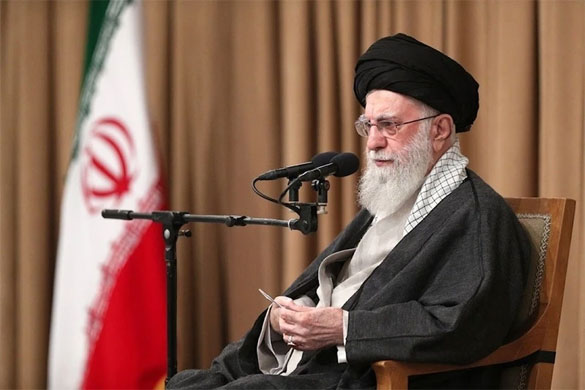
Ayatollah Khamenei
---------
The National Security and Foreign Policy Committee of the Iranian Parliament warned on Tuesday against any attack on Supreme Leader Ayatollah Ali Khamenei, stating that the US president should know that any such move "is tantamount to a declaration of war on the entire Islamic world."
This comes in response to threats made by US President Donald Trump against Ayatollah Khamenei.
In a statement, the committee said that this threat comes "after suffering multiple defeats at the hands of the Iranian people, including the defeat in the 12-day war and the failure of terrorist activities carried out in the style of ISIS," according to Al-Mayadeen Net.
The statement added that "he (Donald Trump) should expect a fatwa for jihad from Islamic scholars and a response from the soldiers of Islam throughout the world."
She continued: "Washington must also know that all American interests, in their various military, economic, and political dimensions throughout the world, will be targeted by the soldiers of Islam, and that the erratic American president must be held accountable."
She added: "The terrorist American state, in return for the thousands of martyrs it has caused among the Iranian people, must pay with the same number of its soldiers."
Source: saba.ye
Please click the following URL to read the text of the original Story
https://www.saba.ye/en/news3631543.htm
------
Saudi foreign ministry condemns demolition of UNRWA buildings in Jerusalem by Israel
January 20, 2026
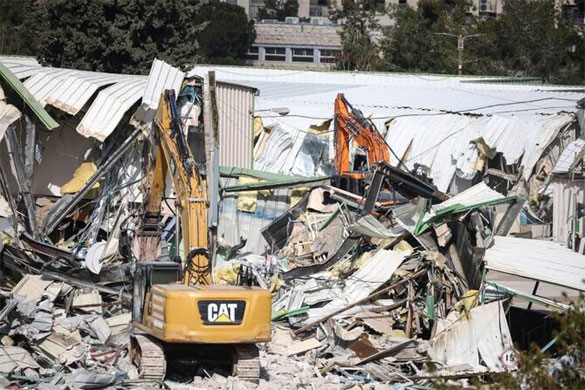
A photograph shows heavy machinery demolishing a structure inside the headquarters of UNRWA in the Sheikh Jarrah neighbourhood of Israeli-occupied East Jerusalem, Jan. 20, 2026. (AFP)
-------------
RIYADH: The Saudi Ministry of Foreign Affairs condemned the demolition of buildings belonging to the UN Relief and Works Agency for Palestine Refugees by Israeli occupation forces in the Sheikh Jarrah neighborhood of occupied Jerusalem.
The ministry rejected Israeli violations of international law and held the international community responsible for addressing the Israeli policy of “crimes against international relief organizations,” the Saudi Press Agency reported.
It added: “Saudi Arabia expresses its support for UNRWA in its humanitarian mission to provide relief to the brotherly Palestinian people, and calls on the international community to protect relief organizations, their workers and their facilities.”
On Tuesday, Israeli bulldozers demolished structures inside UNRWA’s compound in the Sheikh Jarrah neighborhood of Jerusalem after storming the area and sealing off the surrounding streets, according to Wafa news agency.
Source: arabnews.com
Please click the following URL to read the text of the original Story
https://www.arabnews.com/node/2630035/saudi-arabia
------
A peace deal won’t solve the deeper problem between Russia and Ukraine
20 Jan, 2026
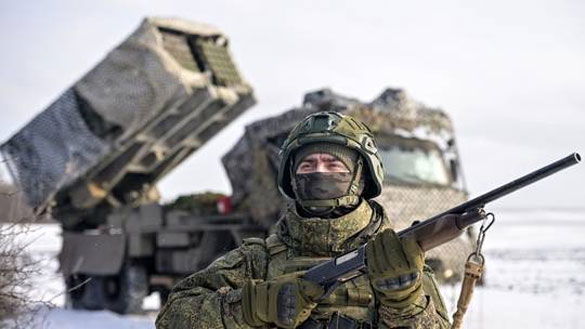
A Russian serviceman of 45th Separate Guards Engineering Brigade of the Zapad (West) Group of Forces serving a Zemledeliye remote mine-laying system monitors the sky to detect and destroy enemy drones during a combat training. © Sputnik / Evgeny Biyatov
-------------
Even if the conflict in Ukraine is resolved diplomatically by 2026, this will not remove the “Ukrainian question” from Russian politics. Armed confrontation is only the most dramatic part of a much longer relationship between two neighboring peoples. This complex issue is emotionally charged and historically intertwined.
The point is simple: Russia and Ukraine exist within a shared political civilization. This does not mean identical institutions, identical values, or inevitable common statehood. But it does mean a common historical and cultural foundation, expressed through shared practices, symbols and a broadly similar worldview. And it is exactly this proximity, rather than mere foreign manipulation, that makes the conflict so bitter.
At the core lies a clash of interpretations of independence.
Both Russians and Ukrainians value the ability to determine their own path without coercion. The contradiction stems from how that principle is understood. For Russia, independence is primarily freedom. That is freedom from external dictates and freedom to act even when powerful actors attempt to constrain Moscow’s choices. This is sovereignty in the classical sense: the right to decide without permission.
For the Ukrainian people, willpower comes first. Independence is often perceived not only as resistance to foreign pressure, but also as the rejection of internal constraints: fewer rules and fewer restrictions. Their political instinct places greater emphasis on personal and collective will than on institutional discipline. Experience shows that both peoples are ready to sacrifice for their version of independence. But because the meanings differ, the collision becomes nearly inevitable.
From this follows the most important issue for Russian policy after the conflict: how to combine these two interpretations within a framework that allows peaceful coexistence and, ideally, joint development. If there were a simple model of stable neighborliness between two independent states, it would likely have emerged over the past 30 years. It did not. And this suggests that the relationship cannot be treated as purely external or purely diplomatic. It contains a civilizational dimension that cannot simply be “closed.”
The roots of the problem are partly objective. After the collapse of the Old Russian state in the 13th century, Russia re-emerged as a new political organism in a different geographical space, between the Volga and Oka rivers. Ukrainian identity formed under far less stable conditions, under shifting foreign control and in struggle against it. This produced a political character shaped by instability, improvisation and resistance. Gogol captured this spirit when he described the “crowd” that grows into a people.
The differences between Russia and Ukraine are not simply the result of outside influence. They were shaped by geography and political development. When Russia regained strength and returned to historical Ukrainian lands, both modes of political thinking – the “Volga-Oka” and the “Dnieper” – became entangled within one larger historical space. For Russia, Ukraine became not only an external issue but also an internal one in its relations with the world.
For the last 350 years, Russians and Ukrainians were largely united. The relationship did not exclude conflict and rivalry and even bloody clashes appeared at various stages. Today, this confrontation is being exploited against Russia by powerful rivals, and it would be strange if the United States or Western Europe did not seize such an opportunity.
Yet there is no reason to assume Ukraine’s alignment with the West can sever its connection with the shared political civilization. Moreover, the West itself does not truly seek this. It wants Ukraine as a tool in competition with Russia, not as an equal partner with its own independent role. As long as conflict continues, Ukrainians will seek support from anyone willing to provide resources.
This is partly because Ukraine lacks a deep tradition of stable statehood. This gives Ukraine unusual flexibility: it can adopt forms of political behavior and institutional culture that are foreign to its deeper habits. Second, the tactical alliance with the West provides resources to defend Ukraine’s interpretation of independence. The demonstrative attempt to erase all traces of Russia is not a sophisticated historical policy so much as a manifestation of emotional fervor under extreme pressure.
It is foolish to believe Ukraine can become a fully-fledged “anti-Russia.” Its history and political culture are not comparable. At the same time, it is difficult to imagine that after territorial losses Ukraine will quickly build a stable, creative state next to Russia. This would require decades of relative peace.
Russia’s task is therefore longer-term. The conflict will eventually subside; criminals will be punished, and ordinary people will return to ordinary life. But the underlying relationship will remain. The only realistic hope is that after these trials, Russians and Ukrainians will eventually develop an understanding of how to move forward. Not through fantasy about cutting civilizational ties, but through a sober recognition of what they share, and what must be managed.
Source: rt.com
Please click the following URL to read the text of the original Story
https://www.rt.com/russia/631237-peace-deal-wont-solve-problem/
------
Lyse Doucet: Trump is shaking the world order more than any president since World War Two
January 21, 2026
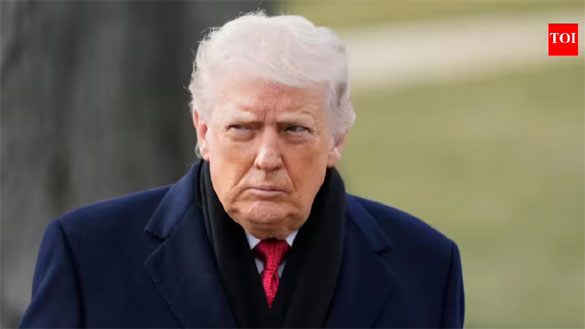
On day one, he put the world on notice.
"Nothing will stand in our way," President Donald Trump declared, to thunderous applause, as he ended his inauguration speech in a cold Washington winter on this day last year, at the start of his second term.
Did the world fail to take enough notice?
Tucked into his speech was a mention of the 19th Century doctrine of "manifest destiny" – the idea that the US was divinely ordained to expand its territory across the continent, spreading American ideals.
At that moment, the Panama Canal was in his sights. "We're taking it back," Trump announced.
Now that same declaration, expressed with absolute resolve, is directed at Greenland.
"We have to have it," is the new mantra. It's a rude awakening in a moment fraught with grave risk.
US history is littered with consequential and controversial American invasions, occupations, and covert operations to topple rulers and regimes. But, in the past century, no American president has threatened to seize the land of a longtime ally and rule it against their people's will.
No US leader has so brutally broken political norms and threatened long-standing alliances which have underpinned the world order since the end of World War Two.
There's little doubt that old rules are being broken, with impunity.
Trump is now being described as possibly the US's most "transformative" president - cheered by supporters at home and abroad, alarm among others in capitals the world over, and a watchful silence in Moscow and Beijing.
"It's a shift toward a world without rules, where international law is trampled underfoot, and where the only law which seems to matter is the strongest with imperial ambitions resurfacing," was French President Emmanuel Macron's stark warning on the stage at the Davos Economic Forum, without directly mentioning Trump by name.
There is mounting concern over a possible painful trade war, even worry in some circles that the 76-year-old Nato military alliance could now be at risk if, in the worst case scenario, the US commander-in-chief tries to take Greenland by force.
Trump's defenders are doubling down in support of his "America First" agenda, against the post-war multilateral order.
When asked on BBC Newshour whether seizing Greenland would violate the UN charter, Republican congressman Randy Fine said: "I think the United Nations has abjectly failed in being an entity that supports peace in the world and, frankly, whatever they think, probably doing the opposite's the right thing."
Fine introduced a bill called "Greenland Annexation and Statehood Act" in Congress last week.
How do America's anxious allies respond, when it seems nothing will stand in Trump's way?
Many phrases have peppered this past year of diplomatic contortions over how best to deal with the US's unpredictable president and commander-in-chief.
"We need to take him seriously but not literally," comes from those who insist this can all be sorted out through dialogue.
It's worked, but only to a point, on trying to forge a united response with Europe to Russia's blistering war in Ukraine.
Trump often veers, from one week to the next, from espousing positions close to Russia's, then tilting towards Ukraine, then bolting back into Russia's orbit again.
"He's a real estate mogul," says those who see in Trump's maximalist positions his deal-making tactics from his New York property days.
There's an echo of that in his repeated threats of military action against Iran – although it's clear military options are still on his now crowded table.
He doesn't talk like a traditional politician," explains his top diplomat, the US Secretary of State Marco Rubio when he is repeatedly questioned about Trump's tactics. "He says and then he does," is his highest praise for his president against what he derides as the dismal record of previous incumbents.
Rubio has been one of the principal voices trying to backpedal Trump's threats on Greenland, underlining that he wants to buy this vast strategic ice sheet, not invade it.
He pointed out that Trump has been exploring options to purchase the world's largest island, to counter threats from China and Russia, since his first term in office.
But there is no denying Trump's bully tactics, his contempt for collective action, his belief that might is right.
"He is a man of transactions and brute power, mafia style power," says Zanny Minton Beddoes, editor-in-chief of the Economist magazine.
"He doesn't see the benefit of alliances, he doesn't see the idea of America as an idea, a set of values; he doesn't give two hoots about that."
And he doesn't hide it.
"Nato is not feared by Russia or China at all. Not even a little bit," Trump told the New York Times in a wide-ranging interview earlier this month. "We're tremendously feared."
If security was the issue, the US already has forces on the ground in Greenland and under a 1951 agreement could send in more troops and open more bases.
"I need to own it," is how Trump flatly puts it.
And he often makes it clear, "I like to win." There's a growing body of proof that's what it is about.
His policy back flips in the past year have been baffling.
In the Saudi capital Riyadh in May, we watched how his major speech on his first foreign trip of his second term met a rapturous reception.
Trump took aim at the American "interventionists" whom he excoriated for having "wrecked far more nations than they built... in complex societies that they did not even understand themselves."
In June when Israel attacked Iran, Trump reportedly warned Israel's Prime Minister Benjamin Netanyahu not to put his diplomacy at risk with his military threats against Tehran.
By the end of the week, when he saw Israel's success in assassinating top nuclear scientists and security chiefs, Trump exclaimed: "I think it's been excellent."
"Sane-washing" was the phrase coined months ago by Edward Luce of the Financial Times to describe the world's polite portrayals of Trump, the succession of leaders landing at his door with glittering gifts and gilded praise to try to win him over to their side.
"Trump's apologists – a more numerous crowd than true believers - work round the clock to sane-wash his policies into something coherent," Luce wrote in his latest column.
It was on full display last October when leaders the world over were summoned to join him at the Egyptian Red Sea resort of Sharm El-Sheikh to celebrate his ringing declaration that "at long last we have peace in the Middle East" for the first time in "3,000 years."
The first significant phase of his peace plan had brought about a desperately needed ceasefire in Gaza and the urgent release of Israeli hostages.
It was Trump's muscular diplomacy that forced Netanyahu, as well as Hamas, to agree to it. It was a major breakthrough only Trump could achieve.
But it wasn't – sadly - the dawn of peace. No-one there said the quiet part out loud.
Last year Trump's approach was framed as manifest destiny. This year it's the early 19th Century Monroe Doctrine now updated, since the Venezuela invasion, as the "Donroe Doctrine."
President Trump now owns it, bolstered by his fervent backers on his team, with his belief that America can act at will in its backyard, and beyond, to protect American interests.
Sometimes he is called an isolationist, sometimes an interventionist. But there's always that slogan which returned him to power - Make America Great Again.
And his letter to Norway's Prime Minister Jonas Gahr Støre highlighted his obsessive pique over not winning this year's Nobel Peace Prize.
Trump informed Støre: "I no longer feel an obligation to think purely of peace, although it will always be predominant, but can now think about what is good and proper for the United States of America."
"It's a good day to have a Nordic temperament," Norway's Foreign Minister Espen Barth Eide diplomatically remarked to me when I asked about this moment.
Norway has been calm, with ice-hard firmness, in its defence of Greenland and Denmark and collective security in the Arctic.
European responses still stretch across this slippery political ice.
Macron has vowed to launch the EU's "trade bazooka" of counter-tariffs and restricting access to the EU's lucrative market.
Italian Prime Minister Giorgia Meloni, one of the American president's closest European allies, has vaguely spoken of a "problem of understanding and miscommunication."
UK Prime Minister Sir Keir Starmer has strongly and publicly defended Greenland's territorial integrity but wants to protect the strong personal bond he's built over the past year by avoiding retaliatory tariffs.
The gloves are off for Trump as he posts the private messages he's receiving from leaders using the old tools of statecraft to try to keep him on side.
"Let us have a dinner in Paris together on Thursday before you go back to the US," suggested the French president who also queried, in the midst of praise for other foreign policy successes, "I do not understand what you are doing on Greenland".
"Can't wait to see you", wrote Nato Secretary General Mark Rutte, who once called Trump "daddy" for his forceful handling of the Iran-Israel 12-day war last year.
Rutte, and others, have credited Trump's blunt threats for forcing Nato members to significantly increase their defence spending in recent years.
Trump's warnings, going back to his first term, accelerated a trend called for by previous US presidents and started by Nato members themselves in the shadow of Russian threats.
On the other side of the Atlantic, the country which has long lived in America's shadow has been trying to forge a different path forward, albeit with challenges of their own.
"We have to take the world as it is, not the way we want it to be," was the candid reflection of Canada's Prime Minister Mark Carney on his trip to China last week.
It was the first visit by a Canadian leader to Beijing since 2017, after years of sharp tension, and it sent a clear signal of this fast changing world.
Trump's astonishing threat to annex his neighbour to the north surfaced again this week in a post on social media which showed the western hemisphere, including Canada and Greenland, covered in stars and stripes.
Canadians know there's still a risk they could be next.
Carney, the former central banker, rose to Canada's highest office last year buoyed by Canadians' belief he was the best prepared to take on Trump.
He responded "dollar for dollar" from the start, imposing retaliatory tariffs – until it became too painful for the much smaller Canadian economy, which sends more than 70% of its trade south of its border.
When Carney took to the stage at Davos on Tuesday, he also focused on this jarring juncture.
"American hegemony in particular, helped provide public goods, open sea lanes, a stable financial system, collective security and support for frameworks for resolving disputes," he said, adding bluntly: "We are in the midst of a rupture, not a transition."
On Wednesday Trump will speak from that same podium with the world watching.
Asked by the New York Times this month what could stop him, Trump replied: "My own morality. My own mind. It's the only thing that can stop me."
That's what lies behind an armada of allies now seeking to persuade, flatter, force him – to change his mind.
This time, it's not certain they will succeed.
Source: bbc.com
Please click the following URL to read the text of the original Story
https://www.bbc.com/news/articles/cx2lej7d52po
-------
I Will Soon Give The White House Options On How To Protect Christians In Nigeria – US Congressman
January 21, 2026
United States Congressman Riley Moore has disclosed that he will soon give the White House options on how to protect Christians in Nigeria.
He stated this on Tuesday via a post on 𝕏, while reacting to Bishop Robert Barron post on alleged killings of Christians in Nigeria.
He thanked Barron for shedding light on how Nigerian Christians were being persecuted and promised to brief the White House.
The US lawmaker said, “Thank you Bishop Barron, for shedding a light on how our brothers and sisters in Christ are being persecuted for their faith in Nigeria.
“Thanks for the shout-out. You’re right, I will be briefing the White House on this topic very soon to give them options on how to protect Christians in Nigeria.
In addition to our recently passed FY26 National Security, Department of State, and Related Programs, NSRP, bill, which protects US security, upholds humanity, and safeguards religious freedom, the House Appropriations Committee will soon deliver a report to President Donald Trump on the situation in Nigeria – facts, oversight, and leadership.”
Meanwhile, Nigeria’s Minister of Defence, General Christopher Musa (Rtd), has disclosed that the primary reason for the airstrike in Sokoto by the United States military was to halt the growing threat posed by Lakurawa.
Speaking during an appearance on Arise Television on Thursday, Musa stated that the authorities are determined to neutralise the group before it escalates into a major insurgency.
The former defence chief noted that while security forces are still battling established threats, it is crucial to confront new ones early to prevent them from becoming more entrenched.
Addressing questions on whether the United States would carry out further airstrikes in Nigeria, Musa said there was no such plan, stressing that Nigeria and the US are instead cooperating on intelligence sharing.
According to him, the collaboration focuses largely on access to advanced satellite surveillance that provides real-time intelligence, enabling Nigerian forces to carry out precision strikes. He added that the US would only provide support where threats are beyond Nigeria’s operational reach.
He said: “Lakurawa is a new threat that’s evolving. While we’re working on the major ones. Let’s check out those new ones before they develop, before they become bigger.
“I want Nigerians to understand that better things are coming away ahead, those big ones, big things are coming that way. Do you.”
When asked if he expects the Americans to attack again and if that is part of the discussion that’s going on between Nigeria and the United States.
He replied, “No, we’re looking at everything holistically. And what we did, mostly from them, is for them to give us, you know, they have this satellite system that will give you real time info as to what’s going on. And then the idea is, whatever it is we see, we will be able to strike. If it is beyond our reach, they will assist us.
“The mistake people make is that people think Lakurawa is a small group. It’s not small. They are as potent as Boko Haram, and their spread is getting fast.
“So the idea was to stop them from spreading, yeah, so that it doesn’t spread the place.”
Source: naijanews.com
Please click the following URL to read the text of the original Story
https://www.naijanews.com/2026/01/21/i-will-soon-give-the-white-house-options-on-how-to-protect-christians-in-nigeria-us-congressman/
------
Muslim Leaders Protest Alleged Plan to Ease Alcohol, Prostitution Ban in Tangerang, Indonesia
January 21, 2026
Tangerang. A group of Muslim clerics and community leaders visited the Tangerang City Legislative Council on Tuesday to voice their opposition to any move to legalize alcohol sales and prostitution in the city in Banten province.
The visit followed reports suggesting that the city administration and the local legislature were considering easing long-standing regional regulations banning alcoholic beverages and prostitution, which have been in place for about two decades, in an effort to boost local revenue.
One of the clerics, Mahdi Adhiansyah, said the regulation was the result of what he described as a “hard-fought struggle” by Muslim groups and other segments of society to protect young people in Tangerang.
“The issue of revising this regulation has spread so widely that we felt it necessary to come here directly, representing various elements of society, to confirm whether the city government or the council truly intends to initiate such changes,” Mahdi said.
He expressed concern that even limited exemptions — such as allowing alcohol sales at hotels — could open the door to permit abuse and lead to uncontrolled distribution of alcoholic beverages.
Previously, Tangerang Mayor Sachrudin dismissed the speculation, saying there was no plan to revise regulations related to alcohol or prostitution.
“Do not worry. The issue of easing the ban on alcohol and prostitution never came from us,” the mayor said.
The controversy originated from remarks by Tangerang City Council Speaker Rusdi Alam, who suggested that the city administration was considering revising the prohibition because strict regulations had prompted tourists to choose destinations with more relaxed rules.
Since then, public debate over the issue has intensified among various community groups in Tangerang, a city located on the western edge of Jakarta’s metropolitan area.
City officials have yet to formally submit any proposal to revise the regulation, but the issue has continued to generate strong reactions across religious, civic, and political circles.
Source: jakartaglobe.id
Please click the following URL to read the text of the original Story
https://jakartaglobe.id/news/muslim-leaders-protest-alleged-plan-to-ease-alcohol-prostitution-ban-in-tangerang
-------
China Calls for Protection of Its Citizens Following Kabul Explosion
By Fidel Rahmati
January 20, 2026
China urged authorities to protect its citizens in Afghanistan after a deadly explosion struck a Chinese-run hotel in central Kabul city.
China’s foreign ministry said on Tuesday it had formally asked Taliban authorities to take serious measures to ensure the safety of all Chinese citizens, projects, and institutions operating in Afghanistan.
The ministry confirmed that one Chinese national was killed and five others were wounded in the explosion, adding that Beijing expects proper medical treatment for those injured.
Chinese nationals and businesses have increasingly become targets in Afghanistan, as Beijing expands economic engagement while militant groups oppose foreign presence.
In 2022, an attack on a residence housing Chinese citizens in Kabul was also claimed by Islamic State, highlighting recurring security risks despite official assurances.
China said it supports regional efforts to combat terrorism and called for stronger cooperation to prevent further attacks on foreign nationals and diplomatic interests.
Following the attack, Beijing again urged its citizens to avoid traveling to Afghanistan in the near future due to persistent and unpredictable security threats.
The explosion at the Chinese-run hotel in Kabul’s Shahr-e-Naw area killed seven people in total, including six Afghans, and wounded at least 17 others.
Islamic State claimed responsibility for the attack, reinforcing concerns about its continued operational capability and intent to target foreign-linked locations.
The incident underscores ongoing security challenges in Afghanistan and raises fresh questions about the protection of foreign nationals amid repeated militant attacks.
Source: khaama.com
Please click the following URL to read the text of the original Story
https://www.khaama.com/china-calls-for-protection-of-its-citizens-following-kabul-explosion/
------
India
Mutawallis must provide waqf property accounts, rules state info commissioner
Jan 21, 2026,
Lucknow: A bench headed by State Information Commissioner (SIC) Mohammad Nadeem ruled that while mutawallis (caretakers) may not be considered public authorities (PAs), they cannot be exempted from providing accounts of the use, income, and purpose of Waqf properties.
One Parminder Kaur had filed a petition with the Uttar Pradesh Sunni Central Waqf Board about a licensed liquor shop operating on a waqf property in Farrukhabad, asking who gave the permission and what the monthly rent collected was.
The board denied information on the ground that the mutawalli is not a public authority and the Board has no authority to control or know what happens on waqf properties.
She went in appeal to SIC later.
Hearing her plea, the SIC reprimanded the UP Sunni Central Waqf Board, saying if the principle that mutawallis are not public authorities, and therefore, the Board has no authority to control or know what happens on Waqf properties, is accepted, then it would be tantamount to nullifying the Waqf Act, 1995, and waqf properties would become the private property of a few individuals.
The bench observed that the fact that a mutawalli is not a PA does not in any way imply that arbitrary, illegal activities can be conducted on or within Waqf property, or that there is no legal oversight.
The attempt to exclude a mutawalli from information by not declaring him a PA is a circumvention of the very spirit of the Right to Information Act. The question here is not about the mutawalli, but about the statutory responsibility of the Board, which is the custodian and supervisor of Waqf properties, the order said.
The Waqf Board, in its response to the Commission, said that the right to rent out and collect rent from the waqf property lies with the mutawalli, and the item-wise income details of the waqf property are not available. The licence for the liquor shop, it said, was issued by the excise department.
The bench stated that the information sought is completely legal, relevant, and available. The Public Information Officer (PIO) deliberately provided vague, evasive, and misleading answers, and the Waqf Board grossly violated its statutory duties. The bench directed the Uttar Pradesh Sunni Central Waqf Board to provide complete information, along with point-wise, clear, and authenticated records, within 15 days.
The budget and accounts submitted by the mutawalli concerned under Sections 44 and 46 should be specially examined, and a copy of the same should be made available to the Commission, the SIC ruled.
The SIC also imposed a fine of Rs 25,000 on the PIO. It directed the Secretary, or Chief Executive Officer, of the Waqf Board to submit a corrective action report to the Commission within 30 days and forward a copy of the order to the state govt and minority welfare department for reference and compliance.
Source: indiatimes.com
Please click the following URL to read the text of the original Story
https://timesofindia.indiatimes.com/city/lucknow/mutawallis-must-provide-waqf-property-accounts-rules-state-info-commissioner/articleshowprint/126855841.cms
------
Dileep’s conversion into Alla Rakha Rahman: How a life-altering incident led AR Rahman’s family to embrace Islam
Jan 21, 2026
Based on the biography Oru Kanavin Isai, Chapter 7 delves into one of the most defining phases of AR Rahman’s life — his path to faith, spiritual transformation, and his family’s eventual conversion to Islam. The chapter details the miraculous healing of Rahman’s sister, an event that deeply influenced the composer’s belief system.
1988: A rising career and a sudden crisis at home
The year was 1988. Then known as Dileep, a 21-year-old Rahman was at the peak of his early career, juggling film music, advertising jingles, and international tours with popular bands. Amid this professional momentum, tragedy struck at home when his sister began suffering from severe stomach pain.
The fear was overwhelming, as the family had earlier witnessed similar symptoms in Rahman’s father, RK Shekar, whose illness eventually led to his death. Despite consulting multiple doctors and shifting hospitals — from Vellore CMC to Vijaya Hospital in Chennai — her condition continued to worsen.
Haunted by his father’s death and questions of faith
Recalling those painful days, Rahman said, “The visions of my dad’s suffering kept torturing me! We had shifted nine different hospitals... Many Christian Fathers would come and visit him and pray for him. Several Hindu priests would also visit him and bless him. Those didn’t help. Towards the end, some Islam pirs also came... But, dad left us forever.”
The loss pushed Rahman into a phase of disbelief. Watching his father die young left him questioning the existence of God. When his sister fell ill with similar symptoms, his confusion deepened. He wondered whether everything was coincidence or part of a larger design by an unknown power.
‘It was like a miracle’: The turning point
Rahman admitted that for a period, he identified as an atheist. “Some days during my teenage, I believed that there was no God... Though I denied that God existed, I felt that there was a vacuum,” he recalled.
He continued, “At one stage, I realized that the world can’t function without a power controlling us. That was when that disease attacked my sister... But, someone cured my sister. It was like a miracle.”
That person, according to the family, was Sheikh Abdul Qadir Gilani Sahib, also known as Pir Qadri. After Pir Qadri prayed for Rahman’s sister, she recovered unexpectedly. The incident left a deep impact on the young composer, who saw it as divine grace.
Pir Qadri’s influence and a gradual spiritual shift
Following the incident, Pir Qadri became a close family guide and well-wisher. During this period, Rahman remained deeply immersed in music, studying everything from Carnatic and Hindustani traditions to Western classical music. He later graduated in Western classical music from Trinity College, London.
While religion was not his immediate focus, Rahman occasionally listened to Pir Qadri’s discourses. One teaching stayed with him: “There’s only one God. All prayers to Him cleanse your soul.” Rahman found peace in this thought, though he had not yet considered conversion.
A recurring dream and a life-changing decision
Another incident, however, proved decisive. Rahman recalled, “I was in Malaysia for a recording. One day, an old man appeared in my dream. He asked me to convert to Islam.” Initially dismissing it as a dream, Rahman grew unsettled as it kept recurring.
After discussing it with his mother, who felt divine messages should not be ignored, the family began visiting mosques and interacting with Imams. “Within a few days, all of us in our family converted to Islam,” Rahman said.
From Dileep to AR Rahman
Pir Qadri became Rahman’s first Islamic guru and even selected the site for Panchathan Studio at their home. Following Pir Qadri’s demise, Rahman continued his spiritual journey under guides such as Mehboob Alam, Muhammad Yusuf Bhai, and later Cuddappa Malik.
Breaking from industry norms of the time, Rahman chose not to retain a Hindu or Christian screen name. Initially named Abdul Rahman after conversion, veteran composer Naushad suggested the name ‘Alla Rakha Rahman,’ meaning one blessed by Allah. Eventually, he became known as AR Rahman — a name that soon echoed across the country after the massive success of Roja.
'Dobara Hindu ho jaayein': Anup Jalota advises AR Rahman to convert back to Hinduism and test his luck after his ‘communal’ remark
‘Prayer feels like rebirth’: Rahman on faith
Despite early skepticism in the industry over his family’s conversion, Rahman’s work spoke louder than words. Reflecting on his faith, he once said, “Each of the prayers is like death. I feel as if I pass away during the prayer, and am born fresh again. My mind and body become totally fresh.”
Source: indiatimes.com
Please click the following URL to read the text of the original Story
https://timesofindia.indiatimes.com/entertainment/hindi/bollywood/news/dileeps-conversion-into-alla-rakha-rahman-how-a-life-altering-incident-led-ar-rahmans-family-to-embrace-islam/articleshowprint/126882768.cms
------
CM Omar rejects calls to split J&K, says unity is non-negotiable
Fayaz Wani
21 Jan 2026
SRINAGAR: Amid growing political calls for the creation of a separate Jammu state and counter demands from Valley-based politicians for separating Kashmir from Jammu, Chief Minister Omar Abdullah on Tuesday rejected any move to divide Jammu and Kashmir, asserting that the region’s unity is “non-negotiable”.
Addressing the concluding session of the two-day Party Block Presidents’ Convention in Jammu, Omar said that as long as the plough-bearing flag of the National Conference continues to fly across Jammu and Kashmir, “no power on earth will dare attempt to divide the region on regional or religious lines”.
He outlined his government’s pro-people and pro-Jammu initiatives, including increased ration quotas, free bus rides for women, enhanced pensions, free land for landslide victims, and the restoration of the historic Darbar Move, which was cancelled by the Lt Governor administration a few years ago.
Taking a sharp dig at BJP leaders demanding a separate Jammu state, Omar said those who stopped the Darbar Move or celebrated the closure of a medical college cannot claim to be Jammu’s well-wishers.
Some BJP leaders, including MLAs, have called for the creation of a separate Jammu state, alleging discrimination against the region by successive Jammu and Kashmir governments. A Jammu-based Congress leader and former MP has also supported the demand.
Omar warned that narrow and divisive politics has harmed Jammu in the past and will continue to do so, something the National Conference government will never allow.
“As long as NC flag flies, no force can divide Jammu and Kashmir,” he said.
Taking a dig at Leader of the Opposition Sunil Sharma, Omar described the bifurcation talk as a personal power play.
“If he wants to be Chief Minister, why only Jammu and not J&K? If ambition drives him so much, let him contest Jammu municipal elections,” he said.
Omar added that BJP leaders’ dreams of ruling would not extend beyond Kanak Mandi and Raghunath Bazar in Jammu, as people of Chenab Valley and Pir Panjal would never support divisive agendas.
“Such wishful and dangerous politics will only harm Jammu’s interests,” he said.
According to Omar, the National Conference has always stood firm in protecting the secular character of the region. “Despite being a Muslim-majority region, people of Jammu and Kashmir chose to align with a secular India and remain steadfast despite persistent propaganda from across the border,” he added.
His remarks come amid heightened political tensions, with recent demands for a separate Jammu state triggering counter-calls from some Valley-based politicians seeking separation of Kashmir from Jammu, further sharpening the regional divide. The PDP chief and former Chief Minister Mehbooba Mufti has also floated the idea of creating a separate division for five districts of the Jammu region.
At present, there are two divisions in J&K, Kashmir and Jammu, with 10 districts each.
Source: newindianexpress.com
Please click the following URL to read the text of the original Story
https://www.newindianexpress.com/nation/2026/Jan/20/cm-omar-rejects-calls-to-split-jk-says-unity-is-non-negotiable
------
'Will hunt you down': TMC's Manirul Islam browbeats EC over SIR; threatens to 'teach a lesson'
Jan 21, 2026
NEW DELHI: Trinamool Congress leader Manirul Islam on Wednesday said the Election Commission will be "hunted down from the netherworld" and "taught a lesson" as the impasse continues between the Mamata Banerjee-led West Bengal government and poll body over the Special Intensive Revision (SIR).
Manirul Islam, threatening the Election Commission of India, is not his first brush with controversy, as the Farakka MLA was accused of leading a mob to the Block Development Office (BDO) in his constituency and ransacking the space, leaving officials injured last week.
After the incident, BJP MLA Gouri Sankar attacked Mamata Banerjee for instigating her party cadres across the state to commit riots and violence.
Lashing out at the ruling TMC over its MLA threatening the EC, the BJP on Wednesday accused CM Mamata Banerjee of "asking her MLA to intimidate officials".
"Manirul Islam, a sitting TMC MLA, openly threatens the Election Commission of India, saying it will be “taught a lesson” and “hunted down from underground.” Mamata Banerjee as Home Minister is asking her MLA to intimidate officials! TMC protects illegal infiltrators!" BJP's national spokesperson Pradeep Bhandari posted on X.
Manirul Islam's remark comes days after tension was reported over the submission of Form 7 across Bengal districts on Tuesday as Trinamool and BJP workers blocked roads and staged protests.
The violence prompted Trinamool to appeal to people not to be "provoked".
"The anger and frustration is understandable. But the fight has to be fought in courtrooms and on EVMs. CM Mamata Banerjee is fighting for you. Do not fall for provocation," said party spokesperson Kunal Ghosh.
Leader of the Opposition in the West Bengal Assembly Suvendu Adhikari accused the TMC of unleashing "statewide anarchy" to derail the SIR exercise.
At Mogra in Hooghly, BJP workers blocked GT Road and demanded they be given an opportunity to submit Form 7 in the presence of the central security force.
Mamata backs SC's logical discrepancies ruling
Meanwhile, Mamata Banerjee personally addressed concerns over the Special Intensive Revision (SIR) of electoral rolls, urging district magistrates to ensure that voters face no inconvenience over "logical discrepancies."
Banerjee made the remarks during an unexpected meeting with district magistrates at the state secretariat, Nabanna, which was chaired by chief secretary Nandini Chakraborty.
"The CM made it clear that all hearings related to SIR must be conducted strictly in accordance with the apex court's directives. She specifically instructed officials to ensure that people are not put to inconvenience under the pretext of logical discrepancies," a senior official said.
The Supreme Court had on Monday directed the Election Commission to display the names of those on the ‘logical discrepancies’ list at gram panchayat bhavans and block offices, where documents and objections can also be submitted. The apex court also granted electors an additional 10 days to submit documents to confirm their inclusion in the state electoral roll.
The latest directions have brought relief to several voters in Kolkata who were summoned for hearings after discrepancies were found in their voter records.
PM Modi slams parties protecting illegal immigrants
Prime Minister Narendra Modi on Tuesday doubled down on his government's ambition to detect and deport illegal immigrants in the country, while strongly criticising the political parties "protecting or covering up for illegal immigrants for the sake of vote bank politics".
Addressing the party workers after the new BJP chief Nitin Nabin took charge, PM Modi said: "Illegal immigrants pose a great threat to the country's security. Identifying them and sending them back to their countries is absolutely essential."
"No country in the world accepts illegal immigrants. India, too, cannot allow illegal immigrants to steal the rights of our poor and our youth. Illegal immigrants pose a great threat to the country's security. Identifying them and sending them back to their countries is absolutely essential," PM Modi said during an address at the BJP headquarters.
Without naming any political party, but in an apparent attack on Trinamool Congress (TMC), which rules the poll-bound West Bengal, PM Modi lashed out at parties "covering up for illegal immigrants" and said: "We must expose them to the public".
Source: indiatimes.com
Please click the following URL to read the text of the original Story
https://timesofindia.indiatimes.com/india/will-hunt-you-down-tmcs-manirul-islam-browbeats-eci-over-sir-threatens-to-teach-a-lesson/articleshowprint/126952935.cms
-------
This book explores what the lack of citizenship status means for Tibetan Muslims in Kashmir
Khalid Wasim Hassan, Deepanshu Mohan, Ishfaq Ahmad Wani & Najam Us Saqib
Jan 21, 2026,
Out of the multiple choices of settlement given to them after their exile from Tibet, the Tibetan Muslim community elders chose the ancestral land of Kashmir. The Government of India made arrangements for their smooth migration to Srinagar in Kashmir, and they were allotted temporary houses at Eidgah. It was a difficult time for this minority group, who came to this land without any proper livelihood in hand. Initially, 75 families from the community were settled in this settlement at Eidgah. One of the research participants, who was 12 years old at the time of their migration to Kashmir, remembers,
“We were a family of five, my parents and two sisters, and we had to share the same room with another family of six members. There was only one functional washroom for both males and females. It took years before more washrooms were constructed”.
At first, the only employment provided to the male members of the community was menial, as construction workers and temporary cleaners in the government transport department. It took some time to establish their small business of tailoring shops, and many of them got engaged in selling wooden sweaters and caps prepared by Tibetan women at the Sunday market of the centre Lal-chowk. With the minimal income they earned from these vocations, they could not arrange any other accommodation of their own. It was in the 1980s, with the intervention of the Dalai Lama, that a piece of land in the Hawal area of Srinagar was given to them on lease by the state government, where they could build additional houses. At Eidgah, only 40 families lived; the rest have shifted to new colonies. With their population growth, housing remains a problem in the new Tibetan colony at Hawal.
“When we shifted here, we were a family of four in this house with two rooms, a kitchen and a washroom, but now our family size has increased. Our children are married now, and they, too, have kids. We are managing here with utter difficulty”.
Most of the houses in the Tibetan colony of Hawal are two storeys, the ground floor being occupied by one family and the first floor by another. With fewer avenues available, the Tibetan Muslims started their small businesses in one of the rooms in their small accommodation. No proportionate gap exists between the houses, and no courtyard or parks are in front of them. In case of any calamity, such as an earthquake or fire, it will be havoc for the whole community. The colony is connected to the main road of Hawal through the narrow alleys, and it becomes difficult for the members of the community to move on rainy days or when it snows in the winter months. Imam Sahab of the mosque, who talked to us, said,
“We have the problem of property sanitation in this colony. We shifted here from Eidgah, but our problems continue. There is no proper drainage system. If you come here on a rainy day, you will not be able to walk through these alleys”.
The Municipal Corporation of Srinagar, which is otherwise very active in other areas of the city, fails to offer adequate sanitary services and repairs and construction of drains and lanes are hardly undertaken when damaged. The drains, roads, and streets are in a state of disrepair.
The primary challenge confronting the Tibetan Muslim minority in Kashmir stems from being non-state subjects. Even if some wished to buy a property in any part of the Kashmir valley or apply for government jobs, they could not. Although granted Indian citizenship immediately after their exile from Tibet, the community was not given the status of “state subjects” in the erstwhile state of Jammu and Kashmir. So, the community members could not buy or own a property in Srinagar, which was permitted only to the “state-subjects”. So, the Tibetan Muslim community living on a property on the lease was as good as any other citizens from other federal states of India with no property or employment rights. The state governments “categorisation” of their status as non-state subjects prevented Tibetan Muslims from enrolling in higher educational institutions as well as denied them jobs in the government sector. Despite identifying as citizens of India, individuals encounter significant challenges in acquiring the state-subject (domicile) certificate, a crucial document for applying to government positions in pre-2019 Jammu and Kashmir. Despite possessing documentation such as Voter ID and Aadhaar, members have issues regarding their identification and recognition.
“Many people in our community have State Subject, but it is difficult to make bureaucrats understand that we are also citizens of India; therefore, we prefer getting these certificates, although we have all other identification documents like Aadhaar and Voter ID card”.
Another respondent, on being asked about citizenship, added,
“Our children have an Indian passport and work in Gulf countries; how can a person who does not have citizenship have a passport? But it is very difficult to make authorities understand that we are Kashmiris”.
Even though the community members had voter’s identity cards and even cast their votes for the state assembly and parliamentary elections, successive regimes failed to grant them the status of “state-subject”. It was recently, after the reconstitution of the state of Jammu and Kashmir into a Union Territory and the abrogation of its Special Status under Article 370 of the Indian Constitution by the right-wing ruling party of India, that state-subject laws were changed. Like everyone else, the members of the Tibetan Muslim community can attain the “Domicile certificate”, making them eligible for property rights and applying for positions in government offices. Until we conducted the fieldwork for this research work, there was no report from the community of anyone buying land, houses, or shops in their name, nor was there any news of anyone from the community getting any jobs. Most of the members during interviews talked about the potential of a Domicile certificate to change their socio-economic lives in future, but they were equally showing their displeasure for the abrogation of the “special status” of Jammu Kashmir that was granted under Article 370.
Additionally, the lack of education at higher levels proves an obstacle for the youth in getting employment in private firms or applying for private jobs outside the Kashmir valley. Though the Tibetan Public School made huge strides in imparting education to children from the community, mostly, as observed in the field, the young Tibetans seldom pursue further education. Either they get involved in their family business of Tila Dozi (weaving silver thread into the fabric of pharen or shawl) or running restaurants or working as salesmen at other community members’ shops. Tibetan Muslims have become accustomed to low-status employment, which has caused them to lose their sense of self as workers and acquire a focus on instrumental work. Some of the young male members who have done short-term computer courses from private institutions in Delhi or Darjeeling were able to get jobs in Dubai and Saudi Arabia. One of the research participants very proudly spoke about his son’s job in Dubai,
“My son completed his schooling here in Tibetan Public School, and after that, he went to a relative’s place in Darjeeling, where he was able to complete a computer course. He got a job in a private company in Dubai. He comes once in a year. He will be married here, and his wife will also accompany him”.
In contrast to men, more women from the community have graduated from nearby colleges. Educated women predominantly work at private schools or assist their mothers at home. Older women and men are impoverished and lack access to pensions, financial support, and other resources available to other senior individuals in the state. The Tibetan population cannot access several government projects and provisions intended for the populace. They possess a profound sense of being discriminated against by the state government on numerous grounds.
Moreover, Tibetan Muslims encounter questions vis-à-vis their identity. There is an emergence of intergenerational identity on the one hand; adults among them strongly feel that they would never abandon their Indian nationality, while the majority of the young Tibetans think that they should seek greater solidarity with the Tibetans under the Dalai Lama. On the one hand, Tibetan Buddhist refugees settled in other parts of India consider Tibetan Muslims as “lesser” or “non-Tibetans” due to their non-Buddhist faith, their ancestry and the citizenship rights which were granted to them, while on the other hand, they have not been fully accepted as a part of the larger Kashmiri community.
In Kashmir, they are perceived more as Tibetans with different racial features, language and customs. Therefore, as a community, Tibetan Muslims encounter an identity crisis, where they are stripped of their Tibetan identity, excluded from any formal position in the Tibetan government-in-exile and in Kashmir, they still continue to be seen as the “other” and “outsiders”; thus, recognised neither by the land they had left nor by the homeland to which they had fled. After their settlement in Kashmir from the 1960s onwards, Tibetan Muslims have had to deal with the dominant Kashmiri culture manifested in language, food habits and options of livelihood. While influences of popular Kashmiri culture, including language, are marked among the Tibetans, a sense of being distinct is prevalent. Though the political reality of the prevalence of a dominant Kashmiri culture in the valley cannot be ignored, it has been differently negotiated and resisted by other minorities like the Pashto community, as discussed in the earlier chapter. Here, the Tibetan Muslims have made their choices of adopting those things from Kashmiris living in the neighbourhood, which does not take away their own identity, thus avoiding the “Sanskritisation” that many minorities in South Asia experienced.
Living amid the dominant Kashmiri-speaking local Muslims, with limited avenues of livelihood, this minority community negotiates for the survival and safeguarding of their hybrid culture of being Tibetan and Muslim with Kashmiri ancestry. Facing economic challenges, this minority community has also been thriving in diversifying its economic enterprise by adopting different vocations suited to the social fabric of the Kashmiri society. The following few sections of the chapter focus on the small acts of resilience by the community to maintain their distinct identity, to live cordially with the local Kashmir community and to achieve economic autonomy.
Source: scroll.in
Please click the following URL to read the text of the original Story
https://scroll.in/article/1089930/this-book-explores-what-the-lack-of-citizenship-status-means-for-tibetan-muslims-in-kashmir
------
NIA files chargesheet against five AQIS members
Jan 21, 2026
Ahmedabad: The National Investigation Agency (NIA) filed a chargesheet in a special court here against give people in a case linked to alleged online radicalisation by the banned terror outfit al-Qaida in the Indian Subcontinent (AQIS).
Those charged are Mohammad Fardeen, Kureshi Sefulla, Mohammad Faique, Zeeshan Ali and Shama Parveen. They were booked under provisions of the Unlawful Activities (Prevention) Act, the Bharatiya Nyaya Sanhita and the Arms Act.
According to the NIA, the group used multiple social media platforms and accounts to propagate and amplify anti-India ideology attributed to AQIS. They allegedly posted and circulated provocative material, including videos, audio clips and photographs, to promote extremist narratives. The content called for armed revolt against India's democratically elected govt and advocated the establishment of a Caliphate based on Sharia law. The NIA also claimed the accused promoted ideologies of other proscribed terrorist organisations to influence and radicalise vulnerable youth.
After taking over the investigation from the Gujarat ATS in July 2025, the NIA claimed it seized incriminating material in both digital and paper form, and recovered weapons from two of the accused. The agency stated it traced digital footprints, identified specific posts and gathered additional evidence to support the charges.
The NIA alleged that Faique, a resident of Old Delhi, played a key role by sharing radical posts and inciting content related to jihad, "Ghazwa-e-Hind", and violence against a section of society. He allegedly circulated excerpts from extremist literature promoting AQIS and Jaish-e-Mohammed leaders via Instagram and through a dedicated group created for dissemination, and coordinated with the other accused to widen reach.
Fardeen from Ahmedabad, Sefulla from Modasa and Zeeshan Ali from Noida were allegedly active collaborators. Shama Parveen, from Bengaluru, was accused of propagating AQIS videos, participating in extremist groups, and maintaining contact with a Pakistani national, Sumer Ali. The NIA said she shared screenshots, discussed banned literature and operations, and that her phone contained extremist books, videos and Pakistani contact numbers.
Source: indiatimes.com
Please click the following URL to read the text of the original Story
https://timesofindia.indiatimes.com/city/ahmedabad/nia-files-chargesheet-against-five-aqis-members/articleshowprint/126849690.cms
-------
Police summonses to journos a 'new low', say J&K parties
Jan 21, 2026
NEW DELHI: Several political parties have reacted strongly to the reported police action of summoning Kashmiri journalists, describing it as "a new low".
"Kashmir has been turned into Dante's hell and anyone, including journalists, who highlight govt's dehumanising illegal actions, such as an Orwellian-type surveillance of mosques and imams, is summoned and threatened," PDP's Iltija Mufti wrote on X. "Nothing in Kashmir is normal yet we must appease Delhi by normalising its abnormal & inhumane actions towards Kashmir and Kashmiris," she added.
Over the past week, an assistant editor who has been part of the Srinagar bureau of a national daily since 2006 was summoned by police on four separate occasions and asked to sign a bond. Another journalist was called in by police in connection with a news report on the profiling of mosques and imams. J&K police have not issued any statement on the matter. Political parties say journalists across the Valley have reported being summoned by police.
People's Conference chairman Sajad Lone described it as reprehensible. "Why should the police intervene and summon journalists when they are doing a story based on facts. This is a new low," Lone wrote on X.
CPM legislator M Y Tarigami wrote on X that "summoning reporters and asking them to sign bonds is a fresh attempt to browbeat them into submission. It reflects a wider pattern of intimidation of journalists aimed at silencing independent voices."
Mirwaiz Umar Farooq posted on X, "First intrusive and arbitrary profiling of mosques, imams and seminaries is being carried out by the authorities in J&K, and then journalists reporting on it are targeted and harassed." "Forcing reporters into affidavits, undertakings and bonds at police stations is condemnable... Free press needs to be protected," he added.
Syed Naseer Hussain, Congress general secretary in charge of J&K and Ladakh, said, "A democratic society cannot function when the basic act of asking questions is treated as an act of defiance. For years, Kashmiri journalists have worked under conditions that test professional integrity and personal security alike."
Source: indiatimes.com
Please click the following URL to read the text of the original Story
https://timesofindia.indiatimes.com/india/police-summonses-to-journos-a-new-low-say-jk-parties/articleshowprint/126876134.cms
------
Golden Temple conduct breach: Muslim youth issues second apology
Jan 21, 2026
Amritsar: A young Muslim man has issued a second, more formal apology after his initial attempt to seek forgiveness for a religious protocol breach at the Golden Temple was rejected by devotees as "disrespectful".
The youth, identified as Subhan Rangraiz, faced backlash after being filmed rinsing his mouth in the holy sarovar (pool) of the Golden Temple — an act that violates the maryada (Sikh code of conduct). While Rangraiz had previously released a video pleading ignorance of Sikh traditions, the gesture was widely panned on social media because he kept his hands in his pockets while speaking. Critics argued that even an apology must adhere to traditional norms of humility.
In his latest video, Rangraiz is seen with his hands folded, reiterating that he had no intention of causing offense and was simply unaware of the specific rules governing the sacred waters. The Shiromani Gurdwara Parbandhak Committee (SGPC), which manages the shrine, has notably declined to pursue legal action against Rangraiz. This decision has ignited a debate on social media regarding the consistency of the committee's enforcement of religious decorum.
Critics have pointed to a recent incident involving Archana Makwana, a woman from Gujarat, against whom the SGPC filed a formal police case after she performed yoga on the temple premises. The SGPC has historically been strict with "influencer" behaviour.
Supporters of the current decision argue that Rangraiz's actions stemmed from a lack of education rather than a desire for social media attention, with Social media users remain divided, with some questioning why the SGPC opted for a softer approach in this instance compared to previous violations. The SGPC has not officially commented on why it chose to forgo legal proceedings in favour of accepting the public apology.
Source: indiatimes.com
Please click the following URL to read the text of the original Story
https://timesofindia.indiatimes.com/city/chandigarh/golden-temple-conduct-breach-muslim-youth-issues-second-apology/articleshowprint/126843544.cms
----
Mideast
20 Palestinian families abandon homes near Jericho after repeated attacks by settlers
January 21, 2026
LONDON: Repeated attacks by Israeli settlers have forced 20 Palestinian families to leave their homes in the Shallal Al-Auja community north of Jericho and move to another area, Al-Baidar Organization for the Defense of Bedouin Rights said on Tuesday.
The families belong to Az-Zayed clan, one of the few remaining Bedouin communities in the occupied West Bank and Jordan Valley, the organization said. Their way of life is under threat as a result of settler policies, as well as limited access to water and land, it added.
The clan has faced an increase in attacks by settlers in recent months, the Palestinian Wafa news agency reported, including threats, denial of access to pastures, and vandalism of properties.
Al-Baidar said that actions of the settlers “were an integral part of a structured scheme to displace indigenous Palestinians from the Jordan Valley and take over their land to make room for colonial settlement construction.”
Excluding East Jerusalem, which was occupied and annexed by Israel in 1967, there are about 3 million Palestinians and 500,000 Israeli settlers living in the West Bank.
Source: arabnews.com
Please click the following URL to read the text of the original Story
https://www.arabnews.com/node/2630048/middle-east
-------
UN Human Rights Council to hold urgent Iran meeting on Friday
January 20, 2026
GENEVA: The UN Human Rights Council will hold an urgent special session this week on “the deteriorating human rights situation in the Islamic Republic of Iran,” a spokesman said Tuesday.
It follows a request from Britain, Germany, Iceland, Moldova, and North Macedonia and will take place on Friday, council spokesman Pascal Sim told reporters in Geneva.
In a letter addressed to the council’s president, the five countries highlighted “credible reports of alarming violence, crackdowns on protesters, and violations of international human rights law across the country.”
The request had received backing from more than one-third of the council’s 47 members needed for a special session to go ahead.
The UN Security Council in New York met last week to discuss Iran, which is reeling from anti-government protests.
Any attack on Iranian Supreme Leader Ali Khamenei would trigger a declaration of holy war, the national security parliamentary commission said on Tuesday.
“Any attack on the Supreme Leader means a declaration of war with the entire Islamic world and must await the issuance of a Jihad decree by Islamic scholars and the response of Islam’s soldiers in all parts of the world,” the parliamentary commission was quoted as saying by Iranian Students News Agency .
Source: arabnews.com
Please click the following URL to read the text of the original Story
https://www.arabnews.com/node/2630027/middle-east
------
Baby dies from cold in Gaza as leaders discuss Board of Peace
January 20, 2026
DEIR AL-BALAH, Gaza: A Palestinian baby died from hypothermia on Tuesday in the Gaza Strip, underscoring the grim humanitarian conditions in the territory as world leaders were gathering at a Swiss resort where President Donald Trump’s Gaza ceasefire plan is high on the agenda.
Shaza Abu Jarad’s family found the 3-month-old on Tuesday morning in their tent in the Daraj neighborhood of Gaza City.
“She was freezing, and dead,” the baby’s father, Mohamed Abu Jarad, told The Associated Press by phone after a funeral. “She died from cold.”
The man, who worked in Israel before the war, lives with his wife and their seven other children in a makeshift tent after their house was destroyed during the war.
The family took the girl to the Al-Ahly hospital where a doctor pronounced her dead from hypothermia, said her uncle, Khalid Abu Jarad. The Health Ministry confirmed that the baby died from hypothermia.
The family is among hundreds of thousands of people sheltering in tent camps and war-battered buildings in Gaza which experiences cold, wet winters, with temperatures dropping below 10 degrees Celsius (50 Fahrenheit) at night.
As Palestinians in the war-ravaged enclave languish in displacement camps, Trump hopes to establish his new Board of Peace at the World Economic Forum in Davos. But the initiative, initially conceived to oversee the Gaza ceasefire, faces many questions over its membership and scope.
Israel on Tuesday began demolishing the Jerusalem headquarters of the UN agency for Palestinian refugees, pressing ahead with its crackdown against a body it has long accused of anti-Israel bias.
Shaza Abu Jarad was the ninth child to die from severe cold this winter in Gaza, according to the strip’s health ministry, part of the Hamas-run government and staffed by medical professionals. The UN and independent experts consider it the most reliable source on war casualties. Israel disputes its figures but has not provided its own.
More than 100 children who have died since the start of the ceasefire in October — a figure that includes a 27-day-old girl who died from hypothermia over the weekend.
The ceasefire paused two years of war between Israel and Hamas militants and allowed a surge in humanitarian aid into Gaza, mainly food.
But residents say shortages of blankets and warm clothes remain, and there is little wood for fires. There’s been no central electricity in Gaza since the first few days of the war in 2023, and fuel for generators is scarce.
The International Committee of the Red Cross said recent biting cold and rainfall in Gaza were “ultimately a threat to survival.”
Trump’s Board of Peace was initially seen as a mechanism focused on ending the Israel-Hamas war in Gaza.
But recent invitations sent to dozens of world leaders show that the body could have a far broader mandate of other global crises, potentially rivaling the UN Security Council.
Trump says the body would “embark on a bold new approach to resolving global conflict,” an indication that the body may not confine its work to Gaza.
The panel was part of Trump’s 20-point ceasefire plan that stopped the war in Gaza in October. Many countries, including Russia, said they received Trump’s invitation and were studying the proposal. France said it does not plan to join the board “at this stage.”
Source: arabnews.com
Please click the following URL to read the text of the original Story
https://www.arabnews.com/node/2630013/middle-east
------
Supreme Council for Islamic Affairs Chairman meets with Grand Imam of Al Azhar
20 Jan 2026
Cairo, Jan. 20 (BNA): Shaikh Abdulrahman bin Mohammed bin Rashid Al Khalifa, Chairman of the Supreme Council for Islamic Affairs (SCIA), met with His Eminence Professor Dr. Ahmed Al Tayyeb, Grand Imam of Al Azhar, in Cairo.
Shaikh Abdulrahman bin Mohammed extended the greetings of His Majesty King Hamad bin Isa Al Khalifa and His Royal Highness Prince Salman bin Hamad Al Khalifa, the Crown Prince and Prime Minister, and their appreciation for his efforts in serving Islam and its noble values.
He emphasised the Kingdom of Bahrain’s appreciation, leadership and people, for the standing of Al Azhar, its Grand Imam, and its scholars throughout history, as a lasting symbol of moderation, a beacon of knowledge and virtue, and a centre for Muslim unity and collective Islamic action based on cooperation, integration, coexistence and respect. He also highlighted Al Azhar’s role in bringing together the scholars and thinkers of the nation from different schools of thought to promote unity and prevent sectarian strife.
Shaikh Abdulrahman bin Mohammed expressed the Council’s pride in its longstanding relations with Al Azhar and the Grand Imam, commending his efforts to spread tolerance, moderation and coexistence, and to address the requirements of the era.
On his part, the Grand Imam expressed appreciation for Bahrain’s ongoing efforts, under the leadership of His Majesty the King, to strengthen Islamic unity and promote the values of coexistence and peace. He also expressed pride in the longstanding relations between the Kingdom, the SCIA, and Al Azhar.
Both sides discussed several Islamic issues, including the Second Intra-Islamic Dialogue Conference, scheduled to be held in the Arab Republic of Egypt on April 1–2. They also reviewed the success of the first session of the conference, which was hosted by Bahrain in February 2025 under the theme "One Nation, One Shared Destiny".
Source: bna.bh
Please click the following URL to read the text of the original Story
https://www.bna.bh/en/news?cms=q8FmFJgiscL2fwIzON1%2bDptk%2bUXvovwhIzHRseDU4yY%3d
-----
Trump, Erdogan discuss Syria and Gaza in call
January 21, 2026
WASHINGTON/ ANKARA: Turkish President Tayyip Erdogan discussed developments in Syria and Gaza with US counterpart Donald Trump in a telephone call on Tuesday as Syria’s Turkiye-backed government announced a ceasefire with US-allied Kurdish forces after days of clashes.
Turkiye separately weighed if Erdogan should join the US leader’s “Board of Peace” initiative.
“President Erdogan stated that Turkiye was closely following developments in Syria, that Syria’s unity, harmony and territorial integrity were important for Turkiye,” the Turkish presidency said in a statement.
Earlier Trump said he had a “very good call” with Erdogan, without elaborating.
Syria’s government seized swathes of territory in the northeast this week, and gave the Kurdish-led Syrian Democratic Forces four days to agree on integrating into the central state.
The SDF’s main ally, the United States, said the partnership with the group had changed nature after Syria’s new government emerged.
The Turkish presidency added that Erdogan and Trump also discussed the fight against the Islamic State militant group and the “situation” of its prisoners in Syrian jails.
Turkiye deems the SDF a terrorist organization linked with the outlawed Kurdistan Workers Party (PKK), which has mounted a four-decade insurgency against the Turkish state.
In its peace process with the PKK, Ankara has called for the group and its affilites to disband and disarm.
Ankara, the main foreign backer of Syria’s new government, has praised Damascus’ advances against the SDF and repeatedly called for it to integrate with the Syrian state apparatus.
Erdogan thanks Trump for ‘board of peace’ invite
Erdogan told Trump Turkiye would continue to coordinate with Washington on Gaza, the Turkish presidency said.
“President Erdogan thanked US President Trump for the invitation to the Gaza Board of Peace,” it added.
A UN Security Council resolution, adopted in mid-November, authorized the “Board of Peace” and countries working with it to establish an international stabilization force in Gaza.
In October, a fragile ceasefire began in Gaza under a Trump plan on which Israel and Palestinian militant group Hamas had signed off.
Earlier on Tuesday, Turkiye said Erdogan would decide soon on joining the initiative. Turkiye has been critical of Israel’s assault on Gaza, casting it as genocide, while Israel has repeatedly opposed a Turkish role in Gaza.
More than 460 Palestinians, more than 100 of them children, and three Israeli soldiers have been reported killed since the Gaza truce began.
Under Trump’s Gaza plan, the board was meant to supervise Gaza’s temporary governance. Later Trump said it would be expanded to tackle conflicts around the world.
Many rights experts say that Trump’s chairing of a board to supervise a foreign territory’s affairs would resemble a colonial structure.
Diplomats fear such a board for global issues could harm the work of the United Nations.
Among those the White House has named to the board are Secretary of State Marco Rubio, Britain’s former Prime Minister Tony Blair, and Trump’s son-in-law, Jared Kushner.
Source: arabnews.com
Please click the following URL to read the text of the original Story
https://www.arabnews.com/node/2630071/middle-east
-----
Israel’s settler movement takes victory lap as a sparse outpost becomes a settlement within a month
January 21, 2026
YATZIV SETTLEMENT, West Bank: Celebratory music blasting from loudspeakers mixed with the sounds of construction, almost drowning out calls to prayer from a mosque in the Palestinian town across this West Bank valley.
Orthodox Jewish women in colorful head coverings, with babies on their hips, shared platters of fresh vegetables as soldiers encircled the hilltop, keeping guard.
The scene Monday reflected the culmination of Israeli settlers’ long campaign to turn this site, overlooking the Palestinian town of Beit Sahour, into a settlement. Over the years, they fended off plans to build a hospital for Palestinian children on the land, always holding tight to the hope the land would one day become theirs.
That moment is now, they say.
Smotrich goes on settlement spree
After two decades of efforts, it took just a month for their new settlement, called “Yatziv,” to go from an unauthorized outpost of a few mobile homes to a fully recognized settlement. Fittingly, the new settlement’s name means “stable” in Hebrew.
“We are standing stable here in Israel,” Finance Minister and settler leader Bezalel Smotrich told The Associated Press at Monday’s inauguration ceremony. “We’re going to be here forever. We will never establish a Palestinian state here.”
With leaders like Smotrich holding key positions in Israel’s government and establishing close ties with the Trump administration, settlers are feeling the wind at their backs.
Smotrich, who has been in charge of Israeli settlement policy for the past three years, has overseen an aggressive construction and expansion binge aimed at dismantling any remaining hopes of establishing a Palestinian state in the occupied West Bank.
While most of the world considers the settlements illegal, their impact on the ground is clear, with Palestinians saying the ever-expanding construction hems them in and makes it nearly impossible to establish a viable independent state. The Palestinians seek the West Bank, captured by Israel in 1967, as part of a future state.
With Netanyahu and Trump, settlers feel emboldened
Settlers had long set their sights on the hilltop, thanks to its position in a line of settlements surrounding Jerusalem and because they said it was significant to Jewish history. But they put up the boxy prefab homes in November because days earlier, Palestinian attackers had stabbed an Israeli to death at a nearby junction.
The attack created an impetus to justify the settlement, the local settlement council chair, Yaron Rosenthal, told AP. With the election of Israel’s far-right government in late 2022, Trump’s return to office last year and the November attack, conditions were ripe for settlers to make their move, Rosenthal said.
“We understood that there was an opportunity,” he said. “But we didn’t know it would happen so quickly.”
“Now there is the right political constellation for this to happen.”
Smotrich announced approval of the outpost, along with 18 others, on Dec. 21. That capped 20 years of effort, said Nadia Matar, a settler activist.
“Shdema was nearly lost to us,” said Matar, using the name of an Israeli military base at the site. “What prevented that outcome was perseverance.”
Back in 2006, settlers were infuriated upon hearing that Israel’s government was in talks with the US to build a Palestinian children’s hospital on the land, said Hagit Ofran, a director at Peace Now, an anti-settlement watchdog group, especially as the US Agency for International Development was funding a “peace park” at the base of the hill.
The mayor of Beit Sahour urged the US Consulate to pressure Israel to begin hospital construction, while settlers began weekly demonstrations at the site calling on Israel to quash the project, according to consulate files obtained through WikiLeaks.
It was “interesting” that settlers had “no religious, legal, or ... security claim to that land,” wrote consulate staffer Matt Fuller at the time, in an email he shared with the AP. “They just don’t want the Palestinians to have it — and for a hospital no less — a hospital that would mean fewer permits for entry to Jerusalem for treatment.”
The hospital was never built. The site was converted into a military base after the Netanyahu government came to power in 2009. From there, settlers quickly established a foothold by creating makeshift cultural center at the site, putting on lectures, readings and exhibits
Speaking to the AP, Ehud Olmert, the Israeli prime minister at the time the hospital was under discussion, said that was the tipping point.
“Once it is military installation, it is easier than to change its status into a new outpost, a new settlement and so on,” he said.
Olmert said Netanyahu — who has served as prime minister nearly uninterrupted since then — was “committed to entirely different political directions from the ones that I had,” he said. “They didn’t think about cooperation with the Palestinians.”
Palestinians say the land is theirs
The continued legalization of settlements and spiking settler violence — which rose by 27 percent in 2025, according to Israel’s military — have cemented a fearful status quo for West Bank Palestinians.
The land now home to Yatziv was originally owned by Palestinians from Beit Sahour, said the town’s mayor, Elias Isseid.
“These lands have been owned by families from Beit Sahour since ancient times,” he said.
Isseid worries more land loss is to come. Yatziv is the latest in a line of Israeli settlements to pop up around Beit Sahour, all of which are connected by a main highway that runs to Jerusalem without entering Palestinian villages. The new settlement “poses a great danger to our children, our families,” he said.
A bypass road, complete with a new yellow gate, climbs up to Yatziv. The peace park stands empty.
Source: arabnews.com
Please click the following URL to read the text of the original Story
https://www.arabnews.com/node/2630051/middle-east
------
Outcry as French journalist held for covering Istanbul protest
January 20, 2026
ISTANBUL: A French journalist arrested while covering a pro-Kurdish protest in Istanbul remained in police custody on Tuesday, prompting growing calls for his release, including from France’s government.
Raphael Boukandoura, who works for various French publications, including well-known outlets Liberation and Courrier International, was detained late Monday at a protest over a military operation targeting Kurdish fighters in northern Syria.
Boukandoura has lived legally in Turkiye for at least a decade and holds an official press card.
In a statement to AFP, the French foreign ministry said it hoped Boukandoura would be “freed as quickly as possible,” indicating its diplomats in Turkiye were “closely monitoring the situation.”
At the protest, called by the pro-Kurdish party DEM, party officials called for “an immediate halt to the attacks” and the protection of civilians in northeastern Syria.
Police broke up the protest, arresting 10 people, including Boukandoura.
Two weeks ago, Syrian government troops launched an offensive against Kurdish-led forces — an operation publicly welcomed by Turkiye, despite its own efforts to pursue a peace process with the outlawed Kurdistan Workers’ Party (PKK).
According to the rights group MLSA, Boukandoura told police he was present strictly as a journalist and covering the protest for the French daily Liberation.
Erol Onderoglu of media-rights group Reporters Without Borders (RSF) described the detention as “arbitrary.”
“Boukandoura is not a protester, and he cannot be treated as a criminal simply because he is a journalist, he is performing a public service,” he told AFP.
“This grave injustice must be reversed.”
Liberation, along with Courrier International, Mediapart, and Ouest-France — other outlets that have published Boukandoura’s work — all issued statements calling for his immediate release.
France’s National Union of Journalists (SNJ) also urged Turkish authorities to free him, saying he was “simply doing his job.”
“Freedom of information is a fundamental right,” the union said.
Source: arabnews.com
Please click the following URL to read the text of the original Story
https://www.arabnews.com/node/2630037/middle-east
------
Gaza needs unrestricted access to aid, Qatar PM tells Davos
ZAYNAB KHOJJI
January 20, 2026
LONDON: Humanitarian aid for Gaza is still being restricted, and Qatar is working with its partners to ensure that changes, the country’s prime minister told Davos on Tuesday.
“The humanitarian situation (in Gaza) may be better than last year, but it still needs a lot of intervention. A lot of humanitarian aid is still not allowed to enter because of restrictions, and we need to have unrestricted access for humanitarian aid for the people,” Sheikh Mohammed bin Abdulrahman told President and CEO of the World Economic Forum Borge Brende.
“We are working together very closely with our colleagues in the United States, Egypt, and Turkiye in order to ensure that there is a mechanism that supports the technocratic government that’s just been established in Gaza, in order to enable them to help the people and deliver a better life for the people,” he said.
The premier’s comments come a week after US Envoy Steve Witkoff announced the start of phase two of President Donald Trump’s plan to end the war in Gaza, with a technocratic Palestinian government established in the territory.
The 15-member Palestinian body will be headed by Ali Shaath, a former deputy minister in the Palestinian Authority, according to a joint statement by mediators Egypt, Qatar and Turkiye.
On Friday, an official from the UN Office for the Coordination of Humanitarian Affairs said that the humanitarian crisis in Gaza is far from over.
“For the Palestinians in Gaza, their lives continue to be defined by displacement, trauma, uncertainty, and deprivation,” Olga Cherevko said.
She said that aid restrictions are preventing Gazans from accessing the help that they desperately need.
“Due to various impediments and restrictions placed on organizations operating in Gaza and specific types of supplies that could enter, we could basically only apply Band-Aids to a wound that can only be closed with proper care,” she said.
Restrictions on both aid agencies and critical supplies must be lifted, early recovery must be funded and enabled, and donor support must continue, Cherevko added.
Speaking about the situation in the Syrian Arab Republic, Sheikh Mohammed said that the country had been through a very difficult 15 years and that such turmoil would always have consequences.
“We know that it’s not easy to come to a country after a civil war and to start rebuilding the institutions, state and systems. It’s a difficult job, and the Syrian government needs help, and they’ve been asking for this help, and we are all trying to help them reach that stage,” he said.
“The beauty of Syria is its diversity, the social fabric of Syria that has been there for centuries, not something new. I believe that everyone in Syria wants to see a stable Syria, wants to ensure that they are treated equally and their rights are protected, and it’s their right.”
The prime minister said the international community should help the Syrian government build a state, institutions and an inclusive system that extends to all Syrians.
“You cannot build a state without building a proper institutional system that includes everybody,” he said.
On Tuesday, the Syrian government announced a new four-day truce after a previous ceasefire between government forces and the Kurdish-led Syrian Democratic Forces broke down.
In a statement carried by state media, the Syrian presidency said that “a joint understanding has been reached between the Syrian government and the Syrian Democratic Forces on a number of issues concerning the future of Hasakah province,” adding that the SDF has “four days for consultations to develop a detailed plan” for the area’s integration, beginning at 8:00 p.m. on Tuesday.
It said that if the agreement is finalized, Syrian forces “will not enter the city centers of Hasakah and Qamishli … and Kurdish villages.”
Turning to the Qatari economy, the prime minister said the country is uniquely positioned when it comes to the supply of energy.
“This revolution that you see in AI and technology will require (energy) to power data centers that they will need. Qatar is at the center of this progress and development,” he said.
He added that the country aims to help domestic companies compete globally and is planning new platforms to support this effort later this year.
Source: arabnews.com
Please click the following URL to read the text of the original Story
https://www.arabnews.com/node/2630028/middle-east
------
Syria government agrees new truce with Kurdish forces
January 20, 2026
HASAKAH: Syria’s government and the Kurdish-led Syrian Democratic Forces agreed a new ceasefire on Tuesday as Washington said the SDF’s purpose in fighting Daesh group was largely over.
The announcement came after the army sent reinforcements to the Kurds’ Hasakah province stronghold in the northeast, and Kurdish forces withdrew from the Al-Hol camp which houses thousands of people with suspected Daesh links, including foreign women and children.
The latest truce opens the way for further talks on a deal announced Sunday between President Ahmed Al-Sharaa and SDF chief Mazloum Abdi that includes integrating the Kurds’ de facto autonomous administration into the state, in a major blow to the Kurds.
The SDF once controlled vast areas of north and east Syria which it seized fighting Daesh with support from a US-led international coalition.
But they have now withdrawn from Arab-majority Raqqa and Deir Ezzor provinces after a government military escalation that began in Aleppo earlier this month.
The defense ministry in Damascus announced a four-day ceasefire starting Tuesday evening.
The SDF said it was committed to the truce and ready to “move forward with implementing” Sunday’s agreement.
An AFP correspondent saw major military reinforcements moving toward Hasakah province, while a military official said his tank convoy had “assault and defensive vehicles behind us for support.”
Sharaa’s forces toppled longtime ruler Bashar Assad in 2024. The new authorities are seeking to extend state control across Syria, resetting international ties including with the United States, now a key ally.
‘Largely expired’
US envoy Tom Barrack said “the original purpose of the SDF as the primary anti-ISIS force on the ground has largely expired, as Damascus is now both willing and positioned to take over security responsibilities, including control of Daesh detention facilities and camps.”
Syria’s presidency on Tuesday announced a fresh “understanding” with the Kurds over the fate of Kurdish-majority areas of Hasakah province, and gave the Kurds “four days for consultations to develop a detailed plan” for the area’s integration.
If finalized, government forces “will not enter the city centers of Hasakah and Qamishli... and Kurdish villages,” it added.
In Hasakah city earlier Tuesday, an AFP correspondent saw Kurdish residents including women and the elderly bearing weapons in support of the SDF, which patrolled and manned checkpoints.
Fighter Shahine Baz told AFP: “We promise our people to protect them until the end.”
In northeast Syria’s Qamishli, Hasina Hammo, 55, holding a Kalashnikov, said “we will not surrender.”
Earlier Tuesday, the SDF said its forces “were compelled to withdraw from Al-Hol camp and redeploy” near north Syria cities “that are facing increasing risks and threat.”
Northeast Syria’s Kurdish-administered camps and prisons hold tens of thousands of people, many with alleged or perceived Daesh links, nearly seven years after the group’s territorial defeat. Al-Hol is the largest camp.
The defense ministry said it was ready to take responsibility for Al-Hol camp “and all Daesh prisoners.”
Source: arabnews.com
Please click the following URL to read the text of the original Story
https://www.arabnews.com/node/2630014/middle-east
------
Discussions on Preparations for Ramadan
20 Jan 2026
Sana'a (Saba) – The Executive Office in the capital, chaired by the Mayor, Dr. Hammoud Abbad, discussed today the preparations for the holy month of Ramadan.
The meeting reviewed the directives of the Leader of the Revolution, Sayyid Abdul-Malik Badr al-Din al-Houthi, and the responsibilities, work mechanisms, and implementation procedures in various sectors at the capital and district levels.
Source: arabnews.com
Please click the following URL to read the text of the original Story
https://www.saba.ye/en/news3631578.htm
------
Taiz hosts broad social meeting marking anniversary of martyr of Qur’an
20 Jan 2026
The Social Unit for Mobilization and the Tribal Affairs Office in Taiz governorate held a broad social meeting on Tuesday to mark the anniversary of the Martyr of the Qur’an, Sayyed Hussein Badr al-Din al-Houthi, under the slogan “With the Vision of the Qur’an, We Confront the Forces of Arrogance.”
Speakers highlighted the martyr leader’s role as a comprehensive faith-based model and the founder of a practical Qur’anic revival project that restored awareness and insight to the nation .
They stressed the importance of drawing lessons from his life and sacrifices to strengthen steadfastness, confront global hegemonic forces led by the United States and Israel, and uphold the identity of faith.
Participants affirmed that commemorating the occasion reflects loyalty to the Qur’anic project and a commitment to supporting the causes of the oppressed, foremost among them the Palestinian cause, and to continuing on the path laid out by the martyr leader.
Source: saba.ye
Please click the following URL to read the text of the original Story
https://www.saba.ye/en/news3631387.htm
------
Arab World
Saudi foreign minister and Palestinian prime minister discuss Gaza in Davos
January 21, 2026
LONDON: Saudi Arabia’s foreign minister, Prince Faisal bin Farhan, and the Palestinian prime minister, Mohammed Mustafa, on Tuesday discussed the latest developments in Gaza.
During their meeting, which took place at the annual gathering of the World Economic Forum in Davos, Switzerland, they also reviewed bilateral relations and cooperation, the Saudi Press Agency reported.
Other Saudi officials present at the meeting included the Kingdom’s ambassador to Switzerland, Abdulrahman Al-Dawood; the director general of the Office of the Minister of Foreign Affairs, Waleed Al-Ismail; and Mohammed Alyahya, an advisor to the foreign minister.
Source: arabnews.com
Please click the following URL to read the text of the original Story
https://www.arabnews.com/node/2630053/saudi-arabia
-----
Prince Faisal holds talks with Egyptian foreign minister at WEF
January 21, 2026
RIYADH: Saudi Arabia’s Foreign Minister Prince Faisal bin Farhan held talks with his Egyptian counterpart Badr Abdelatty on the sidelines of the World Economic Forum in Davos on Tuesday.
The ministers discussed developments in the region and a “number of topics of mutual interest,” the Saudi Foreign Ministry said.
Prince Faisal earlier met with the Palestinian Prime Minister Mohammad Mustafa, with the pair discussing developments in Gaza.
He also held talks with David van Weel, the Netherlands foreign minister.
Source: arabnews.com
Please click the following URL to read the text of the original Story
https://www.arabnews.com/node/2630050/saudi-arabia
-----
From Riyadh to orbit: Saudi health tech firm pioneers AI medical care
DANIEL FOUNTAIN
January 20, 2026
DAVOS: A Saudi health technology startup is breaking new ground in ophthalmology and artificial intelligence by studying eye diseases both on Earth and in space, start-up co-founders told Arab News on Tuesday.
Selwa Al-Hazzaa, an ophthalmologist with 35 years of experience, and Naif Al-Obaidallah, her son and co-founder from a tech and investment background, announced at the World Economic Forum in Davos a partnership with Cornell University to study the eye microbiome in space.
“Being an ophthalmologist for the last 35 years, there are many diseases, unfortunately, that there is no treatment for,” Al-Hazzaa said.
“We got this idea: why don’t we take samples of the eye, the microbiome, take them to space, and see how they mutate. Whatever solution we find in space will help astronauts — and it can also help patients here on Earth,” she added.
The project, entirely Saudi-led with support from the King Abdulaziz City for Science and Technology and the Saudi Space Agency, leverages simulation labs to test findings before deployment in orbit.
“We looked at many entities and found that Cornell University are very, very on top when it comes to space technology and the microbiome,” Al-Hazzaa added.
For the pair, this latest collaboration builds on years of innovation in AI healthcare solutions.
SDM’s SAARIA system automates retinal image analysis, enabling non-specialists to detect eye diseases. Other AI-driven tools it is pioneering streamline diagnostics for ophthalmology and mammography, among others.
“It’s going to augment physicians, not replace them,” Al-Hazzaa said. “We can now give doctors the patients who need surgery on a silver platter.”
Al-Obaidallah emphasized the early challenges of building a healthtech startup, but praised the ever-improving climate in Saudi Arabia.
“Being a startup in healthcare, it’s very hard to integrate AI due to regulations, patient data rules, and ethical frameworks,” he said. “We faced challenges, but every solution we create helps shape the industry for everyone.”
He continued: “If you go back a few years, there were very few startups. Now, thousands of companies are incubated across ministries, and Saudi Arabia ranks first in investment and unicorn creation in the region.”
Al-Hazzaa noted that the founders’ expertise, spanning medicine, cloud technology, security, and investment, has been pivotal.
“What brought us together was passion. We look at it as a service first, business second,” she said.
Their solutions are already reaching tens of thousands of underprivileged patients in Saudi Arabia.
“We started with diabetes because it’s a global pandemic,” Al-Hazzaa said. “Globally, only 55 percent of diabetics are examined; in the Gulf, only 24 percent. Using SAARIA, we’ve saved the sight of 40,000 patients — free of charge.”
Beyond diagnostics, SDM is moving into predictive healthcare, with plans to forecast conditions such as hypertension, stroke, Alzheimer’s, and 20 other diseases based on retinal scans.
The startup recently secured a grant from the Research Development Innovation Authority to expand this work.
The partnership with Cornell, combined with Saudi support for women in tech, is a source of pride for the pair.
“Despite all the obstacles, people in the beginning thought I was crazy,” Al-Hazzaa said.
“Today, as a Saudi woman in tech, I can say we’ve surpassed the G20 and Silicon Valley in female involvement, with 36 percent of our team women.”
Al-Obaidallah added that SDM’s success demonstrated the strength of the Kingdom’s digital transformation.
“We’re able to take technology, AI, and healthcare and make it accessible for everyone. Healthcare is not a privilege; it’s a right,” he said.
Source: arabnews.com
Please click the following URL to read the text of the original Story
https://www.arabnews.com/node/2630033/saudi-arabia
-------
Saudi Arabia’s DCO secretary general receives ambassador of Malta
January 20, 2026
RIYADH: Deemah Al-Yahya, the Digital Cooperation Organization’s founding secretary-general, has received Roberto Pace, the ambassador of Malta to Saudi Arabia, at the organization’s headquarters in Riyadh.
The two parties discussed how the organization can support the Mediterranean country’s Malta Digitali strategy through knowledge exchange and shared initiatives.
Al-Yahya wrote in a post on X: “With 93+ percent internet adoption and 81+ percent of its enterprises using digital tech, Malta is building beyond connectivity. Looking ahead to deeper cooperation toward digital prosperity for all.”
Source: arabnews.com
Please click the following URL to read the text of the original Story
https://www.arabnews.com/node/2630032/saudi-arabia
------
Saudi ambassadors to Russia, Malaysia present credentials
January 20, 2026
LONDON: Sami M. Alsadhan presented his credentials to Russian President Vladimir Putin on Tuesday as Saudi Arabia’s ambassador to the country.
During a reception held at the Presidential Palace in the Kremlin in Moscow, Alsadhan conveyed the greetings of the Saudi leadership to the Russian leader.
Putin praised the relationship with Riyadh, noting that next month will mark the 100th anniversary of Saudi-Russian diplomatic ties.
In Kuala Lumpur, Osama bin Dakhil Al-Ahmadi presented his credentials as the Saudi ambassador to Malaysian Sultan Ibrahim Iskandar during a reception at the Royal Palace on Tuesday.
Source: arabnews.com
Please click the following URL to read the text of the original Story
https://www.arabnews.com/node/2630017/saudi-arabia
------
Saudi Culinary Arts Commission invites world to experience Saudi hospitality at SIGEP World Expo 2026
January 20, 2026
RIYADH: The Saudi Culinary Arts Commission, under the Ministry of Culture, has brought authentic and innovative Saudi hospitality to SIGEP World Expo 2026 in Rimini, Italy, this week.
At the exhibition, the Taste of Saudi Culture Pavilion is showcasing the Kingdom’s hospitality through businesses that bring the very best local produce to the international stage.
Mayada Badr, CEO of the Saudi Culinary Arts Commission, said in a press statement: “Hospitality and cuisine are among the most engaging expressions of Saudi culture. SIGEP World Expo provides a global platform to share that spirit of Saudi hospitality and creativity with international audiences.”
The event brings together industry leaders from around the world. Guests can experience local Saudi traditions and engage with businesses over coffee and dates, exploring new opportunities to collaborate and grow.
At the heart of the Taste of Saudi Culture Pavilion is a traditional Saudi majlis offering international visitors an authentic setting where Saudi hospitality comes to life.
Visitors are welcomed with five varieties of Saudi coffee and dates, sampling the Kingdom’s diverse offerings.
Saudi Arabia produces more than 1.9 million tonnes of dates annually and offers more than 300 varieties. While central to Saudi culture, the value of its date exports exceeds SR1.6 billion ($426 million), with a global reach of more than 130 countries.
The Saudi-Italy partnership will be further advanced through workshops where visitors can pair the distinctive flavors of Italian cheeses with Saudi dates.
Dedicated booths at the Taste of Saudi Culture Pavilion are also showcasing local produce from participating Saudi companies, offering a platform to engage with industry professionals and an opportunity to market products to a global audience.
The Taste of Saudi Culture Pavilion is open to visitors throughout the five-day exhibition from Jan. 16-20 in Rimini, Italy.
Source: arabnews.com
Please click the following URL to read the text of the original Story
https://www.arabnews.com/node/2630005/saudi-arabia
-------
Tech executive highlights importance of localizing Saudi Arabia’s AI infrastructure
GHADI JOUDAH
January 20, 2026
RIYADH: Artificial intelligence and data sovereignty took center stage at a Riyadh event on Tuesday, highlighting Saudi Arabia’s push toward locally built digital infrastructure.
Lawrence Yu, head of MEA regional headquarters Saudi Arabia, told Arab News at Lenovo Tech World that the company’s expansion in the Kingdom is supported by long‑term commitments focused on localization and capability building.
The headquarters will be located in Al-Majdoul Tower in Riyadh.
“Our investment in Saudi Arabia is built around concrete commitments, such as $2 billion strategic investment from Alat,” Yu said.
He added that this includes the hiring and training of 100 Saudi engineers, and the launch of a first‑of‑its‑kind manufacturing facility scheduled to open in mid‑2026.
“If your data centers, servers, and equipment are built and operated in Saudi Arabia, your AI remains yours. It’s secure, inspectable, and fully under local control.”
Yu said localizing AI infrastructure is increasingly important as governments and enterprises seek greater ownership of sensitive data and national digital systems.
These initiatives underpin the establishment of Lenovo’s regional headquarters in Riyadh, which will oversee operations across the Middle East and Africa.
Yu added that beyond infrastructure, Saudi Arabia is being positioned as a producer rather than a consumer of advanced technology, helping reshape what “Made in Saudi” represents globally.
“Saudi Arabia should be known for designing, creating and producing world‑class technology,” Yu said.
“When people use a product made here, by Saudi nationals, it changes the perception of the country.”
A central theme of Lenovo Tech World was AI readiness, particularly the need for physical infrastructure capable of supporting large‑scale deployment across government and enterprise sectors.
Yu said that while AI is often discussed in terms of software, its success ultimately depends on advanced hardware that can keep pace with rapid technological change.
“AI does not just work on its own. It needs hardware, and that hardware must continuously evolve with the technology,” he said.
Reliance on outdated or externally hosted infrastructure can limit performance, security, and long‑term sustainability, added Yu.
Locally available infrastructure allows organizations to upgrade systems faster, operate at scale, and retain control over critical workloads.
Producing AI-ready PCs and AI-ready servers in the Kingdom supports Saudi Arabia’s ambition to build sovereign AI capabilities and ensures that national AI initiatives are powered by future-ready infrastructure aligned with Vision 2030.
Yu said collaboration with the Ministry of Investment and Alat has been instrumental in enabling localization and alignment with national priorities.
Lenovo’s upcoming factory in the Special Integrated Logistics Zone near King Khalid International Airport is expected to open in mid‑2026 and will support advanced manufacturing and AI‑ready infrastructure development in the Kingdom.
Reflecting on Saudi Arabia’s technology transformation, Yu said long‑term success depends on clear strategy, strong partnerships, and disciplined execution.
“To make Vision 2030 real, you need strategy, trusted partners, and execution,” Yu said.
Source: arabnews.com
Please click the following URL to read the text of the original Story
https://www.arabnews.com/node/2630003/saudi-arabia
------
Saudi-Korean Parliamentary Friendship Committee meets in Riyadh
January 20, 2026
RIYADH: The Korea-Saudi Parliamentary Friendship Committee held a meeting on Monday to strengthen and build upon the bilateral relationship between the two countries.
The meeting was chaired by Council Member and Committee Chairman Dr. Abdulaziz Al-Muhanna and attended by the Parliamentary Friendship Committee in the Korean Parliament, chaired by Song Ki-hoon, at the Council headquarters in Riyadh.
The visit highlighted a milestone in reinforcing the longstanding partnership between the Republic of Korea and the Kingdom.
The relationship between the two countries dates to six decades ago, when relations were built upon the foundation of infrastructure and construction exchanges.
Since then, the bilateral relationship has crossed those industries and ventured into sectors of artificial intelligence, smart cities, culture, education, healthcare and defense.
The meeting emphasized a commitment to long-term strengthening of relations through parliamentary collaboration that places government, economic and societal dimensions at the forefront of continuous efforts.
It highlighted how both nations have a friendly longstanding and dynamic relationship that aims to advance mutually beneficial efforts.
Source: arabnews.com
Please click the following URL to read the text of the original Story
https://www.arabnews.com/node/2630001/saudi-arabia
-------
Europe
Samoa's prime minister proposes ban on non-Christian faiths after vowing 'God-centred' leadership
21 Jan 2026
Samoa's imam Husam-Aldin Stanley is not used to the spotlight in the overwhelmingly Christian Pacific Island nation.
Each week, his small, low-profile mosque quietly welcomes Muslims for Friday prayers on the outskirts of the capital Apia.
"That's why many people don't know Islam has been in this country for more than 30 years."
Non-Christians are a minority in the nation of 220,000 people, and Mr Stanley estimates about 200 Muslims live in Samoa.
But the country's prime minister has thrown the future of its religious minorities into doubt after flagging potential restrictions on non-Christian faiths last month.
Laaulialemalietoa Polataivao Fosi Schmidt said he wanted to stop Samoa encountering the same religious divisions as "neighbouring countries", and in the Middle East.
"It may not be happening now, but there will come a time when a large number could gather under a non-Christian religion in Samoa. Then we will face what we do not wish to see," he said.
"This is what we now see — it is the very thing that causes unrest and leads nations into conflict, even to the shedding of blood over matters of faith."
Laaulialemalietoa has asked the nation's peak Christian body, the Samoa Council of Churches, to advise him on the country's religious freedom laws.
But it remains unclear how the prime minister intends to change Samoa's religious freedom protections — and how this would affect its religious minorities.
"I am prepared to take the necessary actions on what Samoa decides — perhaps through a referendum or national discussion — to consider amending the constitution regarding the freedom of religion," he said.
The prime minister, who has gained a loyal voting base with his devout Christian public persona, is moving quickly to stamp his religious agenda on other parts of Samoan society since his August election victory.
His government has made weekly fasting and prayer mandatory for public servants.
In a surprise to some observers, it also announced Samoa would open an embassy in Jerusalem, months after Laaulialemalietoa declared at his inauguration that his nation "stood with Israel".
And as the prime minister raised the potential restrictions on non-Christian faiths last month, he announced a ban on construction work on Sundays.
"No-one is permitted to use any loud machines on Sunday," he said.
"This is the situation now: foreigners have come and are working on our Sundays, disregarding our faith."
New PM's 'radical approach' to religion
Experts say Laaulialemalietoa's actions are unsurprising in some ways for a politician who campaigned heavily on his religious beliefs last year.
"At the same time, the way that it's unfolding and all of these measures put in place at the same time is very concerning," Samoan journalist and scholar Lagipoiva Dr Cherelle Jackson told the ABC's Pacific Beat.
"[This] seems very radical an approach, and it seems to be the way that the current prime minister is approaching national policy from a very religious-based perspective."
Laaulialemalietoa's pro-Christian agenda is likely to be popular with his base of fervent supporters, some of whom believe he was chosen by God to lead the country.
But Lagipoiva said others in Samoa will have concerns about his policies.
For decades, Samoa's small population of Muslims, Baha'i and other religious communities have practised their faith peacefully alongside its Christians.
Nanai Dr Iati Iati, a Victoria University of Wellington expert in Samoan politics, said he had not heard of conflict between Christians and non-Christians in Samoa.
"At the end of the day Samoans come together as Samoans, understanding there are different beliefs among them but what unites them is our traditions, our culture," he said.
Mr Stanley said Samoa's Muslim community respected freedom of worship.
"We are not forcing anyone [to join]. If anyone wants to join Islam, they can," he said.
"If anyone wants to ask a question only, wants to understand, of course we will give them answers and then they can practise their own religion."
But the government's announcements about weekly fasting and prayer have left him "a little bit scared".
"I don't know what will happen because we are the minority here, so we don't have that much power with some voice to speak up.
"The government, they strongly support Christians all the way."
The ABC approached Laaulialemalietoa's office but it didn't respond to questions before deadline.
A step too far for Samoans?
Samoa has increasingly favoured Christianity in its policies, according to United States-based non-partisan think tank the Pew Research Center.
In 2011, the Samoan government began enforcing an education policy making Christian instruction mandatory in public primary schools, the centre found in a 2019 report on religious freedom.
Samoa's parliament also amended the constitution in 2017 to declare it a Christian nation — a statement previously confined to its preamble.
But despite the changes, the country's constitution still guarantees freedom of religion.
Speaking last month, Laaulialemalietoa said he believed conflicts overseas — including between Israel and Hamas — showed this needed to change.
"Looking ahead to Samoa's future, we must be cautious, holding firmly to the belief that unites us under our father in heaven.
"If another church were to come and declare that there is a different god apart from Samoa's God, then in my time of serving as the leader of the country and prime minister, this matter must be addressed."
Nanai said momentum had built for decades in Samoan politics for enforcing more Christian religious observance.
"With what you see in the United States, over in the Middle East, and this polarising towards certain traditional faiths versus non-Christian faiths, that has come together with this snowballing effect that we've seen in Samoan politics for a while to bring about this situation where [the prime minister] feels that it's time to make these changes."
Opposition leader Tuila'epa Sa'ilele Malielegaoi, who as prime minister oversaw the 2017 constitutional change, said a previous commission of inquiry led by the then-Council of Churches chair recommended against removing guarantees on religious freedom.
Tuila'epa said he did not believe a ban on non-Christian faiths would proceed, because Laaulialemalietoa lacked the two-thirds parliamentary majority needed to change the constitution.
"Not one of our [Human Rights Protection Party] caucus endorses the recommendation," Tuila'epa told the ABC.
Bal Kama, a lawyer and academic specialising in Pacific affairs who has written previously about Samoa's constitution, said Laaulialemalietoa had proposed the ban without considering the broader, non-religious causes of conflicts involving religious groups overseas, or Samoa's own experiences of diverse faiths.
He called for the Samoan government to consult other groups contributing to society, other than church leaders, including women's groups, professionals and young people.
"There has to be a larger conversation. Any reform that will impact on the community needs to have a larger consultation to reach an amicable way forward," he said.
While religion was never far from politics in Samoa, Nanai said the new government's proposals took the close relationship of church and state a step further.
"Bible-based Christianity does try to separate the two spheres, of what belongs to God and what belongs to government," he said.
"Samoans probably want to have a discussion as to whether these proposals bring those two spheres too close together."
Source: abc.net.au
Please click the following URL to read the text of the original Story
https://www.abc.net.au/news/2026-01-21/samoa-prime-minister-religion-restrictions/106225328
-----
President Aliyev received delegation of Zayed Award for Human Fraternity
21 Jan 2026
On January 9, Azerbaijan's President Ilham Aliyev received Mohamed Abdelsalam, Secretary-General of the Muslim Council of Elders, along with members of the award’s judging committee — former President of the European Council Charles Michel and former Chairperson of the African Union Commission Moussa Faki Mahamat.
The delegation expressed its pleasure at once again visiting Azerbaijan and conveyed its gratitude to President Aliyev for the reception. The delegation informed the President that the 2026 Zayed Award for Human Fraternity will be presented to him in recognition of his efforts to achieve peace between Azerbaijan and Armenia. They announced that the solemn award ceremony will take place on February 4 in the capital of the United Arab Emirates, Abu Dhabi, and expressed their honor in personally handing the invitation letter to President Ilham Aliyev to attend the event as a guest of honor, News.Az reports, citing AZERTAC.
The Zayed Award for Human Fraternity was established on the basis of a document signed by Sheikh Ahmed Mohamed Ahmed Al-Tayeb, Grand Imam of Al-Azhar and Chairman of the Muslim Council of Elders, and the late Pope Francis. The award promotes the humanitarian legacy and values of Sheikh Zayed bin Sultan Al Nahyan, the founder and former President of the United Arab Emirates. President Ilham Aliyev’s selection for the award was also described as a reflection of the high appreciation expressed by the Grand Imam of Al-Azhar, Pope Leo XIV, and the judging committee for the Azerbaijani President’s efforts to establish peace. The judging committee stated that, after studying all peace models worldwide last year, it concluded that the peace agreement model between Azerbaijan and Armenia constitutes an excellent example that can be applied in other regions affected by conflict and war.
Mohamed Abdelsalam, Secretary-General of the Muslim Council of Elders, said on behalf of the judging committee: “I would like to say on behalf of the judging committee that Your Excellency’s work in achieving success toward a peace agreement inspires us all and serves as a magnificent example of peace for conflict zones around the world.
We and the entire world highly value this from the perspective of principles and values, because the world truly needs it. The presentation of this award to you demonstrates the importance of the agreement in terms of establishing peace, reconciliation, and regional stability. Mr. President, we sincerely express our gratitude to you.”
Charles Michel, former President of the European Council and member of the Zayed Award judging committee, stated: “I believe that the peace agreement you have jointly implemented with Armenia sends a very strong signal to countries around the world. Despite difficulties, past and present suffering, there is a shared will to look to the future – even modestly – with optimism and hope. This aligns with the values we wish to promote and defend. Because we believe these values should be encouraged even more in the future. I would like to reiterate that we appreciate your leadership and this peace agreement. Through our decision on the award, we wish to demonstrate our support for all your efforts to make this peace agreement a reality, and to express positive hopes and prospects for the region, the South Caucasus, and the wider area.”
Moussa Faki Mahamat, former Chairperson of the African Union Commission and member of the judging committee, remarked: “I think peace and stability are very necessary. In my opinion, your vision and leadership qualities are highly appreciated. As a judging committee member, I would like to congratulate you and thank you for agreeing to meet with us, for showing the whole world and the peoples of the region what peace and courage truly mean. As you mentioned, until recently there was killing and bloodshed. But now you have demonstrated the courage to move forward and establish peace and stability. Your Excellency, congratulations.”
Expressing his gratitude to the judging committee for their kind words, the invitation, and the high appreciation of Azerbaijan’s efforts to establish peace in the region, the head of state emphasized that he gladly accepted the invitation.
Touching upon the importance of peace for regional stability and prosperity, President Ilham Aliyev stated that, despite the suffering and sacrifices endured by the Azerbaijani people during the occupation, Azerbaijan has demonstrated strong political will to achieve lasting peace. He pointed out that the peace agreement was prepared by Azerbaijan and presented to Armenia, and that efforts in this direction would continue.
President Ilham Aliyev: “As you rightly noted, peace will bring stability and prosperity to the entire region. If we look at the recent past, we can see that our case is somewhat unique. By recent past, I mean the last decade. It took only two years to move from the last bloody battles to peace. Despite the suffering and sacrifices, we have shown strong political will to establish peace once and for all, and we are already seeing the results.”
The head of state noted that Azerbaijan has been living in peace for only five years and stressed that in recent months peace has already shifted to a practical plane, including in the field of trade. In this context, President Ilham Aliyev highlighted the historic significance of the agreements reached on the peace agenda during the Washington meeting on August 8, 2025, and highly appreciated the efforts of U.S. President Donald Trump in this regard.
President Ilham Aliyev: “We are getting used to living in peace. Believe me, it is a pleasant feeling. You feel that there is no more war, no more additional losses, no more bloodshed. You can do much more work for the people, the country, development, prosperity, and stability. Once again, I believe that the agreement reached between Azerbaijan and Armenia, and the recognition given by such a respectable group of individuals, truly shows that strong political will is needed to achieve peace. You must genuinely desire it. You must do it not just in words, but in deeds. When such efforts are recognized, it motivates you even more and sends a message of peace to other places on the global map where people are still dying in war.”
Speaking about the Zayed Award for Human Fraternity, the head of state noted that the memory of the late Sheikh Zayed bin Sultan Al Nahyan enjoys great respect worldwide. President Ilham Aliyev also highlighted his brotherly relations with his successor, President of the United Arab Emirates Sheikh Mohamed bin Zayed Al Nahyan. In this regard, he said that being awarded this prize is a double honor for him. President Ilham Aliyev asked the guests to convey his gratitude to the Chairman of the Muslim Council of Elders, the Grand Imam of Al-Azhar, and the Pope for their support of the peace agenda achievements in the region and for the appreciation shown toward his activities.
Source: news.az
Please click the following URL to read the text of the original Story
https://news.az/news/president-aliyev-received-delegation-of-zayed-award-for-human-fraternity
------
Muslim family in shock after pig's head left on gate
21 Jan 2026
Jonny Humphries
A Muslim family spoke of feeling "degraded" and "unwelcome" after a pig's head was left on their gate by two masked men at night.
Camran Butt, 41, was leaving the family home in Stockport, Greater Manchester, with his two children on the morning of 9 January when they spotted what they initially thought was a dead animal on the driveway where it had fallen from the gate.
In a hurry to get his children to school, he said he did not realise what had happened until he got a "hysterical" phone call from his wife.
Butt said the unknown culprits had gone to "extreme lengths" to leave the carcass at 01:30 GMT - and Greater Manchester Police (GMP) is treating their behaviour as a hate crime.
Under Islamic law, pork is strictly prohibited.
Butt said he rushed back to his house, on Bruntwood Lane in Cheadle, and found his stunned wife speaking to a neighbour outside.
"She was shaking, like visibly shaking, you know her face was all snow white," he said.
"I was like 'what's wrong, what's happened?' and she goes 'oh there's a pig's head, there's a pig's head'."
Butt said he assumed the item was a novelty mask, but soon realised it was real.
"A million things go through your mind. 'How's this got here? What's going on?", he said.
"You don't even think it's a hate crime at that point, you just think 'what the bloody hell's a pig's head doing in my garden?'"
CCTV footage, shared with the BBC, revealed two men with their hoods raised, faces covered and wearing gloves, who place the head on a gatepost from where it dropped onto the driveway.
They then run away from the house.
Butt said the incident has left him and his family racking their brains to think why someone would have targeted them.
"You just think to yourself what sort of fight have I had that could lead someone to do something like this; so targeted, so professional," he said.
"It's not eggs on your car, or someone breaking into your car, someone's really gone to extreme lengths."
Butt, who runs a large care agency, said he grew up in Cheadle and had a strong relationship with his Jewish and Hindu neighbours, joining them in celebrating Diwali and Chanukah recently.
He said the reaction of his neighbours has been the "silver lining" of this unpleasant attack.
"It's obviously you know the closest neighbours next door, they're around straight away because you know them, you interact the most," he said.
"But then you've got neighbours on different streets... They're sending messages, knocking on the door, speaking to us saying, 'look, this is not what Cheadle's about', a lot of them saying 'look, you're welcome here, it's so awful'.
'Appalling and deliberate'
"Really, really supporting us, because when something like that happens to you, you don't feel welcome."
Butt praised the response of GMP, who dispatched officers quickly and put a marker on the address.
However he said he had to leave for a business trip the following day and was concerned enough to pay for private security to watch the house.
A police spokesperson said "multiple lines of enquiry" have been undertaken but so far no arrests have been made.
Ch Insp Lisa Devitt described the offence as an "appalling and deliberate act against a family home".
"We are treating this incident as a hate crime and are doing everything we can to find those responsible," she said.
"We appreciate this will have caused concern within the community and additional patrols were stepped up in the community following the report of this incident to provide reassurance."
Source: bbc.com
Please click the following URL to read the text of the original Story
https://www.bbc.com/news/articles/cn56l24prlpo
-----
Stevenage mosque plans community food hut for Muslims
20TH JANUARY
Planning permission is being sought for a community food hut at the Stevenage Central Mosque site, to support Muslim families experiencing financial hardship.
Stevenage Muslim Community Centre (SMCC), which operates the mosque in Vardon Road, is seeking permission for a shipping container to be sited in the mosque's car park and used as a community food hut.
A planning statement submitted to Stevenage Borough Council, along with a planning application, says: "In recent years, SMCC has experienced a significant increase in requests for food assistance and community support.
"Existing food banks within East and North Hertfordshire do not consistently provide halal food, which has created substantial hardship for Muslim families experiencing financial difficulty.
"In response, SMCC is committed to delivering inclusive and culturally appropriate support to meet this unmet need, particularly during a period of heightened economic pressure on vulnerable households."
The community food hut will initially provide lunch and dinner, with the potential to introduce breakfast services in the future.
All food, which will be sold at low cost or donated to families in need, will be consumed within the building, collected by community members to take home, or delivered.
SMCC said it will subsidise food prices to ensure affordability, and will not derive any financial profit from the operation.
The shipping container is intended to be a temporary measure.
Eventually, the food service will be provided at a newly-built community centre on the site, which is near completion but not yet operational.
The planning statement says: "The development represents a vital community resource that supports social inclusion, wellbeing, and food security while maintaining respect for the surrounding neighbourhood."
Source: thecomet.net
Please click the following URL to read the text of the original Story
https://www.thecomet.net/news/25779896.stevenage-mosque-plans-community-food-hut-muslims/
------
Town down to 'final space' for Muslim burials
20TH JANUARY
Abigail Marlow
A council has denied that space for Muslim burials will run out despite reports one cemetery had only a single remaining site for Islamic internments.
Kirklees Council said although Dewsbury Cemetery had a shortage of plots, funds had been ringfenced to create more and that, overall, capacity was available in the wider North Kirklees area.
As of this weekend, Dewsbury cemetery was down to its final plot for Muslim burials, according to a representative of a local funeral service
Ammar Anwar, Community Alliance councillor for Dewsbury West, said it was "nothing short of a scandal" after Council Leader Carole Pattison revealed last week there were only "one or two" remaining plots at Dewsbury.
The issue was raised at a meeting by councillor Cathy Scott, who asked leader Pattison where families were expected to bury their loved ones.
Pattinson responded that the authority was actively looking for more spaces.
"There is sufficient burial space in North Kirklees," Pattison said, according to The Local Democracy Reporting Service.
"It is true that Muslim space in Dewsbury Cemetery is running out, but there is £500,000 ringfenced to look for and try to establish more Muslim burial spaces.
"Some of that has been used in extending some plots and creating extra places, but the vast majority of it remains."
Pattison told the council that despite rumours it was "not true" that officers were not working hard to provide or look for space in Dewsbury and the wider North Kirklees area.
"There are ongoing negotiations with the private owners of the burial ground in Dewsbury which should result in some spaces being available very soon," she continued.
"Work is ongoing to ensure there will be more spaces in the longer term.
"It is not true to say there are no spaces for burials in North Kirklees for Muslims or for anybody else of any or no faith."
In early December Pattinson told the Local Democracy Reporting Service that the council was fast-tracking the hunt for more space.
Back in 2023 a council report stated that a new burial ground would be required for the town, but that there was expected to be enough capacity for the next six years.
The calculations included 600 plots privately owned by the North Kirklees Muslim Burial Committee.
Source: bbc.com
Please click the following URL to read the text of the original Story
https://www.bbc.com/news/articles/c3dmn290m03o
------
Driver killed in second deadly Spain train crash in days
21 Jan 2026
A train driver has been killed and at least 37 people injured, five seriously, after a commuter train derailed and crashed near Barcelona two days after a deadly two-train collision in southern Spain.
According to local officials, on Tuesday evening the Rodalies train collided with a retaining wall which fell onto the track between Gelida and Sant Sadurní.
Catalonia regional fire Inspector Claudi Gallardo said all passengers had been removed from the train.
The incident occurred as heavy storms battered north-eastern Spain, as coastal areas in the east and north-west of Spain are on high alert because of the weather.
Eleven ambulances were on the scene in Gelida, Catalonia - around 35km (21.7 miles) west of Barcelona - treating those injured, emergency services said.
The local fire service said 35 crews had been sent to the area and one passenger trapped inside the train had been rescued.
In a later update it said that no-one remained inside and that its crews were conducting a sweep of the area to rule out any further victims.
Emergency services said they had evacuated some of the injured to nearby Moisès Broggi, Bellvitge, and Vila Franca hospitals.
As well as the five seriously injured people, six were in a less serious condition and 26 were in a "mild" condition, emergency medical services said.
Services suspended
Another train on the Barcelona commuter network also derailed on Tuesday.
"The axle was struck by a rock dislodged by the storm," Spain's rail network operator Adif said in a statement.
The train was running between Blanes and Maçanet-Massanes, north-east of Barcelona.
No injuries have been reported and services have been suspended.
About 400,000 commuters are expected to be without train services on Wednesday morning, Spanish newspaper El Pais reported.
Services across the Rodalies commuter rail network have been suspended completely while safety checks are carried out.
Rail operators are expected to meet with authorities after the inspections.
The crashes in Catalonia come two days after two high-speed trains collided in Adamuz, Andalusia, in one of the worst Spanish rail accidents in over a decade.
At least 42 people are known to have died after carriages on a Madrid-bound train derailed and crossed over to the opposite tracks and then collided with an oncoming high-speed train.
Source: bbc.com
Please click the following URL to read the text of the original Story
https://www.bbc.com/news/articles/c1m78xl0gmpo
-------
Global markets on alert as Europe to suspend approval of US trade deal
Jonathan Josephs,Nick Edser
21 Jan 2026
The European Parliament is planning to suspend approval of the US trade deal agreed in July, according to sources close to its international trade committee.
The suspension is set to be announced in Strasbourg, France on Wednesday.
The move would mark another escalation in tensions between the US and Europe, as Donald Trump ratchets up his efforts to acquire Greenland, threatening new tariffs over the issue on the weekend.
The stand-off has rattled financial markets, reviving talk of a trade war and the possibility of retaliation against the US for its trade measures.
Shares on both sides of the Atlantic were lower on Tuesday, with European stock markets seeing a second day of losses. In the US, the Dow Jones slid more than 1.7%, while the S&P 500 dropped more than 2% and the Nasdaq closed about 2.4% lower.
Stock markets in the Asia-Pacific region were mixed on Wednesday, with major indexes in Japan and Hong Kong trading a little lower, while shares in Hong Kong and mainland China were slightly higher.
The price of gold continued to make gains as it rose above $4,800 (£3,570) an ounce for the first time. The price of silver dipped from Monday's record high above $95 an ounce.
Precious metals are seen as safer assets to hold in times of uncertainty, and the prices of both gold and silver have soared over the past year.
On the currency markets, the US dollar held steady against its major peers, having dropped 0.5% overnight - the biggest daily fall since early December.
Trade tensions between the US and Europe had eased since the two sides struck a deal at Trump's Turnberry golf course in Scotland in July.
That agreement set US levies on most European goods at 15%, down from the 30% Trump had initially threatened as part of his "Liberation Day" wave of tariffs in April. In exchange, Europe had agreed to invest in the US and make changes at on the continent expected to boost US exports.
The deal still needs approval from the European Parliament to become official.
But on Saturday, within hours of Trump's threat of US tariffs over Greenland, Manfred Weber, an influential German member of European Parliament, said "approval is not possible at this stage".
And Bernd Lange, who chairs the European Parliament's committee on international trade, said there was "no alternative" but to suspend the deal because of the threats over Greenland.
"By threatening the territorial integrity and sovereignty of an EU member state and by using tariffs as a coercive instrument, the US undermines the stability and predictability of EU–US trade relations," said Lange, whose committee needs to sign off on the deal before it heads to parliament for a final vote.
"There is no alternative but to suspend work on the two Turnberry legislative proposals until the US decides to re-engage on a path of cooperation rather than confrontation, and before any further steps are taken."
The decision opens up questions about whether the EU will move forward with threats to retaliate against the US.
The bloc had announced a possible €93bn ($109bn, £81bn) worth of American goods that could be hit with levies last year in response to Trump's "Liberation Day" tariffs before putting the plan on hold, while the two sides finalised details of a deal.
But that reprieve ends on 6 February, meaning EU levies will come into force on 7 February unless the bloc moves for an extension or approves the new deal.
French President Emmanuel Macron is among those urging the EU to consider its retaliatory options, including the anti-coercion instrument, nicknamed a "trade bazooka".
Washington's "endless accumulation" of new tariffs is "fundamentally unacceptable, even more so when they are used as leverage against territorial sovereignty," he said in a speech at the World Economic Forum in Davos.
American response
Also speaking in Davos, US Treasury Secretary Scott Bessent reiterated his warning to European leaders against retaliation, urging them to "have an open mind".
"I tell everyone, sit back. Take a deep breath. Do not retaliate. The president will be here tomorrow, and he will get his message across," he said.
Commerce Secretary Howard Lutnick and US Trade Representative Jamieson Greer warned that the US would not let retaliation go without response.
"What I've found is that when countries follow my advice, they tend to do okay. When they don't, crazy things happen," Greer said, in remarks reported by the Agence France-Presse.
The US has previously expressed impatience with European progress toward approval of the deal amid ongoing disagreements over tech and metals tariffs.
The US and the 27-nation European Union are each others' single biggest trade partners, with more than €1.6tn ($1.9tn, £1.4tn) in goods and services exchanged in 2024, according to European figures. That represents nearly a third of all global trade.
When Trump started announcing tariffs last year, it prompted threats of retaliation from many political leaders, including in Europe.
In the end, however, many, opted to negotiate instead.
Only China and Canada stuck by their threats to hit American goods with tariffs, with Canada quietly withdrawing most of those measures in September, concerned they were damaging the Canadian economy.
In a speech in Davos on Tuesday, Canadian Prime Minister Mark Carney urged "middle powers" to unite to push back against the might-makes-right world of great power rivalry that he warned was emerging.
"When we only negotiate bilaterally with a hegemon, we negotiate from weakness. We accept what is offered. We compete with each other to be the most accommodating," he warned. "This is not sovereignty. It is the performance of sovereignty while accepting subordination."
Looming in the background of the trade tensions is a pending Supreme Court decision over whether many of the tariffs Trump announced last year are legal.
Source: bbc.com
Please click the following URL to read the text of the original Story
https://www.bbc.com/news/articles/c4gwp2me3gzo
------
Foreign takeover of Italian media will threaten democracy – politician
21 Jan, 2026
The sale of Italy’s leading liberal newspapers to a foreign company would not benefit the readers, Italian politician Stefano Valdegamberi has told RT.
Italian lawmakers and journalists previously raised concerns of foreign influence after Gruppo GEDI, owned by the Agnelli family, confirmed talks to sell La Repubblica and La Stampa to Antenna Group, owned by shipping magnate Theodore Kyriakou. The newsrooms at both publications went on strike, citing a lack of transparency about the negotiations.
On Tuesday, GEDI said it was also holding talks to sell La Stampa to Gruppo SAE, an Italian company that owns several regional newspapers.
Speaking to RT on Tuesday, Valdegamberi argued that selling historic outlets to foreign buyers would have a negative impact on the Italian media landscape.
Mainstream media makes up “80% of the information” consumed by Italians, he said, arguing that only the remaining fifth “we can consider free, we can consider plural.”
“We have good Italian journalists, but most Italian journalists are now foreign,” and only report from “the one mainstream direction of information,” he said.
“We need pluralism. Democracy needs pluralism as its basis,” Valdegamberi said. He added that a monopoly on information makes it “difficult to decide clearly what’s right and what’s wrong.”
Valdegamberi argued that, with the entry of large companies into the Italian news market, there will be “less and less information freedom.”
The Italian government has welcomed SAE’s bid to acquire La Stampa. “It’s good news that the historic newspaper La Stampa is attracting interest from various publishing groups,” Prime Minister Giorgia Meloni’s undersecretary Alberto Barachini told reporters.
Source: rt.com
Please click the following URL to read the text of the original Story
https://www.rt.com/news/631228-italy-risk-media-takeover-politician/
-----
North America
CAIR-LA Condemns Anti-Muslim Threats Targeting an Iranian University of California, Los Angeles Student, Calls for Investigation Into Possible Bias Motive
January 20, 2026
(LOS ANGELES, CA – 1/20/2026) – The Greater Los Angeles Area office of the Council on American-Islamic Relations (CAIR-LA) today condemned the recent anti-Muslim threats targeting an Iranian University of California, Los Angeles (UCLA) student.
On Friday, Jan. 16, the student was walking outside Kaufman Hall on campus when a man approached her and asked if she was Iranian. After she confirmed, the man allegedly began to follow her, stating, “Do you know what my country is going to do to your country … We’re going to clear all the Muslims.”
The UC Police Department (UCPD) reportedly arrested the suspect later that day for disturbing the peace. Authorities stated that the incident will be presented to the Los Angeles County District Attorney’s Office, along with the man’s prior arrest records.
The suspect has previously been arrested by the UCPD and the Los Angeles Police Department (LAPD) six times—including twice by the UCPD less than two weeks before Friday’s incident. He was also reportedly arrested and released by the LAPD on Thursday, Jan. 15, just 14 hours prior to approaching the student on campus.
In a statement, CAIR-LA Executive Director Hussam Ayloush said:
“This clearly bias-motivated threat against a student amid rising U.S. tensions with Iran is yet another reminder that bigotry and hate continue to threaten the well-being of students on our college campuses. No student should have to fear for their safety simply because of their actual, or perceived, faith or national origin. Iranian students in the U.S. bear no responsibility for the foreign policy decisions of any government.
“While we commend the UCPD for their swift action in apprehending the suspect, we urge authorities to thoroughly investigate this incident to determine whether it was motivated by anti-Muslim or anti-Iranian hate, or any other form of bias. This is especially urgent given the suspect’s extensive arrest record, indicating that he is a known and repeated threat to students on UCLA’s campus.”
If you or someone you know is the target of hate, contact CAIR-LA’s Civil Rights department at (714) 776-1177 (ext. 2) or click here to submit an intake form.
CAIR-LA is Southern California’s largest Muslim civil liberties and advocacy organization. Its mission is to enhance understanding of Islam, protect civil rights, promote justice and empower American Muslims.
Source: cair.com
Please click the following URL to read the text of the original Story
https://www.cair.com/press_releases/cair-la-condemns-anti-muslim-threats-targeting-iranian-ucla-student-calls-for-investigation-into-possible-bias-motive/
------
Trump doubts whether NATO would defend US
21 Jan, 2026
US President Donald Trump has cast doubt on whether NATO members would come to America’s aid if it were attacked, while stressing that Washington would still defend its allies in the bloc.
Speaking at a briefing on Tuesday, Trump credited himself with being NATO’s chief benefactor, while recalling that on his watch, bloc members had pledged to raise military spending to 5% of GDP. “I did more for NATO than any other person alive or dead,” he claimed.
Trump, however, voiced concern about NATO defense commitments. “I see all the stuff, but NATO has to treat us fairly, too. The big fear I have with NATO is [that] we spend tremendous amounts of money with NATO, and I know we’ll come to their rescue, but I just really do question whether or not they’ll come to ours.”
Article 5 of NATO’s founding treaty stipulates that an armed attack against one member is considered an attack against all, but it leaves each country to take “such action as it deems necessary,” including the use of armed force. It has been invoked only once, after the September 11, 2001 attacks on the US, when the bloc backed US counterterror operations. The collective defense clause is not applied if a NATO member is attacked by another member.
Trump’s comments come amid a standoff with European NATO members over his push to acquire Greenland, an autonomous Danish territory, and his threats of tariffs to pressure NATO countries backing Denmark. While Trump has claimed the US needs the island for national security reasons, European countries have resisted and warned of a “dangerous downward spiral” and erosion of the bloc’s unity.
The Daily Mail reported earlier this month that Trump had ordered a plan to be drawn up for a potential invasion of Greenland, with sources warning it could lead to “the destruction of NATO from the inside.”
Source: rt.com
Please click the following URL to read the text of the original Story
https://www.rt.com/news/631245-trump-doubts-nato-defense/
-------
CAIR Calls for Disciplinary Action Against Oregon Teacher Who Posted Anti-Muslim, Anti-Immigrant Statements
January 20, 2026
The Council on American-Islamic Relations (CAIR), the nation’s largest Muslim civil rights and advocacy organization, today called on Oregon school officials to take appropriate disciplinary action against a public school teacher whose reported anti-Muslim and anti-immigrant social media posts have sparked outrage among parents and community members.
According to local media reports, parents in Springfield, Oregon, are demanding accountability after a series of inflammatory Facebook posts by the teacher surfaced. One post, which has since been deleted, reportedly said: “Time for a new crusade. Kill all illegals and Muslims.”
In a statement, Washington, D.C., based CAIR said:
“Educators are entrusted with the responsibility of fostering respectful, inclusive classrooms in which all students feel safe and valued. Publicly posting anti-Muslim and anti-immigrant rhetoric violates that trust and raises legitimate concerns about whether affected students can expect fair and unbiased treatment. The school district should take appropriate disciplinary actions based on the facts in this disturbing case.
“We urge school districts across the country to implement strong anti-discrimination policies, provide cultural competency training for staff and respond swiftly when credible allegations of bias arise.”
CAIR noted that incidents of Islamophobia and other forms of hate targeting students continue to occur nationwide.
Last week, CAIR’s Maryland office and the Montgomery County Muslim Council condemned Islamophobic and hate-based graffiti discovered at Walt Whitman High School in Bethesda, Maryland.
CAIR offers a booklet, called “An Educator’s Guide to Islamic Religious Practices,” designed to help school officials provide a positive learning environment for Muslim students.
Source: cair.com
Please click the following URL to read the text of the original Story
https://www.cair.com/press_releases/cair-calls-for-disciplinary-action-against-oregon-teacher-who-posted-anti-muslim-anti-immigrant-statements/
------
CAIR, CAIR-CA Sue California Prison Officials Over Denied Access to Friday Prayer (Jummah) Services
January 20, 2026
The Council on American-Islamic Relations (CAIR), the nation’s largest Muslim civil rights and advocacy organization, along with its California chapter (CAIR-CA), today announced the filing of a federal lawsuit on behalf of an incarcerated Muslim man challenging the California Department of Corrections and Rehabilitation (CDCR) for its systemic denial of religious accommodations.
The lawsuit alleges that CDCR officials violated the constitutional and statutory rights of incarcerated Muslims under the Religious Land Use and Institutionalized Persons Act (RLUIPA) by refusing to provide consistent access to Jummah prayers, the mandatory Friday congregational prayer central to the Islamic faith. According to the complaint, Jummah services have been provided, at best, less than five times per year.
In a statement, CAIR Deputy Litigation Director Gadeir Abbas said:
“Jummah is not optional or occasional. It is a weekly religious obligation that carceral facilities are required to provide. California prison officials have no justification for denying Muslim men the ability to pray in congregation.”
In a statement, CAIR Los Angeles Civil Rights Managing Attorney Dina Chehata said:
“The CDCR has a legal obligation to afford our client, and other Muslims, the right to participate in regular religious services, without the threat of retaliation or violence. Instead, our client was denied the right to practice his faith and then violently assaulted for carrying a religious item. No one should have to choose between their safety and their religion, and what our client suffered was not only wrong, it’s unlawful. This lawsuit seeks accountability and justice for our client and people of all faiths.”
The filing seeks corrective action to ensure that Muslim incarcerees receive equal and consistent access to religious services, as required by federal law. The complaint also seeks damages against a CDCR correctional officer for the use of excessive force against a Muslim incarcerated individual, who was assaulted for wearing a prayer shawl without written pre-approval.
This lawsuit highlights broader concerns regarding systemic failures to respect religious liberty within California’s prison system and underscores the continuing obligation of CDCR to uphold the civil rights of all incarcerated individuals, regardless of faith.
Washington, D.C., based CAIR offers an educational toolkit, called “A Correctional Institution’s Guide to Islamic Religious Practices,” to help correctional officers and administrators gain a better understanding of Islam and Muslims.
CAIR is America’s largest Muslim civil liberties and advocacy organization. Its mission is to enhance understanding of Islam, protect civil rights, promote justice, and empower American Muslims.
Source: cair.com
Please click the following URL to read the text of the original Story
https://www.cair.com/press_releases/cair-cair-ca-sue-california-prison-officials-over-denied-access-to-friday-prayer-jummah-services/
------
Trump doubles down on Greenland ahead of Davos visit, saying there is 'no going back'
January 21, 2026
Tabby Wilson
US President Donald Trump has doubled down on his threats to take control of Greenland, saying there is "no going back".
Asked at a news conference how far he was willing to go to acquire the semi-autonomous Danish territory, he replied: "You'll find out."
It comes after French President Emmanuel Macron warned of a "shift towards a world without rules", and Canadian Prime Minister Mark Carney said the "old order is not coming back".
Trump was due to arrive in Davos ahead of his speech at the World Economic Forum on Wednesday, but a minor electrical issue on Air Force One forced the plane to turn around.
It was unclear how the delay would impact his schedule. The White House said the plane turned around and that Trump would fly to Switzerland on another aircraft.
Trump has said there are "a lot of meetings scheduled on Greenland".
Earlier, during a lengthy press briefing, Trump also told reporters that "things are going to work out pretty well" in Greenland.
Asked by the BBC whether the possible break up of Nato was a price he was willing to pay for Greenland, Trump responded: "Nobody has done more for Nato than I have, in every way.
"Nato is going to be happy and we are going to be happy [...] We need it for world security."
But he earlier questioned whether Nato would come to aid of the US, should it be required.
"I know we'll come to [Nato's] rescue, but I just really do question whether or not they'll come to ours," he told reporters.
Nato currently has 32 member states, with the US one of the 12 founding countries.
Designed to safeguard freedom and security through a collective defence, one of the core principles of the Nato alliance is outlined in Article 5, which says that an armed attack against one or more members will be considered an attack against all.
Trump has not ruled out using military force to acquire Greenland. Asked by NBC News on Tuesday whether he would use force to seize the territory, the president replied: "No comment".
In an interview with BBC Newsnight on Tuesday, Greenland's minister of industry and natural resources, Naaja Nathanielsen, said that Greenlanders were "bewildered" by the president's demands.
"We do not want to be Americans, and we have been quite clear about that," Nathanielsen said.
"What value do you put on our culture and our right to decide what happens with us in the future?"
Ahead of the World Economic Forum meeting in Davos, Switzerland, Trump shared screenshots that he says showed text messages sent to him by Macron and Nato Secretary General Mark Rutte.
In the messages, Rutte was seen saying he was committed to finding a way forward on Greenland, while Macron said he "does not understand what you are doing", but offered to organise a meeting with other leaders in Paris.
European Commission President Ursula von der Leyen, addressed the matter directly in a speech to attendees on Tuesday, emphasising that Europe is "fully committed" when it comes to the security of the Arctic.
However, she said that this could only be achieved together, and called Trump's tariff threats "a mistake".
The US president has said he will add a 10% tariff to "any and all goods" imported from eight European countries from 1 February if they opposed his proposed takeover of Greenland.
In her speech, Von der Leyen added that the European Union stands in "full solidarity" with Greenland and the Kingdom of Denmark – adding that their sovereignty is "non-negotiable".
Her words were echoed by Canadian Prime Minister Mark Carney, who said that his country's commitment to Nato's Article 5 was "unwavering".
"We stand firmly with Greenland and Denmark and fully support their unique right to determine Greenland's future," Carney said.
During his own speech at Davos, Macron said he preferred "respect to bullies" and the "rule of law to brutality".
Earlier on Tuesday, Trump threatened a 200% tariff on French wine and champagne after Macron reportedly declined an invitation to join the Us-led Gaza "Board of Peace".
The French president condemned the "endless accumulation of new tariffs" as "fundamentally unacceptable", particularly when used as leverage against territorial sovereignty.
Macron is among those urging the EU to consider retaliatory options against US tariffs, including the anti-coercion instrument, nicknamed a "trade bazooka".
Sources close to the international trade committee have said that the European Parliament is planning to suspend approval of the US trade deal agreed in July, in a move that would mark another escalation in tensions between the US and Europe.
Source: bbc.com
Please click the following URL to read the text of the original Story
https://www.bbc.com/news/articles/cvgr19m642zo
------
Trump’s flight to Davos turns back after ‘electrical issue’
21 Jan, 2026
US President Donald Trump was forced to turn back to the Washington, DC area after a technical issue was identified on Air Force One shortly after the plane had set off for Davos in Switzerland on Tuesday.
“After takeoff, the AF1 crew identified a minor electrical issue. Out of an abundance of caution, AF1 is returning to Joint Base Andrews. The president and team will board a different aircraft and continue on to Switzerland,” the White House said in a brief statement.
AP cited a reporter on board as saying the lights in the press cabin briefly went out after takeoff.
Trump is scheduled to address the World Economic Forum in Davos on Wednesday afternoon. The president is also expected to discuss with European leaders his plans to acquire Greenland from Denmark, which other NATO members oppose.
Trump has threatened to impose new tariffs on multiple European countries starting next month unless a deal on Greenland is reached.
EU officials are reportedly discussing possible retaliation, including activating previously suspended tariffs on US goods and restricting American companies’ access to the bloc’s market.
French President Emmanuel Macron denounced Trump’s threats as “unacceptable” during a speech in Davos on Tuesday, saying the EU will resist attempts to “weaken and subordinate Europe.”
Source: rt.com
Please click the following URL to read the text of the original Story
https://www.rt.com/news/631242-trump-plane-returns-davos/
-----
Africa
Boko Haram Attacks Governor’s Hometown, Kills Two, Abducts One
January 21, 2026
Suspected Boko Haram terrorists have launched a deadly midnight attack on Kirchinga, Madagali Local Government Area of Adamawa State, killing two operatives of the newly established Forest Guards and abducting another.
Kirchinga is the hometown of Governor Ahmadu Umaru Fintiri.
Residents said the attackers stormed the community between 1:00 am and 2:00 am on Tuesday, opening fire on the Forest Guards before escaping with one captive.
Local sources identified the slain operatives as Njidda Maradi and Yuguda Abasaryu, while the abducted guard was taken to an unknown destination.
“They came around 1 am. We called the soldiers, but before they arrived, two Forest Guards had been killed and one taken away,” a resident told SaharaReporters.
Witnesses said frantic distress calls were placed to security agencies, but the attackers fled before any intervention could be mounted.
Some residents alleged that the terrorists had camped near a burial ground behind Maradi Primary School prior to launching the attack.
Another resident claimed that security operatives later cited difficult terrain as the reason for the delayed response.
One of the slain guards, Njidda Maradi, was said to be survived by two wives and eight children, throwing the community into mourning.
Confirming the incident, the Adamawa State Police Public Relations Officer, SP Suleiman Nguroje, acknowledged that an attack occurred in Kirchinga.
“Yes, I can confirm there was an attack in Kirchinga. One person was killed and another injured,” Nguroje said.
However, residents insist that two Forest Guards were killed and one abducted.
Source: naijanews.com
Please click the following URL to read the text of the original Story
https://www.naijanews.com/2026/01/21/boko-haram-attacks-adamawa-governors-hometown-kills-two-abducts-one/
-------
Scholars call for establishment of Ministry of Religious Affairs
by Tajudeen Adebanjo
January 21, 2026
Islamic scholars yesterday called for the establishment of Ministry of Religious Affairs to coordinate religious activities nationwide.
According to them, the ministry would help rejuvenate religious consciousness, promote national unity and provide moral oversight on business and economic activities.
The call was made at this year’s Muhammad Rosulullah International Conference (MRIC).
The annual international conference with theme “The Ummah Connection: Enhancing the Intersection of Faith-Based Principles and Business Practices,” was held at the Muhammad Rosulullah Mosque in Surulere, Lagos.
Besides the call for a religious affairs’ ministry, the scholars sought integration of faith-based principles into Nigeria’s business and economic practices.
This, they said, would not only promote transparency, accountability and sustainable development but earn them pleasure of Allah.
Nigerian speakers both home and abroad examined the role of religion in shaping ethical, trusted and sustainable business models capable of driving national economic prosperity.
The speakers include Lagos State University (LASU) Senior Lecturer Prof Saheed Timehin; Dr Najeeb Abbas of Al-Hikmah University; YABATECH Deputy Registrar Sheikh Saeed Salman; Special Adviser to Lagos State Governor on Housing Barakat Odunuga-Bakare; Managing Director, Noor Takaful Insurance Ltd Ridwan Sunmonu; Chief Technology Officer, Afex Commodities Exchange Nigeria, Yusuf Oguntola; an author Miss Zahratu-l-Jannah Ajetunmobi and Founder, Viral Ad Media Sheikh Luqman Adeyemo.
The Convener, Sheikh Ahmad Bukhari Al-Mukhtar, expressed gratitude to Allah for the success of the conference.
According to him, 25 per cent of the attendees came from overseas.
He hailed the guest speakers for properly handling the lecture topics.
In a communiqué issued at the end of the conference and read by Imam AbdulKareem Shefiu, participants noted that religion provides moral guidance and leadership that can foster equitable and accountable business practices across sectors.
They resolved that government and business stakeholders should consciously inculcate religious values into investment, commerce, finance and business education to strengthen ethical standards in the economy.
The conference also emphasized the need for robust accountability and transparency mechanisms that integrate religious integrity and credibility in order to enhance trust in business relationships, particularly in sectors such as banking, insurance, food production, energy and real estate.
Participants urged religious groups and institutions to take the lead in promoting ethical business conduct by organising Islamic business forums that would encourage compliance with faith-based principles while supporting government policies aligned with moral values.
The communiqué further called on the Federal and State Governments to strengthen regulatory programmes to enforce laws against quack estate agents exploiting citizens for personal gain, and to extend similar measures to other sectors of the economy to ensure accountability.
The conference advocated the establishment of a The conference also stressed the importance of social responsibility, urging business organisations to positively impact host communities through human capital development, social investment, and the empowerment of women and youths for sustainable economic growth.
Source: thenationonlineng.net
Please click the following URL to read the text of the original Story
https://thenationonlineng.net/scholars-call-for-establishment-of-ministry-of-religious-affairs/
-------
Cocoa Research Institute earmarks N2bn for construction of palace, mosque, lock up shops
21st January 2026
At a time the global cocoa community is making exploits and advancements in cocoa research and production, Nigeria’s Cocoa Research Institute, Ibadan appears missing in action and has earmarked a whopping N2 billion for the construction of palace, markets and lock up shops.
According to the agency’s budget breakdown, N280 million is budgeted for the construction of Al-Quareeb Community Mosque and Palace in Oyo State.
Also, the research institute earmarked another N1.4 billion for the construction of ultra modern markets in selected communities of South East and South West States.
Additionally, it made provisions for another N175 million for the building of open and lock up stores/shops at Oja Oba market in IIawe Ekiti, Ekiti South West LG of Ekiti South Senatorial District, Ekiti State.
Others are purchase of sewing equipment such as: domestic sewing machines, weaving machines, industrial machines and embroidery machines in Kosofe Federal Constituency in Lagos for the sum of N140 million.
Similarly, the Institute of Agriculture Research and Training, Ibadan with a paltry budget size of N5,634,117,681 is equally embarking on projects that have no direct bearing with its core mandate.
For instance, the agency has earmarked N70 million for the provision of empowerment items for the youths in Kabba-Bunu/Ijumu Federal Constituency in Kogi State.
The agency is also embarking on the construction of a modern community hall in Ibadan North Local Government at a cost of N140 million.
The Cocoa Research Institute of Nigeria (CRIN) was established in Ibadan, Oyo State on 1st December, 1964 as a successor autonomous research organisation to the Nigerian Substation of the defunct West African Cocoa Research Institute (WACRI).
Its mission is to apply science and technology in increasing productivity, improving quality and value addition of Cashew, Cocoa, Coffee, Kola and Tea.
Regrettably, 62 years after the establishment of CRIN, Nigeria, once a global leader in cocoa production, has faced significant, long-term setbacks that have relegated it to a fourth-place position globally, trailing Côte d’Ivoire, Ghana, and Indonesia.
Despite recent price booms and a 500,000-tonne production target for 2025–2026, the sector is plagued by structural, environmental, and economic challenges.
According to the Managing Director of Sunbeth Global Concepts (SGC), Mr. Olasunkanmi Owoyemi, unhealthy competition is a prevalent problem within the Nigerian cocoa industry.
He explained that, foreign traders, with better funding and technology, compete against local players for market share.
He pointed out that local players struggle to maintain profitability when competing against foreign players that benefit from loans with annual interest rates ranging between 2.5 per cent and 4 per cent.
Conversely, the indigenous players have to bear a hefty 25 per cent interest rate per annum on loans accessible to them.
He also pointed out that inadequate research and development (R&D) is one other challenge limiting cocoa production in Nigeria.
He noted that the research institutions in Nigeria are either underfunded or outdated, and this has led to a significant gap in localised knowledge and technology to improve outputs, both in quantity and quality.
To address this challenge, he urged the government to partner with international organisations to set up new research institutes that are adequately funded and equipped with modern technologies.
“This collaboration would also contribute to increasing expertise in cocoa research. Additionally, the government can provide funding and other incentives for private researchers and farmers to encourage more R&D in the sector,”.
Source: thesun.ng
Please click the following URL to read the text of the original Story
https://thesun.ng/cocoa-research-institute-earmarks-n2bn-for-construction-of-palace-mosque-lock-up-shops/
------
Faith & Finance: Inside Nigeria’s new tax deal with churches, mosques
January 20, 2026
Nigeria’s sweeping 2025 Tax Act is redefining the relationship between faith and the State, ushering churches and mosques into a new era of fiscal transparency as the government centralises tax collection and tightens oversight of religious finances, according to a new report by the Alliance for Economic Research and Ethics (AREET) LTD/GTE.
The report, which examines the implications of the Nigeria Tax Act (NTA) and the Nigeria Tax Administration Act (NTAA), describes the reforms as a “fundamental reimagining of the social contract” between the Nigerian state and faith-based institutions that have historically operated within broad tax exemptions.
At the heart of the reform are the Nigeria Tax Act (NTA) and the Nigeria Tax Administration Act (NTAA), which consolidate previously fragmented tax laws into a unified, digital framework overseen by the Nigeria Revenue Service (NRS).
At the heart of the reform is also the consolidation of Nigeria’s fragmented tax laws into a unified, digital framework overseen by the Nigeria Revenue Service (NRS). While the changes apply across the economy, AREET notes that their impact on religious institutions is particularly profound, as the new regime closes long-standing loopholes and informal practices.
“The 2025 Tax Act represents a transformative shift in Nigeria’s fiscal landscape, moving from a fragmented and often opaque system to one characterized by centralisation, data integration, and accountability. For the religious community, this transition is both a challenge and an opportunity.
“While the new requirements for transparency and documentation may initially seem like an encroachment on religious autonomy, they also provide a platform for faith-based institutions to formalize their immense contributions to national development,” the report noted
Under the 2025 tax framework, religious organisations retain protection for core worship activities, but income generated from commercial ventures, such as schools, hospitals, publishing houses and retail outlets, now falls squarely within the tax net. The report stresses that the legal separation between the “sanctuary” and the “shop” is no longer optional.
According to AREET, religious bodies have for decades benefited from weak coordination between tax authorities, allowing exemptions to coexist with large-scale commercial activity. The 2025 reforms address this by mandating centralised filing, unified collection and a digital audit trail for all transactions forming the basis of tax exemptions or deductions.
Every transaction that forms the basis for a tax exemption or deduction must now be traceable through the government’s Cloud Unified Tax Portal, which integrates Tax Identification Numbers (TINs) with national identifiers such as the National Identification Number (NIN) and Bank Verification Number (BVN).
Zakat, Tithes and the Taxman
AREET’s analysis shows that Islamic institutions face new compliance obligations around Zakat and Waqf. While documented Zakat payments may qualify as deductible expenses when made to registered charitable entities, the requirement for digital receipts creates tension with traditions of anonymous giving.
Properly registered Waqf assets, however, are positioned as tax-exempt trusts under the new regime.
Christian organisations face similar scrutiny. Although tithes and offerings remain voluntary gifts and are not directly taxed, the report notes that the use of these funds is now closely examined. Income from church-owned commercial enterprises is taxable, while personal gifts to clergy may be assessed as income or benefits-in-kind if not clearly separated from institutional assets.
The reforms are driving what
AREET describes as the rise of the “faith-accountant,” as churches and mosques increasingly rely on professional bursars, auditors and compliance officers to meet new reporting standards.
The report argues that the reforms will force religious organisations to demonstrate measurable public benefit to justify tax exemptions, particularly for charity-led schools, hospitals and social welfare programmes.
“Harmonising Zakat, Waqf, and Christian stewardship with the state’s fiscal code requires more than just legal compliance; it requires a theological and institutional evolution.
“Religious organizations must embrace the “Faith-Accountant” model, ensuring that every naira given in the name of God is accounted for with the same rigor expected by the state. Simultaneously, the state must recognize that religious giving is a vital component of the social safety net, deserving of fiscal recognition and support”, the Report noted.
It also highlighted that this professionalisation will strengthen, not weaken, faith-based institutions by protecting them from allegations of misuse and enhancing donor confidence.
While acknowledging the risk of friction between religious obligations and civic taxation, the report calls for policy mechanisms that recognise documented religious giving as a form of social contribution. It proposes structured deductions and closer consultation between tax authorities and faith bodies to prevent alienation and encourage voluntary compliance.
“A proposed solution is the introduction of a “Religious Social Responsibility” (RSR) credit. Under this guideline, documented religious giving to registered charities could be deducted from a taxpayer’s taxable income up to a certain percentage. This would recognize the “civic value” of religious giving, as these funds often go toward education and healthcare, areas where the state is also an actor.
“Such a policy would harmonize the “Covenant” with the “Code,” ensuring that the citizen is not penalized for their faith while the state ensures its revenue targets are met. Without such harmonization, the state risks alienating the religious community, leading to lower compliance rates and a sense of fiscal injustice,”
The AREET report also recommends a structured framework for engagement between government and faith-based bodies to ease implementation of the reforms. It proposes a “Faith–State Compact”, anchored by a joint consultative committee comprising the Nigeria Revenue Service (NRS), the Christian Association of Nigeria (CAN) and the Nigerian Supreme Council for Islamic Affairs (NSCIA).
According to the report, the committee would help develop faith-sensitive guidelines under the 2025 Tax Act, including the formal recognition of Waqf assets as tax-exempt charitable trusts to protect long-term communal investments.
AREET further urges the government to provide technical assistance to churches and mosques to upgrade their accounting and reporting systems, arguing that collaboration rather than enforcement alone will improve compliance and safeguard religious institutions from regulatory and legal risks.
Source: businessday.ng
Please click the following URL to read the text of the original Story
https://businessday.ng/news/article/faith-finance-inside-nigerias-new-tax-deal-with-churches-mosques/
------
Nigeria Police deny reports of church abductions in Kaduna
January 20, 2026
Nigerian police have rejected reports that worshippers were abducted from churches in Kaduna state on Sunday, insisting that no such attack took place.
In a statement issued on Monday with local government officials, Kaduna’s police commissioner, Alhaji Muhammad Rabiu, described the reports as false and accused unnamed actors of spreading misinformation to incite unrest.
The denial followed earlier claims from a local official in Kurmin Wali, who told the BBC that gunmen had kidnapped dozens of people attending church services.
Police say no evidence has been found to support those claims. The commissioner challenged those making the allegations to provide the names and details of any alleged victims.
Security forces were dispatched to Kurmin Wali after the reports surfaced, according to the chairman of Kajuru local government area, Dauda Madaki. He said officials spoke with community leaders and residents and found no signs of an attack.
Kaduna’s commissioner for internal security and home affairs also said religious leaders who visited the area concluded that the information circulating publicly was inaccurate.
However, accounts from within the community and on social media have contradicted the official version. A community leader, Ishaku Dan’azumi Sarkin, earlier said that armed men attacked Kurmin Wali and abducted 177 people from three churches. He said some worshippers escaped, others were injured, and no deaths were recorded.
Separately, a video posted on X by a user identified as Zariyi Yusufu accused authorities of deliberately downplaying the incident. In the video, he alleged that about 160 Christian worshippers were abducted during church services and claimed that residents and concerned citizens were being prevented from accessing the community. His claims could not be independently verified.
Nigeria has seen a surge in mass kidnappings in recent years, with criminal gangs targeting civilians across religious lines, often for ransom. In November, more than 300 students and teachers were abducted from a Catholic school in northern Nigeria and later released in phases.
The country faces multiple security challenges, including kidnapping for ransom, an Islamist insurgency in the northeast, separatist violence in the southeast, and recurring clashes between farmers and herders in central regions.
Security analysts say corruption, poor intelligence coordination, and underfunded local policing continue to hamper efforts to address the crises.
Nigeria’s defence minister resigned last month at the height of the kidnapping wave, with the presidency citing health reasons.
The United States has recently carried out airstrikes on militant camps in north-western Nigeria. Earlier this month, US President Donald Trump warned of further military action if attacks on Christians continued.
Nigeria’s foreign ministry has said the government remains committed to protecting all citizens regardless of faith and will continue to engage with international partners, including the United States.
“Nigeria remains committed to safeguarding Christians and Muslims alike, without discrimination,” foreign ministry spokesperson Alkasim Abdulkadir said.
Source: africanews.com
Please click the following URL to read the text of the original Story
https://www.africanews.com/2026/01/20/nigeria-police-deny-reports-of-church-abductions-in-kaduna/
------
Terrorism: Malami May Remain In DSS Custody As Probe Deepens
January 21, 2026
Former Attorney-General of the Federation, Abubakar Malami (SAN), may spend a longer time in the custody of the Department of State Services, as investigators intensify probes into allegations against him.
Multiple security sources who spoke with Punch disclosed that the DSS is already working to obtain a court order to keep the former minister in custody pending the conclusion of investigations, which they said could take months due to their “sensitive and complex” nature.
Naija News reports that Malami’s latest legal ordeal began on Monday when DSS operatives took him into custody moments after he perfected his bail and was released from the Kuje Correctional Centre, Abuja.
The former AGF had just stepped out of the facility, where he had been detained since early December over allegations brought against him by the Economic and Financial Crimes Commission, when he was rearrested by the secret police.
Sources said the DSS is seeking judicial approval to keep him detained until investigations are completed.
Malami was earlier arrested by the EFCC over allegations that he conspired with his wife, Asabe, and their son to conceal proceeds of unlawful activities valued at about ₦8.7 billion.
The anti-graft agency alleged that the offences involved the use of multiple corporate entities, bank accounts and high-value real estate transactions in Abuja and other parts of the country.
The trio was arraigned on December 29, 2025, before a Federal High Court in Abuja on 16 counts bordering on money laundering and conspiracy, to which they pleaded not guilty.
Before the arraignment, Malami was unable to meet bail conditions earlier granted him, leading to his continued detention from December 8. On December 18, a Federal Capital Territory High Court presided over by Justice Babangida Hassan upheld his detention as lawful.
However, on January 7, Justice Emeka Nwite of the Federal High Court granted Malami, his wife and son bail in the sum of ₦500m each, with stringent conditions, including two sureties with verifiable landed property in Asokoro, Maitama or Gwarimpa, Abuja.
Twelve days later, Malami perfected his bail, only to be taken into DSS custody shortly after his release.
According to Punch, Malami’s detention may not end soon, as investigators are grilling him over several issues, including his handling of Nigeria’s terror financing dossiers during his tenure.
A source familiar with the investigation said, “The investigation is likely going to take a long time. This is why we are working to get a court order to detain him further.
“One of the issues he is being questioned on is the handling of the terrorism financiers list released by the UAE in 2021 and some terror financiers during his term as AGF. So, this investigation will take a very long time. I am not sure he will be released anytime soon.”
In 2021, the United Arab Emirates named six Nigerians as alleged financiers of Boko Haram under Cabinet Resolution No. 83 of 2021, which designated 38 individuals and 15 entities as terror-linked.
The individuals listed by the UAE authorities included Abdurrahaman Ado Musa, Salihu Yusuf Adamu, Bashir Ali Yusuf, Muhammed Ibrahim Isa, Ibrahim Ali Alhassan and Surajo Abubakar Muhammad.
The disclosure had sparked widespread controversy in Nigeria, raising questions about how suspected terror financiers operated locally and whether authorities acted decisively on foreign intelligence.
Ironically, Malami, while serving as Attorney-General, repeatedly vowed that the government would not shield any individual linked to terrorism or its financing, regardless of status.
Investigators are said to be revisiting those public declarations in light of the current allegations.
Another security source also revealed that Malami is being questioned over an arms cache allegedly discovered at his Kebbi residence, as well as multiple petitions bordering on terrorism and terrorism financing.
The source said, “He will also be probed on the arms cache found in his Kebbi home. Beyond this, there are several petitions against him bordering on alleged terrorism financing. Terrorism and terrorism financing are serious offences globally. You’ll recall that when Abubakar Malami, SAN, was the Attorney General of the Federation and Minister of Justice, he vowed that the government of the day would not shield any person or persons linked to terrorism or terrorism financing.
“No responsible government would, in the same vein, fold its hands or turn a blind eye to weighty allegations of terrorism financing levelled against any individual, no matter how highly placed, in this case, Malami, SAN.
“In the course of investigations, we have what is called inter-agency cooperation. It is not uncommon for one security agency to hand over a person under investigation to another sister security agency. In Nigeria, the DSS is the sole security agency tasked with the responsibility of investigating such allegations. It’ll be best to allow them do their job.”
Source: naijanews.com
Please click the following URL to read the text of the original Story
https://www.naijanews.com/2026/01/21/terrorism-malami-may-remain-in-dss-custody-as-probe-deepens/
-----
Sultan Of Sokoto Declares Tuesday As First Day Of Sha’aban 1447AH
January 21, 2026
By Oladipo Abiola
The Sultan of Sokoto and President-General of the Nigeria Supreme Council for Islamic Affairs (NSCIA), Muhammad Sa’ad Abubakar, has declared Tuesday, 20th January, 2026, as the first Day of Sha’aban 1447AH.
This declaration was contained in a statement issued on Monday, 19th January, 2026, by the Wazirin Sokoto and Chairman of the Advisory Committee on Religious Affairs, Sultanate Council, Sokoto.
According to the statement, Monday corresponds with the 29th day of Rajab 1447 AH, which, in line with Islamic tradition, is the appropriate day to sight the crescent that will determine the commencement of Sha’aban.
Naija News reports that Sha’aban is the eighth month of the Islamic calendar and precedes the holy month of Ramadan.
Muslims are expected to prepare spiritually for Ramadan during the 29 or 30 days of Sha’aban.
In other news, the Sultan recently declared that it is wrong to subject Christians to Sharia law, emphasising that Islamic law is strictly meant for Muslims.
He made the statement at the opening of the 2025 triennial meeting of the Nigeria Inter-Religious Council (NIREC) in Abuja, themed, “Collaboration of Inter-Religious Council with Government to Promote Peace in Nigeria.”
The Sultan stated that Nigeria is a multi-religious, not secular, nation and that the government has not adopted Islam or Christianity as a state religion. Instead, he said, the government supports both major religions equally.
The Sultan said that Sharia law will never be implemented for any non-Muslim, advising that Christians should not be made to dress or pray like Muslims.
While emphasising that the Sharia is purely 100 per cent for Muslims, Abubakar explained that Nigeria is more of a multi-religious country than a secular state.
Source: naijanews.com
Please click the following URL to read the text of the original Story
https://www.naijanews.com/2026/01/20/sultan-of-sokoto-declares-tuesday-as-first-day-of-shaaban-1447ah/
------
Southeast Asia
Muslim couples urged to use religious authorities for marital issues
20 Jan 2026
Deputy minister Marhamah Rosli advises Muslim couples to seek counselling from Jakim and state religious departments, not unregulated divorce coaches
KUALA LUMPUR: Muslim couples facing marital disputes should seek help from official religious authorities, not unregulated “divorce coaches”.
Deputy Minister in the Prime Minister’s Department (Religious Affairs) Marhamah Rosli said all matters relating to Muslim marriage and divorce must be handled by a legitimate authority.
She advised couples to consult the Department of Islamic Development Malaysia (Jakim) and State Islamic Religious Departments (JAIN) for counselling and mediation.
“Jakin and JAIN have provided a platform for counselling services and family mediation based on the Syariah approach to help couples identify the causes of conflict, improve communication, and reach a fair solution,” she said in Parliament.
Marhamah was responding to a question about a viral “divorce coach” service linked to a celebrity couple’s recent separation.
She stated that Jakim views such services seriously, as they contradict Syariah law and can harm marital relationships.
The Federal Territories Mufti’s Office has also stated that misleading terms like “divorce coach” need regulation to prevent public misunderstanding.
Source: thesun.my
Please click the following URL to read the text of the original Story
https://thesun.my/news/malaysia-news/people-issues/muslim-couples-urged-to-use-religious-authorities-for-marital-issues/
------
JAIS investigates mosque Facebook page over political content claims
21 Jan 2026
Selangor Islamic Religious Department probes mosque social media admin for alleged political posts, citing Sultan’s decree on neutrality
SHAH ALAM: The Selangor Islamic Religious Department (JAIS) is investigating the administrator of a mosque’s Facebook account in Rawang, following claims of political content on the mosque’s official page.
JAIS director Datuk Mohd Shahzihan Ahmad said this issue goes against the wishes of the Sultan of Selangor, Sultan Sharafuddin Idris Shah, who has decreed that mosques and suraus in the state must remain free from political party influence.
“The position of the Selangor Islamic Religious Council (MAIS) and JAIS on this matter follows the Sultan’s decree, which requires that mosques and suraus in Selangor stay neutral and avoid any involvement or actions that could lead to division or conflict among Muslims, particularly involving political parties.
“His Royal Highness has ordered MAIS and JAIS to be firm in ensuring that mosques and suraus remain neutral, peaceful places for worship and community activities, continuing to be the heart and strength of the Muslim community,” he said in a statement today.
Shahzihan added that the investigation is being conducted under Section 12 (a) of the Syariah Criminal Offences (Selangor) Enactment 1995 and the Selangor Masjid and Surau Regulations 2017, which provide for penalties including fines, imprisonment, and dismissal from mosque management positions.
He urged Muslims to use mosques and surau as places of unity and cooperation within their communities.
“Let our differences help us grow in knowledge, worship, and purify our hearts, not create division based on the fundamentals of our faith. We must avoid cultivating hate, resentment, and extremism,” he said.
Source: thesun.my
Please click the following URL to read the text of the original Story
https://thesun.my/news/malaysia-news/crime/jais-investigates-mosque-facebook-page-over-political-content-claims/#google_vignette
------
Amirudin: Islamic development a key pillar of Selangor’s state policy
21 Jan 2026
SHAH ALAM, Jan 21 — The Selangor State Government has placed Islamic development as a core pillar of state policy, implemented in a structured manner and guided by the Maqasid Syariah, namely the preservation of religion, life, intellect, lineage and property.
Menteri Besar Datuk Seri Amirudin Shari said the approach was translated through credible and effective governance of Islamic affairs, with the integrated and active involvement of the Selangor Islamic Religious Council (MAIS), the Selangor Islamic Religious Department (JAIS) and other state religious agencies.
“Therefore, the state government remains fully committed to supporting all efforts that encourage Muslims to draw closer to, understand and appreciate the Quran as a guide to life, while also giving significant attention to the development of knowledge and Islamic education, as knowledge is the foundation of civilisation.
“Continuous investment is made in the development of state religious schools, tahfiz and pondok institutions, as well as the Selangor Quran Literacy Academy (ALAS) programme, with the aim of producing a Quran-centric generation that is knowledgeable, critically minded, of noble character and capable of leading society in the future,” he said.
Amirudin said this in his opening address at the Opening Ceremony of the Selangor State-Level Quran Recitation and Memorisation Competition 1447H/2026M at the Dewan Syarahan dan Muzakarah Islam Shah Alam, Sultan Salahuddin Abdul Aziz Shah Mosque here yesterday.
Also present were Selangor State Secretary Datuk Dr Ahmad Fadzli Ahmad Tajuddin, state Islamic Affairs and Innovation Committee chairman Dr Mohammad Fahmi Ngah, MAIS chairman Datuk Salehuddin Saidin and JAIS director Datuk Mohd Shahzihan Ahmad.
Amirudin said the Selangor government believed that sustainable economic progress should go hand in hand with the strength of knowledge and spiritual enrichment.
“Therefore, in Selangor, economic development is always aligned with the empowerment of human capital, social justice and humanitarian values.
“This is the spirit of Malaysia Madani that we collectively uphold — a development framework that emphasises balance between progress and values, between technology and morality, as well as between growth and humanity,” he said.
The state-level Quran recitation and memorisation competition will run for four days starting yesterday, involving 19 recitation participants and 35 memorisation participants, showcasing their talents in Quranic arts and memorisation to qualify for the national-level competition in Terengganu to be held in April. — Bernama
Source: malaymail.com
Please click the following URL to read the text of the original Story
https://www.malaymail.com/news/malaysia/2026/01/21/amirudin-islamic-development-a-key-pillar-of-selangors-state-policy/206164
------
Defence industry policy hinges on funding, leadership and technology, says Khaled Nordin
By R. Loheswar
KUALA LUMPUR, Jan 21 — Defence Minister Datuk Seri Mohamed Khaled Nordin today said the success of the National Defence Industry Policy (DIPN) would hinge on three main strategic drivers — sustained budgetary support, stronger institutional leadership and the development of new strategic technologies to drive innovation and self-reliance.
In his speech at the policy’s launch, Khaled said the DIPN would not move beyond paper commitments unless it was backed by clear implementation funding, empowered coordinating bodies and a national push to develop emerging defence technologies.
He said consistent and targeted budget allocations were critical to ensure the policy translated into real industrial capacity, rather than remaining aspirational.
“Large allocations to the Defence Ministry each year would be a loss if they are not fully leveraged to develop a self-reliant, sustainable and resilient domestic defence industry,” he said, stressing that the DIPN was designed to ensure defence spending contributed to long-term national capability.
Khaled said one of the key pillars of the policy was the empowerment of the Defence Industry Council (Majlis Industri Pertahanan), which would serve as the central coordinating body to align procurement, industrial development and national defence needs.
He said a stronger council was necessary to provide strategic direction, ensure coherence across agencies and prevent fragmented decision-making that had previously limited the development of the defence industry.
“This is about building an ecosystem that is complete, comprehensive and mutually reinforcing,” he said, adding that institutional strength was essential given the scale of defence procurement, policy complexity and public funds involved.
Khaled said the third major driver of the DIPN was the establishment and mobilisation of a national strategic technology force, aimed at positioning innovation as the backbone of Malaysia’s defence industry.
He said the policy placed strong emphasis on research and development, technology transfer and industrial collaboration, particularly through the Industrial Collaboration Programme (ICP), to ensure local companies gained meaningful technological capability rather than symbolic partnerships.
Under the revised approach, ICP initiatives would be channelled only to companies with the capacity to absorb, develop and commercialise transferred technologies, with funding support also extended through the Defence Science and Technology Research Institute (STRIDE).
Khaled said the government was also introducing clearer procurement conditions to support local industry development, including a minimum 30 per cent local content requirement for defence acquisitions and stricter rules on maintenance, repair and overhaul (MRO) activities.
Under the new framework, MRO services would be carried out by local companies, except during warranty periods, with contracts subject to termination if companies failed to demonstrate innovation, cost efficiency and increased local content.
As part of efforts to support innovation and implementation, Khaled also announced the launch of a Defence Industry Portal, which will facilitate applications for ICP participation, research and development funding, and technology offerings relevant to the defence sector.
He said the DIPN was not intended to enable Malaysia to produce complex defence platforms overnight, but to progressively build domestic capability in components, systems and services that would allow local companies to participate meaningfully in regional and global defence supply chains.
Khaled also announced several national defence projects under the policy, including plans to develop a local defence satellite capability, laser defence systems, land vehicle chassis manufacturing, weapons systems assembly and production, passive radar technology, loitering munition systems and defence simulators.
He said these initiatives were part of a long-term strategy to reduce reliance on foreign suppliers and ensure more secure and reliable access to defence capabilities amid an increasingly uncertain global security environment.
“The world today is facing a security reality that is complex, fragile and unpredictable. We don’t have intentions to produce weapons or defence tools like our own plane in the blink of an eye but rather we want to develop components and our own services so that local companies can join the supply chain in a significant manner,” he said, adding that Malaysia could no longer depend entirely on external parties to guarantee its defence needs.
Khaled said the DIPN marked the beginning of a sustained national effort to strengthen sovereignty, security and industrial resilience, calling on all stakeholders to support its implementation as a strategic investment in the country’s future.
Source: malaymail.com
Please click the following URL to read the text of the original Story
https://www.malaymail.com/news/malaysia/2026/01/21/defence-industry-policy-hinges-on-funding-leadership-and-technology-says-khaled-nordin/206200
-------
Indonesian religious teacher gets six years’ jail, caning for sexual assault on 11-year-old in Wangsa Maju school
21 Jan 2026
KUALA LUMPUR, Jan 21 — An Indonesian religious teacher was sentenced to six years in prison and five strokes of the cane by the Sessions Court here today after pleading guilty to committing physical sexual assault on a male student last year.
Judge Mohd Kafli Che Ali handed down the sentence on Kumpul, 40, and ordered that the prison sentence be served upon completion of an eight-year prison sentence for a previous offence.
Kumpul was charged with committing the offence on the boy, then 11 years and one month old, in the teachers’ room of a religious primary school in Wangsa Maju here at 1am in February 2025.
The charge is framed under Section 14(a) of the Sexual Offences Against Children Act 2017 and read together with Section 16(1) of the same law.
During mitigation, Kumpul, unrepresented, apologised for his action and said he has five sons to support.
The prosecution was conducted by Deputy Public Prosecutor Noor Shakira Aliana Alias.
On January 5, Sessions Court Judge Tasnim Abu Bakar sentenced Kumpul to eight years in prison and six strokes of the cane after he pleaded guilty to two counts of physical sexual assault.
He was ordered to serve the jail sentence from the date of his arrest on December 25, 2025. — Bernama
* If you are experiencing sexual violence, the following hotlines offer free and confidential support: Talian Kasih at 15999 or WhatsApp 019-2615999 (24/7); All Women’s Action Society at 016-2374221/016-2284221 (9.30am-5.30pm); and Women’s Aid Organisation (WAO) at 03-30008858 or SMS/WhatsApp TINA 018-9888058 (24/7)
Source: malaymail.com
Please click the following URL to read the text of the original Story
https://www.malaymail.com/news/malaysia/2026/01/21/indonesian-religious-teacher-gets-six-years-jail-caning-for-sexual-assault-on-11-year-old-in-wangsa-maju-school/206236
-------
Senior Armed Forces officer files defamation suit against Chegubard over corruption allegations
21 Jan 2026
KUALA LUMPUR, Jan 21 — A senior Malaysian Armed Forces officer, vice admiral Datuk Sabri Zali, has filed a defamation lawsuit against political activist Badrul Hisham Shaharin, known as Chegubard.
The suit, filed today at the High Court in Kuala Lumpur, stems from the defendant’s failure to respond to a letter of demand to retract the allegedly defamatory statements.
“Vice admiral Datuk Sabri has never been charged, convicted, or found guilty of any corruption, abuse of power, or misconduct as alleged by the defendant.
“These baseless accusations are capable of misleading public perception of his service as a senior military officer,” Sabri’s lawyer, Muhamad Firdaus Jumaludin, told reporters at the Kuala Lumpur Court Complex.
The statement of claim alleges that, from July 2024 to December 2025, the defendant repeatedly published material on social media accusing the plaintiff of corruption, abuse of power, and a lack of integrity, thereby portraying him as unfit for high office in the Armed Forces.
Sabri, who is also the president of the National Defence Education Centre, asserts that all accusations are false, baseless, and defamatory, made without any court judgment, prosecution, or official confirmation from the Malaysian Anti-Corruption Commission or any other authority.
He said the defendant has acknowledged that the allegations are based on documents obtained from an unknown source, without any proper verification process.
He further claims the defendant openly admitted an intent to sabotage his appointment as Navy Chief, proving the publications were made with malice and not in the public interest.
Consequently, he is seeking a declaration that the statements are defamatory, an injunction to prevent further publication, and appropriate damages for the injury to his reputation, dignity, and professional standing. — Bernama
Source: malaymail.com
Please click the following URL to read the text of the original Story
https://www.malaymail.com/news/malaysia/2026/01/21/senior-armed-forces-officer-files-defamation-suit-against-chegubard-over-corruption-allegations/206235
------
Three immigration officers, restaurant owner plead not guilty to bribery over ferry terminal ‘counter-setting’ scandal
By Ben Tan
21 Jan 2026
JOHOR BAHRU, Jan 21 — Three Immigration Department officers and a restaurant owner pleaded not guilty at the Sessions Court here today to corruption charges involving the “counter-setting” scandal at the Pasir Gudang Ferry Terminal and Muar Ferry Terminal, between three years ago and last year.
All three accused entered their pleas after the charges were read out separately before Judge Datuk Ahmad Kamal Arifin Ismail.
The first accused, Md Azhar Jamal, 40, who was attached to the Pasir Gudang Immigration Office as a Grade KP2 immigration officer, was charged with 14 counts of agreeing to accept bribes ranging from RM400 to RM4,500, totalling RM28,600, from a woman via online transfer from her bank account.
The alleged act was related to his official duties, which involved checking and ensuring that foreign nationals’ travel documents for entry and exit into Malaysia were valid.
For the alleged offences committed at a bank branch in Simpang Renggam, Kluang, between July 16, 2024 and February 24, 2025, Md Azhar was charged under Section 165 of the Penal Code, which criminalises corruption by public servants and carries a prison sentence of up to two years, a fine, or both upon conviction.
The second accused, Ridzal Mohd Yasin, 43, who was attached to the Pasir Gudang Terminal Sea Entry and Exit Immigration Checkpoint (Jetty) as a Grade KP2 immigration officer, was charged with two counts of corruptly accepting a cash bribe totalling RM1,700 from a ticket agent of a company.
The acts were alleged to be an inducement to facilitate the entry of Indonesian travellers into Malaysia without conducting thorough inspections of their travel documents.
The alleged offences were committed in a toilet near the immigration counter at the Pasir Gudang Ferry Terminal between April 2023 and August 2023.
Another Grade KP2 immigration officer, Hairizam Mohamed, 58, who was attached to the Operations Control Division (Marine) at the Pasir Gudang Ferry Terminal, was accused of corruptly accepting RM100 from a man as an inducement to facilitate the entry of Indonesian travellers into Malaysia.
The alleged offence was committed at the Pasir Gudang Immigration Office at 7pm on August 28, 2024.
A 57-year-old business owner, Haslan Hazilah, was also charged with corruptly accepting a bribe of RM1,200 in cash from a man as an inducement to act as a middleman to assist in facilitating the entry and exit of Indonesian travellers to Malaysia via the Muar Ferry Terminal. The offence allegedly occurred at a restaurant in Muar on November 11, 2024.
The offences were framed under Section 16(a)(B) and Section 16(a)(A) of the Malaysian Anti-Corruption Commission (MACC) Act 2009, which carries a maximum prison sentence of 20 years and a fine of five times the amount of the bribe or RM10,000, whichever is higher, upon conviction.
The two sections criminalise the solicitation, receiving, or agreeing to receive gratification, with (A) covering general matters and (B) specifically targeting actions related to public officials.
Prosecution was conducted by MACC prosecuting officers Ameera D’Aneez Mohd Shukari, Fazal Lisam Abidin and Muhd Faizul Kamaro Zaman.
Md Azhar was represented by counsel Abd Rahim Ali, while Ridzal was represented by lawyer Mohammad Muzammil Mohammad Hairiri. Hairizam was represented by counsel Suhaila Shafi’uddin, and Haslan was represented by lawyer Nurashidah Md Razip.
The court allowed Md Azhar bail of RM10,000, while Ridzal, Hairizam and Haslan were each allowed bail of RM8,000, with additional conditions to surrender their international passports and report to the nearest MACC office monthly.
The court set Feb 24 and 25 for the submission of documents.
Source: malaymail.com
Please click the following URL to read the text of the original Story
https://www.malaymail.com/news/malaysia/2026/01/21/three-immigration-officers-restaurant-owner-plead-not-guilty-to-bribery-over-ferry-terminal-counter-setting-scandal/206223
-----
Anwar: No more ‘sakau’ and ‘songlap’ in defence procurement under new policy aimed at stopping leakages, restoring public trust
By R. Loheswar
21 Jan 2026
KUALA LUMPUR, Jan 21 — Prime Minister Datuk Seri Anwar Ibrahim today openly acknowledged that defence procurement has long been a sector vulnerable to abuse and opaque practices, saying the newly launched National Defence Industry Policy (DIPN) was intended to prevent a repeat of failures that had weakened both governance and public trust.
Speaking at the policy’s launch, Anwar said those familiar with the defence industry would recognise that procurement-related misconduct was not a new problem, describing it as a space where weak oversight, personal interests and secrecy had repeatedly undermined national priorities.
He said the policy was therefore long overdue, particularly in light of recent scandals that had shocked the country and drawn international attention, even as investigations and court proceedings were still ongoing.
“It is impossible to build a strong defence foundation if we are still trapped by personal interests, commissions and wealth,” he said.
“As we all know, when it comes to defence, it’s been a place for ‘songlap’ (embezzle) and ‘sakau’ (steal), where corruption in the defence sector was not merely a financial issue, but a direct threat to national security.”
Anwar stressed that such issues should not be allowed to tarnish the reputation of the armed forces as a whole, saying the integrity, commitment and professionalism of the vast majority of personnel remained intact.
He credited Malaysia’s defence and security agencies for maintaining stability that helped attract foreign investors, noting that the country recorded RM3 trillion in trade last year, a performance he said was underpinned by security and preparedness that many took for granted.
The prime minister warned against complacency, saying defence readiness remained critical despite regional calm, particularly given strategic flashpoints such as the South China Sea, the Indian Ocean and the Straits of Malacca, which he described as central to global trade and security.
He said while Malaysia maintained diplomatic relations with major powers including the United States and China, diplomacy alone could not substitute for credible defence preparedness.
Anwar also warned that corruption and misconduct across defence-related agencies — including the civil service and enforcement bodies — would no longer be tolerated, framing the effort to clean up the sector as a battle in itself.
“Like how you are trained for war, this is our war now,” he said, adding that without serious reform and discipline, none of the government’s defence plans would materialise.
He said the DIPN was designed to impose structure, governance and accountability on a sector that had long relied on discretion and fragmented decision-making, requiring all defence-related decisions to be aligned with a central policy framework.
Beyond procurement, Anwar said the policy was intended to strengthen Malaysia’s independence by shifting focus from merely purchasing equipment to developing local technological capability, research and development, and industrial collaboration.
He said past defence spending had failed to translate into sustainable local capacity, partly because attention had been diverted by short-term interests, commissions and middlemen, rather than long-term ecosystem building.
Under the DIPN, emphasis will be placed on strengthening institutions, commercialising research and development, building a resilient domestic supply chain and reducing reliance on external suppliers, while working within Malaysia’s financial and strategic constraints.
Anwar said this approach was also critical to ensuring that defence spending delivered tangible benefits to the armed forces themselves, including improved welfare, facilities and readiness.
He reiterated the government’s commitment to improving housing, schools in military camps, allowances and salary increments for service personnel, saying their sacrifices — including long separations from families — should not be undermined by misconduct at higher levels.
The prime minister cited the armed forces’ engineering corps as an example of institutional capacity that could deliver results quickly when governance and execution were aligned, rejecting the notion that the defence sector was defined solely by negative headlines.
“Who says everything is bad news?” he said, pointing to improvements in military housing and facilities as evidence that reform was possible.
Anwar said the success of the DIPN would ultimately depend on strict adherence to governance, transparency and accountability, warning that without discipline and institutional integrity, even the best policies would fail.
He said the policy was meant to serve as a permanent corrective mechanism to ensure the defence sector did not repeat the mistakes of the past, while laying the foundation for a more credible, self-reliant and trusted defence ecosystem.
The DIPN was launched today with the defence ministry and its minister Datuk Seri Khaled Nordin.
Source: malaymail.com
Please click the following URL to read the text of the original Story
https://www.malaymail.com/news/malaysia/2026/01/21/anwar-no-more-sakau-and-songlap-in-defence-procurement-under-new-policy-aimed-at-stopping-leakages-restoring-public-trust/206192
------
South Asia
Russia Expresses Readiness to Expand Political, Economic Ties with Afghanistan
January 21, 2026
MOSCOW: The Special Envoy of the Russian President for Afghanistan, Zamir Kabulov, has reaffirmed his country’s willingness to strengthen political and economic cooperation with Afghanistan, highlighting the positive trajectory of relations between the two countries.
Speaking in a meeting with Gul Hassan Hassan, the Ambassador of the Islamic Emirate to the Russian Federation, Kabulov emphasized Russia’s interest in expanding bilateral engagement, particularly in the areas of trade, economic collaboration, and political dialogue, the embassy said in a statement on Tuesday.
Meanwhile, the Afghan ambassador expressed gratitude for the Russian President’s acceptance of his credentials and commended Russia’s positive position on Afghanistan.
Both sides discussed the expansion of trade relations, facilitation of visas for Afghan citizens, and areas of joint cooperation.
Source: thekabultimes.com
Please click the following URL to read the text of the original Story
https://thekabultimes.com/russia-expresses-readiness-to-expand-political-economic-ties-with-afghanistan/
-----
Border Security and the Importance of Responsible Investigation
January 21, 2026
Recent reports of a deadly incident along the Afghanistan–Tajikistan border have once again highlighted the sensitivity of security issues in border regions. According to statements from the Islamic Emirate of Afghanistan, investigations are currently underway into a clash in which several individuals were killed following an armed confrontation with Tajik border forces. The spokesperson of the Islamic Emirate, Zabihullah Mujahid, has stated that based on preliminary information, those involved may have been smugglers attempting to exploit the border for illegal activities. He emphasized that the case is being examined seriously and assured Tajikistan that Afghan territory will not be allowed to be misused for unlawful purposes.
This position reflects the broader and consistent policy of the Islamic Emirate regarding non-interference in the affairs of other countries, particularly neighboring states. The Islamic Emirate has repeatedly declared its commitment to ensuring that Afghanistan does not become a source of insecurity for the region. Respect for the sovereignty and security of neighboring countries remains a key principle of its foreign and security policy. The launch of a formal criminal investigation by Afghan security institutions underlines that such incidents are taken seriously and addressed through legal and professional mechanisms.
Border-related security challenges are not unique to Afghanistan and Tajikistan. Across Central Asia, issues such as cross-border smuggling, drug trafficking, and illegal movement have posed long-standing concerns. Criminal networks often seek to take advantage of remote border areas and fragile security environments to pursue their activities. In this context, it is important that incidents are assessed carefully, based on verified facts rather than assumptions or speculation that could inflame tensions.
Afghanistan and Tajikistan share more than just a long border. They are connected by historical, cultural, and economic ties that make stability and cooperation mutually beneficial. Any disturbance along the border has the potential to be exploited by malicious groups seeking to damage relations and create mistrust between the two countries. For this reason, the Islamic Emirate has stressed that it will not allow disorder or the actions of irresponsible elements to undermine relations between two neighboring and friendly states.
A constructive way forward lies in cooperation rather than confrontation. Both countries stand to benefit from closer coordination between their security and intelligence institutions. Information sharing, joint assessments, and transparent communication can help prevent misunderstandings and reduce the space in which criminal networks operate. When authorities work together, they send a clear message that borders will not be left vulnerable to exploitation.
Allowing the ongoing investigation to reach its conclusions without political pressure or media sensationalism is essential. Responsible handling of such incidents can strengthen trust and demonstrate a shared commitment to regional stability. Ultimately, sustained dialogue, mutual respect, and professional security cooperation are key to ensuring long-term peace along the Afghanistan–Tajikistan border. The message from Kabul remains clear: Afghanistan seeks stable and cooperative relations with its neighbors and remains committed to preventing any misuse of its territory against other countries.
Source: thekabultimes.com
Please click the following URL to read the text of the original Story
https://thekabultimes.com/border-security-and-the-importance-of-responsible-investigation/
------
Wheat, Cash Assistance Distributed to Returnees in Samangan
January 21, 2026
KABUL: The Ministry of Agriculture, Irrigation and Livestock has announced the distribution of wheat and cash assistance from its reserves to returnees in Aybak, the capital of Samangan province.
The distribution process officially began in the presence of the Minister of Agriculture, Mawlavi Ataullah Omari, the statement said, adding that under the program, each beneficiary family will receive five sacks of wheat along with 5,000 Afghanis in cash.
The ministry added that a total of 2,200 families who have recently returned to the country will benefit from this assistance, aimed at addressing their immediate food needs and supporting their reintegration.
The distribution of wheat and cash assistance began in Baghlan province on Sunday, providing vital support to thousands of returning families, aiming to address immediate food needs and ease the reintegration process for returnees by offering essential supplies and financial assistance.
Source: thekabultimes.com
Please click the following URL to read the text of the original Story
https://thekabultimes.com/wheat-cash-assistance-distributed-to-returnees-in-samangan/
-------
Weapons, Ammunition Cache Seized in Laghman, Ministry
January 21, 2026
KABUL: A large quantity of weapons and ammunition has been discovered and seized in the country’s eastern province of Laghman, the Ministry of National Defense said in a statement on Tuesday.
According to the ministry, personnel of the 201 Khalid bin Walid Army Corps carried out a clearance operation in the Mil Valley of Alishang district, during which the weapons and ammunition were recovered.
The statement said that the seized items included 226 boxes of ammunition for DShK, Zikoyak, M240, and M16 weapons.
In addition to ammunition, a significant amount of military equipment has also been confiscated during the operation.
The ministry noted that over the past four years, security and defense forces have collected large quantities of weapons and ammunition from unauthorized individuals and have repeatedly warned that no one will be allowed to possess or carry illegal arms.
Source: thekabultimes.com
Please click the following URL to read the text of the original Story
https://thekabultimes.com/weapons-ammunition-cache-seized-in-laghman-ministry/
-------
Haqqani Reaffirms Support for Public Libraries, Cultural Development
January 21, 2026
KABUL: The Minister of Information and Culture, Shaikh Shir Ahmad Haqqani, reaffirmed his-led ministry’s commitment to supporting public libraries and promoting educational and cultural development across the country.
During a visit to the Directorate of Public Libraries, Mawlavi reviewed ongoing activities and assessed progress in renovation and development projects, the ministry said in a statement on Tuesday.
Shaikh Shir Ahmad Haqqani inspected reading halls, observed the book digitization and scanning process, and evaluated reconstruction efforts underway at several facilities.
He described public libraries as vital institutions for nurturing writers, encouraging research, and strengthening the culture of reading.
The minister provided guidance to library officials and assured them that their concerns, challenges, and proposals would be addressed.
The Information and Culture Minister emphasized the importance of continued investment in cultural and educational institutions, reaffirming the ministry’s resolve to enhance access to knowledge and support cultural growth nationwide.
Source: thekabultimes.com
Please click the following URL to read the text of the original Story
https://thekabultimes.com/haqqani-reaffirms-support-for-public-libraries-cultural-development/
------
Muttaqi Highlights Diplomacy as Best Option for Regional Stability
January 21, 2026
KABUL: The country’s Minister of Foreign Affairs, Mawlavi Amir Khan Muttaqi, via a telephone conversation with Dr. Seyed Abbas Araghchi, the Minister of Foreign Affairs of the Islamic Republic of Iran, highlighted diplomacy as the best option for regional stability.
Discussing the current situation and bilateral relations, Mawlavi Muttaqi expressed satisfaction that negative consequences had been avoided, emphasizing that regional security and stability serve the interests of all parties, according to a statement from the ministry on Tuesday.
He underscored diplomacy and dialogue as top priorities, describing continued engagement as the best option for all sides.
Meanwhile, Dr. Araghchi appreciated the positive stance of the Afghan government, people, and media during the recent developments in Iran, the statement added.
He described bilateral relations as steadily improving across various sectors, noting that recent exchanges between the two countries were positive steps forward and praising the growth in trade cooperation.
Source: thekabultimes.com
Please click the following URL to read the text of the original Story
https://thekabultimes.com/muttaqi-highlights-diplomacy-as-best-option-for-regional-stability/