
‘Bring Muslim Girls, Get Job’: Former BJP MLA Sparks Outrage; He Says ‘Necessary To Send Message’ to Muslims
New Age Islam News Bureau
29 October 2025
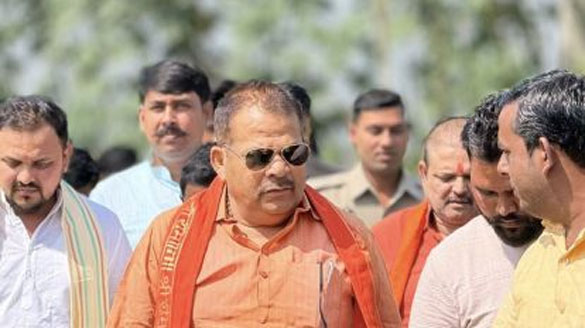
BJP leader Raghvendra Singh (Facebook/Raghvendra Pratap Singh)
----------
· ‘Bring Muslim Girls, Get Job’: Former BJP MLA Sparks Outrage; He Says ‘Necessary To Send Message’ to Muslims
· Fiji Opposition MP Condemns Pastor’s Remarks Against Hinduism And Islam
· Mamdani’s Dad Claimed ‘Moral Equivalence’ Between U.S. And Al-Qaeda, Compared Afghan War To 9/11
· Terrorists Threaten To Bomb Nigerian National Assembly
· UN Expert Says Western Nations Share Blame For Gaza Genocide, Calls UN ‘More And More Irrelevant’
-----
India
· Soldier Hurt During Terrorist Hunt To Get War Injury Status: Punjab & Haryana HC
-----
Europe
· Muslim surveillance: The real story behind the IHRA definition of anti-Semitism
· Tight Race In Dutch Election As Anti-Islam Populist Wilders' Hope Of Power Declines
· Doncaster Muslim wellness conference to focus on stigma of depression
· President Aliyev inaugurates residential complexes, mosque, and road in Jabrayil
· President Ilham Aliyev lays foundation stone for Jabrayil City Mosque
-----
North America
· It’s Miller time – which is bad news for migrants, Muslims, and most people
· CAIR-Alabama Welcomes Arrest of Suspect Who Allegedly Threatened Synagogues
· CAIR Sends Congressional Briefing Memo Urging Lawmakers to Reject Unconstitutional, Anti-Muslim ‘Anti-Sharia’ Bills
· CAIR Demands Virginia High School Reverse Suspension of Virginia Muslim Students Based on ‘Racist Tropes and Stereotypes’
------
Africa
· U.S. Pressure And Nigeria’s Unresolved Trauma: Is ‘Genocide’ Too Simple A Frame?
· Abia cleric faults FG’s Halal economic plan
· Emir Sanusi Narrates How Boko Haram Stopped Jonathan From Removing Fuel Subsidy
· Sudan’s army vacates el-Fasher base as Burhan vows retaliation for civilian killings
------
Mideast
· Gaza’s Civil Defence Says At Least 50 Killed In Israeli Strikes
· Gaza Teen ‘Stuck In Hell’ Trying To Reach UK To Study
· 20,080 students killed in West Bank and Gaza in past 2 years, Palestinian officials say
· Unilever Blocked Pro-Palestine Ice Cream Flavour: Ben & Jerry’s Co-Founder
· Gunmen kill two on coach in Syrian Druze-majority province
· Israeli planes strike Gaza in test of US-brokered ceasefire
-----
South Asia
· Iran Offers to Mediate as Pakistan Seeks Dialogue with Kabul
· Pakistan Defence Minister Says Negotiations Stalled, Cites Disagreements with Kabul
· Pakistan Police Conduct Late-Night Raids on Afghan Refugees in Islamabad, Arrests Reported
· Zalmay Khalilzad Shares Fake Post Targeting Pakistan, Prompts Online Backlash
· Not Show-Cause, Only Information Sought From 3 HC Judges: Bangladesh SC
· Iran Expels Nearly 1.5 Million Afghans, Will Grant Residency to Only Half of Six-Million Population
· Bangladesh, Maldives to strengthen cooperation in education, religious, cultural sectors
· Yunus holds high-level meeting on election preparations
-----
Arab World
· Experts Gather To Raise Awareness Of The Role Of Museums In Saudi Arabia
· Jeddah Exhibition Showcases Hijazi Heritage, Culture
· Saudi Crown Prince, FIFA President Review Sports Cooperation
· Saudi Arabia, Pakistan strengthen ties with new economic cooperation deal
· Saudi Arabia condemns RSF’s human-rights abuses in Sudan’s El-Fasher
· Saudi FM, Palestinian PM discuss Gaza and West Bank developments in Riyadh
· ‘Marvels of the Saudi Orchestra’ returns to Riyadh
------
Southeast Asia
· Fahmi: Asean Summit Success Proves Malaysia’s Strength In Global Diplomacy
· Uggah: Sarawak to learn from Sichuan’s extensive, environmentally sustainable transport network
· From cutting tariff deals to shaping Trump-Xi talks: Was the 47th Asean Summit — the bloc’s largest in history — a diplomatic win?
· Data of 665,000 Marina Bay Sands patrons sold on dark web; Singapore fines resort RM1.1m
Compiled by New Age Islam News Bureau
URL: https://newageislam.com/islamic-world-news/muslim-girls-necessary-message-former-bjp/d/137442
------
‘Bring Muslim Girls, Get Job’: Former BJP MLA Sparks Outrage; He Says ‘Necessary To Send Message’ to Muslims
Written by Maulshree Seth
BJP leader Raghvendra Singh (Facebook/Raghvendra Pratap Singh)
-----------
Lucknow: October 29, 2025
Even as the BJP distanced itself from its leader Raghvendra Singh’s controversial remark of giving jobs to Hindu youths who marry Muslim women, the former MLA doubled down on Tuesday, saying it was “necessary to send the message” to people in his area where Muslims are in a majority.
A video of the former Domariyaganj MLA went viral on social media in which he is seen telling youths in Sidharthanagar district to bring at least 10 Muslim girls (“kam se kam 10 musalman ladki lao”), and ask people to raise their hands of they are ready to do the same. Assuring that he would arrange their marriage, the former MLA is heard promising them jobs.
“Jo leke aayega, usko naukri, roji roti bhi dilayange (Whosoever brings them, they would be given a job and their livelihood would be taken care of),” Singh is heard saying.
After his video went viral, the Opposition demanded strict action against him for his “anti-women” and “communal remarks”.
BSP chief Mayawati condemned Singh’s remarks and asked the BJP government to take strict legal action against them instead of providing him “protection”.
“The narrow minded statement “bring a Muslim girl, get a job” along with the poisonous and violent game going on by mischievous elements in UP, Uttarakhand, as well as other states in the name of religious conversion, Love Jihad, and taking the law in their hands to spread communal and casteist hatred… leading to threat to life of people, their property and faith… is highly condemnable,” said Mayawati.
“Such criminal… anti-social elements pose an open challenge and threat to a civilized and threat to civilized and constitutional government. Instead of providing them support and protection, the government should take strict legal action against such people,” she said, adding that legal action is necessary in the interest of millions of people in the state.
Samajwadi Party MP Dimple Yadav said, “It is a very irresponsible statement. Such statements are often made by BJP leaders. The way BJP leaders are constantly giving statements against women, it reflects on the anti-women psychology of the party and its leaders.”
https://twitter.com/INCUttarPradesh/status/1982790720928063624
----
Fiji Opposition MP Condemns Pastor’s Remarks Against Hinduism And Islam
ANISH CHAND
October 29, 2025
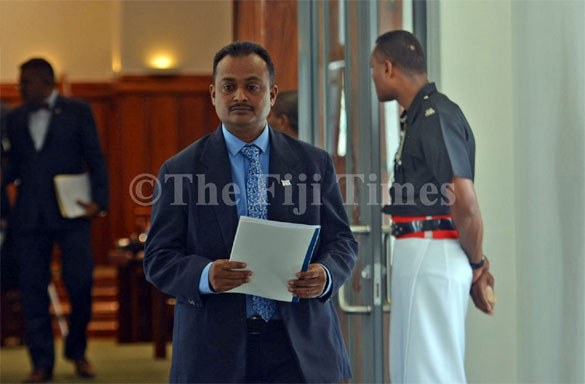
Opposition member Vijay Nath. Picture: FILE
--------------
Opposition Member of Parliament Vijay Nath has strongly condemned the remarks made by a pastor—who is also a serving police officer—during a church sermon that has since gone viral on social media.
He described the remarks against Hindu’s and Muslims as “unethical and disgraceful.”
“This behaviour is made more egregious by the fact that the individual is a Police Officer, a public servant whose solemn oath is to uphold the very peace, discipline, and respect he has now endangered,” said Mr Nath.
“Fiji is defined by its deep roots as a proud multicultural and multi-religious nation. For generations, people of all races and faiths have lived together in profound peace and unity.”
“Any attempt to belittle, scorn, or disrespect another’s religion or culture is not merely unacceptable; it is an act of betrayal against the spirit of tolerance and mutual respect that is the bedrock of our society.”
He added silence from those present during the sermon was equally troubling.
“I strongly believe that those who stood silent during the sermon are equally accountable. Silence in the face of prejudice is not neutrality; it is complicity. It actively undermines the principles of harmony and national respect.”
“This is not a time for division; it is a time for moral clarity. We must rise, shoulder to shoulder, to actively defend and preserve the values of respect, unity, and understanding that form the unbreakable foundation of our beloved Fiji.”
Source: fijitimes.com.fj
Please click the following URL to read the text of the original Story
https://www.fijitimes.com.fj/opposition-mp-condemns-pastors-remarks-against-hinduism-and-islam/
------
Mamdani’s dad claimed ‘moral equivalence’ between U.S. and Al-Qaeda, compared Afghan war to 9/11
October 28, 2025
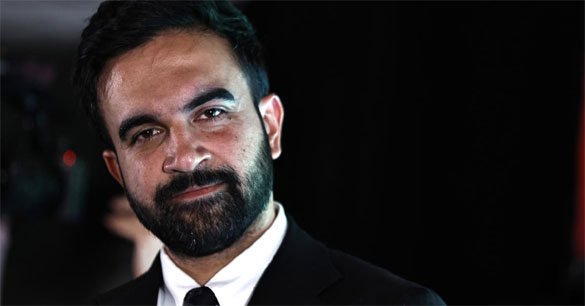
Zohran Mamdani’s father Mahmood — a prominent leftist in his own right — penned a book in the wake of the terrorist attacks of 9/11 where he argued that there was a “moral equivalence” between the United States and al-Qaeda, compared the U.S. invasion of Afghanistan to the terrorist destruction of the World Trade Center, blamed the U.S. for 9/11 and al-Qaeda, and much more.
Mahmood Mamdani is a longtime tenured Columbia University professor, where the school says he "specializes in the study of colonialism, anti-colonialism, and decolonization." Raised in Uganda and of Indian descent, the likely future mayor’s father also previously taught at the University of Dar-es-Salaam in Tanzania, Makerere University in Uganda, and the University of Cape Town in South Africa. The leftwing academic wrote a 2004 book — Good Muslim, Bad Muslim — which may help explain his son's views on terrorism.
His son, currently the odds-on favorite to be the next mayor of New York City, is currently mired in controversy over his praise for pro-jihadist Brooklyn imam Siraj Wahhaj, his close association with controversial Palestinian-American activist Linda Sarsour, his past support for Muslim Americans convicted in a terrorist financing case over their support for Hamas, his open animus for the state of Israel, and more.
A review of the book by Just the News reveals that Mahmood holds views about 9/11 and America that may raise eyebrows, including claiming that there are many similarities between the U.S. and al-Qaeda, that American foreign policy is ultimately to blame for the devastating attacks which killed nearly 3,000 people, that suicide bombings should not be viewed as barbaric, and much more. Zohran has said in the past that his father’s political views have helped inform his own, and his mother said this year that her son had absorbed what he learned at home.
Foundation calls Mamdami's claims "deceptive discourse"
Mahmood Mamdami wrote in his 2004 book that there was "growing common ground between the perpetrators of 9/11 and the official response to it" by the U.S.; claimed there was an "eerie similarity between the American bombing of Iraq and Afghanistan and the al-Qaeda bombing of embassies in Nairobi and Dar-es-Salaam and of the Twin Towers on 9/11"; asserted that there was a "moral equivalence between the two" (the U.S. and al-Qaeda); and argued that suicide bombing should not be “stigmatized as a mark of barbarism."
Clifford May, the president of the Foundation for Defense of Democracies, told the John Solomon Reports podcast on Monday that “it’s frightening — the idea that somebody who is both a socialist and is, I would say, an Islamist who could be mayor of New York City. … It’s really frightening.”
“It was really the beginning of this whole discourse — very deceptive — on decolonialism and the West and all of that. And in a way, Mamdani’s father, Mahmood Mamdani, he is a disciple of that. His book is called Good Muslim, Bad Muslim,” May said. “Well, that’s not the debate for anybody. Nobody is talking about good Muslims, bad Muslims. We are talking about Muslims who want to cut your head off because you’re an infidel or a Jew or a Christian, and we’re talking about Muslims who don’t want to do that and who we can get along with… So it’s a very bogus book.”
Zohran also did his best to explain away his use of the phrase “globalizing the intifada” this summer. “To me, ultimately, what I hear in so many is a desperate desire for equality and equal rights in standing up for Palestinian human rights,” Mamdani said on The Bulwark podcast this summer. He refused to condemn the phrase on Meet the Press, saying he did not want to "police speech." He later told an influential group of business leaders he would “discourage” the use of the phrase, according to The New York Times.
Despite this, Zohran has denied ever supporting global jihad and gave a press conference last week arguing that many of the criticisms aimed at him were rooted in Islamophobia.
Mahmood did not immediately respond to a request for comment sent to him through his personal Columbia University email. Zohran did not immediately respond to a request for comment sent to him through his campaign.
The Democratic nominee to be mayor of NYC has admitted in the past that he is quite familiar with his father’s work and that his father’s political philosophy informed his own.
Zohran joined the AirGo podcast in 2017, and the podcast host mentioned his father’s book and asked Zohran about his father’s writings. “The first time I properly read something was in college. I grew up going to his lectures, book talks, book launches, that sort of stuff,” Zohran said. “So I heard a lot of the arguments from the main pieces.”
The future Democratic mayoral nominee said his favorite book by his father was Citizen to Refugee.
Little Africa News interviewed Zohran in October 2024 — many months before he became the Democratic nominee — and he reportedly admitted that his political aspirations were informed by his father’s politics. “Being Ugandan is a great point of pride for me,” Mamdani told the outlet, reportedly “emphasizing how his father’s choice of middle name—Kwame, after Ghanaian leader Kwame Nkrumah—instilled in him the values of Pan-Africanism.”
Zohran reportedly “recounted a pivotal moment from his father’s past,” noting that “when his father arrived in the United States as a scholarship student from Uganda, he participated in a civil rights march organized by the Student Nonviolent Coordinating Committee,” which was “a defining experience that shaped his [Mahmood’s] understanding of solidarity and struggle.”
“If you are facing a struggle in your life, it’s not enough to win that struggle; you have to make sure no one else faces that struggle,” Mamdani reportedly quoted as “his father’s guiding philosophy, which now informs his political aspirations.”
The Intelligencer interviewed Zohran in May — shortly before he became the Democratic mayor nominee — and reported that he “describes himself as an Indian Ugandan New Yorker.”
“My father raised me with a real sense of being African, being proud of that heritage,” the outlet quoted him as saying. “I grew up with a reverence for Mandela, Desmond Tutu. They’re a significant part of informing my sense of universalism and consistency and what it means to fight for equal rights.”
The New York Times interviewed Zohran’s father and mother in June, saying that they “helped shape Zohran Mamdani’s politics. The outlet reported that “both parents emphasized that their son … has not turned to them for political advice.” But the father and mother “disagreed about how much their work had influenced their son’s worldview.”
“He’s his own person,” Mahmood said. “Now, of course what we do as his parents is part of the environment in which he grew up, and he couldn’t help but engage with it. That doesn’t mean anything is reflected back on us.”
“I don’t agree!” Zohran’s mother said. “Of course the world we live in, and what we write and film and think about, is the world that Zohran has very much absorbed.”
Mahmood repeatedly compared the U.S. to terrorist groups such as al-Qaeda throughout the book, going as far as to argue that the U.S. and al-Qaeda were “morally equivalent” — and even hinting that America was worse because it was more powerful than the jihadist group.
Passages from the book repeatedly show Mamdani’s father attempting to draw an equivalence between the U.S. and terrorists, between then-President George W. Bush and al-Qaeda founder Osama bin Laden, and between the U.S.’s post-9/11 response and the terrorist attacks carried out by al-Qaeda.
“The events that are 9/11 present the world with a particularly difficult political challenge, even if this challenge appears the most immediate for Muslims,” Mahmood wrote. “Both the American establishment led by President Bush and militants of political Islam insist that Islam is a political, and not simply a religious or cultural, identity. Both are determined to distinguish between ‘good Muslims’ and ‘bad Muslims,’ so as to cultivate the former and target the latter. Should 9/11 and its aftermath caution us against reading a person’s politics from his or her culture and religion?”
Mahmood added: “I know of no one inspired by Osama bin Laden for religious reasons. Bin Laden is a politician, not a theologian. Those who embrace him do so politically. Both Bush and bin Laden employ a religious language, the language of good and evil, the language of no compromise: you are either with us or against us. Both deny the possibility of a third response. For both, political loyalty comes before political independence.”
Mamdani’s father attempted to argue that the U.S. response to 9/11 was akin to the terrorist attacks themselves.
“Few would fail to notice the growing common ground between the perpetrators of 9/11 and the official response to it called ‘the war on terror.’ Both sides deny the possibility of a middle ground, calling for a war to the finish. Both rally forces in the name of justice but understand justice as revenge,” Mahmood wrote. “If the perpetrators of 9/11 refuse to distinguish between official America and the American people, target and victim, ‘the war on terror’ has proceeded by dishing out collective punishment, with callous disregard for either ‘collateral damage’ or legitimate grievances. Both practices are likely to nurture the spirit of revenge.”
The father of the NYC mayoral nominee again compared the U.S. and al-Qaeda, and also contended that there was a “similarity” between al-Qaeda crashing hijacked planes into the World Trade Center and the U.S. invading Taliban-ruled Afghanistan — which was sheltering bin Laden and other leaders of the al-Qaeda network responsible for 9/11 — after the deadly attacks.
“Finally, it is worth reflecting on the two adversaries in the war on terror: the United States and al-Qaeda. Both are veterans of the Cold War, in fact on the same side, and both have been marked indelibly by it. Both see the world through lenses of power. Both are informed by highly ideological worldviews, which each articulates in a highly religious political language, one that is self-righteous. The righteousness of self goes alongside the demonization of the other as evil,” Mahmood wrote. “The point about ideological language, whether its idiom is religious or secular, is that it justifies the use of power with impunity. In the contest for power, each has eyes for none but the other. There is an eerie similarity between the American bombing of Iraq and Afghanistan and the al-Qaeda bombing of embassies in Nairobi and Dar-es-Salaam and of the Twin Towers on 9/11: both testify that, when it comes to the contest for power, the rest of the world exists only as collateral.”
Al-Qaeda’s twin bombings of U.S. embassies in Africa in 1998 resulted in the deaths of 224 people, including twelve Americans. Nineteen al-Qaeda terrorists crashed hijacked planes into the World Trade Center buildings in New York City, into the Pentagon, and into a field near Shanksville in Pennsylvania after a revolt by the passengers overpowered the terrorists controlling that plane. The death toll that September 2001 day was steep: nearly 3,000 people.
The U.S. invaded Afghanistan in the wake of 9/11, and toppled Iraqi dictator Saddam Hussein in 2003.
Mamdani’s father concluded: “This, however, is where the comparison must end, for the moral equivalence between the two does not translate into a political equivalence. There is no denying the global character of American power, before which the network known as al-Qaeda can only be described in the diminutive.”
Rep. Elise Stefanik, R-N.Y., told Just the News this week that “Zohran Mamdani is a jihadist, pro-Hamas candidate who endangers New York as he campaigns with co-conspirators of terrorist attacks that killed New Yorkers.”
Stefanik, who is reportedly considering challenging New York’s Democratic Gov. Kathy Hochul, who recently appeared on stage with Mamdani to stump for the democratic socialist, added that “Mamdani has stated that his parents’ influence is significant in shaping his life and world view and that includes his father’s antisemitism and sympathy for deadly suicide bomber terrorists. Mamdani must be defeated to save New York.”
Mamdani’s father also repeatedly argued that America’s Cold War policy was responsible for al-Qaeda’s emergence, that bin Laden and other jihadist terrorists were an “invention” and “creation” of the CIA, and that 9/11 would not have happened if the U.S. had “demilitarized” and pursued a “peace dividend” after the fall of the Soviet Union.
Mahmood wrote that “the Islamist terror that we are witnessing today is more a mutation than an outgrowth of Islamic history, the result of a triple confluence: ideological, organizational, and political.” He argued that the first element was the result of Muslim thinkers and Communist ideology, but that the second two elements were the fault of the U.S.
“The ideological element was the product of an encounter between Islamist intellectuals … and different Marxist-Leninist ideals that embraced armed struggle in the postwar period,” the mayoral candidate’s father wrote. “The organizational element was a direct consequence of the American decision to organize the Afghan jihad as a quasi-private international crusade. The political element is a consequence of the demonization of Islam and its equation with terrorism, a tendency that emerged after the Cold War and gathered steam after 9/11. This demonizing point of view questions whether a historically grounded modernity is even possible in the postcolonial Islamic world.”
Mahmood claimed that “the best-known CIA-trained terrorist was, of course, Osama bin Laden” and argued that bin Laden was a “distinguished CIA creation” and a “CIA invention.”
The CIA, with the help of Pakistani intelligence services, did indeed provide significant support to the Afghan mujahideen in their fight against the Soviet Union, but the CIA and others have long denied that the U.S. provided assistance to foreign Arab fighters like al-Qaeda.
Longtime journalist Peter Bergen wrote in The Rise and Fall of Osama bin Laden that “there is simply no evidence for the common myth that bin Laden and his Afghan Arabs were supported by the CIA financially. Nor is there any evidence that CIA officials at any level met with bin Laden or anyone in his circle. Yet the notion that bin Laden was a creation of the CIA is widespread.”
Investigative journalist Richard Miniter, the author of Losing bin Laden, said the relevant CIA station chiefs from the 1980s denied ever helping bin Laden.
“In the course of researching my book on Bill Clinton and bin Laden, I interviewed Bill Peikney, who was CIA station chief in Islamabad from 1984 to 1986, and Milt Bearden, who was CIA station chief from 1986 to 1989. These two men oversaw the disbursement for all American funds to the anti-Soviet resistance,” Miniter wrote. “Both flatly denied that any CIA funds ever went to bin Laden. They felt so strongly about this point that they agreed to go on the record, an unusual move by normally reticent intelligence officers.”
Bin Laden’s longtime deputy, Ayman al-Zawahiri, also denied CIA support for al-Qaeda, reportedly writing, “The truth that everyone should learn is that the United States did not give one penny to the [Arab] mujahideen. Is it possible that Osama bin Laden, who, in his lectures in the year 1987, called for the boycott of U.S. goods … is U.S. agent in Afghanistan?”
Speaking of the U.S. support for fighters against the Soviet invasion of Afghanistan during the 1980s, Mahmood wrote in his book that “the Islamic world had not seen an armed jihad for nearly a century, but now the CIA was determined to create one in service of a contemporary political objective.”
Contrary to the claim by Mamdani’s father, armed and militant jihadist groups did indeed exist in the 20th century, prior to the 1980s. The Muslim Brotherhood was founded in Egypt in 1928 and helped inspire many of the terrorist offshoots which would emerge in the ensuing decades.
Egyptian Islamic Jihad — which counted Zawahiri as one of its leaders prior to him merging his faction with al-Qaeda — was active in the 1970s, prior to the Soviet invasion and U.S. intervention, and the group successfully assassinated Egyptian President Anwar Sadat in 1981. The Islamic Group was another jihadist group formed in Egypt in the 1970s. Palestinian Islamic Jihad was formed in Gaza in 1979 as an offshoot of the Muslim Brotherhood, and it has been active in attacking Israel ever since. The successful Islamic Revolution in Iran in 1979 brought the ayatollahs to power and led to the formation of Hezbollah in the early 1980s.
Mamdani’s father also wrote that “I argue that rather than illustrating a deep-seated clash of civilizations, 9/11 came out of recent history, that of the late Cold War.” Mahmood also contended that “had the United States ended the Cold War with demilitarization and a peace dividend, 9/11 would not have happened.”
The father of the democratic socialist leading in the NYC mayoral polls also wrote that suicide bombings should not be “stigmatized as a mark of barbarism” and suggested that it was the fault of Israeli government policy that jihadist suicide bombings grew in popularity.
“I have often wondered whether the label ‘suicide bombing’ accurately captures either the practice or the motivation behind it. Clearly, the prime objective of the suicide bomber is not to terminate his or her own life but that of others defined as enemies. We need to recognize the suicide bomber, first and foremost, as a category of soldier,” Mahmood wrote. “Does not the suicide bomber join both aspects of our humanity, particularly as it has been fashioned by political modernity, in that we are willing to subordinate life—both our own and that of others—to objectives we consider higher than life? Suicide bombing needs to be understood as a feature of modern political violence rather than stigmatized as a mark of barbarism.”
Mamdani’s father added: “The danger of a moral discussion by itself (how can any culture condone suicide) is that it quickly turns into a replay of Culture Talk, stereotyping individuals and preventing any deliberation about alternative strategies. Thus the need to combine a moral discussion with a broad historical and political one.”
Mahmood also argued that “it is the spectacular expansion of Israeli settlements in the West Bank and Gaza after the Six-Day War of 1967, and particularly after the 1993 Oslo talks, that explains the context that produced the suicide bomber.”
Mamdani’s father said that “this book grew out of a talk at Riverside Church on the Upper West Side of New York City in the weeks after 9/11” and argued that “to bear an identifiably Muslim name then was to be made aware that Islam had become a political identity in post-9/11 America.” Mahmood wrote that “I set about trying to understand the modern tendency to politicize culture and, in that context, the forging of political Islam and political terror during the Cold War.”
Mahmood contended that “Culture Talk after 9/11, for example, qualified and explained the practice of ‘terrorism’ as ‘Islamic.’ ‘Islamic terrorism’ is thus offered as both description and explanation of the events of 9/11. It is no longer the market (capitalism), nor the state (democracy), but culture (modernity) that is said to be the dividing line between those in favor of a peaceful, civic existence and those inclined to terror.”
Mamdani’s father also repeatedly expressed displeasure for Bush’s alleged framing of the war on terrorism, claiming that Bush had sought to pit “Good Muslims” against “Bad Muslims.”
Bush repeatedly praised Islam as a religion of peace and sought to frame al-Qaeda terrorists as twisters of the Islamic faith, both in the immediate days after 9/11 and for years afterward.
“Our war is against evil, not against Islam,” Bush said in September 2001. “There are thousands of Muslims who proudly call themselves Americans, and they know what I know — that the Muslim faith is based upon peace and love and compassion. The exact opposite of the teachings of the al Qaeda organization, which is based upon evil and hate and destruction.”
Bush added that month: “The terrorists are traitors to their own faith, trying, in effect, to hijack Islam itself. The enemy of America is not our many Muslim friends; it is not our many Arab friends. Our enemy is a radical network of terrorists, and every government that supports them.”
“The face of terror is not the true faith of Islam. That's not what Islam is all about. Islam is peace. These terrorists don't represent peace. They represent evil and war,” Bush said in December 2001.
Bush would repeat this mantra long after.
“Listening to the public discussion in America after 9/11, I had the impression of a great power struck by amnesia,” Mahmood wrote in his book. “Acknowledging the epochal significance of the event should not necessarily mean taking it out of a historical and political context. Unfortunately, official America has encouraged precisely this. After an unguarded reference to pursuing a ‘crusade,’ President Bush moved to distinguish between ‘good Muslims’ and ‘bad Muslims.’”
Mamdani’s father added: “From this point of view, ‘bad Muslims’ were clearly responsible for terrorism. At the same time, the president seemed to assure Americans that ‘good Muslims’ were anxious to clear their names and consciences of this horrible crime and would undoubtedly support ‘us’ in a war against ‘them.’ But this could not hide the central message of such discourse: unless proved to be ‘good,’ every Muslim was presumed to be ‘bad.’ All Muslims were now under obligation to prove their credentials by joining in a war against ‘bad Muslims.’”
Mahmood concluded: “There are no readily available ‘good’ Muslims split off from ‘bad’ Muslims, which would allow for the embrace of the former and the casting off of the latter, just as there are no ‘good’ Christians or Jews split off from ‘bad’ ones. The presumption that there are such categories masks a refusal to address our own failure to make a political analysis of our times.”
Mamdani seeks to undercut unifying concepts like “Judeo-Christian” & “the West”
The book by Zohran’s father also slammed America and its history and sought to undercut the logic and history behind unifying concepts such as “Judeo-Christian” and “the West.”
“America was built on two monumental crimes: the genocide of Native Americans and the enslavement of African Americans,” Mahmood wrote. “The United States tends to memorialize other peoples’ crimes, not its own—to seek a high moral ground as a pretext to ignore real issues.”
Mahmood said that 9/11 should be turned “into an opportunity to reflect on America’s place in the world.” He also argued that “the Cold War came to an end with the subduing of one protagonist, the Soviet Union” but that “humanity is now left with a challenge: how to subdue and hold accountable the awesome power that the United States built up during the Cold War.”
Zohran’s father also took aim at the “Judeo-Christian” concept, arguing, “The idea of a single Judeo-Christian tradition is mainly a post-Holocaust idea with weak historical depth. It is post-Holocaust America’s antidote to anti-Semitism. Contemporary America is a multicultural and multireligious political community that has yet to come to grips with its settler origins.”
Mahmood also repeatedly sought to cast doubt on the idea that “the West” or “Western civilization” were useful terms describing actual things, including writing, “Can there be a self-contained history of Western civilization? Historians have been chipping away at this claim in a number of fields, ranging from the development of science to that of society.”
GOP recoils at thought of Mamdani taking the reins in NYC
Rep. Andy Ogles, R-Tenn., sent a June letter to Attorney General Pam Bondi calling for an investigation, tweeting, “Mamdani is an antiSemitic, socialist, communist who will destroy the great City of New York. He needs to be DEPORTED. Which is why I am calling for him to be subject to denaturalization proceedings.”
Rep. Randy Fine, R-Fla., argued this month that federal investigators should “review every naturalization of the past 30 years – starting with Mamdani.”
“I just think we need to take a hard look at how these folks became citizens, and if there is any fraud or any violation of the rules we need to denaturalize and deport,” Fine told the New York Post, saying of Mamdani that “I know that there’s a lot of us that are very, very concerned about the enemy within – people who have come to this country to become citizens, to destroy it.”
Source: justthenews.com
Please click the following URL to read the text of the original Story
https://justthenews.com/politics-policy/elections/mamdanis-dad-claimed-moral-equivalence-between-us-al-qaeda-compared
-------
Terrorists Threaten To Bomb Nigerian National Assembly
October 28, 2025
By Enioluwa Adeniyi
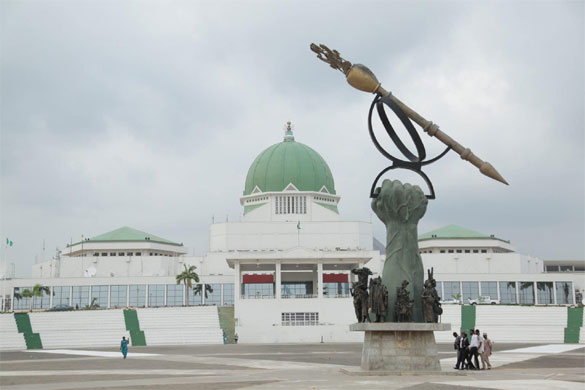
The Chairman of the House of Representatives Committee on Internal Security, Hon. Garba Ibrahim Muhammad, has disclosed that terrorists have issued threats to bomb the National Assembly Complex.
Naija News reports that Garba made the revelation on Tuesday during a public hearing on a bill seeking to establish a Legislative Security Directorate, designed to enhance security management and safeguard lawmakers, staff, and visitors within the National Assembly.
“We have received threats from terrorists to bomb the National Assembly Complex and threats from protesters to lock up the National Assembly,” Garba stated.
The lawmaker said the legislature, Nigeria’s seat of democracy, has been increasingly exposed to security threats including car and motorcycle theft, vandalism, infiltration by unregistered visitors, and use of fake identity cards.
He warned that failure to address the lapses could disrupt legislative activities with grave implications for governance and democracy.
He cautioned, “It is obvious that with the ongoing security challenges, if proper measures are not taken, it will truncate legislative activities in the National Assembly. If activities are thwarted, there will be no representation, no oversight, no annual budget, no plenary at all, and that will destabilize legislative procedure, democracy, and the nation at large.”
According to Garba, effective security management requires a coordinated approach, integrating multiple elements to ensure a safe environment for legislative business.
“That is why this Bill is very important. It seeks to address all these challenges and adopt world best practices in parliamentary security procedures and architecture,” he explained.
The bill, titled “A Bill for an Act to Provide for the Establishment and Functions of the Legislative Security Directorate in the National Assembly (HB 1632)”, was considered at the House of Representatives Conference Hall 028 in Abuja.
While acknowledging the need for the National Assembly to remain open to the public as a democratic institution, Garba stressed that access must not come at the expense of security.
“The need for effective security measures in the National Assembly cannot be overemphasized because Parliament has to remain accessible to the public. However, this Bill is committed to ensuring the best security architecture in the National Assembly, to protect legislators, staff, visitors, and property,” he said.
Garba further urged state Houses of Assembly across the federation to emulate the initiative by adopting similar frameworks to enhance legislative security nationwide.
“With these few points of mine, I wish us a peaceful and fruitful hearing that will ultimately bring a turnaround in the National Assembly’s security architecture,” he concluded.
Source: naijanews.com
Please click the following URL to read the text of the original Story
https://www.naijanews.com/2025/10/28/terrorists-threaten-to-bomb-national-assembly/
------
UN expert says Western nations share blame for Gaza genocide, calls UN ‘more and more irrelevant’
EPHREM KOSSAIFY
October 28, 2025
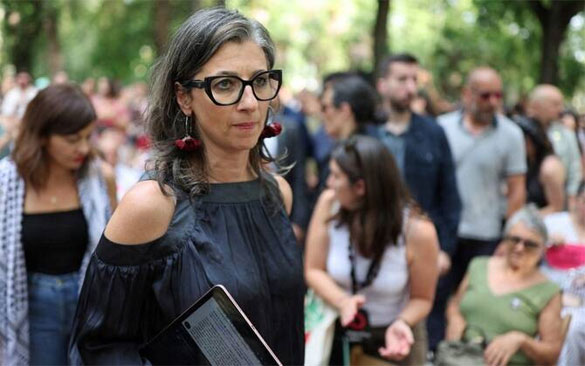
Francesca Albanese, the UN’s special rapporteur on the situation of human rights in the Palestinian territories, said on Tuesday that Western nations share responsibility for the devastation in Gaza. (AFP/File)
------------
NEW YORK CITY: A UN human rights investigator said Western nations share responsibility for the devastation in Gaza. She accused them of enabling a “full-fledged genocide” against Palestinians, and warned that the UN itself is becoming “more and more irrelevant.”
Francesca Albanese, the UN’s special rapporteur on the situation of human rights in the Palestinian territories, presented her latest report to the General Assembly’s Third Committee on Tuesday.
She said that the UN had “failed miserably” to uphold international law and protect civilians in Gaza.
“The United Nations was set up to protect peace and stability, to prevent conflicts, and for a long time it did,” Albanese told Arab News.
“But in Gaza, it has failed miserably … it has failed to enforce international law, which for me as a lawyer is the most serious responsibility.”
The UN had allowed the “near-complete dismantlement of its humanitarian function” in Gaza, she continued, citing in particular the blow suffered by the organization’s agency for Palestinian refugees, UNRWA. Israel banned the agency from operating in Israel and Palestinian territories in January this year following allegations that a small number of its staff were involved in the Oct. 7 attacks.
“Member states have not been able to contain or isolate the two states creating a threat to peace and security in the region: Israel and the United States,” Albanese said.
“I’m sorry to say this because, of course, I would like to see the United Nations rise and straighten its back and stand solid and principled into the future. But the United Nations is becoming more and more irrelevant, I’m afraid.”
Albanese also criticized world governments for failing to challenge the US over the sanctions it imposed on her in July over her work for the UN investigating human rights abuses in Palestinian territories. The measures hindered her ability to present her latest findings in person.
Speaking to the General Assembly committee via video link from South Africa, she described the sanctions as “unlawful and spiteful” and said the international community “should already have confronted this dangerous precedent.”
She added: “These measures are an assault on the UN itself — on its independence, its integrity, its very soul,” she said.
Asked whether UN officials, including Secretary-General Antonio Guterres, had supported her during this period, Albanese declined to comment.
Her report accuses Western governments of providing military, political and economic support that has sustained Israel’s occupation and military campaign in Gaza.
“Without the direct participation, aid and assistance of other states, the prolonged unlawful Israeli occupation could not have been sustained,” she said.
Israel’s actions in Gaza since October 2023 “have escalated its violence to an unprecedented level,” she continued, and “the ongoing genocide of the Palestinians must be understood as an internationally enabled crime.”
Albanese told the committee: “Many states, primarily Western ones, have facilitated, legitimized and eventually normalized the genocidal campaign perpetrated by Israel.
“By portraying Palestinian civilians as ‘human shields,’ and the broader onslaught in Gaza as a battle of civilization against barbarism, they have reproduced Israeli distortions of international law, and colonial tropes.”
Asked by Arab News whether the crisis threatens “the survival of the UN itself,” Albanese said the situation “is apocalyptic … it’s showing the apocalyptic destruction in Gaza, but also revealing who we are, as individuals, as communities, as states, as organizations.”
Despite her criticisms, Albanese said international law “still has a different story — it allows us to distinguish between wrong and right.” She added that “today, international law is spoken by the masses: against genocide, against apartheid, against Israel’s crimes.”
She urged all governments to “immediately suspend and review all military, diplomatic and economic relations with Israel, as any such engagement could represent means to aid, assist or directly participate in unlawful acts, including war crimes, crimes against humanity and genocide.”
She warned that “no state can credibly claim adherence to international law while arming, supporting or shielding a genocidal regime.”
Among her recommendations, Albanese called on UN member states to “exert pressure for a complete and permanent ceasefire and full withdrawal of Israeli troops,” to end the siege of Gaza and reopen its airport and port, and to “suspend Israel from the United Nations under Article 6 of the UN Charter.” Article 6 states that a member state that persistently violates the principles of the Charter can be expelled by the General Assembly.
She said: “Complicity in genocide must end. The world is watching Gaza, and the whole of Palestine. States must step up to their responsibilities.”
Israel’s ambassador to the UN, Danny Danon, rejected Albanese’s findings.
“You have tried to curse Israel with lies and hatred but your poison has failed,” he told her during the committee session. “You are a witch and this report is another page in your spell book.
“You wrap your bias in the language of law, hoping it will hide what it really is: Hamas propaganda.”
Special rapporteurs are part of what is known as the special procedures of the UN Human Rights Council. They are independent experts who work on a voluntary basis, are not members of UN staff and are not paid for their work.
Source: arabnews.com
Please click the following URL to read the text of the original Story
https://www.arabnews.com/node/2620631/middle-east
-------
India
Soldier hurt during terrorist hunt to get war injury status: Punjab & Haryana HC
Oct 29, 2025
CHANDIGARH: Punjab and Haryana HC said a soldier wounded when he fell into a nullah while searching for terrorists during a counter-insurgency operation was entitled to war injury benefits, adding even accidental injury in action in an operational area was treated as a battle casualty.
A division bench of Justice Harsimran Singh and Justice Vikas Suri HC passed the order while dismissing a petition filed by central govt challenging a Nov 22, 2023, order of Chandigarh bench of Armed Forces Tribunal (AFT), granting war injury pension to Havildar Sanjeeb Kumar.
Centre's counsel argued although Havildar Sanjeeb was permanently released under low medical category on Nov 30, 2020, for 'fracture distal radius' (wrist fracture) and granted disability pension, AFT's order of war injury pension was incorrect. Soldier's counsel contended he was searching for terrorists during his counter-insurgency duty along the Line of Control when he fell into Panar Nullah and got injured.
After hearing both parties, HC held operations specifically notified by govt from time to time had been treated under Category E, and any disability arising out of these operations had to be treated as 'battle casualty'. "Counsel for petitioners (central govt) has not been able to rebut the fact that the soldier was posted in Operation Rakshak on Line of Control between India and Pakistan, notified by govt of India. It was only while searching for terrorists in the area he fell in a nullah and sustained the injury," HC said.
Source: indiatimes.com
Please click the following URL to read the text of the original Story
https://timesofindia.indiatimes.com/india/soldier-hurt-during-terrorist-hunt-to-get-war-injury-status-punjab-haryana-hc/articleshow/124886000.cms
-------
Europe
Muslim surveillance: The real story behind the IHRA definition of anti-Semitism
October 28, 2025
by James Renton
In May 2016, an organisation of Western governments headquartered in Berlin, called the International Holocaust Remembrance Alliance (IHRA), adopted a definition of anti-Semitism that incorporates anti-Zionism. That definition has become the pre-eminent benchmark for identifying anti-Semitism by governments, public bodies and universities across the global North. Due to its conflation of anti-Semitism with anti-Zionism, the IHRA is also a flashpoint in the global struggle over Palestine/Israel.
Despite the definition’s political importance, much remains unknown today by both supporters and opponents regarding its origins, not least because the IHRA’s archives remain closed, and many public documents have been taken offline. Some commentators have argued that Jewish organisations, in particular, played a pivotal role in the historical origins of the definition, especially the American Jewish Committee, and even the Israeli foreign intelligence service, Mossad. However, my in-depth investigation over many months suggests a very different story.
In the early years of the War on Terror, I have discovered, Western governments were anxious to protect what they had carefully established as a core part of the meaning of liberal democracy – its very purpose – after the end of the Cold War: the memorialisation of the Holocaust. As Western states came to see Israel as the ultimate totem of Holocaust memory, they, in turn, began prioritising the protection of its reputation as essential for the security of their own political system after 9/11. When leaders in the global North label attacks on Israel as attacks on democracy itself, this is the history of what they mean.
Composed exclusively of liberal democratic states, the IHRA began its life as the ‘Task Force for International Co-operation on Holocaust Education, Remembrance and Research’ (ITF) in 1998, established by the United States, UK and Sweden. In 2000, the Task Force held an international forum of governments in Stockholm that was of such political importance that the French Socialist Prime Minister, Lionel Jospin, called it “the very first world conference of the new century.”
At that event, participants issued their founding document, the Stockholm Declaration, which stated: “The unprecedented character of the Holocaust will always hold universal meaning.” The idea was not that liberal democracies would agree on the substance of that meaning, simply that it was an essential vessel of meaning per se for their political system, as a universal template. At the conference, the Russian Deputy Prime Minister, Valentina Matvienko, enunciated the principle quite clearly: the Holocaust was now a “litmus” test for the existence of a “civil democratic society”; the two were now synonymous.
Before 9/11, the ITF was not especially interested in backing Israel or combating anti-Semitism. Indeed, it did not establish a working group on anti-Semitism until 2009. In Stockholm, anti-Zionism was not on the agenda for the many assembled heads of government, or even Israeli Prime Minister Ehud Barak, who was instead troubled by neo-Nazis and Holocaust-deniers.
Once the War on Terror began, however, the international picture changed dramatically. In that context, and with the rise of pro-Palestinian sentiment in Europe in 2002 amidst the Second Intifada (2000–2003), the Bush administration called for the world’s first conference on anti-Semitism. The Organisation for Security and Co-operation in Europe (OSCE) hosted the event in Vienna several months after the invasion of Iraq. In the Austrian capital, the Western political elite was gripped by a new consensus: a new form of anti-Semitism had erupted in Europe, centred on criticism of Israel and perpetrated principally by Muslims.
The White House sent a large delegation, led by Rudolph Giuliani, the former Republican Mayor of New York City and hero of 9/11. Speaking for President Bush and Secretary of State Colin Powell, Giuliani wanted European states to deliver surveillance of anti-Semitism, “[d]iscipline political debate” on Palestine/Israel, and enlist “Islamic communities” to counter anti-Semitism.
The demand by the Bush White House for surveillance of anti-Semitism, with a focus on Muslims and Israel, led to the definition of anti-Semitism that is now at the centre of global politics.
Just before the second OSCE anti-Semitism conference in Berlin in 2004, the EU’s agency for monitoring racism, xenophobia and anti-Semitism (EUMC) published a report regarding data on anti-Semitism. The report noted that accurate data collection remained an impossible task without an agreed definition of anti-Semitism. The academic author of the report, Alexander Pollack, made an attempt to fill that gap, which drew on studies of Nazi Germany. Yet Pollack’s text did not mention Israel or Muslims. It was, therefore, out of step with the new policy agenda at the OSCE. At the Berlin conference, the OSCE then confirmed the high stakes for the global North posed by criticism of Israel in the context of the War on Terror; they pronounced anti-Semitism as a threat to “overall security” in the “OSCE region and beyond.”
This was the moment that resulted in the EUMC definition, which the IHRA adopted with small changes years later, following the rise of Daesh and its terror campaign in Europe. After the 2004 Berlin conference, important members of the US and EU delegations at the OSCE conference led the new anti-Semitism definition project: the EU’s Beatte Winkler, Director of the EUMC, and the USA’s Rabbi Andrew Baker, Director of International Affairs at the AJC. They were not independent figures acting on their own initiative, as some have suggested. Hence, the drafting process involved specialists at the OSCE from its Office for Democratic Institutions and Human Rights (ODIHR).
The ODIHR’s role would not be surprising to anyone who was following events in Vienna and Berlin. The OSCE’s Permanent Council had mandated in March 2004 that all states were now committed to collecting data on antisemitic crimes, and that the ODIHR should play a central function in the collection of anti-Semitism data by member states. Notably, from December 2004, the ODIHR started to take part in ITF meetings.
The structure of the EUMC’s working definition, published in January 2005, demonstrated its surveillance function, focused on Muslims. Firstly, the definition included a series of examples that were designed to facilitate the detection of anti-Semitism by data collectors, as one of the AJC drafters, Kenneth Stern, recalled years later in testimony to the US House of Representatives. No other form of racism had been approached in such a way by Western state bureaucracies. Yet this framework, a tick-box method of guidelines to detect attitudes and behaviour, was to be central in Western state models for detecting radicalisation among Muslim populations, as evidenced by the ‘Preventing and Countering Violent Extremism’ approach championed by the UN, EU, and across the global North.
The text itself of the EUMC definition also reveals the prime concern of its architects with surveilling Muslims. The very first example of “contemporary anti-Semitism”, which is rarely discussed today, is: “Calling for, aiding, or justifying the killing or harming of Jews in the name of a radical ideology or an extremist view of religion.” The reference to “radical ideology” and “an extremist view of religion” were evidently focused on Islamists, who were front of mind for those who composed the definition.
In fact, there was no evidence that the pro-Palestinian support among the public in Europe in 2002 and 2003, which caused such anxiety for leaders of the global North in Vienna and Berlin, was driven by Islamism. Nonetheless, Western governments built global surveillance structures over the years following 9/11 on the belief that all Muslims were potential extremists, or in other words, anti-Western revolutionaries. This political structure derived from centuries of Western thought that identified Islam as an incubator for threats to Christian sovereignty.
As we see in Martin Luther’s On the Jews and their Lies, published in 1543, Jews alongside Muslims were also regarded as possessing the inherent potential to overturn Christian power – indeed, he and many anti-Semites thereafter viewed the Jew as the preeminent threat to political and religious order. It is a great irony of history, then, that in the 21st century Islamophobia took such a prominent place in the gestation of the international order’s preferred definition of anti-Semitism.
Source: middleeastmonitor.com
Please click the following URL to read the text of the original Story
https://www.middleeastmonitor.com/20251028-muslim-surveillance-the-real-story-behind-the-ihra-definition-of-anti-semitism/
-------
Tight race in Dutch election as anti-Islam populist Wilders' hope of power declines
October 29, 2025
Paul Kirby
Geert Wilders' anti-Islam Freedom party is facing a tight race in Wednesday's Dutch election, and even if he wins the vote his hopes of forming a new government appear minimal.
Wilders was the clear winner last time Dutch voters went to the polls in November 2023, but final opinion polls hours before the vote suggest a fall in his support.
Dutch voters are grappling with a series of crises, from a chronic housing shortage to overcrowded asylum centres. The cost of living is rising with sky-high rents and healthcare costs.
Unlike last time, Wilders' rivals are refusing to work with him after he brought down his own coalition government last June.
Voting at most of the country's more than 10,000 polling stations starts at 07:30 local time (06:30 GMT) on Wednesday and ends at 21:00 (20:00 GMT).
Commentators believe it is more important who comes second in the vote than first, as it could decide who will form the next government.
Even if Wilders' party comes top, the next Dutch government is more likely to come from the centre left or centre right.
The race is wide open, and more than a third of Dutch voters were seen as undecided on the eve of the election.
"It's one of the most important elections, because people need to have their faith restored," says Sarah de Lange, professor of Dutch politics at Leiden University.
As many as 15 parties are set to win a share of parliament's 150 seats, but opinion polls suggest four will stand out. Apart from Wilders' PVV, there is GreenLeft-Labour under ex-EU top official Frans Timmermans, Rob Jetten's liberal D66 and the centre-right Christian Democrats of Henri Bontenbal.
For almost half of Dutch voters, the housing crisis is top priority, with a shortage of almost 400,000 homes, in a population of 18 million.
Housing has taken centre stage in TV debates ahead of Wednesday's vote, and while Wilders has blamed the crisis on migration, others point to a rise in single-person households and planning gridlock.
Most of the parties have vowed to tackle the issue head-on. Frans Timmermans promises at least 100,000 new homes per year if his party takes office, while Rob Jetten of the liberals says the solution lies on building on 1% of agricultural land.
Unemployment hit 4% last month, which is low in European terms but the highest rate for four years in the Netherlands. The number of people claiming unemployment benefits rose 8.8% over the past year, signalling growing anxiety among workers about job security.
Considered for so long the outsider of Dutch politics, Geert Wilders played a key role in the last government, both in setting it up and in bringing it down after only 11 months, in a row over immigration.
His coalition partners refused to let him become prime minister, but having former spy chief Dick Schoof lead a technocrat cabinet was a workaround that ultimately failed.
Former coalition partner Dilan Yesilgöz, the leader of the conservative-liberal VVD, told Wilders his "party exists as one man with a Twitter account and nothing more".
Yesilgöz's jibe was not completely out of place as Wilders does not allow his PVV to have members. Yesilgöz's own VVD party is polling down in fifth place.
Wilders was on the backfoot ahead of the vote, having to apologise to Frans Timmermans after two Freedom party MPs posted AI-generated images of the left-wing leader being led away in handcuffs.
When Wilders won two years ago, Matthijs Rooduijn of the University of Amsterdam says he was able to harness the votes of more radical voters on the right who were worried about Islam and Eurosceptic along with less radical voters.
"People called him Milders, a milder version of himself," says Prof Rooduijn, who points out that Wilders then put on ice many of his anti-Islam policies to appear more palatable.
Although Wilders no longer talks of banning mosques and the Koran, he sees Islam as "the greatest existential threat to our freedom", a view Prof Rooduijn describes as "really a key element of his nativism - an exclusionary form of nationalism".
In one TV debate, Wilders said "take a walk [in central Rotterdam] on shopping night on Saturday evening and it's like you're in Marrakesh; it's not the Netherlands any more".
Left-wing leader Timmermans has accused him of scapegoating an entire section of society: "You're blaming Islam."
But the risk Wilders faces now is of losing both the more radical voters, if they fail to turn out, and the less radical voters who could drift to other parties, including the anti-immigration Ja21.
"Right now I don't think it's very likely Wilders will be part of a government coalition," Prof Rooduijn believes.
It can take weeks - if not months - for parties to form a coalition, but if the centre right takes power, Christian Democrat Henri Bontenbal could be in the frame to lead it.
His CDA party has staged a remarkable comeback in that only two years ago they won just five seats.
Bontenbal believes Dutch voters are looking now at a return to "what I'll call 'boring politics'. The Netherlands is done with populism".
He has not had a great campaign, though.
Days after he defended the right of religious schools to teach that homosexual relationships were wrong, he went back on himself and admitted he had made a mistake.
Source: bbc.com
Please click the following URL to read the text of the original Story
https://www.bbc.com/news/articles/c20p6z2j5dro
------
Doncaster Muslim wellness conference to focus on stigma of depression
By Darren Burke
28 Oct 2025
A Muslim wellness conference in Doncaster set up by a woman who lied about the cause of her husband’s death to protect his memory after he took his own life has said she wants to reduce stigma about depression among the faith.
The second wellness conference promoting hope and healing is to be held at Doncaster’s Eco Power Stadium on November 15 from 10am to 4pm.
It was first held last year by Akeela Mohammed, who decided to raise conversation around the stigma of suicide among Muslims.
Her husband Ayaz Mohammed died in 2019 - but his wife Akeela initially told family and friends he had died of a heart attack.
However, she said she had later realised that people needed to talk more about their mental health and seek help.
The conference aims to tackle taboos around suicide and depression, saying: “It doesn’t make you a lesser Muslim if you are struggling with your mental health problems."
Ms Mohammed said Ayaz, who was 48 when he died, was an "amazing person and dad".
“On the surface he looked a really strong person, a happy person, but in the end these demons got him,” she said.
Ms Mohammed hid the true cause of his death for six months because she felt people would not understand that he had mental health problems.
“I knew what they would say,” she said.
“As a Muslim man, you’re seen as the head of the family and where do you go? Who would you talk to? You can’t talk to your community because no one does.”
Ms Mohammed said Muslims were brought up to believe that taking one's own life was forbidden.
She said there were "not many organisations" dedicated to helping Muslims who were struggling with depression.
"When you think your community are going to think you’re crazy, or they don’t want you to talk about it openly – you’re going to hide it, and that’s going to make it more difficult,” she added.
Imam Habeeb Minhas, from the city's Sultania Mosque, who spoke at last year’s event, said: “There’s a lot of stigma around mental health, especially in our Muslim community. It’s a very taboo subject and not spoken of."
He said he hoped the conference would "open the doors so people can be vocal about what issues they are going through”.
Ms Mohammed said her aim was to improve access to support for people suffering from mental health problems and said: “I hope he would be proud of what we are doing now.”
A spokesperson said: “Following the incredible success of our first conference last year, we are excited and proud to announce our second event – consolidating progress gained, seizing the momentum for change and moving forward together.”
Those attending must be over 16.
Source: doncasterfreepress.co.uk
Please click the following URL to read the text of the original Story
https://www.doncasterfreepress.co.uk/news/people/doncaster-muslim-wellness-conference-to-focus-on-stigma-of-depression-5378938
-------
President Aliyev inaugurates residential complexes, mosque, and road in Jabrayil
28 October 2025
On October 28, President of Azerbaijan Ilham Aliyev laid the foundations for the second and third residential complexes, a new mosque, as well as a road section, marking significant steps in the reconstruction and revitalisation of the district.
The second residential complex will cover 5.28 hectares and will feature 23 five- and six-story buildings with a total of 615 one- to five-room apartments. The project will provide all necessary amenities for comfortable living and will be constructed according to modern standards with full social infrastructure, Caliber.Az reports, citing the president's official website.
The third residential complex will be built on a similarly sized plot of more than 5 hectares. It will include 25 buildings of five, six, and seven stories, offering 746 one- to five-room apartments. Both complexes represent important milestones in the ongoing reconstruction of Jabrayil city.
In addition, President Aliyev laid the foundation for a new mosque in Jabrayil. Nariman Topchubashov, Director of PMD Projects, briefed the president on the upcoming construction. The mosque will cover over 1,530 square meters and accommodate 615 worshippers simultaneously, with a two-story design allowing separate spaces for men and women.
The mosque’s minarets will rise 34.2 meters, and its dome will reach 22.6 meters. The surrounding area will include a parking lot and a gazebo.
Before the occupation, Jabrayil district had five mosques, over 40 places of worship, and more than 20 historical and architectural monuments. During the period of occupation, many of these historical and religious sites were destroyed. Following the liberation of the region, the Azerbaijani government has undertaken extensive work to restore cultural and religious landmarks and build new mosques, including the mosque constructed in 2017 in the village of Jojug Marjanly, modelled after the Shusha mosque.
The president's Jabrayil trip continued with the opening of a new roadway connecting the 197th kilometre of the Ganja-Gazakh-Bahramtapa–Armenian border highway to the Shafag Solar Power Plant in Jabrayil district.
Saleh Mammadov, Chairman of the State Agency of Azerbaijan Automobile Roads, stated that the road, built to the 4th technical category, spans 11.5 kilometres and features a two-lane width of 6 metres. Construction of the road was carried out in accordance with a presidential decree issued in December of the previous year.
The new route is expected to enhance traffic safety and provide more comfortable travel for residents and transport along this corridor.
Source: caliber.az
Please click the following URL to read the text of the original Story
https://caliber.az/en/post/president-aliyev-lays-foundations-for-residential-complexes-and-mosque-in-jabrayil
-----
President Ilham Aliyev lays foundation stone for Jabrayil City Mosque
28 October 2025
President of the Republic of Azerbaijan Ilham Aliyev laid the foundation stone for the Jabrayil City Mosque on October 28, Azernews reports.
Nariman Topchibashev, Director of “PMD Projects,” briefed the President on the project.
The mosque will cover over 1,530 square meters and accommodate 615 worshippers simultaneously. The two-story building will provide separate spaces for men and women to perform prayers. In addition, the mosque will feature a community hall, parking lot, and gazebos. The height of the minarets will be 34.2 meters, while the dome will reach 22.6 meters.
Before the occupation, Jabrayil district had five mosques, more than 40 pilgrimage sites, and over 20 historical and architectural monuments. During the occupation, Armenian forces destroyed many of these historical and religious sites. Since the liberation of Azerbaijani territories, the state has undertaken extensive restoration and reconstruction work in Karabakh and East Zangezur, including the construction of new religious and cultural monuments. An example is the mosque built in 2017 in Jojug Marjanli village, modeled after the Shusha mosque.
Source: azernews.az
Please click the following URL to read the text of the original Story
https://www.azernews.az/nation/249453.html
------
North America
It’s Miller time – which is bad news for migrants, Muslims, and most people
29-10-2025
“Remember, Google is your friend”, said Thing 2, my more tech savvy daughter. She was right – she’s usually right. Ms Google became one of my very best friends and, through her, I discovered Wikipedia, the source of all knowledge.
In Wikipedia, I came across ‘disambiguation’ for the first time. I sussed out that it is just a fancy term for ‘clarification’. I start with a disambiguation.
Do not confuse Stephen N Miller with Steven Hawthorn Miller, founder of the Steve Miller Band, who had three number one hits between 1973 and 1982. This is about Stephen N Miller’s biggest hit, ‘The Ironic Hypocrisy March’, playing right now all across America.
Stephen N Miller never uses the short form ‘Steve’. In 1982 Steve Miller sang: “Abra…Abracadabra/I wanna reach out and grab ya.” That is exactly what Stephen N Miller wants to do – grab all non-white persons in America who talk ‘funny’ and send them to faraway countries where everyone talks funny.
Don’t blame the parents – the origins of Stephen Miller
Podcaster Jennifer Welch said: “I think Stephen Miller was probably born terrible.” No, he was born in 1985, to a very nice family in Santa Monica, California, a suburb of Los Angeles. He didn’t become terrible until he turned 15. In high school he was a well-known bigoted xenophobe.
Miller rose quickly through the Republican ranks, working for a couple of representatives, then became adviser to Senator Jeff Sessions. In 2016 he joined the Trump campaign and became his speech writer. (Stephen really does have the best words.) Once Donald Trump took office, Miller was his senior policy adviser, especially on immigration, responsible for the Muslim ban, separating migrant children from their parents, limiting the number of refugees allowed in to 15,000 per annum, and ending Deferred Action for Childhood Arrivals (DACA –“Dreamers”).
Boys will be Nazis
The Welch quote came in a discussion about a Young Republican leaders chat group with comments like “I love Hitler”; “You’re giving nationals too much credit and expecting Jews to be honest”; “Everyone that votes no is going to the gas chamber”; “I’m ready to watch people burn now”; and, talking about the National Basketball Association finals in which many of the players are Black, “I’d go to the zoo if I wanted to watch monkeys play ball.”
JD Vance, a heartbeat away from the presidency, dismissed it all. “The reality is that kids do stupid things, especially young boys. They tell edgy, offensive jokes. That’s what kids do.”
Most of these ‘kids’ range in age between 24 and 35. Michael Bartels works for the Trump administration as a senior adviser in the office of general consul in the Small Business Administration. He’s not a kid.
It reminded me of another stupid offensive joke in 2016: “When you’re a star, you can do anything … grab ‘em by the p—y.” It was dismissed as “just locker room talk”. Boys will be boys. That boy was 70 years old and became president.
Is Trump dancing to Miller’s tune?
Miller is now Trump’s deputy chief of staff, which may be misleading. Chief of staff Susie Wiles deals with administrative matters. Miller deals with Trump. Phenix Halley writes that Miller is “the primary driver behind the administration’s severe agenda”. He also writes that “political insiders say that Miller is the one pulling the real strings”.
Trump tends to be all over the place. Also, he’s a few bricks shy of a load, as we used to say in the Ozarks. Miller, on the other hand, is totally focused on MAWA (Making America White Again). Hence his hit, ‘The Ironic Hypocrisy March’.
David Glosser wrote an article in 2018 with the headline: “Stephen Miller Is An Immigration Hypocrite, I Know Because I’m his Uncle.” Miller’s great-great grandfather, Wolf-Lieb Glosser, escaped the persecution of Jews in Belarus, coming to America in 1903 with $8 in his pocket and knowing no English. Through hard work and determination, he and his family went from peddling on street corners to becoming entrepreneurs – a classic rags-to-riches all-American story.
From Ellis Island to iron walls
The subhead of Glosser’s article reads: “If my nephew’s ideas on immigration had been in force a century ago, our family would have been wiped out.” America used to welcome immigrants. The Statue of Liberty says it all: “Give me your tired, your poor, your huddled masses yearning to breathe free.”
And that’s both the irony and the hypocrisy. If someone with Miller’s policies on immigrants had had power in 1903, the current Stephen N Miller could not now be pulling Trump’s strings.
Source: yorkshirebylines.co.uk
Please click the following URL to read the text of the original Story
https://yorkshirebylines.co.uk/politics/its-miller-time-which-is-bad-news-for-migrants-muslims-and-most-people/
-------
CAIR-Alabama Welcomes Arrest of Suspect Who Allegedly Threatened Synagogues
October 28, 2025
The Alabama office of the Council on American-Islamic Relations (CAIR-AL), the nation’s largest Muslim civil rights and advocacy organization, today welcomed the arrest of a suspect who allegedly made “threats of violence” targeting several synagogues in Alabama and surrounding states.
In a statement, CAIR-Alabama Staff Attorney Britton O’Shields said:
“We are relieved that law enforcement authorities acted swiftly to prevent potential acts of violence against members of the Jewish community. No one should ever live in fear because of their faith. We stand firmly in solidarity with our Jewish neighbors and all communities targeted by hate.”
She said CAIR and the American Muslim community stand in solidarity with all those challenging antisemitism, systemic anti-Black racism, xenophobia, Islamophobia, white supremacy, and all other forms of bigotry.
CAIR’s mission is to protect civil rights, enhance understanding of Islam, promote justice, and empower American Muslims.
La misión de CAIR es proteger las libertades civiles, mejorar la comprensión del Islam, promover la justicia, y empoderar a los musulmanes en los Estados Unidos.
Do you like reading CAIR press releases and taking part in our action alerts? You can help contribute to CAIR’s work of defending civil rights and empowering American Muslims across the country by making a one-time contribution or becoming a monthly donor. Supporters like you make CAIR’s advocacy work possible and defeating Islamophobia an achievable goal. Click here to donate to CAIR.
You are receiving this email due to your interest selection from commercial media databases. If you would like to join CAIR’s media list, please sign up here:
Source: cair.com
Please click the following URL to read the text of the original Story
https://www.cair.com/press_releases/cair-alabama-welcomes-arrest-of-suspect-who-allegedly-threatened-synagogues/
--------
CAIR Sends Congressional Briefing Memo Urging Lawmakers to Reject Unconstitutional, Anti-Muslim ‘Anti-Sharia’ Bills
October 28, 2025
CAIR also releases “Sharia in American Life” factsheet to correct misinformation and highlight shared American values
Anti-Sharia bills Introduced by anti-Muslim lawmakers Tuberville, Fine, and Roy revive discredited fear campaigns
CAIR: Unconstitutional bills would not survive legal scrutiny and are part of an ‘Israel-First’ agenda to sow fear about American Muslims
The Council on American-Islamic Relations (CAIR), the nation’s largest Muslim civil rights and advocacy organization, today announced that it has distributed a formal congressional briefing memo “Weaponized Islamophobia: The Return of the Anti-Sharia Hoax,” to every member of the U.S. House of Representatives and Senate, along with a companion educational document titled “Sharia in American Life.”
Together, these new resources dispel misinformation about Sharia, explain its role as a moral and spiritual framework for millions of American Muslims, and expose how so-called “anti-Sharia” legislation is being used as a political weapon to inflame prejudice and attempt to silence Muslim voices calling for an end to U.S. complicity in Israel’s genocide in Gaza and apartheid in the West Bank.
The briefing warns lawmakers about several new “anti-Sharia” bills – including H.R. 5512 and S. 3008 (No Shari’a Act), H.R. 5722 and S. 3009 (Preserving a Sharia-Free America Act) – are unconstitutional, legally indefensible, and rooted in misinformation.
These measures, introduced or supported by Rep. Randy Fine (R-FL), Rep. Chip Roy (R-TX), and Sen. Tommy Tuberville (R-AL), echo the discredited model legislation once promoted by anti-Muslim ideologue David Yerushalmi, author of the “American Laws for American Courts” template widely condemned by legal scholars and civil-rights organizations. CAIR notes that Senator Tuberville and Representatives Fine and Roy habitually engage in anti-Muslim rhetoric and fearmongering.
In a statement, CAIR Government Affairs Director Robert S. McCaw, who authored the briefing memo, said:
“Senator Tommy Tuberville and Representatives Randy Fine and Chip Roy are not protecting the Constitution; they are betraying it. Manufacturing panic about Islam and American Muslims does nothing to defend our democracy; it only erodes it.
“These unconstitutional proposals exist not to solve any real problem, but to sow fear – to make Americans talk fearfully about Muslims and their beliefs rather than listen to what Muslims are saying about Israel’s genocide in Gaza and its apartheid in the West Bank. This ‘Israel-first’ fear campaign is meant to distract the public from mass atrocities abroad by scapegoating Muslims at home. But it will fail.
“Sharia is not a foreign legal system to be banned, it is a moral and spiritual path that calls on American Muslims to pray, give charity, treat others honestly, and stand up for what is right. In practice, it teaches humanity integrity, compassion, and service. Trying to ban ‘Sharia’ would be no different than banning Jewish halacha or Catholic canon law, it is a direct assault on religious freedom itself.
“Congress must defend the right of every faith community to live free from government suspicion or coercion. The path forward is simple: replace fear with understanding, hate with engagement, and ensure that religious liberty remains a promise kept for all.”
CAIR’s memo cites a Drop Site News investigation revealing that the Israeli Foreign Ministry recently conducted a global public opinion survey showing widespread opposition to Israel’s actions in Gaza. Support for Israel rebounded by nearly 20 points when respondents were exposed to fear-based messaging about “Radical Islam” – a finding CAIR says exposes the real motive behind these bills: to weaponize Islamophobia as part of an Israel-first strategy that shifts public discourse from Israeli war crimes abroad to suspicion of Muslims at home.
Overview of the Bills and Why They Are Unconstitutional
H.R. 5512 and S. 3008 – “No Shari’a Act:” Sponsored by Rep. Randy Fine (R-FL) and Sen. Tommy Tuberville (R-AL), these bills recycle the discredited “American Laws for American Courts” model used a decade ago to vilify Muslims. They seek to bar the application of undefined “foreign” or “religious” laws – explicitly naming Sharia – in U.S. courts.
CAIR’s memo notes that these measures are redundant and unconstitutional, violating the First Amendment’s Free Exercise and Establishment Clauses and the Fourteenth Amendment’s Equal Protection Clause. Similar state-level laws were struck down in CAIR’s Awad v. Ziriax (2012), when a federal court ruled that Oklahoma’s “Save Our State” anti-Sharia amendment discriminated against Muslims and had no secular purpose.
H.R. 5722 and S. 3009 – “Preserving a Sharia-Free America Act:” Introduced by Rep. Chip Roy (R-TX) and Sen. Tommy Tuberville (R-AL), these bills would amend the Immigration and Nationality Act (INA) to deny entry, revoke visas, and strip lawful status from anyone deemed to “adhere to” or “advocate for” Sharia law.
CAIR warns that the legislation would create a de facto religious test for immigration, granting the government unchecked authority to deport or exclude Muslims based solely on faith. The measures blatantly violate the First and Fifth Amendments and contravene the nondiscrimination principles codified in INA §1152(a)(1)(A), which bars immigration decisions based on race, nationality, or place of birth, protections enacted to prevent precisely this kind of government-sanctioned bias.
CAIR’s materials emphasize that “Sharia,” an Arabic word meaning “the way to water,” refers to a personal moral and spiritual framework guiding Muslims in prayer, charity, fasting, honesty, family life, and ethical conduct – not a parallel legal system. CAIR’s memo notes that none of these proposed anti-Muslim measures even attempts to define “Sharia.” That omission is not accidental; it reflects the ignorance and political opportunism driving these proposals.
History Repeats Itself: Congress Already Rejected the “Anti-Sharia” Hoax in 2011
CAIR’s briefing also references the 2011 House Judiciary Subcommittee on the Constitution hearing on “Judicial Reliance on Foreign Law,” which reviewed former Florida Republican Repesentative Sandy Adams’s H.R. 973, an earlier version of the same “anti-Sharia / anti-foreign law” concept. At that hearing, both Republican and Democratic witnesses, including scholars from the Heritage Foundation, Tufts University, and George Mason University, agreed the proposal was symbolic, unnecessary, and constitutionally suspect, warning that it threatened judicial independence.
CAIR will continue to urge members of Congress to meet with Muslim constituents, visit mosques, and reject any legislation that undermines the Constitution or weaponizes faith as a political tool.
Source: cair.com
Please click the following URL to read the text of the original Story
https://www.cair.com/press_releases/cair-sends-congressional-briefing-memo-urging-lawmakers-to-reject-unconstitutional-anti-muslim-anti-sharia-bills/
------
CAIR Demands Virginia High School Reverse Suspension of Virginia Muslim Students Based on ‘Racist Tropes and Stereotypes’
October 28, 2025
The Council on American-Islamic Relations (CAIR), the nation’s largest Muslim civil rights and advocacy organization, today publicly called on Virginia’s Thomas Jefferson High School for Science and Technology in Fairfax County to immediately reverse the suspension of a number of Thomas Jefferson Muslim Student Association members based on “racist tropes and stereotypes about Muslims and Arabs.”
CAIR alleges the students were suspended over a video skit encouraging Muslim students to attend MSA events prior to an investigation because of their national identities, religion, and speech. If true, this violates both federal anti-discrimination law and the Free Speech Clause of the First Amendment.
Many students and other student groups, including a Christian student group, have been filming similar skits yet have not faced punishment.
CAIR’s legal staff have already contacted the school.
In a letter to the school, CAIR Legal staff write the following:
“On Friday, October 24th, the TJHSST MSA shared a video on its official Instagram page promoting an event with a skit. The skit is playful, and the students in the video—all MSA members—can be seen smiling and chuckling throughout. Many of the students are wearing Palestine themed clothing, keffiyehs, and hijabs. At the end, two students gleefully put their thumbs up with the caption ‘No one was harmed in the making of this video.’ The video mirrors a popular trend of students promoting their events on campuses across the country. It is apparent that any threat TJSHHT perceives from the video comes from racist tropes and stereotypes about Muslims and Arabs.”
Earlier this year, CAIR released its 2025 Civil Rights Report “Unconstitutional Crackdowns,” which reveals that Islamophobia continues to be at an all-time high across the country. CAIR said viewpoint discrimination against those speaking out against genocide and apartheid was a key factor in many cases.
Source: cair.com
Please click the following URL to read the text of the original Story
https://www.cair.com/press_releases/cair-demands-virginia-high-school-reverse-suspension-of-virginia-muslim-students-based-on-racist-tropes-and-stereotypes/
------
Africa
U.S. pressure and Nigeria’s unresolved trauma: Is ‘Genocide’ too simple a frame?
October 29, 2025
When history and law collide: The U.S., Nigeria and the charge of Christian Genocide
The push in the U.S. Senate some weeks ago to redesignate Nigeria as a Country of Particular Concern under religious-freedom law and to impose targeted sanctions on officials responsible for violence against Christians and other faith minorities marks a breakthrough moment. But before Washington demands accountability from Abuja, it must confront a less comfortable reality: this conflict is not a new outbreak but the continuation of a much older story — one that is entwined with slavery, colonial rule, religious identity, the age-old conflict between settled farmers and nomads, and state power.
“The result is that the violence of today is not a random outbreak of religious hatred. It is deeply rooted in over two centuries of structural inequality, contested identity, land and resource conflict, administrative control, and historical memory.”
A deep past: From Jihad to Indirect Rule
To understand why the Middle Belt is now aflame, we must trace the contours of history.
The Sokoto Jihad (c. 1804 and onwards): With Shehu Usman dan Fodio’s call for moral and political reform, a sweeping jihad expanded across Hausaland and beyond. His movement consolidated into the Sokoto Caliphate, which sought not only religious reform but also territorial and political dominance.
Slave raiding and assimilation: Long before, during and after the jihad, Muslim commanders and emirates launched raids into the forest and plateau zones of the Middle Belt and other parts of the North, capturing individuals from pagan or non-Muslim communities. These captives were absorbed into the Atlantic slave trade until that was abolished in 1807 and then into the Islamic slave trade—across trans-Saharan routes, to Middle Eastern markets, and internally within Nigeria.
Colonial indirect rule: When the British conquered northern Nigeria in the late 19th and early 20th centuries (Sokoto fell in 1903), they adopted a strategy of indirect rule. They co-opted existing Muslim emirs to administer large swaths of territory, including many non-Muslim ethnic groups in the Middle Belt and the rest of the North, rather than dismantling the inherited hierarchy. Christian mission work in the core North was often restricted by the colonial regime, unless permitted by the emirs.
Christian conversion as protest and path to mobility: Many of the non-Muslim minorities — such as the Tiv, Berom, Jukun, Bachama and others — adopted Christianity, in part as resistance to northern Muslim dominance, and in part because missionaries brought schools, literacy and administrative opportunity. Over time, Christian identity became intertwined with ethnic identity for many of these groups. The Tiv in Benue are NKST (Calvinist) or Catholic, the Berom in Plateau are COCIN (Baptist), the Jukun in Taraba are Calvinist, the Bura in Bornu are Church of the Brethren, the Bachama in Adamawa are Lutheran, and so on.
Rise to influence and backlash: After independence, the educated classes from minority Christian groups often rose to occupy civil service, administrative, and political roles, even within states that were majority Muslim. But their increasing influence triggered backlash — efforts by core northern elites to reclaim dominance, purge Christians from bureaucracies, and stoke communal violence.
The result is that the violence of today is not a random outbreak of religious hatred. It is deeply rooted in over two centuries of structural inequality, contested identity, land and resource conflict, administrative control, and historical memory.
The 2001 Jos firestorm — Personal reckoning
I speak this history not as an armchair scholar but from lived experience. In September 2001, during one of the most vicious episodes in the Jos Christian–Muslim violence, I was nearly killed amid the chaos. The riots erupted on 7 September 2001, sparked by a dispute when a Christian woman tried to cross a barricaded road outside a mosque, and quickly escalated into large-scale bloodshed over more than ten days.
Estimates suggest as many as 1,000 people were killed, homes and places of worship were burnt, and tens of thousands were displaced. This was not an isolated, spontaneous clash. It was the ignition of long-standing grievances in the heart of Nigeria’s Middle Belt — grievances tied to identity, exclusion, and the legacy of contestation.
That moment for me was a reminder: when violence erupts here, it reverberates through memory, lineage, and injustice.
The U.S. moves: Law, morality, risk
The proposed Nigeria Religious Freedom Accountability Act (S. 2747) would force the Secretary of State to label Nigeria a CPC and impose sanctions on officials enforcing blasphemy laws or tolerating religious violence. It leverages America’s long‐standing legal architecture for religious freedom, notably the International Religious Freedom Act (IRFA).
Yet the law is blunt. It asks Nigeria to wear a moral scarlet letter — for actions that are not always neatly theological but tangled in politics, governance failure, criminal impunity, and land disputes.
What might happen if the U.S. pushes forward?
Diplomatic rupture: Nigeria would view it as external moral policing, possibly provoking nationalist backlash and souring relations with the U.S.
Security cooperation at risk: The U.S. is deeply involved in counterterrorism, public health, and development in Nigeria. Sanctions could complicate those partnerships at a time when Nigeria remains vulnerable to Boko Haram, ISWAP, and porous regional borders.
Domestic political fallout: For President Tinubu’s fragile coalition, being tagged a CPC or having officials face sanctions offers ammunition to rivals who claim he’s weak or foreign-doomed. This would dim the political victory of Nigeria, just being taken off the grey list of countries with weak financial sector controls.
Collateral harm: Even targeted sanctions risk unintended effects on aid, investment, or financial flows that ordinary Nigerians depend on—especially in volatile regions.
Precedent on genocide claims: If Nigeria is declared a “Christian genocide” case, other countries may demand the same scrutiny (India, Pakistan, and China). The U.S. must be consistent in applying the term and avoid politicising genocide versus sectarian violence.
Toward a nuanced U.S. policy
If the U.S. truly wants to back Nigeria’s reform, not simply issue grand gestures, here’s a more constructive path:
Demand accountability at the local level: Support independent commissions, legal reform, and capacity building within Nigeria’s police, judiciary, and local governments.
Back inclusive governance and interfaith institutions: Invest in building bridges among Muslim, Christian, and minority communities, focusing on shared infrastructure, co-governance, and conflict resolution.
Use conditional leverage, not stamping power: If sanctions are necessary, attach clear benchmarks: prosecutions, institutional reforms (e.g., fair civil service recruitment), and transparent investigations — not blanket punishment.
Partner with local civil society: Nigerian Christian, Muslim, and interfaith groups should not be sidelined. Their voices must drive accountability and reconciliation.
Respect national sovereignty while insisting on norms: The U.S. must present pressure not as a supremacist moral judgement, but as support for Nigeria’s own constitutional ideals — especially Article 38’s guarantee of freedom of religion.
Final word
The violence in Nigeria is widespread, undeniably real, persistent, and painful. U.S. calls to label it Christian genocide are understandable, especially when faith communities feel abandoned. But reducing complex conflict to a single religious narrative risks obfuscation and counterproductive backlash.
We must anchor action, whether moral, legislative, or diplomatic, in historical insight, local voices, and institutional reform. In doing so, the U.S. can move beyond symbolic flame and help Nigeria to confront its past, rebuild trust, and chart a genuinely inclusive future.
Source: businessday.ng
Please click the following URL to read the text of the original Story
https://businessday.ng/opinion/article/u-s-pressure-and-nigerias-unresolved-trauma-is-genocide-too-simple-a-frame/
-------
Abia cleric faults FG’s Halal economic plan
29th October 2025
Ogbonnaya Ikokwu
The General Overseer of Christ Generation Ministry Inc and Secretary of the Pentecostal Fellowship of Nigeria, Abia State Chapter, Reverend Dr. Blessed Amalambu, has expressed strong reservations over the Federal Government’s plan to launch a National Halal Economic Strategy, warning that the move could undermine Nigeria’s secular constitution and threaten the nation’s unity.
Speaking with our correspondent in Umuahia, Amalambu, who also serves as Assistant Secretary of the PFN, South-East Zone, and an official of the Christian Association of Nigeria, Abia State Chapter, described the initiative as a subtle attempt to impose a religious economic system on a multi-faith nation.
He said the plan by President Bola Ahmed Tinubu and Vice President Kashim Shettima to unveil what has been described as the “Nigerian National Halal Economic Strategy” is worrisome, stressing that the word “Halal” originates from Islamic practice and should not form the basis of a national policy in a country with diverse religions.
Amalambu recalled that before the 2023 general election, concerns had been raised about the Muslim-Muslim ticket of the ruling All Progressives Congress. He said the latest move confirmed the fears of many Nigerians who believed that the administration is leaning towards a religiously influenced governance model.
He said: “From the time of this present administration, beginning with the Muslim-Muslim ticket, I expressed concern about what would be the fate of other religions in this country. Now, the government is introducing an economic system derived from Islamic law. This clearly contradicts the constitutional provision that Nigeria is a secular state.”
Amalambu cautioned that the adoption of a Halal economic framework could bring confusion and division, as business owners who do not subscribe to Islamic laws might face discrimination or restrictions. He maintained that the constitution remains the supreme law of the land and that no religious code should override it.
He called on the National Assembly to rise to the occasion by protecting the unity and constitutional integrity of the nation, warning that silence or inaction could amount to complicity.
“The National Assembly must prove to Nigerians that it has not been compromised. It must defend the peace, unity, and sovereignty of this country,” he said, adding “Every lawmaker, irrespective of party affiliation, should remember that they swore to uphold the constitution, not any religious law.”
While urging Nigerians of all faiths to speak out against the initiative, the cleric appealed to President Tinubu to reconsider the policy. He prayed for wisdom and divine guidance for the President, stressing that history would judge the administration by the decisions it takes on matters affecting national unity.
“The problem of Nigeria is not lack of money but poor management and greed,” he added. “If our resources are properly harnessed, the nation will prosper without the need to introduce a religious economic model.”
Amalambu’s comments come amid growing national debate over the Federal Government’s partnership with Saudi Arabia’s Halal Products Development Company to develop a Nigerian Halal economy estimated to attract $1.5 billion in GDP growth by 2027. Supporters argue that the strategy could boost exports and diversify the economy, while critics insist it violates Section 10 of the 1999 Constitution, which forbids the adoption of any religion as a state religion.
Also, the controversy highlights the tension between economic development and constitutional secularism in Nigeria’s multi-faith society. It underscores the need for careful policy framing to ensure inclusiveness, protect religious freedoms, and maintain national unity while exploring global economic opportunities.
Furthermore, the cleric made a passionate appeal for caution, warning that the nation’s secular fabric must not be compromised in pursuit of economic ambitions.
Source: punchng.com
Please click the following URL to read the text of the original Story
https://punchng.com/abia-cleric-faults-fgs-halal-economic-plan/
------
Emir Sanusi Narrates How Boko Haram Stopped Jonathan From Removing Fuel Subsidy
October 28, 2025
By Enioluwa Adeniyi
The Emir of Kano, Muhammadu Sanusi II, has revealed that former President Goodluck Jonathan’s suspension of fuel subsidy removal was not in response to public protests but rather due to fears of Boko Haram’s suicide attacks on demonstrators.
Naija News reports that Sanusi made the disclosure while speaking at the Oxford Global Think Tank Leadership Conference, themed “Better Leader for a Better Nigeria.”
The Emir, who at the time of Jonathan’s administration was the Governor of the Central Bank of Nigeria (CBN) and a major promoter of fuel subsidy removal, said the government was more concerned about national security threats than the street demonstrations.
He explained that the policy described as fuel subsidy was essentially “a hedge,” with the government paying to maintain fuel prices at a fixed level.
He said, “It was not a subsidy, it was a hedge. You see, a subsidy by definition, the government says I’ll pay X percent of the price. That’s the subsidy. I’ll pay 20 percent of the price. Whatever it is. Price goes up, you pay more, I pay more. Price goes down, you pay less, I pay less. What we had in this country is what in risk management you call a naked hedge. The worst possible derivative you can have.
“The government said to Nigerians, 200 million Nigerians, you will not pay more than X amount per litre. On petrol, no matter what the price of petrol is. So all price goes up from $40 to $140, the federal government pays the difference.
“Exchange rate moves from $155 to $300, the government pays the difference. Interest rates move from 5 percent to 15 percent, the government pays. Remember the price of petrol and what the calculations include, the cost of crude, the cost of the by-product, the cost of transportation, even interest rates, demurrage.
“If you look at the template, all of those amounts were being absorbed. The federal government was saying I have an unlimited pocket. So move from a point where we were using revenues to pay subsidies to where we had to borrow money to pay subsidies, to where we had to borrow money to pay interest on the borrowed money, we had become bankrupt.
“Anyone who takes a naked hedge ends up being bankrupted, especially with a commodity where you don’t control the price. So this was the point in 2012. Now, if Nigerians had allowed the Jonathan government to remove the subsidy in 2011, that would have been pain.
“But that pain would have been a very, very tiny fraction of what we are facing today. This is the cost of today. At that time, we worked out the numbers in the Central Bank, and I stood up and put my credit in front of the line and said, remove the subsidy today, inflation moves up from 11 percent to 13 percent. I will bring it down a bit later. Oh, that’s about 30-something percent inflation. That was where we were.”
On Jonathan’s decision to suspend the planned subsidy removal, the Emir said, “And you know, the only reason the government compromised at that time, maybe you should know this, the only reason the government compromised and did 50% not 100% was Boko Haram. Because there were thousands of Nigerians on the streets in Lagos and Kano and Kaduna and all that. We had suicide bombers in the country.
“And it was like, if one day one of these suicide bombers goes to these Nigerians and explodes the bomb, and you have 200 corpses, it will no longer be about subsidy. So I got to give President Jonathan the credit. He was determined to do it.”
He noted that Nigeria is a classless society, explaining that, “If you take the people you call leaders, go to the Senate, go to the House of Reps, you can go and pick 109 Nigerians at random, without election.
“Put them in the Senate chambers and the results may not be different from what you’re getting out. Because the truth is, you have highly educated people in government, but they live like illiterates. They forget their education behind.
“When you talk about praise singing, why would a man who is an educated man, an accomplished man, why would he be a praise singer to anyone? Why would he not be able to face his boss and say, for that, we’re not doing very good, this is the truth? And how would a person in government not have the confidence to listen to those around him and take criticism?
“You have got people who are supposed to be the representatives of the values of society. By the time you become a governor, honestly, you should be beyond looking for money. You have been given an opportunity to take care of the lives of millions of people, to educate children, to save lives, to provide healthcare, to build infrastructure, while all you are thinking of is a house? I mean, are you that cheap?
“And you see them, and I remember the day they leave office, after a few years, they die, and the children are fighting over the money. Then they get the money, and then they go on drugs, and everything is wasted. That money would have been better spent, educating millions of young people, and save their lives. So if we really want to fix this country, we need to have a class. The ruling class needs to have values. Values beyond the market.”
He decried that many leaders are surrounded by sycophants, adding that, “We need to begin to ask as leaders who do we surround ourselves with?”
Source: naijanews.com
Please click the following URL to read the text of the original Story
https://www.naijanews.com/2025/10/28/emir-sanusi-narrates-how-boko-haram-stopped-jonathan-from-removing-fuel-subsidy/
-------
Sudan’s army vacates el-Fasher base as Burhan vows retaliation for civilian killings
October 28, 2025
Sudan’s military chief, General Abdel-Fattah Burhan, says commanders in the war-torn city of el-Fasher made the decision to withdraw in order to spare civilians from what he described as systematic destruction and killing at the hands of the Rapid Support Forces (RSF).
“Everyone is following what happened in el-Fasher. Certainly, the leadership there, including the security committee, estimated that they should leave the city due to the systematic destruction and killing of civilians it was subjected to,” Burhan said in a televised speech.
The remarks came as activists and humanitarian groups reported that RSF fighters seized a major army base — the final government stronghold in the western Darfur region — marking a significant turning point in a conflict that has devastated Sudan since April 2023.
Burhan vowed retaliation, accusing the paramilitary of committing crimes not only in el-Fasher, but across the country.
“We are determined to take revenge for all our martyrs… and for what happened to our people in el-Fasher, the crimes that are being committed now and that were committed before in all parts of Sudan in the full view and hearing of the world,” he said.
A City Under Siege
El-Fasher, the provincial capital of North Darfur, has been surrounded by RSF forces for more than a year. Aid groups estimate more than 250,000 people remain trapped inside the city — nearly half of them children — with limited access to food, medical care, and safe passage.
Dozens of civilians were reportedly killed in the latest fighting, according to volunteer medical networks. Witnesses say homes, markets, and displacement camps have come under shelling.
For many Sudanese, the fall of el-Fasher raises fears of further fragmentation — more than a decade after the creation of South Sudan.
Conflicting Images on the Ground
Footage shared on social media shows RSF fighters celebrating in and around the captured army compound. In one video, the group’s deputy commander, Abdulrahim Dagalo, can be heard urging fighters not to loot or attack civilians.
However, other clips appear to show the opposite: armed men shooting at fleeing residents, beating detainees, and shouting racially-charged slurs commonly used in Darfur to target non-Arab African communities.
The RSF has repeatedly denied systematic abuses, but international monitors accuse the group of carrying out ethnically motivated violence since the early 2000s, echoing atrocities that led to global outrage during the height of the Darfur crisis.
A Tactical Withdrawal
The Sudanese military has not publicly confirmed the loss of its base, but army officials — speaking anonymously — acknowledged troops had retreated to secondary defensive lines under heavy shelling.
Military analysts say the withdrawal signals a tactical setback, but also highlights the strained resources of Sudan’s formal armed forces. Many commanders have complained privately of limited ammunition, dwindling supplies, and slow international support.
Origins of a Nationwide War
The conflict erupted in April 2023 when long-simmering tensions between the Sudanese Armed Forces and the RSF exploded into open warfare in the capital, Khartoum. What began as a power struggle has since spiraled into one of the world’s worst humanitarian emergencies, pushing millions toward famine and displacing more than 8 million people.
The United Nations warns that escalating violence in Darfur risks reigniting genocide-era patterns, as entire communities are targeted based on ethnicity.
International Silence
Burhan, in his speech, accused the international community of indifference:
“…crimes… committed in full view and hearing of the world.”
Despite repeated appeals from aid agencies, diplomatic pressure remains limited, and several cease-fire negotiations have collapsed.
A Country at Breaking Point
As el-Fasher’s residents brace for further fighting, humanitarian access is nearly impossible. Aid workers say warehouse looting and roadblocks have left families boiling leaves and animal feed to survive.
With Sudan’s economy in free-fall, its government operating from temporary offices on the Red Sea coast, and rival armies entrenched, analysts warn the country could fracture further — creating new de facto borders and deepening ethnic divides.
For Burhan, withdrawal may have saved lives in the short term. But for civilians trapped inside el-Fasher, the battle for survival is only beginning.
Source: africanews.com
Please click the following URL to read the text of the original Story
https://www.africanews.com/2025/10/28/sudans-army-vacates-el-fasher-base-as-burhan-vows-retaliation-for-civilian-killings/
------
Mideast
Gaza’s Civil Defence Says At Least 50 Killed In Israeli Strikes
October 29, 2025
GAZA: Gaza’s civil defence agency told AFP Wednesday dozens of Israeli strikes overnight killed at least 50 people in the Palestinian territory, hours after US President Donald Trump said “nothing” would jeopardize the ceasefire agreement he helped broker.
The agency said 22 children were among those killed, as well as women and elderly, and that around 200 people were wounded.
Civil defence spokesman Mahmoud Bassal described the situation in Gaza as “catastrophic and terrifying,” calling the strikes “a clear and flagrant violation of the ceasefire agreement.”
“The Israeli strikes targeted tents for displaced people, homes, and the vicinity of a hospital in the Strip,” he told AFP.
Israel began carrying out air strikes on Tuesday after accusing Hamas of attacking Israeli troops in Gaza and violating the truce.
While Israel did not say where its troops were attacked, Hamas has said its fighter had “no connection to the shooting incident in Rafah” and reaffirmed its commitment to the US-brokered ceasefire.
The Israeli army said Wednesday one of its soldiers — 37-year-old Yona Efraim Feldbaum — was killed “during combat in the southern Gaza Strip” a day earlier, and his family had been informed.
Trump defended Israel’s actions on Wednesday, saying it “should hit back,” but added that “nothing’s going to jeopardize” the truce.
“They killed an Israeli soldier. So the Israelis hit back. And they should hit back,” Trump told reporters on Air Force One during his tour of Asia.
US Vice President JD Vance earlier said the ceasefire was holding despite the “skirmishes.”
- Escalations -
The territory’s main Al-Shifa hospital said one of the strikes hit its backyard.
Al-Awda Hospital said it had received several bodies, including those of four children, killed in the bombing of Gaza’s central Nuseirat refugee camp.
Hamas announced it would delay handing over the body of another hostage, due on Tuesday, saying Israeli “escalation will hinder the search, excavation, and recovery of the bodies.”
Hamas militants had taken 251 people hostage during the October 7, 2023 attack on Israel that triggered the war.
A row over the last remaining bodies of deceased hostages has threatened to derail the ceasefire agreement.
Israel accuses Hamas of reneging by not returning them, but the Palestinian group says it will take time to locate the remains buried in Gaza’s war-ravaged ruins.
Hamas later said on Telegram it had found the bodies of two hostages on Tuesday, but did not specify when it would hand them over.
- ‘Act decisively’ -
Hamas came under mounting pressure on Monday after it returned the partial remains of a previously recovered captive, which Israel said was a breach of the truce.
Hamas had said the remains were the 16th of 28 hostage bodies it had agreed to return under the ceasefire deal, which came into effect on October 10.
But Israeli forensic examination determined Hamas had in fact handed over partial remains of a hostage whose body had already been brought back to Israel around two years ago, according to Netanyahu’s office.
Israeli government spokeswoman Shosh Bedrosian accused Hamas of staging the discovery of the remains.
“Hamas dug a hole in the ground yesterday, placed the partial remains... inside of it, covered it back up with dirt, and handed it over to the Red Cross,” she told journalists.
The Hostages and Missing Families Forum urged the government to “act decisively against these violations” and accused Hamas of knowing the location of the missing hostages.
Hamas spokesman Hazem Qassem rejected claims the group knows where the remaining bodies are, arguing that Israel’s bombardment during the two-year war had left locations unrecognizable.
- ‘We want to rest’ -
“The movement (Hamas) is determined to hand over the bodies of the Israeli captives as soon as possible once they are located,” he told AFP.
The Palestinian militant group has already returned all 20 living hostages as agreed in the ceasefire deal.
Despite the ceasefire, the toll has continued to climb as more bodies are found under the rubble.
On the ground in Gaza, 60-year-old Abdul-Hayy Al-Hajj Ahmed told AFP he was afraid the war would start again.
“Now they accuse Hamas of stalling, and that is a pretext for renewed escalation and war,” he said.
“We want to rest. I believe the war will come back.”
Source: arabnews.com
Please click the following URL to read the text of the original Story
https://www.arabnews.com/node/2620666/middle-east
------
Gaza teen ‘stuck in hell’ trying to reach UK to study
October 28, 2025
LONDON: A Palestinian teenager has said she is “stuck in hell” after being denied the chance to leave Gaza and join her mother in the UK.
Dania Alafranji, 16, was offered a place to study in England at Reddam House school 18 months ago but has yet to be given a UK visa. She has studied online in Gaza for two years and hopes to pursue a career in cybersecurity.
Alafranji was set to travel to the UK under the Nsouli Scholars Programme, but her family has since been “going in circles” trying to get her out of Gaza, where she cannot pursue her education because of the war.
“Everything was relatively normal, then suddenly we found ourselves stuck in hell,” she told The Guardian. “We can’t learn here, 90 percent of the schools and universities here have been destroyed, and the rest are used as shelters. The war is not my fault, and it’s not the fault of the other 600,000 Gazan students.”
She described Gaza as being “like an oven, and the fire is burning us not just from the outside but the inside as well.”
So far, the UK has only accepted students from Gaza on the Chevening Scholarship scheme, which is a one-year program for university-age students.
But Alafranji’s family said in the past the UK allowed students from warzones under the age of 18 to study in the country, including from Ukraine.
Several students from Gaza the same age as Alafranji have been accepted to study in other European countries such as Italy, Belgium, Ireland and France.
Alafranji’s mother Hayat Ghalayini lives in the English city of Manchester, having managed to flee Gaza in the early days of the war. She has not seen her daughter since she was 14.
Ghalayini said she feels “completely helpless” trying to get her daughter to the UK, with officials doing little to aid her plight.
“They say that because she does not have a visa she cannot come, but she cannot get those things without leaving Gaza,” she told The Guardian.
“In order for Dania to get a visa, she needed to submit some biometrics. But because of war there were no means for her to get those biometrics through,” she added.
“It’s a catch-22, we are just going in circles. A lot of people in the Home Office have children, and if they could just look at it from a strictly humanitarian perspective, they’d see a 16-year-old who is scared and in danger, and just wants to learn and be safe,” she said.
“If they could just give me a reason, then I would be happy with that, but she’s just a girl whose whole education has been halted.
“They did the same for the Ukrainian children. They did the same for children from other areas of war, children who had no connections to the UK. I just don’t understand, why can’t they help my daughter?”
Source: arabnews.com
Please click the following URL to read the text of the original Story
https://www.arabnews.com/node/2620627/middle-east
------
20,080 students killed in West Bank and Gaza in past 2 years, Palestinian officials say
October 28, 2025
LONDON: A total of 19,932 students have been killed and 30,102 injured during Israel’s two-year war on Gaza, the Palestinian Ministry of Education and Higher Education said on Tuesday.
During the same period, 148 students were killed and 1,045 injured as a result of Israeli attacks in the occupied West Bank, and 846 people were arrested.
It means the combined toll in the territories now stands at 20,080 students killed and 31,147 wounded. In addition, 1,037 teachers and administrators have been killed, 4,757 injured, and more than 228 arrested in Gaza and the West Bank, the ministry said.
In Gaza, 179 government schools and 63 university buildings have been destroyed, the Palestinian Wafa news agency reported, and 18 government schools and more than 100 UN Relief and Works Agency schools were damaged by bombs or vandals.
In the West Bank, Israeli authorities demolished Amira Elementary School in the city of Yatta, south of Hebron, and Aqaba Elementary School in Tubas. Eight universities and colleges have been targeted by repeated raids and vandalism, Wafa said.
Several countries and international organizations, including a UN commission of inquiry, have accused Israeli authorities of genocide over their actions during the war in Gaza.
Source: arabnews.com
Please click the following URL to read the text of the original Story
https://www.arabnews.com/node/2620609/middle-east
-------
Unilever blocked pro-Palestine ice cream flavor: Ben & Jerry’s co-founder
October 28, 2025
LONDON: A Ben & Jerry’s co-founder has said plans for the ice cream brand to produce a special flavor to support the Palestinian people have been blocked by its owner.
Ben Cohen accused Unilever of a “corporate attack on free speech” after its ice cream wing Magnum did not pursue the move despite it being approved by Ben & Jerry’s independent board.
Cohen told The Guardian that “companies and anyone who believes in justice, freedom and peace” need to stand up, and that it is “the moment when it is most needed for Ben & Jerry’s to be able to raise its voice.”
He said a group of investors who prioritize social causes have been sounded out to buy Ben & Jerry’s from Unilever, after he started a “Free Ben & Jerry’s” campaign to force the group to sell up.
Ben & Jerry’s, founded in the US state of Vermont in 1978 with an ambition to “advance human rights and dignity,” has a history of social activism.
It has launched special flavors in the past to champion various causes, including “Save Our Swirled” ahead of the 2015 Paris climate meetings, and “Home Sweet Honeycomb” to support refugees seeking asylum in Europe.
Unilever bought Ben & Jerry’s in 2000 in a deal worth $326 million, and agreed to let the brand preserve an independent board to continue supporting social justice issues.
However, Cohen and co-founder Jerry Greenfield have had a fractious relationship with Unilever over the Gaza war.
Greenfield resigned as an employee in September, saying Ben & Jerry’s was no longer able to operate independently.
Ben & Jerry’s previously refused to allow its products to be sold in Palestinian territories occupied by Israel, took legal action against Unilever selling its Israel operation to a local company, and denounced the Gaza war as genocide.
Cohen told The Guardian that the company can no longer make “ice cream with purpose,” and that he will instead make a flavor in solidarity with Palestine from his own kitchen under his personal Ben’s Best brand.
He invited the public to contribute their ideas, and said it will be based on watermelon to bring attention to “rebuilding, and peace and dignity for the people of the region.”
Magnum said Ben & Jerry’s is “not for sale,” adding: “The independent members of Ben & Jerry’s board are not, and have never been, responsible for the Ben & Jerry’s commercial strategy and execution.”
Regarding a pro-Palestine flavor, a Magnum spokesperson said: “Recommendations are considered by Ben & Jerry’s leadership, and management has determined it is not the right time to invest in developing this product.”
Magnum said: “We remain committed to Ben & Jerry’s unique three-part mission — product, economic and social — and look forward to building on its success as an iconic, much-loved brand.”
A Unilever spokesperson told The Guardian: “We have always sought to work constructively with the Ben & Jerry’s teams to make sure we stayed true to the original agreement around the progressive, non-partisan social mission.”
Source: arabnews.com
Please click the following URL to read the text of the original Story
https://www.arabnews.com/node/2620607/middle-east
------
Gunmen kill two on coach in Syrian Druze-majority province
October 28, 2025
DAMASCUS: Gunmen killed at least two people when they opened fire on a coach along the road between Damascus and Druze-majority Sweida in southern Syria on Tuesday, state media reported, months after deadly sectarian clashes in the area.
State news agency SANA reported that “a passenger coach... on the Damascus-Sweida road was fired upon by unidentified gunmen, killing two people and wounding others.”
Local outlet Sweida 24 identified the victims as a woman and a young man.
The outlet said that the coach was on its way back from Damascus, “within the area where General Security checkpoints are deployed.”
Sweida province witnessed a week of bloodshed that began on July 13 with clashes between Druze fighters and Sunni Bedouin but rapidly escalated, drawing in government forces, armed groups from other parts of Syria and Israeli intervention.
Syrian security forces have been deployed in and around Sweida province since a ceasefire ended the clashes, while Druze factions remained in control of the city of the same name.
A monitor alleged that all the coach passengers were reportedly Druze.
In September, the Syrian government announced a plan backed by Jordan and the United States to restore calm and to hold “those who attacked civilians” accountable, but the situation remains unstable.
Source: arabnews.com
Please click the following URL to read the text of the original Story
https://www.arabnews.com/node/2620596/middle-east
------
Israeli planes strike Gaza in test of US-brokered ceasefire
AGENCIES
October 28, 2025
JERUSALEM/CAIRO: Israeli planes launched strikes in Gaza on Tuesday after Israel accused the militant group Hamas of violating a ceasefire in the Palestinian territory, the latest test of a fragile deal brokered earlier this month by US President Donald Trump.
At least nine people were killed in the strikes, including four in Gaza City’s Sabra neighborhood and five in a car targeted in Khan Younis, according to local health authorities.
The Israeli military did not immediately comment on the strikes, the latest violence in a three-week-old ceasefire and which followed a statement by Prime Minister Benjamin Netanyahu’s office saying he had ordered immediate “powerful attacks.”
On Wednesday, the Israeli army said that one of its soldiers was killed in Gaza on Tuesday during a ceasefire agreement with Hamas.
Earlier, Israel did not give a specific reason for the attacks but an Israeli military official said Hamas had violated the ceasefire by carrying out an attack against Israeli forces in an area of the enclave that is under Israeli control.
“This is yet another blatant violation of the ceasefire,” the official said.
The US-backed ceasefire agreement went into effect on October 10, halting two years of war that was triggered by deadly Hamas-led attacks on Israel on October 7, 2023, and that has devastated the narrow coastal strip.
Both sides have accused each other of ceasefire violations.
US Vice President JD Vance, part of a parade of Trump administration officials who visited Israel last week, said that despite the latest flare-up, “the ceasefire is holding.”
“That doesn’t mean that there aren’t going to be little skirmishes here and there,” he told reporters on Capitol Hill. “We know that Hamas or somebody else within Gaza attacked an (Israeli) soldier. We expect the Israelis are going to respond, but I think the president’s peace is going to hold despite that.”
Earlier on Tuesday, Israeli media reported an exchange of fire between Israeli forces and Hamas fighters in the southern Gaza city of Rafah. The Israeli military did not respond to a request for comment on the reports.
Hamas denied responsibility for an attack on Israeli forces in Rafah. The group also said in a statement that it remained committed to the ceasefire deal in Gaza.
Tuesday’s strikes on Gaza City followed what Israel called a “targeted strike” on Saturday on a person in central Gaza who it said was planning to attack Israeli troops.
Netanyahu accuses Hamas of violating ceasefire
Netanyahu said earlier on Tuesday that Hamas had violated the ceasefire by turning over some wrong remains in a process of returning the bodies of hostages to Israel.
Netanyahu said the remains handed over on Monday belonged to Ofir Tzarfati, an Israeli killed during Hamas’ October 7, 2023, attack. Tzarfati’s remains had already been partially retrieved by Israeli troops during the war.
Hamas initially said in response to this that it would hand over to Israel on Tuesday the body of a missing hostage found in a tunnel in Gaza. However, Hamas’ armed wing, Al-Qassam Brigades, said later it would postpone the planned handover, citing what it said were Israel’s violations of the ceasefire.
Hamas said Netanyahu was looking for excuses to back away from Israel’s obligations.
Under the ceasefire terms, Hamas released all living hostages in return for nearly 2,000 Palestinian convicts and wartime detainees, while Israel pulled back its troops and halted its offensive.
Search for hostage bodies
Hamas has also agreed to hand over the remains of all dead hostages yet to be recovered, but has said it will take time to locate and retrieve the bodies amid Gaza’s ruins. Israel says the militant group can access the remains of most of the hostages.
The issue has become one of the main sticking points in the ceasefire, which Trump says he is watching closely. He has touted the truce and hostage-prisoner exchange deal as one of the top foreign policy achievements of his second term.
The Israeli strike that killed three people in Gaza City was on a residential building, and an area close to Shifa hospital, the largest operational hospital in northern Gaza, was also hit, according to Gaza officials, witnesses and Hamas media.
The search for hostage bodies stepped up over the past few days after the arrival of heavy machinery from Egypt. Bulldozers were working in Khan Younis on Tuesday, in the southern Gaza Strip, and further north in Nuseirat, as Hamas fighters deployed around them.
Some of the bodies are believed to be in Hamas’ network of tunnels running below Gaza.
Witnesses in Khan Younis said the Egyptian teams, working with armed Hamas fighters, were digging deep near the Qatari-funded Hamad Housing City in the western side of Khan Younis, reaching tunnel shafts.
Reuters images showed an excavation a dozen or so meters below the surface, with Hamas men at the bottom of the trench next to a tunnel opening in an apparent search for bodies.
Gaza health authorities say 68,000 people are confirmed killed in the Israeli strikes and thousands more are missing. Israel launched the war after Hamas-led fighters stormed through southern Israel, killing 1,200 people and bringing 251 hostages back to Gaza.
Source: arabnews.com
Please click the following URL to read the text of the original Story
https://www.arabnews.com/node/2620587/middle-east
------
South Asia
Iran Offers to Mediate as Pakistan Seeks Dialogue with Kabul
By Fidel Rahmati
October 28, 2025
Iran’s president offered to help resolve Kabul–Islamabad tensions, while Pakistan called for dialogue after recent negotiations with the Taliban in Istanbul ended without progress.
Iranian President Masoud Pezeshkian met Pakistan’s Interior Minister Mohsin Naqvi on Tuesday on the sidelines of the ECO summit, expressing readiness to help resolve growing tensions between Kabul and Islamabad.
Pezeshkian said Muslim countries must work to reduce conflict and “stand united” against shared threats, stressing that efforts should be made to avoid further escalation in the region.
Naqvi identified terrorism and migration as joint concerns for Iran and Pakistan, noting that existing cooperation between the two neighbours has produced “useful results.”
He described the recent Pakistan–Afghanistan talks in Istanbul as “constructive,” while emphasising that disputes should be solved through peaceful dialogue.
Naqvi warned that regional tensions must not be allowed to rise, as both sides continue to trade accusations over failed negotiations.
The meeting came after three days of talks between Pakistan and the Taliban ended in deadlock, with no progress on a long-term ceasefire. Pakistan continues to demand cooperation to curb the Tehrik-e-Taliban Pakistan, while Afghan authorities have resisted Islamabad’s conditions.
Diplomats say Tehran’s offer of mediation could help reopen stalled channels of communication, though both Afghanistan and Pakistan face pressure to avoid a confrontation that could further destabilise the region.
Source: khaama.com
Please click the following URL to read the text of the original Story
https://www.khaama.com/iran-offers-to-mediate-as-pakistan-seeks-dialogue-with-kabul/
----
Pakistan Defence Minister Says Negotiations Stalled, Cites Disagreements with Kabul
By Fidel Rahmati
October 29, 2025
Pakistan’s Defence Minister Khawaja Asif said the Afghan negotiating team lacks decision-making power, reverses agreements after Kabul’s instructions, while Taliban publicly reject Pakistan’s claims.
Pakistan’s Defence Minister Khawaja Asif said elements in Kabul have obstructed recent talks intended to reduce cross-border militancy and improve security cooperation.
He told Geo News that the Afghan delegation lacked decision-making authority and often stepped back from understandings after seeking instructions from Kabul.
Asif argued that control over Afghan affairs remains limited and that the negotiating process stalled whenever external intervention was perceived. He said the same pattern had emerged since earlier talks in Doha.
The minister stated that Pakistan participated in discussions for regional stability and insisted responsibility for any failure would lie with the Afghan side.
Asif further alleged that India holds influence in Kabul and accused Afghan actors of enabling a proxy conflict against Pakistan, although he provided no evidence to substantiate the claim.
He issued a strong warning that any threats directed at Islamabad would be met with firm retaliation.
Talks between the two sides in Istanbul concluded without agreement on a mechanism for monitoring militant activity along the border.
The Afghan authorities have frequently accused Pakistan of allowing hostile groups to operate from its territory, while Pakistan blames militants inside Afghanistan for attacks. The dispute has created a persistent blame game overshadowing negotiations.
Security analysts note that continued mistrust and mutual accusations risk deepening tensions, complicating efforts to establish a cooperative framework against cross-border militant threats.
Source: khaama.com
Please click the following URL to read the text of the original Story
https://www.khaama.com/pakistan-defence-minister-says-negotiations-stalled-cites-disagreements-with-kabul/
------
Pakistan Police Conduct Late-Night Raids on Afghan Refugees in Islamabad, Arrests Reported
By Fidel Rahmati
October 29, 2025
Police in Islamabad raided Afghan refugee homes overnight, detaining several men without valid visas, prompting fear among families who fled Afghanistan after the 2021 collapse.
Police in Pakistan carried out late-night operations targeting Afghan refugees in the capital’s F-17 and Faisal Town neighbourhoods, arresting several individuals accused of lacking legal documentation.
Eyewitnesses said officers entered homes around midnight without prior notice and detained young men from multiple families.
The raids triggered panic among refugee households, with parents and children reporting fear and confusion as officers searched homes.
Community members reported that most detainees fled Afghanistan after facing threats and persecution following the 2021 political change, and have no connection to militant groups.
Families worry the detainees may face deportation to Afghanistan, where they believe the risk of retaliation remains high due to their past affiliations or professions.
Afghan refugees have appealed to international organisations to intervene and prevent forced deportations, citing grave humanitarian and protection concerns.
Rights advocates warn that escalating enforcement actions could place thousands at risk of refoulement in violation of international norms on refugee protection.
Source: khaama.com
Please click the following URL to read the text of the original Story
https://www.khaama.com/pakistan-police-conduct-late-night-raids-on-afghan-refugees-in-islamabad-arrests-reported/
------
Zalmay Khalilzad Shares Fake Post Targeting Pakistan, Prompts Online Backlash
By Fidel Rahmati
October 29, 2025
Zalmay Khalilzad shared a fake post criticizing Pakistan, sparking backlash over misinformation and raising concerns about credibility in sensitive regional politics.
Former U.S. diplomat Zalmay Khalilzad reposted a fake social media message attributed to Tajikistan’s security chief criticizing Pakistan, drawing scrutiny over misinformation and online credibility.
Zalmay Khalilzad, former U.S. ambassador, shared on X a post from a fake account impersonating Saimumin Yatimov, Tajikistan’s state security chief, that criticised Pakistan’s military leadership.
The fabricated message claimed Yatimov advised Pakistan’s army chief, General Asim Munir, to choose peace with Afghanistan, invoking the country’s historic role as “the graveyard of empires.”
Khalilzad described the alleged statement as valuable advice and praised it as coming from an experienced Tajik official, despite the post being from an unauthenticated account.
Tajik officials have no presence on X, and the fake account used Persian rather than Tajikistan’s official Cyrillic script for the biography line.
Social media users questioned how an experienced diplomat could mistake a fabricated account for an official source. Khalilzad has not deleted the repost or commented publicly on the mistake.
Khalilzad remains a prominent critic of Pakistan’s military and security establishment, frequently expressing views on regional politics through social media posts.
Analysts note that this incident has raised concerns regarding misinformation risks in sensitive geopolitical debates, particularly when amplified by high-profile political figures.
Source: khaama.com
Please click the following URL to read the text of the original Story
https://www.khaama.com/zalmay-khalilzad-shares-fake-post-targeting-pakistan-prompts-online-backlash/
-----
Not Show-Cause, Only Information Sought From 3 HC Judges: Bangladesh SC
Oct 28, 2025
The Supreme Court administration today clarified that Chief Justice Syed Refaat Ahmed has not issued any show-cause notice to three High Court judges regarding their handling of bail petitions, contrary to what has been reported by some media outlets.
In a press release, the court said the chief justice had only sought information related to certain cases as part of routine administrative proceedings, which it described as a regular internal matter of court management.
"It has been mentioned in some media reports that the chief justice has sought an explanation from the three HC judges through issuing a show-cause notice for granting a large number of bails and Special Officer of the High Court Division of the Supreme Court, Md Muajjem Hussain, informed the three judges -- Justice Abu Taher Md Saifur Rahman, Justice Mustafa Zaman Islam and Justice Zakir Hossain -- through WhatsApp and by phone," the statement read.
The press release added that the issue had been "distorted and misrepresented" in news reports, creating confusion among the public. It stressed that the communication was a confidential court matter and urged the media to verify facts before publishing reports related to the judiciary, so that the image of the courts remains intact and people are not misled.
Sources close to the judges said they have sought time from the chief justice to prepare their replies.
On Monday, Muajjem had told this newspaper that the chief justice had not sought any explanation from the judges over granting large numbers of bail petitions.
The development comes after Law Adviser Asif Nazrul recently raised concerns about the unusually high volume of bail orders.
Source: thedailystar.net
Please click the following URL to read the text of the original Story
https://www.thedailystar.net/news/bangladesh/news/not-show-cause-only-information-sought-3-hc-judges-sc-4021466
-----
Iran Expels Nearly 1.5 Million Afghans, Will Grant Residency to Only Half of Six-Million Population
By Fidel Rahmati
October 29, 2025
Iran’s Interior Ministry says 1.456 million Afghan migrants have been expelled this year, while only 50 percent of the six-million Afghan population will be granted residence.
Iran confirmed on Tuesday that approximately 1.456 million Afghan nationals have been deported from the country since the start of this year, according to Nader Yarahmadi, head of the Centre for Foreign Nationals and Migrants of the Interior Ministry.
He told delegates at the fourth ministers’ meeting of the Economic Cooperation Organisation (ECO) that a six-million strong Afghan migrant population lives in Iran. Yarahmadi stated that only 50 percent of that population would receive residence permission under Tehran’s plan.
According to Yarahmadi, around 4.5 million Afghan nationals currently reside in Iran. He emphasised that 26 percent of Afghan-led households in Iran are headed by women, posing new socio-economic challenges for Iranian authorities. The official also clarified that Afghan women heads of households are not subject to forced expulsion; departure is strictly voluntary in those cases.
Humanitarian agencies have raised alarms about the mass scale and pace of returns from Iran. The International Federation of Red Cross and Red Crescent Societies has warned that up to one million more Afghans may be returned by year-end, even as thousands of daily repatriations strain Afghanistan’s fragile support mechanisms.
With Iran tightening residency and increasing expulsions, millions of Afghan migrants face uncertain futures and Afghan-Iranian migration dynamics now pose a critical challenge for regional humanitarian and security planning.
Source: khaama.com
Please click the following URL to read the text of the original Story
https://www.khaama.com/iran-expels-nearly-1-5-million-afghans-will-grant-residency-to-only-half-of-six-million-population/
-----
Bangladesh, Maldives to strengthen cooperation in education, religious, cultural sectors
28 Oct 2025
DHAKA, Oct 28, 2025 (BSS) - Bangladesh and Maldives have agreed to further strengthen cooperation in education, religious and cultural sectors to take the existing bilateral relations to a new height.
This issue was discussed during a courtesy call between Bangladesh High Commissioner to the Maldives Dr Md Nazmul Islam and the Maldives Minister of Islamic Affairs Dr Mohamed Shaheem Ali Saeed, said a press release issued by the Bangladesh High Commission in Male today.
During the meeting, both sides agreed to enhance religious engagement among expatriate Bangladeshis, promote the exchange of Islamic knowledge and expand opportunities for Maldivian students to pursue higher education at Bangladeshi universities.
They also emphasized the importance of signing a Memorandum of Understanding (MoU) soon between the relevant ministries of both countries to structure the cooperation more effectively.
The MoU is expected to facilitate the exchange of experts, Islamic scholars, and academicians.
"The Zakat management system of Bangladesh is a commendable model and can be replicated in our country," the Maldivian minister observed, praising Bangladesh's role in human resource development, education, and social welfare.
He also stressed the need to further strengthen the religious ties between the two nations.
Bangladesh High Commissioner assured full cooperation from Bangladesh in these areas and underscored the importance of expanding educational collaboration between the two countries.
He proposed increasing higher education opportunities for Maldivian students in Bangladeshi universities.
In response, the Maldivian minister said his government is interested in the initiative and would provide financial and institutional support for Maldivian students pursuing studies in Bangladesh.
Source: bssnews.net
Please click the following URL to read the text of the original Story
https://www.bssnews.net/news/326016
------
Yunus holds high-level meeting on election preparations
Oct 29, 2025
Chief Adviser Professor Muhammad Yunus today held a high-level meeting on election preparations at the State Guest House, Jamuna.
Top officials of Election Commission, different ministries, Bangladesh Army, Police, Rapid Action Battalion, among others were present at the meeting, CA Press Wing said in a statement.
A press briefing is scheduled for 4:00pm today at the Foreign Service Academy, likely to provide information on this issue.
Source: thedailystar.net
Please click the following URL to read the text of the original Story
https://www.thedailystar.net/news/bangladesh/elections/news/yunus-holds-high-level-meeting-election-preparations-4022016
------
Arab World
Experts gather to raise awareness of the role of museums in Saudi Arabia
October 29, 2025
RIYADH: The Museums Commission recently held a virtual meeting titled “Black Gold Museum: Connecting Art, Heritage, History, and Sustainable Development,” featuring several experts.
The meeting was part of a series of cultural discussions to raise public awareness of the role of museums in the Kingdom, the Saudi Press Agency reported on Tuesday.
The meeting featured Majid Al-Moneef, chairman of the Saudi Association for Energy Economics; Jack Persekian, director of the Black Gold Museum; and artist Ahmed Mater. The session was moderated by Atiyah Al-Rajhi.
Discussions covered the establishment of the Black Gold Museum and its role in showcasing the evolution of the oil industry and its impact on societies and the environment.
The Ministry of Culture, represented by the commission, is currently preparing to open the Black Gold Museum. It will be the first such facility dedicated to presenting how the industry has affected the lives of people.
Speakers noted that petroleum has played a key role in human progress and the development of modern civilization. They emphasized the museum’s role in documenting this history.
The Black Gold Museum will offer an experience that explores the Second Industrial Revolution through art.
Visitors will explore the stages of oil discovery, its connection to human life, and role in improving living standards, the SPA reported.
Participants also discussed the museum’s role in promoting cultural and environmental awareness about oil, and highlighted plans for education and research projects.
They stressed the importance of collaboration among cultural and research institutions and the private sector, including the King Abdullah Petroleum Studies and Research Center.
The initiative “aligns with the commission’s strategy to enhance the role of regional museums as community institutions,” the SPA reported.
The aim is to connect “the past with the present and fostering cultural interaction to strengthen national identity and build a vibrant cultural future for the Kingdom.”
Source: arabnews.com
Please click the following URL to read the text of the original Story
https://www.arabnews.com/node/2620642/saudi-arabia
-------
Jeddah exhibition showcases Hijazi heritage, culture
October 28, 2025
RIYADH: The House of Islamic Arts museum in Jeddah marked the World Day for Audiovisual Heritage with an art exhibition called “Between the Balconies.”
Organized in collaboration with female students from the Visual Arts Department at Umm Al-Qura University, it runs until Oct. 31.
The exhibition brings together prominent cultural and artistic figures passionate about heritage preservation, the Saudi Press Agency reported.
It features 20 contemporary art pieces showcasing rawasheen and traditional doors to reflect authentic Hijazi architecture.
Visitors can enjoy interactive experiences, including wood and metal engraving, ornament making, and creative photography, allowing them to engage in preserving and promoting Saudi heritage.
The exhibition puts the spotlight on visual heritage, including ornamentation, calligraphy, and Islamic architecture, the SPA added.
It also showcases auditory heritage such as Qur’an recitations, the call to prayer, muwashahat (a vocal form based on Arabic poems), and oral storytelling, forming a collective sound memory that expresses Islamic sentiment and life in ancient communities.
The exhibition continues the museum’s mission to document Islamic heritage and convey its artistic and human values through contemporary artworks that draw from the past.
“Between the Balconies” also preserves cultural memory and enriches the aesthetic sensibility of younger generations.
Source: arabnews.com
Please click the following URL to read the text of the original Story
https://www.arabnews.com/node/2620570/saudi-arabia
------
Saudi crown prince, FIFA president review sports cooperation
October 29, 2025
RIYADH: Saudi Crown Prince Mohammed bin Salman reviewed areas of sports cooperation with Gianni Infantino, the president of the International Federation of Association Football, known as FIFA, in Riyadh on Tuesday.
The two sides discussed how to develop sports opportunities in the Kingdom, reported the Saudi Press Agency.
Minister of Sport Prince Abdulaziz bin Turki Al-Faisal, Minister of Commerce Dr. Majid Al-Kassabi, Public Investment Fund Gov. Yasir Al-Rumayyan, Royal Court Adviser Abdulaziz Tarabzouni, and Saudi Arabian Football Federation President Yasser Al-Misehal attended the meeting.
Infantino spoke earlier on Tuesday at the ninth Future Investment Initiative conference.
“Every panelist shared the sentiment that football is a magic instrument that immediately makes you smile and brings people and communities closer,” he wrote on his Instagram page.
Saudi Arabia is the host country of the 2034 FIFA World Cup.
After a separate meeting on Monday with Prince Abdulaziz, Al-Misehal, and Adwa Al-Arifi, the assistant minister at the Ministry of Sport, Infantino wrote on Instagram that the parties discussed how “sport can grow in the Kingdom and create new ways for people here to be united through their love of football.”
Source: arabnews.com
Please click the following URL to read the text of the original Story
https://www.arabnews.com/node/2620639/saudi-arabia
------
Saudi Arabia, Pakistan strengthen ties with new economic cooperation deal
October 28, 2025
RIYADH: Saudi Arabia and Pakistan have agreed to launch an economic cooperation framework to strengthen trade and investment relations.
Crown Prince Mohammed bin Salman and Prime Minister of Pakistan Shehbaz Sharif made the agreement during a meeting in Riyadh on Monday.
A joint statement said the framework was based on the two countries’ shared economic interests and depth of their historic partnership.
“As part of the framework, several strategic and high-impact projects will be discussed in the economic, trade, investment and development fields,” it said.
These projects will help strengthen cooperation between the two governments, “enhancing the pivotal role of the private sector and increasing trade exchange between the two countries.”
The agreement will prioritize energy, industry, mining, information technology, tourism, agriculture and food security.
The two countries have already signed a Memorandum of Understanding for an electricity interconnection project.
“This framework represents an extension of both countries’ efforts to strengthen their fraternal relations and reaffirms their shared vision toward building a sustainable partnership across various economic, trade and investment fields,” the statement said.
Saudi Arabia and Pakistan have enjoyed close relations for decades but have moved to broaden cooperation in recent years.
The crown prince and prime minister signed a landmark defense agreement last month which said aggression against either country represented aggression against both.
Last year, the two countries signed 34 MoUs worth $2.8 billion across multiple sectors.
Source: arabnews.com
Please click the following URL to read the text of the original Story
https://www.arabnews.com/node/2620602/saudi-arabia
------
Saudi Arabia condemns RSF’s human-rights abuses in Sudan’s El-Fasher
October 28, 2025
RIYADH: Saudi Arabia is deeply concerned about human rights violations carried out by Sudanese paramilitary forces in El-Fasher, the Foreign Ministry said Tuesday.
The Rapid Support Forces captured the city in the western Darfur region in recent days with reports of mass killings of civilians by the group.
The ministry expressed “deep concern and condemnation of the grave human rights violations during the recent attacks by the Rapid Support Forces on the city of El-Fasher.”
The statement called on the RSF to protect civilians, ensure the safe delivery of humanitarian aid, and adhere to international humanitarian law.
The RSF, which have been fighting the Sudanese Armed Forces since April 2023, had laid siege to El-Fasher for 18 months before capturing the city.
The group was ousted from the capital Khartoum earlier this year but now holds sway across the vast Darfur region.
Allies of the Army, the Joint Forces, accused the RSF of killing more than 2,000 civilians on Sunday and Monday.
Yale University's Humanitarian Research Lab said there was a “systematic and intentional process of ethnic cleansing” underway in the city.
A month after the war started, Saudi Arabia helped broker the Jeddah Declaration between the two warring sides, which recognized their obligations under international law to facilitate humanitarian action to meet the emergency needs of civilians.
In its statement Tuesday, the Kingdom called for a return to dialogue to achieve an immediate ceasefire and stressed the importance of Sudan’s unity, security, and stability.
It also highlighted the need to preserve Sudan’s institutions and its rejection of foreign intervention in the conflict.
Source: arabnews.com
Please click the following URL to read the text of the original Story
https://www.arabnews.com/node/2620600/saudi-arabia
------
Saudi FM, Palestinian PM discuss Gaza and West Bank developments in Riyadh
October 28, 2025
RIYADH: Saudi Arabia’s Foreign Minister Prince Faisal bin Farhan met Palestinian Prime Minister Mohammad Mustafa in Riyadh on Tuesday.
On the sidelines of the ninth Future Investment Initiative conference, the two discussed the latest developments in the Gaza Strip and the West Bank.
They highlighted the importance of continuing efforts to ensure the legitimate rights of the Palestinian people, the establishment of an independent state, and regional security and stability.
The meeting reviewed outcomes of the Two-State Solution Summit, the New York Declaration on the Peaceful Settlement of the Question of Palestine, US President Donald Trump’s peace proposal, the Sharm El-Sheikh Declaration, and the recent high-level coordination meeting of the Global Alliance for Implementing the Two-State Solution in Riyadh.
They also addressed joint international efforts to coordinate diplomatic, humanitarian, and institutional tracks.
Both sides emphasized the importance of empowering the Palestinian Authority and supporting its budget, including through the emergency coalition for its financial sustainability. They underlined the need to deliver humanitarian aid across the Gaza Strip in accordance with humanitarian principles.
Source: arabnews.com
Please click the following URL to read the text of the original Story
https://www.arabnews.com/node/2620585/saudi-arabia
------
‘Marvels of the Saudi Orchestra’ returns to Riyadh
October 28, 2025
RIYADH: Saudi Arabia’s Music Commission will host the “Marvels of the Saudi Orchestra” concert on Nov. 13 in Riyadh for the second time.
It will be held under the patronage of Culture Minister and Music Commission Chairman Prince Badr bin Abdullah bin Farhan, the Saudi Press Agency reported on Tuesday.
The two-day concert will take place at the King Fahd Cultural Center Theater, with tickets available on the Webook platform.
The Riyadh concert is part of a series of performances by the Saudi National Orchestra and Choir in major cities worldwide, showcasing the melodies of Saudi heritage on prestigious stages.
Previous performances have been held at renowned venues in Paris, Mexico City, New York, London, Tokyo, and Riyadh.
These concerts have received critical acclaim worldwide, highlighting Saudi music’s growing influence on the international stage, the SPA reported.
Each performance takes audiences on a journey through traditional Saudi musical expressions, presenting the Kingdom’s diverse artistic landscape through harmonious musical narratives.
Through this event, the commission aims to give local audiences the opportunity to experience performances celebrating the Kingdom’s cultural and artistic diversity.
Source: arabnews.com
Please click the following URL to read the text of the original Story
https://www.arabnews.com/node/2620572/saudi-arabia
------
Southeast Asia
Fahmi: Asean Summit success proves Malaysia’s strength in global diplomacy
29 Oct 2025
PUTRAJAYA, Oct 29 — The successful hosting of the 47th Asean Summit and Related Summits has highlighted Malaysia as a major power in world diplomacy, with the attendance of world leaders from the United States, Brics, the International Monetary Fund and the United Nations.
Communications Minister Datuk Fahmi Fadzil said the three-day summit, held in Kuala Lumpur beginning Sunday, was conducted smoothly amid a challenging global geopolitical and economic landscape, reflecting Malaysia’s capability to manage the meetings with excellence.
“Malaysia has successfully hosted the 47th Asean Summit, and our diplomatic excellence has been acknowledged.
“We may not have nuclear weapons, but our strength lies in how we welcome our guests and the way we ensure everything runs smoothly. No other nation could have steered the Asean ship through turbulent waves of trade wars and global geopolitics quite like we did,” he said when addressing the Communications Ministry’s Jasamu Dikenang 2025 event here today.
Also present were the Deputy Communications Minister Teo Nie Ching, Communications Ministry secretary-general Datuk Seri Mohamad Fauzi Md Isa and Malaysian National News Agency (Bernama) chief executive officer Datin Paduka Nur-ul Afida Kamaludin.
Sharing about the presence of prominent world figures, Fahmi said the attendance of Fifa President Gianni Infantino was especially historic.
“Their presence was truly significant. I hope this year’s achievement serves as an example of our hospitality and organisational excellence. When people return to their hometowns, I hope they share how we succeeded — not only for Asean but for Malaysia’s future,” he said.
The minister also noted that the summit’s success coincided with a stronger performance of the ringgit, which opened higher against the US dollar today.
“This morning, the ringgit appreciated to 4.188 per US dollar from 4.193 (on Tuesday’s close). This is a positive indicator,” he said.
Under Malaysia’s chairmanship, the summit focused on impactful economic discussions to enhance Asean’s position as a resilient and attractive investment hub.
In addition to US President Donald Trump, the summit was attended by Brazilian President Luiz Inacio Lula da Silva, who helms the Brics (Brazil, Russia, India, China, South Africa) grouping, and South African President Matamela Cyril Ramaphosa.
Other key leaders included Chinese Premier Li Qiang, European Council President Antonio Costa, Japan’s new Prime Minister Sanae Takaichi, Canadian Prime Minister Mark Carney, Timor-Leste President Jose Ramos-Horta and Prime Minister Kay Rala Xanana Gusmao, while Indian Prime Minister Narendra Modi participated virtually.
This is Malaysia’s fifth time chairing Asean since the grouping was founded in 1967, following previous chairmanships in 2015, 2005, 1997 and 1977.
The annual event consists of the Asean Summit, the Asean+1 Summits with seven dialogue partners, namely Australia, China, India, Japan, South Korea, Russia, the US, as well as the Asean Plus Three Summit, East Asia Summit, Asean-United Nations Summit and Asean-New Zealand Commemorative Summit to mark 50 years of dialogue relations.
The summits also marked the culmination of Malaysia’s Asean Chairmanship 2025, before the Philippines assumes the next Asean chairmanship beginning January 1, 2026. — Bernama
Source: malaymail.com
Please click the following URL to read the text of the original Story
https://www.malaymail.com/news/malaysia/2025/10/29/fahmi-asean-summit-success-proves-malaysias-strength-in-global-diplomacy/196445
------
Uggah: Sarawak to learn from Sichuan’s extensive, environmentally sustainable transport network
29 Oct 2025
KUCHING, Oct 29 — Sarawak is keen to draw lessons from Sichuan’s success in developing an extensive and environmentally sustainable transport network, said Datuk Amar Douglas Uggah Embas.
The deputy premier led a delegation for a courtesy call and technical briefing hosted by the Sichuan Provincial Department of Transport in Chengdu, China yesterday.
In a statement issued by the Ministry of Infrastructure and Port Development (MIPD) today, Uggah said Sarawak’s engagement with Sichuan was both timely and strategic, given the geographical and environmental similarities between the two regions.
“Sichuan’s success in developing an extensive and award-winning road network across complex terrains offers valuable insights for Sarawak as we continue to advance our infrastructure and connectivity agenda under the PCDS 2030 (Post Covid-19 Development Strategy),” he said.
Sarawak’s infrastructure and port development minister noted that the visit underscores Sarawak’s steadfast commitment to fostering closer cooperation with Sichuan, particularly in the domains of infrastructure development, technological advancement, and sustainable connectivity.
“Sichuan’s ability to harmonise infrastructure growth with environmental protection provides valuable lessons for Sarawak. We aspire to adopt and adapt such best practices to ensure that our infrastructure and road connectivity projects meet the highest ecological standards,” he said.
Uggah said the engagement marks another step in strengthening Sarawak–Sichuan collaboration in sustainability, technological exchange, and environmentally responsible development.
He said Sarawak was particularly interested in learning from Sichuan’s ecological management system, especially in areas such as transport governance, industrial support mechanisms, and technology-driven environmental safeguards.
“This visit further reinforces Sarawak’s resolve to pursue a development pathway that balances modernisation with conservation. We look forward to enhancing cooperation with Sichuan to advance sustainable, smart, and resilient infrastructure for the benefit of our people,” he added.
The Sarawak delegation was received by the department’s deputy director general Wang Maokui and several divisional directors.
During the briefing, the Sichuan authorities presented an overview of their mandate, key achievements, and strategic initiatives in transport planning, construction, and management.
The province currently ranks first in China for total road mileage, with approximately 418,000km of highways — including about 369,000km of rural roads and 10,310km of expressways, the latter ranking third nationally.
Despite its challenging terrain shaped by the Tibetan Plateau and the Yangtze River basin, Sichuan has developed one of China’s most advanced and environmentally responsible transport systems.
Its achievements include award-winning expressways and pioneering technologies in bridge, tunnel and elevated road construction designed to uphold both safety and ecological integrity.
The Sichuan Department of Transport also shared its sustainable planning strategies, which incorporate intelligent monitoring systems and green engineering methodologies to address challenges such as complex geology, rising construction costs, and environmental preservation.
According to the briefing, Sichuan’s planning framework integrates Building Information Modelling (BIM), Geographic Information Systems (GIS), and Artificial Intelligence (AI)-based assessment tools to identify, predict, and mitigate potential geological and environmental risks.
The department also briefed the delegation on China’s and Sichuan’s stringent ecological regulations, which ensure that infrastructure projects minimise or prevent environmental degradation during planning and construction.
The Sarawak delegation was also invited to visit selected expressway sites and receive further briefings on Sichuan’s planning systems, construction technologies, and environmental protection frameworks. — The Borneo Post
Source: malaymail.com
Please click the following URL to read the text of the original Story
https://www.malaymail.com/news/malaysia/2025/10/29/uggah-sarawak-to-learn-from-sichuans-extensive-environmentally-sustainable-transport-network/196426
-----
From cutting tariff deals to shaping Trump-Xi talks: Was the 47th Asean Summit — the bloc’s largest in history — a diplomatic win?
By Dhesegaan Bala Krishnan, Muhammad Yusry and Syed Jaymal Zahiid
29 Oct 2025
KUALA LUMPUR, Oct 29 — The 47th Asean Summit and Related Summits, the bloc’s largest ever and the first under Prime Minister Datuk Seri Anwar Ibrahim’s leadership, drew to a close yesterday with several historic milestones.
The gathering marked a series of firsts — from US President Donald Trump’s maiden visit to Malaysia, to Asean’s first expansion in 25 years.
With Timor-Leste’s inclusion, the bloc completed South-east Asia’s geographical map.The summit also helped restore peaceful ties between Cambodia and Thailand through the KL Peace Accord.
Crucial trade talks between Washington and Beijing also took place on the sidelines of the summit, paving the way for a possible deal tomorrow.
Here’s a look at some of the summit's key achievements:
1. Raising optimism for first Trump-Xi meeting in six years
A high-stakes meeting is set to take place between US President Donald Trump and Chinese President Xi Jinping in South Korea on tomorrow — their first since the start of Trump’s second presidency.
On the sidelines of the Asean Summit here, US and Chinese trade officials scrambled to piece together a crucial deal in Kuala Lumpur on Sunday.
US Treasury Secretary Scott Bessent reportedly said the discussions had produced “a substantial framework” and dismissed the possibility of Washington imposing 100 per cent tariffs on Chinese goods.
Trump had earlier threatened the move after Beijing tightened export controls on rare earth minerals this month.
However, the 79-year-old Republican left Malaysia for Japan yesterday sounding more optimistic about striking a deal with his Chinese counterpart.
2. Markets turn upbeat
Bessent’s encouraging remarks after US–China trade talks in Kuala Lumpur fuelled optimism among investors and lifted markets.
Wall Street stocks closed at fresh record highs yesterday on hopes that the US–China trade war was nearing an end, with a possible deal in sight.
Bursa Malaysia also ended higher, tracking regional gains.
The prospect of a US–China deal further lifted investor sentiment, already buoyed by the positive tone of the Asean Summit, which boosted confidence in regional economic cooperation.
A deal between Washington and Beijing could finally restore some semblance of normalcy after Trump’s sweeping tariffs since April threatened to upend economies and global growth.
3. Malaysian semiconductors escape US tariffs
A flurry of trade pacts were signed at the milestone summit, particularly bilateral deals between the US and several tariff-hit member states.
Malaysia, for instance, signed a reciprocal trade agreement with the Trump administration, finalising a 19 per cent tariff for Malaysian goods entering the American market.
Cambodia, Thailand and Vietnam also managed to maintain their tariff rates during bilateral negotiations at the summit.
Though the agreement made little mention of semiconductors, Anwar said Trump had agreed to spare Malaysian semiconductors from the tariffs during their private ride in The Beast on Sunday.
In exchange, Malaysia agreed not to ban or impose quotas on exports of critical minerals or rare earth elements to the US, besides committing to other high-value purchases.
This marks a diplomatic win for the region, as Asean supplies nearly half — about 45 per cent — of all US chip imports, with Malaysia alone accounting for 20 per cent of the total.
4. Bigger, more united Asean
The summit opened with Asean formally admitting Timor-Leste, marking the bloc’s first expansion in more than 25 years.
On the same day, Cambodia and Thailand signed the KL Peace Accord, cementing a ceasefire deal brokered by Anwar in July to end deadly border tensions between the two nations.
On the South China Sea, China agreed to expedite negotiations for a legally binding Code of Conduct to settle maritime disputes in the contested waters.
Despite ongoing unrest in Myanmar, Anwar said violence there had eased after his talks with junta chief Senior General Min Aung Hlaing earlier this year.
More importantly, Anwar said Asean’s ability to host both the US and China within the same summit cycle reflected its commitment to maintaining centrality while engaging major powers.
Bringing together prominent world leaders — even those at odds — was a mark of the summit’s diplomatic success.
Under Malaysia’s chairmanship, Asean signalled renewed momentum towards its goal of becoming the world’s fourth-largest economy.
Source: malaymail.com
Please click the following URL to read the text of the original Story
https://www.malaymail.com/news/malaysia/2025/10/29/from-cutting-tariff-deals-to-shaping-trump-xi-talks-why-is-the-47th-asean-summit-the-blocs-largest-in-history-a-diplomatic-win/196354
------
Data of 665,000 Marina Bay Sands patrons sold on dark web; Singapore fines resort RM1.1m
By Malay Mail
29 Oct 2025
SINGAPORE, Oct 29 — Singapore’s Marina Bay Sands (MBS) has been fined S$315,000 (RM1.1 million) by the Personal Data Protection Commission (PDPC) after a data breach exposed the personal details of more than 665,000 patrons.
According to AsiaOne, the PDPC said in a statement that the October 2023 breach involved the unauthorised access and exfiltration of data, including names and contact details of MBS patrons.
The information was later found being offered for sale on the dark web.
The PDPC said such leaks could be exploited for phishing scams or identity theft, adding that the fine was determined under its revised Financial Penalty Framework.
Investigations found that MBS failed to take reasonable security measures during a large-scale software migration in March 2023.
“It is necessary to ensure that security policies are applied when properly migrating from old software to new, including data access rights,” the PDPC said.
In this instance, a flaw in the ArtScience Friends webpage — part of the ArtScience Museum’s membership programme — left a missing identifier that opened the door for hackers to retrieve patron data.
The commission also noted that MBS relied on a single employee to manually compile a list of Application Programming Interface configurations for the migration, without secondary verification, despite clear risks.
Under Singapore’s updated data protection law, large organisations with annual turnovers exceeding S$10 million can face fines of up to 10 per cent of their turnover for breaches.
The PDPC said the stronger penalties aim to reinforce deterrence and underline the importance of data protection in the digital economy.
Source: malaymail.com
Please click the following URL to read the text of the original Story
https://www.malaymail.com/news/singapore/2025/10/29/data-of-665000-marina-bay-sands-patrons-sold-on-dark-web-singapore-fines-resort-rm11m/196422
------
URL: https://newageislam.com/islamic-world-news/muslim-girls-necessary-message-former-bjp/d/137442