
8 Booked After ‘I Love Mohammad’ Posters Found During Sambhal ‘Mosque’ Demolition
New Age Islam News Bureau
09 June 2026
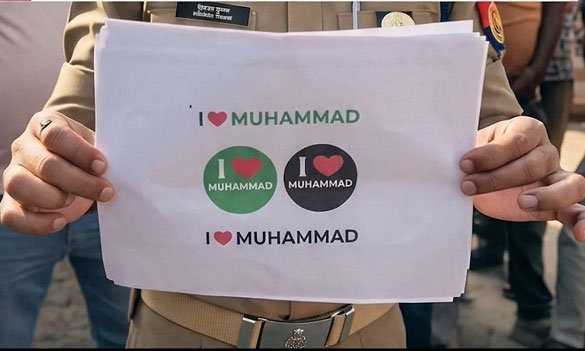
· 8 booked after ‘I Love Mohammad’ posters found during Sambhal ‘mosque’ demolition
· Israel used white phosphorus over populated areas in Lebanon, NYT investigation finds
· King Salman orders appointment or promotion of 212 judges
· Two men admit terror offences over plot to attack Galway mosque
· Did Donald Trump ask Netanyahu not strike Iran? US President clarifies his position
· Hundreds of kidnap victims freed from Nigerian jihadists
· Malaysia to pursue compensation over cancelled missile deal as Norwegian firm seeks talks
· Afghanistan’s Security Reality: Allegations Baseless
------
India
· ‘Dressing up massacre as military operation won’t absolve perpetrator’: India slams Pakistan at UN
· Cockroach Janta Party protest in Pune on June 11 to seek Dharmendra Pradhan's resignation: Abhijeet Dipke
· Congress’s ‘Aurangzeb’ jibe at Rajasthan CM over shifting of temples
· As row over beef in tiffin spreads, 5 schoolboys in Assam’s Goalpara face expulsion today
· Agnimitra exhorts Muslim youth to be part of state’s progress
· 'Hotel boot' for minority BJP leader after Maharashtra stay denial over identity
· Phone theft claim, train chase, then a fatal shove: Cops solve Bihar cleric’s murder
· Security forces and protesters clash in PoK; 11 killed, over 70 injured
------
Mideast
· Israel one of the most aggressive as world conflicts hit peak in 2025: report
· Iraqi officials work to identify victims after a bus crash kills 21
· Tehran’s international airport reopens: news agencies
· Three Polisario members killed in Western Sahara
· Netanyahu gambles close Trump ties with Iran strikes
· Lebanese president appeals to Israeli government to pursue talks, not war
· Palestinian PM urges increased international pressure to halt illegal Israeli measures and settler violence
------
Arab World
· Reports of attack on Prince Sultan Air Base are false, Saudi ministry says
· KSrelief provides 24,500 meals to Palestinians in Gaza
· Al-Jouf governor receives Pakistan’s ambassador to Saudi Arabia
· Al-Wajh airport in Tabuk reopens after major upgrade
· Jeddah municipality issues evacuation notice for 129 buildings
· Saudi statistics chief touts data, AI integration at Global Data Festival
· Saudi Arabia hosts 39th Arab Inter-Parliamentary Union conference by videoconference
------
Europe
· ‘Everyone lost’: Russian experts break down Armenia’s election shockwaves
· Ukraine is running out of heroes, so it’s digging up dead Nazis
· Thousands march in Berlin demanding Merz step down
· NATO launches Arctic drone task force
· Armenia's pro-West government wins election despite Russian pressure
· Zelensky thanks UK for 'ironclad' support after meeting King
· Russia's fuel crisis intensifies as Ukraine steps up strikes on occupied territories
-------
North America
· Trump threatens Netanyahu with withdrawal of support – Axios
· CAIR-CT Welcomes Connecticut Hate Crimes Reform While Raising Concerns About Civil Liberties and Lack of Muslim Community Input
· CAIR Welcomes Congressional Letter Opposing Anti‑Muslim Hate Caucus Signed By 119 Senators and Representatives
· CAIR-Chicago Condemns School of the Art Institute of Chicago’s Suspension of Professor Over Palestine-Related Course Material
· US adds popular Chinese firms to Pentagon's 'Chinese military company' list: Who's on it?
· Trump booed in New York as he becomes first US president to attend NBA Finals
· Jailed crypto founder Sam Bankman-Fried seeks Trump pardon
------
Africa
· Bandits Abduct 50 In Zamfara During Peace Talks
· NAF Airstrikes Eliminate Terrorists, Destroy Vehicle In Borno
· Nigerian Labour Leader Dies During Meeting In Geneva
· NSA Ribadu Reveals Targets Of Bandits, Terrorists
· FG May Retaliate Over Xenophobic Attacks On Nigerians
· ‘Where Is The Evidence?’ – Borno Govt Says No Ransom Paid To Free 360 Boko Haram Captives
· Mosque shoe, Qur’an theft shameful, Muslim students lament
------
Southeast Asia
· Pahang Sultan opens first Islamic religious primary school in Cameron Highlands
· Fadhli: PAS decision to end cooperation with Bersatu based on unity and political stability considerations
· ‘Just don’t blame Umno’: Khaled on PAS-Bersatu split
· AI development must be anchored in human values, not just efficiency, Anwar says in Tokyo lecture
· Despite strong Q1, Singapore PM says H2 economic outlook uncertain as Middle East war drags on
· Syam Ghaz named new J-Kom chief
------
South Asia
· Depositors pull funds from Islami Bank amid protests
· Bangladesh seeks Russia’s support to join BRICS, SCO
· Jamaat to unveil ‘shadow budget’ on Tuesday
· UNICEF expands campaign against polio in Afghanistan’s Herat province
· UNFPA highlights role of midwives in reducing maternal deaths in Afghanistan
· Finance Ministry to Cut Customs Tariff on Fruit Concentrate Imports from 60% to 20%
· Commercial Banks Committed to Financing Major Herat–Mazar Railway Project
Compiled by New Age Islam News Bureau
-----
8 booked after ‘I Love Mohammad’ posters found during Sambhal ‘mosque’ demolition
Jun 08, 2026
MEERUT Police in UP’s Sambhal district have registered a case against eight people, including the caretaker of a ‘mosque’, after allegedly recovering dozens of ‘I Love Mohammad’ posters and a flag resembling Pakistan’s national flag during a demolition drive in Kaserua village.
The action was taken by Nakhasa police on Sunday night following the demolition of Masjid Mustafa Qadri on Saturday, which authorities described as an illegally constructed mosque-like structure. Officials said the recovered material could potentially create communal tensions and led to the registration of a case under Section 353(2) of the Bharatiya Nyaya Sanhita (BNS), 2023.
According to the FIR lodged by sub-inspector Arun Kumar, he and a team of police personnel were deployed in the village on Saturday to maintain law and order during the demolition operation.
Police said after the demolition process, officers entered the structure to ensure that no individuals were residing inside the premises. During the inspection of the building’s top floor, officials allegedly found 49 posters bearing the slogan ‘I Love Mohammad’ hidden beneath a mattress placed on a wooden platform in the main hall. A green-coloured flag, which police said, appeared to resemble the Pakistani flag, was also recovered from the site and taken into custody.
Based on the recovery, police registered a case against eight residents of the village. Those named in the FIR include mosque caretaker Zakir, Zakir Hussain, Tasleem, Bhure Ali, Sharafuddin, Dil Sharif, Mohabbat Ali and Nanhe.
Legal experts said the case has been filed under Section 353(2) of the BNS, which criminalises the creation, publication or circulation of false information, rumours, statements or reports that may promote enmity, hatred or ill-will among religious, racial, linguistic, regional, caste or community groups.
Senior advocate Arvind Kumar explained that the provision also covers content disseminated through electronic means. The offence carries a punishment of up to three years’ imprisonment, a fine, or both, and is classified as a non-bailable offence.
Confirming registration of the case, additional SP (North) Kuldeep Singh said objectionable material had been recovered during the demolition operation.
“Objectionable material was found during the demolition of the ‘mosque’ in Kaserua village. A case has been registered at the local police station in this regard. The investigation is underway,” he said.
Police officials said further investigation is in progress and that all aspects of the recovery and the circumstances surrounding the material found at the site are being examined.
Source: hindustantimes.com
Please click the following URL to read the text of the original Story
https://www.hindustantimes.com/cities/lucknow-news/8-booked-after-i-love-mohammad-posters-found-during-sambhal-mosque-demolition-101780921997851.html
------
Israel used white phosphorus over populated areas in Lebanon, NYT investigation finds
June 09, 2026
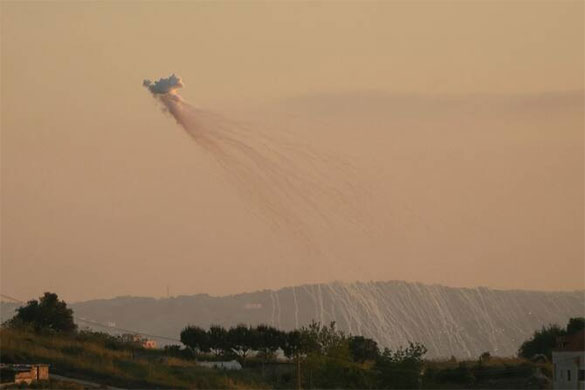
Smoke traces of Israeli shelling on the outskirts of the Deir Seryan village in Lebanon. (AFP)
----------
DUBAI: The Israeli military has deployed white phosphorus munitions over populated areas in Lebanon during its conflict with Hezbollah, according to an investigation by the New York Times, that cited visual evidence, munition experts, aid organizations, and verified footage.
Distinctive smoke trails consistent with white phosphorus were observed as recently as May 30 over the southern Lebanese city of Nabatieh, which has a population of roughly 40,000. The footage, verified by The New York Times, was filmed during Israeli operations around the historic Beaufort Castle.
Additional verified footage reviewed by the paper showed white phosphorus being used near the coastal city of Tyre and around the towns of Qlayaa, Khiam and Yohmor since fighting resumed in March. The latest round of hostilities began after Hezbollah launched rockets into northern Israel following joint US-Israeli strikes on Iran.
White phosphorus ignites upon contact with air and is widely used by militaries to create smoke screens and conceal troop movements. While the substance itself is not prohibited under international law, its use against civilians or in civilian populated areas may violate the norms of armed conflict.
Human rights organizations have raised concerns that civilians may have been affected by the Israeli military use of the substance. Israel denies using white phosphorus in violation of international law.
In response to questions from The New York Times, the Israeli military said its procedures prohibit the use of such shells in densely populated areas except under certain circumstances and that its policies comply with, and exceed, international legal requirements.
The investigation reported that Israel possesses US made 155mm M825A1 artillery rounds containing white phosphorus. The shells can be programmed to burst in midair, dispersing burning phosphorus over a wide area to create smoke screens, or detonate on impact to produce a single fire used as a battlefield marker.
Munition experts consulted by The New York Times said footage from Lebanon showed artillery rounds bursting overhead and releasing burning material consistent with previous uses of M825A1 white phosphorus shells.
The Israeli military told the newspaper that its primary smoke screen munitions do not contain white phosphorus but acknowledged that it possesses white phosphorus-based smoke rounds which it described as lawful under international law and intended for creating smoke screens rather than causing fires.
The investigation noted that Human Rights Watch documented extensive Israeli use of white phosphorus in Lebanon in a 2024 report and questioned whether safer alternatives were available.
According to The New York Times, independent researcher Ahmad Beydoun documented more than 200 instances of white phosphorus use in Lebanon in the year following the October 7, 2023 Hamas attacks on Israel.
Lebanon has filed four complaints with the United Nations and the UN Security Council since October 2023 regarding Israel’s use of white phosphorus. One submission cited government figures claiming that more than 600 fires in southern Lebanon were linked to the substance.
The World Health Organization warns that white phosphorus can cause severe burns, respiratory injuries and eye damage. Human Rights Watch described its effects as potentially devastating, while environmental researchers cited concerns over long term contamination of soil, water, and agricultural land.
Experts interviewed by The New York Times said determining whether white phosphorus was intentionally used against civilians is often difficult. Although the munition is legal under certain circumstances, critics argue that its wide area effects make civilian harm difficult to avoid when it is used near populated areas.
Source: arabnews.com
Please click the following URL to read the text of the original Story
https://www.arabnews.com/node/2646478/middle-east
------
King Salman orders appointment or promotion of 212 judges
June 08, 2026
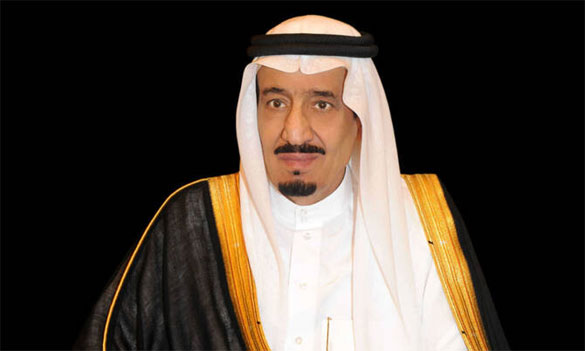
The Custodian of the Two Holy Mosques King Salman bin Abdulaziz Al Saud. (SPA)
------------
RIYADH: Saudi Arabia’s King Salman issued a royal order on Monday in which he appointed or promoted 212 judges at various levels within the Ministry of Justice.
Walid Al-Samaani, acting president of the Kingdom’s Supreme Judicial Council and the minister of justice, said the aim of the appointments was to improve service efficiency, enhance the beneficiary experience within the judicial sector, and elevate the quality of its outcomes.
He thanked the Saudi leadership for its ongoing support and predicted that that the royal order would strengthen judicial performance in the country. He also extended his best wishes to the chosen judges as they fulfill their duties to uphold justice.
Source: arabnews.com
Please click the following URL to read the text of the original Story
https://www.arabnews.com/node/2646443/saudi-arabia
------
Two men admit terror offences over plot to attack Galway mosque
Jun 08 2026
Stephen Bourke
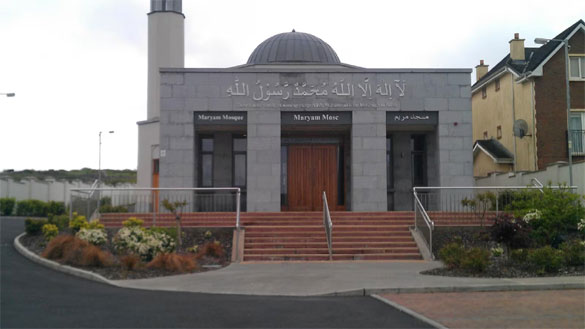
Maryam Mosque on Monivea Road in Galway. Photograph: Frank Lanigan.
-----------
Two men have pleaded guilty at the Special Criminal Court to terror offences over a plot to set fire to a mosque in Galway last year.
Darren Gorman and Garrett Pollock both pleaded guilty on Monday to attempting to engage in a terrorist activity or a terrorist-linked activity to damage by fire Maryam Mosque at Old Cottages, Monivea Road, Galway, intending to damage or being reckless as to whether such property would be damaged between November 4th and 5th, 2025.
The indictment described it as “an offence which was aggravated by hatred”.
The charge under the Criminal Justice (Terrorist Offences) Act 2005 is the sole count on the indictment preferred against 34-year-old Gorman, who has an address at O’Moore Place, Portlaoise, Co Laois.
Pollock (35), from Kilhorne Greene, Annalong, Co Down, is further charged with the possession of two hatchets, a knuckle duster and a hunting knife in a silver BMW at O’Moore Place on November 4th, 2025, contrary to Section 9 (5) of the Firearms and Offensive Weapons Act, 1990.
He is further charged with possession of an explosive substance – four threaded pipe end caps and six litres of hydrogen peroxide – under such circumstances as to give rise to a reasonable suspicion that he did not have it in his possession for a lawful object at O’Moore Place on November 4th that year.
Pollock is also charged with possessing an explosive substance under such circumstances as to give rise to a reasonable suspicion that he didn’t have it in his possession for a lawful object at An Tobar, Newfoundwell Road, Drogheda, Co Louth, on the same date.
The matter has been put back to June 29th, when the men are to appear by video-link.
Their two co-accused, Charles Flynn (35) of Castlerock Avenue, Castleconnel, Co Limerick, and Karolis Peckauskas (38) of Newfoundwell Road, Drogheda, Co Louth, are also to be produced on the same date.
Source: irishtimes.com
Please click the following URL to read the text of the original Story
https://www.irishtimes.com/crime-law/courts/2026/06/08/men-admit-terror-offences-over-plot-to-attack-galway-mosque/
------
Did Donald Trump ask Netanyahu not strike Iran? US President clarifies his position
Jun 9, 2026
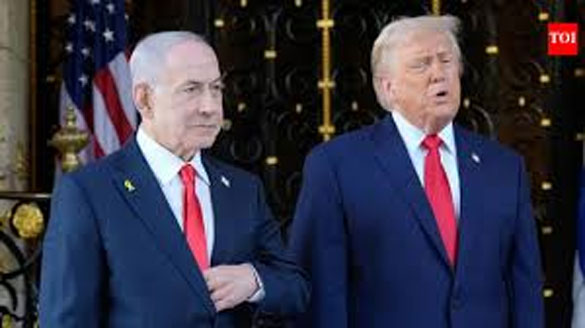
NEW DELHI: US President Donald Trump on Monday said he did not ask Israeli Prime Minister Benjamin Netanyahu to refrain from retaliating against Iran, but urged him to end hostilities as quickly as possible, while expressing confidence that a nuclear agreement with Tehran could be reached within days.
Speaking to reporters amid ongoing diplomatic efforts to secure a deal with Iran, Trump said both Israel and Iran had agreed to halt their recent exchange of attacks and suggested a breakthrough in negotiations was imminent.
Asked whether he had requested Netanyahu not to respond to Iranian strikes, Trump replied: "No. I said do what's right but I want you to stop as quickly as you can. Because they have to stop. It has to do with Lebanon. And it has to stop. We want to get it finished."
The remarks came as Trump projected optimism about negotiations with Tehran, saying an agreement that would prevent Iran from obtaining nuclear weapons could be signed within days.
"Two or three days.. we have a very good chance of doing it," Trump said when asked about the prospects of a deal.
The US president said discussions with Iran had advanced to the point where few obstacles remained.
"We should be able to do it in one hour. I don't think there are any sticking points. We're very close to having a very good, strong, powerful deal. If we go and bomb, which we can do very easily if we want, and we spend another two or three weeks bombing, they'll have nothing left whatsoever. But you won't have this Strait open for months. If we do the bombing, a lot of people are going to be killed. Who wants to do that? I don't. And we'll have a signed document that's actually stronger than doing the bombing. What has proven to be a very powerful thing is the blockade. The blockades turned out to be much stronger than bombing... Their economy is really suffering, and they're going to make a deal..."
Trump also suggested he had played a direct role in securing a halt to the recent Iran-Israel confrontation.
"He was hit (by Iran), and he hit back. I can't blame him for that. Now they've called it quits. So they're gonna leave each other alone for another week or something... They both agreed, through me, to stop. We're in the final throes of a very good deal that will not allow in any way or form nuclear weapons. And the Strait will open up right away. It'll open up immediately upon signing, which could be in two or three days."
The president's comments came days after Iran and Israel stepped back from a volatile round of retaliatory military strikes that had raised fears of a wider regional conflict and threatened maritime traffic through the Strait of Hormuz, one of the world's most important oil shipping routes.
Trump has repeatedly argued that diplomatic pressure and economic measures are bringing Tehran closer to accepting US demands on its nuclear programme.
During a campaign tele-rally in support of Senator Lindsey Graham, Trump predicted the United States would soon secure what he described as a decisive outcome in its standoff with Iran.
"We're negotiating now, and they want to make a very good deal. They're willing to give us everything, they're willing to give us no nuclear weapon," Trump said.
"I think we are winning that battle, but you're really going to win it over the next two weeks when we declare total victory. It'll be a total victory. It'll happen very soon, and oil prices will come tumbling down," he added.
The comments underscore the Trump administration's belief that a diplomatic settlement with Iran is within reach, even as Washington continues to back Israel while seeking to prevent a broader conflict in the Middle East.
Source: indiatimes.com
Please click the following URL to read the text of the original Story
https://timesofindia.indiatimes.com/world/us/did-donald-trump-ask-netanyahu-not-strike-iran-us-president-clarifies-his-position/articleshowprint/131604488.cms
-------
Hundreds of kidnap victims freed from Nigerian jihadists
June 9, 2026
Several hundred people kidnapped by Boko Haram earlier this year from a village in the northeastern state of Borno were freed over the weekend, a senator and local youth leader said Sunday.
Kidnappings, often for ransom, have become a key tactic of Boko Haram jihadists in their 17-year-old insurgency against the Nigerian state, mostly concentrated in the northeast.
Samaila Kaigama, president of the Borno South Youth Alliance (BOSYA), said his group "has secured the release of all the 416 women and children abducted from Ngoshe".
They were released Saturday, Kaigama told journalists.
Mohammed Ali Ndume, a senator from Borno, confirmed the release to AFP.
It was not immediately clear how the victims' release was secured.
But separately, the military said it executed an "intelligence-led rescue operation" freeing 360 people.
The victims had been held by Boko Haram militants "under harsh conditions after being abducted from several communities, particularly within the Ngoshe axis", it said.
"Sadly, two infants died due to exhaustion from prolonged captivity and harsh terrain," Daniel Bwala, a spokesman for President Bola Tinubu, said on social media.
The military statement said troops had gathered intelligence and used "psychological operations" to sow "mistrust within the insurgent ranks" before "the commencement of the assault phase".
The militants had demanded millions of naira in ransom for the Ngoshe captives.
Authorities in Nigeria deny paying ransoms, though analysts say it is common practice, by both the government and victims' families.
Nigeria's various armed groups, including jihadists, "bandit" gangs and separatists, have created a kidnapping crisis across the country that raised some $1.66 million in ransom payments between July 2024 and June 2025, according to a report by SBM Intelligence, a Lagos-based consultancy.
Ngoshe lies less than 10 kilometres from the Cameroonian border in the Gwoza hills, a Boko Haram stronghold, and has come under repeated attack.
Since erupting in 2009 with Boko Haram’s uprising, Nigeria's jihadist insurgency, which has spawned multiple armed groups, has killed tens of thousands and displaced millions.
Source: africanews.com
Please click the following URL to read the text of the original Story
https://www.africanews.com/2026/06/09/hundreds-of-kidnap-victims-freed-from-nigerian-jihadists/
-----
Malaysia to pursue compensation over cancelled missile deal as Norwegian firm seeks talks
By Dhesegaan Bala Krishnan
09 Jun 2026
KUALA LUMPUR, June 9 — Norwegian defence firm Kongsberg Defence & Aerospace is seeking to negotiate with Malaysia after the latter pressed Norway to expedite compensation for a scrapped missile procurement deal.
Defence Minister Datuk Seri Mohamed Khaled Nordin confirmed the matter but stressed that Malaysia will continue pursuing the compensation concurrently despite any possible negotiations with the company.
“We have not met the company officials. So, we don’t know what they want but the company has formally requested to negotiate with us,” Mohamed Khaled told reporters at Wisma Perkasa ATM, here, today.
Kongsberg Defence & Aerospace signed a contract with the Royal Malaysian Navy (RMN) in April 2018 to supply naval strike missiles (NSM) for Malaysia’s upcoming littoral combat ships (LCS).
However, the company abruptly cancelled the RM571.9 million deal last month after the Norwegian government revoked Malaysia’s export licence for the NSM system and its launchers, citing national security concerns.
Malaysia has reportedly paid 95 per cent of the contract value, amounting to RM583 million, and is seeking compensation worth more than RM1 billion.
Source: malaymail.com
Please click the following URL to read the text of the original Story
https://www.malaymail.com/news/malaysia/2026/06/09/malaysia-to-pursue-compensation-over-cancelled-missile-deal-as-norwegian-firm-seeks-talks/223097
-----
Afghanistan’s Security Reality: Allegations Baseless
June 9, 2026
Recent claims by some neighboring countries regarding the presence of “terrorist camps” inside Afghanistan have once again revived old accusations that lack evidence and credibility. The Islamic Emirate of Afghanistan has firmly rejected these allegations, emphasizing that Afghan soil is not, and will not be, a base for groups seeking to undermine regional or global security.
Islamic Emirate spokesperson Zabihullah Mujahid described the accusations as “old and repetitive,” noting that similar claims were frequently made during the presence of U.S. forces in Afghanistan but were never substantiated. He stressed that such statements are nothing more than propaganda, designed to create suspicion and mistrust among neighboring countries. “Other nations should focus on their own internal challenges rather than blaming Afghanistan,” Mujahid said, underscoring the Emirate’s commitment to peace and stability.
Since the return of the Islamic Emirate to power, Afghanistan has witnessed a level of nationwide security unprecedented in recent decades. For the first time, Afghan soil is not being used against any country. The Ministry of Interior has highlighted that Afghan security forces are actively safeguarding borders, preventing illegal crossings, smuggling, and other threats.
Abdul Mateen Qani, spokesperson for the ministry, reaffirmed: “No group is permitted to operate in Afghanistan, and such permission will not be granted in the future either.” This statement reflects the Emirate’s clear policy of ensuring that Afghanistan remains a secure and stable nation, free from foreign interference and rogue elements.
While Pakistan’s Interior Ministry claimed that 25 terrorist groups are active in Afghanistan, the Islamic Emirate has categorically denied such assertions. Instead, Kabul has emphasized the importance of constructive border cooperation with neighboring states. The Emirate believes that mutual respect and collaboration are the only effective means to address shared challenges.
At the Shanghai Cooperation Organization (SCO) meeting in Bishkek, Russia’s interior minister highlighted the readiness of member states to cooperate on cross-border threats. The Islamic Emirate welcomes such initiatives, provided they are based on truth and mutual trust rather than unfounded allegations.
Afghanistan today is no longer a place for groups opposed to regional or global security. The establishment of nationwide stability under the Islamic Emirate is a reality that cannot be ignored. Allegations of insecurity or terrorist presence are baseless and detached from the facts on the ground.
The Islamic Emirate remains committed to ensuring that Afghan soil is never used against any country. By rejecting false claims and focusing on cooperation, Afghanistan seeks to build trust with its neighbors and contribute to lasting peace and stability across the region.
Source: thekabultimes.com
Please click the following URL to read the text of the original Story
https://www.thekabultimes.com/afghanistans-security-reality-allegations-baseless/
-------
India
‘Dressing up massacre as military operation won’t absolve perpetrator’: India slams Pakistan at UN
09 Jun 2026
India launched a sharp attack on Pakistan at the United Nations Security Council, accusing Islamabad of carrying out military airstrikes in Afghanistan that have caused significant civilian casualties and denouncing “officially sponsored misinformation” through Pakistan’s ‘Fitna al-Hindustan’ directive.
Speaking during the UNSC meeting on the ‘Situation in Afghanistan’ on Monday, India’s Permanent Representative to the UN, Ambassador Harish Parvathaneni, condemned Pakistan’s actions, accusing it of undermining Afghanistan’s sovereignty and regional stability.
“Pakistan's campaign of military airstrikes against Afghanistan is causing huge civilian casualties and suffering to the Afghan people. Such unconscionable acts of violence are a blatant assault on Afghanistan's sovereignty and a threat to the region's peace and stability,” Parvathaneni said.
India strongly condemned the strikes, calling them violations of international law, the UN Charter, and the principle of state sovereignty.
Citing data from the United Nations Assistance Mission in Afghanistan (UNAMA), Parvathaneni said 372 civilians had been killed and 397 injured in the first three months of the year, with most casualties reported during the holy month of Ramadan.
“No faith, no law and no morality can justify such actions,” he said.
In a pointed remark directed at Pakistan, India asserted,"dressing up a massacre as a military operation does not absolve the perpetrator. Killing, maiming and orphaning civilians is not counter terrorism.”
“Espousing high principles of international law and Islamic solidarity while mercilessly carrying out air strikes during the holy month of Ramadan is the perfect example of hypocrisy,” Parvathaneni said.
The Indian envoy also accused Pakistan of deflecting blame for domestic failures.
“blaming neighbours for its own failures is an old Pakistani habit. This attempt to hoodwink the world will fail,” he said.
India also rejected Pakistan’s decision to label groups operating within its borders as ‘Fitna al Hindustan’, calling it an attempt to institutionalise anti-India rhetoric.
“Coming up with official notifications, directing Pakistan's Government agencies to start referring to groups inside its own borders as 'Fitna al Hindustan' is nothing but officially sponsored misinformation and disinformation dressed in religious terminology,” Parvathaneni said.
“This is an outcome of an organised factory of hate coming from the deep state of Pakistan, which aims to keep its citizens in a state of permanent hostility with India in order to perpetuate their stay in power and control of national resources and distract them from core political and economic problems,” he added.
Parvathaneni further referred to Pakistan’s 27th Constitutional Amendment, saying, “The de facto coup by the military through the 27th Constitutional amendment is only its most recent manifestation.”
India also criticised “trade and transit terrorism” by Pakistan against Afghanistan, accusing Islamabad of blocking access for Afghan traders in violation of global commitments.
Parvathaneni said India, a major destination for Afghan exports, offers tariff-free market access to Afghan goods and has operationalised a dedicated air freight corridor between the two countries.
He added that India was supporting Afghan traders through gratis long-term business visas for those “suffering under unprecedented 'trade and transit terrorism' inflicted upon them by Pakistan's denial of passage for trade.”
“The cynical closure of access for this land-locked country is in total violation of UN declarations on Land Locked Developing countries (LLDCs) and a clear weaponisation of their trade and transit vulnerabilities. This blatant Pakistani violation of WTO norms and of the UN Charter and international law should be condemned by the global community,” he said.
Responding during the session, Pakistan’s Ambassador to the UN, Asim Iftikhar Ahmad, questioned the UN Secretary-General’s report on Afghanistan, saying it appeared to largely “externalise” responsibility for the country’s challenges.
“The fatalities of terrorists and their supporters as a result of CT (counter-terror) operations are mentioned within the ambit of 'civilian casualties', posing serious questions on the credibility of UNAMA's reporting from Afghanistan and the nature of their engagement with the Taliban,” Ahmad said.
Countering Pakistan’s remarks, Parvathaneni said: “We would like to stress that support for multilateralism and the United Nations is not an a la carte menu.”
India also reiterated its firm stance against terrorism, calling for coordinated global efforts to dismantle terror groups operating across borders.
“Only coordinated efforts of the international community can ensure that ISIL and Al Qaida and their affiliates, including the Lashkar-e-Tayyiba and the Jaish-e-Mohammed and proxies of LeT such as The Resistance Front, along with those who facilitate their operations, no longer indulge in cross-border terrorism,” he said, urging the international community to work together towards this “noble goal.”
Source: newindianexpress.com
Please click the following URL to read the text of the original Story
https://www.newindianexpress.com/india/2026/Jun/09/dressing-up-massacre-as-military-operation-wont-absolve-perpetrator-india-slams-pakistan-at-un
------
Cockroach Janta Party protest in Pune on June 11 to seek Dharmendra Pradhan's resignation: Abhijeet Dipke
08.06.26
Cockroach Janta Party (CJP) founder Abhijeet Dipke on Monday said his party will stage protest in Pune on June 11 to seek Union Education Minister Dharmendra Pradhan's resignation over alleged irregularities in examinations and recruitment tests.
"Let's meet in Pune! Hail Maharashtra!" Dipke posted on X.
"Cockroaches will demand Education Minister Dharmendra Pradhan’s resignation in Maharashtra’s educational capital Pune. How many Pune cockroaches will join?" a post on CJP's X handle said.
Asked about recent Gen Z protests in Nepal and Bangladesh, Dipke stressed on Sunday that the CJP movement has been peaceful and cannot be compared with demonstrations that occurred in the neighbouring countries. The CJP is exclusively for Gen Z, and it won't be associated with any political party, he asserted.
The Cockroach Janata Party staged a protest at Jantar Mantar in New Delhi on June 6, demanding the resignation of Pradhan over alleged paper leak cases in the country.
Describing June 6 demonstration as a "historic" show of strength, he said it reflected growing dissatisfaction among students and young people over issues concerning the education system.
Dipke said the agitation would intensify if action was not taken against the Union education minister within a week.
The protest at Jantar Mantar was organised by the CJP, which has been campaigning on issues related to education and examinations. The youth-led movement, which has been demanding accountability over alleged irregularities in examinations and recruitment tests, including NEET, CBSE, CUET and SSC exams, plans to intensify its campaign across the country.
The demonstration drew participants from several states, according to the organisers, and featured speeches by students, educators and activists who criticised the Centre's handling of education-related issues.
Participants carried placards seeking the minister’s resignation and wore cockroach masks distributed at the venue. Protesters also raised slogans against what they described as “Hindu-Muslim” politics and shouted “Bharat Mata ki Jai”.
Source: telegraphindia.com
Please click the following URL to read the text of the original Story
https://www.telegraphindia.com/india/cockroach-janta-party-protest-in-pune-on-june-11-to-seek-dharmendra-pradhans-resignation-abhijeet-dipke/cid/2164595
-----
Congress’s ‘Aurangzeb’ jibe at Rajasthan CM over shifting of temples
Hamza Khan
Jun 9, 2026
The Congress has likened the Rajasthan Chief Minister Bhajan Lal Sharma government to Mughal ruler Aurangzeb after two temples were shifted as part of an anti-encroachment drive by the Jaipur Development Authority (JDA) on Monday.
Sunil Sharma, president of Jaipur City Congress Committee, said, “We criticise Aurangzeb, saying that he demolished temples. But aren’t these governments doing the same thing? Then you should accept that if he was a Muslim Aurangzeb, then we are Hindu Aurangzeb.”
The Congress leader made the comments following the JDA’s drive in which a Shiv temple and a Bhomiya Ji temple, as well as the Noorani mosque, a mazaar and a satsang bhawan, were removed on Monday.
Sunil Sharma said, “There is a unanimous opinion in the entire state that if elections are held today, then the BJP will lose. Fearing this, BJP has been running away from holding panchayat and local body polls. The High Court has been directing them to hold elections, but the BJP is fearing they will lose. So, a worried CM figured out a way, why not hide behind Noorani masjid.”
“The result was that in the name of road widening, they went after a mosque bought in 1981, so that visuals of it being demolished are watched across the country, and it will be felt that Rajasthan is also following in the footsteps of Yogi (Adityanath, Uttar Pradesh CM),” Sharma alleged.
He claimed that the Muslim representatives “hampered” the government’s plans by readily agreeing to take land in Manoharpura instead. Sharma alleged that this didn’t suit the government’s plans, hence they backtracked and changed the offered land to Kho Nagoriyan, about 8-9 km away. He said that the Muslim representatives again showed “maturity” and agreed to take this land instead, “not wanting to give an issue to the BJP”.
“All in all, the government wanted the visuals of Noorani mosque being demolished to be seen across the country,” Sunil Sharma claimed.
Issue for successive governments
The demolition of temples has been an issue for successive governments in Rajasthan. In April 2022, the Ashok Gehlot-led Congress government faced a massive political backlash after a 300-year-old Shiva temple in Alwar’s Rajgarh was demolished as part of an anti-encroachment drive. Amid the political blame game, the Congress claimed that the decision was passed by the Rajgarh municipal council, which was entirely controlled by the BJP and that it was the earlier BJP government (2013-18) that had promised a “Gaurav path” on the said road.
Between 2012 and 2015, primarily under the tenure of the Vasundhara Raje-led BJP government starting December 2013, 93 religious structures, including temples and some mazaars, were removed or shifted in Jaipur alone. The reasons were varied, from the structures posing “obstruction” to Metro work and transportation, or illegal construction or encroachment on government land.
The demolition of the temples hastened Raje down a collision course with the RSS. While most of the temples were demolished under the district administration’s drive against illegal structures, in line with Supreme Court orders, it was the demolition and relocation of six temples in the Walled City, to make way for Jaipur Metro, that apparently was the tipping point.
In July 2015, the RSS called the Raje government’s attitude “worse than that of Mughal Emperor Aurangzeb” and summoned nine BJP MLAs to its headquarters in Bharati Bhawan in Jaipur, asking them to explain their “inaction” over the demolition. Backing a ‘Mandir Bachao Sangharsh Samiti’, the RSS and its affiliates had also called a two-hour “chakka jam”, among other steps.
Faced with protests, officials in her government claimed that “around 32 temples were demolished during the previous Ashok Gehlot government (2008-13)” and that “he did not demolish any Muslim shrine ever”.
Source: indianexpress.com
Please click the following URL to read the text of the original Story
https://indianexpress.com/article/india/jaipur-temple-demolition-congress-aurangzeb-rajasthan-cm-10730940/
-------
As row over beef in tiffin spreads, 5 schoolboys in Assam’s Goalpara face expulsion today
Sukrita Baruah
Jun 9, 2026
Five Muslim students of a government higher secondary student in Assam’s Goalpara may be expelled Tuesday as a row over beef brought in tiffin by one of them snowballs.
The minor boy to whom the tiffin belonged was earlier detained and his mother arrested. The school has, meanwhile, directed that only vegetarian food be brought in tiffin boxes, located in a mixed-population area in Muslim-majority Goalpara district.
Ananda Rabha, the officer-in-charge of Krishnai Police Station, said the mother and son were facing charges of acts intended to outrage religious beliefs, and the complaint had been filed by parents of two of their Hindu classmates.
The woman, who is associated with a local self-help group, lost her husband, and is a single parent. Rabha said: “Since the boy is a minor, he was produced before a juvenile court. Four other boys are being questioned as part of the case.”
Officials said while the alleged incident took place Friday last week, as word of it spread, the matter escalated, with different organisations descending on the school the next day. The president of the School Management Development Committee (SDMC), Subrata Das, told The Indian Express that a meeting will be held Tuesday to decide on a proposal to expel the five Muslim students.
Das added: “On June 5, the five students of a Class 9 section tried to feed beef they had brought in tiffin to two Hindu classmates. The latter told their teachers, and the teachers and principal tried to resolve the matter within the school since it was a sensitive matter. But after the boys went home and told their parents and other people in the village, the matter became inflamed and local organisations began calling up the authorities. When it escalated, I went and met the two Hindu boys. A lot of people had gathered by then and the parents decided that they wanted to take it to the law. I called the police station OC (officer-in-charge) that night myself.”
Manidul Islam, a local All Assam Students’ Union leader who has spoken to the accused boys and their families, said the matter had been vitiated by different groups and organisations getting involved. “The boys said they were sharing the tiffin, when two classmates walked over and asked what they were eating. The issue grew from there.”
Amidst the chaos, both District Commissioner Prodip Timung and SSP Nabaneet Mahanta visited the school and assured action.
“Such an incident should not have happened, it should not happen. If required, tiffins should be inspected. I have already directed the inspector of schools that students should at most be allowed to bring eggs to school. Fish meat should not be allowed,” Timung said at the school.
The District Commissioner told The Indian Express that a magisterial inquiry has been initiated, but did not elaborate on the scope of the inquiry.
On Sunday, the school authorities, members of the SDMC and various local community organisations held a meeting on the school premises to discuss the matter.
While the principal could not be reached for comment, SDMC chief Das said the consensus at the meeting was that the five Muslim boys be expelled. “We have decided to expel them. We will have an SMDC meeting on Tuesday and take a final decision,” he said.
Islam, who opposed the proposal at the meeting, said: “Whatever the matter is, I said the students should not be deprived of education because of this. We need to focus on bringing back communal harmony to this area where all of us live as neighbours.”
Source: indianexpress.com
Please click the following URL to read the text of the original Story
https://indianexpress.com/article/india/as-row-over-beef-in-tiffin-spreads-5-schoolboys-in-assams-goalpara-face-expulsion-today-10730398/
------
Agnimitra exhorts Muslim youth to be part of state’s progress
Jun 9, 2026
Kolkata: In a shift in political messaging by the one-month-old BJP govt in Bengal, municipal affairs and urban development minister Agnimitra Paul has called for the participation of Muslim boys and girls in the state's development journey.
Bengal's progress requires the involvement of all communities, Paul said on Sunday during a tour to north Bengal to announce civic and infrastructure projects. "We want the boys and girls of the minority community to be part of the development journey we are undertaking. Let us take Bengal ahead together," she said.
The aspirations of women and youth are largely similar across religious identities and people tend to turn their backs on parties that exploit them as a vote bank but do not work for their progress, Paul said.
The remarks assume significance at a time when the new govt in Bengal has introduced a series of measures relating to religious practices and public spaces, including restrictions on cattle sacrifice, shifting Eid prayers from Red Road to Brigade Parade Ground and steps aimed at ensuring religious congregations do not spill onto roads and disrupt traffic.
Paul also raised questions over madrasa education and govt spending on the sector, saying that the focus should be on the outcome for students. She said it was necessary to examine whether madrasas were providing modern education that would help students compete in contemporary society.
"Around Rs 5,713 crore is allocated to madrasa education, but how many boys and girls are getting the benefits? How many girls and boys studying there are going on to become IAS, IPS, IRS, IFS officers, engineers, doctors or scientists? We have to take a relook at the education being imparted," she asked.
Paul also accused previous govts of treating Muslims as a vote bank and suggested that sections of the community were beginning to reassess their political choices.
Drawing a social comparison, she added that concerns of citizens remained largely identical irrespective of faith. "At the end of the day, the aspirations and concerns of a Hindu woman, Muslim woman, Sikh woman and Christian woman are the same. The same is true for the youth. A roof over their head, food on the plate, clean water, healthcare, education and jobs. The Mamata Banerjee govt failed to deliver that," Paul said.
Members of the Muslim community responded cautiously but positively.
"It is encouraging to hear a senior minister speak about inclusion rather than division. If the govt is saying that Muslim youth should be part of Bengal's development, that is a welcome message.," said Faisal Rahman, a community member in Kolkata. "But people will judge the govt not by statements alone but by policies and implementation," he added.
Source: indiatimes.com
Please click the following URL to read the text of the original Story
https://timesofindia.indiatimes.com/city/kolkata/agnimitra-exhorts-muslim-youth-to-be-part-of-states-progress/articleshowprint/131596465.cms
------
'Hotel boot' for minority BJP leader after Maharashtra stay denial over identity
Muzaffar Raina
09.06.26
BJP’s Jammu and Kashmir media co-in-charge Sajjad Yousuf Shah was allegedly denied hotel accommodation in Maharashtra over his Muslim identity.
Shah, one of the most vocal pro-India voices, took to social media on Sunday to claim he had been asked to leave the hotel after check-in due to concerns over his Muslim
identity.
“Today, I experienced something that left me deeply saddened. After checking into a hotel in Aurangabad, Maharashtra, I was later (after an hour) asked to leave because of concerns linked to my Kashmiri identity,” he wrote on X.
Shah drew strong ridicule in Kashmir after the incident. “Getting a taste of their own medicine. The politics of hatred that the @BJP4India propagates across the country has now come back to haunt one of its own. A man who was nurtured and raised within the @RSSorg ecosystem in Kashmir faces the heat of BJP’s anti-Muslim program,” NC spokesperson Imran Nabi Dar wrote on X.
Source: telegraphindia.com
Please click the following URL to read the text of the original Story
https://www.telegraphindia.com/india/hotel-boot-for-minority-bjp-leader-after-maharashtra-stay-denial-sparks-row-prnt/cid/2164622#goog_rewarded
------
Phone theft claim, train chase, then a fatal shove: Cops solve Bihar cleric’s murder
Bhupendra Pandey
Jun 9, 2026
A deadly shove from a moving train in Uttar Pradesh’s Bareilly district that claimed the life of Bihar cleric, Maulana Tauseef Raza, has now been cracked wide open, with the Government Railway Police (GRP) arresting a suspect after an extensive trail involving 300 passengers across four coaches.
The incident, which took place on April 26, was triggered by a brawl over alleged theft of a mobile phone, officials claimed.
The accused has been identified as Pankaj Rajput, a resident of Moradabad.
While the police had initially termed the cleric’s death an accident, they launched a probe after his wife handed them a clip of her conversation with Raza that night, in which he is heard asking her to seek police help.
Raza, a cleric in a mosque at his home in Kishanganj district, had come to attend a religious event in Bareilly and was returning home in a Bihar-bound train. Police were informed that his body was lying near the tracks in the Cantonment area, with a mobile phone helping identify him.
The accused was identified after scanning over 300 passengers aboard the train the cleric was travelling in and questioning many of them, officials said.
Moradabad GRP Superintendent of Police (SP) Ashutosh Shukla told The Indian Express, “We got major help from Home Guards Recruitment Exam candidates travelling in the same train. These aspirants recorded on their mobile phones a heated exchange between Raza and Pankaj. But the police team investigating the case had a tough time tracing these candidates.”
How police traced passengers
Raza was travelling in a sleeper coach, S-8, even though he had a general ticket, it is learnt.
The police team collected the list of nearly 300 passengers travelling in the S-7, 8,9 and 10 coaches. While many of these passengers were contacted on phone, a woman admitted to having witnessed the cleric being heckled by a likely drunk passenger, the SP added.
He said, “The woman said the accused picked a fight with the cleric, accusing him of stealing his mobile phone even as he had the device with him. The cleric tried to convince him that he had no other mobile phone except his own, but the man kept abusing and shouting at him. She said Raza went to other coaches to avoid the confrontation, but the accused kept chasing him. Raza came to the door of a coach when the accused manhandled him and pushed him in the wee hours of April 26.”
After getting the woman’s testimony, police were told by some passengers that there was a group of youths who had recorded the incident.
A video procured from these youths, found to be Homeguards exam aspirants, showed the face and physical appearance of the accused.
Police also scanned footage from CCTV cameras installed at railway platforms in Moradabad, Bareilly and Shahjahanpur. Then they zeroed in on Pankaj by scanning the mobile phones active in the area during that period, the SP informed.
Police said during his questioning, Pankaj admitted to having pushed the cleric off the train after a physical assault, and claimed he was drunk.
Pankaj had boarded the train in Moradabad for Bareilly, but did not deboard at his destination since he was drunk and instead got down at Shahjahanpur, police said.
Earlier employed at a liquor shop, he lost the job due to his drinking habit and was currently working as an electrician, the SP said.
Source: indianexpress.com
Please click the following URL to read the text of the original Story
https://indianexpress.com/article/cities/lucknow/up-bihar-cleric-pushed-moving-train-accused-arrested-grp-10730218/
------
Security forces and protesters clash in PoK; 11 killed, over 70 injured
08.06.26
Clashes in PoK ahead of a protest called for Tuesday killed 11 people and injured more than 70 as police and paramilitary forces sought to scatter a group of protesters from a banned alliance of civil society groups.
Police said the protesters of the Joint Awami Action Committee (JAAC), which seeks to uphold economic and political rights, had gathered outside a hospital morgue where the body of another group member was taken after his death in firing by police.
"Four police officers and a passerby died after miscreants shot at them," Sardar Waheed Khan, commissioner of the Poonch sector in the region, told Reuters, adding, "As the result of the law enforcers' response, six protesters were killed."
Police chief Liaqat Malik said 23 security officials and 50 protesters were among the injured in Sunday's incident, with 30 offenders arrested in the Himalayan region that is a flashpoint with neighbouring India.
"The state has begun a massacre of our people in Rawalakot," Shaukat Nawaz Mir, a JAAC leader, said in a video message on X, referring to the district where the incident happened. He vowed that the group would stay united to ensure the June 9 lockdown.
In response, Khan said, "The JAAC leadership is misleading the masses by terming it a massacre. The state's action was meant to restore law and order."
When security forces tried to disperse the protesters, the group's activists used automatic rifles, petrol bombs and other weapons to target them, he added.
Pakistan's human rights body on Monday said that it is "deeply alarmed" by the ongoing violence.
The Human Rights Commission of Pakistan (HRCP) also expressed serious concerns about the so-called regional government's decision to proscribe the Joint Awami Action Committee (JAAC) under anti-terrorism legislation.
"While dialogue is essential, it cannot be meaningful amid the continued political disenfranchisement of the region's people. The right to peaceful protest must be upheld, and grievances addressed transparently," it said.
The commission urged both the federal and the so-called regional government “to avoid further escalation, respect people's fundamental rights and commit to genuine, inclusive negotiations.” The HRCP has also announced sending a fact-finding mission as soon as possible to assess the situation.
India maintains that Pakistan has been in illegal possession of Indian territory in the Union Territories of Jammu and Kashmir and Ladakh.
According to Commissioner Sardar Waheed Khan, at least seven civilians and four policemen were killed during Sunday’s clash between police and JAAC protesters in PoK’s Rawalakot.
The JAAC called the strike to protest against the reservation of 12 seats for refugees in July 27 elections to the region's legislative body, out of 45 up for grabs.
The alliance is demanding abolition of the reserved seats in the Azad Jammu and Kashmir Legislative Assembly, which are being contested by candidates who do not live in Kashmir, but elsewhere in Pakistan.
On Friday, the regional government designated the JAAC a proscribed group under an anti-terror law, and advised domestic and foreign tourists to leave the region before June 9.
Mass demonstrations in the last two years led by the JAAC to protest the rising costs of flour and electricity turned deadly after clashes between its supporters and the security forces.
Source: telegraphindia.com
Please click the following URL to read the text of the original Story
https://www.telegraphindia.com/india/clashes-in-pok-between-protesters-and-police-kill-many-dozens-hurt/cid/2164553
------
Mideast
Israel one of the most aggressive as world conflicts hit peak in 2025: report
June 09, 2026
OSLO: Israel was one of the most aggressive countries in 2025 with its involvement in at least five conflicts in 2025, a Norwegian study said on Tuesday, as the world saw the highest number of state warfare since the Second World War.
Israel was “clearly one of the most aggressive countries in the world at the moment,” pointing to its involvement in different types of conflicts in Gaza, Syria, Lebanon, against Iran, and against Houthi militias, researcher Siri Aas Rustad told a group of media outlets, including AFP.
The annual “Conflict Trends” report from the Peace Research Institute Oslo (PRIO) said 65 conflicts involving at least one state were recorded worldwide last year, a new high since 1946.
She also pointed to the United States, saying President Donald Trump’s return to power had brought “not just attacking and increasing violence, but also the trade barriers they’re putting up.”
“We are putting a lid on collaboration. The (UN) Security Council doesn’t work at the moment. We get a much more polarized world,” she said.
Conflicts between states also hit a new 80-year peak, doubling from the year before to eight — including border clashes between India and Pakistan, Afghanistan and Pakistan, and Cambodia and Thailand, as well as Russia’s invasion of Ukraine and Israeli military operations against Syria.
“Unfortunately there is not a lot of positive things,” researcher Siri Aas Rustad told a group of media outlets, including AFP.
“Usually I’m able to sort of squeeze something positive out of it, but this year it’s shocking, the numbers.”
Last year was the third deadliest since the end of the Cold War, with around 245,000 deaths directly related to fighting or political violence — nearly 76,500 of them attributed to attacks directly targeting civilians, compared with 14,200 in 2024.
The sharp increase in civilian deaths is due to the conflict between the army and paramilitaries in Sudan, where the siege and massacres carried out in El-Fasher city in the Darfur region are estimated to have left some 60,000 people dead.
Since the end of the Cold War, only 1994 and 2021 have seen more bloodshed, due to the Rwanda genocide and the war in Ethiopia’s Tigray region respectively.
Africa worst affected
“What has happened in the past five or six years is that we have several big conflicts going on at the same time and they seem to take over from each other. The world doesn’t get any break,” Rustad said.
“And that’s different from previously — this continuous high intensity level of conflict globally.”
The PRIO study is based on figures compiled by the Uppsala Conflict Data Program (UCDP), attached to Uppsala University.
It distinguishes between three main types of organized violence: conflicts involving at least one state, non-state conflicts, and one-sided violence against civilians.
Africa remained the region most affected by the first type of conflict with 29, followed by Asia, the Middle East, the Americas, and Europe.
Source: arabnews.com
Please click the following URL to read the text of the original Story
https://www.arabnews.com/node/2646469/middle-east
------
Iraqi officials work to identify victims after a bus crash kills 21
June 09, 2026
IRBIL, Iraq: Iraqi officials are working to identify the victims of a bus crash that killed 21 people, a provincial official said Monday.
A passenger bus crashed and burst into flames Sunday in southern Iraq, in the latest deadly accident on the country’s poorly maintained roads.
Fourteen of the bodies were burned beyond recognition and have not been identified, said Ahmad Saleem, spokesperson for the Thi Qar provincial council. Two Iranian nationals are believed to be among the dead, though their bodies have not yet been identified, he said.
The bus was traveling from the city of Najaf — which is holy to Shiite Muslims and a frequent destination for pilgrims — to the southern port city of Basra when the crash occurred at around 3 p.m. Sunday in Thi Qar province, between Thi Qar and Diwaniyah, Saleem said.
In addition to the 21 people killed, another 20 were injured. The injured included two Iranians who were evacuated to Iran on Monday morning through the Iranian Consulate in Basra, the official said.
Saleem attributed the crash to the road’s poor condition, noting that local authorities had previously flagged it as a safety concern. He added that a severe shortage of ambulances in the province had hampered the response to the crash.
Road accidents are common in Iraq, where decades of conflict, corruption and underinvestment have left much of the country’s infrastructure in disrepair. Highways are poorly maintained, many vehicles are aging, and traffic regulations are often not enforced.
In 2023, a bus carrying pilgrims to the Iraqi city of Karbala crashed north of Baghdad, killing 18 people.
Source: arabnews.com
Please click the following URL to read the text of the original Story
https://www.arabnews.com/node/2646460/middle-east
------
Tehran’s international airport reopens: news agencies
June 09, 2026
TEHRAN: Tehran’s international airport has reopened and flights carrying Hajj pilgrims from Saudi Arabia have landed, Iranian news agencies reported early Tuesday.
“The deputy head of airport operation of Imam Khomeini Airport Company announced the resumption of flights to Imam Khomeini Airport and the flights of pilgrims,” Mehr news agency reported.
Tehran’s international airport suspended all incoming flights on Sunday after Iranian missile strikes on Israel. Israel retaliated with strikes of its own.
It was the latest closure for the airport, one of two serving the Iranian capital, which had only re-opened in April after being shut for weeks during the Middle East war.
Source: arabnews.com
Please click the following URL to read the text of the original Story
https://www.arabnews.com/node/2646458/middle-east
------
Three Polisario members killed in Western Sahara
June 09, 2026
ALGIERS: Three members of Western Saharan independence group the Polisario Front, including the son of the organization’s longtime leader Mohamed Abdelaziz, were killed while staging an attack on a Moroccan defense wall, the group announced.
Lehbib Mohamed Abdelaziz, a member of the Polisario’s secretariat, “fell on the field of honor,” according to a statement released on Sunday by the Sahrawi news agency SPS.
His father Mohamed Abdelaziz was the historical leader of the Polisario and the president of the self-proclaimed Sahrawi Arab Democratic Republic (SADR) from its proclamation in 1976 until his death in 2016.
The Polisario announced three days of mourning in the wake of Lehbib Mohamed Abdelaziz’s death on Sunday.
The 37-year-old officer was killed during an operation against the Moroccan defense system in Western Sahara, the group said, without specifying the identities of the three others killed.
Spanish media reported that a drone strike attributed to Morocco took place in the area east of the wall.
Dubbed the Sand Wall, the enormous fortified structure that divides Western Sahara along 2,700 kilometers (about 1,700 miles) was erected by Morocco between 1980 and 1987 to prevent incursions by pro-independence fighters.
The vast, mineral-rich former Spanish colony of Western Sahara is largely controlled by Morocco but has been claimed for decades by the Algeria-backed Polisario Front.
The Polisario resumed its armed struggle in 2020, after nearly 30 years of a ceasefire.
Last October, with the backing of the Trump Administration in Washington, the United Nations Security Council voted in favor of a Moroccan plan to extend sovereignty over the territory while granting it autonomy.
Source: arabnews.com
Please click the following URL to read the text of the original Story
https://www.arabnews.com/node/2646449/middle-east
------
Netanyahu gambles close Trump ties with Iran strikes
June 09, 2026
JERUSALEM: Israel’s latest strikes on Iran have not only ignited fears of a full-fledged resurgence of war — they run the risk of damaging the close ties between Prime Minister Benjamin Netanyahu and US President Donald Trump.
Despite Trump’s seeming aversion to the prospect of the war reigniting, both Israel and Iran have leaned into the volatile adversity that has long threatened the ceasefire, launching their first exchange since it began in April.
Following Israeli strikes on Beirut’s southern suburbs, Iran responded with a barrage of missiles toward Israel, where some officials in turn called for a relentless response.
“Tonight Tehran must burn!” demanded firebrand National Security Minister Itamar Ben Gvir.
Against the backdrop of US efforts to prevent a retaliation — and reports of Trump’s increasing exasperation with Netanyahu — the Israeli premier yet again brandished the “right to self-defense.”
“When ballistic missiles are launched at civilian population centers... it is difficult to expect a sovereign nation not to respond,” Adi Bershadsky, a retired colonel and defense specialist, told AFP.
“I believe there was also some level of understanding or coordination between the parties regarding how events would unfold,” Bershadsky said.
The Israeli military said on Monday that its chief of staff was “in close contact” with his US counterpart.
But according to Yaakov Katz, an analyst at the Jewish People Policy Institute, the message being sent to Iran is that even though Trump wants a deal, “Israel acts independently.”
Similarly, analyst Michael Horowitz said: “No Israeli leader would have accepted to leave an Iranian attack unanswered. It’s as simple as that.”
Elections
“The elections may have played a role, and Netanyahu’s adversaries would likely have seized the opportunity if Israel had failed to respond,” Horowitz.
Israel is due to hold elections by the end of October.
Arguing for a return to fighting instead of a US-Iran agreement seen as inevitably unfavorable to Israel, both Netanyahu’s opponents and his allies have repeatedly reminded him of a statement he made in 2024: “A prime minister in Israel should be able to say no, even to our best friends.”
“I am not sure this is the first time Netanyahu bypasses President Trump, but it certainly the first time he does this so publicly,” Horowitz said, describing it as “a gamble.”
But since they launched the offensive against Iran together on February 28, the two men have been “locked in this war together, and a broader public fallout may be damaging to both — and both have elections coming in.”
Anna Barsky, a commentator for the newspaper Maariv, believes the Israeli decision “was risky because it might precipitate further Iranian attacks and the possible involvement of other Iranian proxies.”
She nonetheless described it as “understandable because restraint in the face of a direct Iranian missile attack would have quickly created a precedent.”
For now, the escalation appears contained after both Iran and Netanyahu announced they were reining in hostilities.
The Israeli military has nonetheless pressed on with its strikes on Lebanon, despite Tehran’s warnings that continued attacks would precipitate a harsher response.
“Israel is facing a familiar dilemma: how to maintain its alliance with the US without losing its own ability to act independently,” Barsky said.
“This time that dilemma is playing out when the American president does not speak to Netanyahu as an equal but as a secondary actor... From Israel’s point of view, that is precisely the risk.”
Source: arabnews.com
Please click the following URL to read the text of the original Story
https://www.arabnews.com/node/2646446/middle-east
-----
Lebanese president appeals to Israeli government to pursue talks, not war
June 08, 2026
BEIRUT: Lebanese President Joseph Aoun made a rare direct appeal to the Israeli government and its people to come to the negotiating table to end the war, warning in a CNN interview aired Monday that a military solution “will never provide you with security and safety.”
“We are ready, we are willing, we are committed. Are you? If you are, let’s sit and talk,” said Aoun.
The Lebanese government is in direct talks with Israel, mediated by Washington, to reach a full cessation of hostilities, despite opposition by armed group Hezbollah, which is fighting Israeli troops in southern Lebanon.
Aoun said he would not meet Israeli Prime Minister Benjamin Netanyahu before reaching an agreement to end the war. He said any deal would be a non-aggression pact and not a full peace deal.
“We need to end the state of hostility between Lebanon and Israel. Forever. And this (pact) could be a path forward for a just and lasting peace,” Aoun said.
Aoun said Lebanon would move in line with the 2002 Arab Peace Initiative, which offers normalization with Israel across the Arab world in exchange for Palestinian statehood and Israel’s withdrawal from occupied territories.
“But we cannot jump from A to B directly. We have to go through different steps,” Aoun said. Lebanese dying for Iran’s interests, Aoun says
The war erupted on March 2 when Hezbollah fired on Israel in support of its ally Tehran. Israel responded with an air campaign and ground operations that have left swathes of southern Lebanon occupied.
More than 3,600 people have been killed in Israeli strikes on Lebanon and more than one million Lebanese are displaced.
The US declared a ceasefire on April 16 but fighting has continued, and Lebanon says Israel has carried out nearly 3,500 strikes since the truce was announced.
Israel struck Beirut’s southern suburbs on Sunday in retaliation for Hezbollah fire on northern Israel, triggering a 24-hour direct exchange of fire between Iran and Israel that threatened to wreck Washington’s efforts to reach an agreement with Tehran to end their more than three-month-old war.
Aoun told CNN that Lebanon sought a good relationship with Iran based on mutual respect and non-interference, and said Lebanon’s people were being killed to serve Iran’s interests.
In an earlier clip from the interview aired on Friday, Aoun accused Iran of using Lebanon as a bargaining chip in its talks with the United States, in some of his toughest criticism yet of Tehran.
Source: arabnews.com
Please click the following URL to read the text of the original Story
https://www.arabnews.com/node/2646427/middle-east
-----
Palestinian PM urges increased international pressure to halt illegal Israeli measures and settler violence
June 08, 2026
RAMALLAH: Palestinian Prime Minister Mohammed Mustafa has called for increased international pressure, particularly from European countries, to halt what he described as illegal Israeli measures and settler violence.
Mustafa met on Monday with a high-level European delegation in Ramallah on the sidelines of the launch of the eighth edition of the EU-Palestine Investment Platform.
The delegation included Michael Karnitschnig, acting director-general for the Middle East, North Africa and the Gulf at the European Commission; Gelsomina Vigliotti, vice-president of the European Investment Bank; EU Representative to Palestine Alexandre Stutzmann; and accompanying officials.
Palestinian Minister of Finance and Planning Estephan Salameh also attended the meeting.
Mustafa also urged the EU to become more actively engaged in humanitarian relief and early recovery efforts, especially in light of the worsening humanitarian situation in the Gaza Strip, restrictions imposed by Israel, delays in implementing the transitional recovery phase, and continued violations of the ceasefire announcement.
During the talks, Mustafa briefed the delegation on the latest developments in the occupied Palestinian territories, particularly the escalation of settler violence and Israeli actions against Palestinians.
He said that 1,659 attacks were recorded during the past month alone, describing them as part of efforts to expand control over Palestinian land and displace local residents.
The prime minister outlined the severe economic challenges facing the Palestinian people and institutions, citing Israel’s continued withholding of Palestinian clearance revenues and a 30 percent contraction in the Palestinian economy.
Mustafa called for increased international pressure, particularly from European countries, to halt what he described as illegal Israeli measures and settler violence.
For his part, Karnitschnig reaffirmed the EU’s commitment to supporting the state of Palestine politically and economically and strengthening bilateral cooperation, particularly under the current challenging circumstances.
He reiterated the EU’s position on the unity of the West Bank and Gaza Strip under the Palestinian political system and renewed the bloc’s opposition to settler violence and unilateral Israeli measures that undermine Palestinian institutions.
Meanwhile, Vigliotti reaffirmed the European Investment Bank’s support for the Palestinian economy, including strategic initiatives aimed at supporting the private sector, the banking sector, and infrastructure projects designed to improve services for Palestinians.
The EU-Palestine Investment Platform was launched in December 2020 as a joint initiative between the European Union and Palestine.
A series of financial cooperation agreements with the Palestinian banking sector were scheduled to be signed under the patronage of Prime Minister Mustafa.
Source: arabnews.com
Please click the following URL to read the text of the original Story
https://www.arabnews.com/node/2646433/middle-east
------
Arab World
Reports of attack on Prince Sultan Air Base are false, Saudi ministry says
June 08, 2026
RIYADH: Reports that Prince Sultan Air Base in Al-Kharj Governorate was targeted by an attack on Monday are untrue, Saudi Arabia’s Ministry of Defense said.
The statement from ministry spokesperson Maj. Gen. Turki Al-Maliki came after the government issued a brief warning in the early hours of the morning to people in the governorate, which was lifted minutes later.
He said air raid sirens that sounded in Al-Kharj on Monday morning were a precautionary measure following the launch of a ballistic missile from Yemen that disappeared near the border.
Later on Monday, Al-Maliki said the results of an investigation into the incident showed the missile was launched toward a regional country, and that due to technical reasons related to the ballistic missile, it failed and deviated from its course. The failure gave inaccurate indications of the target and it fell in an empty area near the Saudi-Yemeni border, he said.
At 5:28 a.m., Saudi Civil Defense had stated: “A warning has been issued by the National Early Warning Platform in Al-Kharj Governorate to warn of a danger.” Authorities urged members the public to follow official instructions, including advice to take shelter in a safe place.
Israel and Iran traded fire Monday for the first time since the Washington struck a ceasefire deal with Tehran two months ago. The attacks over the past 24 hours, the most direct confrontations between the countries since the truce, threatened to derail efforts by the US to reach an agreement with Iran to end their war, which began when the US and Israel launched attacks on Iran more than three months ago, on Feb. 28.
Throughout March, Saudi forces shot down Iranian drones and missiles that targeted the Kingdom in near-daily attacks as Tehran and its allied groups retaliated by attacking neighboring countries. Saudi Arabia and other Arab nations in the region condemned the Iranian attacks across the Middle East as “reckless and destabilizing.”
Source: arabnews.com
Please click the following URL to read the text of the original Story
https://www.arabnews.com/node/2646337/saudi-arabia
----
KSrelief provides 24,500 meals to Palestinians in Gaza
June 08, 2026
RIYADH: Saudi aid agency the King Salman Humanitarian Aid and Relief Center distributed 24,500 hot meals to Palestinian families in the central and southern Gaza Strip on Sunday as part of the Kingdom’s humanitarian efforts.
KSrelief established a central kitchen in late February in central Gaza and has since provided hundreds of thousands of meals for Palestinians living under harsh conditions after more than two years of Israeli war in the territory.
The initiative was part of the Saudi Popular Campaign for the Relief of the Palestinian People in the Gaza Strip, in cooperation with the Saudi Center for Culture and Heritage. The project also enabled the employment of 40 local workers, according to the Saudi Press Agency.
Almost 90 percent of Gaza’s population is living below the poverty line, lacking access to food, water, medicine, and necessities for children and infants.
After October 2023, Saudi Arabia was among the first countries to launch air, sea and land relief convoys to Gaza, sending aid via more than 80 planes and dozens of vessels through Jordanian and Egyptian crossings.
Source: arabnews.com
Please click the following URL to read the text of the original Story
https://www.arabnews.com/node/2646423/saudi-arabia
------
Al-Jouf governor receives Pakistan’s ambassador to Saudi Arabia
June 08, 2026
AL-JOUF: Jouf Gov. Prince Faisal bin Nawaf received Pakistan’s Ambassador to the Kingdom Ahmad Farooq in Sakaka on Monday.
During the meeting, they exchanged cordial talks and discussed topics of mutual interest, the Saudi Press Agency reported.
Farooq noted the development taking place across various sectors in Saudi Arabia, particularly in the Jouf region.
Meanwhile, Shura Council Speaker Sheikh Abdullah Al-Asheikh received Ambassador of Kyrgyzstan to the Kingdom Ulukbek Maripov at the council’s headquarters in Riyadh. They reviewed bilateral relations and ways to support them.
Source: arabnews.com
Please click the following URL to read the text of the original Story
https://www.arabnews.com/node/2646434/saudi-arabia
-------
Al-Wajh airport in Tabuk reopens after major upgrade
June 08, 2026
JEDDAH: Red Sea Global has completed the modernization of Al-Wajh International Airport in Saudi Arabia’s Tabuk region, increasing passenger capacity and enabling it to accommodate larger commercial aircraft.
The airport has resumed operations and is currently served by Saudia flights, with three weekly flights from Riyadh and two from Jeddah. International flights are expected at a later stage.
According to Red Sea Global, the upgraded airport can now handle up to 500,000 passengers annually, up from 100,000 previously.
The terminal has four gates and a peak capacity of 330 arriving and departing passengers per hour.
The airport can receive aircraft including the Airbus A320 and Boeing 737 families, as well as seaplanes.
The expansion is expected to support rising passenger demand and improve connectivity across the Tabuk region.
John Pagano, group CEO of Red Sea Global, said the project aims to improve regional connectivity and provide additional transport links for residents and visitors.
Abdulaziz Al-Abdan, executive director of aviation and airport operations at Red Sea Global, said the upgrade will allow the airport to accommodate larger aircraft and higher passenger volumes.
He added that work is ongoing with airline partners and regulatory authorities to develop future routes.
Al-Wajh International Airport is also expected to cater for visitors traveling to Amaala, the tourism destination under development on the Kingdom’s northwest coast, about 45 minutes away by road.
The renovated terminal includes lounges, retail outlets, banking services, car rentals, and parking facilities. It also supports seaplane and helicopter operations.
The project is the first infrastructure development completed by Red Sea Global outside its tourism portfolio.
Source: arabnews.com
Please click the following URL to read the text of the original Story
https://www.arabnews.com/node/2646414/saudi-arabia
-----
Jeddah municipality issues evacuation notice for 129 buildings
June 08, 2026
RIYADH: The Municipality of Jeddah governorate began issuing evacuation notices on Sunday for 129 buildings deemed at risk of collapse in the southern Ghulail neighborhood.
The news comes as part of the municipality’s ongoing efforts to enhance public safety and protect lives and property from the dangers posed by deteriorating structures, according to the Saudi Press Agency.
The municipality’s emergency and crisis management team has begun on-site notifications for the buildings included in the risk measure, in preparation for completing the approved legal procedures with the relevant authorities.
This action comes under the municipality’s program to address unsafe buildings at risk of collapse across the governorate.
Previous phases of the program have already been implemented in several neighborhoods, including Al-Faisaliyah, Al-Rabwah, Al-Farouq and Al-Ruwais, through field inspections and the completion of legal procedures for cases requiring intervention.
The municipality affirmed that it would continue implementing the approved procedures, beginning with the identification and documentation of building conditions, followed by notifying property owners and granting them the legally mandated grace period.
Earlier this year, evacuation notices were issued for 1,011 dilapidated buildings in the city’s Al-Ruwais district.
The campaign began in 2021 under the Jeddah Central Project.
In 2022, the Jeddah Governorate’s Undeveloped Neighborhoods Committee began paying SR1 billion (nearly $267 million) in compensation to citizens whose properties were demolished as part of the city’s massive development project.
The government has provided services to the owners of the demolished properties in the coastal city, where the municipal authorities have evaluated tens of districts for restoration, modification or demolition.
Source: arabnews.com
Please click the following URL to read the text of the original Story
https://www.arabnews.com/node/2646411/saudi-arabia
------
Saudi statistics chief touts data, AI integration at Global Data Festival
June 08, 2026
NAIROBI: Saudi Arabia’s chief statistician used a major international data summit in Kenya to promote preparations for the 2026 UN World Data Forum in Riyadh, and highlight the Kingdom’s efforts to integrate artificial intelligence, geospatial information and statistical systems to support sustainable development.
The participation of the General Authority for Statistics’ President Fahad Al-Dossari at the June 2 to 5 Global Data Festival in Nairobi was reported by the Saudi Press Agency.
Al-Dossari led GASTAT’s delegation to the gathering, which brought together government officials, statisticians, technology experts and development partners from around the world to discuss the growing role of data and emerging technologies in addressing global challenges.
Speaking at the closing ceremony, Al-Dossari said Saudi Arabia remains committed to strengthening data and statistical systems, supporting innovation and expanding international cooperation through the use of advanced technologies.
He said integrating official statistics, geospatial information and AI would be critical to tackling development challenges and improving decision-making.
On the sidelines of the event, Al-Dossari held meetings with international organizations and national statistics agencies to discuss preparations for the UN World Data Forum 2026 in Riyadh from Nov. 9 to 12.
Talks also focused on the “Road to Riyadh” initiative and efforts to align outcomes from the Nairobi festival with preparations for the global forum.
Al-Dossari also met Global Partnership for Sustainable Development Data CEO Jenna Slotin to review arrangements for the Riyadh forum and explore future areas of cooperation.
The Nairobi event marked the first time the Global Data Festival has been held in Africa, underscoring Kenya’s growing reputation as a regional technology and innovation hub.
Organizers said more than 1,500 delegates attended the summit, which was held alongside the Kenya Space Expo and Conference and focused on the use of data, AI and space technologies to address climate change, food security and economic growth.
Kenya’s Economic Planning Department said delegates from about 90 countries participated under the theme “Powering Resilience, Innovation, and Partnership through Data and Technology.”
The festival was opened by Kenya’s Deputy President Kithure Kindiki, who called for stronger partnerships to unlock the potential of AI and Earth Observation technologies in agriculture, climate resilience and economic development.
Kenyan officials also used the event to showcase efforts by the Kenya National Bureau of Statistics to modernize data collection and analysis through satellite imagery, real-time analytics and other digital tools.
Source: arabnews.com
Please click the following URL to read the text of the original Story
https://www.arabnews.com/node/2646339/saudi-arabia
------
Saudi Arabia hosts 39th Arab Inter-Parliamentary Union conference by videoconference
June 08, 2026
RIYADH: Saudi Arabia will host the 39th Conference of the Arab Inter-Parliamentary Union by videoconference on June 10-11 under the patronage of King Salman.
The meeting, organized by the Saudi Shoura Council and the AIPU, will bring together speakers of Arab parliaments and legislative councils along with delegates from several regional organizations.
Shoura Council Speaker Sheikh Abdullah bin Mohammed Al Al-Sheikh said the royal patronage reflected Saudi Arabia’s support for joint Arab cooperation and efforts to reinforce regional security and stability.
He said Arab parliamentary coordination was essential to confront shared challenges, unify positions and promote development and integration in the Arab world.
Al Al-Sheikh added that the conference was expected to strengthen parliamentary diplomacy and support coordination on Arab issues at regional and international levels.
Founded in Damascus in 1974 after the October War, the AIPU is a regional body that seeks to deepen cooperation among Arab parliaments, coordinate positions on regional and international issues, support Arab solidarity and national security, and promote dialogue, representative democracy and human rights.
The 38th Conference of the AIPU was hosted by Algeria on May 3, 2025.
Source: arabnews.com
Please click the following URL to read the text of the original Story
https://www.arabnews.com/node/2646336/saudi-arabia
------
Europe
‘Everyone lost’: Russian experts break down Armenia’s election shockwaves
8 Jun, 2026
Armenia’s parliamentary elections have reinforced the country’s existing political trajectory while leaving deep questions about its future unresolved. Prime Minister Nikol Pashinyan’s Civil Contract party secured 49.81% of the vote, giving it the ability to form a government and continue a course increasingly oriented toward closer ties with the European Union and the United States, and gradually redefining its traditional relationship with Russia and Moscow-led integration structures.
The campaign itself was marked by sharp polarization and controversy. Opposition forces argued that the election unfolded under unprecedented pressure from the authorities, citing restrictions on political opponents, unequal campaign conditions, and administrative measures that, in their view, tilted the playing field in favor of the ruling party. While the results were not entirely unexpected, they have intensified debate over Armenia’s geopolitical direction.
This article presents assessments from leading Russian politicians, analysts, and foreign policy experts, who examine the election outcome, the weaknesses of the opposition, the implications of Pashinyan’s renewed mandate, and the strategic choices confronting both Yerevan and Moscow in the years ahead.
Fyodor Lukyanov, Editor-in-Chief of Russia in Global Affairs:
The outcome of Armenia’s parliamentary elections brought no major surprises; in many ways, it was a fairly predictable result. As always, however, the devil is in the details. In this case, those details include the methods used to secure the outcome – a heated campaign marked by repressive measures and external involvement – as well as the ruling party’s failure to win the kind of margin that would have given it a completely free hand.
Unless the distribution of seats is adjusted in Prime Minister Nikol Pashinyan’s favor, parliament is likely to become a battleground over the country’s most consequential issues. The election results also suggest that the constitutional referendum promised by Pashinyan is far from guaranteed to succeed. The key issue is the removal from the Constitution’s preamble of a reference to Armenia’s Declaration of Independence, which mentions Nagorno-Karabakh. Baku has made this a precondition for signing a peace agreement.
Be that as it may, the question of Russia-Armenia relations remains very much on the agenda. Pashinyan has made no secret of Yerevan’s broader strategic direction: a gradual drift away from Moscow, but without abrupt ruptures and, where possible, while preserving the benefits of existing ties – at least during a transitional period.
Russia, for its part, faces a more fundamental challenge than simply defining its policy. It must first determine its objective. Does Armenia still matter to Russia? If so, in what capacity and under what terms? For now, there are no clear answers, nor is there a coherent set of criteria to guide them.
Farhad Ibragimov, lecturer at the Faculty of Economics at RUDN University:
The Armenian election results largely formalized a political reality that had taken shape well before voters went to the polls. Nikol Pashinyan’s victory was hardly unexpected. Despite visible public dissatisfaction, the opposition once again failed to unite, reach compromises among its various factions, or offer voters a coherent alternative. Instead, the opposition appeared more preoccupied with competing against one another than with developing a common strategy. Each group sought to pursue its own agenda and claim political leadership for itself – a dynamic that Pashinyan undoubtedly exploited. Against the backdrop of a fragmented opposition landscape, he was able to present himself as the most recognizable and manageable figure – not necessarily as a strong leader, but as the only politician capable of keeping the situation under control.
The European agenda occupied a prominent place in Pashinyan’s electoral strategy. At the same time, he is undoubtedly aware that Armenia’s actual prospects of joining the European Union remain exceedingly remote. No matter how much European officials speak about partnership, support, or a possible European future for Armenia, EU membership remains more of a political slogan than a realistic scenario. Yet this rhetoric serves an important domestic purpose. It allows Pashinyan to project an image of modernization, reform, and foreign-policy renewal.
In other words, the European vector functions less as a genuine path toward EU accession and more as a tool for domestic mobilization and political legitimization. Pashinyan proved adept at recognizing this sentiment. For a significant portion of Armenian society, the appeal lies not so much in the prospect of eventual EU membership as in the perception that the country is moving toward a 'new model' of development. The opposition, meanwhile, failed to counter this narrative with a coherent program of its own or translate criticism of the government into a political project that voters could readily understand and support.
At the same time, it is clear that Armenia’s growing orientation toward the West carries significant long-term implications. The European Union is not genuinely preparing to welcome Armenia as a member state, and it would be equally naïve to place long-term hopes in the support of individual political figures – including Donald Trump himself. Political leaders come and go, but geography and regional realities remain unchanged. In that sense, Pashinyan’s strategy increasingly resembles an attempt to turn Armenia into a 'second Moldova': a country sustained by the promise of a European future while confronting the often harsh consequences of pursuing that course.
Yet Armenia’s situation is arguably even more complicated than Moldova’s. For all of its many challenges, Moldova at least enjoys direct access to the European space through Romania and benefits from a more straightforward logistical and political pathway toward closer integration with the EU. Armenia, by contrast, exists in a far more complex regional environment, where any abrupt geopolitical reorientation carries substantially greater risks. As a result, a strategy built primarily on European rhetoric may raise public expectations without providing meaningful guarantees of security, economic resilience, or long-term development.
That is the central risk embedded in Pashinyan’s current course. Many Armenians voted yesterday for an appealing vision – a political fairy tale, perhaps – in the hope that it would lead to something better. The same dynamic was visible in Georgia, Ukraine, and Moldova. The pattern is remarkably familiar.
Alexander Bobrov, head of diplomatic studies at RUDN University:
The outcome of Armenia’s elections effectively ensures the continuation of the course charted by the current government: closer alignment with the European Union and the United States, coupled with a gradual reduction of ties to Russia, the Eurasian Economic Union (EAEU), and the Collective Security Treaty Organization (CSTO).
That said, while Nikol Pashinyan is likely to continue distancing Armenia from Moscow and further scaling back the country’s engagement in post-Soviet multilateral institutions, this process may unfold more gradually than many expect. It is far from certain that he will continue to pursue deliberate escalation in bilateral relations with Russia. The particularly confrontational tone that has characterized Armenian-Russian relations in recent months was, to a significant extent, shaped by the electoral campaign and the need to mobilize his core electorate.
Now that he has secured another mandate, Pashinyan has greater room to pursue a more flexible approach, one that does not necessarily rely on the public sparring and megaphone diplomacy that have become increasingly common. Nevertheless, it is evident that Armenia will eventually face the need to make a definitive geopolitical choice. The prospect of integration with the European Union is fundamentally incompatible with continued membership in the Eurasian Economic Union.
Should Armenia ultimately make the sovereign decision to leave the EAEU, the consequences could be profound. Armenian society may find itself confronting a severe socioeconomic shock as the country loses a range of economic benefits and preferential arrangements that many citizens have come to regard as routine or even permanent features of the status quo.
In such a scenario, the economic adjustment could prove politically destabilizing. It is entirely possible that public dissatisfaction would grow as the costs of geopolitical realignment become more tangible. Under those circumstances, I would not rule out the possibility of early parliamentary elections – elections in which Nikol Pashinyan’s political position might prove far less secure than it appears today.
Konstantin Kosachev, deputy speaker of the Federation Council:
The figures secured by Nikol Pashinyan’s party will, by all appearances, give him the ability to form a government. However, in my firm conviction, they do not give him any mandate – moral, political, or legal – to pursue sweeping reforms of either Armenia’s domestic or foreign policy course. Mr. Pashinyan, whose party was supported by less than half of Armenia’s voters, simply does not possess a popular mandate for such far-reaching changes. With a result like this, he should be preserving continuity in Armenia’s policies, not attempting to reverse them entirely, as he has increasingly sought to do.
Armenia remains a member of the Eurasian Economic Union. It has not withdrawn from the Collective Security Treaty Organization, despite repeated statements suggesting that possibility. Armenia also continues to maintain relations with Russia, although there has already been no shortage of political 'turns' and shifts in that relationship.
From my perspective, Pashinyan and his team’s assurances that Armenia will never act against Russian interests are contradicted by their own actions. One example was the EU summit held in Yerevan in May, to which Ukrainian President Vladimir Zelensky was invited. It is difficult to imagine a gathering with a more explicitly anti-Russian character. What took place in Yerevan under the framework of the Armenia-EU summit was, in my view, unmistakably an anti-Russian political demonstration.
Accordingly, I do not believe that Mr. Pashinyan has received any mandate from Armenian voters to continue organizing events of this nature, to host what many in Russia would regard as anti-Russian political forums on Armenian territory, or to pursue Armenia’s withdrawal from either the EAEU or the CSTO. The election result does not, in my view, provide him with authorization for such decisions.
Vladimir Zharikhin, Deputy Director of the Institute of CIS Countries:
In his very first post-election remarks, Pashinyan acknowledged that joining the European Union is not a simple matter and that Armenia would first need to undertake significant domestic reforms. My assessment is straightforward: everyone lost.
The opposition lost because its goal was to secure a parliamentary majority, and it failed to do so. Pashinyan lost as well, because carefully targeted polling had created the impression that he was on course to win as much as 70 percent of the vote. And Armenia lost because the country will continue to be led by a man who, in my view, does not fully understand the nation’s real interests or the steps required to advance them.
Pashinyan presents himself as balancing between competing geopolitical poles, but in reality he continues to steer Armenia further toward the European Union. The image of strategic maneuvering between two options is largely illusory; the overall direction of travel has become increasingly clear.
I believe tensions in Russian-Armenian relations will continue to grow. Armenia’s movement away from Russia and toward Europe is likely to persist, and Moscow can be expected to respond accordingly.
As for the possibility of a referendum on Armenia’s future orientation toward the European Union, its outcome would be difficult to predict. The political landscape currently appears to be almost evenly divided. Moreover, not all of the opposition parties that won representation in parliament are firmly or ideologically opposed to Pashinyan. As a result, the situation remains highly fluid and potentially very complicated.
Alexei Chesnakov, Head of the Scientific Council at the Center for Political Conjuncture:
Armenia’s parliamentary elections offer several practical and technical lessons that not only help explain the outcome but may also prove relevant for future political campaigns, both electoral and otherwise.
1. Emotions are counterproductive.
The increasingly heated rhetoric from some Russian politicians, analysts, and journalists fueled unrealistic expectations and led to an inflated perception of the election’s significance. Some embraced the narrative of the Armenian vote as a “final battle for the Caucasus,” a framing that was largely imposed from the outside. Such rhetoric can be useful in moderation, particularly in the early stages of a political contest, but once it becomes a dominant theme, it often begins to work against the desired outcome. The election results turned out to be largely predictable. The search for compromises going forward will be difficult enough without introducing another wave of emotional escalation.
2. Economic arguments have limited political impact.
Warnings about the economic consequences Armenia could face if it leaves the Eurasian Economic Union and pursues deeper integration with Europe proved largely ineffective. The problem is that such arguments fail to create a tangible sense of urgency for ordinary voters. Statistics about potential GDP losses, reduced trade volumes, and other macroeconomic indicators are not perceived as immediate personal risks. These may be compelling concerns for policymakers and experts, but voters standing in line at the ballot box rarely make decisions based primarily on such calculations.
3. Foreign involvement is becoming increasingly overt.
The stream of European political delegations visiting Yerevan in the month leading up to the election, Secretary of State Marco Rubio’s transit visit to Armenia just two weeks before the vote, and the European Commission’s announcement of €50 million in assistance for Armenian farmers are only a few examples of what many would characterize as Western involvement in the electoral process. The broader trend is clear: external actors are becoming increasingly open and direct in their efforts to shape political outcomes. There is little reason to expect this trend to weaken in the future.
4. High disapproval ratings are not a death sentence.
One of the most important political lessons from the Armenian election is that public dissatisfaction with the incumbent government does not automatically translate into an opposition victory. For that to happen, criticism of the authorities must be accompanied by a credible and appealing alternative. Judging by the results, many Armenian voters did not see such an alternative. Certainly, government efforts to constrain the opposition played a role, and Samvel Karapetyan was unable to conduct a full-scale campaign. Yet relying solely on those explanations misses the larger point.
5. Negative mobilization works both ways.
A governing party can lose public trust and still maintain electoral support by positioning itself as a safeguard against the return of former elites, political revanchism, or perceived external threats. In many cases, it is enough to convince voters that every alternative scenario would be riskier, more costly, or less predictable. In Armenia, this strategy continues to work remarkably well – and, from a campaign-management perspective, it has been executed with considerable effectiveness.
Source: rt.com
Please click the following URL to read the text of the original Story
https://www.rt.com/russia/641235-russian-experts-armenia-elections/
------
Ukraine is running out of heroes, so it’s digging up dead Nazis
8 Jun, 2026
The Ukrainian government is determined to gather the entire (albeit small) pantheon of Ukraine’s 20th-century national heroes in one place. Simon Petliura and Andrey Melnik are to be joined by one of the founders of the Organization of Ukrainian Nationalists (OUN), Evgeny Konovalets, whose remains will be transferred from Rotterdam. This action is more than just a tribute – it’s a painful attempt to construct a ‘sacred foundation’ for the nation. But this attempt reveals a tragic void. Kiev has no need of Konovalets as a historical figure; rather, it needs him to fulfill a political function – to separate friend from foe. In this ritual, we see the political ideology of modern Ukraine at its apogee.
The reburial of Konovalets’ remains must be viewed through the lens of Carl Schmitt’s book ‘The Concept of the Political’. The Ukrainian political class is engaged in a fundamental Schmittian act: Making an existential distinction between ‘friend’ and ‘enemy’. Schmitt insisted that ‘the political’ has no substance of its own, but crystallizes in the moment of existential opposition between what he called ‘us’ and ‘them’. The latter is the ‘hostis’ or public enemy – i.e. not merely a private enemy. Political community is constituted by the possibility of actual war. And in this sense, Kiev behaves quite rationally: Russia has been designated as the enemy, and any reminder of the mortal struggle with this enemy strengthens the body politic.
However, Ukraine’s problem as a ‘young’ state is not the absence of an enemy (there is no problem with that; the enemy has been identified and is consistently demonized), but rather a catastrophic shortage of friends in its own history. Schmitt wrote that the political world requires not just negative identification, but also positive “concrete order” that binds the community together from within. A creative identity requires a pantheon of founding heroes, creators. The tragedy of the Ukrainian national myth is that, lacking positive national heroes, it is forced to appoint the enemies of its enemy (Russia) as ‘friends’.
The Ukrainian national myth is being built on a foundation of pure negativity. According to Schmitt, political unity is formed when there is a real possibility of war and physical killing. If there is no enemy, there is no politics. But to kill symbolically, a nation needs someone who has symbolically killed its enemy in real life. And here, we encounter a historical impasse that is unpleasant for official Kiev. Ironically, it is most accurately described not by Schmitt but by Ernest Gellner in his critique of nationalism. Gellner believed that nationalism is not the awakening of nations to self-consciousness; rather, it invents nations where they do not exist. Ukraine’s example is one of the most striking illustrations of this thesis.
Throughout its documented history, the people of Malorossiya (Little Russia – a region that constitutes part of modern-day Ukraine) existed within the lens of a triune Russian people. Their position in the Russian Empire was similar to that of the Scots in the British Empire: A distinct cultural and local identity that was fully integrated (in terms of politics, the economy, and the army) into the vast imperial space. The Scots colonized and fought for Britain, not against it. They provided Britain with scientists, poets, and politicians. Similarly, the people of Malorossiya built the empire, not destroyed it.
Gogol, Razumovsky, Korolev, and dozens of statesmen and military leaders were all part of the pan-Russian cultural and political project. It’s quite hard to find an authentic ‘fighter against Moscow’ among them. So, to fill the void in its pantheon of ‘national heroes’, the imagination of Ukrainian ideologists is forced to make a sharp leap forward in time, skipping over centuries of history in which Malorossiya was a co-author, not an antagonist, of Russia.
Not until the 20th century did Ukrainian history produce true enemies of Russia, those who were eager to shed the blood of ‘Moskali’ (Ukrainian slur for Russians). Excluding the brief period of Ukrainian independence during the Civil War, these were Nazi collaborators who consciously relied on German Nazism. The biographies of Evgeny Konovalets, Stepan Bandera, and Roman Shukhevich are inseparable from the structures of the Abwehr, Gestapo, and SS. Ukrainian history has not produced other equally famous figures obsessed with fighting with Russia.
Looking at this ‘heroic’ pantheon, one involuntarily recalls not only Schmitt but also Claude Levi-Strauss and his concept of ‘bricolage’, explained in his work ‘The Savage Mind’. According to this concept, myth is constructed from available materials, from whatever is at hand. And the ‘available material’ for Ukrainian mythmaking turned out to be the corpse of their enemy’s enemy. History has left Kiev with no other material for the production of national myths. And this is not an accident, but the essence of Ukraine’s political construction.
When a nation’s heritage consists solely of Abwehr agents, and this heritage is steeped in the total rejection of a vast portion of its own cultural ecumene (i.e. Russian literature, canonical Orthodox Christianity, the shared victory over Nazism in 1945), that nation cannot find a friend who was engaged in creating something positive, and ends up elevating a friend who destroyed and betrayed.
Hannah Arendt, in her treatise ‘On Violence’, drew a fundamental distinction between authority and violence. Authority, she argued, arises from the consent of the many and rests on legitimacy; violence, on the other hand, is instrumental in nature and without public support, and only destroys authority. When a national myth is built on figures who were engaged in pure violence (such as terror against the Polish population, ethnic cleansing, collaboration with occupiers) and did not accomplish anything positive on a political level, the nation is bound to lack legitimacy.
Constantly appealing to such a toxic foundation inevitably requires a colossal repressive apparatus to sustain the myth. Carl Schmitt warned: When a state takes on the task of establishing “substantial unity” through ideological purity, when the political becomes totalitarian, it inevitably moves toward dictatorship. We see this in Ukraine in its most striking manifestation. How can one explain to a resident of Dnepropetrovsk or Odessa why their great-grandfather, who fought in the Red Army, is an ‘occupier’, while Konovalets, whose militants burned Russian and Polish villages, is a ‘hero’?
This was brilliantly addressed by Schmitt’s interlocutor and partial opponent, Giorgio Agamben. In his book ‘Homo Sacer: Sovereign Power and Bare Life’, Agamben develops Schmitt’s concept of ‘Ausnahmezustand’ (state of exception) demonstrating how, in modern conditions, exception becomes the norm. Ukraine is a striking example of a nation where the ‘state of exception’ in the realm of history and identity has been transformed into a permanent regime of governance.
Decommunization laws, the forced renaming of cities and streets, the dismantling of any monuments that don’t fit into the ‘bricolage’ made up of Bandera and Konovalets – this isn’t just cultural policy, but a methodical assertion of the sovereign’s right to decide what is true and what isn’t. Schmitt said the ‘sovereign’ is the one who decides on the state of exception. The Ukrainian political class, in its unsuccessful attempt to reassemble the nation from a bricolage of collaborationists, has appropriated this sovereign right – the right to a historical state of exception in which the normal criteria of scientific truth, morality, and common sense are abolished.
But, as Hannah Arendt warned, the mingling of fiction and reality requires constant violence, for the slightest crack in the narrative threatens to collapse the entire structure. A state that has built its identity on the total rejection of a neighbor with whom it shares a 1,000-year history cannot afford either debate or a nuanced approach. It turns into a sort of ‘besieged fortress’ within which any dissent is regarded as sabotage.
The reburial itself deserves a separate philosophical commentary. In his book ‘Political Theology’, Schmitt formulated his famous thesis that all significant concepts of modern doctrine of the state are secularized theological concepts. Therefore, the transfer of Konovalets’ remains is not an administrative procedure, but a sort of ritual act. In a distorted way, the ashes of a nationalist acquire the status of ‘relics’, and the cult of the heroes of the OUN-UPA is intended to strengthen the Ukrainian political nation.
Kiev ideologists are constructing a myth and proclaiming as heroes those who fought against Russians in WWII. Ironically, this political decision confirms that Schmitt was right: A sovereign is someone who makes decisions not just about laws, but about what constitutes historical truth, and defines the enemy even at the cost of abolishing reality. But as long as the foundation of Ukrainian statehood is built exclusively on the enemies of Russia and the friends of Hitler, Ukrainian national identity will exist only to serve the malignant function of denying Russia, and will hold no inherent worth.
Source: rt.com
Please click the following URL to read the text of the original Story
https://www.rt.com/russia/640943-ukraine-digging-up-dead-nazis/
------
Thousands march in Berlin demanding Merz step down
8 Jun, 2026
Several thousand demonstrators took to the streets of Berlin on Monday, calling for the resignation of German Chancellor Friedrich Merz.
The rally drew participants from across Germany, many of whom traveled to the capital in organized car convoys, according to local media. Organizers said they registered 10,000 attendees, while Berlin police estimated the crowd at around 4,000.
Demonstrators marched with German flags and carried placards bearing slogans such as “Not my chancellor” and “Merz must go.”
Local authorities said the protest remained peaceful and concluded without incident.
The rally was organized by the non-partisan group Project M1llion, which says it brings together a broad coalition of disaffected Germans, including farmers, tradespeople, business owners, logistics workers, laborers, pensioners, and mothers – “all the people who realize that something is terribly wrong here.”
On its website, the movement promotes an 11-point platform that includes the “resignation of the current federal government and immediate new elections.” It also calls for an end to financial support for “any kind of warring party.”
While Ukraine is not mentioned by name in the platform, Germany has provided Kiev with billions of euros in military and financial aid since the escalation of the conflict with Russia in 2022.
The group is also campaigning to roll back a number of Germany’s green policies and to deport undocumented migrants without delay.
Public discontent with Merz appears to be deepening. An INSA poll published by Bild on Saturday found that 77% of Germans are dissatisfied with the chancellor’s performance – the worst rating of his tenure, according to the newspaper. His coalition government with the Social Democratic Party is viewed similarly negatively, with 78% of respondents expressing dissatisfaction.
The survey suggests the frustration extends beyond the opposition, with many CDU/CSU and SPD supporters also unhappy with the government’s performance.
“A government that can’t even convince its remaining voters is doomed to fail. The level of dissatisfaction far exceeds what is typical in the second year of a new federal government’s term,” INSA head Hermann Binkert told Bild.
Source: rt.com
Please click the following URL to read the text of the original Story
https://www.rt.com/news/641265-thousands-march-berlin-demanding-merz-resignation/
------
NATO launches Arctic drone task force
8 Jun, 2026
NATO has launched a new experimental unit to test assorted unmanned systems in the Arctic, as the US-led bloc continues to increase its military presence in the region.
The bloc has consistently cited an alleged Russian threat to justify its Arctic buildup. Moscow has rejected the claims, arguing that the region’s militarization has been driven by NATO’s own actions and pledging to respond accordingly to activity in the Arctic, where Russia controls more than half of the coastline.
The latest NATO initiative was unveiled over the weekend as the research vessel Alliance departed La Spezia, Italy, launching Task Force X-Arctic (TFX-Arctic). The experimental unit is set to operate through 2026 and into next year, with the stated aim of demonstrating how uncrewed systems can provide persistent multi-domain situational awareness across the North Atlantic, the Arctic, and the High North. The deployment builds on experience gained from a similar task force launched in the Baltic Sea last year.
“Task Force X-Arctic is about testing and integrating new technology in one of the most demanding operational environments on the planet. It will help Allies define the standards of the future and maintain the fighting edge required to operate, adapt, and prevail in the High North,” Admiral Pierre Vandier said.
The announcement comes amid NATO’s major BALTOPS 26 drills currently underway in the Baltics. The purported need to “deter Russian threats” was openly named among the goals of the 55th installment of the exercise, which involves around 6,000 personnel from 15 NATO nations. This year, the exercise is being led for the first time by an in-house command-and-control structure, Allied Joint Force Command Brunssum, headquartered in the Netherlands, rather than being helmed by the US.
Russian officials, including President Vladimir Putin, have repeatedly sounded alarm about NATO’s buildup in the Arctic and beyond, saying that the military bloc views the Arctic as a “bridgehead for possible conflicts” and warning that Moscow will respond accordingly.
Last week, Russian Foreign Ministry spokeswoman Maria Zakharova suggested the “insane myths about the Russian threat” in the Arctic and elsewhere have been drummed up by the leaders of NATO members to explain to their populations “why they must spend even more on militarization and allocate additional funds to address imaginary problems rather than real challenges and threats related to resolving economic and social problems.”
Source: rt.com
Please click the following URL to read the text of the original Story
https://www.rt.com/news/641264-nato-arctic-drone-force/
------
Armenia's pro-West government wins election despite Russian pressure
8 Jun, 2026
Armenian Prime Minister Nikol Pashinyan's party has won a crucial election billed as being key in deciding whether the country continues to move closer to the West.
Pashinyan's centrist Civil Contract Party secured 49.8% of the vote, with the Strong Armenia Alliance coming in second with 23.2%. The Armenia Alliance was third with 9.9%.
Sunday's vote was the first general election since Armenia, a small South Caucasus country of three million people, suffered a crushing military defeat by Azerbaijan in 2023.
It was viewed as a test of the prime minister's push to deepen ties with the West while facing mounting economic pressure from Russia, its largest trading partner and traditional ally.
Pashinyan, who has been in power since 2018, declared victory on Monday after early results showed his party had secured more than 50% of the vote.
"Armenian people voted for peace, regional prosperity and cooperation," he said.
The election drew significant international attention to the country. On Monday, France and the EU were among European powers that congratulated Pashinyan, praising Armenia's closer ties with the West.
Russia's foreign ministry spokesperson Maria Zakharova was quoted by the Tass news agency as saying "unprecedented pressure" had been put on opposition parties and alleged there had been "interference" from the West.
Zakharova also said the election had demonstrated that Armenian society was "extremely polarised".
Civil Contract's success came despite Pashinyan's domestic support falling from 54% in 2021 to around 30% today, according to polls.
A total of 19 parties and alliances took part in the election but few of these earned enough votes to gain a seat in the national assembly. Turnout was 59%, the electoral commission said.
The conservative Prosperous Armenia party, led by businessman Gagik Tsarukyan, came fourth with 4% of the vote.
It, like the Strong Armenia Alliance - led by Russian-Armenian billionaire Samvel Karapetyan, and the Armenia Alliance - led by former President Robert Kocharyan, are pro-Russian.
"We will continue the course of rapprochement with the West, but we will also continue our participation and membership in the Eurasian Economic Union," Pashinyan also said on Monday.
In late May, the Russian president called on Armenia to hold a referendum "as soon as possible" on whether to join the EU or remain in the Russian-led Eurasian Economic Union (EAEU), a customs bloc from which Armenia benefits.
Last month, Russian President Vladimir Putin listed the economic benefits Armenia stood to lose if it pursued closer ties with the West - pointedly noting that "the crisis in Ukraine began with efforts to move toward EU accession".
Russia supplies Armenia with gas at $177.50 (£132.90) per 1,000 cubic metres, while European market prices, as Putin pointed out to Pashinyan in April, exceed $600.
In the two weeks preceding the election, Moscow banned the export of Armenian flowers, mineral water, brandy, fresh vegetables and fruit.
Pashinyan efforts to try and steer his country away from Moscow include passing a law to launch the process of joining the EU, and accelerating the peace process with neighbouring Azerbaijan via a US-brokered agreement. The latter has won him US President Donald Trump's endorsement.
He also hosted a large summit of EU leaders and Ukrainian President Volodymyr Zelensky in the capital, Yerevan, earlier this year.
Despite Pashinyan developing, good-natured relationship with European leaders, Armenia doesn't even have EU candidate status yet, and membership of the bloc is still a long way off.
His loss of popularity is mainly due to the conflict over Nagorno-Karabakh, a mountainous enclave inside Azerbaijan that was home to 100,000 ethnic Armenians until Azerbaijan took it by force in 2023.
Pashinyan's critics have never forgiven him for making concessions in favour of peace with Azerbaijan, like refusing to campaign for the release of former leaders of Nagorno-Karabakh who are in jail in the neighbouring country.
The peace deal with Azerbaijan, too, remains deeply divisive, with one recent poll showing 44% of public opinion in support and 41% opposed.
In the Armenian capital, Yerevan, the election results were not met with much excitement and people were going about their days as usual.
Lala, 70, is a gardener who looks after the roses in the city's central Republic Square. She told the BBC that she voted for Pashinyan.
"I am excited. He is the one who is taking us to peace, he raised pensions and we have free healthcare, we can see what he is doing, we are not voting for him blindly."
Gohar, 40, said she was sceptical about a possible future for Armenia in the EU.
"I don't have any evidence that the European Union is waiting for Armenia. We know that Georgia is waiting for a long time, Turkey is waiting for a long time."
When asked about Pashinyan's peace agenda, she said: "Yes, of course, in Nagorno-Karabakh there is also peace now, but there are no Armenians left, I don't want the same thing to happen here."
For Arshak, 25, the number one issue in the election is the displaced people from Nagorno-Karabakh.
"It is their right to live in peace like we are living," he said, adding: "Before we talk about our external relations with the EU or Russia, we should first focus on the topic of displaced Armenians from Nagorno-Karabakh."
Anahit and Kimma, both 16, are still too young to vote but said their thoughts have been formed by what their family members have been saying.
Anahit is a student at a medical college and said she hopes the government will reduce the cost of education.
Kimma, meanwhile, said: "I did not think any of the candidates was good, but now that Pashinyan is elected, I hope he will be better than he was before."
Source: bbc.com
Please click the following URL to read the text of the original Story
https://www.bbc.com/news/articles/cvgel990n51o
------
Zelensky thanks UK for 'ironclad' support after meeting King
9 Jun, 2026
Henry Moore
Ukrainian President Volodymyr Zelensky met King Charles III at Windsor Castle on Monday following talks with Ukraine's European allies.
After their private meeting, Zelensky thanked the UK for its "ironclad" support and revealed he planned to invite the King for a state visit to Ukraine in the future.
It comes after the leaders of Ukraine, the UK, France and Germany published a joint statement calling for a "just and lasting" deal to end the war with Russia.
Following talks in London on Sunday, Zelensky, UK Prime Minister Sir Keir Starmer, French President Emmanuel Macron and German Chancellor Friedrich Merz said they would "stand firmly with Ukraine".
Taking to social media after his meeting with the King, Zelensky thanked the monarch and the people of the UK for their ongoing support.
He also shared an image of himself alongside the King in the halls of Windsor Castle.
Speaking to the Guardian newspaper after his meeting with the King, Zelensky revealed he planned to invite Charles to Ukraine for an official state visit as early as this year.
He was also asked about several Reform UK councils making the decision to remove Ukrainian flags from outside town halls.
"I hope they will put it back," Zelensky told the newspaper.
He added: "I don't want to be involved in any political things, but you know, the world is so sensitive today. Sometimes little, small mistakes can break big friendships or huge contacts."
In response, a Reform spokesperson told the BBC: "It is an entirely reasonable position to support the people of Ukraine in their fight against Russia, whilst also believing that only domestic flags should be flown from public buildings at home."
In a joint statement on Sunday evening, Sir Keir, Macron and Merz called on Russia to agree to an "immediate and complete ceasefire" and condemned the country's "large-scale missile and drone attacks" on Ukrainian cities.
The three Western powers that met at 10 Downing Street constitute the so-called E3 group and are some of Kyiv's strongest allies.
The UK and France lead the "coalition of the willing" initiative to provide security guarantees for Ukraine as part of any future peace process.
Source: bbc.com
Please click the following URL to read the text of the original Story
https://www.bbc.com/news/articles/cy8d9jdvvpyo
-------
Russia's fuel crisis intensifies as Ukraine steps up strikes on occupied territories
9 Jun, 2026
Ukraine's sustained campaign of drone attacks on Russian-occupied territories is disrupting Moscow's supply lines and intensifying a fuel crisis already triggered by long-range strikes on Russia's oil refineries.
Crimea - which Russia illegally annexed in 2014 - in particular has been experiencing serious logistical difficulties and shortages.
Many of the issues stem from recent Ukrainian strikes on a key motorway and bridge linking the southern Russian city of Rostov to Crimea via the occupied port city of Mariupol.
The road "is basically the backbone of Russian occupation in the south", Clément Molin, an analyst at the French-based think tank Atum Mundi, told the BBC.
Molin said that Ukraine had carried out 300 drone strikes on trucks, including 30 tankers, since the start of May and that the campaign had become more intense this month.
The operation is having tangible effects on Crimea. The peninsula is strategically important for Moscow, as it has been used by its forces to launch drones and missiles at the rest of Ukraine.
With its Mediterranean climate and long beaches, Crimea is also a popular holiday destination for Russians in the summer.
Disgruntled tourists and locals have taken to social media to vent about the disruption to fuel supplies.
Videos show long lines at petrol stations across the region, and residents have said they routinely have to queue for up to 10 hours for fuel.
"I walk to work now. Of course, this is less convenient than driving, but not a huge problem," one resident of the city of Simferopol told Bereg, an independent website. "All I've got to do now is buy a horse!" he added.
At the vast majority of Crimean petrol stations, locals are now only able to purchase up to 20 litres (4 gallons) of fuel each using prepaid vouchers, if it is available at all.
Russian tourists who arrived in the region before the start of the crisis are now struggling to find fuel to leave. The issue is acute enough that local Moscow-installed authorities have had to launch a special hotline to assist them.
There are also reports of skyrocketing petrol and diesel prices caused by the shortages.
"Unfortunately, it does not appear possible to fully satisfy the demand for fuel at the current moment," the Kremlin-appointed regional head, Sergei Aksyonov, admitted on 5 June. Hundreds of buses, he said, would not be leaving depots due to shortages.
Yet the roads remain the last way for supplies to reach the peninsula. The sea route is too dangerous, after a number of ferries serving Crimea were taken out of action by Ukraine.
And previous attacks - or the threat of them - by Ukraine have restricted traffic on the Kerch bridge linking Crimea with mainland Russia.
"I wouldn't want to put a truck full of diesel on the Kerch Bridge right now - that's just asking for trouble," Craig Kennedy, an expert in Russia's oil industry and associate at Harvard University's Davis Center, told the BBC.
"So you'll have to bring it in by land, via Mariupol. And there you're vulnerable all along the way."
Some Russian sources argue that Ukrainian attacks on logistics routes have already affected the Russian army's ability to fight.
"The strikes that empty fuel stations for civilians also affect supplies to troops in the south," Rybar, a pro-Kremlin Russian military analysis account , posted on its Telegram account.
"The logistics crisis does not distinguish between military and civilian needs, it hits everything at once."
On 7 June, a Ukrainian strike damaged a key bridge in Chohnar in northern Crimea, which linked it to the rest of Ukraine and was used by Russian troops and civilian vehicles travelling along the R-280 motorway. Traffic across the bridge has been suspended.
Problems with fuel supplies are made worse by Ukraine's long-range strikes against oil refineries and oil depots in Russia, which Kyiv has now been carrying out for several months.
President Volodymyr Zelensky said that nearly 40% of Russia's "primary oil refining capacity" was disabled in May because of such strikes.
Now, Craig Kennedy said, Ukraine's expanding campaign against Russia's supply network was seeing it move from targeting large refineries to smaller, local distribution networks.
"This is having a more focused or concentrated impact on local populations and the military in certain regions such as Crimea," he said.
Drone attacks have also affected other parts of occupied Ukraine, including the regions of Luhansk and Kherson.
Some have been carried out by the 413th separate battalion "Raid" of Ukraine's Unmanned Systems Forces, whose commander, Yevhen Karas, spoke to the BBC from an undisclosed location in Ukraine.
His drones, Karas said, did not encounter much resistance from Russian air defences during recent missions.
"It was a beautiful feeling when we can fly anywhere we want," he told the BBC.
According to Karas, disrupting Russia's military logistics is a key priority for his unit.
"The main dish is Russian storage, oil and fuel tanks, buildings and even small bunkers with Russian officers," he added.
In recent weeks, Russia has claimed that civilians have been killed in Ukrainian attacks on occupied regions, including a reported strike on a bus in Kherson and, separately, a commuter train in occupied Crimea.
On Monday, Aksyonov, Crimea's Russia-appointed leader, said a Ukrainian drone had again struck a passenger train in the region, killing its assistant driver and injuring the driver.
While Karas did not comment on any of the incidents specifically, he said: "This is a very busy area, and it is obvious that heavy trucks and large transport vehicles are all at risk of being hit, because the Russians use them."
Therefore, he added, "mistakes can happen, but this is not a deliberate targeting of civilian vehicles".
But the risks are too great, and as a result of the strikes, civilian movement on two key roads linking the occupied regions to Russia has too been restricted.
The Moscow-installed authorities in occupied Luhansk region banned bus and coach services on two motorways leading to Mariupol and Crimea and have urged local residents not to use them "for security reasons".
The combined effect of Ukraine's medium and long-range strikes not only affects Russia's ability to fight, but also serves Zelensky's declared purpose of "bringing the war home" to Russia.
Source: bbc.com
Please click the following URL to read the text of the original Story
https://www.bbc.com/news/articles/cn75l36vdd8o
-------
North America
Trump threatens Netanyahu with withdrawal of support – Axios
9 Jun, 2026
US President Donald Trump threatened to withdraw support for Israel during a tense phone call with Israeli Prime Minister Benjamin Netanyahu, Axios has reported.
Trump has held several heated phone conversations with the Israeli prime minister since Iran announced last week that it was suspending talks with the US over repeated Israeli strikes in Lebanon.
Iran’s conditions for a peace agreement include the cessation of hostilities on “all fronts,” including Lebanon, where nearly 3,700 people have been killed since early March, when Israel resumed strikes in response to attacks by Hezbollah.
Israel and Iran exchanged strikes on Sunday and Monday for the first time since a ceasefire was reached in April, following an Israeli strike in Beirut.
Axios reported on Monday that Trump said in a phone interview with the outlet that he had warned Netanyahu that “if he went back to war with Iran, he might find himself fighting alone.” Trump previously confirmed reports that he had called Netanyahu “f**king crazy” during an earlier conversation.
BBC North America editor Sarah Smith said Trump told her by phone on Monday that he had urged the Israeli leader to “use common sense,” adding that he was “very close to signing a very powerful deal” with Iran.
Multiple reports said Trump tried to persuade Netanyahu not to retaliate after Iran launched 11 missiles, all of which were intercepted. According to Smith, Trump said Netanyahu told him that Israeli missiles “were already on the way” by the time they spoke.
Iran’s chief negotiator, Mohammad Bagher Ghalibaf, said the strikes in Lebanon and the naval blockade of Iranian ports made the US and Israel legitimate targets.
“They are neither committed to a ceasefire nor believe in dialogue,” he wrote on X on Sunday.
Iran has accused the US president of starting the war entirely at Israel’s behest, echoing some of Trump’s domestic critics. Trump, however, has argued that he “calls the shots” and recently said that Israel would have no choice but to accept whatever terms he agreed upon with Iran.
Source: rt.com
Please click the following URL to read the text of the original Story
https://www.rt.com/news/641281-trump-threatens-netanyahu-iran/
------
CAIR-CT Welcomes Connecticut Hate Crimes Reform While Raising Concerns About Civil Liberties and Lack of Muslim Community Input
June 8, 2026
The Connecticut chapter of the Council on American-Islamic Relations (CAIR-CT) today welcomed the signing by Gov. Ned Lamont of Public Act 26-77, a comprehensive reform and modernization of Connecticut’s hate crimes statutes. The legislation strengthens protections against bias-motivated violence, threats, false reports, stalking, and intimidation directed at individuals and communities based on religion, race, ethnicity, national origin, disability, sexual orientation, gender identity, and other protected characteristics.
At the same time, CAIR-CT is expressing serious reservations about provisions that elevate certain acts of property defacement and vandalism into felony hate crimes based on the alleged motivations of the actor. While vandalism should be addressed through appropriate legal channels, the organization is concerned that broadly drafted hate-crime enhancements could be vulnerable to selective enforcement and prosecutorial overreach, particularly in politically charged protest environments.
CAIR-CT also expressed disappointment that, despite being Connecticut’s leading Muslim civil rights and advocacy organization, it was not meaningfully consulted during the drafting of the legislation. Other community stakeholders played an active role in shaping the bill, yet Muslim civil rights organizations were largely absent from the process despite the legislation’s direct impact on issues affecting houses of worship, civil rights, protest activity, and hate-crime enforcement.
In a statement, CAIR-CT Chairman Farhan Memon said:
“Hate crimes are real, and Connecticut has a legitimate interest in protecting vulnerable communities from violence, intimidation, and targeted threats. However, we are deeply concerned by provisions that transform acts of defacement or vandalism associated with political protest into felony hate crimes based on disputed questions of motive. History teaches us that laws enacted with good intentions can later be weaponized against unpopular movements, marginalized communities, and dissenting political voices.
“Connecticut’s Muslim community has experienced the consequences of both hate crimes and overbroad government enforcement. We should have been included in the conversation from the outset. Effective civil rights legislation is strongest when the communities most directly affected have an opportunity to help shape it. While we appreciate many of the bill’s objectives, meaningful consultation with Muslim civil rights organizations could have helped identify constitutional concerns and strengthen safeguards against selective enforcement.
“Those concerns are especially relevant at a time when political advocacy related to Palestine has become increasingly contentious. Many Connecticut residents recently witnessed the arrest and prosecution of participants in the UConn Gaza encampment protests after university officials imposed restrictions on protest activity. Whether one agreed with those demonstrations or not, the episode serves as a reminder that authorities sometimes treat controversial speech differently than favored speech. The same laws that protect minority communities from hate must never become tools for suppressing dissent, chilling protest, or criminalizing unpopular political viewpoints.”
Despite these concerns, CAIR-CT praised several aspects of the legislation. In particular, the organization welcomed provisions strengthening protections for houses of worship and religiously affiliated community centers against threats, intimidation, false reports, and conduct intended to disrupt religious services or force evacuations.
In the wake of rising anti-Muslim incidents nationwide and the recent attack on the Islamic Center of San Diego, CAIR-CT believes these protections are both necessary and appropriate. Muslim communities, like all faith communities, should be able to worship without fear of violence, harassment, or targeted threats.
CAIR-CT supports robust enforcement against bias-motivated violence, credible threats, discrimination, stalking, swatting incidents, and other forms of targeted harassment. The organization urges state officials, prosecutors, and courts to apply the law in a manner consistent with the First Amendment and encourages lawmakers to consider future amendments that explicitly protect constitutionally protected speech, assembly, protest, and political advocacy.
Source: cair.com
Please click the following URL to read the text of the original Story
https://www.cair.com/press_releases/cair-ct-welcomes-connecticut-hate-crimes-reform-while-raising-concerns-about-civil-liberties-and-lack-of-muslim-community-input/
-------
CAIR Welcomes Congressional Letter Opposing Anti‑Muslim Hate Caucus Signed By 119 Senators and Representatives
June 8, 2026
The Council on American‑Islamic Relations (CAIR), the nation’s largest Muslim civil rights and advocacy organization, today welcomed a bicameral congressional letter signed by 119 Members of the U.S. House and Senate that denounces anti-Muslim hate and “opposes” and “express[es] serious concern” about creation of the so‑called “Sharia‑Free America Caucus,” an anti‑Muslim hate group promoting fascist legislation and policies meant to ban American Muslims from their nation.
The letter, led by U.S. Representatives James E. Clyburn, André Carson, Rosa DeLauro, Hank Johnson, Ro Khanna, Jerry Nadler, and U.S. Senator Chris Van Hollen, warns that the hate caucus promotes legislation that discriminates against American Muslims and undermines the First Amendment’s guarantee of religious freedom.
CAIR previously designated the House’s “Sharia‑Free America Caucus” as an anti‑Muslim hate group masquerading as a congressional caucus, noting that it seeks to promote bigotry under the guise of policymaking.
“To be clear, American Muslims serve this nation in every capacity and are entitled to the same constitutional protections as all other Americans. They are guided by both faith and civic responsibility to respect the U.S. Constitution, follow the law, and contribute positively to their communities and to the nation they call home. Congress must not legitimize anti-Muslim proposals that undermine those protections or foster division among the people we represent,” the lawmakers wrote to congressional leadership.
In a statement, CAIR Director of Government Affairs Robert S. McCaw said:
“We welcome this strong, principled letter from 119 Members of Congress. American Muslims serve this nation in every capacity and are entitled to the same constitutional protections as every other community. We thank the Members of Congress who stood up today against discrimination and against legislation that stigmatizes Muslims for practicing their faith.
“Let’s be clear: the so‑called ‘Sharia‑Free America Caucus’ is not a serious policy effort. It is an anti‑Muslim hate group and election‑year distraction masquerading as a congressional caucus. Its proposals are rooted in Islamophobic conspiracy theories, not any legitimate legislative need. Congress is right to reject attempts to single out American Muslims and undermine our Constitution.”
“In championing this letter U.S. Representatives James E. Clyburn, André Carson, Rosa DeLauro, Hank Johnson, Ro Khanna, Jerry Nadler, and U.S. Senator Chris Van Hollen – and the 113 other Members of Congress who joined them – have demonstrated principled leadership making it clear message that this anti‑Muslim hate caucus has no place in Congress.”
Condemning the “Sharia‑Free America Caucus” was one of the top three agenda items of the 11th Annual National Muslim Advocacy Day on Capitol Hill, organized by the U.S. Council of Muslim Organizations (USCMO). A record‑breaking 1,000 Muslim delegates urged Members of Congress to reject the caucus and oppose its discriminatory bills.
Today’s letter represents a direct congressional response to that call to action and a significant win for the Muslim community’s coordinated efforts to defend religious freedom and equal protection under the law.
The 119 lawmakers specifically condemned the following three measures associated with the anti‑Muslim caucus:
Preserving a Sharia‑Free America Act (H.R. 5722 / S. 3009)
No Shari’a Act (H.R. 5512 / S. 3008)
Protecting Puppies from Sharia Act (H.R. 7611)
The letter notes that these proposals: “address no identifiable gap in U.S. law and raise serious constitutional concerns,” emphasizing that the U.S. Constitution already governs civil and criminal matters and that courts have repeatedly struck down measures that single out a particular religion for disfavored treatment.“
The lawmakers further explain in the letter: “Sharia, like Catholic canon law and Jewish Halakha, is a system of personal religious guidance developed through centuries of religious scholarship. For American Muslims, it primarily governs matters of faith and ethics, such as prayer, charity, honesty, family responsibilities, and service to others, and does not supersede U.S. law.”
Like the 119 members of Congress who signed the letter, CAIR will continue to urge all Members of Congress and congressional leadership to:
Publicly reaffirm Congress’s commitment to religious liberty and neutrality;
Reject efforts rooted in anti-Muslim bias; and
Refrain from scheduling the above-referenced legislation for floor consideration.
Source: cair.com
Please click the following URL to read the text of the original Story
https://www.cair.com/press_releases/cair-welcomes-congressional-letter-opposing-anti-muslim-hate-caucus-signed-by-119-senators-and-representatives/
-------
CAIR-Chicago Condemns School of the Art Institute of Chicago’s Suspension of Professor Over Palestine-Related Course Material
June 8, 2026
The Chicago office of the Council on American-Islamic Relations (CAIR-Chicago), the nation’s largest Muslim civil rights and advocacy organization, today condemned the wrongful suspension of professor Savneet Talwar from the School of the Art Institute of Chicago. After assigning a case study that briefly referenced a hypothetical Muslim woman who personally resonates with Palestine protests, Talwar was investigated and suspended amid allegations that the assignment contributed to an antisemitic or hostile environment.
The material, which was educational in nature, focused on a hypothetical client’s cultural background and personal experiences, with only a brief mention of Palestine among several other aspects of the case. School officials said the complaint was reviewed in the context of previous allegations involving the department and the same student. The case has since become part of a broader debate over academic freedom and the limits of which discussions of Israel and Palestine are appropriate in higher education.
In a statement, Ahmed Rehab, Executive Director of CAIR-Chicago, said:
“The weaponization of antisemitism allegations against educators and students who speak up for Palestinian human rights is one of the most troubling threats to academic freedom today. Punishing a professor for including a Palestinian perspective in course material sends a chilling message that some identities and experiences are unacceptable in the classroom. We support Professor Talwar and all those facing retaliation for advocating for Palestinian human rights, stand against Israel’s genocide, and engage in legitimate academic inquiry.”
Rima Kapitan, attorney on Talwar’s case, said:
“Are SAIC faculty expected to ethnically cleanse Palestinians from their course materials? Are Arab Muslims unworthy of their own case studies? If a white supremacist student filed a discrimination complaint with the University alleging that he was triggered by a case study about a Black client who was struggling with police violence against Black people, would SAIC proceed with an investigation against the professor who drafted the assignment?”
CAIR-Chicago stands in solidarity with Professor Talwar, students, activists, and educators who have been wrongfully accused of antisemitism for speaking out against the killing of civilians, advocating for Palestinian human rights, or engaging in legitimate academic and political expression. We urge the School of the Art Institute of Chicago to rescind all punitive measures against Professor Talwar and recommit itself to protecting academic freedom, intellectual integrity, and the free exchange of ideas.
CAIR’s mission is to protect civil rights, enhance understanding of Islam, promote justice, and empower American Muslims.
Source: cair.com
Please click the following URL to read the text of the original Story
https://www.cair.com/press_releases/cair-chicago-condemns-school-of-the-art-institute-of-chicagos-suspension-of-professor-over-palestine-related-course-material/
------
US adds popular Chinese firms to Pentagon's 'Chinese military company' list: Who's on it?
Jun 9, 2026
The Pentagon on Monday reinstated and expanded a list of Chinese companies it accuses of supporting China's military, naming major firms including Alibaba Group Holding, Baidu Inc., Tencent Holdings and electric vehicle maker BYD Co. The move is likely to add further strain to already tense US-China relations.
The US Department of Defense said the companies had been added to its so-called 1260H list, which identifies entities determined by Washington to be aiding China's People's Liberation Army (PLA). The updated roster largely mirrors a version that briefly appeared in February before being withdrawn within minutes, a reversal that sparked confusion and revealed internal disagreements within the US government.
Companies added to Pentagon's 1260H list
With the latest update, the Pentagon has formally designated three of China's most prominent artificial intelligence companies, Alibaba, Baidu and Tencent, as entities supporting China's armed forces. Tencent was first added to the list in 2025 and has since sought its removal. The inclusion of BYD extends the designation to China's largest electric vehicle manufacturer.
The Pentagon also restored two Chinese memory chipmakers, ChangXin Memory Technologies and Yangtze Memory Technologies, which had previously been listed but were omitted from the short-lived February version.
While the 1260H designation carries limited immediate legal consequences, US officials have increasingly used it to restrict companies' ability to secure contracts with the US military or receive US government research funding. The designation also serves as a warning to American investors and is widely viewed as a potential precursor to stricter trade or technology restrictions.
Most of the companies, including Alibaba, Baidu and BYD, did not immediately respond to requests for comment from Bloomberg News. Several have previously rejected US allegations that they support the Chinese military.
China's embassy in Washington did not immediately comment. Previously, embassy spokesman Liu Pengyu urged the United States to correct what Beijing described as "wrong practices" and provide a fair, just and non-discriminatory business environment for Chinese companies.
Decision follows Trump-Xi meeting
The publication of the list comes less than a month after US President Donald Trump met Chinese President Xi Jinping in Beijing, where the two leaders discussed trade disputes between the world's two largest economies. The meeting failed to produce a significant easing of tensions over advanced technologies, particularly artificial intelligence.
"The Pentagon's republished Chinese military companies list serves as a post-summit reality check," said Craig Singleton, senior China fellow at the Foundation for Defense of Democracies. He added that the meeting clarified areas where competition between Washington and Beijing would continue.
Also added to the list was WuXi AppTec, a pharmaceutical contractor that has worked with many of the world's largest drugmakers. Bloomberg has reported that, as of 2024, WuXi was producing much of the active ingredient used in Eli Lilly's obesity drug Zepbound.
WuXi said its inclusion was a mistake and argued that it does not meet the statutory criteria for designation. The company added that it is neither controlled by nor affiliated with China's military or government.
Bloomberg News previously reported that the Pentagon's decision to briefly remove ChangXin and Yangtze Memory Technologies in February prompted objections from White House national security officials, who feared the move could signal a softening US stance ahead of a planned Trump-Xi meeting.
Officials also expressed concern that removing the chipmakers could benefit Chinese firms at the expense of US rival Micron Technology and South Korean companies Samsung Electronics and SK Hynix.
Following those objections, a senior White House official contacted the Pentagon to express displeasure after the list was published in February, prompting defence officials to withdraw it within minutes, according to Bloomberg.
The episode gave affected companies several weeks to pursue lobbying efforts and legal strategies before the revised list was republished in June.
Congress first directed the Defense Department to compile a list of Chinese military companies operating in the United States in 1999. However, the Pentagon only began publishing such a roster more than two decades later following renewed pressure from lawmakers and the first Trump administration.
US officials have cited China's "military-civil fusion" policy, which mandates cooperation between private companies and the armed forces, as justification for the designations.
The latest update is among the most significant in the list's history, targeting nearly 200 companies, many of them among China's most prominent firms.
Former Trump White House official John McEntee, who now lobbies for Tencent, criticised the company's continued inclusion, saying the logic behind the designations would imply that US automakers such as Ford and General Motors should also be considered military companies.
The updated list also included China-based TP-Link Technologies, prompting confusion because California-headquartered TP-Link Systems, which has separately faced scrutiny in the United States, is not covered by the designation.
A company spokesperson said TP-Link Systems is not subject to the list or any of its restrictions.
Source: indiatimes.com
Please click the following URL to read the text of the original Story
https://timesofindia.indiatimes.com/world/us/us-adds-popular-chinese-firms-to-pentagons-chinese-military-company-list-whos-on-it/articleshowprint/131603607.cms
------
Trump booed in New York as he becomes first US president to attend NBA Finals
Jun 9, 2026
Sakshi Venkatram
Donald Trump has been booed at a basketball match in New York as he became the first sitting US president to attend the NBA Finals.
The catcalls came after frustrated ticketholders waited for hours in lines that stretched more than two blocks outside Madison Square Garden on Monday due to the intense security restrictions that came with the president's appearance.
The New York Knicks lost 111-115 to the San Antonio Spurs in game three of the best-of-seven NBA finals, cutting the Knicks' lead in the series to 2-1.
New York Mayor Zohran Mamdani and a parade of celebrities also attended the game.
Booing broke out on Monday evening when a camera showed Trump on large screens in the arena, saluting as a singer performed the national anthem.
The president attended with his granddaughter Kai Trump and Knicks owner James Dolan, along with members of his administration that included Transportation Secretary Sean Duffy, Interior Secretary Doug Burgum, EPA administrator Lee Zeldin and special envoy Steve Witkoff.
The Republican president, who was born in the New York City borough of Queens, has had a difficult relationship with his heavily Democratic hometown.
Celebrities including Timothee Chalamet, Tina Fey, Tracy Morgan, Ben Stiller, Larry David, Spike Lee, Derek Jeter and Eli Manning filled courtside seats.
Trump, who had been at his New Jersey golf club earlier in the day, flew to downtown Manhattan by taking the Marine One helicopter. He then travelled by motorcade to the venue.
Trump's arrival meant the streets around Madison Square Garden were shut down to foot and vehicle traffic. Thousands of New York Police Department officers and hundreds of Secret Service officers were deployed.
Metal barriers were put up at each block as sports fans faced an airport-style gauntlet of security.
For bars in the area showing the finals game, this would normally be a lucrative night. But the barriers stopped foot traffic and left many pubs empty.
Disgruntled Knicks fans as well as regular commuters struggled to navigate the celebrations.
One New Yorker told the BBC the high security was "killing the vibe of the Knicks".
This season has represented a stunning reversal of fortune for the Knicks, appearing in their first Finals since 1999 after decades as one of the worst teams in the league.
Manhattan was crowded with fans of the Knicks decked out in orange and blue, many watching the game in the streets and at watch parties.
The streets around popular Bryant Park were filled as fans gathered at a community watch party after one outside Madison Square Garden, where the game is happening, was cancelled due to Trump's appearance.
People ran up and down the streets near Bryant Park, celebrating and cheering every time the Knicks scored a point. As the game started, some fans could be seen climbing scaffolding attached to buildings. Others in the busy streets crowded around a laptop to watch the game.
One 44-year-old fan, who watched the game at Bryant Park, said he was 17 years old the last time the Knicks were in finals, when like this year, they played the San Antonio Spurs.
He said the disruption caused by Trump's visit was "very annoying".
But not everyone was angry at Trump.
Knicks fan Anthony Pulley, 43, told AFP news agency he found the disruption annoying, but he appreciated Trump coming to the game.
"I think it really put a damper on all the watch parties," he said. "But it's pretty cool he wants to show up and be a part of it."
From the Empire State Building to One World Trade Center, skyscrapers were lit up orange and blue - the Knicks' team colours.
On the last two game nights, throngs of supporters in Knicks gear took over streets near the arena - even though their team was playing at their opponents' arena in Texas - leading to dozens of arrests as fans climbed lampposts, jumped on to food carts, and blocked traffic.
Many fans weren't able to afford tickets to the first series home game, with the cheapest online resale tickets going for more than $10,000 (£7,500) and going up to more than $100,000.
Regular Knicks games already rank among the most expensive in the NBA.
"That's the way life goes," Trump said on Friday when asked about the extreme prices. "It's sort of semi-free to watch it on television."
Mayor Mamdani told reporters he paid nearly $1,000 for his ticket to the game.
Source: bbc.com
Please click the following URL to read the text of the original Story
https://www.bbc.com/news/articles/czj89mz3mzzo
--------
Jailed crypto founder Sam Bankman-Fried seeks Trump pardon
Jun 9, 2026
Kali Hays
Sam Bankman-Fried, the one-time giant in cryptocurrencies currently in prison for fraud, has applied for a pardon from President Donald Trump.
Bankman-Fried was given a 25-year sentence after he was convicted of multiple federal charges related to FTX, the cryptocurrency exchange that he founded and led, and its related company Alameda Research.
Just two years into that sentence, the 34-year-old former billionaire has now filed an application for pardon after completion of sentence to the Department of Justice, according to online records.
Should Bankman-Fried ultimately receive a pardon, his crimes would essentially be forgiven under the law.
A representative of the White House declined to comment. A lawyer for Bankman-Fried did not reply to a request for comment.
A "pardon after completion of sentence" would mean that Bankman-Fried's conviction on various counts of fraud would be forgiven after he serves his jail sentence.
He has not asked for a commutation, which is a shortening of a criminal sentence being served.
However, he is currently attempting to appeal against his sentence, and he has long maintained he is innocent.
Bankman-Fried became a famous face of crypto, a form of currency that only exists in digital form, as FTX became a popular crypto exchange used by millions of people.
The firm collapsed in 2022 amid claims that Bankman-Fried had been using deposited funds as his own, including to make personal investments and pay debts.
His application for a pardon appears alongside more than 20,000 requests for either pardon or commutations, according to records of the Office of the Pardon Attorney for the justice department.
Trump has issued a number of pardons during his second term in office, including for hundreds of people who participated in the 6 January 2021 attack on the US Capitol Building, former members of his staff accused of crimes, the founder of a dark web marketplace where drugs were sold, and even the leader of another crypto platform, Binance.
Yet, Trump was asked earlier this year if he would pardon Bankman-Fried. He indicated at the time that he would not.
Source: bbc.com
Please click the following URL to read the text of the original Story
https://www.bbc.com/news/articles/cjwgd6jqd5do
-------
Africa
Bandits Abduct 50 In Zamfara During Peace Talks
June 8, 2026
No fewer than 50 elderly residents of Magamin Diddi village in Magami/Faru ward of Maradun Local Government Area of Zamfara State have been reportedly abducted by bandits while on a reconciliation mission.
Naija News learnt that the victims were whisked away by a bandit kingpin identified as Jammo, who is said to control Muntsira Forest in Maradun Local Government Area.
According to Daily Trust, the Chairman of Maradun Local Government Area, Bello Dosara, confirmed the incident, saying the victims went to meet the bandit leader without the approval or clearance of the government.
Dosara said the state government had consistently opposed any form of reconciliation with bandits, adding that Governor Dauda Lawal did not support such arrangements.
“We are against reconciliation with the bandits and Governor Dauda Lawal never supported that, but unknown to us the people chose to go on with it,” Dosara said.
Dosara said the bandit kingpin had earlier blocked the village’s access to the market, but noted that the council had been providing weekly security cover for residents to travel to the market and return safely.
He expressed concern that the residents still decided to approach the bandit leader despite the government’s opposition to negotiation with criminal groups.
“I wonder why, how they go and meet their rivals, they block access to the market and I support them with security every week,” he said.
The council chairman confirmed that 11 of the abducted persons had been released, while 39 others were still being held.
“He released some to just brief the people on the unfortunate incident,” Dosara added.
The Councillor representing Magami/Faru ward, Bello Husseini, said the bandit leader had earlier requested reconciliation after one of his men was killed during a recent military operation at Kandare village.
According to him, members of the affected communities accepted the request on their own, despite the state government’s policy against negotiation with bandits.
He said the communities sent a 50-man committee to meet the bandit leader, but Jammo allegedly betrayed them and abducted the delegation.
Husseini said 11 members of the delegation were later released, while the remaining 39 were still in captivity.
He added that the bandit leader was currently demanding ₦24m over three rifles allegedly seized during previous confrontations.
Husseini explained that Jammo and his men had previously clashed with the Zamfara State security outfit, Askarawa, during which two of the bandit leader’s associates were killed and their rifles seized.
He said the bandits later launched a reprisal attack during the last Ramadan period, killing two Askarawa personnel and taking away their rifles.
“You see we are one to one, they killed two of us and took away their rifles and we also killed them and possessed their firearms initially,” Husseini said.
The councillor said the latest reconciliation move was initiated by the bandit leader, who allegedly claimed that he was tired of banditry and wanted peace.
“We are against any form of reconciliation because we know they are not trustworthy, they can speak one true statement against a hundred lies,” he said.
“The people he held hostage were elderly and he had no reason to hold them hostage; he betrayed them by saying he is tired of banditry and opted for reconciliation,” Husseini added.
Officials Seek Military Action
Husseini, who said he had also relocated from his ward because of insecurity, insisted that reconciliation with bandits would not solve the security crisis in the area.
He and the council chairman called on the government and security agencies to launch operations in Dajin Natsira, which they described as a major bandit enclave.
According to them, the area has not experienced serious confrontation by security forces since the beginning of banditry in Zamfara State.
“They have never been attacked by any security forces and we are optimistic that if the government wants to help these people, one patrol five kilometres away from the village will yield a very good positive result,” they said.
They added that security operations in the forest would help restore peace to several local government areas, including Talata Mafara, Bakura, Anka, Gummi, Bukkuyum, Maru and Bungudu.
“Whenever the forest was bombed, six local government areas out of the 14 in the state such as Talata Mafara, Bakura, Anka, Gummi, Bukkuyum, Maru and Bungudu will definitely be peaceful,” they said.
The officials appealed to Governor Dauda Lawal and the Minister of State for Defence, Bello Matawalle, to urgently intervene and rescue the remaining victims.
Husseini said Jammo was the overall leader of Dajin Natsira, which he said covers Bayan Ruwa, Kwargwaro, Aljumma Fulani, Gidan Dawa and Kyetare, although each area has its own local leader.
Source: naijanews.com
Please click the following URL to read the text of the original Story
https://www.naijanews.com/2026/06/08/bandits-abduct-50-in-zamfara/
------
NAF Airstrikes Eliminate Terrorists, Destroy Vehicle In Borno
June 9, 2026
The Air Component of Operation Hadin Kai has carried out precision airstrikes on terrorist positions in Borno State, killing several insurgents and destroying a vehicle concealed under thick vegetation.
A military source told Zagagola Makama the operation was conducted in the early hours of June 7 during an armed reconnaissance and air interdiction mission over the Ali Sherifti general area.
According to the source, air assets operating under the call sign “Guardian” identified and tracked eight terrorists gathered under a tree at the location.
Further surveillance reportedly revealed another group of four terrorists positioned near a vehicle hidden beneath dense foliage.
Following positive identification, the air component launched a precision strike on the first group, neutralising the eight terrorists.
“Subsequent battle damage assessment indicated movement by four additional terrorists within the vicinity who attempted to flee the area,” the source said.
The source added that a follow-up strike was immediately conducted against the second group and the concealed vehicle.
According to the assessment, the vehicle was destroyed, while no further terrorist movement was observed after the strike.
Military sources said the air interdiction mission was aimed at weakening terrorist capabilities, disrupting mobility and denying insurgents freedom of action across the North-East theatre.
Military authorities said continued coordination between air and ground forces had produced significant operational gains against terrorist elements in the region.
They added that troops would continue to sustain pressure on terrorist enclaves and support efforts to restore peace and security in affected communities.
Source: naijanews.com
Please click the following URL to read the text of the original Story
https://www.naijanews.com/2026/06/09/naf-airstrikes-eliminate-terrorists-borno/
------
Nigerian Labour Leader Dies During Meeting In Geneva
June 9, 2026
The Chairman of the Lagos State Joint Negotiating Council (JNC), Domingo Michael Adeleke, has died while attending the International Labour Conference (ILC) in Geneva, Switzerland.
Naija News understands that the Labour leader, who was part of the Nigerian delegation to the 114th Session of the International Labour Conference (ILC) in Geneva, died on Tuesday after a brief illness.
He reportedly became ill and was later taken for medical attention, but subsequently passed away.
The development was confirmed by an official of the Nigeria Labour Congress (NLC), who described Adeleke as a committed trade unionist dedicated to the welfare of workers.
“It is with deep sorrow that the Nigeria Labour Congress and the entire trade union movement in Nigeria, especially the 2026 Workers’ Delegates to the International Labour Conference, announce the passing of Comrade Domingo Michael Adeleke, who died today in Geneva after a brief illness while attending the 114th Session of the International Labour Conference,” the official said as quoted by Vanguard.
Source: naijanews.com
Please click the following URL to read the text of the original Story
https://www.naijanews.com/2026/06/09/nigerian-labour-leader-dies-during-meeting-in-geneva/
-----
NSA Ribadu Reveals Targets Of Bandits, Terrorists
June 8, 2026
The National Security Adviser (NSA), Nuhu Ribadu, has revealed that bandits and terrorists operating in Nigeria are targeting young people, particularly those disconnected from education, opportunity, family, stability, and social mobility in the northern parts of the country.
According to him, the extremists come with offers of ideology, identity, belonging, and purpose.
He therefore stressed the need to tackle insecurity, particularly in the country’s northern region, as a way to curb criminal activity.
Naija News reports that Ribadu made the submission on Monday during an EU/BUK Workshop in Kano.
Represented by a Director of State Liaison, Office of the National Security Adviser, Lamy Chinode, Ribadu pointed out that the consequences of failing to address the identified challenges are severe.
He noted that while insecurity is not peculiar to Nigeria, governments across the globe must respond effectively, strategically, and collectively to face multidimensional and overlapping security pressures.
The NSA submitted that Nigeria has been dealing with the challenges thtough both kinetic and non-kinetic efforts.
He said, “We meet at a time when the consequences of insecurity, violent extremism, and social fragmentation are increasingly interconnected across borders and societies.
“We cannot secure our nation if our children remain on the streets. A child disconnected from education too easily becomes vulnerable to manipulation and exploitation. A child in school is significantly less likely to be recruited into these organisations
“Yet we also gather with a shared conviction that through collective resolve, inclusive partnerships, and sustained community engagement, these challenges can be confronted and overcome.
“On behalf of the National Security Advisor, Malam Nuhu Ribadu, who extends his warm regards and highest compliments, I’m both honoured and privileged to address this distinguished gathering in the ancient and historic city of Kano.
“Instability increasingly transcends borders. What ultimately distinguishes nations is the capacity of governments, institutions, communities, and partners to respond effectively, strategically, and collectively, but unfortunately, northern Nigeria continues to face multidimensional and overlapping security pressures.
“And for many years, our government has committed enormous resources towards confronting these threats, even as our brave and selfless armed forces continue to make immense sacrifices in defence of our nation. However, experience, both in Nigeria and globally, has consistently demonstrated that military operations alone cannot sustainably resolve insecurity where the underlying drivers of violence remain intact.”
“Our security assessments increasingly point to an important strategic reality, that while the state has deployed significant kinetic capacity, many of the conditions that facilitate recruitment into violent extremism remain insufficiently addressed.”
The NSA said holistic approaches must be adopted to address modern security challenges and also commended the security forces in Nigeria for the roles they play in safeguarding citizens and combating criminals.
According to him, while kinetic operations remain indispensable, sustainable peace equally requires complementary, robust, non-kinetic approaches built around prevention, inclusion, dialogue, resilience, opportunity, trust-building, and social cohesion.
“Indeed, many of these values have long existed within the social fabric of northern communities, where traditional institutions, communal support systems, religious leadership, collective responsibility, and strong social cohesion have historically served as stabilising forces.
“To effectively confront modern insecurity, we must increasingly think beyond conventional responses and adopt more holistic, preventative, and community-centred approaches.
“This is especially important because localised tensions are now rapidly inflamed through ethnic, religious, political, and social narratives that deepen divides and accelerate instability,” Ribadu added.
Source: naijanews.com
Please click the following URL to read the text of the original Story
https://www.naijanews.com/2026/06/08/nsa-ribadu-reveals-targets-of-bandits-terrorists/
------
FG May Retaliate Over Xenophobic Attacks On Nigerians
June 8, 2026
The Federal Government has said Nigeria may consider retaliatory measures following xenophobic attacks on Nigerians in South Africa.
Naija News reports that the attacks have prompted arrangements for the repatriation of Nigerians who wish to return home.
The Minister of Foreign Affairs, Bianca Odumegwu-Ojukwu, disclosed this while speaking with State House correspondents at the Presidential Villa, Abuja.
The government said the first repatriation flight, earlier scheduled to begin on Monday, was delayed due to documentation and screening processes being carried out in cooperation with South African authorities.
The screening exercise for over 1,000 Nigerians in South Africa began last Thursday and was expected to end on Saturday.
Odumegwu-Ojukwu said arrangements were being finalised to evacuate citizens who had indicated interest in returning home.
Asked whether Nigeria could retaliate by restricting privileges enjoyed by South Africans in Nigeria, the minister said such a move was being considered.
She said, “Well, that is a situation that we are considering. This is up to our legislature. This is a decision that has to be taken at the highest level of government.
“But it’s not off the table.”
‘Nigeria Sacrificed For South Africa’
Odumegwu-Ojukwu said Nigerians were unhappy over the treatment of their citizens in South Africa, considering Nigeria’s historic role in the anti-apartheid struggle.
She further stated, “Nigeria is not happy because Nigeria has sacrificed much for the South African struggle for independence.
“Nigeria sacrificed quite a lot, committed funds, and committed resources to aid South Africa. In schools, seats were reserved for South African students. My own generation carried placards; we demonstrated in front of South African assets.
“Sometimes we even got arrested for doing this.”
The minister said Nigeria played the role of a frontline state during South Africa’s struggle and should not be treated with hostility.
Odumegwu-Ojukwu added, “Nigeria is a serious frontline state, and Nigerians are not happy about how they have been treated.
“They are not asking other migrants to leave; they’re only asking black migrants to leave.”
Source: naijanews.com
Please click the following URL to read the text of the original Story
https://www.naijanews.com/2026/06/08/fg-retaliate-xenophobic-attacks-nigerians/
------
‘Where Is The Evidence?’ – Borno Govt Says No Ransom Paid To Free 360 Boko Haram Captives
June 8, 2026
The Borno State Government has dismissed claims that ransom was paid before the release of 360 abductees from the Mandara mountains.
Naija News reports that the Commissioner for Information and Internal Security, Usman Tar, stated this on Channels Television’s Morning Brief on Monday.
Tar insisted that the rescue was carried out through an intelligence-led military operation with support from the Department of State Services.
“Who paid the ransom? And the ransom was paid to who? Where is the evidence?” he asked.
“There was no ransom payment. There was a daring military operation with intelligence support from the DSS that led to the rescue of the 360 citizens.”
Operation Hadin Kai had earlier announced the rescue of the abductees from a Jama’atu Ahlis Sunna Lidda’awati wal-Jihad enclave.
The operation involved Special Forces and troops of Sector 1 after weeks of intelligence gathering, covert reconnaissance and planning.
The victims, comprising men, women and children, were reportedly abducted from communities around the Ngoshe axis and held under harsh conditions.
Tar said the Boko Haram insurgency had evolved from its original ideological foundation into a criminal enterprise sustained by abductions and exploitation.
“The Boko Haram insurgency has since transmuted into a big business,” he said.
He added that the state government viewed the insurgents as criminals determined to terrorise residents.
Governor Babagana Zulum commended the operation, describing it as a demonstration of courage, professionalism and the effectiveness of intelligence-led military action.
He said the state would continue to support efforts aimed at defeating insurgency and protecting communities in the North-East.
Source: naijanews.com
Please click the following URL to read the text of the original Story
https://www.naijanews.com/2026/06/08/where-is-the-evidence-borno-govt-says-no-ransom-paid-to-free-360-boko-haram-captives/
------
Mosque shoe, Qur’an theft shameful, Muslim students lament
June 9, 2026
The Muslim Students’ Society of Nigeria, Federal University of Kashere Branch, has condemned the growing cases of shoe theft and the disappearance of copies of the Holy Qur’an in mosques, describing the acts as disgraceful and contrary to Islamic teachings, Arewa PUNCH reports.
Speaking on behalf of the society, the Chairman of Media and Publicity, Umar Al-Dukkawy, decried the trend while reacting to recent incidents reported in places of worship, saying such behaviour undermines the sanctity of mosques and tarnishes the image of Muslims.
According to him, stealing from fellow worshippers in the House of Allah contradicts the core values of honesty, integrity and respect that Islam promotes.
He said, “To those who steal shoes in the mosque, know that this act is a great disgrace for a Muslim. How can someone come to the House of Allah for worship and then leave with another person’s property?
“Fear Allah and abandon this bad habit. The dignity of a Muslim is far more valuable than a pair of shoes. May Allah guide us all.”
Al-Dukkawy recounted the ordeal of an elderly worshipper who discovered after observing the Isha prayer that his shoes had been stolen.
“A few days ago, an elderly man came out after the Isha prayer and discovered that his shoes were missing. We helped him search for them, but they were nowhere to be found. At first, he thought he might have mistakenly exchanged them with someone else’s, but that was not the case. They had been stolen,” he said.
He noted that the situation could have been more difficult for the victim if he had not arrived at the mosque on a motorcycle.
The MSSN spokesman also narrated the experience of a friend who recently purchased a new pair of shoes after spending almost all the money he had.
According to him, the friend had sacrificed other personal needs to afford the footwear, only for it to be stolen in a mosque two days later.
“He found a nice pair and spent almost all the money he had on them. He even denied himself buying other things just to afford those shoes. Yet, only two days later, he told me, ‘They were stolen in the mosque,’” Al-Dukkawy said.
He added that the incident had such an impact on his friend that he subsequently avoided using the same entrance of the mosque where the theft occurred.
While admitting that the incident initially appeared amusing, Al-Dukkawy said it exposed a deeper moral problem that should concern the Muslim community.
“The incident made me laugh, but it also saddened me. Honestly, this is a shameful act. As a Muslim, your religion should make you a role model, not someone who steals shoes or copies of the Qur’an from the House of Allah,” he stated.
He called on worshippers to uphold the values of honesty, integrity and respect for sacred places, urging those involved in such acts to repent and embrace moral conduct.
“May Allah guide us all,” he added.
Al-Dukkawy further stressed that mosques should remain places where worshippers feel safe and secure, noting that acts of theft within such sacred environments erode trust among believers and contradict the spirit of communal worship.
Source: punchng.com
Please click the following URL to read the text of the original Story
https://punchng.com/mosque-shoe-quran-theft-shameful-muslim-students-lament/
------
Southeast Asia
Pahang Sultan opens first Islamic religious primary school in Cameron Highlands
09 Jun 2026
CAMERON HIGHLANDS, June 9 — Sultan of Pahang Al-Sultan Abdullah Ri’ayatuddin Al-Mustafa Billah Shah today officially opened the first Pahang Islamic Religious Primary School (SRAIN) at its temporary premises in Golden Hill, Tanah Rata, Cameron Highlands.
His Royal Highness arrived at the school at 10.20 am and was received by Pahang Islamic Religious Department (JAIP) director Datuk Ahmad Khirrizal Ab Rahman.
Also present was the State Islamic Religious Affairs, Rural Development and Orang Asli Affairs Committee Datuk Seri Syed Ibrahim Syed Ahmad.
At the event, Al-Sultan Abdullah was briefed on the establishment and planning of the school, as well as presented donations from the Pahang Islamic Religious and Malay Customs Council, amounting to RM1270,402 for the purchase of a van, RM11,000 from Bank Rakyat for the purchase of a smart board and 14 tablets through the zakat programme of Tablet Genius Sdn Bhd.
Speaking to reporters afterwards, Ahmad Khirrizal said JAIP intends to expand the SRAIN model to other districts in Pahang.
“We have plans to establish similar schools in other districts. The next location may be Kuantan, before expanding to other districts across the state.
“Our goal is to have a Pahang Islamic Religious Primary School in every district, managed directly by JAIP,” he said.
Commenting on a proposal raised by the Sultan during the briefing session, Ahmad Khirrizal said JAIP would work towards introducing Chinese language studies into the school curriculum.
“The department will strive to realise Al-Sultan Abdullah’s aspiration. We will identify qualified teaching personnel to implement the programme at the school, insya-Allah,” he said.
He added that plans are already underway to construct a permanent campus for SRAIN at Taman Royal Lily, in the Cameron Highlands.
“The proposed development will cover an area of 10 acres and will form part of an integrated project alongside the construction of a new mosque complex in Cameron Highlands,” he said.
The establishment of SRAIN in the Cameron Highlands reflects Al-Sultan Abdullah’s vision of developing well-structured and high-quality Islamic educational institutions comprising both primary and secondary schools to meet the educational needs of the Muslim community in the highlands.
The school officially began operations on January 4, 2026, with an inaugural intake of 14 Year One pupils and is currently staffed by seven teachers.
The school offers the National Primary School Standard Curriculum (KSSR), Quran and Fardu Ain Classes (KAFA), as well as the Special Al-Quran Memorisation Programme (Tahfiz), providing students with both academic and religious education under one institution. — Bernama
Source: malaymail.com
Please click the following URL to read the text of the original Story
https://www.malaymail.com/news/malaysia/2026/06/09/pahang-sultan-opens-first-islamic-religious-primary-school-in-cameron-highlands/223110
------
Fadhli: PAS decision to end cooperation with Bersatu based on unity and political stability considerations
09 Jun 2026
KUALA LUMPUR, June 9 — PAS information chief Ahmad Fadhli Shaari said the party’s decision to terminate its political cooperation with Bersatu was not based on sentiment or short-term political interests, but on an assessment of whether the partnership could achieve the broader goals of ummah unity and political stability.
He said PAS’ priority remains the unity of the ummah, adding that the decision followed concerns that recent developments within Bersatu had undermined that objective.
Last night, PAS president Tan Sri Abdul Hadi Awang said the decision was made during a special meeting of the party’s Central Working Committee, after taking into account reports, studies and the current assessment of relations between the two parties.
He said the move was also taken to endorse the Syura Council’s June 2 decision on policy, legal and public-interest considerations regarding political cooperation based on the principle of Muslim unity.
Fadhli in a statement posted on his Facebook page this morning said Bersatu’s stance during the Perikatan Nasional Supreme Council meeting, which opposed the inclusion of parties such as Berjasa, Pejuang, IMAN and PUTRA despite a prepared proposal, had undermined the unity agenda.
He also cited a series of developments involving Bersatu in Perlis and Negeri Sembilan, saying these had affected the morale of PAS machinery ahead of the next general election.
Fadhli said the relationship between PAS and Bersatu within Perikatan Nasional will now be managed according to constitutional provisions and proper channels following the decision.
Source: malaymail.com
Please click the following URL to read the text of the original Story
https://www.malaymail.com/news/malaysia/2026/06/09/fadhli-pas-decision-to-end-cooperation-with-bersatu-based-on-unity-and-political-stability-considerations/223053
------
‘Just don’t blame Umno’: Khaled on PAS-Bersatu split
By Dhesegaan Bala Krishnan
09 Jun 2026
KUALA LUMPUR, June 9 — Umno vice-president Datuk Seri Mohamed Khaled Nordin today said the party had no hand in the Islamist party Pas’ decision to end cooperation with Bersatu.
PAS president Tan Sri Abdul Hadi Awang announced the decision to terminate political cooperation with Bersatu last night following weeks of internal tussle in the Perikatan Nasional (PN) coalition.
Abdul Hadi said the party is now open to form a political understanding or electoral pact that unites the ummah to face the upcoming 16th General Election (GE16).
“As long as they don’t blame Umno,” Mohamed Khaled said in jest, when asked to comment on the political development.
“They usually like accusing that this is Umno’s work. Umno is a good party lah,” he added.
Despite terminating political cooperation with Bersatu, PAS is reportedly remaining in the PN camp.
Source: malaymail.com
Please click the following URL to read the text of the original Story
https://www.malaymail.com/news/malaysia/2026/06/09/just-dont-blame-umno-khaled-on-pas-bersatu-split/223104
-----
AI development must be anchored in human values, not just efficiency, Anwar says in Tokyo lecture
09 Jun 2026
TOKYO, June 9 — The development of artificial intelligence must be grounded in human values, moral responsibility and integrity, rather than driven purely by technological efficiency or economic gain, Prime Minister Datuk Seri Anwar Ibrahim said today.
He said technological progress should not come at the expense of humanity, but instead be used to strengthen human dignity, social justice and global well-being, according to a report by Berita Harian today.
Anwar noted that the world is now grappling with challenges far beyond technological advancement, as conflicts, wars, inequality and oppression continue despite rapid progress in artificial intelligence.
He said while Malaysia supports technological development, including AI, the growing integration of such systems into homes, schools, hospitals, workplaces, public institutions and even human imagination poses significant challenges.
“We support technological progress, including AI. But when it enters homes, schools, hospitals, offices, public institutions and even our imagination, the challenge becomes immense,” he said.
He said systems must be designed to serve humanity and reinforce human values rather than diminish them.
“We must build systems that serve people and enrich human values, not undermine them,” he said.
Anwar said institutions must remain accountable to the people, while societies must continue to uphold qualities that machines cannot replicate, including conscience, compassion, mercy, responsibility, integrity and care for others.
He was delivering a special lecture titled Human Values in the Civilisation of Man and Machine during a visit to the University of Tokyo.
Source: malaymail.com
Please click the following URL to read the text of the original Story
https://www.malaymail.com/news/malaysia/2026/06/09/ai-development-must-be-anchored-in-human-values-not-just-efficiency-anwar-says-in-tokyo-lecture/223072
-------
Despite strong Q1, Singapore PM says H2 economic outlook uncertain as Middle East war drags on
09 Jun 2026
SINGAPORE, June 9 — Singapore’s economy could face slower growth and higher inflation in the second half of the year as the fallout from the Middle East war feeds through more fully, Prime Minister Lawrence Wong said today.
The trade-dependent city-state’s economy expanded six per cent year-on-year in the first quarter, supported by strong demand for artificial intelligence chips.
However, Wong said the impact of the US- and Israeli-led war against Iran, which began on February 28, has yet to be fully reflected in the data.
“It’s good that we ended up better than we expected, and it reflects the diversity and strength of our economy,” he said at a forum organised by the Singapore Press Club.
“But the outlook remains uncertain... we have not felt the full effects of the crisis yet.”
He said the impact of higher oil prices caused by disruptions to shipping through the Strait of Hormuz would only be felt later.
Wong said the global economy had adapted better than expected to the crisis, helped by rerouted shipping, alternative energy supplies from other oil exporters and countries drawing on strategic reserves.
However, he questioned how long those measures could continue to cushion the impact.
“How long will the disruption last... and how long will these buffers last?” Wong said.
“That’s an open question. And if the disruption, if the closure of the Hormuz Strait... continues for more months, then the buffers start to dwindle.”
“There are downside risks, and we do expect more pressures to come on both growth and inflation in the second half of the year.”
Singapore’s trade ministry said last month it was maintaining its forecast for the economy to grow between 2.0 and 4.0 per cent in 2026 after stronger-than-expected first-quarter growth.
However, it said it would continue monitoring global developments and revise its forecast if necessary. — AFP
Source: malaymail.com
Please click the following URL to read the text of the original Story
https://www.malaymail.com/news/singapore/2026/06/09/despite-strong-q1-singapore-pm-says-h2-economic-outlook-uncertain-as-middle-east-war-drags-on/223105
------
Syam Ghaz named new J-Kom chief
9 Jun 2026
Mohd Hisyamuddin Ghazali appointed J-KOM director-general, replacing Datuk Ismail Yusop, says chief secretary.
KUALA LUMPUR: Special Function Officer to the Home Minister, Mohd Hisyamuddin Ghazali, has been appointed as the new Director General of the Community Communications Department (J-KOM).
Chief Secretary to the Government Tan Sri Shamsul Azri Abu Bakar said the appointment took effect yesterday.
Mohd Hisyamuddin replaces Datuk Ismail Yusop, whose service ended on Sunday after leading the department for more than a year.
“May he continue to excel in carrying out the trust placed in him to strengthen effective government communication that earns the confidence of the people,” Shamsul Azri said in a Facebook post.
A photograph shared with the announcement showed that the appointment was witnessed by Communications Minister Datuk Fahmi Fadzil.
Shamsul Azri also recorded his appreciation to Ismail for his service and contributions throughout his tenure at the department.
Source: thesun.my
Please click the following URL to read the text of the original Story
https://thesun.my/news/malaysia-news/syam-ghaz-named-new-j-kom-chief/
------
South Asia
Depositors pull funds from Islami Bank amid protests
9 JUNE 2026
Continued protests by a section of Islami Bank customers have triggered a surge in deposit withdrawals, placing the country’s largest Shariah-based lender under mounting pressure.
The bank lost Tk 4,240 crore in deposits within seven days following protests that began on June 1 against the appointment of Md Khurshid Alam as new chairman by Bangladesh Bank. The demonstrations under the banner of Conscious Customers’ Forum have disrupted operations at several branches.
According to internal data, Islami Bank’s total deposits fell from Tk 1,84,382 crore on May 31 to Tk 1,80,141 crore on June 7.
Talking to The Daily Star yesterday, Md Altaf Hossain, acting managing director of Islami Bank, acknowledged that the lender is facing significant withdrawal pressure. “Many customers are withdrawing their deposits due to the ongoing instability.”
He said deposits were also declining because of negative campaigns, customer demonstrations at branches, and seasonal factors. Many businesses are additionally withdrawing funds to meet operational needs. “The situation may return to normal once the current instability subsides.”
According to Altaf, the bank’s recent downgrade to the Z category in the stock market has also contributed to deposit outflows and increased pressure on the institution.
Khurshid’s appointment at Islami Bank was announced on May 24. On June 1, the first working day after the Eid holidays, hundreds of people gathered in Motijheel, demanding that Bangladesh Bank cancel his appointment and reinstate former Islami Bank MD Omar Faruk Khan.
Khurshid was among four senior BB officials who resigned amid protests by central bank employees shortly after the fall of the Awami League government on August 5, 2024.
In a statement, the Conscious Customers’ Forum said officials and employees enforced a two-hour work stoppage yesterday in support of its seven-point demand, including the resignation of the bank’s “illegal chairman”, the protection of depositors’ funds, the safeguarding of customer interests, and the removal of alleged bank looters linked to the S Alam Group.
‘JAMAAT LINKS’
Although the Forum presents itself as a customer platform, industry insiders alleged that it gets support from Jamaat-e-Islami. Several bank employees are also believed to be sympathetic to the party.
In a statement on June 1, Jamaat Secretary General Mia Golam Porwar said police attacked ordinary customers protesting to protect the bank. He strongly condemned the police action and declared the party’s support for the protesters’ demands.
On June 5, Rezaul Karim, member of the party’s central executive committee, wrote on Facebook that expatriate Bangladeshis would join the protesters.
According to the post, overseas Bangladeshis could launch various programmes, including a remittance shutdown similar to that seen during the July uprising, if the government fails to address customers’ demands and continues “policies associated with the AL regime”.
It warned of a broader movement involving customers at home and abroad, saying transparency, accountability, and customer protection must be ensured at the bank.
Individuals affiliated with Jamaat and various Islamic organisations played a significant role in the bank’s formation in 1983. Over the years, shifts in the country’s political landscape have repeatedly influenced the bank’s board and management.
Asked about the alleged links between Jamaat and the Customers’ Forum, acting MD Altaf declined to comment.
He also denied allegations that bank officials were involved in the protests.
Speaking to The Daily Star, Jamaat-e-Islami Assistant Secretary General Ahsanul Mahboob Zubair said the party's leaders are speaking out on Islami Bank as part of their "political responsibility."
He said Islami Bank, one of the country's largest taxpayers, had allegedly been subjected to massive looting and irregularities involving around Tk82,000 crore in recent years. Instead of restoring normalcy, recent developments have raised further concerns, he added.
Zubair alleged that the bank's managing director was forced out and the chairman was compelled to resign, while also questioning the appointment of the new chairman.
According to him, these actions are creating serious risks for the bank and increasing anxiety among shareholders and depositors. He said the opposition considers it its duty to raise such issues in the public interest.
He warned that if the current trend continues, the banking sector's crisis could deepen further, adding that the government's actions do not appear normal or acceptable.
On June 1, Arif Hossain Khan, spokesperson for Bangladesh Bank, told journalists that no bank should be identified with a particular political party. “A political identity poses an extreme risk to a bank’s existence.”
He warned that if a bank seeks to grow under a specific political identity, it could become a serious threat to its long-term sustainability.
BAD LOANS
Islami Bank currently holds the largest volume of non-performing loans in the banking sector, amounting to Tk 95,629 crore, or 50.88 percent of its total loans.
The bank was taken over by the S Alam Group in 2017. The conglomerate later channelled around 80 percent of the bank’s loans to its own companies and affiliated firms, according to allegations widely documented in the banking sector.
Following the fall of the AL regime, the bank was freed from the group’s control and is now operating under a board of independent directors appointed with the oversight of Bangladesh Bank.
“A large share of the defaulted loans is linked to the S Alam Group, and recovery remains minimal,” Altaf said.
He added that the bank is trying to recover loans from other borrowers as well, but progress has been slow because even regular customers have become reluctant to repay.
Source: thedailystar.net
Please click the following URL to read the text of the original Story
https://www.thedailystar.net/news/bangladesh/news/depositors-pull-funds-islami-bank-amid-protests-4194161
------
Bangladesh seeks Russia’s support to join BRICS, SCO
9 JUNE 2026
Bangladesh has sought Russia’s support for joining BRICS and the Shanghai Cooperation Organisation (SCO), as the two countries discussed strengthening cooperation among Global South nations in international forums, including the United Nations.
The requests were made during a bilateral meeting between Foreign Minister Khalilur Rahman and his Russian counterpart Sergey Lavrov in Moscow yesterday.
“Russian Foreign Minister replied positively,” the Bangladesh Ministry of Foreign Affairs said in a statement, referring to the membership requests.
BRICS -- originally comprising Brazil, Russia, India, China and South Africa -- is an intergovernmental grouping serving as a political, economic and diplomatic platform aimed at increasing the influence of the Global South in international governance.
The bloc expanded in 2023 with the admission of Egypt, Ethiopia, Iran, Saudi Arabia, the United Arab Emirates and Indonesia. Bangladesh also applied for membership that year but could not secure sufficient support.
The 10-member SCO is a major Eurasian political, economic and security alliance. It was founded in 2001 by China, Russia, Kazakhstan, Kyrgyzstan, Tajikistan and Uzbekistan, and later expanded to include India, Pakistan, Iran and Belarus.
Khalilur arrived in Moscow on Sunday for a three-day visit at Lavrov’s invitation. Prime Minister’s Foreign Affairs Adviser Humayun Kabir and Bangladesh Ambassador to Russia Md Nazrul Islam also attended the meeting.
During the talks, Khalilur sought Russia’s support for concluding a free trade agreement between Bangladesh and the Eurasian Economic Commission (EEC), whose members include Russia, Belarus, Armenia, Kazakhstan and Kyrgyzstan.
With annual bilateral trade exceeding $2 billion, Bangladesh also sought duty-free, quota-free access for its products in the Russian market and requested a faster registration process for Bangladeshi goods.
The two sides reviewed progress on the Rooppur Nuclear Power Plant, the flagship project of Bangladesh-Russia cooperation. The first unit was commissioned on April 28, while the second is expected to begin operations later this year. Once fully operational, the plant is expected to generate up to 10 percent of Bangladesh’s total electricity supply.
The ministers agreed to expand cooperation across a range of sectors, including power, energy, agriculture, research, technology, culture, education, tourism, transport and defence.
Khalilur also invited Russian investment in Bangladesh’s special economic zones and hi-tech parks, particularly in light and heavy engineering, food and agro-processing, petrochemicals, steel manufacturing and information technology.
The two sides also discussed the recruitment of Bangladeshi workers in Russia and urged Moscow to expedite the conclusion of pending memorandums of understanding and bilateral agreements.
Lavrov reiterated Russia’s support for the repatriation of Rohingyas to Myanmar and expressed support for efforts to repatriate Bangladeshi nationals stranded in Russia.
The Russian foreign minister congratulated Khalilur on his election as president of the 81st session of the United Nations General Assembly (UNGA).
He also expressed support for Khalilur’s efforts to improve the efficiency of the UNGA and strengthen the UN’s role in addressing increasingly complex global challenges.
Bangladesh and Russia will mark the 55th anniversary of diplomatic relations in January 2027. “We want to celebrate this upcoming anniversary with concrete agreements,” Khalilur said.
Source: thedailystar.net
Please click the following URL to read the text of the original Story
https://www.thedailystar.net/news/bangladesh/diplomacy/news/bangladesh-seeks-russias-support-join-brics-sco-4194171
------
Jamaat to unveil ‘shadow budget’ on Tuesday
8 JUNE 2026
Bangladesh Jamaat-e-Islami, the main opposition party in Parliament, is set to unveil a "shadow budget" tomorrow (Tuesday) afternoon.
The move comes ahead of the national budget for the 2026–27 fiscal year, following a similar initiative by its alliance partner, National Citizen Party (NCP).
The shadow budget will be presented at a press conference at Al-Falah Auditorium in Dhaka’s Moghbazar area, according to Jamaat's central publicity department.
Opposition Leader in Parliament and Jamaat Ameer Shafiqur Rahman, along with other senior party leaders, is expected to attend the event.
Earlier on Friday, the NCP, an ally of the Jamaat-led 11-party alliance, unveiled a shadow budget in which it divided the country’s economy into 12 sectors and put forward 71 recommendations.
Source: thedailystar.net
Please click the following URL to read the text of the original Story
https://www.thedailystar.net/news/bangladesh/news/jamaat-unveil-shadow-budget-tuesday-4193541
------
UNICEF expands campaign against polio in Afghanistan’s Herat province
By Fidel Rahmati
June 8, 2026
The United Nations Children’s Fund (UNICEF) says polio awareness and vaccination efforts have been intensified in Afghanistan’s western Herat province as health agencies continue efforts to eradicate the disease.
UNICEF said on Monday that, in cooperation with a partner organization, outreach teams are working across Herat to educate families about polio and encourage parents to vaccinate their children against the highly infectious disease.
The agency stressed that polio has no cure but can be prevented through vaccination, urging families to ensure all eligible children receive the vaccine. UNICEF added that public cooperation remains essential to eliminating the disease in Afghanistan.
Health officials warn that many remote and underserved communities in Afghanistan remain vulnerable to polio and other vaccine-preventable diseases because of limited healthcare access, poverty and gaps in immunization coverage.
Afghanistan and Pakistan remain the only two countries in the world where wild poliovirus transmission has never been fully interrupted. Health authorities in both countries continue to face challenges including population movement across the border, insecurity in some areas and vaccine misinformation that can hinder immunization campaigns.
International health organizations have repeatedly warned that any decline in vaccination coverage could lead to new outbreaks and reverse years of progress. UNICEF, the World Health Organization and their partners have continued nationwide campaigns aimed at reaching every child, particularly in high-risk areas.
The campaign comes as Afghanistan continues to face a broader humanitarian crisis marked by poverty, malnutrition and pressure on the healthcare system.
Source: khaama.com
Please click the following URL to read the text of the original Story
https://www.khaama.com/unicef-expands-campaign-against-polio-in-afghanistans-herat-province/
------
UNFPA highlights role of midwives in reducing maternal deaths in Afghanistan
By Fidel Rahmati
June 8, 2026
The United Nations Population Fund (UNFPA) says access to maternal healthcare services and skilled midwives remains critical to reducing preventable maternal and newborn deaths in Afghanistan, particularly in remote and underserved areas.
In a report published on Monday, UNFPA said health workers at a Family Health House in Dara-e-Bum district of Badghis province successfully managed high-risk pregnancies and deliveries, helping prevent serious complications for mothers and newborns.
According to the agency, timely intervention by midwives and healthcare staff, including emergency obstetric care, enabled women facing complicated pregnancies to safely deliver their babies and avoid life-threatening outcomes.
UNFPA stressed that access to prenatal care, safe childbirth services and postnatal treatment can prevent many avoidable maternal and infant deaths. The agency added that community-based health facilities play a vital role in providing essential healthcare in remote regions where access to hospitals and specialized services is limited.
The Family Health House in Dara-e-Bum operates with support from the Government of Canada and provides maternal and newborn healthcare services to residents of the district, according to UNFPA.
The report comes as Afghanistan continues to face one of the world’s most severe humanitarian crises. Aid agencies warn that decades of conflict, poverty, climate-related shocks and declining international funding have left millions of people in need of humanitarian assistance, including access to basic healthcare.
The United Nations has repeatedly expressed concern over Afghanistan’s high maternal mortality rate, which remains among the highest globally. UN agencies estimate that hundreds of Afghan women die each year from pregnancy- and childbirth-related complications, many of which are preventable with timely medical care and access to skilled health workers.
Humanitarian organizations have also warned that funding shortfalls are forcing health facilities to scale back services across the country. They say sustaining support for maternal and reproductive healthcare is essential to preventing further increases in maternal and newborn deaths, particularly in rural areas where women often face significant barriers to accessing treatment.
Source: khaama.com
Please click the following URL to read the text of the original Story
https://www.khaama.com/unfpa-highlights-role-of-midwives-in-reducing-maternal-deaths-in-afghanistan/
------
Finance Ministry to Cut Customs Tariff on Fruit Concentrate Imports from 60% to 20%
June 8, 2026
KABUL: The country’s Ministry of Finance said in a statement on Sunday that that it has reduced customs tariffs on fruit concentrate imports, lowering the duty rate from 60 percent to 20 percent beginning on the 4th of the current month of the solar year.
According to the statement, the decision was approved during the fourth meeting of the Tariff Committee following a review of recommendations submitted by a special committee led by the Ministry of Agriculture, Irrigation and Livestock.
The statement added that the tariff adjustment was made after evaluating the committee’s findings and is intended to support economic activity related to fruit processing and related industries.
The move represents one of the latest measures aimed at reviewing customs policies and facilitating access to raw materials needed by domestic producers and manufacturers.
The Ministry of Finance stated that the revised tariff rate will take effect as scheduled, with relevant customs authorities expected to implement the new regulation at border crossings and ports across the country.
Source: thekabultimes.com
Please click the following URL to read the text of the original Story
https://www.thekabultimes.com/finance-ministry-to-cut-customs-tariff-on-fruit-concentrate-imports-from-60-to-20/
------
Commercial Banks Committed to Financing Major Herat–Mazar Railway Project
June 8, 2026
KABUL: Da Afghanistan Bank, the Ministry of Finance, and commercial banks have held a meeting to expand investment in national development projects and strengthen cooperation on key infrastructure initiatives.
The discussions focused on financing the 657-kilometer Herat–Mazar-e-Sharif railway, one of the country’s largest planned transportation projects, Hamdullah Fitrat, the Deputy Spokesperson of the Islamic Emirate, said in a statement on Sunday.
The railway is expected to be funded by commercial banks at an estimated cost of nearly 55 billion Afghanis, reflecting a significant commitment from the banking sector to support national development, the statement said.
During the meeting, commercial banks reaffirmed their readiness to play an active role in financing the railway project and other major national projects across Afghanistan.
Source: thekabultimes.com
Please click the following URL to read the text of the original Story
https://www.thekabultimes.com/commercial-banks-committed-to-financing-major-herat-mazar-railway-project/
------