
The Architect of Muslim Renaissance in Bengal: Remembering Nawab Syed Shamsul Huda

By Syed Amjad Hussain, New Age Islam
22 November 2025
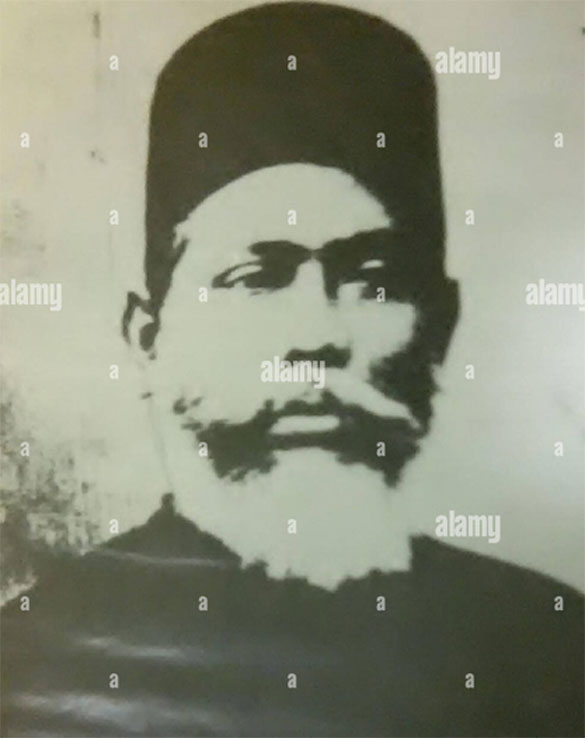
Nawab Sir Syed Shamsul Huda was a pioneering Bengali Muslim jurist, reformer, and leader who transformed education, journalism, and politics in colonial India, leaving a lasting legacy across Bengal and Kolkata.
Main Points:
1. Born in an educated Zamindar family shaped by scholarship.
2. Became a leading lawyer, professor, and High Court judge.
3. Advanced Muslim education and strengthened reformist journalism.
4. Held major political roles, including Muslim League president.
5. Left lasting institutions and a respected legacy in Bengal.
-----
Introduction
During a recent visit to Quest Mall, my eye caught a quiet little signboard near Beck Bagan. It read “Shamsul Huda Road,” and that simple name stirred my curiosity about the remarkable life it represents. Most people walk past it without a second thought. Yet the man behind this name was one of Bengal’s most remarkable sons, a figure whose influence shaped education, politics, journalism, and law in late colonial India. Remembering him is not just an act of history; it is a reminder of what dedicated leadership can achieve.
Born Into a World of Learning and Public Service
Syed Shamsul Huda was born in 1862 in Gokarna, a village in Brahmanbaria district (now Bangladesh), into a respected Zamindar family. His father, Syed Shah Riyazatullah, was a scholar of classical Persian and Arabic and edited Durbeen, a Persian weekly that reflected the intellectual pulse of Bengal’s Muslim community. Growing up in this atmosphere, Huda inherited both a love for scholarship and a sense of public responsibility.
He studied at Hooghly College and the esteemed Presidency College (now Presidency University), completing his Bar at Law in 1886 and an Master of Arts in Persian in 1889. This unusual combination of legal training and classical linguistic scholarship would later give him a distinctive voice in the world of Indian law and politics.
From Madrasa Teacher to a Leading Voice in Law
Before stepping into the courtroom, Huda served briefly as a teacher of Arabic and Persian at Calcutta Madrasa (now Aliah University). But the law was calling. He joined the Calcutta High Court Bar in 1887, where his clarity of thought and deep grounding in legal principles quickly set him apart.
His academic excellence earned him the Tagore Professorship of Law at Calcutta University in 1902. His celebrated lecture series, Principles of Crimes in British India, offered a sharp and thoughtful analysis of colonial criminal law, showing how British legal structures interacted with Indian social realities. These lectures became an important reference point for legal scholars of the time.
Champion of Education and Muslim Intellectual Revival
At the turn of the twentieth century, Bengal’s Muslim community faced a crisis of opportunity. Educational backwardness and social stagnation seemed to loom over an entire generation. Syed Shamsul Huda stepped into this space with conviction, becoming one of the leading figures in the Muslim regeneration movement.
His role in journalism alone demonstrates his foresight. He founded Sudhakar, a Bengali newspaper aimed at encouraging social reform. He purchased the rights to Mihir-o-Sudhakar, another influential Bengali publication. And he personally financed The Muhammedan Observer, the first English weekly in India published by a Muslim. These platforms helped bring Muslim intellectual debates into public view.
In 1904, he presided over the Provincial Muhammadan Educational Conference in Rajshahi, urging Muslim families to embrace modern education and rebuild their presence in academic life.
A Steady Hand in the Political Life of India
Huda’s political journey began in the Legislative Assembly of East Bengal and Assam in 1908. A year later, he entered the Imperial Legislative Council, one of the highest political forums available to Indians under British rule.
By 1912, he had become president of the All India Muslim League, taking on national responsibilities at a moment when India’s political landscape was undergoing dramatic shifts.
His appointment to the Governor’s Executive Council that same year was historic: he was the first Bengali Muslim to sit in that powerful body. Over the next five years, he worked quietly but effectively on policies related to education, public welfare, and administrative reform.
The British government recognised his service by granting him the title of Nawab in 1913 and conferring on him the Knight Commander of the Order of the Indian Empire (KCIE) in 1916.
A Jurist With a Balanced Voice
From 1917 to 1921, Huda served as a judge of the Calcutta High Court. His judgments were known for their sense of fairness, restraint, and cultural understanding. He navigated the intersection of British law and Indian society with unusual sensitivity, earning the respect of peers and the confidence of the public.
In 1921, with constitutional reforms reshaping the politics of the region, he was elected the first president of the Bengal Legislative Council. It was an honour that reflected not just his seniority but his ability to guide public life with dignity and steadiness.
A Life Grounded in Service
Throughout his career, Huda founded and supported schools, colleges, and charitable institutions across Bengal and Assam. Many of these institutions continue to serve communities today, reinforcing his legacy as a philanthropist deeply committed to public welfare.
His home at 211, Lawyer Circular Road in Calcutta was a gathering point for scholars, politicians, activists, and young students seeking guidance. His contribution was never limited to courtroom arguments or legislative debates. He believed in shaping society from its foundations upward.
The Final Chapter
Sir Syed Shamsul Huda passed away on 14 October 1922. He was buried at the Tiljala Muslim Qabristan (formerly Tiljola Municipal Graveyard) near Park Circus, an area not far from where the road named in his honour now stands. His death was mourned widely.
The Calcutta Weekly Notes captured the sentiment of the time:
“Sir Shamsul Huda has passed away at the time when his countrymen have stood in the greatest need of that happy combination of qualities which make leadership and which he possessed in a pre-eminent degree.”
More Than a Name on a Street Sign
Shamsul Huda Road may appear as just another narrow lane in central Kolkata, overshadowed by the noise of markets, cars, and cafés. Yet the footsteps it commemorates belong to a statesman of rare depth and commitment.
Lawyer. Teacher. Scholar. Journalist. Legislator. Philanthropist. Nation-builder.
Nawab Sir Syed Shamsul Huda used every platform he touched to uplift communities, expand educational access, and restore dignity to public life. His legacy still lingers quietly in the institutions he built, the policies he shaped, and the memories held by those who walk the city he once called home.
-----
Syed Amjad Hussain is an author and Independent research scholar on Sufism and Islam. He is the author of 'Bihar Aur Sufivad', a bestselling research book based on the history of Sufism in Bihar.
New Age Islam, Islam Online, Islamic Website, African Muslim News, Arab World News, South Asia News, Indian Muslim News, World Muslim News, Women in Islam, Islamic Feminism, Arab Women, Women In Arab, Islamophobia in America, Muslim Women in West, Islam Women and Feminism