
Allama Iqbal: Islamic Thought and Ijtihad
By Saquib Salim, New Age Islam
20 June 2023
Nobody influenced the Muslims of South Asia
during the 20th century as Philosopher and poet Mohammad Iqbal also known as
Allama Iqbal. Likewise, nobody is as misunderstood as him!
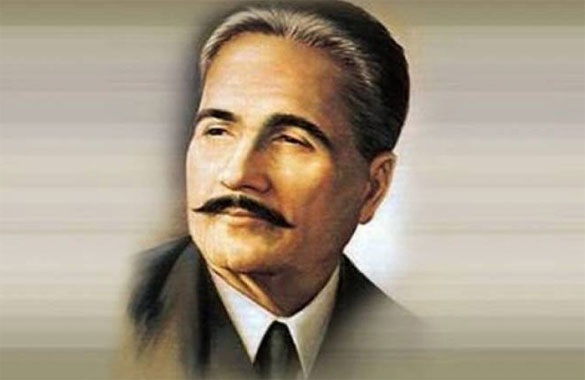
Poet Mohammad Iqbal
------
Generally, people tend to believe that
Iqbal called Muslims to return to the pristine Islam of the 7th-century Arabs.
Nothing can be farther from the truth than this. Iqbal asked for “The
Reconstruction of Religious Thought in Islam” in a book of the same name which
consisted of his seven public lectures delivered at Chennai, Hyderabad, and
Aligarh.
In the world where the Turkish Caliphate
had been abolished and Einstein had changed the way we looked at the universe,
Iqbal said, “No wonder then that the younger generation of Islam in Asia and
Africa demand a fresh orientation of their faith. With the reawakening of
Islam, therefore, it is necessary to examine, in an independent spirit, what
Europe has thought and how far the conclusions reached by her can help us in
the revision and, if necessary, reconstruction, of theological thought in
Islam.”
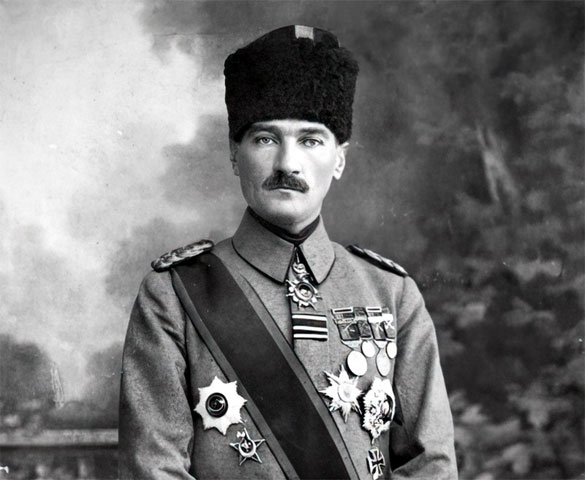
Turkish ruler Kemal
Ataturk
-----
The poet had no qualms in admitting
publicly that “during the last 500 years, the religious thought in Islam has
been practically stationary”. Therefore, he told the audience, “The task before
the modern Muslim is, therefore, immense. He has to rethink the whole system of
Islam without completely breaking with the past.”
Iqbal admitted that the process had begun
in India during the 18th century. Iqbal said, “Perhaps the first Muslim who
felt the urge of a new spirit in him was Shah Wali Ullah of Delhi”.
Iqbal asked his audience that in those
pressing times how to move forward, “what then is the principle of movement in
the structure of Islam ?” He went on to answer himself, “This is known as
‘Ijtihad’. The word literally means to exert. In the terminology of Islamic law
it means to exert to form an independent judgment on a legal question. The
idea, I believe, has its origin in a well-known verse of the Quran—’And to
those who exert We show Our path’”.
Ijtihad as a principle was always a part of
Sunni Islam but in practice, it remained in check for centuries. Iqbal lamented
that “this intellectual attitude (which) has reduced the Law of Islam
practically to a state of immobility”.
Many would not believe that Iqbal was a
great admirer of the Ijtihad on which the Turkish revolution under Mustafa
Kemal Ataturk was based. In his view Turkish modernity was the way ahead for
Muslims of the world.
Iqbal said, “We find that the idea of
Ijtihad, reinforced and broadened by modern philosophical ideas, has long been
working in the religious and political thought of the Turkish nation. This is
clear from Halim Sabit’s new theory of Mohammedan Law, is grounded on modern
sociological concepts. If the renaissance of Islam is a fact, and I believe it
is a fact, we too one day, like the Turks, will have to re-evaluate our
intellectual inheritance.”
At a time when orthodox Sunni Muslims of
India were fighting for the Turkish Caliphate and even Mahatma Gandhi supported
the Khilafat movement, Iqbal believed otherwise.
Iqbal asked people to, “see how the Grand
National Assembly has exercised this power of Ijtihad regarding the institution
of Khilafat. According to Sunni Law, the appointment of an Imam or Khalifa is
indispensable. The first question that arises in this connection is this—Should
the Caliphate be vested in a single person? Turkey’s Ijtihad is that according
to the spirit of Islam, the Caliphate can be vested in a body of persons or an
elected Assembly... I believe the Turkish view is perfectly sound... The
republican form of government is not only thoroughly consistent with the spirit
of Islam, but has also become a necessity given the new forces that are set
free in the world of Islam.”
Iqbal like several other Muslims of his
time, asked the followers of Islam to reinvent and reconstruct Islamic thought
with the help of Ijtihad.
The modern world needs modern solutions and
Islam does not stop Muslims from exploring those solutions. Rather, the Quran
promotes reasoning and logic.
Iqbal said, “Equipped with penetrative
thought and fresh experience the world of Islam should courageously proceed to
the work of reconstruction before them this work of reconstruction, however,
has a far more serious aspect than mere adjustment in modern conditions of
life. The Great European War brought in its wake the awakening of Turkey—the element
of stability in the world of Islam, as a French writer has recently described
her — and the new economic experiment tried in the neighbourhood of Muslim
Asia, must open our eyes to the inner meaning and destiny of Islam.”
URL:
https://newageislam.com/islamic-personalities/allama-iqbal--islamic-thought-ijtihad/d/130030
New Age Islam, Islam Online, Islamic
Website, African
Muslim News, Arab World
News, South Asia
News, Indian Muslim
News, World Muslim
News, Women in
Islam, Islamic
Feminism, Arab Women, Women In Arab, Islamophobia
in America, Muslim Women
in West, Islam Women
and Feminism