
Sufi Saints of Gujarat

By Sahil Razvi, New Age Islam.
27 July 2026
Sufi saints of Gujarat spread unity and love through service and open guidance. Shrines of Hazrat Ahmad Khattu, Imamshah Bawa and Mira Datar continue to draw Hindu and Muslim devotees alike. Their legacy of shared devotion remains strong, reflecting a lasting message of human connection and mutual care.
Main points:
1. Hazrat Shaikh Ahmad Khattu at Sarkhej taught service and humility to all.
2. Imamshah Bawa’s Pirana dargah symbolised Hindu-Muslim unity.
3. Mira Datar’s Unava shrine draws Hindus and Muslims for healing.
4. Hindus still visit these dargahs for blessings and shared rituals.
5. Historians note Gujarat Sufis shaped cultural identity through inclusivity.
…
In Gujarat the Sufi saints built their influence by living close to ordinary people and showing through daily acts that love and unity could ease the burdens of life. They opened their khanqahs to whoever came seeking guidance or relief, mediated small disputes, and offered healing without first asking about anyone’s background. That steady kindness turned their shrines into places where different communities could sit together without awkwardness.
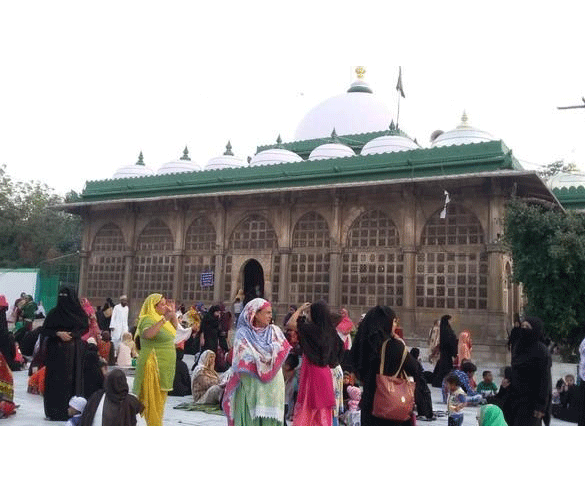
One of the most respected among them was Hazrat Shaikh Ahmad Khattu Ganj Bakhsh, also known as Hazrat Ahmad Maghribi. He settled in the village of Sarkhej near the Sabarmati and lived simply in his khanqah. Local rulers valued his counsel so highly that tradition links him with the founding of Ahmedabad itself. Sultan Ahmad Shah sought his advice on matters of state, yet the Shaikh’s real work remained with the common folk. His discourses, later collected in works such as Tohfatul Majalis, stressed disciplined living, humility, and a strong sense of community. He taught that true devotion showed itself in service to others. The grand complex of Sarkhej Roza that grew around his tomb still draws seekers from every walk of life. People come for quiet reflection or to ask for the saint’s baraka, and the atmosphere remains one of open welcome.
A verse of the Persian poet Saadi Shirazi speaks directly to the spirit these saints carried:
Human beings are members of a whole,
In creation of one essence and soul.
If one member is afflicted with pain,
Other members uneasy will remain.
If you have no sympathy for human pain,
The name of human you cannot retain.
This call to shared feeling matches the way Hazrat Shaikh Ahmad lived among the people of Gujarat.
Another important figure was Hazrat Pir Imamshah Bawa of Pirana, a short distance from Ahmedabad. In the fifteenth century he preached a path that many local families, both Hindu and Muslim, found welcoming. His dargah at Pirana became known for centuries as a place where the two communities met in common devotion. Devotees from Hindu households would bring offerings and seek the saint’s blessings for family matters just as Muslim visitors did. The shrine stood for a long time as a quiet symbol of everyday unity in the region.
Further north, near Unjha, stands the dargah of Hazrat Saiyed Ali Mira Datar at Unava. This shrine is famous for the healing that people believe takes place there. Families bring relatives troubled by mental distress, possession, or unexplained illnesses. Hindus, Muslims and Sikhs arrive in large numbers, often staying for days. The atmosphere is intense, with devotees seeking relief through the saint’s spiritual power. Local caretakers and visitors alike speak of the dargah as a place where suffering finds a response beyond community labels. Even today the courtyard fills with people from far-off districts of Gujarat and neighbouring states, all hoping for the same mercy.
These saints spread their message less through formal preaching and more through the example of open doors and practical help. At Sarkhej the Shaikh’s khanqah became a centre of learning and quiet counsel. At Pirana the teachings of Imamshah Bawa created space for shared rituals. At Unava the reputation of Mira Datar for relieving deep distress continues to pull people across community lines. In each case the emphasis remained on love expressed as care for the person standing in front of you.
Saadi’s lines on human connection find an echo again in the way these places still function:
If one member is afflicted with pain,
Other members uneasy will remain.
Visitors to these dargahs often describe the same feeling of shared concern that the verse names.
Even today Hindus form a large part of the regular visitors at these shrines. At Mira Datar the majority of those seeking treatment for mental and spiritual troubles come from Hindu families. At Sarkhej Roza people of all communities walk the marble courtyards and sit near the tomb. At Pirana, despite recent tensions that have sometimes clouded the older harmony, many local Hindu households still regard the saint with respect and continue older practices of offering. The pattern is not limited to the big names. Smaller dargahs scattered through villages and towns of Gujarat see the same quiet traffic of mixed devotees who come for a wish, a thread, or simply the sense of calm that settles around a saint’s resting place.
Historians who have studied the region have taken careful note of this lasting influence. Dr Jyoti Gulati Balachandran, in her research on the Muslims of Gujarat, observes that Sufi masters and their tomb shrines played a central role in shaping the cultural identity of the area. She points out that many of these saints are remembered as the awliya of Gujarat, figures whose presence helped define the social and spiritual character of the region far beyond political changes. Other scholars writing on Sufism in Gujarat have remarked that the tradition enriched the state’s cultural heritage and created spaces of shared practice that resisted rigid communal division. Studies of contemporary dargah life in central Gujarat further show how ordinary men and women from both Hindu and Muslim backgrounds continue to treat these shrines as places of practical help and mutual presence.
What remains striking is the everyday nature of the unity these saints fostered. They did not set out to erase differences; they simply refused to let those differences decide who received kindness. The result can still be felt in the courtyards of Sarkhej, the healing spaces of Unava, and the older pathways of Pirana. People arrive with their own troubles and leave carrying a sense that someone has listened without first checking their community. That is the quiet work of love and unity the Sufi saints of Gujarat left behind, and it continues to draw Hindus and others to their shrines year after year.
…
URL: https://newageislam.com/islamic-personalities/sufi-saints-gujarat/d/140951
New Age Islam, Islam Online, Islamic Website, African Muslim News, Arab World News, South Asia News, Indian Muslim News, World Muslim News, Women in Islam, Islamic Feminism, Arab Women, Women In Arab, Islamophobia in America, Muslim Women in West, Islam Women and Feminism