
Ritual, Memory and Pilgrimage: An Analysis of Urs Celebrations at Aasthana-e-Maqdoom’ullahi

By Rehan Ahmed Khan, New Age Islam
3 December 2025
The article explores Kadapa’s Aasthana-e-Maqdoom’ullahi shrine stands as a timeless reminder of the peace, unity and compassion taught by the Sufi saint Peerullah Hussaini. His life, teachings and miraculous legacy have shaped the cultural character of the city for centuries. Even today, millions of visitors flock to the shrine during the Urs.
Main Points:
1. The shrine of Hazrat Peerullah Hussaini reflects Kadapa’s enduring tradition of communal harmony.
2. Hazrat Peerullah Malik’s teachings played a central role in shaping the city’s spiritual identity.
3. His Jeeva Samadhi and the miracles linked to it deepened devotion across generations.
4. The annual Urs attracts millions of devotees from across India.
5. Sandal ceremonies, Qawwali and Mushaira remain the cultural highlights of the celebrations.
-----
Introduction
India’s spiritual history has long been shaped by saints who dedicated their lives to peace, compassion and human connection. In the Rayalaseema region of Andhra Pradesh, Kadapa embodies this legacy in a profound way. At its centre stands the nearly 300-year-old shrine of Hazrat Peerullah Hussaini and Arifullah Hussaini II a place where people of all faiths gather every Thursday and Friday in search of blessings, comfort and spiritual warmth.
Hazrat Ameen Peer Dargah is far more than a historical monument; it is a living, breathing spiritual home where millions still experience the inclusive and uplifting tradition established by Sufi saints centuries ago.
A City Blessed by a Saint
Kadapa’s own story is intrinsically linked to the life and teachings of Hazrat Khwaja Peerullah Hussaini, affectionately known as Hazrat Peerullah Malik. Born in Bidar, Karnataka, in the 16th century, he belonged to a noble lineage tracing back to the Prophet Muhammad. As a devoted seeker of truth, he travelled across India, visiting the shrines of revered Sufi saints, including the famous Dargah of Hazrat Khwaja Moinuddin Chishti in Ajmer.
It is believed that during his time in Ajmer Sharif, he received spiritual instructions guiding him towards the region that would later become Kadapa. On his journey, he halted near the Pennar River at Chennur, where Nawab Nek Naam Khan, governor of Sidhout, approached him with deep reverence. So moved was the Nawab by the saint’s presence that he renamed the land Nek Naam Aabaad, a name which gradually evolved into Kadapa.
From that moment onwards, Hazrat Peerullah Malik devoted his entire life to spreading love, unity and peace — values that continue to shape Kadapa’s social and spiritual fabric.
The Miracle and the Jeeva Samadhi
One of the most well-known episodes in Hazrat Peerullah Malik’s life revolves around a remarkable miracle. A group of sceptics once demanded proof of his spiritual status. According to tradition, the earth opened beneath him, allowing him to descend alive into it an event remembered as his Jeeva Samadhi, which occurred on the 10th of Muharram in 1716 AD.
Three days later, witnesses reported seeing him praying at the very same spot, a moment that deeply strengthened
The Faith Of His Followers.
After his passing, Nawab Abdul Hameed Khan of Mayana constructed a beautiful Dargah over the sacred site. Today, his tomb rests in a quiet chamber beside the mosque, with entrances from the west and south. Visitors often offer grains to the pigeons that gather in the courtyard, a gentle act seen as spiritually rewarding.
One of South India’s Largest Urs Celebrations at Aasthana-e-Maqdoom’ullahi:
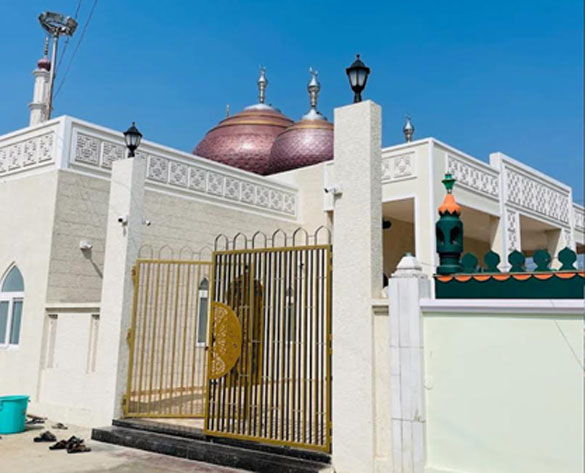
The mausoleum complex popularly known as Aasthana-e-Maqdoom’ullahi features a long east-west hall lined with tombs, the tallest belonging to Peerullah Malik. His Urs, observed in Jamadi al-Awwal, is one of the largest celebrations of its kind in South India.
Each year, millions travel from places such as Delhi, Ajmer, Agra, Chennai, Bengaluru, Kolkata, Jammu, Ahmedabad, Mumbai and Bhopal to take part. The key events include:
Sandal Ceremony: Prepared through the night and carried in a ceremonial procession, the sandal paste is offered at the tomb and later shared among devotees as tabarruk (a blessed offering).
Chadar Poshi: Pilgrims and fakirs lay beautifully embroidered cloths over the shrine as a mark of devotion.
Mehfil-e-Sama: The courtyard fills with soulful qawwali, creating an atmosphere of spiritual joy and emotional connection.
National Mushaira: A celebrated poetry gathering that continues until dawn, honouring the region’s rich tradition of art, culture and syncretic heritage.
The site is also home to the splendid Masjid-e-Azam, built in 1691 during the reign of Emperor Aurangzeb. Its Persian inscriptions and graceful architecture make it a treasured historical landmark.
A Beacon of Harmony Across Rayalaseema
The spiritual legacy of Hazrat Ameen Peer and Hazrat Shah Meer continues to inspire charitable work and social service throughout Rayalaseema and coastal Andhra Pradesh. Their followers remain committed to helping those in need, reflecting the Sufi ethos of generosity and humanity.
Kadapa’s spiritual landscape is enriched by the veneration of other saints as well, including:
Hazrat Ali Murad , believed to safeguard the region from epidemics such as cholera.
Hazrat Rafeeq Shah Vali , revered for offering relief to those experiencing mental or spiritual distress.
Together, these shrines uphold a deep culture of interfaith respect and shared identity that binds the region’s communities.
A Sanctuary of Peace
In the midst of Kadapa’s busy streets, the Aasthana-e-Maqdoom’ullahi remains one of the city’s most peaceful spaces. The soft flutter of pigeons, the gentle fragrance of sandalwood and the calm of the courtyard create an atmosphere where silence itself feels sacred.
For many, visiting the shrine is not only a spiritual experience but also a journey into a rich cultural world formed by centuries of Sufi devotion and tradition.
Conclusion
The shrine of Hazrat Peerullah Hussaini is much more than a religious site it is a living symbol of India’s heritage of unity, coexistence and spiritual openness. Kadapa, shaped by the saint’s blessings and teachings, continues to shine as a beacon of harmony in an increasingly divided world.
As millions gather each year for the Urs, one message resonates throughout the Aasthana: love, peace and humanity transcend every boundary.
Its true beauty lies not merely in its miracles or legends but in its extraordinary ability to bring people of every faith together under one compassionate, spiritual roof.
-----
Rehan Ahmed Khan is an Independent Research Scholar specialising in Muslim Personalities and Communal Harmony.
New Age Islam, Islam Online, Islamic Website, African Muslim News, Arab World News, South Asia News, Indian Muslim News, World Muslim News, Women in Islam, Islamic Feminism, Arab Women, Women In Arab, Islamophobia in America, Muslim Women in West, Islam Women and Feminism