
Why Jamaluddin Afghani Blamed Islam for Lack of Progress in the Muslim World
By
Arshad Alam, New Age Islam
1 August
2023
Jamaluddin
Afghani Attributed the Advancement of Europe Over the Muslim Lands Due to The
Fact That Christianity Had a Head Start (Of Roughly 500 Years) As Compared to
Islam
Main
Points:
1. Jamaluddin Afghani was a pan
Islamist thinker and activist of the 19th century, who rallied against British
imperialism.
2. He is said to be a profound
influence on the Islamist thinker, Muhammad Abduh.
3. But in answer to Ernest Renan, he
comes across as a thinker who was much admiring of western science and
philosophy.
4. He argued that the Muslim aversion
to science was because of the community’s attachment to the dogmas of religion.
-------
Jamaluddin
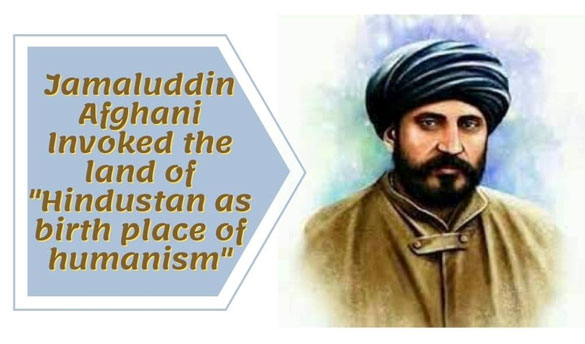
Afghani (1839-97) is one of the most intriguing figures of the Muslim world. He
is normally considered as one of the founders of Islamic modernism and also a
pan Islamist who campaigned against British imperialism. As a modernist, he is
said to have influenced Muhammad Abduh, the Egyptian reformer and Islamist. As
a fighter against British imperialism, he toured the world, lecturing Muslims
to throw off the yoke of foreign occupation. He came to India too and proposed
that Hindus and Muslims should come together to fight the British. In the
process, he was particularly scathing in his criticism of Syed Ahmad Khan, whom
he referred to as British collaborator par excellence. His political campaigns
though, should be the subject of another story. Far more interesting though
were his views on Islam and science.
The French
philosopher Ernest Renan (1823-92) had given series of lectures in Paris on the
relationship between Islam and science. These lectures were published on March
29th 1883. He made a number of critical observations in those lectures but the
point of interest for us is that he argued that Islam (the religion) had
throttled science and that’s the reason why Muslims could not progress and
develop. Afghani, who was in Paris at the time, read Renan’s articles and wrote
a rejoinder which was published in the same journal on May 18th 1883. In this
rejoinder, Afghani, the father of Islamic modernism, in fact accepts the core
arguments of Renan. Afghani even improves upon Renan and puts forward an
evolutionary view of religion, something which would become fashionable in the
social sciences only in the 20th century.
Afghani
attributed the advancement of Europe over the Muslim lands due to the fact that
Christianity had a head start (of roughly 500 years) as compared to Islam.
Afghani argues: “All religions are intolerant, each one in its own way. The
Christian society…. has emerged from the first period to which I have just
alluded….it seems to advance rapidly on the path of progress and science. The
Muslim society has not yet freed itself from the tutelage of religion.
Realizing that the Christian religion has preceded the Muslim religion in the
world by many centuries, I cannot keep from hoping that the Muhammadan society
will succeed someday in breaking its bonds and marching resolutely in the path
of civilization in the manner of Western society.”
We see that
far from Afghani being a hater of Western modernity, in fact comes across as
someone who was seeing it as the model for a future Muslim society. There is no
doubt that today he would have been extremely morose to learn that the
scientific output of the Muslim world was less than that of South Korea.
Afghani has
some other controversial things to say about the Muslim religion. Renan had
argued that Muslims were slaves of their dogma. Rather than opposing Renan, we
actually see Afghani echoing the same sentiments, albeit in a more elaborate
way: “A true believer [Muslim], must in fact, turn from the path that have for
their object scientific truth…. Yoked like an ox to the plow, whose slave he
is, he must walk eternally in the furrow that has been traced for him in
advance by the interpreters of the law. Convinced, besides, that his religion
contains in itself all morality and all sciences, he attached himself
resolutely to it and makes no effort to go beyond…. what would be the benefit
of seeking truth when he believes that he possesses it all…wherefore he
despises science.”
These
observations are profound to have been made 140 years ago. Much of the Muslim
world still believes in the perfection of its religion. And since perfection
cannot be improved, they make no effort to make Islam align with contemporary
reality. Afghani in the passage above also makes a modern methodological point.
The way much of research in the Islamic sciences is conducted can never lead to
the truth. This research is more in the nature of confirmation bias, where much
of what the researcher assumes is sought to be confirmed through the research.
Just look at the Barelvi Ulama “proving” that the sun goes round the earth!
There is no understanding that the assumption itself can be wrong. Because the
assumption is derived from the Quran, it cannot be doubted and hence
generations get lost in utterly fruitless scholarship.
Afghani
reminds Renan of the time when Arab and Islamic sciences lit up the whole
world. But soon enough, he asks the obvious yet important question: “Why this
torch has not been relit since? Why the Arab world still remains buried in
profound darkness?” For Afghani, there is no one to blame but the Muslim
religion for the extinction of science and philosophy. He continues: “Here the
responsibility of the Muslim religion appears complete. It is clear that
wherever it became established, this religion tried to stifle the sciences and
it was marvellously served in this design by despotism. …. Caliph al-Hadi put
to death 5000 philosophers in Baghdad to destroy science to its very roots. I
find in the past of the Christian religion analogous facts. No agreement and no
reconciliation are possible between these religions and philosophy.”
We see in
his answer to Renan that Afghani was clearly in favour of science and
philosophy. Moreover, he argued that the initial Islamic civilizations gave a
lot to the world precisely because they were masters of sciences of the time.
But as soon as Islamic orthodoxies settled, that proved to be a hindrance in
the path of development and progress. Far from being an Islamist, Afghani in
these pages appears to be a man ahead of his times.
When he
came to India, he condemned the followers of Syed Ahmad Khan as Naturis
(Materialists). In India, Afghani is regarded as an orthodox who saw any
deviation from the traditional path as problematic and hence heavily criticized
the likes of those who were copying the western sciences. But it appears that
he was a far more complicated thinker, the desire to box him as
orthodox/progressive is too simplistic.
We should
also know that when his disciple, Muhammad Abduh, came to know the contents of
Afghani’s Paris publication, he refused to get it translated into Arabic as he
feared that such material was dangerous for the minds of young Muslims. We have
then a deliberate attempt here to make Afghani conform to certain orthodoxies
of the Islamic tradition.
But Abduh
perhaps didn’t come across the famous adage from Ibn Rushd: “Ideas have
wings, no one can prevent them from reaching people.”
------
A regular contributor to NewAgeIslam.com, Arshad
Alam is a writer and researcher on Islam and Muslims in South Asia.
URL: https://newageislam.com/islamic-personalities/jamaluddin-afghani-progress-muslim-world/d/130348
New Age Islam, Islam Online, Islamic Website, African Muslim News, Arab World News, South Asia News, Indian Muslim News, World Muslim News, Women in Islam, Islamic Feminism, Arab Women, Women In Arab, Islamophobia in America, Muslim Women in West, Islam Women and Feminism