
The Concept of Composite Nationalism ( متحدہ قومیت)in the Context of Maulana Husain Ahmad Madani's Thoughts

By Dr. Zafar Darik Qasmi, New Age Islam
18 August 2025
Summary:
Maulana Husain Ahmad Madani’s philosophy of composite nationalism emphasized unity beyond religion, rooted in India’s shared homeland and history. Inspired by the Prophet’s Medina model, he advocated harmony among diverse communities. His vision of collective struggle, inclusive ness, and patriotism remains vital today for preserving India’s secularism, cultural diversity, and democratic identity.
Main Points:
1. Nationalism based on shared homeland
2. Prophet’s Medina model inspiration
3. Unity beyond religious differences
4. Muslims’ sacrifices for independence
5. Inclusive ness ensures social harmony
6. Vision relevant for modern India
------
The Concept of Nationalism:
The concept of nationalism has for centuries remained a central theme in human society and political discourse. One of its fundamental principles is that nations are formed on the basis of homeland, not religion. History bears witness that whenever an attempt was made to construct nationalism on religious grounds, the results often appeared in the form of division, conflict, and bloodshed. In contrast, when nationalism was based on geography, language, culture, and a shared homeland, it nurtured unity, peace, and progress.
Historical Background:
Examples from both ancient and modern history make this reality clear. In medieval Europe, efforts were made to establish nationhood on the foundation of religion, which resulted in prolonged wars and civil strife—such as the Thirty Years’ War (1618–1648), a devastating conflict between Christian sects. Ultimately, Europe learned that lasting peace could only be secured when nations were built upon geography and state boundaries rather than religion. This principle was enshrined in the Treaty of Westphalia (1648), which gave rise to the modern concept of the nation-state.
The Indian Context:
In the Indian context, this concept acquires even greater importance. India is a land where, for centuries, different religions, languages, cultures, and communities have coexisted. If religion alone were considered the basis of nationhood, this diversity would inevitably lead to division and mutual conflict. That is why India’s great leaders—such as Mahatma Gandhi, Pandit Jawaharlal Nehru, and Maulana Abul Kalam Azad—repeatedly emphasized that the foundation of Indian nationhood lies in a shared homeland and a common history.
In 1940, Maulana Azad declared:
"I am a Muslim and I am proud of it, but I cannot deny the fact that, as an Indian, I have an unbreakable bond with this land."
This statement reflects that the essence of nationhood is tied to land and homeland, not solely to religion.
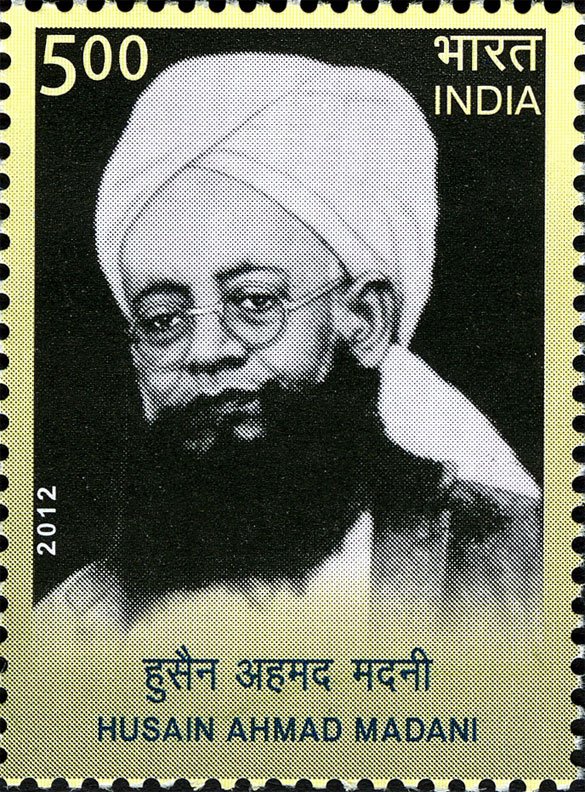
Sheikh-ul-Islam Maulana Husain Ahmad Madani (1879–1957) was among those eminent Indian scholars who devoted their entire lives—body, wealth, and soul—for the freedom of their homeland. A close study of his life reveals that while he contributed immensely to the spread of Islamic sciences, he also made significant sacrifices for India’s independence. He endured imprisonment, exile in Malta, and relentless persecution at the hands of the British. Yet, none of these trials weakened his spirit of freedom; instead, the flame of independence within him grew stronger.
In June 1940, at a meeting of Jamiat Ulama-e-Hind held in Jaunpur, presided over by Maulana Madani himself, he emphasized in his presidential address:
“Respected elders! The present circumstances compel us to redouble our efforts for India’s freedom so that all people, especially Indians, may be delivered from the grave torments of slavery. Our subjugation is not only the cause of our own suffering but also brings misery to many other nations. Though it is the duty of all Indians to fight this oppression, Muslims bear an even greater responsibility.”
(Asir-e-Malta, Ma’athir Sheikh-ul-Islam, p. 260)
This statement makes it abundantly clear that Muslims made profound sacrifices in India’s freedom struggle out of their natural love for this land. Their patriotism cannot be denied. The blood, sweat, and sacrifices of Muslims, alongside other communities, played a decisive role in liberating India from British colonialism.
It is, therefore, unjust when Muslims’ loyalty to the nation is questioned today. Such doubts insult the memories of those heroes who fought for India’s independence. History bears witness that Muslims not only contributed to the liberation of the nation but also actively participated in its progress, development, and welfare. They safeguarded India’s secular framework and preserved its social diversity. Thus, those who doubt Muslims’ patriotism must revisit history without prejudice.
The Philosophy of Composite Nationalism:
Maulana Hussain Ahmad Madani was not only a freedom fighter but also the foremost proponent of composite nationalism (Mutahida Qaumiyat). He even authored a treatise on the subject. Before examining its relevance in modern India, it is important to understand the philosophy he presented.
According to him, composite nationalism was rooted in the model established by the Prophet Muhammad ﷺ in Medina. In this arrangement, people of different faiths—Muslims, Jews, and others—lived as one nation bound by a shared homeland. Similarly, in India, Hindus, Muslims, Sikhs, Parsis, and all others, despite their different religions and cultures, should unite as one nation to confront foreign oppressors and preserve their collective interests.
Madani envisioned a society where:
Every community enjoys religious freedom and safeguards its cultural identity.
No group seeks to impose its beliefs on others.
All communities collaborate to ensure peace, justice, and mutual respect.
He stressed that religious and cultural differences need not obstruct national unity. Instead, shared citizenship creates a bond that transcends sectarian divisions.
(Ma’athir Sheikh-ul-Islam, p. 245)
Humanism and Inclusive ness in Madani’s Vision:
Maulana Madani’s concept of composite nationalism was deeply rooted in humanism, inclusive mess , and moderation. He believed that just as India achieved independence through joint struggle, its unity and progress today also depend on collective effort.
At a time when divisive forces threaten India’s secular and democratic traditions, his vision becomes even more relevant. The message is clear: only through solidarity and mutual cooperation can India resist communal hatred and preserve its cultural harmony.
When Madani introduced this idea, it faced criticism from none other than Allama Iqbal, who corresponded with him to present his objections. However, after a scholarly exchange of letters—later compiled in the book “Mutahida Qaumiyat aur Islam” (Composite Nationalism and Islam)—Iqbal eventually withdrew his opposition.
Madani’s Address on Shared National Duty:
In one of his presidential addresses, Maulana Madani beautifully illustrated the meaning of composite nationalism:
“As inhabitants of India, we share a common bond that transcends our religious and cultural differences—just as diversity in faces, colors, and languages does not diminish our common humanity. Similarly, our religious differences do not weaken our shared national identity. Hindus, Muslims, Sikhs, and Parsis must all work together in times of crisis. If a fire breaks out in a village, all villagers—regardless of caste or creed—must unite to extinguish it; otherwise, the entire village will perish. The same applies to floods or national calamities. National cooperation is thus a duty upon all citizens. This cooperation does not compromise anyone’s faith; rather, each community may remain firm in its religion while fulfilling its national responsibilities.”
(Ma’athir Sheikh-ul-Islam, p. 246–247)
He clarified that composite nationalism in India did not mean adopting Western notions of nationalism based on secularism or irreligion. Instead, it meant preserving one’s religion while uniting for the common good of the homeland.
Relevance for Contemporary India:
The essence of Maulana Madani’s thought is that unity is essential for the survival of any nation. Without cooperation, societies crumble. India, with its rich diversity of languages, religions, and cultures, has thrived for centuries on principles of tolerance, mutual respect, and shared living.
Even today, Indians celebrate each other’s festivals, share joys and sorrows, and uphold the spirit of pluralism. This tradition must not be abandoned.
Maulana Madani’s message for our times is clear:
We are all Indians first.
India’s identity lies in its diversity.
Differences in faith or culture should not hinder national unity.
In his era, the struggle was against British colonialism. In our era, the challenge comes from communal and divisive forces that threaten India’s secularism and social harmony. To resist such threats, we must revive the vision of composite nationalism—rooted in brotherhood, equality, and shared responsibility.
Only by doing so can India remain a beacon of peace and a guardian of its pluralistic heritage.
Conclusion:
It is evident that nations can only attain strength and permanence when founded upon the homeland. Religion belongs to the personal and spiritual sphere of an individual, while nationhood is a collective and political relationship. If nationalism is built on religion, societies become fragmented; but if it is rooted in homeland, paths to unity, equality, and progress are opened.
Therefore, in a multi-religious and multi-cultural country like India, the principle that nations are formed by homeland, not by religion is the most suitable and practical. This vision is the true guarantee of a strong, united, and prosperous India.
Maulana Hussain Ahmad Madani’s philosophy of composite nationalism continues to hold immense relevance for modern India. It is not merely a political idea but a timeless principle of unity amidst diversity. By recognizing ourselves as one people despite religious differences, we can preserve India’s democratic values, strengthen social harmony, and ensure that the sacrifices of our forefathers are not forgotten.
His vision reminds us: we may differ in beliefs, languages, and customs—but as Indians, we are bound together in one destiny.
URL: https://www.newageislam.com/islamic-personalities/composite-nationalism-maulana-madani/d/136521
New Age Islam, Islam Online, Islamic Website, African Muslim News, Arab World News, South Asia News, Indian Muslim News, World Muslim News, Women in Islam, Islamic Feminism, Arab Women, Women In Arab, Islamophobia in America, Muslim Women in West, Islam Women and Feminism