
Moving Beyond Sir Syed
By Arshad Alam, New Age Islam
22 October 2022
We Need To Take Forward His Ideas of Religious Reform but
Junk Those on Caste and Gender
Main Points:
1.
Every year, Sir Syed
Day is celebrated on the 17th of October
2.
Sir Syed waged a
concerted struggle against religious orthodoxy making him an important resource
in the fight against politics of Islamist illiberalism
3.
But at the same
time, it also needs to be said that he remained opposed to the education of
lower castes and Muslim women.
4.
The Muslim community
will do well to take forward his ideas on religious reform, but should
definitely junk his ideas on caste and gender.
-------
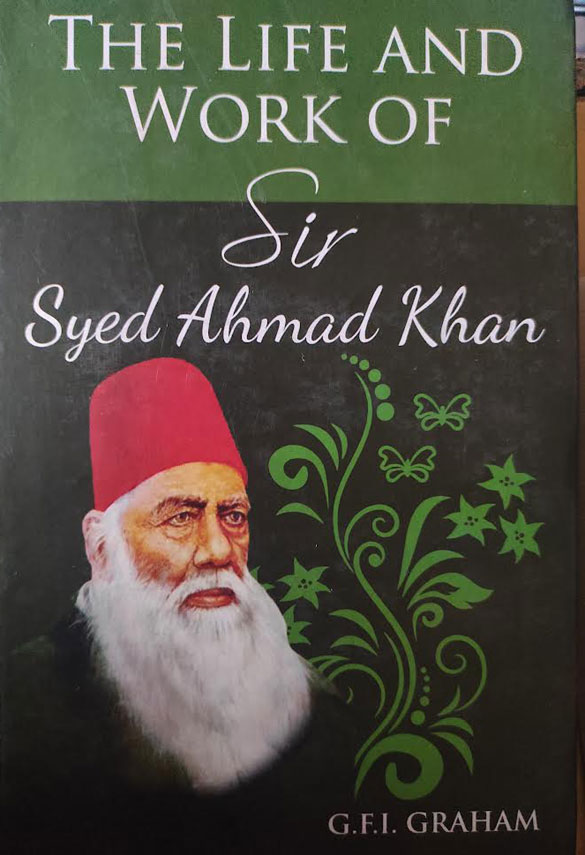
Sir Syed Ahmad Khan
-----
Every year on the 17th of October, the Aligarh Muslim
University fraternity across the globe celebrate Sir Syed Day. What can be an
occasion to evaluate the contribution of Sir Syed Ahmad Khan towards
modernizing Muslim society often becomes an empty ritual of recalling the
‘great personality’ of the man, eating biryani and reminiscing of the good old
days spent on AMU campus. In parts of country, some alumni hold seminars and conferences
speaking on fantastic titles like Sir Syed’s contribution to environment or his
views about gender equality. There is nothing remotely critical or objective in
such presentations; the business of knowledge is reduced to a farce with no
difference between a eulogy and academic presentation. Muslims claim that their
religion is opposed to idol worship but their conduct only amounts to
idolization. Possibly Sir Syed wouldn’t be too happy with the ways in which he
is being remembered today by his fellow religionists.
Sir Syed was probably one of the first Muslims to wage a
concerted fight against religious orthodoxy within his own society. Imbued with
scientific temper, he would establish scientific societies in places like
Calcutta through which he tried to explain, in his own curious way, that there
was no contradiction between science and the Quran. Once can certainly argue
that his attempt was misguided and he could not see the apparent contradictions
between the two but the more important thing to remember is that he had the
courage to say such things despite an anti-scientific current within the Muslim
society, made possible by the writings and speeches of Ulama.
That in such an
environment, he could say that the Prophet’s Miraj, the concepts of
jinn, etc. are not be taken literally but metaphorically, needs to lauded.
Moreover, his insistence that Muslims should take to English education, which
was being opposed by the Ulama as devilish instruction, speaks of the
indominable courage and conviction of the man. It must be remembered that most
scientific knowledge was in English at that time and hence his insistence that
Muslims should learn that language was a way of inculcating scientific temper
within Muslims. It is a sad story that somehow the Muslim society has been able
to defeat this expectation of Sir Syed. Religious orthodoxy is on the rise and
even in AMU campus, Islamists like Maududi and conservatives like the Tablighis
have more followers.
When William Muir, the British orientalist, published a
biography of the Prophet, Sir Syed was not very happy with its contents.
However, unlike the Muslims of today, he did not give a call for Sar Tan se
Juda; rather he patiently conducted his own research, and wrote a rebuttal in
order to correct what he thought was an erroneous interpretation of the
Prophet’s life. Today, when Muslims celebrate Sir Syed Day, isn’t it incumbent
on them to present the man as an alternative to the religious hooliganism that
we see in the name of Islam? Sir Syed is a useful resource through which
Muslims can challenge the politics of blasphemy which is so rife in our society
today. But then, in order to do so, we need to look at him critically and not
elevate him to some God like status.
It is therefore equally important to call him out for his
failures. The first failure was his very limited understanding of the Muslim
community itself. Community or Qaum for him was limited to the four upper
castes within Muslim society. Through his speeches and writings, it becomes
very clear that when he spoke of Muslims, he only had these four castes in his
mind. The rest were not Muslims, they were simply a collection of different
professional castes. As a natural corollary, when he spoke about the importance
of English education, he only wanted the Ashraf Muslims to take part in this
noble mission. By excluding the majority of Indian Muslims, Sir Syed betrayed
his own feudal upbringing which looked down upon the vast majority of Indian
Muslims who were decidedly low caste artisanal groups.
According to Masood Alam Falahi, who documents caste amongst
Indian Muslims, Sir Syed rebuked a group of Muslim ‘low caste’ Ansari men, who
had established a school in Benaras and had called him to inaugurate it. Sir
Syed told these Ansaris that this kind of education (English education) was not
meant for them and it was a waste of effort. Learning, he said, was only for
the noble castes. It would suffice for the Ansaris to actually establish a
madrasa where religious education and a modicum of arithmetic should be taught.
They should continue to invest their energy in traditional and familial crafts
and leave higher learning to the upper castes who have the requisite mind and
capacity to understand these things.
It was due to such reasons that he was opposed to the
Congress’ proposal to hold the ICS exams (which were held in London) to be
conducted in India. The sole reason for his opposition was that if it was held
in India, lower castes might be able to pass the exam and sit in position of
authority over upper castes. In a speech delivered in Lucknow in 1882, he asks
how would a Pathan (a Muslim high caste) react, when he is supposed to stand in
front of a judge who has not come from one of the noble castes?
And it is not just that he was opposed to the education
lower castes, but he also did not find any merit in women’s education. Sir Syed
never wrote anything on women’s education. Gail Minault, the historian of Muslim
women’s education, recalls that when Mumtaz Ali, the celebrated Urdu novelist
who advocated for women’s education, took his novel (Huquq e Niswan/Rights
of Women) to Sir Syed, he tore up the manuscript and threw it in the dustbin.
David Lelyveld, the scholar on the initial years of Aligarh Muslim University,
has questioned why despite ‘Syed Ahmed’s radical ideas of reform and change and
liberalism, including his admiration for European ideas and ways of life, he
remained opposed to women’s equality’. Sir Syed remained a staunch defender of
purdah and was therefore unsure of women’s education. The only education that
he would grant for women would be a modicum of religious instruction. He
thought women were in no need of modern education at all. And it was sufficient
to educate men, because simply put, in his scheme of things, they were in
charge of women.
The university that he founded, today has made space for
lower castes as well as women. Sir Syed definitely wouldn’t have liked this
development but then institutions have their own life cycle. One should give
credit to Sir Syed where it is due: there wouldn’t be space for these subaltern
identities if the MAO College wouldn’t be established in the first place.
However, it needs to be said that the university needs to move beyond the
perspective of Sir Syed. In tune with the politics of social justice, the
university needs to reserve certain portion of the seats to students belonging
to lower castes. At the same time, it also needs to retain the core message of
Sir Syed regarding religious reform. Today, more than ever, it is incumbent on
the university to take that vision forward: to make Indian Islam more plural,
tolerant and open to subversive ideas.
----
A regular contributor to NewAgeIslam.com, Arshad Alam is
a writer and researcher on Islam and Muslims in South Asia.
URL: https://newageislam.com/islamic-personalities/sir-syed-amu-religious-orthodoxy/d/128243
New Age Islam, Islam Online, Islamic Website, African Muslim News, Arab World News, South Asia News, Indian Muslim News, World Muslim News, Women in
Islam, Islamic
Feminism, Arab Women, Women In Arab, Islamophobia
in America, Muslim Women
in West, Islam Women
and Feminism