
Hazrat Mahmood Gaami: Kashmir’s Most Beloved Sufi Poet for 200 Years

By Altamash Ali, New Age Islam
29 November 2025
Hazrat Mahmood Gaami (1765–1855), founder of classical Kashmiri Sufi poetry, transformed Persian romantic tales into profound symbols of divine love through eleven timeless masnavis, remaining Kashmir’s most beloved and sung poet.
Main Points:
1. He is widely regarded as the father of classical Kashmiri Sufi poetry. Before him, only the vakhs of Lalla Ded and Sheikh Nooruddin existed.
2. Wrote 11 famous masnavis (Yusuf-Zulaikha, Laila-Majnun, Shirin-Khusraw, etc.)
3. Though he lived through the turbulent Afghan, Sikh, and early Dogra periods (1765–1855), not a single line in his poetry mentions political events or worldly suffering — his world was purely spiritual and timeless.
4. Turned Persian love stories into symbols of divine love
5. Still the most sung Kashmiri poet; his verses are the soul of Kashmiri Sufi music today
----
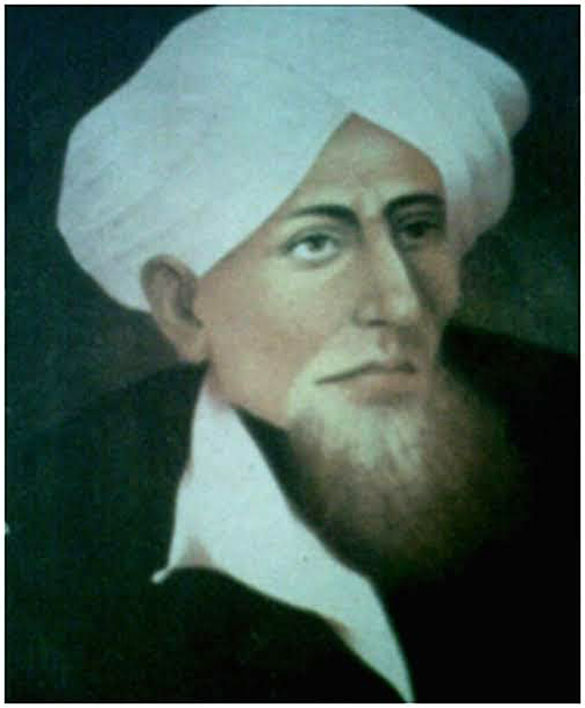
Hazrat Mahmood Gaami is the most popular Kashmiri poet of the last two hundred years. Singers of every era – the greatest ones – have sung his poetry, and even today his handwritten manuscripts are the ones most carefully preserved. He is regarded as the founder of Kashmiri Sufi poetry.
His eleven masnavis and hundreds of songs are all composed in a distinctive Sufi style. Almost every later Kashmiri Sufi poet adopted the same metaphors, similes, symbols, rhythmic patterns, and core concepts of Islamic tasawwuf (Sufism) that he used.
Hazrat Mahmood Gaami had profound knowledge of the Quran, Islamic thought, Persian poetry, and Sufi doctrine. He introduced new modes of expression, a wider range of themes, and deeper intellectual content into Kashmiri poetry. Before him, Kashmiri literature had only the scattered vakhs and shruks of Lalla Ded and Hazrat Sheikh Nooruddin Wali.
Hazrat Mahmood Gaami lived through three political eras in Kashmir:
Afghan rule (1752–1819)
Sikh rule (1819–1846)
The first decade of Dogra rule (from 1846 onwards)
Yet there is not not a single mention in his poetry of the political upheavals of his time, because his heart and mind always dwelt in the spiritual and timeless realm.
He was born around 1765 in the village of Arawar in Shahabad (now Mahmoodabad). His family had a respected tradition of teaching the Quran and religious sciences, so he too received deep training in the Quran, Sufism, and Persian literature. He married in his youth and had two sons – Shah Sultan, who died young, and Hazrat Asad Gaami, whose descendants still live in the same village.
In the beginning he wrote Naats in Persian and chose the Takhallus (pen name) “Gaami” because it echoed the names of great Persian poets like Nizami and Jami. Later he began writing Naats in Kashmiri and realised that Kashmiri poetry should be enriched with the famous Persian Sufi love romances.
His first Masnavi was “Shirin-Khusraw” (completed in 1199 Hijri / 1791 CE). It is not a mere literal translation of Nizami’s original but a creative adaptation in his own style. The story begins with Khusraw’s birth and education. His father Hormuzd gets angry when Khusraw eats at a farmer’s house. In a dream Khusraw is promised a beautiful bride named Shirin, the horse Shabdiz, the musician Barbad, and the whole kingdom of Iran. His friend Shapur is a brilliant painter; he paints Shirin’s portrait, shows it to Khusraw, and Khusraw falls in love with her without ever having met her. What follows is a series of dramatic twists and turns. Actually the entire tale is an allegory of the soul’s quest for Truth, in which Truth appears in the guise of many illusions and attractions. Hazrat Gaami keeps gently pointing the reader toward these Sufi meanings throughout.
His second very famous Masnavi is “Laila-Majnun”. It too is a story of human love that gradually becomes a symbol of divine love. Qais (Majnun) falls hopelessly in love with Laila’s dark beauty. When he asks her father for her hand, he is rejected and branded a madman. Laila is married off to a rich and sturdy man named Ward. On hearing this, Majnun abandons home and wanders in the deserts of Najd, singing songs of pain. Laila, upon hearing false news of Majnun’s death, breaks down and dies. Majnun clings to her grave and dies. Later, people take pity and bury them side by side. It is the matchless story of restless, boundless love that, in Sufi terms, becomes the symbol of the soul’s union with God. Many poets have written Laila-Majnun in Kashmiri, but Hazrat Mahmood Gaami’s version – which he composed in the second quarter of the 19th century by weaving hundreds of songs into the narrative thread – is by far the most famous and beloved.
“Yusuf-Zulaikha” is counted among the finest works in the entire Kashmiri language. Hazrat Gaami himself was aware of his extraordinary gift as a storyteller. In his most celebrated Masnavi
“Yusuf-Zulaikha” he writes about himself: “Listen to poor Mahmood’s cry,
Listen to the songs of his matchless story-telling art.” This Masnavi became so famous that in 1895 the German scholar Karl Burkhard, who had lived in Kashmir for many years, produced the first Roman-script transliteration and translation of it.
The story contains deceit, jealousy, separation, reunion, forgiveness, patience, and a son’s harsh treatment of his father – everything is there. Like the great Persian poet Jami, Hazrat Gaami does not portray Zulaikha’s mad love for Yusuf as sinful or wrong. Instead he directly makes it a symbol of love for God. Therefore the tale becomes less a moral sermon and more an exemplar of true love. Hazrat Gaami does not present Zulaikha as a dangerous or scheming woman; for him she is the living embodiment of “Ishq” (Divine Love) that is forever in search of “Husn” (Divine Beauty), and Yusuf is the symbol of that Beauty. In the end when they are united, Yusuf restores Zulaikha’s youth and beauty and, with God’s permission, marries her. Yusuf’s love for Zulaikha shows that she has received the reward of her true and unbreakable love. When Yusuf dies, Zulaikha dies of grief – showing that true love sacrifices everything. Hazrat Gaami’s “Yusuf-Zulaikha” directly transforms human love into a metaphor for love of God and remains, to this day, the most sung and most loved masnavi in Kashmir.
Hazrat Mahmood Gaami also wrote very beautiful poetry in praise of Hazrat Sheikh Abdul Qadir Jilani:You are the emperor of all the worlds,
O Abdul Qadir!
My prayers are not being answered, O Abdul Qadir!
How can the one with whom You are pleased remain in pain and sorrow?
O such a perfect and complete spiritual guide, hold my hand, O Abdul Qadir!
Cast just one glance toward me, O Guide;
Even my dust will surely turn to gold.
How exquisite Your majesty appears,
O perfect spiritual master Abdul Qadir!
Extend Your hand to the helpless,
Bestow one mercy-filled glance upon us.
I am calling You – whom else can I call?
O perfect spiritual master Abdul Qadir!In all,
Hazrat Mahmood Gaami wrote eleven Masnavis and hundreds of Loh (long devotional songs), Ghazals, Naats, and Munajats. All his poetry is in Kashmiri except a few early Naats that are in Persian.
Shirin-Khusraw (1791 CE) – based on Nizami’s Khusraw-o-Shirin
Laila-Majnun – the most widely sung Kashmiri version of the classic love legend
Yusuf-Zulaikha – his masterpiece; considered the crown jewel of Kashmiri literature
Sheikh Sana’an (also called Sheikh Sana’an-tee-Khani) – the story of the Sheikh who falls in love with a Christian girl
Akhtar-Shah (Akhtar-e-Shah) – the story of Prince Akhtar
Buzurg-Shah
Haft Khwan-e-Yusuf (The Seven Trials of Yusuf) – a shorter version focused on Yusuf’s trials
Mansur-Husain (or Hallaj-Husain) – centred on Mansur al-Hallaj and Hazrat Imam Hussain
Farhad-Shirin (a companion piece to Shirin-Khusraw)
Shahzada-o-Pari (The Prince and the Fairy)
Gulrez-o-Gulnar (a lesser-known romantic Masnavi)
Hazrat Mahmood Gaami passed away in 1855 CE (1271 Hijri), exactly nine years after the Treaty of Amritsar (1846) and in the early phase of Dogra rule. He was approximately ninety years old at the time. His shrine is in his native village, which is now officially called Mahmoudabad.
References:
1.https://www.kashmirpen.com/mahmood-gamifounder-of-sufi-poetry-in-kashmiri-language1765-1855/
2.https://kashmirlife.net/mahmud-gami-an-introduction-vol-15-issue-44-339250/
3.https://en.wikipedia.org/wiki/Mahmud_Gami
4.https://countercurrents.org/2020/07/mehmood-gami/
5.https://kashmirsufis.wordpress.com/2021/06/02/mehmood-gami-r-a/
6.https://ijcrt.org/papers/IJCRT25A5694.pdf
https://www.greaterkashmir.com/opinion/yusufs-fragrance/
----
Altamash Ali is a Sufi writter and a student at IFTM University
URl: https://www.newageislam.com/islamic-personalities/hazrat-gaami-kashmir-sufi-poet/d/137808
New Age Islam, Islam Online, Islamic Website, African Muslim News, Arab World News, South Asia News, Indian Muslim News, World Muslim News, Women in Islam, Islamic Feminism, Arab Women, Women In Arab, Islamophobia in America, Muslim Women in West, Islam Women and Feminism