
Noorjahan Diwan of Gujarat: A Voice of Strength in Times of Crisis
By Afroz Khan, New Age Islam
26 March 2026
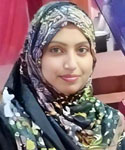
Noorjahan Abdul Hamid Diwan emerged as a dedicated social worker during the 2002 Gujarat riots, supporting displaced families in relief camps. She empowered women through legal awareness, access to government schemes, and economic initiatives. Later, she entered politics to advocate development and strengthen women’s participation in decision-making processes.
Points:
· Worked actively during the 2002 Gujarat riots
· Served victims in relief camps tirelessly
· Promoted women’s legal awareness and rights
· Helped women access schemes and become self-reliant
· Entered politics to support development and women’s participation
“Women in the Muslim community are often advised to stay within the confines of their homes, but I believe that unless women step out, they will not be able to improve the future of their children. If a mother is aware, the entire community will become aware.”
Noorjahan Abdul Hamid Diwan
In 2002, when Gujarat was engulfed in communal riots and thousands of people were affected, many were displaced from their homes and were forced to take shelter in relief camps. During this difficult time, several individuals came forward to help the victims. Among them was Noorjahan Abdul Hamid Diwan, who dedicated herself wholeheartedly to serving those affected by the riots.
Noorjahan Diwan was born and brought up in Juhapura, a Muslim-majority area of Ahmedabad. She belongs to a middle-class family. Before 2002, she was leading a normal domestic life, but when communal riots broke out in Gujarat and thousands of people were forced to leave their homes and live in relief camps, her life’s purpose changed completely.
After the riots, relief camps were set up in the Juhapura area of Ahmedabad, where thousands of displaced people arrived. Noorjahan decided to serve these victims and worked tirelessly in the camps. She actively participated in distributing food, maintaining cleanliness, and taking care of the injured, working day and night.
During the riots, women were the most vulnerable. Noorjahan created a safe environment for the women living in the camps and provided them with emotional support and strength.
Most of the victims in the relief camps were uneducated and traumatised. They had lost their identity documents and had no access to basic facilities. Noorjahan helped them fill out forms to receive government compensation and assisted them in visiting police stations and courts.
To make her relief work more effective and well-organised, she had to give up observing purdah and devoted herself completely to humanitarian service. Speaking about this, she says:
“Purdah should be of the heart, not of work. When I started working in relief camps after 2002, I realised that wearing a burqa was limiting my ability to fully help women who needed to be taken to hospitals or required visits to police stations. We should build our identity through our work, not just our attire.”
Juhapura was a Muslim-majority and underdeveloped area, and due to the riots, it became almost like an isolated island. Despite the atmosphere of fear, Noorjahan maintained communication with the local administration and police to ensure that peace was maintained and essential supplies reached the area.
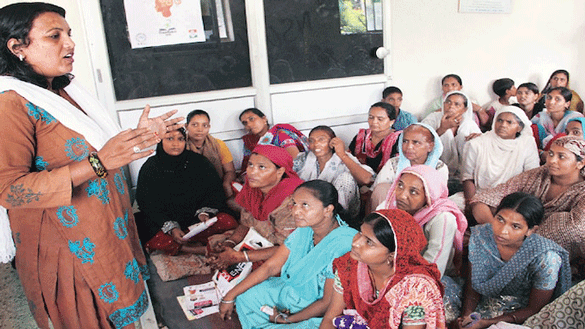
She realised that relief work should not be limited to distributing food. In the camps, she began educating women about their legal rights, which later became her main mission in life.
Due to her extensive social work, she had to spend most of her time outside her home, which made it difficult for her to give adequate attention to her family. Additionally, working in an unsafe environment initially led to opposition from her family members. However, gradually, her family began to support her. She recalls:
“In the beginning, society and even the men in my family opposed me. But when they saw that a woman stepping out could solve issues like water supply and roads in the locality, their perspective changed. Today, those same people are encouraging their daughters to pursue education.”
After the riots, she realised that women in her community lacked awareness about the outside world and their rights. She began helping women access legal aid, accompanying them to police stations and courts, and raising awareness about their rights.
She also assisted women in availing government schemes such as ration cards, Aadhaar cards, and bank accounts. Along with this, she worked towards providing small loans and promoting cottage industries to make women economically self-reliant.
She strongly believes:
“We should not remain just a vote bank. Muslim women must create space for themselves in politics and administration. Only when we ourselves become councillors or leaders will we be able to address the real issues of our localities, such as streets and schools.”
Due to her impactful social work, she was elected as a councillor in the Ahmedabad Municipal Corporation (AMC). Her main objective in entering politics was to bring development in Muslim-majority areas into the mainstream and to ensure women’s participation in political processes.
Speaking about her entry into politics, Noorjahan Diwan says:
“Politics is not just a means to gain position, but a way to become the voice of those who have not been heard.”
Noorjahan Diwan has stood firmly with many women and distressed individuals during times of crisis and has consistently raised her voice for the rights of Muslim women. Until women’s participation in politics increases on a large scale, issues related to women are likely to be neglected. Women like Noorjahan Diwan are a ray of hope, and it is strongly believed that the future will be more favourable for women.
…
Afroz Khan is a teacher by profession who writes on women, politics, communal harmony, and Islam. She holds a master’s degree in Education.
New Age Islam, Islam Online, Islamic Website, African Muslim News, Arab World News, South Asia News, Indian Muslim News, World Muslim News, Women in Islam, Islamic Feminism, Arab Women, Women In Arab, Islamophobia in America, Muslim Women in West, Islam Women and Feminism