
Meena Keshwar, The Brave Woman Who Built Revolutionary Association of the Women of Afghanistan Against All Odds
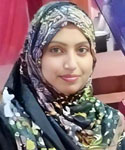
By Afroz Khan, New Age Islam
1 December 2025
Meena Keshwar Kamal (1956-1987) founded RAWA in 1977 to champion Afghan women's rights. Abandoning law studies, she opposed Soviet occupation, established refugee camps, schools, and clinics in Pakistan. Her famous quote, "Afghan women are like sleeping lions," inspired millions. Assassinated at 30, her RAWA legacy endures globally.
Main Points:
1. Founded RAWA (1977) for Afghan women's rights
2. Abandoned law studies to fight women's oppression
3. Opposed Soviet invasion (1979), built refugee camps
4. Created schools, clinics for Afghan refugees in Pakistan
5. Assassinated 1987 (age 30) RAWA legacy continues
-----

I’m the woman who has awoken
I’ve arisen and become a tempest through the ashes of my burnt children
I’ve arisen from the rivulets of my brother’s blood
My nation’s wrath has empowered me
My ruined and burnt villages fill me with hatred against the enemy,
I’m the woman who has awoken,
I’ve found my path and will never return.
I’ve opened closed doors of ignorance
I’ve said farewell to all golden bracelets
Oh compatriot, I’m not what I was
I’m the woman who has awoken"
( Meena Keshwar Kamal )
Meena Keshwar Kamal was born on February 27, 1956 in Kabul, Afghanistan to an educated Kabuli Pashtun family. She completed her primary education at Lycee Malalai, a prestigious girls' school in Kabul, and chose Kabul University for higher education.
In 1976, Meena Keshwar enrolled as a law student. While studying law, she realised that the social condition of Afghan women was not good, they were being exploited in many ways and no organisation or government was paying attention to this.
Although the communist government of that time had kept the issue of women's rights on its agenda, it failed to implement it.
Meena, a revolutionary woman, abandoned her law studies to improve the status of women and became active in politics to protect women's rights and establish a secular government.
Establishment of RAWA
In 1977, Meena Keshav Kamal and some of her close associates founded the Revolutionary Association of the Women of Afghanistan (RAWA) to give voice to oppressed Afghan women.
In 1979, Meena campaigned against the then Afghan government on women's issues. She organised meetings in schools and colleges across the country to mobilise support against the government and made every effort to raise awareness about improving the status of women and social justice.
In 1981, she founded Payam-e-Zan (Women's Message), a bilingual magazine published in both Urdu and Pashto, featuring articles focusing on women's rights with a socialist bent.
Meena Keshwar made a powerful statement regarding women, saying,
"Afghan women are like sleeping lions; when they awaken, they can play a wonderful role in any social revolution."
When the Soviet Union invaded Afghanistan in 1979, political repression in the country escalated. Meena and RAWA strongly opposed the Soviet-backed government, which was committed to suppressing any voice that opposed it.
As a political activist, Meena had become internationally known. To counter this repressive Soviet crackdown and to ensure the continued functioning of her organisation and campaign, Meena, along with her organisation, RAWA, left Afghanistan for Pakistan.
Due to the deteriorating situation in Afghanistan, many Afghan citizens were also crossing the border and seeking refuge in Pakistan. Meena Keshwar set up refugee camps for these Afghan refugees, opened schools for Afghan women and children, and established clinics and orphanages.
Margaret Mead, a great feminist herself, once said:
"Never doubt that a small group of thoughtful, committed individuals can change the world. In fact, it's the only thing that ever has."
In 1981, Meena was invited to represent the Afghan resistance movement at the French Socialist Party Congress. This was a time when the Soviet Union had occupied Afghanistan, and opinions on the issue were divided around the world.
Meena used this international platform to expose the Soviet intervention in Afghanistan and the atrocities committed by the then-government.
When she entered the hall and flashed the "victory sign," the crowd greeted her with thunderous applause.
Meanwhile, the Soviet delegation present there walked out in protest, unable to withstand Meena 's words and support for the Afghan resistance.
Despite risking her life and facing constant opposition from the Soviet government and fundamentalist religious groups, Meena Keshwar did not stop working for women and social justice. She continued to work in Quetta, Pakistan to fulfil her objective and to make women self-reliant.
On 12 November 1986, Meena Keshwar's husband Faiz Ahmed was murdered in Peshawar, Pakistan.
Exactly 3 months after the murder of her husband, Meena Keshwar was also murdered on 4 February 1987 in Quetta city of Pakistan.
Even in her short political life, Meena Keshwar made her mark at the international level. She became a prominent face of women's rights.
Her social work and organisation made her immortal.
In a special edition of Time magazine dated 13 November 2006, Meena was included among "60 Asian Heroes", and the magazine wrote:
"Although she was only 30 when she died, Meena had already sown the seeds of an Afghan women's rights movement based on the power of knowledge."
RAWA, the organisation founded by Meena Keshav, continues to function today and works tirelessly for the welfare of Afghan women and children. RAWA informs the world about the gross violations of human rights of Afghan women.
RAWA believes that Meena's spirit lives on. They have said:
"The enemies were truly shaken by the love and respect that Meena was instilling in the hearts of our people. They knew that in the fire of her struggle all the enemies of freedom, democracy, and women would be reduced to ashes."
----
Afroz Khan is a teacher by profession who writes on women, politics, communal harmony, and Islam. She holds a master’s degree in Education.
URL: https://www.newageislam.com/islamic-personalities/meena-keshwar-rawa-afghanistan/d/137838
New Age Islam, Islam Online, Islamic Website, African Muslim News, Arab World News, South Asia News, Indian Muslim News, World Muslim News, Women in Islam, Islamic Feminism, Arab Women, Women In Arab, Islamophobia in America, Muslim Women in West, Islam Women and Feminism