
Fatima al-Samarqandi: The Unsung Scholar of the Islamic Golden Age
By Afroz Khan, New Age Islam
30 June 2025
Fatima al-Samarqandi, a 12th-century scholar from Samarkand, excelled in Islamic law, issuing fatwas and teaching at the Umayyad Mosque. Trained by her father, she surpassed her husband, Ala al-Din al-Kasani, in knowledge, advising him and earning widespread respect.
Main Points:
1. Fatima al-Samarqandi, born in Samarkand, was a renowned Islamic scholar.
2. Trained by her father, she excelled in Islamic law and issued fatwas.
3. She advised her husband, Ala al-Din al-Kasani, on complex issues.
4. She taught men and women in Aleppo’s Umayyad Mosque.
5. Sold her bracelets to feed scholars, starting a Ramadan tradition.
-----
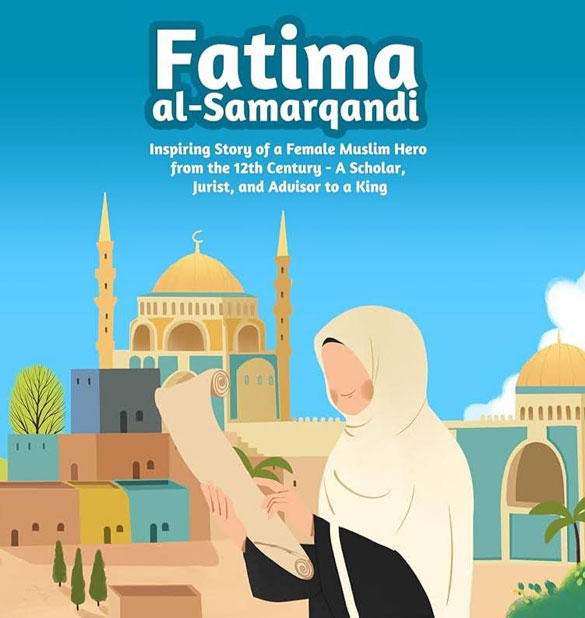
It has always been a common belief that only male scholars can issue fatwas, but this is not completely true. In the Islamic Golden Age, this work was also done successfully by many female scholars. One such female scholar was Fatima al-Samarqandi.
Fatima al-Samarqandi was born in the 12th century in Samarqand, Uzbekistan. Today, Samarkand is the third largest city in Uzbekistan. Since the Middle Ages, Samarkand has been home to many Islamic scholars as well as being the birthplace of Islamic science, art and culture. Fatima al-Samarqandi's father was also a famous Hanafi jurist and scholar of Samarkand, his name was Muhammad ibn Ahmad al-Samarqandi. At that time, Samarkand was situated on the Silk Route, so it used to be a very prosperous and glorious city.
Fatima's father is the author of the famous Hanafi jurist work Tufat al-Fukha. Therefore, Fatima's education was completed by her father and she was made proficient in Quran, calligraphy, Hadith, Muslim justice. On the basis of education received from her father and excellent intelligence, Fatima surpassed many scholars of her time. She became an expert in Islamic law and used to give her opinion on many matters.
As Fatima grew up, the fame of her intelligence and talent started spreading far and wide. Marriage proposals started coming for her from many noble families but Fatima's father wanted to get his capable daughter married to a scholar only. He did not want his daughter to be away from the group of scholars of Samarkand after marriage. He also wanted that after marriage she should continue to carry out her work by staying in Samarkand only. He was afraid that if Fatima got married to an incompetent person, then her intellectual skills would not be fully utilized.
So, to fulfil his purpose, Fatima's father married her to his able student and an expert in Islamic jurisprudence, 'Ala' al-Din al-Kasani. 'Ala' al-Din al-Kasani), popularly known as al-Kasani or al-Kashani, was a 12th-century Sunni Muslim jurist.
Ala' al-Din al-Kasani wrote a commentary on the book Tuhfat al-Fuqaha written by Fatima's father, named Bada'i al-Sana'i fi Tartib al-Shara'i. Fatima's father was highly impressed by this commentary written by Ala' al-Din and found a suitable groom for Fatima al-Samarqandi in the form of Ala' al-Din. It is said that a copy of Bada'i al-Sana'i was given as part of Fatima's dowry. Seeing the ability of Ala al Din, he was given the title of "Malik al Ulama" i.e. King of scholars by the famous Sunni law school, but Fatima's intelligence was more than his, he used to take Fatima's advice in many matters.
After marriage, Fatima and Ala al Din started living with her father. Fatima acquired expertise in jurisprudence and became quite famous for it. Along with this, she also worked as a teacher of Islamic sciences. Fatima used to write fatwas very intelligently. She used to write them very carefully and after the signature of her father and husband, she used to give the fatwa to the recipient. Therefore, the authenticity and reliability of the fatwas written by her increased manifold. It also used to demonstrate her beautiful writing.
Fatima and her husband stayed with Fatima's father till his death. After that both of them shifted to Aleppo in Syria. There, Fatima and her husband both started teaching in the Umayyad Mosque. Their house was 20 km from the mosque. Fatima was associated with the Islamic tradition of Fatima. Here she used to impart education to both men and women equally.
The famous biographer of Aleppo in the 13th century Ibn al-Adim said: "My father told that... her husband sometimes had doubts and made mistakes in issuing fatwas. Then she would give him the correct opinion and explain the reason for his mistake." One of Kasani's students reported: "Sometimes the students would ask al-Kasani difficult questions. He would bid us farewell and go to his home. When he came back, he would answer our questions in detail. This happened often. In the end, we understood that Imam Kasani was going home to ask Fatima questions and then returning with the answers.
The famous biographer of Aleppo in the 13th century Ibn al-Adim said: "My father told that... her husband sometimes had doubts and made mistakes in issuing fatwas. Then she would give him the correct opinion and explain the reason for his mistake." One of Kasani's students reported: "Sometimes the students would ask al-Kasani difficult questions. He would bid us farewell and go to his home. When he came back, he would answer our questions in detail. This happened often. In the end, we understood that Imam Kasani was going home to ask Fatima questions and then returning with the answers. One of Kasani's students said: "Sometimes the students would ask Al-Kasani difficult questions. He would bid us farewell and go home. When he came back, he would answer our questions in detail. This happened often. Finally, we understood that Imam Kasani was going home to ask Fatima questions and then returning with the answers.
This statement shows that Fatima Al-Samarqandi was far more knowledgeable than her husband Ala Al-Din Kasani. She was more talented than him and used to advise and guide him.
Many people doubted her talent just because she was a woman, but after meeting her they were surprised that she was really very talented.
Fatima Al-Samarqandi was not only a great scholar but also a kind and charitable woman. She sold her bracelets to feed the scholars of jurisprudence of Aleppo during the month of Ramadan and hosted a feast for all the scholars, which became a prestigious tradition of Aleppo since then.
Such a great personality has not received an appropriate place in history. The respect she should have received has been lacking somewhere. She was a much more learned and respected woman than many of her contemporaries.
-----
Afroz Khan is a teacher by profession. She primarily writes about women and Islam. She holds a Bachelor's degree in Education.
New Age Islam, Islam Online, Islamic Website, African Muslim News, Arab World News, South Asia News, Indian Muslim News, World Muslim News, Women in Islam, Islamic Feminism, Arab Women, Women In Arab, Islamophobia in America, Muslim Women in West, Islam Women and Feminism