
The Sufi Light of Vadodara: Hazrat Syed Fakhruddin Rifai and the Birth of Rifai Tradition in Gujarat
By Adnan Faizi, New Age Islam
8 November 2025
Hazrat Syed Fakhruddin Rifai, lovingly called Amir Miyan, was a 19th-century Sufi saint of the Rifai Order whose presence brought a spiritual awakening to Vadodara. Born in Surat to Hazrat Syed Nooruddin Hashim Faizullah Rifai, he belonged to the revered lineage of Hazrat Ahmed Kabir Rifai of Basra. His spiritual grace and miraculous deeds deeply influenced Maharaja Khanderao Gaekwad, whose support helped Amir Miyan establish the Khanqah-e-Rifaiya in Dandia Bazaar a centre of peace, healing, and interfaith harmony.
Main Points:
1. Hazrat Syed Fakhruddin Rifai, born in 1200 Hijri, received deep spiritual guidance from his father.
2. Spread Rifai teachings across Gujarat, inspiring countless seekers of divine truth.
3. Maharaja Khanderao Gaekwad was deeply influenced and became his devotee, and granted him the Khanqah site.
4. Hazrat Khanqah became symbol of interfaith harmony, drawing pilgrims from all communities.
5. His urs on 28th and 29th Rabi al-Awwal endures for centuries, reflecting his lasting spiritual legacy.
----
Introduction
In the history of Indian Sufism, Hazrat Syed Fakhruddin Rifai stands out for his deep spirituality and wisdom. Born into a family devoted to the Rifai Order, he inherited not just a lineage but a living spirit of service and inner purification. The Rifai Order, founded in Basra by Hazrat Ahmed Kabir Rifai, had already spread widely by his time. Yet it was in Vadodara, under Maharaja Khanderao Gaekwad’s reign, that Hazrat Fakhruddin firmly rooted the Order in Gujarat and built a model of Sufi practice that rose above religious and social divides. His miracles, seen as signs of divine grace rather than self-glory, drew people closer to Allah. The Khanqah-e-Rifaiya he founded in Dandia Bazaar became a place where Hindus and Muslims, rich and poor, gathered in shared devotion. Even today, his urs attracts thousands, and the sacred ash from his shrine is cherished by people of all faiths for its healing power keeping his legacy of unity and compassion alive across generations.
Early Life and Family Background
Hazrat Syed Fakhruddin Rifai was born in 1199 Hijri (around 1784 CE) in Surat, the thriving port city of Gujarat on the Arabian Sea. His father, Hazrat Syed Nooruddin Hashim Faizullah Rifai, was a respected scholar and spiritual guide of the Rifai Order, whose lineage traced back to Hazrat Ahmed Kabir Rifai of Basra, the founder whose teachings shaped one of the major Sufi traditions of Islam. Recognising his son’s spiritual promise, Hazrat Nooruddin personally oversaw his early education and inner training. The family was known for its learning, piety, and devotion. Under his father’s guidance, Hazrat Fakhruddin studied the Qur’an, Hadith, Islamic law, and theology, while also being introduced to the deeper practices of the Rifai path. From childhood, he displayed an exceptional gift for spiritual understanding and an intuitive ability to perceive divine realities beyond ordinary awareness.
Their home in Surat served as a centre of spiritual learning where seekers gathered for guidance and reflection. The young Fakhruddin often witnessed the transformation of hearts under his father’s instruction. Hazrat Nooruddin was widely respected among Surat’s Muslim merchants, who often sought his advice in both business and faith. Growing up in this vibrant environment of scholarship, spirituality, and trade, Hazrat Fakhruddin developed the rare ability to connect with people from every walk of life from humble traders to members of the royal courts of Gujarat.
Spiritual Training and Initiation into the Rifai Order
Under the guidance of his father, Hazrat Syed Nooruddin Hashim Faizullah Rifai, the young Fakhruddin received deep spiritual training in the Rifai Order. The Rifai way teaches that closeness to Allah can be achieved while remaining active in society a principle that shaped Hazrat Fakhruddin’s entire approach to spiritual service. He took formal bayah (initiation) from his father, pledging devotion, discipline, and sincerity on the path. His practices included constant dhikr (remembrance of Allah), the special Rifai invocations, long fasts, night prayers, and deep meditation. Through these, he developed both inner strength and spiritual insight.
Beyond formal instruction, Hazrat Nooruddin passed to his son the spiritual baraka (blessing) of the Rifai silsila. A sacred transmission that words alone could not convey. Recognising his son’s maturity and mastery of the Order’s teachings, Hazrat Nooruddin granted him Khilafat (spiritual succession), authorising him to guide seekers, prescribe practices suited to their needs, and carry forward the living light of the Rifai path.
Journey to Vadodara and Initial Reception
After completing his spiritual training under his father’s guidance in Surat, Hazrat Fakhruddin felt a divine call to spread the message of the Rifai Order across Gujarat. Known for his deep piety and miraculous grace, his reputation had already begun to reach beyond Surat. With his father’s blessing, he set out for Vadodara, the capital of the Gaekwad dynasty a city thriving with trade, culture, and royal influence. During the reign of Maharaja Khanderao Gaekwad, Vadodara was a prosperous and open-minded centre where Hindu and Muslim traditions coexisted. The Maharaja valued learning and spirituality but viewed new claimants to sainthood with caution. Hazrat Fakhruddin’s growing popularity soon drew mixed reactions admiration from the people but suspicion from sections of the royal court.
Some officials feared that his influence might challenge royal authority or disrupt the religious balance of the state. As a result, when he began his ministry in Vadodara, he faced strong opposition. Though the Maharaja was curious about his reported miracles, he withheld approval at first, and local officers even tried to stop people from visiting him, hinting at expulsion if he continued gathering followers.
The Miracle That Influenced Maharaja’s Heart
The course of Hazrat Fakhruddin’s life in Vadodara changed through a remarkable event that became legendary. When reports of his miracles reached Maharaja Khanderao Gaekwad, the curious ruler decided to test the saint himself. Summoning Hazrat Fakhruddin to his court, he asked him to prove his divine power through a miracle. Hazrat Fakhruddin remained calm and requested a freshly slaughtered chicken. Holding it in his hands, he recited verses from the Qur’an and Sufi invocations, then placed it inside his turban. Moments later, he lifted the turban, and to everyone’s astonishment, a living chicken emerged—feathers glistening, eyes bright, perfectly alive. Amid the awe, one soldier secretly tore off a leg of the bird to test the saint further. At once, Hazrat Fakhruddin turned to the Maharaja and said, “One of your men has hidden the chicken’s leg. Ask him to return it.” The trembling soldier confessed and produced the leg. The saint placed it back, and the bird stood whole again.
The court fell silent. Overwhelmed by this divine display, Maharaja Khanderao bowed before Hazrat Fakhruddin, acknowledging him as a true servant of God. From that moment, he became the saint’s devoted follower and offered full support for his mission in Vadodara.
Royal Patronage and Establishment of the Khanqah-e-Rifaiya
After the miracle witnessed at court, Hazrat Fakhruddin’s standing in Vadodara changed completely. Once seen with suspicion, he was now honoured as a true saint under the protection and respect of Maharaja Khanderao Gaekwad. Grateful and deeply moved, the Maharaja offered him twenty-two villages, complete with their revenue, to help spread the Rifai teachings throughout his kingdom. Hazrat Fakhruddin, faithful to the Rifai ideal of living in the world without attachment, humbly declined the offer. He knew that managing such vast lands would divert him from his spiritual purpose. Instead, he requested a simple piece of land within Vadodara to establish a Khanqah — a place open to all, where seekers could gather for guidance, prayer, and service.
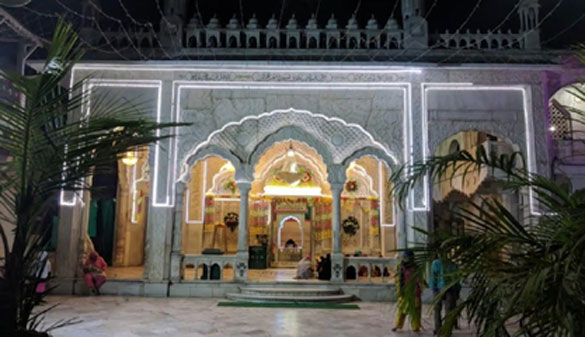
Honouring his request, the Maharaja granted him a prime site in Dandia Bazaar, the lively heart of the city. There, Hazrat Fakhruddin built the Khanqah-e-Rifaiya — a haven that became at once a house of worship, a refuge for the poor, and a school of spiritual learning. The Maharaja himself became a devoted visitor, often sitting at the saint’s feet for counsel and prayer. In time, he came to believe that the peace and prosperity of his rule were blessings born from Hazrat Fakhruddin’s presence. Out of devotion, he ensured continued royal support for the Khanqah’s upkeep and for feeding the needy, urging the saint to remain in Vadodara as a source of divine grace for his people.
Spiritual Teachings and Practices at the Khanqah
At the Khanqah-e-Rifaiya, Hazrat Fakhruddin established a daily routine that embodied the spirit of the Rifai Order. Each day began before dawn with prayers and intense dhikr, where disciples and visitors gathered to remember Allah through rhythmic recitations and heartfelt invocations. These gatherings were not mere rituals but moments of deep spiritual awakening that lifted hearts toward divine presence. Hazrat Fakhruddin often led these sessions himself, his calm yet powerful presence filling the Khanqah with spiritual energy. Many who attended described feeling tears of repentance, inner peace, and moments of divine connection. The saint was known to read the condition of every soul before him, guiding each seeker with personal advice and practices suited to their journey.
Beyond prayer and devotion, the Khanqah served as a vibrant centre of learning. Alongside the Qur’an, Hadith, and Islamic law, students were also taught the inner meanings of the Sufi path. Under Hazrat Fakhruddin’s guidance, seekers found both intellectual clarity and spiritual transformation, making the Khanqah-e-Rifaiya a living symbol of harmony between knowledge and devotion.
Legacy and the Continuing Urs Tradition
Hazrat Fakhruddin Rifai spent his later years in Vadodara, guiding countless seekers and sustaining the Khanqah-e-Rifaiya as a radiant centre of Rifai spirituality in Gujarat. Although the exact date of his passing remains uncertain, the tradition he founded has continued unbroken for more than two centuries. His annual urs, observed on the 28th and 29th of Rabi al-Awwal, stands among Vadodara’s most revered spiritual gatherings, drawing thousands of devotees each year. The urs is marked by Qur’anic recitations, Qawwali assemblies, discourses on the saint’s life and teachings, and the distribution of Langar (blessed communal meals). The Gaekwad royal family long separated from temporal authority yet steadfast in their devotion continues the historic contribution of Rs. 740 each year for the upkeep of the shrine, a custom maintained for over two hundred years. This enduring gesture remains a testimony to the saint’s spiritual bond with the city’s rulers and people alike.
The Khanqah-e-Rifaiya is renowned across Gujarat and beyond for its sacred ash (vibhuti) and blessed water (Pani), both believed to possess healing properties. Pilgrims from diverse faiths Muslims, Hindus, Sikhs, and Christians seek these blessings for health, peace, and fulfilment of prayers. The Khanqah thus stands as a living symbol of interfaith harmony, embodying the Rifai message of divine love that transcends all boundaries.
Interfaith Legacy and Contemporary Significance
The Khanqah-e-Rifaiya is known for its deep spirit of interfaith harmony and communal unity. Over the years, it has become a place where both Hindus and Muslims come together in shared devotion. Many Hindu families visit the shrine before weddings, to pray for children, or during times of illness, reflecting the universal appeal of Hazrat Fakhruddin’s spiritual presence. Among the most touching symbols of this harmony is Manjuben, a Hindu woman from the Mali (flower-seller) community, whose family has served at the Khanqah’s entrance for generations by selling flowers to devotees. Her continued presence reflects the enduring bond between the shrine and local Hindu families. It is common to see Hindu and Muslim couples visit the Khanqah together before marriage, seeking the saint’s blessings for a peaceful life.
The Khanqah remains under the care of the Gadipati family, descendants in the saint’s spiritual lineage. The present Gadipati offers spiritual guidance, distributes blessed ash and water, and preserves the saint’s customs with devotion. Each year, the Khanqah draws large gatherings during Muharram, marked by remembrance of Imam Hussain and the Ahl-e-Bayt. Qawwali performances remain the soul of the urs, keeping alive the musical tradition that expresses the heart of Rifai spirituality.
-----
Adnan Faizi is a Peace and Harmony activist based in Delhi. He is an alumni of CCS University, Meerut.
URL: https://www.newageislam.com/islamic-personalities/sufi-light-hazrat-rifai-rifai-tradition/d/137568
New Age Islam, Islam Online, Islamic Website, African Muslim News, Arab World News, South Asia News, Indian Muslim News, World Muslim News, Women in Islam, Islamic Feminism, Arab Women, Women In Arab, Islamophobia in America, Muslim Women in West, Islam Women and Feminism