
The Shattari Beacon of Burhanpur: Hazrat Shaykh Lashkar Muhammad Aarif of Gujarat and Eternal Spiritual Resilience

By Adnan Faizi, New Age Islam
27 April 2026
Hazrat Shaykh Lashkar Muhammad Aarif Shattari, orphaned young yet divinely nurtured, illuminated Gujarat and Malwa through Shattari silsila. His life reveals Sufism's profound truth: human vulnerability becomes divine strength through murshid's grace.
Main Points:
· Hazrat Shaykh Lashkar Muhammad was born in Mehlasa in 913 Hijri.
· He received khilafat in the Shattari silsila from Hazrat Ghaus Gwaliori.
· He taught in Burhanpur for thirty years continuously.
· He was orphaned at thirteen and raised by grandfather Hazrat Mulk Peer Qureshi.
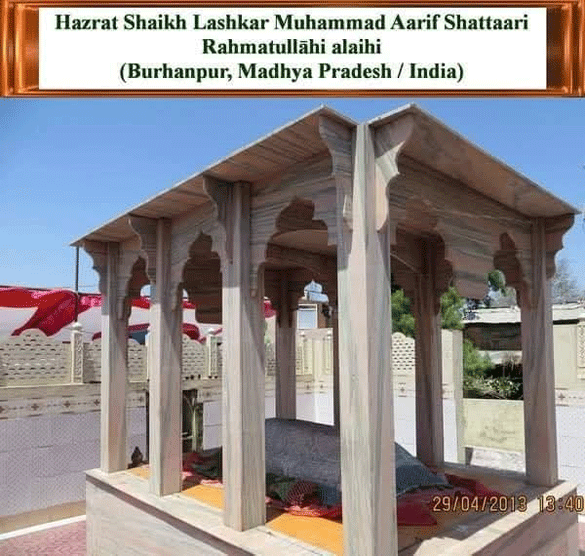
· His six distinguished khulafa spread his silsila, while mazaar shines in Rastipura.
…
Introduction
Hazrat Shaykh Lashkar Muhammad Aarif Shattari stands as a powerful example of resilience, spirituality, and service. He was born in 913 Hijri in Mehlasa, Gujarat. His early life was marked by great loss: his mother passed away when he was only thirteen days old, and his father passed away when he was six years old. He was then raised with care and guidance by his grandfather, Hazrat Mulk Peer Qureshi, whose upbringing helped shape his spiritual future. In 951 Hijri, he travelled to Ahmedabad and became the mureed of Hazrat Syed Shah Hameeduddin Muhammad Ghaus Gwaliori Shattari. Through devoted service to his murshid, his spiritual character was refined. When Hazrat Muhammad Ghaus Gwaliori later departed for Gwalior, Hazrat Shaykh Lashkar Muhammad received khilafat in the Shattari silsila. After this, he spent nearly thirty years spreading knowledge, teaching seekers, and sharing spiritual faez. In 982 Hijri, on the insistence of his disciple Hazrat Shaykh Shah Eisa Jundullah, he moved to Burhanpur, where Rastipura became an important spiritual centre through his presence. Hazrat Shaykh Lashkar Muhammad Aarif Shattari passed away on 1 Shawwal 993 Hijri. His blessed mazaar in Rastipura remains a centre of spiritual blessing. His life teaches that hardship can become strength, and personal loss can be transformed into service, wisdom, and healing for others.
Early Life and Spiritual Journey
Hazrat Shaykh Lashkar Muhammad Aarif Shattari was born in 913 Hijri in Mehlasa, Gujarat, a region known for strong Shattari spiritual influence. His early life was marked by hardship. His mother passed away when he was only thirteen days old, and his father passed away when he was six years old. These losses left him vulnerable at a young age, yet they also became the foundation of his later spiritual strength. He was raised by his grandfather, Hazrat Mulk Peer Qureshi, who took charge of his upbringing and trained him in adab, Qur’anic recitation, and the values of the Shattari path. Under this guidance, he learned discipline, patience, and reliance on Allah. His early years in Mehlasa helped build the character that later made him a spiritual guide. Even in youth, people saw in him signs of unusual promise and compassion. Though no wife is specifically named in available records, he later became the father of three sons—Hazrat Abu Yazeed, Hazrat Mulk Muhammad, and Hazrat Hasan Muhammad—and one daughter, Hazrat Bibi Raasti, showing that sainthood and family responsibility can exist together. In 951 Hijri, he travelled to Ahmedabad, then an important centre of the Shattari silsila, and took bay‘ah with Hazrat Syed Shah Hameeduddin Muhammad Ghaus Gwaliori Shattari. Through service to his murshid, he gained both zahiri knowledge such as fiqh and tafsir, and batini training through zikr and muraqaba. This disciplined companionship refined his inner and outer life.
When Hazrat Ghaus Gwaliori later departed for Gwalior, he granted Hazrat Shaykh Lashkar Muhammad khilafat nama, authorising him to teach and guide others independently. No other formal teachers are specifically recorded, indicating that the combined influence of his grandfather’s upbringing and his murshid’s training shaped his spiritual completion. His early life teaches a powerful lesson: hardship does not end a person’s story. Through guidance, discipline, and sincere companionship, loss can be transformed into strength, and loneliness into service for humanity.
Thirty Years of Teaching and Migration to Burhanpur
After receiving khilafat, Hazrat Shaykh Lashkar Muhammad Aarif Shattari devoted thirty years to irshad, ta’aleem, and spreading Shattari faez across the Gujarat–Malwa region. His khanqah became an important centre of learning where mornings were devoted to Qur’anic explanation, afternoons to guiding the fuqara, and evenings to zikr gatherings that inspired deep spiritual emotion. His daily routine balanced tahajjud, teaching, and communal langar, reflecting the Shattari ideal of rapid spiritual growth through worship and service. His teaching method joined both intellect and heart. Students were trained in Arabic grammar, Hadith, and religious sciences, while also receiving inner guidance through rabita, sama, and spiritual discipline. Though no specific awraad are listed in records, his khilafat naturally included recognised Shattari practices such as ism-e-dhat zikr and negah-e-sharif contemplation. His life remained centred on spiritual work, while his family also flourished under his guidance. His sons pursued knowledge, and his daughter Hazrat Bibi Raasti became known for piety. In 982 Hijri, at the sincere request of his devoted disciple Hazrat Shaykh Shah Eisa Jundullah, he moved to Burhanpur, an important Deccan centre. There, Rastipura became the new khanqah hub where local culture met the spiritual energy of the Shattari path. The khanqah remained simple in style, with modest gathering spaces and open courtyards that welcomed fuqara and travellers from Kandahar to Khandesh.
His years in Burhanpur greatly expanded his influence. Local rulers sought his counsel, merchants requested blessings for trade, and ordinary people came for comfort from hardship and taxation. Daily life there included pre-dawn muraqaba, post-Zuhr instruction and sanad distribution, and Maghrib hatm-e-Shattari gatherings. Though no specific karamat are recorded from this period, the spiritual benefit flowing through the khanqah itself was seen as a silent miracle. His life teaches that a true Sufi adapts to changing places without losing inner stability. Whether in Mehlasa or Burhanpur, he turned every place into a centre of faith, knowledge, and service.
Khalifas, Family Life and Silsila Expansion
Hazrat Shaykh Lashkar Muhammad Aarif trained seven distinguished khulafa, who carried the Shattari silsila to different regions while maintaining spiritual connection with Rastipura. They were: Hazrat Shaykh Shah Eisa Jundullah (main successor and Burhanpur centre), Hazrat Shaykh Muhammad Taj-ul-Aashiqeen (branch of love-centred teachings), Hazrat Shaykh Ibrahim Qari (known for Qur’anic recitation), Hazrat Shaykh Mahmood bin Abdullah Gujarati (revived links with Gujarat), Hazrat Shaykh Murtaza (symbol of sacrifice), Hazrat Shaykh Babu Sindhi (spread the path in Sindh), and Hazrat Shaykh Fatahullah Bharuchi (regional guide in Bharuch). Their diverse backgrounds show the universality of the Shattari order. No hierarchy is specifically mentioned, suggesting each was trusted with full ijazat and responsibility. Through them, independent khanqahs grew across the Deccan and nearby regions. His family life also reflected balanced sainthood. His sons—Hazrat Abu Yazeed, Hazrat Mulk Muhammad, and Hazrat Hasan Muhammad—pursued knowledge under his guidance, while his daughter Hazrat Bibi Raasti became known for piety and helping in khanqah hospitality. Though no spouse is specifically recorded, his household itself became a centre of service. His sons assisted in gatherings, while his daughter supported the langar and guests.
His life shows that true sainthood is not separate from family life. He turned both khanqah and home into places of worship, learning, discipline, and compassion. Through mentorship and family values, he built a legacy based on faith and spiritual character.
Demise, Urs, and Enduring Legacy
Hazrat Shaykh Lashkar Muhammad Aarif passed away in Burhanpur on 1 Shawwal 993 Hijri, on the night of Eid, a date seen as a blessed completion of his spiritual life. His janazah was attended by large crowds, and his khulafa led the prayers. His blessed mazaar at Rastipura continues to radiate barakah. His annual Urs on 1 Shawwal includes qawwali gatherings, langar for orphaned children in memory of his early hardships, and gagar processions honouring service traditions. Night-long sama gatherings, scholarly discussions on his khilafat nama, and the shrine’s simple management reflect his humility. Devotees come in large numbers from Gujarat, Madhya Pradesh, and Maharashtra seeking spiritual benefit. His legacy continues through the descendants of his seven khulafa. Madrasas in Rastipura teach Shattari awraad, while digital recitations help preserve old oral traditions. His influence remains visible in Burhanpur’s culture, where merchant groups seek his barakah and poets mention him in Urdu ghazals. Living customs include Thursday chillas, links with the Urs of Hazrat Eisa Jundullah, and orphan-support programmes.
Scholars also connect the organisation of later Shattari teachings to his khilafat nama. The shrine remains known for interfaith harmony, with local Hindus also joining the langar. For more than four centuries, his life has taught that hardship creates empathy, service creates honour, and family helps preserve noble missions. His Rastipura shrine remains a lasting reminder that Sufism transforms pain into compassion, ordinary lives into service, and sincere hearts into guiding lights for others.
__
Adnan Faizi is a Peace and Harmony activist based in Delhi. He is an alumnus of CCS University, Meerut.
New Age Islam, Islam Online, Islamic Website, African Muslim News, Arab World News, South Asia News, Indian Muslim News, World Muslim News, Women in Islam, Islamic Feminism, Arab Women, Women In Arab, Islamophobia in America, Muslim Women in West, Islam Women and Feminism