
The Qalandar of Qutb-ul-Aqtaab: Hazrat Syed Najmuddin Qalandar and Madhya Pradesh's Eternal Luminary

By Adnan Faizi, New Age Islam
22 April 2026
Hazrat Syed Najmuddin Qalandar, honoured as Peeran-e-Dhar and Qutb-ul-Aqtaab, traversed continents seeking divine proximity. His 42 Hajj, 50 years in Mecca, and Nalcha miracles embody Sufism's universal call to heart-awakening.
Main Points:
· Hazrat Syed Najmuddin was born in Delhi in 637 Hijri.
· He was the khalifa of Hazrat Khwaja Khizr Rumi.
· He became known for the miracle of stone zikr.
· Hazrat travelled widely, performed forty-two Hajj, and spent fifty years in Makkah.
· His mazaar stands in Nalcha, Dhar, Madhya Pradesh.
Introduction
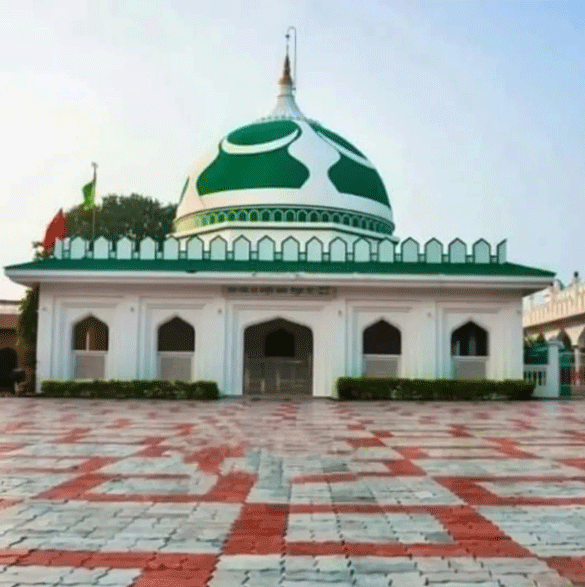
Hazrat Syed Najmuddin Qalandar, honoured with the titles Peeran-e-Dhar and Qutb-ul-Aqtaab, stands among the most remarkable travelling Sufi saints of India. His life connected the spiritual worlds of Baghdad, Makkah, Delhi, and Nalcha through worship, service, and devotion. He was born in 637 Hijri (1234 CE) in Delhi to Hazrat Syed Nizamuddin bin Hazrat Syed Nooruddin Mubarak Ghaznawi. His grandfather had migrated from Baghdad to India, representing the early arrival of Sufi wisdom that linked Arab spirituality with Indian devotional culture. What made him exceptional was his extraordinary life of travel and worship. He journeyed through many lands including Hijaz, Yemen, Rum (Turkey), Spain, and China. He lived in Makkah Mukarrama for fifty years, performed forty-two Hajj pilgrimages, and spent forty years serving pilgrims with water. During periods of fasting, he is said to have broken his fast with beri leaves, reflecting a life of simplicity and spiritual discipline.
Later, he returned to India and in 826 Hijri (1423 CE) settled near Chandola Taalaab in Nalcha village, Mandavgarh (Dhar, Madhya Pradesh), where he established a khanqah that became a centre of the Chishti Qalandari silsila. He was the mureed and khalifa of Hazrat Khwaja Khizr Rumi, and also received Qadri ijazat from Hazrat Meer Syed Nooruddin Mubarak Ghaznawi. His life reflected the true Qalandari spirit—free from worldly attachment yet devoted to serving people. His life teaches a timeless lesson: outward journeys may cross lands, but the greatest journey is the purification of the heart through zikr, discipline, humility, and service to humanity.
Early Life and Ancestral Migration
Hazrat Syed Najmuddin Qalandar was born in 637 Hijri in Delhi, a major centre of the early Chishti order tradition. He belonged to a noble family whose roots extended across the Islamic world. His father was Hazrat Syed Nizamuddin bin Hazrat Syed Nooruddin Mubarak Ghaznawi, while his grandfather had migrated from Baghdad to India (then Hindustan), joining the scholars who spread ilm-e-deen during the Sultanate period. This blessed ancestry gave him a strong spiritual foundation and prepared him for later sainthood. His childhood was spent in the spiritual atmosphere of Delhi, where his father trained him in adab, zikr, and early religious guidance. No reliable records mention a spouse or children, reflecting his Qalandari detachment from worldly ties, as his life became devoted to the wider Ummah. From an early age, he served the fuqara, laying the foundation for a lifetime of worship, discipline, and spiritual struggle. Even in youth, seekers were drawn to his spiritual presence, foreshadowing his later recognition as Qutb-ul-Aqtaab.
His early life shows an important Sufi lesson: migration is not only movement across lands, but movement of the soul from the ego toward Allah. He transformed inherited barakah into lived spirituality through discipline, service, and constant striving.
Global Travels and Meccan Asceticism
In his youth, Hazrat Syed Najmuddin Qalandar began a remarkable life of travel, journeying through both Arab and non-Arab lands including Hijaz, Yemen, Rum (Anatolia), Spain (Andalus), and China. Through these travels, he sought spiritual masters, higher stations of devotion, and deeper knowledge, reflecting the true Qalandari spirit, free from worldly boundaries. He then made Makkah Mukarrama his home for fifty years. During this period, he performed forty-two Hajj pilgrimages and spent forty years serving pilgrims with water, showing that true pilgrimage also means serving others. While fasting, he would break his fast only with beri leaves, a sign of his intense riyazat and detachment from comfort. For thirty years, he remained engaged in worship while seated upon a single stone. During his zikr-e-qalbi, when he recited “Allahu,” the stone itself is said to have echoed the same words, a famous karamat showing how remembrance of Allah filled even the surroundings with spiritual life. This long Meccan period refined both his knowledge and inner state, combining outward worship with deep spiritual presence.
After returning to Hindustan in 826 Hijri, he chose Nalcha village near Chandola Taalaab in Mandavgarh as his place of residence and established a khanqah. There, daily life centred on zikr gatherings, service to the poor, and teaching, spreading faez among the local people. His life teaches that travel can polish the heart, but service gives that polishing meaning. The greatest journey is not only across lands, but inward, towards Allah through worship, humility, and service to humanity.
Bay‘ah, Silsila and Miracles
Hazrat Syed Najmuddin Qalandar received bay‘ah from Hazrat Khwaja Khizr Rumi, becoming his mureed and khalifa. Through this training, he gained ruhani quwwat, including being seen in multiple places at once, a quality linked with advanced Qalandars. He also received Qadri ijazat from Hazrat Syed Nooruddin Mubarak Ghaznawi. Through these blessings, he became the source of the Chishti Qalandari branch, uniting Chishti's love and compassion with Qalandari detachment from the world. No formal madrasa is recorded; most teaching took place in khanqah gatherings through presence, zikr, and heart-to-heart guidance. His practices included zikr-e-qalbi, simple living, public service, and feeding people. As Qutb-ul-Aqtaab, he was regarded as a saint of the highest rank whose guidance reached seekers far and wide. Many karamat are linked with him in Nalcha. When oil was needed for lamps, he ordered water from Chandola Taalaab to be used, and the lamps burned miraculously. When people began repeating this widely, he asked if it was water, where had the oil come from, and the miracle ceased—teaching that miracles are temporary signs, not the goal.
When Hazrat Syed Makhdoom Ashraf Jahangir Simnani and companions arrived unexpectedly without provisions, Hazrat Syed Najmuddin placed vegetables and leaves into a cooking vessel and ordered that each guest be served what they desired. Every guest received the food they wished, showing great barakah. Allah also granted him the Qalandari rank of appearing in multiple places when needed. Yet he never used miracles for fame. His life teaches that true sainthood lies in service, humility, tawakkul, and quietly benefiting others.
Khalifas, Khanqah, and Daily Practices
Hazrat Syed Najmuddin Qalandar appointed one known khalifa: Hazrat Shaah Qutbuddin Bina-e-Dil Qalandar, who continued the Chishti Qalandari silsila from Nalcha to other regions. His khanqah, established near Chandola Taalaab, became a lively centre where fuqara, travellers, and seekers regularly gathered. Daily life revolved around zikr after Fajr, communal deg langar for guests and travellers, and muraqaba gatherings filled with the remembrance of “Allahu.” His personal routine reflected deep balance: tahajjud on the stone where he worshipped, teaching students, and combining fiqh with tasawwuf. He also served local people with the same spirit with which he had once served pilgrims in Makkah. No other disciples are specifically named besides his khalifa, yet his spiritual faez drew people from many places, making the khanqah one of Malwa’s important spiritual centres. His teachings emphasised purification of the heart through inner journeying—showing that the real Hijaz is within the soul. Though no formal poetry is recorded, words of zikr and wisdom naturally flowed from his gatherings.
His impact reached every level of society: merchants learned tawakkul through the langar, scholars learned humility through his miracles, and ordinary villagers found hope through his spiritual presence. His life showed that the Qalandari path opens sainthood to all who live with sincerity, generosity, and remembrance of Allah.
Demise, Urs, and Living Legacy
Hazrat Syed Najmuddin Qalandar passed away on 20 Zil Hijjah 837 Hijri in Nalcha. His janazah was attended by many fuqara, and the prayer was led by his khalifa Hazrat Shaah Qutbuddin Bina-e-Dil Qalandar. His mazaar in Nalcha, Dhar (Madhya Pradesh), near Chandola Talaab, remains a place of barakah despite its simple appearance. His annual Urs on 20 Zil Hijjah includes qawwali gatherings, langar, beri-leaf iftar in memory of his riyazat, and gagar processions around the taalaab, recalling the lamp miracle. Mehfil-e-sama, discussions on Chishti Qalandari awraad, and remembrance of his multi-presence karamat attract lakhs of devotees from Madhya Pradesh, Gujarat, and Rajasthan. His legacy continues through the descendants of Hazrat Shah Qutbuddin Bina-e-Dil Qalandar. Madrasas in Nalcha teach zikr-e-qalbi, and water from the talaab is taken as tabarruk for lamps. Local culture in Malwa reflects his Qalandari values of detached service. Present customs include Thursday chillas, black-gram dal langar recalling the miraculous deg, and digital Urs broadcasts.
Devotees seek his blessings for safe travel, speech fluency, and abundance. Scholars mention him in silsila chains, and the shrine remains known for interfaith harmony, with Hindus also joining the langar. For more than six centuries, Hazrat Syed Najmuddin’s message has remained clear: journey inwardly, serve outwardly. His life shows that true sainthood is not distance from people, but guiding communities through discipline, love, and selfless service.
___
Adnan Faizi is a Peace and Harmony activist based in Delhi. He is an alumnus of CCS University, Meerut.
New Age Islam, Islam Online, Islamic Website, African Muslim News, Arab World News, South Asia News, Indian Muslim News, World Muslim News, Women in Islam, Islamic Feminism, Arab Women, Women In Arab, Islamophobia in America, Muslim Women in West, Islam Women and Feminism