
The Chishti Sabri Luminary of Rudauli: Hazrat Makhdoom Shaykh Ahmad Abdul Haq and Eternal Principles of Unity

By Adnan Faizi, New Age Islam
04 May 2026
Hazrat Makhdoom Shaykh Ahmad Abdul Haq, a pioneer of the Chishti Sabri path, turned the challenges of his life into a source of service for others. Through patience and strong faith, he guided people beyond divisions and brought hearts together. His life shows that difficulties means to build character and create unity, especially between different communities.
Introduction
Hazrat Makhdoom Shaykh Ahmad Abdul Haq was born on 21 Zil Qa’ada 737 Hijri in Rudauli, into the noble Farooqi lineage. His father was Hazrat Shaykh Umar bin Hazrat Shaykh Dawood, and his grandfather had migrated from Balkh to India during the time of Sultan Alauddin Khilji, establishing this spiritual family. From an early age, his life was shaped by devotion. At just seven years old, he began offering tahajjud, later travelling to Delhi for outward religious learning. His turning point came in Panipat, where he met Hazrat Shah Jalaluddin Mahmood Kabeer ul Auliya. After passing a series of three spiritual tests, he was accepted into bay‘ah. He then underwent intense spiritual discipline, including six months of grave mujahida, after which he was given the title “Abdul Haq” and granted khilafat. He further performed nine months of riyazat at the Saryu river, where he received Dua-e-Haidari through the spiritual blessing of Hazrat Ali Murtaza, conveyed via a Prophetic bashaarat. Returning to Rudauli, he established a khanqah that became a centre of the Chishti Sabri silsila, serving people from all backgrounds. He had one surviving son, Hazrat Shaykh Muhammad Aarif, after earlier children passed away as part of divine testing. His three main khulafa—Hazrat Shaukh Abdul Quddoos Gangohi, Hazrat Shaykh Muhammad Aarif, and Hazrat Shaykh Fareed Bakthiyari—carried his teachings forward.
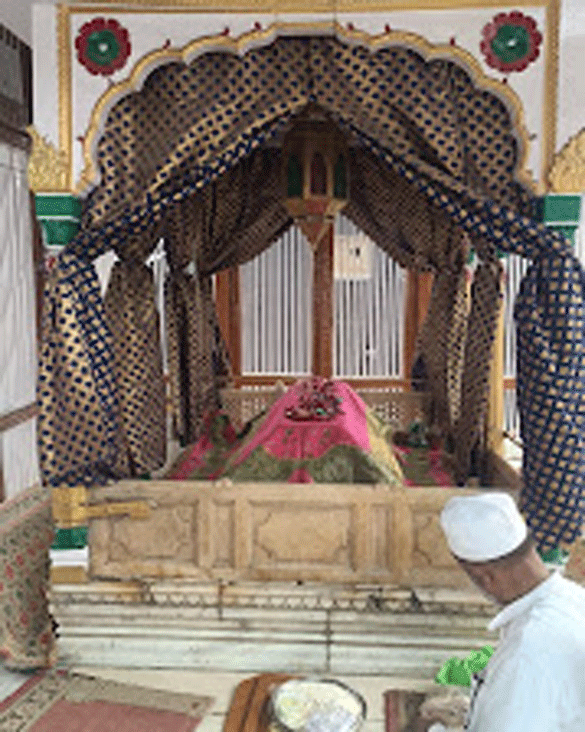
Many remarkable events are linked with him, including abundance from the deg which he later stopped out of humility, the jalaal-jamaal nazar that revived a wedding procession, and even guidance from his grave after wisaal, showing his high spiritual rank. Hazrat Makhdoom Shaykh Ahmad Abdul Haq passed away on 15 Jamadi us Sani 837 Hijri. His mazaar in Rudauli continues to be a place of barakah. His life teaches that true success lies in patience during trials, sincerity in service, and living principles that bring people together.
Early Life and Farooqi Migration Legacy
Hazrat Makhdoom Shaykh Ahmad Abdul Haq was born on 21 Zil Qa’ada 737 Hijri in Rudauli, a spiritual centre of Awadh. He belonged to the noble Farooqi lineage of Hazrat Umar Farooq, through his father Hazrat Shaykh Umar bin Hazrat Shaykh Dawood. His grandfather, Hazrat Shaykh Dawood, had migrated from Balkh to India during the reign of Sultan Alauddin Khilji, bringing Central Asian knowledge into the Indian spiritual environment. No reliable details are recorded about his mother. From childhood, he showed clear signs of devotion. At the age of seven, he began offering tahajjud, showing a natural inclination toward worship while others his age remained engaged in ordinary activities. He later travelled to Delhi, where he gained zaahiri knowledge, including Qur’an recitation, fiqh, and Hadith. His early life also included wandering journeys that eventually led him toward Panipat, preparing him for the major spiritual tests ahead. His life teaches that strong lineage provides a foundation, but true greatness comes through discipline, learning, and sincere devotion from an early age.
Panipat Imtihaan and Baatini Training
Hazrat Makhdoom Shaykh Ahmad Abdul Haq’s journey brought him to Panipat, where Hazrat Shah Jalaluddin Mahmood Kabeer ul Auliya was already aware of his arrival and instructed that food be prepared. During the test, a dastarkhwan was laid containing both permissible and impermissible items. Recognising what was not lawful, Hazrat immediately left, showing firm adherence to Shari‘ah over comfort. After this, he tried to leave Panipat, but three times he was brought back through divine will. On the third day, a white-robed elder and then two travellers directed him towards the same khanqah, confirming that this was his destined path. Realising this, he returned and accepted bay‘ah, completing the test. Under his murshid, he then underwent intense baatini training. He performed six months of grave mujahida, after which he was given the name “Abdul Haq” and granted khilafat, marking his spiritual completion. He further undertook nine months of standing riyazat in the Saryu river, where he received Dua-e-Haidari from Hazrat Ali Murtaza, conveyed through a Prophetic bashaarat.
These stages showed a clear spiritual method: first testing obedience, then deep self-discipline. His life teaches that repeated obstacles may be signs of divine direction, and true growth comes through patience, discipline, and complete surrender to guidance.
Rudauli Khanqah, Karamaat, and Silsila Expansion
After receiving ijazat, Hazrat Makhdoom Shaykh Ahmad Abdul Haq established his khanqah in Rudauli as a centre of the Chishti Sabri silsila. His daily routine included morning dars combining outward and inward knowledge, afternoon service to fuqara, and evening zikr gatherings, along with tahajjud and communal langar. The transmission of Dua-e-Haidari became a distinctive feature of the Sabri path, emphasising strong and rapid spiritual progress. His teaching combined justice from his Farooqi heritage with Chishti love, attracting Hindu, Muslim scholars, and common people alike. Merchants learned ethical trade, artisans sought blessings, and interfaith dialogue created harmony in Awadh. Though no spouse is initially recorded, his children were tested, as each newborn recited “Haq Haq Haq” and passed away, until Hazrat Shaykh Muhammad Aarif survived by divine will, continuing the lineage. Many karamaat are associated with him. His deg fed people for three days without decreasing, but he later stopped it to avoid fame, teaching humility. His jalaal-jamaal nazar once destroyed and then restored a wedding procession, showing both power and mercy. Even after his passing, he guided Hazrat Shaykh Abdul Quddoos Gangohi from his grave, proving that spiritual responsibility continues beyond life.
He trained three main khulafa: Hazrat Shaykh Abdul Quddoos Gangohi, who spread the silsila widely; Hazrat Shaykh Muhammad Aarif, who preserved the family tradition; and Hazrat Shaykh Fareed Bakthiyari, who expanded it regionally. Each was given full ijazat, ensuring both continuity and growth of the Chishti Sabri path. His life shows that a true spiritual centre unites knowledge, service, discipline, and compassion, guiding people of all backgrounds toward faith and harmony.
Demise, Urs, and Contemporary Relevance
Hazrat Makhdoom Shaykh Ahmad Abdul Haq passed away on 15 Jamadi us Sani 837 Hijri. His janazah was attended by large numbers of people from Awadh, and his khulafa led the prayers. His mazaar in Rudauli continues to radiate the faez of the Chishti Sabri silsila, and even after his passing, his turbat guidance showed that his spiritual role continued. His annual Urs on 15 Jamadi II includes Dua-e-Haidari gatherings, langar recalling the deg miracle, and gagar processions symbolising Saryu mujahida. Qawwali is recited in his memory, scholars discuss the Panipat imtihaan, and people from different faiths participate. The management of the shrine remains simple, reflecting his rejection of fame. His legacy continues through the descendants of Hazrat Abdul Quddoos Gangohi. Madrasas in Rudauli teach structured mujahida, while digital platforms preserve Dua-e-Haidari traditions. His influence is visible in Awadh’s culture, where Hindu festivals include Sufi gatherings and Muslim events include interfaith participation. Living practices include grave chillas, river-based riyazat, and infant blessing customs.
For more than six centuries, his life has taught key principles: remain firm during tests, avoid fame to protect sincerity, and balance strength with mercy. His Rudauli shrine reminds that true Sufism transforms trials into guidance, builds responsible leadership, and brings people together in unity and service.
__
Adnan Faizi is a Peace and Harmony activist based in Delhi. He is an alumni of CCS University, Meerut.
New Age Islam, Islam Online, Islamic Website, African Muslim News, Arab World News, South Asia News, Indian Muslim News, World Muslim News, Women in Islam, Islamic Feminism, Arab Women, Women In Arab, Islamophobia in America, Muslim Women in West, Islam Women and Feminism