
Hazrat Sirajuddin Abdullah Shattar Mast: The Lightning Mystic of Indian Sufism

By Adnan Faizi, New Age Islam
3 December 2025
Hazrat Sirajuddin Abdullah Shattar(Shattari) Mast established the lightning-quick Shattari path to India, defying conventional asceticism with regal presence, bold teachings, and universal Khilafat. Settling in Mandu, he shaped a lineage that later influenced emperors, scholars, and artists like Tansen.
Main Points:
1. Hazrat Sirajuddin Abdullah Shattar founded the Shattari order to India from Iran in the 15th century.
2. He got spiritual authorisation (Khilafat) from all fourteen major Sufi orders.
3. Dressed in royal robes, he openly invited people to "witness God" directly in his presence.
4. Hazrat settled in Mandu (Madhya Pradesh) under Sultan Ghiyathuddin Tughluq's royal patronage.
5. Hazrat's silsila later influenced Mughal Emperor Humayun and the legendary musician Tansen.
----
Introduction
Hazrat Sirajuddin Abdullah Shattar(Shattari) Mast remains one of the most striking and unconventional mystics in Indian Sufi history. He arrived in India during the decline of the Delhi Sultanate, carrying with him the Shattari Sufi Silsila, famed for its method of swift, lightning-like spiritual completion, reflected in his title “Shattar,” meaning lightning.Unlike the Chishti and Suhrawardi saints of his era, Hazrat Sirajuddin Abdullah Shattar travelled like a royal mystic. He wore regal robes, moved with musical drums, and publicly invited seekers to come and witness God directly an approach that shocked some and inspired many. His journey from Iran took him through Delhi, Jaunpur, Bihar, and Bengal, before he finally settled in Mandu, where he received the patronage of Sultan Ghiyath uddin Tughluq. He had khilafat of all fourteen major Sufi orders, asserting a universal spiritual authority that set him apart from contemporary hierarchies. Rooted in the ecstatic Isqiya and Bistamiya traditions, he rejected the long path of fana and taught instead a direct, rapid illumination of the Divine. His legacy shaped the future of the Shattari Silsila, influencing saint like Hazrat Shah Muhammad Ghawth of Gwalior, and reaching figures such as Mughal Emperor Humayun and the legendary musician Tansen. Today, his shrine in Mandu Fort (Kila Mandav) stands as a reminder of a saint who believed that the journey to God could be swift, open, and majestic not hidden, harsh, or slow.
Early Life, Lineage, and Spiritual Formation
Hazrat Sirajuddin Abdullah Shattar(shattari) Mast was born in the spiritual heartlands of Persia, with ancestral roots in Iran one of the renowned nurseries of Islamic mysticism. He came from a remarkable spiritual lineage: he was the fifth-generation descendant of Hazrat Shahbuddin Suhrawardi, founder of the Suhrawardi order, and traced his chain back seven generations to Hazrat Bayazid Bustami, the celebrated early mystic. This heritage placed him within both the disciplined Suhrawardi tradition and the ecstatic Bistamiya current. His spiritual training unfolded under Hazrat Shaykh Muhammad Taifur (also known as Muhammad Arif Taifuri). His detailed lineage runs from Hazrat Shaykh Taifuri to Hazrat Shaykh Muhammad Ashiq, to Hazrat Shaykh Khuda Quli, and then upward through the masters of the Isqiya and Bistamiya traditions paths known for their emphasis on direct divine experience and ecstatic spiritual states rather than strict austerity.
Recognising his prodigious inner capacity, Hazrat Shaykh Muhammad Taifur conferred upon him the title “Shattar,” meaning lightning-fast traveller on the spiritual path. This was a statement of his method: instead of decades of struggle and renunciation, the Shattari approach relied on intense inner practices designed to break through the veils between the seeker and the Divine with unusual speed. Before journeying to India, Hazrat Sirajuddin Abdullah Shattar attained mastery across the full range of esoteric sciences. He received Khilafat from all fourteen major Sufi orders of his time an exceedingly rare distinction. This universal authorisation gave him the unique standing to initiate seekers into any lineage, though he ultimately chose to advance his own distinctive Shattari way.
Arrival in India: A Royal Mystic
Hazrat Sirajuddin Abdullah Shattar(shattari) entered the Indian subcontinent in the early 15th century, at a time when the Delhi Sultanate’s authority was fading and regional powers were rising. His arrival was dramatic. Instead of the patched wool cloak (khirqa) and humble posture expected of Sufis, he appeared like royalty dressed in silk and brocade, with drums and banners announcing his travels as if he were a sovereign. This was a conscious spiritual declaration: the true “king,” he taught, was the one who possessed the knowledge of God, and real faqr (spiritual poverty) was an inner state, not an outward display. As he moved across Delhi, Jaunpur, Bihar’s forests, and Bengal’s river-lands, his disciples proclaimed: “Is there anyone who wants to see God? Is there anyone who seeks the path to the Divine?” The directness of this call startled some scholars and electrified common seekers.
In India particularly in Daryapur, Manikpur, Jaunpur, and Mandwa he tested aspirants through unorthodox methods. Sources mention his famous trial of observing how a seeker ate, saying: “One who cannot do justice to food cannot do justice to prayer.” For the Shattaris, physical discipline and a joyful engagement with the world were inseparable from spiritual readiness. His message was radical in its simplicity: the Divine could be witnessed here and now, and the Shattari path could take a seeker to mushahada (direct witnessing) without the long, gruelling asceticism demanded elsewhere. His teaching remained boldly direct: the Divine was not distant or hidden behind decades of severe austerity. It was accessible in the present moment, and the Shattari discipline intense, focused, and inward claimed to take a sincere seeker swiftly to Mushahada (direct witnessing).
Settlement in Mandu and Royal Patronage
After years of traveling across North and East India, Hazrat Sirajuddin Abdullah Shattar(Shattari) finally settled in Mandu today in Dhar district, Madhya Pradesh the capital of the Malwa Sultanate. Perched on a high plateau and fortified by stone walls, Mandu was a flourishing cultural centre, perfectly suited to Hazrat Sirajuddin Abdullah Shattar’s regal mode of Sufism. He arrived during the reign of Sultan Ghiyathuddin Tughlaq (1469–1500), a ruler noted for his eccentric temperament and preference for peace. Struck by the Shaykh’s spiritual authority and fearless declarations, the Sultan became an ardent patron. Many Chishti saints who kept a guarded distance from rulers, yet Hazrat Sirajuddin Abdullah Shattar saw no contradiction between worldly influence and spiritual truth. He accepted royal support openly, living in Mandu with dignity and using his standing to spread Shattari teachings among nobles and ordinary people alike.
From this Mandu centre, the Shattari order took firm root in India. He reshaped the path for the local environment, initiating a process of indigenisation that later allowed his successors to incorporate yogic disciplines and regional languages into the order’s practice. His Khanqah in Mandu became a magnet for seekers drawn to the promise of a swift, “lightning” ascent toward Divine witnessing. He continued teaching and initiating disciples until his death.
Death and Legacy
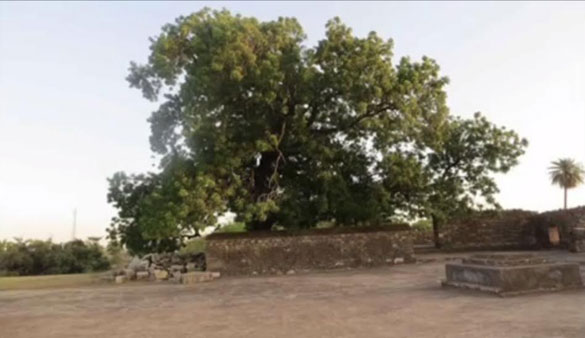
Hazrat Sirajuddin Abdullah Shattar(Shattari) Mast passed away in 1472 CE in Mandu and was buried within the royal fortress of Kila Mandav in present-day Dhar, Madhya Pradesh. His dargah still draws pilgrims, its setting among the ruined fort walls echoing the majesty and boldness that shaped his life. His real legacy lives through the Shattari order he founded in India. While he laid the groundwork, it was his successors who carried it into its full flowering. In the early generations, the order held firm in Malwa and Bihar, but it reached its intellectual and spiritual peak under Hazrat Shah Muhammad Ghawth of Gwalior. Hazrat Muhammad Ghawth deepened the order’s Indian character translating yogic texts like the Bahr al-Hayat into Persian and counted among his admirers Emperor Humayun. Even the legendary musician Tansen was his disciple, showing how deeply the Shattari path entered India’s artistic world.
The order spread far beyond royal circles. In Gujarat, Hazrat Wajihuddin Alvi once a critic became a devoted master and created a vibrant branch. Another major centre emerged in Maharashtra at Sufi Baug, Nandura. Through Hazrat Sibghatallah al- Hindi, the order travelled to Medina, and later reached the Malay-Indonesian world, becoming an international spiritual network.
What set Hazrat Abdullah Shattar’s path apart was its focus: instead of seeking fana (annihilation of the self), the Shattaris pursued an expanded, illuminated consciousness and direct witnessing of Divine attributes. His life marked by royal attire, drums, banners, and the promise of a swift, “lightning-like” ascent to God reshaped Indian Sufism. He showed that a mystic could carry the dignity of a king while leading seekers on a path both immediate and ecstatic.
----
Adnan Faizi is a Peace and Harmony activist based in Delhi. He is an alumni of CCS University, Meerut.
URL: https://www.newageislam.com/islamic-personalities/hazrat-shattar-mast-mystic-indian-sufism/d/137868
New Age Islam, Islam Online, Islamic Website, African Muslim News, Arab World News, South Asia News, Indian Muslim News, World Muslim News, Women in Islam, Islamic Feminism, Arab Women, Women In Arab, Islamophobia in America, Muslim Women in West, Islam Women and Feminism