
Hazrat Shah Abdul Ghani bin Abdul Latif Chishti Sabiri Dehlawi: A Beacon of Tawhid and Scholarship in 18th-Century Delhi

By Adnan Faizi, New Age Islam
25 October 2025
Hazrat Shah Abdul Ghani was a towering 18th-century scholar-saint of Old Delhi, combining hadith teaching with the Chishti-Sabiri path of Sufism. He guided hundreds of disciples, authored key metaphysical works and upheld spiritual integrity amidst the decline of the Mughal era.
Main Points:
1. He traced his lineage to Hazrat Ali and descended from Hazrat Khwaja Muinuddin Chishti via the Sabiri branch.
2. He studied under Hazrat Maulana Abdul Salam Farangi Mahalli and Hazrat Maulana ʿAli ʿAbid Dehlawi.
3. He took bayah at the hands of Hazrat Shah Faqir uddin Chishti and received khilafat around 1750 CE.
4. His principal works include Majmua-e Tawhid and Haqiqat-e-Muhammadi, Integrating wahdat al-wujud within shariah.
5. He passed away in 1184 AH and is buried beside his father at Ajmeri Gate, Delhi.
----
Introduction
In the vibrant milieu of 18th-century Delhi, where scholarship and spiritual practice intersected amidst political upheaval, Hazrat Shah Abdul Ghani was born circa 1115 AH/1703 CE into a distinguished family settled near Fatehpuri Masjid in Shahjahanabad, he inherited both a lineage of Syed and a rich Chishti-Sabiri heritage. Under the tutelage of his father and eminent scholars of Old Delhi, he combined rigorous hadith instruction with a profound Sufi path, eventually becoming a master in the Sabiri method. His khanqah near Kucha Chelan became a centre of hadith-teaching, zikr circles and manuscript production. Amidst the ravages of war and the decline of Mughal power, he remained committed to Adab, poverty, and spiritual service. His works on Tawhid and the Haqiqat-e-Muhammadi influenced later Delhi-Sufi circles, while his annual urs continues to draw devotees devoted to his memory and path.
Early Life and Family Background
Hazrat Shah Abdul Ghani was born around 1115 AH (approximately 1703 CE) in Old Delhi (Shahjahanabad), during the concluding years of Emperor Aurangzeb’s reign. According to tradition his family traced prophetic descent via Hazrat Ali ibn Talib, and his paternal lineage traced back to the Sabiri branch of the Chishti order, descending from Hazrat Khwaja Alauddin Sabir Kaliyari (1188-1290 CE). His father, Hazrat Shah Abdul Latif Chishti, served as a Faqih and Pir attached to the Khanqah of the Kalan Masjid in the same locality. The area around Fatehpuri Masjid was known in records (Mashaikh‑e‑Chisht) as a Chishti enclave within Old Delhi. From an early age Hazrat Abdul Ghani memorised Qurʾan, studied Persian and learned hadith under his father’s supervision; this foundational education set the stage for his subsequent scholarly and spiritual formation.
Education and Teachers
In his youth (ages circa 11-20), Hazrat Shah Abdul Ghani embarked upon a systematic programme of instruction: first mastering the Qurʾān, Persian language and early hadith at home under Hazrat Shah Abdul Latif. He then studied fiqh with Hazrat Maulana Abdul Salam Farangi Mahalli, and hadith with Maulana ʿAli ʿAbid Dehlawi. Subsequently he undertook spiritual training: he entered in the Chishti-Sabiri line under the disciple of Hazrat Shah Kalimullah Dehlawi (1650-1729) namely Hazrat Shah Faqir uddin Chishti. In short, his education combined traditional Islamic sciences (Fiqh, Hadith, Tafsir) with full immersion in the Chishti-Sabiri spiritual path. He became proficient in Arabic, Persian and early Urdu, and held regular hadith classes while simultaneously conducting zikr-circles in his father’s khanqah at the Kalan Masjid.
Bayʿah, Khilafat and Teaching Work
After taking Bay’Ah from Hazrat Shah Faqir uddin Chishti, Hazrat Shah Abdul Ghani received Khilafat in 1750 CE, authorising him to guide disciples and lead zikr and tasfiyah according to the Chishti‑Sabiri method. His khanqah was situated in the vicinity of Kucha Chelan, in Shahjahanabad, where he gathered a wide circle of murids and hundreds of Ulama travelled between Delhi and Rampur to study under him. His daily routine included the observance of Tahajjud in prostration, weeping until Fajr, forty-day seclusions (chilla) in the Tughlaqabad ruins, and a blend of Zahri and Khafi Zikr patterned on the Sabiri style of alternating breaths. He also integrated hadith instruction (e.g., Shamail, Mishkat) with Chishti zikr circles at the Kalan Masjid, and his lectures were compiled posthumously by disciple Hazrat Maulana Abdul Rahim Dehlawi as Malfuzat-e-Abdul Ghani. Among his prominent students/disciples were Hazrat Shah Abdul Karim Meeruthi and Hazrat Maulana Rahmat Ali Kandhlawi. His emphasis on poverty (Kasb Al-Halal), avoidance of courtly patronage, and the rigorous Adab of Sama (permitting music only in the presence of the guru) distinguished his method.
Teachings and Manuscripts
Hazrat Shah Abdul Ghani taught a spiritual-metaphysical path rooted in the Chishti-Sabiri ethos but articulated through rigorous scholarship. The central theme of his teaching was the unity of being (Wahdat) within the limits of shariah, explained via Quranic verses on “Noor”. His principal Persian-Urdu works include Majmua-i Tawhid (1740s CE) — extant in manuscript form in Delhi and Lucknow libraries — and Haqiqat-e-Muḥammadi (Sharh al-Haqaiq al-Muḥammadiyya), a treatise on the Pre-Eternal Light of the Prophet. He also authored shorter Risalas: Risala Tasfiyah al-Qalb, Makashifat al-Ghani, ʿAyn al-Tawajjuh. An autograph in Nastaliq script dated 1170 AH is held in the Raza Library, Rampur. As an addendum to Majmua-i Tawhid he included forty Persian Rubaiyat extolling divine love. Weekly on Thursdays he read and commented upon the Masnavi-e-Rumi, and he also wrote partial Tafsir on Surat Hadid (fragmentary folios survive at Rampur). His hadith classes regularly covered the Shama’il of Tirmidhu and Mishkat al-Masabih. Later Delhi-Sufi scholars such as Hazrat Shah Abdul Rahim Dehlawi and Hazrat Shah Abdul Aziz Dehlawi frequently quote his works.
Influence, Death and Legacy
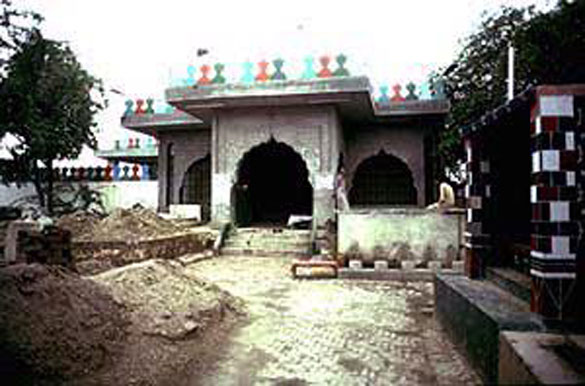
During his lifetime Hazrat Shah Abdul Ghani corresponded with other major Sufi figures such as Hazrat Noor Muhammad Muharvi (1730-1790) and the descendants of Hazrat Shah Kalimullah. He lived through the turbulent invasion of Delhi by Hazrat Nadir Shah (1739) and the gradual decline of Mughal authority in the capital. He is recorded in Delhi-archives as the “Mashayikh-e-Chisht ka ʿAlim-e Kamil” (the perfect scholar of the Chishti masters). He played an active public role in repairing mosques in the Fatehpuri and Ajmeri Gate quarters of Delhi from his personal means. Reported miraculous events include a flood in Delhi receding after his Dua in 1178 AH and the healing of a blind disciple who recovered his sight. After his death in 1184 AH (1770 CE), he was interred beside his father at Ajmeri Gate, Delhi. His Mazar comprises a round-chambered dome with blue-tile Quranic inscriptions, restored in 1912 by the Delhi Awqaf. His annual Urs is observed on 11 Shaban with recitation of the Masnavi, Naat assemblies and a three-day Langar. His manuscripts Majmua-e Tawhid and Haqiqat-e-Muhammadi remain key texts for students of Chishti metaphysics of unity and prophetic light.
Conclusion
Hazrat Shah Abdul Ghani stands as a luminous figure in the landscape of Indian Sufism and hadith scholarship. He bridged rigorous traditional scholarship with deep spiritual realisation, preserved the Sabiri-Chishti heritage in Old Delhi and left a legacy of teaching, writing and discipleship that endured beyond his lifetime. In an era marked by political decline and social change, his steadfast commitment to Adab, poverty and inner transformation offers a timeless model for seekers of knowledge and spiritual depth.
----
Adnan Faizi is a Peace and Harmony activist based in Delhi. He is an alumni of CCS University, Meerut.
New Age Islam, Islam Online, Islamic Website, African Muslim News, Arab World News, South Asia News, Indian Muslim News, World Muslim News, Women in Islam, Islamic Feminism, Arab Women, Women In Arab, Islamophobia in America, Muslim Women in West, Islam Women and Feminism