
Hazrat Shah Abdul Aziz Muhaddith Dehlavi: The Scholar-Saint Who Sparked Legal Reform and Anti-Colonial Awakening in Mughal and British Delhi

By Adnan Faizi, New Age Islam
28 November 2025
Hazrat Shah Abdul Aziz Muhaddith Dehlavi, the Islamic legal mind of his era and eldest son of Hazrat Shah Waliullah Dehlavi, unified spiritual authority, legal reform, and fierce intellectual resistance during Delhi’s traumatic transition from Mughal to British rule. His 1803 fatwa declaring India “Dar-ul-Harb” (land at war) was a historic milestone, giving legal voice and religious legitimacy to the dream of freedom, while his deep scholarship, uncompromising stance against innovation (bid‘ah), critique of Shia ritual, and passionate teaching at Madrasa Rahimiya shaped generations of Muslim jurists, resistance leaders, and Sufis.
Main Points:
1. Hazrat Shah Abdul Aziz Muhaddith Dehlavi was eldest son of Hazrat Shah Waliullah and Delhi reform leader.
2. Issued 1803 fatwa declaring British India Dar-ul-Harb, catalysing anticolonial resistance and legal reform.
3. His scholarship, fatwas, and Sufi discipline reshaped Islamic law and resistance traditions.
4. He founded school of ijtihad and trained Syed Ahmad Barelvi and other major revival leaders.
5. He died in 1824, leaving a lasting legacy as scholar and reformer.
-----
Introduction
The influence of Hazrat Shah Abdul Aziz Muhaddith Dehlavi (1746–1824) still reaches into every later debate on Islamic law, reform, and resistance in South Asia. He was born on 25th Ramadan 1159 Hijri in Delhi, into a household where learning was not just valued but lived. As the son of Hazrat Shah Waliullah Dehlavi the leading intellectual of 18th-century Islam, he inherited a remarkable legacy and a city struggling through a chaotic, collapsing era. The world around him was changing rapidly the Mughal empire was falling apart, Maratha attacks rattled Delhi, and the British were steadily tightening their grip. He memorised all six major Hadith books, mastered Qur’anic commentary, and issued legal rulings marked by precision and courage. His words carried clarity and conviction, and people from every walk of life citizens, scholars, and even rulers turned to him for guidance in an age filled with fear and uncertainty. Delhi was collapsing, the Mughal authority had faded, and by 1803 the British had taken firm control. In this upheaval, Hazrat Shah Abdul Aziz became a steady guiding light. His writings challenged injustice, his sermons awakened conscience, and his fatwas strengthened the wider struggle for dignity and self-determination. The legacy he left rooted in law, ethics, and resistance to oppression continues to influence the intellectual and social life of the subcontinent today.
Early Life and Family Background
Hazrat Shah Abdul Aziz was born in Delhi as the eldest son of Hazrat Shah Waliullah Dehlavi and his second wife, Hazrat Bi Iradah. Born as "Ghulam Halim" he was the grandson of the eminent jurist and reformer Hazrat Shah Abdur Rahim, founder of Madrasa Rahimiya. The Dehlavi family traced their ancestry to Hazrat Umar Farooq, the second caliph, widely respected for their piety, asceticism, and mastery of Islamic law. Hazrat Shah Abdul Aziz grew up in a household devoted to scholarship and spiritual discipline, alongside his brothers Hazrat Shah Abdul Qadir, Hazrat Shah Rafi uddin, and Hazrat Shah Abdul Ghani each of whom would later become noted scholars and Sufis. By the age of five, Hazrat Shah Abdul Aziz had begun memorising the Qur’an, and from an early age displayed an extraordinary aptitude for Hadith, Fiqh, and related sciences.
From childhood, he lived in an atmosphere of learning. Qur’an, Hadith, and Fiqh were part of his daily life, shaped by a father who taught him to balance outer law with inner spirituality and guided by mentors like Hazrat Khwaja Amin and Hazrat Aashiq Folti. In addition to religious sciences, he studied Persian, Arabic, logic, philosophy, and the advanced sciences of the time, quickly gaining the knowledge and authority to teach even before reaching his teens. Following his father’s death in 1762 CE, By just 17, he had already become the head of Madrasa Rahimiya, the leading centre of Islamic learning in India. marking the start of a remarkable career as a teacher, writer, and reformer whose influence would shape Islamic scholarship and social thought across South Asia.
Reformist Legal Thought, Anti-Shia Fatwas, and Political Pragmatism
Hazrat Shah Abdul Aziz’s scholarly career was marked by a combination of rigorous reformist zeal, sectarian critique, and political pragmatism. Perhaps the most controversial aspect of his work was his uncompromising stance against Shia practices. He regarded certain Shia beliefs particularly regarding the Imamate and the cursing of the Companions as serious deviations from Islamic orthodoxy. His fatwas forbade Sunnis from initiating greetings with Shias, consuming food slaughtered by them, or entering into inter-sectarian marriages; he also proscribed Shia religious gatherings as heretical. Yet, he stopped short of declaring Shias entirely outside Islam (kafir), instead classifying them as heretics (Mulhid) while retaining their legal status as Muslims. His detailed refutations in works such as Tuhfa Ithna ‘Ashariyya (Gift to the Twelvers) continue to serve as important references in sectarian discourse worldwide. Beyond sectarian issues, Hazrat Shah Abdul Aziz was a staunch opponent of popular innovations, superstitions, and syncretic practices. He called for a purified Islam rooted solely in the Qur’an, Hadith, and independent legal reasoning (ijtihad). His mentorship shaped generations of scholars and spiritual seekers, who admired him for his intellectual rigor and uncompromising commitment to foundational truths of the faith.
Hazrat Shah Abdul Aziz’s influence extended into the political sphere, most notably through his 1803 fatwa following the British capture of Delhi. In it, he declared India Dar-ul-Harb a territory under non-Muslim control thereby rendering jihad not only permissible but obligatory to restore Islamic rule or justice. This marked a dramatic departure from the long-held view of India as Dar-ul-Islam under Muslim sovereignty. The fatwa inspired figures such as Syed Ahmad Barelvi and Hazrat Shah Ismail Shaheed, and later, participants in the 1857 revolt, who cited Hazrat's rulings as justification for resistance. At the same time, Hazrat Shah Abdul Aziz displayed political pragmatism. While advocating resistance to colonial rule, he permitted Muslims to accept civilian posts under the British as long as they did not involve shirk, grave sins, or direct military service. He sanctioned the learning of English for lawful, practical purposes and endorsed cooperation with colonial authorities when necessary to ensure the survival and welfare of the Muslim community and combined rigorous religious reform, precise legal thought, and strategic political guidance, leaving a legacy that shaped both Islamic scholarship and anti-colonial activism in South Asia.
Political Awareness, Relationship with Rulers, and Legacy of Reform
Hazrat Shah Abdul Aziz maintained a careful, often uneasy relationship with the political authorities of his time, navigating the late Mughal court, Maratha incursions, and the rise of the East India Company with both prudence and insight. The Mughal Emperor Shah Alam II, recognizing his scholarly and spiritual stature, granted him three villages in Muzaffar Nagar. Yet Hazrat Shah Abdul Aziz consistently critiqued the idea of kingship for its own sake, insisting that a Muslim ruler’s primary duties were justice, the enforcement of Shariah, and the protection of the faith. He did not hesitate to censure Muslim rulers for moral lapses or religious innovations, advocating instead a return to principles of Islamic governance. Despite acute awareness of the shifting political landscape, he warned against futile rebellion, teaching strategic patience when circumstances rendered resistance impossible.
Hazrat Shah Abdul Aziz’s influence extended beyond scholarship into action through his disciples. Most prominent among them was Syed Ahmad Barelvi, whom he guided to lead a reformist-jihad movement in North India. He encouraged other scholars to join armed resistance camps, including those of Hazrat Amir Khan in Rajputana, supporting Hazrat Syed Ahmad’s mission to purify Islam. Hazrat Shah Abdul Aziz even placed his own nephew, Hazrat Shah Muhammad Ismail, and his son-in-law, Hazrat Maulavi Abdul Hayy, under Hazrat Syed Ahmad's command to strengthen the cause. The armed struggle at Balakot and the subsequent ideological impact of the movement across the subcontinent stand as enduring testaments to Hazrat Shah Abdul Aziz’s guidance. In addition, he revitalized the Madrasa Rahimiya, extending his father’s educational reforms and training a generation of scholars and jurists who shaped Islamic learning and legal thought throughout India. His intellectual legacy, transmitted through students and family, continues to influence the Barelvi, and Ahl-e-Hadith schools, leaving an indelible mark on subcontinental Islamic scholarship and revivalist movements.
Scholarly Ascendancy, Teaching Career, and Writings
From his earliest lectures as a teenage prodigy, Hazrat Shah Abdul Aziz emerged as the foremost authority of religious scholarship in Delhi. He memorised all six canonical Hadith collections, authored commentaries on Qur’anic verses, and issued fatwas addressing a wide array of social and political issues. His engagement with the Qur’an and Sunnah reflected his father’s reformist vision of ijtihad independent legal reasoning which he applied rigorously to the new realities following the decline of the Mughal empire and the encroachment of the British, Marathas, and Sikhs on Islamic life in India.
Under his leadership, Madrasa Rahimiya became far more than an educational institution; it was the spiritual, intellectual, and legal centre of Delhi’s Muslim community. He continued his father’s work of reconciling Hanafi and Shafi‘i jurisprudence, promoted wider accessibility of Hadith, and encouraged students toward independent reasoning rather than blind adherence to tradition (Taqlid). A devoted Sufi of both the Qadiri and Chishti orders, he ensured that spiritual practice never contradicted Sharia or interfered with rigorous legal scholarship. Among his notable disciples were his brothers Hazrat Shah Abdul Qadir and Hazrat Syed Ahmad Barelvi he spiritual force and martyr of India’s early Wahhabi jihad movements.
His literary and scholarly was equally remarkable. His most famous work, “Fatawa-e-Azizi,” compiles his extensive legal rulings on pressing religious and social questions. His scholarly output includes vital works such as "Bustan al-Muhaddithin" (Garden of Hadith Scholars), "Ujala-i-Nafi'a," and "Dhikr al Shahadatain." He also wrote treatises critiquing Shia doctrines, contributed to Qur’anic exegesis (tafsir), and produced compendia on Hadith sciences. His writings composed in both Persian and Arabic include refutations of heterodox beliefs, letters to students on points of law, and guidance for Muslims navigating the challenges of colonial India.
Death and Legacy
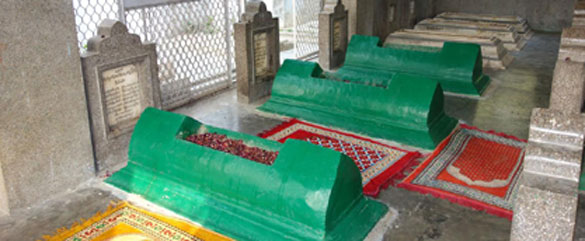
Hazrat Shah Abdul Aziz Muhaddith Dehlavi passed away in Delhi on 13 Muharram 1240 Hijri at the age of 78, and buried beside his father, Hazrat Shah Waliullah, in Old Delhi. His madrasa, disciples, and extensive fatwas became the backbone of revivalist and anti-colonial movements across the subcontinent. The Dar-ul-Harb fatwa shaped the legal imagination of early resistance leaders, while students like Syed Ahmad Rai Barelvi and Shah Ismail Shaheed carried his mission of reform and moral awakening into the public sphere.
His works Fatawa-e-Azizi, his critiques of Shia doctrines, and his contributions to Hadith sciences remain foundational in madrasas and scholarly circles. Scholars across major Sunni schools acknowledge his precision, integrity, and mastery of Qur’an and Sunnah. His synthesis of legal reasoning, Hadith scholarship, and disciplined Sufi practice set a standard rarely equalled. Today, his shrine stands as a reminder of a scholar who refused to compromise truth in the face of imperial power. His teachings continue to influence debates on Islamic identity, law, and reform, and his voice still echoes wherever justice, authenticity, and spiritual integrity are sought.
-----
Adnan Faizi is a Peace and Harmony activist based in Delhi. He is an alumni of CCS University, Meerut.
New Age Islam, Islam Online, Islamic Website, African Muslim News, Arab World News, South Asia News, Indian Muslim News, World Muslim News, Women in Islam, Islamic Feminism, Arab Women, Women In Arab, Islamophobia in America, Muslim Women in West, Islam Women and Feminism