
Hazrat Agha Muhammad Dawood Sahu Abulolai of Hyderabad: The Sufi Master Who Inspired Generations

By Adnan Faizi, New Age Islam
3 July 2026
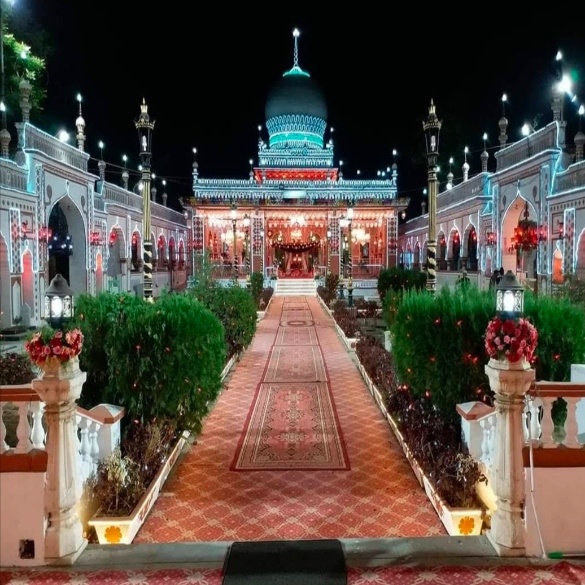
Hazrat Agha Muhammad Dawood Sahu Abulolai, born in 1249 AH at Balkonda to an Iranian-origin family, became a Naqshbandi-Qadri saint after receiving khilafat in his teens. He founded Madrasa Yatami, lived with remarkable asceticism, and is buried at Agahpura, Hyderabad, India. where his annual Urs is observed on 14–16 Rabi al-Awwal.
Main Points:
· Born in Balkonda, he belonged to a distinguished family of Iranian-origin Sufis.
· Received khilafat in youth after years of devoted spiritual discipline and service.
· Founded Madrasa Yatami, providing free education, food and care for orphaned children.
· Passed away in 1324 AH and rests beside Hazrat Shah Muhammad Hasan.
· His annual Urs continues drawing devotees seeking blessings, healing and fulfilled prayers.
Introduction
Hazrat Agha Muhammad Dawood Sahu Abulolai was an Iranian-origin Naqshbandi-Qadri Sufi saint born in 1249 AH at Balkonda, in present-day Nizamabad district, Telangana, India. A disciple of Hazrat Shah Muhammad Hasan from childhood, he received khilafat and the saintly robe at the age of 16–17. Renowned for his twelve years of asceticism sustained on unsalted jowar bread, he later founded the Madrasa Yatami, providing free education and care for orphaned children. He was laid to rest beside Hazrat Shah Muhammad Hasan at Aghapura, Hyderabad, where his annual Urs, observed from 14–16 Rabi al-Awwal, continues to draw devotees seeking blessings and the fulfilment of prayers.
Iranian Heritage and Early Life
Hazrat Agha Muhammad Dawood Sahu Abulolai was born in 1249 AH in Balkonda, Nizamabad district, into a distinguished family of Iranian origin. His ancestors migrated from Iran to the Deccan region of south-central India during the Golconda Kingdom and settled in Balkonda, Nizamabad district, Telangana, India. where they became well-known for their learning, piety and public service. In recognition of their status, the rulers of Hyderabad granted the family two villages, a mansab of Rs. 250, military honours, 250 horsemen, two elephants with their equipment, and estates including Mauza Patel villages and Bhalki in the former Berar province. These privileges continued into the early Asaf Jahi period before later passing under British administration. Hazrat's father was Hazrat Agha Muhammad Haider, son of Hazrat Agha Muhammad Qadir, reflecting a respected three-generation lineage. Although born into a family of wealth, influence and official recognition, Hazrat Agha Muhammad Dawood chose the path of spiritual devotion and simplicity over worldly privilege.
Early Spiritual Formation and Bay'ah
From childhood, Hazrat Agha Muhammad Dawood showed an extraordinary love for fakirs and the path of Tasawwuf, while remaining detached from worldly attractions and social pursuits. Recognising his son's deep spiritual inclination, his father, Hazrat Agha Muhammad Haider—himself a disciple of Hazrat Shah Muhammad Hasan—took him to his own spiritual master for guidance and training. Hazrat Shah Muhammad Hasan accepted the young Agah Muhammad Dawood through bay'ah, formally admitting him into the Naqshbandi-Qadri spiritual order. This marked a turning point in his life, as his natural spiritual disposition matured into disciplined Sufi practice under the supervision of an accomplished master.
Following his initiation, Hazrat devoted himself completely to spiritual training. He cultivated the Sufi virtues of qana'at (contentment with Allah's decree) and tawakkul (complete trust in Allah), which became the foundation of his character. Spending almost all his time in the company of his spiritual master, he remained engaged day and night in dhikr, meditation (muraqaba) and other spiritual exercises exactly as instructed. This constant companionship, service and disciplined practice gradually shaped him into one of Hazrat Shah Muhammad Hasan's most devoted and accomplished disciples.
Khilafat, Spiritual Discipline and Devotion to His Master
Hazrat Agha Muhammad Dawood's dedication and rigorous spiritual training earned him the complete confidence of Hazrat Shah Muhammad Hasan, who bestowed upon him the saintly robe (khirqa) and khilafat at the remarkably young age of 16–17, authorising him to guide others on the Sufi path. Shortly before his own passing, during a gathering held on 12 Rabi al-Awwal, Hazrat Shah Muhammad Hasan publicly announced his two principal successors—Hazrat Agha Muhammad Dawood and Hazrat Hafiz Mir Shamsuddin Ali. He first presented the cap (kala) of Hazrat Shah Muhammad Izzatullah to Hazrat Agha Muhammad Dawood, then called Hazrat Hafiz Shamsuddin Ali, praising him as both a Hafiz of the Qur'an, a Syed, and a scholar of Shariah. Overwhelmed by humility, Hazrat Hafiz Shamsuddin Ali began weeping, saying he was not worthy of such an honour. Hazrat Shah Muhammad Hasan then addressed the gathering, declaring both men his rightful heirs, and symbolically pointed to his index and middle fingers, saying that these two were to him like those fingers—inseparable successors who should be accepted by all his disciples.
After receiving khilafat, Hazrat Agha Muhammad Dawood intensified his spiritual life even further. His love for Allah, commitment to durweshi (the Sufi way), and preference for solitude grew stronger, while his attachment to worldly life steadily diminished. Even in his youth, he paid little attention to food or clothing, living with exceptional simplicity. For twelve consecutive years, he survived on jowar bread and lentils without salt, never eating meat, reflecting an extraordinary life of ascetic discipline. Despite becoming an authorised spiritual master, he remained deeply devoted to Hazrat Shah Muhammad Hasan, considering service to his master the greatest honour. He spent much of his time in his master's company with humility and reverence, continuing his dhikr, meditation and spiritual practices as a devoted disciple even after being entrusted with khilafat.
Service, Character and Spiritual Influence
Alongside his spiritual life, Hazrat Agha Muhammad Dawood devoted himself to public service by establishing Madrasa Yatami, an orphan school that provided free education and training. Every gift and donation received for the institution was spent entirely on the food, clothing and boarding of orphaned children, reflecting his lifelong commitment to serving the needy. He also organised the annual Urs of his spiritual master, Hazrat Shah Muhammad Hasan, on a grand scale, preserving his master's memory with deep devotion and respect. Hazrat was admired for his excellent character, generosity (farakh-dili), politeness (murawat), large-heartedness, punctuality in congregational prayers, spiritual insight (kashf), miracles (karamat), love for scholars and appreciation of spiritual ecstasy. His home was known for its hospitality, where 10 to 20 poor people and guests were regularly fed. A large number of disciples entered the Naqshbandi-Qadri spiritual path through his hands, and he treated them with warmth and friendship rather than formality. Besides being a respected Sufi master, he was also an accomplished Urdu poet, writing under the pen name "Sahu," with poetry devoted mainly to Tasawwuf and Naat in praise of the Prophet Muhammad.
Among the well-known accounts of his karamat is an incident during the annual Urs of Hazrat Shah Muhammad Hasan. One morning after Fajr, his disciple Muhammad Ibrahim Khan Sadiq Siddiqui arrived to meet him but was informed that Hazrat was still inside his room. Deciding to visit the shrine first, he walked there alongside a young boy of about five years. After offering his respects at the shrine, he unexpectedly saw Hazrat Agha Muhammad Dawood standing there in simple dress. Overwhelmed, he kissed his master's hand, while Hazrat smiled gently at him. The incident has long been remembered by devotees as one of the saint's remarkable spiritual manifestations.
Death, Shrine and Continuing Reverence
Hazrat Agha Muhammad Dawood Sahu Abulolai passed away on Thursday, 15 Rabi al-Awwal 1324 AH (1906 CE) at 4:00 p.m., bringing to a close a life of about 75 years devoted to worship, spiritual guidance and public service. His funeral prayer was offered the following day at Makkah Mosque, Hyderabad, attended by a large gathering of devotees, scholars and members of the public, including Nawab Mir Osman Ali Khan, reflecting the high esteem in which he was held. He was laid to rest beside Hazrat Shah Muhammad Hasan at Aghapura, a historic part of Hyderabad, India. where his grave occupies the central position among the three family graves. His son, Hazrat Agha Muhammad Hasan (Miya Sahib), rests to the east, while his grandson is buried on the western side, preserving the family's spiritual lineage at the shrine.
The locality surrounding the mausoleum came to be known as Agahpura, taking its name from the saint. Hazrat also contributed to the area's development by constructing Badi Kaman in 1304 AH and Kaman Agahpura in 1322 AH. His annual Urs, observed from 14 to 16 Rabi al-Awwal, continues to attract large numbers of devotees from different faiths and communities, who visit the shrine seeking blessings and the fulfilment of their prayers. The celebrations are held on a grand scale each year, and the centenary Urs was commemorated with special observances on 14–16 Rabi al-Awwal 2003, reflecting the enduring reverence for Hazrat and the continuing spiritual significance of his shrine.
___
Adnan Faizi is a Peace and Harmony activist based in Delhi. He is an alumni of CCS University, Meerut.
New Age Islam, Islam Online, Islamic Website, African Muslim News, Arab World News, South Asia News, Indian Muslim News, World Muslim News, Women in Islam, Islamic Feminism, Arab Women, Women In Arab, Islamophobia in America, Muslim Women in West, Islam Women and Feminism